How an Israeli immigrant built a real estate empire from scratch | Eyal Mehaber Ep.13
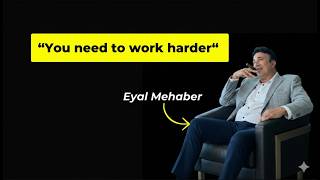
Israeli immigrant Eyal Mehaber arrived at 16 speaking no English and built a South Florida real estate empire by teaching himself the language through radio, starting a copy machine business, then moving into multifamily properties. He focuses on forced appreciation, buying underrented units and raising rents to increase value, and aims to acquire 5,000 to 10,000 more units before selling to a REIT.
Chapters
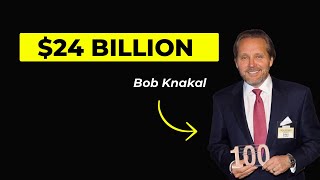
Eyal Mehiber is a South Florida multifamily entrepreneur and founder of EM Equity and Coastline Group. Over the last 25 years, he's acquired, brokered, managed, stabilized, and exited a few thousand units across 40 properties. Eyal Mehiber, welcome to the podcast.
Thanks for having me.
Thank you so much for coming on. It's, uh, it's been great to get to know everybody. And I'm sure you're going to be a great guest. So first of all—
and by the way, I'm also going to interview you, but you can go with me first.
First of all, you immigrated to the United States knowing zero English, no background, no foundation. What was it like?
It was bad. Went through a very rough time. You know, I'm over here, no family. No friends. I had an uncle. I was supposed to come for a visit. It turned out he got very sick and I had to take care of him. It wasn't easy because he was a single older gentleman in his 70s. He never had children. And you can only imagine, I'm a kid at 16 years old. What do you know? You stupid. Not you. Prison company excluded. You're 15 years old. I'm impressed. Yes. Thank you. I'm impressed. We'll talk about you later. But anyway, at 16 I came here, I had no family, no friends, no English, and I had to literally reinvent the wheel by myself.
So what was the process of doing that? Your uncle gets sick, you come over.
I come over before he got sick, they send me over, or during that time I had to finish my high school.
Yeah.
Because remember, it was in the middle of a— If you come for a visit, go back, it's one thing. But I ended up staying, right? So I had to go, I had to finish high school. I was sent over to a place called Rochester, New York. Yeshiva. Over there, basically, I took classes in English and some biblical stuff too. But just imagine, not knowing the language, I had Shakespeare class.
Wow.
So every single night, every single night except Friday night, Friday night I went to the rabbi for dinner. Every single night I basically listened to talk radio.
To learn English?
To learn English for some 3 to 4 hours straight.
Wow.
No break. And I wanted the sound, I wanted to have that sound in my ear. So basically I would write down words that I did not understand. Basically I wrote down everything. And I used to just go over it over and over again in my head every single night. I didn't have any friends. I didn't have time to be a child. That was a time for me to do a lot of growing because I needed to learn the language.
So you come to the United States, you know no English, you know nothing. And all you're doing is spending your time learning the language. From that work ethic, what do you think pulled you into real estate from that?
So real estate did not come for years later. Remember, I'm still 16 years old. Yeah, it came down. Then I went back to the city. I used— my uncle used to own a, um, a little place on West 86th Street, basement where he used to be, he used to fix the Torah. He subscribed, so he used to travel all over the country and fix Torah. So he had a few rooms. So he told me, my brother was there too at the time, he said, you know what, why don't you guys put up some copy machine from Xerox? You can lease it. And you can make copies for people. And you charge 5 cents, 3 cents, something, whatever. Money coming in. We did that, and then I moved to a bigger place. We grew a little bit and I was happy making a few thousand dollars a year, a month, excuse me. No big deal. And I was, it's a funny story, I was making copies, color copies of some big mansions, 5,000 mansions, 7,000 square feet, okay. I'm thinking, boy, I would love to own one, okay. And you know what? God is a funny system, you know, because you don't know what path you're going to go. You don't know. I met my wife, I met my wife in New York some 37 years ago, maybe more. And we stayed in New York for a while and she always had a vision. You know what? You're smarter than this. You can do better. You know, by the way, marrying a smart wife, Very, very important. I had many opportunities to marry someone not so smart, just for the idea to get married, and I didn't want to do that. I wanted someone smart that can take me to the next level.
Someone that can push you.
Push me. I always want to be the stupidest man in the room. I had to grow up fast. At 16, 17, at 18, 19 years old, I was dating girls 5 to 7 years older than me. Before my wife came, because I was— I couldn't relate to the people my age.
Wow.
Does that make sense?
Yeah, yeah, definitely. Why, when you entered real estate, did you choose multifamily?
So, uh, because I wanted to make money. So first of all, I wasn't really— I wasn't a principal until, uh, I was, um, I was a broker first. I was selling real estate, you know, buying. Yeah, not necessarily— I didn't buy for my own account, but I was a broker. So I will make— first year was very difficult, I didn't make any money. And then I start making money, I was a top agent in my office. 1998, 1997, 1999, 2000. Top selling agent, top listing agent, you name it. And I was comfortable, I was making over $200,000 a year, maybe more, maybe $250,000. But my wife will see the people that I will sell properties And they will buy it in one year for like $6 million, flip it the following year for $8 million.
Wow.
Buy it again for $8 million, flip it for $12 million. So you know what? You're making some money, but I want you to be them.
Yeah.
I want you to be one of them. Are you kidding me? I'm happy. No, you're not happy. So I started getting involved in buying real estate for our own portfolio.
So you would buy it and then flip it?
Correct.
That's how you started off?
Right. Not necessarily multifamily. We bought retail, I bought warehouses, I bought office building, I bought triple net leases. I put my hand in everything I find where I can make money. I bought a duplex for that matter. And then finally, finally, I find myself chasing money. So while you're making money buying retail, office, and whatnot, but the big money is multifamily. Why multifamily? Multifamily is where we— I like to think of it as a forced appreciation. What does it mean, forced appreciation? You buy property and you know for a fact that your rent is lower than next door. So for example, let's say my rent is $1,000, but everywhere around me is about $1,200, $1,300 a month. Everywhere around me. Do I need the economy to get better? Do I need the market to get better for me to go to— no, I do not. I can go straight to $1,200 a month. That's what we call forced appreciation, and therefore your value of the property goes up by by 20%, 30%, because you're able to raise rent, providing you buy it right.
So if you buy multifamily properties where the rent is, let's say, 20% or whatever below the properties around it—
correct—
you are able to bring up the value.
Correct.
And then do you flip it or do you hold it?
So we can flip it depending on the market. If the market is very strong and I can get a very strong buyer Yeah, we flip it or we can refi. A lot of times what we do, we refinance. This is why we love Uncle Sam. Uncle Sam tells you, don't worry about paying taxes. I love you. You have blue eyes. Don't pay taxes. Refinance the property. And as long as you still own the property, you did not sell the property, you still own it, whatever you cash out on the refi, it's for you. Don't pay taxes. Interesting.
Interesting. To go back to your childhood, was there any time before you came to the United States that you knew that you were different than everybody else and you were an entrepreneur unlike—
No, I did not. But I did know my father passed away, always was very close to me. I was close to him. Always tells me that you're better than everybody else. I don't like your friends. Why don't you like my friends? I don't like the family where they come from. I don't like their vision. They're always gonna stay small. I have bigger vision for you. I grew up in a 500 square feet apartment, family of 5, 1 bathroom. Okay? So it wasn't easy. My fucking closet right now is over 500 square feet. Wow. Does that make sense? Yeah. You know, it's a vision. As an example, how old are you, 15 years old? Yeah. You play it right, you're going to go very far. Someone like you at 15 years old is stupid. Most people are not as smart as you are. They want to go out and party, they don't think about, they have no vision. They have this whole thing as a, you know what, money should come to me. I deserve, I feel entitled. Why do people vote for Mandani in New York City?
Because they want free rent.
They want free rent, they want free benefits, they want free grocery, they want free transportation. They want things handed to them. When you want things handed to you, okay, that mindset already, you're never going to grow. Granted, you're going to get stuff for free, but you're always going to stay small.
Do you think that this is something that evolved between the generations? Like, if we were going to go back 50 years when you were in your teens, do you think that this is something that was common, or maybe as common as it is today?
No, it's much worse right now.
Much worse right now?
Much, much worse. Much worse.
Why would you say that is?
Because, uh, I— the, the mentality— well, let's, let's start with that. The news The media slanted everything, okay? And it's become very woke, right? Where it's not enough to be left, but very left. It's sort of like if I'm a beautiful girl, or if I'm, I don't care if you're beautiful, whatever, you're 20 years old, you're a woman, and you want the good life. You want to be in Miami, you want the good life. You want to have the best. You don't want to go punch a clock. And make $10 an hour or $15 an hour, you marry someone wealthy, an older gentleman. They don't care about it as long as they have the good life. And as a guy, if you're a guy and you want a good life, what do you do? Maybe get involved in tech companies that you're thinking, yeah, you know, this guy made a billion dollars, I can do it too.
Yeah.
Very, very difficult to break into a tech company. Why do most businesses fail? Number one, number one reason why most people fail lack of funding. In other words, you can have the best idea ever. If you don't have the funding, someone to believe in you and put a couple million dollars into the idea.
But do you think that reflects more on the founder or that reflects more on the market? Like if you have a company with lack of funding, do you think it reflects more on the founder that they're not able to raise venture capital? Or do you think it reflects more on the market?
No, it's like more than generation. Our generation today, 15, 16, 17, 20 years old, they want to be on social media, they want to be influencer, and they think they can make money from that. Maybe they can. So I always tell people, listen, you need to have a job 9 to 5, and you want to play around with the social media, absolutely, why not? But don't rely on it as source of income.
Yeah.
And that's the number one mistake that right now our youth are doing. They want to rely on social media for their income.
Yeah, I think I saw there's a stat that like 50 years ago the number one job that people wanted to buy, to have, was astronaut, you know, doctor, and, and stuff like that. And now it's, it's influencer.
Influencer, influencer. And now listen, uh, if, if that person can do well, they can do very, very well, can make it. I don't know about money, but can have like a million, million views a few million viewers, you will start making money. But unfortunately, a lot of people, they just, maybe they reach a platform, they reach wherever, they cannot go any higher. Okay? And it's okay, you can be a good influencer. First of all, I hope if that person's an influencer, I hope they have a good marketing strategy, not just to sell their body. That's a terrible thing. People do that all the time. They want to sell their body and unfortunately, they get a lot of viewers and a lot of followers. But at the end of the day, I believe that youth like you are very smart at times, and you just need to tap in to what you like, tap in what is your strength, and go with that.
Interesting.
Does that make sense?
If you were 18 today, would you start real estate or would you start a different industry?
Absolutely real estate. I'm sorry I didn't start it earlier. I started real estate when I was in my 20s, 26, 27. Although I own my first house at the age of 18.
Wow.
Yeah.
What is one thing that you misunderstood at the beginning of real estate?
So one thing that I misunderstood in the beginning of real estate is as a broker or as a principal or what?
I think just starting.
So it's a myth that people want to start big and it's very difficult. You got to start small. You start with a duplex. You start with one unit. I don't give a shit. Start with something. Don't look at someone else. I want to be him. I want to be Donald Trump. Okay? You want to be yourself. And you know what? And if you start small, you can grow your portfolio. If you want to start big, that's okay too, but here's the problem. Now you can't get going. You don't start big, nothing happened, you're going to give up.
Yeah.
You don't want to give up. Yeah. So if you start small and you build into it slowly but surely, and you always want to team up with someone smarter than you— I want to be myself the stupidest man in the room.
Yeah, it's true.
Okay, because so when I hire a manager for my property, you If they're not smarter than me, what value are they going to bring to my operation? I'm not there, I have their property, right? Gainesville, for example. If that person is not smarter than me, how do I not be there every day?
Yeah. Would you say success is skill or luck?
Success is not luck. Now, do I want to rely on luck? Absolutely. Luck is a bonus. You can say, well, you came to Florida at the right time. Or you can say, you know what, my broker used to tell me at the time when I was selling real estate, you know, the first year was very bad. First 13 months, 14 months, I didn't have any money. I basically lived on credit card and I had 2 kids to feed. So my first big check was about over close to $300,000. And my broker told me I got lucky. Okay, no problem. I get another check, another $200,000. You got lucky. I get another check, another $100,000. At the end of the day, you're going to run out of luck. So no, luck is a bonus. I'll give an example. So when I, when we underwrite deals, okay, I like to write deals and let's say I underwrite my deal and I pay 6 cap.
Yeah.
I don't know if you understand about cap rate. Yeah, a little bit. So let's say I underwrite a deal for 6 cap. For those of you who don't understand cap rate, it's the NOI minus the expense. Net Operating Income divided by the purchase price. So if I buy at a 6 cap, I want to sell at a 7 cap. It's very difficult. Now, why do I want to sell at a 7 cap in 2 years? If I do my underwriting where I buy at a 6 cap and I sell at a 7 cap, I'm almost guaranteed, it's 99%, that I'm not going to lose money. But it's very hard because that means I have to buy it very, very cheap. So I always underwrite my, my deals at higher cap rate at the exit. However, if I get lucky, which we all want to get lucky, then I can sell it at a much lower cap rate if the market is strong. But I don't rely on luck when I do my underwriting. Does that make sense?
Yeah, yeah. So you go into a deal expecting the worst, but—
no, no, I don't expect the worst, but I will underwrite the deal at a much higher cap rate than what the market is.
Got it. Got it. Interesting. Interesting. What is the closest you came to losing everything on one deal?
I had a property about 2 years ago that, you have to remember, my lender referred me as a cowboy. Because when I go into contract, I put non-refundable money. Why do I put non-refundable money? Because I want to be able to earn the deal. You have to come from a position of strength when you buy a deal so a broker can take you seriously. So I bought a property in North Florida a few years ago. My deposit was initially $500,000. Somehow it grew up because I kept asking for extension. I did not like the numbers. Because the seller mislead, gave wrong information. So at the end of the day, I got nice discount on the property. I still did not close, and I find myself with non-refundable of almost $2 million. Wow. But don't worry, I'm closing it. Thank God, for the last 25 years, we never lost one penny on a non-refundable. When it comes to buying property.
Wow.
Yeah, we come close. You come close.
Well, if you could redo one decision in your whole life, what would you do?
Not partner up with the wrong people. So unfortunately, I, uh, my track record when it comes to properties Right? You know what they call a baseball player that hit 3 out of 10? What do they call him? A millionaire.
Millionaire?
Yeah. My track record when it comes to property value add, 9 out of 10. Wow. I would say 99 out of 10, but I would go 9 out of 10. Okay? So where is my— everybody's weak point? Choosing the wrong partners. So last few years I had, unfortunately, You know, I'm the kind of guy, I like to self-respect. I would never blame anybody else. This is bad, it's batshit crazy. When you start blaming other people, that's a sign of weakness. It's sort of like an alcoholic or a drug dealer, a drug user. Before they can get better and before they can go to rehab, they need to be able to self-reflect.
Self-accountability.
Take accountability and then now they can start to recover. Same thing with me. So I took accountability, I teamed up with some bad people that misrepresented themselves in real estate, in development, etc., etc. Not to get into it but, and that's where I will definitely do a much better job vetting the potential new partner much stronger and deep dive before I get involved with him, that person.
Interesting, interesting. So know who you're partnering with.
Do you know who you're partnering with? Correct.
Yeah.
What is my best partner right now? Is my wife of some 37 years.
Wow. What is one skill that everybody who becomes successful has?
They need— yeah, well, you need to have a vision. You need to take the word, you know the word failure?
No.
Failure.
Failure, failure.
Yeah. It's not my vocabulary. I have a vocabulary in my office, I'm going to show you. I took it out. I took it out. I will omit, you will omit the word failure out of your vocabulary. You need fire in the belly. You need motivation. And most important, you can't be fucking lazy. A lot of people are lazy and don't want things to be handed to them. And I'll give you an example, a story, okay? This is a funny story. It's a legend. This guy goes to church on a Sunday and he prays to God, "Dear God, can I please win the lottery?" Sunday, nothing happened. Monday, nothing happened. You know the story? No.
No.
Of course not. Tuesday, nothing happened. And Wednesday, finally. Big joint. I said, dear God, let me win the lottery one time. A voice came out from the ceiling, hey John, you gotta buy a ticket.
Wow. So you have to—
you have to be in it.
Yeah, you have to actually take accountability.
That's exactly what I'm talking about.
What do you think social media's impact on real estate?
Social media is great, it's really, really great. People come to us all the time with different deals. People come to us with other situations. People come to us and they, we inspire people. For me, it helped a lot with the social media, but overall, everything today right now is social media and then it's going to AI. So we need social media. The only thing is people should not use it, okay, for other things other than.
So it's a big time waster.
Big time wasters. Yeah, unfortunately we are like, we become slaves to a phone. Yeah, you know.
Yeah, it's true. What does the average week look like for you?
Average week look like for me, like, you know, it's a— I go to the gym in the morning, I get up at 6 AM, I go to the gym, I have my trainer, I go to the office, sometimes do a couple of videos, do some podcasts, and I travel to the properties. I meet with people. I put about 12, 14 hours a day. A day. I shut down early on Friday. On Saturday we don't work. It's Shabbat. And Sunday we also work half a day. So basically it's work, work, work, but also have fun. You have to have fun too.
Interesting. So you're working 12 to 14 hours a day. How old are you? If you don't mind.
No, I don't mind. Unfortunately, I'm an old man, 58.
58. Wow. And you're working 12 to 14 hours a day.
I'm full of energy.
And it's 20 years old, so you're not.
I'm full of energy. I'm multitasking. I can talk to you today. I'm here. And the next day, I'm going to be in China. I'm not lazy. I don't believe in being lazy. I believe that we are in on this earth. To— for a better purpose, not just to breathe the air.
Yeah, yeah, I agree. What do you think gives you this edge? Because, you know, 58-year-olds, they get to that age and they're like, I've been working for too long, or I'm gonna work like 7 hours a day, right? Well, there's a lot of people like that.
You know what, when I said 12, 14 hours, you know, I don't have to be in the office. Yeah, I can be— my, my phone, right? This is my office. It can be anywhere. Exactly. You know, it can be— and it's not— I make it fun. It's also about fun. It's supposed to be fun.
Yeah.
Finding property— for me, when I find a property, I find an opportunity, I like to take it and make it better. For me, it's like a jewel. Makes sense? It's an art.
So it's about the mission. It's not about the goal.
It's a mission.
It's a mission.
It's a goal.
Wait. Yeah, it's mission over goal.
Right.
If your sons and/or daughters only remembered one lesson from you about money, what would it be?
It will be that, listen, money doesn't come easy. Just because somebody, your parents have it, that's not your money. You know the terrifying story, it's a true story, you know Shaquille O'Neal?
Yeah.
His son told him the other day, it was about a year ago, you know, Dad, you know, we are very rich. Dad, that's like, we're not rich. I am rich. That's what the dad told the son. Okay. So my message to my daughters, listen, you have to earn your respect, earn your dues. Money doesn't grow on the street. You know, but they understand that. Yeah.
Yeah. That's important. What's one book that you recommend everybody read?
I like the book by Trump, The Art of the Deal. I like that one because it's really, it breaks it down and it's not very complicated. Yeah.
It's more of a story.
It's what?
It's more of a story.
It's more of a story, but there's a lot of good stuff there.
Yeah. Yeah. It's a good book. What is the best piece of advice you've ever received?
The best piece of advice I've ever received is that, uh, well, listen, you're gonna work hard, but the number one thing you cannot forget is your family. Family always gonna come first, no matter what.
Do you think a lot of people get to an age where they hit a certain number and they look around and they don't have family anymore because they neglected them?
They do. Unfortunately, they do. Or because they— how about they never— they never got married or they never have kids? And then now they're 40 or 50 years old, it's too late now.
What is—
you can't forget where you come from, number one.
Yeah, yeah. What is one thing people don't tell you about real estate?
The one thing you don't tell me about real estate is that, uh, don't worry, market is going up, buy real estate, it's a good idea to buy real estate. I don't buy real estate because market is going up, and I don't buy real estate if the market is going down. I look for opportunity. I don't care what the market is doing now. Every building stands by itself. Every opportunity stands by itself.
Interesting. So single out everything. Yeah. What is your goal for 2026?
My goal is to— so we sold a lot of our units after COVID. My goal is to get back and to buy another 5,000, 10,000 units, not necessarily in one year, but next 5 years.
Interesting. What's your goal for the next 25 years?
No, you need to retire.
You need to retire?
Of course.
How about 10 years?
10 years, God willing, I'm thinking to sell some big packet, put together a big portfolio, sell to REIT and retired.
Interesting. What's the worst piece of advice you've ever received?
The worst piece of advice I've ever received is that 'You don't worry about anything, money will come. Just go and pray, pray to God.' And I'm a religious man, I pray every morning. I don't believe praying is enough. You need to have that fire in the belly, you need to have that motivation, you need to have a goal in life, a vision, a goal, something that can take you to the next level because praying alone is not going to do it. God wants to help you, but you have to help yourself. So the worst advice I can give anybody, don't worry, money's going to come. Money's not coming. It's almost like, it's like a guy, you're 15 years old, you want to date people, you want to date the girls, you know, you have to go make, you have to make it happen.
Yeah. Thank you so much for coming on. It's been a great time.
Good guy. Can I ask you a couple questions?
Sure.
You want to put it again?
Yeah, I can.
Yeah, you're 15 years old. How'd you get— what's your— I know you started at 10 years old. What's your goal for the next 10 years?
My goal for the next 10 years, um, my goal for the next 10 years is to hit $500,000 a month. Um, I want to run the largest content rewards campaign in history, and I want to interview Trump.
Fair enough. What are you doing to get that goal?
Every day I email at least 20 or 30 people or 40 people, custom emails, asking if they can come on the podcast.
You have a studio?
I do not have a studio.
Okay, so I'm going to give you advice now.
Buy a studio?
No, don't say that. No. You don't have money. I don't care about your money. You know, whether you have money, you don't have money. You don't need money for that. How many emails do you send?
30 or 40?
Double that? No. 10?
10, exit.
300, I guarantee you, you're going to see some results.
Yeah.
Okay? Do that. Okay. Thank you.
More from Nadav


If your sons and daughters only remembered one lesson from you about money, what would it be?