How Bob Knakal sold 2,391 buildings | TEWN EP #14
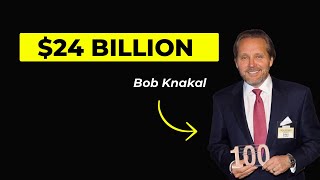
Bob Knakal, a New York City real estate broker, has sold 2,391 buildings worth over $24 billion since starting as an intern in 1981. During the pandemic he built a 24-foot physical map of Manhattan with color-coded sticky notes to track development sites, believing tactile maps tell stronger stories than digital ones. His largest deals include a $1 billion Brooklyn Hospital transaction and a $685 million Watchtower Group sale.
Chapters
Bob Knakal is a New York City commercial real estate broker who has sold more than $24 billion worth of properties and co-founded the brokerage firm Massey Knakal Realty Services, which was acquired by Cushman Wakefield. He is the chairman and CEO of BKREA, Bob Knakal Real Estate Advisors, a New York City investment sales and capital markets brokerage that represents property owners and sellers exclusively. Bob Knakal, welcome to the podcast.
Thanks, Nadav. I appreciate you having me.
Thank you so much. It's, um, I mean, your career is— it's insane reading about it online, and it's incredible what you've done in your lifetime. But what do you think pulled you into real estate?
Well, I got into real estate completely by accident. You know, I was a freshman at the Wharton School in 1981. I wanted to be a Wall Street guy just like every other Wharton kid. And I was looking for a summer job that would look good on my resume. So I went around dropping my resume off at commercial banks and investment banks in Bergen County, New Jersey, which is where I grew up. And saw Coldwell Banker. I thought it was a bank. Went in, gave them my resume. They set up an interview with me for the next day. And I went to the library to look up the bank and saw it was a real estate company. Almost didn't go on the interview, but they were the only ones hiring college kids for the summer. Took the job, loved it. I loved the fact that everyone in the office was very energetic. You know, seemed like they were— they really loved what they were doing. They were happy. They, they treated me really nicely. I was just a college kid in a summer internship program. They, they treated me really well. I still have friends that, that I worked with back in those early days. They're still friends of mine. And I just love the vibe of the business. And particularly, I think the thing that really attracted me to it is I think real estate brokerage is one of the purest forms of meritocracy there is. You get out of it exactly what you put into it. I like that. I like to work hard, and my whole life I've gone all in on the things that I've done. And so I want to get compensated for putting that effort forward. And real estate is a business that, you know, generally you get rewarded for what you do.
Interesting. So if you were to go back to that time, let's say you didn't walk into Coldwell Banker and you walked into some investment banking thing, do you wish you did, or are you glad that you walked into a real estate company?
No, well, I mean, given what's happened, I'm very, very fortunate, feel blessed that I walked into the real estate company. You know, I think I would have probably done okay at whatever I decided to do, but, you know, real estate has been really a great thing for me. I love it so much, and I always tell people that it's not only a job for me, but it's my hobby also. And so I feel really blessed that I stumbled into something that has become such a central part of my life.
Do you think with very successful people, their work is their hobby and that's what makes them successful?
Could be. You know, I think, you know, part of success in just about anything you do comes down to being able to work hard enough at it to achieve success. And if you don't really love something, I think it's hard to work hard enough at it to, to achieve that level. And I think— excuse me— you know, I tell young people all the time, figure out what you really love and try to do that, because if you love it, that passion for the business will get you through the tough times that everyone will inevitably have. You want to stick around and be there for the good times that will inevitably follow. So I think it's important to really enjoy what you do, because if you, if you're reach the top of almost any area within the business world, you're going to do very well financially. Most people want to pick a job that they can make a lot of money doing. I say follow your passion, not the money. If you, if you love it, you'll work hard enough to succeed and get to the top. And if you get to the top, you're going to make a lot of money. So I think it's easier to do it that way than to go for the money and potentially burn out.
Interesting.
So you That was my hobby. I was so into it. And I was one of those kids that always spent more time looking at the back of the card than the front of the card. And I always loved statistics. I was always pretty good with numbers. And, you know, that, that affinity for statistics stayed with me when I got into the real estate business. I started tracking the market very, very meticulously and still do to this day. I think it's— for me, it's fun. And it also is a very big differentiator.
Interesting. So if you go out into your office right now, you have a map of all of New York City. What do each of the sticky notes mean?
Oh, well, there are— the map itself is color-coded to show what buildings have been demolished, what's under construction, what buildings currently are built to less than 25% of their maximum density as of right, what potential assemblages exist. The sticky notes have a variety of meanings. The different colors are different years of development site sales. There are properties that are for sale, there are properties that are under contract. The blue sticky notes under the plexiglass are the 57 office buildings that are under construction or planned for construction in Manhattan. So the variety of different meanings, and it's all color-coded.
Got it. And why did you think that, you know, we need to build a physical map rather than one on the internet that people can access?
Yeah, well, I— first of all, I didn't do the map with the intention of creating a map. Um, I'll take you back to March of 2020. Um, the folks at, uh, at my old company said You know, go home for a couple of weeks, let this pandemic blow over. I go home, I'm watching TV with my wife, and my doctor called and said, hey, Bob, there's a rumor going around that they're going to isolate Manhattan. They're going to quarantine the island, shut the bridges and tunnels, get the heck out of town right away. So within an hour, I have my wife and my daughter in the car. We're going up to our country house in Connecticut. Two weeks later, it was very clear we were not going to be back in the office. I came back to get a few things that I had left in the apartment and pull off the FDR Drive onto the East Side. And it's like a ghost town. There's nobody. There's no cars moving. There's no people moving. No stores are open. And it occurred to me this would be a perfect time to go count buildings. So, you know, I always was interested in knowing what was under construction. There's very little data in New York about what's under construction. So I wanted to create a database It was the perfect opportunity to do it because the streets were empty. So I spent the next 4 months, 220 hours out in the field cataloging everything. And I, rather than bring a pad and pen and write stuff down and then maybe not be able to understand what I wrote, I said, let me bring copies of the tax lot map and I'll color code them and then do research afterwards. And that was the intention of color coding. It was just so that I didn't have to write stuff down and then interpret my handwriting. Which is not so great. And I started taping pieces of the map together to see what was going on in a certain neighborhood. Before I knew it, I had this 24-foot-long map. And, you know, when you walk in, you look at that thing and it immediately hits you that, hey, these folks know more about what's happening in the land market than anybody else in town. I think to digitize the map and have someone look at it on a computer screen it kind of loses that impact of, hey, these folks know what's going on in the market.
Interesting. So, okay, interesting. What is the biggest deal that you've ever worked on?
Uh, biggest deal I ever worked on, I just closed a deal for the Brooklyn Hospital, uh, out in Fort Greene, which was a, um, basically a billion-dollar transaction. Um, and also I closed the deal for The Watchtower Group in Brooklyn, that was about a $685 million deal. So, you know, generally my deals are in the $50 to $200 million range, but every once in a while you do a larger one, and then those are a lot of fun to work on. Got it.
Are they different when you do a larger deal? How much different is it than when you're doing a smaller deal?
Exactly the same. Exactly the same, just Exactly the same, just different, you know, more zeros and, you know, different type of person you're dealing with. But the deal itself, very, very similar.
Interesting. When you say different type of person, what do you think differentiates, you know, somebody selling a $10 million real estate property or somebody selling a $600 million?
Well, it's just what you're used to. And so I don't mean anything very positive or very negative about either of those groups. It's just, you know, in some ways the larger deals are easier almost because as you get up the pricing scale, once you get up to several hundred million dollars and billions of dollars, the field of people who can do those deals shrinks very substantially. So there are fewer people to go to with— as the deals get very, very bigger, there's fewer people to talk to. Got it.
Interesting. What is the hardest thing that you've done in real estate?
Uh, probably get through the savings and loan crisis in the early '90s. We almost went bankrupt 3 times. We started the company in November of 1988. Uh, by the second half of '89, the market had slowed to a trickle. Uh, we almost ran out of money 3 times, almost went bankrupt, had to take credit cards, ran the business on credit cards, ran our personal life on credit cards, had to borrow money. Did a lot of things that were— had a lot of risk in them. But I think getting through the early '90s was probably the toughest thing I've ever done.
Interesting. And would you compare that to 2008, or would you say early '90s was worse?
No, I think I— for me, it was a lot worse in the savings and loan crisis. '08-'09 was pretty bad as well. But it was different. We had enough experience under our belt, we could figure out kind of how to maneuver through it. But in the early '90s, we were still relatively young, had never been through a downturn before, and, you know, we were very, very lucky to scrape by by the skin of our teeth. Wow.
Correct me if I'm wrong, you started your own brokerage 4 years after you were working at— in real estate. What made you want to go from working from— for somebody to owning your own brokerage?
Um, it was a couple of things. One, uh, was that, um, you know, we had certain rules about the way things were going to be done at Coldwell Banker, uh, and the folks there didn't really stick to the rules. That, that bugged Paul Massey and I. And we just thought we could build a better mousetrap. And, you know, we had gotten some management responsibility at CB but weren't being compensated for it. We suggested making our group a separate profit center within the company, and that fell on deaf ears. So we decided to give it a try ourselves.
Interesting.
Interesting.
And Were you always an entrepreneur, or was this something that you're just— this is what I have to do to get better at real estate?
Well, I think I was always a very competitive person and, um, never really had any other jobs, so I don't know if that entrepreneurial spirit was in me or not. But, um, you know, I really, really enjoyed having my own company. Then we, we owned and ran Massy Acklow for 26 years and 46 days. You know, I'm coming up on the 2-year anniversary of my new company and feels good to be in the entrepreneurial seat again.
Interesting. Interesting. So after selling to Cushman Wakefield, you decided after a couple of years, you know, in a role, you decided to start your own brokerage again. What was that decision? Because after, you know, selling a brokerage for substantial amount of money. A lot of people, I guess, would, you know, retire, just go to Connecticut and spend their time with their kids and their wife. Or, you know, if it's your hobby, you would continue going. So what, what was that?
Well, the— we sold in December of 2014, we sold the company to Cushman Wakefield. We were on 5-year contracts. Um, about a year and a half after we got to Cushman They made a deal to bring over the investment sales team from Eastdill, which I don't blame them for doing. I would have done the same thing. But that was a breach of our contract, so we were able to reduce our contracts from 5 years to 3.5 years, got a couple more dollars, a little more support. But 3.5 years later, Paul had left the company. He was running for mayor at the time. And I decided to leave and ended up going to JLL with 53 people, all of whom had been with me at Massey-Nakel. And at the time, I wasn't ready to start my own company again. The, the hurt of having to fire 25% of our staff during the '08-'09 period of time was still very fresh. 10 years later, it's still very fresh. But we decided to go to JLL. And, you know, a year after getting there, they bought HFF, which again was a breach of my agreement. And one thing led to another and they ended up firing me in February of 2024 on Valentine's Day, as a matter of fact, February 14th. And, you know, a couple of months later, I started this company and I couldn't be happier. Interesting.
Okay. How do you think social media changed real estate?
Um, I think social media is still changing the business. Um, you know, I was a very late adopter of social media. I just got active in January of 2023. I'm very, very glad I did. I think it's a fantastic way to leverage your market presence. I think it's one way The market presence, which is basically building your personal brand and getting people to know who you are and what you can do. And market presence has a number of components. Making your prospecting calls, which is the number one revenue-generating activity a broker can do. But you make your calls, you send email blasts, you send texts, you send hard mail, you go to networking events, you speak in public, you create content, you're on social media. Do all of those things help you build a reputation that hopefully gets you in the way of valuable information that will enable you to do a better job for your client, get them better, you know, better and higher prices for the properties you're selling for them and that kind of thing. So social media has been great. It's remarkable to have relationships with people all over the country and all over the globe that you've met online, and it's been a great thing for me.
Interesting. Okay, so let's say you're a broker, you're just starting off. Would you recommend somebody create content or somebody go out and cold call people? Because content, it could be at a much larger scale, but cold calling, you're gonna— I mean, what do you think?
I think like with everything, it's a combination of things. I think if you're just starting out in the business, why do people have incentive to listen to what you have to say? Maybe have a unique perspective. But I think it's so much better to talk about a deal you just did. So you can't make a deal right away by making content. You have to go make calls and get deals done, and then you can talk about the deals and make content regarding the deal. But I think like everything, you have to figure out the right cadence for everything you're doing and, and figure out what are the different things you're going to do to try to achieve success in business. And usually it's a little bit of everything that you need to do.
Interesting. Okay, so you— would you say though, would you prefer if somebody who is working for you went all in on one thing or split themselves between—
well, I, I'm a big proponent of specialization. I think that in the business, there's so many different things. I mean, saying you want to get into real estate is like saying, "Oh, I think I want to eat food today." Right? There's a million different things. So I think figuring out what you can be an expert in is really important. The people who I see that do extraordinarily well in our business have 3 qualities. And they're very, very vivid within their makeup. One is a passion for the business. You gotta love it so that you can put the time in to achieve success. Two, you have to be able to use discipline well. And I say use discipline as opposed to have discipline because every human being has access to the same amount of discipline. We all choose to use it differently. And then thirdly is becoming a market expert. You have to understand one thing better than anybody else in the world. Read, read Jim Collins' book Good to Great. The main thesis there is that the main difference between good companies and great companies is that great companies figure out the one thing that they want to do better in the world than anybody else, and every decision they make is geared towards achieving that position. In the same way, if you want to be the go-to person within the real estate business, do one thing, know everything about it, do it better than anybody else, and, and you will turn a business where income can be very, very volatile into something that's a little bit more stable and almost becomes like an annuity based upon how many people are going to keep coming back to you.
Interesting. Very interesting. Would you say if you could go back in time, do you wish you walked into a residential brokerage or commercial brokerage?
No, commercial brokerage for sure.
Why is that?
Well, I think residential brokerage is a little bit more emotional. And commercial brokerage is a little bit more analytical. I think both have the ability to have you achieve great success, but for me, because I always liked statistics and analytics, I think commercial brokerage was a better fit for me.
How did you get your first deal in real estate?
First exclusive we ever got was a little commercial townhouse at 115 East 55th Street. And we basically called the owner. We— the guy's name was John Coleman, and he, he said, told us he wanted to sell. And we went and knocked on his door repeatedly. We think we met with him 7 or 8 times before he actually hired us. And, you know, he said, guys, you haven't sold the building yet. Why would I hire you? And we just kept begging him, say, look, You'll be the center of our attention, your top priority, our only priority. You know, give us a chance. We know the market better than anybody. Please give us a chance. And we just kept going over to meet with them, and I think we just beat them into submission.
So how important would you say the art of follow-ups is in a sales process?
Oh, it's critical. It's critical. When you don't follow up, you become invisible. And being top of mind is extraordinarily important in the business, and you stay top of mind with somebody by continually reminding them that you're there.
Yeah, interesting. And can people do that from content at a larger scale?
Oh, you can, but I think it's important to follow up in many ways. I mean, the best interaction you can have with someone is face to face. Content is a step removed even from an email or a a phone call.
What is the Bob Mackel of tomorrow doing right now? The Bob Mackel of the, of the 20—
the next Bob Mackel? I don't know, probably studying the heck out of AI. AI is very, very powerful. I don't think that AI is going to replace anybody in real estate, but it certainly is going to— the people who use AI will replace people who don't use it. And I think it's a tremendous opportunity to get on the bandwagon and, you know, use this extraordinarily powerful tool and figure out how to use it most effectively. So prioritize all of your time onto AI, or not all of it, and information. The fact is that information, for the most part, in the real estate business is terrible. Not very accurate. And if someone can figure out how to create great information systems that are accurate, they're going to make a lot of money.
What type of information would you say that people need to aggregate?
Um, data. The data on lease leases and the components of the leases, data on sale prices and What went into it? What was the condition of the property? Figuring out algorithms that can turn disparate data into comprehensive trend analysis. There's a number of things that can be done. And, you know, people are probably working on it, but it's going to be really, really tough because a lot of what you need is not publicly available. You have to get it from people who were involved in the transactions. And what motivation does someone who's involved in a transaction have to give intimate details and inside information about their deals to somebody they don't know? That's the problem.
So it's— you're saying it's a problem on both sides, like the developer or the person who owns the building doesn't want to give the info out?
They may not want to give their information out, but then yet if they want to make decisions, they need to rely on information that other people gave out. So, you know, it's, it's an issue that the industry has to deal with.
Who is the most impressive person you've ever met and what did they teach you?
You know what, I have to say probably one of the most impressive people I've ever met was Marc Messier. They talk about a guy who had passion and for what he did, was an expert, highly disciplined, and he did things the right way. He, he always did the right thing. He led with integrity. You always knew exactly where he stood. You always knew he would go to the mat for you in any circumstance. He came through in the clutch. Probably the greatest leader in sports, the only hockey player to ever be the captain of two teams that won the Stanley Cup. I just think, you know, Messier did things the right way, and tremendous, tremendous respect for him. I met him several times and just a wonderful person, very charitable, nice guy, and, uh, you know, but, uh, you know, always came through in the clutch and always did things the right way. Wow.
How I guess, on the same lane, would you say high-level sports are and business?
I think very similar. You know, we, we draw a lot of analogies between sports and business. In fact, we always look to hire people who had a team sports background because the real estate business is very competitive and it's also very collaborative. You have to work with other people all the time, so team sports is a good a good proxy for, for that. And, you know, tracking the statistics in sports, tracking the statistics in real estate, there's a lot of, a lot of parallels.
So it's a lot of a focus on data and statistics, you would say, that makes people successful in real estate?
Yeah.
Interesting. What is one piece of advice you would give to the younger generation?
Um, read a lot, you know, I tell a lot of young people to find out as much as you can about all the different aspects of the business and figure out what it is that really excites you, really, you know, is something you'd want to spend all your time doing that will make you excited when the alarm goes off in the morning, you want to pop out of bed and get to work. And if you can find that, you're very, very lucky.
What is one book that you recommend everybody read?
There are so many great books. If you go to BobNackel.com, you'll see I have a suggested reading list with a lot of great books. But I think, you know, Dale Carnegie, Winning Friends and Influencing People is a great one. The Harvey Mackay books, Swim with the Sharks, great. The Dr. Benjamin Hardy and Dan Sullivan series of books. 10x is Easier Than 2x, The Gap and the Gain, and Who Not How. Fantastic, all of them. I mean, there's so many great books. I suggest if people really want to get into self-improvement, reading things like that as a salesperson is very, very helpful because it will alter your behavior.
What is the best piece of advice you've ever received?
Probably from one of my mentors, Steve Siegel, told me to read everything I can.
Do you think— were you always into reading and learning everything, a curiosity?
No, I hated reading when I was a kid, you know, and I had to read a book for school. I was always the kid who like got the Cliff Notes and didn't, didn't read the whole book. But now reading is a lot more pleasurable because I'm reading to absorb things and gain knowledge, not to get through it. You know, when you're in school and you have to read 3 chapters tonight, all you care about is finishing reading the 3 chapters. You don't care what happened to the people in the story or what you're going to try to learn from it. But when you're reading something to and try to absorb and get something out of it, before you know it, you've gone through 50 or 60 pages and you don't even feel like you've been reading for very long. So I think it comes down to what your motivation and objectives are.
So there's a common thing where people will consume too much information and not act, right? They'll just spend all their time consuming information thinking it's productive. What would you say the balance is between consuming information and acting on the information that you've been given?
Well, I think there's, there's no balance generally. I mean, most people know what to do but don't actually do it. In fact, my broker coach Rod Santomasimo wrote a book called Knowing Isn't Doing. It's a great book, another great book which I should have mentioned. But, you know, you have to act on it. Knowing what to do but not doing it, what's the point of even having learned what to do then? So you have to, like Nike says, just do it. You have to implement these things. And the best way to do that is by writing them down, keeping it in front of you, keep a constant reminder. You know, Emmitt Smith has become a friend of mine, the best running back of all time. And now he's a real estate guy. And we were having dinner one night and he said, my high school football coach used to always say to us, until you write it down, it's just a dream. But when you write the dream down on paper, it becomes a goal. And I think in the same way, if you want to achieve things and you think you know what to do, write it down, look at it all the time, and make sure you actually do it.
What is your goal for the next 10 years?
Oh, look, I, I love the business. I'm 63. I think I've got at least another 20 good years in me, so I'm just going to keep doing what I do. I love doing it. You know, last week we sold deal 2,392, and, you know, I'd love to get to 3,000. That's a big milestone in baseball. I don't think anybody's done it in real estate, and, you know, I'd like to get there.
Mets or Yankees?
Lifelong diehard Yankee fan, but always want to see the Mets do well. Lifelong diehard Giants fan, but want to see the Jets do well. Lifelong diehard Ranger fan. And until recently, I used to say I hope the Devils and Islanders lose every game they play. But Jack Hughes scored such a big goal for the USA that I can't say that about the Devils anymore. As long as Jack Hughes is on the Devils, I hope the Devils do okay as long as they're not playing the Rangers.
Yeah. Did you watch that game?
Oh, absolutely. Fantastic.
What's the worst piece of advice you've ever received?
I think it's not so much a specific piece of advice, but I think when people say, oh, well, you know, let's do that because we can make money doing it. And it's not down the heart of the plate for what you're trying to do. When you, you use discipline and you say, I want to do this one thing, yes, you could do that and make money. Yes, you could do this and make money. There's a lot of ways to make money, but when you're— you get off course and you do something to make money, that doesn't help you get the next one that's down the heart of the plate for what you're trying to do. So if you focus on one thing and you constantly do that one thing every single minute you spend working, every success you have, every deal you close, every relationship you make, everything is accretive towards helping you succeed on the next one. Where if you're doing a number of disparate things, yeah, you might make money here, money there, but none of this, this peripheral stuff is helping you do what you really want to do. You know, think of it as, you know, you, you are running and you rip your ACL in your knee and you go see two doctors. The first doctor says, oh, knee ACL rip, no problem, I've done a ton of those. I do knees, I do ankles, I do hips, elbows, wrists, shoulders, whatever. I, I could take care of it all. And you go to the next guy and say, oh yeah, knee ACL, that's all I do. I've done 9,462 knee ACL surgeries. I don't do anything but knees. Who are you going to have surgery with?
The one who does nothing but knees.
That's right. Yeah.
If everything you've ever read, said, posted, listened to could be summarized in 60 seconds, what would it be?
I have no idea. That's a great question. I've never been asked that, but I think, you know, I think that it just— the way you do anything is the way you do everything. And just do the right thing. Be a good person. I think that I've always had the philosophy that the good guy finishes first, that you don't have to cheat or, you know, do things to You have to have an abundance mentality in life. And if I go through life feeling that, hey, you just got a win, that's terrible because that's one less win I can get versus, hey, you got a win, congratulations, I'm going to go get my win. You have that abundance mentality that there's enough to go around for everybody. I think you have a happier life. I think that the way you feel about things is important in terms of the way you you're able to perform. And, you know, you just— if you do the right thing and treat people well, I think it comes back to you. And so just, you know, work hard. And, you know, as Hulk Hogan used to say, you know, work hard, take your vitamins, say your prayers, you know, do the right thing kind of thing, and, you know, good things will happen to you.
Do you believe in God?
Yes. My faith, very important to me. And, you know, I always say my life is very simple. I have a wife and a 17-year-old daughter, and I try to spend as much time as I can with them. They're the most important things in the world to me, center of my life. I go to the gym, I go to church, and I sell buildings. That's it. I'm very happy with those 4 things being the the most important pillars of my, my life.
Do you believe in karma?
Uh, yes.
Yes. Where can people find you?
Uh, you find me, uh, online just about anywhere, or you can email me at bk@bkrea or call me on my cell at 917-509-9501. Uh, and always happy to, to hear from folks.
Ladies and gentlemen, it's been your guest. Thank you so much for coming on.
Thanks, great to be with you.
More from Nadav
If your sons and daughters only remembered one lesson from you about money, what would it be?
How an Israeli immigrant built a real estate empire from scratch | Eyal Mehaber Ep.13