From High School Dropout to $10B+ in Real Estate Deals | Eric Benaim, NGDR Ep. 6
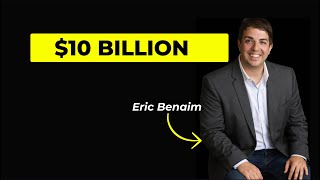
Eric Benaim dropped out of 10th grade and ran a rave-promotion business that made six figures in the 1990s. He founded Modern Spaces in 2008 with a $10k loan from his father and a $2.7 million deal, eventually managing $1-6 billion in assets and dominating 60-70% of new-development sales in Long Island City.
Chapters
Eric Benaime is a real estate entrepreneur and principal investor. He founded Modern Spaces in 2008 and built it into one of Queens' most influential brokerages, which is managing currently $1 billion and in the near future $6 billion in real estate, closing $10 billion in transactions, working on 10,000 residential units, controlling roughly 60% to 70% market share of new development in Long Island City. He also founded Managing Spaces and BenaimeX Partners with property holdings across New York and Miami. He as well co-founded Clipster, which is reimagining how New Yorkers and people in the United States will find real estate. Eric Benaïm, welcome to the podcast.
Thank you, Nadav. Thank you for having me.
Yeah, of course. What was it like growing up with immigrant, first-generation immigrant parents?
It was interesting. My father, both my parents actually, immigrated here from Israel. My father came here in '67 after serving as a commando paratrooper for the Israeli forces. And he, he was, I guess, a tough father. And we, we, I guess he instilled a lot of responsibilities and toughness. And he came here with basically nothing. And he slowly got into the gas station business. And he started working and when he came here, didn't speak English, he started working at gas stations, at a gas station as a mechanic. And then his, the owner of the shop retired. And so my dad approached him, can he take that, if he could take over the lease. And so he took over and he basically, he was very entrepreneurial. I mean, my father passed away 2 years ago. And he was very entrepreneurial. And then he ended up, I mean, over his career had about 27 gas stations, properties, car washes, junkyards, dealerships, catering halls, like various types of businesses. And so I think I get my entrepreneurial kind of like spirit from my dad. And then also just being tough and just learning how to deal with— unfortunately, in business, and especially in real estate, it's a very tough world. So dealing with that, I learned— I get a lot of that from my dad.
Wow, very, very story that I think a lot of people in real estate can definitely relate to, and a lot of Jewish people having immigrant parents. What was it like, though, when like you have immigrant parents and you drop out of high school in 10th grade? Like, because I know my grandparents, they would kill my dad if he did that. They're first generation as well. What was it like dropping out in 10th grade?
It was, it was kind of like, I mean, I remember it. I unfortunately was a bad kid. And so I'm one of four. I'm the oldest of four. And my dad was person who basically was up at like 4:30 in the morning. He left the house at like 5:30. He didn't come home till probably like 8:00, 8:30. And he worked 6 days a week. And my mom was a homemaker and she had 4 kids. And my mom was also young, so she had me when she was like 18. And so by the time she was 30, she already had 4 kids. And so just dealing with all that And I, when in 3rd grade, I had, uh, I had like some problems with my foot and I had to get surgery. The people who were here in the US, they wanted to do some serious surgery. My father wouldn't allow them. So we flew to Israel and the doctors in Israel were able to, to do something not as drastic and still like, uh, I guess help whatever it is that I needed help with. And by doing that, I met, I lived with my grandparents for 3 months in Israel. I missed like half of third grade, so I got left back. When I got left back, at the time as a third grader, I was embarrassed to go back. I went to Solomon Schechter. I was embarrassed to go to the next year where all my friends were going up a grade, but I was staying a grade. I told my parents I didn't want to go back. I wanted to go to public school instead. They put me in public school. Then I went back. Then after I finished sixth grade, I went back to Solomon Schechter. Graduated 8th grade and then I went to like a prep school. And I guess from 9th grade, I wasn't really into school. I was just a bad kid. I was into like graffiti and hung out with the wrong crowd or whatever. And in 10th grade, I, again, I cut almost the entire 10th grade because I ended up going— I ended up getting kicked out of my prep school where I couldn't go to private school, so I had to go to public school, and I was zoned for probably one of the worst schools in Queens, which was Jamaica High School. It was such a bad school that I was frightened to go to school, so I cut almost probably 90% of the school year. They said, "We're going to leave you back again." I didn't want to— I wasn't going to get left back, so I decided to drop out. And my father being really hard on me as he was, you either work in his house or you go to school in his house. There wasn't like sitting around doing nothing. And so I got a job. I got a job back then. We used to have a place called TCBY, which was like a frozen yogurt place. So I got a job at the frozen yogurt place. And I had lots of jobs as a kid. My first job was probably like at 12 years old. And I started my first real business probably like at 13 or 14. So I was always kind of like my— all my friends would go to summer camp. I didn't want camp. I wanted to start a business. So every summer I would start a business. And so I was kind of like always had that like in me. And then in when I was like 16, I got into— this is like around 1995. Ish. Um, I got into rave parties, and so I started going— this is when raves, now it's like they're mainstream, but, uh, they weren't mainstream back then. And so I got into rave parties, I enjoyed it, and I decided to start a company throwing rave parties. And so from '95 to 2000, I threw some of the biggest, like, rave parties in New York. Uh, I had, like, I mean, as small as 500 people, as big as 11,000 people. And, and so that was kind of like that. I thought I was going to do that forever, to be honest. Um, and then I left. I started like an event planning company, and then 9/11 happened. Nobody wanted to celebrate or party anymore. So I got into my— my father kind of said, get into real estate. And so I got into real estate, and, uh, the rest is history. Well, I hated it in the beginning. I only got my license because I thought it would be something I could do in the meantime until I can go back, hopefully go back to partying. Um, and the first 2 years sucked. I hated it. Um, but on year 3, I started like getting a passion for it. And 24 years later, here I am.
Yeah. So you're 16, 17, working in nightlife. You're throwing like biggest parties in New York City, um, in the '90s. Who was the most impressive person you met?
Who was the most impressive person I met back then?
Yeah, like, uh, no one crazy.
No one crazy. I mean, people who I looked up to— who actually— there's one person who I looked up to back then that I still look up to is, uh, Ian Schrager. So Ian Schrager was, uh, the founder of Studio 54. Oh, and he founded it with Steve Rubell. And then they got out of that. And he basically kind of like, after he got out of Studio 54, he basically invented boutique hotels, basically. And so now he's probably the large— one of the go-to person for like boutique hotels. He's owned some of the, like, the biggest boutique hotels in the world. And he developed super high-end luxury luxury condo project. And he's just a person— I mean, there's some documentaries on him. He's just a person I've— I kind of like admired when I was throwing parties, and I still admire him because he's in real estate. And so he's, he's a person I've kind of like always admired.
What would you say that you learned from throwing raves in New York City at such a young age that you were able to transition into real estate?
Uh, a lot. Um, so throwing raves in the '90s was basically, you had to always find— we used to call them, uh, virgin locations, meaning a location that was never— that, that was never a rave at that location. So trying to find new locations, so obviously that's a skill, finding a location, a venue. You use that in real estate. B, at 16, 17, once I found a location, I would identify who the landlord or the property owner is, and then I would negotiate like a lease basically, because I'm renting it usually for 1 day or 2 days, right? So I would negotiate a lease with that person. And then at the same time, I'm doing an event now for thousands of people, so you need insurance, right? right? I'm learning all this stuff as I'm going. You need insurance. It's an empty space. I gotta get production. So I gotta build a stage, lighting, visuals, all those different things. I'm sourcing those vendors and like also helping on like designing all that stuff. The entertainment, the entertainment, I had to book entertainers, DJs, basically from all over the world. And so I would negotiate all those contracts. With DJs, and a lot of times usually anywhere from 20 to 30 DJs. I set a ticket price, so I had to know who's selling my tickets. We didn't have all this online stuff like you do now, so it was actually record stores back then. And so making deals with the record stores that I would give them X amount of tickets and they would get X percentage from the sales. And then marketing. So every event had like a brand. I'd create a brand, create what the marketing was, flyers. Back then it was basically just flyers, but like extravagant flyers. If you actually I actually have some up there. You see? So creating a lot of these extravagant flyers and then traveling and marketing and whether it was— there wasn't really websites and stuff or social media back then. So it was more like meeting people in real life and handing out flyers and then selling and selling the tickets and then basically have the money now to try to create another event. So all those aspects is you use it today, whether you're buying real estate, You need contractors, right? If you're buying real estate that needs some renovating or updating or whatever, you need to find contractors. Those are similar to like the production people, right? What are you doing with the building? Are you creating a brand, right? I used to have to do that with the parties, right? Now a lot of times developers, they come to us and I mean, our main business at Modern Spaces is we do new development marketing. So we, we work with developers when they're about to acquire a property. And so as they acquire the property, we kind of do our feasibility study on the property. What's the best business plan for that property, whether it's a rental or a sale or for sale product? What the unit mix should be. So how many 1s, 2s, 3s, studios, etc., how big to make them, who the target demographic is. Are we, are we targeting young people or families or whatever it is that we're targeting? What kind of finishes? What kind of kitchens? What kind of— how is the look going to be like inside? What are the amenities? If it's going to be like younger kids who are like in 20s and 30s, their first or second apartment, you want to have a fun building. If it's like families, then you want to have like a playroom and like a tutoring room or whatever, music room for their kids, obviously. So you really— so we do all that and then we project manage the project. And then once the building is built, we either sell, we market it, and then we either staff it for sales agents or leasing agents. So all those aspects is something I basically learned while doing RAPES in the '90s. And I didn't learn— I don't want to come off sounding bad. But, and I'm a big supporter of school. But I might have not learned those skills had I stayed in school. And so like, even like you right now, you're— I'm very impressed that you're doing a podcast. You're probably— I'm assuming you're learning all this on your own. Or you're figuring it out on your own. I don't know if your school has a podcast class in school, uh, or a media class in school. So you're like learning on your own. And so the skills you have now, uh, just putting this podcast together, you'll be able to apply those much better, I think, than anything you're learning in school right now. Um, so yeah.
So you dropped out at a time where it wasn't really, even if it's not the same reasons as why most people drop out, where it wasn't really like a cool thing. Um, for people to drop out, not cool, but wasn't a popular thing for kids to say, I want to drop out. Was it back then or was it—
No, it was. My parents were my— in all honesty, my parents were like ashamed that I dropped out.
Yeah.
Yeah. Obviously it's not like they were like, oh, okay, whatever. Now my parents were— they wanted me to finish school, wanted me to go to college and do the normal things that most parents— I mean, I want that for my own kids, right? And do the normal things that most parents want for their kids. Um, it just wasn't, uh, part of the plan. Part of the plan. It wasn't part of God's plan for me. Um, but yeah, and then also a lot of things I learned that the nightlife business, um, is also very shrewd and tough business. And in real estate, there's a lot of shrewd and tough business, uh, people basically. Uh, so it gave me a lot of thick skin.
Makes a lot of sense.
Yeah.
What did success look like to you when you were throwing raves in New York City? Where did you think you were going to be in 25 years?
I thought I was going to be doing bigger events and bigger. In all honesty, I was, I mean, I was 16, 17 years old making like $100,000 a year and, and $100,000 a year in like mid-'90s.
Yeah. So it's obviously with inflation, that's a lot different than the $300,000 or $400,000, probably more.
Yeah, probably something like that. Um, and I thought, I mean, some of the people who I was— who I guess were doing events or other raves back then, along like at the time I was, have like huge companies now, meaning like, uh, electronic EDM companies. So like one of them is, uh, Electric Zoo, which they stopped doing it a couple years ago, but Electric Zoo in New York had like, I think, 200,000 people. Right? Uh, and they ended up selling that company 5 years ago, I think, for like $50 million. Um, Ultra in Miami— I, I went to the first Ultra in 1999. Uh, they have about 300,000 people. I mean, that company is probably— um, and they charge like $700, $800 a ticket. That company is probably a $100 million company. And so I probably didn't imagine— I don't think any of us imagine it— that would get that big. But I did imagine— I remember the last event I did, the last party I did, I ended up losing money, which is one of the reasons I got out. I ended up losing like $80,000. But I was already, uh, in talks of doing a bigger party for like 15,000 or 20,000 people the following year. Um, so yeah, I probably just thought I was gonna do bigger events, I guess.
Going to LaGuardia High School. That makes— yeah, that makes a lot of sense. Going to LaGuardia High School, you were probably different, or I guess you dropped out, but you were probably different than basically all of your friends and everybody you knew, uh, making $100,000 a month—
a year. So I went to Jamaica, and I went to Jamaica High School. Yeah, I mean, there— I don't know, I don't really— I'm not really friends with anybody. I barely went there, so I didn't really stay friends with any of those people. I do still speak to friends of mine from the public school from that I— when I switched over from Solomon Schechter.
But back then, were there— was there ever situations, uh, where you were like, I'm— there's something like you're not doing what you're supposed to be doing? Like, um, not that, but you're just so different than everybody around you.
Yeah, uh, Or you were used to it. Good friends of mine from like Solomon Schechter that I mean, now I know they moved out of state, but I speak to them maybe like once a year. But back then they were like, I know their parents are probably like, oh, don't do what Eric did or, or whatever. There's probably a lot of that. I mean, a lot of my, especially my Israeli friends, a lot of them were like, where I'm assuming were like that, or I assumed that their household was like, hey, don't, don't pay attention, Eric. But at the same time, they're all like shocked at like what I did with my life basically at the same time. Um, yeah, I mean, I got a few years ago, Solomon Schechter, they had— they, uh, gave me an award for, uh, like Alma Mater of the Year or something like that, which was hilarious because I mean, I finished Solomon Schechter but I dropped out of school.
Yeah, that's funny. It's really funny. What was 2008 like?
2008 was really, uh, a tough year. I started the company, um, we got incorporated in April and then opened our doors like in June, July, and then Lehman Brothers crashed in like September, uh, and I didn't think we would survive, uh, and, uh, probably In December, we thought we were going to close the door. I had to borrow $10,000 from my dad just to, like, hopefully stay afloat for, like, a couple of months. I think my rent of my— back then, the rent of my office, I think $3,000. And so I could have $10,000 could have, like, kept me open for, like, 3 months. And then one of our agents— we only had 3 agents at the time. And then one of my agents was doing a big deal and the building was desperate because of the economy and they were paying 5% commission. And the deal was $2.7 million. So 5% on $2.7 is about $130,000-something. And I forgot what our— we probably got 30% or 40% of that. And so that kind of like helped us actually through the year. And then another project at the time was having a tough time, a big condo project. Hasidic guy, Cheskel Schwimmer. I love him. And he— I met with him and he said, Eric, I'm having a hard time. He was with Douglas Elliman at the time. He's like, Eric, I'm having a hard time paying the banks. The economy is bad, blah, blah, blah. I want to give you 60 apartments. It was a 177-unit building. He's like, I want to give you 60 apartments to rent. We approached Douglas Elliman about it. They said no, they can't rent. They could just sell. And so, but I want to, I want to give you 60 apartments to rent because I need to have some income so I could pay my mortgage. So I said sure. So he gave us the 60 apartments. The first, uh, one of the first agents— sorry, one of the first, uh, tenants that we— I was, I, back then I was also an agent, uh, and so one of the first, uh, agents— I'm sorry, tenants was this Israeli girl and her husband, and she was working in a kiosk in the mall, like with the hair curling irons or whatever. And, uh, showed him an apartment at Powerhouse, and then she was saying, oh, she wanted to get into real estate. I'm like, oh, come work for me, we'd love to have you, you're moving into the neighborhood. A week later she shows up, she's like, okay, I'd like to work for you. I said, okay. She's like, what do I do? I'm like, well, right now we're turning your apartment— because she had rented the apartment— we're going to turn your apartment into a leasing office, and, and now your, your apartment will be the home base of the building. And so now everybody that comes will come to your apartment. And then what I did was I called up a mortgage broker friend of mine. I said, I want you to take what we're charging for rent and take the asking prices of these units and then put a side-by-side spreadsheet of what it would cost to rent versus own. So he did that. And to every renter who came in, because now we're advertising these for rent, every renter who came in to rent an apartment, We showed them, but we're like, you know, by the way, you can also buy this and your mortgage would be equal or less. And so we were able to convert a bunch to sales when he wasn't selling at the time. And so now we were doing rentals and now we were, we were representing the buyers on all the sales. And so he's like, you know what, why don't you just take over the whole project? And so you're doing a great job renting them and you're also selling. So we took over the whole project. Not knowing anything about new development sales or marketing. And I remember the first day, we were like, didn't literally didn't know anything, how to operate a sales office, but we operated the same, we figured it out. And the building ended up being a huge success. He ended up doing another ground-up construction building next door, 84-unit condo building. This is the first building we did the planning and the branding and everything from. And then at that moment, we started going after every project in the neighborhood. We're not just in Long Island City, we're throughout Western Queens. We service all of Queens. We, we do stuff in Brooklyn, Manhattan. We've had projects in Manhattan, and we have offices in Jersey City also. So we have a lot of projects in Jersey City. We've got a 100-person shop, and we're about to open up an office in Miami. Wow. Yeah.
Well, so you kind of flipped it. It's like such a bad year for at the start for you as well, but for everybody. And then you kind of used it to your advantage.
Correct.
And got, I mean, a little bit lucky.
Yeah.
Yeah. How would you say TikTok has changed the rental space?
TikTok has definitely changed the rental space. So good, good segue into Clipster, I guess.
Yeah.
So 3 years ago, starting there. So with any of our projects, we have, uh, daily reports that come in every night and our daily reports are very, are very, um, detailed. It tells you where clients come from, what their interest was, if they came from a, a website or StreetEasy or whatever. Right. Uh, and so it's several pages of details on the clients and the showing experience, et cetera. And so we noticed a few things. So aside from doing the marketing and the sales and the planning, all that stuff, we also manage the developers' budgets. And so we can manage as small as $50,000 budgets to as high as $10, $12, $13 million budgets. And so we, A, we noticed about 3 years ago that, um, real estate professionals, brokers, agents were reaching out to us who were trying to grow their TikTok and/or Instagram pages. And they were reaching out to us and they were like, hey, can we come do a tour? We want to put it on our social and you'll get exposure. And we started accepting it. We'd present this to the developers and be like, yeah, we don't care, we just want to get the building as much out there as possible. So we were starting to allow all these like agents and brokers coming in almost like weekly, various type of, uh, real estate agents who are trying to be, I guess, TikTok influencers or Instagram influencers who just needed content, right? And they wanted content to showcase different buildings. So we were constantly having them, and for us it was just free marketing advertising at the end of the day. So we started noticing that. At the same time, we also started noticing that on the consumer side, that consumers were starting to make appointments, but not make in-person appointments. They were making appointments over FaceTime. And so we started getting, we started seeing throughout various projects, FaceTime appointments pop up. On the reports. Then we opened up a project in Jersey City, about a 265-unit rental project. And in that project, we were getting 20 to 30 FaceTime requests per week. Wow. And then I would go visit our leasing offices, and I would see the agency sitting in the desk and taking notes or filling an application with the client or walking around and doing a tour with their phone. And I'm like, what the hell is going on over here, right? This is like Crazy. So both those things kind of like happened between the TikTok influencers trying to generate content and also the, the FaceTimes and stuff. Me and my co-founder, who's my COO and partner at Modern Spaces, we were like, you know what, real estate platforms haven't really changed much in 20 years, right? You have Zillow, StreetEasy, Apartments.com, Trulia, etc. They're basically all the same. They just look different, they're designed different, right? But they basically all offer a photo gallery, details of the listing, and contact whoever, basically. So they haven't changed in 20 years. But what has changed is both the real estate professional, the real estate agent and broker, has changed, whereas now they're using a lot of video content and social media, etc. And then B, the consumer. The consumer now, 75% of all home shoppers, whether buying or renting, are millennials and Gen Z. Where do the millennials and Gen Z spend most of their time? They spend most of their time on their phone, on TikTok, on Instagram, and consuming a lot of video content and/or live streaming content. A lot of streaming, like you have Twitch, you have TikTok Shop, you have all these different live streaming things. That's where the idea of Clipster came. Well, you know what? We need to build a new platform that appeals to millennials and Gen Z, Clipster was basically born. We having zero tech experience, we put together a team, a development team to help us build our MVP. MVP is like a test product. Yeah, I know. Once we built the MVP, we started doing focus groups and testing it out. Then about a year and a half ago, we caught the attention of this guy, Michael Tauss. Michael was one of the founders of Rent.com, sold that to eBay for like $500 million, started CrowdStreet, which was like the first crowdfunding real estate platform, started another company called Rentable, which is like a West Coast version of like StreetEasy for like college kids. So he was like a 3-time, 3 or 4-time founder, exiter. I guess he heard what we were doing. He initially came on as an advisor and then after a couple of months really helped us change the direction of Clipster and what we were building. Now he's a partner and our Chief Growth Officer. We have a full team now. We launched on October 28th. Probably about 20 people are on our team. And we launched at the New York Real Estate Expo, New York City Real Estate Expo. We were ahead of the show and we saw a lot of people are kind of like, we're like hungry for something new. We've had a lot of press. So we've already signed on about 1,100 agents and about 3,500 listings. So yeah, that's kind of like where that's been going and we're excited. We're doing it. We're raising now. And I've been really into the whole venture world and the tech world. It's been fun.
Well, it's amazing. It's such an amazing— I mean, if anybody listening to it doesn't know, I have it on my phone actually. It's basically TikTok for, for if it was on, you know, just real estate, you open it up and it's like you can just scroll listings. It's pretty amazing.
Yeah. So it's like we kind of like pitch it as it's TikTok meets Zillow. So if TikTok and Zillow had a kid, it would be Clipster. And so you can, you can follow agents, you can follow— so as a consumer, let's say you're looking at Long Island City or anywhere, right? But let's say Long Island City, maybe you would follow me, right? And then, or maybe you're looking in the Upper East Side or wherever, you'd follow an agent in the Upper East Side. Maybe there's a building you like, you can follow the building, you can, uh, neighborhoods. So you can follow properties, neighborhoods, buildings. Agents, brokerages, etc. And then so you have your search function, like your rent or your buying search, or then you have your clips. And then your clips is like, well, that's our version of like Reels and/or TikToks. And that's basically like everybody who you follow gets consolidated and streamlined into your clips. So that's your feed basically. And so you're searching for apartments, but you have like a TikTok feel where you're looking at videos. And then on the platform, you can, aside from following agents, You can also, if it's a rental, you can apply for an apartment. And then on the agent brokerage side, they can either upload videos, use the platform to create videos, or if they're not good at videos at all, they can upload photographs and our AI will take those photos and convert those to videos.
That's really cool. I think it's going to revolutionize, especially I see like a lot of millennials On TikTok especially, you find these, like, it's just a Shorts. It's like a, it's like a, it looks like a creator, but it's a page of like 500 rental listings on TikTok. And no one's built an app where it's just like scrolling TikTok, but for rentals. It's pretty amazing.
Yeah.
What's your number one book recommendation?
Number one book recommendation? Uh, in all honesty, I haven't read a book in a long time. I used to read books all the time. Uh, I would listen to— I, I could give you a podcast recommendation. My favorite podcast is, uh, All In Podcast.
Oh yeah?
Yeah. Uh, so if— and it's, it's— I got into it because of tech, but it's everything. And so I've learned a lot of like, I guess, the venture world and even like, uh, like real, like higher level, like business I've learned from, from that podcast.
Do you know Naval Ravikant?
No.
He went to Jamaica High School, I think at the exact same time as you. He started AngelList and stuff like that.
Oh no, I don't know.
Yeah. I'll send, send you after his information.
Nice.
What's the worst piece of advice you've ever received?
My worst— the worst piece of advice I've ever received. The worst piece of advice I've ever received. The worst piece of advice I've ever received is I remember I was at a company called Nest Seekers and I, when I was a real estate agent, this is in 2005-ish. And I was mostly an Upper West Side broker at the time. And then I kind of like got like a, I kind of like discovered Long Island City when it was not, literally there was nothing here. And so I started like focusing on Long Island City until the owner of the company told me to leave Long Island City alone. Don't, it's a waste, it's a waste of your time. And, and that was probably the worst piece of advice I ever had because if I would've left Long Island, if I would've listened to him, um, I probably wouldn't be where I am right now. Wow.
So you almost missed out on the, uh, Longhorn City boom.
Yeah.
What's the best piece of advice you ever received?
Uh, the best piece of advice I ever, ever received, actually from my dad, who always used to tell me, don't ever give up.
Makes— I guess that makes sense. If you never give up, you're never gonna fail.
Yes. Yeah.
Who's the most impressive person you've ever met?
Impressive person I ever met? That's a— you know, personally, I guess it's my father. It was just, uh, didn't have any schooling education, just military education, and was a fighter. And, and it was the toughest person I ever met in my life. So he definitely came from nothing and was able to build something. So very, very impressive person.
I've asked every single very successful person on the podcast ever what that exact same question. They always answer either their mom or their dad. And I think it's because Usually they think that they're the best at what they do, so they are the most impressive person in their industry, or they believe they are. And then their parents are always something that everybody looks up to.
Yeah.
What's one piece of advice you have to the younger generation?
The one piece of advice I have to the younger generation is do whatever you feel is right. Don't listen to the noise. And if you have a gut— if you have a feeling in your gut to do something, just do it and take advantage of your youth now. I think one mistake I probably made is I was too relaxed in my 20s. I mean, I was always like ambitious. I was always ambitious. But in my 20s, even though I had stopped throwing raves at like 21 and but I still, you know, like to go out and party, not as party as hard as I did in my teens, but still like to party. And if I would have focused more on my career, And also I started a family a little bit late in my life. Sometimes I would meet people, I remember years ago, I would meet people get married at like 24, 26, have a kid already at like 28. I'm like, what the hell? They're crazy, right? But now I'm going to be 48 in 2 weeks and have a 9 and a 6-year-old. I wish I probably would have started a family probably like 5 years sooner.
So your advice is to work your 20s, start a family, and just work hard.
Um, correct. My menta— my ment— my mentality always was I can't start a family until I'm financially stable. And that was just my mentality. Um, But I realized I probably just should have started the family even before being financially stable. And I probably would have learned a lot more actually by doing that.
And yeah, it pushes you a lot more as well.
I think when my, when my son was born, I got like, I was like a spring ready to like explode. I was like, I want to be 10 times more successful now because of my kid. My son's my oldest. So yeah, it definitely does push you more.
I talked to a person who does multifamily investing in Texas and he said after having kids, he actually had the opposite reaction where he, because he worked basically from 18 to 34 and he built a very large investment firm in Texas. And he said after having kids, he felt like he let too much time go. Before. Would you say you had that same experience? And he said one of his partners is actually having a kid.
He wanted his partner to have a kid or not to have a kid?
He's having a kid recently. He's actually very interested to see how his mindset changes because before he says all I was interested in was like success and money. And after he says all he wants to do is raise his children.
No, I disagree. I disagree. I'm a very involved father. I mean, I go to every— I go to every PTA meeting or parent-teacher meeting or play or whatever, right? I'm like very involved. But I also have that luxury because I'm successful that I can— I'm not tied to a clock where I have to punch in at 9 and leave at 5, right? So I have that kind of like luxury, I guess, of doing that. But at the same time,
More from Nadav
If your sons and daughters only remembered one lesson from you about money, what would it be?