How an immigrant doctor started a $120M real estate fund in her free time | Nkem Ezemama | Ep. 8
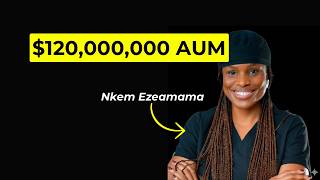
Emergency-medicine physician Nkem Ezemama built Phoenix Capital Investment, a $120 million real estate fund, while working full-time. She raised capital through a Dream 100 list and daily LinkedIn posting, uses 506(c) offerings, and focuses on land as a wealth builder for healthcare professionals.
Chapters
Ekem Azemama is an emergency medicine physician and founder of Phoenix Capital Investment. While working full shifts in the ER, she began investing her own capital into multifamily real estate. She has publicly shared scaling that works into roughly $120 million in assets under management. What makes her story interesting is not just the growth, but the contrast between profession built on certainty and a path To long-term conviction— with long-term conviction and uncertainty in real estate. Hikem Ezebama, thank you so much for joining. It's been great to have you on. How are you?
I'm wonderful. Thank you so much for, for having me. I'm really excited to be here and kind of just share my story.
Of course, your story is unbelievable. So first of all, you were originally in like medicine, right? Why, why would someone say, I'm gonna go and start, you know, multifamily real estate investing? Was it like you saw someone on YouTube or, you know, something like that? Or was it—
so I was, um, I was kind of looking for alternative sources of income. I learned that medicine wasn't as stable as I thought it would be. Um, I, I learned that, you know, We— I worked for a firm who work— we— hours were getting cut, we were losing our jobs. And so I also, I didn't see any job stability, which is— which I thought was very ironic. And so I started looking for diversification outlooks and started looking for kind of ways to get into real estate. And that's how I stumbled upon apartment real estate investing. And I, um, I left, I invested, and I think the rest is history. So I'm grateful that medicine did opened the door for me in that it allowed me the capital to be able to diversify, to be able to, you know, kind of think about ownership and think about buying real estate. So I'm grateful for that. But that's kind of how I started. It really was from a place of lack of job security and wanting to make sure that instead of working for someone, I needed to start thinking about ownership and how can I— how can we own?
How can you control your security?
Exactly, exactly.
All right, so that, that makes a lot of sense. But just what was that like? How— why did you choose real estate over something like, you know, e-com? Or there's a bunch of other stuff.
Good question. Um, I am, I am very, um, I want to say a little bit of asset class agnostic. By that I mean I do tell my investors to invest in different, to diversify in different, like all sorts of things, right? So I am, you know, I'm in stocks and I have, you know, bonds and I max out my 401k and, you know, I'm, you know, into, I've even dabbled into oil and gas. I am looking at investing in a university that's coming up. So there's multiple different things. So real estate is not the only thing that I do, but I believe that, true wealth, like the— when you think about the wealthiest of the wealthiest, their wealth was steeped in land and in real estate, right? Um, housing is a basic human need, and so everyone needs a place to live. And so if you can get into that, I think it's very worth it. So yes, I believe 100% in real estate, but I am also very diversified.
It's really interesting because I guess health, um, being a doctor and real estate are kind of the two things that every human will always be buying. Um, and you've just kind of worked in both of them. Have you noticed, and did you ever work in another industry or was just mainly—
No, just real estate and medicine.
So what was it like when you were leaving, I guess not leaving medicine, but I'm guessing that most of the people around you in your circle weren't investing in real estate. What was that like?
So it was very, I don't want to say, I don't think negative is the right word, but it was difficult. I will say that, right? Because the mindset of the people around me were, medicine is great, you should stay in medicine. Why would you even want to think about anything else, right? And that was kind of the mindset. But when you, when you have a big dream and you have something on your heart, right, you need to surround yourself with the right people who will see that, who will cheer that on. Um, and that has to be innate, but then it's who is like, who are the 5 people that you do life with, right? Who are the people that will encourage you, push you, keep you accountable? And so that's the type of people that you wanted. So in the beginning, it was very difficult. And also, I, I was, um, I want to say I was afraid because, you know, all I knew for all of my life was medicine. And so to think about becoming an entrepreneur and starting a business and building a real estate investment firm, you know, I had some imposter syndrome of what, what does that mean? What, you know, like, will I succeed? Will I fail? Will people trust me? All of those things are things I thought about. But I will say this, right, for anybody who's listening, when you put when you put your mind to something and you are consistent and you work at it every single day, right, you will build the reps. You will, you will be successful. You will grow, you will learn, and you'll make a difference. But you have to start. And that's the one thing that I told myself a long time ago, and I would tell myself again today.
Wow. So there was that kind of imposter syndrome, but you kind of just powered through.
Yes. So a lot of it is understanding, you know, the mindset behind why there is imposter syndrome. Exactly. And so when I did the work, the growth work that needed to fully understand why I was doing this, the steps that I needed, I slowly started to chisel away that imposter syndrome. And I felt like I could be in the room, like I had a seat at the table, um, and I could make a difference and I could build a firm and I could help others build wealth, right? It was little by little, was being consistent, it was taking the steps every day that got me there.
And what was your first— I've like, you know, made it, um, in real estate?
So I would say— oh, that's a good question. My first, my first investment was very successful, um, and so I invested, I, I took a gamble, um, or, or actually I won't say gamble, I'll say an informed decision, a calculated risk, and that was very successful. But I guess I would say that when I felt like I made it was when I could share my story with others and they resonated with— and that resonated with them, and they said, I want to do the same thing, right? It was getting— after, after thousands of nos, it was getting my first yes to say, you know what, I'm going to bring $100,000 into your next deal, I'm going to bring $500,000 into your next deal. And for me, right, that really meant that what I had to offer, there was value in it, and that felt like real success.
Do you think if your first deal failed that you would still be in real estate?
That's a great question. I would say with what I know today, the answer is yes. And that's that, you know, in everything, right, that successes and their failures, but what you do, the growth comes from what you learn from there. I believe 100% in the fundamentals of real estate. And so if a deal did not work out, it might have been because of the nature of the market. It might have been the operator. And there's a lot of factors. It might just have been, you know, maybe it was around the time of the global pandemic and all these things, right? There are multiple— there were multiple things that could have caused the deal to fail. And so understanding that doesn't take away from the fundamentals of real estate and the fact that you can be very successful in it and you can make a difference in it. So looking back, I would say if that had failed, I would still continue I still continue to pursue it.
Do you think you initially have gone into real estate if you knew that this is something that you're going to have a problem with, like you're going to not have great job security in medicine? Do you think you would have initially gone into real estate rather than medicine?
No. Oh, that's a good— no, I love medicine. Medicine has opened the doors for me. It's built a lot of trust and a lot of credibility that has helped me grow in real estate. But I do love medicine and What, what this has taught me, real estate, is actually more, um, more about entrepreneurship, more about business, more about ownership. And so all of that, I'm grateful for that I found that, but I think I would have made my way to it some other way.
Interesting. Okay, so you're saying you made— you would have made your way to medicine some way?
No, I would have made my way to like real estate. Yep. Yes. Yes.
God, it makes a lot of sense. I guess everything—
but there's a beauty. For all of my life, I've always wanted to be a doctor, and so I'm grateful that I've, um, I've done it. I'm grateful that I was successful in it. I'm grateful that I've changed lives through it, and I've really made an impact from a healthcare standpoint. And so I'm— I love all of those things, and I don't think I would give that up.
It's— I would say it's probably more fulfilling, uh, being a doctor than in real estate.
Oh, they're both— it depends on, it depends on how you look at it. Uh, there's a fulfillment that comes in real estate and with Phoenix Capital, right? I get to empower healthcare professionals and thinking about wealth creation and building. And so that alone is very successful and it's very fulfilling. So I don't think I can really compare them like apples to apples. I think they both have something wonderful that they have been able to give to me.
Interesting, very interesting. You've talked a lot about online, especially about helping other healthcare professionals invest in real estate. What is one piece of advice you would give to someone who is in your position who would want to invest in real estate?
I would say, I would say do it. This is what I would say. You don't have to do it with me, but I would say get into, figure out a way to get into real estate, whether it's, you know, investing So a lot of my investors are busy. They're, you know, they love their 9-to-5, they love being in healthcare, and they love that it affords them the ability to be able to own and invest in assets like, you know, apartment complexes. But I would say, you know, some— for some it might be starting a single-family home, for some it might be self-storage, for some it might be something different, right? Some— for some it might even be house hacking. But I would say I would 100% say do something. Start today. Start building towards your own.
Interesting. Okay, so you advise every single healthcare professional to invest in real estate?
I would. Yes, I would.
Interesting.
All right.
Um, have you seen like the duplex? Like if you buy one house and then live in the other three?
That's— yeah, house hacking.
Yeah, house hacking. That's—
mm-hmm.
Oh, sorry.
You could do that. Yeah, you could start somewhere. It just depends on where you want to start, but you can absolutely start somewhere. And grow, especially if you're young and maybe you don't have a lot of capital. It can be a good way to, again, learn, own, and grow. So yes.
As well, for some, I don't know, depends on the type of fund, but some doctors might not be able to invest in real estate if they don't have certain, you know, if they're not accredited investors.
That's right. But most, most doctors are accredited investors. Yes.
What are some habits or systems that you use to stop you from burning out?
So a lot of— I'll say a few. One of the biggest things for me was realizing that I can't do this alone and I don't want to do this alone. So I learned very quickly how to buy back my time. And what that means is that realizing the thing that I do the best and focus almost solely on that while I let others focus on what they do the best. And so I started focusing on my 20% and I started, you know, I started giving away my 80%. So the other things that I didn't have to do, I started building a team. And I think that was probably one of the most important things that I did. And I did very early, but it helps you not to burn out because then I do the thing that I love the most and I'm passionate about while I let let my team do all the other things.
Like the 80/20 law of 20% of the, uh, you know, I guess 20% of the input gets 80% of the output.
Exactly. Yeah.
What was— what advice would you give to someone who's making their first investment in real estate?
I would say, so, okay, so they've made the decision to do it. I would say education is power. And I would say, so along the way as you're investing, I would say learn a thing or two about it, you know. So a lot of investors are passive investors, But I don't think passive investing just means putting money and completely looking away from it. I think that you learn, you know, so like if I send you monthly financials, take a look at it, like understand, you know, where occupancy is, where vacancy is, just little things. I think it'll help you. The more educated you are, the more likely you are to continue to invest, and the more you get excited about it, the more you understand, are likely to do the next deal when you come from a place of I get this, I understand it. You don't have to know it as much as me, but enough to be able to make an informed decision. So as you start investing, I would say, you know, a little education goes a long way. And that could be reading your next book. It does not necessarily have to mean going to a real estate conference or taking a class. It really just could be picking up a book on apartment real estate investing, or picking up a book even in general investing and learning from there.
On the topic of books, would you recommend 3, 3 or so books that you think that anybody who's looking to invest in real estate should buy?
I, so I like, so for me particularly, um, I really enjoyed Multifamily Millionaire, uh, Volume 1 and 2, and that just talked about how to invest in small apartments and how to invest in large apartments. And so that was very helpful for me. That was a book that I enjoyed reading. So those were 2 books, but it really did just help break down how to buy your first apartment, um, how, you know, like what does commercial real estate mean, what does residential real estate mean, just little things like that, right? It even talked a little bit about house hacking. So like if you, you know, if you lived in a duplex, renting one out and using, you know, collecting the rent to pay your mortgage, that kind of thing, right? So that was really good. And then, um, I also read when I decided to start Phoenix Capital I read the Best Ever Syndication book and I thought that was really good and that was really just how to start a business. So specifically for, specifically for investing in apartment complexes, I thought those were really good.
Got it. So those three, I'll link them in the description. What is one thing that you think medicine taught you about real estate, something that you were able to transfer over?
I, I would say it's resilience. Medicine was probably one of the hardest things that I did. And when I started Phoenix and I started building the business, in the beginning there were a lot of nos. In the beginning, um, there were a lot of like questioning, why am I doing this? And so to be able to push through, to be able to power through every step of the way, I think it's important. And it taught me a level of grit that I could translate into this.
Got it. So resilience was what got you to succeed in both medicine and real estate, and that's—
you think just the power of continuing to follow through, and no matter what, no matter what obstacle, you know, the, um, you see the end in sight, but it's not just the end, it's the journey to get And do you think you got resilience from medicine or do you think it was from prior? Uh, that's a great question. It was probably from prior, but I think that medicine kind of sharpened that tool or that skill or that character.
What was, uh, your childhood like? If you don't mind, of course.
No, no, no, no, I don't. Um, I grew up in Nigeria. And we didn't have much, but my parents understood the power of an education. And so they worked really hard to make sure that we got the best education that we could. And we were afforded the ability to come to the United States and get an education here. And from there, right, I was able to fully commit and pursue medicine. So even though my upbringing was really difficult, right, that, that belief in education was what kind of carried me through. And, you know, like I said, even if my parents didn't have much, my parents were uneducated, but they really truly understood the power. And so every step of the way, no matter how hard it was, I had a family that was cheering me on and that said, like, no matter the hard, no matter the difficulty, like, you can also do it.
Wow. Uh, did your parents ever invest in real estate, or—
Yes. So my, um, my parents are current investors in Phoenix Deals, but even more than that, um, at an older age they started investing in real estate.
Wow, that's really interesting because I think most people, um, I don't know what it is, but everybody's parents, whoever does multifamily now, it's their parents as well who did it, maybe not before them, but they also end up doing it.
Yeah. Why do you think? They didn't do multifamily specifically, but just the idea of like buying, you know, and owning. Yes.
I think it gives a sense of security, especially to immigrants and to, you know, people who have just come to the country. They might get like a sense of security from owning, you know, 50 properties or 20 properties.
Yes.
Especially in New York, that's pretty prevalent. What did you think is the biggest lesson you've learned? What's the biggest lesson you've ever learned?
I would say for me, it's the analogy. And this has— I still relate to this and I still carry this with me. And it's the analogy of the Chinese bamboo tree. You know, when we see it, right, we see it large and we see it beautiful, right? But we don't understand that it took years underground of building a foundation and building roots before it sprout up to the, you know, to the ground and then grew. And that growth that we see that got to like, I don't know, feet and feet high, maybe really looks like it took 5 weeks or 5 months. But all the work happened underground, and I relate that to building. So if you are young, if you're starting a business, if you're starting to build something, right, you have to keep going. You have to— if you truly believe in what you're doing, then you work at the foundation and you make sure that the roots are solid. And that work, nobody sees it, right? That's the work, that's the grind that you do. And that's the yes that you say to yourself every single day when you wake up and you put in the work to build, right? And so it's really never— it's very rarely that you're an overnight success. It's just that's when people then notice you, but they don't notice all the work that you do before. So that's exactly like the sprouting is what we see, but nobody sees all the work that happens underground with the watering and the nourishing, you know, and the putting in the work every day. And so for me, that has been a big life lesson for me in whatever it is that I'm building, whether it was medicine that took me almost 11 years or building Phoenix, right? Whatever it is, it's the, it's the work that nobody sees, but that's the work that you have to do so that when the growth happens, when the sprouting happens, right? Like, you know what you did to get there, even if no one else knows that. So that keeps me— that, that is almost like the fuel fanning the flames every single day, you know, to get you to where you need to go.
What is, what is your why? Because people, a lot, a lot of people will say, you know, most of it's underground, but a lot of people don't have the, you know, I guess, grit to get above ground to that point. So what is your why that got you from planted?
So, so I had a mentor who made me read the book Start with Why by Simon Sinek. And if you are, if you're a young entrepreneur, if you're starting to build, I would say pick up that book and read it because you have to know your why because it's going to get really hard. You are going to maybe put on a webinar that nobody shows up to, but you still present. You might hear 1,000 nos. And before you get your first yes. And so you have to know. And for me, it was the fact that, like, I, with my story, right, I could get to show people that it is possible, that especially women, especially young women, you know, who maybe think that being a CEO is not possible, or being an owner, or being a builder, or being a physician, right, whatever it is, that it is possible, that you can dream and that dream can be accomplished. And that was my why, especially when I was thinking about pivoting from medicine to building this real estate investment firm, right? It was knowing that, like, if I can do it, right, someone else can do it. And so that was a very strong part of every decision I made. And so I still show up today knowing that there are people who are looking and who are just looking to see that, yes, if they step out there, this is possible.
Well, how do you, how do you deal with not getting complacent after you've already gotten some success?
So again, it's back to about your why. It's about this, back to your why. It is. It's, it's—
you can't have your why put onto a number.
Exactly. And so it's— you have to— it's not just— it becomes bigger than just you. Right? So it becomes bigger than just like some tiny success. It really has to do with making a difference and really impacting lives. So, and also, if you start getting— I went back to accountability and the people that you surround yourself around, right? If you surround yourself, you should surround yourself around— you should surround yourself with people who their dreams scare you. And that means that like yours isn't big enough. And so when you hear theirs, you're like, okay, mine is nothing, right? Like, if I want to have you know, billion dollars in asset under management, that's nothing because I'm around people who are thinking they want 10, you know. And so that is how you have to think, right? And that's who you have to surround yourself around. It's very important. Wow. Wow.
Very inspiring. You are the 5 people that you surround yourself with, right?
Yeah. Yeah.
How did you get your first investor? I am guessing you want your first deal yourself, but after that you decided to raise capital. So how did you get your first investor?
I, um, I picked up my phone and I said my first investor is going to come from someone who already knows me. And so I created a Dream 100 list and I went through— I sat down on a weekend and I went through my entire phone, my contact list, and I, I started writing down people who I thought are going to be yeses, who are going maybes, uh, who are going to be nos, I put them on the list and I reached out to them and I said, this is my story, this is what I'm doing, I'd love for you to be a part of it. And that's how I started. And so I put them, and if they were like semi-yeses, I collected their email address and then I shared the journey with them. I sent them monthly newsletters. I told them, you know, if I went to look at a deal, I would send them pictures. And then I told myself that I would get online And that was my first foray into social media and getting on LinkedIn. And I made a commitment that I would post on LinkedIn every single day, every single weekday. And if I had something else important, I would post on Saturday, but I committed to posting every single weekday for a year. And again, if you show up, if you show up and you are consistent, right, the marketplace rewards that and they see that. And so I did that. And between my Dream 100 and LinkedIn, I started getting yeses and I started getting investors and I'd get people who would reach out and say, I saw something you did online. I'd love to know more. Do you have an active deal? I would love to get in. And that's how it started.
Talking about LinkedIn specifically, how do you think, I guess, not just LinkedIn, but social media as a whole affects real estate, especially with the 506?
Especially with what?
With a 506(c) offering.
So, oh yeah, so I love it, right? Because if you have a, you know, a 506(c) deal, which means that it is only for accredited investors, which means you can advertise, right? Then you can use LinkedIn. But I would say this, right? When you are starting, let's just say you're new and you want to build on LinkedIn or social media, I would say show up consistently, but show up truthfully and honestly, right? Show up, tell your story. So you shouldn't start selling from day one. I think you should let people get to know who you are, what you're about, what you— what matters to you, right? And share your journey and maybe share like how you went from this person to this person or what you're building. Share that with them. Let them see that story, the hero's journey. And then from there, right, if you have a deal, if you have something something, you can tell them about it and see if they're interested. But I would not— I, I think people love authenticity, and they sometimes— that's what will get you to convert your first opportunity or your first investor, your first deal, your first whatever, right? But I think that people need to see that you are real, that you're authentic. There's a level of vulnerability that you can bring in, which I think is a really good thing because it builds trust again, right? My investors are— this is their hard-earned income. We're asking to invest $50,000, $100,000, and more. And so, like, they need to be able to know you, trust you, like you, um, and all of that comes with showing up and showing up consistently and showing up honestly.
What advice would you give to someone who's trying to grow their audience authentically?
Show up. Just tell your story. Just tell your story, show up. You don't need— it doesn't need to be fancy. When I first started LinkedIn, I didn't know what to post and I just posted quotes. Like, I just posted quotes from people that I thought impacted me because I didn't know what to write. And slowly but surely, I started getting my voice and I started learning what's important to me, what I wanted to share. I started learning that I wanted people to understand that, like, it's possible to dream and have that dream come to life. I got— I started. And so my story started to change, right? Um, so I went from quotes to saying, okay, this is what I'm doing, this is how I'm building, these are my thoughts, this is who I'm talking to. All of that I shared on LinkedIn. But start. It doesn't have to be pretty. Yeah, it doesn't have to be pretty. You just start.
Yeah, there's exponential growth as well, especially on the LinkedIn. Yes, platforms like Instagram and LinkedIn. What is one thing that you wish you were told earlier?
I wish someone told me to start earlier than when I started.
Where do you think you would be?
Oh my goodness, like, I, I, I don't even know. Because if I started— but I'm grateful I started, right? So the, the best time to have started was 10 years ago. The next best time is today. So my today was 6 years ago, uh, and so I'm grateful for that, right? I don't know, I can't predict the future, so I don't know what it would have looked like if I started 20 years ago, but I'm just grateful grateful for where I am. So if you're listening, you should start today. Wow.
Okay. Um, did you quit your job when you started, or did you stay working?
I stayed working. Um, I wanted to leverage my 9-to-5, and I was able to use those funds to build the company. So I would say if you're thinking about, like, you should have a plan, right? There's— yes, there's a beauty in, like, you know, like, burn the ships and go all in, But you have to have a plan. So if you have a 9 to 5 that is working right now, use that, leverage that to build whatever it is that you want to build. But I would not say jump ship right away. Got it. Got it.
So you weren't like, well, I'm just going to figure it out.
No, no, not at all. I definitely don't. I definitely don't agree with that.
What do you think your parents would—
their reaction if you just quit your job and they would They, they would not be in support. Yeah, they would not be in support.
What is one thing that you wish you were told? That you wish you— what's one thing that you wish you could tell your 18-year-old self?
I would tell her that she shouldn't stop. I would tell her that the journey is hard, but the growth is wonderful. So I would tell her to— I would tell her to continue to dream and that she shouldn't be afraid to dream big because those dreams are going to come to life. That's what I would tell her.
Wow.
Wow.
And you think self-belief was something that you got along the journey or was something that you were born with?
Hmm. I think it's both. I think I struggled As a woman, you know, I struggled with self-confidence to some level, but my parents taught me, they instilled in me that, you know, I can do it, that I wasn't any different from the president and I wasn't any different from the people who pioneered the coolest and biggest and best things in the world. And so even though I struggled, right, I always had that at the back of my mind. And so even if I didn't have anyone to push me, I always just— there was this like just general self-love and belief that like I can do it and I can keep going and I can make a difference. Wow.
Wow. Okay. What is your goal for the next 25 years?
So I, um, I probably have— I probably have maybe a 5 possibly a 10-year goal, but I don't have a 25 because so much can change, will change, um, in the next 25 years, and I'll be in like a very different season of life. But in the next, in the next 5 to 10 years, I want to, um, I want to grow Phoenix. And I think, I, I know that we can be a billion dollar, um, or more in assets under management and with the steps that we're taking today. But more than that, I want, I want to have as many healthcare providers, as many healthcare professionals learn and know about real estate and be able to make a difference and actually start investing and growing. I know that it's possible to build wealth through this, and so I want as many of us to know about it. Wow. Wow.
Okay. Very interesting. So you want to help more healthcare professionals invest in real estate?
Yes.
And is there any other industries that you notice that have similar issues with job security that, um—
Oh, tons.
I mean, I think it's well, uh, yeah. What is one book that you recommend everybody listening to this podcast go and read, not related to real estate?
Um, Buy Back Your Time. That's, um, it's, it's Dan Martell wrote it and I just loved it. I, I, I really enjoyed reading that book. There's a lot of books I could recommend, but I really enjoyed Buy Back Your Time. Um, and also, um, 80/20. Well, what's, um, Sam Sinek? No.
Um, oh, Tim Ferriss.
No, no, no, no, no. Um, let me get you the name. Hold on. Um, if I can remember, I think I listened to it. I may have it somewhere on the shelf. Uh, the name's gonna come to me. Like, if I remember it, I'll, I'll, um, I'll send it to you and then you can add it to the— but Buy Back Your Time is one that I absolutely loved and I have, um, it just helped me very quickly know how to delegate so that I can do the things that matter the most. And for me, that thing is really talking to, you know, healthcare professionals, getting in front of their faces, empowering them and helping them to understand the power of real estate investing. Wow.
Okay.
Wow.
What is the worst piece of advice you've ever been given?
Who? Stay in your lane, which meant that I should not, I shouldn't have started Phoenix. That was the worst piece of advice that I got.
I guess if you hadn't taken that, you wouldn't, you wouldn't have done half as much as you've done.
Nope, not even close.
What's the best piece of advice you've ever been given?
Um, start now. That was it. It was very simple. It was very simple, but it was start now.
Who's the most successful person you've ever met?
Oh, I guess I met, um, I went to Date with Destiny and I met Tony Robbins, and I've been, um, I consider him one of my mentors even from afar. And so it was really wonderful, um, learning from him, being in proximity with him. I think that was really cool.
Yeah, he has a lot of energy.
Yeah. Yes, he does.
Thank you so much. Uh, that was your guest, Sekem Eze-Mama. Where can people find you?
Yes, um, you can find me on LinkedIn as always, but you can truly find us on any, uh, social media platform. Our site, but I think like the easiest and best way to connect with me is through LinkedIn.
Awesome, awesome. All right, take care.
I remember the book real quickly. It's called 10x Is Easier Than 2x. I knew it would come. Yes. So, um, if you're thinking about 10x, you can stretch and think more. If you're thinking about 2x, you can stretch and think 10x is not as— it's not much harder to achieve. Wow. Okay. Wow.
Yeah, I think Sam Altman said like it's easier to raise $400 million than $2 million.
Yeah, yeah. Which you have to get to the point that you can think of— understand that. Yeah, exactly. Yeah. All right.
More from Nadav
If your sons and daughters only remembered one lesson from you about money, what would it be?