How he came back from -$15M in real estate | Eric Brody
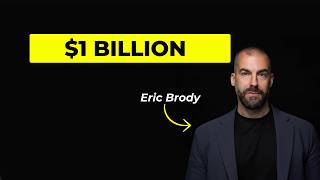
New York real estate developer Eric Brody lost $15 million on a COVID project, faced a judgment against him, and rebuilt by pivoting to content and prop-tech. He explains why most developers misunderstand where money is actually made, and how discipline and learning from failure shaped his comeback.
Chapters
Eric Brody is a New York-based real estate entrepreneur who has spent nearly 2 decades working in development, construction, and capital markets. Over that time, he's been involved in roughly 800 residential units, close— representing close to $1 billion in total project value. Today, he's the founder of Annex Real Estate Partners, which focuses on capital advisory and complex real estate situations. He also founded Annex Ventures, where he invests in early-stage prop tech companies. As well, he's the host at Real Tech Talk and The Blueprint. Eric Brody, welcome to the podcast.
Thanks, Blair. Thank you for having me.
Yeah, thank you so much for coming on. First of all, your dad was an architect, right?
My father is an architect. So what they say is, and this is— we always talk to everyone about this— people will say that they're an architect. Right? And my father would tell you, did they pass these tests? There's like 6 tests, like imagine an SAT on steroids over 6 days where they used to by hand have to draw and then submit. Now obviously it's all digital, so it's very important. He was a registered licensed architect in the state of New York.
Wow. So how do you think growing up with your father as an architect impacted you wanting to into real estate?
So it's a great question. I always deny it. Everyone says, I used to watch my father and then one day that's what I wanted to be like. I think everything was subconscious. So I'll give you a story. When I grew up, and when you're an architect, right, you have to do what we call construction administration, which is to walk a site. All right, I gotta walk a site. Maybe there's a detail, a sketch that they have to do. So I'd be like, come on, Eric, you gotta come with me. And I'd be like, come on, I don't want to go to a job site, I want to go play with my friends or something. So we'd go to these job sites, and back in the day in Brooklyn, there'd be guard dogs on the site. So you'd become friends with the guard dogs, big monsters, you know, like a meat missile, want to rip your face off. And I would sort of sit in the meeting as like a 6, 7-year-old, but really I would walk around the job. I don't know, I just wanted to see construction, and I really wanted to go to like the highest, most dangerous point where there wasn't safety rails and be like chilling. And at the end of the day, it's funny, I always denied that that was relevant, but the truth is I did learn a ton by going on the job sites with him. So it must have had a massive impact, but it was subconscious. I wasn't conscious of it.
You weren't thinking, oh, my dad's an architect, I should just go into this business because it's in my bloodline?
Well, technically he told me don't go into the business of architecture, because what architecture is, is this perception that you're the artist and that you're going to be able to do whatever you want. But there's all these constraints— zoning, code, timing, price, and the liability is massive without the return. You design something for a specific fee, but you're liable. People can come after you for that. So the, the risk wasn't worth the reward to him. He said you should build and develop.
Interesting. So he told you not to go into architecture?
Not only did he tell me that, when I graduated school— and I'm talking about college, not high school— I used to go to construction school at night. Because after a Bachelor's of Science, it had nothing to do with specifically about construction and development. So I went to this like GED school associate's degree program in downtown Brooklyn. Then I said to my dad like, yo, let me work for you during the day. And he's like, you don't draw, you're not even going to work for me. You could sit in my office as sort of a jump-off point, meet the engineers, meet my clients, meet the parties that are relevant to a construction process, but I'm not paying you a dollar. And that forced me to then work on the weekends where I brokered. So the benefit was there because he was tough, but the truth is he would never pay me as an architect.
And did you want to be an architect?
No, I don't draw. I'm not an artist. I had no interest.
Why did your dad go into architecture?
Because he's an artist. Now, today, he's a sculptor. Now, when I was younger, and I still have this shield, one time for Hanukkah, he literally cut out a piece of wood, sat me down next to him, he goes, what do you want me to draw? I'm like, draw a dragon on my shield. He draws this big fat dragon right off of sight, no image, nothing. He's like, here, Happy Hanukkah. So he's an artist in the true sense that he visualizes the world through a different lens than you and I do. It's not me, it's not how I see the universe.
What aspect of art would you say you have brought from your dad into development and real estate?
The art of motherfucking war, bro. How to get things done, how to take complex things, disparate ideologies, weave them together in a symphony to build a building. That's the only art I know.
That's a valuable one to know.
Hell yeah.
What do you think is one thing that you misunderstood at the beginning of starting real estate?
I think the one thing I misunderstood is understanding where the real power and where the real— how you really make money in the game. You're taught and sold the developer, they must be the end-all and be-all. And it isn't true. They're the ones who are responsible for sort of the symphony of executing on a project. But the real capital and real money is in something about risk-adjusted returns. Who's at the least amount of risk who can get the highest returns? Does that make sense? Yeah. So a developer is taking a massive amount of risk for a massive amount of gain, but a massive amount of liability. Wouldn't you want to be where if you were thinking in bets, you'd want to put a bet that has a higher rate of actually getting paid without taking such a risk? And that wasn't the developer. So that was a misconception.
So you misunderstood that being a developer, you're gonna take crazy outsized risks.
Yeah, that you're the king, right? I'm the developer, I'm the man, there can't be anything higher than that, I'm the leader. That is not necessarily true.
What does a normal week look like for you?
So that's, that's really interesting because it's always different. I think about it as sort of like a triangle or a stool right now. So there's different parts of a business, and when you're underwriting a business plan, you got different aspects of business. So part marketing, like how you get the word out to drive traffic of those that are coming in. Part technology, how are you communicating with your engineering team to create efficiencies and automations. Part real estate developer, I have two projects that are under construction right now, so there's meetings in the field. You need to know that those that you are paying are executing on the business plan that you had underwritten. Part psychologist, part keeping people calm, so what is that? Phone calls, meetings, opportunities. It's never the same. And my advice, or like my truth would be, Always be ready. Do everything you can in your personal life because you have no idea what's gonna happen that day. And the truth of the matter is, be flexible in your mind so that you can be prepared for whatever it is. It's the unknown that where the real growth happens, where things are really interesting. And my week is always unknown.
Do you have no idea going in, like, I'm gonna wake up at this time?
No, I always know that. Please, 5 AM, bro. See you at the gym at 5:15. Of course, right? But that's creating Trying to create discipline in chaos.
Yeah. Trying to have some boundaries, but some, I guess, rules.
Well, the first and most important thing, which I never learned, is you have to be aware of yourself, right? Which means that you are the most important party. How are you going to show up? Do all the things that make you feel good to show up into the chaos that's going to be what you create. So 5 AM, wake up. 5:15, train. Meditate. At the office 7:30. 7:30 to 6, 6:30. Then I bounce, right? So those are like when I'm working. And then, by the way, as an entrepreneur, I may have to take a meeting at night. I may have to do something else at night, right? What are you willing to sacrifice and dedicate to your success? But to learn about being as best person showing up each day, which has nothing to do with what's happening in that week, you always want to be consistent.
So you have a consistent morning most times, of course, and then Throughout the week, you don't know what's gonna happen.
Look, I set up meetings, I got time with you, I set this time up. So then you have your schedule where you're creating sort of like zone defense of what might actually be happening that week, and then things actually happen. You're really prioritizing those things that are most important, or those things at the end of the day make you the most money. Because you become so busy, there's only a certain amount of things that you can do, of course.
Of course, if you were to start over today with no capital at all, just graduated college, what is one piece of advice you would give to that person?
So I think what's— that's a great question. So really important is there's two sides of real estate. Real estate has a massive investment game. Inherently, to invest means you have money. You said, I don't have money yet. Great, that means you need income. What is that pathway to do that? What is the trajectory to do that? Then I researched guys who developed. Then it came back, alright, but I need to generate income in order to do that. And that was how I got to the income, which was if I build buildings, I make revenue. How do I then turn that revenue by saving into development? As long as I was on that pathway that we're talking about, I was satisfied. So I would go to what my end goal was, come review who the mentors are, where I wanna be, And then read their paths of how they got from here to there.
So reverse engineering.
Always reverse engineering.
How do you think social media impacted real estate?
How do I think social media— I think that social media exposed an audience to the business. Social media became an attention grabber. The universe changed as to where our time and attention goes, where our eyeballs are. So it's a new medium. It's a new medium for attention grabbing. It's marketing. So we are all marketing companies one day. Whether it's you're like, I want to interview famous people. Well, the producers, famous people need to see you. How are they going to see you? Inherently there used to be this pathway, network TV, and you're like, nah, that's not the way it works anymore. So for me, content, right, and it's not social media, it's content. Content is inexpensive. It used to be really expensive to create content and to make production. Now it doesn't need to anymore. Authenticity drives eyeballs. So now I have an audience of hundreds of thousands of people at my fingertips each day. What do I need from that audience from a business perspective? That would be the way I would look at content creation. It's a massive funnel driving people to your business.
So there's a lot of top of funnel.
It's all top of funnel. All top of funnel.
How do you think it impacts commercial real estate? Because you see with like residential, you have Ryan Serhant who's like killing it and all of those people where they're making videos on Netflix, you know, TV shows on Netflix, and that's their top of funnel. But with commercial real estate, right, I don't think there's a lot of people, and I don't think Netflix would have, you know, a commercial broker that's selling to some random office space to some random person. How do you think it's impacting commercial real estate?
First off, I would challenge your theory, right? Why is it that being exposed to content is not influential in commercial real estate? Like, why not? Is it because the human is resisting that change? Is it because if in resi it worked, why wouldn't it work in an analogous industry? I don't know. Are people nervous about putting their, you know, putting themselves out there to be criticized? Whereas Rezi's like, fuck it, let's go for it. So I would challenge that thesis in general. If I can be in front of more people's eyes than I ever could by making phone calls, which is completely inefficient, or sending emails, which is completely inefficient, then you'd say, how many people dislike me? How much hate can I, how much discomfort can I handle? Well, if I were able to go out to 100,000 people And let's say 80% thought I was an idiot. That means 20,000 people thought I wasn't? Come on now, like, that doesn't make any sense. I think that 100% content creation into every business is a marketing funnel. And if you're not using it, an inexpensive marketing funnel, you're at a disadvantage today. You're a mind virus, you're in people's heads that have never heard of you because it's in the moment that they decide what they need, that they may reach out to you depending on what your messaging is. So, but that's not the real secret. The real secret is what do you do with the traffic incoming and how do you nurture that so that it comes down to one day being something of value? How do you accelerate the growth of being credible? Credibility is expertise and trustworthiness. How do you truncate that instead of people saying it took me 20 years here, down to 1 year. I don't know, is this all accelerated growth? Maybe.
Do you think social media could give false credibility?
Of course, but that's, you know, you can't be a sucker. You know, you're from New York, you gotta, you know, you can get hustled by anyone anywhere. Yeah, so of course it gives false credibility. How do you know because you saw the video that they are credible? But that's irrelevant if underneath that you drove an eyeball, got information about that, and then it turns out for me, I wasn't on social media after building 40 buildings over 18 years. At the end of it, there is a credible party. So I don't care. It's not my issue. If you look at what Serhan is doing at the end, he's a great marketer and selling a ton of real estate. It is true that he knows what he's doing and he worked his ass off. Even if he's doing some corny video, it still drives to a credible party in that space. You have to be a credible party no matter what, but in any business. But if you could accelerate that growth of driving people to you, like, who wouldn't do that? You're driving, you're using scalability to a business that was never scalable.
It's networking at just like a massive scale.
Massive. Yeah. Or reinforcing a message of people you never even would have heard of that want to communicate with you. How do you take a relationship from cold to warm without ever meeting anyone?
People build like a a relationship with you if they watch your content.
100%. If you and I met Joe Rogan, we'd be like, is their name Joe?
Right?
For real. Yeah. So imagine doing that at scale in your business. Yeah. People don't come up to me and go, hey, is your name Eric? Like, you know, I love your content. I'm like, are you in real estate? Yes. They're reaching out to me even if— and I don't care if they're massive executives, because those executives also know that I built these buildings and know me. They pick up the phone. They want to hear what it is. They're still seeing you every day. I haven't spoken to you in 10 years. They talk to me like they saw me yesterday.
Because they did.
Because they did.
What is the hardest thing that you've done in real estate?
Coming back from being negative $15 million on a personal judgment. That's the hardest thing.
What's the story with that?
I developed a 21-story building. I'm a big swinging dick developer. I think life is good. No self-awareness. And then Corona hits, and the lender that just took out schmo on a deal in Raleigh, they foreclosed on me, and they come after the guarantees. That's the infinite risk of a developer. Then they won a judgment against me personally for negative $15 million. So now you're negative $15 million after your entire life of generating revenue. Who are you then, and what are you going to do? Coming back from that has been the greatest thing that I've overcome in this business and the hardest.
And how did you do that?
How long can you sit in discomfort? Do you fall apart when there's real pressure? Like, I don't talk about real life pressure, not, you know, oh, I may not make money. I'm talking about when you are negative, what do you do? So one, you learn to sit with that discomfort. The second thing is you never give up. So eventually we were able to settle that, so I didn't have that anymore, but that took 2 and a half years of discomfort. During that time, we kept pivoting and figuring out where that niche is. Started looking at the real estate business differently through content. That's why, because why would you need content if you're already doing well? And through disintermediation, which you just read about in the last 2 days that you're seeing commercial real estate stocks tank. Why? Because of automation and disintermediation from technology into that business. So for us, we started exactly there. We learned about tech. Started a venture fund, started a podcast to create that ecosystem to get people to question how real estate is done. And that was sort of the comeback story. Wow. Okay.
Wow. And how long did that take?
Still happening now. What year is it? 2026.
6 years so far.
Uh, July of '21. 5.
Okay. What do you think is one lesson that can't be taught?
What did— I mean, it can be taught over repetition. It's just being uncomfortable and being okay without having the answer, right? Development in real estate is a complex business, not complicated, which means inherently things are going to happen that you cannot underwrite or see. When that happens and it's uncomfortable, what do you do as a human when you react to fight or flight? Can you sit in that discomfort until the solution comes. Can't teach that. That's just something that just comes over time.
And do you think some people are born with that, or—
No, I think everyone has to work on it. Even your special force operators talk about breathing exercises because there's chaos, right? Your body is going to react. If you cold plunge, it's like, how do you not hyperventilate in the cold plunge? You have to sit in the discomfort, right? It's going to happen in your real life. It's going to be uncomfortable. What are you going to do? How can you sit in that day in and day out? There isn't an immediate solution.
Just keep going.
I don't know, each person is different, you know.
What is one piece of advice you would give to somebody who's trying to make it in real estate?
What would be one piece of advice? Just what we were talking about. Find the end goal of where you wanted to go, drive that back to today, because you will fight Like there's this guy named Sun Tzu in The Art of War. You ever heard of Sun Tzu? General, 5,000 years ago? So he would put his soldiers up against a natural barrier and then the opposing army in front of them because when there is no bridge or any way of escaping, you fight like a poet, a warrior poet. You just keep going because you're already dead. So my advice would be you go back from what the goal you're trying to do today so that whatever you're doing, you're doing it with such passion that you will go the extra mile because if it's not along your path to your future success, success for me, I wasn't willing to put the energy in and requirement. So mine would be find out what it is you're trying to achieve so that each day, whatever you're learning, even if it's fucking boring, you're willing to get fully into it. And I would also say anything that you choose, you go hard at it for 1 year. You go through each season. One of— someone called a sabonim, which is basically my hapkido master, which is a Korean martial art, was Like, if you're going to come here for less than a year and not go through each season, don't come here. I mean, go hard at it for a year and then decide if it's for you or not. Yeah, there's always—
the grass is always greener on the other side.
Yeah, but if you never went hard at anything, you wouldn't know what you were able to achieve.
Of course. Who's the most impressive person you've ever met?
The most impressive person? I don't know, anyone who's at peace is pretty impressive to me in this chaos. Anyone can live their life at peace is impressed by— I'm impressed by. Wow.
Interesting. What do you think is the most common mistake that people make with construction timelines?
Um, that there is one, you know, like you're— that, that whatever has been written down is set in stone. That's not true. What we do is you want to think about it differently as a milestone. We got to get from point A to point B, and then the schedule and everything is always like, then you do this, this, this, this, this is going to go to shit. What isn't is this milestone. Can you get there however you have to go to get there, right? But that date with that achieved goal is what's important. Then how you're in the process of getting there, don't micromanage it. You need to be on top of it, but you've got to let the experts do what they do in order to achieve that goal.
So you can't control it.
I mean, you can do all you want. There's no such thing as control. There's process, but the idea that you have a perception of control is a fallacy. You don't control what's going to happen tomorrow. You have no control.
You don't control if a walker gets hit by a bus.
That's fucking right, right? So there's no control. It's a trajectory of like minds getting to a getting to a specific goal together, however you do it, by hook or by crook. But you aren't going to control that. You're going to influence that. You're going to motivate that. You're going to push that. You are not going to control.
So you think there's no such thing as control, it's just perceived control until it's broken? Of course. Yeah. What do you think What do you look for when you're investing in a company?
So that changes over and over, right? So investing in a company, when we were looking at sort of in venture, right? It's like a few different things. First, that I thought was always really relevant, you're investing in people. Like, do you see that they're the type of people that will never give up, right? Boom. Second, you're looking at what they're trying to solve, and like, does that have value? Like, does it even matter? So you solve that. Is there a pot of gold at the end of the rainbow even if you do solve it? What's that?
The TAM. What is that? Addressable market.
Is it the TAM or is it like, does anyone care? Is this useful? And it's like, shouldn't you invest into businesses that you sort of understand? So look, we invested in a bunch of companies. The real estate tech market changed dramatically. The companies that were like the most successful were the ones that we thought, you know, didn't have much of a chance but we believed in the principles and they're the ones doing the best. So at the end of the day, I think you invest in people.
What do you think is one company that doesn't exist yet that should?
I think that— I think that— I don't know if they exist, they're trying to exist. So all these companies that people have identified the problem. It's can they achieve the goal? So like, think about it for construction. Wouldn't you want a language model over every construction document you have for a project? Doesn't that seem relatively simple? It's like, what's on the 8th floor? How many doors? What got delivered? Like, you could just ask it questions all day. Like, just ask it, like, are we on the critical path schedule? What was the last requisition? Like, just a language model over a dataset. Like, wouldn't that make— like, people are trying to achieve it. The problem is all the disparate information. This is AutoCAD, this is Revit, this is PDF, this is Procore. They all have different file types. But wouldn't it be really simple if you're like, yo, translate every common denominator to the same file type, ask it any question about any project, anything ever, and then do that across multiple projects by ingesting all that information? You know, that doesn't exist yet, but that is— and people are attacking it and trying, but like, is it there yet?
Interesting. What is one piece of advice that you give to to the younger generation?
Well, I give a bunch of advice right now to the younger generation. I'm like, you should be into content because that's the way in which we all communicate. Take all these drama classes that you thought were weak, get in there, man. Learn about the camera, learn about how you persuade people to your argument. Then the second is, we have this thing called technology today. Technology is a separate industry. I don't care if you want to get into finance, I don't care if you want to get into real estate, construction. Learn this industry as a secondary requirement. How do you translate or communicate or learn what an engineer does? How do they do what they do? So you can make that application or when you find that party that understands it to any business you want. Private equity is buying up high-intense labor, asset-heavy businesses to change. Why? Anything that's asset heavy with labor, that can be interrupted by technology. That's what they're all trying to roll up. Mechanical contractors, plumbers, dry cleaners, fucking parking, all these things are being rolled up today. But how can you help the old market that already has capital and isn't trying to change? Learn about what the change is and apply that to any industry. So to me, you have to learn those both things. Like, what would I be doing right now? It's like major whatever business you want, or real estate, or finance, or humanities or whatever, I would be minoring in everything to do with like, what does tech mean? What is engineering? What's a product manager? Like, on and on, so I understood.
So you don't think it's enough to just rely on AI to know it, or you have to— you think there's a type of knowledge that human can bring to the equation that AI won't know?
So the AI is like broad. It's like I ask the thing and it does the thing, right? It's like, all right, like, I get it, right? But having an infrastructure or applying, applying data to AI, your data set, um, a process-driven approach to what you want and how you like to ingest information, it's like, yeah, it's there, but how you manipulate it to your needs and your outcomes.
Interesting.
What is one book that you think everybody should be And you know, it's always— it's funny, people ask me that all the time. I usually just give them the latest book I'm reading because I think that's one you should read. I like this, um, what is it? Never Split the Difference right now, which is just more about the psychology of negotiation. That's great, you know.
What did that teach you?
So that we're all human, right? And at the end of the day, a no doesn't mean no and a yes doesn't mean yes, right? Like that there's a psychology to negotiation at any time, like you're always negotiating, right? So that was a good one. Then I like all the classics, you know, Stoic philosophy, Marcus Aurelius' Meditations, Sun Tzu's Art of War, The Prince by Machiavelli. I like all these things. So do I think there's any singular book though? No. You should be reading books. So we always learn. I never stop learning. The truth is, whatever subject matter is tying you up right now, read 3 books on it and keep going. Then the next subject matter will tie you up, read 3 books on that and keep keep going. Let that be your pathway. But if you're not trying to learn at all times and trying to think differently by seeing outside items like, or books, or humans, or asking to poke holes in your theory because your ego doesn't let you, like, you're missing out. You want people to beat the shit out of your ideas. So always be learning and never stop learning. Always stay palpable. It's like, I still work out, stay flexible, right? It's like, why? Because when you become rigid is when you crack and fall in a storm, right? But a blade of grass is always ducking and moving and flowing. You have to stay flexible, mind and body.
Yeah, makes a lot of sense. What is one goal that you have for 2026?
Um, what's one goal? You know, it's easy, we'll do a revenue goal, you know, What's one goal? Really seriously, it's like, how do I calm down my parasympathetic nervous system so I'm not always on? If you really want to know a goal.
Low cortisol? I don't know.
I don't know, bro. I'm fucking on— I'm on— I'm trying anything. I'm at sauna, I'm at cold plunge, I'm lifting, whatever, just to, just to like let go. That would be something I would— as a goal for 2026. I mean, I have economic goals, we have company revenue goals, but like For me personally, that's a personal goal.
And do you think you can achieve that goal while still having revenue goals that are ambitious? Because like in order to hit those numbers, you do have to be on it all the time and really getting after it. Do you think you can have both sides?
100%. Because think about it this way, your life is going to be filled with stress, it's going to be difficult, It's gonna be hard, right? That doesn't mean that you can't control what's occurring within you, okay? And how you perceive those stressors. Whether we were in the plains fighting off animals and Neanderthals or whatever it was, and whether we're in NYC, you have to find peace within. It has nothing to do with the external environment. Although maybe if it impacts you so much, but can you sit within peace within that chaos? And to me, yeah, I grew up with martial arts everywhere. It's like, yeah, fuck yeah, I can. Let's figure it out. How do you sit in peace?
What martial arts did you do?
It was always based on distance. So when I was really young, it was karate because I was like right around the block. When I was in high school, it was kung fu because I was on the other side. When I was in college, it was some creepy MMA where we just beat the piss out of each other. After was hapkido because it was close by. And then I started punching around with Jiu-Jitsu, but too old and too tired to lift now and stay in shape.
I did Jiu-Jitsu and it's like, after coming out of a fight, an MMA as well, after coming out of like sparring or anything, you realize it kind of scales all of your problems down to, I'm not about to be shot and killed, or I'm not about to be choked out, right?
Do you think that's really, really smart and like really, you know, wise of you? The answer is Yeah, everything, right? Like, why work out at 5 AM? Because if I did something hard, the rest of the day will be easier. I can think clearer, stay calm, right? Spiking cortisol, freaking out does nothing, right? And it's not, you know, look, I learned this from special force operators, right? The ones who are supposed to be out there in the craziest of situations and then executing. They're all talking about staying calm, right? But they don't talk about staying calm, they're like, stay calm, stay calm. They're actually talking about a go-through through the fear to find peace and calmness. They don't talk about avoid freaking out. They say freak out faster and get through it so you can be calm. Just finish it. Go through, not hide. Yeah.
What is the best piece of advice you've ever received?
What's the best piece of advice I've received? Um, every little thing is going to be all right. Um, no, I don't know what's the best piece of advice. It's too much, you know. Yeah, there's no specific, like, piece of advice that I received that was greater than another. I guess the greatest piece of advice is you're gonna have to confront yourself and believe in yourself because no one else will. No one's coming to save you. Only you can save yourself. So do whatever it takes for you to like address your fears. Peace comes from within out.
Yeah. Yeah. What is the worst piece of advice you've ever received? What's the worst piece of advice?
Believe me. When someone's like, oh, believe me, you know, you got to do your due diligence no matter what.
Interesting. Where can people find you?
Find me everywhere, bro. Now, Instagram, uh, e_brody. TikTok, Eric Brody. LinkedIn, Eric Brody. YouTube, Eric Brody. Um, everywhere. I'm not hiding from anybody.
Thank you so much for coming on.
Of course, brother. My pleasure.
More from Nadav
If your sons and daughters only remembered one lesson from you about money, what would it be?