How Jake Sisk built a 10 Million Dollar Real Estate Empire at 23 | NGDR #4
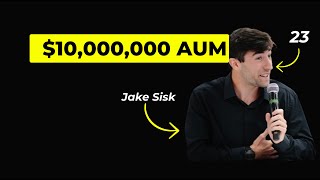
Jake Sisk built a $10 million real estate portfolio by 23 through multifamily and RV park deals in Texas and North Carolina. He sleeps nine hours nightly, limits screen time, and tracks three daily wins and losses. His path included interviewing Obama as a kid and connecting with billionaire mentors through early public speaking.
Chapters
Jake Sisk is a real estate investor and co-founder of Oasis K Capital, where he invests in multifamily and RV assets across Texas and North Carolina. He's the general partner and personally owns around $10 million in real estate. He started in real estate at a very young age. Outside of real estate, he's competed as a Division I athlete, interviewed the US president, contributed to a bestselling kids' book, and is currently pursuing the Olympics for men's track and field. Jake Sisk, welcome to the podcast.
Thank you. Great. I feel blessed to be here.
Yeah, it's been great to get to know you. And I mean, what was interviewing the U.S. president like?
So I was in middle school at the time, and I was a part of an organization. I actually don't tell the story much. I'm glad you asked. When I was younger, I was involved in an organization called, uh, Play 60. It was like the NFL's Play 60, and we would go around and we would spread a message of trying to be healthier and more physically active. And I got a really unique opportunity to be one of their ambassadors. And what they did was they would pay for all different types of trips and they would send me to different events, and, uh, it helped me with public speaking and just being confident and composed when I'm on these big platforms and on different stages speaking from a young age. So I've been, I've I've been speaking publicly for over 10 years now. And even though I seem like a young co-founder in the real estate space, I've been very well seasoned to speak. And one of the opportunities that came across our desk when I was, I want to say, 14 or so, was the opportunity to be invited to the White House for an Easter event and interview, at the time, it was President Barack Obama. On his basketball court at the White House, which is pretty cool. There's a couple photos and videos online. And this young kid can't even grow facial hair yet. And he's just standing on the blacktop of the basketball court at the White House interviewing the president and asking him what he thinks about health and wellness. And honestly, I could have asked him anything. It was just, it's a cool opportunity. Regardless of who's in office, to be able to interview someone at that level that leaves that type of impact on the world in any capacity. And I find that to be one of the stepping stones that got me more comfortable, more confident talking to all different types of CEOs and mentors that are— have been very successful. Just in 2025 alone, I had 4 different opportunities to have meetings with billionaires. And just that alone has just been a very surreal experience. And I feel super blessed to be in that position. And it all started from, you know, me speaking to all these NFL players and a president and all these different professional athletes throughout middle school into high school.
And what is that like? You're 14 years old. You're in school, everybody's— I don't know what school you went to, but everybody's, I'm guessing, like a normal kid. And you're that one kid who's, oh, I interviewed Barack Obama. I know I'm hanging out with NFL players. You know, what's that like?
Yeah, I think that it makes you— first off, it's an amazing experience and it's— you get over the fact that you're hanging out with all these— at the time I was playing football and I was an athlete too. So it's even more surreal when you get to be around these professional athletes. And I think that you get to a point where you almost take it for granted a little bit, like, oh yeah, I've interviewed, you know, a few dozen NFL players over the years and ran events with them. And I grew up in New Jersey, so it was a lot of local teams like New York Giants, New York Jets, things like that. Like, I've been on stage at the NFL Draft, which is kind of cool. I've done a lot of these cool things outside of real estate that set me up to be an entrepreneur. And I think that you almost have to kind of compartmentalize. Like, when you're here doing these interviews, talking to these people, getting better at public speaking, asking questions, presenting yourself in a particular way, and then you come back into, you know, your 8th grade math class. It was kind of surreal to have that interview and then come back and you almost have to say, okay, like, we could just be a kid now. Like, we don't have that. Yeah, exactly. And, um, I think that was a lot of fun. I remember there was one particular— I've actually never told this story, which is kind of cool. I was speaking at an event, um, if anyone's a New York Giants fan, um, that we used to have a cornerback named Prince Amukamara. And at the time, he was, he was on his rookie contract, and they were sending them to different public schools to speak. And I had went there, got an excused absence from school, went there We did an event, we spoke together to different students, and I come, I come back from that event, and then I had just have wrestling practice like as usual. And like all these, all my teammates and all my, my friends, you know, they just got done with math class. And like we have all these cameras and stuff on us doing media pictures and stuff for the New York Giants. And then there's just me, just this kid in those photos with him. And it's kind of cool. And then, but you also realize that it's like, I'm there to do an event. I'm there to perform in a way, a job as a kid interviewer. And then, and then that's it. And then you go back and you're just a kid again.
Just a normal life.
Yeah. Yeah. Yeah.
What do you think pulled you? Was it this initial burst of, you know, I want to be in these types of rooms my whole life? Because what do you think pulled you into real estate?
Well, I think that real estate kind of found me based on my personality, um, in a way, because I always have been very entrepreneurial. I always had this feeling that I, I'm very coachable as an athlete, but I don't particularly want to work for someone. Like, I'm not the type of person that wants to be told when and when I can't go to lunch for the next 40 years by, by my boss. Um, I like that idea of having that flexibility and having that freedom. Always have. Um, which is why even the jobs I worked in high school, I was always commission-based. Like, I didn't— I did— I worked for tips. Like, I was, uh, I was, uh, even at 15, 16 years old, I was going up and down the stands at MetLife Stadium where the New York Giants and New York Jets play, like, selling hot dogs and pretzels and, like, working my butt off going up and down the stands just trying to compete with myself and other employees to make more sales. And I didn't— it wasn't your normal job where, okay, here's my fixed salary, or here's my fixed, um, hourly rate for whatever that may look like. So instead, it was more like, okay, well, there's no ceiling on this. The harder I work, the more money I make, to an extent, which is why I was like, you know what, I would love to be an entrepreneur. And there's also no rule that says, hey, oh, you have to have this college degree, you have to have this undergrad degree, you have to have this master's degree or certifications in place. I don't even have a real estate license to do what I do. I'm not in residential real estate. I'm in commercial real estate where we're working with a investors. We're buying apartment complex, we're buying RV parks, we're underwriting all these deals all day long. And, and I'm like, this is a dream. Like, I get to make my schedule, and I want to make my schedule not so I can procrastinate and be lazy or, or whatever that looks like to be an entrepreneur, quote unquote, but it's, it's more like, okay, now I can work really hard and, and just stack these wins and not look at it from a materialistic perspective and just say, hey, how good can I get at being an entrepreneur in this industry with knowing my personality?
Well, it makes a lot of sense and it will also pay off. It's not just, you know, show up here, 10 hours later I get the exact same amount if I do this amount of work and that amount of work versus like that. What would you say that a normal week looks like for you right now?
So, um, you mentioned before that, um, I ran Division I track for Liberty University, um, and I still train now, um, full-time. And I'm in a really good position where I have great coaches locally in Lynchburg, um, with the University of Lynchburg. They have a good middle distance coach that is coaching me. And, um, so I have my normal practice schedule as if I was still at Liberty University or my previous school at New Jersey City University. Um, and, you know, I wake up, I try to get up somewhere between 5 or 6 AM. The reason I say between 5 or 6 is because no matter what happens, I get 9 hours of sleep. I'll stop the work day I'll, I'll sleep in later. That is a non-negotiable for me. And it's a big thing that I think is underrated. Even if you're not an athlete, you need to be getting at least 7 or 8 hours of sleep. Yeah. And that's the first thing that people cut out. But in my opinion, that's, that's what, that's what plugs— that's like plugging in your phone overnight on a charger. That's what's going to give you a full battery the next day.
Yeah.
And if you're only plugging in your phone for a couple of hours throughout the day or or a couple hours at night, that phone's not going to be fully charged in the morning. Um, so my mornings, I'll get up early. I like to, you know, have some peace and quiet. I get protein in, you know, like I'm, I'm doing my morning workouts. And then when I'm done with that, I'm locked in with work the rest of the day. Um, and, and, and every day is a little bit different. For example, we're closing on a property, our first property of 2026. It's a deal right outside, right outside of Houston. So every day we've been chipping away at that closing. You know, we have 10 days for closing. So they need to see our, our schedule, real estate on our bios, or we need to have our insurance quotes put together. We need to have the utilities ready to be transferred over because we're buying this apartment complex and then we're responsible for operating it in 10 days. So every day is a little bit different, our tasks. I like to go through my workday somewhere between 9 or 10 AM, and I work pretty much until 4, 5, 6 PM depending on what my evenings look like, whether I have a personal obligation or if I'm doing a task that maybe takes a little bit longer, a little bit shorter. And I try to work Monday through Saturday and I take one day off no matter what's going on. I try, I try to make it on Sundays too. I like to be more present with friends and family. I don't run on those days. I'm, I'm a Christian, so I like to also take that rest day into account. I honestly think it really helps, you know, even if you're not, like, don't work 7 days a week. Trust me, it'll force you to be more productive in 5 or 6, um, especially if you want to be an entrepreneur, want to learn a new skill and really go all in on whatever that is. For, for, for our viewers and our listeners here, Just know that you can do more with less if you're more intentional with your time. And so that's pretty much my, my day Monday through Saturday is I'm running and then I'm eating really clean, getting the right amount of sleep. I work all day, uh, and then, you know, I'm in bed by 8, 9, 10 o'clock at the latest, and I do it again the next day. And then Sunday is a total recovery day for me.
Well, that sounds, sounds good.
Yeah. And track and field is a sport where you can only train for so long.
Yeah, it's not, you know, doing hours and hours.
There's no game film like in football or sitting there studying. It's like you could run for 1, 2 hours, maybe 3 in the gym, and then we just buy real estate the rest of the day.
Would you say you're a lot different than your teammates?
I think I was. I think I was because, um, like I mentioned before, there's no rule that says I need to have a degree to start a business. So I think, um, because I do this full-time, it's almost like this business is like having a, having a child in a way, because you have to take care of it, you have to nurture it, you have to make sure it's growing and scaling properly. And so that means there's no time to just hang out and spend hours doing nothing or scrolling on Instagram and, and Facebook. And it's like, hey, like, when we're done with practice, we have to make sure that this is a well-oiled machine. Um, and I think that because I started— I started in the real estate space when I was about 20, maybe 21. Um, I had helped my mom do a fix and flip with a condo in Myrtle Beach, South Carolina. That was my intro to the, to the industry. I wasn't doing commercial real estate at the time, and I was like, okay, um, there's money to be made here. This was during COVID when everything was super cheap, um, in those Carolina markets. Debt was cheap, and we're like, okay, bought it all cash, uh, $96,000. And I was like, this, we can make money on this. But I didn't feel it was truly scalable. So when we started at 20, 21 years old, I was like, okay, I can't be like the rest of my teammates and, and hang out and go to these dining halls and stuff. It's like, I gotta get in, you know, enjoy my time with them, and I gotta get out because I also want to continue to grow this business, you know, not, not just my, my track and field career. Or early on, I wrestled in college too, uh, when I was an undergrad student. But, um, I just felt a little bit of a disconnect because it forced me to grow up quicker. So just as if you were to get married and have kids, like, it forces you to grow up.
Um, yeah, you have a lot more responsibilities than the people around you.
Exactly. And, and that's not in a negative, a negative way. Like, I just wasn't in school for the schooling. I wasn't there to get a degree. I was there to run and learn a little bit while I was at it. And I learned really early on, I was like, hey, I'm doing really well in school. But once the business started, I was like, okay, that has to be the priority. And whatever I need to do just to stay eligible is— and it was a very interesting dynamic shift because I was always a good student. But it forced me to become very concise and intentional with my time because you find out very quickly it's limited when you take on a big responsibility like starting a company at, you know, 20, 21 years old, 22 years old. So it's definitely been well worth it though, for sure.
Yeah, definitely, 100%. Uh, what do you think the biggest lesson that you learned throughout your career?
It's a good question. I think from a business perspective, knowing how intentional you need to be with your time is important. And you can, you can go a lot of directions with that answer. And I'll, I'll actually break it into two parts for you. The first part is it's so easy, the way our digital world is set up today, to be distracted. Exactly. And I find that if we spend— if anyone's listening to this too, I want you to check your screen time. On your phone, whether you have an iPhone or not, you can check to see how long your screen time is. I'm not particularly worried about the screen time if what you're doing is helping you build, whether it's your relationships, whether it's spiritually or family, friends, whether it's for your business, whether it's for a spouse or girlfriend, boyfriend, whatever it is.
Um, but how much are you—
it's, it's, it's where it's being spent. And if you're on— and if you're not a social media editor, you should not have, you know, 2, 3, 4 hours on TikTok, on Instagram, on all these different platforms that can be a useful tool But in my opinion, the dosage is in the poison with stuff like that. I use social media. I'm a big fan of LinkedIn, if anyone's listening. Jake Sisk, S-I-S-K, on my LinkedIn is— I'm very active on there. I'm on there every day. But once I post and do my interactions and learn the information I need to about my industry and answer people's questions and stuff, or write an article, I'm off. I'm out. I don't want to be on— I, I have a work phone specifically for my social medias. I don't do any posts from LinkedIn on my personal phone. My parents have that, my girlfriend's got that, and a couple friends and, and colleagues. Everything else goes on the business phone, and it's created a way for me to separate and be intentional with my time. And that goes back to the question you asked me. It's like, okay, that's the first piece. Like, you should not be getting more than an hour of dopamine hits. I don't even have TikTok on, on my personal phone or my work phone. It doesn't need to be on there. Yeah. Um, even if it's a useful tool, I know that it could be maybe a, maybe a poor, uh, temptation to have. Um, you long, long day at work, you want to just have that easy access to a dopamine hit. Um, that we're all susceptible to. And I even see like these big celebrity accounts and people I look up to, I'll see them like funny reels and stuff on, on, on Instagram, which makes me realize like, hey, like we're all human and we're all— they don't have to be so rigid about it. But just know that there's limitations that need to be set so that you're not overextending, which leads into how I also handle business. And when you're, when you're um, running a business, you have to be very, very intentional with where your time's going on a daily basis. I love to do podcasts. I love to help people through our— we have free Thursday class on at 2 PM Eastern time that we teach real estate. We bring on guest speakers. My partner Matthew Taipie and I, we, we speak on there about different topics and events that we do. And then outside of that, it's like, okay, I'm underwriting numbers for Matt all day long. I'm underwriting numbers for, for my company all day long. We have a couple analysts that work for us. And outside of that, those 3 things, it's like, okay, I like to ask myself the question when I'm being intentional with this time. It's like, okay, what is this task leading me closer or farther away from my goals for the day? Doesn't even have to be goals for, for a career, but it's like, hey, what I'm trying to accomplish today is what I'm doing right now. I try to ask myself that question 3 times a day. Is what I'm doing right now adding value or taking away? Because there's no in-between. It's either helping you or it's not.
And how do you set the goals for the day? Because some people might like try to do that and then be like, oh, my goal is so you can't put like a finger on it, like you don't know what the goal is. So how do you, how do you do that?
Well, the first, first part of that is you have to have a goal defined, a clearly defined goal. There's this book that I read that I think is phenomenal, um, it's called The Law of Success by Napoleon Hill, and, um, one of the chapters talks about your definite chief aim. That's your main goal, what you're working towards. And if that's not very clear and concise, two things are going to happen. You're either going to be unproductive with your time, you're going to be procrastinating with your time, you're going to be doing things that maybe are not essential to achieving those tasks. So, um, and the second piece of that is it's like, well, Okay, yeah, I'm procrastinating. But also, you're, you're not, you're not going to be making progress. You're going to be running through the mud.
Yeah.
If you don't have a definite chief aim and a goal. And so that's the first thing I would say is you have to establish that immediately. And don't stop. Don't work towards nothing. Like, you could still be productive and you don't have to have everything figured out. You're— my ideas adapt and change every day. I'm young enough in the space still where I'm learning. I'm My goal every day is I want to learn something new every day. I want to go into the office, and if I learn something new that I could take back either personally or business-wise or even spiritually from reading scripture, whatever that looks like, like, I'm in. Um, and that's a successful day, and that just stacks over time. So you, you, you can't make anything without that. So I won't— I, I can't even extend to that question without saying, okay, Hey, like, this needs to be figured out first so that you know what to do. And then, and then once you have that goal, I— what I like to do is the night before, I write out 3 things right before bed, um, 3 things that went well for me today, 3 things, 3 things that didn't go well for me today. And then I make a list of somewhere between 5 to 10 things that I want to do and accomplish the next day. It's everything. It's not just big goals, because you're not going to have big goals accomplished every day, but it's something simple as I want to be in bed by 8 PM, I want to be in bed by 9 PM that following day, I want to make sure my, my laundry is done. Like, they don't even have to be business-related, but subconsciously you will start checking off those tasks all day long. I want to make sure my workout I want to make sure I run 7 miles and they all add up the next day, and they all add up. I want to make, I want to make 10 calls to real estate brokers because we're looking for our next— after this deal closes on Thursday, we're ready to go on our next deal. It's how our funds work. We set up funds, single asset funds, and they follow a certain deal metric. And I was like, okay, cool, we're done. Next one. What's next? Yeah, Matthew Tyfke, if we're not doing a deal together, if I'm doing a deal separately from him, my partner, he has, he has two partners with TR3 Capital and they do a phenomenal job raising money. They do the same thing. They go, okay, we're on to the next deal. Or Matt and I would be like, okay, we're on to the next deal. We just bought this RV park in Arkansas. What's next? So maybe, maybe it's okay. I call 10 brokers to see what our next deal is. Maybe I follow up on 10 leads and that's one. That's another goal. So you add those up and you'll have 5 to 10 things. I'm talking like a lot of little nuggets of things that I do every day. But, um, if you're taking notes here, it's like, do that the night before. Humble yourself. Say, hey, these 3 things didn't go great. Hey, but these 3, these 3 things did go great, and I have some gratitude and things I can be grateful for. Oh, and by the way, here's what I want to do to plan out my next day. Because if you start your next day with no, no plans, no, the day, the day will run you. You are, you are the one that runs your day. You're the leader, you're the head of your own household for your own self personally. Don't let someone else dictate what you do. Even if you're working in a— like, I used to have a W-2 job, and I do this full-time now, um, but even when you— if you're working a W-2 job or working in a corporate world and, and other people dictate your schedules or clients dictate your schedules, you're in charge of you. There's still 10 things that you can do that you say, okay, I want to do this today. I want to make sure I have my meal prep ready to go for the following day. So I'm going to do that during the day. So there's so many avenues that you can explore with that. 100%. Goal setting the night before.
Yeah. I've started doing that actually recently and my productivity just like exploded.
Yep. It's because there's structure that's put in place.
Yeah. It's, you're like trained that through school, especially. Right. You go period 4, period 5, uh, and then you learn that that's how you should act and then, you know, play to the system, not play, you know, try to get against.
Yeah.
What do you think is one thing that you would tell your 18-year-old self?
The, the— what I would tell my 18-year-old self is the things that you think are extremely important. And I've been told this and I didn't believe it when I was 18, but it's true. And the things that you think are most important at 18 are probably not that important. And to expand on that, your decisions do compound, and the dopamine hit you get from having Uh, being silly or spending a lot of money on things you don't need, or, or chasing things that don't ultimately lead you to be more successful and, and, and, uh, more of a contributor to society or to yourself and to your family and your friends is not valuable. When I was 18, I said— I still say yes to a lot. But I said yes to everything thinking that I was going to miss out on something. And I think it's underrated if you're, if you're 18 years old and have the ability to say no, to not only protect your time but to protect your peace. And the exciting parties and late nights with friends and things that are not conducive to growth. I think after a few times of you going out and staying out too late or being a kid, you'll realize like, hey, is this either worth it or not? And usually it's not. And I was never a bad kid or did anything where I would get myself in, in trouble, but In hindsight, if I started my business at 18 instead of 20, 21, I would be even further along because it just stacks and compounds over time. So just always know that if you're, or if maybe someone listening has kids, just encourage them to be like, hey, you are never gonna miss out on a night of good eating, good sleep, and good recovery. To be ready for the next day. And, and if you're going into college, like, you don't— I don't, I don't drink, I don't do drugs, I don't do any of this stuff. There's no one in my company— we don't, we don't allow anyone to, um, we don't, we don't have any, any drugs allowed, no porn allowed. If you're watching porn, like, and I hate to be graphic on, on our podcast here, but I don't want you working for me. Like, we want everybody who's disciplined. Distractions, like, it doesn't exist in our office. We don't want that in our office. We don't want that on our teams in any capacity. There's no need for it.
And that's probably why you guys win, right? Because other teams have—
Of course.
You guys treat it like a team.
Of course.
Like, oh, we're coming here if you do the good.
Yeah. And it's nothing personal, but it's like, we also know, like, there's— and I'm a young enough guy where I can still relate to a lot of my, my college teammates and kids. Like, I was, I was a grad student where I was in my 5th year on my team.
Right now it is the next day and I'm editing the podcast, and I noticed that there's a break in the footage. It's because part of the footage wasn't downloaded correctly after the call. So basically he just finished that point, and then I asked him the same question What is the best piece of advice? And that's what you'll hear right now. What's the best piece of advice you've ever received?
Yeah, so answer it a little bit from like a business perspective, but I'll give you more of a personal answer here. And for me is who you're surrounding yourself with is incredibly important. You know, I mentioned before that who we want our employees to be like and what we want them to act like and hold themselves accountable for just as people is very important to us. And I'm talking to a lot of the young men out here, but because that's my perspective, but the young, young women, or if you guys have kids, any viewers that are listening to this too, the right partner, the right spouse, and the right business partner and internal people you have around you will enhance what you can do in the business and personally and from the relationship perspective. They shouldn't take away from it. And if you're with someone or searching for someone that doesn't add and bring that type of value and energy and into your environment, it's not worth it, man. Like, it truly— and that's a great piece of advice that I carry to this with me to this day is I got— I don't, I don't want, I don't want a girlfriend, a wife, or a spouse that's going to be pulling away energy from me after I'm trying to be creative at work or, or work really hard to be a professional athlete on the track. Um, and I should be able to build with a business partner and bounce ideas off each other and and fill, fill gaps, um, with our partners. Not just lean into, oh, we both have these strengths. Like, your partner can also fill the gaps and weaknesses that you have. And I find that to be a really valuable thing to look for from a personal perspective as well as in a business partner.
So find people that fit your life scenario.
5 people who you want to be most like, I think, is a very popular term, um, that we hear. You want to be— yep. And it's so true. But even more importantly, people, people let their guard down for that when they're picking a business partner to go into business with or, or picking a spouse because they're chasing— you're letting your flesh make that decision.
Yeah.
And it's like, let's actually build a relationship and, and be friends with a business partner, be friends with a spouse first. And allow that relationship to develop and grow and blossom and just become a super fruitful and blessed relationship.
Yeah, it would also make it so much more powerful, right? The exponential growth that you'll have if you're working with a business partner that you like versus you don't is crazy. It's like going to a job you hate versus going to a job you don't and expecting to perform the same.
Yep, exactly.
Thank you so much for coming on. Uh, it was great to talk to you and I'll leave— where, where do people, where can people find you?
Yes, people can find me. I'm on my, my LinkedIn almost every day. You can even message me on there. Um, follow me. If you can't message me, throw a comment on one of my posts and say, hey, I'm trying to connect with you. You know, I get a lot of connections. Um, just say where you found me and, and I'll find a way to connect us and answer my DMs on LinkedIn pretty much every day. It's honestly the best way to reach me. It's Jake Sisk, S-I-S-K. I do have a personal athletics page on my Instagram, it's just Jake800meters, but the best and most active I am is on LinkedIn for sure. We're going to be doing this for the next 40, 50, 60 years in the commercial real estate world. Our goal is to be— Matt and I is to be like, we say we want to be like Charlie Munger and Warren Buffett on stage when we're like 90 years old, just doing events and giving advice. So that's our goal. We're going to be doing this for a long time. Matt's very good at what he does. I'm getting very good at what I do, if not, I think, already getting to be one of the best multifamily investors in Austin, Texas, for sure. And we want to continue to expand on that. All right.
Thank you so much for coming on. Yeah.
Thanks for having me, Duff.
Of course. Take care.
Bye.
More from Nadav
If your sons and daughters only remembered one lesson from you about money, what would it be?