"invest, invest, invest." Matthew Teifke from 0-120 Million at 34 | NGDR Ep #2
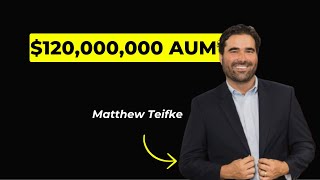
In this interview, Matthew Teifke, a Texas‑based real‑estate investor, broker, co‑founder of Teifke Real Estate and partner at TR3 Capital, discusses his recent acquisition of a 452‑unit Class B multifamily property in San Antonio (Mission at Medical) and the syndication process behind it. He explains how he raised capital through both small ($50k) and larger ($1M+) investor checks, and how the deal fits into his long‑term cash‑flow‑focused strategy rather than a flip‑or‑sell model. Teifke traces his passion for real estate back to his single mother, who owned dozens of rental units while raising him and his brother, and recounts getting his real‑estate license at 18. He reflects on a rapid career trajectory—16 years in the business, buying more property in the last year than in the previous 15—while acknowledging the costs of moving too fast, including a $4 million loss on a non‑real‑estate venture. He emphasizes the importance of pacing, trusting the process, and learning from failures. The conversation shifts to personal life: the impact of his two young children on his work‑life balance, his Christian faith, and the value of family. Teifke shares advice for younger entrepreneurs: build genuine relationships with 10‑20 people you respect, focus on long‑term value, and keep God at the center. He also touches on his brief interest in politics, his admiration for the founding principles of the United States, and why he ultimately stays out of the political arena. Throughout, he stresses balance, humility, and the desire to help others succeed.
Chapters
Matthew Teifke is a Texas-based real estate investor and broker. He's the co-founder of Teifke Real Estate and partner at TR3 Capital, where he acquires and operates multifamily properties across Texas, owning over 1,200 units. He started in real estate at a very young age, getting his license at only 18, eventually building and scaling a large brokerage, and later transitioned from residential sales into ownership and operations. Matthew Taiviki. Welcome.
Hey, brother. Good to be here, man. Thanks for the intro. And whatever we can do to have a good time and bring some value, I'm here for it.
100%. Well, thank you so much for coming on. It's been great to text with you a couple of times, and it will be amazing to, I guess, get to know you. First of all, you want to talk about your recent acquisition of, I guess, not you, but your company's recent acquisition of 453 units. Talk about that.
Yeah, man, 10-month process. We did a loan assumption and acquired 452 units in San Antonio, Texas. Biggest deal I've ever done, hardest deal, most challenging deal, but it was a blessing. And it got us, me and my two partners, to a point where we don't really have to tell people that we're capable anymore. Yeah, we've done it. And it's called Mission at Medical. It's a Class B apartment and we're paying out monthly dividends. My two partners are there right now collecting rent. We closed on the 30th or the 31st, whatever the last day of the year was. And, you know, rent's due on the 1st. So that was a journey. I was the capital guy. We got, we got partners together and We're going to take over the operations. We got really good debt. We took over the existing debt. And now we're on to the next. Operations are in place and we're working on Fund 5. It's been 16 years for me in the business. And last year I bought more real estate than I bought in the previous 15 years. Thank God for all that. And we're excited to do good work, man, and have people get cash flow with us. And we're buying these properties with a very long-term approach. We're not trying to put millions of dollars into them immediately and sell them, but just get the cash flow and pass it on to ourselves and to our investors.
So you're more looking for cash flow investments rather than flipping? Yeah. Is that what TR3 Capital does?
That's exactly right.
So do you guys do crowdfunding or you guys do partners? Just kind of—
we do both. These are called syndications. And so we're raising the capital with the fund for— we had 7 investors, fund 3, we had 30. So it just depends. Like, we'll, we'll take definitely, you know, $50,000 checks up to a million plus, and it's been a pretty good journey. We just started raising and doing syndications in the last 3.5 years. Before that, we were just buying whatever properties we could on our own. Wow.
So it's amazing. What do you think pulled you into real estate initially? It's not many people who can say they got their real estate license at 18 years old.
My mom, man. Single mom. She was literally cleaning houses and raised my brother and me. And by the time I was 16, 17, she had 17, 18 properties. And so that was a, a really big inspiration for me. She was a hard worker, as you could maybe imagine, raising two boys on your own, working a job and buying real estate. And so I just got fascinated at an early age and I wanted to try to carry on what she taught me in the best way possible.
Makes a lot of sense. Would you say it was kind of like in your blood from like an early age? Was there always, I guess, real estate talk around the apartment or house? It's just something you grew up with?
Kind of. She wasn't— she was a hard worker, man. She didn't really have like the science of it or the education. She just had people she trusted and she would just do it. She didn't really even talk about it or even really know what she was doing. She knew that it was wise and she trusted the right people, but I just saw what was required. Um, and I mean, nobody works harder than a single mom, in my opinion. Um, and so I just try to carry that work ethic on, but I was able to see what's required and also what it looks like. I mean, she had these rental properties, but that didn't mean that she was just banking and making all this cash flow. I mean, she still had taxes and insurance and maintenance and all the things that go with it. So there's a lot of sacrifices to get them and still even to keep them. But I just wanted to try to carry that on. And there's something in my soul, man, where I want to help other people in that way try to, you know, need to, but just be someone that shows support in a lot of different ways. And so I'm blessed that I was around that at an early age.
Yeah. I mean, you've definitely done a lot with the start that you've gone and then as well kind of building on your mother's, I guess, journey in real estate herself. One thing that I've noticed being young and ambitious is that you constantly feel like you're alone, right? Not many people around you, I'm guessing, when you started your career in real estate, either believed in you or were on the same mission that you were. Did you experience that when you were starting off, that a lot of your friends from high school or a lot of friends from college didn't see the, um, vision that you did or didn't really have as big ambitions as you?
Yeah, somebody asked me that recently, man. Like, uh, they said something about, did a lot of people doubt you? And to be honest, maybe, maybe not. I just didn't even think about it, truly. Um, didn't matter to me and shouldn't matter. I was just, hey, this is what I'm doing. It was definitely different. Than, than a lot of people. Uh, but it, I didn't think it made me special or anything like that. I was just doing, doing what I wanted to do and what I thought was best and didn't stop to really think about anything other than like, hey, I wanna learn. I wanna, uh, be really good at this. I care about this. This is fun. And I was, that's what I was thinking about. Uh, not what other people were thinking. Yeah.
You were just all in from day one.
Yeah. Yeah. I mean, you know, I've had my bumps and bruises, man. I've had my ups and downs and got humbled and been competitive and learned a tremendous amount. But everybody goes through different journeys at different times. And I feel like I put like 20 years of work into 10 years. That's, that's what I feel like. And so I feel like I'm at— I'm 34, but I feel like I have like the knowledge and, uh, ups and downs and bumps and bruises of a 44-year-old in a business sense. Um, and I probably wish I wouldn't have gone that fast, you know. Everything happens for a reason, but I was obsessed, man. Uh, and I still kind of have an obsessive personality in a sense, but, uh, just learn, you know, you learn like It's important and it's good to be ambitious, but it's not the only thing. And that's what I thought for a long time is like, this is the only thing that matters. Everything else can wait. You know, I'll sacrifice now. And there's a lot of good to that. But I thought that I had to be somebody that made a lot of money or was closing big things to be a person of value. And looking back, it's like, no, you can be that with just being who you are and being a good person.
Well, yeah, I think a lot of people go down the same path, I guess, that you said you were originally on, where they're just saying, you know, I'm going to hit $1 million a year and then I'm going to start a family. I'm going to hit, you know, $5 million a year, start a family, or even if it's $500,000.
Right.
What do you think is one thing that you wish you knew at 18 before starting?
Um, if you could go back, I keep saying this, man, is, uh, I just, and I don't know if I would've listened, but I wish somebody would've, you know, you could see, I mean, it was 24/7, man. Like I can't even explain, but you know, I would do amount of phone calls or offers in a week or a day that people would do in like, you know, I don't know, 90 days or whatever it is. I just wish somebody would have been like, hey man, you don't have to go so fast. Like, it's okay. Like, slow down, enjoy it. Work hard, absolutely. But you don't have to force things into existence. Like, let them play out the way that, you know, in my opinion, God wants them to. And, and they always do anyways. But I just, I wouldn't have tried to force it into existence as much.
Do you think you would be in the same position as today if you went the route that you wish you did?
Probably, yeah.
You think so?
Uh, because I, I mean, I had a— I mean, I don't know if you know this, but, um, I lost $4 million on— and so I probably, uh, I probably would not have lost that money. But at the same time, uh, I've accomplished a lot And so like, it was like, I guess if I can think of this the way you're asking, it's like, I'm thinking of it like, like this is what I did. So, so this is what I did, right? And I'm here and like, this is what I would've done. And so I would've been just at the same spot, definitely less lessons learned. So in that case, that, you know, the lessons are tremendous, man. I mean, I can make $4 million and I don't have to, but I could. And I probably will, I believe this, on one deal. I might have just have done that, you know, and not just— this isn't credit to me, but it happened. And but the lessons are huge, man. I've, you know, back to the 44-year-old, I don't know if that's true or not. Probably some 44-year-old would laugh at me. That's fine. Like understanding what can go wrong and and all the different variables, like, I don't feel like I was taught this in school or just in life. It's like, for me, it was like, go invest. Like, that's a good thing to do. Like, invest, invest, do deals, invest, invest. But a lot of things go wrong, you know? And most things probably go wrong. And I wasn't ever understanding of that, or I, you know, I'm always a rose-colored glasses guy. But now I'm just much more like skeptical of like all the things that can go wrong. I'm sure things still will, but I'm like much more, uh, likely to pick that up early on.
You have an eye for that you don't think you had before.
Yeah, dude, definitely, definitely like less. I'm still an optimistic person, but less optimistic on like ideas or businesses or—
You're not easily like tricked in like, this is the greatest idea ever.
Yeah, it's not going to be that. I mean, God bless you if you stumble upon or if you are Mark Zuckerberg in the garage, power to you, or stumble upon him. But there's no secret, in my opinion, to any of this stuff. You're not going to buy one deal or invest in one thing and just retire. And if you do, you get lucky. But it's better to have a process and something that you can count on and rely on and pass on to your kids.
And a skill set also, like, uh, kind of fucked if that property, you don't know how to do it again.
Yeah, 100%, man. Um, so yeah, I'm kind of going off on, you know, less business and more mental, emotional type stuff. It has meaning to me, so I'm sharing it. Yeah.
Do you think that's a lesson that can be only learned through actually doing it, or you can teach it in some way?
I think you could teach it. That would be what I would hope that I could do here or in general. Uh, I mean, if you really resonate with someone and you respect them, then you kind of got to listen, you know? So. I've been there and, and what I'm talking about here, and I know real estate as good as anybody. I've never lost money in real estate. That's the, that's the crazy thing, man. It's like, I'm really glad, um, I'm still kind of thinking through this, but I'm really glad that I lost in a big way on something unrelated to real estate, because if it would have been real estate, it might have really mentally messed me up. But I still have my confidence in real estate and what I'm doing, but I can take those lessons and apply them to real estate in different ways.
To kind of prevent them.
Yeah. But I think, I mean, it's a real story and I got a real journey. And so hopefully somebody would listen. I just, I hesitate because I'm not sure if I would have listened or not.
Yeah. I was just going to say, like, if you could go back to your 18-year-old self and you 34 and saying, you know, don't go so hard, that 18-year-old kid doesn't know if they're actually going to get to the point that you're at and they don't know if it's going to go as well as it did or if they're just going to be 34 and I guess working like a 9-to-5 job. So I think it's easier to say like, yeah, just don't force it. But when you're at the start, you're like, I have no idea. This could go either way. I want to just work nonstop so that this does go the right way.
Yeah, dude, it's true. Um, so hopefully I can, you know, at least plant a seed, you know, maybe I, maybe somebody, maybe they don't listen to me, but, and maybe I'm right, maybe I'm not, but let's say I am right. Maybe they'll pass that on to their third kid. So maybe, maybe what I'm doing here impacts somebody 20 years younger than them. Who knows?
It's better to figure out early than later.
But I, but I can tell you this, I'm not making it up, you know, and it's real. Yeah.
What do you think the biggest mistake that you made? I'm going to go aside from that $4 million loss in real estate.
Like, it all comes back to what the same theme is, just going too fast. Like, I was ambitious and still am as ambitious as anybody, um, and competitive. But I would just say that, uh, you don't need to force it, man. Like, you can work really, really hard and care, but you can also let things play out instead of just forcing it to happen. So just trusting, like, somebody told me this, I might, I might say it wrong, but like, Trusting that your work will take care of you, like the work that you do in the process, like trusting that that will take care of you.
Yeah. And I think I completely agree. Like if you're doing the highest leverage stuff, you don't as well need to force it, right? I was talking to someone else and they were saying when I started, they, when they were saying when they started a career, that they were just doing so much meaningless stuff, like basically turning the paper over and over again. They say so many people, um, do this. Do you think that like, that's what you mean? Like when people's, when you say force it, like you're just doing work for the sake of doing work when in reality you get like 4 hours of work done and that's like the exact same output as it was if you did like 18 hours on a day. Or would you say that you were doing 18 hours of work that's just outputting a lot of stuff, but you're, you're getting, you think the same results than if you did 4 or 5, not 4 or 5, but, you know, 10, 12.
Yeah. I mean, that's like a, you're talking about like efficiency, right?
Uh, I'm more talking about like it's gonna work out, like if God wants it to be something.
That, but like, like, okay, I'm gonna call, like, I'm gonna call, I'm a cold call today from whatever, 8:00 AM till 5:00 PM. But I don't also need to be texting and messaging people at 11 o'clock at night and 12 o'clock at night and 1:30. Like, get some sleep, man. And take care of yourself and call your mom and take care of your loved ones and like go to the park. Like, don't say, don't, this is me. Like, don't say like, I'm gonna work hard and then I'll go to the park. And I'll be retired and I'll have my own yacht. Like, just, just do it all in a go.
Don't wait for life to happen after that distant future.
Yeah.
Do you think the way that you thought was different when you were a broker versus when you were a, I guess, investor?
I've always thought of it as the same. I mean, I wanted to be an investor from the day I got my real estate license.
What was stopping you from being an investor the first day? Just not enough capital or not enough—
No, nothing. I mean, I started early, man. I bought a house or a condo. Uh, I got my license in 2012 and I bought a condo in 2014. Um, so it was like I wasn't rushing that.
I—
the thing is, I wasn't rushing. I wasn't rushing like my education level and knowledge and studying the game. Like, I wanted to— I knew I wanted to invest. I knew I wanted to buy a lot of properties. But I started as a real estate agent because I wanted to help other people buy and sell and learn how they were doing it. And I wanted to do leasing and I wanted to do property management. And so, like, I did those things the right way. And, you know, I mean, I could have, instead of investing $4 million on one publicly traded company, I could have bought a $30 million apartment complex in 2020 and I probably would have lost it as well then. So back to your point, like it all happens. Every, every entrepreneur or person that I have studied and has done something pretty big in a, on a business sense, they all have the same stories. I hadn't found anybody who hasn't. It's not like, you know, it's just, it's all just perfect. It's like, it's, if you talk to a real entrepreneur, I think they have to have the loss, you know, unless say maybe, maybe they did learn from somebody else and they prevented it. But it's like everyone I've talked to has the same story.
I mean, I think even people like Mark Zuckerberg and, you know, the greats of entrepreneurship, they still have those ups and downs. Like, I don't think there's anyone— I'm sure you agree with me— like, I don't think there's anyone who doesn't have this kind of, uh, storm of, you know, you have to go through this hurricane to get to the other side, and the hurricane's gonna throw your boat like back and forth, and there's no way that you can— doesn't matter if you're the strongest boat in the world, there's no way.
Yeah, yeah. And I also believe I I haven't like thought through this deeply, deeply, but like, you know, we all go through different experiences and some of us have some really, really bad experiences. But I do think at a, at a level that we all kind of experience the same emotions in different ways. And, and we all have a, like a connectedness through that. And we, we don't always realize that we think we're all so different. Um, I mean, dude, you know, it's holidays, right? And like everybody, there's all kind— at least family, family issues, right? Your uncle or your cousin or your mom or your brother, everybody's got something going on that they're complaining about. It's like we're all complaining about the same thing in a different way. And I'm like, maybe if we could just fix the, uh, problems within our own families, all of us fix our own family problems, the world might be a thousand times better place.
Yeah, it's funny.
That's a random— but I just, you know, it's like we're, you know, you talk to people, like, yeah, this is going on, and this is like, we're all dealing with this.
Yeah, the best is when people are like, I— my whole life's falling apart, but I want to fix the world.
Yeah, yeah.
I mean, that's a lot of people.
Yeah.
And you're saying like people should just go into themselves, like What do I have to fix about me, my family, like my kind of, I guess.
Yeah, dude. I mean, I don't know anyone who's got a perfect family. I mean, my brother's not talking to my mom right now, you know? I mean, I'm telling you, but like, I'm sure, you know, everyone's got something like that.
I can relate to that.
Yeah. And he hadn't been talking to her and it's not like just a random fight. It's like a real thing. But we all got stuff like this.
Yeah, I think everyone can relate. Family's a complicated thing.
Yeah.
It's not like a friendship where, you know, if you're not friends with that person, then you don't really see them again. It's like, that's your family. And there's a beautiful thing to that, like that they're going to be there forever. And then there's a, I guess, more annoying part that they're going to be there forever.
Yeah. And you take it for granted probably. But they're just like little microcosms of what's happening in the world anyways. Yeah.
What did you think that success looked like at 18?
Uh, being the guy with the money that could help, you know, I wanted to buy my friends' cars if they needed it, or, uh, you know, pay for dinner for everybody. I thought I needed to be that person. And I tried to be that person and it worked for a little bit until I lost a bunch of money. Uh, and then you're like, oh, some people, you know, only valued me because I had money, or I only valued myself because I had money at the same time. So I just thought I had to be, uh, somebody who, you know, I had to be— it's, I think it's cultural and our family, you know, my family, but like, you know, you got to be Mark Zuckerberg, or you got to be, you know, I don't know, Michael Dell, whatever. Um, and then like looking back, I'm like, dude, I got an uncle that works at a bowling— he owns a bowling alley. He makes, I don't know, $150 grand a year, maybe more, but he works every day and he shuts it down at 9, and he lives a good life. And I respect him and what he does and who he is as a person, uh, just as much as, you know, but like it just I feel like we, we build people up and bow down to people with money, and— but, but people don't when they, you know, have more experience and they're just real people. But I just thought I needed to be that to, to be somebody of value. Yeah.
Do you think that view changed after you had children?
Yeah, 100%. 100%. That changes a lot.
Is that the biggest, I guess, mindset change you would say, or something?
Probably. Yeah, probably. Still, still, you know, I'm kind of getting a little deep. I don't sit around and think about this stuff that much. I have these little thoughts that come into my head. Uh, but like, yeah, I mean, you know, having kids is a game changer for sure. That, that changes how hard you work. I mean, You know, your kids— when everything that I do right now to my kids is cool. Like, I could just, like, you know, jump over this chair over here or something, or shoot a ball, you know, light a, light a piece of paper on fire and throw it in the air, whatever. It's cool. Eventually it's not, uh, but like, it's like, all right, do I want to sit here and do more calls and work more, or do I want to go over here and hang out with the kids? And you gotta have a balance of of the two, but it definitely changes a lot. My— one of my partners is, is going to have a kid soon, and I'm, I'm eager to see how much he changes.
Yeah, I think one of the most important things, um, that some people realize when they have children— I've never had children, I'm 15 years old, so— but I've seen my dad, um, when he's always worked from home, and I think that that was one of like the biggest influences. I think having someone in the house, at least like when you get home from school, when you, when you leave from school for school, um, is such a big influence. I know I have like friends who their parents are worth a lot of money, um, you know, but when they go home, their parents aren't there. They're, you know, they're still working, uh, chasing another number. And it actually, you know, it doesn't affect them. They don't realize it, but it actually leaves a bigger effect. Like, they're, you know, these kids in my school are addicted to like all random things that they shouldn't be right at their age. And it's just because they, when they come home, their parents are chasing, you know, $40 or $50 million a year or something like that.
Yeah, it's true, dude. It's true, man. I'm a Christian and I believe in God and Jesus and like, you know, that helps me put a lot into perspective as well. But, you know, someone told me— my kids are, uh, 7 and 5, and I, I don't know the exact age, but they're like, dude, uh, let's just call it 12. At age 12, you will have spent 90% of the time with them that you ever will. I'm like, whoa, I got like 7 more years, man, you know. And that— there's positives, obviously, when they get older and you know, we'll be drinking beers together or something, you know, at a different, different kind of relationship. But when they're young, it's just so special.
Yeah, yeah, I heard that, uh, as well. That, that was actually interesting because you would think when you get older you don't have school and you'd have more time, um, but I guess, you know, kids move away and—
yeah, exactly right. Like, you know, that I'm with them all the time right now, but You know how, like, when I'm around my mom now, it's not that often. And you, I mean, it's a decent amount, but like, I'm not staying there for a week at a time, you know?
Yeah, makes sense. It's a lot different. You don't come home and spend 8 hours with your mom. Uh, yeah, yeah.
I just bought, I was just buying, you, you, you're probably a little too young, but I mean, I bought a bunch of Pokémon cards right now. And they're just pumped to open them, dude. I'm like, you know, it's a $4 pack of cards and it's gonna just light up their world.
Yeah, it's amazing the difference that, uh, I guess between the ages that it takes to, I guess, change your perspective, like how make you happy, right? Like for a kid it could be Pokémon cards, but, um, for certain people it could be, you know, a lot bigger. What is a normal week look like, um, for you?
A lot of phone calls, man. I, I just, uh, I'll do a couple meetings a week, but, and I do a weekly class I host. It's, it's free, it's on Zoom, and we call, we call brokers and stuff. But I'm on my phone just, uh, riding a bicycle or walking around a park, just, just got headphones in. I'm just talking on the phone all day, uh, enjoying nature. So, I was just talking to investors or brokers and working deals and solving problems and getting all kinds of new challenges. And we'll have some sprints here and there. Like, to close that 452-unit deal, there's a sprint for a week. And then I'll go on 1 or 2 events a month. I'm going to Arizona next week and then Las Vegas 2 weeks after that. And they're all like real estate conferences. So events and new people. I meet new people every day, probably like 5 to 10 every day. Wow. That's a lot. Yeah, it's a lot.
Yeah. What's the best piece of advice you've been given?
Uh, hmm. My dad said this and it was pretty simple, but he said the secret to happiness is balance. And I like that. As I've gotten older, I've appreciated that more. Just finding good balance with, with all the things that you're doing. I'm still working on that, though. Yeah.
Yeah. Who is the most impressive person you met and why?
My mom, man. Straight up. Single mom, so generous, lives a good life, knows all her neighbors, and, you know, everybody loves her. And I think she was just willing to do anything she could to help me and a lot of other people. And, you know, that's what's sad, that my brother and her are not talking. It's a— she married a woman, and, uh, my brother doesn't want her in his life now because of that. But, uh, she's a hustler, you know, bought a bunch of real estate on her own, and she just all-around good person, man. Everybody loves her. Wow.
Do you think you'd be in the industry that you are without her?
No, definitely not. But I don't know, man, I might have went to the military. Uh, I would have done some relatively hardcore, I think. Um, I might have been a firefighter. I've always thought firefighters pretty cool. Probably military and then firefighter.
What do your kids want to become when they're older?
They don't say, but one of them's like an engineer type mind. He knows every animal you've ever heard of, loves animals. And then the other one's pretty athletic and kind of like a guy's guy, little guy. I don't know what they'll get into. I'd like, I'd like to teach them real estate. I don't think I would advise them to go to college, but if I could get them into real estate, I think that'd be pretty cool.
What do you think the best piece of advice you can give to someone in my generation and your son's generation?
Uh, well, I would, I would first point them to God and Jesus. and I think that would be, you know, just open the Bible and read it. And then just, it's a long game, man. I mean, I'm 34, and 30 years from now, I still feel like I'll be young. So that's a lot that can happen. So as far as business goes, I would try to find like 10 to 20 people that you really respect and add value for them in a real way and care about them as a person and in business. And if you just do that, I think a lot of beautiful things will come from it. If you can get like 20 people that respect you and deeply know you, um, and you guys are going on somewhat of the same path or, or you're motivated in life in general, that's all you need.
Yeah. I don't know if you know who MrBeast is.
Yeah.
And he said the exact same thing. He was like, the exponential growth that will happen when you find your group of people who are on the same exact mission as you is unbelievable.
Yeah, cool. Yeah, I believe that.
Yeah, I mean, I guess it makes sense. What do you think the— if you were 18, would you go into real estate again?
For sure, man. It's the best. I think it's the best industry.
What are your plans for the next 30 years? It's a long time period, but I guess 10 years.
10 years. Yeah, raise my kids, man, and hopefully get to a pretty good cash flow. I'm buying big deals, but I'm not retired. So get to a better cash flow position. I've always thought about politics, but Every time I get close, I back away from it. I'd like to just share my— I feel like I have a really cool story, and it can give people hope, and just be real, and just be a leader, and just share and be honest, and follow God's path and not try to make it my own path.
Yeah. That makes a lot of sense and very, um, I guess, humble way to say it and look at it.
Yeah.
Thought about going into politics before?
Yeah, yeah, I've thought about it, man.
What, like mayor or—
yeah, just, you know, whatever level, city council, mayor, governor, whatever. But, uh, I mean, I just really like the Founding Fathers and the Declaration of Independence and like the founding principles that this country were founded on. But I just, I think every time I get close to it, it's like, it's, it's not that at all. It's just money and business. So then I'm just like, there's no point. It's not, it's not what I think it is.
Yeah. Something changed around, I don't know the exact date or year where people who are running for politics, it switched from, you know, being something that they want to serve the country to something that they want to serve themselves.
Yeah, yeah, the money, the money that got involved, crazy, you know. But we still live in the greatest country in the world, man, and God is good, and there is hope, and there's so much opportunity to, uh, you know, do great things and create and do it with other people.
Completely agree. Completely agree. Thank you, man, for coming on.
Of course, brother. Thank you, man. Thanks for having me. Good job being so young and, you know, thoughtful and doing this.
Yeah, you too. I mean, I'm— all I can do is look up to you.
Well, thanks, man. Appreciate that.
Okay, take care.
See you, brother. Bye.
More from Nadav
If your sons and daughters only remembered one lesson from you about money, what would it be?