In a conversational interview, Nuseir Yassin talks with Professor Tal Dvir of Tel Aviv University about a breakthrough regenerative‑medicine approach that uses a patient’s own blood‑derived stem cells combined with a biomaterial scaffold to grow living nerve tissue. The engineered tissue can be implanted into a damaged spinal‑cord segment, restoring the neural pathway that enables movement. Pre‑clinical studies in mice showed an 80 % success rate, with hundreds of mice regaining walking ability. The technology has been commercialized through the startup MitriCell, which has secured Ministry of Health approval to treat eight severely paralyzed patients at Sheba Hospital in Israel, with plans to seek FDA clearance. The interview highlights the scale of paralysis worldwide (≈15 million people, 20 000 new U.S. cases annually), the scientific process, and the potential societal impact if the therapy succeeds in humans.
Chapters
This guy could make paralyzed people walk again. It sounds like science fiction.
It's not science fiction; it's real, and it's coming soon to eight lucky humans. Wow!
Cool!
What?
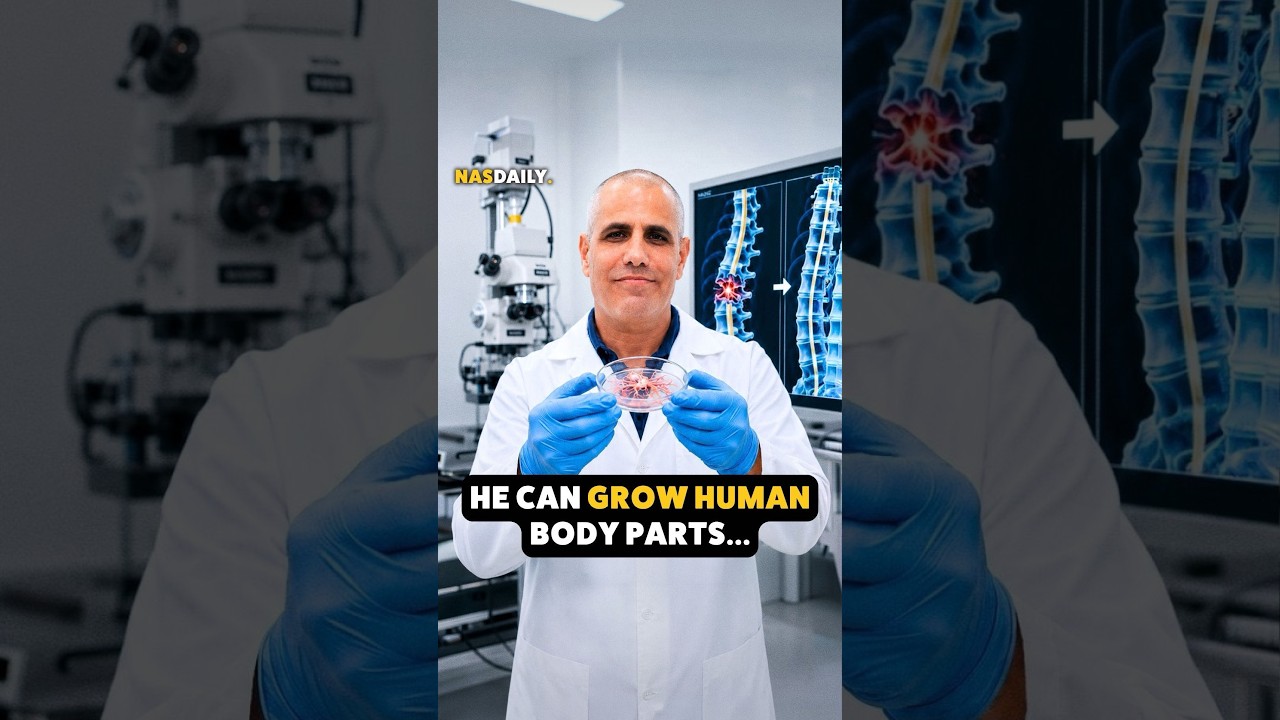
That's crazy! This is Professor Tal Dvir. He works at Tel Aviv University for more than fifteen years.
He's been trying to grow human body parts using stem cells. Stem cells are the magical cells of the body. You can take them and turn them into brain cells, into heart.
And guess what? One of the most important body parts is your spinal cord. It's your electricity cable. Your brain says, move my leg. The message goes through this cable, and your leg moves. But if the cable gets damaged in an accident, the message stops. Your brain cannot talk to To your legs, and you're paralyzed.
About 15 million people in the world are paralyzed, and 20,000 new cases each year in the U.S. alone. That's a lot. That's a lot.
So how do we fix the broken cable in our body? Stem cells—that's the solution. First, they take cells from your own blood. They turn them into stem cells. They mix them with a special biomaterial, and the cells grow exponentially until they become this. Living nerve tissues. Then doctors put this tissue inside the broken part of the spinal cord. And if it works, the brain can talk to the legs again. They tested this on mice, and hundreds of them could walk again. 80% success rate. And now we're going to try it on humans. He started a company called MitriCell to bring this to the world.
8 lucky humans who could not walk will get this treatment here At the Sheba Hospital in Israel, we got approval by the Ministry of Health, and soon hopefully we'll get the FDA approval in the U.S. as well.
Nobody knows if this will work on humans, but if it does, this changes everything. Professor Tal and his team have a huge mission: grow replacement parts for the human body. One day, when parts of This is not science fiction. It's real. They're working on it. And for at least 8 people, it's coming.