Biggest Athletic Mistake
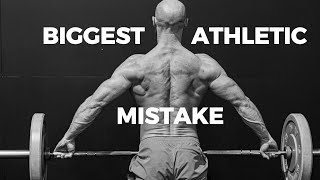
A coach argues that strength training gets the hierarchy backwards. Build connective tissue and fast-twitch ability first, add skill work second, then layer in heavy lifting. He learned this working with indigenous communities in Vanuatu and Mexico, where people move naturally without conventional gyms.
Chapters
Strength training is the biggest athletic mistake that I've made in my life. And I was a strength coach for a professional rugby team. I've been obsessed with strength for most of my life, even before I was an adult, and it's the biggest mistake that I've made. I want to clarify that. I'm going to explain it, and as I do, I hope it makes sense to you why I'm saying this and why I know that we can change the world, change the athletic world, improve injury rates, and do so much by understanding that strength training in the way that we're doing it now and the way that we're thinking about it is a massive mistake. Firstly, this category of slow force training that we call strength is. It's. It's meant to sit on top of other layers. This is the key thing. And it. And it does often. And that's why it's deceptive. And that's why some of you might already be thinking, like, he's lost the plot, he's turning his back on the thing that he loved most. I'm not turning my back on it. I still love it. It's just knowing where it fits and it doesn't fit where we've been putting it. So we have to understand strength training as a supplement. We have to understand that if it's a primary, if it's a main meal, we're in deep, deep trouble. You just look at Powerlifters to understand. Powerlifters turn into incredibly unathletic, incredibly. You know, they can't function basically, as human beings athletically after a long period of time. And they will tell you that. Powerlifters, serious Powerlifters, will tell you that. Yeah, okay, I used to be athletic, now I'm not. Unless they're keeping some wrestling or, you know, some sprinting or something else amongst what they're doing. There are athletic Powerlifters out there. If you're doing strongman training as well, if you're doing other elements, then it can be done. It's not that powerlifting is necessarily destroying the body, but when it's done in isolation, it will. So that tells you the true nature of slow lifting, that in isolation. I'm just getting set up here for some work running along the grass here. So it's meant to be a supplement. Charles Poliquin labeled himself as the greatest strength coach of the modern era. The greatest strength coach. He trained a lot of Olympic champion athletes. He helped winter Olympic sport athletes get heavier. That was primarily what he was doing. So they put on mass and they won more gold medals. His system worked. He was a champion bodybuilding coach for strength athletes. And a lot of strength athletes need a bodybuilding coach. It works in that sense. If you need more mass and everything else is great, then strength training can work for you. Now there's smarter ways to put on strength and understanding short and long range, which were the foundations of the Poliquin programs, which went further inside the ATG system. But the truth about all that is being lost in the war and battle for this brand versus that brand of this movement versus that movement. The key concept of training the muscle in its lengthened position versus training the muscle in their inner range. Position is a valid and important concept that every strength coach, every athlete needs to understand. The coaches that are ignoring that are injuring their athletes a lot more than athletes need to be injured. So understanding range within the strength conversation is one of the things that makes it a lot less destructive. But even putting that in there, I would still say that strength training is the biggest mistake I've made physically with my body, because I didn't understand that the preceding layers. Before we worry about that force, the prerequisite is the elasticity of the tissues. We need the white tissues to be strong and we need fast twitch. Now, if we have fast twitch and we have elasticity, then yes, we can power that up with heavy squats. And that's why this conversation is deceptive. The heavy lifting has its place, but it's as a supplement and it's on top of those things. So when an athlete gets injured and they lose their elastic ability and they lose the ability to use their fast twitch movements and move fluidly, the goal has to be getting that fluidity back, getting that youthfulness back. A lot of even professional athletes peak in their durability and their real freedom of movement. At 8 years old, 10 years old, even professional athletes, and particularly those who are then sedentary, don't really train later on. And it's a shame to peak athletically at such a young age. Should we be here to peak in? What are we doing with the rest of our lives if we're not improving after that point? We're missing something big. So what do we need to do? We need to train the white tissues. We need to be elastic as a primary objective. We need to be fast twitch as a primary objective. I've lived with abandoned cultures, forgotten cultures, people who have lived outside of the system. I've lived with the Tzotzil people in the mountains of Mexico. I've lived with the Yankunjara, Pitanjara, Arunda people in the most isolated desert parts of Australia. I'm now in Vanuatu, one of the poorest countries, by the way that they measure it, in the Pacific islands, a place that most people have never heard of. And I can tell you that training with these people and spending time with these people, they have exceptional innate athletic ability still. And it's not just because they're working with machetes and they're climbing the coconut trees. You see these coconuts around me? It's not just because of that, it's partly because of that, but it's because they're never fully. They're not losing their childlike ability. And so we're doing feats on the gym here. I'll show you the gym. Some of you haven't seen it yet. They're doing feats on the gym. And we put the boxing gloves on and stuff like that. They're elastic, they're fast, they're instinctive. They're not scared about their connective tissues. They don't warm up, they don't consider warming up. If I give them a strength task to do, they either can do it or they can't do it. But it's the same way that a child would do it. It's the same way. They just go up to the thing and just see if it, if it fits them or not. They're not going to hurt themselves because they still have that youthful body. So how do we get back to that? How do we get back to the youthful body? Here's the setup. It's beautiful. We've got the narrow dip bars, we've got the wide dip bars. We've got these coral based squat racks. We may put some wood on them, but we may not. We've got the atlas, the stone made out of the very, very heavy hardwood. We've got these square set up so we can do some laches. This is just above 3 meters 10. We've had one athlete here so far that can run and grab it with one hand. Volleyball player also able to swing from that bottom bar to the top bar, which is crazy feat. This one is around nine and a half foot and then we've got one that's around nine foot there. We've got the monkey bars. The children come and play on this all the time. This is beautiful. This is heaven. This is a thing that we need to create. You need to come to Vanuatu to build yourself a setup like this. We also put some logs in the ground here so we Jump up and down off them, jump between them. Some of the more acrobatic guys have been taking this advice that I'm giving you right now. Doing flips off them, flips off the table, vaulting across the table, step ups, jumps up onto it, etc. And this is our soccer setup at the moment. We're putting in a much bigger indoor setup for more sports and whatnot here. Skills BMX skate, indoor court. There's no indoor court in this area of Vanuatu. Slack line as well. So getting back to it, I want to be more like these guys that have never trained before. That's my goal with my body right now, is to get back to a level like people who've never trained before, like my son. My son constantly shows me. My older one, Manu, shows me. He jumps down off the, off the decks of these bungalows that we built. There's five of them there across the waterfront. He just dumps down off them at any time without thinking twice. And I'm always. It depends on what I've just trained and how long ago it was. And chances are my legs aren't feeling like I'm just ready to jump straight down off that thing. And some people might be like, yeah, you're 40, Keegan. Like, that's, that's normal. Don't worry about it. But then I'm with these other people who didn't go through this domesticated version of athletic development. And they just jump down. Those guys here fixing a digger the other day, diesel mechanics. And they jump down off the top of the diesel. You know, they're doing their work on top of the engine and, and they just jump down like 7, 8, 9 foot. This is what I want. So I'm still going to strength train because I'm addicted to that. It's been a big thing for a long time and it can work. It can provide a, a place in this picture. But I'm also going to train force completely differently. I'm still going to use some long range strength training. I'm still going to use some of the ATG movements. But this is a big and fundamental shift for me in the way that I think about athletic excellence and athletic development. We need to be white tissue, dominant tendons, ligaments, bones, cartilage, meniscus, fascia. All the white stuff needs to be way in advance of the muscles. Otherwise we're playing Russian roulette. That's the baseline. And then we need to train more fast. Twitch and elasticity. And then on top of that, we can use the strength, Right, but we need to first hit the white tissues and hit the fast twitch. If we're not hitting the white tissues, we're not hitting the fast twitch. We missed the point on force. And then we've still got all this skill development work to do. Acrobatics, balance, balls, beats. There are three elements within the. The skill development. I know that this is going to have and can have a massive impact on the way the world trains, on the way professional athletes are moving, and on mankind's athletic future. Ultimately, if you look around objectively in terms of health, mental health, and where we're headed with lots of different elements of mankind's struggle, at the moment, we're in a challenging time. We're in a significantly challenging time. We've been through a very challenging recent period and there's more challenging times coming up soon, more than likely. By the way, things are all set up at the moment with lots of different elements. What we can do something about is our athletic status and our athletic position. Let's take athleticism to a new level. Health first, then skills and then force. But we need to rethink this paradigm and pattern of force, elasticity and fast twitch. And then we think about the other stuff. Now there's more nuance to this conversation, but I hope that this is a strong starting point that you can get your head around, get your handles on. You might also be thinking, like, but, yeah, what about the. What about the muscles? What about the. The bodybuilding element? And that was huge for me. Like, I always wanted to be heavier. I always felt skinny. And getting bigger was massive for me. I wanted to be over 75 kilos. And then 80 kilos was only 65 kilos when I finished high school. And I'd been strength training for like three years and I'd been wanting to add mass. I've been doing things that I thought would help me to add mass. So, you know, I get it if you're skinny and you don't want to be skinny, I get it. And we can use strength training for that, for the aesthetic, but it's a psyop as well. It's a massive brainwashing. You're never going to get to a point where people are like, oh, he's huge. Unless you're willing to put massive amounts of chemicals into your body and use a bunch of crap, people aren't going to think you're huge. You can get to a very good aesthetic, natural physique, and you should do that. But chasing that, being the big guy is a slippery slope and a nasty slope. Let's chase athleticism, let's chase health, let's chase skills, and let's chase force in the athletic way. That makes people go well, makes yourself go well, makes your children go well, that you can be proud of. Stuff on the trampoline, the Acrobat and use that as the base and then we lift the big weights on top of that or as part of it. Let's get our priorities clear. Let's get the hierarchies clear. I'd love to hear your thoughts on this. If you've been having this conversation with yourself, with people around you, where you're at with it, please share some thoughts or feedback. If you'd like to jump in on the new book, it's available at the moment. New Athlete Project is the name of the book, the same as the project itself. The new app is live now as well. New athlete app newathlete project.com you can jump into the apps free for the first thousand users to jump in. We're getting one every five minutes or so at the moment. We've got an event coming up in Brisbane. Looking to meet up in Singapore as well. Then we've got Denmark and Germany coming up, Montenegro. Looking forward to seeing more people around the world getting together to experience all this stuff together is where the richest experiences are. So yeah, I hope this landed with you. And let's get truly athletic 2025 and beyond.










