Charles Poliquin Students Chat - Ben Clarfield with Keegan Smith
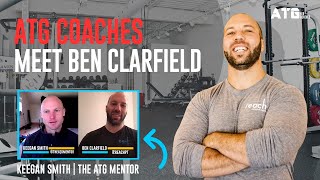
Interview (YouTube, Apr 14 2021) with Keegan Smith and Ben Clarfield about coaching influences and practical training. Key themes: Charles Poliquin's mentorship and standards (structural balance, rep-quality, split squats), ATG programming and its simplicity, connective tissue (tendon/ligament) development and how to periodize it around athlete schedules, neurotyping/personality effects on adherence, movement progressions (split squats, Peterson step-ups, Nordics), and equipment vs bodyweight approaches. Tone is informal, technical, and coach-focused.
Chapters
Just finished recording with Ben Clairfield. We discussed some of his influence from IDO portal. Special times with Charles getting into a little bit around neurotyping and how that fits together potentially for connective tissue training and long term connective tissue adaptation. Really interesting discussion and I think it will be the first of many. Ben is a really experienced coach. He's recently joined ATG for coaches and you can see he's been working. He worked with quite a lot with Charleston, went to a number of different education events. I actually did that John Bros Weightlifting one as well and Biosignature a few times. But yeah, he's worked with some top level athletes and, and obviously lots of other people through history. So it was a really interesting conversation and I hope you enjoy it. All right, we got Ben Clairfield here from Toronto. Reach, Reach pt. Reach Jim.
Yeah, Reach pt Reach Personal training.
Do you want to. Can you give us a little bit of background just about Reach as a. Yeah, absolutely.
Get into it. So yeah, I, my wife and I opened. Had the opportunity over a decade ago to get our own facility. I always, you know, training is an ego, ego business. But I actually wanted to facilitate a place that could take the client and the athlete first. So our team, we have a team that we share clients. There's usually a lead trainer on the, on the, on the, on the sort of client or athlete. But we generally fare. So the magic of that is, is that we can fare scheduling which means we can really address the client's time and have them come in more. So we can do, we can do a better job of that instead of it being kind of like, well if I'm on holiday then the athlete or the client's on holiday too. But that's not the goals of the athlete or the client. So that sort of has been really good at building a team. I'm a big fan of teams. We've trained anyone from elite level ballet dancers, one of the top in the world. She's a rehab there. She's unbelievable to NFL players, to collegiate basketball, hockey, all kinds of different athletes and gender pop people that are obliterated in their legs and stuff. I have my little guy popped his head in and yeah, so we just really like we're a place where people are there for serious training. And I have to say, sort of on the realm of what brought me to you guys is the legacy of Charles pauliquin. So Charles was my mentor and also a friend, you know, rest in peace. And I would say this and there's a few of Us around the world that I really wouldn't have anything, you know, and I did all the work. It's not like I didn't do the work and you know, my team did the work. But, but without Charles, I wouldn't be where I, where I am. All his knowledge, all his help. I did countless consults with him, calls. He would call me when he was on the toilet or whatever, you know, half naked, shirt off, like cussing out someone or whatever. And it's just, you know, he truly is, you know, he, you know, my youngest, I've named after him. So, yeah, you know, it's, I would say Charles legacy, but there's other people too. So, you know, Ido Portal and sort of, you know, all this different stuff, Olympic weightlifting and all these different coaches and trainers that have inspired me. But really fundamentally I'm with you in the sense of, I think movement is key. So I would say that we're a place that does that. It's not cookie cutter, everything's tailor made. But again, we're continually open to learning more. So I think it's amazing what you've done and it's fantastic what Ben's done and the legacy of Charles lives on. And it's kind of amazing to see that and being a part of that is really cool. So, yeah, I mean, I love talking strength and conditioning, talking movement, but I think it's fundamentally connected to the individual celestial psychology of both the coach and the athlete. And I think that's kind of cool seeing what you do and what you've done and what Ben's doing and anyway, it's cool to be a part of it. Thank you.
Awesome intro and I appreciate you making some time for us today. You definitely, you know, we've got a lot of crossover with influences and things that we've been interested in and paths that we've gone down. Yeah, it'd be cool to hear more about. Like when did you get into the poloquin work and did you, did you go through like T Nation articles and whatnot before?
Yeah, yeah, I was, I was very lucky. I have to give credit to a guy who's done this for a long time, but he's more into bodybuilding and it's funny that you got you posted about Vince Deronda. He trained with Vince Deronda and he was a Charles guy. This guy Mike Demeter, who was a, who's a long time guy. He was a former biker and I started training at a really crappy Good life, which is the sort of anytime fitness or life Fitness in Toronto. And I looked at him and he was coming in at 5am and he was done by noon with clients that were. He was great and very successful. And I looked at him and said, what the hell are you doing, man? And he's like, listen, son, pretty much this is over a decade ago, probably almost 14, 14 years ago, 13, 14, working 15 years ago. So. And he sent me that and said, listen, read every single article by Charles Paul on Tnason. That's your education. Go and do the programs upstairs and then do it with your clients and you'll get great results. And I had just gotten married and I had no money. And I told my wife that I had been recommended. I just started the job. And she. And I said to her, I got to do this PICP1 course. And she's like, you don't have any money. Yeah, I'll put on the credit card. It's like, you're an idiot. And then it was the best decision I've ever made. And I did that. And then I got successful with all the stuff and then did level two and then biosignature and multiple internships with Charles. And Charles came to my gym and anytime to Toronto. He would train at my gym and go for breakfast and coffee and lunch. And we became very good friends. And literally he would call me. I'm not saying I was best friend, but I spoke to him two days before he passed and. And I still have all of the messages of the crazy, crazy shit he would send me. And he was a very generous guy. And that doesn't. I think the thing with Charles is that the people, the greater the crowd, the more bombastic he was. So he would say the bombastic thing and to get the point across. But if you were sitting with him on a lunch, he was extremely nuanced and subtle. And most of his answers would have been something along the lines of it depends, which I actually think is brilliant. So he had the ability to boil down a point and make people go, you know, so someone would ask, hey, what about a vegan diet or a vegetarian? He says, absolutely. A vegan diet is absolutely fantastic as long as you had two kilos of meat a day. You know, so things like that were just super bombastic and whatever, all this kind of stuff. And, you know, you said it recently that more excuses than a pregnant nun kind of stuff. That was. He was so good at that kind of stuff. But it was. It was rhetorical. It was to get his point across. And then when you started digging down into the into the nitty gritty. It was a significant quantity of it depends. Or yes, I agree with Louis or I agree with, you know, Charlie Francis or I agree with Gerondo on this. And I think you said it great that Charles Poliquin is the greatest bodybuilding coach for performance, for athletic performance. And I think the genius of the flip side, I've said the opposite often, is that he's the best athletic performance person for bodybuilding and body composition. I remember being in an internship in Sweden with him. It was a hypertrophy camp, funnily enough, with Mila Starkrev. That was an interesting whole shebang. Not my cup of tea. But he was a super nice guy and that's why I gravitate to you because it's the athletic, you know, athletic truth group as opposed to the bodybuilding. But that again, like, we can't hate on Arnold because he brought. All of us are getting paid because of Arnold. So, you know, and then Charles. But I think the fascinating thing was he had a significant quantity of coaches that, you know, 6% body fat, women at 8% body fat, like, phenomenal shape and can pump out volume. And we're relatively strong because trials made people strong, but they couldn't jump. And to me, it was phenomenal. And I, coming from basketball and athletic performance, I could jump. Not like then, but hey, you know, like when I was 19, I could dunk. Not anymore, but hey, I'd like to get it back at 40, but, you know, at 5:10, I'm 40, turning 41, so I'd like to be able to dunk again. But, you know, hey, like, I think it's cool that I'll do it. But I, you know, I think it's. It was really interesting seeing people in phenomenal shape, but that couldn't do the athletic stuff. So he said, listen, if you're going to get any athletes, you have to demonstrate this. And it was a cool thing to see guys that were really into body comp and he forced them to do athletic stuff. So I think that gets back to the idea of Charles and movement and this kind of stuff. And some of the stuff I was sort of. I don't know if you knew or not, but there was a lot of stuff that Charles would do. Jefferson curls. But it wasn't in the same strategic. It was strategic, but it wasn't in the same way as the way Ben is doing and the way you guys are doing it. So there was flexibility, but it wasn't. I agree with you. He did say he Wish he devoted himself more to that. But there was that there in the sense that for some athletes in different programs, you would say, okay, you're going to do this exercise. And people would look and be like, what? And it'd be like a Jefferson's curl, a rounded back. Good morning. And people are like, what? Why are we doing that? That's crazy. But he would do that. Yeah, but I think it wasn't as systematic as you guys. As you guys are talking about.
I think the big one is the. Actually the sissy squat, you know, which I think, you know, Geronda was a fan of this, right? Yeah. I wonder why that didn't make it into Charles's vocabulary. Because he had that. The machine that. Yes. You know, but that doesn't stretch the chord.
No, exactly, exactly. I think in some ways he got like, you know, I would make fun of him. He got it, you know, he would get a new toy and I would make fun of him and I would say, you know, hi, my name is Charles Poliquin. I am a, you know, I am a toy aholic. I bought another Atlantis toy or another, you know, I have a problem. It's been three months since my last purchase of a toy, you know, and he would laugh because it's true. Because he would get stuff sent to him and he'd like playing with that and he enjoyed the bodybuild. Like, I think there's a significant quantity that are Charles guys that are like bodybuilding, that's just stupid. And there's a significant quantity of body comp guys that are like athletic performance. Yeah, I don't care. Give me 6, 12, 25. I want to get shredded. And in his genius was he was absolutely into and sympathetic to the bodybuilding world. Whereas I'm. I'm on this style of like, well, if you can move better, I don't care how I look. But he was like, no, you need to care how you look because it's connected to the performance and to the other ones. It's. No, you need to care how you move because it's connected to how you look. So. So he was a genius in that aspect. I think so. But. But the toy stuff, he was always into toys. So I think in some ways when you're forced to not use toys, you come up with that. I mean, this is the brilliance of Ido Portal. We talked a little bit and I talked. I got into Ido Portale because of Charles. So really don't give credit to Charles. So it's kind of an Interesting amalgam. But I think that's an interesting thing to talk to you about your programming and how you. We're talking about this a little. The differentiation between. Sorry, the baby's crying, fizzing. Okay. But the. Okay, great. So the differentiation between tendon and ligament training in some ways is. I was thinking about this is it's difficult to stick to programs that are tendon and ligament training because they take more time. And if you're neurologically made up to be bored by shit, if you want to call it, you know, neurotype or whatever you want to. Charles calls it, Thibodeau calls it different people have different conceptions of it. It's harder to stick to stuff. And I found that a difficult thing with me when probably my tendons, ligaments need stuff because it's connected. If it takes much longer, programming is like this. And I'm not divulging anything, but if you're going to be good connective tissue, that you have to love doing stuff for longer. And obviously, if you're a basketball player, like a joke, one of my NFL players said, well, yeah, he never wanted to play basketball. One, because he was six four and that wasn't tall enough. And two, he was 280 pounds and that's way too big. So he just likes hitting people. And the other thing is, if you're a basketball player, you got to love shooting jump shots is like, I just want to dunk on people. I don't want to shoot jump shots all day. So to get significant, you know, obviously a significant athlete that played on the Atlanta Falcons in the Dolphins, you know, he's a professional NFL, er, absolute freak. You know, dunking wasn't hard. That was, you know, at 280 pounds, he could fly and smack the shit out of people. But he's like, basketball, I don't like shooting jump. You know, you have to love shooting hundreds of thousands of jump shots a day. So Ben, clearly, you know, I play basketball, but not at Benz. Anyway, but the point is you have to love shooting jump shots. So in some ways, if you love doing the same fit again and again and then again, in some ways it seems to be conducive to tendon ligament stuff. Whereas if you like that pop of hitting hard, give me neurological one to five reps, explode. Like, you like to look at lifting. I like that too. Like, give me a one rep, give me two reps, and it's like. But the thing is, is that as Charles says with his fire type stuff, you gotta change the Stuff. So in some ways I think it's, it's finding a hard balance. Like how do you force yourself to do the bit that you need to do even though your neurological type isn't. Doesn't love it. And that's something I've had trouble. It's like, okay, do you know the, you know, do the couch stretch again? And I'm like, fine. But you know, anyway, that's my. On that note, that was sort of.
A. I've actually, personally, I'm not a couch stretcher. I could never make myself do it. I've done it about three times in my life. But I have come up like basically the single leg, human knee extension. If you just put yourself in that bottom position, I find that more palatable, it's stronger. And I can, yeah, I can kind of chill out there where I just don't, I just don't make myself couch stretch. But anyway, the. I think what we're getting to, Ben, is a really important conversation. I mean one part of this is, you know, periodization and neurotyping and that side of things, personality, where does that come into programming? Which I think is a really important conversation. The other thing is like, could we periodize connective tissue development and how would you program that? And I don't think anyone.
I was thinking about that.
Yeah, no one's ever tried to answer that question publicly, you know, to my knowledge.
Yeah, I was trying to think about some of the. Sorry, go ahead.
Yeah, no, like I just think there's. There probably are quite a few different methods there. There probably are ways to look at.
That.
That would work for people who aren't necessarily going to jump on 12 week cycles because a lot of athletes aren't going to be on 12 week cycles just by the nature of their sport and their games and their travel and their preseasons and, and whatnot. So there's no choice but to play with the ATG online formula, which is great for what it's made for, but a pro athlete is going to do it differently just because they have the other schedule to plug in on top of that. But yeah, I think this is really important stuff. That's why these conversations need to happen. That's why this community needs to exist and this is going to evolve and that's what's exciting to me.
Yeah, no, I think that's an interesting thing. I think. So I was thinking about from a quote unquote, fire type, whatever you dopamine, whatever you want to call it, as I'm that and I'M in a significant quantity of explosive athletes are that thinking about how you would do it in two to three week blocks. But like it's all about cheating. You know, in some ways it's like we're doing the same thing again and again and again until you get good. So split squats three times a week. Man, you're gonna get good at split squats. You know, also squat every day also. That's the genius of German volume training for squatting which you know, you've talked about. Wolfgang, wolfgang unsolved uses 10 sets of 10 back squat because guess what? You're gonna do 100 squats as a beginner rather than three sets of 10, 3, 6 and 12 volt. You're gonna, you know, you're gonna, it's not going to be necessarily at 60 or 70 of RM but you're going to re, you know, re gear that. So you use the continuation of doing the thing again and again and again. You're going to get good at it. But I think in some ways tricking the brain to feel like it's different. And you know, Carl talked about the repping case. So if you did five sets of five split squats, well, you know, Monday you could do. I've used this with athletes you do. Monday is dumbbells, but squats, you know, six reps, Wednesday is barbell, five reps, Friday is locally whatever, right? Oh, it's different. It's still a split squad. I think these are ways of tricking the thing.
Yeah, I think like there's. When you bring it into an in person environment or you know, working with someone one to one, then as an experienced coach, like those nuances are not, you know, there's no challenge with bringing those, that variety in. And I'm really confident that you're going to get similar if not slightly better results from that, you know, increase in variation. With the caveat of if you keep playing with all the variables all the time then you probably won't stick to that goal of like having more than body weight split squat. And then you know, ultimately like that's, you're not going to get to the place you want. So the simplicity definitely has its benefit. And then I think there's all those just those slight changes like even just tempos, right? Like just going slow on the way down, pausing in the bottom, pausing in the middle. I love those variations and I think that that all definitely does have its place. I like the idea of the first, you know, year just being like just practice these movements over and over again. Like, I think that the genius of ATG online is. Is really in that simplicity where it's just so brutally simple that you either do it and you get crazy good results and you jump again and you feel great, or you don't do it right. And not going to be testing. You're not going to be challenging your connective tissues to the same degree. Like, it's deliberately smooth and safe. And it's, you know, some of the adjustments that we've made, for example, in, like, the execution of the Nordic, we've made it less explosive out of the bottom. I don't know. How long have you kind of been tuning into atg?
I'd say probably a month and a month and a bit. So, like, you know, I mean, but I've watched pretty much everything, so it's kind of. Yeah, I mean, I'm new to it.
So in that sense, different. Like, there were quite a few different nuances within the movements, and we were blowing up a few hamstring tensions. And I actually experienced that myself. And I was sort of jumping in with what Ben was doing because I could see that he cracked this code with the knees. But then it turned out he didn't have exactly the same dexterity of thinking with other parts of the body because the knees is where he really had his trouble. So he solved that better than I've seen anyone solve.
Right. It makes sense to me. I think the things that make sense to me that he's doing that I haven't seen even with Charles. And I'm giving credit. Where credit is due is sort of the obsessive nature of repetition at what you sort of talked about at a 2, 3 out of 5. Right? Like. Like. And there's genius in that. And if you're a dopamine fire guy, you're like, this shit's boring. Give me a five. And there's genius in that, in the sense that you can continue to hit connective tissue at a two, three. I think that's. I think you articulated that well. I think that's the articulation of what he's doing. And there's. And that's the point. The point is, how do you trick a dopamine guy to do the shit at a 2, 3? That's going to allow him to do the fives when he wants to do the fox. And that's, I think, the brilliance. And I think that's the nuance that we're discussing, which is, you know, I think there's an I need you. I Need to do, you know, how long I stay on. On. On, you know, the first program and jump to dance and you know, like, like, like I'm debating in my head, right?
Like, yeah, yeah, yeah.
You know. Yeah.
One of the guys was talking about that. He does. I think he's saying he does two, three weeks of zero and then does two or three weeks of dense and he's going back in between them. Accumulation intensification. For him, that's accumulation intensification relatively, because there's weight dense. But then that will get to a point where, you know, dense is more of an accumulation program and standards might be as intensification. And as a coach, like, for me, the genius, like Ben says, you know, when we've had these conversations, we've sort of. Ben's basically said, look, programming like, I don't care. Just choose the right movements and keep getting better at those movements. And it's like executing a back somersault. Like, if you make your back somersault more and more snappy, then, you know, you. That's it. Like, that's the thing. So there is to me, the interesting.
Yeah, sorry, go ahead.
I was. Yeah, I just, I think for, for you, it really doesn't, you know, it's about if we have that leaderboard there. I think that's what's going to make the difference for you. Of like, okay, I'm going to progress through this stuff and I'm going to get back to sprinting and I'm going to get back to dunking and you're going to put yourself in the position where you can do that stuff. And, you know, I think that is what's going to light up the dopamine types and the competitive types, which a lot of the guys who join the community are like, you know, but. And the carrot for the athlete is, look, this is 20, 30 minutes. And then, you know, you got to go feel amazing. Like, you know, you get to go dunk, you get to go sprint. You feel bulletproof, you feel like you can run through a wall where the. Rather than trying to make the weight training the reward, where as us coaches, like, that's the thing of, like, we get stuck on this thing of the weight training being the reward and then we can't even go and play that tennis or do that jumping session or sprint or whatever because we've been doing all this 440x0 training and then just not there anymore, you know.
Right. No, that makes a lot of sense. I mean, I think the thing that sort of rekindled you know, because it's. There's new. I'm not saying there isn't new, but in some ways, it's sort of the fire of Carl's is. I see it in different people, which is amazing to me. But I think what's fascinating with what Ben did, what really kicked it into me is his absolute obsessive love of the split squad. And, hey, I used to have this line to all of my coaches that work with me, if you ever get bored of teaching people to split squat, quit training. So I've said that to my coaches, and this is something I've said for a decade plus. So. So to me, seeing Ben be like, split squat. Yeah. But the other thing is, I remember in some ways, the thing with Charles is, is. Is he's like, look, everyone should be able to do. Because I remember this, he said, everyone should be. Three sets of eight, perfect split squats on the floor with the barbell on your back before you squat. And everyone's like, yeah, cool story, Charles. I'm gonna squat. So this is back to where Charles said it all. And Ben's like, no, remember that thing that Charles said? Three sets of eight, perfect back barbell, back squat. Barbell split squat, foot on the floor, perfect. You know, ass touching, your heel back, like straight. Then you deserve to squat. It's like, but then you're doing a training camp and people can barely split squat. But it's like, all right, 10 0x10 0xo with. With hooks. Let's go. Because it's a. It's a week of hypertrophy. And then you're like, well, I'm going to do what I did in the hypertrophy camp. But people. So Charles sort of let you address your own issues. He's like, look, like, if you haven't done that stuff, it sucks for you. You suck. Address it on your own. If not, you're going to eat it. So I've seen Ben be like, listen, everyone should be in the position where they can get to rear foot, elevated splits, rock back. But that's going to take a year for some people or maybe two. That's okay. But you shouldn't say, oh, well, I'm never going to get. No, if you're going to take ownership, extreme ownership of your body, you should get there. Like, that should be something that you could. You should get to. And if not, you suck. It's the same thing of chin ups. If you can't do chin ups as a human, you suck. That doesn't mean You're a bad person. It just means your body sucks. Okay? So if you can't do 12 chin ups perfectly. That was Charles's point. Like, well, these are standards, you know, Standards. And in some ways, that's what Charles held up. It's, look, you know, the Homer Simpson line. It's like, just because everyone that's Homer Simpson is normal, who cares? Like, so let's set a standard for what the human body can achieve at your level. Like, you know, you and I maybe are never playing in the NFL. Sorry. Like, yeah, like, those dudes. That's a whole nother ball game. You know, maybe, you know, Ben, you know, maybe now he could play in the NBA. Different ballgame. But it is what it is, you know, but it's. It's, you know, understanding that aspect, but saying, okay, I'm gonna take me and do the best I can. But saying, okay, there's a standard. Let's get to that. But obviously it'll take work. And so the, the magic is the discussion of connective tissue, because that's where it is. But that's the thing is how do you trick. To me, the conversation is like, how do I trick myself into doing the shit that's good for me? And I think in some ways, some people. There's some people that have done the Same program for 10 years and then they come to you, how did you do the same thing for 10 years and not shoot yourself? But there's the people that are like, I change every week. And you're like, well, how did you get any progress if you change every week? Unless you're a freak Neurological. Right?
Yeah.
I think that's a fascinating thing to see. You know, Ben's obsessive. You know, the split squat. Get it? Make it obviously with other stuff, but make the split squat perfect. And that was Charles. I mean, that's. He said it, but he didn't show it the way Ben is showing it. So I think in some ways, and then having the articulation of the discussion of connective tissue, that, to me is what's very cool about what Ben's doing. Obviously, you're doing, facilitating that.
Why do you think Charles said that? Did he? You know, in terms of the split squat, like, I know it was there in my picp1, I had Derek Woodski present that he already had a 40 inch vertical jump before he went to Charles.
Yeah, yeah.
It wasn't presented. Yeah, but.
Yeah, but he was under Judd. But he. I mean, he had Judd teaching him. So it's not Like, Judd's a Charles guy. Judd's, you know, Charles took Judd to the Olympic. Like, you know, so he had Charles.
Derek had Saunder, Chuck and stuff. You know, he was very strong, very neurological. But I'm not sure he saw the need for the. You know, the way I saw the Peterson step up and the split squat was like, this is stuff you can do now. Let's go squat. Like, that's my recollection of it. And it's probably like, I was probably a young coach and just wanted to, you know, but like, it didn't strike me at all where Ben, it's like, no, that's the program. Like, if you squat, then whatever. But the program is get good at Peterson's, get good at split squats. Like, what did. What was your. Just like, what, what. How do you justify. Or what did you see from Charles around? Like, why is that split squat so important? Like, why. Why should someone go so far with it or at least get to three sets, eight.
He just said, I mean, it was in his mind as range of motion is king. Yeah, like, range of motion is like, he said, the rep is king and the rep is always king. But I think the thing that I've talked with some of the coaches and there's a lot of garbage out there. It's how do you coach? That's what's cool about seeing what Ben's doing and what you're doing and what we do and what some of my friends, you know, Preston Green is a very good friend of mine in Florida and he does unbelievable stuff with these guys that are freaks. And my very good friend Dave Lawrence and my friend Malcolm Gwillim does hockey players and NFL. And we've all talked about this where there's not many guys that are obsessed with the rep. It's not just the quantity of reps, but it's the quality of the rep. And that's the magic of Charles. So. So if he's coaching you and you've had him coach you, it's okay, well, if that split squad is garbage, we're going to make it better. Now he gives you the tools to do that. And then what you have to do is you have to move on and say, okay, well, I'm going to get it to foot flat on the floor with half body weight, full body weight. So. So that's the thing that Charles said is that he gave you the tools and he said it and then you're sort of like off on your own explore. So he also gave so much so you could become obsessed with 6, 12, 25 and watch someone do garbage split squats and they're like, yeah, 6, 12, 25. Because they would become obsessed with sits or German body comp. Yeah, but you're not doing the squat properly, so you need remedial work, you need your split squats, you need a structural balance phase. So he always talked about structural balance. So that was always there. So it's not like that wasn't there in that end. It was more along the lines of he gave you the tools and then you could either take it like Ben's taking it and push it. I mean, he always said stuff like get lean before you put muscle on. Because then people would forget that and you're kind of like, well, life and blah, blah, blah and all this stuff. And. And then people wouldn't get lean and they would do 10 sets of one, you know, and get strong. But so. So he said a ton of stuff that you could take but not that people wouldn't do. So he did say that about the split squat and then took that to magical effect. Right. But he's also taking hamstring work. Right. And I think in some ways it's an interesting thing because I have, you know, few pieces of Atlantis, magical leg curl stuff, which is a conversation. But if you're doing stuff like Ben saying, look, you don't need equipment, you don't need equipment, but some equipment's really good. Like I have a Tibias machine. It's really good from Atlantis. I'm talking about that. It's great, but you can do it without it. So in some ways my gym is pretty expensive. Like I've got Charles's Watson dumbbells. I have the ones that say strengthens me on them from him. It's kind of an amazing thing. And Ben just got his. So you don't need all of the tools, but they're pretty awesome. So I think that's the thing is people get obsessed with the tools and forget the movement. But sometimes you can get into the position where you sort of forget, forget, forget that tools are good too. And I think that's what Charles, he had so much, he gave so much. People get obsessed with the Watson dumbbells, but then not do eventually properly with the dumbbell. You know, fundamentally, you still have to remember their tools, but they're really cool tools. Right. So I really like what Ben's doing about the person had a really nice body weight.
Yeah, he had a really nice gym. I think he just wants that 12 year old kid to be able to, you know, his 12 year old self was buying all these dunk programs and getting messed up. And he wants to have that solution out there, but he's definitely not against. And we're going to be, you know, we're working on like an ATG gym format of like, if your budget's here, then this is what gear you have. And if your budget's here, then this is what gear you have. And.
Yeah.
All right, we better wrap this up because we could talk forever. Thank you.
I appreciate it. Absolutely.
I appreciate your time, Ben. And yeah, I'm looking forward to covering more together. Thank you, brother.
Thank you very much.
Chat again soon.










