Coach Venable - How ATG Changed My Coaching After 40 Years In The Trenches
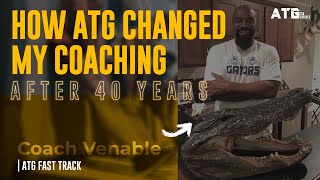
Coach Venable spent 40+ years in athletics before discovering ATG methods and ditching his FMS assessment. He recovered from chronic knee and back pain using the program, then rebuilt his high school strength curriculum around it. The talk covers how he integrates ATG progressively from freshman year through senior year.
Chapters
Okay. Thank you ATG coaches for allowing me the opportunity to present. I also want to thank my high school students. They are the reason that I do what I do every day and they provide me with a laboratory to try my theories and methodologies. What I want to talk about today is the ATG for coaches and ltad, but different from Istvon Bali's long term athletic development, which went with fundamentals and trained for fun, train to compete, train to win, and train for retirement. We're just talking for the secondary school, a high school athlete, so from freshman to senior year. So in order for you to understand where I'm at with this process, I need to give you a little background on how I arrived to the position I'm in today. Now, who am I? I'm a husband to my beautiful wife Shelly. I'm a father of three kids. My oldest, Jessica, 36, Bronson is 30. And my youngest, Faith, is 14. My grandson, Cass, just turned 2 years of age. Both my professional and my coaching careers have run concurrently. I would almost say my athletic career has run concurrently as well. And I'll explain why. When I graduated high school, June 1981, I went right into the military. Infantry soldier, very much like those soldiers depicted in the photograph where we're out walking. If you're not walking, you're running. The only reason you stopping is to shoot. You have a pack on your back with your helmet, your equipment, your food, your ammo, your weaponry. The average soldier carries about 100 to 120 pounds worth of gear. The most common injuries for us, outside of what's sustained in training or combat, is the foot, the ankle, the knees, the hips, and the lower back. When I was in the military, I was there for seven years. I'm stationed Fairbanks, Alaska, Schofield Barracks, Hawaii, on the island of Oahu. When I was in Fairbanks, Alaska, that's when I very first started coaching. I got my first coaching experience 1982, 1983. I started by coaching my platoon sergeant. He wanted to go to the gym with me, but I didn't have time. I was really busy. I told him, he said, I will pay you. And he gave me $5 to go to the gym with him. And something went off in my head. Ding, ding, ding, ding. This thing that I love, this thing that I love to do, people will pay me to do it with them or for them. And that was a game changer. And I haven't stopped since then. Did my seven years in the military, and when I got out, I started as a federal law enforcement Officer working for the Department of Justice. I was stationed at the United States Penitentiary in Leavenworth, Kansas. So I'm going from what you would call now a tactical coach in the military to train the civilians. But even the civilians are correctional officers, police officers, firefighters. So now I'm still a tactical coach, but I'm training mainly law enforcement. During my time at Leavenworth, I also started. Started a powerlifting team at a high school in town. And I did that for a while, and then I ventured into CrossFit in 2006. So I like that so much that I got my affiliate in 2007. CrossFit results again. Ding, ding, ding, ding, ding. That little bell went off in my head. This thing that I love to do, I can do with other people and I can make money. So training became a side hustle for me, and my CrossFit affiliate was born. And I kept my CrossFit affiliate until I want to tell you 2012, 2015. So I've trained military, I've trained General Pop. I trained high school athletes there. I was training some other athletes there. I started my CrossFit affiliate. I'm used to every kind of lift with the exception of the Olympic lifts. Weightlifting, snatching, clean and jerk. My clean was a deadlift and a reverse curl. So I had to find a local weightlifting coach to teach me these Olympic lifts so I could help my CrossFit business. And that's what I did. So I told you that my athletic career, my coaching career, and my. My professional career all ran concurrently. When I was in the military and I started training soldiers, in my mind, I was going to be a bodybuilder. So I trained my clients the same way. We had leg day, we had back and biceps day. We had chest, shoulder, and tricep day. When I got out of service, I gravitated toward powerlifting. I'm still training soldiers. I'm training other law enforcement officers and firefighters. I gravitated toward powerlifting. I trained my clients the same way. It was bench, squat, and deadlift. In my mind, if everybody got stronger, they would be better at their sport. They would be better at their job. So my military career, my civilian career, my coaching career, and my athletic career, they all kind of went hand in hand. I did powerlifting for 16 years. And just like the military where you have a lot of wear and tear on your ankles, your knees, your hips, and your lower back, working for the penitentiary did the same thing. There's a lot of wear and tear on the ankles, the knees, the hips, and back where from the powerlifting, where all I did was squat, bench and deadlift with a few accessory exercises. Here we go again with the wear and tear on the lower back, some shoulders, knees, again, my powerlifting, I went for 16 years until I started having back surgeries. And then I had to stop once I started my CrossFit affiliate. That made me gravitate toward my Olympic weightlifting. And so I competed as an Olympic weightlifter for 10 years. Now, when I made that gravitation toward Olympic weightlifting, I also pulled my clients the same way. So now I wanted all my clients to snatch and clean and jerk. They still did some other lifts, but those were the most important lifts to them. And you can see by the way I'm laying this out for you. Whatever I seem to be doing at the time is the thing that I think is most important that my clients do at the time. Whatever it is I like, I think it's the best for them since it's the best for me. In my mind at the time, that made sense. What I regretted was my Olympic lifting days didn't come before my powerlifting days. And for my powerlifting, my body was locked short in the front, the anterior muscles, and locked long in the back, my posterior muscles. So my shoulders rotated in, my hip flexors shorten up and I started having problems, just like from the military, just like from working corrections in the ankles, the knees and the hips, which brings me to where I am today. I retired from Leavenworth in October 2012. My wife and I moved from Kansas to Nebraska because that's her home. Honestly, I wanted to move to Florida, but she's the baby of 12 and all her family is here. So we end up at Lincoln, Nebraska, where I am now, Lincoln North Star High School. I'm a high school strength and conditioning coach. I'm also the head strength and conditioning coach and a PE teacher there as well. Our school has about 2300 students. It's a very diverse population. Lincoln, Nebraska, is a hub for immigrants and refugees. So people that are escaping, whatever, they leaving the country for where they want to think, they want to have a better chance at life, they escaping genocide, there's warfare going on, whatever, whatever, they're fleeing. And if they end up in the United States, Lincoln is one of the hubs that we get a lot of people sent to. So we have quite a diverse population, this town of 300,000. But I also get a lot of kids that have never seen a weight room, a test or weight room before. And we have a lot of Kids that don't speak English too. To me, this was a great opportunity. I had clean slates and I get to try anything I wanted. And I did just that. And here's a sample of what I tried with these kids. Caldez Trifasic Training. Dr. Michael Yesens is one by 20. Jim Winless 531. I did mark Rippeto, starting strength. I did Joe Ken's tier system for strength training. I tried everything on these kids and it was fun. And in my mind at the time, it worked. And you can see from the photo quite a diverse population. The kids look like they're having a good time. They were myself and Coach Watson having a good time. And this is, how are you measuring success? Injury reduction, improved movement, winning teams, larger classes. We believed at that time that we had all of these things in place. But for some reason, it kept bothering me that my kids still sustained the same injuries, even though in my mind the program was much better. They were sustaining the same injuries they had before I even got there. And that didn't make sense to me. And just like Coach Dan John says, everything works, but nothing works forever. So I go back to my library. That's my home library. And I've been collecting these books since I was in the 80s when I told you I started coaching. I'm going through my books like, what am I missing? How can I make this better? What is it I can do? And I come upon this book. This is a book called the Checklist Manifesto by a surgeon named Atul Gawande. If you haven't read this book, I would highly recommend it to you. Coach Mike Boyle recommended this book to me. We were talking at a conference and he spoke about it, and I talked to him after. And I didn't get it right away until one of his prodigies, Brandon Rearik, was talking about it. He recommended again. So I got it for my collection and I read this book. In this book, Atul Gawande talks about how the World Health Organization approached him and asked him to come up with something to help them because 150,000 people are dying as a result of surgery every year. And he had to come up with some type of a system or program to try to reduce those numbers. He started thinking about the airline industry. He started thinking about engineers building skyscrapers and bridges. And all of those people in those different professions, what they had, the common thread was they had a checklist. So he thought, this is a good idea for surgeons. We could have a checklist. So he came up, he Went to Boeing, talked to the person in charge of their checklist office, came up with a checklist for surgeons, took it back to his hospital and the other surgeon shot him down. They were like, we're highly intelligent. We've been to school for years, we have experience. We don't need a checklist. So he went to the World Health Organization and they assigned six hospitals across the world, prestigious hospitals, not just six hospitals in the hood, and let him try his Checklist manifesto. And they gave him a six month trial period. At the end of that six month trial period, there was a reduction in complications due to surgery by 37% and a 45% reduction in deaths because of surgery. Because those deaths and those complications were a result of human error. And people had just got so educated they were leaving out the small things again. Ding, ding, ding, ding, ding. That bell is going off in my head. I need to do this checklist manifesto. My checklist for the weight room. When I can't call it Checklist Manifesto, somebody already has that title. So I named my program Earn the Right to. So instead of jumping from Jim Winler to Joe Ken To Dr. Yeses, I have my own program. I'm going to put the checklist manifesto in place and I don't have to move again. We can stay with that. It's going to be comprehensive and it's going to be awesome. And that's what I developed using the six movement patterns. Hip dominant, quad dominant, vertical push, vertical pull, horizontal push, horizontal pull, and the core. I came up with this checklist. You see, you see, this example I'm on right now is for the bilateral quad dominant. I also have a bilateral hip dominant. And then if I go down further, you'll see a unilateral quad dominant, a unilateral hip dominant. I'm trying to cover all the bases. I got the assessment in there. We use the functional movement screen. I got certified by them like 10 years ago. I got the soft tissue work in there. We have the mobility exercises for the kids to do in there we have the warm up. And if the kid can't do the baseline exercise, then they can use the warmup for stability and pattern until they can get to the baseline. And then you can see you get to every exercise. Like we'll go with this. I'll go back to the bilateral quad dominant. The baseline exercise is a deep squat for 10 reps. It's just a bodyweight squat, an air squat. They have to do 10 reps with really good technique. And if they can't if they can't do it, they stay on that every time bilateral quad dominant shows up on our training session at school until they can do 10 reps with good form. Once they can, they get the advance to the standard, which is a goblet squat. Goblet squat is done for 10 reps at 50% of the body weight. So whenever bilateral quad dominant, that's what the student athlete does until they hit that. Sorry, I jumped off the screen again. Once that's done, they come to the goal. The goal is for them to do 100% of the body weight in the front squat by five females. I put 75% by five. The standard is what I want them to accomplish during the semester. The goal is what I want the student athlete to accomplish long term. So if you start this your freshman year or your sophomore year, by the time you're a junior senior, you should be able to reach that goal. And if a kid reaches that goal their junior year, then they have earned the right to do whatever exercise they want. If we get to a bilateral quad dominant day and they want to do zercha squat, overhead squat, split squat, it doesn't matter. They've earned the right to. And this made sense to me. So I was like, man, we are cooking in crystal now. I got everything squared away. All my bases are covered until I get to the end of the semester. And it looks the same. The numbers aren't going up any higher. They're not doing any better. I mean, they're strong, but they're not stronger than they were before. We have just as many injuries as we had before. And the bad part is with that program, I just saw you. It took us. I'll go back up to the top.
It took.
It took us three weeks to get through the FMS assessment for all those kids to teach them all the soft tissue exercises and the mobility exercises. We're in week four of the semester before we actually start lifting. And that's a big no go. You can't take 25% of your semester going through functional movement screening. So I was like, man, this sucks. Back to the drawing board we go again. So that John Wooden quote, don't confuse activity with achievement. I felt like that's exactly what I was doing. We were doing a lot of stuff, but I wasn't really doing anything. And Cicero's quote, sorry, forgive me because I don't speak Latin, so I'm not going to butcher that. But to be rather than to seem like I wanted to be better, but I really wasn't better. I just seemed like I was better because I rolled out this comprehensive program where we're dotting all the I's, we're crossing all the T's, but I'm not really doing anything different. So I go, you know what? I'm going back down in the basement. I'm getting back to my library, and I got to fix this. I got to make this better. I don't know if it's getting rid of the assessments. I'm not sure what it is. So I'm listening to podcasts, I'm going through my books, I'm on YouTube, and I run across this guy, and he's got that funky name, Knees Over Toes. I get it. I've been coaching for 35 years. This is a guy has a program for sale. His marketing is hype. I get it. He's jumping off the roof, he's jumping off H vac units, he's jumping off ladders. His knees are touching the floor. I get all that. He sprayed the cooking oil over himself. He looks really good and shiny in the Florida sun. I get it. I just don't have time for it because I have a comprehensive program that I have to get rolled out. So I bypass him. A couple of days later, he pops up in my feed again. That photo to your right. And he's doing that ATG split squad. And I said, man, he's stealing stuff from my man Joey Burglars down in Houston, Texas. My man Alan Bishop, he's using their stuff to sell his program, right? So I text Joey Burglars, I said, hey, this Knees Over Toes guys, this Patrick guy, you know him, he goes, stu, Ben Patrick is a good dude. He's a solid dude. He goes, that's just Charles Poliquin's old. Because Joey knows I was certified by Coach poliquin back in 2000. So 20 years ago, I got the Principles of coaching Theory. So he said, ben Patrick is a good dude with a good heart. Just block out the antics because that's marketing, but listen to his message. So I did. I'm listening to this guy talk, and it's making sense. I mean, this guy, he has more knee pain than me, and I'm 50 something years old. I was like, wow, this is crazy, man. But still, that's not what got me. This is what got me Celia, his mama. I'm 58. She's 66. I know. She's 67 now. She's 66. And I see her doing this. I'm like, man, this lady Is a baby boomer like me, you know, born between 1946 and 64. And she's doing this stuff. She's not just doing that. She's doing all this stuff. Like, all the stuff this kid is doing, Jumping off the buildings, doing all that, all the exercises he's doing. Like this lady is doing it. So I'm thinking, I'm gonna give this a try. I could probably do it too. So I did. I was like, man. When I think about my injury history, I've had 14 surgeries. I've had five surgeries on my back. I get a back surgery, I'd feel better. And then I'd go in our power lifter meet you pull 600, 650 from the floor. Then my back's out again. Another year, I gotta have back surgery. My wife told me I was cuckoo, but I loved lifting, so I wasn't gonna stop. So I'm eating anti inflammatories, I'm eating painkillers. I'm getting cortisone injections on. They went from you can get a cortisone injection once every six months to whenever you want one, we'll give you one. You have no cartilage left in your knee. So I'm tearing up the cortisone, I'm eating the anti inflammatories, and I'm looking at this lady saying, let me get this knees over toes stuff a try. What is it going to hurt? Right? So I tried. And within I would say five weeks, it might have been four, no more than six, but I'd say about five weeks. I'm going downstairs to my basement like I do every day. And normally when I get up in the morning, I go get my hoodie to go to school. I'm walking sideways because I can't walk straight down the stairs. My knees killing me in the morning. They get better after a couple hours, though. After I'm doing this for five weeks, I go downstairs to get my hoodie and I walk straight downstairs. And when I got to the bottom stair, I stopped. I'm like, this is incredible. Like, this works. Ding, ding, ding, ding, ding. I can get other people to do this. I can sell this. We can do something with this. So I'm dming Keegan on my way to my daughter's volleyball game. He's with real movement. I'm DM and Ben. I start the APG group. I'm loving it. It's working. I got my wife doing it. I got my daughter doing it. I'm thinking My athletes would get better. Maybe the injuries will go down, Maybe I'll be able to present something. But this dude went from jumping 19 inches to 42. My athletes get better, and this is what I'm looking for, right? This is it. I'm at my daughter's volleyball game, so I joined Real Movement. I joined ATG group. I'm paying for both of them. I'm like, hey, I just want to do this stuff. So I'm telling Ben, hey, can I coach this with other people? How much money do you want? He's like, you're paying me $50 a month. I don't want it. I. I go, you don't understand. Like, I'm going to use this, man. Like, this is going to be my business. I'm getting ready to get my side hustle at a whole nother level. I'm willing to pay you for it, but if you keep saying you don't want no money, then I will take your stuff and run with it, right? So he said, look, once you pay me that 50 bucks, whatever I have is yours, brother. Go with it. I said, oh, it's on. So I go to my daughter's volleyball game, and this is what I see. I've never seen this before. And she's been playing volleyball since she's five. Look at their knee position. I'm videotaping my daughter doing kills because she's a hitter. And in the background, I see this. So I'm blowing these pictures up so I can show you guys. I was like, oh, my God, this knees over toes, guys, like with the volleyball players, man. So I'm going to. But there's already a volleyball strength coach not going to take your stuff, brother. But I was thinking about it. I'm going to market strictly to volleyball. Take care of my daughter, her friends, and come up so even bilaterally, look how far their knees are over toes. I gotta do this. But then people on social media and they're bashing. Why? That's crazy. It's extreme, coach. That's dangerous. People even DM me, stu, don't do that. Coach V, don't try that. That's dangerous. Dangerous? Is it really dangerous to put your knee in the extreme position? Is dangerous, right? My daughter does this for three games. They playing at least two sets. They might play three sets, and you might have three or four games in the tournament. And you telling me this danger, so I shouldn't coach this in the weight room, but they gonna do this on the court, like, if you knew nothing at all. About strength and conditioning. And you see this guy on the left in this position and this guy on the right in this position and you know your kid ends up in this position numerous times during the course of one set, not counting how many games they play or the multiple sets in the games. Like which one makes more sense to you? Ding, ding, ding, ding, ding. It's not rocket science, baby. Now what? What am I going to do Now? I have to find a way to make ATG work for the developmental athlete, the high school athlete into my long term athletic program. So what am I going to do? I'm not sure, but I got to make it work. And just like Charles Poliquin said, you can't ride two horses with one ass. I gotta either shit or get off the part. I gotta pick and choose. So do I stay with the other old coaches like myself, who we don't push the knees over the toes. We're not gonna do Nordics because you're gonna tear your hamstrings. Do I ride with them or I'm gonna jump? I'll tell you what I'm gonna do. I'm gonna hitch my horse to the ATG wagon with these two old Ben and Keegan here driving this wagon and we're gonna see how far this takes us down the path. That's what I'm gonna do. And that's why I decided to do. The beauty of it is Keegan and Ben have already laid out my checklist manifesto with zero and with dance and withstanders, everything is already laid out. I don't have to go through that again and reinvent the wheel. It's already there for me. It's just a perfect transition. It's seamless. So for me, this was a no brainer. I appreciate your time, Keith. I don't know if you want me to take questions, if they have any. Now you want to roll right into the next presenter and get me out of the way, man. But thank you guys for listening to me. I appreciate it.
That was great, Stu. That was yeah, really, really good. Make sure you follow in Coach Venable. Instagram and always brings a lot of energy every week. So really, really appreciate that. The honesty and the delivery there, spot on. Really. Yeah, it's good. You know, you bring in your human slant to it, your background. That's what makes this real. Like it's literally going and changing these kids lives, kids that are coming from all sorts of backgrounds. You have an openness to stay fresh after so many different experiences.
Like just.
Yeah, really, really powerful. I Would like to keep moving, but I do. I would like to also circle back for questions. So if you want to type questions in there, guys, you can now. But that high school level, I think we really need to do a whole call about the high school level. I know there's a bunch of guys that are working with that kind of age bracket. I think it is a specific sort of conversation. It'd be great to hear about how you. What you're already seeing with it as well. You get your own experience, but I'm sure you're passing it on as well. So maybe we can have a little discussion about that. Let's see how we go for time.
I got a question for Stuart. I don't know if he's still on. He should be. So in regards to the fms, are you still using that? So I've kind of struggled with that as a very static assessment relative to something like sprinting. But knowing what you know now about the atg, is that something you've adapted for use or you kind of tossed it out or, you know, what's your process for that?
Yeah, Graham, I'm still here. And that's the easy one. I'm going to toss it out. It took too much time and we didn't really go back to it so that we collected the data for nothing. So, yeah, I'm done with it. So have you. Have you like, replaced that with a.
Different type of assessment tool? Or do you basically just use the standards? Like, can you do the calf RA and the overall movement? If they can achieve those, they're passing that. Or do you. What's taking that place?
No, like you said, I'm going to use the standards and then I'm going to assess based on that. You know, we always had that saying that if you're not assessing, you're guessing. So I felt compelled to use some system and I've used a couple other things other than the fms. I just like that a lot. But it was too time consuming and we really didn't go back to it with the corrective exercises. Anyway, we haven't looked at that data since we initially collected. And like I said, it took 25% of our time just to collect all the data. So, yeah, I'm done with it.
All right, makes sense.
Following on from that then, which is basically, this would be first Stuart and Clint and Rodrigo and like all of you, really. I'm interested in how much people are using ATG system verbatim, like straight exactly as it is, and how much people are kind of using elements of it, but modifying it to how they would otherwise implement their own training style. And I asked because I teach like martial arts, and so I obviously can't simply just teach the ATG system. And so it's more about integrating it as much as I can into an existing, you know, a system which has a long history in itself.
I'm happy to answer this a little bit. So from my end, I've. I've had a variety of, of like, personally, I try, I start everyone doing it almost verbatim. I think it's like before, before you start playing around with it, it's best to just use it as it is. It just. You, you, you'll get the, you'll understand the intent behind it so much better. And now, now that I've had the intent much more in my head and in my client said, then I start to tweak things depending on their more specific needs. But usually like, you're, you're covering all the bases with, with what's already there, and then you can start to play around with it. So, yeah, I, that's kind of how I go go around with it with most clients and with my own training. I just did it, the whole thing, just from A to Z, just do the whole thing. And then for example, I've. I've had clients that are like, are we going to do this for 12 weeks? It's too long. I'm paying you all this money and blah, blah, blah. So sometimes I'll do the same thing from a different. With a different tool, like, or with a slightly different.
Like.
Yeah, like a slightly different, different order. So that, that just gives them a little bit like they feel like they're doing something different and it's more, more for an entertainment purpose, if I'm totally honest with you. Because the system works. You don't really have to change too much to have great success with it. So, yeah, it's a gold mine just by itself. It's pure gold. So I think, yeah, that's kind of my two cents on that. I don't know if Stuart and Clint have some other thoughts on it.
Well, yeah, I mean, it's good to hear because, like, I guess that's the thing, right? I'm trying to. People coming to me, they're like, I want to learn martial arts. And I'm basically saying, yeah, and we'll get to that. But first I want you to do like 12 weeks of this and then that'll basically be my assessment and where I figure out where you're at. And I can kind of drip feed in a little bit of the martial artwork as we go. So by the time we hit the 12 week period, I'm feeling more confident about what I can show you and what like you need to work on.
So it's good to hear that you.
Say you're happy to just push people 12 straight away.
Yeah, but. And since you're also doing a martial arts component, like I could easily see how you could kind of like martial arts ish, like an ATG split. Like you tell them like this is. You could almost like put makeup on it and make it look like it's a martial arts like position and you just kind of like just make.
Give it a little bit of a.
Thoracic rotation and just arms extended or something. And I don't know, I think you can kind of massage things around to kind of make it that type of stuff. Yeah, I, for example, I'll do like, if I'm aiming a park and I have no, no walls to do like an anterior tibialis. I'll have them be in like the top position of an ATG split squat and just do the top. They're doing an anterior tibialis on the, on the front leg. So from like, like a split splits stance, they're just doing one of those. So you can just have them be in different positions and you can kind of play around with it just making sure that you're hitting as many of the key pieces as possible. Like you could do like a, like a two month period where. Or at least the first month and a half, six weeks or something of just focusing on zero movements. And then you can start playing around with some dense like, like sequencing. So you do every minute on the minute type stuff for the first 20 or 30 minutes.
I don't know.
Those are some, some thoughts because I'm sure you're. They're like I want to, I want to learn what you're paying for at the same time. But you saw, I sometimes hide the medicine in the food type of thing. Same thing that I do with my dog. So I don't know, kind of. That's the thought process that comes to mind for me.
Yeah, yeah. I'm kind of different jet because I have those, like I said, I have those developmental athletes. And if I can push the zero program on the freshman because, and do it follow the zero program as it is because they're freshmen and 90% of them have never touched the weight before, I can't do that with A high school kid that has lifted his freshman year, his sophomore year, now he's a junior and he's 16, 17 years old. I can't start him with the zero program. So I got to pull aspects of that and that's currently what I'm going through now. I got to pull aspects of that and use it for the warm up. Where before I was doing. I'll tell you exactly what I was doing. Five reps of Romanian deadlift, bent over row, upright row, shoulder press and squat. Go through that for two circuits. It takes whatever six minutes, seven minutes and then we start our workout. And our workout is three blocks. It's a core exercise and two accessory exercises. So with my older kids, juniors and seniors, I can pull part of the zero program and use that for the warm up or for the technique aspect before I get into the three working blocks. And when I get to the three working blocks, you can't tell a 17 year old boy he can't bench press anymore. He's not going to get that. So I can put him on a dense program and go, you can bench press, but we're also going to follow up with accessory with dumbbell bench presses, neutral grip, try to get the head of the dumbbell all to your shoulder and then we're going to superset that with bent over rows so I can use it that way. And that's what I'm going through now because not only will I lose my older kids and they just flip me the bird and be gone, I'm going to lose a lot of the older coaches. So I'm not sure where you, where you live, but whether it's football, rugby, whatever. Imagine the old school coach has been coaching for 20 years or 25 years what we have at the high school level. I go, yeah, we're not going to clean a deadlift or back squad anymore with the football players. We're going to do tip raises, calf raises, squats, and he goes, you not going to train my athletes. So I can't force that on my old athletes, if that makes sense. I'm going to have to integrate and that's what I'm in the process of doing now.
That's a great answer. And you know, I would definitely go more that way working with the team as well. Like you got to make it feel like. And you can play with the volumes and things to give them that sensation that you can still get their numbers up but you can make sure the program underlying is slanted towards what's going to matter most. I Love that. And there's still something to be said for squat bench dead. As long as it's not the only way. And it depends. It depends a lot on the details. So Ben's got something for us here. He's been waiting there patiently to share some thoughts.
Firstly, I just wanted to say fantastic job, everyone. I think that was really, really great. Just sort of to get what Stuart was saying, just to sort of summarize, I think in some ways the whole ATG system, which is in some ways your conclusion of getting rid of the FMS assessment is something that Charles told me. He says training is assessment. So fundamentally, what we're doing when we put our athletes and our clients and old, young and all that kind of stuff is you're seeing it, and with the standards you're seeing, they're doing the exercises, and that's the measurement of can they do the exercises. So fundamentally, what Keegan's done and what Ben's done together is that in one encapsulation, which is training, is assessment, as opposed to assessments. Over here, we do all this training and then you come back to the assessment, see, is it better? Isn't it better? And I think that's the fundamental flaw with the FMS system and all these other systems. So is exactly what Keegan's done, the magic of it is the mobility in the way of the long and the short range, all that stuff that's magical because that's the stuff that, as Keegan said before, the esotericism of Charles. I mean, I claim that it was there, but not in the way that Keegan and Ben have articulated it, such that it's systematic and that we're getting these things like the, you know, the knee extension, all this, the human knee extension, all these kind of things and the. So I think that's great because you just summarized in all of what you're saying is the conclusion is that you did it in practice, where you fundamentally concluded that training is assessment. Anyway, I just want to say fantastic. And I think that's the point that fundamentally this whole system hinges on. We have it every day, every session you do that and just add a little bit. For example, I have a jujitsu athlete that's done she poor MCL two weeks ago, and she's done zero every day. So you can up zero to every day. Here's my little guy. Say hi. All right, buddy. So the assessment zero, you can up the ante. I think the other stuff you got to be more careful with. But fundamentally, I think the magic is zero. You can go every day. And I have another athlete as we were talking about is 30 minutes of zero and then 30 minutes of Jiu jitsu. So it's doom right into it. And it could be anything. It could be basketball, as Ben would be. You can do it. And then as Keegan's saying on field, you could do that. You could easily make a football team do it as their warm up. Because it doesn't even feel like quote unquote, strength training. Oh, it's the warm up. And then you go into the gym and you hit the weights and you're doing bench press, you know, bench squat, dead clean. But you've done, you're doing all the other stuff. So in some ways it's very easy to integrate. I think in that end anyway, that's my one cent.
A hundred percent like you, you, you just see, okay, they can't do this exercise right. You know, let's try this one instead. Let's do this in between. Let's spend some more time paused in the bottom. Like I love making those little adjustments on the fly and showing them, you know, take, let's take some weight off. Let's spend some more time in that stretch position. Let's, you know, do these in between. Most people really love those small individualizations and that fits within the group environment. You can get the most out of it for everybody. People feel special with getting their right regressions. But yeah, it was great to have everyone on today and I really love these shares. I think there's so much value in hearing how different people are applying it and just making those connections as well. Please drop your Instagram links in there. But you can also connect with each other through mighty networks and see each other's profiles and whatnot. I think a lot of the great things that will come out of this network will be through the relationships that are built and people just going out and making changes. The majority of people have never heard of atg. Still, most athletes still don't know what it is, why it works. Maybe some people have seen the account, but they still don't have any idea what it's all about. So it's still very much like day zero for this. And even those of you who think about Charles Poliquin and he covered a lot and whatnot. Fact is, it didn't get out to 99% of gym goers. You know, they never heard of him. They don't know why they're doing, you know, some of his movements might be there or whatnot. But you know, it's all still ahead of us. Like this is. This is day zero for making a real change in the way high school athletes are trained and the way strength coaches are thinking about their training. And yeah, we have a massive opportunity. So I love this chance to connect as a community makes it. Makes it all the more real. And here in these real life scenarios, yes, you can feel free to drop your insta in there and catch up and connect with others. Patrick did a really good job earlier in the week. I don't know if we've got the recording for that, Patrick, if you can help us out with it, but did a presentation around the BFR training which was really cool. You did a great job presenting that. I think that does have application. I think it crosses over quite a bit with how we attack the sled work. I think that there's crossover with those theories and the way west side barbell attacks the belt squats and the sled work and those sorts of things. I think there is crossover with that and the blood flow restriction. And I've got some cool stuff coming up for you this week, things I've been thinking about. Yeah, thanks, guys.










