Exploring ATG & KneesOverToes For Football - Jon Heck UNC Strength Coach
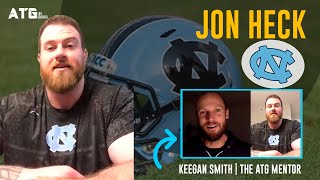
Interview with John Heck (UNC strength & conditioning coach, former UNC football player, powerlifter/strongman) about his rehab from a herniated disc and patellar tendonitis and his adoption of the Athletic Truth Group (ATG / KneesOverToes) methods. Heck describes rehabilitation progress (regained posterior chain control, addressed weak tibialis and quad deficits), how ATG methods — split squats, Nordics, tibialis work, sled protocols, Jefferson curls — improved his knee health, mobility, and athleticism, and practical strategies for integrating ATG work across a 100-player collegiate football program (freshman foundational program, big-man vs skill groups, in-season vs off-season dosing, coach/player buy-in). Conversation includes programming recommendations (use sleds, prioritize identifying individual deficits, leverage Nordics/tibs/split-squats/Jefferson curls), cautions about joint-loading for heavy athletes, and cultural buy-in tactics (staff participation, gamified standards).
Chapters
So just a little bit about me. My name's John Heck. I'm currently a strength and conditioning coach for the football team at the University of North Carolina. And then I'm also a, a competitor in strongman and in powerlifting. I played football. I played at the University of North Carolina. I graduated in 2016. And then when I got done playing football, I had the opportunity to go, go to the professional level, go to the NFL. And you know, it just wasn't for me. I kind of lost my passion for the sport at least, you know, from the player side of things, I knew I wanted to be a strength coach. You know, training was my absolute passion. You know, our off season training and conditioning, that was sort of my in season. You know, the football itself is sort of my off season. So by the end, it got to the end of my college career, you know, and it was coming time to start getting ready for the NFL, start getting ready for the combine and all that. I was kind of like, you know what, this really isn't my passion, you know, this isn't what I want to do with my life. I want to, I want to be a strength coach. I want to compete in powerlifting, compete in strongman. So right when I got done, when I graduated, that's what I did. I graduated with a degree in exercise sports science, started competing in powerlifting, you know, got an internship in strength and conditioning, and then things kind of took off from there. And since then, you know, I've, you know, done a lot of work on social media. I've started a nutrition and coaching business on the side. I work with a lot of strongmen, powerlifters, bodybuilders, a lot of general population folks as well. You know, it's a little side gig I have alongside my full time job with strength and conditioning. But you know, over the years, as I've gotten bigger, as I've gotten stronger, you know, working with bodybuilding coaches, I've really kind of adopted the, the bodybuilding lifestyle in terms of the nutrition side of things and everything that goes into the bodybuilding style and really applied it to strongman, to powerlifting, to take my game to the next level there. And I've made some amazing progress over the years just in terms of adding muscle, in terms of adding strength. But last year I suffered my first kind of major injury. I herniated a disc and I kind of, you know, lost a lot of the muscular control down my posterior musculature of my right leg. You know, couldn't really fire my right calf could barely contract my right glute. And that was an issue that persisted for a while. So as I, you know, I rehabbed the injury, regained range of motion and, and, you know, got back to training. And my plan at that point was, okay, I'm going to kind of do a bodybuilding phase. You know, I'm going to try to take a lot of the load off my lower back as I get back into training here. So I was doing a lot of, you know, body, traditional bodybuilding type training. Like, rather than barbell squatting, which had always been the foundation of my training, I was doing things like hack squats and, you know, heels elevated, narrow stance, Smith machine squats, leg press, things like that. Really hammering my quad. And that was working for a while. I was making a ton of progress. But then all of a sudden I just had absolutely crippling patellar tendonitis to the point where I had to develop a severe hip impairment in my right hip. I had been still training with a little bit of a compensation because my right leg was still weaker than my left from the disc injury. Next thing I knew, I had a host of issues. I took a break from training, from dieting altogether, and then it was kind of back to the drawing board. So it's kind of, you know, trying to figure out, like, okay, what, you know, what is my training going to look like moving forward? Am I done? Like, is this the end of my end of things for me? You know, I haven't. It's been a few years since I've been able to compete in strongman, compete in powerlifting. So I thought things, you know, were looking pretty bleak for me. And then one of our coaches on staff at unc, his name's Miles Brown, he had really gotten into a lot of the knee over toe type training and he himself got into the, the ATG system. And, you know, I'd heard a little bit about it. I was familiar with the knee over toes guy on Instagram, and I had heard atg. Honestly, I just assumed ATG stood for Ass to grass because I'd see all the, you know, people within the ATG system performing things through a very full range of motion. So I was like, I'll ask to grass. It took him, wasn't took a while to learn it stood for Athletic Truth Group. But anyway, I saw this stuff and, you know, finally kind of dawned on me, hey, this is probably something I should look into for myself. You know, I've got these, this terrible, you know, knee health right now. I've got A bad hip impingement. I can't really load my spine a ton. I've got weak, underdeveloped quads. I've always been a posterior chain dominant lifter. You know, I've always been a big deadlifter, kind of a good morning squatter. And those are things that probably led to the disc issue, you know, the disc injury itself. So here lately I've, you know, all of my lower body training has been, I've been training atg and it's made a huge difference for me. My knees have never felt better. I've never felt better in general. But one thing I noticed was I just feel so much more athletic. You know, I feel like I can move and sprint and jump and decelerate and absorb force better than I ever could. And you know, this wasn't just this, you know, initially for me became was, okay, let's find something to do to kind of rehab, get through this so I can get back to my normally programmed training. But now that I've been doing it for so long and I feel so good and I've kind of just gained these abilities that I never had. You know, it's something that I just want to continue and continue to explore and pursue and get better at and get stronger with. And more importantly, the reason, and the reason I kind of wanted to get on this call with you was because I. It's really opened my eyes to wow. I think this could be an incredible tool for athletes for, you know, for our football guys, because, you know, as a player, you know, we, we had a very kind of old school, traditional style of training. You know, squat, bench press, heavy, lots of running. We didn't do, we didn't do anything like this. And you know, with how it's made me feel and how we have begun to integrate some, a lot of knee over toe work with our guys, um, and just seeing the difference it's made. You know, I think this could be kind of, you know, the missing puzzle piece for a lot of, a lot of programs and could benefit so many athletes. So I wanted to talk to you and you know, kind of just pick your brain on, on kind of bridging the gap and integrating ATG within a strength and conditioning program for a football team or a basketball team. You know, we work with a ton of guys. We've got, you know, about 100 guys on the team, obviously different position groups. We've got the linemen who are 300 plus pounds, who have different abilities than our wide receivers and defensive backs who are from 170 pounds to 210 pounds. And, you know, so we've had to get a little bit creative of, you know, how can we program? You know, obviously we can't train these guys individually. We're having to train groups of 40 at a time, all the different position groups in the room. We've got five coaches on staff, so we're able to kind of divide the, you know, divide the team into. Into separate programs. We got a freshman program, we've got a big man program, a skill position program, and an advanced program for the older guys. But like I said, I wanted to pick your brain on just how to, you know, some ways to integrate this for, you know, football strength and conditioning, where it's probably not the only thing we could do. It's not, you know, I don't think we could take the team and just put them through 12 weeks of zero and never touch a weight and, you know, never, you know, do some of the traditional lifting that the, you know, head football coaches are expect us to do. And so I just kind of wanted to pick your brain on that a little bit.
Yeah, man. I want to say thanks so much for reaching out and sharing your story there and the fact that you, you know, you didn't give up and you kept looking for solutions and you tried some other stuff and just so good to hear that, you know, you back excited about your training and. Yeah, like, how was it during that time where you. You kind of weren't really lifting and if you. I know if you have that identity, you know, it was a huge part of who you are and, you know, how you see yourself and how other people see you. Like, what, what were the. What was that experience like of not training for a little bit?
Yeah, I mean, it was probably the low point in my life when that injury. I had never. I had always been someone who I tried to work hard to train smart. You know, I'd always go through a thorough movement prep. I'd always work hard to periodize my training properly and to, you know, take deloads as needed, to back off when needed. So I was always someone who prided myself in training smart and keeping myself injury free. So when I've had my first major injury, you know, it kind of made me relook at things I was doing, made me question my own programming and. And then just when I had to go weeks and weeks and turn into months without touching a barbell, without doing the things I love, like you said, it was kind of that loss of identity and you Know, I'm a strength and conditioning coach. This is what I. This is my entire life. It's not just, you know, it's not like I just powerlift and compete on the side. Like my entire life is in that weight room. And my players, you know, look up to me as a guy big and strong and kind of walks the talk. And so, you know, when I'm kind of shrinking a little bit and getting weaker and I can barely move, I can barely walk properly, you know, it was. It was embarrassing to me. You know, I. I wasn't me. I. I definitely suffered some depression and anxiety from it. You know, the. The training that has always been my baby. That's always been the one thing that's there for me, no matter what, that I can, you know, count on. It's my escape. And. And not only that, it's. It's something that's a big part of helping my business. You know, when I. When I. When I'm fully training and getting stronger and doing cool things in the weight room, you know, I'm posting it, I'm putting up tons of content, and, you know, business is great. And then all of a sudden there, when I couldn't do anything, I found myself. I don't. I don't want to put myself out there on Instagram. I don't want to people to see me, you know, barely, barely able to pick something up off the floor when a few weeks ago I was deadlifting 800 pounds and, you know, I was embarrassed of it, so I kind of went dead on social media for a while. Business took a hit. So it was a dark time in my life for sure. But one thing I will say that, you know, one positive that did take away from it was it definitely reignited my hunger for. Reignited my hunger for training itself and reignited my hunger for learning. You know, for a while there, I've been kind of going four years straight of just pushing things very hard. You know, I think over the course of four years leading up to the injury, I don't think I took. I'd taken a week off from. Away from the barbell. You know, everything was just forward, forward, push, push harder, you know, and I think that was my body telling me it's, I need a break. So as hard as it was, it was kind of good mental reset. And like I said, it opened my eyes to a lot of things I wasn't doing. It opened my eyes to a lot of new things, Kind of reignited that hunger to learn more and to, you know, Just expand my network, expand my knowledge and, you know, add more tools to the toolbox. And, you know, if you had asked me two years ago, you know, told me that the basis of my training would be a lot of body weight stuff, you know, a lot of single leg work and, you know, things like that, I, I would have laughed. You know, I'm, I'm heavy deadlifts, heavy squats and overhead press, that's me. So I never, you know, thought this would be a huge part of my training, but now I'm doing this. I love it. And you know, seeing my mobility progress, seeing my, you know, just strength at end range through new ranges of motion progress, like it's as rewarding to me now as a PR and deadlift was two years ago. So that's been a lot of fun.
Yeah, yeah. I appreciate you being honest and vulnerable with us around that. Like, I think it's a thing that a lot of strength coaches go through, you know, to experience when training isn't going that well. It really is tough. And I worked in rugby, that's sort of my background in strength and I want to jump into like applying this sort of stuff in a team environment and with kind of heavier athletes. But yeah, it's something that coaches should be aware of that if you are going through that phase, reach out and get support. And there are other coaches who understand it and there have been far too many coaches that didn't make it through those kind of phases that you went through there, John. I know a bunch of guys who kind of had tough times and just lost track. So I think this conversation gains another level of significance just with what you've opened with there. But you know, let's, let's jump into the weight room side because yeah, that's where the real change, you know, that's, that's the mechanism for the change. But the results go far beyond athleticism, you know, when it comes to keeping people excited about life and positive about life, you know. So as far as, yeah, like applying in the weight room, like I ran a camp just a year and a half ago now with like the sort of highest profile rugby player in the world. He just signed the biggest deal ever in rugby league and we did a month long training camp and we used the ATG system and we were very much, you know, influenced by, you know, Ben and I basically set it up and then I ran it there for a month and we had a bunch of other, you know, pro athletes come in and do the, do the program, et cetera, the Guys, you know, the guys loved it. The guys ran well. It really depends on whether there's a muscle mass goal. I think, as you say, you still definitely want to have that really heavy stuff in your program. And super high force lifting, whether that's with Olympic lifting or plyometrics or whatever it is, there has to be some stuff that's crazy high force that's going to pull you apart. But when you have ATG underpinning that you have this new level of security about. If I do go too far with something, I know how to settle things down really quickly. I know how to get things back on track really quickly. Um, so yeah, like I. The way I see it, like it's. It's laid out really well in terms of the ATG program with the standards and such. You know, there's a lot there that you can apply directly. Um, there's probably one big message I'd love to get across. You know, for you, John, and anyone who listens, who's got the NFL kind of rugby background is like, these guys are already heavy and they're already under a lot of, you know, joint stress in their sport. So you have to consider the joint implications of the movement more so than the muscle implications. So because guys like, you know, rugby players and football players are used to being, you know, can I lift the weight from A to B? If you apply that mentality with the, especially the Peterson step up and even the Poliquin step Up, it can be really risky because the guys will get a heavy weight from A to B, but the joint will be loaded more than what the muscle can handle. You know, like there's a potential there to load the joint, especially when that's loading on the acl. So I think that's the number one thing that I would have you consider is that. Cause these guys are heavy, it's already going to be heavy. Especially when we look into. Load like directly into those, I call them, like joint dominant movements. And it's most relevant to the knee and most relevant to the acl. But I don't know if you've. Yeah. Does that kind of concept make sense?
Yeah, absolutely, absolutely.
Um, but yeah, like when we get beyond that, the. I think it's setting up the culture around, you know, buy ins for things and using these movements as a buy in setting up your ratios between, you know, what are they squatting versus what they can do on the, on the Patrick step up. Quantifying the Nordic and really celebrating the Nordic, especially, you know, your running backs and wide Receivers and these kind of guys, you know, you want to see them really smashing out those Nordics and they wouldn't have been exposed to them during their high school programs. More than likely, their high school program probably didn't put an emphasis on that. So, you know, I would, I would leverage hard off like the cheetah. You know, Cheetah's a superstar, right. In the football world. Those cheetah reps, like make sure every player has seen him doing those cheetah reps like a hundred times. And I think you could be able to get that buy in on culture for that. And I think you'll see that carry over into their dash times and speed testing, which is something that they're going to care about if they're looking at going into combines and things like that. Yeah. Tell me a bit about how it's been so far. Like, how have the players responded to it? Attitude wise, physically.
Yeah. So up to this point, you know, we've only really implemented it in our movement prep, you know, prior to starting the main lift itself and in our post work. So we'll do, you know, in our warmup, we'll do front foot elevated ATG split squats. We've done some, you know, isometrics at the, you know, bottom position and range of the front foot elevated ATG split squat, kind of just, you know, holding some time under tension, you know, at that end range. We've started doing, you know, some tibialis work, a lower leg prep in our, in our warm up, you know, the wall tibialis raises and calf raises, you know, that's become a big part of our warm up and then, you know, but other than that, it's not a whole lot of it. We're kind of just now starting to integrate a few things here and there. And you know, you kind of touched on it in what you were just saying. When these guys come out of high school, they haven't been, you know, exposed to a lot of these things. So in our program right now, I kind of touched on earlier, we've got the whole team divided into a few separate programs. When new freshmen come in, you know, we're getting. We'll typically have about 20 new incoming freshmen every year. And they come from a range of backgrounds. We'll have some guys who are coming from, you know, big, you know, prominent high school programs where they had a good strength and conditioning program. We'll have other guys who come from, you know, low resource, you know, rural schools where, you know, one of the football coaches leads A few workouts in the weight room, has no idea what he's doing. You know, you have some kids who come from high schools that didn't have a lifting program at all. So, you know, we. We have what we call our foundational program, which is essentially teaching, you know, a lot of our basic movement patterns to these new kids and just kind of, you know, setting the standard in the weight room, teaching our cues and things like that. So, you know, where the back squat is a big part of our program. So when these guys get in, we'll start them with just, you know, they're doing kettlebell goblet squats, you know, on a. On a slow eccentric with a pause at the bottom, on a coach's cadence. And then we'll progress to. We'll progress into eventually a front squat with a barbell. We'll progress eventually into a barbell back squat to a box, and then progress from there to, you know, a free barbell back squat. So, you know, one of my questions was, where do you, you know, where do you see ATG being best implemented into. Into a guy's training in terms of, you know, where they are in their career? With us, you know, we've got the incoming freshmen who've got this foundational program, okay, We've got to teach them how to squat. We've got to teach them how to breathe and brace. We've got to teach them how to hinge. We've got to teach them, you know, just our cues and how we train in general. We've got a, you know, there's a discipline component. We've got to condition the guys. And then we've got, you know, kind of our base team program, and then we've got the advanced program. The advanced program being a lot of our older guys, a lot of our guys who don't necessarily need to get stronger, who, you know, have been their fourth year, fifth year guys who, you know, their training is a little more specialized. So in some of our conversations as a staff, we. We've looked at, okay, hey, should we, you know, is the time to really implement a lot of the ATG stuff with the incoming guys to, you know, perfect their ability to move, to perfect their, you know, their knee health before we start loading them or, you know, do we take these young guys, teach them how to squat, teach them how to deadlift like we've been doing, and start implementing a lot of, you know, the ATG stuff for the older guys, you know, in the advanced program, who already have that foundation of strength and you know, their training can be a lot more specialized, you know, because we, we see so much value in it. And you know, we, we've got limited time with the guys, just NCAA rules. We can only spend so much time in one given training session. And up to this point, the only thing we've really been able to do with it, like I said, was including it in warm up, including it in the post work, you know, including it as an accessory movement, you know, but where do, But I just, like I said, as I have trained it myself and as I've seen what it can do, I think it's more than just a warm up. I think it's more than just an accessory movement here or there, you know, but like I also said, we can't make it V program. Do you see, you know, it having more value for a young guy versus an older guy? Do you see, do you see what I'm getting at there?
Yeah, I mean, it's the ATG system. Like we kind of think about strength differently, you know, to traditionally like how I looked at strength before, you know, I'm a huge Louis Simmons fan and Poliquin and you know, I've also been through like the traditional, you know, the stuff like Mike Boyle and athletic development from that perspective. Like, the way we look at it with ATG is like wherever you have the biggest gap is wherever you need the most work. So for some of the guys, they may have phenomenal calf and tip strength because they just, they haven't had injuries in those areas and they're just, you know, really good natural athletes. And it's wherever the biggest gap is, is wherever the most impact is going to be made. So the guys that have the biggest gaps and the biggest deficits are the ones who are going to benefit most from the system. So for me, like you, you want to have an idea like if you could identify the key movements that their biggest deficits are in. Like if, even if you're running it within, like say they warm up or after, like, I would just, I would change like the wording and the mind framing around that just to be that every, you know, every, every movement is important. And if, you know, if someone's biggest gap is with their tips, then that's the most important movement for them. If they've got a big squat and if other things are good and they're in balance. I didn't look at it like that when I was getting started. And for sure, guys have to be big and strong. There's no two ways about that. For rugby and for football. But, yeah, identifying where those gaps are will make a huge difference in your program. And if you're able to kind of shift the weighting of the program towards those things. I know it's difficult as far as individualization goes. You could work it on a kind of a rotation to keep the key things in there. But I would really like work on that profile of, okay, this guy's got super weak hip flexors. This guy, his atg. The biggest deficit is with his tibs. Another guy could be with the rotator cuff. If you could just identify their one or two movements that are lacking the most. I think that's where you know you're going to get a huge benefit. And, and also identifying the, like, just the positions and being able to get into all the positions will have a huge benefit as well. So as, as you said, like, it doesn't have to be. It doesn't have to be super draining, like normal. You know, the big lifts in strength training, like, they require huge output from the brain, like from the cns. So you can actually get huge, like, significant gains in performance and tissue quality just by getting guys into the position. So being able to split squat, being able to get into like the deep sort of Jefferson position, the deep RDL position, you can, you can make a big difference to their, like, the fluidity of their running and their injury predisposition by those things. So it is a big change for a strength coach to shift away from being purely about how much force can be produced. That, that's still massive. And, you know, if you had to choose, I would probably still take the players that can produce the most force, you know, quickest. Like, that was kind of my motto as a, as a coach. But if you can put this in as well and see, like, this, this. Yeah, the balance and the positions are, you know, equally as important because you can keep your best players on the field more often. You can have them, you know, train at 100% more often. Yeah, yeah.
With a lot of our big guys, one of the biggest gaps we see is single leg strength. You know, we've got some, one of our, you know, some of our best players. They're, you know, 6, 6, 330 to 350 pounds. And they're strong in the weight room. They're strong swatters, they're big, strong men. But you try to get them to do a bodyweight in place, reverse lunge, and they could barely do it without, you know, putting their hand on their thigh. And, you know, that's an issue that's, that's, we've seen that and you know, and trying to. Certainly none of these, none of these big guys could do a Nordic right now. Do you see, do you see the, the Nordic as something worth investing in? Not only for a skill guys, which we have. We, doing Nordics has been a big part of our programming for our, you know, our speed based guys or wide receivers, defensive backs and, but something we haven't really touched with our big guys, you know, for them. We'll do, you know, our posterior chain work, we'll do an rdl, we'll do, you know, a back extension, something like that. Do you see investing in developing their ability to do a Nordic as something worthwhile for those 300 plus pound guys?
Yeah, definitely. I think, you know, the fle hip fle, the knee flexion, you know, the hamstrings as a knee flexor is a really, really important role for running athletes. And knee stability, I would, I would really for sure, you know, build that in. Some programs will use the hamstring curl as a kind of replacement for that. And yeah, the rdl, like the hip dominant variations are really important. And the, you know, back extension, single leg, back extension, you know, Bosch type, that, that stuff is great.
But I'll do like a stability, we'll do stability ball leg curl, we'll do, we'll do some dominant hamstring work as well.
But so yeah, that's, yeah, that's, I mean that's good. You've got it covered and it's, it's in there. The thing is like, how much you value it. It's a, it's probably one of the, you know, it's, it's probably the best movement for top speed development. Now your big guys don't necessarily need that top speed to the same extent, but whenever they're operating at a lower percentage of their maximum, they're also decreasing the amount of fatigue they're going to have, the amount of injury risk they're going to have. There is a video of one of the west side barbell athletes doing like 10 Nordics. Pretty good form, huge guy, like shorter limb, shorter levers than your six, six, three, 30 guys. But I've seen six, six basketball players doing these and I was pretty surprised. There's a guy, Justin Gray, who was training at Ben's gym when I had a month over there with him. Yeah. And then seeing a 6, 6 basketball player banging out Nordics like, like a boss. I was like, oh, wow. You know, we just haven't Set it as a norm. I think, John, like, I think it's just, you know, players know they need to have that bench. They need to be, you know, pressing 220 pounds for, you know, for 20 reps or 30 reps or 40 reps. You know, they know that that's what's required. Where we haven't set that standard, I think around the, around the Nordic and we need to do it for the tibs and those things as well. It's a, it is a real shift in mentality, but it has to happen for, to get the best out of the ATG system. It's, it is, it is quite a significant paradigm shift. But I think if, you know, if you get into it earlier than other teams, that's where you have a, you know, a competitive advantage. And we saw that with Ben's high school team, like he had the most players drafted out of a high school team into Tivuan College, like on record, out of his, the team that he's working with down there in Florida. So, you know, there is some precedent for this in football. And I know he's trained a bunch of top NFL players. He hasn't been public about it, but it's being done. He sent equipment to some of the top NFL clubs. So, yeah, it's, it's happening. Like the tip bars are getting sent out and the slant boards are getting sent out to NFL teams. So it's, you know, maybe that helps will help for giving you confidence and for your team and staff. Like those little stories I know can help a lot for the buy in.
Yeah, no doubt. And I think we're definitely, I mean, guys like you, guys like, you know, Ben who have. You're really becoming popular on social media. I mean, if it wasn't, if it wasn't for social media, I would have never been exposed to this. And I, I think it's definitely helping make it a little bit more mainstream. But yeah, I mean, just simple things like the wall tibialis rays, like my T. I had no idea how weak my tips were until I tried to do one set of wall tibialis races after I saw it on, on Instagram. And you know, I, I did 12 reps and I could barely budge my foot off the floor anymore. And I'm sure that was, I'm sure that weakness in my tips has created tons of issues that I never associated with Tibia Atlas weakness.
Have you tried the tip?
What's that?
Have you, have you tried a tib yet? Have you experienced the tib?
I'VE got, I've got a tip bar and a monkey foot on the way that I just ordered one. Will my size 16 foot have issues getting in the Tib bar?
It depends on. I don't know which brand you got, but I'd say you'd be okay. There's a few more American brands coming out now, so the original ones are coming from Australia. I'm not sure which one you got.
Yeah, we. I'm also on my own little personal journey to, to come to a unassisted Nordic, you know, eccentric and concentric. I can, I can use, I. Right now I'm using a mini band. I can control it down and do one concentric rep with it. But I mean, a couple months ago, if I. What's that?
How tall are you?
Six, seven?
Yeah, you're tall guy. It's going to be cool, man. Like you setting the time with that. Like no athlete's going to have an excuse, you know, they're going to. I think that's a great way to get the buy in with it. And yeah, your own story is so important. Like you can show him knees over toes guy or show him NFL players that he's working with, but if they could see you experiencing it and you can tell the story like that, that always carries extra weight, no doubt, you.
Know, and I won't keep you much longer. Just, you know, I know, I know you really hammered the point of identify the weaknesses, identify the issues, to really kind of, you know, determine where we're going to go with the programming. So, you know, not to kind of go, go against that concept with this question. If you had, you know, three ATG movements to just, hey, if, you know, if you don't do anything else, do focus on these three type thing, you know, what would those be?
Yeah, it is, it is a tough one. Like, it is whatever you haven't been doing, but to not shirk the question, like, do you guys do sled work? Because if you already do a bunch of sled work, then there's no point putting that in your three.
But we do sled work within our conditioning. When we get into the summer portion of our year, when we're, you know, two months away from getting into training camp and the season starting with our big guys, we'll do, you know, we'll do prowler pushes and then with our skill guys, we'll do sled resisted sprint work. But we really have not done, you know, we don't really do the backwards dragging with the sleds.
What sort of access do you have? What sort of access do you have to the. Do you have enough, enough sleds and space and all that sort of thing?
Yes, we. Equipment and resources and space. We have no shortage of.
So to sell you a little bit on the sled, like, when I went to Clearwater, I was as strong or stronger than Ben on most movements. Not the Nordic and, and not, not the sled. But when we did the sleds, he just smoked me by so much. And I was like, man, there's something to this being key for athleticism. Cause when you look at it, it is that last part of kind of lockout strength that you're using all the time. You know, when you run and especially when you decelerate. Like, we're not often in that super deep position. And people, you know, criticize, like, when are you ever in the bottom of a split squat? And things like that? And you know, that's, that's another conversation, but that's. That reverse, reverse sled drag is, is, is, is such a, you know, so golden. The sled pushes, the prowler pushes are amazing also for the, especially for the Achilles. And yeah, like, that's probably the biggest thing for the ankle complex to get that full range into the ankle, um, that I love the heavy, heavy sled pushes. But if, if you line your guys up and see who can really go backwards, so make them hold the same pace as each other for, say, the first three reps and then the fourth rep, they get to go fast and you'll see that. You'll see a correlation. More than likely, I would guess the guys who run fastest and the guys who are most athletic are going to smoke the other guys, even if their squat numbers aren't as good as the others. It's the thing that correlates most. And therefore your strength program should improve. Whatever the best predictors are, it's almost a good predictor, you know, power lift. Like, it's a good predictor lift or predictor movement. And I know, like, it, it was the thing at atg. Like, they, they, they counted the numbers. Like every athlete knew. They knew when it was sled day. They knew their times. Like, the, the sled is the new squat. Like, sled is the thing of, like, if, if our guys are the best on the sled, we're going to be, you know, really, really good. Like, that would, that would be my, my case for the sled. And, and it's bulletproofing the whole way along. And then that, you know, when you do that before you go squat or before you go split squat and stuff, guys just feel ready to go. They don't need so many warmup sets. Um, so it can be done in like two minutes if you do that accelerating journey, you know. So that's pretty much how we trained it at atg. And yeah, I would, that would be, that would be my number one. So I don't know if you want to comment on that or question that.
But the slide will be a good one. I'm glad you mentioned, I'm glad you said that because, because the sled, it's already kind of built into the culture of football. You know, all the guys know the sled, the prowler, the low sled, whatever. Especially for our big guys, I think that's one we get a lot of buy in right off the bat. Now when you're, when you're programming the sled work, you know, let's say we're fitting it in, we're doing it, you know, in our, in our field work with our guys. Um, do you, would you prefer to program them, you know, heavyweight, short distances, lighter weight, long distances, doing it for time, doing it versus doing it for distance? You know, all of the above. Are, are there ways that you prefer program big?
Biggest preference would be for the heavy and not, not too many. Um, it is pretty tough. Like it.
It.
As much as it's not, it's not tough on. It doesn't cause muscle soreness, it doesn't cause muscle damage, but it's stressful on the hormonal level with. You can get extreme lactic acid production. Guys can get nauseous pretty quick. So yeah, heavy for short distances would definitely be my preference. Unless with the caveat being if guys need more conditioning work, if they need more fat loss work, then yeah, I like it for intervals as well. We were doing 40 meters on the minute. Um, so pretty heavy go on the minute for like 20 minutes. It's, it's a lovely session. You know, if you make them do, do a couple of pushups between the pushes, like, you know, pushes and pulls. Like we would do the prolo down and then reverse back a lot of the time as well. So like 50, 50. But yeah, it depends on where, where the emphasis needs to be if guys are more posterior dominant or, you know, had more knee issues. But yeah, it doesn't, it doesn't have to be a lot of time to get a significant difference. The cool thing is, John, like, when it's in your program, like, you can't really have like, one of the reasons sled doesn't catch on is because it's not comparable across the world. So you can't compare numbers like on bench press and squat, but you only need to compare to your guys, to your own guys. So I would love to see you have like a timed thing that's, that's up on the wall. Like treat it with the respect that you would treat squat, bench dead or cleans, you know, in the traditional kind of system, or standing press better than bench press. I can hear that you're on to that. But yeah, because you can use the same sleds on the same surfaces, I think you should be able to get some good times out of it. And I know that those times were like one of the pillars of Ben's program. Like, that was a secret to success. And I use them a lot with my rugby guys. In 2013, 14, we won like the equivalent of the NFL in our small time Australian stuff, but we used it a lot there as well. And I was, you know, I'm a big fan of it. Um, so, yeah, but it is good if you can get it in before weights. I know that logistically that can be a problem if you can't get it in before weights, then using like the slant board pulses, um, and as, as you're doing with the tips and carbs. That's perfect. Just don't call it a warmup anymore. Like, make them accountable to the numbers and care about who's strongest on carbs and tips. And, you know, Ben was the chicks. Chicks dig bit Big Tibs was his sell, you know, to the, to these players of like, you know, you're going to get the girls off the back of this and they will if they get NFL contracts and big, you know, div one college contracts, that. That helps with the girls too. But yeah, I would. Yeah, ideally you get it in before the, you know, before strength. But I know logistically that's, you know, if depending on where your gym is and where your sleds are and stuff, that may not go down so easily. Um, so that's one that would be the number one. Um, I would love to see you guys able to get into the split squat position now before you like, you know, vomiting your throat. Like, it's, it's not, it doesn't have to be that, that replaces the squat or anything like that. It's not a competition for that stuff. The biggest thing with the split squat is can you guys get into and out of that position without pain with their back hip you know, opening up and it's not necessarily the best way to open up the hip flexor, but you're going to see some guys that are just fully really locked in that back hip flexor and that's going to be part of your ticket to say, hey, let's get this split squat going. We know that when your split squat position is strong, you run faster, your injury risk goes down. So let's get this hip flexor opened up so you can split squat like these other guys who are faster than you or who are smoother than you on this one. Does that make sense as like the approach to this?
Absolutely, absolutely.
How have you experienced the split squad as a six seven, you know, giant?
I got, I was exposed by it and you just touched it. The back hip flexor mobility was my biggest limiting factor. I've always had very, I've always had very tight hip flexors so that was something I had to hammer to be able to get into the, you know, true ATG split squat position. I'm still, I'm still working to improve it but I mean when I first started doing them, I mean my positioning was awful. Strength was awful down at the, you know, at the end range of it and it's taken over the course of two months. I've, I've, you know, improved drastically with them. And you know, just one thing I, I've noticed now, and it's not just with the, with the split squat, but you know, all the work that's gone into my knees, you know, I feel like I could drop into a split squat and decelerate and you know, pop out of it pain free and with strength and balance. Whereas if I were to drop into any sort of abrupt, you know, deep knee bend, I would feel like my patellas were going to explode. And I mean being able to decelerate like that in awkward positions, I mean that's huge for sport. You know, it was, that was something that you know, really kind of opened my eyes to. Wow. We, our guys should be doing this, this should be a big part of our guys training. But I've got a lot better, I've got a lot better still. Nowhere near on your guys level, you know, being, you know, a lot of the, the deficiencies I've created over the years and you know, being my height with legs as long as I have, you know, hasn't helped. I've always, you know, I've always been a deep squatter but you know, a lot of the ATG stuff has exposed a lot of my Deficiencies both in mobility and strength.
Yeah, well you, you instead of running away from that, you know, you've, you've faced it and you're getting the reward, rewards from it. And you've realized like, hey, I don't have to break the world record in the split squat to get some benefits from this. You know, like we've, we've had one of Ben's guys he was working with, he wanted a thousands of pound squat and he had like an 875. I've seen his Instagram, but I don't know the name off the top of my head. But Ben might have told you about him. I'm not sure but he, yeah, 875 squat knee pain. Got rid of the knee pain using, you know, split squats and ATG system. Squat a thousand pounds. Now the ATG system didn't make him squat a thousand pounds. It just got rid of the knee pain so that he could go and put full force into the lift, you know what I mean? So that's it. You can certainly look at it like an assistance to those things, but I would change the language around it more so to be like prerequisites and foundations. And the ATG app which is going to come out is going to literally show the athlete all the numbers in the different areas and kind of color code things. And I think that's going to help a lot with buy in and it's going to be something that any, any coach can use with their, with their athletes. You know, I think that kind of profiling system, like that's to me, that's what's needed. Like that's what I needed when I was working with a team so that it would organize this stuff and the athlete could see it like gamified in front of their eyes of just, it's like a computer game. Like this is the zones you haven't conquered yet. Like fix this, you know, and light it all up in balance, you know what I mean? So yeah, the other big benefit with a split squat is yeah, you get that back hip flexor, you get the knee stuff and being able to close the knee joint. Like every human should be able to close the knee joint. We're all born able to do that. We should never lose the ability to close the knee joint. You can debate about how much load is needed, you know, for that and how, you know, how heavy we should go. Like yeah, I can understand the argument of like maybe we shouldn't max it out. I think we should. But not everybody agrees with That I can get that, but we should be able to do it. We should be able to close the knee joint to prevent arthritic changes and to have the meniscus and things intact. But the other big one is that front Achilles and the front ankle. So you're going to get mobility gains in the front ankle and you can actually just put a little bit of weight on that front knee. For guys who need to open up their. Their ankles as well, that's an alternative to the prowler to make sure you have that ankle range and having your athletes buy into the range and the positions and think of themselves more like sprinters. If you look at Usain Bolt, he had phenomenally mobile hips. If you watch the documentary and stuff, you can see his massive working on his hip mobility before every running session. Nice and smooth in the hips and then go out and run. So, yes, you need the force, but you can increase fluidity and efficiency by, by, by loosening up the, you know, the hips so that the split squad is just. There's so much value there. Before you even get beyond like half body weight, even quarter body weight. For big guys like yourself, you can see life changing, you know, shifts.
Yeah, no doubt. One more question for you. You know, just off season versus in season programming for our guys. Do you see this as something, you know, obviously in season, our guys are taking a beating from football itself. Pounding on their knees, their ankles, their elbows, all of it. Do you see? You know, Obviously within the ATG system itself, it's high volume, like 10 by 10 stuff, you know, in the zero. Do you see this better as something. We kind of do the groundwork in the offseason. We do a lot of the volume off in the off season. We kind of touch on it in season. Or is it the opposite? You see, hey, this is when we needed the most, is in season. This is when it should really become the primary focus. You know, how do you go about that?
It's a great question. I definitely wouldn't be smashing them with 10 by 10 on a split squad or something like that in season. So, you know, you're, you know, spot on with, like throwing that out. I think your players are going to love you for having them do these kind of workouts where they're doing their tibs and calves and they're getting there, you know, doing Jefferson curls and ATG split squats, you know, reverse nordics, pullovers. If they're doing that stuff after a game, I think they're just going to love you for letting them get their bodies just feeling amazing again and getting everything working smoothly. Like I used to run a session something like that for my rugby guys like one or two days after the game and they loved it. My dosages were super small in season and I don't know what you guys are doing there, John. Like you're probably more advanced in some way than what we were doing. But I went for crazy low volumes on squat bench even. I liked cleans and snatches. I got most of my guys to the point where I was happy with the way they were using those movements. So we use those movements, but super low volumes, like just trying to get to that top set with kind of the minimum volume. Now using atg, I would need even less warm up sets to be able to get. I think that's one of the benefits that you could have in your program with ATG is that you'll need a lot less volume on your big lifts to see the numbers go up. And I think if you can get the numbers to go up just as much or even faster using more of the ATG movements like in the same way. You know, I'm not sure if you're a fan of Louis Simmons, but you know, his approach is like you bring the movements up by the assistance work and then you express with like a tiny amount of volume. Because obviously it's suited powerlifting. Like you can't do much volume on that stuff. It's just physically impossible. I think that approach is like perfect for athletes. And I would still keep the big lifts in in my program. Like I would want to see my guys. I would probably still have them cleaning and stuff. I really think that the impulse of those movements was really valuable. If you look at the physics, it's not just the acceleration of the bar, but it's the impulse of the bar when it's at the hip and then when it's at the shoulder. I'm a big believer in those things for high contact athletes. Those movements want to tear you apart. If you have a bunch of guys. We had a bunch of guys with 330 cleans and that's not common in rugby. And we, you know, we crushed the other teams. Like, you know, they were really like, they were asking our players like, what do you guys do that we don't do? Because it's different. And I still think you need like, I think you're probably going to need those movements. It's interesting someone's going to experiment with using all ATG stuff and no heavy squats or no heavy cleans But I know Ben was still like heavy squatting with his guys, um, in the, in the high school, the high school one. So yeah, that would be. I just think it's the underpinning John, like and then you can do whatever you want. Like I think it gives coaches freedom to where the coaches want to run with weightlifting or where they want to run with the more west side, you know, approach with the bands, whether they want to run with, you know, the Bosch type stuff, whatever you want to run with. To me it just makes sense to have that underpinning of strength, strength through length and balance at every joint and then you know, go, go for your life after that. Like I think a lot of different approaches can work. So yeah, to me it's like year round but probably even more so in season to be able to cut the volume on the, on the big lifts.
Yeah, that makes, that makes a ton of sense. Absolutely.
Last movement I'd give you would be the Jefferson curl, which I don't know if you, what your take is on that one or how you've seen it so far. My experience with like the rugby guys is it was phenomenal for their, for their spines and for their hamstrings. Now a lot of athletes, their hamstrings are just way too tight. Now if you ideal can be done in different ways, right, it can be done for length or it can be done for load, or it can be done for both. Ben was able to get to like 100, 150% of body weight at like drop catch style reps. So like letting the weight free fall into his hamstrings, being under extreme stretch and then popping back up to the top. Like I've seen very few. I don't know if I've seen anyone attack the RDL as aggressively as Ben. So you could potentially use the RDL instead of the Jefferson. But I just see so many guys with jammed up, banged up, bothered lowered backs and crazy tight hamstrings. The tight hamstrings are causing more hamstring injury risk with tears and the sore back just makes them not want to be in the gym. Makes him not happy to get out of bed. It's such a big quality of life enhancer by getting the hip flexors sorted. That's a huge win for the lower back. And then you know, the Jefferson and the 45 degree back extension, like huge tools for getting the back going. But I'm a big fan of the Jefferson. I like it on the slant board. It becomes very neural on the slant board and you can like zircher the bar in the elbow, crooks of the elbows once you're ready to handle weight. I just, yeah, I think if you give those guys those three movements, I think they'll, you'll win a lot of, a lot of, A lot of love and a lot of support. And none of those three movements are going to, you know, you don't need to, they're not going to fit. You know, they're not going to wear the guys out too much. Like the sleds are crazy safe. And then I'm telling you, on the split squats, you don't need to max it out. And then Jefferson, you definitely don't need to max it out. You just use the weight. That feels good. Um, but yeah, tell me about your Jefferson experience and what do you think about that suggestion for the third?
Yeah, I, I like the Jefferson curl. I, I only recently started implementing them myself because, you know, with my, with the disc injury, I, I, you know, I've tried to hold off on a lot of spine and I've only recently gotten back into them. I think it's a fantastic movement. I wasn't completely sure on and I think it kind of just answered me there. But you know, ideally, if this was a movement that was intended to be, you know, strengthened and you know, adding load over time or is this, or if it was purely a, you know, just use, you know, use enough load to be able to go through that, you know, that huge range of motion. And it's all about the stretch because I've being a deadlifter, that was all, you know, I was always a big deadlift guy. My instinct is, let's see how heavy I can load the. This. Let's see if I can do a, you know, 500 pound Jefferson curl, you know, on a slant board, wrist below foot. Is, is this something that you see? And this, this is more one for me. We would not load our guys heavy on a Jefferson curl. Do you see it as something as, you know, you said you yourself you would like training the ATG split squat to max. Does that same sentiment apply to the Jefferson curl?
Personally, yeah. And personally I love going heavy on it, but you do have to really build up to it gradually. Like it was Coach Summer, a gymnastic coach, he kind of got popularized quite a bit through Tim Ferriss a number of years back. He said go up, I think was like two and a half kilos a week. You know, so when you're just conservative like that, then you're going to Know if you ever get to a weight that's like not, not, not the way for you, but for big strong guys, like with my rugby guys, like I'd put them on a, on a box with a 16 kilo kettlebell, 24 kilo kettlebell, and I would have zero, zero fear, zero concern. And they just loved it. They just felt good with it. They just didn't feel like old men. And you don't want your athletes to feel like old men. So we didn't go, we didn't go beyond like 40 kilos on it. But most of the coaches, a lot of coaches that I've worked with have gone to like body weight and a couple of guys have gone a little bit beyond body weight. Some guys are doing straight leg zercher deadlift off the floor with like, there's a kid out there. I'll see if I can send you. He's a crossfitter. Josh Bowen, I think his name is. He's worked with us with real movement for a while, like before ATG for coaches. But he was doing like, yeah, like some serious weight. I don't know what it was. Like maybe one more 150, 180 something. Kilos. Like, yeah, like elbows, yeah, elbows in the bar, like straight leg off the floor. Like, super. That that stuff's tough and that stuff can tell you when you a new back. Like you can damage the fascia in your back. Like anyone listening to this, I would not jump into this unprepared and like treat it with respect. Because the fascia of the back, if you do damage it, it takes like weeks and months to feel better. And I can tell you that from experience, lifting with respect, some ego and playing around with things. But I think that's the role of the coach is to like, you know, explore the stupidity and then, you know, like, I'm definitely not doing that to someone who's paying me money or someone who I'm being paid to improve the performance of. As long as you're progressive with the load, like, I do think it's good for athletes to get to the point where they can handle, you know, especially like a wrestler, I would get them to body weight like 100%. NFL is probably not, it's not as wrestly as rugby, but rugby is a bit more like wrestling, like American wrestling and that kind of thing where you're, you know, you jostled the person to the ground rather than just like smash your body into them. As much as the tackling style and stuff is different, like you have to get them on the ground and they don't want to go on the ground. In rugby league, it's more like that than in rugby union. In rugby union they go to ground. I worked in rugby league where it's like you wrestle them to the ground. So yeah, probably for your guys, like, you wouldn't have to go that much, but for you, yeah, like, I would love to see you do that and I think it would be great for you, like, but from my experience, I'm not your doctor, I'm not your fairy godmother, I'm not your whatever. But my guess is that as you gradually progress into that, your back will feel more and more resilient. If you do go too fast or try to go too fast with it, then you may get a warning shot from your body of, hey, slow down there, big boy. The body tends to tell you.
Yeah, no doubt. Well, I, I appreciate all your time. You know, I've, I've had a lot of good takeaways from this and we just played our last game of the season this past Friday. We're, we'll be preparing for our bowl game here over the next few weeks and then heading into our off season. So it was a strength.
How was the season? Excuse my ignorance.
It was up and down, to be honest. It wasn't quite the season that we had hoped for. We had a lot of big wins, we had a lot of heartbreaking losses, including this one we, we just played on Friday. So we've got one more opportunity to end the season on a good note. We'll be playing a bowl game. We're not sure exactly where we'll find out on. I guess we'll find out on Sunday and then we'll head into, head into next season. So, you know, over the next few weeks, our strength staff, we're going to be really meeting a ton and putting, putting together the off season plan. And I'm glad I got to talk to you today and get some good tidbits to start incorporating.
I really, really appreciate you reaching out. I love talking about this stuff and yeah, it's cool to speak with someone who's working the team environment because that's all I did. I was never really, I was never a personal trainer or I only worked with rugby teams and then, and then started to work with coaches. Sort of my business. Yeah, I love having this conversation. So I appreciate the opportunity to do this. And for your coaching staff, I would challenge them on some numbers there, like get them to some standards on stuff. And you'll find that it'll be easy for the team because they'll have more like the experience that you've had, you know, if you can set them some challenges around. Hey, like, there's going to be some incentive here to get a Nordic. We're going to come back, we're going to have a competition on the Nordic. You know, we're going to see what we can do on the Tib bar. We can see what we do on the calves. Sleds are going to be a big thing for us in the next preseason. And I'm such a huge believer in the coaches. I was just speaking two days ago with the coach of the most successful team in Australia. Like, the team that I worked with have kind of had a dynasty and we won three, three of the competitions out of the last six or seven. But his team, he's been with them since 2007 and they've been the dominant team over that period. And he's a big west side guy and he's super strong. He loves his deadlift and he's a coach who really practices what he preaches. And he's the most successful guy in the rugby in Australia, which is the most strength dominant sport in Australia. So I'm such a big fan of that as a cultural thing for coaches pushing themselves to the next level. The coaches who I had that interned with me or worked for me, like, I made him lift. And two of the guys are working with pro teams now. One of them is a national level weightlifter and the other guy's crazy super strong as well. He's only like 27, 28, and he's been running a program in the top competition, like the equivalent of the NFL for a number of years now, like for three or four years. So, yeah, I would really challenge you to get your staff pumping with that. And any coaches that are listening, like, that's a huge piece of advice that makes the buy in so much easier within the program, you know.
Absolutely agreed on all counts.
Yeah, obviously I can't. I'm embarrassed now. I've actually said, like, practice what you preach to, like the biggest, strongest strength coach I've ever spoken to. But, you know, you know what I'm getting at. Like, it's a bit different with what we atg. Yeah, yeah, yeah.
Absolutely. Being able to do the stuff, stuff that we're having our guys do. And I mean, it's a big part of earning their respect, earning the buy in. It's no doubt when our guys and every Member of our. Our staff. We all lift. We all train hard. You know, we all. We all train similarly to the way we program for our guys, and our guys see that. Our guys respect that. You know, our guys follow. Follow me on Instagram. See the big lifts, they love it. It fires them up. So, yeah, it's. Yeah, definitely. I'm 100% agree. If you're a strength coach, train, you know, get strong yourself. You know, your guys respond to it.
But we've got to move the goalposts a little bit, and that's. I know that's a little bit painful because you worked so hard for the lift and your coach works so hard for their power lifts and stuff, but it won't take them too long. They can move the goalposts on that stuff pretty quick. And then it'll. It'll have even more reward because the team wins. Where, if you're a good, powerlifting team, you don't necessarily win. But if you're good on this stuff, I think you'll see. But Wade wants to say something to you there because he's one of our top coaches. He's worked with football teams, and he works with a lot of junior athletes. He was a good player himself. He's over there in Nebraska. He just wants to share a few words there because he's been listening the whole time.
Yeah. How you doing, Coach? I just wanted to say if you wanted to go a little bit deeper, like, I've programmed this into my football program as a high school coach the last few years and seeing some great results. Keegan hit that. Hit the nail on the head on a lot of this stuff. But if you're willing, I'd like to just go dive a little deeper with you. Maybe sometime we can work out a call, just some more specifics about what I've done, specifically since we're both football guys and what I've done and what I've seen that I think you got a really good start on here today with this. There's only so much you can cram into an hour, but. But it's. It's good stuff. And congratulations on. On getting out of a meathead approach, which I call, like, it's coming. Like, I know.
I know the industry, man.
It's a hard battle, and you fight a lot of those stereotypes, you know, and those pressures to. To uploading guys backs and going down halfway and slapping guys in the face and, you know, all the. All the stuff that goes on in the. In the culture of a weight room. But I Tell you what, the more I've distanced from the traditional mindset and I'm, I'm the same way. I can do things at age 39 that I couldn't do as a, as a college football player because of atg. I've, I've restored some youth, you know, and like you've. Out of some, some bad, you know, injury stuff just from overuse and the things that we do, I think there's, I think it's screwed up. Be honest with you. I think we program it largely in a, in a. Almost completely wrong in some manners. But you don't, I don't think you have to sacrifice. I know you don't have to sacrifice everything that feels so. Because it's change, right? It's scary. And you don't have to give up those things that the kids care about. But I think the biggest portion is if you include it regularly in your programming, those things they care about while you're changing the narrative are going to grow up. They're going to go too, because you're getting into that tendon strength. And it makes me throw up to see how many, you know, these freak athletes are blowing ACLs out on non contact injuries. You're not training through full range. There's a bigot. Saquon Barkley should not tear his acl. He's training very poorly, but he's a freak, right? So like, this is what ATG comes in does, man. Like it's, it fills those gaps in and then you can just go, you know, confident, you know, you go into it with so much more, you know, but he can hit the nail on the head. You've got to make it cool, right? You've got to make. Yeah, you gotta, gotta feed that ego, right? You gotta feed that football ego. The biggest guys that struggled, even, even on the high school level, my, my weight room junkies were the hardest adopters to this stuff because they just want to bench squat clean, right? They just want to do. Oh, and it, it's a tough sell. But at the same time, you know, I think anything new is gonna, is gonna be that way. But when they feel better, when they're more fresh, when they're, when they can perform, they're not always beat down. I never felt fresh on game day. Once in my life I was so beat down, I was chasing numbers and I was always sore and tired and had every itis under the sun, right? So no, I'd love to get.
We gotta do this again. We've got to do this again. As a roundtable if John will jump on again at some stage. But I know there's a bunch of guys that love the football side. And yeah, it'd be really cool to be able to dive deeper again if this if you want to make some time available again in the future.
John Absolutely. I'd love to do a roundtable sometime. And Wade, I don't know if you follow me on Instagram if you want to shoot me a dm. Love to set up a call sometime, but I love doing these things, getting to talk with other like minded coaches, learn more and, you know, debate and any anytime you guys want to get on the call, whatever, I'm, I'm game.
It'll be ATG Nebraska. So when you see me. So.
Got it. All right.
Thanks for your time.
Absolute.










