Football Secrets? | Keegan Smith Experience #101 - Taylor Davidson @footballentangled
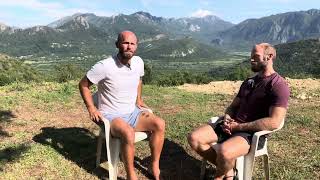
Interview between Keegan Smith and Taylor Davidson exploring Taylor's shift away from conventional gym-based strength training after an impactful stress fracture and years in academies. The discussion covers his alternative training influences (Soviet research, functional systems), lifestyle interventions (sleep, sunlight, raw dairy, reduced caffeine), critiques of traditional weight-room work for footballers, preference for unstructured ball play and wall work over cone drills, injury trends and growing squad sizes, and plans for an Entangled app focused on sleep and phone control.
Chapters
So people think that this is going to end in a fistfight because I like the gym and you're telling guys you're wasting your time doing a lot of muscle building stuff. I want to give some context this conversation. What is it that turned you away from the gym? Like what's your personal story of how you got to this position of pushing back against the common way of doing athlete development or soccer player development?
Well, I think largely it stems from my own personal experience combined with trial and error, combined with research into different forms of science from different cultures, going back to like Soviet, Soviet research and the Olympic athletes. And generally I think like the gym and traditional weightlifting is totally fine if you, you want to build size and build mass and you're more going after aesthetic. But I think in terms of if you're a football player, soccer player, and you want to sprint 100 yards and dominate on the pitch and have endless stamina and have a body that moves in spirals just like the top players have, then the gym is not set up for that. Like the paradigm that the anatomy that the gym is kind of based off of, I don't think is, is, is on point. And like my journey, I, I went through all that. I, I followed like going deep into bodybuilding, deep into powerlifting in college, you know, kind of barbell, back squat, front squat, deadlift, marble hip thrust, doing two, three plates each side. And I was like a, you know, tall, athletic white guy and I could do that, but like I would still get beat and still get like walked around by the 5 foot 2 Hispanic players who couldn't do 3 pull ups. But, but then like, why are, like I'm just like, why is that happening? You know? And then my journey kind of started looking into tons of other different kinds of training and I've looked at like Marv Merenovich, the sports science lab, like Matt Cooper in la, Tons of other guys like movemed, go to functional patterns, somatics, egoscue, like tons of other different methods that just, I look at the body in different angles, different lens and I just want to pull out of each one. Like what makes the most sense for a footballer, what makes the most sense for me in terms of something that's going to create permanent change as opposed to something temporary. Because to me it never made sense. If you do gym work and you get results after a few months or after a year or two and then you stop and you lose it. I just always wondered, because if you compare that to the natural, which is a concept of mine, that I created, which is like that kid or that guy that you. That just is jacked, but you've never been in the gym. And whether it's from hormones or genetics or whatever, I just said like, okay, how can I create that instead? Because that seems more transferable to sport.
Yeah, you see it with the dunkers. Like I've had that opportunity to hang around with Ben Patrick and he's with some of the best dunkers in the world and they don't do a gym until they need to. Some of them do a lot and some of them do none, which is interesting as well. Like there are guys that like, yeah, I pumped the weight, so this is how I got there. And there's others who's like, yeah, nah. But then if they get injured then they start looking at other methods. And I suppose that's like you didn't just naturally have a fetish for Russian research. It was like through necessity. Right. Like you, you had the. Maybe if you share a bit about like where, why you had to go into this, like what, when did the research really start and what drove you to it?
Well, I was about like 16 years old playing, playing high level academy soccer in California. Had a coach tell me that like I needed to like lose some weight because like growing up I was kind of, I was kind of fat to be fair. Like the whole kind of slow metabolism. Excuse me. Which of which I believed for a long time and got in the gym, had had no idea what I was doing. Hired some personal trainer like twice a week. Then I got a chance to play in Sweden at like the under 20 level in like a first division academy. And that was when I was tossed into the gym every day. And I was just following, I was just following the other players. They were doing basically basically just bodybuilding. Yeah, just upper body, lower body, quads, hamstrings, glutes, just all the normal stuff. And I realized like, oh, I can't do any dips, that's weird. But I was comparing myself to other soccer players that were worse than me on the pitch. But. But they were better in the gym.
Yeah.
And back then I just didn't put two and two together. And then I went down that route more and more and more. About a year later, fractured my fifth met of Tarsal playing soccer in Greece. And at the time I was basically on the verge of becoming like a top flight footballer. Panathinaikos was a club, it's one of the biggest clubs in Greece. Champions league, Champions League, Europa League club. And I was there For a few months. They told me to play well in this friendly following day. You'll get your first team contract if I got that. National team was basically around the corner and from there you kind of have this, have the stage set for you as far as a player. And in the warm up of that game, non contact stress fracture, just jogging and boom. Basically saw my dreams vanish before my eyes. Had this Greek physio come over, no English, spray some ice with me with the, with the canister upside down to like get the ice on there. And I was like, it's not working, man, Sorry. And actually couldn't walk to be fair. My agent wanted me to keep playing. I just like was in the hostel that I was staying in for a few weeks, just trying to like rest it off, walk it off. Didn't work out. Got surgery in Greece, came back to America when the economy in Greece fell apart. Came back too early, refractured my foot. I was in a boot for eight weeks, cast for eight weeks and then a boot for eight weeks and had to restart my career at the junior college level in California, which is more or less going from 100 to zero. And that was probably the greatest source of frustration where I worked so hard to do all these things. And then I was like, why didn't it work? Why did I have a non contact stress fracture when I'm 18 years old, I should be healthy as hell, right? That happens to people in their 70s, not to 18 year olds.
Were you overdoing it a lot of stuff on your own time or like, do you, do you put it down to more the lifestyle, Was it the biomechanics? Is it?
Yeah. I'll put it down to a few things that I can directly speak on. I think like I was definitely like training like once a day with the team, once in the gym every day, and then going to bed at 2am, 3am I was a young kid playing video games. I had no idea. And eating lots of pasteurized dairy and grease, Greek yogurt every meal, bunch of like hard boiled eggs. And I think over a certain amount, pasteurized dairy is very bad for like very bad for bone integrity.
Everyone would say it's got calcium, that's what you need. What do you think?
Yeah, well, I would say because it's pasteurized, none of that calcium actually gets into your bones.
People would say that the minerals don't change. Right? Like the, that's the argument that you see against the raw food thing is like, well, minerals and minerals. Like it's like A metal. It's like a. The vitamins and the fat structures maybe change. But what would you say is going on? What would you say was going on there? Excuse me.
Yeah, yeah. Well, I'd say, I mean, it's the same reason why you shouldn't have pills for vitamin D. It's exogenous. And I think the belief that the minerals don't change maybe is true, but the envelope that they come in is changing. And unless you're blind to how nature works, everything works together. That's why my brand's called Football Entangled, because everything's entangled. So I think if you kill the bacteria, the enzymes and the bioactive envelope that the minerals come in. I think you're living a fantasy if you think pasteurized dairy is good for bone health.
The goats is a goat house just behind here on the camera. They don't pasteurize the milk that they're giving to the baby. My wife is also in the nursing phase. We don't pasteurize the milk. Go straight from the mother into the baby. Seems to be doing quite well with that. It does seem pretty absurd to think that it's a really bad food. I know someone who was fined tens of thousands of dollars for selling it as a food, the milk that comes from an animal in Australia. Why do you think there is. Why is it so difficult to get raw dairy? And why, why is.
Yeah, why do.
People, why are people scared of raw, raw food? Raw eggs, raw dairy, raw meat?
Well, it's basically like large scale conditioning going back to the 1940s when the Rothschilds and the Rockefellers basically took over the medical industry and the medical licensing industry and created all the curriculums for the medical professionals to, to use and to be educated and to maintain their licenses. And then created kind of the foundations for financial incentives to sell pills and basically sell the solution to germs, bacteria, viruses, which of course everyone knows about nowadays.
Just part of scaring everyone away from. To want to spray everything with antibacterials and take all kinds of antibiotics.
Well, it's a, it's a multi. I'm not sure if it's a, if it's a trillion dollar industry, but it's definitely like multi billion dollar industry. Hospitals. Yeah, it's a big business if they have, if they have, if they have empty beds. Not making money. So same as the hotel. So it's in their incentive to have all these like boogeymans. Yeah, yeah, go ahead.
I've also looked into that nutrition stuff a lot and I've you know, we've been having raw milk for 10 years and I've tried lots of the experiments and things similar to what you've done. I haven't gone as far for as long, but you know, I've researched into this. The history of fats is super interesting. And shift away from fats to sugar and carbohydrate. All that medical research and stuff is the big fat lie. It's a really good book about that. But it's like what impact tangibly do you think it's had? Because it's difficult to know exactly what the bone density in your foot is or for the men that you're working with. Like what are some of the things that you measure or gauge off that your diet, lifestyle protocols, which are pretty different to what most professional athletes and most sports nutritionists are doing. Like, how do you know it works?
One of the simplest things that's almost kind of sad nowadays is like young athletes having eye bags. So usually that's one of the first things I want to fix and that's obviously sleep plus lifestyle plus some diet things. And skin quality is really important. I mean like your skin is your biggest detoxification organ. So I want to make sure your skin's working correctly. If you're pale, I want you to get in the sun. I think most people need to be in the sun 10 times more than they are currently. So at a first layer it's just increasing how well you look, eye bag, skin, complexion. And then from there it's actually like the health of your eyes, your energy levels. People should be waking up every morning full of energy, energized, recovered. Most people wake up feeling like garbage and then they go and medicate with coffee and chocolate, alcohol and other stuff.
What's your take on coffee?
I'm generally not a fan. I think there's a reason coffee sold on every corner, just like drug dealers back in the day and some places now still of course. But I think there's a reason like Bill Gates put some money into it when it first started when my Starbucks went under and it kind of got propped up by big box investment. From a purely effect on the body perspective. I think coffee definitely is obviously is a stimulant caffeine. Dr. Jack Cruz talks about how caffeine dehydrates the mitochondria. And I think that's kind of obvious when you go based on personal experience which with how your thirst level changes based on how much salt you're getting and also obviously how much coffee you're having. And I've seen that firsthand in myself.
Yeah. Yeah. You feel difference in thirst around coffee. And yeah. Most people report that they feel more energized if they can stay off coffee for enough time to be able to not do it. It's such a cultural thing now as well. So much again, like the conditioning. Just used to smelling it and seeing it and it's in everything. With all those changes that you're making, like stepping away from the mainstream, is it the pain of your injury that drove you to be able to make those significant changes and step away from the crowd? Like was it difficult for you to personally go on that journey of Latin? Yeah, I'm just going to eat. I'm going to be eating raw stuff. I'm not going to be having coffee, I'm going to be having raw milk. Like when people say you're crazy or they always want you to justify what you're doing because you make them feel uncomfortable.
Right.
If you're doing something that's different to them. Like how was that for you personally making that shift?
It wasn't hard. I mean I just like doing what makes me feel good.
Yeah.
And what makes me have more energy and have better skin and better sleep and have more energy, have better libido and be a stronger, be stronger both physically and mentally so I could help my family in the future and. And like provide for my loved ones.
Yeah.
That's kind of all I really care about. Never like, like growing up, I never was like a hippie or anything. I never really like, I didn't. Never really thought about nature and stuff.
Yeah.
I just like found my weight. I, I found my way just looking for results.
Yeah.
And because I was a hard worker, because I was like a top level athlete, I found out the truth faster. Because when you're competing at the highest level there is a much, much faster reality check. Because if you have someone that's just playing the recreation league, they can do training for 20 years and they can think it's going well, but they're playing against nobody. But if you're playing against national team players, you know quickly where you're at. So that was basically. I think my biggest strength is being able to test a lot of these things that are, that are, that are outside the mainstream, test them against high level competition and actually have results or know that it's, that it's not that great in two months versus two years. So I think my level of acquisition has, has been my biggest strength.
And what about coaching others through that journey who maybe haven't gone through as much stuff to get to it. Like, you had that pain of missing out on the big time contract going back to playing junior college. You had some motivators of like, well, I'm just gonna throw the kitchen sink at this thing because I want to play again for players who are sort of doing okay and they're in the pros. Like, how do you get them to buy into radical change?
Well, the funny thing is I never thought of it as radical change because, like, just getting more sunlight and going to bed on time and stop watching porn and like, just doing a few different workouts a week, that shouldn't be so radical. Shouldn't be so radical. But.
But it is.
But like you said. Yeah, it basically is because, like, I mean, I have pro players that they make 20k a week, 40k a week. They. They pay me like a pretty sum, but they can't go to bed on time. They can't go to bed at 10:00pm so, like, what are we doing here? Like, just a waste of. Waste of time.
Yeah.
So I think even these guys at the highest level, they still have the same problems that guys at the lowest level have. Yeah, it just, it's just a difference of. Of like, intensity because there's money on the line.
Yeah. They've grown up in the same society.
Yeah.
Just because they're getting paid more doesn't mean that they don't have the same habits. Yeah. Do they? Do you get players telling you, like, oh, I feel amazing, man. Like, I'm so energized. I'm getting out of bed much easier and you get a lot of that positive feedback.
Thanks.
This has made all the difference.
Yeah, of course. I mean, that's what fuels the business. If that wasn't happening, I wouldn't be here.
Yeah. You don't post a lot of results, though. Like, for. You post a lot and you do really well with your content, but you don't share that much about what's happening behind the scenes, and especially that lifestyle stuff is so sometimes probably wouldn't do as well on social media. Like, it's not really what Instagram wants to see from you. So I think it is good to hear that you're getting that feedback because I think a lot of coaches would feel really tentative about going all in on a different nutritional approach. You sort of think, well, it can't be if everyone else is doing it can't be that bad kind of thing.
Yeah, well, I've. I posted a few thousand Screenshots of my clients results and had a bunch of videos with like, with pros talking about their experience. And. It seems like to me, I share quite a bit of the results of my clients. Of course, it never hurts to get more, but I think it's definitely one of the challenging aspects is to have like, metrics like you're talking about. Because like, if someone says they feel better, it's like, so what does that mean? And of course, if you. If a mainstream doctor, they're gonna poke holes in that all day long. And. But of course, that's kind of like the system they're. They were, they were brought up in, in their whole kind of conditioning as a doctor. So I want my athletes to like, based on their sensation, to feel better and to learn to feel better. Because most guys don't even understand how they feel. Because like, for example, if I have a guy do like an assessment exercise and after he finishes, I ask you, okay, on like a scale from 1 to 10, how much burning was there in your glutes? And he goes, oh, I'm not sure, Let me check. I'm like, so you didn't feel like you don't know what you were feeling the whole time? Last five minutes? So I find that that's one of the changes that guys just learn to feel. They learn to feel their feelings, physical feelings, but emotional. Other story. But it's involved.
Yeah. Getting awareness is what we're here to do.
Yeah.
So the big topic is the training. The fastest athletes in the world generally train in the gym. I trained the world champion team rugby. We weren't predicted to make the finals. We went super hard in the gym. Guys were hitting numbers that other teams weren't hitting. We won the competition. I feel like, well, I've probably done something good here. These guys are telling me they feel the best.
They have.
You've gone on this path of. In discouraging soccer players from working hard in the gym. Why should soccer players not work hard in the gym? Like with weights? I guess it's like the gym is probably bad language because, you know, like traditional weight training. Why should they not work hard in traditional weight training?
Well, I think we can. We can talk about so many different, like, layers of this. I think like, one simple way to look at it is at the spine, the action of running. When you run, obviously it's not bilateral, it's unilateral. And with that comes a certain amount of flexion and extension of the spine. And your head should move somewhat side to side and if you watch the best. The best athletes, best sprinters in the Olympics, there is some level of.
I was watching Usain Bolt versus some actor. Yeah, they're Kevin.
Okay.
What's his name? The comedian? Kevin something. But anyways, like, you could see. Yeah, you could see all that lateral. It was like super slow. Mo is beautiful to watch. And for sure, there's. There's that stuff going on. Like the spinal engine concept.
Exactly.
There's a bunch of different coaches and books and things that have expressed that. I'm with you. That the cat does not move in this, like, robotic, linear fashion. But, yeah, like, explain a bit more about what. What's. What's the problem with the soccer player smash himself up in the gym?
Well, just to finish off, like the spine concept, like when you're doing like, barbell back squat, front squat, deadlift, to get better at that, you need to. To brace your spine somewhat. Like, you, like, you, like, you really can't progress on that if you don't brace the spine and build some level of like. Of like core stiffness.
Yeah.
In my experience, I mean, like, when I was doing that, going from one plate each side to two plates to.
Three plates, like, you look at the extreme power lifters.
Yeah.
They're very rigid in their spines and they practice being rigid in. In at least laterally. Some of them have that big bench press arch, so they have still good thoracic extension because they need it for that. But, yeah, generally, like, they're not going to be. They're not going to have that fluidity of a dancer or a child in the spine, for sure. At the, at the extreme, it's definitely gone. And then it's like, to what degree is it gone in the rugby player who's been in the gym for 15 years or the soccer player?
Agreed. Then to answer your question about the next kind of area, I would say when you just look at it from a speed perspective, I know there's kind of this assumption. It's like you build strength and then that turns into power and then the power turns into speed. With a series of different programming. And I went through that. I think I just was like, well, I don't know if this works. And I think when you ask yourself, what is strength? That's when the conversation gets really interesting. Because if you ask a normal S and C guy what strength, they'll say, oh, lifting 270 or lifting double your body weight on a squat. And I'm like, well, maybe that's a metric in the gym, but that Metric doesn't transfer to sport where you're not doing that action and you're not creating that same combination of muscular contraction. Yeah, meaning like if you're a winger or you're a defender in soccer and you're running along the pitch, you're on one foot, one guy comes to like knock you over the strength and the tensegrity to absorb that force and then to try to reabsorb out of it. I think doing barbell back squats probably hurts your ability to do that on the pitch and doesn't help.
Obviously you could make the case that there's going to be increase in bone density because of heavy loading. But yeah, there's definitely a. You can make the case that the athlete's going to be more rigid, which is going to make him potentially more fragile in chaos of contact. But like for rugby, if you got. It's like I say this at the seminars, if you take a team of 20 year olds and they play against a team of 15 year olds, the 15 year olds get hurt. You know, that's what you see in rugby. So to an extent it's going to be like that with a slide tackle as well. Like the big dude's probably going to break the little dude to some extent.
Yeah, I agree. I think in rugby that, that's probably one of the most obvious with the age difference. I think in like in basketball it's also obvious because of the height difference when you have very few high schoolers making it into the NBA and skipping college. But in soccer you have 16 year olds dominating in the European championship. So it's like, it's a little bit different because the demands on the body and the size of the field, how the sport's played, tactics, it allows a variety of body shapes and body compositions and height and sizes to function.
Messi is obviously too small to be a top level player.
Yeah, of course there would have been.
So many players at that height told you just got no chance because you're too short.
Well, for me, one of the biggest things I always get told on Instagram that someone says, what should I do if my coach tells me that I'm too small? Well, I'm like, I'm like, well one, you're not a midget. Two, there's a guy playing for Spain right now, he's your height and your weight. So what do you like tell your coach to watch some tv?
Yeah.
Watch the football match.
Yeah.
Obviously there's something else that's, that's holding you back.
Yeah, I think that's the. If I was making your case against the weight room, it would be like, if you're smashing yourself with weights when you don't need to be heavy, then how much energy do you have to. To be playing? All the hours of five aside that you need to play and doing all that individual work that you need to do. You shared a bit. We'll practice interim drills down there. Your twinkle toes. I'm, you know, look like I've got stone shoes on. The reason you're saying you got the opportunity in Greece is because you practiced against the wall a bunch, right? Like, that's. So if it's a choice between, am I going to work so hard in the gym that I don't feel like being against the wall? I would take the guy who's against the wall. Like, that's the thing where people think that I'm going to strongly disagree with what you're saying. But it's like, no. Soccer, a lot of the guys aren't that athletic. They're phenomenally skillful. They've got amazing balance. They can do, you know, all these moves. They got this awareness. Charles Polquin said that they look like Care Bears on Valium. It was like maybe 2005 or something. Like, he was very critical of soccer, the level of acceleration compared to the other sports that he worked with. And he's looking at the numbers. He's looking at data. He went into top Premier league soccer clubs and whatnot. Like, he. It was an educated opinion. He coached more Olympic champions than anyone else. He worked in bobsled and stuff, where it's just pure physics of, like, can you get yourself and that thing moving? But soccer, if. If it was going to be about strength, conditioning, America would be much better than they are because football, basketball, like America, is a dominant country in most strength power sports, even shot put and sprinting, like, America does very well. Soccer, there's not as many players. It's getting better and there's. But there's. There's more people playing the junior game. So that's where I, like, resonate strongly with what you're saying. And I think it is a good message for a young player to say, hey, don't fall in love with the weight room. Fall in love in love with the ball and never be apart from it for five or 10 years. And you might just get to live your dream. Like, is that part of what you're saying? Or what would you change about, like, this kind of. Yeah. This kind of line of thinking?
Well, I would say first and foremost, if you're, if you're a human being and you want to become good at something, you need to look at the guys that are the best at it and think about how they were made. I think one of the biggest, like, gaps in intelligence nowadays online is you'll see someone who's. Who is successful in your craft and then you. And then you see what they're doing and you want to copy that. But what they're doing currently didn't get them there. What they did before got them there, like the 18 years of their childhood, which is a lot more influential, especially.
In football, because you can't get there fast in football. There's so much skill in rugby, it's like some of the guys don't. They're not very skillful. They're just big and athletic and you can sometimes get a shot with that. Like even American football, if the dude's just an absolute monster.
Oh, sure, sure.
Then maybe you get a shot. But in, in. In football, you got to look at. Yeah. Like it was the 10, 15 years before that. What did they do? What is it that they're doing? The. The guys who are actually making it?
Well, I think the best. The best case study to, to. To answer that and even to go deeper into the, into the conversation of, like, football strength as opposed to gym strength is just to look at the barefoot kids in the favelas playing football on the pitch or on the concrete all day long. They develop a type of very stringy, like, strength where they can whack you and they'll shatter your leg because they built up this attentioning in their fascia from the, from like, repeated loading on the concrete. Very similar to how, like, monks in, in Asia train, like, with their bones on. On the rods and walls. The very same thing.
Muay Thai and stuff. Have you been to Brazil how that.
It's on. It's on my list to go there. I have a buddy that has, like, a church thing down there where they do, like, pick up on the streets for kids.
What do you think about that juggling game that they play on the beach? Like, they, they're huge on that.
Yeah. Well, like, the one trick is, though, most the balls are flat.
Yeah.
That they use. And that makes it a lot easier.
Yeah.
Like, if the ball was pumped up, all the tricks they're doing, they couldn't do it.
Yeah, yeah, yeah.
So it's like, it's an illusion.
So you're not a huge fan of, like, the trick level of skill development?
Well, I Think there's a certain like application for football. Freestyling, which is the, the word. I mean, one of my clients is Sean Garnier, world champion freestyle for football. And there's definitely like an application for that in terms of creativity and being able to like use your, your hips in relation to a football and do lots of quick motions that obviously is transferable to football. But there's, there's like, there's an equation of like how much time and investment do I put down this, this P line.
Yeah.
Before it takes away from the actual sport.
Yeah.
So that I think it's fun. If, if you enjoy it, then do it. If it, if it, if it gets you into the flow state, then do it. If it doesn't, hold off.
I lived in England in the 90s and then early 2000s, and now I saw the progression from the long ball game to where all the defenders now have skills like the strikers had back then. And the strikers now are on another level. But then I look at the panna and even some of the five aside stuff and their individual ball control is further. That's one logic you can look at for anything, for business. Like, what's it going to be 10 years from now? Where's my industry going to be 10 years from now? And how do I start doing that now so that I lead the path? Like, where's it going to be 10 years from now? What do you see in the evolution of football? If you look at 10 years back, 20 years back, there's been these changes. Yeah. What do you think is the footballer of the future?
Good question. I think like part of me wants to say that it doesn't look good with the injuries and fragility. Like players are the numbers way higher.
The top guys getting injured.
Yeah. Injuries are way up every single year and obviously for other reasons that maybe the viewers know about. People are falling on the ground with no one around them. But I think injury wise doesn't look great. Like roster sizes are increasing every year.
Yeah.
It's like in the 2000s you would have about 13. So in soccer there's. There are 11 players that start on the field. Back in the 2000s, 90s, 80s, you'd have maybe across a season you'd have like maybe 13 or 14, 15, maybe 16 consistent players and the, and, and the rest were youth guys. But now it's like very normal to have like standard, like high quality players, two for each position. So that's 22. And there's a reason for that. It's not just for Just for fun. And obviously that's more money the club has to pay to have a roster of that size. And so I think that's one of the most obvious indicators that people don't want to talk about is like, yes, they're having bigger squad sizes so they can have the players when the main guys get injured. Back in earlier, they just had 14, 15 guys that were reliable and they'd play every match. Then on the other hand, I think, I think the more that players engage into what I talk about and you know, the grounding, sunlight, better training, better understanding of sleep, a lot of the different alt space of health I think is growing and there's some players adapting or adopting a lot of those things like healthy food, raw milk, all that kind of stuff. And. But some, some of them do it just to be cool, some of them half ass, to be frank. So I think the ones that really dive into it will benefit. I hope, I hope there's not like, maybe in 10 years there's not, you know, they don't start creating metal, like metal like replacements for like, for like tendons or some kind of like robotic enhancements for athletes. I, you know, that would kind of be. For me that would, that would, that for me that would be the end of sport, I think. Because cheating.
Yeah. Yeah, I don't think anyone really wants to see that.
Yeah. And like in the soccer world there's tons of tons of accusations that all the players are like doping as well. I don't really think it's true. Some people think it's like 100%, some say no and like some players get caught and they get banned for four years. So there's some pretty steep fines for them doing that. But the funny thing is they can get the same benefits just with like, yeah, have oysters and go to bed on time.
Well, everyone used to say that all the rugby players were on it as well. And some, some were and some got tested and whatnot. But usually you could see the ones that were.
Yeah, like it's kind of obvious they.
Need to be big. Like it doesn't really make that much sense to be doping for football. I mean for some of the connective tissue stuff with peptides and that is interesting. I don't really consider that as like something that should be considered necessarily doping. But yeah, I don't think people who just. It's a cop out for the fan as well or the guy doesn't make it. All the top guys are on drugs. Maybe they spend more time working on their skills.
I think so.
So talk a bit about, like, the skill philosophy, because your program is, you know, we've been talking a lot about it while you've been here. You've got the huge lifestyle component, but then you've got a massive, like, really football component as well as the. The training and preparation. Outside of that, like, what is it that is players are missing the most when it comes to literally, like, their game improving with the ball?
Yeah, fair enough. I think, like, my biggest thing online that, That I get some heat for, that's in this theme is, is I tell players, stop doing cone drills. And the reason why that is is because I want you to. To adapt a philosophy of athletic creativity. And what that means is instead of memorizing tricks, I want you to learn tricks. And probably the easiest way to understand that is, like, if you're trying to learn a language, it's like in school, like, you memorize vocab words, but if you go and practice it in the country that speaks a language, you learn it on the go, on the fly. You learn by doing.
Did you learn Arabic with duolingo?
No.
You got a good accent. People say all the time, I'm doing heaps of duolingo. And like, yeah, you can identify a few words to click the right button, but that's not. That's not going to come out. I think it's exactly. I think it's a really good analogy. That's a really good way to compare. It's like you need it to come out when it matters. It's not going to come out when you're meeting the girl at the bar. Just because you play with duolingo, you need to. You're better to use other methods. Language development, something I'm passionate about. That's a different conversation, but I like the way you put that together. So how do you. What's the alternative to cone drills?
Well, put simply, again, back. Back to the favelas. They're playing 1v1, 2v2, up to AV8 on the streets, they're just playing 1v1.
Sorry, do they play much 1v1?
Yeah. Yeah. I mean, it's like if there's only. If there's no other kids around, that's what they got. And maybe they'll do like 1v1 and there'll be guys watching and it'll kind of be like a. Like a competition.
Yeah.
And like, again, it's like if you compare a kid doing cone drills in America versus a kid in Brazil playing 5v5, the emotional intensity the flow state that the player playing 5v5 is able to achieve that up regulates his ability to learn new skills heaps faster then you just going around cones all day.
Yeah.
And I say that from experience. I was the kid doing cone drills all day.
Yeah.
So I don't just say just to, just to like piss off some people. I say it because I don't want kids and parents to waste thousands of dollars on some trainer doing cone drills or the kid to waste out like hundreds of hours of sweat and time on just doing bullshit.
Yeah. Because are you still at the wall or. Sorry, you like doing. Working by yourself against the wall? Do you start still like especially for younger players? Yeah. You still see that having a big place or.
Yeah. I think barefoot ball on the wall is like your dojo. That should be like if, if you love soccer, that should be your dojo and you can do thousands of things in there. Increasing the complexity of the, of the, of the targeted skill. So like I was telling you before, it's like you can do. Okay, the ball goes against the wall and back in the air. That's one level and then the next level ball goes the wall and back in the air. But it's two touch in the air and then it goes back and then so on and so forth. Left foot, right foot, back against the wall and then back. And then there's thousands of different varieties that you can do. But the more that you constrain the variables, the harder it is to do it. And for me that like, for me if you're doing solo stuff and you're, and you're a beginner and you just want to like learn, like how do I like kick this thing, this ball? That's the best way to do it. And then if you're like, if, sorry, if you're like a seasoned player, I think it's a great way to warm up. It's a great way to cool down you. It's a great way just to like just kind of get your touches, but just in a way that actually helps help yourself.
What do you think about the non dominant foot? How important is it to you trying to be exactly the same or does it matter?
I always do equal both sides. I always do equal both sides. I'm not going to like tell someone to train more on their, on their dominant foot. I mean I don't like to label it either. Yeah, I think, I think like, I think like labeling you just call it.
Left and right or.
Yeah, just like left foot, right foot or like, like my Left foot is like my preferred foot.
Yeah.
Or it's like I'm a left sided player and like I'm left footed. So that, that was always helpful as me as a player because there's like actually like very like funny stats on this is like I think of all like all the pro players there's only like, I think, I'm not sure the exact numbers but like a third of the pro players are left footed and like a majority are right footed.
Yeah.
So there's a shortage.
Yeah. Well, a third is over representation because I think it's like 10% of the population left handed or left footed. So generally left hand is over represented in others like tennis and whatnot as well. Sometimes it makes sense from the perspective of it's harder for the opposition to deal with it. Like boxing, southpaw can be harder so you get a competitive advantage because they've played less against it. But with soccer, yeah, it could be also like left, left. It's a bit of getting into politics. But if the left side of your body is dominant, you're more likely to be a divergent thinker. So divergent thinking is the reason why they used to give people the cane for using their left hand. Being left handed without lord at times you could get killed if you, if someone handed you something and you grabbed it with your left hand like you might be killed because divergent thinking was not the, the path that.
Okay.
So it's interesting that you, you're left handed and you also have the football entangled brand which is like, it's definitely divergent thinking relative to the way that everyone's saying, well it needs to be done.
I'm left footed but I'm right handed.
Okay, there you go.
But. Yeah, yeah, but, but I play baseball left handed.
Yeah. So you're, you're a mix.
Yeah, I'm just mixed all over the place.
It does correlate between which side of the brain you're using and the dominance between them and doing more things that cross left and right. It's part of the reason why I love the juggling is because it's proven to increase the connection between the left brain and the right brain. So you're connecting the structural brain with the creative brain. It's not as black and white as that, but there's something to it.
I agree.
Yeah.
I have all my, all my pro players before every match in training I say do like 10 minutes at least of his hand juggling. And I've had guys go from like, can't even do like, like one basically. And they can do three or four. Like easy.
Yeah, yeah.
It's.
It's a good feeling to start again new with something that you really can't do at all and get it going. That's why I was five ball juggling at 31, just for the fun of it. Like I was doing my strength training and I just, I've always had this fascination, fascination with skill development.
And I.
Was like, I can five ball. I'm working five ball juggling here with my hands. I'm putting a lot of time into this and I can't even juggle a soccer ball for 10 kicks. So like something needs to change here. So I started playing around with it. That's all. That's the only reason I play around with soccer ball is just because if I'm going to do all this work on my hands, it makes sense that I should do it with my feet. Like there's no real desire to play games of soccer or anything. But I love it now. I love the feeling of it just when we're messing around with things and being able to play against the wall. Once you feel that, it's, it's something like when you, when you're good at it, you're going to enjoy it.
Yeah.
And I think that's also a great message that even people who listen to this who aren't football players, it's like play with the football. It's great for balance, it's great for coordination and thinking that all you need to do is be jacked and maybe have endurance. Like most people when they think of physical development, it's just like strength and conditioning, which is what I call it, strength and conditioning.
Funny, huh?
But we need skill like it should be. Skill should be as prevalent for generalized training as strength is, as conditioning is, maybe more. Because generalized conditioning is not that valuable for football especially. Like you don't need to be doing rower, you don't need to be doing a lot of swimming. Like general. Even running drills for football players. Overrated. Right. And I think that's being more and more established. Like just practice the sport. Like don't go flogging yourself with straight line running. But general skill development I think has a special place. And tell me what you've seen with this in rugby, if someone had a break dancing ballet, you know, played a lot of soccer, I would see it in them and I would literally quiz them until I figured out what it was that they had done differently. And to the players who were just rugby background and I could See it with them. So you did something else. There's something. You know, this is not rugby.
Yeah, yeah.
You're not a specialist in this. And they'll be like, yeah, yeah. I was obsessive about breakdancing until I was like 14 or something. This massive man who just moves really well. Yeah. Yes. You were like, oh, this one did gymnastics trampoline. Was like one of the guys I worked with, he did heaps of trampoline and he just, you could just. They called him the cat and he moved like a cat. Have you seen any of this with, with soccer, that other sports or other things playing into it? Gymnastic background or dancing?
Well, last night I was telling you like my, my background was playing tennis and my whole family, everyone played tennis. I was supposed to be this big like tennis player. Played tennis almost every day until I was 14, 15 years old. And the lateral movement and the ability to understand how spin affects the ball, like the path that it takes after it bounces with spin. That helped me a lot as a defender in soccer because my lateral movement, I was the fastest guy on the pitch. Going straight and going backwards. After my injuries, I wasn't. I used to be, but then my lateral movement, I was the fastest by far. And defending, obviously, like jockeying guys, very helpful. And intercepting passes, very helpful. And, and understanding where the ball's going to go when the ball's in the air, traveling 80 yards, very helpful to understand the path of the ball. So I think tennis was a huge thing for me. There's other things like baseball helping tennis players just because of this swing action.
Yeah, yeah. Most sports you're going to see there's something there. Yeah. I think soccer is one of the universal basics. Like Kobe Bryant played a lot of soccer. Having all that time on one foot, having that extra balance and integrity on the ground, that's going to benefit almost every other sport. I think it's a good universal bass layer. You're probably not going to be a terrible dancer if you've got amazing dribbling skills with the ball. Like there's a lot of crossover between that stuff. When I talk to other men who want to make a big difference in soccer, I start thinking about what could come into this. I think about stuff like tricking and trampoline where they're like next level agile on their feet. And I wonder if you took a 12 year old boy until he was 16, he did some tricking. You look at the power that they have in their feet and the body awareness and the ability to Throw themselves around. I wonder if that gives them an extra 1%. What do you think about, like, that kind of concept of pulling things from other. Other sports at the top level, it's probably difficult because it's so busy and, you know, you don't want to risk it. But if you're trying to get someone to make it.
Well, it's a funny question you asked that because I, I have a concept that I created called movement vocabulary.
Yeah.
And it basically is. Also goes in line with, with athletic creativity. And it's like, like how many options your limbs have in space and time. If you've played one sport all your life, you have a very narrow vocabulary of movement. There's only so much you can do. But playing tennis or gymnastics or playing soccer, basketball, different sports gives you several layers of vocabulary of movement. So it makes you more adaptable, more resilient. That's why, like, I get so much heat, because I tell guys that, like, I tell guys that contact injuries are preventable. Now there's, there's other layers with like, bone health and everything that I talk about, but in this context, just your ability, like, to ride a challenge.
Yeah.
Like your ability to, like to fall and tumble and to crawl and to, and to, and to like, like, like to fall on the ground if you're gonna like, like roll out of it.
Yeah.
That is so important for like, avoiding. And also like riding challenges in soccer. But yet guys complain about someone broke their leg. But it's like, if you're a better athlete, he wouldn't touch you.
Yeah.
It's like the best guys, you can't touch them.
Yeah.
You know, I've had a client. Yeah. I've had clients that like, played Neymar in person and it's like, yeah, on tv, like, he looks thin and everything in person, he fuck you up just because, like, one, he's strong in his frame, but two, he's so fast and powerful, he just dances around you. It makes you look so silly.
It makes sense. Like a boxer, you don't want to mess with the little guy. World champion boxer, you think he's not. Hasn't got much, but you're not going to touch him. And it's the same kind of thing. If you have amazing body awareness, the challenges are not going to. You're not just going to get landed on in the same way. You talk about cop and heat. How do you go with, like, you. I think you've played on controversy as a strategy for growth. Is that fair to say?
I never, like, consciously Said, okay, okay. What's. What's controversial? I just, like, was like, well, like, you have all these footballers across the world doing cone drills and in the gym, but then, like, the best players are from Brazil and they don't have gyms and they don't have cones. So, like, what are you guys doing? Yeah, so it's.
It's.
It's the exact opposite.
But there are. There would be some players in Europe who are kind of like manufactured players to an extent, would you say, like, who are not naturals, but they're playing for the natural, the national team, or.
I would say there's. There's a degree of that.
Yeah.
But, like, even, for example, in places like Belgium and Holland, where. Where you would consider them more, like, westernized and. Yeah, like, I'm sure they have gyms and everything. And, like, the. And they have, let's say, more sophisticated academies. You can still talk to the players and they'll literally tell you, yeah. All my childhood, I played on the streets, on the concrete, because in all their neighborhoods they had concrete pitches, like, with the fence around it. In Holland and Belgium, I think Pena is very popular over there, and same in Denmark and those other countries. For me, every top athlete has some kind of background in unstructured free play.
Is there something special about the concrete before you go back to the.
I'm gonna say yes, because you get a bit more of vibrational feedback.
Did you do much playing much on the concrete?
See, I didn't, and I wish I did.
Yeah.
Well, to be fair, I guess playing tennis was on, like, a hard surface.
Yeah. You're in those shoes verses.
Yeah, the shoes. Exactly.
And it's not. Yeah, it's not the same. The tennis is high impact, but, yeah, soccer is. I think it's another level when you're getting kicked and jumping around.
Well, yeah, I think, I mean, like, running. Running in shoes, or obviously barefoot on concrete, you feel a lot different than on grass.
Yeah.
And just the amount of spring that goes back into your body if you like, if you're not. If you naturally keep, like, your. Like your fascia intact and you just build off of that spring. That's how guys get pretty explosive. From just, like, dunking.
Yeah.
Or from just playing lots of, like, street football.
Yeah, yeah, yeah. So you. You didn't set out to be controversial, but it is controversial. And you get people saying, this guy doesn't know what he's talking about. Is it the same, like, with the food where it doesn't really impact you, or is it, like, Pretty. Pretty tough at the start sometimes. Or do you still sometimes get affected by people just being rude, nasty?
Oh, I'm. I've never been affected by it. It's just like people that just judge me off one Instagram post that they don't know who I am.
Yeah, they don't.
They haven't seen my whole story, whatnot. And I just kind of like what gets results. And I. I always assumed that's what. That that's what others like, too, but now I guess not. People want to cling on to their paradigm that they've invested so much time and energy into because their ego's involved. So it hurts to make a big change and to admit that, okay, the stuff I was doing the last four years maybe was wrong or maybe wasn't fully correct. So for the psyche, it's much more convenient just to hold on to those things.
Do you think you're going to look back on things you're doing now and be like, I missed the mark with that.
Good question. I mean, it's like I've. I've thought about that before and like, I. And then I asked myself, I mean, well, okay, I'm in the sunlight all day. I'm eating, you know, food from the farm, walking barefoot on the grass. Are those bad? I don't think so.
No. You can't go too far wrong with things that have always been done by our ancestors or done by every other living creature.
Yeah. So basically, from, like, a principal's point of view, I just try to always look at what is, like, the most in line with nature.
Yeah.
And it's like, you have top athletes that are naturals and they were molded through childhood doing certain things. And I say, well, okay, I don't think he was doing powerlifting. And I can tell that his feet look a certain way. They got all the tendons super prominent, and guys that aren't good athletes don't have that. All the top athletes have pretty well developed posterior chains. Makes sense.
Do you have your clients send you pictures of their feet in, like, postural photos or, like, do you want to see their feet?
Yeah, both.
Yeah. How do you give feedback of, like, bro, you need to work on those toenails? No, like, you know, what is the. Do you just want to see the before and after? Or, like, what do you see when you see those first pictures of the feet you mentioned? A little bit of it. Like, the prominence of the tendons. There's, like, the skin sometimes on the second toe, like the callus on the.
Top yeah, the calluses. I mean. Well, like, the calluses are like an indicator that the toes are retracting inside the shoe when you're playing. Because obviously when the toes retract, the tops are going to rub against the inside of the shoe. And those are more common in basketball players because they're doing more vertical movement. So there's more like rubbing compared to soccer players. But generally, if I see someone, like, balancing on one foot, I can tell pretty fast what they have going on in terms of, okay, can they stabilize with their foot or is it their calf doing extra work? And then from there I really like. Again, like I said before, I want people to learn to feel better, so I want things to be sensation based. So it's like I want someone to do an exercise on day one and then do the same exact thing on day 120 and feel two different things. Because for me, that was always the funniest, like, paradox. It's like, why can I, like, run bleachers and then someone else run bleachers? Why? But why is my calf sore? And then why is his glute sore? Because we're both running up the same thing and we're both humans. Like, we're not different species. And of course, everyone has this, like, everyone has this weird assumption, oh, everyone's different. Well, I mean, we're all human, have the same bone anatomy and same fascia. Like, we're not that different. Of course, we have, like, our own experiences and whatnot. But, like, if. If he's running up bleachers and I'm running up bleachers, we should feel the same thing. So then that was kind of one of the questions that. That led me to asking. Okay, what's the difference under the skin that creates a different, like, muscular contraction that leads to his glutes doing more work and my calves doing more work.
Yeah. How's it been building a business around all this? It's one thing to learn it and apply it to yourself. It's another thing to teach it to others. And then it's still another thing on top of that to make money from it. And how's that process been?
It's been probably the most challenging thing so far in my life. I think balancing helping other people versus helping yourself has been tough. I mean, I think last two, three years, I've, like, been helping others more than myself. And that becomes hard because it's like, you have a duty to your clients to provide the best quality service. But then the more I realize, like, if I'm not doing the best for myself, then that's unethical for my clients because they're following me and they're following my example and it's not appropriate, you know, so that's one of like the big, like the biggest things. The biggest things I've learned is like time for yourself is business.
Yeah.
Because you guys, because you have to walk the walk.
A lot of strength and conditioning coaches, to use that word, struggle with mental health because they're in that high performance environment. They judge themselves versus the athletes. They're not doing the things that they want to do. Often they fall into terrible lifestyle habits. Like, it really can be a tough environment for mental health to be a strength and conditioning coach in the professional environment. And you're, you're sort of doing that at a distance, which means you don't have as much support around you. You're not really part of the camaraderie of the team or having other staff. So there's. Yeah, there's definitely challenges to it and I appreciate you saying it's one of the more difficult things you've done. What's the best thing about having your own business?
Probably the best thing about my own business is I can come to Montenegro like whenever I feel like. And if I want to, if I want to go to Milan, I can do that. What not. And if I want to live in a, if I want to go to a place where I can raise my kids in freedom or away from certain rules or whatever, I can do that.
I don't got options though.
I'm not restricted to a certain county or a certain place in a certain country because I have a shop or a store there.
Yeah.
And definitely, definitely being on your being your own boss, I think I was always kind of bred for that. Like, I think I never really liked working for someone else.
Yeah.
And I was always like a leader type. Even like playing soccer. I was always like a captain on the pitch as well. So I think it makes sense.
What advice would you give your younger self if you were Talking to your 20 year old self about the business journey ahead? Would you tell him not to do.
It or I would tell him to go to bed on time. Probably the. Well, no, I would tell 12 year old me, get your ass to bed on time. I'd probably be two, three inches taller.
Yeah. Do you, do you have a regret of like who you would have been if you had had a bit better health and maybe if you knew what you, if you knew earlier what you know now that you would have played that, had that professional career, you'd still be at the peak of your professional career right now. Like, do you regret, do you wish that would happen? Or you kind of accepted that, like this, this journey is also a beautiful one that you. You get to lead others. And you probably wouldn't have done most of the stuff that you've done. Right. You wouldn't have come across all of this other knowledge or. Yeah. Had this other experience, like.
Well, I think. I think even if all these injuries didn't happen, I still would have, for one reason or another, had some kind of innate curiosity to look at. Okay. How can I be my best?
Yeah.
I don't know if I'd ever go into being a coach myself and being a whole personal brand and all that stuff because, like, if I'm playing at a high level, I'm kind of busy with all that. So, I mean, it's a gift and a curse. It was definitely hard to swallow, like, getting injured in those situations where, like, you're so close and it's hard to say. I mean, like, it is what it is. I'm here where I am, and everything is a gift. So I'm looking forward to helping more guys avoid the. The problems and struggles that I went through so they can prosper.
What's some of the stuff in the next steps? Like, as you continue to build this, what are you excited about for 20, 24, 25?
Well, I'm really excited about. We have an app coming out called the Entangled App, and it's going to teach you how to take back control of your phone, which most of you guys are controlled by. And that starts with your sleep and your exposure to flicker and fake blue light from your phone screen. That's kind of like where it's starting out. But the app will grow over time. As we build, like a customer base.
Do you get less dopamine? Hit with the filters and stuff? Like, I've seen your screens.
Yeah.
Impacts the brain chemistry 100, 100. Even in the day.
Well, if you're out in the sun, the sun overpowers any kind of fake light from your phone. So I would say 100%. I'll put all the money on that. Like, but the thing is, most. Most people will never, ever feel that amazing feeling of being like high dopamine because they're addicted to their phone, to porn, to cheap food, coffee, and other things like that. And it's basically the story of you've ate hot dogs all your life and you don't even know what Ribeye is. And that's what it is. It's like until you actually give up the hot dogs and you taste a ribeye, then you can talk what you like, then you can understand what feeling great is like. I think most people have. Have normalized a substandard life. You know, kind of like the. On the hamster wheel. Basically.
You've got an online business. You have a commitment to messages, building programs. Do you feel guilty about screen time or is it like using this technology helps you to balance it?
There's ways to compromise and to mitigate as best you can. You know, with like Ethernet wires and the filter that you mentioned. And like, of course, being outside on your laptop's much better than being stuck in a. In a 80 story high rise in New York.
Yeah. There's these new ones coming. There's the new one you were talking about with Guy. This is remarkable. Is like one of the brands, I think, as well, of like, devices that you can work on outside. There's the other one you're talking about with Guy.
Oh, yeah, yeah, they're. Yeah, I haven't tried that one yet. I don't know how much it'll catch on. I think it'll do good in the biohacking niche.
Nico had one at in Switzerland that has a keyboard and it's. It looks like a Kindle.
Okay.
So it's good if you want to like, write a book or something. And it doesn't have any of the distraction apps on there, I think. I think that's a really smart move. I was. I was looking for that kind of thing. I wanted like a typewriter, you know, something that's just like, can it use.
Like notion and stuff or.
No, I don't think that one that Nico. It's more like just notes. Okay. You would send it off and then put it into your Gotcha. But the deep work thing and being able to focus on what it is that you're doing, I'm quite excited about, especially here. Like, charge the battery, go up in the woods somewhere and get the work done. I know it's kind of a gimmick that Liver King used. His Ethernet cable we were talking about.
Yeah. Like 50 yards out in the forest.
But I think I'm gonna do that. I think I'm just gonna walk up there and like type away for two, three hours on this device that's not connected to anything. And I'm pretty sure I'll get some different function out of my brain. I'm a big fan of the deep work but it's not always easy when you've got your head in what message you're waiting on and what's coming next.
Yeah, agreed.
I think we covered it pretty well, bro. Like, I really appreciate you coming here. I love having these chances to train and hang out and get into the discussion on things. And yeah, last time we didn't know each other at all and we, yeah. Got to know each other a little bit. This time we know each other a little bit better. Maybe next time you'll be back with your girl and it'll be cool to see the women together and have a play with the children, all that stuff. Yeah. Ultimately, that's the big win, I think, is what you're talking about, like the real dopamine of doing the stuff, the learning experiences in person, real stuff. That's the dream for me. So I hope that some stage in the future you can run an event here in Montenegro and bring some people in from around the world, some players. Maybe we do something together. But, yeah, this is the vision. I really appreciate you coming here and I love that. And more people are having a bit of a look at why we're building a village in. In Montenegro and Vanuatu and these other projects. So, yeah, thank you, brother. And yeah, look forward to the next one.
Yeah. Thank you so much, Keegan. I really appreciate the hospitality. The first time you invited me, I haven't even met you yet in person, but we met in like, online networking group and obviously kind of same industry a bit. And. And this made sense and so many things in common. I was like, yeah, why not? Let's do it. And really appreciative of, again, your hospitality. Your wife's amazing and your kids are super fun and, like, you're a class act. So anyone that is a client of yours is lucky to have your leadership involved in their business. And like you were saying, I think there's something really special about environments. Like, it's one thing. It's one thing to be working on a laptop in like an 80th story building in New York versus that same laptop in a village in Montenegro in the mountains. And it's like, you know, even though it's same laptop, same flicker rate, same blue light, whatever, same, you know, apps and whatnot, the environment you're in creates a whole different emotional context that is kind of like the lubrication of life. So I think someone that can curate those kind of environments is. Is very respectable and is top notch.
Yeah, you see, we're working on it. We've got plenty of work to do. We've got plenty of work to do on it all, but, yeah, it's fun. And. And for those who think that we would hate each other, because I love bicep curls sometimes, and, you know, I'm squatting and deadlifting, this is a good message as well. I look for the things where you can learn from each other, acknowledge differences, test other people's stuff out. I think everyone gets better by thinking in that direction. Doesn't mean I have to follow your diet. I have to follow your plan. But I learned a ton while we're here. I had raw chicken for the first time. I trained my feet in a new way and had new sensation in my feet. You'd given me tips around social media. Like, I'll encourage every man to. It's like a mandate in a way. Like, especially the first one. It was just me and you. You're staying at my, you know, my house. It's not a romantic thing, gentlemen. It's. It's a thing of, like, we're gonna learn from each other, and the more different we are, the more exciting that is, in a way. Like, if you've got different opinions on things, if you're doing things differently, that's opportunity. And just because you have different intellectual perspectives on things, like, it doesn't mean that you can't respect each other and have a good conversation. That's, like, a lot of the. That we see on Instagram and the way people comment on things on YouTube and whatnot, it's easy to fall into. I would encourage every man out there, get face to face with people who you want to be challenged by. Find a way to have these opportunities to train together, to work on your business together. It's not a mainstream concept, but I do it pretty much every month now, have someone come and live next to me, and we have these experiences, and it's. It's the way forward. Like, it's the best.
Yeah, I really. I really love, like, your message right there because I wanted to even, like, go deeper on that, like, on social media. It's so common nowadays to, like, enforce this, like, this lone wolf mentality because it's, like, it's very convenient for guys to, like, get this rush of, like, dopamine and, like, motivation, because it's like, yeah, I'm gonna hustle. I'm gonna. I'm gonna go grind solo. Like, in the dark, at night, in the basement. Like. Like, why? Yeah, like, you could just. Just coordinate and, like, actually be open to a potential brother and that's what like nowadays most men are lacking like unity like lacking like strong connections from people that are like minded. And it's like I'm like 28 years old and like most of my friends are either like got married and they're in a house or they're just single doing nothing. But it's like the guys who married in a house with a wife, they're isolated, they don't have the like like here you can meet new people that are like at this level not coffee shop baloney. Like you can actually meet people that you can coordinate large scale things with and create the foundations for a better future.
Yeah, you could jump straight into conversation about business strategy or life strategy or where you want to go with your family. Like that's, that's what it should be like and yeah, I love that we're getting this chance and every time we get together both our businesses are going further. We've got different experiences. Look forward to hopefully coming back soon and yeah. Appreciate you bro.
Yeah, that's the plan. Thank you, Keegan.










