From Homeless To Olympics - A College Dropout's ATG Sprinting Dream - Brendan Backstrom @atgsprinter
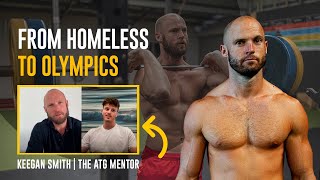
YouTube interview (2022-04-24) where Keegan Smith interviews Brendan Backstrom about his transition from an initially very slow, often-last-place track athlete to an ATG-trained sprinter. Brendan recounts chronic patellar tendinitis beginning at ~age 13, surgery at ~19 that cut and sutured his tendon (didn't solve the problem), and later discovery of Ben Patrick/ATG around 2018–2019 which allowed sustained, pain-free training. Current training emphasizes Nordics, hip-flexor strength, reverse squats and mobility/strength-for-length, with sprinting once a week and a focus on 200–400m. Brendan reports past official times: 400m 52.8, 200m 23.7, 800m 2:05 (from ~two years before interview), a single 100m at ~11.7; social growth from ~600 to ~16,000 followers; personal history includes a period of homelessness while attending college and couch-surfing in 2018.
Questions this video answers
Around age 13 (circa 2000).
It persisted until about age 19, when he had surgery.
Around late 2018 to 2019.
400m: 52.8; 200m: 23.7; 800m: 2:05.
Approximately 11.7 seconds.
Chapters
Here we are, the ATG sprinter. Appreciate you making some time for us there today. How did you. How did you get into sprinting? I heard you were pretty slow at one stage.
Lowest guy to ever touch a track. Thanks for having me here. This is literally a testament that life is crazy and your dreams can come true. I'm on a call right now with a guy that I literally would watch hours and hours and hours of content and educate myself. So super surreal. Just had to put that out there for me. But. So the track journey was really kind of being like, pulled into something that I really shouldn't have been doing. Like, I was with all my friends, and they were all athletes in middle school and in secondary school, and just as a byproduct of your environment, I thought I was also athletic, so I would run with my friends at track practice and track meets, but I was not naturally athletic like they were. So I was the slowest person to ever touch the track. And it was super humbling and embarrassing for years. And there's tons of stories I can explain of how incredibly slow I was. So that's my background, and now I have massive goals for that. So.
So were you wanting to run hundreds or what?
Did you.
What did you. Did you run everything or.
Yeah, I. I tried everything I could to not get last place. I tried everything from the mile to 100, and no matter what I did, I was only sitting in the back of jerseys. I never finished before anyone for literally three years. Um, and so, yeah, I tried it all. But in school, especially early on, the way they pick your ideal distance, if you're a sprinter or a distance runner, is pretty much like, hey, are you naturally fast at the age of 13, 14? If you are, okay, you're meant to be a sprinter. That's your body type. You're not naturally athletic. Well, you must be a distance runner where. That just made me a really bad distance runner. I was, no matter what, going to be slow. So, yeah, I ended up being a distance runner for four or five years, and I was competing in the 800 and mile and sometimes longer than that, and I hated it. But I did improve a little bit. So, yeah, what I can go into depth about all of that. There's a lot of funny stories about it. There's a lot of insight that in Heinz, you know, now on this side of it, I wish I knew when I was younger, but I'll let you guide it.
Why did you keep doing it if you were. If you were behind? Like, how did that. What about it?
Well, that was. That's the fascinating thing I had in the first two years many times, where at age 13, public humiliation is such a rough thing to go through. And every single week, I went through that at track meets, because it wasn't just like, oh, you did your best. Nice job. It was all the friends are in the stands and family and the race starts, and everyone's like, oh, God, whose kid is that? And I'm just, like, trotting along, heaving in a uniform that's falling off of me, looking ridiculous. So every single week, I wanted to quit. But I was so lucky in the first couple of years that I had the best coaches and the best teammates and community. And my teammates would be screaming on the sidelines, like, even though I'm in last place just for the sake of work ethic, like, try to beat your PRs, screaming at me like, I'm winning the race. And it was the social pressure to not quit on those people that kept me in it long enough to where I felt just 1% improvement. And then I was hooked. As soon as I ever didn't get last place, then I was now independent with my, you know, belief and persistence. But for a long time when I was a teenager, I was worried about other people. So it was. It was a lot of good pressure that kept me in it.
So it was at, like, 15 or 16 that you started to, like, sort of see the light. A bit of, like, I can beat somebody and I can get better at this.
Yeah. Yeah. So I started 13, 14, and three years straight, it was a mess. And around that time, three to four years in, I saw granular improvements. And so, you know, when I started training with the team, this is just a funny story. When I was 14, they would break up all the runners into groups and tell them to go do their own separate workouts based on how fast you were. And they would say, boys, group one, you're going to go run four miles here at this pace. Boys, group two, you're going to go do this. And then they would say, girls, group one here. And then. And then the slowest group of girls, Girls, group two. And Brendan, you guys are going to go do this loop over there. And I'd be running with the slowest girls on the team, and I could not keep up with them. And I was, like, busting my butt trying to race all the girls that didn't that were forced to run track by their parents. And I'm like, so that's where I started. And then after two years, I. I Started being pretty competitive for high school.
So, yeah, I was the slow kid as well, like through high school because I was kind of a late bloomer, but I was all right. I was all right at cross country because I would, like just put all heart in and actually ran like pretty high level, like for distance stuff. I feel, I felt the pain on the sprints and I wanted to play like field hockey, which I know in the States is like a girls sport, but in Australia, we usually top three at the Olympics. And that was kind of the dream for me. But they wanted people to be fast, right? So I didn't. It was okay, that country, but I wanted, I wanted speed as well. My dad actually down and said, look, you know, because the idea that speed was genetic was very, very strong at that stage. I was like 15 years old. I was, you know, 25 years ago, my dad said to me, look, you know, and my dad was a rugby coach, professional rugby coach, working with professional trainers. He said, look, you know, you're never going to be fast, but at least you can have good endurance and you can be able to kind of repeat efforts. And that was what he told me at like 15, when I wanted to go to the Olympics and they were telling me I'm not making the teams cause I'm too slow. And I was like, oh, like that was, that was tough. Um, but then, yeah, like, I found strength training. Is that, is that kind of. When did strength training come into the picture for you?
Yeah, well, I had similar talks from many family as well, but my dad wasn't a legendary strength coach, so that must have been.
Not a. Not a strength coach, but he's like a rugby coach. Like the, the tactical side of rugby, you know.
Okay.
That stuff was like actually managing the teams, like.
Yeah, yeah. So he was the most credible source, the worst person to hear from.
Yeah.
So really, I was a late bloomer as well. I was. I went into high school and was not. Wasn't £100 yet. I was like £90 and 5 foot 1. And so I always dabbled in trying to start lifting and build muscle, but I had very little access and guidance by the time I really started taking strength training serious was just out of necessity because I was so injured and fragile that I was just trying to find a way to get out of pain. The first chronic injury was a knee injury that was just tendinitis. And in 2000, I was 13 when it started, and it went on till I was 19 and I had surgery for it. And so in 2013, there really wasn't great information readily available on that. Um, there was like the reverse step ups in some variations, but it wasn't methodical and I wasn't sure why. So strength training came from that. It came from me trying to rehab myself. And I was a very serious athlete in that. I meant serious, I meant well, and I had great aspirations, but I was a terrible athlete, and so it just had to happen. Um, I was really weak. I didn't see much progress in the first year or two. Um, but, yeah, it just kind of came as a byproduct of trying not to be the worst anymore.
Yep. And so did. Yeah. Did you. Did you put it together that that was actually helping your speeds? Like, did you. Did you feel like it was making a difference or did it.
Yeah, I. I always was a keen observer, and I would listen to the advice of anybody that was ahead of me. And so the generic guidance I was getting from the strength coach in my high school and track coach was just like, get your squat bigger and try to, you know, build strength with a trap or deadlift. And so anytime someone would give me a little nugget of advice, whether it was good advice or not, I would sort of obsessively work at it and almost take it to the extreme. And so, yeah, I got really strong at. Well, not at all, actually. I got stronger at things that I thought were going to help me and it really didn't. But it. I did notice some parts of athleticism built, and so I had the sense of, like, working hard towards your training does help. It does count for something. I just thought I had bad knees, so that was my unfortunate, you know, birthright. So just bad knees. Clearly now we know that's not the truth, but.
Yeah. So when did you kind of come across the truth, the athletic truth group?
Well, I was working on my own athletic truth throughout the years of trying to scramble and put pieces together and what helped my knee and what did in. And by the time I came across Ben's content in 2019 or late 2018, whenever he started, I. It was such a familiar thing for me of, like, traditional protocols really don't serve the person as well as we think, and people are struggling in pain because I was that person. So. So I came across Ben Patrick on just a reverse step up. And that was something I became obsessive about already. So I'm like, oh, this guy's doing something that I totally believe in and understand. And then it's the rabbit hole of atg. You start going into all These movements and learning long range, short range, and just the concepts of training start to change. That was in 2019. That's when I've completely transformed my trajectory and health and potential for athleticism. Because by the age of 22, I already racked up a ton of serious injuries from the tendonitis I had surgery for. I had stress fractures on and off for two or three years in my tibias. I had a sports hernia, herniated disc. And I wasn't an ego lifter. I was just a hard worker and a very average high school and college strength program. I just did the right thing, how I was told to do with a hundred percent effort. And I was broken down from it. So, yep, ATG definitely changed my life. And it's only been a couple years and I wish I had it when I was 16, but I know there's plenty of 30 year olds that look at me and they're like, I wish I had it when I was 24. So I, I don't get too hung up on that.
Yeah, I guess I was like 36, you know, so, so came pretty late, is long after my Olympic dream had passed.
Yeah.
What did they do for the knee, the patellar tendon? Do they, do you have like bone removed off the bottom of the kneecap or what did they do? Fortunately not.
Kind of funny. If I knew anything more than I do now, I would have not gone through with surgery. But all they really did, I had partial tears running parallel with the tendon and it was obviously super dysfunctional. They just cut my tendon in half and then sutured it back up. And the idea of it is just to damage the tendon, bring, to bring blood flow and circulation and that's going to promote healing now. I mean like a week of the sled, get blood flow that way, some short range work or get your tendon cut in half with permanent stitches. Yeah, I didn't really know better and I was eager to get back. So it was a surgery that definitely didn't need to happen and it didn't work. I rehabbed from the initial surgery and then was left with the same tendonitis. I couldn't squat, I couldn't jump or sprint. And so I definitely wanted my money back for sure.
Tough. I think it's, it's not something to my understanding that surgery is generally a good path for. I don't, I haven't heard of anyone having a really good outcome with the surgery on that, that specific injury. But yeah, we do have lots of People now who say they've had something for a number of years and then often it's like a weekend or a month in that someone's like, yeah, I can do what I couldn't do before. It can take longer to fully to deal with different components of it. But yeah, there are some pretty fast transformations as you say, like this led the short range and some light stretching can, can do a lot for a lot of people in a short period of time.
Yeah, yeah. And it's, it's a whole nother level of paradigm shifts and like breaking out of the strength culture, especially when this is your field or passion, you become, it's easy to become very dogmatic about what works and what doesn't and what's sophisticated training and what is dangerous. And what we're finding is like a lot of the stuff that at first glance seems unorthodox or dangerous is what's getting people crazy results. And when you start to be open minded, you realize it's not an orthodox at all. It just is treating the body with biology on its side with like, you know, things you can actually account for. And it, I don't know. I just know for myself. I went to college and decided to study exercise science just to fix my knee. The only reason I went to college was to leave my hometown and I chose the major just to fix me. That was worth the college loans in my eyes at the time. And then I went through academia and I bought into it and I was able to do some research with professors and I thought I was learning so much, yet I was still injured. I became more ego driven in my head because I felt like I knew more now and I was still lacking results in my athleticism and my happiness in my body. And so to break out of that is a tough thing. And that's why it's so admirable when we find we have tons in our community physical therapists who are 15 years into practice and they're able to go, you know what? ATG is game changing. And they start adopting it and using with their patients. It's like they're going, they're deciding to give up on 10 years of reinforced, you know, belief and be like, well, I was wrong for this long. But what works, works. I'd rather make the change now. And that's a very tough thing to do for sure.
So yeah, it's not always that black and right of like right and wrong for a therapist. They might have been like having an inkling of like, we sort of need to Move in this direction and then they find, like, more clarity and more. More certainty. Different progressions and things that, you know, they may have seen all the movements. That's a lot of experienced coaches who say that, you know, like, yeah, I've seen all of that. Like, there's nothing new there. But then if you actually dive into it, like, it's a different way of thinking about things that gets very different results. It's not actually the fact of the movements. It's the way the movements are put together and the regressions and the sequencing of things that is, like, is definitely new. Like, I. I was researching this stuff for 20 years. I had tendonitis from, you know, 15 years. Well, I had overuse injuries from, I think nine or 10.
Like, my.
My first thing, I had it like the heel one. Um, but yeah, the severs. Severs thing. But it's. Yeah, there's those who, who do manage to like, dive a little bit deeper into it and put it to use, tend to not look back and tend to, you know, be. Be heavily impacted by. Especially if there are those injuries in the background. But I mean, as far as, like, now that you're, I guess the performance is more of the focus, like, how are you finding you've been training alongside Ben down there? Like, you want to be faster, right? Like, how do you see it from that performance angle now of, like, just caring about speed?
Yeah, well, my idea of what's possible for me just completely shot out of the water as soon as I could train week in, week out and not be in pain. Like, the biggest performance enhancing strategy is to just stay healthy so you can put in 52 weeks of training in a year. Like, if you can do that year after year, that's you're going to realize how much was left on the table before. So training with Ben. Ben Patrick is not the worst workout partner you could have. You know, he's definitely living what he talks about and he pushes really hard on the things that we talk about all the time. And so for me to be in a point where, like, working on performance, it's crazy. So now, basically, I'm trying to take what got me out of pain and then use it as true strength training right now. And so my weak points in my past have been my lower legs, connective tissue tendons, a lot with my knee, and very typical, like, joint dysfunctions for athletes, especially in running. And so I'm not changing really anything about my approach, except I can really funnel in more intensity, more volume to where it matters. And so for sprinting, that's going to be a lot of triple flexion, a lot of really high quality hamstring work and Nordics methodically over time. We're obsessing right now over hip flexors and we're taking it to the extremes a bit and doing, I'm doing reverse squats and monkey foot hip flexor raises like four to five times a week, kind of taking your squat every day approach. And that's just to sort of balance out the 10 years of squatting. I've already done cleans and deadlifts and trying to make up for some time with the opposite of that.
So how's your body responding to them? Because it can give you a weird feeling of like the fatigue in those muscles and heaviness in like the psoas and lower abs region. It's like a, it's a strange kind of tension to deal with when it feels a bit locked up. Right.
Yeah. I was nervous about it in the first week or two because I was completely new to that style of like loading with real weight. I was doing a lot of L sits and more calisthenics, base the compression and like that's really something, the cramping you get. But it's not the same as loading hardcore over time. But surprisingly the recovery on it is great. I think it's just so muscular and it's like the, the metabolic aspect of it allows you to recover. There's nothing, tons of tendon demands in that area. It is a little worrying that like there's a lot of connective tissue and like the lower ab wall is something I've had issues with. I had a sports hernia but it honestly feels great. The only concern is that I have to balance it out with enough long range work and stretching because I do get tight like a couch stretch gets very difficult for me if I don't do anything throughout the week for, you know, mobility wise. But yeah, it's been going fine so far.
Very cool. And so are you, are you doing much sprinting at the moment?
Yeah, about once a week. And the reason why is I'm trying to go at this with this, a very long term approach. And what me and Ben have been really working on lately and trying to get our minds right on is like, what is the best long term strategy to developing a sprinter? Because right now if I started sprinting two to three times a week and I was pushing to maybe run a fast time in three months, I could probably do really decent for myself. But I still have a Long ways to go before I could be world class. And so I'm going to need a different body with completely different qualities of properties. And so just for the sake of, like, my training right now I'm putting more emphasis on building the, the hardware, not the software. You know, like building the framework and my, my tendons, ligaments, and, you know, everything that would break down through sprinting. I'm trying to just completely double down for probably the next year I'll continue sprinting. 52 sprint sessions in a year is pretty good if you stick with once a week around track time. I might need more specific work and the whole technical side of blocks and your drive phase and all that stuff. But yeah, sprinting is sort of like jumping and, and that you want to get good at it. You might think that you just have to do it more than anyone else, but just look at the guys that are beating you in a race. They probably have some key distinctions you could pay attention to. And it's probably easy to spot on their physique or their strength in certain areas or their resiliency and ability to just never get injured. Like, that's where you should work to develop the changes. You know, I'm not just squeezing out any bit of speed gains over the next 12 weeks, so.
Yeah, that makes sense. So what, what, what, what event have you going focused? Like, is it to run a, like the indoor 60 or is the a hundred or is it the 200, like 400? What do you.
Yeah, so I'm, I'm focusing on the 400 for sure. Um, I think the longer the distance, the better shot I have, just based on the 10 years of aerobic work. Like, my, my weakness is speed. And so as an ATG sprinter, that's kind of the oxymoron, and I'm trying to work on that, but I'm gonna run everything just because I love it and it's, it's cool and I like tracking progress, but probably gonna focus on long sprints. 200, 400. So it'll be fun to see for sure.
And what's, what's your best time so far? If you don't mind sharing.
So the last meet I ran, that's official times, was even before ATG, and it's not good. 400. I ran a 52.8 and a 200. I think I ran a 23.7. I ran an 800 in that. Me too. It was a 205. So a pretty average D2 runner. And that was two years ago. I looked different I felt different. My body was not the same as it is now. So I'm a little anxious to go run a meet right now to see. But yeah, I'm expecting to be extremely.
But it's like, as you say, it's not in. In the US track is competitive. If you want to be a Div.1 college athlete in the, in those events, like, it's pretty much means you're, you're right on the edge of world class. Like where, you know, because the US Olympians are usually so far ahead, like the top college athletes would probably qualify for the Olympics in for most other countries especially like the smaller countries.
Right.
Like, so you, you got that standard in the States that's super high. What, what, what's your best 100?
I only ran one in my life and I think it was an 11 7, which. Okay, yeah, I didn't, I don't even think I knew how to use blocks then. I, I would be really upset if I couldn't break 11 soon. If I ran a meet and wouldn't be close to low 11 and break it. I mean it's easy to say that you gotta walk the walk, but what's.
Yeah, what, what would you see like if you compared what you're doing in the weight room then to like what you're doing now? Like where, where would you say the biggest changes would be?
And it's, it's a lot. Some of the movements are the same. You know, I used to squat a lot back then, but I would do German volume training with such low quality reps. I would do with 100 kilos. I would try to get through 10 by 10 workouts and my, it was just a different squat compared to now. And so I was just putting garbage volume on and trying to just. I had the training background too, as an athlete. Being a coach athlete is an interesting kind of duality. So I was trying to use what I thought I knew then and then as an athlete. I was also an obsessive just work ethic I was trying to use. And yeah, I, I took everything to the extreme. I, I didn't have a good methodical approach. When I learned Nordics, I started doing them three times a week and I would do 10 sets of 10. I would try like I literally. Oh, maybe not three times a week for that, but there were workouts where I did 10 sets of 10 eccentric Nordics and then tried to spread next day because I just didn't understand properties of tendons, how that works. So.
How'D that go?
Well, I survived. It definitely is a blessing that I did tear something immediately, but I eventually did run into. This was a tough period when learning atg. I went at it with the same intensity and focus of my bad training and I did injure myself on numerous occasions chasing a pancake. Injured myself on a Nordic behind the knee many times just from, you know, pushing way beyond what would have been quality, form and intent. And so I've been through that. Many people go through that when they start.
It's tough when, like the instructions are clear, you know, the guidelines are clear. You're getting. If you're sending your videos into coach, like, the feedback is going to be clear. But if you're young and you think you're bulletproof, or if you're middle, you know, middle aged like myself and think you're bulletproof, then you just, you know, you, you want to put everything into it and, you know, hope it works. But yeah, particularly with the pancake, like, if you try to hurry that, it's, it doesn't end well. Often for the Nordic as well, if you, if you try to hurry that, it doesn't end well. So I think a lot of the fine tuning that we've done with the ATG system over the, over the years has like, been really powerful to help to avoid some of those, those challenges. But yeah, it's cool to hear how you're seeing the difference, like the mobility side as well.
Like, we.
Were you flexible as a sprinter already? Like, were you diligent with that?
Yeah, so I, I had some decent flexibility and specific places just because like I said, if there was any coach that said do this, I would take it to the extreme. And pretty much all it was was toe touch variations and grab your foot and yank your quad kind of thing. And I had, I think a standing pike, palms to ground out of high school, but I probably couldn't do a couch stretch. I don't think I ever stretched my piriformis and actually got into lateral hip mobility. The more I learned of strength training and just in my own, like, progression as a coach, I got more fancy and hip cars and pails and rails and all the like, you know, joint manipulation, which adds value. But like, I never did strength, your length. I never actually trained to be strong in those ranges. So that is probably one of the top three advantages I have now that I didn't then, you know, changes the way you approach everything with training and changes the misconceptions of flexibility or that's for me, that's not, I'm too big to get flexible and I'm, you know, all that stuff. So what about you? Were you always pretty flexible? Do you have the mobility you have now because you're elbows to toes on your, on your pike. So you're my kind of inspiration with that.
Yeah, I've been getting that back. I've been doing some handstand work again, so I need that, that's what you really need, like a big, really deep pike for handstand. Advanced sort of hand to hand dancing work that's pushed me to go further with it. I kind of got into it and that kind of stuff. 2013, 14. So yeah, that's sort of always had. Had its place since then. But I was, I think like you, like, I was usually pretty good on the, on the forward bend, but then I. People kept saying like, if you get too flexible, it makes you slower as well. So I think I really stopped stretching and kind of took some pride in getting. Becoming tighter through my late teens and 20s, because that seemed to be the dominant idea at the time. And yeah, I got told that by physiotherapists and, and speed, speed coaches and things like that. So I definitely had to fight hard to be able to snatch and to be able to fully overhead squat. And people message me at the moment because I'm doing these squats. They're like, did you always have that squat mobility? I was like, no, no, I, I was just like everybody else, like squatting halfway down and getting like shitty needs doing that. And I had to work hard to get the, the deep squat. I would say my body probably responds to it pretty well. I think there's like different collagen types and different, maybe neural types that I seem to be able to like, teach myself to get into positions fairly quickly. Whether it's the type of collagen or whether it's something with the nervous system, I don't know. But most people actually progress a lot faster than they think they can once they start doing the right things and kind of learn what, what it really is to use like the, the range of strength or strength for length concept. Like, it's, it's very powerful once you just treat it like strength training and, you know, conservatively add load with time, get strong in the positions. Like, it's, it's very, very powerful.
And especially with the more background you have lifting. I mean, I, I've had friends and clients that were strong guys and they were really big and they didn't have any progress in their mobility until they started loading serious like, they could do all the walks they want, but these were guys, like, deadlifting 500 pounds. It wasn't until they did Jefferson curls with at least £100 right through that. It's really funny that you brought up the, the like, elasticity concept of, like, stiff and tight joints. Like, the, the amount of ankle mobility I avoided because I wanted my ankles to be as stiff as possible because passive tendon stiffness I thought was the way, and I didn't. I mean, it all made sense to me. I was reading through the papers, I was listening to the guys on the YouTube channels, and I'm like, yeah, I want it like a rubber band. And it's so funny now that, like, everything's improved, even my elasticity, even my bounciness. But now I can squat to depth. Like, now I can not have Achilles pain when I sprint. It's just, you know, and there's definitely some components, like you said, neurologically or collagen types that might make it faster or slower for somebody, but there's no advantage to being.
Yeah, everybody's going to get there with load. If you put 400kg on someone's back and go into the deep squat, then you're going to be in a very deep squat at some load. Everybody goes into the position. Whether the tissues break or not is a different conversation. But if, you know, 400 kilos, it pushes you into the position, then it's just simply a question of, okay, well, how much do I need to regress that so I don't break? And that's what you do. You just keep going into the position with a load that doesn't break you, and you go like, significantly less that you think is going to break you. Like, I did a 110 kilogram squat for like 20 seconds in the bottom yesterday. And yeah, like, it's, it is like a structural integrity thing of, like, being able to, to sit there and talk and, and feel comfortable and then, and then stand back up. But your body is, is going to become more accustomed to that if you, if you do it. And the elephant walk, as you say, it's, it's a great movement for people who don't train or have, you know, they've had a lot of back pain or they just don't have a strength training background. But for those with a strength training background, then like the Jefferson curl or even just single leg kind of Jefferson curl versions, like variations where you stay in the bottom. Um, there's, there's a bunch of different types of ways that you can go about it, the slap board variations, um, if you want more of a special thing. But anyone who says they can't touch their toes, like, give me a month, you know, like, probably often it's like even one session, even one or two sessions. Like as I say, like with enough load, you, you'll get there today onto. Will you get like pretty sore? Will you maybe like flare something up that it bothers you then for the next two months, like maybe then you need to learn about short range and you need to learn how to settle the tenants down really quickly. But like, yeah, nobody can't do it. It's just a question of time and load.
Yeah. And what I think is fascinating is like, I don't think we should try to utilize restriction as an advantage when there's definitely a better way. And take. I get sometimes messages from powerlifters that will ask about like, I should I try to get a really stiff thoracic spine. Like I think that it's best to just maintain stiffness and bracing to have as little mobility in that area as possible. And it's like, well, what do you think would be the best advantage? To be a stiff board that's ready to snap or to be like bamboo that is strong, pliable, but you built up internal structural strength. You're going to have better results long term for your actual sport and just life, you know. And yeah, it's. I was the same way. That's the same ideology of like that stiff ankles let you be on springs, you know, and it's. There's better options for sure. That's not how the human body works. I don't think it wants to be stiff and in pain.
But with the specificity of powerlifting, it is possible that you put yourself in that cast and you live in that cast for the rest of your life or, you know, for 30, 40 years and you just, you just brace and you maintain neutral spine. Like it is possible. And I know athletes, you know, power lifters who are super strong and that's what they do. And they don't have bad backs, they don't have injured backs. But yeah, they extremely dysfunctional as far as like a normal human goes. Like they can't tie the shoelaces like a normal human, but they're, you know, world class in their sport or at least a national level. But yeah, also see in weightlifting, those guys are squatting like similar weights, comparable weights, you know, all the way down and they can pause in the bottom and they can do pancake. So there's not, not one way of doing that. You can make the decision of like, if you're a powerlifter, you can make the decision of you. Like, I'm just going to brace for the rest of my life. But for athletes, for, for anyone who needs to get into different positions, it's not an option. Like it's a short term option to maybe I think that's where a lot of the research comes from, pain and chronic injury. But at some point you want to be able to live and use the body in the way that a baby can use it, in a way that a child can use it. Like that's, that's always my litmus is like if a 5 year old can do it, then it's right. Like if a 5 year old can jump off something that's twice their, their height and like not even think twice about it, not need to warm up, like that's what the human body meant to be able to do. They can pick up something that's twice their body weight without thinking about it with a round back and they don't think twice. Like then that's what the body's meant to be able to do and we just lose those abilities because we train. Like we train or we don't, you know, we don't move, we don't lift in the way that we were. You know, we would have, if we been on the planet 5,000 years ago, like we wouldn't have had an option. We would have been chopping trees and dragging things and carrying beasts and whatever we were doing.
Um, yeah, but yeah, Ben actually put out a really cool podcast episode about exactly what you said. He was looking at Onyx, his son, and he said that seeing him just maneuver in these positions and roll and be on his knees and then it's like in all these awkward places he's unable to hurt himself. Like he has the mobility and just non restriction that he literally can't hurt himself. However, the outside world can hurt him because he doesn't have the underlying strength and protection. So Ben was saying he's trying to be more like Onyx with his mobility and with his overall capacity, pound for pound strength and everything you said while actually building up for protection in basketball and life and whatever we need. So if you can mesh what we were born with and not mess that up and then build top of that to protect from the outside world and you can't internally hurt yourself, that's pretty good. You know, there's a lot of guys that want £400 and they do that without hurting themselves, but if they were to maybe bend down the wrong way, they twinge their back. And I've been there. And also, I just want to clarify about the powerlifting comment. I know I'm not qualified to talk about powerlifting. I don't want to offend anybody. I'm totally out of scope. I am not strong. But it's just, I'm here for you guys. I'm here for the power lifters. I'm just saying I think there's an even better way. But I also may not know what the heck I'm talking about with that.
Maybe you and I, maybe you and I don't fit in that category. But there's Dawson Windham. I don't know if you've had contact with him. He's pushing for some world records in powerlifting. Like, he's right up around those marks. And yeah, he's, he's, he's super fast and powerful. But he said that since he's been using ATG and he can do, like, dislocates with the bar and he can do, you know, all sorts of stuff. He's extremely muscular. And yeah, like, it's, it's only. It's been very helpful for him in coming back. It was first from a knee surgery, but now he uses it, like, as a whole body system. And he sort of said, like, it feels like I'm already warmed up when I go into the gym, like, compared to, you know, what he. What he used to feel like. Yeah, I look forward to doing a podcast with him at some stage as well. But he's, he's a good one to check out for sure. If you're looking for someone who's like, if someone's listening to this and they're thinking these two guys aren't that credible when it comes to powerlifting. Dawson is a really credible source for, for that. And I know there are a bunch of others. I mean, Ben's done some stuff with Steffi Cohen. She can do sissy squats. He's also worked with another guy who squatted a thousand pounds after improving his knees. Working with Ben. So there are a number of stories that I know of and there's probably a lot more that I don't know of and that told Ben and haven't told me as well. But yeah, anyways, enough about, enough about the powerlifting. You've recently exploded your social media, so you've kind of taken that on. Is that, like, did Ben kind of. Was that part of the training sessions there where he's like, hey, you should get some viral videos going as well. Or how did that. Where did that start?
Zero? Not at all. And what's actually funny is that I developed a relationship with Ben. We became friends. I'm working with atg. I'm here for almost six weeks in the gym filming these videos. I started, my account was at maybe 600 followers on this account I now have, and now it's at 16,000. And for the first six weeks, Ben didn't even follow me. He never saw my page before in his life. He had no clue I was doing that. And that was zero part about kind of what we're working at. He just wanted to help me get as fast as possible. So for me, I've always taken the idea of, like, don't ask for permission to go and grow, you know, like, take initiative. You see an opportunity and just put in the work and then the people will recognize it if you're doing quality stuff. And so that was completely me. I went out of my way a lot. I also love. I love content. I've spent years failing at making good content. And so now I've refined it to where, like, I think I know how to deliver a message and kind of use our social context, like trends and how to, you know, get attention and break pattern disruption, all this stuff. And now I can handle it without getting anxious. I used to not like content because I would make something I thought was amazing and then I would get really freaking disappointed if it didn't do well. And so, yeah, this is the tip of the iceberg. This has been years in the making and I just started to actually have any kind of traction. So it's been cool. I think it happened right on time. If I was blowing up a year ago, I don't think I would have had a great message to share. I would have just been a big guy with a big plat or a guy with a big platform with very little to say. So, yeah, that was purely me. And it's hard to be around it, you know, and not try to emulate it. It's hard to be friends with you, with Ben, with all the staff here and just the growing community. I mean, even the ATG for coaches. I've met so many in the past month at the Expo and it's just too inspiring for me to not try to share. And so, yeah, I mean, just trying to do my best with that. I've been a student of your work big time. I love your content. It's literally saved me. I Probably watched more hours of your stuff than anyone else in ATG because you have so much on YouTube. The amount of times I refer people to your YouTube channel, like, on a daily basis in the DMs, because, yeah, I think. I honestly believe that the videos you've done on, you know, the ATG principles, long range versus short range, the most important principle we're missing. And all those videos is the perfect bridge from maybe someone coming out of academia or they have a good base knowledge of training, but they're totally foreign to atg. Like, it's delivered perfectly. So I think content is this day and age of encyclopedias and, like, information. So, yeah, I tend to start going on rants, so you got to cut me off sometimes, Keegan. I'm realizing I'm just talking so much.
But I appreciate. I appreciate the positivity around the YouTube stuff. And, yes, I think people underestimate, like, it's challenged for me as well to hit the record button and to actually say, yeah, I'm gonna go on. You know, I'm gonna put this out there. I'm gonna go on record with this. With the YouTube stuff like that. I kind of. I like it doesn't sound very humble, but I think it's the best strength training information that's, like, on the Internet. Honestly, I've watched, like, everyone's stuff. I watched, like, everything out there, from every old school thing to every new school thing, athletes, you know, PhD guys. And it's like, I wish someone had just told me these principles, like, 20 years ago. So in some ways, like, I think they shouldn't be on YouTube because it's. It's almost like people will easily gloss over. But then I do get a lot of messages from people who don't. Aren't part of ATG for coaches, and I even aren't doing ATG online. And they're like, yeah, this changed the way I think about strength training. And I'm programming differently since I understood this.
And it's.
There's. There's some guys now who want to do research. There's someone who's doing research under Brad Schonfeld, who's kind of the main muscle researcher.
There's.
One of the coaches in the community now is trying to get a study done through them. Like, I'm, like, almost skeptical or, like, I'm a little bit against the academic world because I was sort of in it and studying it, and it didn't do me well. But, you know, ultimately, it's great if that world also understands you know what is actually happening here and I'm sure they can explain it much better than I can and they can like go in and you know, do what they do. Like they know they do what they do well is just like there's other concepts here that haven't been, they've been under explored and I don't, you know, it's hard to sort of understand why after so long, but it's fun to think. Like I'm really sure there's going to be a number of researchers and people way, you know, more interested in academics than us who are, who are going to also love doing the training and they're going to like get the results themselves and they're going to. Yeah, this needs to get into the, into the research, into the papers. Yeah, but yeah, so with your, with your, like, how has that impacted like your, like your confidence and how you're looking at the future? Because it's, it's such a big thing now. People think they want to grow their socials. Like you've just done it. Like how, how, how has it honestly like impacted your outlook for the future and your kind of self image?
It's, it's a kind of chicken or egg situation for me because I'm in such a different place of life overall now that it makes content easier. It makes it easier to publish content and share my journey because I'm also at the point where I'm finally living my ideal. Like I'm in a lifestyle and in a flow of things that I'm always been trying to develop and it took years to get community, ecosystem, get the body I need. I mean that's what you're all about. I know with this is an ATG podcast, but the stuff that you do with uncommon success and like of being healthy in the mind and body and developing skill sets and then financial literacy, like your ideal and all these things will literally change the way you feel each and every day. And then once you feel great each and every day, your confidence is there and you're extremely passionate about getting something out there to the world. It's honestly easy for me to record now because I feel like so grateful that I'm in this headspace and in this reality. And I just want to share and share and share. I just want to help whoever is in the same spot I was in a year ago or two years ago, because that's what just brought me to where I'm at here. Every time I make content, I literally try to think about like Brendan two or three years ago what got me out of that and it was seeing your content go, seeing Ben's content. Like I know what it's like to really be stuck in hurting. And the only thing that ever got me out of it were people bold enough to go against the grain and, and put their ideas out for the world to judge. And that was you, Ben, a lot of people in atg, other mentors, and to be in a position like maybe I could do that for someone, I got over the nerves and the pressure and like the self doubt of it.
Because.
For me I'm just happy with my life and like grateful and I want other people to have that. So, so that's where I'm at with this. Definitely changed my life for a number of reasons. And what's also helped is like I'm learning. One of the things Ben has taught me about content and I would recommend everyone to think about this for whatever they're trying to deliver is he makes it very simple. Like whenever he tries to put a video out, he's trying to educate and lead by example. And that's his entire approach. And so if he makes it fun or interesting, that's cool, sprinkle it on there. But like the reason why he's making content is to try to educate someone on a topic that he knows there's a gap in and then show with social proof of himself or other people. No, this really can be for you. And so that's one of the biggest things is just like you start to feel like you have to put out content. If you're trying to grow, especially in fitness now you're going to be told content is king. Oh, I have to get on these platforms and you can kind of get pulled into like, okay, well what's working on the platform? So I guess I got to dance on TikTok now or I guess I got to start, you know, using all these trending sounds and it's like you might do okay from that route, but to really be groundbreaking, it's like probably closer to your true message and your true beliefs. So get really clear on that. And then learning how to put that into a video is, is secondary. But yeah, long answers always for me, I'm sorry, I just start going, yeah.
Well that's what, that's what people want to hear and they want to understand like what's going on inside your, your mind and how you've, you know, gone from 600 followers to 16, 000. And what's interesting about that is also like that, that trajectory we've seen, you know, there's Matt Scar, who's gone from maybe 300 followers to like 3 or 4000. I'm gonna show exactly his latest numbers. I get, I get scared now because you guys are growing so fast that I can undershoot by a big chunk. But he's had a couple of posts go to, like, millions of people, and I know that that's really changed the way, like, he's thinking about his own future. You know, he knows now that he can really impact a lot of lives. Like, he was a Div 1 soccer player and he had some serious issues and now he's like, well, now I can actually do something about that. Like we were on a call yesterday sort of saying, like, what if, you know, what if you had a program that became like the norm that Div 1 soccer players or people who wanted to go Div 1 that, that they all did it. Like, that it was like a prerequisite kind of understanding. Like, what if you try to make. What if you made that program and made it available? And he was, you know, he was kind of like falling into the thing of like, well, I probably should offer, like high end online training and you start to form, like, templates rather than what do I actually want to do? Like, what is my mission?
Yeah, yeah, that was that, Matthew.
Yeah. Yeah.
Okay. Great guy. Yeah. I met him, though. No, his story is great and it's, it, it's so, man, the biggest thing I, I wish I could tell myself a year ago with content is just really be patient and protect, like, what fires you up. And you have a, you have just like this inclination towards, like, you just feel, oh, this is on the verge of something. Like when I found ATG and saw the building of ATG for coaches on the side and learned what you were doing, I was looking at this like, this is going to change the world. I don't. I wasn't making content like that at the time. I was trying to get sales and funnels and leads because I was an online fitness coach being mentored by salespeople, not by people trying to actually, like, make solutions in people's lives. And this isn't to bash anyone. I learned a lot about which is a great tool. But, like, do I want to make content to try to make money and get someone to DM me so I can get a sales call, or do I lean towards being more patient and like, going with what I know will really change the world over time? I eventually made that shift and what was funny is like, I stopped trying to blow up. And I blew up as I was back when I was trying to catch every trend and play to the tiny psychology of people's, like, attention and all this. I never really made traction. And I blamed the algorithm. I was like, this is rigged. It's not meant for me. I'm shadow banned. It's just not fair. And now I look back at that content and I cringe. And where, like, now I'm just proud that, like, wherever the. The rewarding part for me is wherever the responses come in of, like, this was made for me. Wow. This is exactly where I'm currently at. And because I know if 10 people message that, then probably hundreds feel that way, and then probably thousands are gonna see it that way. And, like, it's just, I. I can't be motivated enough by impact. Like, it just does so much for me when it reaches people. If you make content to Try to get 10,000 views, you're not gonna stay in it very long. You're gonna be. You're gonna be cooked and just mentally drained, probably. It's. It's a different form of the rat race, man. Social equity is real. The way you feel about it is very similar to how money can make you feel. And, you know, it's easy to say that now on this side of it where I'm doing well, but I know what it's like for years to struggle with social media and your message. And so I've just been learning. Learning a lot from you guys too. Yeah.
Yeah. Maybe we jump to that because I slept on floors in. In Latin America for a long while, like couch surfing and. And backpacking and living on less than sort of $10,000 a year. And I know you had some. Some times as well where you were. You were living differently to where you are now. Like, how do you look back on those. Those more challenging times?
Oh, man. Well, kind of like all the cliches that you hear and you think, oh, yeah, yeah, I know it'll make it better in the future. It'll pay off now I can finally see it. But back then, I just felt delusionally driven, but now I'm just grateful. Me getting to where I'm at now with ATG and my own, you know, growth and building social media and building a community and following and. And just everything that's changed is only possible because I have failed so many times with so many things, and it really, like, life is the best teacher. And the difference between me and a lot of my peers that I grew up In I have a lot of people that, where I came from and grew up in are in a stuck place and they're struggling and, like family too. And I think what is the only difference of like, that keeps your mind optimistic for life. And it's like you have to be fighting for your ideal. You have to be fighting for, like, the direction you want your life to go in. And the further I got in, like, trying stuff and failing, the less I feared failing. And so I moved to New York City on my own to try to make my dreams come true in 2018. And then I was a college athlete, student athlete, and I had financial aid issues, ended up homeless within three months. And I was sleeping on the train and I was couch surfing for the whole year and I still went to practice. And that's when I started content. That's when I started, like, this idea of working on skill sets that can actually help share the story. Like over overcoming the knee injury of, you know, overcoming your bad genetics, your low potential. I was slept on for years and still feel like that. Nobody would have thought that I'd be where I'm at now in terms of athleticism, in terms of confidence. Like, I was too shy to speak up in class and now, like, I put out goofy content that is, you know, self incriminating all the time. It's. I'm a different person. And it only came from, like, getting beat up and just getting up and getting beat up. And so, yeah, I'm, I'm super grateful for all that. That's a whole nother podcast and, like, conversation that could go for a long time. But.
Yeah, that context, I think it's good for people to hear, like, knowing that you were, that you were homeless and that you kept the, you kept the faith during that and, you know, you just kept learning and building skills and I mean, you're still very young, but I think that gives a good context. So, like, what is that then? What is that the foundation for? Like, what's, what's coming next for the ATG sprinter? We know the sprint times and we got a bit of a feel for. Okay, there's a long term plan here by, I guess by 25. You know, maybe you're planning on 25, 26, running some really sharp times. Like, what else, what else are you thinking about? Like.
So I'm like, definitely clinically delusional with, like, the scale of which I believe things are possible. And, and so even, like, my dreams and goals that I share are really just like 10% of what I'm really thinking about and that just comes off arrogant or comes off, you know, crazy and like it definitely is, but for me it's always ended up playing out. It's just, how long are you willing to wait? Like, how long are you willing to be wrong? You know, if someone, I don't know, a lot of advice from family and people that are older than me, they're 40 and they're 50 and they're like, well, this is how life is going to go. And I totally respect them and insight, but none of us have lived more than once in this society. I mean, you can have your own beliefs about whatever, but like in this time and age, like this is all of our first times. So what is the cap of like what you believe in yourself? And so I don't know why I just went on that philosophical rant of context. But for me, the goals I have are definitely based in feeling empowered and healthy in your body. And there's going to be the niche of fitness and athleticism just because that's one of my passions, for sure. I want to be as credible as I can be on anything I talk about. And so sprinting is something I'm taking very seriously. I want to be the most unathletic guy. Does that make sense? I want to be the least athletic guy to make it to the Olympics. Like, I think that would be groundbreaking because people ask me all the time, what are your times? What are your PRs? You can actually look up anyone's track times. They're really good in track about documenting that. So if you search Brendan Backstrom mile split, you're going to see how slow I am and you're going to be like, this guy's crazy. And I definitely am. But when you learn stuff like ATG training principles and you feel the magic of it and that you get out of chronic years of pain, that's just like, okay, so what if I kept doing it for 10 years? What's possible then? You know, like, and it's, it's a big mindset shift. And I think that's why the ATG community and ATG for Coaches team are so like minded in such a beautiful way. Because it takes a certain kind of, you know, open openness to life and optimism to even believe it's possible to feel better, to not be in chronic pain, to, you know, break generational curses or like, you know, just social paradigms. Like things you've. Social heredity. You don't know why you think the things you do, but you just convince Life is the way it is. Yeah, I'm. I'm just very optimistic and think that training could be big. I'm gonna try to do a lot with content. I really like filming, I really like writing. And for me, I get. I don't try to get hung up on what the tangible manifestation of the, the skills and passions will be. I just, I become a really good video editor and content creator that I'm going to make some really cool stuff in the future and it's probably going to help a lot of people because I also enjoy that, you know. So, yeah, I hope that some aspect of the question.
I. When I left professional rugby league, like, I'd worked with a team that became like the world champion team. I was working with the highest profile athlete. There was nothing more that could be done in the sport that I was in. Like, it couldn't get any better than the 2000 season, that 2013 season I was a part of. But when I left that, I gave strength training workshops and I said, like, the way the world strength trains needs to change. Like, the way that we're doing things at the moment. If you go into an average gym, if you look at the strength of the average human, it's not okay. Like, it's not. It's not okay. We can't accept the way things are right now. We know a lot more than this. We can do a lot better than this. And it has to change. And I believe that, like, we can change.
This is.
Was the message that I was selling at these seminars. And one way or another, I felt as though I was going to be part of the world, changing the way the world does strength training. That's one of the key things that I had in my mind. 2014, 2015, 2016. And it wasn't really happening. And it was like I was working hard and I was, you know, I was helping individual gym owners and they were becoming the best gym in town or, you know, a good gym. But now it's happened. Like, now. Now it's literally happened. And it was bet, you know, it's Ben, but I'm his cheerleader and I support him. And I've added, you know, a squeeze of lime, as Ido would say. Like, I'm there with that. And it's happened, you know, the way the world trains has now changed. You go into any gym in the world and you've got to find at least one or two people who are doing these movements now. They're doing tip raises, they're doing split squats. Sure there's further it can go and it can be implemented better and it's not perfect and we've got a long way to go and the equipment's changing and it's going to take time. But, like, it's literally like what seemed ridiculous less than 10 years ago. Like, by 2024, you think of, like, where this is going to be, like 10 years later. It's a real massive, significant change. So it then becomes, okay, well, if I was aiming too low with that, if I was thinking too small, like, what, what else? Like, if another 10 years is going to pass, if I'm going to have the blessing. Ten years, like, what should I aim for in these next 10 years? And you know, seeing Ben talking about the education system and building a school, you know, that, that fires me up. You know, we're building a resort or a village in, in Vanuatu, you know, the self sustaining village that people can go to to train and go to to like reform their life and make a fresh start that has a food production and it's like just pristine in nature. Ten minutes across the water from an international airport. Like, imagine you take a flight, you get off and you arrive to a place where the high standards of ATG and uncommon success are the norm and you live in that environment for a month. This is like, you have these rehabilitation clinics for people who've lost their way. What about for people who are kind of doing okay, but just feel like they want to be like that Jocko Willink or that Ben Patrick or that Joe Rogan or how do we. Is there a process that humans can go through where they become successful, entrepreneurial, get, you know, get the body, build that mindset. Like, I, I believe, like from my time in professional sport, I believe it's possible. Like, I've seen average guys who grew up in pretty shitty environments, who didn't do well at school, who are naturally kind of lazy, just be exceptional and just hold themselves to a really high standard and then bring other younger players along to that standard. And I've seen that environment can be created for people to thrive in, but where does it exist outside of pro sport? Like, how do you get yourself into that environment? ATG for coaches is probably one of the best things that you can do. But my dream is that there's a place in every city where when someone decides, like, hey, it's time for me to level up, I want to be part of something bigger and better, that there are other people that they can go and spend time with who've made that Decision who are either just starting like peers, or they're a little bit further along in the process. And I think, yeah, happening for atg, for coaches, and I want it to be available for everybody. Like, with the. That's kind of the vision with the uncommon success, like, for those who choose success and those who choose that they know they want to do the work. Like, that's a place where you could have gone and maybe you could have slept on the floor in one of the gyms of those places and had someone say, yeah, stick with it, brother. Like, because, you know, I've been there as well. And this is. This is where we're headed. That's. That's the. That's. That's kind of where we're. Where I see it going. And I think, like, I was really excited to have this conversation today because I didn't know you very well. I know you are better for the last hour and a bit, but there's. There are a lot of people out there that are on this path, you know, that want to be more like, where you are right now. And I think this content makes it a little bit more accessible. Like, yeah, like, there's something I can do here. Like, there's things that I see in this story that I see in myself. I'm just one year behind, or I'm just two years behind, or, you know, I'm at the same point, and I know that, okay, we're going to keep going. Yeah, that's what.
Everything you just said is amazing. And I. That's exactly the place I'm coming from when I get all excited and just start spewing out my, you know, ideas and optimism, like, because it's. It's hard to deliver. Years of this equation kind of forming, and you're like, I just believe in hard work and doing the right things, but it's not clicking. And then it all clicks, and you realize, like, it's. It all counts. And so now how do I fit that into an hour podcast? Like, what. What's the best way to distill all the emotions and opportunity I feel into a clear message? I'm going to get better at it. This is, you know, still early for me. It's fresh for me to try to share my story. No one wanted to hear my story for years. And so the fact that I can even be on podcast now, I promise. Your story matters. You specifically, Keegan, but also, like, the viewers and anyone that is in the network community. I am a true example of, like, no different than anyone else and you know, it's, I agree with you. I think one of the best things we can do is make it a less, a less lonely journey in self improvement because tons of people want to work on themselves. It's just sort of a trivial thing. Because I feel like the natural route for people in maybe American society, whether we realize or not, is to get by and like just to get by, whether it's financially or even finding the balance of work life, what makes you happy or not. By the age of 18, you give up on the whole idea of like, I'm going to be an astronaut, firefighter, live my dream because now you have to do taxes and you know, you, you get the feelings of responsibility, which of course is a real thing. But you know, when I, I'm honestly, I think the only reason I take the chances I have is because I came up with a lot less. And so I really do appreciate things more. And that's just honest self awareness. So when I had even sprinkles of advice or mentorship, it was scripture to me and I would risk my whole life for it. And it's because I realized like, just getting by is already so hard. It is really hard and painful to just make rent or to just have a decent job or just have. And there's nothing wrong with that, but there's no easy route in life. It's going to be hard no matter what. So why would I not freaking go for it? Like, that is the one thing I wish I felt even more a couple years ago was just like, you are under shooting in life. You are selling yourself short for whatever you think is crazy. You're selling yourself short and that's okay. You're going to realize that as you accomplish the goals and make bigger ones. But there's just so much to be changed in the infrastructure supporting that. Like, and I think that's where like the big solutions like the curing disease, preventing it before it even happens, the education system and how we make happier, healthier people, how do we prevent atrocities in the world? I don't think it happens in debates of short solutions. I think it comes with cultivating wholesome people that love their life. And that starts with having a dream, having a healthy body or something you're passionate about that you can pursue every day. You know, I feel that now, but I know what it's like to be like, wow, I'm never going to be an athlete because I'm injured or I grew up extremely poor not having food, you know, like, and how do you break that. How do you break the mindset of, like, scarcity when you come up with that? You know, it's so bold of you to think you can change your whole trajectory of life, but meeting people like you, meeting an ecosystem that's just in that direction, it's so hard to stop the. The momentum. You know, you can't stay neutral on a moving train. So if we're all pushing to make the change and you're on board, you're going to be in a good spot. So, like you said that resort, that kind of environment to have people, like, make it just as normal as all the other. Like you said, we have rehabilitation for people that are completely down and out struggling. Well, why are we not pushing to have people feel completely empowered and grateful? And I think the impact just multiplies tenfold that way. So, man, I'm so passionate about it that I just start freaking going, this is.
This is. I think this is. This is us. This is. This is the truth that we've got to. And I mean, the conversations that I get to have with Ben from time to time, he always expands my vision as well. Now, like, some of the things that he said to me over the last sort of 12 months, just, like, it's. It. They just rattled around in my head for, like, days of, like, okay, like, he's going there. Where am I going? You know, and it's just, like, it's. It just makes me think about leveling up and, you know, how, you know, what. Where am I? Where am I coming along with this? And it's challenging, for sure, like, to be sitting alongside Ben Patrick for the last, you know, four years and see him doing what he's done and obviously try and contribute wherever I can, but, like, he's going so fast, so high, and he's, you know, he's gone to all sorts of connections and places that we couldn't even have dreamed of when we first started talk in 2018. And. But I can say that, like, as much as it's challenging to be around that, people on that trajectory and those things, like, what's the alternative? Like, you know, it's. It is so fun. And, oh, that I can, because I'm listening to him and doing that, and I'm thinking, like, wow, like, I wonder. I wonder if I can do anything even close to what he's thinking about doing. Then when I speak to someone who's got kind of low expectations for themselves, it's so easy for me to help them sort of see a little bit Brighter future than what they could see right now. And I just see people, I see them light up and then I see them taking action towards it and I see them connecting with other people who are, you know, who can help them on the path. And I just, yeah, there's nothing better for me than doing this, you know, so teaching the, having the ATG system become clear and then encouraging and inspiring, supporting coaches. Okay, well, what's your part in this going to be like if you're, you know, you've got access to this the same as everybody else, like, apply it as best you can in the area that you feel most excited about in your local community or in your specialized niche or your age group or your demographic. Like everybody's got a job to play in the ATG for coaches community. But I mean across the every human, I think if we all just thought about it this way of like, we're all unique, we've all got something that we can deliver that no one else can deliver. And it's like, how much can we level up, you know, every, every human if we just play it like a computer game going through the levels? I think, I think life will get better. We will deal with some of those bigger challenges that you're talking about.
Yeah. And it's like if you want to change your life, you don't have to get it all right, you don't have to change everything. It could really only take one thing, one aspect for a huge shift to occur and it breaks. Breakthrough. Like me, I'm an athlete and I was injured and fragile and I wanted to learn more. And I found ATG and ATG for coaches, which was just like a cool training philosophy. It was a new concept. It was in my training part of my life that had nothing to do with relationships, with my day to day life, with my everything. And now this one specific niche of my life has changed everything, you know, and so find that thing and really just always be mindful of the character you're trying to develop and the person you want to become. And like, it might take years, might take months, I don't know. But as you get closer with whatever that thing is, your whole life could change. And you just start to view it as such an open ended question of life versus like this hard, stagnant. I have it all figured out. And if you think life is crappy, that's a tough mindset to carry every day. It's hard to change that. But now I realize, like, I have no clue what will happen in five years. You Know, like you said, things are growing so fast and there's so much changing in the fitness landscape spilling over to the education space. And then what if it goes to other sectors? And it's like I'm just glad to be on board. This is where like the community of individuals is sometimes going to be. That's going to be the heartbeat and direction of the message because each of us individually, like you said, you're around Ben all the time. It's like, man, this brings out a lot of like questions for me. It's hard to deal with, you know, even in the good optimistic times, it can be a little bit of anxiety. But the good news is like we're adaptive creatures and so if you're just in somewhere that you believe in, you're doing contributing in some aspect, you're going to be fine. You know, I've never slept at night with so much peace in my life because I just have good friends, good colleagues, good. And I'm working on stuff like I really try to keep life simple and how I view it and you know, that can protect you from like the chaos going on every week and the like on the news and whatever's might bog us down in the current situation. Man, there's, there's so much to learn and so anyone that watches this is in ATG for coaches or they find the video or you know, we shared it so like they're already on the right track. It takes a certain kind of person to be receptive to a podcast like this and especially to be an hour and 40 minutes into it. You're going to be all right, whoever that person is. So, you know, yeah, we, yeah, I.
Think, I think we gave a lot there today. Brandon, if people want to connect with you, what's the best way for them to see more from you?
Yeah, HP Sprinter on Instagram. I'm on all the platforms and tick tock and YouTube and stuff, but I'm most accessible on Instagram. I'm DM everybody back. I am not big time so you know, I love conversations with people and trying to help so and just reach out anytime we can talk.
Love it man. And I'm grateful to have this conversation with you and the journey that you've been on. Sharing a little bit of that with us today and look forward to next conversation and, and hopefully getting some training together and maybe an in person podcast later this year would be, would be a lot of fun.
Let's shoot for it.
I.
You said it. Now it's on the record. I'm gonna make sure it happens for sure. That's awesome.
All right, we're gonna speak soon. Appreciate you.
Thank you. I appreciate it.










