Get Fat Adapted | Holistic Athletic Physique
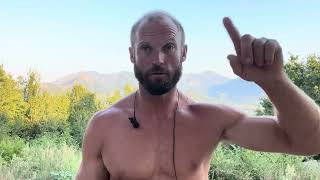
Fat adaptation gives athletes metabolic flexibility to train fasted and burn ketones, improving body composition and health markers. Dr. Anthony Chaffee and Charles Poliquin show how fasted training and strategic meal timing work. The catch: peak performance sometimes needs intra-workout carbs or ketones.
Chapters
Brothers, the first pillar of the holistic athletic physique is being fat adapted. Now, there are a lot of people who are shredded who are going to tell you that, hey, you don't need to worry about this. I'm telling you, I'm asking you, I'm suggesting to you, consider if you can't eat for a certain reason and then that means you can't train and you don't feel good to train, that's a disability. I was talking recently with Dr. Anthony Chaffee, who's doing the How To Carnivore brand and he's been working on the Carnivore diet. He's like, yeah, I would not eat for 24 hours before a rugby match. I was thinking, like, I don't know if I've worked with a single rugby player who would feel good not eating for 24 hours before a match. Now, I'm not saying you're going to get to that point or you need to get to that point that's optimal for rugby, but what I am saying is that when you have the ability to train fasted and when you have the ability to extend the time between meals and when you have the ability to function without carbohydrate, you have a superpower that others don't have. And there is a significant amount of evidence, research and support to suggest that you're going to be healthier as a result of this. You're going to have less visceral fat. That's going to help you with your performance. It's very easy to stay lean. If you look on Instagram, a lot of the guys who say they're natural, they're crazy lean all year round. They are always fat adapted. Always is probably the wrong word, but they tend to be fat adapted. They tend to use either a ketogenic diet, a carnivore diet, they're having one meal a day. Something along these lines. You can be having a bunch of carbs, but if you're able to stop having carbs and still function, then that means you have the metabolic flexibility to do that. Now, if you had to choose between running just on carbs or running just on fat, I would choose to run just on on fat. And I do run just on fat sometimes. I had rice two days ago. I think it might have been a month before that that I hadn't had any rice. And I can function with no carbs. I don't notice a difference if I've had any fruit or not, if I have any rice or not. My body is happy to use fat as a fuel. What this also means is if I stop training for. If I stop eating for two days, then my body is just going to go straight into using the. The fat that it already has because. Because it's already got all the enzymes upregulated for using fat as a fuel. So it's a skill to use fat as a fuel, and it's a skill that's lost when you constantly snack. When you eat as soon as you wake up and you eat just before bed and you maximally extending that time that the body is worrying about sugar in the blood and insulin, et cetera, it becomes a disability and it becomes something that burdens the body. Now it's related to all the major diseases, the cardiovascular disease, the Alzheimer's, which you're calling type 3 diabetes, cancer. All of these are related to having dysregulation of blood sugar. Charles Poliquin used to say, you have a set amount of insulin to secrete for your lifetime. If you secrete that amount of insulin early, then you're going to die earlier. I don't know if that's true or not, but he was able to get his athletes super lean by encouraging them to control their carbohydrates. The core message was earn your carbohydrates. If that's the one message that sticks with you from this video, then take that. Everyone gets shredded if they don't eat. Everyone gets shredded if they don't eat. Carbohydrate. It depends on how long you have to do it, how long you have to sustain yourself between meals. But this is a superpower that I want you to have. I want you to have that flexibility of if we're going out to run first thing in the morning and nobody's eating and we come back in the afternoon, which we did here at the event that we just ran. I want you to be metabolically adapted to that. It's a superpower to be able to do that. If you tell me like, yeah, and I'm also able to consume 120 grams of carbs every hour for 12 hours and sustain massive power output. Power to you. But if you do that at the cost of being able to use fat as a fuel, then you're losing a lot. So we know that these enzymes for fat adaptation can be massively ramped up. So when you first do this, you won't have the enzymes to be able to use fat as a fuel very efficiently, but they're very adaptive. The ability to use more carbs is not very adaptive. According to the research, there's very little ability to change those enzymes. Now, there's some stuff that your body gets better at when you are consuming carbs. And it is a skill also to be able to use a lot of carbohydrate. But the one of being able to use your fat stores is going to make it very easy to put be as lean as you want and to be able to train when you want to be able to train fasted. You can be more flexible with your nutrition as well. If you're able to just eat meat and butter, you don't need a lot of other stuff. It's a simplicity for life. If you're able to just get some eggs, have the eggs, you need less ingredients, you're less worried. I know what it's like if you're listening to this and you're like, yeah, but I will feel like absolute if I don't have carbohydrate. I get you. If you, if you're getting peaks and troughs in your blood sugar. I didn't know exactly what it was, but I had something like diabetes because I was getting the shakes, I was getting the sweats, and I don't. I didn't know what it was, but I felt terrible sometimes where I was like, okay, I definitely need to have some carbohydrate now because I don't feel good. I never tested myself around that time. I never even really told anyone about it. I was kind of embarrassed. But when I went onto this type of diet, I was interested in Paleo diet and then I did a ketogenic diet and then I did a carnival diet. And my body adapted to not using carbohydrate consistently as a fuel. I don't feel any benefit from having massive serves of carbohydrate because my body knows how to use fat efficiently. This is going to be a trigger point for some people and it's going to be like, well, you know, I just, I just don't want to do that. But I hope that I'm making the case here of like, this is a basic capacity. This is a foundational ability that any man should have. This is a foundational metabolic state to be able to be fasted and still be able to function. You think about it from the caveman perspective. The fridge wasn't always full. In fact, there was no fridge. It's only in the last 80 years that there is a fridge. Yes, we've been preserving foods and we've been farming for a long time. Probably longer than 10,000 years if you go down that rabbit hole of how advanced civilizations might have been earlier, etc, but they would have also been able to go out and go and sleep under the tree for five days like the rite of passage of the Native Americans and still function and still be able to hunt and still be able to live. So I want you to have this ability. If you already have been following some fat adapted type of diet, if you've been doing some fasting, not eating within food, four to six hours of bedtime is one way to decrease the amount of sleep that you need and improve your health. Sleeping is a time for the body to clean itself and if you don't have to do as much work with digestion, then you will clean yourself easier. Detoxify, run the lymphatic fluid out of your brain. Everyone thinks that they're running on calories, right? And you think, oh, I need to get a certain amount of calories, you know I'm going to feel terrible. You can actually feel pretty good with no extra calories coming in because you use the calories that you're already storing. We already store a bunch of calories on us. What you won't feel good without is sleep. So why is it that you feel so energized after sleep? Sleep is not giving you calories. Sleep is cleaning your body and restoring everything back to go again. And so that's the most important factor in feeling energized, is to be able to sleep well. You're going to sleep better if you don't eat as close to bedtime and if you then don't eat as soon as you wake up, then you start to get this shorter window and your body adapts to being able to function without food. I personally love training fasted. I train fasted every day at the moment. I've been having raw milk the last few days I've been having raw milk during the session. So it's not technically faster than or I've started to have some intra workout amino acids and such as well, but I've also done it just on water and it's, it's fine. Also being able to have, I've had two, three, four hour sessions here on only water, like four hours after waking up and then eat after that. I'm not saying it's a brag, I'm saying like I'd like you to have this ability and feel good about that and for it to work well for you. If you're looking for absolute maximum muscle mass gains if you're looking to be the heaviest version of yourself, then you might play around with more intra workout nutrition. But generally we're sort of maintaining, we're generally not hard bulking for long periods of time. We're going to go into those topics as well. But this is a key foundational ability. When you are fat adapted in this way, you produce more ketones. So ketones, Beta hydroxybutyrate is one of the, the key ones. It's known that this decreases the risk for Alzheimer's, Parkinson's. It's a key fuel source for the brain. So your brain can run on glucose or it can run on ketones. When it's running on ketones, the brain works significantly better. Babies produce a lot of ketones from breast milk and it's a really important part of the development of a baby's brain. There's tons and tons of papers about the importance of beta hydroxybutyrate and ketones. I sold an exogenous ketone supplement, so that's why I dived in hard on the research when I was doing that. Most of the research is about your body producing its own ketones, endogenous ketone production, which is what you're going to get when you do what we're talking about here, exogenous ketones, it's a different conversation, can get some amazing results with that. I had some guys breaking records and you know, being the best in the world at what they do, using the exogenous ketones as well. But that's a separate performance conversation. Mood stability, psychology. You can look into some of the psychiatry stuff around the importance of ketones and how it's going to impact your confidence, how it's going to impact your mood, your ability to concentrate. All of these things are good reasons to get yourself to a point where this is an option for you. And then once it's an option, you only need to be using it hard. You know, periodically. You can be having carbohydrate most days, but then have other days where you're either not consuming them or, or you have an extended eating window. If you train fasted in the morning and you train hard, then your body's going to be producing a lot of ketones and using a lot of fat as a fuel. Even if you're having two or three meals during the day, and even if you're having carbohydrates all throughout the day, if you're training fasted consistently, then you're going to have that adaptation. So this is one of the foundations of the holistic athletic physique. If we want to be a group of men who've optimized their body composition, this is one of the foundational lessons and foundational factors in getting the body you want. I'd love to hear your comments, thoughts on this. Experiments that you've run, success that you've had, challenges that you've had with this, other things that you've come up with. Yeah, let's get to that optimal athletic physique. There's a certain body fat percentage that's going to give you your best results. If you want to be doing gymnastic stuff, if you want to be competing in a weight class sport, if you want to be doing an endurance sport, power to weight ratio is everything. Let's get to optimal and let's enjoy it. Let's feel good at that optimal body composition.










