How I Structure My Training Week | Uncommon Athletic Template
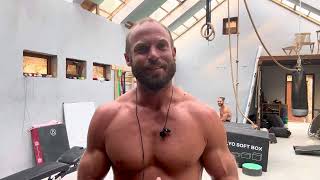
A coach breaks down a seven-day training template that cycles through different movement patterns: squats and quads on Monday, presses on Tuesday, weightlifting on Wednesday, chin-ups Thursday, deadlifts Friday, vertical pressing Saturday, and core work Sunday. The system borrows from Westside Barbell and ATG to cut guesswork and build long-term strength.
Questions this video answers
Squats and quads.
Presses (dips, bench, or incline press).
Weightlifting — snatches, cleans, jerks and accessory work.
Chin-ups / pulling focus.
Deadlifts — posterior chain, hamstrings and glutes.
Chapters
So the problem is that if you don't have a training template, then you're always guessing, oh, what should I do today? Maybe I'll do a bit of this, maybe I'll do a bit of that. And you're not going to be an elite athlete with that approach. Maybe not sure if you want to be an elite athlete, but I would challenge you that as your athletic development improves, your vision for your own future and for your life and what you're able to give as a father or as entrepreneur or whoever you are, increases, it's a good place to come from, to be in a great spot athletically. So if we know that we want to be in a great spot athletically, we need a template. We need something that works. Now, looking out, I always look at, okay, what are the best examples of this? For me, the best examples of strength training systems that have gone viral, that have changed the world. Westside barbell, west side Barbell had a setup where it was two that max effort days, one for lower body, one for upper body during the week, and then a speed day, one for lower body, one for upper body. Now, if you listen to interviews and stuff, some of the guys say, yeah, we maxed out on the other days as well. They publicly used a lot of steroids. And then beyond those four sessions, they were doing 10, 12, 15 mini sessions to prepare between those bigger sessions. So they had the strength, the max effort method, and they had the speed method, and then they had the repetition method that they would also use around those workouts. But they always knew which movement they were going to be. They knew what was coming more or less in terms of the template, but then also had a lot of flexibility in it, which meant they could run it year round. And they stayed in amazing shape year round. And Louis Simmons pride himself on it was like a fight club is like, if anyone shows up and they're ready to lift, we're ready to lift all year round. We don't need 12 weeks of preparation like all these other wimps who train in cycles and they're, they're not at their best year round. That's a system that worked. That's a system that went viral, that stuck. And so when I think about changing the way the world trains and improving mankind's athletic future, this is the stuff that I think about. When I thought about that with strength training, in terms of within sessions, that's how I came up with the dense strength template, was thinking, like, how do we simplify this down that CrossFit's getting some great results with functional bodybuilding. But there's so much complexity in the way they're programming. And I was looking at all these different programs that friends that were competing at the top level in CrossFit. And the programming is so complex that it was of no value really to the average person. And it wouldn't apply outside of CrossFit. That's how I came up with dance was like, all right, let's simplify this, let's make it into blocks. Let's have set percentages that we want to work on. Let's do 1, 2, 3 of these blocks per session. And then Nico dived on, used that system a lot, the motion guy, and he's had amazing results with it. He still uses it every day. Ben Patrick applied it as the go to second method after zero. Then there's dense. And ATG is the most used utilized athletic protocol in the world. So this system has changed the way millions of men train, literally and athletes. And it's been applied with a lot of elite coaches, sports. At the time when I started sharing it in 2014, 2015, there were a number of athletic teams, international teams and high level teams that used it with their athletes and their athletes loved it. It's kind of a clustering system and the intensity that it brings is a beautiful thing. And it was a simple shift that CrossFit made to being like you start the time from when the set starts instead of timing the rest. Traditionally, strength training was always timing the rest. That's the Russian way. And then that was followed on into the Western way of talking about strength training is you time the rest period, which kind of makes sense, but it makes a big mess. So when you time from when the set starts, that changes the game. And I also don't believe that we need these longer rest periods. And it's been well proven now that we don't need these long rest periods to be able to get 99% of the results. Even Westside barbell trained up tempo workouts. The Chinese weightlifting, if you watch their weightlifting, they're up tempo workouts. There's no big long rest periods. And the Russians say they use those big long rest periods. Maybe they did. If you need a big rest for, you know, between one of your sets at some stage, doesn't make you a bad person. But generally you want your workouts to be up tempo and that's what dense helps to do. And you can actually go a lot denser than dense when you get into that. But that's from that same Mentality that I'm bringing you this concept of the template. When you settle on the template and you know, okay, this day is for this, this days, for this, this days, for this, you never get lost again. And that ability to know what's coming and to focus and to have a task set for yourself mentally, each day. Physically, you know that there's a physical task. And mentally, you know, when you get up in the morning, there's a physical task to be completed for the day. And you know what that task is. And so the template is. Monday we do squats and quads. Tuesday we do presses, which is usually dips or bench press. It could be an incline press. Wednesday, we do weightlifting, snatches, cleans, jerks, accessory movements to towards that. Thursday we do chin ups, pulling focus. Friday we do deadlifts, posterior chain focus, hamstrings and glutes. On the Monday, it was more of a quad focus. On the Wednesday it's more of a back focus core. And then on the Saturday, we have a vertical pressing focus. Sunday, abs, grip, calves. Okay, so this is the, the weak template as far as strength goes. But we also have a key skill for each day. So we have the skills broken up. Upper body, hand, eye coordination, upper body balance, lower body coordination, lower body balance. And then we have different movements that we're doing that we can rotate through with that. But each day across the seven days has its own skill focus. So we have skill, we have a speed focus each day. So we're doing some level of jumping, plyometric or faster movement, throwing a ball. It's been beautiful to have this big setup, had a couple of reels about it. You're being able to throw the ball to or at each other with full speed. Using this wall for playing tennis as well, it's good to be able to retain skills and to continue to develop skills. It doesn't take more than 10, 20 minutes of strength work a day to be able to continue to build strength and have great strength. When you include skills and speed as well as the strength work, then we continue to get better. Generally, we also have some stamina, a stamina component to that. For those who love cardio and machines, that's where it slots in. If you are more of a bodybuilding person, then that's where it slots in. If it's more of CrossFit, that's where it slots in. And then we always finish with a few loaded stretches when everything's nice and warm and we use the same muscle groups. Doesn't take long, but you get to be in the top 1% as far as stretch ability goes as well. So this is the template. Then you know, now you know what you're doing each and every day. Now the next big component around that is to have accountability towards that west side barbell you turned up at west side barbell, and if you weren't ready to work, you were going to get hammered. If you didn't turn up to training, you were going to get hammered. It matters about having that accountability around you. Men trying to do it on their own. You never do your best. You can't go anywhere near your best. You might be fit and consistent and, you know, look in decent shape training on your own, but it's nowhere near your best. Your best only comes when you're being challenged by others. And this environment is always challenging because I have people here from around the world coming and showing me new techniques. It always fits. Then within this template, we focus on, okay, we're going to focus on a press, we're going to focus on there's always a way to fit it in, and I love that flexibility about what we're doing. So then you have this template of, okay, this is what we're doing each day. Then you have your methods of how you're going to work in terms of sets and reps, your total volume for the day. If you need to go really fast, you can do skill, speed, sting, stretch in five minutes. You can do one minute on each thing and at least you've done something for the day. Now, five minutes is a bit short, but if it's 30 minutes, that's heaps, that's plenty. Now, if you're like me and you live in your gym and it's 10 times bigger than the house that you're living in at the moment, then you might end up spending four or five hours in there from time to time. If it's your job. I know a lot of you are professionals in the industry as well. If you can get your schedule set up well with your team and your staff and your products, maybe you'll put a lot of time in in the gym. I love being able to put a lot of time into the gym this summer. But because I have this skill, speed, stamina, strength, stretch, there's always so much to work on, and I enjoy that. And it's not all draining. That's the thing as well. If you're only working on strength goals and you don't broaden the picture a little bit, it tends to push towards steroids, towards testosterone, Replacement towards just draining yourself. And I'm not doing that. I'm staying fresher than I ever have. Some of the sessions are pretty tough in terms of strength, I'm not going to lie. But because I have these other goals that I'm working on. I'm working on my three ball in one hand juggling. I'm working on my soccer skills a lot. I'm working on standing on the Swiss ball. It's always fun. There's always challenge. And that's what I would invite you into. This is Uncommon Athletic. It's my fourth project of pushing forward mankind's athletic future. I had two versions of Real Movement that I built before, and then I had ATG for coaches supporting the world to a better position athletically. Uncommon Athletic is the fourth version of this and it's better than anything I've done before because it's more inclusive and I've learned a lot more since those times. I love ATG and it's part of what we're doing within this system. But there's also a lot of other stuff that I love and I want to continue to learn and evolve. And we're in a beautiful time as far as strength training goes, where new ideas are coming and things are blending together. The whole bodyweight calisthenics scene has exploded and there's all kinds of different possibilities and levels and styles of training that go within that. We've got strongman style training. We've got all this natural movement genre emerging WEC method functional patterns go to. And I've been kind of resistant to even look at that. But it's a beautiful. There's a lot to be gained by diving into that. And the goal with the community is that we have coaches and people from all those backgrounds and we already have that. It's not just me that you're buying into access to. I have my system and my template, the Magical Athlete formula, which is the holistic athletic physique, the methods and the five capacities. That's my system. And you have access to that system to get in the best shape of your life using that. But I remain open and continue to learn from others who are putting their support into it. So some of it's aimed at coaches. We've got Justin Muchi sharing how he's working with college and high school athletes in terms of from a coaching perspective. Giorgos is part of the team as well. He's in the background here. He's range training man. He's specializing in helping to apply the concepts of Short and long range across the whole body. He's got very, very deep knowledge of training, powerlifting background, but he's worked with a lot of really good athletes and he knows that stuff very deeply. He's part of the team. We've got Niels from range of skill who's pushing ahead, more of the soft acrobatics and a lot of tennis ball skill work, which is slightly different to the stuff that I've been doing. And there's dozens of other coaches who are joining with this with all their different backgrounds. The goal is to come together for live physical events in these locations that we're building around the world. But I want you to come fit. So the standards that I'm setting within Magical Athlete and then all the coaches, I'm encouraging them to have the standards that they would like people to work towards. You're not going to be best in the world at everything. My goal isn't to be a specialist where I'm necessarily the best in the world at one thing. My goal is to be able to play with everybody, understand what everyone's talking about, have experienced it all. You decide for yourself if you want to be the best in the world at 100 kilometer running. We're here to support you to do that. And I think you're going to gain a lot from being inside of this network and seeing how these pieces can apply to your specific target. If you want to be a generalist like me, you're also welcome to do that. If you have more questions about the template, please comment. If you got value from this and you'd like to share it, please feel welcome to do that. I really am set on changing mankind's athletic future. Dense strength has done that, ATG has done that. Uncommon athletic is the next wave. And these next wave of coaches are going to change the way the world does a lot of things when it comes to training, I'm backing that up with my own training and efforts. You can see the things I'm doing and not things that are self evident. No one five ball juggles or three ball juggles in one hand by accident or this is 90 second handstand, etc. So I'm challenging myself and I'm challenging you. Like step up athletically, step into an accountable environment. Know that you're going to come to one of these physical locations. Maybe you can't get there, maybe you can get there now. Maybe it's going to be 6 months, 12 months. Maybe it's going to be 24 or 36 months. Before you're able to get to one of these locations. But if you know that you've committed to getting to a location and getting together with other brothers, even meeting up locally, wherever you are in the world, then all of your training, all of this that I'm talking about has more meaning. You're doing your holistic work, pushing the methods, pushing the five capacities, and it's a key part of life. There's a lot of guys who are struggling, who don't really have that much confidence in themselves, maybe feel a bit trapped. This is a great place to start. I love helping men also with business and even thinking much more deeply about loving their children and wives. And there's a lot of deep conversations that we're having on the brotherhood side, but athletically, that's a place to start. Show me that you care. Show the world that you care about yourself, that you love yourself, and that you want to express and experience more of what you can do. So I hope this was helpful and look forward to seeing you getting after the uncommon athletic template.










