How To Coach A World Champion Team
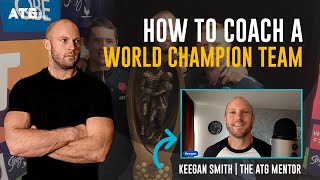
First-person longform talk by an ATG mentor/coach describing his career path from exercise science to becoming a strength coach for elite rugby teams (Sydney Roosters, Parramatta Eels, Catalan Dragons, London Broncos), winning championships, and transitioning into mentoring coaches and building the ATG community. Covers training influences (Charles Poliquin, Westside Barbell, ATG), practical team experience, running workshops and a 12-month mentorship/business program (initially ~$5k→$10k), community-building, views on nutrition, and concrete advice for coaches who want to join or grow with ATG.
Chapters
So at 30 years old I was the strength coach for a world champion rugby team. Rugby league Sydney Roosters. I worked for the team and we won the regular season, we won the world Club championship, we won the grand final. Effectively like the super bowl, we won the club championship. So everything that could be won was won that year by the team that I worked with. The thing is, I was never actually expecting to be a strength coach. I finished high school like most people, not knowing what I would do with myself and I went into studying exercise science by default. My brother was studying it and I just really didn't know what I wanted to do and so I studied exercise science. I was told on the first day, you're probably not going to work in pro sports. That was probably the only use or realistic thing that I was interested in getting out of that university degree. But I didn't know what else to do with myself and everyone was going to university so I went to university as well. Now I had to do work experience at the end of that university course. And when I did work experience I did it with the rugby league team that my father worked for. So he was the coach of the Parramatta Eels and they were one of the top teams at the time. And I had a mentor, a guy named Hayden Knowles and Hayden Knowles actually is still a very successful strength coach. He works with the Newcastle Knights where Patrick Lane, who was one of my interns is now also working. Pat Lane was the strength coach for the Sydney Roosters for two of their grand final wins when they won back to back championships. I was also a consultant for the Roosters in those two years. But I'm going to share more about how I the role that I played in that team and what I was working on and where that fits into the context of me as the ATG mentor. So I worked with that team and I wanted to, to be successful. The thing was that we weren't predicted to make the finals that year. We were expected to, you know, to finish outside of the, the top eight teams based on the year before the team had come, I think 13th. And there were, there were low expectations. So there was also talk that the head coach had been hired from for one year as kind of a placeholder coach and that a huge high profile coach was going to be signed for the following season. So it was like we're going in, there's not much chance that we're going to stay. We may as well go all in on this and let's see what we can do. So we went in all guns blazing. And I had the, you know, the right or the mandate from the head coach of like, let's, let's go at this with everything. And so I was thinking about going in with quite a strong structural balance, Charles Poliquin type approach because I'd done the PICP level one and two. And just the year before in Southampton when I was working over in France with the Catalan Dragons, I did that at Tom Hibbert's gym. Derek Woodsky took me through that, who's another great coach. And that had a deep impact on me. And I was going to go back to the Roosters and implement that structural balance type approach to training. The thing is, I didn't understand that anywhere near deeply enough to get anything like the results that ATG is getting. Not because I wasn't taught the movements at the PICP too. I was taught them the lower body movements and the upper body and the picp1. But I didn't have a working model. I hadn't seen anyone implement it in a team environment and I know I definitely would have messed that up. So I was fortunate that I went and interned with Phil Richards, who was another coach I was interested in learning from. And he'd been a student of Charles Poliquin, but also of the west side barbell system. DC Courts is commenting in there. When are you bringing ATG to New Zealand? Jordan Pappa's actually doing ATG with All Blacks and other guys there in Auckland. We're still working on kind of promoting more of what we're doing in New Zealand. But I was also speaking to Andy Reid just this morning, who's in Wellington doing ATG down there. So we, we do have some coaches on the ground. We've got Stefan as well. There's. There's some other guys in, in our network in New Zealand, but we've, we've definitely got more work to do with spreading that with the Roosters. What I was looking for was what the influence of Phil Richards was to use more of a West side Barbell type approach. He'd studied Charles Poliquin and West side Barbell and he told me, just rip into them, you know, go hard with this. Phil's background was kind of a military background and he brought that energy to the teams that he worked with. And he'd coached an undefeated team in rugby. And some people talk about, well, it wasn't the strongest league and whatever, but if you coach an undefeated team, like, you're probably doing something right. And when you know Phil, you know that he Actually, he's very powerful, very motivating, and it's easy to see why he had success with the team. So I went in there and I went in all guns blazing, and we chased a lot of records in the way that west side barbell does, and the guys got more powerful. And, you know, we won. Like, we went on a huge run at the end of the year. I think it was 12 games in a row or something like that going into the finals. And that made us the first in the regular season as well as the Grand Final, which shows that was the. We were really the dominant team of the year. But the thing was, I was. It wasn't. It was never really my dream when I got to that place. It's sort of the place that a lot of people who study exercise science or sports science, they. They want to work in professional sport, and it was great. I really enjoyed it. But I also had the feeling of this is not what I'm really meant to be doing. What I really enjoy doing was seeing the other coaches get better. So while I was at the Catalan Dragons, I had an intern that I inherited when I first got there. And I was frustrated by him because he didn't retrain that much. He wasn't really lean, he wasn't really strong, and he didn't really mind, and I couldn't really handle that. I struggle with people like that, and to this day, I struggle with people who have that kind of mind. And he's a great guy, and he's done well as a coach. He was ambitious. He didn't meet the expectations that I had for him, and my conversations with him didn't have as much impact as I might have liked. And so I ended up hiring a guy named Fred Marseroux. And Fred is now the strength coach of the Bordeaux Beagles. He went on to become the head of strength at the Catalan Dragons after I left there to go back with the Sydney Roosters. And I actually found that that's what I loved. And Fred helped me to run a workshop in Narbonne for other coaches. And. And I loved running that workshop. I think it was, you know, it was 20 bucks or 50 bucks. It was. It wasn't an expensive thing, but I made a few dollars, and I enjoyed making some money like that. I like making money in business more than I like having a contract, so that's a personal preference, but I love having unlimited income. And I don't really like. I wouldn't like to work for the government. I don't like the idea of things being capped. So I figured out, I found out quite early there, I actually really enjoy this. And so when I was in Sydney and I was working with the Roosters, especially after we'd had such a big season during the off season, I ran another workshop and Pat Lane was one of the coaches who came to that workshop. I think Sam Kennedy came as well and a number of other coaches who I ended up doing a lot of work with, traveled to that workshop. We had Chris Muckett who played in the NRL and ended up. He's coached a world champion boxer and I believe he's a world champion, but he's definitely at that, at that elite level in, in boxing and coached the Queensland Rugby League team. And other guys that came to that event have done some really good stuff and they're probably already on paths to do really good stuff. But I, I loved coaching those coaches and, and inspiring them and challenging them. Hey, what could we really do here? Because to me, we have a lot of solutions. The, the solutions in terms of how to make people stronger and healthier are out there. And yet we have a very weak, an unhealthy humankind. And so what, what can we do? What can we do to. To improve mankind? What. That. That's been more of my bigger question now. How would that become, did that become the bigger question? I don't really know. I just had that burning thing of like, why is, why is society set up this way? I don't know why the world is set up the way it is. And that question was burning stronger and stronger. It was there during high school of like, this things are not meant to be this way. This is not how it's meant to be. How is it meant to be? Is a question that I was, you know, how, how could it be better? Is a question that was burning in the background. And so when I, I went and worked in London when I finished university, I worked in London and I worked with the London Broncos. But I also got exposed to people from other countries and I felt super ignorant. I'd go out partying and people would speak multiple languages and I was this Australian person who didn't speak multiple languages. And I didn't really know much about world history. I didn't know much about politics. And I would meet people when I was out from Bolivia and from around the world and I would think, I wonder what that place is like, you know? And I didn't, I didn't even know geography that, that well. So I started teaching myself Spanish and I really wanted to know how the world works. I started reading Che Guevara books and, and exploring, like, what have other people thought about politics? And so that's when I left the world of strength training when I was 22. Even though I'd worked with Parramatta, I'd worked with their junior elite team, I'd worked with London doing massage. And as their strength coach, I had such a strong desire to understand more of how the world works that I quit that and I quit hockey as well. I was going to. I wanted to go to the Olympics for hockey. I went back to Australia after London and had one last go at playing in the state team, which allows you to get picked for the national team. I thought I should have got picked in the Australian under 21s team. The selectors had other ideas and that was kind of the end of my Olympic hockey dream. But at that point I just went, well, I've got some money here, I'm going to go traveling. And so I bought a ticket to travel around the world and that was it. You know, I wanted to go and see it and I was going to go see it. So I was going to spend four months in Southeast Asia and then I was going to spend eight months in Latin America. And I ended up when I sent. I sent an email out to all my friends, I had been building this massive email contact list for no apparent reason. I don't remember why I was doing it, but I had a lot of emails and I sent out an email saying, I'm quitting this stuff and I'm gonna go see how the world works. And so I sent that email and a friend who was playing hockey in Germany said, well, why don't you come play hockey in Germany for a couple of months on your way? And so I ended up. I changed my ticket and I went and played there. And that's actually where I met my now wife and the mother of my two children. We didn't have those babies then, but we ended up meeting up again a number of years later. But I spent that time in Latin America and I hitchhiked and I met a lot of people from different backgrounds and I learned another language. And it was all of those experiences, I think, that eventually made me a much, much better strength coach because I had more perspective. I was able to put things in a different context. In a way, it made it tougher because it wasn't everything to me like it was for a lot of the players and a lot of the other coaches, or at least it felt like that maybe they had those other things as well. But yeah, the, the challenge of those times in Latin America of understanding how the world works never left me. So when we had success with the Roosters, I was still thinking, but how am I going to make an impact on the world? But what is the most valuable thing that I can do? I can see that I can do this. And it was cool to learn that I could work with rugby league players and make them better. I was getting the feedback from the players that, yeah, this is good. Like, this is making me feel better. Let's keep doing this. Thank you. I was getting that feedback from players. The thing for me was my question was, is this the most value I can add? Is this the best way that I can live? And what came back was, no, like, this is not the best thing. And so coaching coaches was like, okay, this is actually going further. This is potentially something that can reach more people and can make me more valuable to others. And I actually, I really enjoy it as well. It wasn't just that this is the most valuable thing I can do, it was that I really enjoy it as well. I really, really enjoyed those weekends with coaches. And so I set it UP as a 12 month program because what I saw was even though coaches could be really inspired from the weekend, it wasn't necessarily going to change their future. They would go back to their other reality. And it was very difficult to take the inspiration of the weekend into their life. And so I set up as a 12 month program. Initially, I think it was $5,000 for the 12 months and it eventually became $10,000 for the 12 months. And a lot of the coaches that I worked with, the people who made that commitment, like, I thought it was great that people were ready to commit that much to their own education. A lot of those guys went on and opened gyms and open gyms that paid their careers and helped them get out of jobs that they didn't like doing and help them to serve people for a living. Some of them have gone on to be mentors to other coaches and have really successful online training programs. And some have gone in completely different directions. But we had a ton of success with that program with real movement, mentorship, and I loved it. And I knew that that was more of what I was meant to be doing. I was running events in Spain and France and Bali and around Australia. And I felt like, yeah, this is, this is, this is more important work. There's more freedom here, there's more impact, there's more money, and I loved it. So that's that's what I did and that's what I've. I've been doing. Working with professional teams was fantastic, but I knew that it wasn't my higher purpose. So I would challenge you of like, is what you're doing what you really want to be doing, or is there more value that you can provide in another way that's potentially going to bring you more, more. More joy, more enjoyment, more fulfillment? I did end up going back to consulting with the Sydney Roosters. I worked with them 2013 and then 2014. I was there half of the year and not the other half. And they, yeah, there was, it was a complex story, the 2014 season. But I was brought back in 2018-19 as a consultant for those two seasons and those two seasons happen to be winning seasons as well. So they, they won the championship both of those years and that kind of made it a real dynasty that, that period for the club. And maybe it's going to continue. They've still been competitive. They didn't have the best year last year, but yeah, that's. It was great to be a part of that club. But I realized even through that consulting process that it wasn't really where I want to be. I was super excited and happy for Pat Lane and for Trent Robinson, the head coach, but it wasn't something that meant as much to me as it did in the past. So Pat Lane was an intern for me in 2014 and then was running the program in a similar way, but probably better in 2018 and 19. Now he works with the Knights, but he was actually running the strength side of the program in his mid-20s for the effectively the most successful rugby league team in the world in recent decades. So that is something that I'm more proud of probably than anything that I did in rugby league was the fact that he was able to be the strength coach for such a successful team. And seeing what Fred's done in France and all the other coaches around the world, that's what I love. And so that's why I'm the ATG mentor. What I love about being with ATG and having this role is encouraging coaches to think bigger, go further, aim higher as coaches, and there's also permission within ATG to go after whatever else you want to solve in the world. You can see. Recently, Ben Pratic's put up his proposal for a new schooling system that he's building for his son. So it's very likely he'll actually have a school in Florida for his son that other children can go to and that the curriculum will be available online. Now that might seem like a great idea. It might seem like a terrible idea to you. What's important about it is that there's a permission here for, hey, let's go after. Whatever, whatever we see that needs to be improved. Like, let's go after improving it. Ben had the conversation with Joe Rogan about the schooling system. This schooling system can be better. He had the same conversation with Jordan Peterson. Rogan had the same conversation with Jordan Peterson. All of these things can, can come together. There can be connections made here and problem solved. There's so much potential and possibility for the energy within ATG community and the connections that ATG community is making to really have an impact on the world. So for me, it's like these two things have come together. Like the pain of the feeling in Latin America that there's so much wasted potential here. I stayed at an orphanage for a couple of months. Some of those children had seen their parents killed in front of them. You know, they've been through all sorts of horrible experiences. The world doesn't need to be like that. And it was painful in my 20s to think like there's nothing I can really do about this other than play with these kids and be good to them while I'm here. But now I can see that these worlds are coming together where we can have an impact on things. Like we have more financial possibility, we have more connections and social clout. And so bigger for me than winning the championships is what's coming next and what we can all work on. My role as the mentor is to increase your expectations for yourself. Now when I was able to have these four day events with coaches in Spain or wherever they were around the world, I had kind of a monopoly on attention during those times. And it had a, you know, I was able to have a significant impact. I know that people would leave those events feeling like they had more clarity on where they were going in life. Not just because of me, but because of the conversations with each other and seeing other people who really wanted to make the best of themselves and of their lives. And they're willing to work really hard to make change in themselves, to become the person they wanted to be, to get comfortable with skills that they weren't comfortable with. Oftentimes it wasn't even the training stuff, it was getting comfortable asking for money. You can't have a successful business if you won't ask people for money. If you can't build a business, then you probably can't Help many people. That's the truth of it. So a lot of it was around starting to be comfortable with asking for money. And unfortunately, at that time, it wasn't within my awareness to speak about actually keeping some of the money that you earn, because I wasn't really doing that myself. I was. I was sort of keeping it, but I was keeping it to buy stuff and that it doesn't really work. That's probably a conversation for another time. What I love is that we now have hundreds of coaches from around the world who have a really powerful training system that's in demand from professional athletes all around the world. The athletes are driving this revolution. The athletes are going to the coaches and saying, hey, I've been doing this stuff. It works. Why aren't we doing this stuff? It makes me feel better. Athletes are leading ATG into the world of elite sports performance, and coaches are adopting it as well. And coaches are. Whether they're actually within our program or they're deciphering and watching podcasts, watching YouTube videos, and applying what makes sense to them, the world of training is changing, and I also love that there's opportunity for us to go beyond that conversation. So ATG for coaches is about applying the ATG system. My role as ATG mentor is about challenging and encouraging and inspiring and offering the opportunity to use that, Use the training system to accomplish whatever it is that you feel needs to be accomplished in the world. And that, that's really my. My purpose. And what I love most is seeing people aim higher and build the tools, build the skills to get to the next level. Some of the skills I can sometimes coach about or give ideas around in product ideas and, you know, pricing and how to sell it. And I can give feedback and support around those kinds of things, but I'm not the best at that. The good thing is I have a lot of people in my network who are really good at those things. And so that is, that is everything can be overcome if you've made the decision. The challenge for most people that I see is to make the decision of, I am going to be successful in business, I am going to be valuable, I am going to publish my value. Once that decision is made, then it's just a question of time until the financial side catches up. If you've decided to be financially successful by sharing value, you will. The challenge is to feel worthy of that. And, yeah, you are worthy of it. But some people choose not to experience that, and that's fine. We do need people who, well, maybe we don't but at the moment there are a lot of roles for humans for people to do things like stacking shelves and driving cars and they can be inspired at other times in their life and maybe they're not inspired through their work. That's okay. It's not for everybody to have their own business. It's not for everybody to, you know, design things and be entrepreneurs and create. I'm interested in working with the people who are doing those things and that's why I love mentoring more so than being a professional coach. So I would also be happy to answer any questions here to finish up for those who are on the live stream trying to get big Ruben Wiki on the ATG program. Yeah, I'm sure Reuben would would really love the benefits that it has for lower body. We used to chat a little bit on social media. We haven't haven't connected for a few years now. There's a question here from kind of like crazies. It's a funny spelling there. Main points on nutrition, macros, carnivore, vegan, etc. I would say that I've had most success. I have tried a vegan diet. I was vegetarian for nine months. Biggest thing is experiencing. Experiencing has more truth than reading books. You can make a strong case in books about any kind of diet. But what I found was having a more meat focused diet is what allows me to feel my best and train really well. Animals eat a lot of plants and they convert the nutrients from the plants into more dense, nutrient dense foods. The thing about animals is they don't have to poison you to protect themselves. Animals have mechanisms of running away or fighting, so they don't necessarily need to poison snakes and spiders poison, but most animals don't poison. They they have the there are mechanisms built in with camouflage and things like that. Plants, because they can't run away, they either poison or they spike. You like things like cactuses protect through their their weaponry. But most plants protect themselves by being poisonous. And so we know that we can't eat the vast majority of plants. If you go out there and just start eating any plant, you will get really sick. Some plants have been kind of domesticated by humans over a longer period of time and these we know as fruits and vegetables and our grains. But they still have those chemical defense mechanisms within them. Doesn't make them bad, it just means that they have those mechanisms within them because that's how they defend themselves. No plant grows to be eaten otherwise they would already be eaten before humans can get to it. If we take the chemical defense mechanism out of a, out of a plant like it was done with quinoa, then the birds would just come and eat all the seeds. So plants need these poisons within them even for humans to be able to, to eventually eat them. So yeah, I did really poorly on a vegan diet, vegetarian diet. I do best on a meat dominant diet. I don't necessarily do carnivore. I'll eat some veggies if I want to, eat some fruit if I want to. Macros. I've never really counted calories and macros too much. Maybe the odd day here and there a few times since playing around with it, but I don't really worry about that. I eat like twice a day, sometimes one big meal, one small one. And when I eat this way it's very easy to maintain optimal body weight. If I strength train, if I get stronger and I eat predominantly meat, then I don't need to measure the amount of food that I'm eating. It is worth studying and understanding insulin and baseline insulin. And look, if you look into that then you will understand that it does make a difference which macros you eat. Calorie is not a calorie inside the human body. If you have a thousand calories of milk of a thousand calories of peanuts and you're allergic to peanuts, then you die. So a calorie is not a calorie. They are having different impact inside of the human body with all the other compounds and actions that they have on the body. So yeah, some thoughts on nutrition. Welcome to ask any other questions there. When will I be going to Yamba? Yeah, ideally I travel to Australia sometime in the next year or two. Hentai Indian ages ago I saw a video of Sunny B. Williams on a trampoline doing back flips. Always thought that you were behind that. My suspicion correct? Is my suspicion correct? I don't know the specific video that you're talking about, but there is a video of our training camp that we did at, on the Gold coast at the Surfing Australia center and they did have trampolines and we did a number of trampoline sessions. That was a month long training camp at the start of 2020. And yeah, at that camp we, we did some back, back somersaults. It's not necessarily that you need to be able to do back somersaults to be a, a great athlete, but a lot of great athletes can do back somersaults. I like to reverse engineer things. If you can do the things that the best athletes can do, then you're probably a better athlete, and so Sunny wasn't super comfortable with doing backflips, but he got more comfortable during the time there. It's also good to give anyone, especially athletes, the experience of getting better at things. Getting better tends to be an addictive thing, like better than yesterday. I'm yet to meet someone who doesn't like getting better at things. Like Try hating something that you're good at is a quote from Ido Portal that I really like. Try hating something that you're good at. We just don't hate things that you're good at. So if you can help someone get better at something, then they'll probably feel good about themselves and you'll also build a bond with them. So back somersaults are a great one for that. I've taught a lot of people to do back somersaults. I've done them myself on the grass a couple of times. I haven't done one in quite a while, but I did some recently on the trampoline in Serbia with my daughter. I want to be an ATG coach. Now is the time. Welcome D.C. yeah, you can so if you message if anyone's interested in becoming an ATG coach, if you message ATG for coaches on Instagram, then Josh Whitlock will get back to you. Josh is one of our coaches. He's in the uk. He's a serious coach himself. You can see what he's doing with his own training. He answers any questions and offers any support needed for people to get started. You can also find out all the information about how it works on atg4coaches.com it's 50 bucks for your first month and you can cancel after that if you want to. You'd be crazy if you do. But yeah, it's we've made it so it's super accessible. Rather than making it a 5,000 or $10,000 program like I've done in the past, it's $50. If you like it, you can stay. It's $100 a month ongoing. If you don't. If you don't start making an extra hundred dollars a month or an extra thousand dollars a month because of using ATG for coaches, then you can quit. There's no, no commitment with that. But yeah, a lot of the coaches do stay and we have an amazing community of coaches from around the world. ATG program is now probably the most used program, Maybe outside of CrossFit, I don't know. But it's, it's, it's growing and but still, most people in your neighborhood don't know about it. So there's a huge business opportunity with it. For those who want to make some money as a coach and want to get better results, the system is working. So yeah, welcome D.C. if you joining us, are ATG coaches typically in their own gym or working out of other gyms? Yeah, both. Jimmy. There are. There are definitely a lot of gym owners that join CrossFit gym owners. CrossFit gym owners are enjoying adding ATG and having sled sessions, things like that within their programs. Other guys work out at big gyms that also works well. So a lot of guys work out their garages. Ben tends to have a young audience. A lot of people who sort of just finished their college degree that kind of age have set up their garage and are coaching, you know, five or 10 people and full time as coaches with zero overheads. I really love that kind of guerrilla gym pop up idea. But yeah, can work at any level. Justin is, yeah, working away inside of our system. He's a good man. Coach together at Auckland. F45 is now in Sydney. Yeah, yeah. There's a lot of really great people in the ATG coaches community. It's fun to see it growing. All right, thanks everyone who jumped on and we'd love to hear in the comments what comes up for people who listen back. If your dream is to work in pro sports and coach winning teams, then I hope that there was something for you with that. Feel free to ask any questions that I might follow up in other videos. If you're also excited about how training and getting people excited about the philosophy of getting better can impact the rest of their lives, then hopefully you got some inspiration out of the other part of the conversation today. What are good things for a Level 0 coach to do in order to take full advantage of the support from Peter Wright, atg. Yeah, the best thing that you can do as a coach in the ATG community. There are a number of things going to the face to face events. There's an event in Texas in a couple of next week that some of the coaches have put together. There's also the ATG Expo happening in Clearwater. I think this one is booked out. But getting along to face to face opportunities is huge. Finding out where the closest ATG coaches are to you or where you can travel to is probably one of the biggest things still. Human face to face interaction is key. Getting on the live calls, Pete, I'm not sure where you live, but we do have live support calls, zoom calls. If you're able to get onto those calls. That's huge as well. Ben Clairfield runs one focused around personal training. Elite high end, sort of running a high end gym or running elite PT business, how to get really good client retention and really good results as well as the business side. So those calls are super valuable. Getting into the pulse of atg. Ben Patrick is in there every day answering any questions. So if you asking questions as they pop up for you, really important. So you're in the uk, Pete, very cool. I would connect with. Tom Hunt is probably one of our top coaches there in the uk. There are a number of good coaches there in the uk. We're still a really young company, young community, so we have so many yet depending on where you are in the uk. But I would travel and meet other coaches is probably one of the most valuable things that you can do. And then yeah, going through the course content, there are videos for each of the programs and I explain my, my take on the principles of ATG and those concepts have helped a lot of coaches to be able to understand why the programs work or don't work or you know, how to manipulate things based on the, the challenges in front of them. So yeah, there are a few tips. Definitely continue to train the system. I'm pretty sure I've, I've seen some of your training videos. Get better at using the system and of course like coach it, we want you to apply it. So yeah, you're not a level one coach yet, but every coach, just about every coach in the world is applying something from ATG at the moment. So we're not telling you you can't coach atg. Everyone, everyone's entitled to coach atg. If you want to be ATG endorsed and be able to have our support behind you, then you're welcome to join our community, get the business support, be surrounded by other coaches who are going in a good direction, participate in events, let us send you clients, all of those sorts of things then. Yeah, cool. If you want that, then be an ATG coach, stay with us, come to live events, continue to progress, progress your own training and if that doesn't interest you, then any coach is able to. And I'd still prefer coaches to watch a bunch of Ben's YouTube and podcasts and my YouTube and use that to your advantage and become a better coach. I'd still prefer, I'd rather you do that even if you're not going to invest with us and you don't want to become ATG endorsed. Right. So yeah, catching up with Josh Whitlock is probably a really good idea as well. He's in Bristol, not too far from me. Yeah, I had a coach, I had a call with a coach from Devon the other day, but he gets up to Birmingham way from time to time. There's, there's some guys in Wales as well. There's a, yeah, there's a good community. I think it's George down there in Devon that I was chatting to the other day. And there's Imran as well, who's, I think, in that same region, really into his running. So, yeah, highly recommend meeting the other guys face to face as well as all the other stuff that I said there. So glad you've had a good first two weeks. All right, thanks everyone for tuning in. And, yeah, look forward to connecting in the, in the comments. And hit me with any questions.










