How To Run 100km | Keegan Smith Experience #105 | Giles Penfold
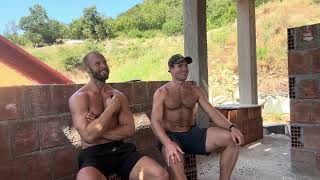
Keegan Smith talks with ultrarunner Giles Penfold about running 100km in 24 hours. The training plan: 3-4 runs a week plus strength work, back-to-back long runs to build time-on-feet, and 60-70 grams of carbs per hour during the race. Penfold coaches through his program Holistic Hybrids.
Chapters
We don't need the red, right?
No. Here with Giles Penfold, we just had a month together in Montenegro. He's about to take a bus down to Albania and then boat over to Italy and get to Italy for less than €100. So for all the budget travelers out there, that's a dream come true. Would love that journey. But the big outcome that I've had from this time here with Giles that I'd like to share with you is inspiration and skills and getting started with running further than I have before. You're saying that running 100km is nowhere near. In 24 hours is nowhere near as much of a challenge as people make it out to be.
Yeah, 100%.
Can you justify that statement?
Oh, I mean, you see the, the people that sign up and complete 100 kilometer races, like, they're not, they're far from athletic.
It's.
Yeah. So it's time on feet, essentially. Like, there's a big misconception that to run 100 kilometers, you need to be running 100 of that 100 kilometers, and it's just not true. Like, time on feet, like, you can be walking for an hour, running for an hour, and if you do that consistently, like, you can, you can easily do it. It's. People have this thing of like putting ultra runners on a pedestal. And I think I'm kind of here to, to break that pedestal and like, make it a bit more accessible and understandable for people to, to wrap their heads around for those who are like.
But why, why would you even want to. What is. Was there a time where you thought like that about long distance running where it's like, well, yeah, you come from soccer background, you play tennis?
No, of course. It's like from. There's the typical athletic perspective of like, oh, it's. It'll fuck your joints up. Like, it's short range, just like smashes your hip flexors, smashes your feet. Like, what's the benefit? And I've. Yeah, I've also, like, it crosses my mind all the time. Like, is what I'm doing good for my body in the long term? That's something that, like, my parents used to drill into me. Like, stop running. Stop running. You're going to be that old dude in a wheelchair that can't move. It's like, guys, you got no idea what you're talking about. You're living in the, in the, you know, 30, 40 years ago, and people had no idea how to recover, like, how to treat their bodies properly.
Are you seeing any deterioration? You've run over 100 kilometers seven times now, Sid. Like, is there any sign that you're wearing yourself out?
No. If anything, I'm getting stronger and I'm starting to think that, I mean, I put a lot of time into, like recovering properly. Yeah. Into like eating well, sleeping well. A lot of people don't do that, obviously. And like, they'll just sign up for 100km, do it, and then expect to, you know, be able to run a few days later or a week later. And like, you can't do that if you don't have, like the fundamentals locked in. So that's like, it's, it's a holistic approach. I think as well that that needs to be taken into consideration. It's not like just the running component. It's. It's kind of everything.
Yeah. Being as healthy as you can, as you can be is going to mean that your body will adapt to it. You won't wear yourself out.
Yeah, exactly. You're in it for the long term as well.
Yeah. Yeah. So how, how. Let's say that there is someone else out there. I've put it forward. I want to. The plan is to run 100km this year for myself in 24 hours. As you say, it doesn't have to be all at top speed, but yeah, the plan is to travel 100km by foot in, in under 24 hours. And maybe someone else is thinking, yeah, that'd be, that'd be fun. I wonder if I can do it. Yeah. What's it gonna take?
What's it gonna take? So first and foremost, you need to be like, properly invested in the process. I think, like, you need to. Yeah, you need to be in it. Mentally speaking. You don't need to train nearly as much as you think. Like, sure. Like, Keegan's a bit of an anomaly because, like, he's like, you're a, you're an athlete. Like, you've got like this crazy athletic background. So you don't need to be as specific and intentional perhaps with like your running stuff. Like, we were briefly talking about this this morning. So for a lot of people, like, I don't know, general rule of thumb would be to begin with like three runs a week, two lifting sessions a week. Yeah, the lifting component is also really important. It's like a lot of people look at me and go, what the fuck? Like, what's up with that? Like, you look like a sprinter, not a long distance runner. And it's like, yeah, I'm kind of an outlier, but Like, I'm definitely not fast by any means, but like, I can hold my own. Like, I can be in the mountains for 24 hours plus and recover within like two hours. So, yeah, to answer your question, baseline is like three to four runs a week, two lifts a week, and then building on top of that, progressively overloading that over, you know, six to 12 months to be in a, in a, in a place where you can confidently travel 100k.
Yeah. What kind of say that? Like let's say those three weeks, let's say a month or, you know, a few weeks out from when you're going to have a go at the 100ks, what would you want that week to look like for you to be like, I think that person might be going to make it.
So, like, which way are you talking about?
Three days of training? What would those, what could, what would those three days look like if you're doing three runs a week, say a decent distance out from the, the actual, you know, the big day.
Yeah.
That you're going to recover from. Well, but what might a week look like of like, oh, if you can complete this week with no pain and things are looking good, you get your two strength sessions, you get these three runs and I'm putting you on the spot.
But yeah, yeah, no, it's good. I mean, baseline is easy, medium hard. So one run is going to be super easy. Zone two, nose breathing.
Like, what kind of distance would you want to see on that run?
Yeah, so the A30, 40K leaves you in a good spot. There's like a big misconception, I think as well that like, you need to have done like 70 to 80% of the distance of the big boy distance in one go. And that's just absolute garbage. So, yeah, 40k would keep you in good stead, I think, aiming for relatively.
Unbroken, like, run, run. We were talking about that at dinner the other day. Like, if you could run without hardly.
Stopping, if you can prioritize running, if you could get 80% of your running in, in that 40K. Yeah, you're in a good spot. And it also needs to be like, the terrain also needs to be taken into consideration. Like you need to know the 100 kilometer route you're going to be doing. If there's 7k of vert, then it's a whole different game to if it's on flat terrain. Because, yeah, obviously you're going to be spending time on feet, you're going to be smashing your quads on the downhill. Like, there's smaller things to understand from that as well and implement into the training.
Yeah, this would be 5k of. Because it's a 1km track, 50 meters. But would you. Is that how it would work or if you were going to run that for 100 kilometers?
Yeah, that's how it would work.
Yeah, that's pretty tough. If it was going to be five or seven cave. Yeah, this thing would be tough. Tough to run for 100 laps.
Yeah.
Because 50 meters times 100 laps be 100 kilometers.
Yeah.
50 times 105,000. So 5K's of that here. Yeah, yeah. And so. Yeah. What might the other two look like? If that's the easy day.
Yeah.
So something like.
I mean look, that's the most important in terms of metrics. Yeah, exactly. It carries over. Well, the other ones are like interval base. Like you'd want some hill work in there as well. So. Yeah, intervals to work on your VO2 max to know that you can tackle hills confidently.
What would that look like here? You know all the hills now.
Oh, I mean doing like if we were to take this track, like if you're doing. Trying to do 1k1 loop as fast you physically can and then follow it up with five minutes rest. Do that times. Five times, six times and you got like a great little session in.
Yeah, yeah.
Where you're pumping it, you're lactic, like you're feeling it, you're panting like a dog. Like it's.
Yeah.
Keep you in good stead.
Or the long. The way up.
Yeah, all that. That can also be used like the big fat steep hill. You could do that in one go. Like what we did this morning. A bit easier. Or you can pump reps up and down it if you really want to get the heart rate up. It's just. It's all about managing like, well, not managing. Changing up the. The variables in your training so that your body adapts to that. So that's like the main reason. That's why I'm like behind like the easy, medium hard.
So we route up the driveway here down from the. The road which is kind of a back road, but there's a concrete asphalt path up here. We. We went for a. To the water hole. Kind of our own little private water hole. These massive stones the Romans or someone put there long time ago. Yeah, we went. Ran to that this morning, had a swim and then when we came back, Charles was like. Yeah. Unbroken up the hill. It took us like four minutes to get up the hill. Yeah. What distance you reckon that is?
I think it's 400.
Yeah, 400 meters.
A bit over. Yeah, bit over. 400 meters.
Decent. What vertical?
80, I think.
Yeah.
70, 80. Yeah, yeah. So.
If you're going to do that whole thing like that gives people an idea at least at what it is. Would you do reps of that or would you do parts of it as in intervals, like one minute bursts on the five minutes or just, I mean.
It depends on the person's level. Yeah, like if you're starting off, you'd want to do like 100 meters, walk back down. 100 meters, walk back down. If you're more advanced, I'm talking about.
More so like when, like say, say it's me because then it makes it concrete. If you're saying I want you to be able to run this.
Yeah.
Track, do a lap, rest for five minutes, do a lap again.
Yeah.
You kind of know what the time that takes now. Well, at what point would you be like okay, yeah, he's kind of a runner now. Like it's, he's not gonna time wise burn. Yeah.
I don't know because I have an exact. Oh, I haven't done it myself so.
Well, you were running them in.
Yeah, but that was like seven and a half. That was easy, steady stuff.
Yeah, you're right.
Knocked out like a proper time trial. Get like a tempo, grab your shoes.
Before you jump in the car.
Go and test it all out now.
Yeah, yeah, okay. But yeah, you get, we get an idea. So if, if we're able to hit that 30, 40Ks, relatively continuous nose breathing and be able to handle a lot of time on feet and then getting some, some decent quality hills and. Yeah, then that's putting us in a position. What else?
Yeah, another thing just came to mind. So backing that 30 to 40k up with something longer immediately after.
Yeah, like the next day or the.
Like the next day. Like ideally, the way I like to structure my training is like on my peak week. So the biggest runs going into a long 100k plus one go, I'll do like a 30, 40k in the late afternoon of like a Saturday and then I'll go out on Sunday morning early and back that up. So it's like you get your sleep, you get like a good amount of food, nutrition, nutrients into your body and then you back it up again and it's kind of somewhat simulating that extended period like time on feet, running, etc, but with that break in between to like not cook yourself. Yeah.
What, what roughly might you do on the Sunday then?
It depends, like same 30k yeah, like if you do a 30 on Saturday, backing it up with like something in the twenties would be good. Yeah, like that keeps you in really good stead. But also like if you're cooked after the 30 or 40 on the first day, that's a good sign that like you need to reassess and probably you might go back to the drawing board.
Yeah, cool. Yeah, good. That gives us a some good targets as far as the gym side of things. Like what, what's that done for your running to actually build in the gym as well?
Yeah, I mean the, like I used to get absolutely flogged on the downhills, for example, like where my quads just wouldn't be strong, strong enough. The tendons in my knees would, would be really aggravated. I've done heaps of long range, like split squats. Yeah. Rdls, nailing the basics and it carries over in a way that like it's. Yeah, it's super powerful and it's so basic. Like it's just creating like a strong, resilient body that is able to withstand like that constant high impact, repetitive short range movement. And it's something that a lot of people, like everyone kind of knows in the running community that you need to strength train, but I feel like 90% of people don't actually do it properly or don't prioritize it enough. Yeah, people just kind of go through the motions, jump on the leg, press, do some calf raises and like, yeah, I'm sweet. I'll be able to run that 100 miler or whatever. So yeah, for me, like it's completely changed. Like I used to be 78 kilos. I'm 92 currently. I'm definitely not as quick as I used to be. But like in terms of handling a long distance, like my body feels way more strong and resilient. Like, yeah, I, it's a, it makes a huge difference. Yep.
Yeah. Yeah. And then in terms of the nutrition, like do you have to eat a lot more?
Yeah, that, that's half of the game of like going a long way. You just need to stay on top of your calories. You need to be stuffing your face essentially. Like a lot of.
During the long stuff.
Yeah, during the, like that's, that's the biggest mistake people make when it comes to like actually finishing and not feeling like a piece of shit when you finish. It's staying on top of your calories, making sure you're, you're eating well, you're drinking while you're staying hydrated, using electrolytes in Your water, not just drinking water. And same goes for like, long training runs. Like what you did the other day. Like, if my client, if one of my clients did that, like, I'd be like, you're a fucking idiot. But because you're Keegan Smith, you obviously get away with it because it's. Yeah, it compromises your recovery. Like your body goes like, what the fuck's going on here? Like, I need, I need nutrients. But more so with the long stuff, like shorter stuff, you can get away with it. It's good for you. Like, you'll tap into the fat adaptations as well, which is good.
Are you trying to go like isocaloric? Like you don't have as many calories as you're burning roughly.
Or, or you just. Yeah, it's hard to do that, but it's just under. It's kind of like as many calories as, as your body can properly digest. Yeah, I try and aim for like 70, 60 to 70 grams of carbs per hour.
Yeah.
When I'm racing.
Yep.
And anything over six hours, like, you need to start taking like protein and car and fats rather.
Yeah, yeah. So we want to get some other people into this world. What's the, what's the opportunity? If someone's watching this and thinking like, yeah, okay, interested, giving it a crack, what is it that you can offer that person?
I think guidance more than anything, like holding your hand, like telling you, like, here are the necessary steps. Let me show you. Come with me. Do it with me. Like, I've run. Yeah. I've run over 25 ultra marathons successfully. I've never pulled out of one. I've got a bunch of clients at the moment that I'm helping run long distances. Yeah, I guess it's the knowledge, the experience, like just under 10 years of running. It's also like I'm doing things differently compared to the normal endurance training paradigm. So. Which is. I don't know, have we. Yeah, maybe we've spoken about this. But the, the traditional paradigm is 80% volume, 20% high intensity work, whereas I've kind of inverted it. It somewhat happened organically for me, like not on purpose, which is why, like, I look the way I am, like I'm stronger than, than the average ultra runner. So that's prioritizing. So my method basically prioritizes technique, strength, speed and power. And once we get that down pat, once that 80% is like ticked off successfully, then we can start implementing a little bit of volume and doing those longer 30, 40k runs that we've spoken versus the traditional paradigm is like we'll start at 40k a week, we'll go up 10% every three weeks. Then we'll do a deload on the fourth week and you keep on doing that and it keeps on going up and up and like, look, in the short term it works, you'll feel great. In the mid to long term, it doesn't work like you just. It injures people, it leaves people fatigued, it leaves people pissed off with the training because it's like monotonous. You're just constantly on these easy, long, slow runs in the same areas. So yeah, that's. That's the long winded answer.
That's cool.
Yeah.
And I'm excited to actually go run some stuff together. Having that adventure of. All right, we're gonna go to this place, we're gonna go, you know, whether we're carrying stuff and camping out in between or just doing. I think it's a, a really strong kind of bonding thing. Even this morning, like it wasn't about distance, but it's nice to be able to get out, run, do some back flips into the water, swim, breath work, run back.
It's the reason run clubs have popped. Like it's not the running itself. It's like the community, the connection that you feel with those around you.
Yeah, yeah. So what's. Yeah. What might be some of the run experiences run camp you've experienced having this place here and guiding people through getting started running. Like what do you got in mind as far as some running adventures over the next couple years?
Yeah. So helping people do the Bondi to Manly, which is like on my doorstep in Sydney. I've done it. I ran there out and back. So it's 80km one way. I did the out and back loop and chase the record and ended up getting it because I had a great day. So that was 152k's there's a, there's an ultra race as well. I'm actually, I'm chat. This is another thing I'm chatting to them on in two weeks time trying to organize something like the people on the wait list, which would be interesting anyway. Yeah, like a three to four day training camp where like we go over the fundamentals of like lifting, running technique, cadence, all that kind of stuff. My training methodology versus the traditional. And then the idea would be like to yeah, push each other's boundaries in terms of like going out and running just something and getting a bit uncomfortable, but knowing that, you know, you're Doing it with other other like minded cool people. Yeah. Costa Rica as well hopefully have some sort of. I'm starting to think that maybe the 200 kilometers that I run, it could be a good opportunity for like you and some other guys to run the like 100ks of that with me potentially.
Yeah.
Something to talk about. Yeah.
Cool. Also we discussed a little bit of like having that mastermind on your side of people who specialize in blood work or certain areas of strength training or like that's. That's an exciting part of this as well to be able to know that you've got other guys on your team that can support if there's different areas that yeah. Need to be worked on. So that'll be. That are part of what you can offer as well of how you consult with this guy.
Getting other practitioners involved. Yeah.
Yeah. Very cool. Anything else you want to share about the. The journey here? Holistic hybrid came alive. This is where it was born.
No. Yeah. It was born here in Montenegro. Really? Yeah. Keegan. Keegan and everyone else flipped my world upside down in the best kind of way. Threw me under the bus big time. I keep on saying that.
Yeah. Giles wasn't. Didn't really know exactly what was coming but he impromptu started the journey here to run this lap. We just cut the track a couple of days before and then we put it to use with the men here. But it went really well. You can see the energy and just those little technique tips. People running smoothly. No one was complaining about feet or shins. Well, a few guys were saying like normally my shins would be blown up, normally my knees would be blown up and they were. Yeah, they're fine. So yeah, it's good, good, good start. And yeah, for anyone out there needing to get an action launch their thing, this is a. Another example of it. Get started, get it right, get it buzzing. Yeah, I'd love to have a group of us that, that go on this journey. I don't know if I'm going to be able to run 100km this year. Like it's the plan but the fun is in moving towards that and seeing what happens and seeing how it all fits together. I actually think it is going to help some of my, my other goals. But yeah, we'll see and learn in the process.
So yeah.
Yeah, if people want to learn more about it, maybe see where they're at. What's the best step? Book a strategy session or just book a call.
Holistic hybrids. The IG handle.
Yep.
Shoot me a message and we'll tease something up. Happy to help with anything.
Let's get running.
Yeah, let's get running.
Thanks, brother. Thanks for coming.
Thanks, Keith.










