Intern To Pro-Coach - Building A Career As A Strength Coach with Patrick Lane
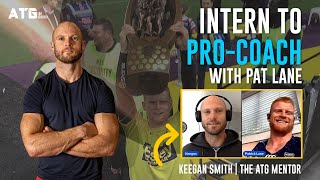
Patrick Lane went from university internships at the North Sydney Bears and Roosters to become an NRL strength coach, working with players like Victor Radley and Lachlan Lam. He evolved his programming from conjugate Olympic lifts to block periodization, once running a season of mostly front squats, and collaborates closely with speed coaches on conditioning using sleds and Woodway machines.
Chapters
When we're jumping live and direct with PJ Lane and his daughter. How are you joining us?
How you going?
Hey, Raw. Raw.
We're on. We're live.
Yeah, this is, this is live and direct going around the world. All right, so P.J. lane, strength coach. Well, strength and conditioning coach. Strength, speed, whatever. You've done it all now. You've worked, you've worked in a lot of different, a bunch of different roles. Currently with the Knights, worked with the Roosters. The goal today is to share a bit about sort of your journey, how you got into professional sport, what it's been like in pro sport, what the reality of goods and bads of being in professional sport, to give people, coaches a perspective on do they want to do this, how might they do it? You know, first of all, like, when did you think that you, you might want to be a coach in a rugby league team? Like, when did that idea sort of first sit with you?
Definitely it probably wasn't until after. So at uni you had to do like work experience whilst you're at uni just to, you know, obviously get through the degree. And I found my way at the North Sydney Bears SG ball team. I sort of sought that one out myself just to get the hours done. But it probably, and that was in 2012, but it probably wasn't until 2013 when I, after I hounded the bloke doing new Sales cup, I said, no, I want to. This was actually pretty cool. I want to, you know, I want to work with the big guys, the reserve grade boys. And it was in the year of 2013 that I really, it started to occur to me that this was actually a professional gig, you know, that, you know, actually after new sales cup, the goal is that you're, you're a full time employee at an NRL team. So 2013 was when it really, I was my third year at uni. That was when it really started to occur to me that this is, this is actually what I want to do. Up until that point, I always thought I'd go into physiotherapy just as a, just as a way to get paid, I suppose, make a living in hopefully working with athletes. But yeah, so you did.
I know you worked at a fitness, you know, fitness first. You were at the front desk. Were you thinking potentially about going down the personal training path or that like, didn't really appeal at all at that stage?
No, I had, no, I had no intention really of becoming a personal trainer as my career. I don't, I don't Know like looking back now, I don't know if it was arrogance or you know, that idea. I was like, well you guys, you know, you guys did your eight week course and you're making great cash. But I'm at uni, like I'm not, I'm not going to be making a living up on this gym floor. Like there's got to be something more for me if I'm going to do this. Three years of education. So even whilst being a PT whilst at uni was actually a pretty common thing for the more switched on guys, I reckon. But I did, I knew from, from being in the club I knew that I didn't want to have that stress around having to, you know, pay rent and go out and you know, obviously run my own business, find my own clients and charge my own price. I didn't, I did not want that stress. Whilst I was 19, 20 years old, I, I was actually happy to either work on the desk or just chuck weights away on the gym floor for an hourly rate.
Yeah, it's, I think I had a similar perspective on personal training at that time. Looking back it would have been really good if I had have gone after, you know, a few clients and had the experience of selling a package and all that stuff which was pretty, probably intimidating for me as well. But yeah, coaches who are at university, would you, you know, do you think that, that that might be something worth thinking about?
If I had my time over I would have done it, I would have done the PT because for all the reason I just said I didn't want to do it. They were actually, you know, probably even still to this day, they're, they're sort of little barriers to me, you know, really diving deep into the private sector. You know, like all the idea, the, the other side of it like the non coaching aspects like the, you know, charging a price, selling a product, building a business, all that sort of stuff. Like it actually I just didn't know it back then that that was going to be actually a skill that was going to be required, you know.
Yeah. And you haven't really needed it but you've, you know, you've played around with it a bit. I've probably pulled and pushed you a little bit to have a look at that side of things and now. But now you can see like, oh, that is actually a valuable skill. Like it would be a good thing if, you know, it's a good thing to, to feel comfortable with. You had Sebastian Oreb and some other Cato as well. I guess you Knew like some of the sort of big name coaches I guess in, in Sydney and, and Seb's become an internationally, you know, renowned strength coach. That was pretty lucky to, to have those guys at the gym where you're working at the front desk. Like how much influence do you think they had on you?
Oh, massive. And that, that was very, I was extremely lucky that I, that I walked into that gym on whatever, you know, on that particular moment and just asked for a job on the reception desk. Like, yeah, I couldn't have, you know, I couldn't have walked into a better gym I suppose with those guys there. And they really, they were huge influences on me in my own training as an 18, 19 year old guy. But then obviously with the, you know, the influences they had with Charles Poliquin and Paul Check back in the day, like when they were sort of in their glory days, I suppose. Yeah, they were huge influences on me as a trainer, you know, me, my own training and also how I wanted to train others. Yeah, absolutely. Huge influence.
So then you, from that experience you were like, okay, this is the path for me. And the Norths were a feeder for Souths and if I remember rightly, you were a Souths fan. Still, still are at heart, I guess. I don't know. No, no, that's gone. So then you, you came to like one of the first events that I ever did or the first weekend seminar I think that I did. You came along and like what stood out to me at that event was you had the courage to ask questions, you obviously trained, you'd had some big lifts and so like I, I was impressed, you know, with the energy that you brought to the event. And to be honest, since I was, you know, the strength coach at the Roosters at the time, I'd had experiences with having interns and, and guys working with me who didn't really train that much and, and weren't really, that didn't bring much energy I guess to the gym and, and I was looking for, for more of that for the next season. So like that was what I saw in you at that stage. I didn't know, I didn't, yeah, I didn't mind too much that about your, you know, your studies and, and, and whatnot. But I could see you train and I could see you had a lot of energy and enthusiasm. So that was kind of why I was excited to invite you to, you know, get involved with the Roosters. Like what did you, what did you think when that sort of conversation. I think it was just text Message or, or something. Was it Facebook message maybe back in the day?
Well, definitely by the time, the time I obviously booked to go on your course, like, it was very clear to me that, hey, this is, this is what I'm doing. Like, I, I just knew, I knew I've told this story before. I, I actually saw the job advertisement that Roosters put out for the role that you're in and, and I remember knowing, like, I remember seeing the time, like I just had a little read through and strength power coach in the nrl. I thought that is, that's, you know, know, I just, that was my plan A and there was no plan B. Like, I just knew that's all I was gunning for, to be honest. Studies, you know, my third year uni that I did the bare minimum, I suppose in terms of face to face hours there. Like I was spending more time on the gym floor training myself and just being surrounded by the guys we spoke about earlier. And, and I was, I was always, I was at North Sydney Bears every afternoon. Like just even on days when there was no strength conditioning happening. Like, I was just always there because I just knew that that was the environment I wanted to be in. But yeah, I remember when you, you sent me the text and you said, oh, come in and, come in and meet Robbo tomorrow. I was like, who the is Robbo? It just didn't. Nothing added up on. I remember, I remember the feeling I had when you sent me the text. I just had. No, I actually, I think I rang you. I was like, I don't think that message was me because I don't even know what you're talking about. Trent Robinson, the coach. And I was just like, holy, I'll be there.
And you came in, in your suit. And then I think, I think that shows, yeah, the, the energy that you bring and the seriousness that you've brought to you to the job. Like, would you. Yeah. What do you think now? Like, looking back at the suit.
I wouldn't change a thing. Would not change a thing.
Well, obviously it worked. So you definitely. But have you, have you turned up to another interview or opportunity in a suit?
No, I actually have not. Haven't needed to, but. No, I have not. Have not.
So then you'd had that experience already at Norse. What did you think when you first sort of came in with, with the Roosters? I know it was a bit of a funny preseason there. Like some of the, the dynamics I was, I was in and out and, and all that sort of stuff. Like, it was probably not the easiest way to get started, you know, when I'd sort of brought you in and then I wasn't always there and. But yeah, what was your, you know, you. You had. Pretty early on, you had the responsibility for the under 16s team as well. Like, how was that sort of getting started with them?
Oh, well, I definitely felt like. Well, first of all, I was absolutely rattled when you. When you announced that you weren't going to be there full time, at least like that. That absolutely rattled me. That was only about that one might have been at the end of week one or week two on the job. So. Yeah, but, you know, that's. That's an experience that I probably wouldn't change either. Like, it was. It was definitely not the textbook internship, but I suppose, you know, I don't know, most that go through the textbook internship get, you know, pissed out the other end of the textbook internship as well, so wouldn't change a thing there. And definitely felt like I dived straight in the deep end, even though I was only under 16. Like, to me at that time, I was. Holy heck. I like, yeah. Like, I still remember that feeling on the first session we had, and I was. I was almost frozen. Like, I wasn't sure what to do. And we had, you know, I had the boys in a circle having a little, like, mobility thing to get going. And I remember I was, you know, I was in the middle of one stretch or exercise, and I was freaking out thinking, like, what am I going to go into next? Just didn't know. So I was just froze. So. But yeah, it was great. Like, we kept it really. I remember I kept it really simple because thank God I did. If I hadn't. If I just would have absolutely lost the plot. So it was great, though. It was great. Great experience. You're on mute.
My bad. Yeah. So that stuff is like, everyone, I think, has to. You have to go through that where you don't really, you think, you know, because you've seen people do a lot of things and yeah, you've, you know, you've. You've read the books and you've looked at, but it is a different thing when it's like, no, it's. It's you now. It's up to you.
Yeah.
And you with that 16s team, you got to feel, okay, this is what it's like if we win and if, if guys make it to the, to the pros or if they end up becoming NRL players, like, I. I get to be a part of this. But if they get Injured and they fall out the back door or they don't develop, then that's like, that's kind of my thing. And yeah, until you get that, you know, you're really in the fire in that environment in the arena. You don't really know coaching in, in my mind, like say getting that chance with the 16s. You had a bunch of those guys, you know, actually for the first time at the Roosters. Right. Actually went on to make it like not. Roosters were renowned for not having their under 16s make it through and recruiting all of their juniors, you know, from. From far away to sort of. Yeah. And doing it later that their star players. Like can you remember back to working with some of those guys?
Yeah. So I think back at that stage the under 16 team were majority, just local kids. And obviously there's a, you know, everyone talks about how the Roosters have no junior base. They only actually. Only have four junior teams that actually fit under the Roosters sort of, you know, junior rugby league banner. So the 16th team was just made up of local kids. They hadn't made the finals in 20 years or something when. Until we rocked. And to be honest, I think we got kicked out in week one of the finals. But just being there in the top eight was, was a huge success for the sixteens program. It wasn't really until the under 18s program that the Roosters really start. You know, they fly kids in from New Zealand, from Queensland, all over the shop to, you know, they put together a pretty gun team that, that year as well. They won the comp. But yeah, the 16s was almost just, you know, you're just biting time until your 18s really. But we had, I had Lachlan Lamb and Victor Radley in that team, so two local juniors that obviously have gone on and given a real red hot crack. So that was. Looking back on my time at the Roosters, that is one of the happiest sort of memories I have is just knowing that my progression at the club coincided with a couple of local juniors with their progress. You know, as I sort of stepped up, they were stepping up as well. And I think by the time the year, my first year actually in charge of the program at the Roosters was right on par with when Victor and Lammy both got exposed to training with NRL as well. So it's, it's quite eerie actually to think about how we were sort of on the same sort of wave there. Yeah.
Do you remember what they were like in the gym? Like, did you, did you see them as the two that were, were they the stars at that stage?
Lammy was definitely the star player in the team. He was, he was the halfback or 5, 8 at the stage, but he was, you know, he was, you know, being the son of Agn Lamb, obviously, you know, everyone knew who he was, but he was, he was, he was a great gun player. And then Victor Radley, I remember he was playing lock like he does now, but he was, he would have been one of the smallest players in the team by far. Like in the entire lineup. He would have been one of the smallest, but he had the biggest heart. Like, he was. He, you know, he was the most courageous player in the entire squad for the, for the little spoke and he had this long, wavy blonde hair, used to wear headgear. And I just remember the smallest bloke on the team was the one putting the biggest hits on the field. Like he would smash blokes. This kid that just played with no fear because he had this probably because he had wet war headgear, but he had absolutely zero fear and he was absolutely rattling blokes. 16 year old, like, you know, big 16 year old men that you obviously get in those sort of competitions. He was, he was smoking them.
He's. Yeah. So it's no surprise that he, when he came to first grade, he had. No, no, he wanted to, he wanted to play the same game.
Oh, yeah.
So you, yes, you mentioned there, you know, you went on to coaching the, like actually taking on the strength for the NRL squad. What was it like when you sort of knew that you were going to be in charge of the. Well, putting the program forward and obviously you had a close relationship there with Trav and you had a lot of trust by, by that stage because she'd worked together for a number of years, like. But how did you. Yeah, how did you sort of look at that chance?
I was pumped, like, like I said, I knew back in 2013, like NRL strength and power coach, like, that was all, that's all I was focused on achieving. And I think I was, I was only like 23 when I got it, so I, to be fair, it's easy to say, like, I didn't think, I didn't think I was gonna achieve it that young, but at the same time, like that whole entire year, like, I knew that I was ready to take it forward. So it sort of, it still surprised me when I got the chance, but I knew that I wasn't feeling like, I don't think I can do this. I knew it was Like, I, I know what, what I can do now. Like, I know where I can take the program. So yeah, I was, I was confident and obviously having Travis trust, which I knew, like, I knew he had my back. That, that's what gave me that confidence that like, hey, whatever I offer up here as, you know, new ideas or anything like that, like, I know that they're not going to be surprises to Trav as my boss because he's, he's. I think he knew exactly what I would have been thinking.
Yeah. Yeah, it's. I think having that the relationship with the head coach, Trent Robinson and the head of performance, Travis was, you know, a good position to go in, especially as such a young head of the head of the program. And you know, obviously you were, you were part of two. Maybe not so obviously, but you, you had the two premierships there back to back. The first time that the, anyone had won back to back premierships in the NRL for like 30, 30 years or so.
Yeah.
What were some of the things in the, in the program? Like, you never know how much impact the strength program has versus the recruitment versus the defensive system. You know, there's a lot of factors that go into winning a competition. But what were some of the things in the strength program that you would say like, yeah, this was. I'm really, I'm really glad that I valued that and I think that that that contributed to what we're doing.
Yeah. Well, so I took over for the 2017 season and previously before that, like, the boys were really, they were really strong in your classical lifts. Like, we were, we were very consistent with our squats and our presses and our deadlifts and all that. And so straight away, some of the change, like my philosophy going into it straight away was I wanted to give the boys some more athleticism in the gym. So we were already, the boys were already doing, you know, power cleans and power snatch in the weights program. But that was, that was all that. Like, that was. It was either power clean from the floor or power snatch from the floor. So I, I really, I really, I started throwing. It was more of a conjugate approach, I suppose, in terms of that. I was always like cycling through different variations. So we did a lot of work from the hang, a lot of work from blocks. We did a lot of complexes as well, I remember, with my programming. So it was always like say one from the hang, then the second from the floor, or first rep from block, second from the hang. It was always something different. And I thought that meant that at that stage I enjoyed. I think the players enjoyed as well because every session, every time they walked in the gym, it was almost a new challenge for them to express their force or their athleticism, I suppose. And the other thing I did that year was we came off the back of, you know, two years of only ever back squatting, and we pretty much stuck to a whole year worth of only front squatting. And that sort of fitted in with that idea. I wanted them to be more athletic and obviously, you know, you can argue you lift more weight with a back squat versus front squat, but I enjoyed the boys, you know, achieving, you know, more mobility, more range of motion in their entire body by just front squatting as well as, you know, I thought there was definitely something in the ability to have a big front squat meant you had to have a great sort of, you know, core and postural strength. I thought that would have a lot of transfer to not getting folded in half in a game of rugby league in the collision. So that was another idea I bought and that, you know, that was met really well by the team as well and by the other coaches. So probably two big changes I made initially and, and then that evolved in 2018. I went away from that sort of conjugate, sort of every session sort of having slight variation to it, and I was a lot more regimented and more like I was putting blocks together. And so guys then, and it wasn't more boring than the previous year, it actually meant that every week, week by week, month by month, guys could actually see progression because they. We were sticking at something for three or four sessions in a row, and so they could see that they were getting better and then I would naturally progress from one block to the other. So I really enjoyed that evolvement as well in the program.
So I think for coaches listening, they might be thinking, well, like, don't you. Don't you have a philosophy? Or, you know, how do you go from being more conjugate style to being more block? What would you say to that?
I was. I was 24 years old and I was. I was honestly working it out as I went along everywhere, you know, I always felt. And I was, you know, looking back, I must have been. I don't really consider myself a feeler, but I was obviously feeling it as I was going along. Like, it just felt right to me at the time. And the progression, the involvement of the program from 2017, 2018, to me, it felt like the natural and necessary progression that the program needed. So I had no issue sort of shifting from A. Yeah, a conjugate style to a more, you know, block sort of periodization, I suppose. Like, it just. It just felt right.
Yeah, it's. The art. Science side of things is important too, because if you, if you are taking on a new program, probably the most important thing is that players and coaches are on board with what you're doing. If, if you don't have that, then it can be a really short run. Like, it can be. Can be a run of a few months and then the structure changes. You may, you know, you may not have made it to the end of that first season if you hadn't come up with something that clearly the players were on board with and the coaching staff could make sense of. Like, so I think it's really valuable for. For coaches to hear that. And what I'm guessing, you know, from. From my. My understanding and what I saw of what you're doing there, like your philosophy was still. What you valued was still the same. Like, you valued being really strong, big lifts, quality movement, the ability to express power with. With heavy bars. But those things were still there. But you played with the, the method of delivery. It doesn't. There's not one way of doing that. Like, you, you know, you're sort of talking about having some fluidity. I'd imagine you'd still be able to, you know, deliver different styles of programs and be really confident that, yeah, this is. This is going to work. Like, this is going to make them better. I think that's. That's valuable to hear. Some coaches feel as though there's one formula and they'll do the same thing for 20 years. I know coaches that have done that and some of them have been really successful, others have been more moderately successful. But that's not. It's not the only way to do things right. Like, we were talking about Hayden Knowles, and maybe that's a good transition that you're working with with Hayden. And Brian Smith is on here as well. My father, who employed Hayden Knowles about 20 something years ago, but Hayden was my first mentor and now work. You know, Pat works alongside him. Probably the. We were talking about, like the most creative coach in strength and conditioning and head of performance who isn't afraid to sort of break rules and do new things and is all about the excitement of the program and the vibe. And Hayden is like, he's into the science and he's connected with Usain Bolt and with all sorts of different athletes and coaches from around the world to improve his knowledge. He ends up coming up with something that's different to every other program, but also different to what he did the year before. Yeah. Tell us a bit about like so far, your journey with H and the decision to sort of work alongside him.
Well, so 27, when I did take over the strength program, H was in charge of the speed program on the field. So we worked side by side in that year. And again, I probably couldn't have asked for a better bloke to be working alongside in my first year. He'd already been a mentor to me for the two years previously. But we just. The idea of wanting to take the program forward from an athletic point of view like that just, it just suited H to a T as well because he, that was, that was always, you know, that had been his philosophy, I suppose for probably 15 years before that. And so anything that I wanted to do in the gym, it wasn't just so like, I wasn't in my own silo and H wasn't in his own solo. Like it was always a collective thing. Like H was in every gym session with me and I was always obviously pumped about everything that was happening on the gym floor. But H was just as pumped. And the language he was using meant that the boys understood that, hey, you know, when we do this in here, that's like when we go outside and we do XYZ on the field. And so the, the language that both of us, even though I was running the gym, he was running the field, he, he was very much, you know, helping drive my program on the, in the gym as much as I was helping try drive his program on the field. And we just both complimented each other really well. Like I remember, I remember multiple times we'd have little projects and, and, and there was actually the other thing about, you know, working with someone like him was I was never afraid to actually hand over particular guys to him in the gym if I knew that he was going to be able to, you know, milk something more out of them, like, you know, by giving them that sort of one on one attention. Yeah, we just work so well together. Our philosophy's aligned. Even though I'm sure if he was running the gym program at that stage, he might have programmed a different way. We still would have been achieving the same thing and working together towards, you know, that common goal of trying to create freaks.
Yeah, that common energy is such a valuable and important thing and it's not a given. You know, another key factor here is like the synergy between staff is a huge factor in the success of a team. And also if you love going to work or not. If you really. We always have different levels of human connection. It's cool that, you know, great to be in that environment where you're excited to interact with the others, you know, other members of staff and you're looking forward to working with them. I know, like, we. I've definitely felt that working with you, but I've also been environments where that's not strong, whether it's between me and someone else or between other members of staff who, you know, don't interact as well. Like, that human side of being in a professional organization is, again, something that you're not really going to learn about when you do your degree, but it's probably going to have a huge impact on the results that you can get as a. As a coach. Yeah, H is definitely a master of that. And again, like, that's more stuff that you don't really learn about and why it's so important. Like, if a coach is talking to me, if someone watches this, listens back and thinks, like, I'd love to follow the journey that Pat's had or that, you know, that I went on, the first thing I always say is, like, you know, how can you get in that environment? How can you, you know, just offer whatever way you can, you know, go and buy coffee to as many people as are in that situation, in that environment as you can. Most coaches will make some time for you. If you're really enthusiastic, if you're clearly trained, if you've got good energy, then they'll let you watch a session. Like, they'll let you be in the room. And that's probably the first thing that I would encourage any coach or any university student to do is like, get. Get in the room and. And then you'll feel the energy and you'll know so much more. Because people think they go and get their degree, they go and get their masters, they maybe do their PhD and then they sort of start to work out like, is this for me or is this not for me? Where the earlier you do that and know, like, that's the path I want to go down or it's not. And if you're thinking about physio or physical therapy, then do that as well. Like, go and have a look. Okay, what does a day in the life of that person look like? It's not too hard to work it out, but you might save yourself a lot of time and energy and money by doing it, because I've had other guys who are given a similar opportunity to you and now they live on a farm. Nathan Gould had the same sort of opportunity. Now he lives on a farm on the north coast of New South Wales and he runs his business and he's happy as anything. And Jeff Goddard and there are a bunch of other guys that had the chance to check out what this environment's like. And they went, yeah, no, that's not me. We've got a couple questions there. Maybe we jump to them. What if I sled for an hour, Will I become a mutant? Yeah, one of those sorts of questions.
Yeah, no, I struggle.
What's your take on sleds today?
Yeah, a bit of a love hate. I, you know, I don't, I don't do well with lactic acid actually. Like I was doing my, I was doing the sleds today and today actually I handled a lot better. I did a lot of sled work when I came back from having Covid actually, just because I felt like I got back in the gym and I felt fresh. Because, you know, having Covid, it's not a hit on your nervous system, it's a hit to your immune system. But I, so I, but when I got back in the gym, I felt strong, I felt fresh, like nearly. I felt great. But my work capacity was shot. So I suppose I was hitting the sled sort of, you know, two birds in one stone. I, you know, I was getting a good pump after not being able to do much for a week, but I felt like I was getting a really good blow as well. So I do like the sled. I definitely think even talking like I was talking to guys from the Roosters on the weekend, they still, we bought in the reverse Woodway walking just, you know, because you could get more time on attention on, on the, on the Woodway than, you know, having a 15 meter sled track. And the guys, they still, they use that religiously every day as part of their own little, you know, individual prep for. It doesn't even matter if it's not a big training day. Like they'll come in on a, on a captain's run. They'll do it. They'll come into the club before heading over to the stadium for a game and they'll do it. It's just part of their routine. So it's definitely something in it.
Yeah, that's, yeah. The Wood Wave is a resisted non motorized treadmill. So a bit like the assault mill, but it's resisted there. I think those, those ones are usually like $50,000 or $100,000. Then they're not, not super cheap. But yeah, the Woodway, that ability to, to be, to be able to go continuously and to be able to quantify. I had some great sessions with players who didn't get to play especially yeah if, if you were 18th man, which means you sort of suit up and you. But if nobody gets injured in the warmup, then you don't get to play. Some of those players did very tough sessions on the, on the Woodway, so resisted sled. But you can really quantify it. So I love the quantification aspect of doing that work on the heavy sled. Ben's actually working on a custom sled that will quantify output. So you, you get a, you get a reading of sort of how far you went and what time and it'll. That'll create effectively like a rower, like a concept two type of concept. Yeah. So you could, you could have a world sled championship at that point if you wanted to.
Interesting.
And you would have a clear winner. So yeah, like that, that quantified nature of sledding and is a good one. But, but for a coach, as long as you have the same track, then you could sort of have athletes against each other and you can time it. Maybe the track warms up. It's not, it's not black and white that, that science like if you really want to quantify things, if the track get with friction depending on. Depends on lots of factors, but sometimes they do and they age as well. Like if you do a lot of miles on a track, your first year scores might not be the same as your second year or third year scores. If the sleds, if the sled tracks, it's. That's, that's one of the worst things about sleds. And I think one of the reasons why it doesn't get the same love in a program is because with the squat, it's like a nice clean clear number. And coaches tend to love those numbers where with the sled, because you don't get that nice clean clear number, you might not value it. Even though maybe it's a better expression of real on field strength, power. Maybe it's a better expression than even, you know, powerlifting, which, I mean powerlifting weightlifting, which we're both fans of like the snatches and cleans, that sort of stuff. I'd be, you know, we started play around with like the farmer's carry thing. You remember, we're doing like relative like body weight in each hand. How far can you go? That kind of stuff. I wonder if you could, you know or where it would fit in terms of if you got those numbers from guys of, you know, how. If you had those nice quantified numbers on the sled, like, do you think it could become a key, key metric that you would look at?
I think so. Yeah. I think it definitely would. Yeah.
And will it turn you into a mutant? No, it's the biggest benefit that players like. What you're talking about there, where the players actually love it is they just. They feel good. They feel like they can express their power because they don't have the. The joint pain. Like the joints, tendons feel better and therefore they're able to express. Express themselves. You're also getting a ton of practice of locking out the. The knee. So that like, last part of knee extension, kind of like heavy quarter squats, which is like a peaking exercise. You're effectively getting a ton of that with potentially better specific. More specific like joint mechanics and. And positions. So it does, it does make sense that like, because Ben still, like, he's had NFL players like, like pro guys that are playing currently in the NFL who are 100ish kilos his height or, or smaller, and they can't keep up with him on the sled, like running backs and, and you know, guys that are. It's, it's. Yeah, there's something to it, man. Like you, if you go there, you. You'll see that even though he's not. He's not squatting like triple body weight, but yeah, he's. He's like. They are legitimately, like, ridiculously good at sleds.
Yeah.
And it's like there's something to it with. Okay, they're ridiculously good at that and they can jump sprint.
Yeah.
We're talking a bit before about evolution of our understanding and application of atg, since we're on the ATG channel and we spoke about it a lot when I was sort of consulting there with the Roosters. You were running the program. We were speaking about it a lot. I think both of our positions have evolved quite a bit. But how much influence has ATG had on how you look at strength?
Yeah, it's had a huge influence. I was obviously back from when I was younger. I was already drawn to this idea of structural balance and having numbers, having ratios, like everything one thing mattered compared to another thing. And I really. Those numbers, they really, they really appealed to me. So quantifying all your, you know, what most people would sort of refer to as either like assistant stuff or remedial stuff, like actually quantifying that and putting numbers on it that made it matter was definitely the most appealing thing to me from the get go. It's been a long journey. I think that would have been back in. Or been back in the beginning of 2018, I think when you first started showing me in Queenstown. And it's taken now, yeah, four years, I suppose, for it to really like, I'm still, I'm still only now feeling like, well, now I get it now. Now I know what he means. Or now you know, now I know how it all fits. So yeah, it's been, it's been a really good sort of journey of, you know, learning and understanding and evolving, you know, adding that stuff into my philosophy.
What might be a key application for it? Like where would you say, like, yeah, definitely, I definitely apply it in this situation. Or this is how I'd apply it. Like, give us an example of.
I always, I always, and I probably still believe. I always remember thinking like, wow, like this program, this isolated program, the ATG stuff. I always felt like, not that I'm ever gonna do it, but if I was S C guy working in a soccer team, like this is the program here. Like, this is the. That facaders that I know that the players would prefer to be doing, I suppose, like, oh, you know, not that I've ever seen, but I. You always hear about how they're not renowned for being heavy lifters, so but having that idea of first of all, like, you know, injury prevention, but also performance enhancement, like they're always going to go hand in hand anyway. But I just felt like that was the program that was going to be most suited for, for a soccer team, I suppose. But then in my own situation, I don't think the, you know, the, the, the heavy compound lifts are ever going to leave like that. They'll always have their place for, you know, big brutal sport like rugby league. But you can definitely complement those things with everything that they don't, I suppose they don't achieve with keeping your body healthy. Like, you know, the best ability you can give the boys is availability. Like the ATG stuff is what is actually going to, you know, keep them together and keep them feeling healthy and strong and you know, pain free. That's gonna, it's gonna help complement all the heavy stuff you do in the gym and it's gonna help them stay out there, you know, bigger, faster, better, stronger, longer on the field as well. So yeah, there's definitely a place for the ATG stuff in a rugby league program as well.
The best ability is Availability is a good line. That, that should probably be the first goal. Especially if you have a good team and a good roster. If you know you're at the bottom of the pile, then you, you know, availability isn't going to cut it. Like, that's one of the things that sometimes programs sort of have the cotton wool approach and probably like professional soccer is maybe known for this because they play so many games and they're on so much money relative to the coaches as well and relative to the strength coach. Strength coach tends to be on like, you know, a hundredth of what the star player is on. That, that power dynamic of the financial stuff matters. Right. Like, the star player can, can kind of do what they want to do. A lot of times in those sports, the ability, yeah, the ability to kind of get the, the balance right between, you know, how much you dictate, how much the player dictates getting them on board is also like a key factor in, in, in whether you know where it's going to go. But if you, if you, if you don't have a, a good team, then you might want to go in with a more aggressive program or if you're expected to lose, then you could potentially. And so that might mean. And, and as a coach, it's important to know what is a more aggressive program? Like, what does that actually mean? Does it mean we do more intensity? Does it mean we do more volume? Does it mean we change the exercise selection? Like, these are all the questions that a coach has to answer. And the results are then, does your team win or do they not win? If they win in professional sports, you get to keep going. If they don't, then you get to go and look for another job.
Which.
Is the tough reality of pro sport. Yeah. Like for you, where, you know, how do you deal with, with that side of things? Like, there's. People have to make that decision in terms of their quality of life. Like, do I want to work in professional sports where it's more volatile, or do I want to build my own business or have my own gym or, you know, run personal training? I guess whichever way you go as a strength coach, it's kind of volatile. It's kind of tough. It can be tough if you don't, if you don't get the results that you want. But how do you, how do you look at that side, like, professionally?
Well, I know a lot of guys, obviously, that have been in professional sport for a little while and, you know, and they talk about how they always had the back of their Mind that. Oh, well, this ain't. It's not going to last forever. So I've always got to, you know, have something ready to go when it, you know, doesn't work out for me or whatever. And some guys have actually left and they, you know, feel like, oh, it's so much better now. There's. I don't have to handle the pressure. I don't have to worry about am I still going to have a job next year or anything like that, because they've got their own business and. And whatever. But for me, like, I've. I've always known that my. My purpose was always I. Or I've always known that my purpose is to be part of something much bigger than myself. So I get the. I have, you know, I have a thrill every day around over the, you know, the, the pressure and I suppose the uncertainty and all that. All, you know, all the sort of negatives to working in professional sport, like, they're not negatives for me. They're part of the reason why I do it. Because the only reason those things exist is because what we do actually matters not only to ourselves and our families and, you know, the players and the other staff and the board and all that sort of like, it matters to millions and millions and millions of people in this country and in other countries about the shit that we're doing every day. Like, I'm now working for a team where I know that the majority of this town that I live in, how they wake up on Monday morning will be a direct result of how the team I am trying to help, you know, do something special, how they perform on the weekend. Like, it matters so much to these people. And then there's 15 other teams in the comp as well, with the same things happening there. Like. Yeah, like the. Yeah, the. The idea of, you know, oh, shit, there's no sort of job security or anything like that. Well, it's easy to say, I know, but just do a good job. Just be great. Like, for me, that's how. That's. I suppose that's how I just attack that mindset. Is. Is there is no issue around, you know, job security or so much pressure is because, well, I fucking, you know, I want that. Like, I want the pressure because then that'll bring out the best in me. And when I'm getting my best, what's there to be uncertain about? So anyway, that's great.
I think it's a great answer and I think you need to have that if you want to work in that environment. Like, I think that's a. That's the perfect way to look at it. I love the side that it matters to people and it brought some meaning to my life. In a time where I didn't know, you know, what I was going to do if I didn't. It was great for me to coach those teams. I also knew that it wasn't my purpose and I knew that there was something else that I needed to do. And I'm glad that I did have the courage to go and explore something else. But in saying that, I love the environment and the best way to know is to do it, to get as close to it as you can. And I love that you've chosen the path that you want to be on and you're still on that path and you're still getting better and you're on the. How old are you now?
29.
Yeah, I was going to say you must be 30, but you haven't thought that. Yeah. Haven't even ticked over the big three zero. And you've already had all this experience. So generally coaches won't feel like they really know what they're doing until they're 35 or 40. So you've got tons of experience. And yeah, I really appreciate the passion that you. That you put into that answer, and that's what you put into the passion that you put into the program. I think if people could see what you. What a session actually looks like and the energy you bring to what you do, it would probably bring even more meaning to, to this conversation. But, yeah, there's a touch of Paddy Lane. We've got one question here from John and then we'll. We'll get towards the. The end of today's broadcast. Have you had any players that are outliers in the numbers when looking at structural balance? That's from John Clayton, who was actually at the Roosters as a junior and had some, some injuries. And, yeah, he's helping people through this process now. So. Outlaw outliers in terms of structural balance.
Yeah, I suppose, like looking back on the couple of years of stuff I've got from the Roosters, funnily enough, it was always our single leg work which was out of whack with what I, you know, the numbers that I was referring to, which were, you know, obviously based off ATG stuff. Our split squats were always down relative to our squats. I suppose our overhead work was all also, like slightly down, like, was never where I wanted it to be and that. But it. But to be honest, I probably Never. It didn't, it still didn't cause me to, you know, almost, you know, it's easy to write an article around well stop bench pressing for a while and specialize in overhead pressing if you need to bring that up. But I never, I never did that. So. Yeah, single leg stuff and shoulder stuff were always not where I quite wanted it to be. But they, but year to year they always got better. So. So. Yeah, I'm trying to think what else.
And they probably wouldn't be at. At many clubs potentially moving more in that direction is, is already getting. There'll be diminishing returns with how far away you are from those standards. Like if you, if you can't, if you can't overhead press 40 kg, but you can bench press 160, then your shoulders probably do hurt.
Yeah.
And then there's diminishing returns as you go closer to the, to the ratios.
Yeah.
A lot of the split squad emphasis now in the ATG program. So there's a couple of key numbers there. The ATG split squat to seated. Good morning. Are both really considered mobility exercises more so now. Um, but yep. We just still talk about those numbers of like having them in ratio to each other and then also that they should probably be somewhere around you half of your back squat as well paused like your paused full full depth back squat really like sitting on the heels type number which is probably 20, 30% less than you know, you.
Yep.
General. General back squat number. Um, and that's. That's the thing as well. Like you have to take the ego out of the numbers to get really clean numbers in the way that Charles intended. Like the idea that the strength that the gym isn't a competition and it doesn't, you know, what matters is whether you win or not. It's, it's not like what numbers you put up in the gym. But I, I still, Yeah. I still have a strong feeling that those getting that split spot mobility and, and seeing a good morning mobility would, would help a lot of players to feel better. Even if it's only at 40, 50, 60 kilos, not necessarily even getting to those ratios. Like I think that's probably one of the, the biggest things that I wished I would have had. I can obviously, you know, I had some success with the teams that I worked with and we did work mobility, but we didn't. And we did work below loaded mobility, but we didn't, we didn't go as far with, with those ones and I think that they'll probably the two big ones for Me, I don't know if you, what are your thoughts on that?
Well, I think, well, like I said, I think one of my mistakes that I made when I tried, when I went all in with the ATG stuff at the Roosters, I went all in like because, because I was, I was so obsessed with the numbers and the ratios. Like I wanted, I almost, you know, wanted to take the quickest route possible to get everything up to the par. And that's obviously where I think I learned, you know, where it doesn't fit and I, you know, made some errors there with certain guys. So I definitely learned the hard way that that's, that's probably not the way to do it, but it's even now like that's why I'm starting to understand that there's actually really true benefit to the, the body weight only stuff like the zero program and even like, you know, listening to Tom Hibbert who's pretty switched on dude, and he, there's videos of him saying like, you know, it's the execution of the split squat. He like, he doesn't care about the weight that you use on a split squat. And so, you know, when I first hear that, I'm like, it almost hurts. Like, what do you mean? Of course it matters. But I am starting to really, I can see now that like, well it, that it's probably one of those things that now, you know, we talk about having standards and even like at the knots now we're trying to, you know, we're trying to have a program in place where there's standards right across the board from 16s all the way up to NRL. And we keep coming back to this idea that oh well, maybe at that age the, the 1.5 body weight squat doesn't matter just as long as they have a really nice looking squat. So that's where I'm starting to sit now with some of these things like the split squat all see. Good morning. It's not so much about having half your body weight on your back for 5 for 10 reps. It's actually more about what do you have the ability to just hit a good position with that movement and the load, the load especially, you know, that's what, you know, I remember. That's why I even regressed back at the Roosters with. We went from trying to load up a bar in the back for a seat of good morning to actually, actually let's just hold the 10 kilo plate in front of our chest and use the weight to assist the movement as opposed to resist the movement. So that's their sort of ideas now that I'm starting to play with with regards to those type of movements. Yeah.
And yeah, it's important to always be, you know, consider what you're doing. Evolve the program for big, strong guys, you know, people that have a lot of muscle mass already, how much. What's going to make the most difference to their performance. Like, that's really where we should be, where we should be looking. And every coach is going to make these decisions for themselves. And I think looking at what's working for other coaches and experiencing it for yourself, I think in some ways it's a blessing and a curse, Patty. But you have really good positions with your own movements and maybe, maybe you don't feel you may, you know, like players. There's very few players who have the movement quality that you have, which is great because they aspire to move more like you. But I think as. As more of the guys can move like you, I think you'll continue to see that they. Yeah, they love that. And they, you know, they recover better and they, they run better, they run more freely and.
Yep. It's funny actually, like, now that I'm in a new club and I've obviously come in with lots of ideas that nothing's new to me, obviously, but it is so brand new to, to these players at this new club. You know, boys still ask me, like, I'll be training and they'll watch me train and they'll be like, all right, have you ever had, like, how many, like, what surgeries you had? Like, have you ever had any, like, knee issues? I'm just like, what do you mean, no? And then it's a shock to them to hear that my answer is not sweet. Like, it's always been sweet. So it's. It's a bit funny, actually. Like, I'll be doing. I'll be doing front foot elevated split squats, thinking that I'm elevated up here on 225 kilo plates here. That's not great. And they just can't believe that I actually can achieve that position, you know, with, you know, 15 kilo dumbbells. So, yeah, it's. It's all perspective.
Yeah, it's. Yeah, it's great that you get to show them a different path or potentially another way because, yeah, so many professional athletes accept that knees won't work like they used to work when they were a child.
Yeah.
And, yeah, it's. It's cool, man. I really, really appreciate this conversation. It's always, always good to connect. And congratulations on big win there in round one against the, the old, the old club. Yeah. And yeah, I look forward to how you have a great season. I hope the Roosters have a great season as well. But, yeah, I'll be, I'll be keeping an eye on, on what you guys are up to and hopefully we can do this again again later in the season.
Yeah. Sweet. Too easy.










