Jumping Records
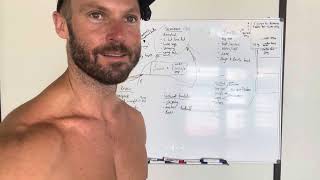
A complete system for jumping higher covers technique, tissue conditioning from your big toe to your lower back, and progressions like plyometrics and step-ups. The conversation includes athlete stories, specific drills like skip work and five-jump distance tests, and recovery strategies.
Questions this video answers
2025-05-12
Chapters
So we got a live video here, live audience talking about jumping. And I got our crew here, Kadima Marcel coming in from Sweden and Czech Republic via New Zealand. And we're going to be talking about jumping. Jumping is super important, not just because jumping is fun and jumping allows you to do things like acrobatics, which Marcel was world class at, things like headers and defending headers and all that stuff, which is very important for the soccer that Karim loves to play. But it also tells you something about how well you're going to accelerate and decelerate. Jumping and landing are going to correlate very well with acceleration and deceleration. Some people will tell you how high you can jump doesn't really matter for how fast you can run because top speed running is much shorter ground contact times than when you jump. So they say it doesn't matter how high you can jump. It's not a good predictor, but they're talking about someone running 60 or 100 meters. If you're talking about 5 or 10 meters, then the jump is extremely important. It's going to correlate well to that first five meters. And the ability to stop is going to be more about jumping down from stuff. So we want to be very good at jumping. If you want to be athletic, jumping is a good predictor and it's a good, simple test of athletic ability. Then we can use it in lots of different ways. Soccer, parkour, all the things. So we'll work around like the key areas.
If you.
If we're going to create the best jumping system, if we're going to set a new standard in jumping, what would we have to consider? So I'd love to hear thoughts, feedback, other ideas, things that aren't mentioned here. But the first thing is technique. So we're talking about the technique of jumping and just jumping itself. Some guys have got to 40, 45 even inch vertical jumps just by jumping parkour. A lot of the guys probably got there just by jumping, by practicing a lot, running, jumps, the task at hand, the body's going to get on with the task at hand after injuries or for people who haven't done a lot of it in the past, if you didn't do a lot of sports, then there might be more that needs to be learned. So we're going to look at technique through the lens of ancestral movement and what is natural for a human in movement. This is a deep topic. I'm not going to go super into it, but a lion moves in a certain way and if you see A line moving more like a robot or, you know, something different, you know. Well, that's not really how a lion moves, and humans have that thing as well. But the way that we train in the modern world and injuries that we might have and sitting in chairs too much and things we can lose, the ancestral things. There's something real to the talk of patterns and biomechanics more so because we've moved our environment so far away from a natural environment. The lion doesn't have to do any practice to be able to move like a lion. Sometimes humans do have to practice again to be able to just move in the default way that a human is meant to move. So we have the technique element. We have two foot and one foot. If you're going to be jumping off two feet, you need to practice jumping off two feet. If you're going to jump off one foot, you need to practice jumping off one foot. For us in New Athlete, we really want to be practicing all four. So this is something that's spoken a lot around the law in atg, and Ben Patrick has spoken about being able to jump with the left foot going down and then jumping off the right with the right foot going down, then jumping off the left or single foot, left, single foot, right. We want all of those techniques because they're all going to build the structures as well as the ability to do that thing if you need to. In basketball, it's super useful to be able to do all of them because there's different lanes and different spaces that a player can enter into. But for the structural adaptations, for the purposes that we're working on, we want to work on all of them. If one of them is a bit better, that's okay, but they shouldn't be a massive, massive difference once we've practiced. And this in itself is going to contribute a lot to the amount of force that we can put into the ground and our ability to perform simply by staying balanced with that, we're much less likely to get injured. So, I don't know. Have you guys had a really dominant foot that you love to jump off? Yeah, yeah.
100 and.
Yeah. Is that where you got injured?
I avoided the bad knee, right? Yeah, yeah, yeah.
I haven't really got an injury out.
Of it, but it was the ankle of the side that you're. It's actually my weaker one. Yeah, yeah. So you can say this and that, but we don't want to have a big imbalance. And the more imbalanced it is, the less likely it is that we're going to remain injury free and also to boost performance. If the weaker side becomes stronger, both legs are going to contribute. And for our acceleration, for our running, we want both legs to be as strong and as balanced as we can be. Symmetrical. One of the other elements of jumping is the concept of heels higher. This comes from the Marinovic system. I don't know where he got it from, but he's doing all his plyometric work, thinking about not letting the heel come down, not letting any stretch come into the Achilles or less stretch. So all of his work, he's working on being able to take off from a heel high position. Is this any. Do you ever hear that spoken about, like, maybe it was in different language, but like, with taking off, like, not sagging into it.
Yeah. And that's really important for the rebound.
Yeah, yeah.
Especially when you're trying to do a combination of jumps one after another. The rebound is. Is really important.
Yeah. Rebound.
Yeah.
Yeah.
If you go all the way to the heels, you lose all momentum.
Yeah.
Basically, you're jumping.
Yeah.
You can't carry the momentum through. You just bottom out and you stop and then you have to make a new jump.
Yeah.
It doesn't even look that smooth or.
Yeah.
Probably feel that good on the body if the heels go all the way to the floor.
So I'm not sure. Yeah. I'm not sure if the sound's going to come through well on that, but it was a good addition. Talking about momentum and. And making things look fluid is if you're keeping the heels off the ground is part of what they talk about in parkour for. For smoothness and for momentum. Transfer of force. It's commonly spoken about. I hadn't really heard about as a concept in sports and athletics, but it's. It's something that. The Marinovic system, which goes back, like, 50 years in strength and conditioning, they. They really valued that. So this one, another element of technique and the heels high is. Is kind of about. Also about soft, like soft ground and springiness and not smashing your feet into the ground.
We call it the touch. The magic touch.
Yeah. Yeah.
Most of the best athletes, you look at them moving, they land and they go into another jump. Almost looks like they're on trampoline. Looks like the concrete is somehow bouncy. Yeah. It's their legs.
Yeah.
So he's talking about magic touch. I don't know if it's coming through. If it's repeating, then it's good that it's repeating. You got to remember that concept more but he's talking about the magic touch of the parkour athlete. I was just watching Muhammad Ali on a video this morning and he's got that magic touch on the ground. Like his legs are going really fast, but you can just see how he feels the ground. He's doing his shuffle. He's doing it on a TV show or something. But yeah, the soft touch. And in football, the soft touch, it's all about the soft touch on the ball of being able to feel where the ball is. But we want that same kind of touch with the ground. We want that ability. The inverse of that or the opposite of that is being able to hit the ground really hard, being able to stomp in weightlifting. We want to be able to hit the ground hard. And there'll be footwork coaches and agility guys working with NFL players who'll be like, stomp. And you want to be able to actually hit the ground hard and deal with those forces. So that is a part of this capacity to jump. Something also that Ben Patrick would speak about is bounding onto the heels. So they would do bounding on the heels and then also bounding on the toes. So hitting both of these elements as part of the technique, then we need. Sprint technique is also important. The run up to a jump. If you're a high jumper, they have good sprint technique. If you're a triple jumper, they have good sprint techniques, long jumpers. So the acceleration to our jumps is going to be important as well. And yeah, acceleration is going to be key if we're talking about the running jump. So it depends on the type of jump, but we want to be able to execute those technique elements. There's a lot of elements of technique of acceleration. If it's a standing start, if it's from the blocks, if you're starting off the left foot, starting off the right foot, starting off a turn, starting from laying on the floor. All different kinds of accelerations that you can work on can be more specific to the sport, but they're all going to play into the ability to jump. If you can accelerate fast, then you're also going to be able to set yourself up for the jump. This is kind of what's going on with making basketball dunks and such of three, four steps. So, yeah, this is the technique element I've got in blue there times volume. So a lot of practice is something that you'll find most dunking athletes have done. Most athletes that have a lot of jumping in their sport, they've practiced jumping a lot. If you're A long jumper, if you're a high jumper, if you're a parkour athlete. Marcel was speaking about doing five hours of training in a day. You go out for a session. Yeah. It's normal to do five hours of parkour. Most of it's going to be running and jumping. There's going to be some, some upper body elements as well, but you're going to do within that lots of repetitions. So that thing of practicing is always going to be super important and it's easy to kind of neglect or forget it. It's like, okay, I want to be. I want to be really fast. I want to produce a lot of force. Okay, I need to hit the gym or I need to lose some, some body fat or whatever the, the factors are. But, yeah, practicing the thing, like, do the thing, have the power. If you want to be amazing at jumping, jump. Is there anything coming up there that you want to ask about or discuss? We move to.
I mean, it makes sense. Yeah. Getting the reps in. It's like the number one thing, I think, jumping, running, ultimately what you do in your sport.
Yeah.
So the volume needs to be up there.
If you want to be good at jumping, you need to jump.
Yeah. And sometimes it's the best training system in a way as well, especially if you can keep the balance. But then if something goes wrong, then we need to have strategies around what might have gone wrong and part of what's solving what might have gone wrong. It generally gives us a clue of what needs to be stronger. Like, if something goes wrong, it usually means you went past 100 of the tissue capacity of that tissue, like it was. It's showing you signs of strain because it's too much for it to handle. So the tissues that are likely to be bothered are also the areas that we can specialize in to take performance to the next level. So the first one is the big toe. And the big toe produces a bit more or as much similar amount of force as all the rest of the toes. And it can contribute, they say, I think around 4, 5% of vertical jump height in like a counter movement jump. A lot of people get pain in their big toes and then that's going to cause issues down the whole foot and into the rest of the body. It's going to make it more likely to have a lot of other issues. So we can work on strengthening and stretching the big toe. We can get super tight through the fascia and the bottoms of the feet. Kadoziani has done a great job of popularizing Stretching out the bottoms of the feet and stretching out the, the toes. He returned to barefoot dunking after 40 after snapping his Achilles, which is super impressive. I think he's five' eleven and part of it was to be able to get the foot feeling amazing. So the big toe, the foot and the arches go with that. And we need to train and strengthen these areas. The cool thing about training the big toes and the foot arches is it's basically free. You can go too hard and cause issues in those tissues, which is okay. It tells you, okay, that there's, we need to develop more tissue capacity there. But it's basically free because it's, it's not going to use a lot of the central governor. It's not going to drain our nervous system. They're not big tissues, so you're not going to get a lot of systemic inflammation. So there's no real, there's no excuse or no reason not to have strong feet other than that you didn't know that they're important or you don't know how to train them, but now you know they're important. And we can talk more in other videos about how to train them. Calf, Achilles, similar small muscle groups, very dominant in white tissues. They don't take a lot of neural drive, they don't take a lot of nervous system energy. Like when we train the quads and the hips, the hamstrings, we use a lot of neural energy and so they. That it's fatiguing to train them. And if we cause a lot of muscle damage in those tissues, it's a lot of damage because there's a big area for the body to repair. So we also want to really strengthen the Achilles and calf and we want them to be crazy strong. Thinking about the Achilles and calf and calf exercises as like equal to or even more important than the big three. You know, everyone thinks about squat and deadlift and, and then something for the upper body, whether it's bench or vertical press, but it's, you know, and even if you go front squats and RDLs or whatever your flavor of this stuff is, we should be thinking about cuff and Achilles strength on the same plane as that it's going to bring the foot along with it. It's all of these first three are going to kind of come together. They're at least as important as the squat and the hinge, especially for the jumping sprinting athlete. But there's no reason not to have them in a surplus above what we have in quad and hamstring strength because the neurological cost is so low, they tolerate volume naturally. They're meant to be ready to go every day. There's a lot of our ancestors have just had to go 30 km a day carrying stuff here and there, working like we're built to be able to walk through the mountains. And people from the mountains tend to have thick lower legs because they've had many generations going through the mountains. Everything was up and down the hill, carrying the firewood, carrying the water, like they're meant to be able to handle a lot and so we can give them a lot. And often they need a lot of training to be able to really bring the strength out in the, in the foot and the calf. Some of the training programs from Charles Poliquin around calf development. Super high volume because they're so white tissue dominant that to get the red tissues to grow the muscles, you had to absolutely hammer them with volume, otherwise they just wouldn't respond because they're always getting worked and you know, it's not so easy to really challenge them. So then the knee, we can, we need our knees to be super crazy strong. We want the meniscus, cartilage, ligaments, all of these structures inside the knee to be really, really strong and well conditioned as well as the, the muscles all around there, the tendon inserting into the patella, the, from, from above, from below. We need these to be super strong. And the knee, if you look at the structure of, doesn't have the shock absorbing ability of the Achilles. So the, the, the ankle joint has lots of different bones. It has the Achilles, the knee, we have the patellar tendons and we have the hamstring tendons, but we also have these big chunks of bone that are attaching to each other, the tibia and the femur. So the, the shin bone is driving into the thigh bone. And because they're going to have so much force, there's huge meniscus there. If you're having meat and you buy a knee, if you're, you know, making soup, you buy a knee joint. You can see the cruciate and everything in there and you can see how thick the tissues are that are acting as shock absorbers there. So we need to use them as shock absorbers for them to be, to function as shock absorbers. All these biological tissues, they're responsive. If you bed rest, they start to disintegrate. If you go into space or zero gravity environment, your bones lose density very quickly. The body changes very quickly if you don't use it at all. And so for these Structures of the knee where it's pushing against each other. People will stop those bones pushing against each other because they had whatever injury, maybe an ankle injury, maybe it's pain in the knee. We need them to be pushing against each other. So the safest and easiest way to push against them than to be pushing against each other is things like step ups or things like loaded carries, where it's not much knee bend, but a lot of push against. But then we also want the kind of impactful compressive force as well. So it's not just about load, it's about the impulse as well. So they're designed to have that impulse and we want them to have that impulse and then the hinge and the lower back. So thinking about more about the hamstrings, the glutes, the lower back would be super important for our single foot jumping. They're going to be really important for jumping forwards and we want them to be crazy strong as well. One way to think about it that makes sense is that the hamstrings and the lower back and the glutes are meant to really power us, to power the body. And the knees need to be developed enough to keep up with what the posterior chain is able to do. And the way you can think about that with the feet and Achilles as well, that they just, they need to be able to keep up and provide the elasticity back. So they're not, you're not losing force into them, but they don't have big muscles to create the force. The calves and the big toes are not creating the force. They're able to absorb it and give it back with the white tissues. The white tissues are springs, if they're functioning well, the springs and shock absorbers. So a lot of the red tissue is glutes. They say it's one of the biggest muscles in the body. It depends how you divide it all up because there's multiple heads of the glute like the deltoids, but yeah, big muscles there, hamstrings, glutes, lower back. Charlie Francis used to say the lower back is the heart of acceleration, the key to acceleration. Charles Poliquin used the snatch grip deadlift as his key athlete developer for the same reason. Because it would hit the lower back hard, it would hit the hamstrings hard. So a lot of coaches have been in agreement that this area is really the, the heart of, of the, the power. And we want these other areas to keep up and not leak energy. Any questions or thoughts, things to add around this one.
Makes sense Makes sense, right? Like, there's really building from the ground up. Everything needs to keep up with the.
With the what you.
You know, building a buff. This is why so many injuries are happening. Because even if you just miss one of those, you mentioned, the whole puzzle isn't complete, and then things start compensating. So I think this is key that you actually mentioned all of it, because a lot of people are, okay, the big toys you're missing, Link, or the knee or the hint, the hinge, the hips, the lower back. It's really all of it. Right. And I love that you mentioned all of this because this is, I believe, how you build a balanced body. How the body was naturally built. Right. The hips being powerful, everything else being able to absorb the forces. The knee, Right. We're literally told to avoid knee positions that put pressure on the knee, which is what we actually need for longevity. So, yeah, I love this. You have anything?
Yeah, you summed it up perfectly. Like, it's one system. The leg is not divided yet. It is divided into all of these joints, but they all work together to make the movement happen. And if I remember into my old days when I injured my ankles multiple, multiple times, what I did is I jumped straight into training as soon as I could. And those tissues in my ankles and my feet were probably already weak before that. And just by rushing back and not doing any rehab on those tissues, they were even more exposed. So I got injured again. And after I've done that four or five times, I built a chronic injury and then said that set me down on a very dark path. But I didn't think of it that way before. I just. I had no idea. So, yeah, just as you said. Yeah.
Yeah, yeah. The integration of it all, you can look at it in isolation. Then you can also look at how you can improve each of the areas in integration of these movements with the ancestral type patterns. There is a place for some isolation work. There is a place for. For finding the way to make it all work together. The body fat percentage, I kind of skipped over there. But if you. The fastest way to improve performance is to drop the fat. The second fastest way is to improve joint mobility. Sometimes that's. That's fastest. If someone's really bound up, doesn't matter how fast you are, if you've got your shoelaces tied together, you're not going anywhere fast. So this is how most athletes are. They've got their shoelaces tied together. They're missing a key amount of stride length and fluency in the Movement, so there's more fatigue and more issues. But the, the body fat. Yeah, you put an extra 10 kilos on Usain Bolt, he's not fast anymore. So it's always a factor. And the most athletic elite athletes tend to have very low body fat. So when I've tested with the, the way that I was testing, there's two methods that I've used. We were looking for in elite athletes. You would see like 6 point something or 7 point something percent body fat. With the systems that I used with rugby players, around 10 was already pretty lean because they have a lot of muscle and they look good like that and they're pretty good for the sport above, kind of 15%. Yeah, that would be starting to get seriously fat. That it was going to be an issue for performance. Some guys can play well at 18, 20% it's possible, but it becomes a disadvantage. And there's a point where it's just like not too fat, like 25%, 30%, like there's just no chance. So it really does depend on your goals. If it's high jump, if it's dunking, if it's really world class speed, then you're looking at that 6, 7%. The further it goes out, you know, towards heavy sports like shot put and hammer throwing and stuff, then yeah, maybe a little bit higher limit, but there's always an optimal and you get too far away from the optimal, it's finished, you can't, you can't play anymore. So then strength work, slow strength work. This, the step ups are really a key thing. Step ups from behind the box, step ups from in front of the box. We've done a lot of step ups from putting the front foot down in the ATG system. Poliquin step ups. Peterson step ups. Patrick step ups. They're fantastic options. Two other options on the step up that are very important if jumping and acceleration is the goal, especially with one foot, is the Ziani step up which would be putting the ball of the foot into the slant board and putting a lot more pressure on the plantar fascia and the Achilles. And then the Romanian type step up would be along the lines of the Romanian rhythm squat where we'd be driving up onto the toes on each rep. So we're going to be getting a lot more work into the calf and Achilles as well. So these are two variations for that. But stepping up from behind is going to be much more posterior chain dominant. They've been used a lot throughout the history of strength training to do the step ups from behind the box, high boxes, low boxes. But yeah, the low box step up from behind is a very specific one for improving jumps. Step ups really are a key peaking exercise. The other variation that you see would be like box squats and pin squats. So yeah, high and low pin squats, they're very similar to the step up but you're going to be able to use a lot more weight, which means you're going to get more lower back, which is not the worst thing. To also put the emphasis into the lower back, full squats, front squats, back squats, all the kinds of squats are good ways to drive up jumps. They're being used for decades and it works to push the squat up, to be able to jump higher. But doing it in isolation without the step ups, without emphasizing the lower leg, without the technique, no, it doesn't work very well. And that's why some people say, ah, squats don't do anything. Of course they're not meant to be used in isolation, but they will always and significantly improve. Especially the two foot jumping. Step ups are going to be more specific to the one foot, but they're going to help both. Squats are not going to help single foot jumping as much, but they still have a part to play. And you can't flex bone is one of the quotes that always stuck with me. This came from Joe DeFranco saying, you can't flex bone so the bone is not going to put more power into the other bones. The muscles are what flex and squats are what give quads. There's their size and hinges give the posterior chain its size. You need some size in those muscles to be able to produce a lot of force. The lighter someone is, the skinnier they are, the taller they are. It might not look like they have a lot of muscle in that area, but there will be significant amounts of muscle there in those that jump higher. And the heavier the athlete is in the upper body, the more muscle you're going to need in the lower body to be able to move the man. When you bring it into other sports, like sports with contact and sports with external load, like rugby, then you need even more size in the lower body because you're going to be pushing against one, two, three other men. And so there's almost infinite force to be pushing up against. So it becomes more and more important to have size in the lower body. For the hinge pattern we have normal movements of the rdl. A special one is the Nordic. And really focusing on the bottom and being able to really Accelerate out of the bottom of the movement, have an impulse type force because when you're sprinting it's going to be that fractional impulse where you want to use the tendons. The hamstrings have these long tendons which tells you that there's a big elastic component. When is that elastic being used? It's with the leg almost straight with the foot touching the ground. So we want to train that slow to be ready, to be fast with it, to be strong when it's needed. Another great variation on the hinge and for speed is the sled work. And you can do it with the standing forward. Walking with the sled is a really good way to work the posterior chain. And it's kind of a variation of the step up in a sense because you're working one leg and then you're working the other leg, but you're able to lean forward into it. So it's probably more like that foot in front type step up when you're pushing the sled forward and then more like the, the foot in front step up when you're pulling the sled backwards. And like you're stepping forward onto something when you're pushing the sled forwards. And then yes, slow calf work as well. Seated calves, standing calves, donkey calf raises are going to be the longest range variations. Bent leg, straight leg, a lot of stuff is really well covered within the ATG system. And that's why so many people have got back to being able to get themselves on the court again with, with that method. And, and then if you're able to just, if you're able to just practice a lot and, and keep the tissues healthy and you're doing some strength work like you can get crazy results with, with simply that. Next is the, the footwork foundation. So being able to skip is a really good place to start jumping rope. There's some good results and good dunkers who've done skipping and then they work it up to being able to do double unders and being able to do single leg double unders means you're very reactive on one foot. Also adding weight. So being able to skip with more weight, being able to skip on a single leg with weight, a way to progress with something more specific in terms of speed and more reactive. But a baseline of being prepared to be able to do this jumping training, five minutes of skipping is a really good baseline. We have these matrix kind of like the speed ladders, but they've been. There's broader, bigger ones. There's some systems out of Japan there's some systems out of Kazakhstan, Uzbekistan, they use these larger matrixes for footwork. And this foundation of footwork is something that it's not necessarily going to push performance up in the very linear sense of the jumping acceleration. But for any complex sports, they're going to help you find your feet exactly where you need to be when you need to be there. So for soccer or for rugby or any of these, football, American football, basketball, having a more complex picture of how to get yourself ready to jump is very important. And the foot matrix work is one of the best ways to always have your feet underneath you in the way that a boxer would. Boxers are probably some of the athletes that work hardest on their footwork and foot positioning and balance because they were making micro adjustments all the time and they're trying to get their opponent off balance, they're trying to get themselves on balance fast in a position that shocks their opponent. So they work on these micro movements of the feet. Also good for evasive players. Sports like handball, rugby, soccer, basketball, where you got to beat the guy in front of you, and then rope as well. The rope flow, the non skipping version where you're, you know, moving the rope around the body, bringing the footwork into that is also a great way where you've got a lot of stuff going on in the upper body, but at the same time you're, you're balanced, you're in control in the lower body, you're making rhythmical movements, you're in time with the rope. The complexity of that, similar to the matrix, is going to help you to always feel like you're on balance, always feel like you're ready to produce a lot of force. These things are generally not spoken about and not done, especially in the context of dunking and acceleration. But if we want usable athleticism and we really want to win in sports, then this is what's going to help us to bring this to life. I've been doing a lot of work in this area also in this area, just starting to really work on technique of jumping. But this as the foundation means that I feel like I'm ready to do more of this. I'm not as scared. This, this feels so good. It feels so good to get the feet under control. It's partly coming from doing a lot of soccer practice with the guys, but then also, yeah, skipping footwork drills. I still plan to do a lot more of this. I haven't done anywhere near as much as I would like to. Yeah, I'm just getting started. But yeah, lots of Rope footwork. It's a big winner. Something that I plan to always do. And looking through the lens of longevity, if you're doing this stuff when you're 60, 70, 80, like this is, this is the best, this is probably more important than a lot of the other stuff to be able to keep the dance going, keep the positions going, then the reactive side of things. So whatever we're already doing here, how do we do that with overspeed? Overspeed meaning make it lighter. So if it's too heavy for you to be able to do two foot jumps or one foot jumps, do it with the band so that you're, you're lighter than your body weight. If you're lighter than your body weight, it's also going to let you go faster. So you're using a lighter weight, which means you go faster. You can also overspeed through the bands. You can overspeed whether the band is pulling, pulling the weight down. So it can be pulling you down on a, on a squat or on a hinge. Overspeed work. It gives us a chance to really fire the nervous system fast and also tends to be very reactive stuff. So we tend to be able to use the tendons a lot. So yeah, with, in terms of the way that we load, we can use free weights, we can use flywheels. Speaking about the bands as well as a way of loading, they each have their own benefits and strengths and weaknesses. But you can use free weights to be more reactive as well. If you've got the bar on your back and you drop and catch into a little quarter squat, that's going to give you some of this stomping type stimulus, something like weightlifting. And it's going to be very powerful as well. Altitude and impulse. So yeah, jumping down from high stuff, this is something where the parkour guys are setting standards that other sports just don't go anywhere near. Athletes don't go anywhere near. You very rarely see athletes jumping from above head height only. You know, certain jumping athletes might do it once or twice as like something to play around with where it's something you see pretty often in the, in the parkour world, sometimes rolling out of it. But the, the confidence that those athletes have to land is just crazy compared to other sports. So something that every other sport can, can learn from, learn the skill. And that touch is going to come from doing a lot of those jumps. The touch becomes harder as the altitude increases. Do you want to add something on.
This or you're just absorbing the force. So when I, when we all started doing parkour me and all my friends, it was always looking for places where we could jump from. And as young teenagers, you don't really look at the consequences as maybe if you are adult or haven't jumped from this high up in so long that you are scared. But since we've done that since we were teenagers, we kind of build that capacity to land gradually. But yeah, just jumping from up high is in a way a form of strength training. Like if you can absorb force coming down from 3 meters with your legs, that how, how does that compare to, to a heavy loaded squat? In a way because yeah, the forces are, that are, the forces that are coming to your body are very. Yeah, much, much, much higher. And if you do that gradually and you build up from a lower heights to higher heights to. It's going to impact the bone density and the strength and, and all of that. Yeah, then a lot of technique comes into it as well. So like when you see people doing front flips and big jumps from really up high, you usually see them roll out, out of it. And that's where the technique comes in is when you, you sort of, you absorb the force, but you let the momentum of the roll sort of make the force much smaller.
What percentage do you think it is when you do that? How much hits the feet versus how much like can you dissipate through the roll?
A lot more than you think, honestly. Like if I, if I was gonna jump from three to four meters and just try to stomp it like it would be a big impact on my body. But I know that if I go into a roll it's just, it's gonna feel much easier and really, really fine because that when you, when you, when you're landing into the roll, the technique of it is you're leaning slightly further forward and then the momentum is continuing forward and it just dissipates into the whole roll and then you just transfer it into speed of running out of the roll. If you can do it right. Yeah.
It'S interesting. Jumping down, I mean, is one thing I just remember as a kid, you know, whenever I get the situation to jump off something, I would jump off. Right. And just not worried about not being able to handle those forces. And as a kid you can't really jump up to something that you couldn't jump down from. As an athlete, a lot of people could probably jump up high, produce a lot of force, but then they can't jump down. That's another thing to think about.
I think, yeah, landing is 50% of the jump. It's all nice if you can jump really high. But can you land safely as well?
Yeah.
Yes. The, the physics of the, of the landing versus say the force involved in a, in a squat, in a smooth squat, the amount of force that you're producing. So if you're saying this is time and this is force, you're, you're producing some force and maybe like you push pretty hard to, to reverse the weight and then the force is going down as you, you getting to the top of the rep. When you have these landing if there's no force and then when the landing happens it's like this and then if you jump up after it, maybe you're producing this much force or maybe it's this much force but the actual jump that comes after the impulse, the impulses can be way, way higher, much, much higher than what you're going to get out of the, the squat. So the, if we're interested in force into the tissues and the adaptation that comes from force, this impulse, it's, it's not the same as what you'd get. Which we're going to jump to next is the acceleration. So we want to be able to really accelerate. And weightlifting is really the king of training acceleration. Because you have to go faster. You teach your nervous system to really fire, to launch yourself. And that's why weightlifters do have great two foot static jumping. If they're just going from a standing jump or if even like you see them jumping up onto boxes, you see guys going way above their own head height from a weightlifting background with no real technique because they just practice all day long. They practice acceleration. They have extreme knee and hip ability. They don't really train the calves that much other than pulling up onto the feet with super heavy weights in their hand which is probably enough to deal with the forces. But yeah, what we are able to do in acceleration is only ever going to be a small fraction of what we can really deal with in impulse. And when you think about it in the terms of children, which you put it through that lens, Khalim, like it's really natural for children to play with this altitude and impulse. Like every child is playing with this stuff but most adults, most athletes aren't playing with it much. There might be a little phase of like jumping down from boxes. Like it's, it's not uncommon to jump down off a box on the two feet, landing off the, you know, this, the size of a table or this kind of height. But really that's not very much force and it's not a progression on what you could do when you were 6 years old or 10 years old. And this is something I've been thinking about a lot lately. It's like my 8 year old can do stuff that I can't do. So my 8 year old has never been to the gym and he can jump down from above, head height, comfortably off the trampoline and such and land and then run away from it. And I can't do that and I don't feel comfortable to do that. And it's like, okay, I've done 20 years of training. I've been obsessed with the gym and understanding this stuff at times about bodybuilding, at times about acceleration. But I've never been obsessed about landing ability and obsessed about the lower leg, cuff foot, hamstring, Achilles, cuff foot, Achilles, these areas, I've never been super obsessed about developing them. And it shows I don't have the ability that my, my son has. And so there's a good lesson in that. So we want this crazy acceleration, but yeah, this, the ability to land is, is, is that that's the biggest forces that we're going to see. It's much more than what we're going to be able to produce for ourselves. So in terms of adapting tissues, if we're not doing anything of landing, then we're missing the strongest stimulus that we're meant to be able to deal with. If you're playing basketball and you're landing on one foot sometimes after you just dunked, then yeah, you're getting these spikes. But if you're not doing that, then you're not getting those spikes if you're playing the soccer. So when we're just in the gym and we're rehabbing and we're not doing our sports, then we're deconditioning from this spike all the time. And so if our training is just this, it's gonna give us some of the tissue adaptations and it's, it's good, but it's not everything. It's not, you know, it's, and sometimes it's not gonna work or sometimes it's not gonna be enough. It might leave us vulnerable still to when this impulse does happen. And maybe, yeah, maybe it goes snap, you know, maybe like because the peak is so much higher than what you've been dealing with because you're doing weighted, weighted step ups, like the forces are relatively high. Single leg, it's heavy, it's a small range of motion. That's the best that you can do in some ways in the gym. Of like strength work to prepare yourself is with the step ups, but still it's not going to meet the pulse, the impulse of like bang. You go for a big step as a rugby player or as a basketball player or something. But yes, there is a role for us to propel ourselves. And the weightlifters are the masters of propelling themselves forward. You can do it with other methods, but it's very difficult to find a hundred kilo medicine ball that you can jump with or you can throw with the weight. When you use the barbell, you can actually jump with 100 kilos. You can jump and put it over your head. You can jump from here and put it over your head. It's very difficult to use something else that you can jump with. When it's 100, 120, 140 kilos. My best rugby player that I had on the. On the clean, he's cleaning 155. What else are you going to use? That's going to be 155. Where they're going to get it from the floor to the shoulders and fast. You just can't do that with anything. You know, kettlebell doesn't work. Medicine ball is not going to work. It's more like a stone lift. So that's why it's such a powerful tool, is because you can accelerate it really fast and you can also stomp it. So you're stomping the landing with that 155 as well. And that's something that I really liked that other coaches thought I was crazy for even talking about. But now I understand that it was valued in. It's valued in parkour. Other athletes understand it. If you think the biggest force when he's doing that 155 probably was the catch, that that would have been the peak. It would have been really fast, but it would have probably been the highest force. If he's standing on the jump mat more than him pushing down. Because when he's pushing down with everything, he's got to get the bar up. That's his muscles. But when he lands really quickly, that's landing on the bones and you can handle a lot more that way. So we have the weightlifting weighted jumping. Seen the Japanese guy on Instagram who jumps, puts his head through the roof and everything. Always jumping with dumbbells. He jumps upstairs. You can just do crazy amounts of jumping and you're going to have crazy acceleration. He's also landing with that stuff. So he's also getting the impulse, the deceleration to an Extent as well, and it works, but it's not the same aggression and such as the weightlifting. I think that's why maybe less people are using it, but I think everybody should probably use it more. I was thinking about the other day, like kangaroos, the best jumpers, right? They have no option. So what about if you had no option, if you tied your feet together and you just had to jump all day, how good would you get at jumping? If that was your only way of getting around, you would probably get super reactive and super fluent. Like just a volume thing. So there's a place like, okay, just do it at whatever, not trying to be maximal, but do the thing. And I think this. Yeah, I think the Japanese guy, it looks like he has a athletics background and smart with his training. I did have there with the weightlifting. I had the variations of landmine and medicine balls. They are nice stimulus as well. It's going to be hard to match the physics, but there's some benefits. You can also do single leg weightlifting, variations off one leg catching into different split positions to make it more skillful and give more variation. But for the pure force and for the central governor, if we want the central governor, the brain and the spinal cord to be able to send this lightning bolt of energy to the body of saying go like as if you were getting shocked with the start your heart again, but on your muscles, it matters how much charge is in that machine. If you see these defibrillator things somewhere sometimes like in the parks and stuff, the things to start someone's heart again. Imagine if it just had a tiny little battery in it that was enough to fire like a globe, like this big that you would use in a science experiment, you know, Then you put on someone's heart and it's gonna be like. It's gonna be like nothing, you know? Whereas if it's like a lightning bolt coming out of these things, then the person's just gonna freaking explode. We want our central governor to be like, blow everything apart. The weightlifting is a great way to train the central governor of like everything. Now because you're jumping with all this weight and it's pretty hard to get that explosion because there's usually not enough resistance with normal jumping. So, yeah, that's one of the reasons also for the slow strength training. If you look at Charlie Francis, who was able to make Ben Johnson the fastest run runner in the world, it was pretty short. He was really driven by muscles. He used super heavy slow lifting for the central governor to be able to put lots of force so if you just massive amounts of electricity into the muscles, as long as the muscles are strong enough and the connective tissues are strong enough to hold themselves together. Some people have this blasting nervous system, but then they don't have the hardware. So we had this with the highest profile fullback that I worked with. He had a 170 bench. He was only about 93 kilos, maybe 92 kilos at the time. Benching 170, like it's really strong for a rugby player. Not a power lifter. When I started it was like 150. But he did 170. When we used the Dense method in the preseason one year, I think. I don't think he ever matched it again. The Dense is really good, but crazy Central governor. But he'd blown out his knee and he'd had, I think, three consecutive knee surgeries, injuries. He was like 21, superstar junior player. Like everyone thought he was going to have a big career. And he's injured, injured, injured. I went as a consultant to the club in the preseason. He's in training, he's hobbling. I'm like, three surgeries, you need this guy like this. This is the number one player that we want on the field. Like, what are we doing here? So I really spoke to the head coach of like, you know, do something about this. Like, this is no good. And I got the chance to work with him over the next three, four weeks. He came up to my place at Christmas and New Year's, which I've never heard of. A player actually going to a training camp with the strength coach during the off season. I wasn't their strength coach, I was a consultant. But he came up with three or four of the other players. And we got in front squatting like 90 kilos, 100 kilos. I still got the videos of that time. Like not crazy heavy, but all the way down. And then he played that year. He had no. After Christmas, he wasn't hobbling. They gave him that little break. Didn't hobble after Christmas, play that year, played the next five years or so. Went to the highest profile club, won the championship, won another championship. So he won back to back championships. Still playing. I hate to think what would have happened to him if you just let him keep hobbling. And he never gets that full range strength back and that base back. But good because he had this powerful central governance. He was going to keep blowing himself apart. Like his nervous system was amazing, but the structure wasn't there. So dead starts are actually really good for this as well. So you're relaxed, you're relaxed. And that's why I like doing bench press and stuff. Because bench press is the upper body one where you can use the most weight or dips, but dips, it's harder to set up some of the stuff. But if you're on the bench press and it's sitting on the pins and you're laying down and you all of a sudden go like this, it's like switching that nervous system on really, really fast. So the dead starts are good for acceleration. So we can go dead starts. That's why you see people off the pins and put, you know, pushing off the pin. You can go off one pin into another pin. One of the Ditilio methods, he was a dtio, he was a meth, he was a. It was a method that Charles Poliquin liked. He liked the tilio stuff. If you're into strength training, the tilio stuff is a real, real treat. But yeah, dead starts, I think it's called isometronics that would push it off one pin into the other pin. And so, yeah, you had to overcome the inertia of the bar to get it moving and you'd push into something else that didn't move. So you get to move it a little bit, but not too far. It's really quite hard on the nervous system. But it teaches you to start, it teaches you to accelerate, which is why it's in the acceleration area. Yeah, really good way to improve squats, bench presses, is to move it from a dead start. Pause reps similar to that. And then, yeah, broad jumps, standing triple jumps, great for acceleration. If you have a massive standing broad jump, you're going to be pretty good over 5 meters because the 5 meter acceleration is like a split stance standing broad jump. But then as soon as you can, you get your other feet on the ground to help. But you're going as much as you can off those first off that first push and then you're trying to get two or three other pushes. That first push is really good, like a standing broad jump. Then you're going to go fast. I used to do 5 meter sprints inside the gym in France. I had a pretty small gym and I got made to the club by speed gates and they did a five meter sprint and then they had about eight meters maybe to slow down. And I got a crash mat in the gym in Sydney when I got back there so that I could do that stuff as well. And they could just turn into the crash mat. But we would do 5 meter sprints inside the gym. Usually towards the end of the session, I'd give the guys like three to five goes. And the gates were low enough that if you could break the gate line with the head. So the gates is like sending light from this point to that point. And so whatever breaks the beam, that's when the time stops. So if you break the beam with your head, it's going to break earlier than if you break the beam with your chest or whatever else. So I was encouraging them, like be able to stay super low. Boom, boom, boom. It's like three steps. It's really more like a strength exercise when it's just three steps. It's the. Not really like speed training because you're not getting up tall, you're not pulling with the hamstrings, just like push, push, push, done.
And you.
Because you don't get the chance to build up speed. Yeah, the standing triple jump, similar to this for the acceleration. So, yeah, acceleration is the area where I really put a lot of energy and we got really good at this stuff. We did a lot of medicine ball throwing forwards, backwards, split stance stuff. Throw the ball and chase it, see who can throw the ball furthest. Medicine balls correlate well. Like they show you if the athlete is really powerful, especially like, because they, they show you the long levers. The short guys have the advantage in the weightlifting, but the tall guys have the advantage in the, in the medicine ball throws because they got the longer levers and they get to hold onto the ball for longer, to accelerate it over a longer distance. And it's the, it's the guys who could throw the medicine ball that are going to crush you. Like, they're the ones that are more dangerous if you have to get tackled or whatever because they've got those super long levers, so they're producing a lot of force even though they won't be able to deal with as much weight and the weightlifting. So, yeah, this area I put a lot of effort into, but the reactive side of things and the impulse, I could have done a lot better job with the footwork. Could have done a lot better job with. But that's what we're here for now. The system is way better. We weren't really doing step ups. We did hinges and we did squats, we did skipping. But just easy skipping for warm ups can get much better results. That team was smashing opposition and people, players from opposite teams were asking like, what are you guys doing? Like this something. You're doing something different to us. Like, this is different to Play a team who's applying this stuff? And this is just the lower body. But yeah, regeneration. So this is our secret weapon as well. The, the ability to regenerate. I mean, goes with some of the things we were talking about here of like understanding each joint, understanding how to develop anything that's not going right. The reason we're gonna create record jumping instead of new paradigm and jumping get more people jumping is the combination of all these things. But the ability to problem solve early if something is not going right. And not having so much fear of like you flat up the patellar tendon a little bit or you flat up the Achilles tendon a little bit. If you don't have as much fear of that, then you can push everything harder. If you can push everything harder, then you can get to much higher levels. So being able to use the short range for regeneration, use the short range for preparation, a lot of times programs will be like a bit of a general warm up and then the A series is like cleans and snatches and stuff where you all of a sudden, okay, you're jumping and stomping and you didn't really prepare that much. And then you're jumping and stomping. You know, maybe we do some goblet squats, a little bit of skipping, but it's not a big preparation for you jumping and stopping stomping at big weights. If you do sleds first, if you do step ups first, if you do a little bit of long range work just to open up the tissues, I'm a huge fan as well. But just touching that, that long range before you go hard on the squats, whether it's doing a squat or the reverse Nordic or it doesn't have to be that hard. But if the tissue has been traumatized recently, I haven't been doing it because I don't feel any issue or any fear. But if there was any kind of anything going on, then I would always touch a bit of long range before doing the hard stuff, the explosive stuff, super heavy stuff, but not trying to develop it, just to open everything up, lengthen it. So there would maybe be a little bit less tension in the system or tension the connective tissues. So you do this stuff first. You also do stuff at the end and you're able to tolerate a lot more volume. So short range, it's for the jumping, it's going to primarily be your sled drags, but it can be some short range calf work as well. It can be forward sled pushing as well as the backward stuff. And then hitting some long range at the end of sessions to open everything up. You tend to feel a lot better going into the next session. You can also hit some short range after just to get a lot of blood flow back through the area. If you are using an optimized diet. I'm a big fan of meat based diets. I'm a big fan of ketogenic diets. I'm a big fan of some level of carb restriction windows. Whether it's like only carbs in the evening or only carbs every second day or every third day, some level of carb restriction and a lot and meat dominance. And when I say meat like the collagen is probably just as valuable. Having stuff that or everything other than the muscle meats is actually super valuable. Getting the bone marrow, getting the liver, getting the heart. Yeah, all of these elements can give us extra recovery capacity. Respecting the rhythms of nature. This is goes with the cycles of light. Getting to bed when it gets dark, waking up and seeing the early light, being out in the early light is a powerful things that we are easy to underestimate. And a lot of athletes, most, most people these days are not respecting nature's rhythms. And it's gonna. It makes it a lot harder to improve health. And there's other holistic methods here with our regeneration. Using sauna is a big one. Getting your sleep right is a big one. Magnesium can be a big one if people are deficient in that as well. Breath work, things to clear the lymphatic system. Other ayurvedic techniques for cleaning the body like tongue scraping and oil pulling. If there are signs that the body is overloaded with toxicity and people are taking medications for any reason really, then that can interfere with our recovery capacity and the ability to do work. The ability to adapt. It's all about adaptation. So if the immune system is stressed with anything, allergies, anything, it means that we can't get the job done. The focus can't be on improving from the training stimulus. The focus is on fixing that other thing. The body is going to deal with that first. This is a big look at jumping. I started to play with a few numbers up here for Liam and Kadeem. Thinking about five jumps for distance. How far can you jump in five jumps? Practicing that on the sand, on the grass, on concrete, bare feet, different surfaces is huge dumbbells in the hands. Same but different type stimulus. Five consecutive jumps without stopping. A really good test for something like a soccer player, someone like a soccer player. Power snatch as well. Getting up to body weight. Yeah, being able to snatch a cluster at 60 kilos. So 15 repetitions inside of five minutes. If you're able to jump and get the weight to cover that distance, then you're going to be an explosive two foot athlete. If you're then doing single foot stuff, you're doing technique, then it's going to be pretty good for someone who needs to be a bit heavier. The restless squats can be a good variation. Two seconds down, one second up on the back. Squats 40 repetitions consecutively, so the set takes two minutes. This is a good way to add mass to the body, to the thighs without too much risk of injury because the intensity is quite low. I was also thinking about the idea of like behind the neck jerk. 100 kilos behind the neck jerk is one of the fastest and heaviest movements that we can do. Jerking from behind is stronger than jerking from in front because jerking from behind we can use a bit more posterior chain. We can use the hamstrings, glutes, lower back more so behind the neck jerks. Fastest and heaviest jerks are faster than snatches and cleans. And then putting it behind the neck makes it even heavier. So that's a great way to put a lot of force through the body. In terms of upper body, I was, I was thinking about the cluster chin up. So being able to get those 15, so it's a single every 15, 15 seconds with some pauses in there, you get 15 total reps in five minutes. Doing that with 30 kilos would be a good target for 70 kilo athlete who wants to be doing all of this fun stuff. So yeah, this is a look at what next level jumping can look like. We can also discuss programming for this, what the actual training week would look like, how you would include these things, problem solving along the way. But the more the athlete, the coach thinks about the system and understands what they're working towards, then the more potential there is to improve. And I think to get the best, especially like out of a jumping program, I think it's quite important that the coach and the athlete work closely together or the athlete manages himself and just gets a little bit of input from the coach because it's going to go so much on feel of how you're feeling for the day and how you recovered from the other day. And maybe I can throw to you on this because you would have been having like huge volumes of days and then thinking about, okay, what do I do the next day?
Yeah, I mean usually it would be on the weekends where the long sessions would happen and then I would be feeling for the rest of the week before the next weekend comes. But I would still go out into the, into the gyms and practice the techniques and do more of a drill sessions for the. For the single techniques, like short sessions and then strength work into it as well. So it's a. It's a lot to balance.
Is it a big weekend culture in parkour?
Yeah, yeah, usually. Usually. And also on the weekends, especially like Saturday, Sunday. Most people's and businesses where we go to the spots, they're not working so you don't get kicked out of the places. So that's another idea behind it.
Sundays.
Yeah. Yeah, Sundays. Sundays. Usually the best days because no one is working, everybody's chilling at home, so no one is calling the cops on us.
You had that many times.
Oh, on weekly basis? Pretty much, yeah.
Jumping is not a crime.
Yeah, it is not. It is not a crime. But wait. Yeah, especially like it's getting better now. But in the first days when I started, people didn't really know what parkour was and yeah, they would just get, you know, scared for like climb on their roof or fence. Like, what are you doing here? You kind of steal things.
Yeah.
Yeah.
It's exciting stuff to, to listen to this really. It's like you have so much potential that's still there to unlock. That's the most beautiful thing. Like, I'm looking at this as a lifelong journey really, because I know I never want to be not jumping. Jumping. I know how it feels to not be able to do, you know, simple movements because you're fearful of it or your body is not going to handle it. So I know I'm gonna continue doing this as long as my body allows me, as long as I can. Not everything is in my control, but I know what is in my control and this stuff if I continue working on it. Yeah, it's. It's crazy to think that so little athletes. I would say no, no of this. Right. This should be basic education. And yeah, I really appreciate you sharing this with not only us, but yeah, the Internet world as well, because this is huge. This is like, might seem like a little bit of, you know, an overload of information right now for a lot of people watching. Like a lot of this stuff makes sense to me. But there's always something to learn, right. And you will notice like people watching. Okay, this is probably this. Okay, this is what I might have been missing. And that's the realization. And then it's like, okay, cool, let's go focus on that a little bit more now and then you take that next step. And yes, it's the beautiful thing of growing, knowing what you have to improve on. Like, I love that you haven't seen it previously, but the regeneration aspect obviously is, is huge, right, because the training, all of the training we're doing, if we're not regenerated, like there's no point really doing it. Right. And so you can put in the hours and hours, the hard work, but you're still not getting rewarded for it. That's, that's not we want. Right, that's not what we want. So even though this seems like a small, you know, tiny bit there, main focus is obviously on jumping accelerating. But I feel like this is a huge part, right? We have 24 hours in the day. Training is going to be 2, 3, 4, 5 hours, however much you're doing. But you have these other 20 hours in the day that need to be working, supporting what you're doing there. So, yeah, this is a really complete, complete picture, complete overview. So I will keep re watching this video. Encourage everyone watching this as well to keep re watching because.
Yeah, each time.
Watching you will probably notice something else. Oh, okay. That makes sense now and then. Yeah, you just keep growing this long form style, new athlete. I'm excited. It's good stuff.
Thank you, thank you. Appreciate the positivity and the support as always, brother. There is another course there that's much more practical about this that I made a year ago that was about helping people to get started in jumping again. There's some simple tests like the, the Russian bounces and some fun stuff there. I also gave you the challenge of being able to skip continuously for five minutes. So there are some practical things to go on with if you've got some motivation from this. But yeah, it's available free in the app at the moment. That course that I made last year, preparing people to jump again. And everyone can jump at some point to some degree. Even if you're not leaving the ground, if you're following the jump pattern, then soon enough you're going to leave the ground. So there's always some level that you can do this at and some level that you can practice dropping down from. You know, if you're able to just bend your knees slightly fast, then, okay, you're getting closer to being able to jump off a 1 inch jump. So wherever you're at at the moment, if things are hurting and things aren't quite right, find an entry level, find a point that you can Just get started and you might find that you can get crazy improvement. It's pretty much a year. It's a year, a year and four months since I made that video and that program. And since that time I've jumped from above body height. I've done back somersaults again on trampolines and on a air track. And yeah, I've jumped with 60 kilos in each hand. I've done some weightlifting again. I've done so much more. I've done this five minute skipping challenge and I did it because I started to put the message out there and say that I was going to do the thing and that's part of the process towards it. So if that's what you're going to do, then share it, tell us about it. Declare the goal, the vision, the mission and make a start from wherever you're at. The worse you are right now, people can be ashamed of that. The worse you are right now, the better story is because the transformation is most traumatic. If you can show at the moment that I can't even jump up onto a 20 kilo plate, you know, okay, good, that's going to make it amazing when you can jump up onto a, you know, a CrossFit box on a 16 inches or 18 inches or something. So wherever you're at, there's, there's a good story coming with this. If you're already pretty elite, then take it to world class. And yeah, looking forward to the questions, the feedback, the improvements that can be made to this thinking, to this concept. I've been watching a lot of different jump coaches and people who are writing about this kind of stuff from the scientific point of view, but more so like the practical ones of people who are getting crazy results of what they're doing. But if you've got suggestions and materials and things that you think I should check out, then I'm always open to that and wanting to learn more as well. So yeah, let's, let's jump higher and enjoy the journey to it.










