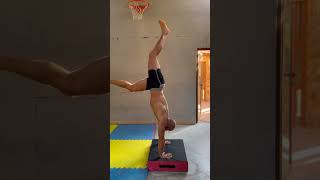
A short YouTube coaching video by sociable-sophisticated teaching handstand progressions using the principle of differential learning. The instructor demonstrates drills (frog sit, detached elbows, low L‑sit, wall/scissor positions, surface‑variation and one‑hand drills) and emphasizes micro‑variations and varied surfaces to accelerate skill acquisition, improve shoulder health, and build overhead strength and body awareness for gymnastics/yoga movements.
Chapters
Get your handstand. If you're a man who goes to the gym, if you like to strength train. If you're an athlete, get your handstand. This is one of the easiest moves to do to start with, if you're relatively strong. The frog sit and then detach the elbows. Detach the elbows. Detach the knees from the elbows by pressing into the floor. Those lower handstands are easier to hold. The L sit is the lowest handstand most people can hold that most people can balance. Using the wall in this scissor position is also a really good one to use when you're first getting started with the handstand. Stay close to the wal. Just work on being able to slowly, gradually, softly touch the wall. Now I'm going to be goofing around on this one for a while because you can see I nearly put my foot through the window. You want to do this in a hallway so you can reach both sides. Being able to reach both walls and then coming back to the middle. This is a drill that I used once. I was starting to get somewhere with the handstands, but still pretty inconsistent. Really nice one. It's a more of a challenging variation than most of the ones I'm going to show you here. Once you have this handstand, you're going to have healthier shoulders. You can get into handstand push ups. You're going to have a stronger lockout position on jerks and standing presses, any of your overhead carries. You also have some extra body awareness which is going to help you for things like backflips and back handsprings and front flips. Handstand is a foundation for gymnastics, also for yoga type movements. This variation with the foot either side of the bar is a beautiful one. Very few people use it, but it's very effective. If you'd like to get your handstand faster. There's no virtue in trying to get your handstand slowly. It doesn't make any sense to use poor methods to get your handstand slowly. In new athlete, we use the best methods. We get the skills faster so they can move on to the next thing. There's still so much more to do. I don't really work on handstands anymore, but a lot of these variations, you just feel the brain tuning in, the body tuning in, and it's a. It's a beautiful feeling. These different surfaces play a huge role. I was just on the soft sponge on the previous one and then this one's harder. Different surfaces feel very different. One hand up, one hand down. Doesn't look like much, but it feels very different to have one hand on a spongy surface and one hand on the hard floor. Also them being uneven. Same with pointing down the slant a little bit here. These slight variations. Whether I stick it or not, my body is learning faster. This is the principle of differential learning. You're going to hear me speak a lot about it going forward. It's the most important concept in athletics that no one's talking about. Down the slant. This is a whole differential approach to handstands. Within each of these exercises you can also make these micro adjustments. One hand up here. This one's a huge difference. I can hardly put any weight onto the box, but that's okay. Eventually. Stick it. Get your handstand. You're not going to regret it. Use more variety in your training. Get your brain out of bed, learn much faster and enjoy life as an athlete.