MBPP EP. 604 - The ATG Mentor Keegan Smith
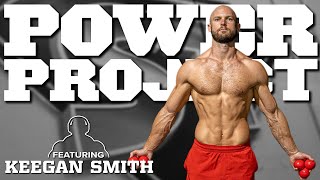
Mark Bell, Andrew Zaragoza, and Nsima Inyang talk with Keegan Smith about ATG training, mobility work like Jefferson curls and ass-to-grass lunges, and lifestyle experiments including barefoot training and sleeping on the floor.
Chapters
This man's out here doing the split. The who splits.
You know, for Rosa. I didn't know what ATG stood for for a very long time.
It means to get down low, I think. Right?
Yeah. Ass to grass. I wasn't sure, though, after we had Ben Patrick on and, you know, the whole atg.
So you missed the whole episode, But I just.
It just didn't click.
I hate that. I hate when you don't.
When you don't know.
You don't want to ask because everyone's already talking about it.
Ye.
ATG spots.
Me too. Atg. I love it. Yeah, it's great. Yeah, everyone's doing it.
Honestly, my favorite show on Netflix, ATG.
Change changed my life.
Have you guys heard of Squid Game, though?
I've heard of it. I have no idea what it is. It reminds me of.
No, I have not heard of Squid Game.
Go watch Squid Game. It's this Korean. Are we on air?
We're on now. Yeah.
Okay. It's this Korean, like, series, and it's really good.
Is it dubbed?
It subbed and dubbed. So you can. You can. You can watch the dubbed in English or you can watch the Korean subtitles. Don't want to ruin it, but let's just say, like, it's about people.
Oh.
Like, have these debts, and the way for them to pay these debts is by playing a game where if they lose the game, they die.
Oh, that's right. I. I did. I watched, like, the first 30 seconds of the first episode.
And you stopped because you.
Because I didn't know what was going on and I wasn't paying attention more.
So we should say you don't have a good attention. Spanish.
Yeah.
30 seconds, bro. Yeah, like 30 seconds. You couldn't even give it three minutes because the.
The voiceovers were really bad and Korean. I know I should. I would be more into that than the. The English.
Yeah.
You guys ever get into Game of Thrones?
I finished.
Never.
Once. The ending was horrible.
Nope.
Yeah, it wasn't very good, the ending. But there's a new. New version of it coming up. So it's, like, supposed to be, like. I don't know. Before they ever got to some of the stuff that they got to. I guess prequel.
It goes into the who the fuck with the dragon something Dragon. The. What was their last name? Not the Targaryens. It was the.
Whatever the last name. I didn't watch a lot of dragons. Every time I tried to watch some of it, there was always homosexual activity going on.
What did that turn you on or something.
Yeah. I was like, I cannot sit here with this raging boner like this.
Yeah.
Andy's like, mark, what's going on?
Yeah, it's like, oh my God.
Goodness, who bothered me when I watch my Game of Thrones?
Every time I went to watch it, I was like, is this all that happens in this show?
I think that was.
And Andy's like, no. She's like, it doesn't. And then it's like, it's like, no.
There'S great dialogue and then there's like.
A bunch of incest and stuff. And I'm like, I don't understand what's going on. So I never really got way into it, but my wife watched a lot, so I would watch it here and there with her.
That was the first show that I saw so much dude butt on tv because in a lot of other shows before that time period, I think it was like 2014, 15. Game of Thrones came up and I was like, why is a lot of dude butt? And then it just started becoming a thing where you just see dude button every episode. I'm just like, okay, well, I guess it's fair. I see a lot of female button other shows. I should see a lot of dude.
But I started seeing to movement.
Yeah, I know there's a lot of dude butts off. I go back and check it out.
That's quite a bit of dick, you know, like some dick here and there.
It's like, oh, maybe I should go back watch.
Yeah. What's great is like, now that it's all played out already, like, I don't. I can binge watch, you know, as much as I want. Like, I have to wait for the next episode.
It's going to be a hard series to be. It's a good series, but it's going to be hard to binge watch.
Are the episodes long? I'm already out. Nope.
My man. With this three minute attention span.
Yeah. Well, we got into Brooklyn Nine nine like recently and my daughter was like, oh no, it's the last, last episode or whatever. And I was like, what? Like, is there another season? She's like, yeah, there's like 806. So we finished the first season.
Is that the shit with Terry Crews?
Yeah. And Andy Samberg. That shit is hilarious.
Terry Crews is just doing some of Joel Seidman's workouts.
Yeah, right.
That's right.
Man. Terry Crews is jacked. Yes, he's fucking jacked.
Yeah. His character on Brooklyn Nine Nine is great too. He has two little daughters.
He's 50 something. We should have Terry Crews on the show.
It just keeps getting more jacked.
Yeah, I wonder. What? If he has an eight sleep mattress, he should. Yeah, maybe we can make that happen. That's how we can make the connection.
But were we talking on the air when we were mentioning how, like, with this is over October, not drinking caffe. All of our sleep has.
Why are you saying it like that? Positive.
I am being positive. It's just there was something in my throat. My sleep score was pretty freaking good these past few nights without the caffeine.
That's awesome.
Yeah. Within the.
I've been falling asleep a lot easier, so that's been helpful.
Within the. The first three days. It's pretty cool. My. My mattress sends me text messages every now and again. It'll send me notifications. And it was like, you slept like a rock. I was like, damn, I never got that. And then last night, my sleep score was 99. And that's. I've. I've gotten like, in the 90s, but never over, like, 92. And so that was pretty interesting.
Yeah, mine last night was 96%. I usually don't get anywhere like 96.
You need to get this goddamn thing to, like, rate your boners. Like, hey, man, great job.
You penetrated the mattress.
You were at a 10. You couldn't sleep on your stomach.
It'll just send you a notification. Start thinking of names. Because we are pregnant.
Oh, my God. But no, the mattress is super cool. Like, it goes all the way down to 55 degrees Fahrenheit and all the way up to, like, I think 105 degrees. But I always put it at, like, negative 10, is around where 55 degrees is. And it feels amazing. Feels great.
How that would be just like, crank it up just to, like, lay on it just to, like, a sauna, like, relax or something.
It's what. That'd be interesting. It would probably feel great. It's just.
Yeah. Nice and warm. Nice and cozy. Yeah.
In the mornings, it gets pretty warm. I have mine pretty hot to wake me up. In the morning, it gets pretty. Pretty toasty.
Are you and Stephanie's side set differently?
Yeah. Oh, absolutely.
Yeah.
She said because, you know, she holds my son a lot. So she says when her, like, shoulder or elbow is a little sore from the day, that she'll put her arm on my side because it's way colder.
Yeah.
So she feels like she's cooling, like, you know, has a ice pack on her, her arm or something.
There's nothing sweatier than A little kid and sleeping on you, like, they make you so hot. They're like just little balls of heat.
Especially him. He gets. He gets pretty sweaty. I mean, I don't know if all babies get sweaty, but, man, he runs hot.
Yeah. And just so you guys know, like, the eight sleep mattress isn't just the mattress. The technology is in the COVID So if you already have a mattress you really like, like Mark you. You have a great mattress already, you could just buy the COVID and put it over the mattress and get the benefits of the temperature. The temperature benefits of the eight sleep.
Without having to purchase the mattress makes a huge difference. I set it to be pretty cold for when I'm trying to get to sleep. And then I changed it to be a little warmer through the night. Cause I found that maybe like around midnight or so, I'm like, holy shit. I'm kind of cold, so I don't sleep. I don't have much blankets on. I'm kind of like. I don't know. I always kind of kick them off. I think I'm always getting kind of warm. How does Andy feel about that combination of not having the blanket on and like, you know, being on that cold mattress? It was a little much, so I had to just adjust it. But I adjusted it, like the first week I had it and then just left it. Ever. It's been great.
Yeah, it's been awesome. And even more awesomer is that you guys can get the. The Pod Pro mattress or mattress cover for $150 off. Just head over to 8sleep.com that's E I G H T sleep.com powerproject. And you guys will see on, like the top banner, it'll let you know that you got. You're gonna get $150 off at checkout. So no code needed. Just hit the links down in the description as well as the podcast show notes. But again, 8sleep.com powerproject.
I can see that LA being hitting you E I G H. Well, it's already.
It's already tough for me to verbally spell things, period. Like, it does not matter, let alone something with the. Ight in it. Yeah, yeah, the number eight. So, yeah, it would have been cool if it was the number eight, but it's eight spelled out. Just had to make sure people, because that's my first mistake when I went to look it up.
Eit, what's going on with our guest.
Today, Mr. Keegan Smith?
He's jacked.
Yeah. As you're saying, he is. He is a Disciple of Poliquin, he works at Ben Kapatrick. His mobility, but also strength through all these different ranges. Like, if anybody goes and looks at his page right now, literally just go look up the ATG mentor on Instagram. You'll see all the wild stuff, or they look wild, but they're actually extremely practical. But you'll see the stuff he's doing, and it's just extremely impressive, the strength and mobility that he has in all these different ranges. And that's what they do over at atg. But it's. It's going to be a really good podcast because a lot of this stuff can be very applicable to strength athletes and help them just be healthier, more mobile, more resilient, more.
So I think I was checking out some of the stuff he has on YouTube and some of what he says is very, very simple. Maybe not easy for some people to implement right off the bat, but just because it might be drastic change for some people. But when he was talking about nutrition, he just. I mean, he was speaking the way that we've been talking about on this podcast for quite some time. He predominantly eats meat. He's a huge fan of protein leveraging, which protein leveraging is just. You add so much protein to your life and to your diet that it makes it kind of harder to eat other stuff. You fill everything up with protein. And then he was like. After that, he's like. And you just pick if you think you need some energy or you earned some energy for the day, which I think is a good way of wording it. Then he's like, maybe you have some fruit, rice or potatoes and shit, man. That's the simplest form of dieting I think I've ever heard. And he's like, if you want, and if you like them, then you can throw in some vegetables. Vegetables can help fill you up. And that's a diet. And then he even talked about mixing in some days where you do a protein sparing modified fast, which is basically just in reference to going very low carbohydrate and very low fat on a particular day, just to yield a specific result. You don't want to do that for a long period of time because you can mess with your metabolism, mess with your hormones. But maybe for a day, maybe you go about 50, 60 grams of fat, keep the protein real high, try it for a day or two, and then go back to your normal, resume your normal diet. But I think that is a really good strategy for people to tighten up a bit. People that are already kind of Leaning. I think other folks that are, that are, you know, have excessive amounts of weight to lose, I don't think they have to worry about some of those kind of smaller details. But he's got great information.
Yeah. And he's like, when you look at him, like he's, he has all these ranges, but he's actually very lean and very muscular. Like, you know, most guys aren't able to move this well. Like, if you guys look at his page, he's doing Jefferson curls with barbells and he's moving through all these ranges that a lot of people would typically say, oh, that's unsafe for the back or unsafe for the spine. But as we're probably going be able to get into, we're going to be able to get into why it actually is good for you and why it can actually be something that makes you bulletproof and, you know, more resilient. Like I just mentioned, he was talking.
About some stuff I saw, I was talking about strength training and he actually is just like, ah, you know, I'm just going to show it to you. And he just starts doing pull ups. He's doing pull ups at his house. He's got some weight around his waist. I don't know, he speaks in a different language because he's talking about kilograms. So I don't know how much weight he had around his waist, but he had, he had a significant amount of weight around his waist and he just performed 10 sets of two. While he's talking to the camera, he's going back and forth and he's talking about how he wants to encourage people to strength train and stuff. But I just thought it was so interesting because I'm like, this is the simplest workout. He's just doing every minute on the minute. He's doing two pull ups. And I'm just thinking like, who can't follow something like that? Okay, maybe pull ups are tough for some people, but maybe there's a way to scale them. Maybe use a band or whatever way you got to do them. You figure out how to do them. But I was also just thinking like, shit, man, you could do this with push ups. You can do this with body weight squats. You can do this with really any exercise you can think of. And that could be your workout for the day. That's plenty of work for the day. I think for some reason we have it like attached in our head, in our brain forever that we have to have these workouts where we do like 20 sets for like one body part. And that might Be cool to do here and there. But what kind of toll does that have on you? And what, where does that place you the next day? How much energy does that pull from you the next day? Anyone who's ever been competitive and actually competed, you know that, like, it's not a great idea to do a whole lot of stuff the next day after a competition. And it's like, why? It's because, well, it's because you fucking blew yourself out. You know, you went after it with everything you had and your training shouldn't really look like that. I know it's exciting to get in there and train and you feel like you need to go 110%. But 110% leaves you the next day with less percentage to put into stuff. And that will happen over time and it will start to maybe negatively impact your sleep, maybe negative impact your hormones. And then you're just perpetually kind of working against yourself. You could be in a kind of a growth phase, but you're not allowing your body to even do it because you're just constantly killing yourself.
It's the bodybuilding side of things though, you know, when it comes to training, whatever people think about bodybuilding, they think about, let's do as many sets for these body parts as we can. Let's kill it so we can grow. And short term that might feel good, but long term you got to be careful with what you do there, you know. And I think that a lot of the stuff that we're going to be talking about here, no matter if you're doing bodybuilding or if you're doing powerlifting, a lot of these movements or a lot of these concepts as far as like short range and long range strength, these things can be easily, without messing up any type of program you're doing, they can be added to any type of program to bring your body benefit. That's the thing. It's not like this is a whole different style of training training that's going to overhaul your powerlifting goals or your bodybuilding goals or whatever goals you have. If anything, it's just going to amplify what you're currently doing and allow you to, you know, allow you to do whatever you're doing for a longer period of time because your body will be more resilient.
Normally I would. So yesterday I did some squats and then when I was done with my squats, normally I would, I would think, okay, leg press or stiff leg deadlifts, leg curl, maybe glute, ham raise, you know, but instead of doing any of that. All I did was I did my squats, probably did like six sets of squats, had a pretty good workout in, dragged the sled forward and backward a couple times. And I did, I did some shoulders. And the reason why I think that way nowadays is because this morning I got up super early and I got in a walk run. I probably ran further today than I ever have before. So it's like if I. If I want to still put up points on the scoreboard in other areas of my life, if I just go and crush myself on this, you know, on just legs, well, my legs would be sore right now. They'd be sore for tomorrow. I would probably talk myself out of running. I'd be like, oh, dude, you need. You should just. You should probably cool it because your legs are pretty. Are pretty damn sore. You know, wait till they're recovered a little bit more to run. But because I'm just like, let me spread the fatigue out more, but let me get in a similar amount of work, but maybe over a little bit longer period of time, I'm able to get the work in that I want and able to kind of satisfy multiple things that I want to do.
Yeah, I think one thing that I was thinking about too, along with like, honestly doing a little bit, having the workouts be a little bit more minimal, is the ability to do body weight work. Body weight work. I think I've noticed this, like a few years ago when I was trying to do some dips and I was trying to do things like L sits, I'm like, why? How can I be so strong with these other movements? But, you know, doing some dips or trying to do an L sit on my hands or these body weight movements are kind of difficult. You would think that with this level of strength, I would be able to move around my body in a better way, But I suck at this.
Right?
And you'll see on his page, like, he can move some weight, but he has a lot of body control. And I think that's something that can be super beneficial because, I mean, as you get older, you're not walking around life holding weights. You're walking around with your body. And the more control and the more, yeah, the more control you have over your body, the less prone to just random injuries. You're going to be like, let's say you fall and you have to put your hand on the ground and stop yourself from falling. But if you lack shoulder health and shoulder mobility and strength and you fall like that, you could yourself up A lot of people do that. So a lot of the stuff we're probably going to talk about here is going to be really beneficial, not for just like, younger athletes, but older individuals, too.
Even with our. Even with Trevor, who was on the show yesterday talking about that accident he had on the stairs. Yeah, I don't know what kind of shape he was in at that particular time, but, you know, you're a big jacked bodybuilder walking around with lots of muscle. You slip on the stairs. If that happens to, you know, if that happens to Hannah, she's gonna. She's gonna be fine. Like, maybe she hits her head or something. Like, maybe she gets. Maybe she's like, fuck, man, I got really jacked up from falling down the stairs. I got bruises everywhere. But she's not gonna have a, you know, fractured leg, you know, and so, you know, trying to maintain some of these different attributes and. And, you know, we all. We love bodybuilding, we love powerlifting, we love the discipline of it. But if you're not really competitive in it, maybe it makes some sense to do some other things. And I would even say even if you are competitive in it, it makes some sense to take some breaks so that you're not so stuck together you're not only able to squat, bench and deadlift.
Absolutely. Even myself, man, Like, I started doing a lot of this stuff February of this year, you know, doing things like laying extensions. I wasn't able to leg extension 20 or 30 pounds, and now I could do the stack. My knees feel better than they've ever felt. My joints feel better than they've ever felt. And I've been doing jiu jitsu for, like, almost six years. But right. Right now, I feel resilient. My body feels bulletproof for the most part, you know, and even, like, when CT was here and I did that deadlift, I did a little, you know, little pop pop, you know, healed pretty quick. Like, took three or four days of some quick rehab and I was. I was good to go. So I think even my recovery, just because I move better, my recovery is just much better too.
Tissues are staying healthier. Yeah. I think, like, one of the key things there is just like, that's just knowledge, you know, you. You only know what you know, you know, and so you weren't implementing some of those things previously because you just weren't aware of them quite yet. Yeah, or maybe they weren't, you know, told to you by the right person. Like, particular influences matter a lot. We've been following what Ben Patrick is doing and the movement that he has going on. And it seems like he's slowly taken over the world, which is awesome and amazing, but sometimes without a strong influence, sometimes we hear something from somebody and we're like, man, it doesn't hit you that strongly until you kind of start to hear it from multiple people. Then you're like, maybe there. Fuck, man. Maybe there is something to that. Why am I so stubborn? Why didn't I listen to that advice? Because maybe that's. Maybe that's something that I should do. And, you know, like, deep down, you always. You always know, like, you always know, like, I should be messing with that.
Absolutely. It's also because we had that conversation with Joel Seidman, so I'm gonna see if I can channel Joel's mind and get some of those questions answered, too, because he, you know, he said some things about working in those ranges and getting injured later. So I'm interested to see what Keegan says about that.
And I think Keegan wants you to.
Like, stay here the whole time.
Yeah. What's gonna be like that?
Oh, man.
Oh.
Oh, there we go. That's the perfect angle. Just. Yep, there we go. Yeah, just totally natural.
He's current. He's joining right now. I don't know. It's taking a hot minute.
There we go.
Well, he's like, where the hell is he?
Where's he from?
I don't know.
Australia, I think. Lean into it. There we go.
Yeah, you gotta get your head far away from your arms.
Huh?
You gotta. You gotta put your head, like, really far away from your arm. So, like, towards. Like, the back. Towards the back, yeah. So that way it gets trapped inside.
This hoodie for the whole show.
Apologies, y'. All. I had some technical difficulties there.
Oh, not a problem at all. What do you think's going on, man?
What.
What is like, you know, years ago, people were into people being big and people being jacked and people being strong. Now, all of a sudden, people are excited about people moving better.
What do you.
What do you think's. You know, that would be considered some real fairy stuff back in the day. People would be like, dude, I don't care how low you can squat. I care how much you can squat. What do you think the obsession is nowadays with people moving better rather than just lifting more weight?
Yeah, it's a good question. I think it's probably a better question the other way. You know, how did people lose track of actually wanting to move well and just wanting to see how much weight they could put on this thing and shift it around. You know, I think it's kind of the default should be, how do we human? And then the secondary should be, you know, how do we compete in this other strength sport? Or, you know, I think that's the fundamental thing with sort of ATG is like, we're coming at it from the angle of, like, how do we enhance what the body's already meant to be able to do rather than, you know, do some other thing for the sake of winning a medal? I think that's the difference in the angle. And it can be quite addictive. I think once. Once you get to it. I think you guys have experienced it as well, to some extent. You know, once you start to get that feeling of, okay, yeah, I can get out of the car a little bit easier, and, you know, things don't hurt as much, and that can be quite addictive as well.
I get it. It makes a lot of sense. So, like, ass to grass in comparison to, like, carnivore. Neither one of those things is new. Like, we've always had human movement. People have forever been on diets that are primarily meat. And these are kind of like things that are callings back to the way that we probably are meant to be, maybe.
100%. I think that's a good lens to look at most things through. You know, what. What did our ancestors do? How has nature designed us to be? What do children do instinctively? You know, do they go for the meat or do they want to eat that broccoli? You know, those kind of things can be a good. Especially in this information age where there's, you know, all these wars about everything in information. I think getting back to, like, what would happen in nature? What do we do as kids? What did our ancestors really value? I think that lens can sometimes be a little bit less confusing, more reliable than kind of the. What's the latest research, which, you know, you can always pit those scientists against each other, and they tear each other to shreds. Right?
Yeah. You know, Keegan, before we get even deeper into this, I want to first kind of understand, because you meant. You mentioned, like, you know, what we used to do. So with you and the way you live and even the way your kids live, how.
What.
What do you do differently from other people? Like, for example, I don't stand. I mean, I don't sit much anymore. Because when you think of a lot of athletes, like, maybe they're. They have a desk job, and then they have to go try to perform in a gym or on A field and they need to like, warm up and stretch and do all these things where typically they wouldn't need to if they just did a few different things as far as their lifestyle is concerned. So what is. What does your lifestyle look like outside of the gym and first. So we can kind of understand some of that.
Yeah, I think whenever you stand with the majority, it's time to analyze your position. It's like a. Is a good quote. I don't know whose words they are, but it's a. It's a good line. And yeah, I mean, most things I've probably tried to do in a different way at some stage. And like you guys, I like to experiment with things. So, I mean, I've done things like sleeping on the floor. I've done long fasts, I've done the, you know, the barefoot set of shoes and, you know, spend a lot of time walking on stones. I'm a huge fan of, you know, getting full body sun. You know, in Australia, there's a huge sun phobic movement. Everybody wants to, you know, get out of the sun and avoid skin cancer, which obviously we don't want skin cancer. But the solution might not be avoiding the sun always. So. Yeah, I mean, most things, when you analyze them, you probably. I mean, personally, I end up doing something different to what the mainstream kind of approach is. Sometimes I do stupid things that I then realize, yeah, you know, that's. That's actually not the path or, you know, it's a different, but it's bad different. So I'm a huge fan of getting that personal experience. And then you can really speak with moral authority or at least like, be true to yourself maybe, like, maybe you don't have authority to others when you do that crazy stuff. At least you know, for yourself that, yeah, this is what I've experienced. This is real to me.
Tell us about sleeping on the floor. That's pretty fascinating. Did that work out at all for you or what's the deal with it?
Yeah, I quite like it. Katie Bauman, Move youe DNA. I don't know if you guys have come across her work, but it's probably my favorite book in the like, movement realm. She's. Yeah, she breaks it down in lots of different things. Like she talks about the squat in relation to like the pelvic floor and yeah, sleeping on a hard surface, walking on stones and bare feet. And it really. Some of the concepts I was onto. But I think she does an amazing job of kind of breaking it down. And yeah, if you look at it from like a carnivore perspective. The bed wasn't that fluffy back in the day. So if you can't sleep on something that's relatively hard, then maybe there's something wrong with you. And at least it's worth questioning, right? Like why is it that I can't get comfortable on a hard floor? And then, yeah, your body is going to adapt to that surface all through the night. So you can think of it in some way like the foam roller and things where by having pressure on an area then you kind of desensitize it to an extent. So maybe people become hypersensitive to pain and being poked at, prodded, because they don't have that hard pressure on their body that we've had from a historical perspective for like eight hours a day. It's not an insignificant thing, the surface that you sleep on. And if you take it to the extreme of those super soft beds, I don't know what your experiences are with that. But my back kills me if I sleep on a really soft bed. So, I mean, you learn a lot at the extremes as well. Again, this is like a good lens of testing stuff like what happens at this extreme, what happens at that extreme. Then decide where you want to fit in the continuum.
Sleeping on the floor, not too bad on the floor is another.
Yeah, I was thinking, like, I was thinking the same thing.
I mean, your shit's gonna hurt.
Yeah, yeah.
Oh my God. I want to start here then. Because you kind of talked about the feet and the rocks underneath the feet. I saw that you've been doing a lot of stuff, the feet on your page and so has Ben and we even like, we have some like these vivo the, the barefoot shoes. Right. So what, like how can people start there to fix their feet? Because I've noticed as I've started like working more on my feet and paying attention to that over the past few years. Not. I mean, a lot of people have weird, like weird weak up feet and that can mess with a lot of upstream stuff. So what are some things that people can start doing to kind of fix some of those issues? And why should they even think about that? Because most people, like you mentioned it, they're like, I don't care, I want to wear my Nikes. Or like, it doesn't really matter. But why does it matter?
Yeah, I think it's cool to have some Nikes and you know, wear whatever you want to wear sometimes. And then you should also consider what did your ancestors do? Or what do you want out of your Feet, you know, what are the best athletes? What are they capable with their feet? I think, you know, those kind of lenses, if you can build more strength in the feet and make them, you know, able to, like, sprinting, bare feet or walking across, like, really rugged terrain, especially, like, stones are good because they don't cut and that sort of thing, then that shows another level of sort of foot ability and adaptability. There's so many little bones in the feet, and if they. They're not getting moved around as they could, would. Should have in another time. If they're not strong, then you can leak force. I think a lot of issues that come, you know, at the knee and at the hip because people just aren't walking properly. And yeah, it's. It's a good feeling. I think you can really notice it. Like, most people will. I don't hear people going back to wearing normal shoes. That's another good way to test this stuff, right? Like, I haven't heard someone say, like, yeah, I did barefoot for like, two years, or, you know, I was wearing minimalist shoes for two years, and now I wear these big fluffy things because it's just way better. I haven't heard anyone that say that. I have heard people say when I first went to these hard shoes or I first tried to run barefoot, that I blew up my Achilles or I blew up the bones in my feet. Like, it can be a rough ride. Like, but that also tells us that there's adaptation going to happen here, and that's probably the path to actually being robust.
I've had some mobility issues over the years, you know, from years of powerlifting and, like, I guess maybe just not paying attention to some of the things that you're talking about. And I tried to keep things in what I would consider to be full range of motion. But I've seen on some of your videos you're trying to intentionally take things to an extreme. And when I was, like, learning how to lift and stuff, people would consider that an extreme. Like, they would say, don't move in those range of motions. So I was always kind of shy to move into some of those range of motions. You know, doing something like dumbbell flies or, or movements like that, you would keep them a little tighter so that you wouldn't tweak anything. And then again, again, we kind of go back to the same principle. You can use more weight. You know, you could use more weight. Maybe you can feel the muscles differently or maybe you can argue better, and so you stay in this kind of shorter range. Of motion. What are some things that you've learned by really trying to have people kind of open up even with weight on some of these movements, like the ATG lunge or some of the other movements that you're employing?
Yeah, I mean, I'd love to hear how it's been for you guys. Like, what are you. What do you notice instinctively in your bodies as you've been testing this stuff out? Like, is it. Is it. Is it a bad sensation or is there something inherently like, this is rewarding?
I think an. I think an interesting thing is for me, I don't move into, like, deep ranges uncomfortably. It used to be that, like, if I had too deep knee flexion or elbow flexion or like, my shoulder was in this, In a weird position in jiu jitsu, I'd like, I wouldn't want to get that deep into those positions, but I can comfortably move into deep positions without wincing or without feeling any type of, like, discomfort and move in and out of them with strength. It's like, I'm not passively getting into a really deep squat. I'm able to get there actively and move out of it actively. And as far as it. As far as that, transferring to athletics, as far as jiu jitsu, like, that's extremely important because being twisted around like a pretzel all the fucking time and need to be able to move well in that way. So it makes a very big difference for me.
For me, I just. I'm just tight, you know, so certain things are just. I don't have the same access to, you know, maybe all the movement that somebody else might have. Kind of tight hips, tight shoulders. I can move pretty good on some stuff, and I can still lift pretty well and things of that nature, but especially through my upper body and like, my, like, thoracic spine, like, that area is really. It's just sort of like, stuck, you know. But I spent 10 years trying to make it stuck so that it was real rigid, so it didn't move when I would do a squat.
Yeah, there's some cost, right? Like, there's some price to pay for becoming world class in powerlifting. And like, that's a cool endeavor. And if you want to do that, like, full respect. Not everybody, you know, needs to or wants to go down that path. And I think it's interesting to consider whether you actually need to take it as far with specializing in what your body can and can't do. Like, if you see Stephanie Cohen, like, she can do the sissy squats, like, really well, where probably a lot of world class males maybe don't have that, that same comfort. So, you know, that's. Yeah, I think it's, it's going to be interesting to see how this stuff does impact that because I know one of the guys Ben worked with got his first thousand pound squat, you know, for example, like when he, after he was doing some split squats and then he didn't have pain in his knee. So it's not like everyone's going to score a thousand pounds when they do split squats. Like I'm definitely not, that's not the message. But if you can have less pain and you have less inhibition to the muscle, then it kind of makes sense that you're going to be stronger. So like that those feedback loops are really important and people are working really hard to build strength on top of dysfunction where there is inhibition because it hurts and everything hurts all the time. And so you have to like smash out, you know, you have to go really hard with stimulants or whatever you're doing to get yourself going where if there was no pain, you would just have better firing of the muscles because you don't have those inhibition loops. So it's an, you know, it's an interesting thing of. Yeah, like how much can we regain without losing that specialist ability? I think is an interesting question that, you know, you guys are going to solve like powerlifters are going to solve that in that, you know, where that all fits together. You do see some guys who have the big archery powerlifting though, who do have super mobile thoracic spine, especially in the female side. So there's a possibility of still having a super big bench with that stiffness in the upper back. But I think we need, I guess what I'm trying to do is encourage looking at things from a fresh perspective and encouraging new language around some of this. If we look at it from the perspective of we don't care what your, how your muscle reacts to this, we care about how your joint reacts to this. So it's not how much weight you can lift, it's how your joint is going to adapt to this movement or at least be looking at both at the same time. And then that gives us the opportunity to say, okay, yeah, well strength wise, Mark can handle, you know, 20 kilo flies like he's crazy strong. He's keeping his elbows. He only can, you know, if he goes, whatever he's handling these big weights. But if we decide to take it into the full range of motion, 2 kilos is appropriate for now because while the muscle could handle it, the joint is going to flare up and you're going to get issues with the return cuff, issues with the surface of the joint. And this is also like a key concept to consider with the knees over toes is like maybe the muscle can handle it, like maybe you're strong enough to do it, but that doesn't give you the right to do it, especially to a maximum weight. Because if your joint is not adapting to, to it, or if your joint is like getting flared up on it, but it doesn't matter that you can actually complete the movement muscle wise, you don't have the readiness to do it. So you're going to get some pain in the joint, you're going to get some, you know, some swelling in there, you're going to stretch the, you know, even the acl. I think people are putting too much pressure sometimes on the ACL because they want to do these heavy step ups and whatnot. And the muscle can handle it because they're super strong. But how, how many times is that ACL actually being loaded into this movement? You're basically repeating the mechanism of snapping the ACL under load. So you're just doing it in a slow, controlled way with weight so you can control that and get adaptation. And eventually maybe you end up being able to do what Ben can do, which is a lot of people's vision is to get to that point. But we need to look at it from those two perspectives, I think. And if we look at it in that way, then we don't have any bad exercises anymore. We just have exercises where, okay, the joint's not ready for that. And so I can't, even though the muscle can handle it, I'm going to tear the joints to shreds versus the alternative.
I'm really happy that you talked about that because when I started doing this stuff, I had to start from the freaking shittiest regressions. I was kind of pissed on myself because when I was doing some step ups, I wasn't stepping up or down on anything. I was just going on the floor and starting there because my knees couldn't handle it. But it progressed slowly and that's why my knees were able to get to where they are now. But whenever I talk about any of these movements or I put any of these movements up, people are still saying, and people are still wondering that can't be safe for your knees, or that can't be safe for your elbows, or moving through those ranges of motion that's gonna Cause a lot of problems. Right. Can you talk to us about why a lot of these movements that are into these deep ranges of motion, why they're actually beneficial over time? Because. And we can talk more about this too. When we had Joel Seidman on, I don't know if you saw any of that episode. And I want to kind of preface this and say I think Joel Sleeman is doing a lot of things that, that's pretty cool and pretty beneficial for his athletes because maybe for those athletes, going into those ranges isn't the best thing for them at that point in time. So limiting that range of motion could be beneficial. Okay, so I want to, I want to preface that. But he even mentioned like, you know, over time, working in these deep ranges might actually bite you in the ass. You know that that's what he said. Right. And we had a back and forth on that. But I want to, I want to get an understanding why is this actually better for you in the long run?
Yeah, I'm so happy that that conversation is being had. You know, I'm not here to fight against, you know, anyone else's perspective or the way they train. I think there is a lot of intelligent stuff in what Joel's doing. And obviously athletes don't go to people who they're not getting results from. Like, they go for a little while because of the hype or because of whatever, but they're not going to keep going back. And he's been doing it for long enough that there is something there that works. Now it's kind of the opposite of what I do and what I talk about and what I used with professional athletes that I've worked with. But that doesn't make it wrong. And I love the way you're describing that of like, there are components of this that could be very. That are very beneficial. Like, I'm a huge fan of partial movements. Like, I think that Louis Simmons, taking that to the extreme and powerlifting, like building on the old time knowledge and doing it with bands and chains is just, you know, a next, next level genius. And it's had such a huge flow on effect to, especially to athletes. Like, I can, I can see the argument against that stuff for powerlifting because of specificity, but for athletes it's phenomenal because it's about physics, it's about force, it's about tension. And it just makes so much sense to come at it from that. The angle of, you know, accommodating resistance. And so partial repetitions are part of that same conversation. You can't have accommodating resistance. Being really smart and partial repetitions being super dumb. Um, and there's a lot of partials in atg, especially on the knee side. So. Yeah, I mean, the full range stuff, it doesn't actually necessarily. It's not, it doesn't even work like strength training. Like, it doesn't have to be considered like strength training. You don't have to do it for the muscle, you can do it for the joint. And if you do through it, if you do it through that lens, then you don't have to max it out. It doesn't have to be like, you know, you're bursting through your, through your left eye with the spleen coming through the left eye, as Charles Poliquin used to talk about for strength training. Like, it's not that. And I think if we can separate it, that's why I think the language is really important of like, is this a joint dominant exercise for you? Or is this like short range, long range, extreme long range? Like, this vocabulary probably doesn't mean anything to half your listeners, but just that concept of, okay, like, is the joint the limiting factor here? Like, it's fairly intuitive to work out. Okay, yeah, I think the joint is the limiting factor in my, in my step ups or in my Flyers. And so let's work from the joint perspective. And I think most coaches don't have that terminology. I definitely didn't have it through most of my coaching career. Like, I've a lot of the things that I was doing with pro rugby teams, I would look at them differently, you know, now and that that's a good thing. Like, if you can't tell yourself five years ago that you got all this stuff wrong, then you wasted five years. Right? So, yeah, the extreme long range stuff, over the long run, it makes you more childlike, it makes you more resilient. If you look at weightlifters, if you look at, you know, gymnasts, there are a lot of examples, like ballerinas. And I think there's a lot to be learned from.
I gotta stop you there for a second because weightlifters and gymnastics people are pretty ruined. Like, they can't, they can't even do their sport for very long. Like Olympic lifting is a great example. People are in and out of that sport pretty quick.
That's a good point. And it definitely can shred you if you, Depending on how you do it, you will also see some of those guys who are in their 70s, 60s, 70s, and they're still able to jump, you know, so the devil's in the details. You train six days a week and you're not on a great diet, you're on a bunch of anabolics and you have to get to the Olympics or you don't get to eat, then that's a whole different circumstance compared to someone who's using those movements in a different way. I think the research on the knee health of weightlifters is generally that they're getting positive adaptations in terms of, like, thick cartilage and healthy knees. I love that podcast. I don't know if you guys ever caught the jersey. Someone who was on the Tim Ferriss podcast and he was talking about taking a guy when he was 60, and by the. And he was at 60, he was, like, messed up, broken. And by 70, he had, like, a good snatch and he was. Yeah. So if you take 10 years and just focus on movement quality, that guy at 70. If you can snatch at 70, regardless of the weight, like, you're. You're doing pretty well. And I, I think that's, again, just like how you use the tool makes a big difference. So, yeah, at the, at the top level with weightlifting and gymnastics, you're right. Like, it's. It's gonna shred some people. But, yeah, I think the.
Well, having the ability. Having the ability to do those things is a wonderful thing. I think you hit the nail on the head by saying movement quality, and I think that that may be something that might be compromised when somebody's maybe pushing to levels that their body's not really quite used to. And maybe that's why we see it. We see it with power lifters, crossfitters, we see it in all, all aspects of athletics. Whenever somebody's pushing the envelope and they're pushing maybe a little above and beyond what their body can really handle, they're going to fall apart. But if they start to gain access to what you're talking about, they start to gain access to being able to have better quality movements. Who knows how long they could do it. Maybe that person can end up being like a Tom Brady playing in the NFL for 22 years and still cranking.
Yeah. And that's also one of the things that Joel was mentioning. He was like, he was talking about how, like, oh, you see what some of these athletes do over time, and they're going to end up messing up their knees. But the big thing that we were talking about, it's like the dosage of this stuff, if you can take some concepts of what they're doing in weightlifting and gymnastics and add that in, in a reasonable way into somebody's program. They're not doing this every single day, but they're doing some of these movements at not a crazy high percentage in terms of intensity every fucking day. This can be something that actually helps them be more resilient over time. But if you're, you're a weightlifter and you're doing those movements at max intensity or close to max intensity, year after year after year, that will degrade you. Just like any pro. Like a lot of pro athletes, even fucking basketball players, they end up being beat up. And basketball, if you're playing basketball twice a week, you'll be fine, right?
Yeah. Even looking at it through the lens of what did they do with soldiers? Like, soldiers is a high stakes game. How do you prepare armies? And if you look back at the research, especially the guys who've broken down even the ancient Greek stuff that's being translated. There was a guy in ATG for coaches actually gave a lecture on a couple days ago breaking down that history. He's a historian, he's written a couple of books. It's just phenomenal to hear his perspective. And he was basically saying all the ATG stuff was there. We think it goes back all the way to the ancient Greeks. They were doing it with the soldiers. So these guys, it was the system. Henry someone was the system. And Henry Lind or something like this is Swedish guy. And it actually became the foundation for the German and British soldiers. And they were using these deep knee bend positions. And if you look back at the old strength stuff, you'll see the deep knee bend in there everywhere. If you look at George Hackenschmidt, it's all there. It's quite a new phenomenon to say, you know, we're going to take that out. We're not going to go into the full squat position. I mean, the full squat is, is literally, you know, what you do when you don't have chairs. Like you go in and out of that position all day long. Like if you've traveled the world, you see that people sit in that position and smoke cigarettes or play cards and they'll be there for half an hour, you know, they'll have dinner in that position. Like it's not negotiable because there's no chair. I heard a story about in Africa, soldiers over in Africa. And there were, you know, these big strong guys and they were working together with the native soldiers. And the only way that they were, you know, when they would stop, the, the guys who were from There would get down in deep squat and rest up. And the guys, you know, the, the foreign soldiers weren't able to sit in the squat position, so they had to sit on the floor. The only problem was there were fire ants there, so. So they had to like try and find weird places to rest themselves or just stand there with their, you know, all day kind of thing. So obviously that position is like a very human position. It's just a question of how much load we're meant to handle in that position. Even I spent some time in the hills of Mexico and the old guys would carry like their wood up the hills, right? And so they would have the wood on their back and they would get out of a very deep squat position and then they would carry that thing up the hill. You know, I was in the mountains and. Or down the hill and the kids would sometimes have that as well. So it's knees over toes all day. Stay there like there. There's no, there's no choice about whether you're able to deep squat or whether you're able to get your knees over toes in time. I think, like, this is actually a key to rehabilitating people. And, you know, I watch what the Chinese weightlifting guys do and have some friends that have worked over there with the physios and whatnot. I don't think they actually have the understanding that you guys have now of like short range work and sled work and how to bring a joint back to health and look after them. I've seen some of the work that they do to prepare themselves so that they, you know, they don't get injured. And so. And I do really think, like, there's been something that has been lost there that can help a lot. So the guys who've got bench pain in the shoulders, bench pressing, oftentimes I think the biceps is really tight and short, and that plays a massive part in shoulder dysfunction. And we're rolling and we're getting arts and we're doing all these different things. You know, I actually saw you getting alt off Charles Poliquin, Mr. Bell. That was. Yeah, it's good stuff. But, you know, like, if, if that, if you can take some tension out of bicep, how does it impact the shoulder mechanics? Yeah, that's. Yeah, there's so much to be, to be considered and it's going to be interesting how it kind of unfolds into different fields, I think.
How much work does someone need to do that, you know, in your experience? I realize it's going to matter quite A bit, but just say like entry level. Somebody's, I don't know, just has some like jumper's knee. They got like knee tendonitis. Their knees has been bugging them for a couple years. They probably don't have a tear or something like that. How much work does someone need to put in? How much backward sled dragging do we need to do? How many times a week? What have you seen in what has been effective?
I think it's individual. I had knee pain like that kind of niggly pain for like 20 years. Osgood Schlatters. And then you know, bottom of the kneecap, top of the kneecap. And for me it probably took a while because I was probably hard headed and still trying to lift as heavy as I could all the time. And not really like listening to, to how it actually works. You know, two years ago maybe we have people say like within, you know, a week or two, that stuff that's been bugging them for years doesn't feel the same anymore. And it's, it sounds unbelievable. You might be thinking, you know, people listen like the bullshit detectors might be going nuts. But if you just flush with new fluid and just bring a lot of blood flow to an area, it's, it's crazy how quickly you can get pain relief and then once you get pain relief then you can get the muscles firing a lot harder. And yeah, I think it is individual and this is not a promise to people that are listening that it's going to disappear overnight. But we do hear those stories a lot. I really like walking backwards up the hills as well. You know, sleds are great. There's something even, you know, different about going, going backwards up hills that, that seems to be really powerful for those kind of niggly knees. What's even more interesting, I think is applying that across the whole body. I think that that logic hasn't been applied as well as it could across the whole body. You know, CT Fletcher you had on a couple of days ago, I think he understands this better than anyone with his 100 reps to get started going super light. If it's tricep push downs, then we're talking about short range. We're not stretching the muscle so there's less connective tissue activation. It's a neurological movement. It's a movement that's going to bring a lot of blood into the area without challenging the connective tissue a lot. And then later in the workout, you might be doing skull crushes or you might be doing, you know, French presses. And, and some of that stuff. So I think when we understand that logic and applied across the whole body, I've just seen a lot of people get over, you know, that niggly tricep tendon issue. The same as the, the knee. The knee issues. And it can be used at any joint, really, which is something that I wish everybody knew.
No, you know, I have a friend of mine at Jiu Jitsu Naho, he's like 6, 8. He does a lot, a lot of construction work. He's been doing taekwondo for a lot of his life and then he's been doing Jiu jitsu. And one of the big things for him is like, he couldn't get into a squat because his knees hurt too much. And he had to like skip jujitsu sessions because his knees were in pain. And the other day we were talking because we're going to have that seminar with Benny, he's like, I got to make it over there. Because he's like, now when I, when I'm working construction, I can sit in a squat and work and he doesn't feel that pain. Like, he just like, just bounced down into a squat. It's something he hasn't been able to do in years. And he's fucking 40 something years old. So that, that was, I think, five months for him. Four or five months where he has abilities now that he never used to have. He never used to have because of all the stuff he did as far as sport and the stuff that he did as far as work, you know, so this stuff can be. This stuff can be crazy for people's joints.
Yeah, it helped me pretty rapidly as well. Like by the time when Ben was here. Pretty much since the time he's left, I've been keeping in some sort of knees over toes stuff, even if it's just the backward sled dragging. And I've been like running and doing all kinds of stuff. And I did get a tweak in my knee running just because I don't know what I'm doing. I'm pretty new to it and just kind of went right back to some of the basics. Messed around on the slant board a little bit. Did some of the. I think they're like Peterson step ups. And one thing I thought was really interesting. I'd like to get your thoughts on this Ben. You know, Ben is pretty brilliant and he's just mentioned stuff in passing and you're like, oh, wait, that was actually really cool. I don't even know if he recognized that he said it, but he and I were dragging the sled backwards. We were going back and forth. You know, he's got to turn everything into, like, a race or a competition. So he's like, all right, now we're going to, you know, go a little faster. We started to go a little faster. Obviously, you start to get a crazy pump in your legs. And he said, the goal is to get such a pump that you can't hurt yourself. And I. I never heard anybody say anything like that before, but that. That one, like, stuck with me, and I'm like, holy. Like, he's really onto something with that. If you. Somebody just, you know, that's listening right now, just picture going into the gym, get a pump in your legs on something like a leg extension or leg press, and then get into your normal workout. I mean, it. It would be. I would be completely shocked if your knees actually still hurt or if your hips hurt after you got a really good quad pump going. So I think it's something for people to try. People that have elbow pain, shoulder pain. Try getting a sick pump before you start your workout. It may diminish the actual strength a tiny bit, but over time, you'll get used to it and you'll get in better condition.
Yeah, it's like short term versus long term, Right? Like, you want to be perfectly fresh for your set for the day, but then your joints hurt all the time, and, you know, you feel like you haven't really warmed up, and you're, like, tentative with the bar because you don't want to go too fast because you know it's going to hurt. You don't want to let the bar come down as fast as, you know you need to. So I think it's like long term versus short term. It's. It's so easy to get wrapped up in. Like, I need to hit my numbers for today. And I've found, actually, that you can often hit better numbers when you have, like, a longer warmup and there's just no pain there. Everything feels amazing. Like, I don't know, like, is that. Yeah. Does it. Is. Does anyone do that in the powerlifting world? I mean, the sled work, right? Like, in. In our west side, like, Louie will do the sled work before, you know, getting into the heavy lifts.
Absolutely.
Sled work.
I used to do a lot of curls before I'd bench press. I would do, like, six or eight sets of curls just to get my arms and shoulders kind of ready for the workout. Matt Winning does a lot of stuff where he does what he Just calls the winning warmup. He might do like four sets of 10 or four sets of 25 even with various weights. And he'll actually like, he'll use some periodization for that. Like week one he'll start real light with higher reps and then he'll bring the reps down and he'll just get stronger and stronger to the point where he's doing, you know, four sets of 15 to 20 reps with 100 pound dumbbells before he starts his actual workout for the day. He's a really strong guy, so for him that's not really that crazy. But it also brought up his general physical preparedness and I think still now, to this day, I think he can still bench over 500 pounds any day of the week. I mean he's just always walking around that strong.
Crazy strong. Yeah, it makes so much sense and I always look for those correlations as well. Like if you see a bunch of the strongest people in the world doing it, then the average person going to the gym probably doesn't need to be that worried about how much it's going to take away from their, you know, five by five at 100 kilos or whatever it's going to be, you know, someone like me, it I'll be looking at those people at the top and saying, you know, what are they, what are they able to get away with? And increasing that GPP is probably a really good goal anyway. If you are smoked from doing, you know, four sets of 25, then so be it. You probably don't really doesn't matter what you can lift for one. And it's probably not that impressive anyway if you don't have the of work capacity to get through that. So yeah, I think it's such an important thing for people to consider because textbook training will tell you like your A series, you have to go in fresh and just warm up, you know, and if you're doing low reps for the day, then you warm up with low reps as well. And that may be fine for some super healthy young elite athletes, but for most people most of the time probably better to, you know, take that approach that you're talking about there with the, a massive pump and just yeah, not being too concerned about what impact it has because over time it's not going to make any difference really. Anyway, if you're, you know, if it's a common thread and then you go into your competition fresh like the chances that you're actually losing something are very, very minimal.
Can we talk about Maybe just like one or two movements for each of the main joints. So for example, as far as like short range and long range for like the shoulders or the elbows or the knees. So that absolutely athletes can somewhat have a takeaway of things that maybe they can regress and progress slowly. And the big thing guys is if anything he talks about progress slowly, don't add like £50 to whatever we talk about here and go do it. You'll yourself up and you'll say it's this, it's his fault. So can you just help people like, so they can visualize kind of what movements we're talking about within short range and long range for the different joints?
Yeah, so the short range is where the connective tissue is not being stretched. There's no stretch in the muscle. All the tension is going to be just muscular. So you can't lean on the connective tissue at all. Where the long range movements you can actually lean on the connective tissue. So when you're doing RDls like the bottom it stops because you can't go any further. Like something has to snap for you to go further. So you're leaning on the connective tissue. That's what makes it a long range movement. So if there's no stretch in the end position, then it's not long range. And so for example, for the triceps, the tricep push down or even barbell tricep kickback. I'm not sure if you guys are you fan of the kickbacks with the pink dumbbells and all that in the spandex, but like the, the barbell kickback is actually you can get a massive pump and there's very little connective tissue stress with that. Now all of these movements, if you make them heavy enough, you can challenge the connective tissue like with the step ups or the sled. Like if you take a super heavy sled and you try and go flat out with it, then you can still challenge an injured knee or like damaged tendons because there's still going to be tension. Just you're not getting that double tension of already being under stretch plus the muscle contracting really hard. So yeah, if we go like barbell kickbacks for the tricep or even press downs to make it less extreme and more kind of so you won't get kicked out of the gym. And then you know, you could go for like your French presses for the, for the long range where you really get that stretch and you want to be able to get the bar or the dumbbell as Far down the back as you can. There are a lot of subtleties with this, but I think it makes you think freshly about strength training. So the French press is going to tear the muscle up a lot more. So it's going to be a lot more anabolic because you're going to cause more damage with the stretch. We know that the stretch is going to cause more bleeding to the muscle. So someone who already has high systemic inflammation, you might want to go lighter or easier on the long range stuff. You know, that person who comes to you who looks like a heart attack risk, focus on concentric, focus on short range and just go light with the long range stuff and just build their body into it so they can get into the positions. But you're not using that for hypertrophy and tearing things up. But if you really want to like grow a muscle, then the short range stuff is going to be nowhere near as effective. You can get a lot of pump, but it's not going to just shred the thing so that you bleed a lot and you get swelling after and. And all those sorts of things where. So you're going to get more of that out of the French press than you would out of the kickbacks. And that's why people shit on kickbacks. But it's just because they didn't know about short range. And so they didn't know. Okay, actually has a part to play. If you've got sore elbows, you should really know about this. And then you can actually go and gross in your triceps because you're not getting that inhibition from the pain. To try and stick with examples, I really like the lying bench curl. It can start with like a 45 degree incline curl, which Poliquin was a big fan of. Like the incline work, once you get the elbows behind the body, then you really start to lengthen the bicep. The lying bench curl. You will actually get a lot of pec minor as well, which is obviously an area that is really tight for a lot of people. So you can really tear up the biceps and lengthen those pec miners. If most. A lot of strong guys, we want to start that with like 5 kg and be like, I can curl the 20s, I can call the 25s whatever. You know, pounds conversion, it's not too complicated, 2.2. But you know, you know, you got to start with some. A lot of strong guys will have to start with the light dumbbells or they feel like the tendon is going to snap. Okay. So we have to consider it from the joint perspective or from the tendon perspective rather than the muscle perspective. And this is like the key differentiation that we need to have. So gradually work into it. If you do the short range stuff first, then everything's nice and warm, lubed up. Then when you go long, then everything will be, you know, it'll be much smoother and you won't, you know, you'll find it's a good thing to test. Like anyone can experiment with this. If you try and go in cold and do like a light long range curl where you flies and you're like, yeah, everything I feel here is connective tissue. I can't really feel the muscle. It kind of hurts. I have to be really slow with it. I'm really tentative with it. That's long range in action. Now if you go and do spider curls facing down into the incline bench and you're contracting the muscle where it feels kind of crampy, that's really a short range movement. It's going to be neurological. It's not going to be great for muscle growth, but it's going to be great for switching the muscle on by connecting the nerve to the muscle. And this is like poliquin stuff. He outlined this for the arms, but I don't think a lot of people have of really taken on board and extrapolated it for the body. If you then yeah, so you do the spider co first and then you can do that long range stuff after. And there's nothing wrong with mid range position as well. You can do like your standing bicep curl and those sorts of things. I think a lot of the mountain dog workouts, you know, he used the short, middle and long range really well. And he was one of the few coaches, I think, that seemed to have that systematically in his programs so that you get the adaptation that he wanted. I don't know every coach's programs, but like that was one where I saw like, yeah, he's, he's got this. And in Charles's arms programs, you could, you could clearly see that Ben was the first guy that I saw who nailed it for legs. And I was kind of wrestling with this concept of how does this stuff all work. Like, I know we're missing something. And then I saw what he was doing and the testimonials he was getting and the results he was getting. I was like, yeah, the world really needs to, to kind of know about this. And I mean, it's part of the reason guys like you have picked it up is because there's something There, like, there's obviously something there that isn't common knowledge or wasn't common knowledge. And you can look at it like, oh, yeah, it's just a bunch of exercises, but if it works across every joint, then it's actually like a new language, a new system. It's a better way of looking at strength training. Like, I think it's just better technology, like going from the Nokia to the iPhone. You know, people don't want to go back to that Nokia and Snake anymore. And I think that's what this is really going to do for a lot of coaches. But they just have a better vocabulary, more tools to overcome stuff faster. Where they might have been doing it instinctively before, but now it's like more systematic and clearer of like making the joint stronger, making the muscle stronger. I know. If you want more examples, like the shoulders complex, because there are a lot of different angles in the shoulder. So, like the power raise for the posterior delt. Why did Poliquin like the power raise when no one else does? Because it's long range. Because it tears up the posterior delt. And because it tears up the posterior delt, it gives you big posterior delts. And Poliquin said if you have small posterior delts, then you're. You're pretending, you know, you know, a real strength athlete. So, yeah, he had a lot of those things kind of calling everybody out made people remember stuff. It's cool.
But what is the power? The reverse flies, the power raise. What is that?
Powell with an L at the end.
Okay.
Okay.
Yeah. So laying land sideways across the bench. So this, the hardest part is going to be like quite early in the movement where it's under stretch. So that's, that's the magic of a lot of the polygon stuff where I don't think a lot of people realize why he was so pedantic about exercise selection. My feeling is that he understood like, yeah, this is an anabolic exercise. This tears up the muscle. And so therefore we're going to do external rotation stuff like this where everybody else is doing it in a range, short range, so you're not going to get any muscle growth growth. So the long range stuff causes more damage, which causes more muscle growth, which makes you a long term a much better athlete, which is why his athletes went one shit tons of Olympic gold medals. Like, he was the best bodybuilding coach, strength training he's ever seen. He put muscle on people and then they went out and kicked the little guy's butts. He got the body composition right. Even Klokov said if he knew body composition like he does after he retired, then he would have been able to go into competition. 2, 3, 4 kilos more muscle mass, 2, 3, 4 kilos less fat. And in a strength sport, that's going to make a massive difference. You see the Chinese guys now, they've got phenomenal bodybuilding physiques. And I think with this understanding of the anabolic exercises, that's one key concept. There was a lot of stuff that Charles taught around body composition too, that makes a big difference in.
Can you tell us about like increasing the central nervous system and increasing some neural drive, you know, to, to be able to lift more on a particular day. I don't know if you utilize some of those practices, but I know Charles had some like, weird that he would do sometimes before people would lift to I guess, kind of warm up their central nervous system. Do you mess around with anything like that?
The PIMs and that stuff? I never, I never got in that deep. I think that the nervous system, the biggest thing for me with the nervous system is getting things pain free. You know, if there's no pain there, then that, that is the one lesson I wish, one of the lessons, at least that I wish someone had told me, you know, 20 years ago I wanted to go to the Olympics. Everything hurt when I was a young guy, like trying to, trying to train hard and I didn't understand why. And I think that's, you know, one of the key lessons is if, if you can understand the blood flow stuff in the short range, then maybe you get out of pain and then, then you get to get stronger and then you get to get faster. But yeah, as far as the, those instant strength techniques, I'm more of a fan of like partial, partial reps and accelerated reps and eccentrics. Like, I really like warming up with that sort of stuff. Stuff. So if you make everything pain free first, then you can be really ballistic with your warm ups and kind of treat it a little bit more like a shot putter or a javelin thrower. Those guys have absolutely phenomenal bench presses and they can also explosively move something a long way, which kind of gives weight to Louis Simmons's approach to powerlifting. But if you take it away from powerlifting and say athletics and human ability to move and to be, you know, a powerful human, then you know they're coming at it from, from similar angles. So yeah, I'm, I really like the, the fast stuff in terms of switch on the cns, but you can't do that when you have the niggles or you don't want to, you just want to go nice and slow and just get to your top set, get out of there.
You know, I'm really curious, what, what kind of work did you do when you were younger? Because I look at a lot of your content, right, and you have really good body weight skill. Like I was talking to Mark or we were talking before the show and when I was younger, you know, doing things like dips, even though I, I had good strength with barbells, right. Doing things like dips would be fairly difficult for me. L sits, et cetera. Like, other than pull ups, maybe my body weight control wasn't that great. And I've been noticing as I've been getting better body weight control through deeper ranges, it's like, it's, it's affected my ability to actually move weight more effectively. So what's the potential correlation there, if any?
Yeah, I think it's a good thing to be able to control your body, move your body through space. And again, it's probably like the joint dominant stuff. Like, doesn't necessarily mean you have to be a world class gymnast. But most guys used to be able to throw some kind of a handstand. And if you asked most gym goers these days to throw some kind of a handstand, it's going to be messy. It's going to be things flying everywhere. So I mean, the Hepburn, back to the Hepburn days and the old school guys, they were pressing massive weights overhead. And I think it came with taking the press out of Olympic lifting. Right. I think that took the handstand push ups out for a lot of people. Although you will see the Chinese weightlifters doing the handstand push ups. But I didn't, I didn't have any of that real ability as a kid. Uh, I couldn't do a backflip. I didn't do any real gymnastics. I think I went like three times to classes when I was four years old and then about 20, when I was about 28, I started working with the rugby team in France. A backpack. Through most of my 20s, I was like a vagabond. Um, when I started working in strength again, I just wanted to learn and I just felt like strength training was kind of one dimensional. I was working with these rugby players and they were, they could do a lot of stuff and I like, I really can't do a lot of stuff and the more I train these weights, the less I feel like I could go and do that stuff with them. And so I just started to, to play around with it. Obviously it's, it started to pick up some momentum, I guess. YouTube and Instagram and all that stuff. So, yeah, I worked on, you know, I worked on an L sit, worked on the handstand muscle ups and, and I guess I have a bit of, you know, I like to try the new stuff. And then I was a student of Edos for a while. I went to Portal. Yeah, I went to Thailand for six days with him. The day after the team I worked with won the grand final, I flew to Thailand and yeah, had that private internship kind of deal that he did. And I went to a bunch of his workshops and he's a genius. You know, I think that his contribution to strength and, and just challenging people to look through a different lens, I, I love that and I, you know, I respect it so much what, what he's added. And again, a poloquin student, you know, who took it in a different direction. And I think it's. Yeah, I can't do any of the stuff that those guys can do. Like, I'm nowhere in that class. But yeah, I just, I watched what they were doing. I wanted to be a part of it. I wanted to, to understand it to, to an extent. And, and I did a gymnastic body stuff as well. I went to Denver and did the internship type deal with Coach Summer. I've done, yeah, I've done a lot of courses over the time. And I think that broader perspective maybe eventually gives you the opportunity to kind of link ideas together. Like, you know, you guys, you guys are pulling a lot of stuff together other people haven't brought together. And it's, yeah, it's exciting the way, you know, these, these things are evolving. I think that strength training is like in its infancy in my mind. It's like the stone Age, you know, the Wild West. Like everyone's just coming out with stuff and doing their best and then, you know, maybe 10, 20 years from now we'll have some good systems. Like if people were building bridges and skyscrapers, like we do strength training, it would be a dangerous world to live in. But the. I think we, we're making progress. I just think if we can be humble enough to think that we probably haven't got that much of it worked out yet and we could do this stuff a lot better, then we probably will. Versus like trying to be right about everything and defending because obviously I'm presenting a perspective here. But I love it when people say like, you know, you missed this and you missed that, you know, that's, that's where the good stuff happens. I mean, I don't always love it. I got an ego too, but, you know, it's. It's going in a good direction, I think.
So Real Movement is your business. And how are you, like, what. Can you maybe just explain, like, what it is, how people can gain access to learn more about the different things that you share and then also how are you working on building that up? Because we have a lot of people that listen that have businesses and they want to learn how to blow their own stuff up.
Yeah. So I actually parked Real Movement. I was working that business for seven years, and then at some point there, like, I was working with Ben and we had a bunch of his stuff, like within Real Movement and together with some other guys. And my vision is really to help great strength coaches or coaches that have really good ideas to, you know, get those ideas out. And I really love the entrepreneurial side as well, like, you know, like yourself. And I love seeing coaches make a good business. You know, like, I helped a lot of gym owners, but yeah, now basically I have the ATG for coaches, which is teaching people the ATG system together with Ben. So that's my main sort of business in the coaching side. And then I also work with people to improve their business and just, yeah, like, kind of more of the getting. Getting momentum in the rest of life is what I'm really passionate about. Like, I love seeing people open the gym, but what I like most is the guys going from a bunch of habits that they're not really proud of with, you know, gambling addictions and alcohol or drugs or, you know, sex addictions or whatever's going on. And then they face things, you know, front on and they build the business and they become smarter coaches, but they also just do less of the stuff that they're not proud of and do more of the stuff that they. They are proud of. So that's probably the part that I like most. And I hope I find more people kind of like Ben, that have something really powerful to share with the world and he's got an amazing ability to share it. But yeah, the ATG for coaches is the coach support business. And then Keegansmith blog is where I kind of have my personal stuff and more of that philosophy type stuff.
ATG for coaches is great. I'm in that. There's a lot of good information in there. I dig it a lot. I dig it a lot. So anybody who's listening, y' all should check it out. But I don't I want, I want to kind of get your opinion on this too. A lot of people still hate the Jefferson curl. And you're doing a lot. Like you're doing a lot of Jefferson curl on your page. There's this guy who's in the ATG thing. It's like Coach Tony something, I think. What's his name? I think you know who I'm talking about, right? He's. He looks like he's a Pacific Islander or something. He does heavy Jefferson curls. Anyway, I forgot his name. But what I want to know is how have you been seeing that be of benefit for your back? And because people look at that movement and they inherently think it's going to be very, very dangerous, that you're going to pull something. But how does one progress that? And why is it something that they may actually want to add to their routine?
Yeah, I think the important thing to know is that they're right. And all these movements, when people comment on your Instagram like, hey, that thing had tear me to shreds, like, they're right. Yeah, they should be cautious about it. And it will, it will tear the body to shreds. Like, if everybody goes and does heavy lying bicep curls, like, some people will snap their biceps, other people will, like, cause issues that last them for months and years. So they're right. And that's, I think, good thing to let people know, like, yeah, you know, this needs to happen gradually. So, yeah, the, the idea of being able to load the body, like bending forward is not really very abstract. Like, if you wanted to build a house out of stones, then try doing that with a, with a flat back without any tools. Like, it's not going to happen. And we, we've picked up carcasses off, you know, if we hunt and then we have to carry it, like, it's obviously a very natural movement to round back lift. If you look at strongman competitors, they all have to do it. So some power lifters do it, some don't. Some bodybuilders round back sometime. I think that's the problem with strength training is that it's been distorted by sports. So some. You can get away with it in sports to not be able to do a bunch of stuff. But in life, that situation, you know, may come up and just a question of, you know, progressive load. The body can adapt to anything if it's given the opportunity to. Personally with the Jeffersons. Yeah, like, I felt like an old man when all I did was flat back lift. Like, you feel old and you are old because, you know, the Chinese probably, like, you're as young as your spine kind of thing is a good one. When you gradually build that ability again, it's like the barefoot shoes. I don't hear anyone saying, like, I did it for a year or two. You know, I got to being able to handle, you know, a bunch of weight, and it was really comfortable. And now I don't do them because, like, I don't. I don't like it. I haven't heard a single person say that. But there's a lot of people who kind of throw stones who haven't necessarily, you know, used them for a period of time. It's fine if people don't want to use it, but it's like, if my daughter picks up a heavy kettlebell is going to be round back, you know, and I'm not scared for her. Like, it's. It's just. It's natural. So I think the trick is to take your time with it and not treat it like a muscle move. Again, it's coming back to that same concept. If you treat it like a muscle movement, like, oh, I can. I can lift 100 kilos on this, then, yeah, something might pop. You know, I really like the Zercha version with the barbell and the crook of the elbow standing on the slant board. But if you. If you try and do that tomorrow with body weight, with guys listening to this, you know, if you want to tell yourself a new, you know, a new orifice, then, you know, try that. And especially if you really want to do it, then go fast and something will break for sure. But if you build yourself the ability to do that, then you might find that you're able to lift up, you know, a heavy stone with. With no sensation in the back, you know, so it's 100% right. Like, it's right that we should avoid those movements if we're not prepared for them. And, you know, with heavy weight, with speed, it's. It's definitely, you know, but that doesn't mean that the movement is bad. It means that that thing has been deconditioned to the point where it doesn't work anymore. And, you know, you can make the choice if you want to have it back or not.
How do you think people should eat? Because I would imagine that eating is going to be a big part of this. When you're talking about performance and being able to move properly.
Calories are calorie, right? As long as you get your calories in. I want to challenge this. Someone wants to just get all their calories from, like, high fructose corn syrup for like a year and just prove that a calorie is a calorie, then, you know, I'll give them a big hefty reward. You name your price and I'll. I'll put it up. Or if you say, no, no, no, hey, we need three macronutrients, we need protein, we need fats, we need carbs. Then, okay, you know, you can have soy protein, your high fructose corn syrup, and some kind of trans fat margarine. And there you go. If a calorie is a calorie, you know, the calorie is not a calorie. If you need to change the macronutrients, by the way, because you're saying that the macronutrients, you know, are calories as long as you hit your protein. Well, hey, to me, that's like, you already kind of lost your argument. But if we're saying that as long as we've got those three macronutrients, then there we go. There's the three macronutrients, like, live away. See how that works out for you. Um, yeah, this, this one is a big one because it's literally like life and death. You know, what you eat determines how well you're going to live and what you're going to die from. And so it does bother me that these ideas are out there. And people who have amazing physiques and are obviously very intelligent, they're pushing a message that is interpreted to be what I've just said. Like, you can, you can eat whatever you want as long as you get calories. Right? Or you can, you know, you can eat whatever you want as long as you get your macros right. That's generally not what they're actually saying. They're normally what they're saying is like, eat 80%, kind of pay their wish, and then eat 20%, whatever the hell you want. That's a very different thing to if it fits your macros. Like, eat anything you want that fits your macros. So, I mean, yeah, I've played around with a bunch of different diets. I tried vegetarian for nine months. I did basically a vegan diet for a little while, a few months and a lot of fasting. So I was doing keto, vegan and a bunch of fasting. Imagine how I felt. But I thought I was reversing all sorts of cancer that I didn't have and whatever. But I like to experience and experiment with these things. Like, if there's a really strong idea. There's so many books written that tell you, you know, all you need is like green veggies and, and life's going to be good. And, you know, I tested it. In my experience, it was terrible. You know, like when I did the vegetarian diet, I couldn't put on any muscle. I wasn't recovering from training. I got warts. You know, for the first time in my life, I had like warts popping up my immune system, like, really just was not good. I fell into like, yeah, more depression, like, at the end of that time because it was like, while I was traveling as well. But I end up with like chronic fatigue and just. I was just a bag of shit. So the worse you've been, I think the more you start to care about this stuff. And I don't know if you guys have always kind of been on top and healthy because I know you, you know, you play around with some of the same nutritional stuff. But I think the worse you've been then the more sensitive you are, the more authority you have in some way to sort of say, well, yeah, this really makes a huge difference. So to answer the question, I'm going all around the world here. Like, I eat a bunch of meat, fat, connective tissue stuff. Like the Paul Saladino type deal is, is really good for me. I've done full carnival for six months, like pretty much religiously. And then I've played around. Like now I still have. I've got some dairy in. I'm in Montenegro at the moment. They have like the most phenomenal dairy, like cheeses and stuff like these cream cheeses. And so far so good. Like, I'm doing well. Like, I'm not getting any skin stuff like acne on my back or anything like that where I sometimes get that if I have too much, like, milk. But yeah, so me at the moment, I'm having some cheese. I have some veggies if I want to. I'm not like, religiously against them. I have some fruit if I want to. That's where I'm at with it at the moment. So it's pretty much, you know, paleo ish, with a little bit of, you know, Neolithic comfort in there with, with, with, with some dairy. But, you know, it's not a religion for me. I'm just doing what feels best. And yeah, I can recover, I can stay lean regardless of how hard I'm. I'm training. So, you know, everybody should do what works for them. And.
So, yeah, you're not weighing, you're not weighing stuff and measuring out stuff and running around with Tupperware and things like that.
So, yeah, no, I've never, I've never counted calories like for more than a day or two. And I don't eat high meal frequency at times. I've tried to get to like, you know, the, the biggest and leanest I can be. And, and yeah, I've got to, you know, some reasonable results. Like, I was the skinniest kid. I was 65 kilos, like 140 pounds when I finished high school. And a lot of people would be like, yeah, I was around that as well. But I trained hard for like two or three years and I was like trying to bust an ass to try and catch up to my friends. Cause they were all like 10, 15 kilos heavier than me and it just wasn't doing much. Like, I had a really tough time. I was working in rugby and I weighed like 75 kilos, so like 160, 170 pounds kind of thing. I was the smallest guy in the room telling all these massive rugby players, hey, you got to do this to get big and strong and go and bash these other guys. And it's not the easiest thing. Like a lot of strength coaches actually do it tough mentally because of that, you're around these massive alpha guys and you know, a lot of, you know, I was nowhere, nowhere half the man. You know, a lot of this, all those guys are. But yeah, you know, gradually I did get some gains. And you know, I would encourage people out there who feel like they have a tough time of it to just continue to experiment, you know, put the time in. I, you know, if you can build up your tolerance to training volume, people say it's 90% diet. Those people are either already bodybuilders or they're stupid. Like, if you're training a bunch, then yeah, it's, it's, it's diet, right? Like, if everybody's training at a super high level for a competitive body computer competition, then the point of difference is diet. And if they can restrict calories and whatnot to come on stage, like in an unphysiological state, like in a state that a human would never naturally really be in potentially. But for everybody else, you know, the training demand is going to drive the physique. And I think CrossFit is a good example of that. Like when people handle a ton of training volume, then you can kind of eat whatever you want pretty shitty and have a pretty good physique. Like the training volume is, I think the biggest factor. And if you build your tolerance to training volume and you're consistent with it and yeah, you want to get stronger, but I think I was put way too much emphasis on the 1 to 5 rep range, which caused a lot of joint, you know, challenges as well. If you just build your tolerance to volume and gradually get stronger and eat like a human, something along the lines of what I've been talking about, then, you know, guys will end up maybe, maybe not looking quite like you two, but, you know, maybe something like me. I consider myself to have pretty, pretty average, poor genetics. Like, no one's really big and buff in my family and I don't consider myself to be either. But I know that sometimes guys can get downhearted about the rate of gains and you know, feeling, feeling skinny and like you're not getting anywhere is. It's not a nice feeling. I think most of us kind of start that way to some degree. And I'd like to give anyone who feels like that, you know, some, some clarity and hope that you can definitely transform yourself. I looked at taking steroids when I was in my 20s because I just thought it didn't work for me. Like the Internet was coming around. I was on the T Nation forums and everybody seemed to be doing it and some of those guys looked, looked phenomenal. So I was thinking about doing it if I could have got it, like if I was living in the U.S. i probably would have done that my 20s. And I'm really glad that I, you know, never had the opportunity. It was a lot more difficult. I wasn't around, you know, people who do it. And it's not a judgment call. Like people who do it for. To win medals or because they just want to be crazy jacked, that's fine. But a lot can be achieved without it. You're not going to be, you know, the biggest guy. I won't name names who might be somewhat not natty and natty, but you're not going to be that guy probably. But. But you know, it's. I think the cool thing is just to explore your potential and know that, you know, you can, I think anyone can get to a really good point where you feel proud of your physique and that's the biggest thing, whether you do it nutty or not. Like, yeah, being on that journey is a good thing.
So things shifted for you when you were able to handle more training volume and you also increased the amount of reps that you were able to handle during workouts because some people doing 10, 15 reps is just nightmarish for them. So that shifted for you your size?
Yeah, I, I think the, the dense strength method, you know, which Ben's adopted into his program, you know, he's got to dense there. It's really like a bastardization of what a lot of CrossFitters do. It's just simplifying it and systemizing it where CrossFitters might. A lot of those programs, when I was looking at them, they were just jumping around a lot. It's like one, it was seven sets of two on the minute for one week and then eight sets of five on the minute the next week and just jumped around all over the place. With dance is like you're either doing five sets or you're doing 10 sets. It's flat loading. And so it just makes it really clean and clear in terms of progression, your volume and it takes the ego out of like how much weights on the bar because if you go too heavy, every set starts on the minute. So you can't go too heavy. Otherwise you just don't finish the set. So it's like self limiting. I think it's the best training system for the average person who goes to the gym. It came about just by looking at people going to the gym and just being on their phones and not getting results and you know, just getting distracted where if you're on the minute then you just don't get distracted. You talk a bunch of crap but then the beeps and you go do, do your set, you know. So I'm a huge fan of that just to like quantify gains. And I don't see anyone who progresses on dense strength. But you start by doing, doing 10 sets of five at 60 kilos. By the time you're doing 10 sets of five at 80 kilos, your physique looks better. Like it's, it's, it's that simple. Like I don't see that rule being broken. The problem is like we choose to go too heavy and we get, you know, we get joint issues or we don't understand the short long stuff or like the diet is way off. I think so many people find that they have the energy and the desire to train hard when they have a diet that doesn't have a bunch of chemical poisonous stuff in there. I know personally I'm pretty sensitive to that. Again, there'll be the argument of gluten doesn't matter and that sort of thing, but no one's going to argue that you can go and take a kilo of cocaine and it's not going to have an impact on your physiology. That's a plant too, right? It's processed, but so a lot of this stuff that we have with the white flower, it's super processed. I spent some time in Colombia, you know, I know what's going on. If you're going to put a kilo of cocaine in someone's digestive system, then it's going to have a serious impact on physiology. All plants come with a protection mechanism. The plant cannot run away, so it's going to have a protection mechanism. Now, I'm not saying that for everyone, that protection mechanism is going to really damage the digestive system or cause systemic inflammation. It depends on the individual, depends on the chemical. But to say that we shouldn't consider it is, is, you know, just try the, try the kilo cocaine trick and see, see how that turns out.
What's the deal with the earned carbohydrates or deserved carbs? I've heard you talk about that.
I mean, that's Charles's thing, really. I've. I don't see people doing low carb diets and not getting shredded. Like, I just, you know, don't see it. I know it's, it's a controversial one and people love to hate on, on keto. In my experience, you know, I can eat tons of fat and, you know, to satiation, never count calories, not be training that hard. And my physique stays roughly the same. If I go and start eating a bunch of grains, I get, you know, I get soft straight away. Like, I get fluffy and changes quickly. So I'm actually not really that big on carbs myself. Like, I don't do a bunch of refeeds and things like that. If I feel like a few pieces of fruit, I'll do it. But I'm not hitting like tons and tons of carbs. And I'm also not trying to be a bodybuilder. I don't really, you know, I'm not trying to gain size or anything. So for the rugby players now, yeah, that's where it comes in. Like, okay, some of these guys, they're going to be hitting the rice, you know, really hard or potatoes or some of those foods. And yeah, they can put on some, some, some serious size by having the rice cooker. And yeah, I think Stan Effending has set the benchmark with that. Like, I just love that clean approach to bodybuilding where the gut is actually looked after. That was probably the other biggest issue in team. If we cut back to, like, why I Was so. So skinny and. And. And failing. The gut, like, would just blow up, you know, Like, I'd have protein drinks, and then I'd have digestive pain, you know, I wouldn't want to eat for. You know, take a day or two for things to settle down. And all that time, like, obviously, you know, you're not eating and you're not healthy. So. Yeah, I see you giggling there. What are you. What are you thinking about, the guts?
No, no. I was looking at my boy Andrew over here because I heard you talk about your gut, and he's like, yeah, I'm just.
I'm just back here listening, just like, yep, I know you're talking about me. I know, I know. I'm just like. Like, you know, like, I like carbs.
Just.
They're my. They're my friends. They help me eat more food. But, yeah, I'm just curious.
How.
How old are you?
38.
30. Okay, so you're two years older than me. Yeah. And you're.
You're right.
Yeah. Yeah, I'm right there with you. But you're totally downplaying your physique, man. The pictures that we were just looking at, you're in phenomenal shape. So very inspiring over here on my end because, like. Like, I know I need to be dropping the carbs, but sometimes it takes somebody like you that really needs to, you know, put, like, fire under me.
Somebody a bit. Somebody a bit skinnier than those two guys that you're looking at all the time. I think that's what you're trying to say.
Well, yeah, I know. That's. That's the other hard thing, you know, I'm around these two monsters, so, you know, who. Yeah. And who barely eat. They just fast. They fast 25 hours a day. And I'm over here like, no, I gotta. I gotta get more calories in. Because I do count my calories. And, you know, they're just like, nah, you know, we don't even bother. So I'm like, all right, cool. Well, I'll figure it out someday.
Yeah, it'd be interesting, you know, what you're doing with training and the training volume side of things as well, because I find that that's probably. People don't analyze that as much as they could and push that as much as they could sometimes. And sometimes bringing back the intensity so that you can stay fresh neurally, can. Can really help to. To push that side of things. It's cool to be a monster, you know? Like, I wanted to be a monster for a long Time I was around these rugby players, like, I worked with Sonnyville Williams. I don't know if you've seen his physique. Sonnyville Williams is like 110 kilos shredded. Just, you know, the thing, the one that everybody kind of wants to be when they're 15 years old and thinking about how they're going to get their first girlfriend. You look at those guys and you think, yeah, like, I just need. I just need a few more kilos. I just need a few more kilos. I just need a few more kilos. But it never really ends where I think once you shift the goalposts a little bit and, you know, focus on some of the. Some of the range stuff, some of the athletic stuff, maybe the gymnastics, then you kind of get to be a winner as well without being bigger, which, you know, can be good for some guys. And maybe I'm being soft and giving a kind of a second prize here. But, yeah, life isn't too bad for me. I think life is better for me since I gave up on trying to get bigger and actually put on, like, three, four kilos, you know, as soon as I stopped worrying about how big I am.
Yeah, we were just talking about this how, like, I think it was either yesterday, the day before, how, like, to get bigger, you need to start focusing on your performance. You know, when you focus on your performance in the gym, moving, more training, volume, getting stronger, more volume, and you stop focusing on your body, you will get bigger. But if you're continuously just, like, focusing on your body and your body and your body, it's gonna really, really fuck some people up as far as when it comes to falling in love with their training and doing what they need to do right in the gym. See that? That's totally right.
I've definitely been fucked in the head about that stuff. Like, if I didn't get that message across, like, it definitely messed with me tough during the teenage years, early 20s. And if anybody's feeling that, hopefully the messages here today will help you to, you know, just enjoy life and, you know, it is good to make the gains and not saying, like, don't put any pressure on yourself to be better, like, that's important. We're in a time of meritocracy. Like, if you're really good at the moment, life is good. If you suck, then life is getting harder, you know, by the day. So, you know, be good and do better, but, you know, more muscle mass isn't necessarily going to get you all the girls and all the money and all the things that, you know, might have been promised. You might contradict me on that and.
Seema, but hey, guys, you like cereal? I like cereal. Let's not eat the bad stuff though. That's why we've partnered with Magic Spoon. Magic spoon has, number one amazing macro, 0 grams of sugar, 4 grams of carbs, 14 grams of protein, and 140 calories per serving. You're not getting all the icky sugar that you get from normal cereal. Magic Spoon is the way to go. That's why we love it and it fits our diet. Andrew, how can people get it?
Absolutely. You guys got to head over to magicspoon.com powerproject. You guys will see the variety pack. That's four different flavors and it's really an awesome way to kind of dip your toe into the cereal bowl. So that way you guys can figure out which flavor you like the most. And when you go there, you're actually going to receive $5 off that variety pack again. MagicSpoon.com PowerProject links to them down in the description. Let's get back to the video.
Where can people find you if they want to find out more information about you?
Probably the Instagram. The ATG Mentor is where I am most active. I've made some lectures about some of this stuff that are on YouTube as well. The ATG mentor channel on YouTube. I don't have that much stuff on there, but basically I explain a lot of these concepts that I've tried to get across today. I think they are pretty important concepts for those that are iron lovers. So, you know, make of it what you will send me. Your love or your hate, whichever way.
It's going to be all love, man. Once people see what you're able to do, it's going to be all love.
Thank you so much for your time today. Really, really appreciate it.
Yeah, massive, massive. Thank you to you guys for having me on. It's an honor to meet you and yeah, really, really appreciate the chance to have a chat. I hope to get over there someday soon.
Awesome.
Thank you. Catch you later.
Thanks for.
And this podcast is amazing. The short range and long range strength that Keegan was talking about makes a very big difference. Like for example, the bicep curls he was mentioning on the bench incline. Those, those will like, you'll feel those. You will feel those. That's why a lot of people don't do that. But I like, I like the concept of doing short range work work, then doing long range work. It makes a lot of sense. I think that could Be something that can help a lot of people out.
It makes sense. You get warmed up first, you know, you do some, like, partial range of motion squats, and then you, you know, hop on the slant board and start squatting lower. I mean, it's like, pretty basic stuff, I would imagine. You know, a track athlete that's going to sprint for the day, probably going to walk a little bit before he starts sprinting or do some drills that are very slow before they start running. That's a spider, Carol.
And he's out here talking like he's not in jack range. It's going to. I think he'll get into it. Oh, wait, no. It's just short range in this video, but, yeah, he's jacked, man.
No, he's in phenomenal shape.
Yeah.
And then was he talking about, like, lying dumbbell curls? That sounds, like, impossible. Like, you're lying down. Lying down, like he said, on a bench.
Oh, yeah. On your. You're on your back. The bench is on incline 45, and you're here. You're legit, like, right here.
Oh, you're still on an incline. I thought he was talking about, like, going flat and trying to curl so hard.
Yeah, yeah.
This dude's mobile and he's strong as. He's big, man. He's huge.
Who knew, man? Being able to move, good thing.
It's an amazing thing.
Oh, yeah, he's doing. What is he doing? Like, an overhead movement with both his hands, like in the middle of the weights or something.
Up a little higher one right there.
Oh, that looks really hard.
I don't know.
Why is it so small?
Look at that mobility. Look at that range.
That's craziness, right?
But that's the thing, man. Like, I think Stephen was talking about it, too, but when you think about a lot of these things, it's. It's. You have to dose it correctly. A lot of this stuff, like Jefferson curls, having that ability is going to be useful until the day you die. It's like, how long. How much do you load it? Are you trying to do Jefferson curls to £225? You trying to, like, continue to load that thing? I. I like the concept of what he was talking about, that you don't treat these movements like you would when trying to just, like, get bigger biceps. Bigger biceps. You're slowly increasing the load and the amount of reps you do over time with these types of movements, you'll take them to a point, and there's a point that you don't probably need to Go any further. There's a point that you now just maintain the skill to do this range safely. Right. And that's why I think those like, like Jefferson curls, atg, split squats, all these deep movements are gonna be so useful and can be so useful for people.
Yeah. I think just if you feel like you're getting forced into position because of the weight that you have on your back.
Oh, Andrew, go down. Go down.
You should work on being able to move into positions without a bunch of weight slamming you into position.
Andrew, go down. One. That one right there in the middle.
Yeah. He's folded in half.
Yeah.
Oh, nice. He's doing like a RDL type thing.
Yeah. Slant board. Slant porch. Ever since, I think.
Look at his erectors.
Oh, yeah, he's on a slant board. Huh. Makes it way crazier. Is that a Jefferson curl right there, what he's doing?
Actually, he's doing like. It looks like a Jefferson curl, but it looks like he's bring his hips back like an rdl. Like you said. Initially, it didn't look like his hips are coming back because the Jefferson curl is just. You literally just bend forward. RDL looks like he's kind of bringing his hips back and going down, too. But either way. Yeah, I love this stuff. Yep.
Yeah. Just having that mobility can really help you gain access to a lot of other things that maybe you otherwise weren't able to do. And, you know, being being a better athlete is almost always a better thing.
See, I want to be able to do that. Those are. That. Those are the things I want to be able to do. We'll get there, guys. We're all gonna make it.
Andrew, take us on out of here, buddy.
Sure thing. Thank you, everybody, for checking out today's episode. Shout out. And thank you to eight Sleep for sponsoring today's episode. Links to them down in the description as well as the podcast show notes. Please follow the podcast Ark bellspowerproject on Instagram, bpowerproject on Tik, Tick Tock and Twitter. My Instagram and Twitter is at. I am Andrew Z at theAndrewz on tick tock. And Seema's giggling over there. What's up?
The decaffeinated power project is so funny to me. I think all our voices are so. All our voices are like two octaves lower.
100. Yes. But also my voice still hasn't recovered from the Niner game over a week ago now.
Oh, you just went to a game too, right?
I did, yeah. Against Seahawks.
Oh. And what? Russell Wilson, yo. Nuts.
He's an animal. He's so good. And Metcalf got to see that close.
Oh, how tall is he?
He's massive. I think he's like 6, 4, 6 5.
He's a mutant. He's legitimately just. He just looks human.
He looks so lean, like, from a little bit of, like, further away, you know? But, I mean, as he gets closer to me, he's still lean, but he just looked huge. I was like, holy.
Yeah.
Like, what's this guy's deal? But something pretty cool happened. I'm standing kind of, you know, Andrew, like, you were able to kind of watch the game and be, like, almost, like, literally on the sideline, like, on the field. Yeah. And so the fullback for the Seahawks, he goes like, sit down. And he goes, yo, Mark.
Oh, shit.
And I, like, I look at him and he's like, slingshot. He's like, slingshot. And he's, like, motioning like a bench press thing. And then he, like, sits down, and me and my brother, like, totally laugh. I'm like, that's pretty awesome, you know?
Yeah.
That guy gets up and he goes and, like, tells the coach. I said, probably the strength coach or whatever. The strength coach is all fired up. He's like, slingshot. And then they. They scored. And when they scored, both, like, the coach came running over.
He's like, that's the slingshot.
He said, that's the power of the slingshot. We're like, oh, man, this is too great.
That's awesome.
And the people that we were with, like, they're not with, but the people that we were, like, next to, like, they're like, we don't understand, like, why are these players and coaches, like, you know, yelling at you guys or whatever? It was pretty damn cool.
That's great. NCIMA, INY on Instagram, YouTube, and Seema Yinying on TikTok and Twitter.
You're wearing a slingshot.
Slingshot.
Show us the slingshot.
Show us the slingshot. If people don't know what we're talking about, we should show.
Oh, yeah, no, fuck it.
Find it later, I guess.
Yeah. But also, I don't want to forget the knees over toes seminar.
Oh, yeah.
October 24th. Very good.
October 24th.
Yeah. There you go. At the super training gym. More info and details coming very soon.
I'm at Mark Smelly Bell. Strength is never a week. This week, this never strength. Catch you guys later.
Bye.










