My Athletic Transformation | From Chronic Fatigue to Athletic Leader
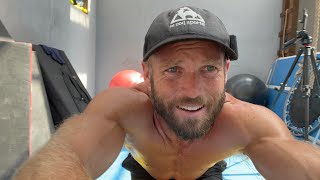
A coach shares his 30-year athletic journey from a scrawny teenager to strength roles with rugby league clubs across three continents. He cycled through vegetarian, paleo, keto, and carnivore diets, hit a 100 kg snatch, and peaked at 87 kg in France before shifting toward biomechanics and throwing work in his 40s.
Questions this video answers
65 kg at 182 cm.
Around 75 kg.
100 kg snatch, ~100 kg clean, and ~150 kg squat.
About 90 kg (typically 87–88 kg most days).
Roughly between 23 and 28 years old.
Chapters
I was an under athletic kid as soon as androgens came into the picture, testosterone, growth hormone, dhea. Once it was about being, having some muscle mass, speed and power. I went to the bottom of the pile. I'm going to share a little bit about my athletic story to put context to the things that we're talking about here to help you understand that it wasn't natural for me to be, to get to that 100 kilo snatch and all these journeys that I've been on. There's been huge shifts in limiting beliefs and huge changes in physiology to be able to achieve the things that I've achieved. And by no means are any of the things that I've achieved world records or world bests. But for me they mean a lot and they've changed me a lot. And I'm inviting you to be changed by your own transformation and I want you to reflect on your own story, I want you to share your own story, make your own video like this about your athletic journey so far so I can understand, so the other brothers can understand and whoever else needs to know what your journey's been to be where you're at right now athletically. So from my earliest memories I was very competitive and it was very much about winning in performance. We're going to talk quite a lot about how winning impacts your creativity and your ability to fully develop yourself as an athlete. Not there's a, there's a positive side to winning and being able to compete and just crush the loser and get after it and there's, there's a way that, that can be used well in life as a psychological trait and also it can drive ahead athletic performance. But there's a dark side to it as well that can take away from your performance, take away from your ability to improve and your relationships. I was on that side of in the spiral dynamic system the Claire Graves which are really recommend you have a look at. I was very strong in that red and from my earliest memories I remember competing and wanting to keep up. Had a brother that was nearly two years older than me and I chased him for my whole childhood and, and all of his friends. I was one of the best at most sports during primary school because I'd practiced more than everyone else. I was one of the captains, I was picking the teams and I loved it. I would play everything full on and it was fun and that was my little world. In primary school I was a decent cross country runner. I wasn't great in the 100 meters but I wasn't terrible So I don't think I had amazing genetics for speed, but I wasn't the weakest, slowest at that point. I remember that I just like to do the things that I thought I was going to win at. I didn't really like. I like to stay away from things that I didn't think I was going to win at. I wasn't overly into wrestling and that kind of physicality, even at that point. But then when it came to high school, then I really fell behind. I was slow compared to the other kids who'd gone through puberty and were able to produce a lot more force. And I didn't want to wrestle, I didn't want to do contact. And it was tough because I lost a lot of confidence. I knew that I was physically inferior. I was one of the youngest ones in my year, which probably put me at even more of a disadvantage. But I was also a bit of a late bloomer. So most of my friends in high school were 10, 15, 20 kilos heavier than me and lean. And I was a skinny kid. I was a small kid. And so I kind of always dreamed of having a bit more mass. Obviously influenced by popular media, I was reading bodybuilding magazines. You watch the Hollywood movies and the cartoons. I remember watching he man cartoon as a child. I quite liked he Man. I had a he man toy. So all that stuff was in the subconscious of a man is someone who looks like that, who's big and. But it wasn't happening for me. I started strength training at a little bit around 13. Probably got consistent from around 15. And I wouldn't say I was following great programs. It was a time before the Internet, but I was getting some programs and I was being relatively consistent, but I wasn't adapting very much, probably because of the lack of androgens to an extent. I wasn't really going through puberty and I wasn't. I didn't adapt that well to training. I also had overuse injuries from around 11 years old when I got into hockey. Hockey posturally, it puts a lot of pressure on your body. You're leaning forward all the time. You hunch forward and you run leaning forward. And I got an issue with my heel. The severs, I think it's called, or Sherman's. No, it's Sherman's. Severs is the back one disease. And it's. It's one of those growth plate things. And it was painful. It's like someone poking needles in the heel. It would be okay once it warmed up, but then it kept coming Back I kept getting orthotics and things and I kept just pushing through it and eventually it went away, but it was replaced by the knee tendon pain. And I remember being extremely sore as a young athlete. Looking back, I think I had allergies to gluten. I think I wasn't doing well with sugar and I was having a lot of sports drinks and that kind of stuff. So I think my physiology was a lot worse than it could have been if I knew what I know now about nutrition. Everyone was doing the best they could. The sports nutritionists and my family, my parents, we didn't. You don't know what you don't know. But I think I could have had a lot better experience of youth sport. Maybe I would have gone through puberty a bit earlier. I was in the Illawar Academy of Sport, just kind of the one of the feeders towards sort of Olympic programs and such for my region. And I remember them talking about low fat diets and making sure you're getting your carbohydrates. So I stopped eating butter and ice cream and really cut fat a lot when I was about 15. And I think, you know, that probably also delayed my puberty and maybe permanently decreased my potential muscle mass. I don't know. But I wouldn't do that with my children. I wouldn't encourage that. And I don't think it had a positive effect on my ability to adapt to training. So I finished high school at 65kg, 182cm, 65kg, which you could consider like severely underweight or significantly underweight. And I'd been strength training for three, four years. Consistently. I didn't like being 65 kilos. I didn't have confidence with girls and I really wanted to be in a different kind of body to the one that I was in. It was part of the reason that I started to drink. I didn't drink when most of my friends started getting into alcohol. But then at some point I was like, you know, what's this all about? And. And I really just wanted confidence, honestly. And so I started to drink and then I was uninhibited. And yeah, it was a lot of psychological pain and issues that pushed me to really want to dive into the booze and get that false confidence that comes at the bottom of the bottle. And so I punished myself with, with that poison, basically. But when I went to university, I started to get some more gains. I went to the university gym, I was very consistent there. I had a couple of training partners, they were much Stronger than me and I got more serious, more consistent. I started to squat, started to deadlift. I got good foundational programs. Corey Bocking gave me a program. He's now been at the Panthers doing the strength there. And he helped me get started actually in presenting strength for the first time, was the event that we did together, weekend event that he gave me a program and Jamie Turner gave me a program. He's gone on to coach a lot of international triathletes and I had programs from coaches at the Para Eels and whatnot as well. So the programs were fine. I worked pretty hard in the sessions. Like I don't remember exactly how my execution was, but I was never a lazy man and I got stronger then and I finished university around 75kg. So I put on 10kg over three and a half years of consistent training and still at 75kg shredded, still like 7kg away from maximum muscle potential at 181, 182. So it was still a pretty tough road and I still felt pretty skinny, especially since I was doing work experience at Parramatta Eels and I was working with a junior elite talent squad. That's why I ended up leaving university, quitting after three and a half years to focus on my work experience that I'd started with the Eels and being in that environment and I was working with 16, 17, 18 year olds, so 2, 3, 4 years younger than me who were my height, but 10, 15 kilos, 20 kilos heavier than me, depending on the position they were playing. So I still felt like, well, you know, I'm working hard at this stuff, I'm reading all the books, I'm being disciplined and I'm just not getting results like those around me, that this was my experience of training. But at the same time during that university phase, I started to do cleans, Olympic lifts. I remember someone suggesting, you know, you should really get into cleans. He played rugby league. It was one of the security guards at the university actually really pushed me forward with that and Corey as well. So I started to cleans with like 40 kilos and then eventually get into like 60 kilo cleans. And by the time I'd finished university I was. And I'd spent a lot of time with the in the Para gym. Maybe it wasn't quite there. I was maybe around the 80 kilo cleanse. I think it was when I went back after working at the London Broncos for a year. Around that time I had like 100 kilo clean and I was pretty fast. I had good relative power at that point. So all the work, a lot of it was for body composition, but it was also for performance. And I did go from being like the slow kid who wouldn't get picked. I was always a good regional level player, but I couldn't make the state teams in Australia. There's, there's sort of three, four main states that do well in sports. I was in one of those states and so you're kind of a quarter of the way to the Australian team if you're a good player in one of those teams. I just couldn't make those teams. I was always heartbroken each year where I put a lot of effort in and you know, I'd think that I was close and then I wouldn't make it. I was playing a key role for my team. My team was one of the top two or three teams each year at the state championships and I just kept missing out. But it was around 18, I finally got into a Youth Olympics team. I played for New South Wales in the Youth Olympics and then I made the under 21s state team and then I made the men's state team as a 20 year old. I played in the national championships in the open age. So I was kind of getting close to being on that Olympic path and I knew a bunch of players who were in the Olympic team at the time and I probably didn't realise how close I was where if I'd have being able to really pin myself to them, I probably would have gone to the Olympics, you know, by the time I was 26 or 28. Might have taken me a bit longer because I was a bit slower starting. But I made the Australian indoor team and I would credit a lot of that progression through the gym work was a huge part of it. I did also have some epiphanies around skill training and we're going to go into that as well, of how I became a more skillful player and became more creative and got out of some of that competitive stuff that I was talking about. Just it's only about winning, being a bit less fearful, which allowed me to expand my game a bit also. But the physical transformation was definitely a big part of it. I had a significant advantage. I ran one of the faster top five, I think times for the 40 meter sprint. I had a 15, 11 beep test which was the best, I think, of the non Olympic players, the guys who weren't playing for Australia. I think I was maybe the best of the rest as far as like that endurance shuttle test. And I would run myself to the absolute Death where there's a pull out when it's like, yeah, I'm a bit tired now. We're going to play a game after this. I don't want to crush myself. That wasn't my attitude. My attitude was I want to see what number I can put up here. And I think the coach who really first gave me a shot valued that intensity that I would bring to things. I think that's why he gave me a shot. I played a key role for a club in Sydney which was the best league in the state and then that helped me get into the state teams. Yeah, this is the athletic journey of how it all fits together with the strength training and the speed and adding muscle mass. Then I went traveling. So I wanted to go and see the world. I knew that I didn't know about politics and economics and history and I was very curious and I was kind of angry and I didn't want an average life. So I left Australia. Just after I missed out on the Australian under 21s team. I left Australia and bought a round the world ticket. Four months in Southeast Asia, eight months in Latin America. Let's go and see how the world works. Let's go meet some people. Didn't know really what the objective was, but I knew, I didn't know. I knew I need to go and see something, experience something different. So when I bought that ticket, I ended up getting invited to go play in Germany. A friend, I sent an email out saying, this is where I'm going the time before Facebook and Instagram, all that stuff. And I was invited. Okay, why don't you come play in Germany? They paid for a ticket, gave me apartment. So I got to play like sort of semi professionally in a way, which was always a dream, to play semi professionally in Europe. I'd written that down when I was about 12 years old. So I went and played there. Met my now wife the first time I went out partying in Germany and then I went to Latin America straight after that. So I had that time in Europe. I skipped the Southeast Asia leg, spent that four months in Europe, traveled around Europe, backpacking and stuff as well. After the hockey was done, it was just a two part season, so I played the back half. Then I went to Mexico and I had eight months to get down to Chile. But that's a story for another time. You see more about that in the future Expander and the other content. More about the life journey, travel. The point is that once I was doing that, I wasn't really focusing on travel. I Do some dips and chin ups here and there. But it wasn't a focus. My diet was terrible and you can see the worst photos of me. The one that I use is like the contrast photo was in Panama and it was only four months. Yeah, three months maybe after I'd stopped playing high level hockey and with the hockey there I was going to the gym a bit. But yeah, I think my health had already started to deteriorate or it was deteriorating further with as an adult I was consuming way more sugar and I had digestive issues and I just wanted to be heavier. So there was times where I was like doing all you can drink at Subway and just smashing as much liquid calories as I could. I read a study that was showing that carbohydrate or it didn't matter where the calories came from, carbohydrate or protein, that muscle gain or mass gain was the same. And that study wasn't good for me to see. I don't remember the nuance of it, but that's the message I took from it. And so I was smashing more carbohydrates to do that. I also remember a time where I was having jam filled donuts together with cream to just get over 80 kilos. When I was living in England. I was riding my bike to this place where I was starting the only time I ever did a little bit of personal training. I was starting to do personal training for a few weeks at this software company, private gym and on the way I would smash like jam, donuts and cream just because I wanted to be heavier. I wanted to finally weigh 80 kilos because I left university at 70 kilos and I had this number in my 75 at this number in my mind of like if I'm 80 kilos like that's, you know, at least I'm kind of a man at that point. Which relative to the rugby world it was, it was still very, very light. But yeah, so during the travel time, losing muscle, mass, health deteriorating. I went back and forth between Latin America and Australia from 23 to 28. I came back to Australia, earned some money. I always trained a little bit here and there. I still read fitness articles but it really wasn't my life at that time. I wasn't working with anyone. I didn't really see myself going back to that life. I didn't know what my life might look like. I was kind of looking for a wife and looking for a life, thinking about how I could make some money. I made money teaching English. I kind of like that. And it was sort of seemed like that might be the future. I had no idea, really. So, yeah, like, during that time, I was around 80 kilos and I went vegetarian for nine months. Within that, one of my teeth started to go black. And I just wasn't adapting to training. I was training consistently in Venezuela and I was like, this isn't working. It wasn't until I was in a village in Mexico and they'd served chicken soup and that was the food for the day. And I was like, okay, I'm having this chicken soup. And then that was the end of vegetarianism. I sort of felt that my body really needed it and stopped at that point. I got an egg allergy as well, while I was doing the vegetarian thing and I wasn't getting raw milk, so it wasn't an amazing diet. So at that time, by the end of that, I had sort of chronic fatigue symptoms. When I would train, I would get headaches. I would go and lay in bed in the dark. I wasn't adapting well to training. I think mentally. I was also fairly broken at that point. I'd had a few girlfriends and, you know, I was just alone, lonely, no purpose in life. I think that negatively impacts your health as well. Definitely does. But I needed to rebuild my health to be able to. I was thinking, I'll move back to Australia after that sort of five years on the road. And I was thinking, like, I'm going to get into personal training or something. I need to get back into that health side of things. This exploration into politics and economics and history and whatnot. It wasn't going anywhere. I was getting poorer, lonelier, sicker. I needed to change something. So when I moved back to Australia, I was thinking, okay, I'll probably get some qualifications. I started my cert three and four in fitness. I started a functional diagnostics nutrition course. And I was staying with my father. My father was the coach of the City Roosters at the time. So I was going in and training at that gym. So I was going in there and training with Trent Robinson. And yeah, I was trained on my own, the train with Trent, but I just wasn't. Yeah, I wasn't in a great place with my health and with my mind. But what it did do is when Trent got the job at the Catalan Dragons, I'd been training with him. And I jokingly said to him one day, you know, I'll go with you if you want. Once I knew that he was going to France, and I didn't really take it too seriously, I Thought it could be cool. But I. You know, I'd been. I hadn't coached anyone for five years. I hadn't really been training seriously for five years. I wasn't in a great state with my health. I'd never run a team. But then I ended up getting the job. I did a job interview for it, and I got the job, and I got my visa and whatnot and flew over to France. So here I was, after five years on the road and all this stuff. I was the head of the program to do the speed and the strength and nutrition and everything. So I had to get myself going again with my health and with my own performance. So I was training consistently. Funny story. First day I arrived in France, I went and squatted in the gym at the sort of hotel resort place that they'd given me to stay when I first arrived, and I was squatting 100 kilos. And I think it was like, the second rep, I jammed up my back. So I jammed up my back, and I was like, oh, that doesn't feel good. And then I went over and sat down, and I was like, oh, that really doesn't feel good. I was like, I think I'm gonna. I think I'm done here. I went back to the apartment, laid down, and I was just in excruciating pain. Ended up laying on the floor for the next three days, like, crawling to the toilet to go for a pee. And I was like, oh, this is. This is not ideal. I just got this. This job and this role, and I actually missed the first couple days I was meant to go in because I was. I was screwed. And I don't think I'd ever hurt my back like that at the time. So I was there, like, praying on the floor. I remember I was reading Candace Pert's Molecules of Emotion, just thinking, like, if there's anything out there, like, just help me get back to being able to walk and go to work. And, yeah, the physio came and looked at me and told me to get moving, and I didn't really. Yeah, I didn't really have too much confidence in him after that either. And so fortunately, I did go back to work, and about two weeks later, my back was fine. I was back to normal. So then I was there in France for two years, and I got to train, and it was pretty much somewhat like being a professional athlete because I was coaching professional athletes. I could train along with them. I was in a good environment then to build myself, so I finally got a little bit heavier. I Think the heaviest I ever got to was like 87 kilos. But I had buffets all the time. The team would have like team buffets at the hotel and whatnot. And my weight generally got to about 83, 84 kilos and I was in pretty good shape sometimes with that. One of my physique shots that I've sometimes used on my branding, maybe I'll add it here as well, is from that time when I was on a holiday with my now wife in the south of France. I did get to decent shape. I started getting really into the Poliquin stuff. I started taking all the Polyquin supplements, so smashing all the BCAAs and glycine and I was taking all the supplements there at one point. But I finally got to a point where I was like, people would say you're in decent shape. It took me that was about 15 years into the training journey by the time I started to get those kinds of comments. And it took a while and I started to lift some decent weights, doing some. I snatched 80 kilos. Yeah, like I got to a point where I was more proud of myself. I did a 10 by 10 squat challenge, 10 sets of 10 and doing that around 80, 90 kilos, I did it. I did 10 sessions of 10 by 10 squats. It wasn't dense at that time, but I was able to do some of these crazy hard workouts sometimes. I still had some, some health issues, some fatigue issues, but generally I was much better. I was living in the south of France in the sun, I was eating all organic food, spend all my money on being healthy. I wasn't really saving too much and wasn't making too much, but at least I was getting some momentum there. And then when I went back to the Roosters again, I got to the level was a bit higher again, they were more athletic, but I was in decent shape going in there and I was able to. When I was training the heavy players were 110 kilos. Early on I was able to go and lift their weights cold on some of the movements with cleans or snatches. So if they see this little, you know, 82, 83 kilo man lifting the weights that they're meant to be lifting or that they just missed telling me that they can't lift, then that was part of sort of helping to reset the standards within the group. So yeah, since that point I've sort of been in what I would consider decent shape. But all the way along I had tendonitis issues and whenever I would get too excited about a certain movement, I'd have tenon pain. I got used to having knee pain when I was squatting. I just accepted that if I wanted to have a decent squat I would be dealing with knee pain. I committed to snatching 100 kilos while I was at the Roosters and I got to, I did end up snatching that 100 kilos. The deal was I wasn't going to go to the Cloak of Poliquin workshop unless I snatched 100 kilos. I made that deal with myself, I told other people about it and so I snatched that 100 kilos before that workshop. And I think I got my squat up to 150 which is not very high for being able to snatch 100. So I was just getting the most out of what I had. But I had constant sort of knee pain. I was wearing the knee sleeves and sort of trying to warm my knees up. But it was in the time before ATG and time before knees over toes guy. Now I don't have any of that pain and I've squatted 150, no belt, no sleeves, without any pain. And yeah, it's a beautiful thing. That's why I felt so in love with the ATG journey. But yeah, always some tendon issues, bicep tendon, tricep tendon, front of the shoulder pain, knee tendon issues. Had hamstring tendons a few times, I had adduct tendons a few times. And I think it was because I'd had these health issues that my connective tissues just weren't as strong. Probably, probably under consumed glycine by a fair bit. I got into some other functional medicine stuff that showed that how important glycine is for detoxification. So all along the way I'm learning things, picking up, still trying to problem solve, still trying to improve my diet, find that little edge. After the vegetarian diet I got more into like the paleo type stuff. I got really into Rob Wolf and then I started to look at ketogenic diets. I started to be able to eat more meat and then I went to low protein ketogenic for a while because I was watching a lot of like cancer related stuff and the low protein keto was not so good and I did a lot of fasting. I did a seven day fast where I was still trying to do 20 rep breathing squats, seven day fast. That was really not intelligent. So I still put myself in the hole sometimes with dumb experiments. But this is how you learn and I'm glad to have had all these different experiences. When I got into Carnivore diet, I definitely felt a significant improvement again in energy, adaptive capacity. The ability to train every day was definitely higher. I was recovering better and then putting in the ATG stuff. I was able to get past a lot of the tendon issues and not so much like the ATG movements, but the fundamental concept that if I train this stuff under length, I won't be as susceptible to the tendon pain. And that really worked and has worked, keeps working. And so yeah, generally now I got up to, I think, the best physique shots that I've ever had. I was around 84 kilos and pretty lean. That was during COVID I was training every day eating Carnivore and then I started adding in two liters of raw milk during the training and I got up to 90 kilos for the first time I'd ever been 90 kilos. And I was sitting sort of 87, 88 most days. That was the biggest I'd ever been. Was on the back of doing like muscle club program, which you'll find in the, in the system here. I was doing the muscle club program and. And then when I added in the raw milk on top of the Carnivore where I'd been trying to be as lean as I could with, with high training volume. So I was like 84 on restriction. Then I, I finally got a bit heavier. But yeah, I haven't cared too much about trying to be heavier for the last few years and just focusing more on performance at the moment. I've been focused more on trying to stay lean for the summer and experimenting with being leaner than I've been for longer, more consistently. That's, that's sort of the experiment at the moment, building strength at the same time. And I've started to play a lot with this sort of new biomechanical approach to lifting. Not necessarily new, but it's growing and popularizing and becoming better understood. The functional patterns type work, which I'm interviewing Sebastian in a minute about. And we had Tim here who's really into the WEC method. And so I'm getting more into this stuff, which is really cool as well. And yeah, I'm excited to see what impact that can have on my biomechanics and my ability to run and throw. And it's been fun to get more into throwing and things again. So the goal now, and even over the last year it's been trending more towards like being able to do things that I could do when I was much younger. I'm now in my 40s. If I let the ability to throw, jump, sprint, if I leave that stuff any longer, it's going to be harder and harder to get back. Those things weren't really a priority during my 20s and 30s. I was more focused on just being strong and I wasn't that interested in seeing the real performance outcomes of it. But I'm more interested in that now. So, yeah, this is the journey, the training journey up to this point. I would love to hear your story and where it all fits together, what things you've tried. This gives some context to everything that I'm about to teach you and show you that it hasn't always been easy and there's been a lot of learning, a lot of experimentation along the way, and that journey is going to continue. If I make this video 10 years from now, there should be another group of experiments that I've run and things that I've done well with. I do think gradually you become more consistent and have less fluctuation. But, yeah, this is. This is the game. So look forward to hearing your story.










