Overcoming Career Ending Injury Mentally & Physically with John Clayton
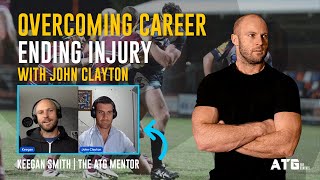
Interview with John (Johnny) Clayton about recovering from career‑threatening athletic injuries and applying psychological and physiological tools to help athletes. Topics include psychological flexibility/‘mind flex’, acceptance and commitment therapy (ACT), breathwork and HeartMath/HRV practice, practical coaching applications and client stories (including a Queensland Cup turnaround), Johnny’s ATG/physical rehab experience (reverse Nordics, tib raises, split squats) and his PhD plans to study monitoring + acceptance in sport.
Chapters
Live with John Clayton. John's part of the ATG for Coaches community and that's how we came in contact. But he's actually got a really powerful and important story to tell and a lot of experiences around the challenges that a lot of professional athletes go through. John's managed to come back from career ending injury and sort of, I guess, a failed childhood dream. Like a lot of the people that I work with had massive aspirations as athletes and didn't quite get to do what they wanted. Some did, but most didn't. John's turned that into finding solutions and helping other athletes to overcome the challenges. So the conversation today will explore that, that journey. Thanks so much for, you know, making your time available to have this conversation. Can you start sort of by sharing a bit around your, your early journey there as a, as an athlete?
Yeah, absolutely. And I appreciate you having me on as well, mate. I know this is like a really good opportunity to have a chat and pick your brain because you're one of the masterminds behind atg, so. And real movement before that. For me, where I've come from is that I had some real aspirations obviously growing up, wanting to make NRL and play professional football. And I think maybe there's a subgroup of like those guys that have the natural talent. I wasn't one of those, so I had to really work hard at this. So I came up with a bit of a plan for myself which was, you know, get the grind, figure out the strength stuff. I think we all fall in love with the strength when you start to see just those small incremental improvements and that type of thing. And I found that that worked for me. So I actually got some good opportunities out of that. The effort reward ratio seemed to be well reflected so I could like see when I put in effort, I got that outcomes until a certain point. And it was about 18, 19 when it started to be that the more effort I put in, the more I would have side effects. So like, you know, knee tendinitis would start to pop up. I didn't know what it was at the time, but not fun. Achilles tendonitis, you know, all these sort of overuse injuries when I was just trying to put in more effort than my competition to like outdo them. So that that was sort of where I started, I think for me, and I know that I see this now in other athletes as well, is that when you build this mindset around, I have to make it. You have this sort of control agenda where if you're not going to make it Then what's going to happen when something takes that control away from you? So for me, once I got injuries and had no control then I started to find a bit of a split spiral of my thinking and where my life went for a little while and things like that. So meeting with athletes now I still see, you know, some of those tricky thoughts popping up and notice that these traps are pretty common and I don't think I was alone. I think that's probably the underlying thing of what I would like to be working towards is that it's a pretty common experience and some of the skills are like broad around things like psychological flexibility where we can teach you skills at work in multiple contexts rather than just helping you achieve sport. And then when you get injured, don't help you actually help you make you flow, don't help you flourish and make you suffer. So that's sort of where we come from.
Yes, often it is that single minded commitment of the athlete that allows pro athletes to become pro athletes. Is that psychological flexibility, like is that sort of something that would take away from being that pro athlete or is it something that is going to complement the journey whether you make it or not?
So this is definitely one I've had to think about because you, you definitely see it, you've seen it as well these athletes that have these really like black and white rules. I ever do this, otherwise I'm a failure. The old I'm not first I'm last sort of thoughts and then like the, the last dance. Michael Jordan, I watched that and thinking this is a guy with a very rigid mindset that has achieved great things but then turns possibly turns that into the rest of his life and has hits barriers with that. So I know that's probably a controversial view but my thought is that you can have a, you know, broken clocks right twice a day. That's my theory on people with fixed mindsets that are professional athletes that do well, they could do it with building psychological flexibility and still get to the outcomes they want as long as they're building the six facets of the hexaflex which we'll talk about later if we get a bit of time. But if they're still doing that, they don't need these rigid mindsets that become a bit of a crutch. As soon as Michael Jordan would have got an injury that mindset wasn't helpful or it would have been debilitating and he would have been suffering. And how was his relationships around that? How are you everything? And I think for every Michael Jordan might be an example. That's a hard one. There's 50 other athletes that then have maladaptive stuff that happens after they, you know, get these rigid, do or die type thought processes that go along with it.
Yeah. So what is mind flexibility?
Yeah, and it'll be interesting.
Flexibility.
Yeah. I'll be interested in hearing what more about mind flex and the stuff you've. That you've done and put there, because I think that's probably helped me understand the differences between that and psychological flexibility in the, in the literature.
Yeah. Okay. Yes. Psychological flexibility is a term in the literature where mind flex is a term that my money mastery mentor, Paul Council, a guy that I've been learning from, he speaks a lot about mind flex and, and doesn't use the word mindset because we don't want a set mind. A set mind you can't change. And so, yeah, that's what you're sort of referring to there. So what is psychological flexibility in the, like in the literature?
It has a lot of different ways of being described. I'd say the main one is the ability to shift the way you respond to a stimulus based on its context. So I'd say psychological rigidity, which could be mindset, like a set mind would be. I learned that if I approach something by being giving all my effort constantly, then I get success. That might have happened in a rugby league context. And then I try and apply that to my relationship and I just apply all my effort into that relationship and I completely smother my partner. So that's a lack of flexibility because I've extended that rule and that rule is not helpful in this context. So psychological flexibility is about realizing each different context, changing your approach, and then being flexible enough that you're not automatically doing the same thing in each different environment. So that's the textbook definition. The way we look at it, through acceptance and commitment therapy, which is the other psychological flexibility approach, is it's taking action guided by values despite difficult feelings and thoughts and emotions. So you could, if, if your goal is to also. What's a good scenario? You want to be a leader in your team. That's what I'm dealing with. A few athletes at the moment, they want to be a leader, but one of the guys criticizes them. You then get the thought, oh, I'm, I'm a worthless player, or I'm not good enough at this. You got to then diffuse from that thought, act on your value, which is to reconnect with the team. And your value would be still leadership or Empathy or compassion or whatever. So that's sort of where it goes with this type of stuff. It's acting congruent to values despite difficult thoughts and feelings and emotions.
Yeah. And for a lot of athletes, there are massive challenges around identity. Whether it's through injury or not being selected or contracted, negotiations and all. The way that family looks at you once you become a professional athlete, there's a ton of stuff to deal with that from the outside. People don't necessarily understand about, about the Prathi. I haven't experienced it firsthand, but I've been close to it, you know, with it with a lot of the, the guys that I worked with. So if you, if you're looking for that con, like context specific is a big part of it, of recognizing, okay, this is the situation where I need this mind flexibility or psychological flexibility and then having the focus or the attention to be able to actually do something, like to continue down a path that you choose to go down. Is that sort of what you're pointing to there? Like what with it? Yeah. So with the example of the leadership, the athlete is kind of getting their confidence rocked or shaken by how the teammates responding to them. If the value is that they, they want to be a great leader, then they have to return to that value, return to what they're about. But how do they, how do they shift that emotional kind of thing of being. Being mocked or being criticized?
Absolutely. It's a, it's a definitely a very different way of thinking. If I take one step back to act. Which is one of the main tools for psychological flexibility, acceptance. Commitment. Therapy comes from Buddhist origins. So a lot of it is around observing the mind and noticing the aspects of the mind that are pulling. And we call it like hooking. It's a, it's one we often talk to clients about because it makes sense. You get hooked by a thought or hooked by emotion pulled into doing something. The real analogy there is the choice point. So you talked about choice there. One choice is towards the values taking that committed action. The other one is then getting hooked and being automatic. So the brain is very good at running through pathways that keep us safe. So it will avoid discomfort, it'll avoid anxiety, fear, all these sorts of things that are going that put you into an environment where you're not sure. Uncertainty. Yeah, I'd say the real big thing there is going to be that. A lot of that for professional athlete or someone in a leadership position is going to be. That's where all the value is as well. You can't Do a leadership role without being rejected at some point. You can't be a leader without feeling fear that you're not good enough or that you're, you know, faking it. And people, people are going to find out all that stuff comes with because the brain will go, yeah, you're good today. But what about when you said that to blah Bladder this morning? It just does that. It's trying to keep you safe but it's not helpful. So the only way then is to re engage, expose yourself back to that environment and then go again. And the thoughts will come but the, the chatter, you can sort of just sit it down rather than have it hook you each time and you unhook each time you get unhooked. You just keep coming back to that.
So I imagine you've studied this because you've had your own challenges. I know you've had the injuries but like what, how has this impacted you personally? I know you're back playing so you know you through a lot of this. Like what, what's your personal journey been like with it?
Yeah, and I think back playing is a bit of a stretch. I'm playing local footy in a, in a small competition so it's quite, it's fun but it's, it's nothing like playing any sort of state level stuff. But yeah, join that for myself. Yeah, look, I, I think I was just at a point where the things I'd used, all the patterns I'd used before weren't working for me anymore and I needed to figure out a new way of doing it. And I did want to talk to you about that because the first thing that I found that worked for me was breathwork and the heart math was the big one for that. And I, I've just been ever since I've been using that. But I heard, I've heard you mentioned a couple times but haven't had heard you do a deep dive into it. So I wanted to just pick your brains on heart math as well.
And yeah, I think I came across it through Bruce Lipton and I think Clint Greenshields might have put me onto Bruce Lipton back. We lived in the same apartment block in, in France when I worked with the Catalan Dragons and we spent a bunch of time together. He, he made me tea, a bun and we, we sat and spoke about things but he, he, he really introduced me to a lot of different concepts and I think that's where I came across it or maybe through Paul check, but I think they're both into it. But the, yeah, the concept of that heart rate variability correlates to health and to the mental state and hormonal balance and all those sorts of things is, is pretty well established in the literature. My understanding is that it came from sort of Soviet astronaut sort of, you know, space program research where they realized that's a really good marker of are these people going to survive? Are they, are they adapting to this environment? Are they safe? And so yeah, it's, it's pretty cool. It's pretty intuitive. Like you, you really, you plug into your physiology with, you know, for those who haven't, haven't heard of it, like you, you put a device on your ear and you, you. Well this, there's a handheld one version as well, but you can um. Yeah, you got it, got it there. Yeah. So it tells you, yeah, it tells you what's going on with your heart at that moment. And it sort of seems almost like woo woo to people who haven't looked at it. But there's, there's a ton of research there and then once you experience it for yourself, you go like, yeah, change of state is, is really possible. And yeah, I think breath work is probably the most like, direct way for people to experience this. I'm all about experiential learning and when you experience change of state through breath work, then you sort of know like, oh yeah, I really, I can be very different in a short period of time based on what I do, you know, with my breath. But the same is sort of true for posture or you know, thought patterns. There's different ways that you can change your state. Tony Robbins is, uses a lot of the dancing and jumping around and hugging people and all those things will change your energy, change your state. But that the HeartMath tool is one that's shown to sort of speed up recovery and get you back into the rest and digest sort of more parasympathetic dominant state. So yeah, I came, came across it through, through that and I introduced it to a number of players and did a lot of it myself. It's, it's not. Yeah, for, for a lot of guys it doesn't stick. But I think it's still a valuable experience for them to have to know that they are in control of it and that stuff is real. Like it does matter what you're thinking about, it does matter how you're breathing. But yeah, I'd love to hear like what, what do you, what do you think about it? What's your experience been?
Well, for me it was a bit of A game changer like I'm the same as you, I for myself and then for teaching other people. Experiential is the way to do it. If they don't experience it, they're not taking away. It doesn't come in the point of performance when need it, it's just something that they heard and you know, what can you remember when you're under stress. So for me I started doing it and I felt an immediate impact on my physiology especially. And straight away I saw a change in my results at uni, which was where I was really struggling at the time. So I found I could study better, I was sleeping better, I was, I still was playing footy putt park footy at the time and I noticed I stopped having that super buildup of anxiety before a game. I used to vomit before games. I heard Ben talking about it, doing that as well and. But it was always, it was anxiety about my anxiety, like I shouldn't be feeling like this and this is too much. And so I would just do that in the morning for 20, 30 minutes and then I'd come into the day and I'd just, I'd feel that emotion come and go and it would just like a surf and the what the urge. You would come and go. But since then I've done it. I'm up to about 1600 sessions on it. So I've been using about five or six years now. They've got all these points things which I love and I think it's like, it's almost like dense strength for your physiology. It's because you get badges and things and you can see your progress and I can see if I get a new record and I love all that sort of stuff. So I think it's really like gamified and really I really enjoy that. So for me it's been a big one for players I use it with now I'm the same. I don't know if they're going to stick that they use that because I have to purchase it. Well, I just give them a once off and I show them what happens. I do a baseline then I show them what happens when you breathe. And if they're really keen I might work through the science of it. But I would say 99 of players, I'm not going to talk through what's happening in the autonomic nervous system when you're breathing and that type of stuff. I'm just saying you're having an impact by breathing and you're changing that stress response into a More balanced state and they can see it. If I say you're going to turn into waves and you're doing little skitters at the start, then they, and they see it. It's. Then they know they're having an impact. So I think that's really valuable.
Do you think that's made an impact? Like, you say that you're back playing footy, but you're not back, like, because you have that standard for yourself of you wanted to be a, a star player, play at the highest level. But you know, to, to be able to play you have to have a certain level of physiology. Like, do you think that's played a big role in you, like being able to, to recover and getting like your physiology back online because of like that change in your psychology of not being in the like fight or flight all the time, not being chronically kind of overstimulated with the sympathetic system?
Yeah, absolutely. I think the big ones for me, what I used to feel was, and I've only learned more about fascia recently, but I used to find I had lots of like tight points where I'd like get that forward head roll and it'd be tight in the shoulders and, and as I said, killies. But all that stuff's come better with movement and training. But yeah, I wonder if overall, as a system, I think you've probably seen this. People in flight and fright, they look like a cat, you know, when they've stepped in water or something. It's like if you start to see that that's probably someone who's in stress state more often than not. The thing I, I really enjoy this approach. I appreciate it. It's. The body reacts the same to chemical, physical and emotional stress. So if you're training really hard and over training, that's the same interaction in the body as if your emotions are running you down as well. So it's all the same type of stuff. So if you're not managing this stuff, if you're not, and I don't mean controlling, I mean priming and preparing and ramping up and down and knowing that it changes if you just stay in sympathetic activation through your nervous system and it's like your flight fight, then you're not going to have the reserves ready to respond to your next training session to when you have an actual performance to happen. You've been in it for 24 hours, you're not going to be ready to go. So I think there's heaps of value in it. I also use it and I thought this Might be an interesting point. I don't believe completely in all the hypnotism side of things, but I do believe that they have a way of priming the nervous system to accept information. So I would say this type of stuff, any sort of breath work, is a great primer to physical training or to a session where you're trying to do some coaching with someone one on one. So if you're trying to teach someone something and you've done a breath session at the start, you've got their attention monitoring and you've got their physiology ready to accept, like they're not. You can't remember things when you're stressed. You can't remember the capital of Canberra to Australia if you're under stress and you're trying to run away from something dangerous. So it's important to remember that this is a physical human being and that we're not just responding exactly the same to every person.
And so that was what, like, one of the things that helped you to really know that your psychology is playing a big part. Like what, what else have you sort of added to your own system?
Absolutely. And a metaphor I was thinking of today and probably because I just want to engage with her, was that heart, math and physiology, that type of stuff is like the sled work. So it's like, it's your, it's your short range stuff, you're really getting that blood flow going. But if you just do meditation, all you do is you're monitoring, you're just becoming aware of what's happening in your internal processes, which is still awesome. If that's all you do, you're on the way. If you look at it as a spectrum of the same, like short to long range or to, you know, someone in suffering to someone flourishing, I would say people who are rigid. If you work on those skills that gets you to a normal state, you can give up there. But you can also get to like an elite level using those same processes. So for me, I was doing a psych degree undergraduate and I tried cbt, which is like the base cognitive behavior therapy everyone knows about. It's evidence based, didn't work for me at all. A lot of the processes. So I just started looking at every other approach. I was really into Carl Rogers in the Rogerian person centered approach. I was really into some of the existential therapies. But when I came across this, the third wave, which is acceptance, commitment, therapy, some of the other ones, which I won't talk go into, but I found when I experienced it, there was a change in my own interaction with my mind. So I could see the space between my internal processes in my reactions and I was able to like take steps back and like choose where I was going next rather than be like trying to argue and waste energy and you know, argue with your mind. I mean, I don't mean arguing physically. So that was where I started to really feel attraction from it. And I, my partner was into it too and my, she's. We're still together so we've always just been bouncing this off each other. So we talk about it a lot. We talk about where it fits in different, different parts of society. And for me it's always been if I'd had this and some of the other stuff in ATG now when I was 17, you know, I would feel like I want to share that with that version of myself. And that's where I really connected with you and Ben, around that young version of me. I really want to get there and go, these are the things you need to be doing. And, and that's what I feel like I can do at the moment. Working with Capras and in our region as well is get to some young guys, especially when they've had an injury and go build these skills. It'll help you become, perform, but it'll also help you not suffer. It's the same skill.
Yeah, I love it. I think it's, it is such an important area and I know most professional teams are working in this area. They know that the mental side is important. The question is, you know, which, which tools are best and as you say, there are kind of those standard methods. But having you having been through a lot of that yourself, I think and, and being relatable to players gives you a real advantage to, to have an impact with them. Have you like, are there some, some guys that, some stories there that you, you know, you've really made an impact and, and sort of feel. Yeah. Have you got to taste some success? I guess as a, as a mentor of, of this, you know, style therapy.
Using it over a long period of time. I'd say it is a hard style to grasp because it's, it's based in like Buddhist roots. Although it's evidence based now there's over 3,000 studies. I think it's about 300 random control trials. And in comparison to existing therapies it's on par if not better in some areas. Like it exceeds it in pain management is one of the big areas. It's the evidence based psychological therapy. So an end of Life care is the other one. So for me, turning that to players, like I probably start with the evidence is there. I've had experience using it myself, I know other people that are using it. But it is a challenging thing to grasp because it is a, it's a very different way of looking at the mind. When society's ingrained certain things in you, like you need to always be happy, negative thoughts mean you're broke and all these sorts of things. So I think initially it takes a bit of time to get through, but once you get past that, it's a relief for a lot of people. It's like, you mean I don't need to be struggling to get rid of this normal, you know, normalization is a big thing and validating the challenges of an experience, the other big thing. But I think players really get it once they, once they get it, it's huge for them. I would say the couple of players I've had, I think I've had big impacts with. Were people with challenging some stuff that's been challenging in their past that might have been still sticking with them and they're like having anxiety around those sorts of stuff. I'd say they, they have the biggest improvement. So you might get incremental improvement in players that aren't already psychologically flexible. People who have barriers, they have the biggest improvement. And some of them, like there was one guy I was working with that was, that had never played rugby league, played soccer his whole life and then at 18 he goes to me, I'd like to play for Capras at the time. And, and it just started training with him and they actually said to him, because he was a cameraman at the time, they said to him, you can't even be training with the team. It looks, it's a bad look to have the cameraman training with the squad. So it was a very disheartening moment for him, but probably fair considering he'd never played league consistently and he was a bit out of shape at the time. So he came to me and said, look, I want to be playing Q Cup. So we set a plan. It was a two year plan at the time. We did lots of things like we did different trainings, physical trainings and then we also did this stuff and heart math at the time with him as well. And he ended up out of, against all the odds playing a game in PNG when everyone was out. And he played in the 20s competition and did well in, in the state here. So you know he got that goal in the end And I think really what we had to do is go break it down and go. Even though you're going to have these thoughts to say you've never played before, you're not good enough. All these sorts of barriers because we were able to build this scaffold. I just lost you for a second. Yeah. So I think that's the important thing.
Making Queensland cup on two years of, of training is, is pretty phenomenal. For those who aren't familiar, it's a level under the National Rugby League, like the highest level that you can play player would be the, the Queensland Cup. So to get there in two years is kind of unheard of, really. Like there's probably not another guy in the competition who, who would have that, that story. I've never heard a story like that. So it's pretty, pretty outstanding. And obviously the physical, you know, it's one, it's one tool, right? The, the psychological stuff, it's not like you, you can do this and, and never not train, not do your weights, not worry about your diet or, you know, it's, it's one component. But that's. Yeah, yeah, that's, that's.
And I don't want to take anything away from that guy either. Like, I gave him this stuff and he already had like that desire he was going to do it and you know, he, he got in, he trained every morning, he did all that stuff. So not taking any of that away from him. I just saying that when he came to me, these are the things I work with him on and I think they helped. So.
Yeah, yeah. You can never know what impact you have. Exactly. And even for yourself, like, you've, you've learned a lot of this stuff. You've done it. How much of it, you know, how much of you feeling better in your body is because of atg, how much of it's because of these psychological therapies, how much is it because you know you, you're happy in your relationship? Or you can never quantify exactly what's contributing to what you look for. You look for clues and trends and follow intuition. Like as much as we like science and, and it's good to quantify things. There's a certain amount that you, you can't, you can never know. You, you only, you know, you only do you, you can do your best and, and if the result is good, then that's, that's all that really, that counts. And if it's not, then you have to keep looking for other, other solutions. What's next then for you with this, like, it seems as though, you know, that there's something really valuable here. Like the research says there's something valuable. You've experienced it, you've had some wins. Like, probably the thing that I love most is then with. At that stage, like, okay, well, what would you like to do with this and helping people to look, you know, look a bit further, aim a bit higher, think a bit bigger and go and do it and have the support to go and do it. Like, that's probably what I love most, to have those kinds of conversations. So maybe we can have a bit of that conversation now. Like, where do you, where would you like to take this?
Yeah, and I, I definitely say I appreciate everything you do in the chat. Like, I don't know if anyone realizes, but you, in the common uncommon success pulse and the pulse of adtg, you're just so generous with your time. So it's always like trying to provide prompts to people to, to look at these sorts of things as well, which is definitely something I appreciate. But for me, I've been looking at it, thinking these questions, and it's a hard one because if I was to just do it in the environment, I mean, I really enjoying that. I love seeing young players especially, is where I'm at. I think I like seeing them getting these things and then flourishing. So at the moment I'm doing things like I'll go in early into the gym and we'll do an hour of ATG with the player and then alongside that we'll do a breath work at the start and we'll talk through different concepts in a rest or whatever. And I love doing that combination. And then maybe going for a coffee after and having a bit more of a chat. I really like that. But there's not a. It's not a scalable business if I want to get the message out there. So I'd really. I think for me that my passion is sharing this in a way that people understand. I think that's the challenge. Because as there's another Keegan in the, in the, in the pulse of atg, I was talking to and he's doing a book you might have seen on act on acceptance, communicating. We had a chat on it and he was like, it's one of those things that's so hard to explain. You've got to get metaphors, you've got to use different ways, experiential. So for me, I've got to find a way to get it out there so people can get it and grasp it and experience it and then use it in their lives. And that's probably where I'm at. I want to try and find mediums and channels where I can share this, and I thought this today would be a good chance for that. If I, If I even reach a couple of people, it's hopefully something useful that they can add into their lives or at least look at and share with someone else.
Yeah, yeah. There's six people tuning in at the moment. And that's, you know, that's the start. Like, to be honest, it only n equals 1 is everything. You know, if you, if you help that one, that one player and that one coffee. A lot of people look into scale before they've actually proven their concept. And they kind of oftentimes can lose sight of n equals 1 because of research. You know, people discount, oh, it's only anecdotal. It's one person. That's all there is. There's. There's one person times as many as you, as. As you. You touch. And if they have a win, then they. They have a win, and that's it. Like, that's. That's all there is to it. So I love the concept, I love what you're doing of like, I think it's a great place to start, of being really high touch and like, going as deep as you can with someone to give them everything that you have. That's what, you know, Ben's done with atg. He was coaching a very small number of people in Clearwater in Florida, and he was getting phenomenal results with him. And that gave him the confidence of, like, I know I can do something else with this. I'm not sure what it is. And when we started Speaking, he had 50 online members, and he was sort of thinking, like, there's, there's, you know, there's something more, but I don't know what it is or how to get there. And, you know, now we can all see and it looks clear and obvious, and he's so good at content. He's so consistent. And it's like, of course he was going to be that person who goes on Joe Rogan and stuff, but it wasn't necessarily clear to him, you know, three, four years ago that that that was going to be the, the case. All he did was get those phenomenal results with the, the people that turned up, like, whoever that was. So, and, and that spread. So I, I love the way you're starting with that, and I would love to, love to think that within my community and potentially from today's conversation, you get the opportunity to have more conversations of n equals 1. Like, yeah, I think I, I think I'd like to have a conversation, Johnny. And you know, how can I, how can I go further with this? The challenge for you then is how do you deliver that? Like when there is less touch and when it is somewhat of a complex conversation, like, how do, how do you systemize that? What could you put together that someone could experience as a one off over seven days, over 30 days? You know, what are the, what are the on ramps to this way of being, way of thinking where someone can experience it without a lot of risk, without a lot of commitment to, you know, to move in that direction? Yeah, these are kind of the questions to answer. And regardless of that too. Yeah, so, yeah, look, what, Yeah, I, I mean it's, we don't, don't usually go as deep on this on like the podcast type scenario because I, I kind of, I don't know, it's just like a different energy I guess, when we're talking about building that business. But what, what is it like if you, is it the heart, math concept and experience? Is that where you think people will start? You want to start I really with where, where people are at? Like what, what's most important to them, what's bothering them? Like, what's the, what's kind of the pain point that you would see as the thing that someone would, would want help with that they can identify that they, they, they, yeah, they, they clearly understand in themselves that they're experiencing.
Absolutely. I think that's. If I look at you guys and a lot of the ATG community, it's like, people don't just come to you because everything's good. They come because they've got a niggling injury or they, they want this performance improvement. They've seen other people get it. It's like they're looking for that solution. There's normally a specific thing that you start with and you give them some of that experience and early wins and then you start to move on from there. I was going to say, sorry for cutting you off there. I was going to say I've started that process with my research, so I'm in a PhD pathway. So what we're looking at with acceptance and commitment therapy is I'm working with the sports science team at CQU and we're looking at monitoring and acceptance theory, which is like a breaking down version of this. But if I was to give it simply, it's that mindfulness is Monitoring. The issue in the research is that you can have someone who's like a long distance runner, you teach them mindfulness, their performance gets worse. Why is that? So the theory behind this is that it's if you're just monitoring, you're just noticing pain, you're just noticing sensations. If you're doing something difficult, that's not helpful. So you need to also teach acceptance skills at the same time. So you need something tangible. So the way we're looking at researching it, this is just in proposal stage. We're still working through it is. We're looking. This sounds awful but heat tolerance tests, so we're using like heat on someone and then seeing whether some of these skills will help them deal with higher levels of heat tolerance and pain. So is their pain threshold higher after the skill testing? So really trying to build in. I'm working with the research team because I really want to build my own research into this context. And while doing the one on ones with people and developing the skills there, so I'm starting down that pathway, I think it'll be like a snowball, it'll sort of pick up traction and hopefully at the end of a PhD, I might have full published studies, hopefully that will lead into the work that I'm doing and show that it does work and that it's good for specific things in sport. So that's my hope.
Is the motivation of the PhD to have proof for others or is it to like learn for yourself? Is there, is it, is there. Do you think it's going to bring you new knowledge or is it. Yeah. Is it to. To have more ammunition to, to be able to go and make an impact?
Bit of a little bit of both, I'd say you're probably right. It's more. The systematic review at the start will be I'll learn a lot, I'll learn more like everything and step back and fit it into context. But I think you're right, I already know that it works. So for me it's not learning that these things work in these contexts. It's more doing it in a rigorous, rigorous scientific way so that I can then share it with other people. I find it useful though to talk to players about like I've, like no one cares if you say I've used it on myself. Unless I'm a millionaire and I'm showing all these successful things, they don't really care that I've used it on myself. If I say though that I've research this and I'm studying it at a Higher level. Then it's sort of a bit more of a merit when they, when you start eventually if you get experiences and you give people success, they don't care where you start really. But it's just an easier starting point I feel to have that credentials next to my name to say, yeah, I know what I'm talking about.
Yeah, that there definitely are positives to having formal education. Some, some people call PhD, you know, piled higher and deeper. Some poor, hopeless. Poor, hopeless and desperate is the one that Robert Kiyosaki uses. The rich dad, poor dad guy. I think Paul checks is piled higher and deeper. But like there definitely are benefits to it and it takes a lot of work and that a lot of great things come from that scientific field. At the same time, if you look at atg, if Ben had gone that path, he like he would have had zero impact at this stage. Like there's no study that he could have produced. There's no series of studies he could have produced that would have had an impact on the way the world trains versus working with one person and then turning that into, you know, just doubling that every. It's probably doubles every. It's probably doubled every. I don't know, whatever, whatever period of time it is. But. And then it eventually, you know that it really is changing the way the world trains. Like there's, there's a good chance in any gym on any given day that you'll see someone doing ATG type training or movements that you would never have seen. Training their tibs or training their split squats, training Nordics like you, you wouldn't have seen it four years ago and you know, you can see now. So like to me that's what matters most is those, is those results. And sometimes yeah, when you do the scientific stuff and you're in that scene, you think that that's where the validity comes from. As, as you say, I would agree, like the athletes, they want to see results they don't necessarily care 100 about like you, but that is still a strong level of proof. And, and Ben's really done that. Like he's marketed solely based on himself. Like he could have marketed based on working with a lot of NFL players. And he made that decision early like NFL, NBA, NHL, like what he's worked with Major League Baseball, he's worked with top five, top 10 athletes in pretty much all the major US sports. But he's chosen not to market even based on that. It's really just been this is working for me. Test it for yourself. And that's what that works. Now dunking is easier for people to see. It's. It's more difficult for people to see what, what does your mind look like? And yeah, you could prove it through wealth, you can prove it through performance, but it's, it's challenging to prove. I mean Wim Hof's probably done the best job of that. And it's interesting you've chosen temperature because that's probably the best way of showing like, yeah, my mind's different to, to the average mind. Look, look at what I can do. He went and broke all those world records and, and he was definitely, you know, he is into the Eastern philosophy type type stuff. There's probably some real similarities but he. Yeah, I like, I'm a, I'm a huge fan of, of that approach. Having a, having a PhD on the side is, is also great. It's. It just, it takes a lot of energy, effort and sometimes that means you don't get the other things. But yeah, that's something my, my experience around or my, my one way of looking at it, I guess.
Yeah.
The. Yeah.
No, I appreciate that. I think it's good to think in different ways because sometimes you do get stuck in these echo chambers where you hear the same things. And working with researchers that they all.
Spread, they love research because.
Yeah.
Well, I work with business owners and so I love business and you know, that's been the big thing for me was like turning it into real products and having that accountability of this person's paid for something. Are they happy with what they've paid for? Like I really like that direct accountability which is, it's kind of different with the. Yeah. With that other system. There's not necessarily that direct accountability for results. It's more like a long term change the system, change the way people are educated, like which is important as well. It's just a different, it's a different path. But yeah, the, the on ramp is the key is. I think that's the key thing of inside atg. A lot of people on ramp, through sleds, they, they saw one or two movements and they're like oh yeah, that makes sense. I'll give that a go. And especially with sleds, like oftentimes people be like wow, like I really, I do feel a difference after this. Like things that hurt before don't hurt. Like this is phenomenal. Coming up with that powerful on ramp that invites people into the longer journey is probably one of the. Yeah. Something for anyone who wants to make an impact on the world like, how do you do that? I was, I was watching that Mr. Beast podcast with Joe Rogan. If you haven't seen it, like, I think it's something that everyone should watch. He's a, he's a different, he has a different sort of psychology going on to, to a lot of people. He's his hook thing on the top of his, his YouTube page. So he's the number one subscribed YouTube channel. And he has the most views on his YouTube channel. So he has 91 million subscribers on his main channel. And then he has channels in other languages and gaming channels and reaction channels. So I think he has 200 something million subscribers. But his hook video is literally him giving away cash to people. So that's kind of his on ramp of like he asked people on the street like, are you following me? Are you subscribed? Like, show me on your phone, open your phone up, show me. And if they say yes, he just gives them a water cash. And that's his like hook thing on his YouTube. Because his goal, his whole sole purpose in life is to be the most watched person on YouTube. And so he's been dedicating himself since he was 11 to making viral videos. He's now 23 and he's. But interestingly, like he doesn't keep any of the money. He puts all the money back into the videos. So he's making these like 5 million dollar productions and 10 minutes. Like he's making, he's spending millions and millions of dollars. He has a team of over 100 staff and he literally isn't accumulating wealth. So it's a, it's a crazy. Yeah, I mean it's a, it's a challenging philosophy, but it's like still being maximally valuable. I love that, that idea of like he's trying to provide as much value as he can to the world. He just doesn't necessarily, he doesn't want to keep it. But he's still rich because he could work for any marketing agency. He's got all these connections. Like he's been on Joe Rogan now like that he can't be poor even if he wanted to because of the brain that he's developed and the connections that come with that. And I, I think that, yeah, that's something to strive for. Like how do I provide, how could I provide maximal value to this if I didn't care about, you know, money in business and whatever? Like, how can I get this value out to the world? I think everyone should do that. Like that's Everyone who has the desire of feeling of like, I've got something important here. Like, there's a inherent frustration that comes with that. And I think that's a positive thing of like, no, the world needs to know this. And you know, Ben had it with the knee thing. Mr. Beast, you know, had that thing of like, I wanna, I'm gonna have that number one YouTube channel in the world. You, you have this thing of like, this is, this is really important. This does make a difference to lives. A lot of athletes, they don't deal well with, you know, they have the psychological, these psychological challenges, these physical challenges and it's tough to come back from them. If you, yeah, like, how could you maximally express that? What is the on ramp? Like circling back? The handing out cash is probably is not going to be your thing because your goal isn't the subscribers. But what is that thing that people would see straight away and go, oh yeah, like this is, this is, this is. For me, this is interesting. It's not, it's not necessarily the easiest thing to, to answer, but in attempting to answer it. Yeah, it's in attempting to answer it like you, that gets a creative, you know, thing flowing. How could you, what, what could you talk about in your first call that would open people up to other possibilities that they hadn't, hadn't considered before? You know, that concept of sort of like a high value first interaction.
That'S.
That'S another, like, I guess that's after the, the first thing that grabs their attention. But if you can, you know, if you have that, then you get to test the next thing which you're really confident in the, in the end thing. But what's the, like, how do you get, how do you get people started on the path? Is there.
Breaking it down?
Yeah, and it's, yeah, it's not, it's not simple. Like, you see with my stuff, like I, I love, I love a big broad, you know, range of things and, but if you can try and have that key concept of what, what you want people to achieve like that, that people can latch onto, I think with uncommon success. It really is about how do you get your value out to the world. Like, I have spoken a lot about becoming wealthy and I, I do value that, but mostly just like, mostly from the perspective of like, we've all got something valuable to offer and our best life and best experience of life is in expressing that and some people choose not to, that's fine. But those who want to express it and I feel frustration of not Being able to express it as well as they can. Like that's, that's what it's for. Yeah, that would be. Yeah, that would be the. How do you. How do you express more of it is probably the, the thing that I would. I'd love to go, you know, continue to continue the conversation on like. Because yeah, you've, you've done it with some of those guys and then. Okay, well what's, what's next? I don't know if you've come across the work of Tony Priddle. I was going to ask you. No, he, he worked with the. Well, he, he Dragons when my, my father was the coach there way back in the day in the 90s. And so he works with the same sort of like psychology of elite athletes and he's, he's doing some work. He's with Brisbane Raw. He's worked with a lot of athletes and teams and yeah, I was wondering if you'd cross paths because you got the footy background and psychology of, of.
Athletes I normally keep an ear out for. So. Did you ever run into John Novak at the Roosters? He was around for a few years. Yeah.
Is what was his.
So he was a dancer on aerobics. Odds style. Do you remember that back in the 90s?
Yeah.
Yeah. So he was in the Roosters for like five years and he worked with the first grade side and did all the mind game. His. Anyone wants to look him up. Boomerang effect is his, his mind game stuff. But he does a lot more work with golfers. So I think golf has a lot of like they use a lot of these sorts of skills and it works really. It's, it's very measurable. You can see like they were focused. You know, they hit that strike. Complex sports like rugby league and other ones, it's harder to show the impact. It's sort of like on average how do you feel? You know, is it. Things get better? So it's, it's. You can still feel it, but it's harder. Yeah.
Yeah. It's not as black and white with finite skill like as, as golf is. I think that's one of the first examples that I saw with the heart math thing as well was like being able to control the heart rate variability while listening to really loud music and like being in a stressful environment and maintaining uh. Have you, have you played around with it much like that, like challenging yourself with stress?
Absolutely. I think that's probably one of the best things. It's like you can figure out what different things do you. If you. Even with players, I sometimes sit next to them, I'll make a loud clap and then I'll show them how, like, it'll spike their stress. So you'll see this, like, scattered. So I love doing that stuff. I love trialing different meditations and seeing how they work. If you've seen anyone who's keen on, like the podcast and seeing Dr. Andrew Humerman, um, the one on Gratitude is a really good podcast and it's a very powerful of. I'm measuring it on myself. Gratitude, love, compassion, any of these sorts of emotions, if you can really nail them, have much better impacts on my. The measurements for me when I do that type of stuff. So I can see. I have my best sessions if I can really nail a moment where someone was grateful towards me. But it's a hard one because there's tricky things too. Like, you start thinking then. And if you get hooked too much with your thoughts, you get distracted. But it's lots of fun. I love it. I love being. I think all of us are here because we like experimenting and being that canary and, you know, going in and trialing things and find out what works and. And then you get that little nugget that works and you go, I want to share that with someone. And that's sort of where I'm at. I'm thinking, I've got a couple of things that are worthwhile. I'd love to keep sharing those with the players I'm working with and then hopefully, you know, reach more people with that type of stuff because I know it works in. In certain contexts at least.
Yeah. Yeah. I'd love to touch a bit more on the. The physical, like the ATG journey for you so far. When did you. Or how did you come across the method?
Yeah, it's a weird sort of situation. I knew I was coming back to play local footy last year and I went look up VMO activation. And so that was how I came across one of Ben's videos and saw.
Google or YouTube, I can't remember.
Probably YouTube. I don't really. Yeah.
You didn't Google it?
No.
Yeah, yeah. Okay.
Yeah. But then straight away, then fell down the rabbit hole, turned up to. I don't know if you ever heard of a training model called Zoo. Yeah, yeah. So I went to a zoo session and I was talking to the trainer there and I was like, hey, I've been trialing these split squats. They're amazing. He goes, you gotta go and look up, up Keegan and the real movement project. And I was like, all right. So that's when I started down the rabbit hole. And Lionel Harbin, who was the person who put me onto it, he's the Capra's coach now and he's been a big fan for years. So he knows, he's. He, you know, you walk backwards up Mount Archer, which is the local mountain, and he, he then does Jefferson curls off the rock with rocks up the top and split squats. So he's just one of those nut cases that even though he's a head coach, he just does everything himself and he lives the stuff that he talks about. So, no, I think he really pushed me. And he's a zoo fanatic too, so he does all the animal movements. And yeah, he was the one that got me into that originally. So I knew he was onto something when he brought up this stuff. And then when you experience it, I don't think you can stick to this unless you know it works. It's just such a big commitment. So once you trial it, I was dabbling. I did split squats, reverse Nordics, Nordics and tib races. That was all I did for like three or four months. And I got so much benefit out of that that I just went, okay, you got to stop just going, you can't have weak spots in other areas and build these up. And then I started to, like, went to the online program and then joined the coaching in January and just went, righto, let's do this. Let's get into it and share it with other people too. Yeah.
And what, like, what was the biggest thing you were looking for with it? Like, is it still knee issues with the primary driver? If you're looking up vmo then I.
Guess, yeah, I, I lost a heap of weight after I finished playing footy, so I sat around 115kg. When I finished playing, I'm down to about 97 and I still had knee pain. And it went away initially, but then it came back and a lot of people, I needed something to push myself. So I went long distance running and did a half marathon and just had constant knee pain and I couldn't get rid of it. So that was where it was like, okay, I need to find a new way of doing things. And now I just. My missus is just like, tries to push me away from people at parties because I don't want to be that guy. But you gotta. Someone comes up and says, I got knee pain. I'm like, you gotta check out this stuff online. It's pretty amazing.
Yeah. So how Long. Was it, like. Did you notice. What do you think it was? Because, you see, you started with the Tib raisers. Reverse Nordics. Nordics. Like, was that enough for you to. We. Did you do backwards, like, sleds? Did you mention that there? Like, no. And did you get some results with. With. With just those movements before you did the full program? Like, before you knee.
Yeah, absolutely. The reverse Nordics, when I first did them, it just felt like something was pushing around in the joint. It just felt like stretching and pain, and so I just really regressed that and then slowly built it up. And that was the first thing that I started to feel like I had more space to deal with whatever was going on. More ra, I guess, is probably the one I'm not the best at. I'm still not. I'm not an exercise physiologist or a PT or anything, so talking in these stuff, I. I try and get the lingo right, but apologies if I miss anything up. You can just.
I think. I think space is, you know, space is definitely a way that some people sort of refer to it. I think, you know, Kelly Starry, I think, uses that kind of language, if I'm. If I'm not mistaken. And it's cool to hear it, like, more from an intuitive sense. Like, you learn so much from players, the way they understand their bodies and the language that they use. And even the way they instinctively want to train, I think is often better than what they're actually being trained with. Like, so, yeah, that's, in effect, the reverse Nordic. Like, the lighter or the gentler way of getting into that, if someone's listening is like the. The couch stretch is like a gentler way to get to that that some people get issues with. Like, the reverse, knowing it's kind of like a. An aggressive way to lengthen the rectus femoris and. And, you know, change, you know, challenge the knee. But if you don't have an enough of a foundation there, like, it's. There's a higher risk for sure with the reverse Nordic than, for example, with the couch stretch. I mean, it's cool that you got the result and you can't. Nothing works. 100 for everybody. It's. It's. It's a powerful movement. But, yeah, so you felt as though that was like, that was the big thing that got you a win and sort of the buy into atg as far as, like, an on ramp goes.
I'd done everything, so at that point, I was like, I just. And I was talking to my Mrs. Brother. And he was like, you get into that age, mate, this is just something you have to deal with from now on. You just got knee pain. That's just the way it is. So I'd had it for like five years, six years, and then all through footy. So it was something where I was like, this is never going to go away. So to actually see a result, you're just like, whoa, what's going on now? You know, like, what else is possible? If that, if this worked and that. And you've seen it with players now. I just talked to them like, oh, yeah, I'm getting pain below my knees and I'm like, I know something if you want to give it a try, you know, and there's other people looking at getting meniscectomies and that and just like, you know, cartilage, there's some stuff to say. If you can get the nutrients in there and you can try these sort of squeezing movements, you can sort of. And build up those muscles. I was reading the ATG clinician in the chat, he's. He's awesome too. But it was one. He was saying you just ramp up the quotes and. Because the cartilage should be that last point of impact to absorb that force. So if you can be getting everywhere else catching it, like, these things make sense when people hear them and then when you experience them, it's just life changing. I would say, like, to change that trajectory from knee pain for the rest of my life was such a big.
Thing for me and people kind of get hexed with the idea that, yeah, you're going to have that for the rest of your life. There's nothing you can do about it. You get told you got bone on bone, like, get used to it. Maybe we can keep operating on it. But, you know, often athletes get told you're going to have a joint replacement, you know, in the future. Like, it's. It's kind of a black magic thing where nobody knows that. Nobody knows. Like, maybe they. Maybe people are going to work something out and it's going to be healed. Like, you should always stay open to the possibility that things will get better, I think, in every aspect of life. But, you know, with. With injuries and niggles especially, we don't know everything and things can change and like, they have for you and for. For so many other people. I don't know if you know Setamatasar, he's.
Yeah, it was in my 20 side back in the day.
Yeah, yeah, yeah. Should have made that connection earlier, but, yeah, he was at the Catalan Dragons when we were there and he'd obviously had really serious chronic knee injuries. And, you know, we got him. We got him squatting and he started squatting every day and he. I wasn't even telling him to do it, but eventually his back and his knees were feeling much better. He still had challenges through his career because I didn't know about the full ATG system and stuff at that time, and maybe it wouldn't have, you know, solved everything for him, but he got much better and got back to, you know, playing some really good footy and. And whatnot. But he's been doing atg, you know, recently as well, and you said it's made a big impact for him. He's up there. Makai or, you know, still connected with the footy as well. So, yeah, it's probably a good, good one to reconnect with.
Yeah, I saw that you talk about Troy Savage a bit and he was around. I wasn't in a team with him, but he's. Oh, yeah, with Anthony Charrington too. Yeah, he's done a heap of. They're both into the ATG stuff and Effie had two ACLs in the preseason, they might even been three at the start of a trial, and that, like, sidetracked his career. So he's now, like, yeah, huge advocate of all this stuff. So.
Yeah. Were you there at the same time as Cheryl or.
Yeah, yeah, yeah.
Well, yeah, that's. So. I mean, yeah, we. So Troy Savage was in real movement for. For quite a while and then he came to the training camp that I did with Sonny when that was really the biggest application of ATG that I've had. I had a month with. With Sonny Bill, before he went to the, like, Toronto to play, you know, in the. In the Super League. But Troy came up for that camp and joined in on that and that's when he sort of realized, oh, there's something to this. And that's. We also spoke a lot about business and stuff and he, like, he was doing a bit of work for me with real movement and then he sort of got that clarity of, yeah, I'm going to do this footy mobility. And, yeah, like, he was working roadside, you know, looking after, making sure the roads were clear for roadworks in Sydney and he really wanted to do something else when. When we first started working together, as you would like, doing night shifts and whatnot. And yeah, now he's got, you know, he's got that brand. He's worked with the New Zealand Maori team. And he's worked with, you know, tons of pro athletes, no exercise science background, did real movement and then came to that camp and, and sort of has run with things and yeah, like, again, like, like your story. It's not that I did it. You know, Troy's a high achiever and someone who works really hard. He came to one of my workshops, actually, and we did handstands and it was probably the first time that he'd been worst in the group at something athletic. And, you know, now he's got great handstands as well as, you know, all the other stuff that he's done. It's not as much part of his, his brand anymore. But yeah, I, I love that he's been, you know, he's gone on that journey and maybe he would have done himself in some way and he's definitely a high achiever. But it's cool to be, you know, to, to be a contributor, be part of other. Other guys sort of journeys. But yeah, Chero was there at the Roosters as well. When I went there in 2013, he was, he was there for the start of that. Some of those. Some Robbo made some big changes in the, in the first little couple of months that he was there. But yeah, it's. It's cool to see those guys helping to get the word into. Into footy. I know that it's coming from a lot of different angles in terms of the ATG stuff. I was just speaking with Patty about it yesterday. Like, he's. He's talking to a lot of players that are. They've worked it out for themselves. Like, some of them are bringing it to Patty saying, hey, probably need to go further with this and inspiring him to like, as we were sort of talking about yesterday. But yeah. So you. Where are you at with it now? Like, you sort of got that out of, out of, well, progression with the knee. Like, what are you. What are you doing with your own training? And, you know, where are you headed with that now?
I think one thing I, I like and I think is something you're talking about, like Ben with dunking. I'm trying to get something where I can get some things that I can visually show that, like, this stuff is giving me this. Like, I know I feel faster, I know I'm fitter. Like, all these things are true and I'm injury free, but I would like to like, trial some things and go like, yeah, can I. I told you this a while back, but I was like, maybe I could in the chat, I was like, stretch Goal. Try and play a game of Queensland cup again, very stretch goal considering I work with the team. But things like that where I could like show I was able to do this at the age of 34, you know, what could you be doing if you're 18 and trialing this stuff. So that's where I really. I'd like to get that Excel. I said to you before that I'm not a freak athlete. I'm not some sort of genetic mutant or something. I thought that was funny, that mutant conversation. Very left field. But. But yeah, I'd like to just show I've always been someone that if I do the work I get the results. I don't, you know, as long as I'm putting in regularly. So I think I could ramp up and show that I could be, you know, get my CMJ above average or like right up there to so players what it's like speed sprints, maybe the 1.2 like different testing but also then on the football field. So I played, I got a bust on this. I played in a carnival on the weekend. It's a Murray carnival for anyone who's seen some of those. And we played five games so. Oh, you know, at the age of 34, one of the oldest guys in the. In the. In playing in the field I was able to get through five, get half games but of football and still go against all these guys at 18, 19, 20 that have got bodies that regenerate like nothing else. So I think I'd like to be. I think that's one of the things I value in He's g is being the example but how I think I'm still trying to figure out what. Where I sit with that. Do I need to be playing? Maybe not, you know, but I like being able to put it out there and go check this out sort of stuff.
Yeah, players definitely respect and resonate with other players and people who know what, what they're going through like but at the same time it's like a bless you, you can do it and it can work but it's also not an excuse to not not have the results that you want. Like I think sometimes a lot of people with the example of knees over toes guy, Ben Patrick is like, okay, when I've. When I can do xyz then I'll start helping other people. And it's like no, that's not really how it works. Like he was helping a bunch of people. He was coaching. He wasn't world famous but he was, he was doing a bunch of things and that's a big part of why you get to recover and get results with yourself is because you're learning from yourself and from others. Again, going to the Mr. Beast podcast, I was listening to like he got in a group with four or five other guys who wanted to also do well on YouTube. I think they had about 20, 000 followers each at the time, subscribers. And they, they started just critiquing each other's videos and they would get on live call every day and critique each other's videos. And they were just, they were all obsessed with it and they all got to a million followers within, I think he said within a month, but it was like within a short period of time that they, that they all sort of cracked it. And so like having that mastermind but having that third party feedback. And he was talking about, you just don't get enough feedback, you don't get enough failure, you don't get enough anything on your own. And so it's like by putting it out there, by coaching, by doing your best with what you have, like that's really where you learn. And if we're talking about atg, then there's, there's plenty of stuff, there's plenty of support there. The system's relatively simple for anyone to be able to apply it. And you don't have to have had your own results. You can say like, you know, check out this channel, check out this pro athlete that he's working with, etc. Same for you with the therapy that you're talking about. It's like, well, you are, you've, you've quoted to me that, you know, there's thousands of, of studies and different trials and, and your own experience. So there's no, there's no actual need for anything else to be able to like, to validate. It's already. There can always be more, there can always be more results. But like get, you know, get into it and don't let that be a kind of a mental crutch because you can always make that excuse of, oh yeah, like when I've helped, when I've helped 100 more people, my daughter's here. Yeah, yeah, we, when, when you've helped 100 more people, you can, you know, then, then I'll, you know, or when I've, when I can do XYZ myself, like when I can dunk or when I can, yeah, it's cool if you do it, but it probably doesn't. It's like that's a dichotomy where you want to value your own journey and value, like it, it would be valuable if you, you know, whatever you do, if you go play Q Cup, if you go play, you know, nrl, like Ben was talking about, like playing in the NBA and coaching NBA team playing. That was part of sort of his story two, three years ago. He was thinking quite a lot about that. I don't think he's thinking like that anymore. But he didn't need to do that to, to do what he's done, buddy. But he still plays and people can see. Well, yeah, he can, he can play. It doesn't, it doesn't really matter whether he makes the NBA or not. Like, it doesn't matter whether you make the Q Cup or not. But if you show I'm working and I'm, this is what I can do, then there's, there's some respect that comes with that and you can show that with your, the gamification of the heart mass stuff. Like, it's, it's really clear if you've done 1600 sessions or such like, then, then you've, you've clearly done the work where someone will go, oh, well, like, you know, he really believes in this. Like that. I think that is really valuable to be able to say, like, I've done 1600 sessions of heart math or I've done X amount of sessions of, of atg. This is where I was at when I started. This is where I'm at now. To, to me, that would probably carry more weight than.
A lot of the.
Other stuff that you could talk about. And then like, word of mouth is probably the biggest thing. Like if you look at Troy Savage as an example, if he'd have gone down the academic path, we probably started working together 2017. So if he had gone down the academic path, he'd just be finishing his bachelor's or maybe, you know, maybe towards the end of his masters somewhere, depending on how, how it went for him. If he was part time, then he'd be, yeah, versus what the path that he has taken where he's already working with pro athletes and the odds that people who go and get their bachelors and masters work with pro athletes at international level or, you know, a bunch of guys, like pretty, pretty slim. So he's gone and done it without going down that path because, you know, he took the path of action. But it should take five, you know, five or ten years as well. Like from when you decide I want to make a huge impact, it's, yeah, five or ten years later, you, you, if you stay really focused. You probably will.
What do you say? Olympic dream. What's your Olympic. For the.
Yeah, yeah. It's like, yeah, if, if you're, if you want to go to the Olympics, you, it's not a decision that you make today and then go tomorrow. It's. And think in sort of two cycles like where will I be by the next, the next Olympic Games and the one after. Like that gives you enough time to take action, but not too much time that it, it's just some pipe dream, you know, like your life vision or one day I want to do this, but that doesn't necessarily spur us into action. Where, if, if, for example, with, with you, Johnny, like if you said I'd like to help 50 NRL players come back from injury, I'd like to work with 50 pro athletes or I like to have the most read book or the most watched podcast about sports injury psychology or then you can say, yeah, like let's do that by 2028 and then reevaluate. Okay, what's, what's next after that? Finding something that's exciting for you, I think is, it's such a gift, it's such a blessing. And if, if it is that PhD, that's like, yeah, I'm buzzing to do this, then cool. But I, I feel for people who don't have that in their lives and whenever I don't have that, it's tough. Like I definitely didn't have that for periods like when I was backpacking my 20s and stuff. I was trying to find like where do I, where do I get to contribute? You know, who am I, where am I going? And you can do, you know, you can, you can accept that and, and do the, you know, you can be in a good place mentally in a way while you're searching, but I think there's still going to be that thing of like I'm meant to be doing something with this lifetime. I think it's okay to have that feeling of like I'm meant to be doing something and I think you get that inherent reward of I'm doing what I'm meant to be doing. Like have you, are you experiencing some of that with, with your journey in the last sort of year or so?
Yeah, one on one stuff. I, I often come home to them because I work in community services as well. So I do a lot of like charity type work and stuff. But yeah, and I get a buzz out of that. But when I do the one on ones with players and I come home or I've Done a. Like a session for the whole team, and we talk about breath work or we talk about psychological flexibility or anything like that. I always come back and it's like, I'm just glowing for a few days. So that stuff just gets me going. It's. It's definitely powerful for me. And anytime I'm. I wish I could just do it all the time. I wish money wasn't an issue. And I think you've helped me reframe some of that. In the uncommon success stuff is like, yeah, look, you get what you deserve and you can't be. You can't be changing the world if you can't eat. I think that was the quote. Something along those lines.
Sounds like something I'd say.
Yeah, but look, and the other thing I would say, I really, I'm a huge fan of Tony Robbins and Mr. Beast. I've only looked at a little bit of that stuff. But Tony Robbins always says, you can't get more than you give to other people. But I think that's more in, like, your value. So if you look at like, Gary Vee type stuff, that jab, jab, jab, right hook, you just keep giving more value to other people. And I think if as a mentor in the space we're working in, you do that really well, you. You give so much value out. I'm not surprised that things are coming back to you in your life the way you, you know. But the other thing I was thinking with Mr. Beast is I constantly hear little YouTubers talk about, Mr. Beast reached out and gave me this feedback about how I can improve. So whenever I see that, I think he's not doing that to become huge. He's doing that because he's helping other people. And he's someone who.
So I think we spoke about that too.
Did he?
Yeah, yeah, he spoke about that. Of, like, the example he gave was like, a guy that was making about 20 grand a month started making 400 grand a month within six months or something, eight months of. And he was giving him tips. But he said what he loves about it, he does it for free. And what he loves about it is that he has to test his ideas. Like, is this really such a good idea? Like, do I really know this stuff inside out that it gets turned straight into money? Like, that's the buzz for me. And yeah, like, that podcast really made me rethink. Like, what am I actually teaching here? What. And what do I really value? Like, I don't actually care whether I become wealthy. Like, I'm happy To couch surf or whatever. And the thing is, if I am able to help, like to support you to what you want to achieve and a bunch of other people and you all help each other, like, that's what means a lot to me. And I know then that if I'm in a tough spot or if I'm in Australia, like, you'll probably help me out. Like whether, you know, and, and so the wealth is there, whether you actually, whether it's monetary or not by being really valuable. So there's no, like, it's not a rejection of like this stuff is valuable and there should be value generated through it. But it really doesn't matter whether like Rogan decides to keep most of his wealth. And you know, he's not super public about it, but he's got a big car collection. He talks about like having you money and like I, I, I like that perspective. I get that perspective. But then you've got, yeah like the, that Mr. Beast perspective of like, I'm gonna do this so well and be, you know, do exactly what I'm meant to be doing and I don't need to, I don't need to receive, like, I don't need to hold on to anything. That's, that's kind of the, it's, it's like a challenging way to look at it. Where he is wealthy, he just doesn't hold it. It's like the wealth is all out there in the world with people who've like, whose life is affected and who know that he's really valuable, who would pay for his consulting if he was gonna offer it as a service or whatever. It's, yeah, it's a funny thing that you. And yeah, it's challenging me because I, I just want the impact like, and it's, it's like it makes no difference whether someone's paying me a thousand dollars for the call or whether it's, it's free like from my side. It matters from their side often because they listen with different ears potentially with, you know, with the investment side. But that's a bit of an, like it's only one way to motivate people. Like, it's a bit of an excuse. Like you can get results with people for free if they know you're good enough. And I, and I suppose that's what Mr. Beast, he has that massive credibility. And yeah, you know, I can, I can work on that myself to have more results, more credibility, more good content where people feel that, you know, it's. Money isn't the only way to do it. So, yeah, this is, this is stuff that's sort of rattling around in my brain. It doesn't, in a way, it like, even motivates me even more to be better at what I'm doing, like by taking that selfish kind of side of it out of it and being really clear of, like, it's just, it is really what, what I'm here for. Like, this is, it's what I do best. It's what I love. Like, keep doing it. And if I could take that out of the equation that I like, you're sort of saying as well, but you haven't decided to maximally provide value to the world yet. Like you've, you know, in, in the way that, at least in my lens, you know.
Yeah, yeah. So, yeah, I'd like, I think I'd like to do videos and content and stuff. But yeah, I think I've got some avoidance around putting myself out there on camera and different things. So I think that's where I'm at with that type of thing. So I think this conversation might, might be a good one to go, hey, use some of these skills on yourself and just make it happen.
Well, you have used them on yourself and it's only, it's, it's, it's doing that then into another area and we all feel it like nobody's killing it on every platform or, you know, feels completely comfortable with every type of video that they might make or whatever. But just expanding 5%, 10% from where you are is. Could you make one presentation? Could you, you know, make, make one post, make one. Just taking that one next step can sometimes be the catalyst for what becomes then a habit because you have that vision for yourself. So, yeah, and, you know, I'd love to see you, I'd love to see you do that. And I can see that you have, you know, you have a ton of knowledge and experience and your own story as an athlete is a really powerful one to get to the place that you're in now. A lot of athletes get into a downward spiral when they miss out on their, you know, their, their identities challenge and all those sorts of things. And like, you have overcome that. You've got that, you've got that positivity. You've gone and got yourself a degree and you've got, you know, you've got a role in a footy team and you've done a lot of things that a lot of players would like to do when they, whether they make it or they don't make it. So yeah, if, like, being able to, to share that or to transfer that ability to others is something that's super, super valuable and I think you'll get a lot of, you know, a lot of joy out of. So, yeah, I appreciate the discussion, Johnny, and it's good to. Yeah, good to get the chance to, to sit down and, and share and those who have listened in, if they want to connect more, like, what's the best way to, to get in touch with you?
I'm. That's the other thing. I'm completely absent from all social media, so I'm not anywhere. But I guess I'm on Telegram now because ATG made me.
I can drop your Telegram link in there so people can DM you there if, if that's the best way. Or you could have an email or.
Yeah, email's good too. Yeah, either one. I'm happy to share both of those if.
Cool. Well, I'll put, yeah, I'll put it in the description and then people can reach out if there was something here that they need to act on. I'm sure a huge part of the ATG audience is dealing with this, this side of things. So the mental challenge as well as the, the physical is, is real with a lot of stuff. So really appreciate your time and, and I appreciate it. Great to connect. Chat soon.
Thanks, Keegan. See you, buddy.
See ya.










