Parkour, Ropes & Life | Keegan Smith Experience #102 | @Tims_Gym Tim Shieff Interview
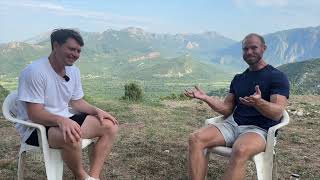
Freerunner Tim Shieff talks childhood movement, the rise of parkour, and his training philosophy. He uses Swiss-ball balance work and a framework called "springs and swings" to teach jumping versus swinging mechanics. Chronic ankle injuries pushed him to study biomechanics and eventually start a rope-flow business and School of Biomechanics.
Chapters
Thanks for coming to Montenegro. It's been special to have some time together. We've connected online, known each other for a while. Very different to finally be in the same place. You've got a very broad background athletically. I know you were doing parkour and then you've explored so many different modalities. But what came before that? What were you like as a child? Were you playing football and rugby or in the trees?
Yeah, climbing trees. But football was my. I guess that was my societal path. But I had a best friend who lived opposite me and we used to always be out climbing trees. And then we played football as well. But I'd always be upside down. My parents said I was upside down more than on my feet. I remember like Michael Jackson coming on and I'd learned to spin on my knee. So just on one kneecap and you could just go like. Just self taught kid, right? It's not that hard. But it was so fun to me watching Bonfunk MCs on MTV, like Free Freestyler video and like being amazed by breakdancing. And I actually managed. There was a breakdance crew in derby I started training with at 13.
Yeah, cool.
And then. But even I always remember like handstands. I could walk on my hands at 10. Like I used to get the tape measure out and my door, the kitchen door frame was the start point. And every day I'd try and beat my distance at like 10. And eventually I made it to the living room, which was the length of the corridor. And then I made it into the living room and around the coffee table. And I could do that like I was doing that as a kid. And then by the time I couldn't hold a handstand until I was 14, so it was like I didn't care. I didn't care about holding it. I wanted to like do something with it. Right. Rather than be on the spot. Who wants it? Like babies learn to walk rather than stand still. Right. Like you have that anyway. But that was kind of. My background was handstands. And then that led to break dancing and then that led to parkour and things like that.
Were you fearful about any of that? Like, I think inhibition holds most men back from getting into things like break dancing. Like anyone looking at it thinks, well, that's. That's pretty cool. But I could never do it.
Yeah, I know I did. I think being a kid, I was just, I mean.
Yeah.
Kind of lucky that I started at a young enough age before that creeps in, Right?
Yeah.
But it was just always so such a deep natural desire that they had. And I do believe we each have a purpose. And it's more. I think our purposes are more obvious that when we're younger and they can get misdirected as we get older through injuries and chasing different things. But, like, generally what you do as a very young child is. Is closer, probably closer to what our purposes are. And that was mine. So something in movement. And then I. I also enjoyed things like maths, and I was doing Rubik's cube at, like, 13:14, so there was a part of my mind that really enjoyed that too.
Yeah. Really faster.
26 seconds. I got, like. I got, like, F2L and, like, the main algorithms, but the next to get faster was you had to learn, like, the 50 algorithms of each end at the bottom. Yeah. So I had, like, the bass. But I. You know, I go through these chapters of that kind of stuff.
Yeah, you've always kind of had this deep dive mentality. You find something.
Yeah, I'm a deep diver. Yeah. Yeah. And then also, loving the body is like, I do believe spiritually, God, whatever, like, that the one thing you're born with in the physical is your body, right? Not even your clothes, not your house, your body. And so, like, that's an opportunity and a tool to explore for play and joy and things. So it's like breakdancing is that you don't need anything but yourself. The floor music's great, right. Parkour yourself, the environment. You don't need wheels, you don't need a bike, you don't need any equipment. So there's just something in that. It's like, were you conscious of it?
Like, did you feel that in your heart as a young man, or was it just getting out and doing the thing? And now you reflect back on it in that way.
There was, like, a sparkle of it, but I never fully assessed that. But I think in my late teens, I was like, yeah, there's something in, like, not needing just my body, like, and it's hard. I always feel like cycling just is not as fun as running downhill because, I don't know, you could drive an F1 car, but I'd rather run as fast, like Usain Bolt or run like Killian Journey Down a Mountain than drive an F1 car. Because, like, what's greater than your own speed, right? Your own body, like, but. But the challenge is being healthy and fit enough to. To do that.
Was it a rebellious thing as well? Is there's a bit of a grunge culture to break dancing and parkour in a way that, you know. Were you with the spray can as well, or.
I wasn't, no. I was never like vandalists. I was never litter or anything. Like, it wasn't that. But. But the rebel. Yes. I've got a. I've got a huge. Bless you, Rocco. I've got a huge rebel in me. That's like.
Was that part of it? Was it. Were you breaking away from something? You with that.
No, I don't think it was. Although, like, if security would.
Yeah.
Talk down to me, I would probably give them back when they're nice to you, you polite and you leave. But yeah, more probably more like chasing attention, like from men and females. I think that was probably more factor than the rebel. The rebel, yeah.
Shine off flight.
Yeah. Although I, like, I hate being seen as a show off. Like, I won't just be at the gym doing backflips. Everyone can see.
Yeah, yeah, No, I don't see that.
No. But that's because maybe inside I want to be doing that and I know how to hide it because on a deep level, like, I'm putting it on Instagram, I want my schoolmates to know that this is what I do outside of school. So, yes, it's a lot in there, but, yeah.
So parkour allowed you to express yourself. How analytical were you about what you were doing? Was that already transitioning into what you're doing now? Or was it just like, nail the trick?
Not even. Yeah, maybe some. Some element of nail the trick. But it was. It was just go out each day without even a plan. Like, go to a spot, like, and you just come up with the challenge on the day, like. Or you lie in bed at night and you picture like, oh, this spot. I wonder if I can do that. I didn't even think about that jump. I wonder, like, next time I go there, I'm going to see how far that looks. Maybe I can build up to it or there's some equivalent, safer jump I can do. But it was very much like in the moment. You're in an environment. What can I come up with as a challenge? Can I one, one legged stride that to that? Can I two foot? If I can I catch that and then push back to that? Or like, it's. The absolute joy of parkour is coming up with a challenge in an environment that's at your threshold of safety and danger. Obviously you want it to be risky but still safe and that's where the most joy is. But like, coming up with the progressions to that which is obviously we apply it in the gym. Progressions, regressions. Right. It's coming up with that to the challenge I want to achieve. So there's this 15 foot roof gap but I've also got, and there's another area in Derby I can do the same size gap but it's only on flower beds. Oh well, I've done that. So then I know physically it's, I'm capable. It's just here now. So it's, it's that whole, It's a whole 3D game of like fitness biomechanics. The body with fear which is lost in the gym. You put a pull up bar over 50 foot drop, you're going to change what athlete can do what pull ups there. And you know, maybe it's 20 foot. Is 20 foot safer, 10 foot. When does the fear creep in and is it a spectrum and stuff? So parkour just gave me the access to these questions and it made my approach to training like anyone's approach to training, just more of a spectrum. There's more, I don't know, like tentacles of two to training and it feels more wholesome.
Should it be brought more into the gym environment? The parkour? I think there's like, yeah, there's touches of it in the athletic world of like people experimenting with different types of jumping in the gym. I think there's a bit of a shift towards more plyometric work in the mainstream fitness or the athletic fitness scene.
Yeah.
Like could it be something that becomes more incorporated in the way that CrossFit kind of changed the way commercial gyms look?
It will get there. Yeah. And it totally should. The hardest part of it is having a functional body for it or facing the level that most people would be at when they begin.
So how do you get that?
That's the ego, Right? Well, you know, it's like, yeah, you, you accept that I have to jump 5 foot and be progressive with it and, and do that. But I don't know, superset it with something that's hard deadlifts or something that you used to. Or yeah, it's like. But I honestly think bringing more parkour elements into the gym would make so many people have a much more fulfilling gym session. Because it's not always like you can't always lift more weight or run a faster 5k. But with parkour you can always make the jump slightly different so that you can feel like you feel fulfilled every time without having to actually be better on paper. But you've just done something new and it's a different way of finding fulfillment.
Yeah, that's. I've done that in some ways with my own stuff. More emphasis on skills, the juggling and the foot juggling and more emphasis on mobility because it's, it was kind of pushing me towards steroids because I like bodybuilding and I like being strong and it's just like, oh, these guys are so big and they're so strong. It makes you lean towards anabolics. And I never really wanted to go that path and I'm so glad that I did.
It's like the road of bodybuilding leads to that.
Yeah. If you're obsessed with that and you don't have multi dimensions where I think if you have these other dimensions and you don't really want to get too, too heavy, like even if you look great. Yeah, that's maybe the, the exception to it where he's tricking and he's massive. But yeah, it's not like you have to go that way to feel fulfilled. I think if you have that entry level parkour, it changes the way you look at the physical environment as well. Even when we're down at the river here, like seeing you guys do that trick across the bridge, you know, going under, like bouldering, I was like, I thought there was no way.
Yeah.
I honestly thought like Jonathan, like, oh, there's no way he's going to do that. And he's like, oh, he did it. He's pretty wiry. You know, he can do one arm chin ups. Then I saw you doing it. I'm like, there's no way, like he's going to just. I was really scared for you, for you both, honestly. And then you both did it, you.
Held it down, you didn't react and you just let us do it.
Well, because they're climbing across this bridge and the water's about this deep underneath, there's all sorts of stones.
Yeah.
And it wasn't going to be a nice fall if like, no, I wouldn't.
Have been nice if I was going to fall. I would have had to. I would have been able to control it. But it was basically a tabletop challenge where say there's a table and you climb around and up the other side, but on a bridge over the river. A bit of a drop. But yeah, those kind of challenges, that's what like climbing is another. Like you can put labels on climbing, parkour and things, but it's just a crossover of knowing your body. Right. And knowing your. Knowing an environment and what you're capable of in.
Yeah.
In that in that environment.
But it's almost like rewilding what you do in the gym, like building potential.
And then going yeah, the gym should be that. Right.
Putting that into the world, into if you've got a challenge while you're building something or while you're playing with your children or when you're at the shops, like you're, you're, you're. The way you look at the world must be significantly different to the average person who's even fit as well. Maybe you can run a, do a triathlon, but the experience of the physical world is significantly different. So you're talking about just start with five foot jumps or four foot jumps or three foot jumps. Yeah, like everyone could start. If you can walk, you can start. I guess. Do you have that laid out? Like is that something that's part of your school of biomechanics?
Yeah, I just last year I made a. I call it springs and swings. Yeah. And so that was my two favorite aspects of parkour is jumping and swinging. Right. And so I call it springs and swings. Because when we jump it's kind of the spring mechanics of the ligaments, the muscle, the fascia, the tissue is springing us forward. And then when, and then that's when we're above our center of mass is above the obstacle we're springing. When we're below the center of mass, below the obstacle, we're swinging. So the physics change because then we're now using. There's still some pendulum in all of it, but it's, it's less about the spring. There's still a bit of recoil, but yeah, it's more the swinging mechanic. So it changes how it works. And in that is like you've got standing jump, two footed. Right? Standing two footed jump. You've got one run up jump off one leg and you do train that off both legs. Then you've got plyometric two footed jump. So you jump two foot. You reset your arms whilst you're in the air so that as soon as you land you come through and then you've got strides which is you run and you jump one leg, land on the other leg like a, almost like triple jump.
But we call it bounding.
Usually bounding. Yeah, yeah, it came up sprinting world. Yes, it is exactly bounding with a set landing. Some people do it on rails, which is insane at a certain distance. But generally you can do what we use plates in what I teach. And then you build to or you know, you have two curbs of a road and Maybe you can do one plyometric in the middle. Maybe you can do one bound in the middle. Maybe it's bigger. You have to use two bounds, and you try and take it down so that you can do it to one. Or so easy to set up, and so much more rewarding. And then you land with precision. Like, touch is everything. And in the gym, you don't really train touch with parkour like this. It's the ninja, right? And you're confident in the touch. You have to be comfy. Yeah. I watched the old Parkour Generations video recently, and they just said there's two things to parkour. The physical conditioning and the touch. So you're physically strong, ready, capable of jumping. And then you have the softness to absorb, to land, to, to feel, to know how much to throw in so that you can land and be in control all the time. So I'm like, I love the simplicity of that. You prepare, and you can use a gym to prepare. You can train outside. But then people don't have the touch. And that's what the difference. When me and Jonathan can climb, we know at every moment. I can reverse out from here. It's not. Suddenly. People often picture that's why you didn't.
Have fear, because you could.
You could have come back at any moment. I could come back and. And the first checkpoint, I knew that, like, if I had to drop, I'm pretty confident it would have been fine. Obviously, if I'm hanging upside down and, like, slips.
Yeah.
No, but I wasn't. I didn't think every step of the way, okay, boom. I could always reverse out of that and go back. Right.
Like.
But it's just an. It becomes a knowing. Yeah, yeah, yeah.
Scary when you don't know.
Definitely. I get that. Grateful I did it from a teenager, but I think there's so much value for, you know, kindergarten, teen, maybe kindergarten, but like, early teens, before teens. Teens and then adults. Like, getting them to move this just to balance on a railing that's a foot off the ground. To be able to hang from a wall and get on top of it. You have to use your elbow. You know, maybe use support in the beginning, but, like, simple skills, but, like, wonderful. Like, to experience doing them smoothly.
What were the injuries that drove you deeper into understanding the body, into biomechanics and things?
I got into running. Like, I kind of.
So it wasn't parkour really, that broke you as much as.
No, like, interesting. I mean, it might have been. I kind of checked out a parkour. I did Parkour from about 16 to about 26, 27. And I've been successful competitively. Been known by all the parkour athletes around the world. Was running. My YouTube channel was pretty good with parkour. And you know, you get bored climbing the same mountain all the time. Like I was kind of over it. Got into other things and I read Born to Run and got into running.
Born to runs are really cool.
Yeah. Chris McDougall. Yeah.
Super inspiring.
Tarahumara. Very inspiring.
I got those sandals that I've got are pretty much like. I think he inspired that whole movement of. It's really cool how a book can.
It created a movement. That book did. But so I did an obstacle race. I remember I did this 800 meter obstacle race and I, I should have won it. I actually up on the monkey bar. But. And, and that was my first obstacle race. And I thought if I could do the running part because I was gassed, but because it was short enough I was able to. To do well if I can. There's all the spartan races. I'm like, they look kind of fun.
If I can run.
So. And then I read that book and I did 5k park runs. I was going out on Strava trying to beat my mile time every single day. Like, boom, boom, boom. Got into running. Had a good stint of running for about four years. Five years got into trail running, mountain running, ultra running. You know, Kilian Journey did. Went to one of his races and vertical K's and did it all. But ultimately like my. My ankle started to really. My right ankle specifically give me problems. And that was like, made me kind of. Yeah. Desperate to solve it because I want to run more. I want to run faster. But these. There's something biomechanically stopping me. You know, my axle's bent. And if you. You run a car with a bent axle for long enough, eventually something's gonna happen. If you can straighten it and go, it's gonna go longer. That was my thinking something to that effect having. And then I. That led me to things like functional patterns. Was my first kind of in. On the fringe. I was doing yoga in the more traditional routes of like, oh, I'm. I'm injured because I'm not flexible enough. If I just get more flexible, I won't be injured.
Yeah.
Which is the. That's like the entry level way of thinking into it. And of course when you get into it, it's much deeper than just flexibility. It can definitely help. But. Yeah. And yoga might not be the best way of getting flexible. But that Was my like noob, as a lot of people do, you get into, you get injured, you think yoga and things. Right. So.
So if you wanted to run super long distances or do the Spartan races now, what would you do differently? Or do you think what you've. What is it that you've learned between now and then that would allow you.
Yeah.
Do you think it would actually let you do it now or is it just.
I'm just really tough. Yeah. No, I mean it is tough. I'm less attached to like wanting to win a race. Yeah. I feel like a lot of my desire was a bit unhealthy and the psychosocial or whatever they call it. What's that? Biosocial.
Because you wanted to win, because you wanted approval.
Wanted approval, yeah. Yeah. Like, and even my own approved like the feeling of like whatever it is. And we can go in real quickly. But I mean it's worth saying, like my father gave me. I felt the most warmth from my father when I was successful at that. I played football. That was. Missed that bit. But I played a lot of football. Oh, I did say that was my main thing.
Yeah.
Aside from everything else. And he, he always said he loved football but was never good at it. I was actually okay at it. So he could like. So he was like, got to do it vicariously through me. So therefore I get approval from my father when I'm successful at sport, when I score goals, when I get man of the match, whatever it is. And then actually I'm even better. I'm at a world class level with parkour. I can, you know, that's. He was proud of me. But it's not really love because it's, it's not really. It's cool to like be good. But what's. What was driving it was the motive to be seen as good. Not, not that it was just like, this is the joy and I happen to win stuff. But that doesn't make a difference to me. It did. It meant something to me that I can feel was an unhealthy level. So it's a lot of my, my drive became unhealthy and then it carried on into running and it carried on into like I did CrossFit and I got into cycling and I just noticed I was just moving laterally from, from sport to sport, wanting to be really good at it and not really listening to my body when it's, you know, if it doesn't. You don't listen to the whispers. It starts to scream. Right. And so I was forcing it to do races on races. There's only so much recovery can do when you're just not actually, like, honoring the. That it takes years to build up, like, a real base level. And I think I just didn't want to pay the man and rush to try to get to a high level. And running is the most. The most honest. Well, I'm sure there's more, but maybe parkour, but because it's so simple. So simple that makes it almost the most complicated thing and the most sophisticated. And I'm like, I want to master this first basic of human, like, athleticism is to run. Like, and if I can master that, then everything stemming from that will become better. That was kind of part. But, yeah, still maybe the unhealthy drive to prove something. But still, I think the question's fair.
So what. Yeah. On the athletic level, what have you learned that. I know you've been down many paths with your education, with your nutrition. What is it on the mechanical side that you value most?
Yeah. So there are. Physically, there's one thing that really helped a lot was actually playing with balance, like, as a tool to develop. Stability is a funny word within certain circles, but, like, when you challenge, when you're. When you're on a Swiss ball, the way I use it was three ways. Kneeling, sitting, and then on the belly. And from sitting, we can go for the back. But there's this chaos beneath you, right. And when you're balancing, you're not thinking, oh, move my right leg that way, move my left leg. The body is kind of doing it by itself. I'm just setting up the scenario. I'm on the ball. If I use a tiny ball, it's going to be almost impossible. If I use a massive ball, it's too easy. So you find the Goldilocks zone of challenge, where I can be there. Maybe I'm there for 10 seconds. I come off and slowly build up to a minute, make the challenge a bit harder. But there's this. There's this natural recalibrating of the body that happens when we do that, where. If you. When you fall off, it's often not because you swung one way, too. It's when you. You're falling one way. So you try to rebalance by swinging the other way, and you overshoot the other direction, and that's what takes you off. And when I was doing this, I was noticing how much it was just softening a lot of the air. Like, kind of my joints and my muscles were learning to move less. Like, in the beginning you're like that, right? And then later you learn the soft motor control, whatever's happening as well as that. It's like a. I consider it like a lateral strengthening. So there's not like a lengthening and a shortening. It's like a. I'm being challenged, my knees being challenged this way. And I'm learning to kind of strengthen the joint from a different capacity. And I'm not someone who goes deep into like the physiologic physiology, physical physiology of it, but I felt considerably better in it. And that was actually inspired by speaking to Weck. And his journey was like just playing with the Swiss ball. And again, it's just play, just get on the Swiss ball, put on music podcasts and just play with it. What different positions can I come up with? How can I challenge myself? That was huge for me. And that's one of the main things I teach. That's the first port of call with the school of biomechanics. The first module is always just play with the Swiss ball. And I think everyone could benefit from that alone as a physical practice. And then there's other things, you know, with rope flow and other practices that came in from there. But like, the main thing that I'm like, glad that I discovered that's helped me is that one actually it's a humble practice and just balance is so overlooked. And kids naturally are drawn to want to test their balance. Like you must, you know, kids climb on a wall, you hold their hand, you might have a bit of fear that.
Yeah, you see my boy, he's five months. He's nearly five months old. Yeah, just gone. Five months old. He wants to balance all the time. Whenever you give him the opportunity to balance, he's like, lights up, it's like.
It'S on his face, it's hard wired in his right.
Bouncing on my hand. I'm holding his hands, it's like super clear.
It's cool to see. And then even they get to six, seven, they balance, you know, and we don't. They get to 12 years old and we put them on a football field and see who's the best.
Yeah.
And it's like.
Or six.
Yeah. Even younger. But it's like, why don't we feed, nurture that part of us that's innate to develop? And because how many adults or old people die or fall over, break the hip, they learn to lose balance, but we don't develop it or maintain it or have even any infrastructure for like, what is a good way to. You could do slackline, but that might be a hippie type thing. So, you know, WEX got the Bosu came from, developed from the Swiss ball. You can use it in different ways, but just maintaining or developing that as an athletic component is so overlooked. So overlooked. And then there's the concept of static balance where you're on a Swiss ball and you're trying to maintain like a homeostasis while chaos is below you. To something like running or on a basketball where you're changing direction, but you have to maintain balance. Because if I'm off, I can't change. If I'm falling too far this way, I can't change direction. Or if you're in an MMA match, you're trying to take someone's balance. If they take the balance, you take them down. If they can maintain balance, you can't take them down. We never train it as like a principled aspect of athleticism.
People say it's not specific enough like that. If you create it.
Hard to find. Yeah, yeah.
Too much chaos underneath that you, it doesn't work. They're waving your hat at you. We're transporting materials from below in the car park up to where the new pads are going in for cabins and transforming the landscape here.
Live and direct right now. Yeah, yeah, I get, I do get that. I get that it's hard to be specific and translate it, but I think it's a fun, it's a fun fundamental that you could use it as a rehab. It may work as a prehab, I think so, maybe not, who knows? But as a, as a non serious, like maybe it's undefinable, but maybe it's good to do undefinable practices because you come out happy from it and you get an accomplishment of becoming like. I don't think there's one person that goes through that module in my school that doesn't have great feeling of like success and reward. Like at the beginning I wouldn't think I'd be able to do. I would never be able to stand on it. And now I can stand on it. I would never think I could do 10 seconds sitting. And now I can do two minutes or something and it's like. And there's just some reward in that. And they don't feel drained at the end of it. They don't feel. The nervous system doesn't feel tight.
No, that's the thing is like, you can argue against it. Hey, there's no research to support this or blah, blah. But there's very little cost. It's Joyful and you get significantly better at it in a short period of time. So what are you. What do you like? There's very little potential downside and there's a decent case for upside when you experience it. I played around with it quite a lot my late teens, early 20s. And it's fun and it's fun to go from feeling really awkward to being.
Able to do a bit and it lasts. That was another thing when I was looking for things in a belief in God's system. There are some things that take maintenance and there are some things that you can develop that just stay with you. And so things like strength, you can build it and it takes more effort to build it and then you can maintain it with maybe a little less effort. My experience of flexibility is it takes some maintenance. Some people may be able to have it and keep it. I don't know your thought.
I think strength and flexibility generally take decent.
Yeah, yeah.
Depending on the muscle group and such. Like the hips tend to tighten more because we sit so much and hamstrings maybe keep it a bit more because.
But yeah, whereas that you're going to.
Have it for life.
It stays with like at least years that you can do a top up in five years. But like do you have it that it's like the saying is like riding a bike, right. That's a balance activity. So you know, it works like that and so things like rope flow. Like I'm going to know that I could walk up a mountain when I'm 80 and still know how to do this because it's a. It's a pattern that I've understood and downloaded and it's. I don't need to maintain it, you know.
So Swiss ball is one of the fundamental things and gaining more what I like to do.
It's a sphere. We love spheres. Sorry, I love the tangent but like humans, we play football with balls, ping pong tennis. Humans and balls, there's a relationship and standing on one is quite a unique version of the human and the ball relationship.
You like, you like your fruit as.
Well as you like fruit. That's one of the natural watermelon, bro. Yeah. Love me a watermelon season.
Yeah, it's cool.
Right now.
Share a little bit about David Weck as well because I know he's had a big impact on you from a methodology perspective. But I also feel that you have a connection with him as well.
Yeah, I love David, man. I first went over in 2019 to San Diego to visit the Weck Method Lab. I Was into functional patterns for some months. Long story short, Naudi banned me. I was just discovered David Weck's Instagram like a week before that banning. And I was like, what else is in this space? I'm in this fringe biomechanical online sphere. Weck was wearing three pairs of glasses on his head, talking really fast, bounding around on Sawdust, saying, look, I can dance like a boxer on Sawdust and I'm always in balance and control. And I was like, I don't know what this guy's on. I don't understand specifically what he's saying. But you know, let me. It was. I sold my shares on my last business and it was. My last bit of money I had was to go to San Diego and do the Weck method training. And I met David with that, you know, and I spent, I booked two weeks and I spent three days doing the course with him and Chris Chamberlain, who's one of the most inspirational athletes humans that I know. And at the end of the three days, me and David had connected. I hadn't got a. He said, you can stay at mine for the rest of your time. And we ended up going to Joshua Tree. He booked accommodation. We drove over to Joshua Tree and just downloaded to me. We just moved and trained and showed me. I tried to basically understand him from what he's trying to share and feel it and experience it in my body because it was mind blowing to me.
How was it absorbing? Just.
Yeah, yeah. Intense. Cool. I don't know if I fully understand or digest it. Maybe I'll be able to look back on it in the future, but he's intense. I. I think a lot of his stuff is right. I don't know that all of it's right, but I think I find it interesting. I think he's got way more. I think if you put his, if you put David's movement abilities onto like a 20 year old athlete, you would see an athlete.
Yeah.
But because he's 50, gray hair, skinny arms, we don't see him.
Yeah.
But because I had enough of like, I don't know whether it's parkour, but what we know in ourselves, we see in others. And I had enough in myself to see something in him that I think most people don't when they see him move, they don't get it. And I could see that his ability to move with balance and maintain balance was something very unique and that. And then, and then I felt it. When I started moving with the rope, I started to feel it. And so like, because he, he's, he's like he's on a permanent mushroom trip or something where like he'll, he'll go through phases. He's someone who will like do like one or two months of something super intensely that he's just discovered and then move on and never and forget he did it. And like, you know, so I was trying to like get a timeline of him of things like what's got him to there because he might be teaching the rope and the pulses, but there's things I miss. And that's when I got. Came across the Swiss ball stuff was like, that was a big chapter of his. He had a really bad lower back. I remember saying how weak his feet. Actually his foot conditioning stuff really inspired me. I had really bad. My feet are so much better from what I learned from him. So he had the foot stuff. The Swiss ball helped me a lot. And that was after the rope. So like going through his timeline was like. Because he's 52, he had a replaced hip from earlier stuff and he, he was. I was in Joshua Tree with him sprinting on the hard asphalt. Like I was driving the car and filming him and he's just like, I'm like, this guy moves, man. I can't run like that in, in, you know, barefoot shoes, flat sole shoes. Like zero. Yeah. That was just. There's something in this in this guy that's like different. And I just. It's cool knowing like. Yeah, yeah.
That was 2019.
That was 2019. Yeah, yeah.
And did that change the way you look at business? Because I think he's one of the men who's done really well entrepreneurially in the, in the business space. I know you've, you've progressed along that line.
Yeah.
Was he a big influence on that as well or.
I mean, I wouldn't say it fully influenced in the business. I mean he gave me my business in a sense. Like he gave me his blessing to start a rope flow business at that time. Or was it a bit later or mid 2020? So I went back. Chris Chamberlain said to me, just put 40 hours in on the rope. Like I went back and did 40 hours. Like two, three, maybe a month maximum. Did 40 hours.
Were you getting feedback from anyone or.
Just mirror me and the mirror in the gym.
Making stuff up.
Yeah.
Doing the things that you kind of learned.
Some of the stuff I learned, but just like the rope's such a good tool to make stuff up with. And like I had. I just have enough of a self physical awareness from the breakdowns and from the parkour that I can like you can give me something, I can run with it. And David knew that could sense that from me.
I love experimenting like that as well. Just making up games with any kind of implement, any kind of sport.
Yeah. And you just swing shit. Humans like we like to balance, we like to swing shit, we like to throw shit. Like you're just swinging a tool. Like it's a fidget toy. Right. Like just swing it. Like what's good? Oh, oh, oh. You know what's coming from that. So 2020, I had three business in my life. My first one was I was a professional freerunner. We did sell free running clothing. I knew the print service that we made the clothing at. My second business was a vegan clothing company. I knew use the same print service from them. We built it on Shopify. I knew how to use Shopify. Lockdown came. I was passionate about RopeFlow. When I'm passionate about something, it's the best time for me to try and share it with others. There's another company at the time I was an affiliate for, I did like one video and they sold like 30 ropes like instantly. And I was like, maybe I'll just make my own ropes. I was like, I wonder how David would feel. Spoke to David, started wear the rope. Had my own spin on it. He could give his complete blessing with rope flow. Like he's got his own other businesses. Bosu's propulses other patented tools that he can always make money from indefinitely. And. And this devil helps feed people towards that anyway. So he's happy for us to go up with the ropes and do that. And I just using Shopify bought reels of rope, cut the rope, made my own ropes made course. I'd made one course before that Mindful Warrior course, which was like a couple years before. I'd made and sold on my clothing website as the platform for it. But I got that experience making a course. I made a rope course to go with the rope and sold it through lockdown and started a whole new chapter of my life and my business. Yeah.
What impact has making some money had? Yeah, making money through your own business.
Yes. I mean making your own business is the greatest personal development tool. I think you say the same thing, right? I definitely agree with that.
And it's a great next layer on top of the athletic people. Looking at athletic as this is a way to develop yourself. You need to get up early, you need to run, you know, the Goggins stuff. And whichever way you're getting at it, whether it's CrossFit, whether it's Jocko Willink, whether it's BJJ or whether it's something more artistic. That athletic thing is real. But there's another level of facing yourself when you go into business of like responsibility to others and putting your voice and your intellect out there. Not just, it's not just toughness and discipline or consistency of you doing you. It's you interacting with others and interacting with the market.
Plate spinning, right? You got to spin so many plates. Yeah. Knowing how other people perceive things like having self awareness of like how things come across.
Yeah.
Trying to. I was going to say earlier like when you said who's like Ben Patrick's definitely someone that inspired me in business because of his approach of open source given I think literally I think I was just doing these over toes. So when I started the business I was definitely like taking a lot of inspiration from, from him and obviously what you've you helped with him build there as well. But like that, that open source approach and the ethics and like giving a lot out for free. Free but then charging for like the systemized approach to it and that was, that was big on me. Big imprint and just having faith that like in that system of like I don't need to use manipulative marketing. I don't. I really try not to use pain point because I do look at a lot of business advice online and I've spoken to people and they're just like telling me to do CTAs more or pain point marketing and I'm like just something in my soul doesn't feel right with all of that. Right. It's okay to use some testimonials but I'd rather someone wanted to have a more playful, self loving approach to training, be drawn to that aspect of the rope than going I've got a spine injury, shoulder injury. I'm desperate to fix it with something physical and whatever and it certainly can help those things. But yeah, I wanted to find a more ethical approach to my business that doesn't seem draining to my soul. And sure it might take longer to build up but the organic nature of what I'm doing and the customer, good customer service, word of mouth is the best focus on getting good word of mouth. Like it takes longer but this year is the first time I'm really at a place with the business where I'm like comfortable and actually starting to save money and not just surviving. Right. So it's truly a blessing and I'm grateful But then a new set of problems always. It doesn't end, like, now I've got freedom to do my time, and I've got time each day now how can I spend it valuably? That's nourishing to me and can, like, you know, you look at spiral dynamics, right? What is yellow? That's the win, win, win, Right? Like, I've got time to find the win, win, win. But I just want to twiddle my thumbs or, like, chill for a bit, you know, at the checkpoint. But, yeah, the new problem emerges is, okay, I got this freedom. What do I really want? Because I think before I was motivated by fear of. Of survival, of not getting enough money. But now that fuel's gone, I'm like, what's the fuel? Am I being pushed? No. What am I being pulled towards? And it's like, I feel that I'm in this in between stage right now. I'm a little bit unsure of how to invest my time, you know, who to spend it with, where to spend it at. So I don't have a clear answer on it, but I just know that, like, I wouldn't give this up for anything. Like the personal development tool of your own business. Everyone should have. Is it Nabil, you know, him. Naval. Everyone should have. In the Future, there'll be 8 billion businesses like, something like that, you know.
Even if you're not selling anything. The thing like Peterson talks, Jordan Peterson talks about as well. Like, if you don't write essays, you don't even know what you think about stuff. And it doesn't have to be a written essay these days. It's literally talking to your phone for 20 minutes about something you feel passionate about and. And put it on a free substack. Like, people are trying to fit themselves into these little bubbles of reels and tweets. But what do you really think? And if you're not publishing what you think, you don't even know what you think. I've been writing this book, and writing a book is like, what do you think? A to Z? It's not just, what do you think about X, it's like, what do you think about. What's your whole big idea about this thing? I think that's another level of. And it's been really, really challenging for me. I don't know if I'll ever get it published, but it's.
Writing a book is.
Yeah, I'm writing like the whole book of the whole system of, like, what I aspire towards and Opus Magnum already.
You know, time for that one.
Yeah. But it's. Yeah. So the, the journey continues of where to next. You've been traveling, you've been meeting people, you, you know, Europes course is strong. You got your school of biomechanics. What, what if you did know what was coming next? Like what would be the next things that you want to publish more into and explore more into?
Business wise or life wise?
Yeah, either way, whatever's coming.
Well, what came with like what you're doing here I think is really inspiring to me and that's why I'm here. But I sensed it. But just to be is incredible. But like I haven't got a physical imprint on the earth. Like not in the ego way. I just like I don't own my home, I'm renting. I'd love to buy a house, I'd love to buy land and make use of that where I can help regenerate the earth and help other people either share with them what I've learned or offer space for other people to share and build a more loving future together. Because I think we're both well aware that there are pretty dark forces at play on the earth making decisions for the whole of humanity and they are not at all based in love. They're actually probably intentionally the opposite but we don't know. But they, you know, pretty dark. And so to just do my best to continue to develop myself whilst having an opportunity and you know, like we said, business is a opportunity for physical development. Talking with you here, having your own land with other people on it, that's going to be more. An even more opportunity building. Trying to build, I mean a community can be an interesting word but like at least having a space to whether the community's there permanently or not yet start to work on that like support others with the same dream because there are more people coming and discovering that this is, they've just, they've made the business dreams but they're like what next? Or they made the athletic dreams and they're like, how can I actually give back with, you know, so it's like, yeah, for me it's get the land. And I think ready, fire, aim has always helped me in the past and I think you, you know that. Yeah, that's what you're doing here, right? Like, yeah, ready, fire. Yeah.
You've heard a bit of the story.
Yeah, yeah, I thought of it today. I was like, is that, do you know that one? Yeah, of course. Ready for it?
No, I just. When I came into this place, like we literally stumbled Here because my daughter said, go up there, Daddy.
Oh, yeah, yeah.
The end of three days after that, I was pretty much like, yeah, let's do this together. Let's build out this 3 hectares of land with this man I just met who just offered me a beer. It's the first beer I drank in five years because he didn't know me. And that's, that's how it began, you.
Know, and on a handshake.
I didn't have anything on paper.
Handshake deal. Yeah.
I was investing here for two years with nothing on paper. Like, let's, let's, let's see.
Giving this guy money to.
Well, I, I was looking that I was scouring the earth for someone who wanted to be on land, who wanted, who could buy into the vision of there can be a place where people can go, where they get better and, and getting better is different to different people. But it's, it's the athletic stuff, it's the business stuff and it's, you're talking about these soul mechanics. And yeah, people come here and they leave differently and they go and spend time up in the trees. They go and walk up and like, it's not easy to find someone who can buy into that. And I wanted someone who is on a physical location that wants to be on that location. I'm quite nomadic and I don't really trust myself to say, like, I want this land and I want to be here because I did it in Australia and I couldn't stay. So now I found, I found one person who's like, yeah, I'm, I'm here. This is my family land. I want this place to be beautiful. And he wanted someone who would back him to be able to, you know, to do something with it. And now we've had 70 something guests and it's, it's just still a work in progress. There's a lot to do and it's been massively challenging. But yeah, it was definitely a big, like, ready, fire, aim, like big leap of faith. Many times I thought maybe this is the silliest thing I've done. And you know, like a lot of time, a lot of energy, significant financial investment and still, still it might not turn out to be the best thing I've ever done, but I don't think I can regret it. Like, no matter what happened here, this has been amazing. It's been phenomenal having like, we get to share these experiences at this time. We did one before, like the other podcast, the best podcast I've done here. There was no roof on the gym. Everything was muddy and it was, it was still phenomenal. I like, I remember that time. So like that's, that's what it is. It's these experiences and yeah. Putting yourself forth. So yeah, don't, don't be scared, man. Like if it's.
Yeah. I think I need to apply it again to that. Right. I've done it for business and I've not done it like pulling the trigger on getting somewhere.
Everyone's doing it online.
Yeah.
But no one's buying a cabin or buying a hectare. Buying an Ako and like put a shed on it and get started.
Like, yeah, that might be.
And Jonathan's done it. And there's Max who's coming here next month from Austria. He bought himself a hectare of land. It's really beautiful in Austria. He would love you to go and visit.
Yeah, okay.
So he's, you know, and it's, it's happening. You know, Nico's done it. He's buying another place in France now. It's becoming a thing.
Yeah, it should be a thing. And I think just for me as a man, like, I don't really think I've become. I'm definitely not a man. I'm 36, but I still feel like a boy in many regards. Right. And like I can play this game of online but like actually like putting physical labor. Like we go to the gym but like I could be chopping wood and building shit and like that is, is a bit more gentle when it'll still get you strong. It's like more endurance. Not like one intense one hour. It's like eight hour days grafting. I've not really had to do that. You know, that would grow me up, that would help me, grow me up a bit and I'd get to. I have obviously got a mathematical mind to some degree, like, but I'm terrified to try and build something carpentry wise. And yet I should, you know, dimensions and things. Some part of me as a human, as a man would be and I could tell I would be fulfilled. I think I'd have to face some my fears from my childhood.
I haven't been through that either. The goat house behind the camera here, they built that while I was away. That's for the goats to be in during winter. Like putting that together intimidates me. Like. Yeah, how would you do that?
And yeah, but we should, like, we should, we've got to. Right.
I've got the opportunity now, but I'm still online and this and that and yeah, But I'm looking forward to it too. And it's. It's going to happen. It's getting closer.
Yeah. And we will have to face some. The reason we've not done it in our lives yet. Right. There's going to be some reason we've not. There's going to be a block in us. That's like. But I remember from my childhood when I. My dad's good at that stuff. Yeah. But whenever I tried to help him, he was impatient and he'd get angry and it's like, because he didn't know how to love his love a child. Like, so then that's created this imprint in me that whenever I think I remember I was in Australia and I was staying at someone's house. I randomly like, was playing with a ball and I smashed his glass window there. Like, because it's single glazed. I'm used to like double glazed. I can do whatever. Right. And then he came back and I was like so nervous to tell this guy I was staying at his house. And I told him. He was like, okay, like there's no reaction in him. And I could. In that moment, I was like. I was tense and afraid because I thought it was normal that you. If someone breaks glass, you speak to them that way. And it made me realize that my childhood, like, you know, for whatever reason, my dad was like that. But it's like, oh, I've got these imprints in me of like. So even if my dad's not around and I messed up, I would still feel I would beat myself up, you know, so it's like I think I'd have to go. When I'm building and I screw up, it's okay to screw up and not. And that self judgment and stuff that comes from my dad's voice will be there. So I think that we'll have to, you know, work through those. But there's the opportunity once you have the land to do that.
Yeah. Yeah. Andreas, who's here, built furniture here. Some of it stayed together better than others. Jubal as well, my partner in the project, he built a bunch of tables and chairs and there were bolts and things sticking out and things wobbling. But still a cool feeling of even if it's only sort of banged together. If you've done it and you're eating at it, it's a different feeling.
Yeah. And I've never had that. Yeah. So that I think has a fulfillment perspective and sold it continuing to develop. You know, I wouldn't say I've conquered the gym But I've done enough time in the gym. I've done enough of business on, like. It's like, okay, actually, like, do that side of the human. That's like the kid that wants to balance. Like, as the man you want to build. Like, you know, that's the growing up.
Yeah. Almost every man resonates with a thing of land and animals and having that more real experience of how to feed your family.
Yeah.
Be able to sustain yourself without going to supermarket every. Every three days.
Yeah. Well.
Yeah. It. You. Is it coming from the soul? Where is it coming from?
What?
These.
That desire.
Yeah. These directions.
I'm not sure that it is. I think it. I think it's because I think that it should be that I want it to. That I. That I do it. How do I put this? I think it's. It at a deep level. It's in all of us. Yes. So it is coming from the soul. So when I see someone else do it, there's a reason it resonates is because it's in me. But there's a reason I haven't done it yet. Because if it was a true, like. So it might be me manufacturing, doing it. And then on the other side of it, I might actually feel it, if that makes sense. So it's like, it's not the desire to do it that's pulling me, but I just know that I'm not fulfilled in the other things that I'm doing. And I feel like that could be if you've got to experiment with life. Right. So it would be an experiment to do it. And I think I have a strong suspicion that would feel something in the soul doing it.
But.
Yeah, good question. I don't think directly it is the soul pulling me because of that fear of my dad. Like, the voice behind, like, still there.
You have to do the athletic thing for it then not to be the main thing and then.
Yeah, exactly.
Thing for it not then to be the main thing.
Yeah. To realize that there's something deeper and more.
But it's not like that that becomes less valuable. I don't think it's just that it's.
A reshaping or part of the journey. Redefining. Yeah.
So what is this soul. Soul mechanics and soul conditioning. What does that mean?
Yeah. Big conversation. So for me, one of. One of the biggest lessons with biomechanics was there are things you cannot solve in the physical. Like that just go. Like, I could do every ankle program on the planet and it wouldn't fix my ankle because there's something deeper within me that's causing it. That's what I. I mean this was my. Is my strong belief now from like.
Obviously, you know it or is it a belief?
I think it's the truth. I think it's God's truth. But. But I'm still, I'm still discovering it and experiencing it. But I obviously haven't done every angle program on the planet. But I tried so many things.
I think you, I. I've. I think you know it and you're just gentle with your language.
Yeah. Yeah.
I want to speak in absolute.
But I can be arrogant. So. Yeah. So trying to be act humble. I know it. Yeah.
But it's been said. It's not, you know, the first.
Yeah. And repressed them. It's a. Repressed emotions from childhood like manifest in physical ways. So I think we can call it the subconscious. You can call it the mind our mind create. You know, people say it's the mind. If people go to a job they don't like, they're acting against their. They're not listening to their soul. Their soul's screaming, I don't like this job. And yet they continue to go. And then they get. Their hair falls out, they have cancer. It's like you're ignoring your inner voice and yet you're. Or then the inner voice can be the opposite. Where it's telling me to do racism, get approval. And that's not loving because the motivation is for approval and not because it's a genuine feeling in me. And each way overshoot, undershoot, creates the body to go, hang on a minute. Like we didn't sign up for this. Or you know, it manifests. So this repressed feeling within me of insecurity, of why do I want approval? Because I don't. I don't feel loved. I don't feel trusted. Wherever that comes from. So rather than feel my own sadness, I'd rather chase the approval from everyone. And it will never be fulfilled even when I get it. It's like an addiction. The addiction will get you to baseline and then the moment it's not there, you feel back down. So my ankle got better when I stopped trying, forcing, Trying to fix it. And I focus on other things. I started to look at my emotional state, look at my motives for why I want to run all the time. When I was running away from responsibility a lot of the time. Right. Because when you can just run every day and just make enough money online and then your diet's around that and then you just have to check your emails or something. And it's like you don't really build anything. You're not really fulfilled, but you feel like as long as you're running and your times are getting faster, that's the danger with a lot of athletic stuff is like as long as your numbers are improving, you feel like your life is fulfilled and at a certain point it won't fulfill you even if they are getting better. But for me, that's like just starting to look at my own childhood and what emotions are still there and recognizing that. It's like if you've got trash in your attic. There's a lot of talk these days with stoicism and things like that. Like, just let it go. Like it's a mental choice to let things go. But you'll notice over enough if you try that for enough years. As soon as you're triggered, that childhood stuff comes right back up. Like as soon as you're triggered again, we can think we've grown, we can meditate 24, 7 for 10 years and put ourself in an environment that's controlled when we're never triggered. And suddenly you're in the supermarket and someone cuts in front of you in the line and that's emotion's right there. And so starting to go, huh? Is there a way I can truly change? And for me it's that belief that if there's stuff in the attic, it has to come through the front door. You can't just put nails on the attic. And by that I mean the emotion has to be expressed. And so for me, recognizing I have a lot of anger at my parents, at my mum, not then projecting it at them or I can blame them in a sense of like putting the calling the spade a spade, but not in like victim mentality of like, my mum did this to me for that fucking bitch, you know? No, that's her. She's gonna have to face that in time. I'm trying to be a man now. I'll take myself out. She'll trigger me, send me a message, come around my house uninvited, take myself out. I've got a punching bag now. Get out on the punching bag. And then I feel a lot better. I feel a lot. And like, actually not this. I was a pseudo spiritual, like judging my own anger or projecting the anger back. It's owning the emotion, owning the anger, getting it out where no one is going to be the target of that anger, not judging it. Being a kid throwing the tantrum, sometimes that might lead to the Tears below it, whatever's. Because anger is just to cover up for the true grief that we're scared as, especially as men, to show that we're really sad. Being anger is accepted in society more than that. Yeah. So without going on too much a tangent, is really understanding my motivations for what I'm doing and then really trying to recognize my emotions in every moment or in every scenario, every conversation. What is triggering. What is this here? And then when something, a negative emotion, anger, grief, whatever is triggered, trying to own that and deal with that and, and that was. I mean that this is the start of a lifetime journey. I've been doing it for. For four or five years. There's. There are teachings that I've discovered on YouTube that I follow that, that have helped me understand this. But it's the hardest thing I've ever had to do because our childhood and all this stuff is just so buried in like. And society doesn't want us to like everyone else is in agreement that we shouldn't as men, we shouldn't express fear or if we cry as men, we're weak men or. Yeah, it's just, it's a real. You're turning against everything in society and inside yourself. Everything. Every wall I've built up is to protect me from these feelings. And so it's trying to bring these walls down to get to them. But that has been the most rewarding thing and actually helped me the most physically, biomechanically is the. Is the, the few incremental bits that I've been able to. To get through with that is like, huh. So it's not just do 10 sets of calf raises or step downs. It's like, yeah, you can do that. But also recognize there's a guy, Dr. Sarno, who has a really good book on especially on back pain. But his basic simple theory was that when we have a physical pain and this with spines, they'd scan people and some would have back pain and then scan it and have a disc, like bulging disc. But they'd also scan 100 people that had no pain and have bulging discs. So it's not the bulging disc, but the pain is coming from. And so what it was for them, it's the mind, psycho, psychological, whatever. We manifest pain because we don't want to feel an emotion. We manifest physical pain. So if I'm having arguments with a wife all the time and I'm always in this feeling, I'm manifesting injury because I'd rather be able to go, oh, my knee, my knee. Than Actually face and feel that. So it's like we are almost our own worst enemies. Because we, like a child, just feels their feelings. They don't carry injuries more than one day. We don't judge them for feeling their feelings so much like as much as we do an adult. And they're able to process, get the thing as it's added to them, they remove it. But at a certain age, it becomes less and less safe. Our parents sought to stop us feeling at our school system. You get secondary school if you're crying as a boy at secondary school, man, I stopped that. I cried once at secondary school, then I didn't cry again. I remember being a boy the first time I banged my knee at home and I didn't cry. And I felt proud of myself because I didn't cry. Because that was my dad's programming to stop me crying. It's crazy that just that's stored in me. If every time we don't cry, we don't release our anger. It just gets stored layers and layers and then we age and it speeds up our aging and we get gray hair and stuff like that. So it's like the reversal, the best anti aging, all of this is to remove the emotions. Now I believe they're stored in the soul. People could say mind, mental, psychological, whatever. So that has been my more recent journey is just understand the emotions. Because everything in life we're doing is we want to feel good feelings, but they should be motivated by purity. And when I say that, I mean I believe there is a ultimate truth of what is loving and what isn't. And most of us operate on a pain pleasure spectrum where we're running from pain and chasing pleasure, not what is loving and what is unloving. And that's a different spectrum. And so when I'm trying to do the loving thing to myself, say there's a piece of cake there, chocolate cake, and I want to lose weight. Like I could eat the cake and that would be pleasurable. But is it loving to me in that moment? It might not be. I might be overweight, whatever, but I might be perfectly healthy at a friend's party and there's a piece of cake there, and it's perfectly loving to eat the cake. And so in that scenario I can eat it. So to blame the ingredients of the cake for my body or to judge someone else for eating cake because I get affected by eating cake, because my motivation is I'm addicted and I'm lonely and I want to eat the cake, but they're Just a perfectly happy kid that's just eaten a piece of cake. It complicates things because then we can't just blame ingredients and it widens the picture and the scope of hard. There's this what's playing in the physical and the ingredients and whatever.
You've been super deep on diet. You've changed your diet quite a bit. I've also done a ton of fasting. I did a vegetarian for nine months, played around with vegan, low, low meat keto for a period of time. Carnivore. You've done a lot of these as well. How does emotions relate to diet? How do you see that now?
Yeah, that. So I was vegan seven years, did fasting, intense fasting. 35 days came off that meat eating keto carnivore. Now I'm currently.
What does it say? Five days like, huh? Did you have that much? How much fat did you lose? How much?
Oh, I was so gaunt, man. I lost £50, £40, something like that. But I felt okay until I didn't and then I ate. Like I think there's a distinct difference between fasting and starving. And most people would just, just think you don't eat, you starve. But I felt like I was fine. And then day 36, I felt like not good and I ate. So it felt like my body told me, but I definitely wouldn't. I'm quite an extremist. Like I think that shows the level of desperation in me, in me, like to finances, driven by whatever childhood stuff.
Did you find any answers?
Yeah, I found out that it wasn't the diet. Like it wasn't. Yeah, it wasn't the fasting. Like I want to solve everything with physical solutions and discipline and strictness.
Did you do any breath work during the fast?
I didn't know. It probably would have been more powerful.
Yeah, I did some breath work when I was. I was really into the Wim Hof stuff. When I did a seven day fast just before Manu was born, I was like straight into space. Like it was wild. When I was further into the fast, as soon as I did the breathing.
Stuff was just wow. Did anything come up for you emotionally at that time or.
A lot of stuff, yeah. When I was doing the Wim Hof stuff, like often I would have big emotional releases and visions and pretty wild.
I wish I knew, like, I wish I knew the emotional stuff now because I would have approached it so differently, but I don't know I even would have done it because 30 a week is like the middle path. Right. Like 35 is extreme. No one needs to do that. Like.
Like, if you're not really fat, I think really fat people.
Yeah, they can.
Different story.
Yeah, they can.
It's relatively.
They can go like two, three months. Right. Like.
So.
Yeah. Diet now. I look at it differently because I was blaming. Like we just discussed, I was blaming ingredients and I was very dogmatic on, like, I was reading Arnold Ehr when I started the fast, who's very much mucus, the mucusless diet guy. And most foods give us mucus, animal foods give us mucus. He's very raw. Raw foodist.
Yeah.
But then I ate fish and certain hallmarks, you know, I had salmon. I had a wet dream. And I was like, well, that seems like a hallmark of health. I don't know that it is now. I mean, I think I wanted it to seem like that, and maybe it is, but I don't. I can't say factually that it was. Something shifted.
But did you have a long period of abstinence before that?
I didn't. Yeah. I didn't masturbate the whole fast. You didn't. Your mind is not in that space, you know, at all.
So you had the salmon just at the end of the day.
Well, I didn't break it with that. I broke. I had like two weeks of fruit or more. And then. And then I was just like. The fast was like the penultimate thing. I thought that would heal me because, you know, the thing with fasting is when we're eating, digesting our body's priorities are on other things. And it's not healing the joints. And when you. When you fast, it has opportunity for like, the top the to do list goes to the joints and healing this stuff. So I thought I'd come off the fast, feel best I've ever felt. I could eat this diet and all the problems in me for when I used to eat meat and now, you know, and I can eat the perfect human diet, raw food, whatever. And I'd be like that. And ailments, injuries, niggles, digestive stuff all came back to me within a couple weeks. And I was like, well, fuck it all then. Like, if I'm suffering, may as well eat an animal. Right? That was my approach at the time. And then shortly after that, a woman approached me in Darby at the gym, actually, who was like. Had seen some of my YouTube stuff. Her boyfriend watched my videos and could see that I was like, desperate and seeking. And she was like, she's quite sensitive soul and was just like, have you Thought about how's your relationship with your mother and all this stuff. And I was like, huh, now you think, now you mention it, like there are some issues. And then helped me see this like emotional kind of side to things that I hadn't looked at because I was looking at the. So looking at the physical and like I said, trying to solve everything that way. And not one had one bit of awareness of like how my repressed stuff could be affecting my everyday life. And I just couldn't ignore it at that point. And I, I'm someone who's, I've retired when I was. I've never actually worked, to be honest. Like when I was 18, I got into university to do a maths and physics degree. I deferred it for one year to do pursue parkour and it worked. And then since then I've been my own boss.
Like still playing on the degree or.
Yeah, maybe Terrence Howard. No, not really Terrence Howard, but like someone more. No, maybe one day, maybe more like architecture or something like that would be quite cool. But I've been soul seeking from 18. I've been reading spiritual books. Essene, Gospel of Peace and Eckhart Tolle and Toltecs and Celestine prophecies, you know, that was 12, 15 years ago I was reading this. So it's like looking at Buddhism, looking at different religions, looking at meditation and it's just triangulating truth, right. And experimenting a bit, but then trusting that inner voice of like, no, this isn't it. Or like. Or go deep, deep, deep, deep. That's what I did with the fast. Just go to the end of it. Go as far as fast as you can alone to the end. And then you'll get the answer. And then you go, oh, it's smoke and mirrors. Like there's something else, something. This isn't it, this isn't it. Like, and trusting that I would know truth when I finally found it. And you have to hold on to some beliefs that aren't true for a while to know that even when your own dogma is involved. Now, now I can recognize my own dogma a bit more. Maybe I'm still be stuff I'm holding on to. But like, you know, there's discussion when you're in your 20s. You're like, vegan is the way, carnivore is the way. And then you get, maybe it's that I'll just do this for now, but I won't. You don't. You get less attached to it.
I can see that with the way you're talking about the road flow as well, that you're not, you're not telling us it's the panacea, the solution to everything. It's just you're inviting us into road flow and we're together.
But yeah, I said earlier, like on the Dunning Kruger, I feel like I'm like, I've gone through that bit and I'm just like in this middle bit unsure about a lot of things. But with rope flow, it's just like, yeah, you swing a rope and, you know, it's fun. There's some stuff happens in the brain. Maybe you can run, you can dance a bit better. But yeah, I've definitely gotta soften it. In the biomechanics world, man, there's so many people claim to be experts and have the answer. And I just think there's so many cowboys, but they believe it. I don't think people are like, they're not knowingly lying. Yeah, it's not malicious and there are results. But the truest saying is a broken clock's write twice a day and maybe it's more than twice a day, but like, it's not the ultimate and it's not guided by. Yeah, it's a lot of it's motivated by wanting to be the Messiah. I've had messiah complex and stuff. You know, there's a lot of that in that space.
Looking for the person who's got all the solutions and trying to be the person who's got all the solutions.
Wanting to be the person or a boy with fatherhood issues who wants a dad who will have the. Who will speak as though they know the answer because their dad was maybe more meek or something. And they want to find that father figure. And so then you, you have the codependency of the leader.
So that's the place to end it. In the mystery of what's the best in athleticism.
We don't know what's the future in business.
Where are we going on the soul journey? What's the land and the farm and family place gonna look like?
Yeah, yeah. All with to be continued, I guess.
Yeah.
The final thing that's helped me the most is, is that, like, I'm not Christian. I believe there is a creator. I experiment with prayer. Sometimes I think there's something there, like that's my future. It's like that relationship. I think if we can work on that, the better that is, the better everything is.
It's definitely, definitely a place of depth in the divine.
There's yeah, there's something there. There's something there. Yeah. I feel like it. I know your journey is like.
I've been exploring this a lot.
We haven't.
We haven't spoken too much about it, but, yeah, this.
Yeah. All right. Thanks, man.
Champion.
Yes, brother. Thank you, man.
Thanks for coming.
Yeah, thank you. Glad we did it.










