Proven Brain Upgrades | TheNeuroGym Jorge Quintero
In this live presentation for the New Athlete Project, Jorge Quintero, founder of The NeuroGym, outlines a comprehensive brain‑building exercise system that merges neuroscience with physical training. He begins with his background in neurosurgery, deep‑brain stimulation, and a master's in neuroscience, establishing credibility. He then defines the NeuroGym’s mission – to sculpt the brain through three pillars: longevity, mental‑health improvement, and athletic performance. The talk explains the scientific basis of the muscle‑brain axis, highlighting myokines, neuroplasticity, and dual‑task training, and cites research showing exercise outperforms medication for depression. Quintero shares compelling case studies, including rapid remission of major depressive disorder, bipolar disorder, psychosis, and obsessive‑compulsive disorder after a few weeks of NeuroGym training. He demonstrates practical, low‑tech drills: a CO₂‑tolerance breath test, trauma‑releasing exercises (TRE, progressive muscle relaxation), balance and dual‑task drills that combine cognitive load with movement, and vision‑restriction challenges. He also describes assessment tools (brain scans, VO₂ max, Cognifit, Switched on One app) and his coaching services (12‑week personalized programs, biometric data, optional blood/genetic testing). The session concludes with a Q&A on implementation, tool recommendations, and a discussion on scaling the approach through the New Athlete network.
Chapters
It's one of the most exciting projects I've come across for a while. When I heard Jorge describe what he's doing, I was really excited and it makes so much sense and it links so much with what we're doing with New Athlete. But it's a, a different approach. So I'm going to let Jorge explain the foundations. But I shared this one with the team and they immediately said like, that sounds like 100 million dollar idea. Like that's the initial response that I had from talking to the guys in New Athlete about what you're doing here. Just the name and the concept of it is, is huge. So, yeah, really looking forward to this presentation today. Those who are on live, you can ask questions and contribute along the way. And if you're listening back to the recording also, I'm sure Jorge is going to be excited to hear feedback and get connected with more of the network. He's recently joined the network. So, yeah. Thanks for jumping in for this, Jorge, and looking forward to the presentation.
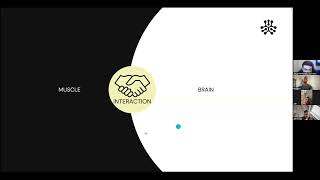
Thank you, Keegan. It's a real honor to be presenting this to the New Athlete Project. My name is Jorge Quintero. I am the owner of the Neurogym. And the central premise of what the Neurogym is about is creating exercise programs for mental health and the brain. So in this presentation I'm going to talk about a few topics. We'll start briefly with an introduction and background about myself. Then I'll talk a little bit more about the neurogym, the mission and the philosophy which is all around sculpting the brain. I'll tell you how the Neurogen works from a scientific and research academic perspective. And then I've included a few case studies here to show you just the power and the results that an approach like this can have on people. And then I want to make sure that everybody on the call can get some value out of this presentation. So I have a few exercises that we'll do together live that you can apply today or tomorrow in your next training. I do talk a lot about mental health, but a big part of what I do is focused on performance. A little bit about myself. I've been in the neuroscience and neurosurgery space since 2019. That's where I got my feet wet. You can see on the left. I'm putting together some equipment that is used during neurosurgery to record deep inside of the brains of patients that have movement disorders like Parkinson's disease, the central tremor dystonia. And it's an extremely profound and beneficial surgery for the patients that get it. It left a very strong mark on me and it influenced me to want to know everything about the brain. How can we improve the brain? How can we stop it from going to these disease states that really impact quality of life and functionality of individuals? And in. Within the last three years, I started a master's program at the University of Florida. God willing, I'll be graduating as a neuroscientist with the Masters of Science at the end of the year. And I do come from a coaching and personal training background. I am a certified neuro athletics coach with Louisa Nicola, if you're familiar with her, on Instagram. And I'm also certified through the National Academy of Sports Medicine as a personal trainer. So DBs, or deep brain stimulation is the procedure that I help with in the operating room. You can see on the left there's a video of how the patients improve before we implant this device into their brain and afterwards. And on the right you can see the picture of electrodes or wires implanted into someone's skull or their brain. And it's shocking. A specific part of their of their motor circuits to essentially disrupt abnormal activity that is creating the rigidity, the shaking, the problems with their gait. And when I saw this for the first time, like I said, I was just blown away. And I wanted to know everything about the technology, about the brain. And from there I was able to combine what I do with with exercise. And one of the reasons why I really resonate with new athlete projects is that I'm always learning new skills. I love to push the boundaries of what my body's capable of. I love things like rolling, acrobatics, calisthenics, mobility, juggling, you name it. So when Keegan asked me to give this presentation, I felt like there is not a better group of individuals to hear about this because we're pretty much aligned on a lot of different things. So, enough about me to start, I just want to give you a simple summary about what the neurogen is, and I like to call it brain building instead of bodybuilding. What we're trying to do is really, really create strong, resilient brains through cognitive training. My mission is to improve the brains and mental health of 1 million people worldwide through these targeted exercise programs and biometric data. The Neurogym is actually USA's first athletics gym for brain health. There's currently no other type of program in the US that is doing this specific thing for mental health. There are some coaches that do straddle the neural realm. But no one, until this point has created a framework to address any type of cognitive or brain performance issue through exercise. Three of the pillars that I use in my program are centered on one, longevity, both maximizing that if you're a young athlete, or two, improving function or resilience in older, older folks. A second pillar is improving mental health, whether that's adhd, anxiety, chronic stress, depression, chronic pain, OCD or brain fog. And then the third pillar is all about performance, which is something that maybe you guys are more familiar with. The athletic training, acrobatics, calisthenics, skill building. And there's a couple of brain based skills here, like improving our reaction time or our focus and processing speed. So why can we combine neuroscience and exercise? Well, it turns out that there's a lot of parallels between the brain and the physical body. And what we know from lots of studies and research is that exercise not only grows muscle, but it also grows the brain in the physical sense. So people that are more fit and are more active have larger brains. Just as you sculpt your body, you can also sculpt your brain. And we're going to be talking a lot more about that in the next couple of slides. We understand also that the more strength you have, the slower, or you can avoid physical decline to the same extent as someone that's inactive or sedentary. But the same physical strength can also slow, prevent or reverse cognitive decline. And then lastly, the people that are the fittest have the least risk or severity of different mood disorders like depression and anxiety. And these parallels also manifest in this beautiful concept that I like to call use it or lose it, where if you guys understand, if we don't utilize our muscles on a consistent basis, if we're not training, we're going to lose muscle mass, Our muscles will be broken down and that energy will be used for other functions in the body. And a big reason why that is is because muscle takes up a lot of energy to maintain and to repair. And the same thing is true of the brain. The brain is such a, an energy hungry organ that if we are not using, will shrink just like our muscles shrink. And so it's so beautiful in the sense that there's all these parallels that as I started putting them together, I started asking, well, why can't we combine the two? Or why can't we address both questions of brain health and physical health through exercise? That's when I discovered something called the muscle brain axis, which is essentially the interactions between our muscle tissue in our brain, movement, as as many of you probably know, is controlled and learned by the brain. So the only reason why we can do things in the gym, the only reason we can move, we can walk, we can do athletic things, is because our brain is controlling our body and sending the signals to the different muscles to execute at the right times, with the right intensity and force. And we can see this in our skill development practice. We can see this when we think about posture, when we think about balance or breathing. And the brain is involved in all of these categories of movement. But just as the brain influences the muscle, the muscle also influences the brain. And whenever we contract our muscle through physical activity, you think of the muscle like a sponge that gets squeezed. And when you squeeze that, you have fluids or chemicals that get released. These chemicals circulate in our blood and have effects all throughout the body. If you've ever heard the statement that movement is medicine, it's partly because of these chemicals called myokines that circulate our body and just have positive effects on pretty much every organ and tissue in our body. But they influence the brain. They increase the brain's ability to rewire. They physically grow certain brain regions, and it helps us with regulating all things from sleep and appetite. As a summary, we just need to understand that the connections between muscle and brain promotes brain health. So the more we use our muscles, the more we promote brain health. When we move, the. The chemicals that are released from the muscle actually nourish the body, or the nourishes the brain and increases blood flow to the brain. The chemicals help us rewire and grow the brain. And then, as we know, exercise also releases a lot of feel good chemicals like dopamine, serotonin, or endorphins for pain relief. And, you know, it's common sense, we all know that exercise is good for mental health. If you didn't know, there's plenty of studies that look at hundreds of thousands of individuals, if not over a million, and they all consistently agree that physical activity is good to reduce anxiety and depression or protect against it if you're at risk. And so that's not really a question up for debate, but one study that came out last year in 2024, looked at what's the actual modality that is best for treating depression. And so they, they did a review of many different studies, over 200 studies, and they ranked them based on the benefit that subjects got from the protocol or the method. And you can see on the left that SSRIs, which are the antidepressants are pretty much at the bottom of the list with almost every form of movement ranking above this and dance being the absolute greatest benefit for depression. When I saw this, this was my, my first time seeing that. The public is starting to understand that potentially we can optimize for mental health. And maybe not all exercises are created equal to improve the brain for mental health. As you, as you guys know, if you want to grow your biceps, you got to target your biceps, you got to do some curls, you got to do some chin ups. And it's the same thing with depression. Sure, everything may be beneficial overall, but there's certain modalities that are going to give you bigger bang for your buck if you're looking for that specific improvement. So that leads directly into the philosophy of the neurogy and what it means to sculpt the brain. The reason why we can sculpt the brain is because different parts of the brain perform different functions. On the right you can see a figure of a brain that is color coded in different regions. And these different color coded regions are all responsible for different functions. You can see the very front of the brain is involved in attention and planning and decision making. The back of the brain is involved in vision. We have parts of the brain that interpret whatever we hear, whatever we taste, whatever we touch. The point is that the brain isn't just this one organ. You can consider it similar to your own physical body that has different parts and different strengths and different weaknesses. And depending on what your strengths and weaknesses are, that will be reflected in your own behavior, your own experience. One thing that is really interesting about the brain is that when we use it, as we saw, it grows. So repeated use of the brain grows it. And if we do not use the brain, or if we do not use a specific function, it will shrink. You've probably heard of the term neuroplasticity, or you've probably heard about the brains capability of rewiring. And this happens pretty much all of the time, all day, every day, throughout your life. Your brain is essentially trying to reflect the things that you most do or see, experience, live on a regular basis and etch that into its own networks and its own architecture. And so neuroplasticity doesn't really care what it is that you're doing, it just cares that you do it or you experience it enough that it becomes rewired into your own mind. And when we talk about creating stronger brains in general, what I want you to remember is that the more pathways we can make in the brain, the more Flexible your brain is, the stronger it is, the more resilient it is. And so in the neurogym, a lot of my focus is on getting people to learn new skills, getting people to move in different ways, getting people to just solve physical problems in multiple avenues or multiple ways, to just form additional pathways. At the neurogym, what we're doing is we're just creatively integrating cognitive exercises or challenges that tax or load. That tax or load, a specific function of the brain. And this concept is called cognitive load. The same way that we add load to a barbell or to a physical exercise, you can actually add load to a cognitive mental function, put it under stress, and on the other side of that, you have a strengthened brain function. So we're creating stronger brains and more pathways by just being very creative in how we integrate the cognitive challenges into the movement. And this is something that is super fascinating if you're really into evolution or evolutionary biology. The reason why this is so effective, combining exercise with the cognitive challenges, is that it actually mimics something that our distant ancestors used to do in their hunter gatherer days. So when they would have to navigate environments, it wasn't just a physical exercise, it was a cognitive one. They had to remember where they came from, where they're going to. They maybe had to navigate obstacles along their path. They had to keep an eye out for predators or other tribes. And so it was a combination of movement and thinking. And this combination has actually been shown to improve learning or improve brain function more than doing them separately. So what this means is that combining physical challenges and cognitive challenges has the benefit of getting you faster results and bigger results than if you were to separate them. And the way that I look at it, and the way that it's. It just makes sense to me is that the cognitive exercises are planting the seeds on how you want to rewire your brain. And exercise through the chemicals that we talked about earlier is fertilizing and providing a good soil for those seeds to sprout. So you're simultaneously putting the things in your brain that you want, and then the exercise is nurturing those connections so that they can form stronger and faster. And this makes the neurogen one of the most effective tools for brain change, not just for performance, but for mental health as well. The last thing that I will say here before I cover some of the case studies, there's a lot of research now on something that's called dual task training, which is this form of exercise where we combine the cognitive challenges with, with movement and they looked at the benefits of dual task training in people that had cognitive decline or Alzheimer's disease. And the results were that this may be the only type of exercise that actually improves Alzheimer's disease, not just slowing the decline of it. Everything else that we have slows the decline or the progression of Alzheimer's, including exercise. But combining cognitive challenges with exercise may actually improve the function of these patients with Alzheimer's disease, which to me is mind blowing. There's evidence of improvement in their global cognition, which is just their ability to process information. They had improvements in memory and decision making in their gait, in their balance, in their strength and the quality of their activities of daily life. Their brain was more flexible and able to rewire. They had improvements in their mood and depression. But it's important to understand that this does not fully reverse Alzheimer's. Although I do think that as long as someone were to be training this way, they could potentially offset or keep gains that they get from training with the dual trash, dual task training. So I just want to leave you guys with the question, who do you want to be? And when I say this, I really mean who do you want to be in the sense of like, how do you want your mind to work? Do you want to have better focus? Do you want to have better short term memory? Do you want to be able to manage stress better or be able to control your impulses? Do you feel like you see perfectly fine, but then you get very distracted and don't see things on a regular basis? You can improve all of these things. And so Neurogen really opens another world of gains that does not interfere and does not compete with physical gains. And in fact they actually complement each other and synergize. So in other words, now that you know that you can train your brain and your body at the same time and you get better results doing it together than doing them apart, there is no reason you shouldn't be doing this. And every coach that does not train their brain with, with physical training is actually losing out on a whole world of gains that is available to you just by adding in this element of cognitive training. And until this point, no one really understood how to creatively integrate the cognitive training into the exercises. But now your imagination is really the limit to how you want to sculpt your brain or improve your mental health. So I hope that this gives you a lot of excitement for this type of approach. I'm definitely very passionate about it, but if you want to see some of the results, I'm going to Include a couple of outstanding examples that I have built in some of my clients. About two years ago, I started the gym for the first time. And one of my first clients that I onboarded was my dad. He had been struggling with major depressive disorder, bipolar disorder, and psychosis for 20 years. He was a very isolated man socially and was very bitter. He would curse everything and everyone. He tried all the meds, he cycled them, he went to different doctors. No one could control his symptoms. And he would have several psychotic episodes per week where he would just make things up about the neighbors or he thought that this Chinese man was out to get him. And he would repeat this, like on a weekly basis. You can see him in the picture on the left. This was at my wedding at the court. He couldn't even muster a smile for the, for the moment. After six months of just training with me one time a week, because my dad is in his 60s and he hasn't really trained at all in, in most of his adult life. But he just trained with me one time per week doing the neurogym training. He is now socially reintegrated. He has no more psychotic episodes. His mental health has been stabilized. He's still taking medications, but now he's actually responding to them. He sleeps better. And it appears that the exercise was what was missing in his treatment plan to actually get him to respond.
I was diagnosed with OCD officially in 2024, but I started having symptoms. Now that I look back in 2023, it would be a lot of anxiety. I would have a lot of repetitive thoughts, and I would get in these thought loops that would just not end. They would be very, very difficult to get out of, and it would cause me immense distress and distraction throughout my entire daily life. And I had tried everything before this. I tried the traditional talk therapy. I've tried medications, I've tried meditations, anything really. And nothing had worked until I, I started the Neurogen program.
So this is a med school PhD student who, as you know, he's aware of all of the therapies, all of the treatments. He's learning about them in school. He tried everything. He tried medication, he tried meditation and the talk therapies, but nothing could break his obsessive thought loops. They were interfering with his productivity and his relationships. It caused him to have depression and anxiety, and he couldn't sleep because of it. But after doing the Neurogen program, he has no longer any of these issues. All of his OCD symptoms are well controlled, and now it's not Even a concern of his. He is now doing the performance aspect of neurogym where he's trying to get to his first muscle up his handstand as well as to do some acrobatics. So this is an example of how people transition within the neurogym. When they come, they typically have brain or mental health issues, but as they train, they shift from needing to manage those to effectively managing them, to not even worrying about them. And actually just training harder.
Helped me improve my mental health through this training program on neurogym. So I've been struggling with, I've been struggling with chronic OCD since 2016 and in 2023 it got so bad that I started taking medication for it. But Jorge was able to help me in a couple of months in a way which one and a half years of medication couldn't help me.
So just this is a quick testimonial to just show you that the neurogym is not only effective, it works very fast. Most of my clients get results for their mental health within two to three weeks. There's no side effects, they're just doing literally movements. And this client was able to stop taking their meds thanks to the Neurogen training. Okay, so now I want to just take a step back. I want to do a couple of exercises with, with the people that joined today just to give you a glimpse on how we can target different parts of the brain. And we don't really have to do too much. You don't need a lot of space. You can do this sitting down. But I'll walk you through each of the exercises. The first one that we'll do together is actually a test and this is a biometric test that I use on my clients to gauge how well they're managing stress. And the way that this works is we are going to start with the prep phase. There's three four second inhales followed by a four second exhale. On the fourth breath, we will all take as big of an inhale as we can and we want to maximally fill to the top of our lungs. At the top of that, I want you to start a timer and that timer is going to run until you breathe out all of the air of your mouth. And you want to do this as slowly as possible to just get the highest score that you can. So just to give a very quick overview, we're going to breathe in, breathe out, breathe in, breathe out again. And then on the fourth one, we'll breathe in as, as much as we Can. At the top, we start the timer and then just start breathing slowly out through the mouth, as slow as you can. And we're going to time this, so let's go ahead and take out our phones, get your timer ready or your stopwatch. All right? And I'm going to just lead us through the prep phase on the fourth one. Remember, we're just going to top our lungs, and then we'll start the timer. And as soon as you start the timer, start breathing out. So ready? Breathe in. Breathe out. Breathe in. Breathe out. Breathe in, Breathe out. On this next one, breathe as much as you can and breathe in.
It.
Is there anyone else that's going? All right, I'll move forward. So why does this test matter? Our carbon dioxide tolerance refers to the body's ability to not only tolerate, but also regulate these levels in the blood. Carbon dioxide is a byproduct of our metabolism, and it's toxic, so it needs to be removed from the body. If you have a low CO2 tolerance, which is the amount of time that you were able to breathe out from the time that you filled your lungs, this can result in symptoms like anxiety, shortness of breath, dizziness, and more. So what this is saying is that if we do not tolerate carbon dioxide in our blood, it probably means that the levels are already too high, which shows an asymmetry in the way that we're breathing. Subconsciously, it means that you're probably inhaling longer than you're exhaling. So here. Here are the results. Depending on which bucket you fall into will tell you how good your stress and resilience is at that point in time. So my time, for example, was 45 seconds, which puts me here in the middle bracket of having good, good tolerance stress and breathing control. But I try to get all of my clients to get above 60 so that they're far away from some of these lower brackets that could indicate higher levels of stress, anxiety, or just dysfunction in the way of our breathing mechanics. And this is a test that I'll run with a lot of my mental health clients when they join, as well as over time to see how they improve. And it's also a simple metric that gives an objective marker or a way to quantify some of these subjective concepts of mental health. All right, the next set of exercises that I'm going to run through or run y' all through is called trauma releasing exercises. Tre and progressive muscle relaxation. So, for ptsd, there's a. There's a famous scientist that discovered that when the body is traumatized, we actually store specific tensions or energies in the body. And one of the ways that we can release this is by inducing what's called a neurogenic tremor. And he created a library of different exercises to elicit these tremors in the body. And I'm going to show you one of them right now. If you do have ptsd, I would just ask that you be very careful with this because it can elicit emotions or memories and I don't want to trigger you at this point. But for a lot of people that have stress or anxiety, it is a great way to unwind and to release tension that is stuck in the body. So what we'll do is we'll kind of get in this prayer pose with our hands. And you can see it on the left. You're just holding your hands in a comfortable position with your palms facing each other, pressing towards each other. And what we'll do is we'll press our palms into each other and we'll add force until you feel like there's a natural. There's a natural shaking that starts happening and you don't want to fight it, you don't want to force it, but there's going to be a point where it comes out and you just hold it for about 10 seconds. You release and you just focus with either your eyes open or your eyes closed. You just focus on the relaxation that is created from the palm press. And I recommend that people do this for a few reps, you know, at your own pace. You just let the shaking come out for 10 to 15 seconds. You release, and then you let yourself just feel the relaxation that is created. Another similar approach to the trauma releasing exercises is called progressive muscle relaxation. Relaxation, if you've ever done a body scan, it's very similar to this, but it has another component where we tense up the muscles. So what I want you guys to do is close your eyes right now, and when I say go, I want you to tense up your fists into a ball as tight as you can. Just like tense them as much as you can. When I say let go, I want you to let go and just bring all of your attention to your, your hands. So ready, close your eyes and tense. Go. And release. Now I want you to, if you're sitting in a chair, just like extend your legs all the way up. And I want you to point your feet and squeeze your quads when I say go. And we're going to do that for 10 seconds. And then when I say release, just focus on how your legs and your feet Feel so. Ready? Three, two, one, go. All right, and release. All right. I don't know about you, but that definitely made me feel a lot calmer, made me feel a lot more centered. And so this. This exercise is really good to improve sleep. If you're finding yourself unable to sleep, if you can't break anxiety, or if you want to improve your internal awareness, the PMR is a great one to do. Last thing that I'll talk about before I close is better ways to train balance. A lot of people will use the Bosu ball just to add some ankle instability, but one thing about balance is that it is governed and controlled by the brain, which means that it is not just looking at what's going on at the foot, but it's also using information from your head and your eyes to help balance your posture as well as the movement. So what are some better ways that we can actually train balance? We can start by one standing on one leg. Obviously. We can close our stance like on the right. We can put our legs right next to each other. We can offset them one in front of the other, or we can have heel in front of foot. Another thing that we can do is we can close our eyes. Like, we can close one eye, we can close both eyes. And as you. You reduce the amount of vision that your brain's getting, I can guarantee you that your. Your balance will be challenged. And then the last thing that we can do too, is we can actually rotate our head while fixing our eyes on a point, kind of like what I'm doing. And that will absolutely tax your challenge. I think I have an example here where I'm rotating my head, and then I rotate my head and close one of my eyes, and I just can't balance doing that. I'm already struggling a bit here. So, yeah, I start closing one eye and shifting the head, and I just become really unstable. So how can you use these? How can you guys use this in your own training? I would highly recommend that before you do any kind of exercise, like a handstand, acrobatics, things that require good balance and good spatial orientation. To do these drills that I'm doing here, you can use your thumb. We can do what are called pencil push ups, where you just bring your thumb while bringing your eyes closer together, almost like a cross eye. But just stop where you start seeing two thumbs, and then you can just go back to the starting position. Again. We can. We can focus on our thumb, but rotate the head. Then another one that I really like is just keeping my head Straight and just moving the eyes in, like an H pattern. Another thing you can do if you're really good at the handstand. For example, if you want to improve your handstand hold and just be able to balance under different conditions, try rotating your head while being upside down and looking at the ground if you can. If you could hold the handstand being inverted and rotating your head, you will have very, very good balance when you're not rotating your hand. So this is something that I feel like for the new athlete project is very relevant, and you can immediately start applying to improve your balance as well as some of the performance in your skills. And then lastly, I just want to give an example of how this might look from a dual task perspective. Like, how are we actually combining exercise and cognitive exercises here? Oops. I have a. A plank drill where one of these lights is turning on at any given time randomly. And depending on which one gets activated, I have to make a decision about whether to use my hand, my knee, or my foot. And so this is. This is definitely taxing my focus because I have to be focused at all times. I have to maintain my core straight. And so this is an example of a dual task exercise specifically for adhd. This is another dual task exercise where I'm bouncing the ball and I'm making a decision based off of the color of the light in front of me. So if it's a red that pops up here, I'm going to throw the ball with my left hand and hop to the red cone with my left leg. If it's green, I can use any hand to throw and use both legs to hop forward. And if it's blue, I have to use my right hand to throw the ball, and I have to hop to the right and touch the blue cone, because I'm constantly having to do multiple things at once. And I also have to remember the rules. This is a drill for impulse control. So there's a. There's a. There's a chart here in front of me. Oops. Sorry about that. Okay, so I'm scanning this chart that is scrambled with numbers between 1 and 50. I got to start from 1 and I got to go up. So I got to find one first and two and three. But as I'm doing this, I have lights in my periphery that are either going off red or green. If it's green, I have to address the distraction and refocus. If it's red, I don't do anything. And so that was training the impulse control. But we can get really creative with these drills. And like I said, your imagination is the limit. Whether you want to make better decisions based on goals, whether you want to improve your short term memory, your motivation, your ability to adjust to new tasks, you want to improve your attention or your focus, all of these things can be done in the same session as your workout. And in fact this, this will probably be the way that you get the fastest and the biggest results. So I'll finish off this, this presentation just by going over like some of my services in case you're interested in working one on one together. I do use objective data for my, my clients. Not everyone wants, wants the data. Some of them want more than others. But the things that I offer is one, I offer a brain scan to just understand what's happening in the brain, what are the patterns that are reflected in the activity and how does that relate to the person's symptoms or struggles. So it gives us a reference or an objective baseline to guide their programming. I also do VO2 max testing and this is good for testing like your cardiorespiratory health, your metabolic health. I've used it to quantify people's biological age, get specific calorimetry numbers so that we can get a very detailed and personalized meal plan for that person with the appropriate macro splits. And if people want to also incorporate blood work or hormonal tests and genetic tests into the program, I can do that as well. But I don't offer those specific tests and I offer in person or online 12 week coaching based off of these three pillars off of longevity, mental health and performance. And as always, love what you guys are doing here at New Athlete Project. I'm also part of the program and learning skills. So it's just really awesome to connect with everyone, to be connected with Keegan and the team and also to just have the opportunity to talk about something that I love to other coaches. So thank you so much for your time. Are there any questions? I wasn't looking at the chat.
Yeah, I think there's going to be a bunch of questions. The guys are chatting a little bit about the, the breath test. So this one. Who's it come from? It's. I think I had the app that had this CO2 test back there in the, back in the day. I haven't had it for a little while. It's. I think more of the guys are familiar with the oxygen oxygen advantage and the Buteyo CO2 tolerance. But this one's the other one with the maximal inhale. Do you, do you Remember where the.
Yeah, one second.
Yeah.
So the, the way that this test works, sorry if it was confusing, you're going to prepare with three four second inhales and exhales. So you'll just breathe in four, four count, breathe out for a four count three times. That's just to prepare your lungs. And then on the fourth breath that this will be the breath that you will use to actually start the timer and get your measurement for your CO2 tolerance. So on the fourth breath you want to just inhale as much as you can at the top, start the timer and start breathing out through your mouth as slowly as possible. So it would look like this, start a timer but just breathing out as slowly as you can to just make the air last as long as possible. And you would stop the timer when you either run out of air or you feel like you need to breathe or swallow. And again all this is measuring is, it's measuring the levels of CO2 in your blood which is seen as a toxic byproduct of your metabolism that needs to be cleared out. So if you have a lot of CO2, you're going to have a lot a low tolerance to it and you may also show symptoms of anxiety, shortness of breath, dizziness. And it's because your, your body's chemistry is actually not really conducive to having a clear mind. It's actually contributing to, to anxiety or fear or stress. But you might not think that it's coming from that, if that makes sense. It's like a sub subconscious stressor. Hopefully that was clear. So yeah, there's another question here. If I have exhaled all the air and incapable of holding that emptiness for a long time and don't feel the need to breathe, I keep the timer going until I feel the need to breathe. No, if you've run out of, if you've run out of air in your lungs and you're just empty, you have to stop the timer. So it's, it's whatever happens first, you either run out of breath or you feel like you need to inhale.
I've been thinking quite a lot about the, the what's the neuro speak. Therefore the double. Double task or double the approaches. Sorry we say it again, you're talking.
About the dual task exercises.
Dual task exercise, yeah.
Yeah.
So I've been doing a lot of like combining balance with skills like standing on one foot while I'm juggling or playing tennis against the wall and continually going like left foot and right foot when I'm. But I Don't have those light systems. And, you know, sometimes I'm training on my own. Like, what are some of the ways that you can make it more of a dual task? Or do you think that stacking the skills together is going to have some similar result compared to having that external stimulus of. It told me to go left, it told me to go right. You know what I mean?
Yeah. So the lights are nice because it introduces randomness into it. But you absolutely do not need these tools to get the dual task training benefits. I think what you were saying, Keegan, with, like using a ball and you're trying to juggle while you balance on one leg is an example of a dual task because your brain is engaged. Your brain has to calculate, it has to pay attention, but it's also trying to balance. So that's a, that's a good example of the dual task exercise. Another thing that I'll do too is like, I, I have my clients buy like a Uno deck of cards, and those already have, they're color coded. There's numbers, so you can get really creative with those. And then also I have resources of these sheets that have like, numbers, arrows, colors, words, and. And just with that, we can do all kinds of different exercises and activities. So I'm, I'm a big proponent of keeping things low tech and I understand also that people all this equipment, so I've made it accessible for all of my clients. But I do think that if you just have like, like a bouncing ball or a tennis ball and some cards, like, that's more than enough.
Yeah. What do you think about playing with different languages? I know you speak Spanish as well, like for guys who are learning languages or multiplication, like some of that more academic type stuff. I think the Marinovic system, he training his son. I don't know if you know the story of Todd Marinovich, but his father was an elite NFL player and he was a strength and conditioning coach. But he came up with a very novel approach for his son, and his son became the best quarterback in the world by, you know, 15, 18, 20. He was the best. And he used a lot of balance work, but he also talks about standing in the dark, doing multiplications, you know, while he was getting physically challenged with his father. What do you, what are your thoughts about that kind of work?
I love it because I find that when we remove vision, vision is one of the key senses that drives pretty much every function in the brain besides movement. But when you, when you close your eyes, if you don't have good body awareness, or they call it proprioception. Your body really has no idea of where it is in space. And so being able to cut vision, that's one of the reasons why with the balance task, I said a good challenge for balance is to remove vision. It's the same thing with other cognitive processes. If you can't see something, it's now needing to use other circuits that maybe aren't as strong or a little bit weaker to solve the same problem. So that, that's almost a way of like intentionally handicapping the brain. Some of the things that you, you may have also seen if you've followed some of the professional athletes is that they, they will put on these goggles that chop their vision. Right. And that's another example of like the brain has to make decisions with less information. And so when these people go out into the court or into their sport, they, they're able to make quicker, more accurate decisions with less information.
Yeah, I'd be keen to hear some other examples. I'm sure guys here have played with a bunch of different elements of this. I've been going more and more into it as new athlete is more into the brain than anything I've done previously. And I've been thinking more about skills learning, about differential learning. And so I've been doing more eyes closed stuff, more standing on one leg. I've been working on a lot of tennis and basketball and honestly I like, I feel different as well. I feel better and better. Today we were just out with my son here in Budva. We're having a little holiday down from the village and we bought a size one handball and just playing with the handball with my son, he's 18 months old. I'm seeing how well he's developing like because all the other babies his age are in the prams and he's kicking the ball out of his hands and catching the ball from me, passing it to him like three meters away and all the other babies just in the prams watch. And like I'm trying to get him to jump. We went up and down off the step 50 times and it's been a big change for me and it's obviously better for my son than trying to strength train an 18 month old, you know what I mean? Like before all I had was strength and conditioning and like I'm not going to make my son do cardio and chin ups at 18 months, but I can make him do brain training like a madman. And he wants to do brain training. It's natural for him, you know, and intuitively it feels. It feels amazing for me and I'm. I'm enjoying it so much. I'm getting so much better. But I'm keen to hear from other guys as well what they've been playing with in. In this realm. And. Yeah, how you, how you perceive it? Like, it's. Yeah. Can you, can you feel the difference? Most of. Most of us have played with more juggling or handstands. Eyes closed. Handstands are a huge one. I've started to work on eyes closed juggling. I can do like two ball and I can. I can sort of do like the first three throws of three ball, but it feels so weird to eyes closed juggling. But it is possible people do juggle three balls with their eyes closed, which, you know, seems impossible, but it's not.
And, yeah, I will say just to give people another resource, if you. If you want to get a lot of the randomness or like the reaction time training with the lights, but you don't want to spend the money. There's a. There's an app on the app store called Switched on One word. And it has a lot of the same drills that you were seeing in that ADHD reel that I posted or that I shared with y'.
All.
And it's just your phone, like, doing the lights. So it's an app. You can, you can go on there, you can create different drills, you can do different things with it. They have drills already preset for different sports, like soccer. So I would just recommend that you check it out if you're interested.
Dan, do you want. Are you still there, Dan, your camera mic off? But I saw you on here before. Dan's really been into the trend in the past as well. Just quite a few other guys to the TRE work. He's not there at the moment. What experience. What's. What have you noticed with the Tre and specifically with my clients?
It just. It's a really great stress management tool for people that are more advanced, like Daniel, he will probably be, like, helping PTSD clients walk through the traumatic experiences that come up through tre. But that definitely requires, like, a lot more tact and, and expertise. But for people that, you know, are struggling to sleep or they are stiff or, you know, they're. They're feeling a lot of anxiety, it's a great way to just snap their brain out of it, get into a calm state, change how they're feeling, and then, you know, act differently.
Yeah, it's kind of a quick pattern disruptor.
Exactly.
Yeah.
A lot of those exercises actually come From a category of movement called somatic therapies, which are brain or body based therapies instead of like cognitive or top down as they call them.
Yeah. Is there any time when, like when would you not do certain things? Like when would you not get someone to do handstands or juggling or.
It just depends on the person's level. Obviously like people are, are going to start this from different fitness levels. My, for example, like my dad with depression specifically, his brain was in a rut and it was in a 20 year rut that he was unable to break out of. And he was just like always in the same state of mind. Getting people to do any form of skill development who are depressed is actually very powerful for their brain. And if you look at the benefits that people that are depressed get when they exercise or they do cardio, it's because of those chemicals that are being released into the brain that help it rewire and grow. And so the more skill development that you can give these depressed patients and clients, the quicker they'll break out of their, their, their rut essentially. And another thing that's very interesting too about depressed clients is that they will typically be very stiff and the stiffness comes from, I believe, a literal disconnection from their brain and their body. Like their brain is thinking one thing, but their body is not motivated and doesn't do anything. And so they don't have good body awareness, they don't have good coordination, they don't have fluidity in their movement. And so rebuilding that is almost like you're rebuilding their brain. Some of the, like a, an example of something that I would not do with the client would be doing high intensity training with someone that is not fit, that has anxiety because they may interpret an elevated heart rate as a panic attack. And so they almost have to become acclimated to intensity. More than another type of mental health profile. People with adhd, you want to give them as much novelty and skill development as possible. And I find that the more variety there is like inversions, rolling, acrobatics, whatever, the better. So it just depends on the profile of the person as well as their fitness level.
Super interesting.
Have you ever had any, any things like with the, you know, with football and collision sports in the states, is there like, have you worked with anybody that's come back from like brain injuries and, and that type of thing where there was something that actually happened that has caused trauma?
I haven't had a, a brain injury client yet. I do know someone that works specifically with concussion survivors. Or brain injury survivors. And he uses a very similar approach to me, but it's, it's not as much rooted in exercise. It's kind of like he does the brain games and I don't know if you've seen like people do things with their hands or they're like have two and three or four, you know, like he'll have them do that kind of stuff. And he's been able to. To get improvements of all kinds of people from professional athletes to just like your average Joe. And this would be an extension of that. It's just getting them to move to get them boosted and faster results approach. It's like you want to identify what brain structures or functions are affected by the injury or the concussion. There's different assessments that you can do. Once you determine what's affected, then you literally start challenging that function so that it can regrow and restrengthen.
Yeah.
And like I saw on the. Some of the, the photos and stuff that you do with the brain. Brain scans for those maybe international people or people that are abroad kind of thing. Outside of being able to go and meet up with you and do the brain scan, is there ways to kind of compete with that or do that in some way?
Is obviously the, the best to give me the information that I need. But there is a cognitive test that I give some of my older clients that it's also on an app, it's free to take. It's called Cognifit. And you can just go on there and like, it'll run through like dozens of different tests, different games and it's just trying to measure different categories of cognitive function. So it won't be as related to mental health as the brain scan is, but you could get an assessment of other brain functions or cognitive abilities not related to mental health through like these cognitive assessments.
Cool.
Thank you.
Yeah, I really appreciate the engagement and the questions. Makes me really happy. Go ahead, Stephen.
Yeah, I'll go back and watch the. The presentation. I just got done training, but curious is this a lot through the. The Z Health stuff? I've looked into it a little bit and I know they do a lot of the different brain stuff, tracking with the eyes. What's your experience?
I do have some inspiration from Z Health. I haven't gone through the program myself, but a lot of what I I covered today you can find in Z Health. What you wouldn't find in Z Health is the approach that I presented on mental health. So currently, like, there's really no other coaches that are trying to optimize workouts for mental health. But they, the, the brain training exercises and everything, you can get a lot of that from Z Health.
And then with the, the Tre stuff. How long are you having people hold the shakes? So just a little bit my experience like I had shin splints forever all the way through high school basically so four years and so the shins have a lot of trauma in them. When I have my, my feet fully flexed like minor flexion and then activate the hips like I'll shake like insane. I don't know if you saw the video and put it in the education section on the Telegram, but how long would you suggest people hold that for? I held it for like it was two minutes by the time I was done and my whole body just felt super, super tired by the end of it. So curious. Your. For the shakes?
Yeah.
I mean what are you suggesting? On time or like that?
Yeah, I have, I have clients do it for a couple of reps. Like maybe not a whole two minute stretch but I'll have them do it for 10 to 15 seconds at a time. Let them just focus on the relaxation and then they can tense up again or shake again. But I, I would also defer to Daniel since he's a lot more experience with Tre than I am.
Also going to schedule soon but.
Can I hear you, Daniel?
Yeah, the mic mustn't be connected properly or something. Dan, we. I can see that you're unmuted but the sound didn't come through. Would be cool to do a whole call on the Tre. I know you've helped a lot of the guys with it over the time but yeah, if you got thoughts on Steven's thing maybe try jump onto. Yeah, yeah, gotcha. Yeah.
Yeah. With the neurogenic tremors like you want to especially in the beginning like depending on how used to, how used to it you are. Like to the actual tremors you'll go anything from like 10 minutes to 15 minutes with like breaks in between. That's more. That's like with the Tre you want to teach somebody how to self regulate like you know how, how you feeling in your body in those months like the, the short like Jorge or George.
Yeah. All right.
Like how he's explaining like the little burst of like 15 seconds stop and then go like the stop go method is like very well practiced in the Tre realm. Like to help someone just really get used to the tremoring and then with, when you, when it gets very integrated then you can go for like that 10, 15 minutes to 20 minutes to nothing. Nothing really more than that because then you're just going to get that, like, central nervous system, like, fatigue the next day. You're going to feel pretty burnt out. Like, the. The actual tremors are quite intense and can take a lot out of you.
If you do it.
It's very easy to overdo it because it feels so good and it feels so relaxing. But, yeah, probably. Answer the question.
Yeah, that answered it. But are you saying like, hold. Hold the tremors for 10 to 15 minutes or are you saying with like, with sets?
So I'd say like, once the, Once the tremoring is established, it's. Or in the tre. Practice, you. You do the exercises to fatigue certain muscles within the body and then that then brings on the tremoring. And once the neurogenic tremors are established and you are shaking, that's when the, like, that's when you kind of let the ego go and the mind out the way and you let the body do what it wants to do naturally and that's shake. And once the shaking is going, it's like, then you can stop, stretch your legs out, tense the muscles again, just to slow it down, take a breather, and then start it back up again and allow the shaking to do its thing. Stop and go like that. And that just helps to establish, like a little bit of safety inside the body as well.
Yeah, I mean, I've been doing a lot of Dorziani posture work and some of those, like, deeper stuff, and it fatigues the right muscles, I guess, because it makes me shake really quick after like 10 minutes of doing this stuff. And then I'll. Especially if I'm on the Bosu ball, I'll just take. So I'll keep messing with it. I'll schedule both too.
Yeah. Awesome. Well, back to you, Jorge.
I mean, I think we've answered everybody's questions, but if anyone's interested in connecting, I'm on Instagram most actively. You can find me at the Neuro gym. One word or Neuro. Jorge Q. One word. And yeah, again, like, I'm just super stoked to be part of a. Of a community of other people that just want to keep leveling up, that are very expert in movement and training. And like I was telling Keegan, this is something that I felt like was missing in my life. So I'm very, very grateful to be part of this.
Yeah, you're very welcome here. And you can see the guys are excited to dive more into this. I think it's something that's been on the fringe like we've been doing a lot of this stuff and I think we've been getting some of these benefits personally, individually and with clients. But you've been really studying it from the mental health perspective and getting results with that and going directly into more into the science and the research and everything. So really, really interesting and appreciate the work that you're um. Yeah. This is a big part of why I'm excited about New Athlete is because I don't want it the, I don't want it to depend on Jorge's ability to put reels together of how far Neuro Gym goes and we need to do something about this. You know that it's, it's not just those who can nail the Instagram game that get to change the world because there's stuff out there that's the good products and good people and that can get results. They just aren't nailing that part of the process. And maybe you can. Jorge, I'm not speaking to you specifically and I know it's like, you know, not. It hasn't been a big priority in the past. You just get into this. But I'm, I'm very, very confident that we're going to set things up with New Athlete that it's not going to be like it has been for the last 10 years where those who can nail the marketing can, can become independent and those who can't, you know, really can't get as far. I think it's always going to be an advantage to your own marketing and to be good at those skills. It's great for those who've done that. But I'm also excited that we can support more of these brands more directly to make an impact. And yeah, I'm sharing more about what the vision is with it and having a marketplace and sharing more of the skills and just expanding our own audience, I guess with uncommon success. I was really in the background helping other brands to grow and same really with ATG for coaches and even real movement, it was about helping coaches to grow. But us having our own consumer facing product and audience gives opportunity to put more other coaches and brands forward directly to the people who need it rather than try to do it indirectly. So yeah, this is sort of really, really on topic and on point with you guys. Can see that this is something the world needs. Like the world needs clearer other alternatives for people who don't feel great. And at the moment there aren't really too many great messages out there that I see for what to do that are really coming specifically from that angle, a lot of people saying exercise and eat well, but not many saying, hey, this is clinically what's going on. This is the research, like getting into directly attracting people who are diagnosed with those issues. So this is a great example of the power of what, what we can do as a network over the next months and years. And for everyone who's got big ideas and big things they want to achieve, I think we could do so much more with more synergy between us, which is what we've been looking for in different ways over the years. But, yeah, you'll see it unfold more in the near future. So thank you, Jorge, for putting this together and for sharing what you've shared there today. It would be great if we continue discussion a bit more in Telegram because I know there is a lot of other questions and things, thoughts that are going to come up when people watch a recording of this and even just thinking about this later in the day and such. I've just opened up that Cognifit app and I put the link to the, I put the name of the other one with the lights in the, in the telegram as well. So anyone who plays with that stuff over the next few days as well, I'm sure Jorge would be interested to hear what you get with it, what results you get. And yeah, you know, I don't know exactly how it's going to unfold the connection with Jorge, but I'm, I'm sure there's other coaches who are going to want to learn this stuff and be able to really speak with more authority about this, this area as well. So, yeah, thank you, Jorgen, and thanks guys for jumping in, asking questions, bringing life to the live conversation with joy. It's always the best time. It's good to listen to recordings, but it's different when you're on Live Together.
Thanks again, Keith.
Yeah, thanks, Jorge.
Excellent. All right, until we connect next.
All right, see you on Telegram.
Bye for now.










