Short Range - Concept, Benefits And Application
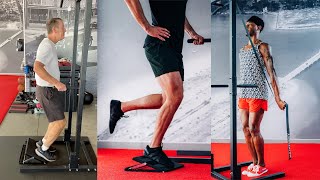
Ben Patrick and Keegan Smith explain short-range training: working muscles in their shortened positions. It's gentle on tendons, allows high reps and blood flow without heavy load, and works well for rehab and warm-ups before longer-range work.
Chapters
We are live knees over toast guy here with ATG mentor Keegan Smith. We're going to try to bring to you in 10 minutes. What time is it? Can you see a clock where you are?
Yeah, I got one.
Okay, good. All right, Keegan's responsible for making this 10 minutes on the dot. We're covering what is short range. So Keegan was the first to define short range and long range. And we'll definitely follow this up next, next week with a long range video. But let's start with short range. So, Keegan, why don't you break it down for us? What is short range?
Yeah, to me, this is like when I saw what you're doing, Ben, with the system that was really working. Like, this is what really blew me away. I'd been playing around with these ideas in my brain, and you were the guy who was like, you had the sequence down and you were doing this thing where you're doing sleds first and you're working on step ups and you're kind of talking about, like, hey, don't even worry about doing split squats or doing full range squats. If your knees are really tender, don't even do that. And it looks like, okay, they're just different quad exercises. What's the difference? But the difference is if the muscle is under stretch, if the tendons are under stretch, then there's more passive tension that goes together with the muscular tension and that makes a lot more tension on the connective tissue. So the short range is where the muscle is in the shortened position. Then there's not much tension on the connective tissue, and in the extremes, it gets crampy. So, like, the L sit position is a really good example of, like, extreme short range where it gets it.
Because anyone watching this, we'll put it on YouTube, we'll put visuals, you know. So an L sit would be a short range exercise. Yeah. Carry on.
So, yeah, those kind of movements where you get. Where you get crampy. So they're hardest in the shortened position. So those ones tend to be very gentle on the tendons. And you, you can generally do them for high reps and get a lot of blood flow and bring healing to the area. So, I mean, we know and love that most with the knee work with the short range of the quadricep, but it actually works really well for pretty much any joint. There may be some difference between the extensors and the flexors. We've never actually spoken about that, but Charles made a big distinction between the flexors and the extensors, maybe that's a novel topic to bring to this podcast.
Yeah. So, you know, and this, this would be fun to try to break down 10 minutes. But like, you know, if you've been watching me, then you see me go backward with a sled, you know, I'm convinced that over the last 10 years I've done more backwards sled. And that's, it's a short range, meaning the, the muscle and tendon are not going through a great stretch. So to get the heel and going for the tendon, you don't actually have to go through full range of motion. Even though that's what we're known for in ATG is going through full range of motion. We use the short range, something like backwards sledge, to get the healing and strengthening going simultaneously at a pain free level, which later makes the full bend stuff feel better. Now on the other side, Keegan, I've been helping my dad with his elbow with just a band push down, right? So that's like so for your tricep. So if you think about your elbow and your knee, so if you think about your tricep extending, that's very similar to the knee. So you can apply some of those principles. But like you said with an L sit, that's like flexors now. And that's where you said, like, it gets crampy. And if you think about the hamstring, right, like if you try to actually hold, like if someone just stood up tall right now and tried to do a hamstring curl, you could actually, like, it's, you can't even curl your, your hamstring all the way up. Right. But that's the opposite of a Nordic, which gets farther, which gets tougher as you go longer rather than shorter. So you've used, you've used banded hamstring curls. Louis Simmons used banded hamstring curls for sets of seven, you know, high reps, pumping. So that would be, you know, even there for a flexor, though we still know that. Okay. A banded hamstring curl, much gentler than trying to do a Nordic. So a Nordic we're going to need for the bulletproofing, but I wouldn't advise someone, oh, you're trying to get to where you can do Nordic. Start doing Nordics every day. You know what I mean? That would be a big risk. But with the banded hamstring curl, you could do that more often to get blood flow. So I think we got dirt a little deeper, but keep going. This is going to be a heck of a challenge. But our job is that someone understands what short range is. So I guess we could break down. Like, what are the key benefits of short range training?
The biggest thing for me is it takes away the fear of going really heavy or even doing plyometrics, because if you do happen to flare something up, then you know how to settle it back down. And that was a big fear of mine as a rugby coach. Working with professional athletes. If you give an athlete tendinitis and then that becomes something that they deal with for the rest of their career, you don't want to be that guy. But if you know that you have the tools, you have the logic of like, okay, yeah, I've bothered that tendon. Now I need to work the tendon gently. Bring a lot of blood flow into the area, bring a lot of all the fluids that come with it. Like, aggravate the area metabolically, but not mechanically. Like, that's really what I think we get with this.
Build up a tendon gently. Starts with the short range. Yep. And to throw a good visual on here, I'm obsessed with getting on a slight, you know, incline and getting the other leg out of the way and doing similar to like a poloquin step up, but just pulsing in that position because you totally control it. You can. You can go two hands, two legs. So my dad is. My dad is loving it because my dad is always struck anything that gets into the tendons. You know what I mean? Like. Like it, like my dad, like, it's. It's like you said, it gets scary. Right. So he's going two legs, two hands to balance and getting a great quad burn. But what's he doing every rep? He's going knees over toes every rep, meaning he's actually strengthening those tendons every rep. So that's where the short range comes in. It allows us to get into those areas that we want to get stronger but that we're kind of scared to. And I think that with the sled, I think all the forward sled work we do kind of gives that effect for the Achilles tendon. I think it adds tons and tons. Not that you don't get stretched too, but you're working that short range constantly. You're getting tons of blood flow, perhaps even on the backwards. The way that we do it, we actually, we coach it with strict form. We're pushing through the foot. So I think the sled for the Achilles and patellar tendons, I think the sled is like just unbelievable. Low learning curve. And it's short range, but you Know, someone could see and go, oh my God, look at that deep, you know, deep squats. Oh my God. You know, bending my knees all the way in training, that would be too hard or something like that. And we're called atg, you know, it's synonymous with ask to grass. But what are, what are we both saying is the foundation is not as to grass. The foundation is the short range. We're saying that sled is the foundation. So maybe, maybe there's other, you know, anything you want to wrap up in there. But I think we've got some pretty good visuals with that Poliquin pulse with all this sledding in here.
Yeah, old guys love it, like using it before you do the long range stuff. Like I've heard a bunch of guys say, like, yeah, I just always do short range now before I, you know, it's not even, it doesn't have to be quantified. As much as we love to quantify things in the ATG system, if you just get everything feeling good and then you move into the work that you care about quantifying, it's not there to break any world records, it's simply there to facilitate what you're about to do. So one of the other key things with the short range is it's great for building the mind muscle connection. So because you can do high reps without a lot of mechanical damage, it doesn't cause a lot of stress and inflammation to the area, you can get away with a lot of reps. And I think that's the secret to your dunking bent. Like you say, every time we do more and more sleds, we just jump higher and it's like, yeah, you're doing thousands of reps. Like if you do 1000 rep workout versus someone doing a 10 rep workout, I back the guy with a thousand rep workout. You know, as long as he stays healthy.
And you, but like you said, there's less breakdown, but we're still able to work those areas. So some people commented on some recent dunk reps of mine and they're like, wow, like you're looking extra bouncy or whatever. And. But I was back using the sled. And not just using the sled, I was using it before I would go play basketball. So I would actually do the sled pushing and pulling, getting that 10 out of 10 burn with no pain. And we know from sled training you can recover lightning fast. So now, now I'm advising. And we'd always noticed this, that it's like guys would Be having the game of their life, you know, an hour after doing, like, sled. You know what I mean? And some people start using sled to actually warm up to play basketball. And so I think that's so cool that you could get in your sled, work, put money in the bank for your feet, your Achilles, your knees. It's low intensity on the back, but you actually get really strong glutes from the forwards. So you get like an unbelievable workout. You get cardio, and yet, you know, within 30 minutes to an hour, you can be playing the best sports of your life. But that's short range. But if someone did, only the Savages would do long range workouts and then go have the game of their life. That can happen too. But there's more. The long term is more for. For, you know, for long term bulletproofing, for, you know, probably for. Well, anyways, they go hand in hand.
You know, pain free, pain free sets the gains, gains free thing there as well. Like, the opposite of, you know, that's your line. The opposite of going, like, doing sled first and everything. Having a lot of blood flow and all that, like, stuff that desensitizes the area to an extent would be like to go in really cold to go in, like, no blood flow. Like, imagine you go into a game like that, like, where everything's col. Everything's a little bit sore. You just get out of the car. Like, that's the opposite of doing the sled. And obviously that's not going to work. So it's like playing with the extremes of the ideas is a good way to look at why it might work.
That totally makes sense. Well, good luck to our editor who's going to try to put some visuals to this. Thank you guys for watching. We'll keep breaking down an ATG definition once a week. As with all of my claims of schedules, there's only a 73% chance that I'll stick to it. But Keegan and I are pretty committed. I'm getting a schedule down and we will try to keep breaking down a definition each week with visuals. If you watch it on YouTube so that you can really see and visualize what we're talking about. Any last words, brother?
Let's do it.
All right, see you soon.










