Stop Training Like David Goggins (Do This Instead) - With @holistic.hybrid
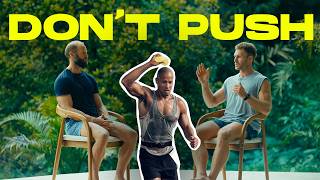
Endurance coach Giles Penfold argues against the David Goggins burnout approach, advocating instead for sustainable training at RPE 5-7 rather than maximal effort. He emphasizes recovery, specific strength work for runners like eccentric knee exercises, and breathwork for pacing and stress control.
Chapters
Here with Giles Penfold talking about the everything athlete and how much training volume someone can handle. The idea of mental toughness, how this mixes with intelligent training and progression. Giles has done this with distance running. He's also played high level soccer. He's also consistently beating me at table tennis. He was the standout at the paddle game the other day. So he's one of the best all round athletes that is in the, in my sphere of training at the moment. But first thing I want to talk to you about is that idea of how much training can we handle. How much is too much. The average guy is thinking three, four days a week in the gym is kind of going to max them out in terms of the volume they can handle. If you talk to someone about training in the gym every day, they tend to think, oh, that'll be too much for me to recover from, won't it?
Yeah.
What are your thoughts on training volume? You can go into the running or the gym or just the general concept.
Yeah. I mean most people are just RP8, nine all the time. Like that's what they think. That's the common, the common misconception of like to get strong muscle. Yeah. Rate of perceived exertion, like high intensity stuff.
Yeah, eight or nine out of.
Yeah, out of ten. Eight or nine out of ten.
So basically what you're saying is like people think the only way to train is to redline.
Yeah, yeah, yeah, yeah, yeah, for sure.
Or.
And it's kind of. Yeah, it's, it's somewhat similar in like the running world with mileage it's always like push, push to like that, like just below the line. But you can't really gauge it all that well. So like it's very common to get burnt out and injured in the running world, particularly in my world of like running long distances. The specificity, specificity is everything. And you run the 100k weeks back to back and it works until it doesn't.
That's like pushing more the structural limit, more so than the speed that you're operating at in the distance running world.
Yeah, yeah, for sure.
But yeah, look, it just comes back to that, like breaking the stereotypes that to become like a decent athlete you don't need to push yourself all the time and you can operate at like rp 5 or 6 out of 10. Rate of perceived exertion of 5, 6, 7 and just do that over time. You've kind of. Yeah. Like conceptualized that very well for a lot of people. For me included. I was sort of indirectly implicitly Doing it for a long time. And you sort of helped me, like, yeah, I guess reframe it and make it a bit more, bit more tangible, if that makes sense. With all the new athlete stuff and like operating submaximally, not burning yourself out by like just smashing like push, pull legs all the time, like being, you know, well rounded with a well rounded athlete with skills and all different sort of movement modalities and movement patterns in there as well.
We're talking about just before, like the idea of going to the gym, not to get better. Going to the gym without the idea of adding more weight to your squat or your deadlift or your clean or whatever movements you're doing because you want to get better at the other thing that you're doing. And if you try and get better in the gym all the time, you're not going to have as much energy. Nico was talking about it with his paddle. He's like, if I, if I try and push my lifts up now, like, he's been in the gym for a long time, he's strong. So if I try and improve in the gym, I'm not going to be able to give what I want to give at paddle. And this is pretty much what Bondichok, like, we've been speaking about the great Soviet coach and he was doing the same thing of like, let's just go through the motions in the gym or at least go fast, but use weights that are not going to be extremely demanding so that you can get the best out of your specific work. This is, this is an idea that I'm doing and playing with more. I'm like, yeah, not trying not to push the neurological limit, not to push the structural limit, so I feel fresher, I don't have as much risk of injury. And then I can go and play with my children better, but also have more energy for the skill stuff or if I want to do some running or some throws or whatever it's going to be. Do you what do you think about this concept for people who want to run longer distances, like the hybrid athlete sort of being your tag, like, how do you balance those things? Is there a place for submaximal workouts in the gym as well? Or how do you look out on that side?
Yeah, I think it depends what sort of phase you're in. I think if you're peaking for a race, for example, like specificity and pushing it a little bit harder, like with the mileage and the sort of simulating the terrain is very important. But for 70 to 80% of the time, like it should be like comfortable. Like you should not be sore, you should not be consistently sore. And that's a big thing I push with my athletes of like I'm constantly asking them like, what is your level of DOMS each week? And if it's higher than a 6 then it's like, right, we need to ramp this down because. Yeah, because it's too much. And also just kind of feel shit to be sore all the time. Like you don't want to go into the next day's workout or to, I don't know, play with your children or go and play paddle if you just like everything's just stiff and rigid and feels a bit yucky in your body. So yeah, like it's, it's fundamental and it's definitely not spoken about enough. It's. And it's because of this thing that we keep coming back to like the common. Like most people think it's like RP8, nine like all the time to get strong, to build muscle, to become a well rounded athlete. And not the case. It's kind of bullshit.
What about on the gym side? Are you talking there about sort of getting the running intensities and durations and stuff right, to not cause too much doms? Like I know that lifting's part of what you're doing with people you're working with as well. What are you, how are you measuring the intensity? What intensity are you going for in the gym?
Yeah, so most, most of the time. So to begin with the biggest thing is just like form, like you need a nail form. Once that's done, I like to start to increase the RPE week to week. Once they're at basically I want to understand as a coach what their numbers, their higher numbers will be. But that's like a, like that's purely from like in just speaking program. Yeah, exactly. To understand their standards, where they're at. And then once I reach that those sort of get an understanding of those numbers, then the vast majority becomes yeah, RP sort of 5, 6, sometimes 7. So it is a lot of the sub maximal work as well. But yeah, it very much depends on the phase they're in. Like if they're in a strength block of like six to eight weeks, then the RP will generally be higher with the strength and a lot lower with the running and then vice versa. If it's like a VO2 focus block then we'll push it really hard with the threshold and the heel work and like pull back the RP on, on the strength stuff. So it's kind of. Yeah, it all works in sort of tandem.
Yeah, yeah.
And you power to weight ratio, how important is it for running 50k plus events? Like do you want people to be strong compared to their body weight? How important do you see it?
Yeah, it's pretty, it's pretty damn important. It's arguably more important than the like aerobic based and the fitness side of things, than the conditioning side of things. Because you want, yeah, you want tissue, tissue tolerance. Like when you're 30, 40k in and you've never been there before, like your fitness isn't really going to get you to the, to the end. It's more so like your knees and your joints and how much they can actually withstand that, that just extended pounding of the terrain you're in. So yeah, I'm a big proponent of building like a decent amount of muscle and strength before you actually go out and do an ultra. It's arguably more important than the aerobic side of things, in my opinion.
Yeah.
What are the most important exercises for tissue tolerance then if it's gonna be an event with altitude?
Yeah, so a lot of the like elevation you say? Yeah, I mean both elevation, altitude, same thing. Yeah. So like eccentric work on the knees. So like all the step ups, step downs, like sissy squats, weighted sissy squats, building like a lot of tension on the lowering phase, on the eccentric to simulate basically running downhill. Because what gets people is the running downhill. Like the load is just like ginormous, particularly on the knees. So that's probably the biggest one that I see people not do and they suffer the consequences. People will just train on, not like do a bunch of squats, like a couple of chin ups here and there and then sort of. Yeah, the knees will just get absolutely obliterated and often injured if there's more than sort of a thousand, two thousand meters of vert. So that, that's. Yeah, that's probably the biggest one. Ankles and feet are like also pretty important. Like uneven terrain, technical terrain. Like you need to be quite, quite nimble and agile and you need those ranges of motion in your. Yeah. In that lower joint in the ankle. This is where, this is where I.
Think you've, you've checked defeated. I don't know if the authorities in the running world know about this, but yeah, often there is a secret advantage. There's something that I'm always speaking about and looking for since way back with rugby players. But yeah, you'll be playing a lot of soccer. It makes sense that you would have more advantage than especially you said, like what. What do people look like when they come from running on track? They. They look like terrible when they hit the trails. So how can someone who doesn't have a soccer background or maybe hasn't been agile on the feet for a period? You know, a lot of people get into ultra running later after they've maybe had time away from sport. How can they get those smart feet and ankles? Like you've got.
Yeah.
I mean, I mean footwork and like basic stuff that we've been doing over the past week. Like, I mean, we haven't danced, but dancing is probably a big one. Like to learn just to connect the brain with the feet in certain patterns and get them like really fast, sharp and sort of. Yeah, like. Like the combat sports as well has been like, that's pretty, pretty eye opening that like the football and the trail running does somewhat carry over to that because like I sparred for the first time this week and I didn't feel, you know, super spastic. Like I felt. Yeah, I felt all right. So. Yeah. The footsteps, like, I don't know, like rope flow, moving the feet fast, doing like elevated. Yeah. Like jumping calf work.
Do you use a slant much?
I do when I have access to them. A lot of the time I don't with clients. Yes.
Yeah, yeah, yeah.
I think the slant is like, it just feels different to. You can do what you want on one foot, but when you get those. Those slants, like whether it's 30 degrees or just the way the physics of it work, like the torque is like it wants to going to dislocate your. Your ankle or put so different forces.
Into your feet, which is exactly what the trail does.
Yeah.
Imagining on all these uneven surfaces, it's. Yeah.
And you want that reflex to be really. It's way too slow for the message to go from the foot to the brain and back to the foot again. Like by the time your ankle rolls, it's. It's not a brain thing. It has to be reflexive down there locally. But there's still something that's getting trained there.
Yeah, you put it really well the other day of saying, like it's not. Your brain isn't directly connected. Like there's no conscious decisions in that moment because of how fast it is. It's literally you have like a little brain in your foot and you need to train that to be able to be fast, nimble, agile. Especially for trail running more than anything else. Yeah, it's huge.
A running coach the other Day called the plantar fascia, the second brain, the brain of the lower body. What are your thoughts about the intelligence of feet and how much emphasis is it worth putting on that, would you say?
So this is something that I will openly admit that I need to explore way more.
You probably just instinctively had it, so you probably don't understand as much of like.
Correct. But with my coaching, I do need to go deeper down that rabbit hole and really explore it and be able to help people on a deeper level with that look. There's a bunch of reasons. Like, the big one is obviously, like, modern day footwear is kind of screwed up. Like, it's twisted the way our feet are sort of mangled from a very young age. And we're running on clouds, essentially, so we can get away with shit gate shit running biomechanics for years. That's part of the equation. Yeah. Our feet are unbelievably intelligent and the amount of nerve endings we have in them is ridiculous. So it does not make sense to numb them. And yeah, we should be training them.
Can you see it on the trail? That's like. If you think about running with people and alongside people, when the trail changes, you can see. Okay, yeah, that person's balanced and Absolutely. This person's like, looks like they're on eggshells or glass.
Yeah, yeah, yeah.
And the people that I run with that have. That are used to walking barefoot or either running in somewhat minimalist shoes. The difference is night and day, seeing them run down a trail versus someone in like cushioned hockers that never goes barefoot. Basically, like, it's. It's so obvious and it probably.
Yeah, it probably.
You're reminding me, like, I need to talk more about this stuff. It's really important.
Yeah.
This is not gonna. Charlie Francis was a sprint coach. Coach Ben Johnson, one of the best runners. He would say, looks right, flies right. You just know, like, if it doesn't look right when someone's going along the trail, like, you know, it's not gonna be good for their body. They're gonna have more chance of injury or they're just gonna be slower.
Yeah.
But there's only so far you can get when it doesn't look right. And then the opposite of that is like, you see someone, it just looks like poetry. Looks smooth. Something about it looks right.
Yeah.
You know that they're less. The tendency is going to be to go faster. Less injuries when it looks good. Could you get by in the hockers on the trails, like the people running them on?
Yeah, yeah.
Courses.
Yeah, for sure. Yeah. I mean, like, for extended.
Seems like if you're risky because you're a bit higher and.
Yeah, I mean, you have less sort of feedback from the ground, for sure. But you need. You need ridiculously strong feet and ankles to do something like 100km or even 50km for a lot of people to be running in, like, vivos or, like, very endless shoes. So, yeah, I'm a big proponent of, like, train low, race high.
But the really high ones would have to be harder. Wouldn't they all?
Like, what do you mean by harder?
Riskier? Like, it just seems like you almost like. Oh, yeah, you're doing it in high heels in a way like that. You'd be a chance. More of a chance of rolling.
Yeah, to a certain extent. Yeah.
The medium height would be the comfortable ones.
Yes.
Go too low, you need more strength.
Yeah.
Too much force going through, but too high seems like it'd be. Yeah, but people do run in the really high.
I mean, look, it's a personal thing. Like, I run in hockers often. I'm a big fan of them because I've had Achilles issues in the past. So, like, I need a more cushioned ride for longer stuff.
But can you wear them on tougher, more technical stuff as well?
It's fine. No, you can, as long as you've trained the capacity to sort of feel your way through and you know how to run light on your toes. Like, that transfers over quite well to highly cushioned running.
Yeah, I've never worn them, so I just look at them. Like, it looks like he's standing up on a big foam cushion, you know?
Yeah, yeah.
It's like running on clouds.
So, yeah, Talk to us about the Achilles, then. Like, what. What helps Achilles? What pisses them off if one of your clients or for yourself, like, what are the things that help and hinder.
Yeah, so a bunch of. It's. So the. The short answer is a bunch of. Basically a mix of everything. So there's no, like, one thing. It's a very personal, personal thing. In my experience. Isometrics work. Bent leg, straight leg, like, going heavy, hovering at the top tends to work quite well as well. You've. You sort of pointed me in that direction of, like. Yeah, really putting a lot of weight through the big toe and getting. Yeah, almost like trying to get as elevated as you possibly can. Just. I think doing a really big variation, but being probably greasing the groove is one of the other biggest, biggest things I've seen of just, like, doing five to Ten minutes a day is significantly better than like hammering your calves once or twice a week. Just like spreading it, spreading it out. Comes back to like the sub maximal stuff in a way. Yeah, yeah.
You're doing every day, but you're not pushing it every day.
No.
Trying to challenge it.
No, no, no. It's just trying to get. Yeah. Like a lot of blood and sort of tension in the area for. Yeah. 5, 10, 15 minutes. That tends to work a lot. A lot better. Plyometrics as well. For me, like trying to stay high. That was the one thing, the one sort of big unlock that you told me about last time we were in Montenegro.
I think that was big game changer for me. Pierre's actually is here training with us. He's had insertional Achilles issues for years considering surgery. He's been doing short range plyometrics and like it's gone for him as well. So it's like there's something to.
Yeah.
Using some bouncy stuff without stretch, staying.
High on your foot.
Yeah, yeah.
There's something in it.
Yeah.
What percentage of men under 40 who've played sports can run 100ks?
It's a great question. I've never thought of it. Under 40, athletic or non athletic.
They've played sports like they grew up playing a bunch of sports in high school and whatnot. Maybe they haven't done too much. Maybe 40 something.
Yeah. I'd say 80. Roughly 80%.
80%. You're saying 80%, 100Ks. So you say, you say you are. If you listen to this, like, to me and to Lucas, you're either choosing to be in the bottom 20 of all men, but you're in the 80%.
Yeah.
You're running 100ks.
Yeah.
Pick a group.
Yeah.
Like, why do you like. Because most people, when you say to them, like, yeah, you could do. You could do a 50, you could do 100. Most people like bullshit. Like, what. Where is this belief coming from? It's irrational. Why do you think people have that reaction immediately of like, there's no chance I could do that?
Yeah. I mean the biggest thing is because ultramarathons are revered as like these big events with shitloads of elevation gain where people just get absolutely shot physically and it's just.
Yeah.
I don't know, like David Goggins and there's a bunch of other guys that have just put ultras on the scene as like this like sadistic, like. Yeah. Just crazy sort of adventure sport that like you need to almost hate yourself to do. Yeah.
Imagine hallucinating and shitting down your own pants.
It's just gotta be this super drastic crazy thing which, like, yeah, for some people that's the case, but it doesn't need to be that way. Like, you can, you can. If you learn to manage yourself very well in real time and like take your nutrition, your hydration, your pacing, your mindset, your gear. Like, if you have all those things in order and you have like a decent reason to do it, like you, you'll get it done. That's the point. It's like I teach people it's a lot more than just like the physical preparation side of things. It's like the race strategy of how we going to regress everything and make things actually doable so that you can get from point A to point B and people just forget that side of the equation. So yeah, it's just like pull it back to your level. If you need to walk for fricking like 80% of the time, go do that. Like, walk for. Walk for 20 minutes, run for two minutes, repeat that over eight hours and you'll do 50 kilometers. Like, it's not that hard. Bring like a couple of gels, a couple of pieces of fruit, like get your mate to come out and say hello halfway through and like give you a pat on the back. Like, it's, it's pretty simple. It's. It's not rocket science.
Is it worth doing without actually making it? Racing against the clock? And now that you've, you know, you've helped a lot of people to do it over the last couple of years, what would you say to. Because the immediate thought is also like, that you have to try and do it like you're in the Olympics or like, you know, not the ultrasound Olympics, but like it's a. If you're going to do it, then you have to do it as fast as you can.
Yeah, I mean, that's the other stereotype that I'm trying to break down. Like, that's a big part of my messaging on social media and my coaching and stuff of like, that is one way of doing it, but it's not the only way of doing it. Like you can sign up for a race. Yes, there are time cutoffs. They'll pull you if you're not fit enough. Like, that's the common complaint. But like, that's not the only way of doing an ultra. I have plenty of guys that message me and they're like, hey, your content inspired me to go and walk a 50km around their city on the weekend and the amount of like power and confidence that that gave them is pretty cool. So it just comes to show like, yes, you can do the race stuff and like, like travel to another country and do a crazy 50k with a bunch of elevation gain, but you can also just choose to like, yeah, pick, pick a day in like a month's time, physically prepare a little bit and like have your strategy down pat, have some mates come out and like, yeah, you can enjoy it that way as well.
What's the most common thing people say they love about doing ultras? Especially their first one.
It's a great question.
What are some of the things that.
Yeah, I mean look, the, the common one is like words are kind of.
Cheap as well, right? Like it's. There's something else that's sometimes hard to vocalize. Like what?
Yeah, yeah, which is why I'm saying it's a great question because it's hard to articulate like an answer that warrants the depth of it. Look, I mean a common one is like, wow, I was actually capable of doing that. Like it gives them like a real sense of belief that then that belief is not just limited to the physical realm or the running realm or the ultrama marathon realm. It can then be transferred into other areas of life. Yeah, like that's the biggest thing for me, like when I do an ultra, when I'm going to run across Costa Rica 220km in April, like that is going to have a huge impact and effect on the rest of my year. Because yeah, when you do things that you think maybe you're not capable of, there's an immense sense of like fulfillment and like, like, like I can do way more and it, it gives you a big, a big confidence boost and a lot of self belief that I think a lot of people in today's day and age in like a very, you know, comfortable, docile environment, particularly in the first world, like people could benefit a lot from, from doing something like that.
Yeah, yeah, yeah.
This self knowledge and it transfers to what else you can do, what else you thought was impossible for you.
Yeah, yeah.
It also comes back to. This is like a new athlete principle as well. Correct me if I'm wrong but like it's a lot easier to fix the mind or improve the mind with the body versus just the mind with the mind. Like I'm a big proponent of this of like if you're struggling in life, like start to juggle or start to do skills because you'll get real tangible feedback in real time. In the same way that if you go do an ultra marathon, you can like have this spiritual awakening in a way of like me. Like, I am like beyond powerful. Like I never knew I was, I was capable of like this. Whereas with the, like fixing the mind with the mind, it's, it's cons, like, it's, it's possible and like you say it with therapy and mindfulness and meditation and all this other stuff, but it just takes a very long time. It's like, it's a huge time investment and commitment versus just like, do this every day. Like do this 30 minutes. And the body will teach the mind that like, oh, hey, something cool is happening here. So there's. Yeah, I'm a, I'm a big, big believer in, in that.
How much of a role do you think it plays for you now in your. That mind, body interaction? You went for a run this morning. You sprinted up the toughest hill in the world with you, Sebastian. It's very steep here. If anyone wants to come and test it with Giles, invite him back, race him up the hill here.
It's a good challenge.
How much?
Yeah, yeah, it's. It's sort of obvious. Like, it, like it, it shapes my days, it shapes my mental health to an extent that maybe I would not like to even admit. Like, without physicality and. Yeah. I don't know, the consistent endorphins, the progression of like just seeing myself like improve with whatever.
Yeah, yeah.
I don't think my life would be nearly as rich and enjoyable. Yeah, it's pretty, pretty simple.
Yeah, yeah, yeah. What about you?
Yeah, it's. It's a big part of my day every day. And yeah, some people would say it's a weakness. It's like, you know, if you don't feel good without training and I did have a little period of time where I didn't train and I actually was. Was pretty good a few years back. But life's. Life's so much better with it. And I don't think it's a weakness to want to train each day and feel that and have all the overflow into how you view yourself and how you are in the world. I think it's part of our nature. And yeah, in the past it might have been more through necessity of farming and following your herd of goats or carrying your kill back to the village or whatever. I think we're meant to move. And it really is hard for the mind to deal with stagnation and not seeing different things, but feeling different things. The brain atrophies the physicality of it is clear as well. If you're not using the connections of your brain, the balance. Running is a really powerful thing. People think it's mostly about the heart, but there's a huge skill component, especially when you take it off the road. You are actually getting a great brain workout, left and right brain, rebalancing yourself as well as taking in the environment.
Yeah.
So it's. Yeah, it's. It's more of a part of us than you would think. By looking at the way. What's normal in the modern time? What's normal in the modern times? Never been normal. Yeah. Any other time.
Yeah.
And being around other people who are capable of jumping into whatever is probably a big driver of new athlete. And why it's always fun to have you around because you're always having that influence of let's go running. But you're also excited for juggling the soccer ball and playing paddle and we juggle the three balls or four balls. This physical adaptability, it creates a bond and a connection that this is really valuable. And I love that you're looking at blending more of the mind stuff with endurance and with tough physicality. Do you want to share a bit more of like where you think you might be headed with that or what some of your practices that support your athleticism, the breath work and the plan for the future retreat, maybe.
Yeah, yeah.
I mean the big vision is to offer people these sort of transformative five, six, seven day events combining.
Yeah.
Breath work, ultramarathons and potentially psychedelics. Like those three things are something like arguably three of the biggest sort of expansions that I've personally had. And so I think a lot of people could potentially feel or have a similar experience. Yeah, the in person stuff is probably what excites me most. Like in this AI age and tech age, social media age, I don't think there's ever been a more important period to also get out of your comfort zone. That's. We've already sort of touched on that, but also just connect in real life like what we've done over the past week here in Bali with all the new athlete guys. So, yeah, I'm doubling down on that basically. Yeah, I just want more, more of this and to help more and more people essentially.
And how can breathwork help an athlete, endurance athlete or other?
Yeah. I mean for us in the. For ultra marathon people, like just controlling your breath is probably the simplest little move you can make to actually feel in control on the trail. Like a lot of people can tend to hyperventilate and sort of move with their egos in a way of like, oh, he's going fast. Like, I need to follow him. And the breath can sort of like, teach you that? Actually, no. Like, this is the pace I need to go at. For example, nasal breathing is, like, a huge one. Like, I've done a bunch of ultramarathons where I'm nasal breathing 100% of the time, and I'm in basically very minimal discomfort versus if I was mouth breathing, I think. Yeah, it's a total different ball game because the output tends to be higher. You fluctuate a lot more. Yeah. Your cortisol is much more elevated. So the breath is something that I'm very keen to explore from an athlete, like an athletic lens, as well as the sort of breakthrough lens of having big sessions to sort of rewire your subconscious and sort of get stored trauma and shit out of the body as well. The sort of two different avenues with the breath work.
Yeah.
And the diaphragm strength and rib cage positioning and that sort of stuff.
Yeah, that also plays into it.
Yeah.
Like being able to initiate the breath with your diaphragm, not just be all upper chest.
Do you think that helps you when you.
Oh, yeah, for sure.
Yeah. Yeah, yeah.
Yeah. I mean, I'm like belly chest. Like, I'm breathing into my diaphragm as much as I can, then into my chest and then out compressing down. Yeah. And the more nasal stuff I can do, sort of. The better. The better experience I'm going to subjectively have. That's. Yeah, that's.
Of running or breath work?
No, no, of running. Of running particularly long distances. Yeah. When you can control your breath, it's like. It's a bit of a game changer. And it's spoken nearly enough. It's not spoken about nearly enough in the space either.
How can someone get started with that if they're used to. As soon as it gets hard, go to mouth breathing. How do you learn to play the edge of that? Feel like you're suffocating with.
Yeah, I mean, so one of the simplest things I do with a lot of my clients is teaching them, like, once they get out of zone two, which is like that easy intensity where you're essentially in that zone for the vast majority of the time. During extended periods, you. Yeah, you do a double. If you get into zone three, you do a double inhale through your nose and then let out a passive exhale. If you do that five to 10 times, like, you will feel a major difference in your stress response in how you're moving. So when people sort of can get overwhelmed or start shitting the bed or whatever, like that's a simple technique that can firstly just show them the power of the breath and like how it affects your physiology in real time. And then off the back of that, you start to slowly increase their nasal breathing on runs.
Yeah.
The issue is you need a certain level of aerobic fitness to be able to comfortably run with your nose. And a lot of beginners don't have that. So first, like. Yeah, you work the upper edges of like the VO2 max threshold stuff to get them actually fitter. And then once they're there, then you can start to integrate the nasal breathing.
A little bit more.
Otherwise it doesn't really work. Like they'll nasal breathe for a minute and then sort of. Yeah. Themselves and go, what's going on?
Yeah.
If someone wants to get into ultra running, maybe they want to do 50 and then 100 and then come and run through the desert in Egypt with you or across Costa Rica or somewhere. What should they do? What's the first step?
Shoot me a message.
Yeah.
Check out my page on IG Holistic hybrid. Holistichybridge.
Yeah.
And just shoot me a dm. And I'm always open to having a conversation, to teeing up calls, seeing where people are at, how I can potentially help.
Yeah.
I've coached probably close to a couple hundred runners now over the past few years.
Whether that's coach Sebastian who just did his first marathon. Just left here.
Yeah, yeah, yeah.
Yeah. 100k is like my specialty distance. Cause like I've done that eight times. Like I know sort of quite well what that entails. But I also help people with. Yeah. Half marathons. Marathons, 50Ks.
Yeah.
And I have a very different approach as well. Like I'm. I'm sort of an alternative. I hate to say that, but an alternative endurance coach and that, like I'm very big on. On getting certain foundations down pat.
Yeah.
Before you can actually start to stack on the miles and. Yeah. Train your guard and simulate the terrain, which a lot of coaches will just like go straight down that route off the bat and just. It cooks a lot of people.
Yeah, yeah.
The most common way to approach it is just thinking about what distances to do each week and giving someone the distances they need to do. But that's not, it's not what you're doing.
It's completely twisted way of doing it, in my opinion.
Yeah, yeah.
Like most, most people don't know how to run.
Yeah. If you're not coming from a strong running background. Doesn't make any sense.
They can't lift properly. Like they have zero or minimal strength.
Well, everyone's going to have a weakness or a strength in some area. So it's going to.
Yeah, that's why it's.
Yeah, just jump.
Just balancing things out to begin with. And then once the foundations are laid, then we can go like. Right. Tip of the iceberg stuff. 20% of the training, like you're working for a 50k. Let's up the mileage this week. Simulate the terrain. Make sure you're eating exactly what you plan to eat in the race. Like doing basic things like that.
Yeah, yeah, very good.
What's your parting wisdom? Final message? Someone is listening to this. There's going to be eight people see this thing.
Eight people who are still watching.
If you change one life, what would the. What would the message be?
Yeah, it's a good question. I mean, the, the. So I got asked. This is a different thing. But Paul Keating, who, you know, asked me this in Costa Rica last year. If you could broadcast a message out to every single person in the world, what would your message be? I'm very curious to hear yours. And it got me thinking, like, holy shit. Like, that's a huge question. And I think mine would probably be something along the lines of spend more time away from technology and by yourself to the point where you actually know what you want in life. Because I think so many people are just confused and almost their minds are like overstimulated and polluted to a certain extent where they don't actually know what they're here for, like, what their purpose is. And I'm lucky enough to, like, somewhat have found my purpose of like, helping people do long distances. But yeah, I think a lot of people have no freaking idea and could benefit from just like sitting in a room or going on a fast and like.
Or go walk 50 kilometers.
Yeah, go walk.
Go walk 50 clicks without your podcast on. Just listen to what comes out.
Yeah, yeah, yeah. What about you?
I think the big one is learn. Learn from how children play. I think that's like the purest proof that mankind is good and that we have infinite ability to expand and express ourselves. The proof is in watching. If you really watch a child and the way they embrace their environment, the younger, the more pure it is. That's been the biggest lesson of the last two years. My boy is about to turn two, couple days. The thing that came to me during we did a massive breathwork session that Giles guided us through. It was really good. Long one. That was. The big thing that came out is, like, remember to watch him and, like, learn, because that's. That's been the biggest lesson.
Powerful.
Yeah, yeah.
Last thing I'd say is also be kind to yourself. Like, be kinder to yourself than you think. And that's speaking to me now, but also me a couple years ago, where I was just like, boom, boom, boom all the time.
Yeah, yeah.
It's an important one as well, I think.
Yeah.
Did it. That's right.










