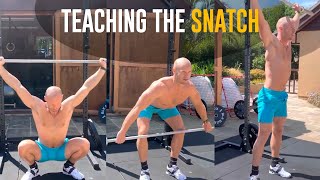
A coach breaks down the snatch from the ground up: stabilize overhead, nail the explosive throw at the top, get comfortable in the catch position, do mobility work, then sequence from the knee before adding weight. Build position familiarity first, pain-free.
Chapters
So weightlifting a lot of people over complicate thinking. Some people call it Olympic lifting. I'm a huge fan of weightlifting. One of the best ways to start with it, just to make sure you're comfortable with the bar straight above your head. You don't want to throw the bar up if you're not sure of where you're going to catch it. The first thing is to be able to stabilize it above the head. I like to have people just play around with that position a little bit. Doesn't have to go to too much stretch. Just feel where that end position is. Feeling that movement vertically. You get some knowledge of where you want to end the movement. And then working on just this top part of the movement. There's different ways to execute this if you're looking for it for athletics. Some people really like that throwing movement where you're throwing the bow at the hips. More technically for weightlifting. These movements from the top. Really good for getting yourself used to that rapid explosive movement, fast rate of force development. Next thing is to be able to be comfortable in the bottom position. If you want to be able to do full lifts. Some people say look at the floor, some say look straight ahead. The floor is probably better. Working into that position vertically, not trying to be too explosive. You're going to build the range for all this with all your ATG work. Pullovers, squats, split squats. None of this should hurt. None of these positions should be overly challenging. Now we piece these together, move from the knee. Position that knee, but shoulders over the bar. Don't want to be sitting back here. Back to this position. You can practice that itself. This is how I really like to learn weightlifting. It's not about producing a lot of force or being really fast. Just about being comfortable in the positions, learning the patterns. Kind of like learning to swing a golf club. You have to swing it as fast and as hard as you can so you get the positions get nice and smooth. And then you can gradually add more weight to the bar. You can see even just working with this fair bit of work being done, I can feel my traps. Works pretty hard. So just get some practice. Feel really comfortable, never in pain. Gradually progress, you know you can't get these positions yet. Persist with your ATG training and the positions will open up. Does everybody need to do this? Do athletes need to do this? Definitely not. The only way everybody doesn't need to do it. I personally find it really fun. It's one of my goals to continue to be able to do this as I progress through the years, but it's an optional additional extra that comes with having that foundation of ATG ability. So if you can do all the ATG movements, you shouldn't have any trouble with any of these positions. Then you just build the skill as if you're going to the driving range and practicing your golf. Let me know how you go.