The Everything Athlete: Building a Foundation for 1% Performance
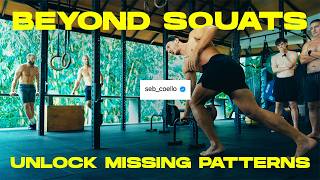
Keegan Smith and Seb Coelho discuss rebuilding foundational movement skills lost in childhood. Traditional strength training like squats and deadlifts misses rotational and coordination work. They recommend a 4:1 ratio of unilateral to bilateral work, starting with breath work and foot mechanics.
Chapters
My name is Keegan Smith and I'm building the Everything Athlete with new Athlete project. The athlete who has a foundation, everything like we do as a child and revisiting the things that I missed as a child and building a system that can serve my family and my children. But also any athlete or anyone who wants to have a bigger base of athleticism to build elite performance. On top of this is my good friend Sebastian.
Sebastian. Yep.
Tell us a little bit about the work that you do.
Yeah, so I work predominantly in. Was a personal trainer many years and then started an exercise in sports science. Over the years, studied a lot of different methodologies of training, went into functional patterns, studied with some friends in terms of the more alternative movement fields. Wake method guider, looking at different practitioners in psychology, trying to just have more well rounded practice, not just exercise science.
Yeah.
And. And here we are.
Yeah.
So you have a mutual friend.
Soccer. You played, you played a lot of soccer. Went to England trialing for soccer.
Yep.
Also done kickboxing, some BJJ playing in Spain. You specialize in the spine and kind of integration of the. The whole body. Most people don't really think about this too much, especially because sports science, exercise science is driven so much by the Russian research, which was a lot about track and field sports and especially like kind of linear movement, not so much towards team sport. Even even though there was like hammer throw and discus and whatnot within that. It seems as though the majority of what's been taken out of that system has been squats, deadlifts, you know, force production, rate of force development. Plyometrics.
Yep.
Why should people care about rotational work in the spine?
Yeah, it's funny, I remember there was probably one module on gait and it was all around understanding dysfunctional gait, like maybe observing hip hikes and different things that lasted two weeks, three weeks. Unless you wanted to maybe major in biomechanics and you can go a little bit deeper on it. But even that you're still looking at squats and other things. So. Yeah. So I think when you really look what you said there, like what, what is exercise science based off? A lot of it's just output. Right. And just looking at stuff. Numbers. Yeah. Easy to measure. Like you look at what a lot of football teams and a lot of sport teams around the world, what they value in terms of metrics. It's like all just force production. I guess you could look at like the injury rates, like are they getting more injured? Which they are. You know, if you can make the case that we're actually going in the opposite direction. I was always super interested in understanding deeper what was happening at a. At a level where I could feel balanced in my body. I had so many injuries that I. That took me out of balance. And the classical model of just kind of strengthening the legs, strengthening the core, it wasn't specific enough. And I wasn't satisfied with the answers that I was getting. In terms of physios, you're saying, oh, you need to get stronger glutes or you need to get stronger, you know, hamstrings. But then when you start. Start to dive in more into individual, like, needs, I guess, for movement, then you start to go, oh, well, there isn't. Why isn't this taught at uni? Or why isn't this taught in general?
So what. What did you. What did you learn that helped you? You're coming back from a badly broken leg.
Yep. Yeah.
What. What made the difference for you?
Yeah, it's like, first understanding that. Understanding that we are predominantly, especially in sport, mostly on our feet. Right. And when it. Look. When you look at the way the traditional model of maybe physios looking at things in isolation, but not just physios. I'm talking about just in general. Like, we have a very reductionistic view of the body in terms of just separating the parts, not looking at the bigger picture. So we get these experts who are able to just go, oh, yeah, like, you know, your hamstrings talked in this direction. And we need to get your shin, you know, here, twisted here, see if you can do some isolated ankle stuff. That's good to get, like, very specific measures. But then when you start to look at how the joints work with gravity, that's when you start to see things that aren't really taught at uni. So for me, for example, I had, like, my right shin. This is. I had a double tibia and fibula fracture, and my foot and shin basically healed, externally rotated, and then my knee kind of twisted here. And then this kind of twist that was happening at the knee had this twist that also happened to affect the hip and the spine. Right. So every time I would land when I was running because my joints and my leg wasn't aligned, I'd basically load my. My posterior chain and my leg completely out of whack. You know, I was, you know, rotating way too much for the inside of the knee. I would constantly sprain my ankle. So even just understanding how gravity plays a role in, well, how our joints work with gravity in order to create sustainable movement, that was Like a big thing that a lot of thought leaders started to talk about in the space. You know, whether it was David Weck, whether it was Nauti, whether it was a lot of people. Paul Check was actually one of my first inspirations. Him talking about a lot of the primal movement patterns and just talking about how gravity and how a lot of these movements that were meant to have deeply ingrained in us. In us, when they get twisted and out of whack, it can start to affect other systems in the body. And that's what kind of started to open mind, my mind about, oh, like, what's happening with my energy levels, what's happening with my digestion, why is my back killing me and my digestion is all off. It's all kind of part of one integrated system in that. Yep.
So how can someone get started with this? Like, that's, I think a big part of the. The issue is like, buy my course. The characters. Yeah, the characters, the guys that are leading the rotational conversation by nature are kind of contrarian. And they're, you know, in conflict with the rest of the rest, the mainstream thought, which is good and healthy. But then often, even if people are curious about, they think they need to do something along those lines.
Yep.
Like, it doesn't look like there's very clear starting points or, you know, even some numbers that can be used to quantify that. Okay, yeah, this is doing something.
Yeah.
What do you find is, like, good starting points for people to look into this area? If someone's, you know, watching and they think, yeah, I kind of get it, but I don't, you know, how can I just test it for myself?
Yeah, it's actually a really good question because I've been so deep into it for 10 years now that actually relating to someone sometimes there's like, right at the beginning, it's really tough.
Yeah, I see that. Not just for yourself, but I think that whole, like, oh, yeah, you know, community and group for sure. So obvious now to people who've been down that path of like, okay, yeah, like, this is how we look at things.
Yep.
But then it's like a completely different language. And it's like someone talking to, like, it's the fight between the French man and the Russian. They don't understand what each other's saying, that they're getting angry.
It's exactly like, I mean, look at the nutrition field. Even if you're somewhat remotely like, interacting with that algorithm on social media, it's like, we've still got people fighting with the whole calories in, calories out, versus focusing on the hormonal effect. They're still fighting. Right.
And the vegans and the carnivores.
And the vegans and the carnivores. And like, did you have Celtic salt with your steak or did you have regular, you know, sea salt that. I mean, imagine someone who's just looking at getting started with their diet, stumbling on that. So the movement field on social media right now is in that state where they have to be really contrarian to get their word out and be seen. But it doesn't do well for the average person who wants to just get involved with understanding some of these movement patterns that are. That they can train and they can kind of get started with.
It's.
It's kind of. It's kind of sad because I had good mentors, like friends who are in my local community that were just a little bit more advanced than me.
Yeah.
And they didn't. I didn't jump from level zero to three.
Yeah.
I went from zero to one to two sustainably. And over the years I got crazier and crazier. But no, just like understanding the. I guess I think for someone, the first thing that they can do is start to read and, and maybe start to look at the way. I'm going to reference Paul Czechi, because I think he, he has a really good way of expressing and communicating how our body is tied in very closely, the psychology with the physical aspect of it. So pain, for example, is not exactly a. Just an indicator of bad movement. For example, it could be from digestive stress. You know, in your lower back, you have a. Have a issue with your gut. So I think understanding, okay, like, there's a physical aspect to this. There's a nutritional aspect. All right. Once I have those bases covered in terms of just the movement you've got, you first need to start with mastering your body. I think that's. And I'm talking not just body weight exercises, just feeling. Being able to kinesthetically understand your body and feel it. So maybe a bit of breath work training. You know, I wouldn't jump straight into Wim Hof, but understanding breathwork from Patrick McEwen and the oxygen Advantage Guys, for example, just learning how to breathe through your nose, understanding the rib cage, understanding how that works. Then you can go into the feet. There's. I mean, that's the thing. Where do. Where would you even. Where would you start with people? Because I can point them into a million different directions, but it's very contextual to what that Person. The information that they're giving me.
Right. Yeah.
Are they coming from a sporting background or not? You know, that's the.
Yeah. I go back to the stuff that was rotational training in the early 2000s when I was first starting to train myself and my buddies. Like the medicine ball. Rotational medicine ball throws. And just holding onto the medicine ball, doing those movements in standing. And even some of the sort of assistance exercises or from the hammer throwers and throws, like some of that old Russian stuff, just holding the plate and twisting. Which kind of overlaps with some of the early functional patterns.
Yep.
For me, that stuff is relatable and it's clearly valuable. I like some of the rotational kettlebell stuff that's becoming more popular. Seems to be mostly kind of influencer channels that are doing it. Some of it is things that was in the early day functional patterns as well.
Yep.
But I think these exercises are like simple and relatable. And you can feel that. Okay. Yeah, my trunk is doing something.
Yep.
But you not gonna bamboozle people with feeling. Like the problem. Like, I love having a million cues and like when you're queuing me and coaching me and some of the wet guys, the queuing and coaching, like all the exact positions.
Yeah.
I think it's really valuable to be coached like that and to be able to make those micro adjustments. It's. It's like a slow motion dancing thing. That's dexterity of the whole body. Yep. Super valuable. But for someone who's thinking about training on their own and they see that the coaching's like that with. Like, how would I. Because I can't see myself. I don't know what to do with any of this.
That's where the. That's where I think a good coach and a bad coach comes in. Like, for example, it's super important to just first understand how much you can take at once. Because there are going to be some people who can handle two, three, four cues.
Yeah.
But there are going to be some people that can only handle one. Right. And that's where you, like a good coach has to be able to identify, okay, this person is not really aware of their body that much. And that's where you go, let's just practice. You know, turning out the knee, for example.
Right.
Turning out the knee, turning it in. Cool. Once you feel that, can you now turn the hip without moving the knee? Right. It's like working too. Then you can stack on. But I think the quality of what someone's doing with a coach matters a lot. If they're feeling the right things, great. If they're able to progressively overload, all that stuff's great. I think if you're going to start even just understanding the rotational stuff, where you can start is first just getting to know that, for example, your ankle and your hip want to rotate together in movement, right. So people who have dysfunctional ankle rotation, they're going to tend to rotate a lot through their knee unnecessarily, or they might compensate and excessively rotate through the hip. So we want this articulation of being able to externally rotate and internally rotate between the shin and the femur. Just understanding that there are joints in our body, like our ankle, that function differently to the knee. Just like that little bit of knowledge, right, can be so powerful even when you're at the gym and you just start to notice, like, if you like, step one is being able to see either in someone else, we've all been to the beach, or at the park and seen someone run and gone. Like, that doesn't look right. Or that looks really good. So just being able to observe. And if you're seriously. If you seriously want to change your movement and understand your body more, you have to start, like, observing. And that's like the first key. And not. Not enough people do that. They're either on their phone or whatever doing something else. They're not watching. If they're watching. If they're interested in football, great. Start looking at the best footballers and why they move the way they do. That's a. That's a powerful realization. But then observing your body and going, wow, okay, I, like, tend to collapse a lot to the inside of my knee. Well, I tend to collapse a lot to the outside. Then you've got things like thoracic rotation, as you said. I'd like to focus a lot on the spine because that's where a lot of people are locked up. So I think just understanding, can I rotate well to the left and can I rotate well to the right?
Oof.
I'm feeling really stuck rotating to the right. Why is that? Or maybe my lower back. Sweet. Cool. There's like a pathway. There's a direction. Exactly. You don't have to go crazy hard with, like, medicine ball rotations yet. But even just going, oh, like, I. I seriously suck rotating this way you can start to load up these patterns and start to align your spine in a way where you're getting equal tension on both sides.
Yeah.
Y. But the observation is like, key first. Y. Yep. We don't do enough of that.
We're talking yesterday about if you see a structural weakness, then you could potentially engage in a sport or activity that's going to require you to build that structural area.
Yep.
I've been thinking about this a lot from the neurological perspective of like you got slow feet.
Cool.
You need to do tap dancing or you need to do.
Yeah.
In, in close to the wall. Foot juggling or like something that requires coordination, timing, rhythm at speed neurologically. But you've been thinking about it from the structural perspective.
Yep.
Have you got any examples of that or even like with yourself where.
Yep.
You see a specific structural thing, you go down a specific path.
Yep. I. My right foot post surgery, I couldn't stay off my heel for very long. Yeah. So then naturally I was like, sweet. I'm just going to do depth jumps off a 3 meter platform and 2 meter platform and just land on my. I lasted maybe a week before my knee just started hurting and killing again. That's a very extremist perspective. That's sometimes the way I approach kind of movement, but not that's with myself. With other people, it's like, okay, can this person, does he have the endurance to stay off the heel in my example? Maybe for a minute or two. Cool. What sports or what movements are going to help them stay off the heel in a way that they can learn also coordination and how to move the rest of the body. Boxing. Perfect. Off your toes, being able to bounce in and out of that tension, being able to pivot, being able to do different movements.
Right.
That's a great example of even just learning the coordination. But from a structural perspective, you've got certain aspects of, say if you are lacking rotation, for example, even just playing a light game of tennis, you can start to get a lot of those coordinative abilities. It's all about understanding as well, like timing. Timing is everything in movement. You know, if you're going to do a bench press, you're not going to lift your hips off the bench and then drive your arms. There's like a timing. You want to press and then you want to finish with the elbows. You're not going to finish with the elbows and then finish with the shoulders as an example. There's like a timing with everything. So a lot of, a lot of these sports and movements have a lot of these aspects of athleticism already integrated with the practice. You don't have to isolate everything. Like you can learn a lot of different things just from doing things that are outside of your movement spectrum. I think that's a huge one yeah.
And then you get the whole coordination endurance, some light plyometrics. Yep. That's the thing about actually going and playing tennis as well, is that you get plyometrics, but you're not testing your structural limit. I think too much of what I've done and what the strength conditioning world does is like, okay, we're going to train jumps. That means we're going to test our structural neurological limit in jumping versus when you go play some tennis and you and Smash after Smash.
Yep.
You're only jumping like moderately off the ground, but you're getting so many reps and coordination, timing. Yeah.
As you said, once you. Once that endurance kind of picks up and you go, oh, this person's actually a little bit stronger than I thought, then you can start to isolate variables. In the gym, you can start to go, right, let me practice more of my single leg hip extensions.
We all started like that. Yeah, we all like, 0, 0 to 10, 0 to 15. We were all doing that low level stuff. You go, you start learning to skate. So you go, you jump in and you're falling off the skateboard and you go to dance lessons and you go play cricket with your buddies. So everyone operates on that foundation when they go into these elite sporting programs and they start doing the plyometrics and whatnot.
Yep.
But then in the 20s, it's like, it's longer since you were in that chaos. And if you get to sit out from your sport for a while, like you did and like I did for pretty much a decade, well, then you don't have like, it's not in the strength conditioning paradigm to like, do all this lighter stuff to recapture the tent, the 0 to 15 window. Like Czech does a lot that those guys are doing a lot of like the 0 to 1 stuff again of like how to get up off the ground and squat. I think that whole spectrum. Manu, anytime, like the ball falls off the thing, he can do a depth drop from, you know, shoulder height without thinking twice about it.
Yeah.
And that's an 8 year old, untrained 9 year old.
Yep.
And yet we're trained in the gym all the time. And how many guys you know who feel comfortable out just any time of day, get up from the chair, go and do a depth drop from that. So our training isn't getting us back to where we were at night, like, you might be able to do it, but most guys who are in the gym and definitely the way I trained for a long time, it's not getting to that. So it's like the integration of this. This, like, playful foundation, I think, is, like, it's exactly what you're talking about there. Of like, okay, I need, like, more rotational stuff or I need the toes off the ground. Let's go do some kickboxing. It doesn't have to be that you decide to be a fantastic kickboxer as well. Like, that's the. That's the thing. I think that also we have this mentality of, like, oh, if I'm going to do the thing, then I have to be doing it. Have to be a professional fighter and win competitions and.
Yeah, yeah, yeah.
It's like, no, no, let's just use it as a tool.
Yeah.
And I think if soccer, like, I've been making reels about it and making the case that, like, you're trying to make everybody better, doing exactly the same things as everybody else, and then you go, look at Zlatan, and he did something completely different and. And he's. And he's ended up like, he scored goals that no one else can score. He's got physical presence that other players don't have. He's got confidence that they don't have because he knows you can kick the shit out of him.
Yeah.
Like, there's. There's something to all of this.
Sure. A lot of people will use genetics as an example. And yes, like, there are some people who are genetically going to be geared towards, like, you know, whether it's Mike Tyson with power or Zlatan for dexterity and, like, and flexibility and stuff.
But how would it have been if you'd never.
Exactly. The epigenetic expression of that is a completely different thing. Yeah. But back to what you were saying about Manu, your son, like, holy crap. I remember When I was 6 or 7 years old, my body was craving impact. There was, like, a real specific dopamine rush that I got from landing and just feeling my joints go whack like that. And I was like, I must have been fucking calcium deficient or something, you know, I was like, you know, like, literally, because my body was like, you need to get harder bones. Like, now that I think about it. Right. But at the time, I felt so full. So, like, fun to practice parkour and doing all these things. I reckon if I. If imagine we've got parents who don't let their kids express those natural kind of, like, inclinations to move. They may be missing out on a huge evolution of their. Of their movement, you know? Yeah.
But even for. For me now at 42, like, being able to Jump down off stuff is still something that I want to be able to do and should be able to do. And it's not normal for a lot of guys my age. Don't feel comfortable jumping down off things.
Yep.
Like I've been working it last two years and now feel much more comfortable jumping down off things. But I think those instincts are there all through life and watching children is a good proof of what I'm saying that it's not just some bullshit that I'm making up. Like my. My nearly two year old desperately wants to jump. He says jump all the time. He jumps off tiny little things. He jumps down off stuff. He gets me to hold his hands and jump down.
Crazy.
He wants to be on the trampoline.
He.
He gets in the bands in the, in the gym. Like the band under his armpits so he can jump because it makes him lighter. Like it's wired into us to want to do these things. And it keeps going. You see Manu and my children here on the skates like there's a driver in your blah. All right, let's keep progressing. Let's keep progressing. Let's keep. And you know he wants to do the ball like Eden he start, he's got to be able to do 10 bounces with the right hand with the basketball. He doesn't keep going. What he does is he starts trying to do this and he goes back to two bounces again. And he stops doing this as soon as he can do it a bit. He's like, he finds something else and he won't. So it's not. They don't play it safe. They don't do it consistent. They don't lock in on the ego of like, I can do that. Now let me just keep showing everybody that because they like seeing me do this.
No, no.
He just goes straight on to the next thing. That's our true nature. Like he's not conditioned to do that. You can't really condition a one year old or a two year old. They're just operating on instinct.
They're also seeing you and which is great.
Definitely being impacted by their. But you can't control him. Like, you can't touch him. You try and tell him like, dude, you just walk off or just like, he's not going to just do his own thing. That's how babies operate.
Yeah.
And. But that's, that's. I love that window into like, well, this is our true nature. And you see the babies like these other babies here and you, you put balls in the Hand and you give them, like, you just give them sensory stuff and you see them light up. And I do exactly the same thing with. With you guys of, like, all right, let's try this and try this and then try this and.
Yep.
And you see people light up. I do it with the staff here. I teach them how to the juggle, and I make them, like, spin the ball while they're doing it. You just see it like sensory input. Like, we're all. We're all wired to it.
Yeah, yeah, yeah.
Just letting, like, letting go of the fear of being judged and the ego, and then. Then we can do it.
But funny you saying that, because I felt. I felt extremely restricted when I first started doing, like, squats and, like, other stuff because I was so twisted on one side while I was doing a. For example, a squat. And again, you people who aren't twisted are going to. Might do phenomenally with it. But, like, I went down and I was like, I feel like someone just needs to, like, kick my hip into the left. Right. And then my coach was like, don't. No, no, no, don't shift when you're in the squat. Just go straight up. And I go, like, it, like, hurts.
Do that.
And that's when I had to go down the unilateral path and of going, okay, I've got the freedom now to express this. But those are just, like, me being honest and aware of, like, the restrictions in my body. Not judging, like, oh, I'm just a squatter and I can't do it. No, it's like, all right, like, we should be able to squat.
Yeah.
Should be able to squat. Maybe we need to go down the fundamental route of just going, why can't I do this? Oh, crap. This also relates to all these other movements that I want to be able to do.
Yeah.
That's how you can start to, you know, have that, like, bird's eye view of, like, when you. As I'm saying as an adult. Right. Not as a kid, but. Yeah, you take a little bit more of a. Of a mature path to understanding what's happening in the body a little bit.
So you had. Yeah. You had these bad injuries. You couldn't do the movements like that. You've gone down this big path. You become a super athlete. You're back playing soccer, you're doing all kinds of stuff. Yeah. You move really well, and, you know, you're having fun. You're doing what you want to do.
Yeah, yeah, yeah.
Can you squat now? Can you bench press? Can you deadlift? Like, can you do these things? You know, it's like.
It's like at the end of the day, when do you still feel like.
They don't work, though, for you, or. Well, it's just.
It's almost like a pattern overload in other areas that I've been so like. I think once you understand the direction that you need to go in with your body. For example, if you don't hinge well on your left glute, there needs to be that obsessive period where all you're doing is practicing hinging in your left glute. It's almost part of your daily life. You pick something up, you're practicing consciously. It's like a consistent awareness.
Yeah.
So a lot of exercises like bench, like, like a deadlift, like a squat, they actually turn more into, without a better word, for intuitive exercises where I like. I like to actually really feel it's not necessarily for the movement itself. I'm like, what can I get out of this movement that can really. I can generate a lot of force in a sustainable way, and I don't compensate in other areas, you know, so I might drop the weight, for example, and just focus on the quality of the contraction. But I won't do what power lifters do and just do like raw. Like a raw lift just for the sake of lifting it up. Like, I focus a lot on, am I. Am I doing this movement? And can I integrate anatomy properly?
Can I.
Can I get my whole chest involved with this movement? Can I get my. All my triceps, my core involved with the movement? Yes. Great. I'll do it. You know, there's no. It's not like the word bench press. It's more like you're lifting up a barbell. Cool. You can also do it alternating grip. You can do it supinated grip. Just because the power lifters have to have these strict rules doesn't mean you have to have those strict rules in the gym.
Right?
Yeah, I prefer a lot of incorporating rotation more. So I'll do more dumbbell bench. I'll do more dumbbell shoulder presses just so I can really articulate different areas that I need to work on. But and same thing for my clients. I'll give them push ups. I'll give them maybe weighted push ups as well, you know, with a. With a vest and so stuff. But they, they understand, for example, when they're loading, what's what each side has a tendency to do. So just that awareness alone, they. They may, for example, traditionally shift over to one side While they're doing a press, you know, which you see a lot of people do. So they're aware of that and they, they, through process of just repetition, they're able to articulate both of their shoulders so they can have a really clean force transfer as an example. Right. But that comes from the body awareness. You know, I think if you just stack on training year after year after year, without the body awareness, you won't even realize the areas that are not working, that are meant to work that will at some stage potentially cause you grief. Hopefully not, because I. Yeah, I think we're pretty antifragile as human beings.
Yeah. Yeah.
But, you know, you're better, you're better off just having a. You're better off having some kind of rotational sport, some kind of rotational training, some kind of force production training where you are hitting so many of these different pillars and you don't need to think about it.
That's what. Genuinely, that's probably where I'm getting to a little bit. And you've seen me go through this evolution the last couple of years, you know, that I'm, you know, I'm always curious and interested in your perspective and I don't fully understand the language and the movement. I'm understanding it more and I'm testing things whenever we're together.
Yeah.
And quite a few guys from the network have worked with you now and like, I respect it and I know that there's a lot of value there. At the same time, I kind of hope that all this other stuff that I'm doing now with, like, doing more, you know, striking sort of stuff and tennis and just bits of kickboxing and whatnot, I can feel that my body is, is much more alive and aware and coordinated. You know, how important do you think it's going to be for me to keep, you know, to learn more and do more, say, you know, the cable work and. Yeah, like, I'm, I'm open to doing more of it. I still definitely have that meathead side that kind of wants like some of the numbers that you might see a high jumper or a footy player doing.
Yep.
But like, yeah, what do you, what do you think the, the impact and the path, like, can just continuing to go more into sport take, you know, cover off a lot of what you would get from that or, you know, how much work do I need to do?
Yeah.
If I am going to be doing some conventional lifting.
Yep.
WEC sort of says like four to one, you should do four parts unilateral and Rotational to one part traditional bilateral which is pretty easy to do if you, if you're all your assistance stuff is higher repetitions and it's all, you know, unilateral and rotational. Yep, that, that kind of makes sense to me and it's kind of how the ATG system is without so much rotation, but more the unilateral element. Like do you have any thoughts about.
I think I have always taken the approach of precision over anything. So precision is just like, I mean as you get more advanced in for example sport, the more precise the athletes are. Like whether it's a free kick in football, know they'll talk about make sure you hit the, the second knuckle and brush off to the. And the average person feel like, mate, I don't even know where to put my rifle. Yeah. You know, so it's, it's like if you truly care about becoming an all round athlete, the precision factor is kind of like your meta of like as I get even. Even in the gross motor movements, there's a level of intent in precision. Yeah. Where you're, and I don't mean just precision in terms of like choreographed movement. I mean like the output as well with the input. Like you feel that when you, for example, hit a forehand and you feel how the hip and the spine integrate. Like you're really conscious of that feeling. Very similar to how a golf swing would happen. It's also, the ball's also going where you want it to go. And with those two meet as an example, that's where elite athleticism kind of starts to. You can start to see those elite athletes like in that zone a lot more. But I think for you, for example, and back to what you were saying about the structural stuff, it's like over the years you're going to have areas that you may not have paid as much attention to. Like for example, if you're lacking what you said there with Zatan's example, if you're lacking internal rotation in your hip, what athletes are doing internal rotation? Okay. A lot of taekwondo athletes are up here, right. So you first start with the gross motor pattern of just feeling it out. But then you see the Taekwondo guys. Not only are they doing the gross motor patterns, they're hitting it right underneath the chin in the exact. But so how can I get the body awareness to be able to do that? Well, first, if you can't even keep your leg up here, you're just going to have to get stronger hip flexors. That's just the way. Repetition, repetition, repetition, Once the body is able to hold these positions and you've got the endurance in them, that's where the, that's where you can do more reps, more force, more. Because you, you feel, you're going to feel when you're doing it correctly and when you're doing it incorrectly way earlier in the, in the process, you know, so even in the example of a medicine ball along the, like throwing against the wall, like you could just first start doing whole body. Right. But then you can start doing maybe hips first and spine then, and then spine first, then hips next. And then you start to get more precise as the years go on. Like we're talking years here because. But we're not talking weeks. Right. We have to be, we have to be honest about the timeline. Unless you're on godly amounts of steroids.
Then just doing stuff lighter and more playfully does allow you to correct. So if you're only doing a one kilo ball or you know, really light one, then you can be more playful with it and you can for sure the other person, that's part of the feeling process more like dance, rather than trying to treat it like power 100 sort of what I was saying as well. Like the children aren't often that worried about like the absolute maximum force they can output. They're just coming up with all different ways of doing things.
Yep.
And that helps to build resilience, but it also helps to build lots of different motor pattern, you know, dexterity ability.
So like the, the precision of biomechanics, it's like there's a quote. It's basically like biomechanics is basically applying stress at the right time to the right pattern to the right person. So that's like the real precise, like, okay, you know, I'm looking exactly at your body is exactly what you need. But then there's the actual mode global movement patterns. You might actually have like a little compensation that is like very unique to you. Like a lot of tennis players don't hit the same. You know, Rafa has a very exaggerated top spin on his forehand, whereas like Djokovic is a lot flatter. Right. Imagine his coach just told him to do a top spin all the time. He's going to get smoked by Rafa. As an example. He has a. You know, so I think, I think practicing the global movement patterns is like 80% and maybe being like really precise with it.
What are the global movement patterns in the rotation world?
So having, having hips, being able to rotate. Yeah. And spine, being able to counter Rotate, that's one. You'll see that everywhere, whether it's a boxer, whether it's a tennis player, whether it's a javelin throw, whatever, then you've got the same thing. So, basically, hips there. Well, hips here. Being able to counter rotate from an open perspective as an example. These are just the rotational dynamics. You've got basically the capacity to suspend the heel off the ground. That's a huge one. Like, people just think, oh, yeah, I lift my heel off the ground. Now we're talking about being able to sprint, being able to change direction. If you don't have the capacity to have your heel suspended off the ground, you're basically never going to be able to spin properly, never going to be able to express power linearly as, as efficiently. And then we've got lateral flexions of the spine, you've got rotation of the spine, you've got flexion, extension. Those are just your core, basic spinal movements. But again, a lot of, A lot of traditional strength training, you can actually just apply those principles into a row where you're actually getting more flexion and extension.
Yeah, Right.
You can practice shoulder presses. With some lateral flexion, you start to slowly incorporate into practice. We're doing today, correct the pull downs. Exactly. Here, working on that lateral flexion, similar to a single arm pull up. Then you've got, you know, your squat, you've got your walking, you've got your running, you've got your throwing, you've got your striking, you've got your. But from those movements, you can always. Yeah, you can always say, okay, well, I'm clearly good at sprinting, but I haven't thrown a ball in 30 years. There's your, there's your guide to go. Right. How does that influence my shoulder? Oh, my shoulder rotation's crap. Perfect. Done.
Yeah.
You know, that's what you need to work on for a while.
Yeah.
You can obviously go deeper on it. You don't have to. But I, I same to you. I love having fun with movement. And if, if I can make a lot of the movement, the kinesthetic awareness side tie in with the sports side. Right. And, and being able to get gains. If I want to gain more muscle, I've got to, you know, have high mechanical tension in my movements. I've got to create. I've got to create enough stimulus for that. Yeah. But it's still fun to me because at the end of the day, it's part of one of my goals. So if your goal is to move better, but all you're doing is just gaining muscle.
Right.
Like, you're not training to move better, are you?
So also if you're, if all you're doing is pulling against the cable and your goal is to move better.
Correct.
Like, I like that. I see your workshops, you know, when you, when you get people together and you're doing some, some striking stuff and the ball, the ball is there and you're doing. Yeah. So you actually get the chance to. Because it's not necessarily going to look the same. The person who's best with the cable might not be best when it comes to, okay, we're going to kick the ball now, we're going to strike now, we're going to run now. Like that, that's. They're related, but they're not the same thing. And it's like, it's, you can get wrapped up in like, oh, let's nail our perfect biomechanics. And then you never actually really doing anything much that anyone else is going to look at as athleticism, whether you're playing with your children or going with your bodies to play some paddle.
Yep.
Like, yeah, sure, you need to actually.
Yeah.
And it's not even all high force. That's the thing, like, because I was talking about the biomechanics from the perspective of like maximum force and you know, we're talking about sprinting really. And. But there's all the stuff underneath that, that if there's a buy in of athleticism and coordination, that's not being addressed very well. I think, like us and sema, like what you're doing is actually like, let's, let's put the rubber on the road a little bit as well and actually have a ball involved or have someone in front of you that you're going to feel distance and feel timing with. Then you see what comes out for sure. You know, keep going back to the isolation and the pretty stuff. Wolfgang Shawhorn Differential LEARNING the idea that there's no perfect. No one knows the perfect biomechanics for any one thrower. So he worked with discus and javelin and whatnot. And they analyzed and they said, well, look, between all the best javelin throwers, the top five in the world, there's so much difference between them. So which one are you going to model as your perfect? Because everyone in Germany was teaching the perfect. So most of the German throwers were really similar to each other. But then when they went and measured the best in the world, there was much bigger differences between the best in the world. And you look at those Indian javelin throwers Compared to, like, the German ones.
Yeah, yeah, yeah. The Eastern European ones.
Huge differences in this. How they're throwing from the spine and shoulder range and everything.
Well, yeah. For example, it's common in. In many fields to use one athlete as, like, the pinnacle of, like, gate. For example, Usain Bolt.
Right.
I'm definitely not big, black and Jamaican with super long femurs and stuff. So, you know, it's like. So how. Yeah, how. How does. Are there similar patterns? For sure, there's probably about 95. That's similar.
Yeah.
But that 5%, if I try and copy him.
Yeah.
I could actually be up my body. Well, I could be messing up my body in the process.
Yeah. But that's. I. You know, Stefan Holmer did copy the greatest jumpers of all time, and he realized that it wasn't the best for him, but it was part of him becoming 100 of the greatest.
For sure. For sure. You have to look at the thing.
Is actually really valuable.
Yep.
And, like, it should be done more. I saw Roddick copying Nadal the other day. Like, it was just a short that popped up. But I, you know, the example that you gave of, like, if Djokovic tries to be like Nadal. But I think Djokovic should practice being like, the dial sometimes because it's going to push his range of solutions up.
Yeah.
And being able to make, like, you watch the crazy plays that Alcaraz makes.
Yep.
And it's like the adaptability of the athlete that I think a big problem is people trying to find perfect biomechanics and they're sending them to this school where they've got perfect tennis biomechanics and this big model, and they're like this one shot that they're trying to make and make. That athlete's never going to make it.
Yep.
Because it's the one that's able to deal with much more of the chaos. You see Federer in close. You see Federer playing table tennis. Yep. I'm all for this more adaptable athlete. You know, LeBron playing heaps of American football, Kobe playing heaps of soccer. MJ never given up on his baseball and golf.
Yep.
Like, you see Steph Curry doing volleyball and soccer before you see Wemby juggling, like, the bigger base. And the adaptability, like, that's the extreme of going into other sports, which is what I'm talking about with the everything athlete. But then also within the sport, being able to use these, like, different models and attempt to learn one of the greatest baseball throwers, pitchers. He was. He was Setting all kinds of records. Like in the 70s, I don't have the name on the top of my head, but he was teaching a lot of guys to throw to second base, like 80, 85 miles an hour. So he was doing this, like, so that they were able to throw this more over style. And he was trying to revolutionize pitching. And he said that they shouldn't be getting all these Tommy Johns and. Yep, that's, that's what I see as.
Like the, the skill acquisition, the other.
Well, but it's, it is biomechanics and it's being able to use different patterns. And that's what Wolfgang is saying. Like, the way you progress a javelin thrower is to give them enough contrast in something that's not their ideal pattern so that they get closer to their ideal patterns. It's not just random stuff, but it's like, okay, over stride, that first, that step a little bit more over stride, over stride it. And then they figure out how to get exactly the right shorter stride. And, you know, he. This, this is like a big idea of like the ideal biomechanics that I think from what I see of like the biomechanics strength world now, I think it's really valuable, but I think it's valuable because it's teaching you to be able to do all different stuff more so that it thinks it's valuable because it's teaching you the perfect pattern, but I think that it's teaching you a bunch of different patterns and more dexterity of your body, more awareness of your body around that pattern. And then you'll find what you need to be able to do because you're more skilled, you know what I mean?
Agreed. Agreed. The. Yeah, there's so much to that. Specifically, I think having that approach of catching yourself, repeating the same patterns and not expanding on that, that's a huge part of you even becoming more. Well, apart from more aware of what's happening in your body, aware of all the potential areas if, say, you're a footballer. I don't use my right leg much. Just. Just the honest truth, you know, I prefer using my left leg. I'll cross on the outside, I'll cross on the inside. I'll try and shoot with my outside of the foot. So what did I do? Instead of just constantly trying to play with my right leg in a game scenario, I started doing Muay Thai and I started kicking exclusively with my right leg. I started to get that pattern first. Right. This is just the way I did it. It's not the right way. Maybe not the best way, but I started first just getting more understanding. And wow, was that a huge eye opener to see how that spine first and then hip whip. Right. Was not integrated on that right side. Right. And I couldn't do it in a football scenario because it just. It just didn't feel right. I started doing on the bag, and on the bag, it started to get lower and lower and lower, closer and closer to the ground. That's when it started to get harder. But. But because I had that 80, 20 rule of just being as precise as possible while producing the effort, that's when the two slowly started to meet. And then I could kick really hard and precise exactly where I wanted to on the bag, and it felt good.
When you say 80, 20 precision, what do you. What do you actually. What's the 80? What's the.
So you start 80% precision, 20 effort, and then you slowly start to bring that to 60, 30, 64, 70, 30, 60, 40, 50, 50. And then you produce more and more effort, and you trust the. That you trust that the precision is already there.
Okay.
You know, and I think when you take that approach and you. It's almost like throwing just a ball against the wall. Right. Okay. You just trying to become precise, then you can start to throw it harder. Throw it harder. As the weeks go by, you start to really, every time you produce more effort, it's in the same spot. That's when you can start to blend and mix and do different stuff. You know, that's an example of how I've been able to learn gross motor patterns. You know, I go to kickboxing class and my coach was like, you need to. You need to. Obviously, you need to cover your face more as an example. That's an act of technique. It's not a biomechanical issue. But me not being able to lift up my leg, trying to kick someone's head, that's a biomechanical issue. Right. That's when you've got to take more of the precision, feel it out, then slowly, over time, produce more force. More force. The force without the precision first is just a recipe for injury, in my opinion.
Yeah, I was doing it in the gym, so I know you saw me throwing the ball at Ben.
Yeah, yeah.
Playing some basketball. Ben was saying his uncle played for the tall blacks. He's been around basketball a bit. Tall blacks? Yeah. Apparently that's what they're called, the basketball team. That's so good. Yeah, but he was. Yeah, he's playing for New Zealand basketball. So he's been around basketball and we're doing some dribbling and whatnot. And then we started doing some passing because it's normal to sort of practice the dribbling, but you never really practice like passing.
It's.
And I haven't passed for so long.
Like, like just in footy training. Practicing the.
Yeah, well, training you sort of do. But I guess like, because I'm just, I haven't played basketball for forever and I've been doing some dribbling. I haven't, haven't really like passed the ball. So I was throwing by passing the ball in different ways, but I was trying to do it like at 80, 90, 100% speed.
Yeah.
But I started just spraying a few. But it's like you're also good to get the feedback.
Your body's capable of expressing that.
Yeah, yeah. I wasn't going to help myself with a basketball. Like.
Yes.
That depends on the implement as well. I think if you're hitting the bag, it's a bit different to. You got to give your body a bit of time. The basketball's nice and light. You know, I wasn't going to hurt myself on the ball, but Ben was in a bit of danger and yeah, the, like the walls and the glasses and everything was in a bit of danger because I, I, yeah, I, I felt like I should be able to hit the target with it, but I wasn't hitting the target with it.
Yeah, yeah, yeah, yeah. I feel, yeah. You know, the classic weekend warrior desk. Five days a week on the weekend, play sport.
Yeah.
Then there are those guys who maybe are trying to get back into sport after 10, 12 years.
Me. Yeah.
Well, they're the ones, a lot of them, for example, who aren't realistic about the way the body works. They jump straight into a basketball game, tear their Achilles, see you later. And I think one of the biggest psyops, especially in the gym world online, is that everyone's kind of always ready to go whenever, lift a heavier weight, do this, do that. And it's like playing and moving used to be part of our daily life. It's not anymore. Let's be real. Right? It is for you for sure. 100. I can imagine you just on a plane just.
Yeah. Airport.
Just juggling would be.
We had, we had a great game in the airport in Dubai. Eden had the Myers hairbrush.
Oh yeah.
Thrown in the ping pong ball. And he's like, people are watching. Like, yeah. What is this one and a half year old doing with hairbrush with the ping pong that's us. We're everywhere. Guy came up to me in the airport, like, you got to be Keegan Smith. Yeah.
No way.
I see you carrying around a ball, you got the racket in the other hand.
Like, there's not enough space on the overhead lockers for the shit. You know, you just say, yeah, yeah.
So, yeah, like, that's what I'm pushing for as well. Like, I would love to see. I think it's a big shame that children don't see their parents. They go to. The parents might go to the gym or they might go play paddle or tennis or something, and the children never get to see the parents doing the thing. Yep. So as far as the children are concerned, the parents don't freaking move. Like, I never get to see them do anything. So that's like. I love having my. My boy there. And obviously, like, we play a lot in the house. You know, a lot of people have the rule, no balls in the house. I think my mum had the rule, no, no balls in the house.
Yeah.
If you come up and visit our house, we've got like 18 balls there and they're like, yeah, we've got a box that they go in now. But I think, like, it is a big thing to. To reintegrate play into society and I love it. Paul, check. Sort of encouraging people. David Weck is encouraging people. You know, he wants to see ropes and get two people out in the park doing road flow. Like, this is. This is what I want to see. And like, you know, juggling the ball to each other and.
Yep. There's also. It's also other things, I think, affecting our capacity to be ready for movement. Like, whether it's just chronic dehydration, people, poor sleep. Like, I think if you have a relatively healthy lifestyle in the context and you feel. You don't feel that much pain day to day, you're actually not that far away from getting back into athletic movement. You know, it's just that there's so many other things that. And then people don't take into account that. That four hours of sleep they've had for the last two years daily. And then they're jumping straight into something that requires a lot of stress around the body. Like, in a way, what you're doing, you're kind of always priming yourself to be able to produce that force.
Yeah.
You know.
Yeah. Helping people to find a way to. To not feel like they have to compete as well. Like to be able to do things more playfully.
Yeah, yeah.
Like the soccer ball juggling and you see us like playing table tennis without the table. It's like the beach tennis in France.
Yeah.
But they just hit the ball back and forward to each other. It can become crazy athletic. Like you see the, the beach soccer in Brazil. Four people with a ball. Like it's the extreme of athleticism. They're doing fun backflips. Yeah. They're having fun. But like it does get to super high forces and athleticism start chill and, and that's like I think for, for people who want to get, you know, they see themselves that they want to get back into being feeling athletic and feeling like they can express themselves and play with their children and stuff is like it doesn't have to be going in a powerlifting competition or even running a marathon or that even playing paddle. Like if you can learn to enjoy the feeling of things and the creativity of it without having to keep score. It is a bit of a thing that's outside of the modern paradigm. But I think it's just the last 100, 150 years that everyone got boxed into this. Everything has to be numbers and competition, otherwise it doesn't count because that's everything's like measured.
Everything has to gold medals and everything.
Like it's true. It doesn't strava. It doesn't make sure you get your strava up today in our juggling in the gym 100, you know, like, but like there doesn't have to be like a winner and loser for it to be engaging and fun and that can progress into extreme athleticism. It just isn't in that mentality where from the get go you have to do it 100% otherwise you're like letting the team down or you're going to be embarrassed or like finding that, that those other ways of developing yourself I think super, super valuable. And yeah, not really. People just don't understand how to do it. Like they don't, they don't know how to on ramp themselves into athleticism again.
Yep.
You know the dancing and skipping and like low level combat shadow boxing type stuff. It's great to be able to, you know, just playing, playing with yourself against the wall. Like so many of the best football players have said it was the wall. The reason I made it is the wall. Like so many players say it. There's a lot. And yet how many everyday people use the wall to maintain some level of athleticism and coordination like versus the quantity of people who go to the gym and have a gym membership and like what percentage of society is doing that it's maybe 10% versus the percentage of play against the wall. It's probably like.01%. Like where the playing against the wall is going to be better for your child, for you in many ways, because you can then go and play and you've got a foundation for athleticism.
Well, it's part of the whole frequency thing. Right. It's the same thing I teach a lot of my clients and, and a lot of people do in the group classes. It's just the. Once you understand and feel the pattern that you need to do, you need it, it almost, you need to almost accept that it's gonna take a lot of reps. Yeah. Leave it in the back of your mind. Yeah. Live your life, but have that as like a central focus. Right. So again, if you want to become, if you want to have a better touch in your football.
Yeah.
Like you can't just wait for training on Tuesday night. Like you've just got a. 10 minutes in between work meetings or something. You've just got to hit the ball. Like it's just that.
Carry a ping pong ball in your pocket, whatever. Yeah, honestly, the ping pong ball is the cheat code, right. Because it doesn't bother anybody. It's inconspicuous.
I haven't tried that yet.
Yeah. Ye. On any hard surface you can juggle.
I think I saw Messi in some MasterCard, in some MasterCard ad. He was juggling a credit card about.
I think. Yeah. He's one of the only players that's known to be able to juggle ping pong ball.
Yeah. I saw Maradona juggling bloody bags of lettuce. I mean.
Yeah, yeah, I saw a Russian, two Russian boys, I think they're twins, skip jumping rope and juggling a ping pong ball at the same time like 10 year olds. This is the standard that the Internet is like bringing to people who push hard at stuff.
Wow.
But that's, that's touch. But yeah, the ping pong ball you can have anywhere. It actually works. Someone, one of the guys who reached out to me the other day, he was a, he ran a 46, 400 meters and a 10, 600 meters. So really good, high quality athlete. Went to the States, played rugby sevens, high level and whatnot. Great athlete, can do handstands, all the stuff. He's like, yeah, you need to play table tennis. No racket, just, just feel it hitting with your hands. It said it's amazing. Like, like bareback table tennis. And so yeah, there's another, another thing that you can do just with the table tennis ball. But I think it's Ronaldinho maybe said like you, you have to feel one with the ball. You have to be on the ball all the time. You look at Maradona.
Yeah.
He wasn't playing soccer like he was making art with the ball. He was making love with the ball.
He was just shape shifting his body to make to. To do whatever he wanted.
He did acrobatics and he did combat. Yeah, with the ball. He did gymnastics with the ball.
Yep.
And then you know, obviously use the ball. But he used the ball in every way with the hands and the feet. Famously. But, but like that's the, that's the thing. Like he was doing this new athlete thing all with the soccer ball. But he was playing. He made this other, these other games with it.
Yep.
That allowed him then to. To set a different standard and B just look completely different. So then Iax go and bring in a youth system where there's all the dancing. Have you seen those videos from the 70s and 80s as well? Later on they're still producing. They're still one of the top producers of soccer teams. Like young soccer players ranked second.
Oh yeah.
According to bringing out youth players.
Netherlands, Argentina, with their academies, you've got like even just now, some areas of the US are starting to become a little bit more, you know, clue with certain things and they're producing quality academy players.
I think you're going to see Japan as well continue to produce more players. And you look at the way they, they train as well.
Yeah.
So.
Or Africans as well.
Yeah.
A lot of the, A lot of the teams now are starting to pick it back up and I mean look at their dance culture, look at their movement culture, look at their. I mean again, there's so much, again you can make the case for genetics, but as well it's just environment.
Yeah.
So big.
Yeah. If the culture is that 6, 7, 8 year olds dancing all the time, the music comes on and there's a soccer ball nearby. Like the things are going to cross over and you're going to get higher levels.
Yeah.
Where do you see it going for yourself? Like what's the next evolution of your training system? What's changing at the moment?
So refining the amount of time it takes for someone to. What I was saying there about being able to be precise with their movement and being able to be as athletic as possible in the quickest amount of time, but in a sustainable way where they're actually understanding like there are a lot of people who don't really don't really want to know what's going on. They want the result. And I want to, I want to be able to give those people the result as well. But for the people who do want to know, coaches, other people who haven't even delved into this area, they can have tools to access that they are able to work on things with their clients or with their people that. Or with themselves. Sorry. That can take them from not needing to do crazy amounts of rehab when they get injured. Already do movements that are prehabbed, you know, in a lot of ways and the basis for a lot of athletic movements. So if they do have clients that want to play tennis on the weekend, they probably do need to assess what's happening at their spine, what's happening at their hips. Then have a bigger framework, a bigger, broader picture of what's happening in the human body. That's a big area of focus at the moment and within my. Well, and I want to see obviously globally as well, especially what you're doing with new athlete. A lot of other movement systems are starting to just understand that the whole no pain, no gain, everything has to be about effort. Everything has to be about sacrifice grind. And it doesn't have to be like that maximal numbers, it doesn't have to be like that at all. The best moving in, the best movers in the world are effortless movers. And they again, that effortless movement probably did come from a kid being a kid doing it. But. And yeah, there is a lot a bit of pain if you want to use that as in effort and fatigue and movement and there is that training. But when your body's feeling good, you're not in pain and you're not twisting things and causing unnecessary setbacks, it all ends up being fun and effortless in a lot of ways, you know, and some people want it to be a sacrifice and maybe want to use it, use exercise as a means to, for punishment. But I don't vibe with that. You know, I don't think, I don't even think if, if you're truly. If your identity is aligned with you wanting to become a better mover, mover, this whole process is a lot easier, you know, if you say you want to become a better mover, you just want to gain a bit of muscle for cheeks or whatever, that's cool. But you're not going to get the athletic gains that come from having the identity tied in with where you're going and the objectives. You know, I think once I made that shift from even for myself. And I started to press a lot of my clients, asking them, like, do you really want to move better? Because if you do, then this process is going to be a lot easier than if you just want to get out of pain and keep doing the things that you were doing before.
Yeah.
That got you into the pain in the first place.
Yeah.
And when that, when that's tired, it's very smooth sailing a lot of the time.
Yeah.
Yeah. And I want to make that process and hopefully inspire people to get closer, to be able to do that.
Yeah.
Yeah. What about you?
Yeah, definitely thinking along similar lines of, like, how to make this path smoother, faster to get these athletic transformations. Like, that's, I, I, I feel in my own body, this transformation I've had over the last couple of years since just thinking, I want to be able to play with my boy. I don't just want to be able to look like I train or look like I could do something. I want to actually be able to do something. Like, it's, it's been a great transformation for me. Still a long way to go. A lot more that I want to learn. But it's, it's, it's wild to feel how much difference I feel in my body and, and it has a big impact on the minds because I had to humble myself to be like, okay, I'm not good with soccer ball, but I want to be more comfortable with it. I'm not good at, I haven't touched a basketball in 20 years. But, like, let's, let's touch it again. I haven't played any tennis for 20 years. Like, but let's, let's, let's see what this feels like and work.
When did you decide mentally that or physically even where you felt ready, where you wanted? When did you decide that you wanted to go down that path?
Yeah, it was, it was around the birth of, of my boy. And just realizing, like, if I keep doing what I'm doing, I'm not going to run with him. I'm not going to be able to. And then, you know, it's really handicapping him. Like, no one wants to disable their child. But the reality is, if you don't set up an environment for their expansion, you're setting up an environment that restricts them.
Yeah.
And the truth is, like, all children have exponential potential beyond what we can set them up to be able to achieve. Like, that music we're listening to today, the composer who made that music, at 5 years old, he composed his first piece. By 12, he was composing, like, operas by 18, he was composing music that we listen to today and know today. And he. So he was brought up in an environment where he could flourish in that way with his musical potential. And his mother was into music and. And my children aren't likely to. They haven't experienced any of this potential of what they could be musically. But, you know, in the modern world, many of those areas, like, we're not producing these great artists. Have you seen the movie Harrison Bergeron? No, you haven't seen. If you haven't seen the movie Harrison Bergeron, you have to. You have to check it out. It's basically the idea that we have. We chose conformity and the safety that comes from conformity over having outlier intellects who did crazy stuff and that we live in this time now where anyone who is an outlier gets brought back to the mean. And, yeah, I didn't want to do that to my child athletically. And I don't want to do. I would like to. The goal is to expand into other areas as well. Like, Uncommon Success was about all of the nine volumes of intelligence and encouraging that it's a bigger challenge to help people understand and for them to have the bandwidth in the modern world to be able to consider. But, yeah, the athletic thing, I feel like I can make a difference with that and, you know, it can help to create some change as far as this, what the concept of an athlete is and. And how to, you know, how. How someone can dive into that. So, yeah, building that. That transformation process, getting the, like, the philosophy that people can understand more clearly. Like, we're producing these YouTubes every day now, and more and more people are messaging me like, this is. This is cool. I understand what you're talking about. Like, I feel it. This. I'm doing that. Yeah.
People intuitively.
Yeah.
Do you know what's something that. Something that really. I was having a conversation with a friend and. And it's so true. We were talking about how language is like, words are such a poor way of describing.
Yeah.
Movement and athleticism because everyone intuitive, intuitively knows when they're ready for movement or when they're not ready for movement or whatever. And using language to say, oh, I feel in pain, or I feel this. It's such a limiting way.
Even the numbers that quantify it, they're also like. It's also such a clumsy Body language is.
As we know already, body language is a huge. Is a huge, you know, aspect of how we communicate.
Yeah.
And you can see it in someone's body language when they don't feel comfortable in their body and it disturbs them. Yeah, right. And they want to feel comfortable in their body. They either shove up or they hesitate with all their movement. I can spot it like that now, just because I've seen it so many times and I've seen myself in those contexts.
Yeah.
And it's something that. Yeah, kind of. It's kind of sad for me to see a lot of guys in their 20s now, you know, they move and it looks like they're glassbacks, you know, and it's something that. Yeah, I think we all have the potential to. We all have the potential for. I mean, athletic movement for me is kind of like one of those things just like eating, where if you don't. If you don't do it, you're not. You're kind of like not living the human experience in a way. So. And I know a lot of people think like that. They just. They've just got their life caught up in so many different areas that it's not even a part of their thinking anymore. But they know deep down inside they're kind of deteriorating a little bit. There's something going on. They're not living life as full as they can.
Get a ping pong ball.
Get a ping pong ball.
That's the thing. Like, it's the best tool for babies. Yeah, exactly. That's another story. But the. The babies, hey, they can play with a ping pong ball that it's too big for them to be able to swallow it or anything, but they. They're captivated by the tap, tap, tap noise that it makes. They can throw it, it's light. They can't damage anything with it. And from a very early age, they can feel it and, you know, fill it with the feet, fill it with the hands. It works for babies. And like, my. I was looking at, like, what your baby's meant to be able to do at this age, and it said like, oh, maybe your baby can start to throw now, but they won't be able to throw with any accuracy. Boy's been throwing for a year. Like, what are you. What are you talking about? That was the recent one that popped up.
Wow.
It was like, oh, they might be able to start kicking. Like, he kicks backwards over his head. He kicks out of his hands. Like, he. Sometimes kicking two balls. He kicks the ping pong ball when it's in the air. But it's just because I gave him a ping pong ball. That's all it. Like, it's just shaping the environment. He's not anything different genetically. It's just that his environment and so anyone just, if you just get a ping pong ball, just, you know, just allow yourself to experience it again and be okay with like, you see when people first go to do it like with, and I play with the kids here, like, some of them haven't had the ball experience too much. Like, it looks very foreign to just deal with the discomfort of like, okay, I cannot predict where this thing is going to be half a second after it hits the floor. But you'll get so much better at it so fast if you just, you know, throw it against the ball, bounce against the floor, tap it with you, with your foot, get your brain firing, your brain comes back to life. No one, no one doesn't like this thing of the brain coming back to life. And then you can, you can get into the, to the combat and into the patterns and. But it, there has to be like, if you look at the example of CrossFit and it's currently got maybe 2 million people in the world that have that do it. Maybe 20 million people have done it since it started. It's got that aspirational, fun element to it. And I think that's what most systems are missing of like, well, where does it go if I keep doing this thing? Like, do I just get to keep being better and better at cables that no one else gives a shit about and I can't, like, there's no fun expression of this. CrossFit goes into games and competition and. Yeah, but there has to, there has to be some like, cool thing that you get able to do more of.
Objective.
Yeah, yeah. But it doesn't like for us, it's like, well, I love this playful, you know, I can now join the game and I can play and, and then the more playful I can be within it of like, I'm trying to get more of this kick with the right foot behind and.
Yep.
So then it becomes like even more fun of like executing different things.
It's, there's actually, there's, there's almost like a, a brainwave state that people say you're juggling at the beach, you know, between three or four people, everyone goes silent.
Yeah.
After like 20, it's like you're locked in psychologically. It's like a different dimension brainwave and everyone's talking to each other. Just like in that, in that state. It's like the little shimmy, the little rotate. Everyone, you can read it. You're, you're no longer kind of.
Yeah.
In that hyper analytically, just in pure flow. Yeah. And that can happen in so many different contexts of movement, but you don't even realize, I mean, you know, Joe's talking about running and you know, we've all felt maybe that state where you're in pure flow running and you're able to do so many different things and. And yeah. When you have so many setbacks or other things that are stopping you from feeling that flow.
Yeah.
You know.
Yeah.
I mean, even, even the breathing aspect, like chronically breathing through the mouth, never been able to breathe through the nose. That can mess up heaps of other things, you know, in your body. And like, yeah, I think if you're someone who's seriously messed up and wants to even just start in that beginning process, feeling your body, seeing if you're nasal breathing or mouth breathing, fixing your diet, fixing your sun exposure, your nature exposure, that can give you that like initial dopamine to actually just start moving again as well. Sometimes it's the opposite, just moving a little bit. Start to fix the other things.
Yeah. Embrace the vision of something fun as well. Of like, you've got to motivate. Like if you want to be able to dance again, if you want to take up break dancing or you want to be able to do kickboxing, then you've got a bit more of a reason to get the sun and that. Because everyone knows, like, eat less, move more. Like all these messages, it's too much, but it's not. If there's no, there's got to be that inspiration. Like people go and do CrossFit and like, okay, so what should I be eating now or what? You know, okay, I'm gonna get to start getting to sleep. Like they're looking for the thing because they're driven by. And you know, same with footy. Like, if you get the guys really excited about setting standard as a team, then you're going to get more guys who are like, yeah, okay, I'm not going to go drinking this weekend or I'm not going to. I'm going to eat this other food and going to make the effort to go buy natural foods. And so there's got to be inspiration there as well. I think that's a lot of time. What's lacking. And sadly, if pain is the inspiration, then when the pain dies down, that's the inspiration gone where you're empty. It can also be inspired by the joy and pleasure of doing something that's really, you know, fun and expressing yourself.
Yeah. If the people in your community aren't actively doing movement and if. Yeah, if you're. All you're doing is meeting up with your mates just to drink and eat and you never. Most of my mates, for example, either I play football with or I do. I play paddle with or I do something where it's just fun and where, yeah, we still have some go some grab some food after, but there's that. That, that play, that joy, that fun that comes with. With moving. Yeah. I think that's a huge aspect. I've been in those environments where it's been very hyper analytical, very. Just. Yeah. Very focused on the buy as. You know my history, you know, with. With a lot of the movement stuff.
Very focused on Tata.
Just like being very precise with it. And then you realize you've gained all this knowledge, you've gained all this experience, you're able to help people with all these body problems. Yeah. What's next? You know what's next. And what's next is you actually enjoying your body freely without being analytical. Now you got to go the opposite end, turn it off and just. Just move and just move. Just let it happen, you know?
So that's a good place to end it on. We know it a lot there. I appreciate you coming out here to Bali Barn. Looking forward to the next few days ahead.
Yeah.
With the camp and yeah, you've. You've also started your coach mentorship recently. It's undercover at the moment, but it's a bit going to. Coming out into the. Into the public eye in the near future.
Yep.
And where can people find out more about your stuff?
On school, Co Athletic, C O Athletic. And then on Instagram. Seb Coelho. S E, B, C, O, E, double L, O. Almost forgot my last name.
You have. You have an IG for the Co Athletic as well.
Co Athletic. IG as well.
Yeah. Is it about the same?
It's about the same, yeah. Yeah. Cool.
All right.
Yep.
Appreciate, bro.
Yeah.
With the mics.










