What EVERYONE Gets Wrong About INJURIES
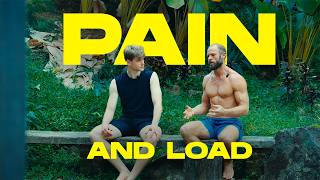
Keegan Smith and Lukas argue that pain is a signal to respect, not suppress. Instead of ice and rest, they recommend heat and movement: train surrounding joints to pump blood into the injury, then gradually reintroduce the sport-specific motion that caused it. The pump principle, using high-rep work or sled training, reduces tendon pain while keeping athletes active.
Chapters
My name is Keegan Smith. I coach coaches and athletes to new levels of athletic performance and this is Lukas.
I'm the filmmaker behind New Athlete and working on all my new athlete abilities together with Keegan.
Pain is part of the athletic journey. Anyone who says that it's not isn't pushing to the limit of their sport, or they're doing a sport that doesn't involve hardly any force. There's always going to be some degree of pain. Now we can reframe pain as signal or sensation because it's really important that we do have signals from the body and sensations from the body. If we didn't get any signals or sensations from the body of that's enough of that thing, or this area needs more attention, we would just break. It would be a car without warning lights. So it's really important. It's a blessing that we have these signals. It's also important to understand, like, human technology. The technology that's in the body is infinitely more advanced than what's in this camera or these sounds or AI or anything that is around. We can't even engineer an ant yet. Humans can't from scratch create anything anywhere close to the complexity of animal life, let alone what we are as humans. So we have really good technology that gives us signals. And the signals are important, but they're going to be very sensitive. They're going to tell us well in advance. And often these signals will go away during something. So you might wake up and you feel little niggles and then you have to actually go and do something tough physically. Like, imagine that you had a tough physical job. You're a farmer or you had to fight a lion. Your body is going to switch off all of that crap, so you can just focus on what you need to do. And then the signal is going to come back later of, hey, like, you should probably tinker with this thing that's been going on. Or, like, don't push this thing in the way that you've been pushing it. That's the first piece is like reframing. It's just, okay, it's a signal, there's something there. There's times where it's not really going to be much of an issue. Pretty much with any degree of pain, there's going to be some level of effort that's going to help you to forget about it. Then if we decide we're going to address it, how do we address it? This is the next part of the conversation, the biggest thing, which is the opposite of what everyone's been told. And I think if you're saying the opposite of what the mainstream message has been, it's clearer than ever that if you're saying the opposite to what the mainstream is saying, you might be closer to the truth. If you just look at the stuff that's come out in the news about who runs the mainstream and what kind of things they get up to, it's not just that people have been doing horrendous things, it's that they run everything, they set up all of the systems, the education, the food, the healthcare and it's, it's obviously part of the fitness and you know, the information that you get in this. Peter Attia was sending lovely emails as part of this stuff and he's one of the loudest voices on the Internet. Doesn't mean that everyone who's got a voice or got a message is, is there. But if you're contradicting what you've been told, then chances are there's more probability that it's useful. So the first thing is put heat into the area of the body that has an issue. This is the opposite of the ice advice, this is the opposite of the immobilization advice. But it's in parallel with traditional wisdom, Chinese medicine, Ayurvedic medicine, putting heat rubs on things, spices, things that bring heat and circulation. This is probably the most universal solution and truth that most people still don't apply. I was just recently working with a world class athlete, right in the top 200 in his sport, working with the staff of that athlete. He's got a stress fracture and they're not using heat. And to me it's like, surely we can agree that circulation is going to help this thing. Blood heals things, we send lymph like the body naturally does it. If I hit you with a hammer, what happens? It comes like, you can't argue with that surely. So then how are we going to do more things that are going to bring more heat to that area? Uh, we wanted, we can do it passively, which I, I, I believe is super valuable. Heat packs and, and those kinds of things. Hot showers, hot baths, sauna, sauna can be. Yeah, used as well and, and wraps and things like this. People have been using these things for a long time and they're, they are effective. The next level is to actually push heat and metabolic stress into the area specifically. So how do we bring a lot of circulation to the area? The easiest way and the lightest way to do this after we look at that passive heating, is to heat around the area without actually bothering it. So if I've got something that's bothering my knee, I can bring heat and circulation towards that area by training the ankle and the foot and the calf. And you're not even training the knee. But we have found that by bringing circulation past the area that's being bothered, we can get improvement with that. Same with up the chain training the hip and the glute. It's a valuable place to start if something is. If an area is super sensitive then that circulation around can. Can really help. You have any questions or anything to add?
Not net, but I think it's pretty valuable just to say that movement is completely essential for healing. And especially immobilization of an area that's injured is completely counterproductive. You will heal much faster by loading the area or the areas around immediately.
Yep. And you gotta get signal like the body is intelligent. Trust the body. If you get a signal and you're training something with the foot and the ankle and the area that you've bothered, you know, Hertz really starts to. To give you a signal, then find a different way of doing it. Now if the signal is that is the tendon, then things that don't challenge the tendon that much are going to have limited value. But they can also be good first steps.
Yeah.
So if we're. If we're doing like slow strength movements, they're going to use the tendon less if we're doing short range stuff. So slow just. Yeah, slow tempos are going to be a place to start that can bring life into the area without challenging it too much. This is isometrics and just going very slow. But they're not going to be the longer solution because they're not the re. The thing that caused the problem. The goal is to be able to do a version of what caused the problem and do it in a light enough way that we don't get the signal and then we can recover from it. So for a long time I had issues with my Achilles and the insertion of my Achilles. And I believe the reason I'm not getting any of that issue anymore, I'm not getting any of the swelling, I'm not stiff in the morning there. I can skip and dance and jump. Is because I moved away from focusing on strengthening the area to finding a way a level that I could jump at. And at the start that that was really like just jumping actually with the foot on the ground and. And being able to like not leave the ground. So a seated jump in a way of just Pushing the foot into the ground, if that's the level that I'm starting at. But it's, it's like a jump stimulus. And then I went into skipping, double foot skipping and just single jump, like not jumping very high at all. But this is the kind of stimulus that was causing the issue or causes issues in tendons. So we have to get eventually towards the thing that, that really caused the problem. Starting with circulation around starting with stuff that doesn't stress it too much. The, the secret one and the one that can, can often help without being as direct as the long range stuff. So especially like for the knee tendons, often improving in the couch stretch or the sissy squat, just being able to full squat, getting into the hack squat position, like this stuff that lengthens off the fascia and the connective tissues of the thigh can help the patellar tendon to have less resting tension and it tends to help with overcoming these pain issues.
For example, I have patellar tendon issues right now and I can do the long range stuff. I can get into a sissy squat, I can get into the reverse Nordic. It's not bothering me. So I still implement it into my training and I do what I can. This is also like a really important thing. You just have to, if you think about the area and most people are, we are talking yesterday about this, like most people say, oh, my knee is injured, I can't train anymore. It's like not true. You can even train even more. Like, you have more possibilities now to work on different things and also to work around the area. And if you do this, you will end up with more strength and with more resilience in that area as well. So the long range stuff, it's, it's really valuable, especially for the patella, because the patella gets most loaded in these shallow knee angles. So you have to find the angle that's painful and you have to find the angles that are less painful or that are pain free. And then you work in these ranges and you will eventually find yourself improving the area with that.
Yeah. And when you rest it, it tends to just get more and more sensitive and painful. And the thing that gets rid of the pain often instantly is bringing a lot of circulation to the area, whether you do the long isometric and then it gets flooded with solution after you ease off the isometric or if you're using the floss bands which cut off the circulation, or if you're using blood flow restriction training, or if you're just getting a massive pump from doing high Repetitions like on sleds. You can do similar things with bikes and rowers. I think a big part of the reason people survive CrossFit, a lot of people are able to go from being everyday Joes to, to jumping up and down off boxes and doing the weightlifting is because of the pump element that comes with the high volume training in general, but also the, the ergometer work. So the, the assault bikes, the rowing machine, the skier. When you consistently get that pump into the tissues, you're going to get less of the, the tendon issues. So when you only train in the gym and you're not getting consistent blood flow, consistent pump, that's when you're likely to be most achy. And I guess that's what happens to most people who stop doing sports and focus on the gym and they want to just look good. This is why it's so valuable to adopt the skills paradigm as well. Like every session before our sessions, when we're doing combat, when we're doing dance, if we're doing the soccer stuff, you're getting like a decent degree of pump in the, in the lower body, but you're not searching for mechanical failure. Like that's the problem with force training and thinking about being someone who jumps higher or someone who runs faster. It's not really how speed and jumping developed naturally in nature. We have a kitten here that we've, we've just taken on as a family pet. And it gradually is jumping higher and higher. And it's not like testing the limits of its structural integrity every day. It's just playing mostly and maybe a few big jumps here and there, but it knows where its limits are. And my boy does the same thing, like he's not going to give himself tendonitis at 2 years old. He jumps off stuff like he's learning to jump and he tests himself all the time, but he's not looking for the mechanical edge. And this is a bit of a problem that weight training is almost designed around looking for the mechanical edge. So you're looking for the limit of how high you can jump or you're looking for the limit of how heavy the thing is that you can move. But it's not really in our nature to be doing this all the time. And even the most successful coach in, in teaching people to produce extreme amounts of force in throwing objects. Bonde, Chuck, discus, hammer throw, shot put sometimes he had the top three competitors at the Olympics that he was training all three or three out of the top four, extremely successful coach. He deliberately stopped lifters from lifting anywhere like much further away from their maximum. Yeah, they were lifting fast but he wasn't trying to find the edge of their tissue tolerance. And they were doing sessions that they were able to repeat for 20, 50, 100 times in a row, six days a week, twice a day, often 12 sessions a week of the same thing. And so he was able to produce the best athletes by giving them sessions that he knew that they would be able to repeat. And it's the same for the child going to the playground to play soccer and such. Naturally we're giving ourselves varied stimulus and it's, it's not searching all the time for the, for the very limit. And this is, this is challenging because of course when we push the limits up that's, that's great for, we're going to run faster, we're going to jump higher, we're going to get bigger muscles, but we have to find the ways to do that that are most playful, most sustainable, most natural.
I would say when we think about us as humans in our natural environment, if we seek mechanical failure or like seek the like the edge of our tissue capacity and everything, like we have a huge disadvantage. Like we are most likely not going to survive if we would train to failure. If we think about us humans back in the day and we are not functional anymore. And you cannot be good contribution to your tribe or whatever if you're not functional. And you were speaking about this playful environment. And if you think about play and this is also the benefit of the skill work we do, we play a lot and then we, we had a lot of low level force components but we have daily exposure, high frequent exposure. And I think this is also what, what feels really good. When we think about the Maasai jumping. They don't back squat, they don't do all these force, they don't do Olympic weightlifting. This is extremely valuable. But they grew up in an environment that supports high jumping because they jump a lot in their tribe. So we have to think about building ourselves the environment where we can do a lot of these low level things in order to maybe progress to more force. And I think that doesn't mean that we shouldn't weightlift. Like you like weightlifting and you like all these plyometrics and getting stronger, getting better numbers. But it's not about the number and it's only a measurement of your ability. It doesn't mean that you have to always seek this measurement. Right.
Particularly if you're getting a signal because you'd be like, I can lift 100 kilos. But I know tomorrow I'm not going to feel like I can throw where you might have to lift 40 kilos to be able to feel like, okay, I feel better the next day than the previous day. So your physiological capacity, like, at the limit of what you can do is different to the limit of what you should do if you want your structural integrity to be better the next day. And this is also a difficult thing for. For young men to. To make decisions around. And athletes is like, well, I can do this, but I should do this, or I can do this and recover. That's what I like about the. With the Bondichuk method is like, well, if you're going to be doing the same session 12 times a week, you can't be doing something that hurts, that's just going to continually make it worse. So you're going to have to make a change if. If there's an issue there in the system. But also from that sort of tribal perspective is like, you don't just opt out if you. If you, like, have a bit of something that's bothering you. You just don't dance to the same intensity if it's time for the village to dance or you don't carry as many stones if you're building a house together. You know, if you're the Amish and you're all building a barn and your body's not working as well, you just don't pull as hard, but you still go and get involved and help out. And I think that's the thing that is difficult for a lot of. A lot of guys to do, a lot of athletes to do is like, well, I want to be doing this, but I can do this and recover. Therefore, I'm not going to do anything. It's like, well, you know, you have to do the thing that you can do, no matter how regressed it is. And this is the value of like, 10% intensity, 20% intensity. It's extremely valuable to have the discipline to be able to train. Okay, I'm going to do 20 reps at 20% intensity. And you can still make it, like, burn a little bit and feel it a little bit. But often within two or three sessions of giving yourself this lower intensity, you'll be feeling better. If you can't squat, squat with 20% of your body weight, like, hold on to posts, hold on to pipes. Ben Patrick's done a great job of encouraging people to find that entry point. If you're a coach, helping people to find the entry point into your system, is going to be the most valuable thing that you can do in new athlete. We want people to find their entry point in the skills so the brain lights up again and you feel capacity again and then you build on that and you always have that as a foundation that no matter what's going on with the force stuff. Because if you really want to test where you can get to in terms of muscle mass and in terms of maximum speed, in terms of, you know, what, what size stone you can lift, like there's going to be some times where the structure is, is tested. But if you always have things that you're doing that are improving, then you can continue to have the, the mental momentum and the feeling of progression as an athlete. Even if you have to step back from your normal 60 to 80% loads to, to 20% loads.
Yeah, for sure. Yeah. Me with that with a tendon pain. I got it from soccer, but it doesn't mean that I have to stop soccer completely. I can still juggle the ball. I can still do a little bit of passing, I can do a little bit of hopping. Some drills. We were playing a little bit of soccer in the gym recently and it's like you say, really about finding that entry point of which type that's similar to the movement you can't do right now, you can still do. And like this, you will progress way faster. Back in the day, I made the mistake. I had knee problems already. That's why I discovered ATG and everything. But I would just stop everything. I wouldn't do any soccer anymore. And this was a huge mistake that I did. So yeah, we have to keep moving and expand what we can do also skill wise.
Yep, yep. Yeah, it's, it's working and it's the gateway. You, you. It starts with the skipping. For me, it started with the skipping. A year and a half, nearly two years ago, I, I made some videos of like, I'm committing to jumping again. I have a, a baby boy now. He's going to be jumping and, and around soon. I want to be jumping. So I committed to doing some of that. Within a year, I started doing backflips. Like last year I did lots of backflips and now I can land backflips and it's not an issue for my Achilles and feet. Still, my feet can get much stronger because I had 10 years where I pretty much just focused on the rest of my body except for my feet and Achilles. So it's going to take some time for those tissues to continue to improve. But they're getting better all the time. If you can find that little thing that you can do, like, for me it was, it was getting like being able to do the skipping. For Marcel, you know, the road flow was a big thing. Finding your, your little entry point of something that you can do. I know for some it's been like kicking the soccer ball against the wall or juggling the soccer ball. They feel like it's like their re entry into athleticism and then it creates that, that snowball effect of if you can skip for, for one minute, then maybe you can build to, to five minutes. If you can skip for five minutes, maybe you can do five double unders and it starts to compound. But always knowing just it's okay to go back to whatever you need to do. If it's not going to be a linear journey and signal is a good thing, we should be really grateful for having these signals of, hey, something is not right, you need to relax a bit more or you need to address a certain issue in the body. Yeah, the thing is, yeah, the thing is not letting yourself opt out, not letting it bring you down in terms of your athletic optimism for the future. And if we had this, you know, there would be a lot less people who, it's been years since they, since they ran or since they kicked the ball or since they pushed their heart rate up to the top. We need to invite people back into that and this is an invitation to you to understand this more deeply and find ways, ways to overcome things that are limiting you to continue your journey. Questions are welcome and if you'd like more custom support around this, you can go to app.new athleteproject.com Send us your goals free start access into the app and we'll start supporting you from there.
All the links you need are in the description down below. Subscribe and leave a like comment.
You think you got sunburn?
Maybe in the neck? We will find out next video.










