Your First Ballet Lesson with @Athletistryofficial
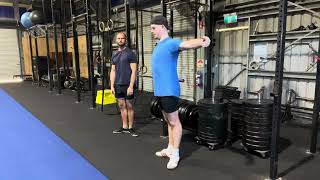
Keegan learns ballet basics at the barre: how to stand in parallel, turn out your hips, do pliés and tendus, move your arms with your breath, and jump with pointed feet. The instructor breaks down alignment cues like keeping your weight through your toes and knees over your second toe.
Chapters
It's such a hands on art form to you. And like it's passed down. You look at history of ballet and it's always been passed down person to person. It's never been like a mass produced kind of thing. Right. And so even, even you go back, you know, let's say 100 years, and it was ballet master to student ballet master to student ballet, and the ballet masters chose their students.
Yeah.
So especially in the top level schools, like, you didn't just show up, say, hey, I'm going to pay you my money and you're going to join ballet and, you know, we're going to learn. No, no, no. You can do ballet. You're allowed to. Right. It was an honor.
The master apprentice thing that built Florence and Vienna and all these beautiful places were just in Paris, in Opera. It wasn't built by mediocrity. It was built by that thing where the student really wanted to learn and they wanted to take the art form to another level and then pass it on and like that virtuous cycle that is not happening with modern education methods. So Shane showed me some ballet online last year. I was asking like, is there a way that people have never done any ballet, could learn something that would benefit them from ballet? They could just get a little bit of a feel for it. And I got about this far, and then on the next step, I wasn't able to progress further. Now I'm in Brisbane, so I've got the opportunity to be face to face. And the goal is to show someone who has no ballet background some ballet. And ideally there's some stuff that you guys can learn much faster than me, but this would be organic and authentic of what it's like to start ballet 41.
All right, so basically you just want to start with feet in parallel. Okay. And we're. Basically the starting point is to learn how to rotate from the top of the top of the legs. So just standing in parallel, place that weight evenly through big toe, little toe and heel. And then you're just going to externally rotate through the leg. So you're getting that rotation. Yep, exactly. And then coming back and then rotate and then coming back. Rotate and coming back. Good. And now coming over to the bar and holding onto the bar. So you're going to place your arm. So it's just elbow about shoulder, about rib. Yep. So it's a little bit farther forward. That's it. Good. So we don't want the elbow to ever go behind the ribs, just always in front. Good. Now you're going to take that same idea. So that same rotation. And you're going to bring one heel forward and then the other heel forward. And now pull the backs of your legs together. So try to get your leg all the way together. All the way stretched. Yeah, that's it. Good. And then what you're going to do is you're going to rotate even more. It's going to cause your knees to bend and then you're gonna go down into a plie and then coming back up. Good luck.
I can't see my face, so just.
Turn around for me.
Keegan, do you want to go the other way?
Yeah, go ahead. Go ahead and turn around so that they can see as well. Just bringing one heel forward. So bring the inside heel forward first because that's going to be your standing leg, what we call your.
This one's the inside.
Yeah. And then bring the other one out. Turn that out. Good. And then you're going to try and squeeze the back of your legs together. So we want to think almost like you're dropping the tailbone down, you're pulling up through the front of the body and then trying to squeeze your hamstrings together at the back. And then from there you're going to rotate your legs as much as you possibly can. And your knees are going to go out over the second toe as you bend your knee. That's it. And then tailbone is going to drop down towards the floor and that's a demi plie in first position.
How's that? I can tell I'm not. My feet don't go all the way around.
That's okay. Like that rotation for now, that's where you're at.
Right?
Like, we don't want to be in a point where we're just kind of wrenching the toes open to that position and not having that. That rotation. So the more you practice it, the farther out that's going to get, the stronger that's going to be. Alright, good. Now go ahead and sit down on the floor for me because I want to get you into that fully stretched leg position that I'm aiming for. Extend your legs out to the front for me. Okay, now I want you to feel like you're pulling the back of your knee down to the floor as you stretch. So don't squeeze the quads too soon. So feel like you're trying to like flex your foot for me all the way. No, flex the other way. There we go. And now push your heels out towards the wall. And now try to pull the back of your knee down into the ground. So kind of like just relax your leg for me. That way.
Yeah.
And now hold that. So. So if you look at my leg, I can stretch there or I can go there. Now, I have a good amount of hyperextension in my knees as well, but trying to get the back of that leg down to the floor as we stretch the leg out. That's it. Yep, exactly. There we go. Yeah. Good, good, good. Okay, so now when you stand up and you pull your legs, the back of the legs together, you're feeling like that knee is pulling down towards the floor. So when you're in that first position, instead of us getting this kind of that position there, you're feeling the legs pull all the way together at the top. That's better. And now rotate as much as you can. And then the knees are going to go out over the toes, rotating, rotating, rotating, rotating. And now if you keep going and let the heels come off the floor. Keep going, keep going, keep going, keep going, keep going, keep going. And now come back up. So we're not going to sit all the way down. You're going to go to about here, and then from there, you're going to push the heels back down to come back up. And that heels go down first and then push back up. Yeah. So push the heels. That's it. Good. And in doing that, what we're doing is we're working on that range of motion and the ankle. And we're really pushing through here as we come down. Heels are coming down, pushing down. You'll feel that tension at the front of the shin. That's it. Exactly like that. Good. And then coming back up. Good. And making sure the whole time that you do it, that from shoulder to hip here is staying perfectly straight.
How close am I to straighten?
You're good now. So go down. Keep going, keep going, keep going, keep going, keep going about there. And now come back up. Good. So one of the things that will often happen when we come up from a grand plie is as I'm going down, this is all good. This is all good here. And then we'll go a little bit that way, because that's naturally how we would come up. So we want to keep that.
Nice trip. A squat.
Exactly. That's better. Good. So that's the motion of the legs.
Yep.
Now we got to talk about the arms.
Yep.
So we have. We have three positions, really, that the arms will go through in this movement. First one is a preparatory position. So the arms are going to be rounded if you think, put your hands on your hips like this, pull your elbows forward of your shoulders and then just drop the hands down, but fully down to about there. Good. And now this is going to stay here. Good. Yep. Now the fingers, we want to have ring finger and index finger a little bit elevated, middle finger dropped, thumb close to the middle finger. And then pinky finger slightly out. Very nice. Good. Now if you bring your arms up, keeping them in that same roundness. So keep them there. And you're just going to raise the wrist to about the height of the belly button. That's first position. Then from there, the fingers are going to extend a little bit out more from the fingers than the wrist. So from here, like the fingers are actually. Yeah, exactly. Lengthening. And then from there, they're just going to continue in that position. And you're going to feel the arm go this way to second position. Fingers stay in the same position.
Now that one.
Yep.
You kind of lead with the fingers a little bit when you change position and then go back.
Yeah. So like this, if I'm here, make sure I'm still on the camera. If I'm here like this, the fingers are going to kind of expand this way.
Yeah.
And then come back to that position.
Okay.
A little bit more length there. That's it. Good. And then from there, what you're going to do is you're going to breathe. And in that breath, your ribs are going to expand and your arms are going to stretch out to the side. Yep. Come back to the second position. Good. So from here we're going to do this. And then it's going to drop down like that. Okay. So with the breath, as I breathe in, it's like I have to kind of go. So I'm letting that breath fill my arm. And then from there, the elbow starts to come down until I get to this kind of 45 degree angle here. And then the arms round again at the bottom. So just go back to the second position for me. Good. So we always want the wrist to be slightly lower than the shoulders and the elbow to be slightly higher than the wrist and the shoulders to be rotated that way. Good. Now from here, this is going to go this way to there. Then the elbows are going to rotate back down again. Keep the hands this way and the elbows are going to lead. So. Yep, that's it. That's it to there. And the elbows rotate back in the opposite direction as we come back to there. That's a lot of different coordination to figure out.
Yeah, there's a Lot there. So here we go. Second, Second position. Elbows need to be above the wrists. Shoulders need to be down and a little bit longer, longer, straighter fingers.
That's it. That way. Good. Think of it. Think of it like. And we start to get into more visual correction than anatomical. Think of it like if you had someone in front of you and you were going to present something to them, and you have maybe like a basket of flowers in your hands, and you want to present that basket of flowers, you're not going to go, here, here's the basket of flowers. Right. You're going to hear, here, take these flowers from me. So you're going to expand out to the place that's in front of you. Yeah, better. Good. Without the wrist going above the elbows.
Try again.
Yeah, so coming up from there. So good. So coming up first, now extending out. That's it, Keep it there. That's it. Keep going, keep going, keep going, keep going. Keep going to about there. Good. That's it. Good. And then from there you're just going to breathe and you're going to expand the arms out the other way. So fingers come down and. Yep, that's it. But not fully turned. So the palms face the ground. Palms come down towards the ground. That's it. Good. And then that's it. Exactly like that.
Can we do like 10? Just trying to mirror you.
Yeah. So coming up.
Okay, first is up.
Yeah, just to the first expand out to the side. And coming down. Up to first open to the side. L'. Anger. And coming down. So make sure those palms are facing the floor as they come down. Coming up to first open out to the side and then coming down. Good. Up to first open to the side. Anger. And coming down. First open. L'. Ange. And down. First open and down. Good. Now we have to connect the head. So from there, as you lift your. After you lift your arms from preparatory up to first, you're going to incline your head away from the hand that you're looking at. So, for example, if you're looking at your left hand, you're going to incline your head towards the right. If you're looking at your right hand, you're going to incline your head towards the left. Okay. So from here you're going to incline. Let's say I want to look at my left hand. I'm going to incline my head towards the right. And then I'm going to follow that hand out to the side. Keep looking at your hand. Yeah, that's it. Without tilting your shoulders. Keep your shoulders where they Are good? Yep. And now extend out to the side. Keep looking at that hand. And then follow it down. And I look at the other hand as you come up. So tilt. That's it. Good.
Shoulders, stay.
Shoulders stay head. Really just kind of goes that way. So kind of you're looking. Yeah, Looking into the palm. And then from there you're going to follow that hand out to the side. Look at it. Then you're going to follow it this way. Keep looking at it. And then bring it down. That's it. Good. So going up, I'll mirror you. Yeah. And then follow that to the side and down. Coming up. Tilt your head. There we go. Follow that out to the side. Linger. And coming down, coming up. Touch your head. That's it, Good. Follow it out to the side. And coming down, Coming up. Tilt your head. Follow that. Yeah, that's right, that's right, that's right.
At the same time as.
Yeah, so as you rise, it gets there, and then you get to the position. Your hand is there at the same time and coming down. Yeah, do it one more time. So coming up together. That's it, Good. Follow that out to the side. Look at it so that you're straight. Like looking straight to the side. So don't. Don't. Yeah, that's it. Good. Follow the arm out. And then coming down. And then tilting. Follow the arm out to the side. And coming down. Good. So now we have to connect all those things together with the legs of the bar. Right.
Doesn't seem like it should be tricky to watch your hands as you do this, but it's.
It's a lot harder than it seems.
Exactly.
And we, like. We spend. We spend, like, years on this.
Yeah. It's the art, Right. Of better and better, finer details. Smoothness.
Yeah, it takes a long. I mean, if you think about port au bras. Port au bras, plie and tendu, they're the. They're the foundational building blocks of ballet. Like, everything comes from those three places.
Port de bras is the.
Is the carriage of the arm.
That's what we just did.
Yeah, yeah. So the plie is the bend. Tendu would be anything that stretches the leg. Okay, so Batman tendu is basically like that.
Yeah, yeah.
Right. So all of those steps, if you can figure out your plie and your tendu and then the port de bras, you know, everything builds on that. It's like the foundational structure. And then everything else that we do is a combination of those things. So if you're doing a tombe Pas de brai glissad grande. It's going to be the same steps. You're just going through a faster combination and coordination of all those things together. Right. So when we look at the plie now, when we start the plie, we're going to start with the preparation. So, like, if we had music, it would go. The last four counts of a phrase of music would be before they start the first phrase. So you go five, six. So we have l' anger down to first position. Seven, Open the arm on eight. Now we're going to go l'. Anger. We're going to go demi plie. Arm comes down and stretches up to first. And then as we plie again, we're going to plie. And then the arm is going to come out to second as we stretch. And then from there we're going to plie again. We're going to come all the way down to grand plie. Arm comes to the bottom at the bottom of the grand plie, lifts up to first position as we come back up to first. Good. And then we expand out to the side. Okay. So the demi plie, which is a half a plie, versus the grand plie, which is a big plie. The coordination of the arms is half for the demi plie and full for the grand plie. So what we're doing for the demi plie is half the coordination that we would use for the full grand plie. So if I do it a little bit faster, just so you can see, we go demi stretch, demi stretch. And then grand plie is the whole thing. So let's go one more time from here. 5, 6, 7, 8. This is the breath in, breathe out. Demi stretch, demi stretch. Good. Now imagine you have a ball. Is there a light enough ball that we could use?
There's little like foam balls and tennis balls down there. Soccer ball.
This will work. Good. So if you have a ball here, you're not going to have a fully stretched arm because it's going to drop. Like you want to have that round position there as you come up, we have to lift the ball out. We're not just coming up this way into a round position. Right. So from here, from this place here, the ball wants to go out away from the body, expanding out into that kind of three dimensional space. Yeah, that's it. So this movement is important. And then from there you're not just limiting.
What's it called? Is that going.
So that's just a porter bra from. From preparatory to first.
Yeah, that's the first Thing that we're doing just there.
Exactly. And it's the same feeling here. So your head is going to incline towards it. That's it. Good. Yep. Exactly. And then from there, you're going to follow your middle finger with your eyes as your hand expands out. Hand first, fingers first. Fingers first. Yeah. Good. Then keep that going until you get to the side. And if you imagine there's a string attached to your chin, from your chin to your middle finger, and your middle finger drops down, your chin is going to drop down. And then as your middle finger comes, as your chin comes up, your middle finger is going to come up. So we're going to expand. Yeah, expand. Turn the hand. Yeah, there we go. Good. And now your elbow is going to drop down. Elbow is going to drop. We're just going to pull the head down. And then you're going to come up, and the head is going to pull the arm up. And then the arm is going to go out. It's going to pull the head with us. And everything coordinates together. All right. And that's just in first position, Second position, fourth position, and fifth position. And that's the first combination we do at the bar in play, in ballet.
So if I wanted to get good at that, what would be like the. What would I do each day?
Start.
Just run that exact thing ten times over. Like, how do you put the music on?
So I can play a piece of music?
Yeah, yeah.
So if we were starting, let's say, for example, I was starting at the very basic level with a brand new student. We were doing plies.
She kind of.
The first thing I would do is face the bar.
Yeah.
Okay. So everything would be done facing the bar.
So make it easier. It's balance wise.
You don't have to deal with the arms yet. You don't have to deal with anything else. Literally, your hands are kind of giving.
Me like three months worth of stuff to work on in an hour. So that when we meet up again.
Face the bar. Hands are going to be on the bar in that first position. And you're going to take four counts down. So you're going to go 1, 2, 3, 4, stretch, 5, 6, 7, 8. Plie, 1, 2, 3, 4,. Stretch, 5, 6, 7th, 8. Then you go grand plie, eight counts down, eight counts up. 1, 2, 3, 4th, 5, 6, 7, eight. Up, 1, 2, 3, four, five, six, seven. Now on the eight, you're going to tend to the side. So your foot is going to point out to the side. Heel comes down in second position. And both knees Stretched. That's it. Do exactly the same thing in second position.
Cool.
So you go four counts. One, two, three, four. Stretch, five, six, seven, eight. Demi. One, two, three, Four. Stretch, five, six, Seven, eight. Grand plie. One, two, three, 4, 5, 6, 7. Stop there. Eight. Swing back up. Two, three. Keep. Four. Keep going. Up, up, up, up. Five, six, seven. You're going to tendu with the same foot. So the right foot again, point the foot and then you're going to come into fifth position. So you're going to cross all the way across at the front? Yep, exactly like that. Do exactly the same thing so your hands can shift. Then in front of you, plie, 1, 2, 3, 4. Stretch, 5, 6, 7. All the way. 8. Plie, 1, 2, 3,. 4. Stretch, 5, 6's 7, 8. Grand plie, 1, 2, three, four, five, six, seven, eight. Up. 1, 2, 3, 4, 5. Stretch all the way up. 6. Tendu, 7. With the same leg, back to first. So tandu all the way out to the side. So you're always going to go all the way through that.
So you go from here all the.
Way out and then back to first. Good. Do the whole thing on the other side. So everything would come again. One more time. And you do everything. Now tendu's with the left foot.
I don't know if the battery's running out of that. Your thing's gone red. Is it showing?
Battery is a little bit.
Put you on this one. Is this one got more?
Yes.
You got all the values. Turn that one off.
All right, so go same thing on the left side. Plie. 1, 2, 3, 4. Stretch, 5, 6, 7, 8. Try to feel the outside of your foot on the floor when you do the plie. So plie. Want. That's it. Yeah.
On the 7th, I go out to the.
Once you've done the grand plie. So you're gonna.
Oh, sorry.
Yep, two more. So one more. Demi, two, three, four. Stretch, five, six. Coming back up, seven, eight. Now grand plie, 1, 2, 3, 4, 5, 6, 7, 8. Up. 1, 2, 3, 4th, 5. Push your heels down all the way. Six. Tendu to the side. Seven. Heel down, eight. Good, good. So just tuck your pelvis a little bit. That's it. Good. And stretch your knees all the way. That's it. Good. Demi, plie. 1, 2, 3, 4. Stretch, 5, 6, 7, 8. Demi. 1, 2, 3, four. Stretch. That's 6, 7, 8. Grand plie, 1, 2, 3, 4, 5, 6. Heels down, 7, 8. Up. 1, 2, 3,4, 5, 6. Tendu, 7. Close to fifth. Stretch. Knees good. Hands in front. Good. Demi, 1, 2, 3, four. Stretch, 5, 6, 7th, 8. Demi, 1, 2nd, 3, 4. Up, 5, 6, 7, eight. Grand plie, 2, 3, 4, five, six, seven, eight. Up, 1, 2, 3,4th, 5, 6. All the way stretched. Tend to side seven and close first eight. That's it. And that would be a full combination.
Yep.
Just pliers, two demi, two demi, one round, wider crossover. Yep, exactly. Okay.
There's like three, six, nine, 18.
Yeah.
A bit of time and attention.
Yeah.
Little Patrick's Quatson.
Yeah, exactly. Exactly. Yeah.
Well, with that hip position and tucking the tail and everything's. Feels nice on the spine. My posture is naturally not. Not great. I play a lot of field hockey. I'm really comfortable here. I've had to work to be able to snatch and everything, but, like, I can feel with all this stuff, it's.
Yeah, it's good.
Like, it doesn't come naturally to reset into these postures.
Yeah, it's. It's interesting because if you take your. Just take your arms in second position, and I'll put them where. Where we want them to be. So just stand. Stand. Normally, I'll just. We'll just do the arms. Good. Okay. So we kind of want this position here so you can feel, like this spread out through here. Right. And then this is gonna rotate, but this is going to stay where it was without this tensing. Yeah, that way. Good. So really, you'll feel a bit of a twinge through the radial.
I can feel the nerve.
Through the radial nerve. Yep, exactly.
Under tension, like, nothing bad.
And I rotate. Yeah. There we go. Good. And then that's going to kind of go that way. Good. Yeah. And then if you think, like, wrists, press down on my hands. Press, press, press. Like. Yeah. Okay. But not. Not quite. Too much. Just enough to create some pressure so that we're engaging.
So it should be engaged.
Engaged. Yeah. But now the arms can relax. So if I go here, like, you can see through my back. If I go here, if I go this way, there's more engagement there. But I'm not tense. My fingers are relaxed. It's really just kind of through here. That. That's. That. That's connecting. Yeah. All right. And it's not. It's not like a. I'm gonna push down. It's just enough to create that stability so that when you take the bar and you press your four fingers, like knuckles onto the bar, now you've got that tension there. Not that we're grabbing and holding onto the bar. It's just to kind of have that Stability.
It's not switched off.
Right, right. That's plier.
I mean, good foundation to start with or.
Yeah, I mean, that's, that's, that's the.
These ones.
Do you want to. You want to try the coordination?
This stuff was. To do that better, I would need to. The. The grace of the arms would be the.
Yeah, well, I mean, to make it. To make it look like it's not just moving your arms like this. Right.
It's fun just moving your arms. And it's a challenge. It was a real challenge to play two arms doing a different thing at the same time.
Yeah. If you think about it, like it's just 12 movements. Right. One arm does 12 movements, the other one does 12 movements, except one has an extra pathway.
So four by three ones. Do a three by four.
Exactly. Yeah. So 1, 2, 3, 4, 5, 6, 7, 8, 9, 10, 11, 12. And then we go the other way, which gets much more complicated. But it's just that. And if we wanted to do it really nicely, we could go 1, 2, 3, 4, 5, 6, 7, 8, 9, 10, 11, 12.
What's the head pattern you're doing there? You're doing one following one arm following.
One, and then, you know, just to add a little bit of 1, 2, 3, 4, 5, 6, 7, 8, 9, 10, 11, 12.
Are you just choosing which place to look as you go?
More. More or less. So if this arm. If this arm is doing the majority of the motion, I'm following that one. But here, for example, because this one is going to come up to first and this one's going to open to second. I'll follow that one and then I'll come back to this one.
Yeah. Because there's nothing interesting going on.
This is. Yeah. Okay. So this movement from here to here is not to have much in it, whereas the other side. This is much more interesting.
You have such high unconscious confidence with that to just hit those things as you.
Yeah. And that's. I mean, that's, you know, that's 20. 20 years of doing it every day, six days a week.
Yeah. That's cool. It's fun to think what can become automatic in the brain. That's the fun of exploring these new things.
There are things that I'm sure you can do juggling, for example. I can't. I got three balls. And then I was like, ah.
But yeah, it's fun to look into new ones and go like, okay, his brain does all that stuff.
Yeah. Yeah, definitely.
Cool.
I think maybe the only thing that I would say. And it's probably going to be hard to do on this floor is to wrestling floor. Yeah, that could be good just to tendu. Because how we work our feet in dance is something that doesn't happen anywhere else. I remember reading, reading all the threads in the. In the groups about, like, foot strength and everything. I was like, oh, you know, like, there's. There's just so much to how we work our foot. And.
And yeah, tell us about feet and body because I think I. I asked you, like, are your feet constantly messed up? Like, how much does it destroy the.
My feet are better than other people's. I'm sure you get worse feet with pointe shoes. So the dancers that wear pointe shoes tend to get more. Because they're basically in that compressed position.
Is that generally for female.
So when we work with the foot, what I'll normally start with is just sitting down with a resistance band. I don't. Do we have a heavy ones or nothing? Nothing too. Like, it should be easy enough to move with your toes. Probably should have brought a good one. I kind of want one that's. That's thick enough that I can wrap it. So what you get. You get like the, you know, like the old thera bands that are kind of like this.
Oh, yeah. I mean, there's the thick ones, but they're going to be super heavy.
I'll see if I can move it with my toes. No, those are going to be too.
I thought they were going to be longer.
Yeah, they might have something. Let's see. That's all right. We'll just all work with what we got. So, like, you could take one of these and you could kind of do the same thing, but it's not going to have quite the same effect because it's not going to wrap over the top of the toe. So it's going to end up slipping off your foot. But basically what we're doing is we're wanting to work through four points. So if you start from this, like, fully dorsiflexed position, And then you're going to plantar flex position, but your toes are flexed, and then from there you're pointing your toes, and then you're flexing your toes, and then you're flexing your foot. So you're working on that coordination. And. And with the band, you're doing then the same thing. So you're working to there. You would then point your toes. Why you need to go over the toes. Then you would flex the toes back and then you flex the foot. So just the ankle is what you're going to point now. That's it. And then you point the toes. That's it. And then you flex the toes and then you flex the foot. So it's working, that coordination almost. If you think, like if you're on your hand, right, and you want to go that way and that way and then that way, that way, it's the same kind of thing. We just don't use our feet that way unless we're dancing. So it's an unusual position to get in, but we're working on that through demi pointe. Point. Demi pointe.
Practice it a lot with the banners of strings or just more teaching beginners.
I practice. I do it with the band for strengthening. You get a lot of physio these days that'll say, don't use a band for strengthening all this stuff. And it's like, well, when it comes to this, because it's meant as a means of not just strengthening, but also developing the coordination. You can see how immediately your foot wants to point as opposed to going through that flex position first. It's not just about the strength. It's also about developing the coordination in the foot to be able to work through that demi pointe. Because then when we stand up and we go to do a tendu, as I go out to the side, I want to be able to get to here and then point the foot and then come back through the demi pointe and then close into first. So from first position, come to first position for me. All the way, heels all the way together. That's it. And then you're going to press down into the floor until you get to there. Keep your knees stretched. Good. And then from there, you're going to point your toes, keep your knees stretched. Then you're going to flex your toes and then come back in. All the way in. That's it.
My legs don't look anything like yours. My feet. Down to there, knee straight, toes up, point the toes, knee straight down again.
And then heel coming down towards the floor as you pull in. That's it. And then what you want to feel. So once you get to there. So point your foot for me, all the way. What you want to feel is that this is going to continue to pull all the way in. So as you come in, keep going, keep going, keep going. Keep pulling, keep pulling. Don't bend your knee there. So when we get to here, the natural tendency is from this position that as you're coming in, it starts to go that way. And we want this to pull from the top of the leg all the way into that first position. So keep your legs straightened out. Keep your legs stretched as you go out as well. Yes, good. Point your foot all the way. That's it. Good. Coming back down and that coming all the way in. That was good. Bent a little bit at the end. But what we're working on, it's called a battement tendu. And tendu means to stretch. The action of stretching or lengthening.
Can't believe how hard that is. You can slide your foot in.
Yeah. Because then you're feeling. You're feeling a part of the adductors that probably wouldn't get worked very often. It's also that external rotation, too. Yep. Yeah. And that's, you know, that's. That's the hard part about ballet is everything's done in turnout.
Yeah. And then you're doing all kinds of crazy jumps with that stuff going on at the same time, Right?
Yeah. I mean, so.
What'S. Yeah. For in our sake. These guys out there that are dunking and doing all the cool stuff, what's something in ballet that they could work towards? Being able to do that kind of movement, for example, seems like a nice.
I think probably the biggest difference between athletics jumps and dance jumps is that we point our feet. So, like, if you're going to have an athlete jump, they're just going to kind of jump like that as soon as I. That seems very strange for me. It's like almost like I'm missing something when I jump with flex feet. Because for me, I've trained for so many years that every time my foot leaves the ground, it has to point. So when I jump, every time I jump, I jump and I fully extend the foot all the way down. Yeah.
And even if athletes don't necessarily need that, it's a fun challenge or coordination thing you could put into a warm up. Show us that crossover one again. Like what? That put some of the figure. So you jump in from this position.
Yep. And then you open the legs out to the side. You cross them back to the back from the top of the legs. If you hit your heels, you're gonna have pain. Right. So everything is up here. You open into the air here. You cross here, you open into the air there again. And then you land here.
Yeah. Open, cross, open land. Do one more. That's a good challenge, I think, to anyone.
Good, good challenge. If anyone can do that. Start with the changema. So we start. We start with the basic. We just start and change.
Okay.
Start and change. And then once you've got that. Then you can start to open beat open. So you go. You might not get back again. Right? Okay. And then from there.
It'S the three progressions.
Yeah. All right. That's cool. Yeah.
Is that a good start with?
It's a good start, I think.
I think the day one for first.
Couple of months of probably the biggest thing that's different to normal jumps, to dance jumps is that we work on something called balon, which is a bounce. So instead of it just being like jump and finish, we actually want to rebound back out of that jump. So one thing that I will get my dancers to do just in what we call sote, just a jump, is that instead of it just being jump and land and finish, I'll get them to find that bounce. So don't think about finishing. Think about as soon as your heels hit the ground, you're back up in the air again.
The heels are touching slightly. Very active before the heels touch down.










