IE University Search Fund Club - Latin America Search Fund Study 2022 with Prof. Newton M. Campos
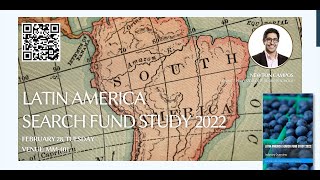
This is a YouTube video titled "IE University Search Fund Club - Latin America Search Fund Study 2022 with Prof. Newton M. Campos" recorded in August 2025. The content is a detailed presentation and discussion led by Professor Newton M. Campos and his colleagues about a comprehensive academic study on the search fund ecosystem in Latin America. The video features multiple speakers including Newton Campos, Kobayashi, Paolo, and others, covering topics such as demographics of searchers and investors, success factors, challenges, opportunities, ESG maturity, and projections for the growth of search funds in the region. The session includes a Q&A segment with audience participation and concludes with closing remarks and community engagement.
That's great. Thank you, Kobayashi. Well, thank you for being here. I don't know, Kobayashi, if you want to open in the name of the search fund club at ie.
Thank you.
Neither. I take about 20 minutes and then we can open up for discussion. And Paolo is here. Paolo was the lead researcher of this research along with me and Carlos Gila, also from ie. And so we are quite happy to answer any one of your consultations. This study was initially launched in December. We launched in the US in four universities in Babson, took MIT and Harvard. And so they had the first view on that. And then now we are presenting here in a couple of weeks here in Sao Paulo at insper. And then we're going to make a small tour in Brazil and Mexico, showing off these results. And then the press will start also publishing some stuff about it and probably interview some of you guys about what are your views and our views on the growth of search funds in Latin America. Okay, we're all friends here, so let's do it together. I also would like to thank the team that are here. So Paulo, Carlos, Diego, Jonathan, Felipe, Pedro and Fanny who helped. I think somebody has a microphone open, maybe Santi, my friend. Welcome. And also the help of FGV in Sao Paulo is the university. I'm affiliated with I University, also where I'm a visiting professor, Anne Grant Thornton, who is entering the search fund space in Latin America to help with both valuation and due diligences. So it's a new player that is joining our community in the region and of course searchfunder.com that helped us to spread the word about the study. So basically we came with some numbers just to share the situation. I will share with you the PDF afterwards. In about a week we'll have a free version of the PDFs and we'll spread on social media. But just for you to have an idea, we of course revised all the current studies on the region. And we came up with out of about 200 traditional search funds established worldwide up to January 2020, 82 were in Latin America. So it's about 40%. So 40% of the market of international search funds is more or less in Latin America, which is a great number, being about 20% in Mexico alone and about 10% in Brazil. So just for you guys to have an idea. So outside of the US or North America, better say Mexico and Brazil are large international markets representing about 20 and 10% of the market of international search funds. What else? Europe represents about 50% of international search funds and Latin America about 40%. So you can have an idea on how search funds are spreading outside of North America, mainly Europe, 50%, Latin America 40% and the rest of the world 10%. What else? Now I won't go through the methodology, you can go through that later. But I would like to, just for you guys to see the questions that we had when we designed this study. And these were the main questions. What's the profile of searchers and investors in Latin America? What kind of searchers were more successful in locating and acquiring companies in the region? How did they differ from the known successful ones? And just for you to understand, as we don't have too many exits yet in the region, we define successful searchers as those who actually located and acquired a company. Okay. For this study. So what's the expected growth of traditional search fund in Latin America? What are the main obstacles and opportunities for search funds in this region? What's the maturity status of ESG in search funds in Latin America? And last question that is kind of different question but we were curious about is how traditional PPMs, you remember PPMs are very standardized. How can they be improved or better done for the region? So we came up with a proposal at the end of a better suited PPM for international search funds as a whole. Okay, so let's move. And this is the demographics just for you guys to have an idea. 90% of searches in the region are men and so only 8% of the searchers are women and most of them are Brazilians. Seriously, what's the maturity status of ESG in search funds in Latin America? So 75% of the women searchers are Brazilians. The age on average is 36 years old. The average age of a searcher in this region, they ranged from 28 to 47 and most of them are in between 30 and 35 years old. Somebody has the mic open please, if you can turn off. In terms of nationality, you know, we came up, we, we were a bit towards a bias towards Brazil because I'm Brazilian. And so although we spread the survey all over Latin America, we tended to have more Brazilians answering. So there is a slightly bias towards Brazil. But the main markets in terms of nationalities were Brazil, Mexico, Colombia and Argentina. Just for you to know, in terms of fiscal residents, Brazil, Mexico and Colombia as well. And I think one thing that caught my attention, caught our attention as researchers in this was the main cities where search funds are taking place as fiscal residents for searchers. So Sao Paulo, Mexico City, the two largest for sure. Then Monterrey, Bogota and Bella Resultante. And Santiago. So you see bella resultante was something that caught our attention as a great interest. So you see Bellarizante was something that caught our attention as a great interesting place for search funds in Latin America and Monterey. Of course most are. We tried to calculate the ethnicity and it was not surprising to see that more than 80% of the searchers are of although they're Latin Americans, they are of European ascend their European descent. Most are married. About 72% and 100% speak English of course and 70% Spanish. 52 Portuguese. So these are the three main languages in the region. English, Spanish and Portuguese. Education level 88% had a master. So of course it's very much attached to mba. And here is not different. So we can see that most searchers had a master degree. Later we will compare the successful with non successful to see if it made a difference. You see in terms of gmat, I think this was an interesting also information. The average is about 692 GMAT those who took GMAT. So it's a relatively good performance in the GMAT on average for searchers in the region. Professional background I think is also interesting. Most, you know, if you see those folks for those five first lines here, they highlight, you see, so it's basically private equity entrepreneur. The background. Okay, private equity entrepreneur, investment banking or finance, general management and consulting. Okay, so these are as expected. Okay. These are the main experiences of the searchers in the region. Mostly are partnered. So 60%. So almost three out of five search funds were a two partnered fund which is a characteristic also of the region. And oh, this was also something we were curious about which is what's the personality of searchers in the region? Right. What kind of personality? There are many different ways of measuring that. We decided to go simple and just take the mbti which is, you know, quite standard. It's an old test but you know, everybody, everybody plays with it or played with it at least once in their lives, at least in the mba. So I think it was easy to come up with some interesting information. So four personality types represented almost half of all the searchers in Latin America. So you see four out of the 16 represented 50% of the searchers in the region. So what are those basically? So the ESTJ, which are summarized usually as the executives, 60% then the ENFJs, the protagonists about 11% then the ENTJ's, the commanders and the INTJs, the architects. So if we see let's say the letters, let's say the main combination, let's say, would Be E so extroverted N intuitive prefer to interpret thinking the T more logic person and judging J, which is get things done, get things decided. So these are if we could summarize a search in Latin America today is A E N tj. Okay. And here you can see the results by ladder. So you see E is much higher than I. N is not so much higher than S, but it's higher than J, higher than P. And T is very, very much higher, much higher than F. So you can see that get things done. And being logic in getting things done is a. It's a big characteristic of searchers in the region. Okay, so types of funds and ppa age of the sample we calculated. So mostly we measured traditional search funds. Only 8% was self funded and another 6, 8% were other kinds, but mostly 84% were traditional search funds. And the average age of the PPM that we analyzed. We analyzed I don't remember now how many PPMs, but there were a lot and they were. Yeah, they were 40 months old, usually 41 months old. Okay, now the profile of the investors. This is quicker. We didn't go so deep, but you can see that we interviewed about 34. We surveyed. Sorry, 34 investors are again 91% male with desperately needing more female investors in the region and searchers as well. So we have to work on that. Half of them are individual investors. That's an interesting information. So you see that from the investor point of view, the region is still at the beginning, right? Institutional investors about 40% and then another 10 are both of them. The average age was 44 years old, so roughly about 10 years older than the searcher. And the majority of them were above 40. The largest group, let me see, was from what's the largest group is over 40? Yeah, over 40. So nationality? Most. And the majority of them were of them are the investors in Latin America were from the U.S. brazil and Mexico. Okay, so most investors in Latin America have one of those three nationalities, followed by Spain, Argentina. Okay, so these are the top four investors are from us, Brazil, Mexico and Spain in the region with fiscal residents in Brazil, Mexico, US and Spain as well. Again, 75% married or in a domestic partnership and almost 90% are European descent. So we need desperately more diversity not only in searchers, but also in investors. Spoken languages again, English, Spanish and Portuguese. Educational level a bit slow, smaller than the searchers. So 75% have masters and the GMAT. Only half of the investors took GMAT, but on average they scored 10 points less than the searchers. On average. Okay. On 683 and professional background relatively similar to those in with the searchers. You see, private equity is big here compared to the searchers then investment banking and finance. So these are the top two. But then we have entrepreneurs, general managers and consultants and venture capitalists as well. Okay, so it's slightly different here in terms of much more private equity and finance, a bit of venture capital and the rest is similar. Okay, so now we analyze the data. We still have some five minutes to conclude. So we started to compare things and see what we could withdraw from all those information that we shared. So we defined successful as those searchers who were able to locate and acquire a company and known successful those that didn't. Okay, just to compare, these were two large chunks of people that we could compare. So we decided to do that way. So we are 95 confident that the true proportion of successful searchers is between is about 44%, 30 and 56 in the region. So we can conclude, let's say that about, to summarize, 50% of searchers will succeed in locating and acquiring a company in the region. Okay, we have kind of a scientific certainty the number so far. If we measure everyone who tried and acquired in the early stages of search for in Latin America, they are more towards 80% 80% of them found. But if we compare the successful with the non successful here we getting to about 50%. We tried to come up with correlations to see if we've discovered something. And you see that we didn't unfortunately with one exception. So we tried to for example compare successful and unsuccessful searches with their education to see if for example successful would have more MBAs or would have higher GMAT, for example. We couldn't say that scientifically. The same with number of partners. We couldn't scientifically affirm that dual partners are more successful than solo. We cannot unfortunately the MBTI the same. We thought that we could find something, but we couldn't still, you know, the proportion of non successful and successful. Oh, we have a mic on on Eduardo. Thank you, Eduardo. And so we couldn't unfortunately all the ladders we went through and also we couldn't prove scientifically that you know, extroverts were more successful than introverts and so on and so forth. Of course we can slightly see some advantages from one side or the other, but we couldn't scientifically say something. However, here we have Eureka. You can see here, this was the only scientific founding of this say research that we could actually publish in a journal. Let's say it's a scientific, actually finding there is a true relationship between age and successful searches in Latin America. We run this, you know, a lot of times statistically to see if we could actually prove and just to see if we, if we were right about that and we proved that with the sample that we have, successful searches usually are 37 years old and non successful are usually 35. So we came to the conclusion that every extra year of experience or age a searcher have in the region, they have higher probability of finding, locating and acquiring a company successfully. So I mean it could be expected, but we proved so on average non successful searcher is about 34, 35 and average of successful search is about 37, 38.
Okay.
It doesn't mean that we shouldn't invest in 33 year old searchers, okay? It means that, it just means that scientifically the most experienced people tend to locate and acquire more companies have a higher probability of locating a company in the region. Okay, gmat, nothing. Professional background, nothing. And yeah, this was. We calculated the growth of the industry. I don't know if you can help me here, Paolo, but basically we saw the growth of the industry in the last years. We measured in terms of searchers, investors and PPMs and we came up with a projection and, and more or less that's what we expect for the next five years. No, three, four years. Right, 26. Next. Four, three, yeah, three to four years is to grow about 40% a year. Is that right, Paulo?
That's it, yeah. Between 2022 and 2020 and 2030.
Ah, okay, 22 and 2030, yes.
Okay, eight years. The next eight years.
Okay, about 40% a year.
Yeah, this whole period from 2022 to 2030.
But it's 56 in the period because look, now there's in the period second table. No, I think this period is at least from what I see is 22 to 26. So it's 56% in the next three years, right? Anyway.
Oh yeah, yeah. All right.
I mean that's what I'm reading from the table. But we have an explanation in the conclusion that we might get more details. These are the conclusions and with that we close. So profile of the searches and investors we went through, you know, very male, yet very white male. Actually, both in both sides. We have to change that. Gmat is about 700, so we can predict more or less how the MBTI is interesting. We have four kinds of MBTIs that are more present, more successful, are older successful in locating and acquiring companies, they are older on average. And this I think is something that I would like to share with you, that it was not before which are the main obstacles and the main opportunities in the region. So main obstacles, bureaucracy and red tape came up as number one. Then lack of access to local capital came up as the second biggest problem and exchange rate volatility as the third. It makes sense, right? All of them then in terms of opportunity, long term market growth of the region, room for increase in productivity and room for copying solutions from more developed markets. These are the three more, let's say, mentioned opportunities in the region. In terms of ESG, that was absolutely disappointing. Basically less than 5%. Only one respondent answer to have witnessed or well established practice of ESG in the company they acquired in search fund. So that's a disaster in my point of view. So basically ESG is not in the industry in this region yet. So we definitely, as investors and searchers, we have to put this in to plug this in the agenda. And now I think just to conclude the ppm, this is what we came up with that was interesting. We analyzed more than 50PPMs in Latin America and compared them with PPMs from other regions in the world. And the research team concluded that strong PPMs in Latin America and I would say any other international market usually include much more detailed information about some key aspects of the market where the search fund will be established. So if you're going to buy a company in Peru, you, you will have to describe what the Peruvian market looks like and what are the characteristics of the acquisitions and things done in Peru and so on and so forth. In Vietnam the same, in Algeria the same, or Egypt the same. So in Latin America is the case. So for that reason what we proposed is the use of a new international PPM format instead of the standard Stanford Americanized PPM format to be used by searchers from Latin America and maybe from other also known North American areas. And here you see in the appendix what we proposed. So what we did just for you guys to understand, we took the standard PPM from Stanford and we adapted according to the best PPMs we came across in Latin America. And basically we proposed inclusion of one chapter, okay, which is we have the search team and then we included the market opportunity here and then you have the investment opportunity, we include this market opportunity.
Okay?
Oh, P.D. mike is on. If you could please turn off, I don't know who BD is.
Ccc.
Are you there? Can anyone turn him off? I can't. I don't think I'm the host. No, no, no, no, no.
Kobayash, could you please turn this microphone.
Or make me host, please. Thank you. So just to conclude and thank you all for these patience to hear the summary of an academic study. It's pretty much similar to the Stanford, but we just proposed here a deeper analysis on the economy you're addressing. So, for example, the size of that economy, how's the growth expectation of that economy, how many SMEs are found in, let's say, Ecuador, in Ecuador, how populations aging in Ecuador, how succession is done in terms of SMEs in Ecuador, how many SMEs can be acquired by search funds in the next years in that market, so on and so forth. How is the private equity market in Ecuador? How is the private equity middle market doing? Vc? How is evolving the search fund market? How many search funds there were, how many acquisitions have been done and et cetera, et cetera. So we suggest inclusion of this in ppms that are for the region and that's it. I think with that we are done and we can open up for open debate questions, comments and complaints. Newton, thank you very much for the presentation. I was wondering if you had any information about how long it would take a searcher on average to locate an opportunity. I mean, maybe that would explain the age. Yeah, it's true. It's correlated. Usually it takes about two from one to three years. Right. And so on average it takes about two years to locate a company in the region. But due to red tape, sometimes it extends a bit more for more, six months or even one year more. So I would say yeah, this is more or less. It's the standard.
Thanks.
Santiago.
Congrats on an amazing study. Two questions. One, as a follow up to the question made in class, what do you think is the difference of age between the age where a Latin American searcher starts and the US searcher starts? Is there a big difference in this field?
Yes, there is. Yes, there is a difference. Yes.
And then the second question is related. I was glad you included ESG on the survey. And what was you mentioned? One example of someone that did this successfully? What was that?
Okay, well, regarding the age, I think what explains this difference is that on average Latin Americans go to MBA later than on average Americans do. So on average Americans, let's say go to do an MBA at the age of 26 or 27 or 28 and Latin Americas go on 28, 29 or 30. And so they are, let's say two or three or four years behind in terms of accessing the MBA. And that I would say explains a bit also the older age of Latin American searchers on average.
So basically the time of experience outside of the MBA is the same. It's just that they graduate at a different age.
Well, they have a previous experience, a larger previous experience before the mba.
Pre mba?
Yeah. Pre mba, yes. And in terms of esg, I don't remember exactly. I suspect the company it is, I don't even know if I can say, but I suspect it is one company that I know it has a strong ESG policy which was one acquired in Brazil by 220 Capital. They have a very strong ESG policy.
What kind of policies do they implement?
Well, they have a ESG committee. I don't know if Mick can share a bit. Mick is on the board of that company. I don't know if he's around while he's here, but I don't know if he's free to speak.
Can you repeat the question, please?
Yes, if. What. What are you doing? If you could share, what are you doing in terms of esg, what are the policies at voc?
Well, ESG is always a difficult material. Okay.
To be.
To be in place. No, but what is most important is to. To put the ESG targets on the table, on the board. On the board meetings and then to try to design a kind of plan to drive different. Different lines, different ways to go and to get success on the targets.
Okay.
I think it's as you know this, the social items, the are the most important in my view, in the bulk view. And we have been working a lot on this field.
Okay.
I could say that you have to prioritize your targets and then to design a plan to go ahead.
Okay.
Yeah. One thing that struck my attention in this company was that every single employee has an ESG target adapted to each one of them. So this is very interesting. Okay. Okay. Now, Jose Moreno, you're mute.
Thanks to you and your team for the great report. It gives a lot of insights about what is happening in the region. I mean, I'm very curious about that 37 year old average. I have a couple of questions related to that. The first one is can you describe a bit how the skewness of the distribution and then also related, I think with Santiago's question, people tend to go to the MBA later, but do they actually do like many US searchers do as well, of going straight after the MBA to pursue the search fund?
And the third one, do you have.
An idea what's the age difference between maybe what's not on the question, on the call, like sellers and searchers. Because I mean, I have the idea that culturally speaking, if you get more experience in general, it's better, it's more appreciated when you do business in Latin America and perhaps in other non US Canada regions.
Yeah, yeah. Well, you know, I don't have the data of the U.S. i mean, we didn't have the exact data to compare. But what I suspect is that not only they are younger when they do their MBAs, but they tend to do the search funds early on compared to Latin America. So in Latin America, not only they go older to MBAs on average, but they also wait a couple of years before starting their search funds. They don't go straight from the MBA on average usually. So I think combine those two, explain a little bit. I would say. I don't know, I'm imagining. Okay. In terms of the different age in between sellers and searchers. I agree. On average sellers, I mean, we don't have so many acquisitions yet. Maybe 30 in the region. But they tend to be older, above 50 or 60 or 70 years old. But I don't see if the fact that they are older searchers will make that easier. I don't know. I cannot answer you. That we can only imagine. I don't know. I don't know if you would. And the distribution. Paolo, I don't know if you have to comment something.
Yeah, I would like to add something. Well, although the average is 36 years old, the majority of is between 30 and 36, 35 years old. 44% range between 30 years old and 35 years old.
Okay, so it's more or less symmetrical. Yeah, actually, actually, Jose, if we consider that the successful, the non successful are in this case, in this study are those that didn't find and the successful are those that found. If a searcher started at 34 and he still didn't find and he finds at 36, he'll be on the average. You know what I mean? Because it takes about two years to find. But I think what we could withdraw from these specific findings is that what the data shows is that the older you are, the higher the probability of finding. That's the finding.
Okay.
All right, thank you. You have a comment before Juan?
Yeah, thank you, Ryuton. First of all, I would like to congratulations to you and your team because the survey is incredible and excellent. Okay, so thank you very much. I have a question related to the items evaluated on the survey. I don't know if you are planning for now to include additional items like for example, size of the company target or multiples of the purchase sectors where they are involved. These kind of variables.
Yeah. Oh, that's a great question. To be sincere with you, this research was divided in two parts when we designed and the first part was this more demographic picture of how search fund doing in Latin America. And the second part was a more in depth interview with those hundred people to find out specifically those information. Unfortunately, we didn't run the second part. We didn't have the resources to do it. But we still have that pending as well as trying to replicate this study just for Europe at some point in time. But we would love to go towards that direction. We don't have that information now other than just the. The market information that we exchange with colleagues. But that's the next step for us. Juan.
Hi Nitin. Thank you again to you and the team for the valuable contribution.
Very welcome. Good to see you.
Good to see you as well. To the ecosystem, I have a question regarding the unsuccessful ones. If you identify what's the most popular reason for unsuccessful ones, either lack of equity gaps they have when they found a target or lack of targets and less people willing to sell in the region.
That's a good great question. Thank you. Great question. I think there is a kind of a consensus in the region that there are much, much more companies to be acquired than searchers to find them. This is the kind of a consensus among many people that I speak with. So the problem is not lack of companies. So the number of SMEs to be acquired are there. However, the bureaucracy and the speed of negotiations, of finding, of going through, you know, that we have a limitation that we have to work mostly in Latin America with brokers. It's very hard to conclude in only two years the whole cycle of acquisition with a proprietary deal. And so we get constrained to work with brokers and brokers in Brazil, for example, I don't know, maybe they are 150 or no more than 200 brokers and maybe Mexico might have 100 brokers. So it's like all searchers are having to deal with those brokers. And so we have a limitation in terms of the difference between the time it takes for you to conclude the whole cycle with a proprietary deal and the limitation on number of deals that you can find through brokers. So this, I would say is a big problem we have in the region today. I don't know if anyone wants to help me answer. Rodolfo, maybe you are searching now. Who else is searching now here? Would you No, I would, I would.
I would add, agree with you, Newton. And you know, for proprietary, it would take too much time for us to, to make a deal because in the beginning you still have a learning curve on what to search, which sector and so on. I think proprietary could work. If you start from day one looking at one sector, one very strong thesis may work. But even though you're going to be stuck in a, in the small world and may, you may not find a company in that world. In the other hand, with the brokers, it's a competitive process. You know, sometimes you're, you're running against maybe even a PE or a strategic buyer or other searchers. So you have this problem and then you have of course, the due diligence process and all the, I wouldn't call bureaucracy, but the process itself is long and there's a lot of informal, informality and so on. So these are the main issues, I.
Would say about time. Yeah, I agree. I, you know, one of the things I work with some searchers and one of the things that I always constantly telling them, it's like, hurry up, you know, it's like, because it takes, as Rodolfo said, some time for you to learn to get into the searching thing. So the earlier you go for, you know, searching and locating and actually signing Lois and so on and so forth, the less, let's say, anxious you get in the second year. You know, so if you come across a nice deal, even if it's not the perfect deal, you know, there was a professor of private equity that used to teach in my private equity courses. An amazing guy who is one of the fathers of private equity in Brazil. And he used to tell in class that I agree with him that a good deal is a done deal. So if we are too, you know, if we criticize too much the deals that come in the pipeline, we might ended up losing the time to acquire something. And so it doesn't mean that you have to buy any company, but you have to really, you know, if there is a deal to be done on the table, you definitely should look carefully because not always the seller is in the right moment, in the right mood of selling. And so if you come across this case, take a look. Okay, I don't know any. I would, I don't know, give time for another two or three questions and then we can conclude our comments.
This is SK speaking. Thank you for the Newton.
Yeah, you're welcome.
Yeah, I'm from Japan and now I'm planning to run such fund in Japan in the last 10 years in Latin America, traditional search fund has been increased drastically. So I think in East Asia, Eastern South Asia are now following the situation of Latin America, I feel. So I have curiosity and I want to ask that how the Latin American search fund increased mainly by the traditional search fund or in parallel the kind of the accelerator searchfront is also increased.
I broken on that point.
Yeah, good comment, Good question. That's a good question. I think both models will evolve. A traditional search fund, there is a reason to exist and it's. And the main reason is because it's less risky for everyone. So it's a kind of a community job done with many people together. And so you drastically diminish risk by following traditional search fund. So that's why traditional search fund usually is the way to start or the way people prefer to start. Because you have a lot of investors, you know, people that are experienced, local investors, foreign investors, you have searchers, MBAs, et cetera, all working together. So that makes risk less risk to deals in acceleration in accelerators or self funded or single sponsored search. It's different. It's similar, but it's different in the sense that you have less heads working together and so theoretically you increase risk. So I think what I saw so far if I compare either in Japan or Europe or here in terms of accelerators, is that usually searchers that are more confident and they are more aligned with those profiles that we saw here in this research, they are confident enough to go by the traditional model because either they already worked for private equity or venture capital or investment banking or consulting or entrepreneurship and et cetera, so they feel confident that they can lead the whole process. Searchers that are not so rounded and they never worked in one of those areas, for example, they worked in, I don't know, in retail or worked in marketing or something like that, they tend to rely more on accelerators precisely because of that lack of knowledge in those areas. And so it makes sense. It makes sense. So they are themselves trying to diminish the risk of their search. And so I don't know in which country which format will work more. I just think that there will be space for all formats and even new formats that we don't know yet. In the case of Japan, I can clearly see the two formats coexisting. Newton. Yes. Following up on this on that question, I was wondering, and I was wondering if you think that the capital available to invest in search funds in the region will keep up with the pace that you project with your forecast in the next Few years. It's a great question. I think so. Just because I. It's hard to answer this way because it makes sense. All the capital allocated to alternative investments today are very skeptical about venture capital, which makes sense. Venture capital is very risky, very risky. If you are allocating 1%, 2% or half percent of your fortune to venture capital, you will tend to rethink that. But of course, in alternative investments you don't only have venture capital, you have private equity, you have many things, you have crypto, you have. And now, let's say now in between Marx, because it's a relatively old asset class, but now we have the spread of search funds outside of North America and this is becoming a new asset class in Latin America, in Mexico, in Brazil for sure they are already established asset class. But in new markets we are seeing that as well. And what I feel is that more and more I have received calls from family offices, from institutional investors, from even corporate venture capitalists are calling me to see if they can enter in search funds. And that for me the message here is they are looking for something that is relatively similar to venture capital but less risky and with more real economy taste. That's how I read this. But I might be wrong, of course.
Great, thank you.
Answering your question, I think we'll have more capital, I think. Fingers crossed, yeah. The thing is we have to see the exits. It's always the same. When we start seeing the exits in the next years in Europe and in Latin America mainly, then we'll see what's going to happen. If the exits on average are very good, are good, are very good, I think there will be a lot of capital coming if the exits are not so good, you know, it's gonna, it's not gonna grow so fast. So let's keep an eye and see. I think, I think some exits will be very. Some exits will be very good in. Well, I would like to come to a conclusion and finish here our talk. It was really, really great talk. I'm very happy with the search fund club at ie. Thank you so much Kobayashi and Paolo for putting this up. And yes, the last comment, someone Newton. Yes, hello.
Thank you, thank you for all for this presentation. Very interesting, great study question, why only 150% search funds?
Oh, here.
Yeah.
That was a joke I made during the pandemic. I had lots of meeting all of us online and then nobody knew what search fund was. And when I decided to go deeper and deeper into search funds, I made this. Basically this is the step up. It's My commitment to this industry that I love, to entrepreneurs. I love entrepreneurship and 100% into it, which is not coincidentally the step up.
Okay, thank you.
Okay, any final comment? Any final conclusion? Anyone want to share or. Before we come to an end, now is the time. No, Paulo's fine. Kobayashi is fine. And wow. All I can say is just thank you so much for participation your attention here. I'm very happy to be part of this community and all of us together grow in this community in a nice way worldwide.
Thank you very much. Can we take a picture, if you don't mind, please?
Oh, sure. That's a great, great. Yeah. Let's all open our cameras and take a picture.
Participants. So.
Who'S gonna do that?
Okay. So everyone, if you don't mind, please. Okay. Three, two. Sorry, wait a moment.
Hello.
Hey, wait a moment. Sorry. Okay, three.
Thank you, guys.
Thank you. Bye bye.
Thank you.
Bye.
Thank you.
Thank you.
Thank you very much.
You're welcome.
I will text you there about the detail afterwards.
Okay. I will share with you the PDF. We are about to finish the final version of the PDF. And then I will share with you through all the communities in my social media everywhere. We're about to finish. We're just revising some few points and we will share the. The free open PDF.
Thank you very much and thank you for the power, all the arrangement and the communication.
Paulo is the man. Paul is the man.
Thank you.
Thank you, SK. My pleasure.
Bye bye, guys.
More from Newton

Dr. Newton Campos crash Course on Entrepreneurship through Acquisition - Understanding Search Funds