Bridging the Public-Private Business Value Gap
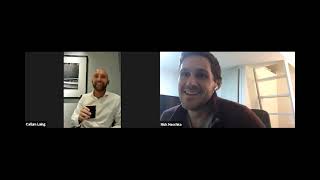
Callum Laing runs MBH, a public holding company that buys profitable small businesses from founders who want to stay and run them. Founders get paid roughly 3× EBIT upfront, then earn bonus shares worth 3× any profit growth they create, with no clawbacks. The 23 companies in the group grew 19% organically in their first year.
Chapters
So good to talk with you. Nice to meet face to face. Look forward to learning a little bit more. It'd be great to maybe start with just a background of what you're up to at MBH. I'll disclose I'm a shareholder, so I have an interest in this fight, but mainly, yeah, I'm super interested in the story and kind of what you guys are up to over there.
Yeah, cool. Well, like, first of all, thank you for your support, uh, as a shareholder. That's really, really cool. Um, and, uh, and also just the platform that you've put together, um, you know, try and, try and pull together some of these random threads on Twitter and, uh, build that community. So I know it takes work, and I appreciate you having done it.
Yeah, it's been fun.
Um, yes, I guess, uh Probably give you a little bit of the why behind what, what we're doing, and then that kind of will explain a bit of the, the what. Um, so I myself and my business partner come from a small business background, um, sort of started, built, and then ultimately bought and sold some businesses. And the challenge that we were trying to solve was what we were seeing well-established traditional businesses, which I know is kind of your focus and the community's focus. These are great little businesses and they're completely unloved by anyone else. The rest of the world, the media, the finance world is obsessed with tech startups. If you can demonstrate that you've got no idea what you're doing, you can probably go and raise half a million dollars to do it. But if you've got a real business with real customers and real profits, nobody's interested. Like, it's just this, this weird stress.
So the curse of being pre-revenue.
It's, it's crazy. Post-revenue, having a real business. Um, so yeah, you have all these great companies. The majority of these companies are owned by baby boomers. So 70% of all small businesses in developed countries are owned by baby boomers. So yeah, not all of them are ready to retire, but they're certainly thinking about what comes next. And unfortunately, when you start looking around at what comes next, you discover it's not actually that appealing. There's not that many options out there if you've built this, this great business. And what most small business owners end up doing is selling to a bigger player in the industry, doing a trade sale. And almost all of those trade sales are structured as a 3-year or a 5-year earnout because the, the founder is considered integral to the business. Um, and so that's the way these deals are structured. The problem stems there is that us entrepreneurs don't make very good employees. We're just not very good at being told what to do, especially when it comes down to our own baby. And so you spend 20 years building up this business, you get acquired by a bigger player in the market and suddenly you're now reporting to an accountant in a different city or a different country who's telling you how you should run your business. And it's, yeah, that just doesn't end out very well. A lot of people end up getting fired from their own company or quitting in disgust after spending 6 months to 12 months defending their staff and their clients. So really what we decided to do was try and almost create the ideal buyer for, for small businesses. So we created a publicly listed holding company exclusively for the use of good, well-run, typically owner-operated, debt-free, profitable businesses. And in effect, what happens is the small business owner swaps their private stock for public stock, but carries on running the business exactly the way they were before. So it's their brand, it's their hiring and firing, it's their culture. They don't need to run decisions off a ladder or anything else. They just carry on running the business. But now when they go and pitch for business out into the wider market, suddenly they can win much bigger contracts, much bigger budgets, for no other reason than they're part of a PLC. So it ticks that procurement box. When it comes to recruiting good senior staff, suddenly they can compete on a level playing field with the big boys because they can offer stock options and all these other advantages. And if they want to, many small business owners have kind of reached a level where they want to grow through acquisition, but they just don't know how to do that. And so they can join a group like this and, and start to grow through acquisition. Um, and of course they now have some liquidity. You have zero liquidity in a small business. And now if they want to sell down 5% or 10% a year or whatever it is, they can do that and still keep control of the business. And a lot of small businesses, their entire net worth is tied up in the business and maybe a property on the side. But, you know, things have a habit of going sideways from time to time. It's good to have a bit of diversification. So that's pretty much what we do. All the elements of what we're doing have been done many times before. I think we're the only people, as far as I know, that have ever done it with this kind of bottom-up approach of trusting the small business owners to carry on running the business the way they do. We structure it in a very equitable way. So people come in for a multiple of their earnings, but it's a perpetual earn-in model. So the more profit they contribute, the more shares they earn in the holding company. Contractually, they run their own business that no one can tell them how to run it. But also, them and their peers own 70% of the PLC because they're getting issued stock all the time. So together, they have control over the entity as well. So it's not like me on the board could ever decide that actually I want to go in and tell them how they should run their company properly. They would just kick me off the board. Board. So it's a very kind of collaborative approach. And I think really, I mean, I think it's a good solution, but I think it also talks to the dearth of other solutions out there that we get about 1,000 applications a year from companies that want to join us. And a lot of those are sort of early stage or they're looking for exits. It's not right for us, but we get that down to about 30 or 40 going through due diligence at any given time. And then we do about 10 to 20 acquisitions a year into the NVH Group.
And what do the founders typically look like? Like how old are they roughly? How much total enterprise value are we talking about here?
Yeah, so these are small businesses. Typically kind of our sweet spot is $1 to $10 million of EBIT. Right now it's more on the lower end of that, but as we get bigger, we attract bigger companies. Companies. The average age of the companies in the group is around 23 years old. So last week we brought in a company called 3K Engineering in Wales, in Great Britain. The guy running it now, his dad used to go door-to-door with a toolbox fixing problems in the village, and he built it into one of the biggest engineering companies in Wales. The son now runs it. So the average age of the principals, I think last time we looked at it, it's around 59 is the average age. One thing we have noticed is kind of between 40 and upwards, people are much more open to this idea. We've kind of stopped pitching to anyone under 40 because generally speaking, when you're young and dumb, you're still trying to prove to the world you can do everything yourself.
I can relate.
So it's only once you get a little bit older that you go, you know what, if we could do this by partnering with someone else, let's do it that way. That's the quicker, easier way. So that's fine. That was a lesson.
I'm sure my subsequent questions will reflect that too. Bias. And okay, and how have you seen the performance? To me, it seems like it takes— it's a big pressure release valve for the business. Does it work out that way? And does the performance hold up?
Yes, I think it's an interesting one that the The finance industry really doesn't like small business. They really don't trust small business owners. If you look at the typical roll-up and list model, it's always top-down driven, and it starts with the idea that the guy with the finance knows best. And so they'll buy a bunch of companies, they'll try and merge them all together. Consolidate the finance, rebrand everyone, and that destroys a lot of the value. And again, you get back to an accountant telling an entrepreneur how to run their business, so that doesn't work. So a lot of the skepticism of our model is, well, these business owners, uh, is that kind of, uh, pressure release. So yeah, that they get into now, and now they can kick back, right? That the responsibility is shared between multiple companies. Um, but actually it doesn't really work like that. A couple of things happen. First of all, just by joining us, they suddenly get the ability to win much bigger contracts. So in our first year, um, now the second year we had COVID, so I'll talk about that in a minute. In the first year, the average company in the group grew by 19% organically, and that, and that's a big, that's a big jump for a 20-year-old company. Um, and that was just because they were winning these bigger contracts. Just for no other reason than they're part of the PLC. So, um, not— rather than kind of, uh, taking a step back, I think actually a lot of people are joining because they want the extra growth. And then while from a market perspective we present consolidated balance sheet and consolidated profit and loss, internally there's full transparency. So every month, every company sees each other's financials. There's a couple of reasons for doing that. One is there's a certain amount of ego that entrepreneurs have, you know, we don't want to be the one propping up the bottom of that league table. But the other one is very genuine, which is if in a lot of small businesses, if you lose one client, you might suddenly lose 20% or 30% of your revenue, and that puts a bit of pressure on. And so by having that transparency, when you see a company having a bad year— sorry, a bad month or a bad time— the other companies tend to rally round and say, hey, look, notice you're having a bad time. Is there anything we can do? Like, do you need to— some of the suggestions that have sort of come up, not through any ideas myself, but from the other members of the team is, hey, look, if you want to shut down your office and come and work in our office for a bit, we've got some spare capacity that would take some pressure off. Or if you want to second a couple of your senior team to our team just while you're having a low period, then we'd be happy to do that because right now we're under the pump. And you kind of have, even though each company is completely independent, everyone does have this vested interest in each other's success. So there is a very genuine desire to kind of help each other out and see each other succeed.
And how many countries is this working in?
So the, the holding company is a UK PLC. Um, we're listed on the Frankfurt market, but we're also listed on the OTCQX in, in the US. We actually— NASDAQ was very keen to have us because we're incredibly fast growth and international. So it's a great story that the reporting requirements of NASDAQ are quite onerous. So it's where you work with OTCQX. But the companies we work with tend to— we tend to favor English language, English rule of law. So, and that almost by definition is more mature markets. So we've got companies from New Zealand, Australia, Singapore, UK, US, and we've got some from Canada in the pipeline. So those are kind of the low-hanging fruit. I mean, we get some wonderful companies from other countries, but as soon as you kind of get into translating contracts and things, it just— the timelines extend.
And this kind of goes back on one of the things you spoke about before, but how does capital allocation work? Is it done at the company level, or is it done— is there a capital allocation process at the holding company level?
No, so basically— and I think that's another one of the misconceptions. People always assume that small businesses are kind of constantly looking to raise money, or if they were looking at this solution, it's because they want to raise money. Most of the companies that join us are not actually looking to do that. You know, they're quite comfortable growing at a fairly steady rate, so mostly they're going to handle that at their own, at an individual level. However, we do have a capital committee made up of 2 or 3 of the principals in the group, and if a company in the group came to that committee and said, hey, look, I've got an opportunity, I'm looking for $1 million, it will allow me to do this, this, and this, and I think I can pay it back in 3 years' time. In effect, there would be this opportunity to do a soft loan from the holding company. And then, so that committee would make a decision, does this seem reasonable? If they do, they would take that up to the board and recommend, okay, you know, either we want to borrow some capital, or which we kind of tend to try not to do that, or maybe raise some capital on the markets in order to do this. But actually, it's different from, you know, like I said, most of these companies are 23 years old or above. They're quite mature companies. And a lot of times when companies think they need money, Actually, it's because they want to do acquisitions, for example, and we just show them a different route. So we have a company that joined us last year, ADT, it's a taxi company in Leicester in the UK. And I mean, literally when they joined us, the guys held up a shopping list of all the other minicab firms in the UK, He knew all of them personally. They'd meet at conferences every 6 months. He had been healthily drunk with quite a few of them. But a lot of them were baby boomers. They wanted to retire. They didn't know what was the options. And David very astutely has figured out and has built the software that if you tie up all of these minicab firms on the same software platform, you end up with a national logistics company in effect, because it no longer matters whether you're a person, a parcel, or a pizza. It's just that last mile delivery, and that's incredibly valuable. Now, on their own, none of these companies would be able to do that, but together they could be quite a force. So they joined us specifically because they wanted to do those acquisitions, and they've already brought their first company in into the group. So yeah.
And can you take me through the economics of, say, small business acquisition all the way through— maybe take me through the valuation climb from independent founder-led 25-year-old company, million in EBIT, through bringing it into MBH?
Yeah, so it's a very simple model and we're very open about the model as well. So, I mean, we'll take a look at the financials of each company, but very roughly speaking, if a company comes to us doing a million in EBIT, the first installment that they will get is approximately 3 times EBIT plus whatever's on their balance sheet. And that's the first installment that they'll get, and that's locked up for 12 months. And they can choose to take that in either shares in the company, or we have our own bond, which in effect is a loan note from the company that pays 5% interest. So some of the— especially some of the older entrepreneurs joining us, they They love the model, but the volatility of a small-cap stock is a little bit more than their hearts can take. So a nice simple bond is an easy way of doing it. At the end of that 12 months, their shares or their bonds are unlocked and they can start to trade those down. But equally, they will then get, based on their profit contribution over the past year, they'll again then get their second tranche, which is 3 times the incremental EBIT. So if you take a typical company that's at a million, so they might end up with 3.5, 4 million of stock on day one. The following year, say their profit has gone up to 1.25 million. So we take that 250,000, we times that by 3 and issue them another 750,000 in stock. And that's locked up for 12 months as well. And then they go on. Now, if they have a bad year, if they plateau or they go backwards, look, it happens. And, um, you know, bad luck or bad management, it, it happens. We don't do any clawback. We don't, um, there's no penalty for that, but they need to get back to their previous high watermark before they start getting the bonus shares again. So that kind of avoids people dumping all their costs into one year and just kind of doing that. Um, yeah, it's a very, it's a very kind of equitable solution, um, and incredibly lucrative if you're, uh, you know, if you're a company that's doing, uh, expecting to grow, um, then, then this is a very good way of getting, uh, returns. And actually, if you want to do acquisitions as well, so this gets really interesting. Supposing your, your million-dollar company comes to us and, um, they've also got a couple of, you know, maybe they've got a couple of suppliers that they work with Yes, that's a construction company. They've got a joinery company that they work with all the time. It's just a small joinery company, 3, 4 staff, and would never be bought by anyone else, but they would like to acquire it. So MBH would provide the stock or the bonds to do that acquisition. And say that company is doing $100,000 a year profit. So it sits underneath the construction company. The construction company is responsible for it. So they do the consolidation. So there's no management overhead for MBH. But that $100,000 a year extra profit gets added to their— and to their bonus share. So they then earn $300,000 on that. So it hasn't cost them anything, but now they're making another $300,000 a year in bonus shares. Now, obviously they would split that down and they could do that with staff and everything else. But Yeah, that's quite a lucrative approach as well for those people that are ambitious and want to grow.
And how's the market put— at least in what you've observed so far, how's the market been valuing? What is that $1 million in EBIT when it comes into MBH and gets consolidated up through the holding company balance sheet? How is that? Have you been able to figure out the real translation?
I can tell you what it should work out as historically, and how irrational markets are. So I mean, we generally think, and we do most of our modeling based on the fact that we should be trading at around 20 times earnings. And the reason that we get to that number is if you look at S&P 500, for example, we're Right now it's trading at 34 times earnings, which is frothy. Historically, it trades at about 19.4 times. If you look at fast growth companies, they trade up at sort of 30 to 40 times earnings. Now, interestingly enough, we consider ourselves a fast growth company because in the last 2 years we've gone from zero to over $100 million in revenue, over $10 million in EBIT. That to us is fast growth, yet the market is still kind of seeing us as a value play because we're small and cash generating. So right now, market is valuing us quite low, but it's a We're a microcap stock and it's quite volatile. It doesn't take a lot of buy pressure for us to spike up, go down. So basically we tend to not get drawn into too many of the conversations about what's happening with the share price, because fundamentally that's kind of outside of our control. What we focus on is what we can control, which is just adding good companies every single month that are cash-generating and positive businesses. And the share price will catch up.
And what do you think is the pessimist's view of slow-growth microcap? What's that trade at?
So actually, if you look at— so European small-cap value stocks are currently trading at around 5 to 6 times times earnings, which again is historically low, just because everyone's so enamored with— I mean, the problem is when you have companies that are a trillion dollars and still growing at 25% a year, it's hard to argue with those guys. They're just smashing it and pulling the market with them. But I think, look, we're not particularly hampered by the share price. I think it kind of— especially there's a bit of a— when we're dealing with a company, so say you bring this million-dollar company to us, when we go through explaining the model, when we take them through a commercial share illustrator, which says, look, this is how many shares you would get each year for this 5 years, and all of that stuff, we always base it on the share price staying flat over 5 years. So it'll go up, it'll go down, but assuming it doesn't go anywhere, does this deal still make sense to you? Does it, in terms of getting you liquidity, being able to do acquisitions, stock options, all of these things, does it still make sense? Because if it still makes sense, then great, let's do the deal. If the— if you're coming into the deal predicated on the share price going up then we're probably going to have some challenges at some point down the line. But so we've kind of taken that out. And actually, it works both ways. If the share price is too low, people kind of question, is it working? If the share price goes up very quickly, then people have the opposite question, which is, well, you know, if I come in now and then the share price goes down again, like the value of my shares decreases. So we just basically remove the share price from the equation. And, and our view— and actually, we're going to be releasing this next week— I've put together a, a statement and an article really thinking about the long term of MBH and how do we— how does MBH celebrate 2121? So how do we grow to be a 100-year-old company? And, and what are the things that kill a business? But, but I'm actually very, very serious about it because most companies are obsessed with growth, you know, the whole Silicon Valley model, which is just growth for the sake of growth. Um, and if you're just chasing growth, you ask very different questions to if you're chasing longevity. Um, so if we're asking the questions, how do we make sure we're still here in 100 years' time, um, then you get very different answers. And, and the reason that I think that's so important is We've got companies coming to us, some of which, as I said, 50, 60 years old. They've got a legacy in their community and they're trusting us with that legacy. So it's important to us that we provide an environment where as long as they perform, they could still be trading under the same brand name and the same ethos in 50 or 60 years' time. And that to me is really the success. But weirdly, nobody talks about— like, nobody is talking about how do you build a company for the long term. Everything is just about obsessing on growth. So I'm a bit of a lone voice at that moment.
Talk to me about the capital structure for MBH. Is there leverage at the parent level, or is it just an equity instrument?
Yeah, so we, um, the majority of the deals that we did, we at the beginning were all stock deals. Um, last year we introduced our own bond, and normally the way it's a bond is just a loan note. Normally the way bonds work is a company will issue a bond to go out to the market, sell the bond, use the cash to go and buy companies or prop up the balance sheet or whatever. We do it a different way. So we created the bond and it's exchange-tradable bonds, that's on the Euronext in Dublin, Frankfurt bond market, but we use it as a currency to do the acquisitions. So we say to the founder, okay, your initial payment is going to be in €3.5 million, we can give that to you in this bond, it pays 5% coupon every 6 months, and at the end of the year, you can trade it, or we will buy it back off you for cash in 5 years' time. Now, the nice thing about that is we control the debt. And one of our, I guess, fears, and it ties into this longevity, is taking external debt. We would rather companies that join us don't have long-term external debt. We would try and avoid as much as possible having long-term external debt. Because banks always pull it at the wrong time. You know, money can be cheap and very attractive, but when the market turns, that's when people want the money back, and we don't want to be beholden to that. Same with the companies coming in, and look, there's exception. A lot of companies have been offered these incredible COVID loans that that it just makes perfect sense for them to take. And so we're fine with that. But we tend to avoid companies that have a lot of debt on the balance sheet because it's just not the best for them.
Can we talk a little bit about taxation?
Yes.
A couple questions, um, American. So yeah, I was wondering a little bit, how does that work for an American company? Um, say with— and maybe we can run through the pass-through scenario, which would be a typical, like, my business is held in an LLC, full pass-through.
Um, yeah, so look, I, I am not, uh, an expert on jurisdictions around the world. We do— our CFO and his team sit down with each of the business owners coming in and work out. And I think most of, if I'm right, in the US, most of the companies convert to C-Corp before they join us. I mean, generally speaking, at a broader level, no small business in the history of the world has ever tried to maximize profit. Profits. Yeah, there's, there's no reason to do that. It's the tax man will take it. So every small business that we deal with has got, you know, brothers and sisters on the payroll and all sorts of little things that, um, uh, are fine when you're a small private entity but don't work when, when you come into the PLC environment. Um, and that's, that's okay. I mean, basically we say, look, the, the disadvantage is that your tax is likely to, to go up because we're now, we're now going to change your accounting to maximize profit rather than minimize profit. The flip of that is that you're receiving a multiple of every extra dollar in profit. And I think, yeah, this for me was really the biggest eye-opener of— I mean, I've been an entrepreneur for 20-plus years, 25 years, starting and building businesses, and I really didn't understand multiples until we started building these public companies. Like, to me and to the average small business owner, a dollar is a dollar. Yeah, if I pay you a dollar, you give me something. You give me a dollar, I'll give you something. Um, it was only when we kind of started moving into the world of public markets and suddenly a dollar of profit is worth $20 on the share price Yeah, that's a huge mind shift. Um, you know what, you, you spend a lot longer trying to close that last deal because, you know, $100,000 of extra profit is suddenly $2 million. Yeah, that's, that's really significant. Um, the, the flip, the downside of it is you do tend to see these numbers above your employees' heads because it's magnified when you realize they're taking out of your profits. But yeah, it's a really big, big shift in mindset. And actually, yeah, you really want to maximize the profit because the multiples are so attractive. Right.
Yeah, all of a sudden that $10 lunch gets pretty expensive.
I mean, it's, yeah, it's— It's a bit of nonsense, but it's also interesting. I remember talking to a mate of mine in the finance industry and I was just going, yeah, I wish someone had explained this to me, like, right at the beginning of my entrepreneurial career. And I'm quite sure somebody did and I just didn't listen to them. But he's like, yeah, well, everyone in finance knows that. That's why we all think small business owners are idiots. Like, yeah, we're the ones driving around in the nice cars. So yeah, once you get into the game of multiples, it is very eye-opening. Yeah.
And what about owner pay? So you joined the group, you were making something. Usually valuations in the small business side are priced off of like a sort of seller's discretionary earnings. How do you think about that?
Yeah, so basically what we do is we get the— typically small business owners are paying themselves a low salary and taking out dividends, which is the most tax-efficient way to do that. When they join us, they need to normalize their salary, so we need to be able to demonstrate to the market, okay, this is a reasonable salary. If worst-case scenario they get hit by a bus, um, we, we can replace them And so, yeah, basically that just comes down— and it's always their decision, but it's like, you know, just figure out what you're comfortable with as your earnings for the next year. And yeah, I mean, it kind of works because of this. Yeah, even though they are changing the setup and they're sort of losing their dividend insofar as their dividend now gets paid to the holding company, because they then get 3 times that dividend, it's more than compensated. So yeah, it works well.
How has the ownership group responded to the volatility? You made some mention of the market being a little bit of a whipsaw roller coaster ride. Yeah.
It's one guy. So I remember one day the share price went up like 34% in a day based on nothing. There's nothing that happened, we hadn't announced anything. And this guy phones me up and he says, what happened? Like, why did the share price go up? I said, look, you just got to stop watching it, right? Stop paying attention. I said, I know, but my wife gave me these blue socks for my birthday and this is the first time I've worn them and the share price has gone up 34%. Like, I'll never take them off. Fair enough. Yeah, I mean, that's as good a reasoning as I've got. At this point.
Was that October 11th?
Um, so yeah, look, I mean, basically we do advise people just, just not to watch the, the share price and just focus on the stuff that they can control. You can tell them that all day, but it, um, you know, it's pretty exciting seeing, seeing it when it does get a bit of momentum. It's pretty soul-destroying when, um, you know, you've just had to a great week, you just closed a bunch of deals in your business, but the share price has gone down. And there's so many factors, and especially when you're in a small cap, um, like I say, it doesn't take a lot of buy pressure for it to spike. It doesn't take a lot of— I mean, we're, we're very heavily traded as a stock because we're constantly putting out positive news to the marketplace. So speculators and traders come in because they love news, and most small-cap stocks got nothing to say, you know, really what happens, you know, maybe one senior hire in a year, possibly an acquisition, whereas we're doing an earnings per share accretive acquisition every single month. So it's a bit of a different scenario. But I think what's really— and this isn't directly your question, but what's been great to see this year. We always said, look, if there's a downturn— because one of the questions that we often get is, what happens if there's a downturn? I went through the last downturn with my own company. I ended up— the global financial crisis— I ended up having to lay off 38 of 42 staff. It was brutal. It was horrendous. I've never been more lonely in my life. It was horrible. And I always say, like, I'd much rather be part of a group like this than trying to figure that stuff out on my own. So as soon as the lockdown started happening last March, all of the principals in the group, wherever they were in the world, said, hey, look, let's just get on a weekly call and start sharing what's working, what's not working, how we're dealing with this, how we're communicating with staff, how we're communicating with customers. And that level of support and camaraderie that we have in the group now is strong. And it's, yeah, really, really, I think it was gonna be forced together by the pressure. But, and they've all been through downturns before, but just the way they helped each other out was, was really, really great to see. And I think a lot of companies on the outside who liked what we were doing but didn't have enough need to come in saw what's happened in the past year and said, you know what, I'd much rather be a part of a group like this than trying to figure this stuff out on my own.
Do you see other synergies other than the owner consortium exchanging ideas, having a vested interest in helping each other?
Yeah. So it's been quite interesting. When we talk to investors, we talk about the 3 drivers of growth being the earnings per share accretive acquisitions is the number 1. The number 2 is the organic growth, being able to win bigger contracts. Contracts. And the third one is synergies. And we kind of put synergies in because everyone in finance expects you to talk about synergies. Like, almost every M&A deal is built on synergies. And synergies look fantastic in textbooks. They very rarely play out in real life because you've got humans and different cultures and things, and they don't tend to work as well. So we kind of put that as a, look, it's a nice-to-have if it happens. Actually, what happens is if you put a bunch of good entrepreneurs in a room together, albeit a virtual room together, they're constantly looking for ways to cross-sell each other's products or help each other out or share resources. And I think two things. One, it's in everybody's interests to do that. The more the profit, the better for the business. But also because we don't force them, because there's no top-down direction, hey, you need to go and talk to this guy. It's just done organically. You take the pressure off relationships, they bloom. So we've actually had some incredible partnerships and joint ventures and One that hopefully I'll be able to announce in the next month or so, but between two industries that you would never in a million years have thought would happen, and suddenly they've pulled together this incredible joint venture. So yeah, I think you kind of, you end up with like-minded people in a group and they look for opportunities to work together.
Yeah, yeah, I think the loneliness is one thing, but then the like, I'm stuck with this thing, has anybody else been in this situation and how did you solve it? And having somebody help you through that, I think to me that's— there's some real synergy there just in—
definitely, definitely other people have done it. The ultimate mastermind group. I mean, one of the things that used to frustrate me as an entrepreneur was the amount of people who give you advice when they've got no skin in the game. You know, it's, oh, you're in marketing, oh, you should build an app. Like regardless of whether or not you need to, hey, you should build an app, or you should go into China. If you just get $1 off everyone in China, you'll be sorted. Like no understanding of how hard that is. And they've got no skin in the game, whereas, in our world, if a company has a challenge or an opportunity and says, hey, look, um, yeah, we've got a chance to go into this country, we've never done that before, does anyone have any advice? It's much more likely that someone will say, well, look, we've got an office there, why don't I give you a desk there for 3 months, introduce you to everyone on the ground, and then you make the call. Um, and, and so you get very well thought out advice. You don't get flippant advice. Advice because people do have a stake in the game. So, yeah, absolutely.
So you've been operating— how many companies now are total in the group?
23 as of today.
And what's— has anything surprised you as you've gone through these? I mean, it sounds like it's pretty explosive growth.
Yeah, it is. Um, uh, yeah, I'm constantly not so much surprised but just genuinely thrilled, um, to, to be a part of like this, this group and to, to meet, you know, listening to, uh, the, the entrepreneurs, the business owners how they're reacting to things and seeing how they're working with other people. And, you know, we had one of them, one of his clients actually got COVID just before Christmas and sadly died a couple of weeks later. And it was a real shocker for him. This is a construction company. Within a week, he had hired a company to do on-site testing of COVID of all of his workers, his subcontractors. And in that first week, they found the 4 positive people got sent, sent home. And he was like, well, God, you know, there's 40, 50 people on site that could have got that. And so every week they do COVID testing, and now all the other construction companies have taken that in the group, have taken that on as well. So I mean, I just love kind of hearing, hearing those, those stories. And, uh, yeah, it's kind of, uh, pretty exciting to see. Okay, 2 years ago we were an empty, uh, just an idea basically, and now we've got 23 companies. What are we going to look like in, in a year or 2 years' time? You should— because every company that adds, that joins us, comes with another 30, 40 years of experience and ideas and opportunities and network. And so it's, yeah, it's quite a powerful model.
And what's been the hardest so far of your part of the journey, I guess?
Yeah, I think I get frustrated when investors have that inherent distrust of small businesses. And I kind of, uh, yeah, I mean, one of the questions I'm often asked is, well, once you buy them, you go in and you tell them how— you show them how to run the company properly, right? And I thought, look, you know, this is a woman that's been running her business successfully for 30 years. Why do you think me, just because I'm wearing a shirt and talking to you, is in any way qualified to do that? And But yeah, that's kind of their model. So I guess that, that sort of frustration that not everyone sees what we see, but equally it's, you know, we can build that up over time. And I think, yeah, if we keep delivering results and stuff, then that will soon turn around.
At the risk of sounding like that investor Are there things that MBH, like services, arrangements that MBH has been able to procure that maybe these businesses didn't have access to before? On really on any, on any front?
Yeah, so look, I, I understand where that question is coming from, and I share the frustration. Like, whenever you see somebody else's business, you can always see what they could do better. Like, it's— you look at it, you're a 20-year-old company, you haven't even got a website. Like, what are you doing? Um, and so, you know, I have to, um, rein myself back because this 20-year-old website— this 20-year-old company without a website is doing— spinning off a million a year in profits. You know, maybe I don't know everything. Maybe, yeah, they're quite I'm not that good, and maybe by going and messing up their system, I'm going to break things. That's why we stay away from it. What we don't do is we won't centralize any functions, but what we do say is, look, this company here has got a fantastic finance function. Look, if you're struggling with your finance, then talk to them about whether it makes sense for you to subcontract your finance. Financing to them. These guys have got an awesome marketing department. Why don't you go and have a chat to them about whether you could do some work with them? And so it's much more a kind of a peer-to-peer piece rather than a top-down piece. And that tends to— it seems to make more sense.
And so that's more a function of having a company in the group with world-class expertise, either because that's what they do for clients or they just happen to be really good at that function?
It would just be, I mean, literally for us, it would just be a chance thing. And look, you will find companies that join, and look, some companies join and they're all about wanting to connect with all the other companies and what can we do together and how can we share? But other companies will come in and, for them it's another reason. Maybe they just want to do the acquisitions, or maybe they just want some, some liquidity or whatever. But, um, and also every company goes through phases when they're just maxed out and busy and they've got to put all their attention on clients, and other phases when they can look for more partnerships and stuff. So we're just going to take the pressure off and say, look, you know, figure out— and you, you will naturally gel with some companies in the group and not with others. That's kind of dynamics at all. But by taking the pressure off, you see that, and you just see that the companies that are— have strength in a particular area will tend, you know, if they've got extra resources or the ability to help another company, they'll put it out there and suggest that. So we do, we do everything on Slack. So there's a lot of kind of sharing of ideas and stuff there. Do you want to, do you want to just, conscious of time, do you want me to sort of touch on a little bit about how I think some of your community members could?
Yeah, I was actually going to go there next. I was going to ask about if there's, so say you have an entrepreneur who wants to find and acquire a company. He or she's found the perfect business. They negotiate it, they're buying it at 3 times or whatever. Say it's $700,000 in seller's discretionary earnings and that owner wants to retire and they buy it and they take it over. Talk to me about, let's say they're feeling lonely at the top.
And yeah, they want some—
they want the ultimate mastermind group.
Yeah, yeah, absolutely. And, and look, it's, it's really interesting because I think we're going to see more and more of this. And I also think we're going to see more sort of employee stepping up, like the founder wants to step back. And what you would typically do is a management buyout. A leveraged management buyout, but employees don't want to take on debt. Um, yeah, so, so in our model, we've got companies coming to us where the founder says, look, I love the model, I'm not in the running of the business anymore, so I'm going to take the first installment of payment and maybe half of the first year or the first year, and then my employees will take the the bonus shares moving forward because I want them to have that. And not only is that a great solution for succession planning, but it also gives them peace of mind because those employees probably never had to deal with any hardship. You know, they've always had a salary every month. So what happens the first time they face a crisis? Well, at least they've now got this peer group that they can go and ask questions for. Um, so, but in, in the scenario that you talked about, um, there's a couple of options, and we've actually had a couple of businesses that have been very similar to that. So the founder has, uh, has retired. The, the person that took over, that bought the company, in effect did a back-to-back transaction into MBH. So That was the way that worked. And MBH's concern is that the company is going to be well run moving forward. That's what we're most concerned about because we don't have resources to throw at a company that's struggling. We won't throw money down. Money only goes up and out to the shareholders. It never comes down. So if a company company's struggling, that autonomy that they so crave is a two-way street. You know, so the nice thing about having an owner-operator in there is that they're very much committed to it. They've been through downturns before. But equally, we've got people that exactly like, you know, your community, looking to go out there to buy a company And then, and maybe they've bought 1 or 2 companies or 3 companies, and they're now kind of looking at, well, what do I do next? And by joining a group like ours, it gives them that liquidity, it gives them stock options that they can use to incentivize the team underneath them, plus that mastermind group. So yeah, I think there's a couple of ways I see this potentially being interesting for your members. So one is, is that if they've found a company, coming and talking to us about bringing that company in. Um, and, and the other one is just if they find a company where the founder doesn't want to leave, you know, it's just a good, good company, they can introduce that company to us. And we have an introducer referral program, you get 15% of the last year's EBIT if you introduce a company to us. And actually, the trick with this is the less you know about our model, the better. So if you find a good, well-rounded company where the founder is looking to grow rather than exit, just say, hey, look, I've heard this company doing great stuff for you. Let me put you in touch with their CEO and/or connect to one of our team, and then we'll take them through that process. And we've been doing this a long time, so we've been working on this model for about 6 years. It's a very— for us, the sales process is a very slow, respectful process because it's— this is their life's work. You don't try and hustle someone into making a decision. So we have, yeah, everything is brought to them and it's a big decision as well. So we take them through a very set process, we get them on a phone call with a couple of the other business owners in the group. Their first question is always, yeah, but do they really leave you alone or does Callum come in and try and run the business? People have, yeah, constantly overestimate how how much energy I have to run other people's businesses. I'm not interested at all. But yes, we have this very solid process that we take people through. And for introducers, it's— we include you in the calls, so you get to learn about what the process is. You can see some of the paperwork and the contracts. And we've got introducers that have been working with us for a year or so that Ultimately, they want to run their own agglomeration, and ultimately we'll probably end up backing them in doing that. But right now they just kind of want to learn the process and what works and what doesn't.
Cool, that's very interesting. I think I'm looking forward to getting this posted on the Mighty Operator Network. I think there's a lot of people who if nothing else will be super interested in just learning about how it works and have this vision of the portfolio of microcap, small cap, small businesses that we share that vision with you.
Yeah, cool. And so, and look, I'm fairly active in your group. So if people ask questions, I'll do my best to get back I can answer them as quick as I can. Look, I love small business. It's constantly exciting and filled with what we see in that world. Right.
So I had a question. So I like doing the takeovers.
Right.
So I like finding, I love searching. I like finding and negotiating the acquisition. I like the first year, and then there's nothing to learn anymore and I'm bored. I take what you do with some serious interest because I love working on stuff that's like— today, I coded an enterprise app for my landscaping company. I've been doing that for the last 2, 3 weeks. But there's not going to be much for me to do there anymore soon, so I have to go buy another one or something else.
Yeah, um, what's very interesting, and, and this is a, it's a good tip when you're talking to, to business owners. So us entrepreneurs, we, we all have a pretty low threshold for, um, uh, doing repetitive tasks, um, and And what you see is that a lot of people have built incredible businesses, like great, great businesses, but the growth has started to plateau or the growth is steady and it's, it's just not as much fun anymore. And so what we often do is we start little projects on the side just because we want to kind of get back to learning new stuff and all that fun stuff. Fast growth again. And oftentimes they'll take their eye off the main business and the main business will start to tank because they're not paying attention anymore. And so they'll put it on the market and they'll just say, you know, like, I'm done, I want to retire, I want to go play with my real estate or my other projects that I'm working on. And actually what we've found, and I've had a lot of conversations like this, is where the founders just, yeah, I'm done, talk about the agglomeration model. And we say, look, yeah, this isn't really going to be a good fit for you because what we're looking for is a business owner that's excited by their business. And actually what you— they suddenly realize is, hang about, if I'm in this group, I can now go and win bigger contracts. So those contracts that I've been— big companies offer big contracts to other big companies who then turn around and outsource it to me because I'm better at delivering. Well, now I can go straight to a big company. That's exciting. And I've been thinking about doing M&A for years and I haven't known how to do it, but I'd love to buy out my competitor and some of my suppliers and move into different geographies and some— and you suddenly get like these founders going, well, you know, maybe I could do 3 years or 4 years extra of this because they're suddenly really excited about the business again. And it's, It's a little bit like you, it's that kind of that learning curve and the growth again is what gets them juiced and excited. So yeah, I'm familiar with the issue.
Well, I've gotten like totally meandering industries. Like I was a plantscaper, I did that for 2 years and then I was like, all right, I gotta do something else. So now I'm a landscaper, which went from indoor to outdoor. And now I'm looking at, plumbing. I'm looking at— I just like, you know, learning all these different things and knowing a little bit about a lot of different things. But once I get to a level of where, like, I could program that business in an app, I think I know enough, and then I'm ready to move on to the next one.
Yeah. And look, for all I talk about, um, you know, leaving some of these yeah, leaving businesses to run the way they have. Um, there are these opportunities and to streamline and to bring these companies in. And interestingly enough, like, we have noticed, um, yes, so many of the companies in the group have changed the way they've operated in the last year because they've had to and are so much more efficient because, oh yeah, um, and I think that's that's been huge. But, but there's still, yeah, the whole no-code thing can, can eliminate, uh, you know, lots of time and stuff. So there is lots, lots of room, uh, for growth. And I think, um, uh, the ones that want to do it will do it and are very receptive to it. And, and the ones that don't, you know, quite honestly, if a company's spitting off a million a year and it's going to spit off a million a year for the next 20 years I'm fine with that. If they don't have a website and they don't pick up the phone when customers call, but it still spits off a million a year, let them just do— it's working. Yeah, but there'll be others that are very proactive. I like the taxi company. It's really— it's not only acquiring these companies, leaving the founders in control, but their ability to systemize the back office for them. Makes their profitability that much more attractive and things. So yeah, there's a lot of opportunity.
The other thing I'll mention, and I didn't hear you talk about this, I don't know if you've thought about it or realized it, but maybe you have, some people just don't play well with their own money. They're good business owners, but it clouds your judgment. Playing with your own money clouds your judgment. And I think creating a little bit of distance I think I would grow our business if I had the financial incentive, but some financial distance from my pocketbook, it might feel a little bit more unshackled to go do some stuff that I know is a good idea and would probably work out fine, but the thought of pledging my house against that, like you have to do here to do it, is kind of untenable. Like, why would I take that risk versus if I'm working in part of a larger thing and I'm like, and here's my little piece of it. And I know my piece of it could be a big piece of it. And I'm incentivized to go make my little piece into a big piece, but not so poisoned by if I screw up once. No, there's probably something to that.
Yeah, and that's very valid. And I think that the addition to that is, um, yeah, one of the smartest, uh, sort of mantras I've heard is environment dictates performance. If you put yourself in a high, high-performance environment, you automatically start performing at that, that level. Um, And actually, being a business owner of a small company on your own is, is not always a very good environment to—
terrible environment.
Yeah, yeah. Um, so what we see as well is you come into this environment of MBH and you see companies winning bigger contracts than they've ever won before and pitching in new countries and doing acquisitions of suppliers and competitors. And suddenly you go, well, if everyone I know and can see on a daily basis is doing that, that's what I should be doing. And, and yeah, you're absolutely right, it kind of frees them up to think bigger.
Yeah, that's great. Cool. Well, it's late here. Yeah, my kids are asleep and I need to be soon too.
Well, cool. Look, I really appreciate, uh, the community you've built and, and this opportunity to to share. I'm more than happy to, um, uh, yeah, give my books out to your members and answer any questions on the forum.
So I really enjoyed them. I thought it was, uh, it was something that— it was like an idea. The arbitrage idea was something I thought about so much because, you know, coming from the world of consulting and finance and then getting into small business, I was just floored at the multiples when I first saw it. I was like We got to do this. But I never really brought it back and said, oh, well, how do you reconnect? I went one way. I went from finance to small business because the multiples are from where they were 20 to where they're 3. And I've never taken that back. I see private equity, right? As you grow your small business, you earn the higher multiple pull, but you guys have set up this vehicle to sort of make the jump all the way there, which I know it's not easy and it has, it has costs, but yeah.
And I think the model is quite, quite simple, but there's a lot of complexity to the underlying of it. And, um, uh, but yeah, look, it's, uh, it's great to connect with other like-minded people around the around the world and hopefully build more of this. Cool, mate.
All right, Callum, have a good evening. Thanks for the time— or I guess day and then evening. Thanks for the time.
More from Nick
A 30 Year Hunt, One MIT Geologist: The Father-Son Team Who Finally Found Gold in the Selwyn Basin.

How Former NASA Scientists Built the World's Biggest Spy Fleet (And Why the Stock is EXPLODING)
Building a $10m EBITDA Leader in a Fragmented Space | Nick and Dillan Interview