The Light Effect X20
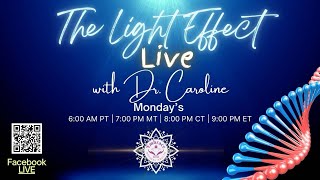
Dr. Caroline Williams discusses X20, a light-infused structured water claimed to improve cellular hydration and reduce inflammation. She links chronic dehydration to high blood pressure, weight gain, and systemic inflammation, and argues that functional medicine approaches like nutrition and new technologies address root causes better than conventional drugs alone. The product launches in July.
Chapters
So thanks everyone. Hopefully y'all saw my post on Facebook and we'll be jumping on live to get to chat with Dr. Caroline Williams with Native Sun Nutrition. She is a fantastic functional medicine doctor and just, it's so fantastic to get to have her here on my Facebook channel every other Monday evening. And then we do hers on the opposite Mondays. But it's just a great opportunity for all of my friends and family to come on and ask Dr. Caroline questions. She is a wealth of knowledge. Normally we're always talking about this amazing light therapy technology that we have, which that's what we're passionate about. We're super excited about the new water technology that's coming out. So we'll be chatting with you about that tonight. But just type your questions for Dr. Caroline in the chat. She would love to answer them. So obviously anything you want to chat about, that's what's so amazing is you ask any question you want. We're just going to kind of have a little conversation about our light technology that's coming out. This amazing— it's called X20. It'll be coming out in July. We don't have any dates released for sure yet, but it is light-infused water, which I know that sounds— that can sound totally crazy, but when you actually break it down and you look at the science, like Every functionality in the body is started with light. That's how it works with the light and the water of our body and, and moving very, very quickly. So if you can move something and infuse something with light, it goes where your body needs it. Your body decides where it goes so quickly. And the studies and the test results that are coming back are truly phenomenal. So, Dr. Caroline, where would you like to take us with chatting about the light-infused water?
Well, I, I'm in Las Vegas to see my patients here in person this week. Many times I'm working with people virtually, and, and I saw for the first time in person one of my patients that I've been working with virtually for the last 9 months. And so it was great to see her in person. And, you know, we were talking about this water unit that's getting ready to come out. I did mention it because there's just— I see so much chronic dehydration in my practice. It's just a really big driver of imbalance where people are concerned. And when you're chronically dehydrated, you have a multitude of symptoms associated with that. Right. And so some of, some of those things we were talking about because, you know, she just moved to the desert and she's used to being on the coast and dry skin is a big contributor of that. And being in the environment certainly is part of that. But you do need to make sure that you're getting adequately hydrated when you're in an environment where the environment itself requires more hydration, then, you know, you need to, you need to compensate where that's concerned, right? So we were just talking about— I mentioned to her, you know, signs of dehydration, and I mentioned to her this new technology that's coming out where it's light-infused structured water, and you know how incredible that is. And that's definitely going to be able to get hydration, your, your cells hydrated because there's energy behind this water. Right. So and then we were talking about, you know, we've been working together, like I said, for 9 months. And one of the big improvements that she's seen is that she used to always have high blood pressure for quite a while and now it's not high at all. And so I was like, yeah, because of what we did really decreased the inflammation in your system. And so that's a lot of the reason that your blood pressure is normal now. And then that just took us back to the water because, you know, what they've seen when you drink the water is as soon as you drink it, it reduces inflammation pretty instantaneously. And so, right. So just think about how many diseases are inflammatory based. The majority, the majority. Yeah. Especially developmental diseases. It's inflammatory based. And so it can just change so much within a person's system just to decrease inflammation.
Yeah, huge. Are there really— I mean, are there very many people that probably don't have inflammation of some sort?
I think everybody has some degree of inflammation. That's what I was telling her. There's degrees of inflammation. A lot of people don't know that they have inflammation because they're— it's below their threshold of awareness. Right. And so they wouldn't even be consciously aware because they wouldn't be like in pain all day, or they wouldn't necessarily, you know, have high blood pressure or those things associated with inflammation. But to some extent, at certain times, you do have inflammation because it would just be very difficult to go through the world and not be consuming something or not breathing something or drinking something that caused some degree of inflammation. Right.
Absolutely.
Right. Yeah. Or even just stress itself can cause inflammation. We know that. So there are degrees of it for sure. And there are times where we have more than other times.
Absolutely. And usually, isn't it that if you're overweight, then you automatically have inflammation in your body?
Well, yeah. I mean, the inflammation can contribute to being overweight, actually. And being overweight, like, if you're overweight, that just says to me that you're probably storing more toxins toxins, and more toxins is definitely going to mean more inflammation.
Right.
But also being inflamed, you're going to be also carrying more weight because you'll carry more fluid. You'll be more water retentive. Not in a good way. You'll be more water retentive as a result of being inflamed. Yeah.
Well, and that's what's amazing. The studies show on the water is that there were people burning up to calories more calorie burn, and the average was 1750 in their calorie burn with using the light infused water.
Wow, that's pretty incredible.
And please sign me up for that.
Yeah, absolutely.
Calorie burn, right?
I mean, if you think about that, like, when I was training for many years and let's just say helping somebody else lose weight, You just do the math, right? So 5— a pound of, uh, body fat is like 3,500 calories. And so if you somehow can reduce 500, either by burning it or, you know, less consumption— so like, let's just say you reduce your calorie intake by 250 and you're increasing your burning by 250, that's 500 calorie deficit a day. So that's a pound a week, right? That's about a pound of weight loss a week, right? That sounds fantastic. And that's like, doable. I think that's totally doable.
Yeah, absolutely. So what would it be? Because it's reducing inflammation in the body, then it's allowing your cells and your metabolism to increase properly to an optimal level to allow you to burn that way. Is that how it would work?
I mean, I, in my opinion, I would more attribute it to, you know, when you think about muscle mass and you think about activity level, um, your adequate hydration is really going to contribute to that. And as well as adrenal function, you know, if you think about, because your metabolism is really influenced by thyroid function and adrenal function. And, you know, your hydration status has so much to do with normal muscle function as well as glandular health. You know, those obviously the thyroid gland and the adrenal gland really are there. They're actually a lot of those are made of fatty tissue. So they're also very— they are very susceptible to toxicity for that reason. Um, but adequate hydration has such a big impact on those glands for that reason, right? Because anything that has a higher amount of fat, like let's just take the brain, the glands, those are very what we call hydrophilic, like I mentioned last on our last call. And so they're going to absorb water. Very, you know what I'm saying? They're very absorbent as far as—
and so that's why they also absorb toxins.
Yes. Okay. Yes. It's the fatty areas of the body that are going to be most affected by the toxins for sure. Yeah. Yeah.
Well, and that's, that's then interesting too, because the, the studies showed that, um, brain, uh, cognitively increased. And clarity increased as well with using the light-infused water. So it goes completely along the lines of what you're talking about with the need for hydration and the ability to hydrate an organ.
Yeah. And you think about like flow of energy, right? Like your cognitive, your cognitive function and your nervous system function is all about flow of energy and water is about flow of energy. And you can even think about like blood flow, right? Like if you don't have flow, you're in trouble. That's where you're in trouble is you, something is not flowing well and adequate hydration really affects that flow.
Yeah. And so, yeah, because the, the studies are also showing improvements in blood flow. As well.
Yes, yes, yes. Because water is all about flow, right? So if you don't have adequate water, you will not have adequate flow. Yeah, you will not. So yes, I mean, like, you know, it's funny, I joke about— I've joked about how my intuitive function and my cognitive function, cognitive function, but also the intuitive aspect is more online the more I'm in water and the more that I'm hydrated, right?
Right.
It's like everything just flows like it should as far as my communication and my mind and everything just flows really well if I'm in water or if I'm adequately hydrated, then I'm good. You know, it doesn't when I'm not. It doesn't, you know.
So I would joke, which makes sense because, you know, the stagnation that happens is where pain comes from, where inflammation comes from, where problems, you know, areas that are unable, joints that don't move properly, there is stagnation that's happening there.
Exactly. What we were looking at arthritis as a problem with microcirculation. That that's actually what contributes to arthritis. It's a, it's a microcirculation problem, right?
Wow.
Also in the brain too, you know, there's a microcirculation problem many times with, you know, cognitive dysfunction. And so there are, there are certain nutrition that can also help with microcirculation. But yeah, if you're dehydrated, there's nothing to compensate for that.
Right.
So, yeah, so, yeah, I figured out.
So the studies were also showing that the reduction in inflammation is especially reduced in any type of arthritic condition. So it goes along to what you're saying about it being the problems with the microflow and it being the water and the energy allowing that to then be able to improve.
Right.
When you prove that from those angles, then it would make sense that the light-infused water would allow improvements in arthritic conditions.
Yeah, it makes total sense. Right. And it's funny because like, you know, reducing pain would certainly be a motivator for, for people to get hydrated, right? Absolutely. Effectively hydrated, improved cognitive function, like you said, clear thinking, you think would, would be their reason as well. For me, like, like all those things are important to certainly the clarity of my skin, the hydration of my skin, really important to me. It reduces my allergy response that I sometimes have, especially where my hands are concerned. So it's— that's huge for me. But I mean, something that's really important to me too, that might not be for so many others, is I'm just telling you, like, when I'm in water or I'm adequately hydrated, my intuition is off the charts. And so that to me is really important because I feel like that is my access to truth more than anything that I could access intellectually. The intuitive aspect is my is my compass.
Yeah.
Right.
I can't wait to see what you notice once you start drinking the water. I can't wait to hear your stories.
I can't wait either. I'm just like, wow, this will be interesting, right? Yeah. Because it's all about flow, right? It's all about the flow. And so, you know, we're— we've talked about this before, but our bodies are receivers. Receivers of energy, and we're channeling ourselves, certainly. And but we can also pick up information from, from others, right? And, um, you know, that's real, right? So like, even the telepathy tapes and stuff like that, that is real. That's possible. They say that thought travels faster than the speed of light. I was talking the other day with someone, and we were talking and discussing, uh, basically the understanding— well, certainly like a lot of people now talk about it as quantum entanglement, where when you're really connected with someone, um, if they feel pain, you'll feel pain, right? If, if, right, when you're really in I would say you're resonating at the same frequency. Yeah, that's another way to explain it. If you're resonating at the same frequency as them, you're going to experience what they experience.
Yeah. Yes. Well, and just having friends go through things with their kids or whatever and how you feel that pain for your friend and their family and all of those things. It's definitely a real, you know, expression of, of how you feel for them. Sure. Empathy, for sure.
Yeah. Sometimes, sometimes it can manifest physically. Like, I've certainly worked with people who had physical pain or issues, and I was helping them, and I ended up with that pain myself. Um, I can't initially say it was every person, every patient that I've worked with, but there are— were certain times where that was the case. And I really just looked at that like, okay, well, this will be easy for me to work on it for them. In a sense, I'm working on it within myself, right?
Yes. Yeah. Yes. Oh my goodness.
Yeah.
So how would— Yeah. So tell me, how would then, like, neuropathy then play a role in what we're talking about with the water? Because obviously then, well, because it's a blood flow issue, right?
Is that we're dealing with? So, and an inflammatory issue. I will say sometimes neuropathy, because sometimes it's inflammatory. Well, there's always inflammation there, but how long the inflammation has been there and affected the myelin sheath can also be a factor. So if it's, if it hasn't destroyed a lot of the myelin sheath, you know, whatever's caused the inflammation, then just drinking the water in and of itself would probably resolve some of what they were feeling because it's resolving the inflammation and promoting flow of energy. But if the myelin sheath has been destroyed, then, you know, that's a consideration and that would need to be repaired for a nerve connection to come back. And that, in my opinion, that can be done. You know, how did—
how does that happen? How are you able to repair the myelin sheath?
I mean, obviously you've got to give the body what it needs, right, for the body to, to do that. Um, but in my opinion, it can be done. Um, you know, cholesterol is a big part of that. It's interesting because, you know, a lot of people who suffer from neuropathy may be on cholesterol-lowering drugs.
Oh, interesting.
And that could be right. Yeah, that could be a contributing factor as to, you know, why the neuropathy developed, because the body didn't have what it needed to create the myelin sheath. You need cholesterol for that. So there's that.
That, that's been known to cause neuropathy, which, like, think about that for a second, how important Is it for someone considering going on a statin to lower their cholesterol to know that it could break down their myelin sheath, which is like the protective layer of the cells? And even like everything in your brain has to do with myelin sheath protection. Am I correct in saying—
okay, well, it's an insulator, right, of the nervous system. So it has everything to do with nerve conduction, right? So, you know, you're not able to effectively conduct energy through the nervous system if you're missing that insulator, you know, that, that's why there's a problem, you know? And so, and so you need cholesterol to make that myelin sheath, right? So if you're taking something that is inhibiting your production of cholesterol, then that's, oh gosh. Kuma, stop. Sorry, my, my dog hit the button and then it went down and I couldn't see anything. Sorry about that.
No, you're good. You're good.
He was trying to get my attention.
That's funny.
So yeah, so, um, but I mean, they do put that on. I mean, there is a disclaimer about that with—
Sure, I'm sure it's on the— Yeah, I'm sure it's on as one of the side effects or something, but it You know, it's one of those where you think, okay, like, we probably should talk through these things that are probably, especially if you stay on them for a really long time, like almost a guarantee, a breakdown of your myelin sheath.
So I've had people come to me and they had not just neuropathy but also cognitive dysfunction and, and they got checked out. And then the person, you know, then of course it's showing, you know,, you know, problems with their myelin, right? In the br— and not, not just, you know, in terms of, you know, their limbs, but also in their brain. And the very first thing I ask is, you know, do you take a statin? And one person came in to see me and yeah, it was, he had taken a statin for 20 years. Wow. Yeah. And so I was like, okay, well, when they did your diagnostics, did they tell you or ask you about that and tell you that that could have something to do with this? And he said no.
Right. Yeah, it's just not— it's one of those where, well, we all need to be our own best advocate and our own doctor to some extent, from the standpoint of we are in charge of our health. We have to take ownership of our own health and not just let everyone write us a prescription, right, you know, and just do what someone else is telling us. We need to take responsibility for our own health so we actually know what's going on. Read all the fine print. Read all the fine print.
Yeah. And just really, like you said, maybe get multiple opinions, maybe know what your options are. There's going to be— it's funny, I was talking to a patient today exactly about that because we were talking about, like I said, she was sharing with me, like, Yeah, I worked with another functional medicine doctor and never got these results. But with you, like, I've had such amazing results and like, I had high blood pressure and now I don't have high blood pressure at all, like, ever, you know? And I was like, well, because what we did was reduce inflammation in your whole system. I mean, we did a lot of things, but that's why you don't have high blood pressure anymore, you know? And so we were talking about these things and she was just like, kind of like, you know, it matters. It matters who you work with. And I gave her credit for being just such an amazing patient because she did everything. Absolutely. Exactly. And I was talking to somebody else today on a discovery call follow-up, and I said, he was like, well, you know, I, I believe, I believe what you're saying. I, I feel like, you know, comfortable investing potentially in this. And I was just like, I'm not the deciding factor if this works or not. You are. You are the one that's in really the deciding factor. And, you know, I'm really just— my goal is to empower you with what you just— like, what you just said. It's all about empowering people so that they're educated, they're informed, that they know what's going on, that they can make informed, educated decisions, so that they know how to support themselves. And not just when you're working with them, but like, even when they're not with you. Right. It's all about empowerment. And so that's really what we want to do. We don't want to create necessarily dependency. We want to empower. And so, yeah, but people are going to see different things based on their level of awareness. And so not everybody, you know, I have plenty of people that believe that if their blood work looks fine and normal and their one doctor said it's normal, that every doctor is going to have the same opinion about that. But that is not accurate. It's based on the individual's perception about what they're looking at. So let's just go back to what we were talking about, about the cholesterol thing. Um, you can have elevated cholesterol because you have a low thyroid. That doesn't mean that you need to go on cholesterol medication. It, it makes sense that we would work on the thyroid. Yeah, right? Absolutely. You can also have high cholesterol because you have liver dysfunction, right? And some— I've said that to people and they're like, well, my liver enzymes were fine. Uh, that's an advanced stage. You can have liver dysfunction and your, and your liver enzymes be fine because it's not that— it's not advanced to the point where your liver enzymes would be high, right? But you can have— you can have gallbladder and liver dysfunction and that still be— look within range. Yeah. Right. Wow. And that goes back to the other thing from last week I was talking about with the impaired digestion that, that goes back to that. Right. Mm-hmm. So yeah. So a lot of people just don't necessarily know that you really want to get other opinions, right, from other practitioners before you go on maybe a medication that you maybe don't even need. Right, that could lead to other problems over time.
Yeah. I, and I always tell people if they're, you know, very, you know, their norm is allopathic medicine, like, please just go get a functional medicine doctor to give you some information. Because they're the— even just the knowledge and the information that's going to come from, you know, functional medicine doctor like you looking at all the information that they have is going to give them a whole nother picture and viewpoint to look at the information they have in front of us. That if they don't seek out that kind of information, they're probably not just going to find it on their own, especially if that has not been their normal choice in care.
Yeah, it's interesting. Yeah, because I was talking about that today too, about saying, you know, like the allopathic paradigm and the conventional medical model, there is a place that where that belongs, and it is in emergency medicine. I mean, like, when, you know, when you're— their tools, which are drugs and surgery, shine in those situations, right? That's where you really need those tools. But not everybody needs drugs and surgery to solve their problems, right? Right. Everybody needs that, you know. Yeah, but that's the way that it's set up within our system. And so that is why it's good to get other opinions because you don't necessarily always need to go to extremes. And then if anything, if you go and for a chronic issue and you're being evaluated from that perspective of, well, what kind of drug or surgery can I give you? You're probably not dealing with the underlying reason why you have the issue, number one. And number 2, you're probably gonna end up being dependent because you're not dealing with the underlying issue.
Right.
And then it's gonna cause another problem.
Yes.
I mean, the longer that you take it, it will lead to other issues. And so, yeah, I think it's just, you know, you would choose what, how you wanna approach things based on what kind of result are you looking for? Right. Are you looking, like you mentioned before, are you looking to be healthy and be free and independent as a result? Because that's where your freedom is, is in your, in health, and it's in your health.
Absolutely.
Absolutely. Um, yes. Yeah. People who are healthy are not dependent, right? Right.
They're independent, right? Yes. You're able to have choices. You're able to make choices in life of how to spend your time.
Awesome.
How to spend your energy.
Yes. You can just do more. You can do more.
Right?
Absolutely. So, yes, I mean, you can even make more money. Absolutely.
Right?
Yes.
Absolutely.
Because if you're sick, there's limitations on what you can do to make money. Yes.
You know? Absolutely.
So your health is, yeah, so important, right?
Yeah.
So I feel like it's worth getting other opinions. Absolutely. And that doesn't necessarily mean that depending on the situation, you're just working with a functional medicine doctor. You could be— it could be an integrative type of situation.
Absolutely.
Yes. But I think it's just good to go to somebody that you feel like you can trust, that knows what they're talking about, that can help empower you. And help you get to a state of balance, which that's what health is. It's a state of balance within yourself and, um, can set you up for success where that's concerned, you know?
Yeah, absolutely.
Yes. Well, thank you.
Go ahead.
We're at time, right?
We are. We, we just went through it. It was fantastic. We went through it so fast.
Yes.
Yes. Yeah.
Yeah. I think that you gave something really good. Yeah. Because obviously this, us talking is about this technology and about this technology company. You know, that this technology and what this company makes are tools for me. Right? Like, like we were talking about tools for, for allopathic conventional medical, medical doctors, MDs. Their tools are drugs and surgery. My tools are nutrition, herbs, lifestyle changes. You know, this technology. Yeah, those are my tools. And they're just very different.
Yes, very different.
Yes.
And they lead to very different outcomes.
Absolutely. Long-term outcomes.
Yes. For your health, for your longevity.
Absolutely. And it's, it just all goes back to that freedom piece too. Yeah. I mean,, you know, how you want to live your life and, you know, what's— what you value, what you value.
Absolutely. Yes. Yeah. Well, thank you so much for being on here. Yes. So appreciate you. Everyone, please go follow Dr. Caroline, her Native Sun Nutrition Facebook page. And she has a website and her Instagram. Of course, I, you know, you can— this is my personal Facebook page, but my business is Embrace Optimal Health. And you can find me on Facebook as well as Instagram. But thank you so much for being on here. We're super excited about the light technology that's going to be launched in July. We'll probably be talking about it every Monday until we get it. We get it. It gets launched because it's just so exciting. But we'll be on Dr. Caroline's channel next Monday night. So everybody come on, ask your questions, get 30 minutes with the doctor. So it's always a good thing. So anyway, thank you so much, Dr. Caroline. Really appreciate you being here tonight.
Yes, absolutely.
Thanks for having me. Yeah. Good night, everyone.
Good night.
More from Nikki


What if your own body could switch on regenerative peptides already inside you?