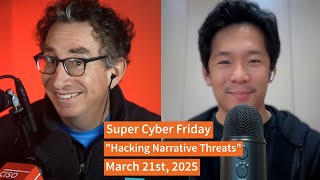
In this interview, Nick warns that by 2026, roughly 90% of online content will be AI‑generated, creating a wave of sophisticated scams, deepfakes, and other malicious media. He highlights how the social‑media ecosystem has become increasingly fragmented across public platforms like Twitter and Facebook and private channels such as Telegram, making monitoring more complex. The rise in volume and sophistication of these threats has shifted organizational responsibility from traditional communications teams to security‑ and risk‑focused personnel, especially as digital attacks increasingly dovetail with physical threats. To combat deepfakes, Nick advocates a strategy of mapping the internet: tracking where deepfakes spread, identifying the accounts that propagate them, and analyzing the underlying narratives to spot patterns. The conversation concludes with an invitation to the upcoming “Hacking Narrative Threats” event on March 21, 2025, positioned as a forum for addressing these emerging narrative‑based attacks.
Chapters
Nick, there has been a distressing amount of negative information online. We've had a lot of it. Why, as of recent, does it just seem so much more?
90% of content online will be AI-generated by 2026. So that's, that's really scary. That means that we have all types of new threats from sophisticated scams to deepfakes. On top of that, we've seen social media increasingly fragmented, conversations not just existing on Twitter or Facebook, but now on Telegram and these semi-private channels. And finally, unsurprisingly, this is a complicated geopolitical environment that we're in.
There's so many platforms and often they're just kind of taking advantage of your brand to just use it for their own purposes. Isn't a lot of that what's happening? Not like a specific, I'm going to take you down with a DDoS attack kind of an attitude.
What we've seen in recent years is that the social media landscape has— one, just the volume of information that we need to track and monitor has, of course, continued to increase. But the sophistication of the type of threats that we've seen from social media has also increased in sophistication. So what that means is that maybe traditionally or a few years ago, your social media team, your communications team was well equipped to educate and communicate the threats that were occurring to the rest of the organization. But what we're finding now is that as these threats rise into actual physical threats or oftentimes go hand in hand with the cyberattack, The role and responsibility has shifted within an organization to include much more security and risk-focused people within a company.
There's this one sense of, oh, we're all screwed with all these fakes. It's going to be so easy. It's going to be so hard to distinguish. Are you seeing that there are potentials to sort of protect ourselves when the fake is so damn good?
In the context of deepfakes specifically, yes, there's the question of how do you authenticate any single image, but because of the sophistication of them now, I think the, the way to approach it is actually how do we map the internet, understand, you know, where these deepfakes are spreading, understand the accounts that are spreading those deepfakes, understand the narratives behind them, because then you can understand those patterns, which I think as we look to combating that into the future, those patterns are actually much more important.
Guess what? We're going to discuss all of this and it's going to happen this Friday. Hacking Narrative Threats. It's an interesting take here, and we've never actually really approached it in this manner on Super Cyber Friday, and I'm hoping that you'll come to it. It's going to be happening this Friday, March 21st, 2025. Please come. Here's all the information you need to know.