Nick Loui - The Tsunami of Disinformation
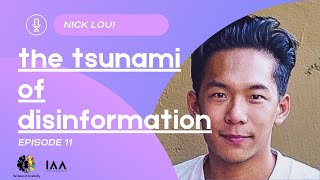
In this Voice of Creativity podcast episode, host Brendan interviews tech founder Nick Louie, the creator of the VC‑style tweet bot Parrot VC and the CEO of PeakMetrics, a platform that tracks and measures online media narratives, influence, and disinformation. The conversation begins with Nick’s early career, including his work with Ashton Kutcher’s early Twitter venture and his experience in influencer marketing, which led to the founding of PeakMetrics. Nick explains how the platform helps PR, communications, growth, advocacy, nonprofit, and government teams map narrative development across online communities, using concepts like the “Trumpet of Amplification” that describes how a story can grow from a niche subreddit to mainstream media. They discuss the shifting metrics of influence away from likes toward authentic community engagement, the impact of privacy changes, and the relevance of SEO and content completeness. The episode also covers their shared Techstars accelerator experience, the value of mentorship, and how PeakMetrics is being used by the U.S. Department of Defense for dual‑use technology insights. Nick shares a side‑project building open‑source tooling to flag non‑inclusive language and design in code, and reveals a personal habit of counting words on his fingers. The discussion touches on the broader decentralization of influence via platforms like Reddit, crypto, and the evolving creative‑tech landscape in Los Angeles.
Chapters
Welcome to the Voice of Creativity podcast brought to you by the International Advertising Association. Today we get to hear from another tech stars founder like myself, also using technology to bring creativity to the next level. Uh, Nick Louie is a really great guy, really fun to talk to, and super knowledgeable with super cutting-edge technology. For those of you working in any creative field, this one's for you. Without further ado, here's Nick. Nick, welcome to the podcast.
Hey Brendan, how's it going?
I'm excited. This is going to be fun. Um, as the founder of Peakmetrics, a technology company that I think we're going to talk about, a former CMO if I have my data right, a Techstars alumnus, I think the first Techstars alumnus on the podcast besides myself. So this is— we can jam out about that. And then also, I can't believe I didn't know this before, but creator of an AI that tweets like venture capitalists. Is that right? Did you do that too? Is that you?
You did stumble into this. Yeah, this is like 2 years ago. It was Thanksgiving break and I was hanging out with my sister who's in the VC world. So I'm like a founder. She comes from the VC side, two sides of the table. And we were at dinner and I was making fun of the way that VCs tweet online, which apologies to all my friends that are VCs, but VC Twitter is a very particular place. Dumpster fire.
Your words, not mine.
And yeah, we built this bot that we trained an algorithm based off of like 50 or 60 VCs. Read all of their tweets and basically this bot just spits out new tweets based off that training data. And it got picked up by TechCrunch a couple years ago and was on the YC forums as well. It was a weird moment.
That's awesome. Yeah, for anyone who's not familiar, YC is Y Combinator, which is like the other Techstars. So we can talk about that later. That's like a big deal actually. But yeah, I actually stumbled across it, you know, a couple hours ago and was playing with it and it's kind of awesome. Like, I actually retweeted one of them 'cause it's just like, for people who are unfamiliar, venture capitalists Twitter is very particular. And so it is very memeable and I think your bot does a great job. So that's cool.
It's like some blend of like, you know, trying to be like a philosopher but mixed with Co-Star. the, the horoscope app. And the funny thing about that algorithm too is that like this was pre-GPT-2 or GPT-3. This was like old school, uh, natural language processing and it barely makes sense, right?
But it's still kind of legible anyway. Yeah, no, I would say like some of them I definitely like logically didn't make sense, but The grammar is perfect or near perfect, right? It's like, it's kind of awesome. And, uh, I think that actually fits with the vibe, but anyway, not to derail the whole conversation about that, but I thought that was a really cool and surprising thing that I hadn't known about you in the past. And so maybe to give some context for the listeners, let's start with, you know, it doesn't even— almost doesn't matter these days geographically, but where are you located right now?
I am currently sitting in a coworking space in the Arts District in LA. And I've been born and raised in LA. I've been back in LA after going to school in Boston. I've been back in LA for over a decade now, which is kind of crazy.
That's more than I would have guessed. Nice. That's awesome.
I know.
I know. It's been a minute. So I think you'd said when we were chatting before the podcast that you I'm not a Joe Rogan listener, um, but there's a— if you, if you were a Joe Rogan listener, you would have heard a lot of LA bashing over the past year.
Um, oh no.
Yeah, because he used to be like the biggest LA proponent, and then he kind of, I guess during COVID moved to Texas and more or less, you know, shat on California and LA for having like— made it sound like this kind of like lawless wasteland. And I honestly think he's it felt like it's BS, but I guess I'll ask as someone who's actually there, like, you've been there, you grew up there, you've been there the past 10 years. Does it feel like it's changed? Is it, is it dramatically better or worse?
I'll preface this by saying, like, I'm the type of human that falls in love with most cities that he visits. So, like, I love Boston. When I was in, like, Lisbon, I was looking for apartments, like, how can I live here? So I generally like places. I can totally understand why people don't like LA, but the thing that I tell all my friends about LA is that if you don't love LA, it's probably or possibly because you just didn't find like your particular community in LA. You know, it's such a big city and the people that you surround yourself, you know, every, every part of the city has its own identity. So I think, you know, especially if you're visiting, knowing people here who can show you the type of LA that you would really appreciate and enjoy. Like, that's, that's the way to do it. It's not like every or many other cities where you can pick up like a guidebook and figure out how to navigate.
Okay, so I totally buy that. So, and I think that's true. A lot of New Yorkers say the same thing. They're like, you know, I believe that the Wall Street banker going out every weekday night to the high-end club New York is totally different than the like Lives in Brooklyn, goes to dive bars, New York, but they both exist and are fulfilling if you kind of plug yourself in. So that's cool.
I mean, the consistent thing though is like with both New York and LA, like avoid Times Square, avoid Hollywood and Highland, and you're pretty good already.
That's awesome. It's super noob here. Only been to LA like twice. Um, Highland is a road or a neighborhood?
Hollywood and Highland is like, it's the intersection, so it's like, it's the tourist trap of LA. I don't know what the equivalent is of, uh, I don't think that exists in Boston, right? Like, you don't— there's no like tourist center in Boston.
Probably not. Now we've got Newbury Street, which like for shopping and stuff, but yeah, much smaller city. Not, you know, we got a lot of tourism, but for like historical stuff, you know, like the Freedom Trail, you know, uh, Puritans and, uh, Revolutionary War stuff, but Yeah, I wouldn't say we have like a— that, or, you know, Times Square being the same thing, you know, Broadway and whatever those streets are. So yeah, we definitely don't have that here. But, um, but that's cool. Okay, thank you for illuminating for me. Hopefully other listeners had the same question.
Well, hopefully we'll have you out here soon and, uh, and we'll have you fall in love with the city. That'll be one goal.
Yeah, and I'm a big— I'm a big ocean guy, and, uh, so No, there's awesome beaches near you, so that's good. Um, so, and you know, for the podcast kind of focused on creativity and creative jobs, LA, uh, you know better than me, but the story that I hear is that rapidly growing tech community, rapidly growing investor community, rapidly growing agency community, advertising agencies and stuff. Obviously already like a center, central hub for culture and like movies and stuff. So Seems like there's a lot to love for people kind of in our broad industry.
I think so. I mean, I think this is like one of the reasons I'm in LA and not San Francisco, for example, is that that's, that's part of the fun of LA is that you have this intersection of different types of creatives, whether it's music or entertainment or agencies or increasingly technology, and you smash all of those industries into a single place. And And the creative output that comes out of the city, it just continues to, uh, continues to inspire me and so many other people. So it's a cool city for that intersection of creativity and tech.
That's cool. So, okay, so what are you spending your time on now?
That's a good question. Um, well, you know, like any startup founder, uh, I'd say the majority of my time is, is building, uh, building this business PeakMetrics, which is, and we can dive into more of it later, but it's at this intersection of media technology and creating online influence or tracking and mapping online influence. So that's definitely a lot of my time. And the rest of the time, you know, we were kind of chatting about this earlier, is now getting back into the real world and seeing humans again. And I, you know, I'm excited. This summer is looking like a fun summer.
Well, yeah, either we're gonna go in in and out of lockdowns and we haven't figured it out, or it's going to be like the Roaring '20s again or something. We're gonna all go crazy. So we'll see. Um, well, that's cool. So yeah, I'd love to hear more about Peak Metrics. I think the audience would too. Um, you gave a brief overview, but do you mind kind of diving into kind of exactly kind of what it does now and kind of where you see it going?
Yeah, I mean, I think, you know, um, thinking about the company, it might make sense from to share just a little bit about my background. Of course. Because it's so much reflection of, of my sort of experiences. So my background has always been in the, in the blended tech and media ecosystems. I don't know if you know this, Brennan, my first sort of opportunity, I guess, after college came through a tweet. It was Ashton Kutcher tweeting about his new company that he was building up called Catalyst. And I responded and it was like, this seems cool. This is like 2010 Twitter. So very early, early Twitter. And that got me on this journey to join the team that got him to become the first person with a million followers on Twitter. And he was sort of cultivating this digital group. And it was this interesting opportunity cuz my background was as a software engineer early, early on. And then also in film. And so my whole world was like, how do you combine these two worlds? And this was like this perfect opportunity to start to explore that. And at that time, this is again, like over, like about a decade ago, we were doing a lot of early work with like influencer marketing. How do you start to build influence on these new social platforms when Facebook was still pretty new, Twitter was a baby. And also how do you start to experiment with this concept of like user-generated content? Because that was completely new and it was this new way to sort of tell story. In a way that was much less polished, but much more authentic, particularly back then. And so that was an amazing experience that led to me then becoming the CMO of a community type startup. It was a tech startup that was building out communities for large fan groups. So groups like Major League Baseball, AEG, a lot of sports and entertainment brands. And during my time there, unsurprisingly, like the entire media landscape shifted. So anything that we were learning in school about marketing or PR or how to create any type of influence, none of it really mattered anymore.
So we were trying to figure out— It's practically obsolete.
It's practically obsolete.
Yeah. Thank you.
All those tens of thousands of dollars spent on, you know, on education, you know, maybe the core might still be relevant, but certainly anything, anything like tactics-based was pretty useless. Into that, all of those experiences really led me to the creation of PeakMetrics, which is trying to evaluate the online media landscape and track and measure how media narratives develop. Like, how do you develop influence online in this world where all of a sudden every single person's an influencer? The media is moving faster than ever before. The media platforms that are available to us, you know, change practically every year. So how do you continue to develop tools and capabilities that can measure and track what's happening. So that's sort of what led me to the formation and what we do at PeakMetrics.
Awesome. I actually didn't know that Ashton Kutcher story, so I'm glad you shared it. That's awesome. So let me play this back and make sure I get it. Is the— if the goal is to be able to track and understand all that stuff, Are you giving playbooks to the media? Is that the kind of like main use case or is it to brands to kind of be able to control their narrative more? Who's the kind of like desired end user ideally?
Yeah, we primarily work with PR teams, communication teams, growth teams, people that are trying to sort of get their message out and then measure and track what's happening. We also have done a lot of work to support advocacy organizations, nonprofit research institutions, and government in using those same methodologies for analyzing mis- and disinformation online. 'Cause it's effectively, unfortunately, for better or worse, you know, the way that like mis- or disinformation moves online, it follows sort of a marketing or a digital marketing playbook. And so a lot of the tactics and tools and capabilities that you can use to analyze like how successful or unsuccessful marketing campaign will be, you can apply into that world as well.
Interesting. So when you say, okay, communication growth teams, that I assume is like governments, brands, any, any of those ones you listed. Um, so they're using PeakMetrics to design, uh, again, just trying to play this back. If I'm, if I'm a company, I'm trying to launch a new campaign or new product or something Peakmetrics can help me launch that and communicate that in a way that it'll be picked up and understood and spread more often or more successfully? Or what is the— I guess, I guess what I'm asking is like, what are the, um, what are the KPIs or the goals of the people using Peakmetrics? Like, they come to you with a, with a challenge or a problem presumably that you guys are going to solve. What are they trying to achieve?
Yeah, so let's say that you wanted to, you know, you were launching like this podcast to the world and you wanted to plan out a marketing campaign around it, you would provide to us, you know, the, um, the talking points for what matters for this campaign and, and what this is all about. Um, our platform will then take all of those inputs and basically deliver to you, you know, what are the specific phrases that you wanna be using, um, to get your message out there more successfully? Uh, what are the right audiences that you should be targeting? Because particularly nowadays, so much of the way you have to think about online marketing is through these sort of series of communities, I guess. So trying to target the right communities with the most authentic messaging. And then also, you know, where do you plant that? Like, so how, you know, if you're trying to get your message out, where does that distribution start? Where like there's a—
on the channel, you mean? Like what channels are those on?
Yeah. What are the right channels? What are the right websites, blogs? There's, there's this concept, um, created by Claire Wirtle called the Trumpet of Amplification, uh, which is, uh, trying to describe how in sort of the online ecosystem now you have this phenomenon where, uh, a particular media narrative will start on like a small subreddit, uh, like WallStreetBets being a perfect example. Then all of a sudden it starts to build this momentum and you start to build this sort of shared value or shared opinion within that community. And that starts to bubble up into adjacent communities and then eventually gets to blogs and then it eventually gets to major media. And so if you can start to track that and predict out, you know, how that movement happens, then that becomes really powerful.
So is there an application for this to move stock prices as well? Like, are you selling to finance or hedge funds or something?
We're not at the moment, at least not yet. It is interesting to me. Like, I think more and more organizations are taking the role of social media and online media more seriously than they have in the past. So, you know, if you figure that in the past, getting on TV, you know, during cable news was the most important way to get a message out there. Now I think people are starting to shift opinion and look at online. And I think that will, you know, I don't think anyone would be surprised for me to say that that's only going to increase in importance.
No. Yeah. And I just think in our— if we all put our consumer, you know, everyday people hats on, I can, you know, I don't know if everyone's similar to me, but I certainly feel like the media lags a lot in many cases. Right. Whereas before, like, the news was the news. It was the one bringing you the information. Nowadays it's like it got the information late and the take feels really stupid and it feels like it's like either slanted or spun or just straight up inaccurate. Like the WallStreetBets thing is a perfect example. You know, I'm a— I play around with stocks and things and crypto also, which, which like clearly the, the actual cutting edge of what's happening and the opinion forming is clearly a Reddit thing as one example, right? And it's not exclusive to Reddit, but It's like you can go on Reddit and the stuff they're talking about will be on the news in 3 months or a few weeks. But yeah, it's clearly, whereas I think before it might have been completely the opposite. And so for me, per your point, I hadn't really thought of it that way, but it seems like, you know, for my own company as an example, I would prefer to get covered in an appropriate community like a Reddit that, you know, for for my audience than, you know, get some sort of primetime TV spot where I'm just like a talking, one of the million talking heads is like, you know, Brendan from Gore-Tex, you know, says bullshit, looks like everybody else, you know? So that's, that's funny that you say that. Cause that, that I absolutely made that shift in my head, but like subconsciously, I guess just like my, my trust centers or like, I guess where I think to go to get either cutting edge or kind of like actual deep insightful takes is not the media. I don't, I barely watch the news and when I do, it's always some clip I saw on YouTube and it's always some idiot saying something, you know, like that's not that useful or something, you know, that, that, not that, you know, interesting. So, okay.
That's really cool.
That's really fascinating.
And I think, you know, like from marketing, if you have a marketing background to some degree, you kind of like that was taught in sort of the fundamentals where you're looking at, you know, uh, the creative and mapping that to an audience and all of this. And I think, um, you know, we as an industry, um, we're so focused on other metrics like impressions and clicks and that type of thing. And it almost seems like some of those fundamentals of, you know, making sure that you have your message out there and it resonates with a specific audience, like some of that almost got lost. And I feel like In this particular environment, and in this particular environment that's also now privacy conscious, for example, and you start to see some of the rules around tracking change, I think some of the metrics that we think about in this space will start to shift as well. They'll have to shift in order to— for it to all work.
Yeah, I think that's the right way to put it. They'll have to shift because that's what matters. And I think that's— I think you're completely right. I think everyone feels it, right? The fact that, you know, this post got liked a million times or whatever is like not necessarily that compelling, or that it does not exactly— that should certainly not be the tail wagging the dog. We should not be shooting for likes necessarily, um, or the way to get likes is not necessarily, uh, to, to kind of try to manipulate the system or, or hack the system or leverage.
Well, there's so much manipulation in the liking, comment, metric, right?
Like, that's true. Um, yeah, I think interestingly, I think I just had this conversation on the podcast, so this is cool. I didn't realize this would be tying in at all, but we had Aki, uh, one of the founders of MarketMuse on. Um, and I don't know if you're familiar, but MarketMuse is effectively AI for SEO, to super simplify. Okay. And the big kind of breakthrough was that if you look at how SEO works, you know, how Google specifically Google thinks about a topic and therefore ranks its search engine results. It used to be about, you know, keywords on the website. So it'd be like, the way to rank highly would be like stuff a bunch of keywords on there, right? And then it was like, oh, who are you connected to? You know, are you connected to really high-value sites that we think of as authoritative? And then it was like, okay, you have more links than the next guy, so you must be a better result. Now it actually they have a thing called the knowledge graph. And what MarketMuse has done is kind of like reverse engineer that. And what, what Google does now is effectively, it's like, is this entity, you know, a website usually, uh, does it talk about a topic and all of the related parts of the topic in a complete way? Right. And so if you think about what that— it's okay, that's the, that's the nuts and bolts, but what's actually happening is we went from this like shadow, uh, you know, when someone's searching, someone wants an answer and they want the best possible answer to that question. They want the truest, deepest, most insightful answer to their question as fast as possible. And before we were getting like better, we've been getting better and better and closer and closer to actually like effectively the truth, right? So in SEO as like one microcosm of this, the best thing you can do now to to rank for SEO is to completely cover a topic very, very, very well, right? Like basically make the best content that covers all the bases about that topic, and Google will recognize that and rank you higher. And it's cool because they can kind of like put numbers to it and prove it. And we see the same thing at Cortex in the visual space where like before, uh, and up until very recently, you could really just retarget people and kind of track them all over the internet and blast them with a million messages until they like gave in. Right. And like, fine, I'm clicking on this ad that I've seen 50 times, but, but really we lost, we lost the core kind of nugget, which is like, shouldn't we be creating things that are interesting and compelling to the user?
Right. First.
Right. Shouldn't we, shouldn't we kind of what you said, we, the basics you're taught in school, like what is the audience and what do they want and can I match, that message to them. And the good thing is like with the Apple changes recently, the privacy changes and a lot of people opting out to being tracked. I think those are, you know, the visual world is behind compared to SEO at least. But I think that's becoming more important. It's funny, I hadn't expected you to say that, but you're kind of talking about the same exact concept that like we need to get back to serving the user better, right? What do they want?
Right.
And what kind of content are they actually looking for? What kind of messages in your case are they looking for?
And the sort of interesting thing too, to me is that you think about how all of the sort of ad targeting algorithms so far at least have been based off sort of an individual user's profile and then prior behavior to that user profile. To me, that's great for sort of understanding and targeting a user based off you know, it's exactly what it sounds like. It's based off prior history. Um, to me what's interesting is that if we start to think more about how do you market to particular sub-communities or niche communities, to me that's part of how you get to sort of like actually changing the opinion. Because you— I feel like if you're part of a community, if you identify as part of a particular community, you start to share values with that community. You start to trust opinions of other people. So this becomes a really interesting way to sort of think about, you know, in, in a world that's increasingly going to be, in my opinion, tied to sort of the communities and identities that you align with. It's just a different way to start thinking about how you create messaging and targeting for, to specific people.
That's awesome. So where did the name PinkMetrics come from? Is there a story there?
I think a lot of it is this continuous journey for us to be thinking about the newest way to start to measure what we're thinking about. Like, how do you start to measure media narratives? How do you start to measure success on like PR campaigns online? How do you start to measure online influence? I don't know if there's like a perfect answer yet, but I certainly hope that we'll get there. And I think that we're in this really interesting moment where we're currently in the phases of rewriting what those metrics will be. So I guess to me, that's why the name sort of made a lot of sense.
I totally buy that. I didn't know there was that angle, but that's— you already said part of that, which is cool, where we're, we're kind of rethinking what matters and what should be tracked and what more, moreover, not just what should be tracked, but How should we orient the entire endeavor, right? If we're optimizing for likes versus we're optimizing for something else, that changes, you know, who we have on the team, what software we use, what we make, how we make it. That changes everything.
So, I mean, I also think like it's this, it's this moment now too where there's this major generational shift, right? So, you know, my old boss, for him, the, the, the most amazing type of PR we could have received at the time was like, front page of the Wall Street Journal because that's how he understood influence to be created. For me and sort of my peers working in tech and rising in tech, like at one point that was like, ah, the second that your startup's on TechCrunch, like that's your moment. But now, you look at sort of Gen Z and where over half of them, if they could be an influencer, like they would be an influencer. Like that's a complete shift, right? All of a sudden it's not, like all of those gatekeepers are removed. You're looking for who is the, who are the top influencers, which could change, you know, any moment, any day. You're also looking for who's gonna be the next influencer, um, and who's the right influencer for a particular community. So I think all of these rules now are being rewritten. So the way that we think about like measurement in, in this space has to be rewritten as well.
That's cool. I, I had no idea that it went so deep, uh, kind of like philosophically. So that's cool. Interestingly enough, what you just said kind of made me think— I don't know if you're plugged into the crypto space at all, but like, you know, the major—
to the moon!
To the moon!
I've only lost money on Dogecoin.
It's growing great, dude. You gotta hold that diamond hands. Um, I was gonna say that, you know, one of the major messages behind kind of all of crypto is decentralization. And the removing of the gatekeepers, right? The idea that why do we need a bank to do financial stuff if we can actually kind of automate it with DeFi, or, you know, all that stuff. And so you say obviously we're not anywhere near that being mass market use case for crypto yet, but that I think is what people can see is coming because of crypto. You know, crypto makes possible removing all these gatekeepers that we're used to having, and that, you know, a lot of cases we've seen corrupt things. Um, and so it's interesting because I haven't heard too many people talking about, you know, in a way YouTube, uh, or what have you, Instagram is in some way decentralizing fame or influence, as you said, right? Before you had to get on the Wall Street Journal and there was a small handful of people picking. Now, you know, people are— there's still YouTube, there's still Instagram, they still have a lot of influence. Not totally decentralized, of course, but they're kind of, you know, you're kind of putting yourself out there, whatever you have to say, and if it resonates, it kind of takes off. And so in a way, it's actually already heading in the decentralization of influence direction. I've not heard anyone on crypto actually address that directly, but maybe I just haven't heard it.
I mean, crypto is a weird one because it seems like, you know, if you're a, if you're a crypto buyer, you're either buying on the promise of the technology. But then again, that's like built on sort of the ability for the person who created that coin to explain the benefits of the— yeah, of why that technology is so much better. Or at the end of the day, you're buying for hype, which is like the Elon Dogecoin thing, where, you know, you have proof that one single person can basically move this market, um, just by, you know, just by his online influence and the you know, his, his cult personality. Um, we did this interesting study where we took a massive amount of social data, ran like a clustering algorithm against the, uh, against the data and created these cohorts of a couple hundred users, uh, or audience types. And one of the interesting things about that was that like the algorithm basically identified an entire cohort of people that were basically like Elon, followers, like whether it was Tesla, SpaceX, fanboy, whatever, whatever. Yeah, it was the fanboy. It was a very clear, like, distinct audience type. Um, anyway, that was sort of interesting to me.
That's cool. I mean, as a guy who likes— loves Tesla and invests in Tesla, invests in crypto, loves SpaceX and/or space in general, I might be—
you might be in that group.
At least I might be clustered there by an algorithm for sure. Um, that's That's funny.
Yeah.
I hadn't even considered that angle when I started talking about crypto, but you're right. Like Elon is a double example because he himself is demonstrating influence in the way you're talking about. And the fact that, you know, isn't just moving things, like he's moving billions of dollars just by like tweeting about something. Not that we need a lesson in that already, because we literally had a president who did that. You know, like that's clearly happening. And I don't think anyone's going to debate that. So that's cool. So, so I guess I don't want to mess this up, but again, just kind of like reading back as I understand when, when you got like the customers come to you, the potential customers, the prospects, they find you because that matters to them, influence and those types of things. The communications plan, the marketing plan, and, and do they all recognize already before they find you that like, this is changing? Are like the, the early adopters the most savvy? Are they the ones finding you? Or is it like, you know, any, any old brand or customer or group can find you and work with you that, and, and kind of like independently of where they are in the kind of like savviness adoption curve?
Yeah, I mean, we definitely resonate, I think, with early adopters. You know, the, it's sort of the groups that we work with are uniquely excited about sort of exploring this with us, like trying to map out, like everyone that we work with that sees success has a sort of shared understanding of, okay, like the way that we're thinking about online measurement is flawed, the tools and numbers that we use to quantify quantify information online as success. Like it doesn't really work. So what are the alternatives? I think there's usually an interest there. I think the other people that really resonate with what we're doing are really people thinking about media narratives and the importance and role of media narratives, particularly in today's ecosystem. 'Cause so much of what we do is focused around like, how's the narrative changing? How is the narrative developing? How does one, crisscross with another. A lot of that is the type of work that we do.
Awesome, that's awesome, that's really cool. Uh, I would imagine a lot of people listening didn't even know that this is possible, so that's really cool. Now they know, they can check you out. We'll have all the links to your company and everything everywhere else in the show notes, so for anyone who's interested. Um, so before we jump off, a few more things I think people would love to hear about. So as I mentioned at the top of the thing, you are the only other, to my knowledge, guest on the podcast so far that has Techstars alum. And so, and myself, I went through Techstars as well.
We went through it at an overlapping time period too, at the same time, just pre-COVID.
Yeah, literally during COVID even. Yeah, right when the lockdowns happened, we were in the middle of the thing. So I was hoping maybe you could just give a quick summary of what Techstars is for people who aren't familiar, and then we can talk about, you know, how it how it's affected your kind of like company lifecycle.
Yeah. So Techstars, if you're less familiar, is one of the largest, I think they call themselves a venture fund, but they basically are one of the largest technology accelerators and venture funds in the world. They partner, it's a highly selective sort of technology accelerator where they evaluate companies, bring in, you know, you know, what they believe to be the best companies into their network. You go through a multi-month program to sort of work on the business, meet lots of people like Brennan. And then, and then it's sort of a, it's just a, it's a, it's a way to sort of accelerate the process of building a company. So yeah, Brennan and I were both in Techstars just about, I guess we both graduated about a year ago.
That's true. Yeah.
In 2020, how was your experience, Brendan?
It was awesome. I had a great time. I've been a big proponent of Techstars and kind of a cheerleader. I, we went through it just so for people know there's little programs, there's 10 companies per cohort. Um, they're geographically based or based on a concept. Mine was Boston, which does not mean the companies were Boston-based, but it's just kind of like, uh, they were building the company in the Boston community. Yours was Air Force, right?
Yeah.
And correct me if I'm wrong, you can say it better than me, but I think the, the kind of nugget tying all your 10 companies, cohort companies together were companies that could benefit from working with the Air Force and could benefit from working like with government grants and things like that. Is that the common thread?
Yeah, there's, there's this new shift in the way that the DOD is thinking about technology innovation, and they're really starting to support, uh, what are called dual-use startups. And these are companies that operate in the commercial sector but, um, could provide benefit to, um, the DOD. So in that world, like, you know, we're helping the Air Force with some of the work that we do. Uh, we're helping them understand foreign adversarial impacts to the US media ecosystem. Like, that's a lot of what our focus is. And the thinking behind this was that the DOD wastes a ton of money in the traditional government contracting world, and they're not getting the best technology. The best technology still come— or not still comes— in the US, the best technology has come from the private sector. So this is a way for the DOD to support the private sector and also help the private sector start to do more work to support some of the important work our government's doing.
That's cool. Yeah, and that's a— yeah, uh, for people not in the US, that might be surprising, might not be. But yeah, the US government tradition, especially the DOD, I think did not always play with the newest technology software specifically very well. Um, so that's cool that they're doing that program. And yeah, more fully answer your question from before, Cortex, my company, we dramatically improved at Techstars, got connected to a huge network of advisors, really cool people, some of which have been on the podcast, some who are coming on, uh, you who we met through Techstars as well, this episode included. Um, uh, so that's really cool, and I, I always recommend it for people who can get in and who, you know, are at that early but not brand new stage of a company.
Um, one of the, um, one of the things that surprised me, and I don't know if this is True. I'd be curious to get your take on this too, but as part of the Techstars program, you go through this thing called Mentor Madness, which you meet like 100 potential mentors. They could be corporate executives, like successful entrepreneurs, whatever that might be. And then the intent there is to find like people that will help mentor your business and help you grow your business. And one of our mentors and advisors, Henry, who you know, when we first sat down, he was, he made the point that like, you know, to me doing Techstars, like it was about the experience, like going through Techstars. He made the point early, early on that that's just really the starting point. Like the value of Techstars is the network that it brings to sort of after the program. Like the program is just a very small part of it. And I think now be sitting here year out, I think that that was completely correct. So I'm curious, you know, what was Brennan like? Was that true for you too? What's your take there?
Yeah, I would say we, you know, we immediately after our program went directly into fundraising and because of the program, we're in front of, you know, 100 of the best VCs very quickly. So that, that right there, very tangible benefit. Since then, we've been kind of heads down, you know, deploying the capital, hiring people, you know, doing that stuff. But yeah, even today, you know, like I'm, in the Techstars Slack constantly trying to help out also, but also, you know, getting all manner of help from, you know, does anyone know where we can find this VP of product? You know, it's like very specific problems as well as connecting with mentors and people who, you know, you don't know how they're gonna help now, but you know, they'll help and you know, there'll be a, you know, like additive to the business. So yeah, I had a great time and I think that totally worked out. I think COVID changed it too. You know, we, you had the same experience where starting in person, kind of ending remote was weird. Um, but I think, you know, even now that things are thawing, at least the Boston area— obviously can't speak for the other chapters around the world— but the Boston area is, you know, we had our first in-person event like on the Charles River the other day. We're having some drinks, just hanging out and talking. Um, it's pretty cool.
Yeah, Techstars LA, the next cohort's in, uh, in person. I, I just saw—
fully in person. Exciting.
Oh wow, I think, I think so.
Yeah. That's cool. Yeah, I know, surprising to hear. The world's coming back. Yeah, so that's really cool. Um, so that's awesome. Yeah, and, and so you guys went through, you met some great mentors. I, from what I understand, the kind of DoD government, um, contracts, I don't know, you can call that grants access angle, you guys took advantage of that. So would you recommend that kind of program to to startups as well?
Yeah, absolutely. I mean, you know, for us sitting here a year later, it just opened us up to so many different opportunities. It basically, it's on one hand, I think it's a little bit of a stamp of approval. Like there's, you know, the Techstars brand, you know, to their credit, they've done a very good job with building up the brand equity and creating a meaningful community around it. And then in terms of business growth, I think it provides a really great way for— it's a crash course into creating a startup. So I don't know if anyone here is thinking about starting an advertising startup or something like that, or depending on what you're thinking about, but it's a really quick way to just start to understand how to be thinking about building a business in the tech ecosystem.
That's awesome. Yeah. And that's good. I imagine at least one person listening, if not many, have some sort of entrepreneurship desires. That seems like these days everybody's got a cool, at least a side hustle, if not a main hustle that they're planning. So, um, I hope so.
I mean, certainly in advertising, it's like there is so much wasted money in advertising, as you know more than anyone. You know, the creative industries, um, I don't know, it seems like there's so much opportunity to tech enable the creative industries in a way that's still provides for creativity, but you know, it just gives you that extra little superpower.
Yeah. I remember when we were first pitching Cortex at Techstars, people thought our numbers were bullshit. Not, not our revenue, but like just the market size, right? We're like, oh, just the, like how much do people spend on advertising? Yeah. Yeah. Cause we got it.
Turns out it's a lot.
Yeah. It turns out it's a whole lot. Yeah. We got it straight out of the JP Morgan Factbook in like 2019, I think at the time, but it was like, $600 billion spent on just visual ads every year. And everyone's like, no, you don't mean billion, you mean $60, you mean million, you know, all these like, are you sure? And I'm like, here's the JPMorgan Factbook. I didn't write it. You know, I was like, it's a lot. And which means there's a lot of work to be done in our parts and anybody who's listening to fix that and make sure it's being done correctly. Because, oh boy, is it not being done correctly.
I mean, the budgets are there, right? The budgets are there. It's just going to get reallocated from TV and traditional like radio advertising and billboards. Like all of that will just get shifted.
So it's already being shifted as we're seeing it's happening. Yeah, it's happening. Um, so that's really cool. So, uh, on that front, uh, I mentioned people perhaps having a side hustle. Do you have any other side projects that you're working on? I know like life of the founder is like Generally, no. You know, usually we have no time for anything, even like, you know, too much friendships or anything. But, but, you know, in case you're working on a cool side project, or even if it's for fun, you know, I'd love to give you a chance to share it, have people take a look at it.
Man, that is a great question. Um, there is a side project that I've been quietly working on, um, that is trying to build in like a sort of a— almost like an accessibility layer into code that flags for— what's the right word? Flags for like problematic phrases or like almost like designs or code that is not friendly to certain communities. So, what I mean by this is I am part of the LGBTQ community. There are a lot of like UX designs that could be not particularly friendly to the transgender community, for example. I've been really interested in building out open source tooling that can start to really easily parse a repository of code and just start to flag like, hey, you are asking for gender in this particular field. It only has male or female. Have you considered broadening that. And I think to me, like, tools like that to make, you know, code and designs, user interfaces more accessible to different groups. If we can make it really easy and lightweight, then that's a win. So that's something that I've been rolling around a bit.
That's awesome. I'd never even, you know, not an engineer myself. I hadn't even considered that, that that was even, I mean, obviously I've seen like the dropdowns and you're like, I don't feel like I fit into these. Racial or geographical or whatever dropdowns. But I'd never considered that from the code perspective that like, you know, they're probably pulling in some cases off the shelf stuff that also doesn't fit. And you are saying that there is an easy way to kind of like scan, you know, like one of my friends' companies that scans for open source code. And it's like, if you're going to sell your company, perhaps you don't want a lot of open source code in your, in your tech or something. Yeah.
At least understand those licenses.
Yeah. And so in this case, you're effectively just scanning the code to find any of those kind of, I wouldn't say obvious, but like opportunities to make the code more inclusive, less offensive. Um, uh, and I didn't even think that that would be even possible, but now you mention it. That's awesome. That's really cool. I'm glad.
I mean, we already have, yeah. I mean, we already have automated tooling for like cleaning up commas and getting your spacing correct and making sure that, you know, the app is working correctly.
Like.
Unit testing and that type of thing. So to me, it's like, why not have additional layers of testing that you just integrate into the continuous integration, like the deployment process to check for these types of things? Because me as, like from where I sit, I'm not gonna know sensitivities to certain groups, but if I have something that at least flags it, at least I'm aware of it and I can start to work with the rest of the team to start to change that, at least be more cognizant of it.
That's awesome. That's so cool. That is what usually when I ask someone about a side hustle, like, what are they working on? You know, there's something like totally outside of technology, you know, building a deck.
Sorry, I should probably deliver that type of—
No, that, that's actually, I think that's awesome. I was going to say this is like the most widely impactful side hustle I've heard about. Well done. You're actually making the world better. Everyone else is like, you know, learning golf or something. That's cool. Um, so that's awesome. So one final question, uh, before we run out of time. I like to ask people this at parties, uh, also on the podcast. It's a weird, weird question, but bear with me. So, um, do you have any superstitions or habits or kind of like repetitive, um, routines that you do you know, ideally related to work, but it could be otherwise, that your colleagues might be surprised by? So it's a weird question. I'll give you a second to think. So for example, there's a lot of pieces in there. So I'll give you a few of mine just to kind of like break the ice and, you know, make it not make it an unfair question. But like, so for example, I'm almost always holding some sort of ball or a piece of silver. I always have something in my hand. And even, you know, what like if my hands are moving off camera, I'm either petting a dog, which I have a dog on my foot right now, or I've got some sort of like fidgety baseball or something. And so, you know, something you might not know about me. Um, we've had people talk about, you know, they're like nerdy, uh, you know, they're like totally into Magic cards and how obsessed they were with that. We've had people talk about like various things. So no pressure, but oftentimes that gets a cool story out of people. So in case you happen to have a a weird superstition or something? I have to ask.
Okay, this is— I can't believe I'm going to admit this on a podcast, but since it was something that, you know, my employees wouldn't necessarily know, uh, or anyone real— well, very few people know this. My family knows this. When I was little, and this is probably my OCD in me, uh, when I was littler, I would when I would say something, like when I would say a sentence, I would count the words on my like fingers.
Like while you're saying—
so like, like shortly after or like even in the planning phase. So I would like think about a sentence and then I would like literally go like, think about a sentence and like just count the words on my fingers for some reason. I have no idea why. I don't know why that was a weird habit that I created. Very weird.
That's cool. Do you— well, do you feel yourself— do you find yourself doing that now occasionally? I feel like that's like low enough cognitive load that you might do it occasionally now, and it's not like it's going to interrupt your day necessarily.
I think it probably does happen without me, uh, without me realizing it. Yeah. So yeah, some, some habits are hard to break.
Oh God, yeah, I have a ton of those. That's awesome. See, I love this question for that exact reason. You find all these cool things out about people.
Awesome. Well, it's one of those things that you broke out of like way back in the attic of my brain.
That's exactly why I love it. Cause you know, like you're effectively asking someone to admit something like they don't normally talk about, but it's usually something that's, you know, like not embarrassing or anything, but just like, you know, access some part of the internal programming.
What makes you weird, Nick? Oh yeah, that's one.
Maybe that's one. That's, I'm gonna shorten the question. How are you weird? Everyone's weird. How are you weird? I like that. Um, no, dude, this has been awesome. Really good to talk to you. I love that people got introduced to Peak Metrics and your background in LA and all those things. Um, even the, the VC bot, uh, it's called— sorry, it's called Parrot VC. Is that right?
In case people want to check it out. Parrot VC. Yeah.
Awesome. Um, cool. Well, really awesome to have you on, man. Uh, we'll definitely have to have you on again in the future as you release more things, or as you roll out that cool inclusivity thing you just mentioned on the side hustle. So, um, thank you for coming, man. It's been awesome.
Yeah, thanks for having me.
So if you enjoyed that podcast, if you like creativity and topics like that, or if you work in a creative field, you'll definitely love the IAA, the International Advertising Association. You check them out at iaa-global.org. The IAA is one of the oldest-running, since 1938, associations for creative professionals, and is currently acting as the global compass, sharing information, this gathering cool minds like you've just seen to chat, um, and to understand exactly what's happening today. Um, so I encourage you to go check them out, iaa-global.org.