100 Ways to Stay Motivated in 2023 (Part 1)
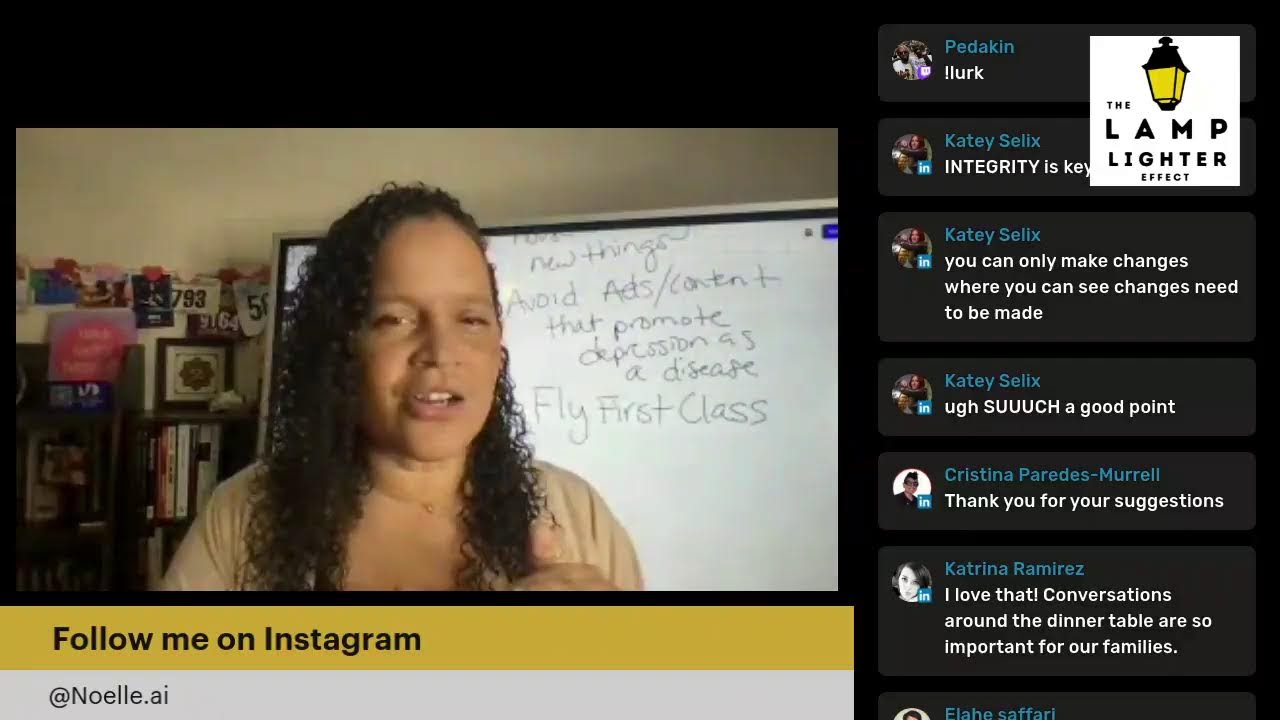
In this motivational video, Noelle Russell shares a comprehensive set of practical strategies to sustain motivation throughout 2023. The content blends time‑management hacks, personal‑development practices, and self‑esteem‑building habits. Key recommendations include using Outlook/Viva Insights to auto‑schedule short breaks, setting immediate deadlines to beat procrastination, applying a personal balanced scorecard with OKRs across four life quadrants (finances, family, career, community), creating a daily "battle plan" with GoodNotes, being brutally honest with oneself, staying active in one’s community, dressing professionally to boost confidence, taking intentional PTO, seeking novel experiences, curating media to avoid depressive content, treating oneself to premium experiences (e.g., first‑class flights) to trigger a reticular activation response, and earlier‑mentioned tactics such as Pomodoro intervals, early‑morning routines, calendar control, reading a book a week, tackling hard tasks, leveraging AI task tools like Motion, and defining a personal vision. Throughout, the speaker emphasizes actionable implementation, mindset shifts, and the cumulative effect of small wins on long‑term motivation.
Chapters
Hello everyone, welcome! I am so excited that you are here. It is a Happy New Year, as I heard yesterday. Actually, someone said every day is Happy New Year this year, um, so you may take on that same kind of perspective. We are going to spend the next, I don't know, hour, hour and a half or so going through as many of the 100 ways to get, to stay, to get and stay motivated in 2023. Um, hey, Ren, great to see you. Thank you for joining. Um, and I cannot wait to share them with you. These are things that I either very specifically use every day, um, or I call upon when I need it. Some of you know, you know, sometimes seasonal, right? Sometimes things go really well, sometimes things you run into some challenges, and so it's great to have a lot of these tools in your back pocket. So I'm hoping that we are able to keep the, the fun going and that my data stream stays good. But don't worry, I am recording this, so I will be able to share with you all of the wonderful things that we will be talking about. You'll be able to catch it on the replay. As a matter of fact, right now, if you are here live, it's a great chance for for you to say #live just to let me know that you are here. We have just so many things to go over and not enough time to do it. And if I don't get to all 100 in this session, do not worry. I will actually be going and doing another session next Thursday for any— wherever we leave off. I don't have— I have no idea how long it's going to take. I've never done this before, but I do have these documented. Recently, I taught a class, a women in leadership class. Hello, friends. And in this women in leadership class, I got to teach 60 women about all the things I do, Noelle does, to keep my sanity, maintain work-life harmony, but most importantly, be successful in having a career that I'm proud of and working at companies that I adore. How did I do it? How did I handle when I made mistakes? I gave all of my secrets away in that class. Luckily, they loved it. I think all the students were super happy and content with the content that we covered, as well as all the homework assignments that I gave, which might have been a little on the high side, but that's for another day. So today I'm actually going to be using one of my newest cool tools. I don't know that I've used it on a LinkedIn Live. I do a lot of seminars and workshops, and I use this tool all the time in my virtual setting. But this is a Vibe. You can go to Vibe US if you want to kind of see more about it. But it's a smartboard. It's an affordable, I think, smartboard compared to, you know, the Surface Hubs of the world and these kind of more expensive devices. But it was a treat. I treated myself to it. But I love it because it lets me share with you live what's going on in my brain, and I get to write it out on a screen. And hopefully you will get to follow along. That is the only other thing I would suggest is to go ahead and make sure that you have a pen and paper handy because we are going to go through about 100 ways to stay motivated. And I am actually going to just write them up on the screen. So hopefully you'll be able to just see them as we go. I'm going to spend a couple of minutes talking about each one and what it means to me and how, how I use these things. The first one. So let's go ahead and get started. The first one. I actually love this whole section. There's about 10 that are in the area of what I, what I call potential. Oh, it's purple. Let's go to black. Little highlighting. So this is your potential. And what that means is that all of these, all of these specific tools that I'm going to talk about or specific tips are in the area of your personal potential. I just dropped something, so pick it up. Um, and in order for us to, you know, one of the things that I use in order to stay motivated— hey, what's up? My friends are in the house! Uh, Giancarlo, what's up? Hi, Martina! Um, great to see you, Isabel. Thank you for joining. So the very first one, and you know, bear with me, I hope you agree is we want to work to our potential and not what I call— because I'm in a— I lead an organization and I have a quota that I have to meet because I'm in consulting. But work to your potential, not to quota. And that could mean anything. Oh gosh, if I could spell things right. That could be anything, right? Your quota is your goals, whatever you set for yourself. When you work every day, you're going to set— I'm going to encourage you to set goals. That's who I am. I'm a goal setter. But I— oh, let me, let me adjust it so you can see the whole screen. There you go. There we go. Okay, I'll keep, I'll keep in the window. But that last word is quota. But basically, I have found that I am capable. I actually don't use my quota as my, you know, limit for what I can do. Right. I try to think what is the best use of my skills and I go after it. And oftentimes my quota is just a sliver of what I'm capable of doing. So I don't use my goals, my quota, my measurements as the barometer you know, for the bar for my success. It's definitely a metric I want to use to make sure I'm on the right track, but I don't use it to be like, "OK, I got it. Now I can rest. Now I can coast. Now I can sit back." Because I'm not actually motivated by just coasting and hitting metrics that are relatively, you know, easy. What if I picked a metric that was too easy for me? I knock it out of the park and then, then what, right? It's not super motivating. But I get motivated when I'm working at that edge, right? That edge of your potential when you are excited and you're working and it doesn't feel like work. There's not a lot of times where this is true, right? Sometimes we have to do stuff we don't enjoy doing, but this is a huge one for me, working to my potential, not just looking at what are my metrics for success and I'm just going to work to that. I often think, what am I capable of? And that is the bar that I try to set for myself. So great to see you all. Oh, hi Andrea, good to see you. I have some class people here. Good to see you all. Okay, so the next one is shoot for extraordinary. Oh gosh, and spelling. I didn't think about that. Extraordinary. Or I should have brought in one of my kids to like write this. Okay, that says extraordinary. As we go through, so I'm going to move it this way. Shoot for extraordinary, right? You, in order to stay motivated, you don't want to like set the bar low. More importantly, it is not too difficult to be amazing at something. Most people are pretty happy being average. Most people are pretty happy just kind of like sitting back and being like, yeah, I kind of did that, you know, I built a deck, I created a spreadsheet. But be extraordinary, right? Be the one who goes, man, wouldn't it be cool if we had a pivot table here? Wouldn't it be cool if I visualize this? Even if even if no one asked for it. Be extraordinary. Go the extra mile. I actually befriended an entrepreneur, very successful, you know, multimillion-dollar entrepreneur. And he said to me something that the millions or the massive success is in the 1%. The 1% more that you're willing to do beyond the rest of the world. It doesn't take 100% more effort or 10% more effort. It takes just 1% more. And It's a very small delta, but most people, they just don't do it. They don't want to work that hard. And so, shoot for extraordinary, deliver more than you're asked for. It's not just to help whoever you're building this for or your business or your idea, but it's, it's inspirational to yourself that you can be extraordinary and people are attracted to extraordinary. So, you will get more business opportunities, more job opportunities, more promotion opportunities when you are living on the edge of this extraordinary capability. Ability that you have. Awesome. So good to see you all. And it's so great that you're all with me live. So thank you for joining. Okay. So number 3 is go the extra mile. So I kind of talked about this in Shoot for Extraordinary, but go the extra mile. And what that means is, and this is something I learned at my time at Amazon, Isabel will be able to, to kind of probably know this with me, is that we want to innovate on behalf of whoever we're serving, our customers, our employees, right? We want to think ahead. What do they need to be successful, to get what they want, to live a better life, and not wait for them to ask, right? I always say the worst kind of product management or, or, you know, organizational management is waiting for Reddit or Blind to tell you how you're doing, right? You don't want to go to the marketplace and be like, hey, does what I do work for you? You want to be proactive. And it's so inspiring when you— and motivational, right? When you build something or do something and someone's like, "Oh my gosh, I was just thinking that I wanted that, right? Like, I was just thinking, how am I going to solve this problem? And you did it for me." And oftentimes, you won't get it 100% right. But just the benefit you get from going the extra mile, thinking ahead of your customers or your employees or whatever you're moving towards, right? It gives them a sense of like you care about them. And that is one of the critical things in 2023 and beyond, right? It's less about like, are you a company that has the cheapest thing? And it's more about, are you a company that I like? Are you a leadership that I like? Do you represent and care about the world? The world is changing how it transacts. And you can, you know, going the extra mile means paying attention to what your customers want, what they care about. Another one, number 4, is do what others refuse to do. So do what others refuse to do. This is easy to see because it's not that they'll refuse it. Sometimes we have to do stuff we don't want to do, but look at what people don't want to do and see if there's a way— if you have a skill set, for example, I love public speaking, I love storytelling, I love, um, doing lives, right, and connecting with you all. There's so many people, I think 77% of the United States anyway in a recent survey, that are terrified of public speaking, that don't want anything to do with that. So if I know that that's one of my superpowers and something I love to do, I can become— A, it's motivating because I can help people by being that part of their team, right? I can go in and be like, hey, I can tell this story. I can sell this to executives. I can sell this to our customers. And they get to do what they do well, which is build the thing or envision or architect. And I get to do something that I love and everybody wins and everyone gets excited about it, right? Because no one's having to do that thing that they hate to do or that they're afraid of doing. Now, I will give you a caveat. I do think that everyone can be a good public speaker. I know some of you will be like, "Uh, no." But I do think you can. And that the world really does need to hear from everyone. Every unique voice is a perspective we don't currently have and that will help us build better solutions in the future. Regardless of where you are in your career, like being willing to take a stage or take a mic, take a LinkedIn Live and share what you've learned, share what you're passionate about, share what you care about. I think every single person can do that, especially because you shouldn't need to change who you are to do that. The world is looking for authentic voices. They don't want you to change who you are. They want you to just tell them the truth about something. And so many of us know the truth, and, uh, and we don't go out and scream it from the rooftops or share it on social media, uh, because of this fear. So I use that as an example because a lot of people don't like to do it, and it's something that I like to do. So I can go in, and I often will help do it, but I'll also help coach the person and help them become better at the thing that they're really struggling in. So find things that people hate doing. Now, I will tell you, for those women in the, in the audience who are in my Women in Leadership class, we talked about this. What we don't want to do, especially as women or minorities, is get caught up doing non-promotable work. Right? So there's a really great book out there called The No Club. And one day I'll have like a producer who will like put up a picture of it on my screen, but I don't have that right now. But it's called the No Club and it's all about a kind of haphazard research study that was done about women and the amount of work that they take on that is great for business, but not necessarily promotable work, work that they get credit for, work that they can use as part of their body of work to, to raise themselves up in an organization. So super interesting, uh, something that you definitely want to kind of keep, keep an eye on is that don't do everything people refuse to do, but be willing to go beyond what most people want to do. Um, and, and again, all of these are guidelines. So it's just when you do these things, when you show up and you deliver more than your peers, it feels good and it's motivating. Um, and again, this is all from Noelle Russell's very specific perspective. All right, so let's take a look at the next one. Oh yeah, this is a good one. Um, be willing to fail knowing— oopsie, I'll just do this. Okay, 5: be willing to fail. Yes, you can see that. Knowing that failure is really impossible. And what that means is that there's no such thing as failure. And good leaders know this, right? Good leaders know that when we fail, we learn. And when we learn, we don't do that again, right? We know that from every lesson we've ever learned in our life. We've learned paths to go down, paths not to go down. Where to protect ourselves, where not to protect. I mean, it's instinctual, it's generational. Um, so don't be afraid to fail. Uh, but the nice— and I know it sounds a little counterintuitive for getting motivated, but knowing that you are in a safe space where you can fail at something and then learn and then do it again and succeed is extremely motivating. I, I mean, when I get to the other side of that cycle, right in the middle, it's not so fun. Because I'm like, uh, I hate failing. Um, I don't like to play games I can't win, but as a, like, a personality trait. But what I do find is that when I fail and I learn, I iterate, and then I do it again and I succeed, it is a momentum-driving force, right? I'm like, okay, let's do that again. So it's really amazing. Um, so anyway, I'm just gonna make sure I could see everybody. Okay, cool. So, so I definitely encourage you to make sure that you're fostering a sense of kind of failure support within your organization. Certainly for people who work for you, find out or encourage your leader, right? If they're not in this space right now or in this mindset right now, you know, create projects where you actually intend to fail. Get their buy-in to those projects. Like, I want to learn how to do this. I don't think it's going to work out, but I want to try it. And just get the organization used to iterating, right? Because out of almost every good thing in the world started with a failure, sometimes with thousands of failures before something good came out of it. And so realizing that that cycle is natural and that failure is really impossible, the only outcome really is learning. You can really get motivated to continue to work. Sometimes failure becomes an inhibitor. Right? The reason it's motivational is because sometimes we fail and then we're like, I'm not doing that again, like that did not work out, when the real thing we need to do is just reevaluate, learn from it, iterate, change, right? Maybe move the course just a little bit, um, in order to be truly successful. All right, let's see, number 6, um, let's take a look at— oh yeah, I like this one. Be the most dependable person you know. Be the most dependable person you know. Now, some of you, that might not be hard because you are that person already, right? You are a dependable person. Awesome. I have to work on this because I, I am very narrowly focused. I actually took a personality test during my early days at Accenture, and it gave me the, like, you know, it was like 200 questions you had to answer. And then they give you this assessment of who you are. And I actually found it to be quite realistic or relative to me. The first one, you might be shocked to find out, the first strength they identified was Positivity. I know, right? Shocker. But it also identified Focus. And what I loved about this tool of giving me these characteristics that I have strengths in It also shared with me, based on a large swath of data, what some of the disadvantages of these strengths are. One of my strengths is Focus. But the disadvantage of that is I can become so focused, hyperfocused they call it, that I lose sight of other people's needs in that moment. Right? I will be like, no, no, no, I'm going to do this thing. I'm going to finish this thing. I'm going to build this thing. And in the meantime, there are people who need me who can't get my attention. And So the, the goal of, right, me being— this is something that I keep in my mind, being the most dependable person I know, is I want to, yes, of course, use my power of focus to get stuff done, which is amazing, but also keep this lens of I want to be there for the people that need me most. And I don't ever want to be so focused on work, for example, that I can't hear that my child needs to spend time with me. I want to be dependable. I want my kids to know that they can depend on me being there, that I will be their chaperone. Chaperone no matter what. Like, I'll go to— I don't do it all the time, but I do chaperone their events. I do volunteer at school, um, because I want them to know that they can depend on me to be there in their lives, even though there are days where I am heads down at work and I work right through lunch or dinner or multiple things. Um, great question, Ren, um, about my test. I will have to get back to you on that. I can't I don't remember what it's called. But you might be able to say like Accenture personality test in Google and it might tell you. But I'll definitely respond back to this afterwards and let you know which one that is. But great question. I should have looked it up. Anyway, I can't remember. Okay, so yeah, I will definitely follow up on that one. Let's see, but I've also— okay, just to add to that. I've also taken things like the Enneagram, right, test, which tells you which number you are. I'm a 3. I feel like it's also pretty accurate. I've taken lots of these, like the Kolbe-A, which is an entrepreneurial test. I'm a quick start in that. And so it's really— I love learning more about myself and I use these tools to figure it out. But I'm happy to share with you the one I used at Accenture. It was really— I loved it. I thought it was really cool. Okay, so we are on number 6. Let's go to number 7. Lucky number 7. Let people know you are unique by your actions. So let people know you are unique. I call it uniquely you. I say this a lot. Not because you tell them, right? Hey, I really do this. I'm special about this. I have this superpower. But, um, you do it through your actions. Do things that demonstrate your uniqueness. This is why I think it's so important. I know people are terrified of like getting on social media and hopping on a live like this, or even doing a video. But demonstrating your uniqueness, whether that's, you know, your personality, whether it's what you work on, whether it's your family, whether it's something that you, you know, conquered or a challenge you overcame as a child or a teenager or young adult. Your actions speak so much louder. It's something that I also learned at Amazon. And I hired— I interviewed hundreds of people while I was there, hired dozens of people. And in those interviews, I became very good at behavioral interviewing. It's something that lots of companies do today, but back then not as many. I had not ever really been behaviorally interviewed until then. Now, every interview I've ever had since then has been behavioral. But, but at the time it seemed pretty new. But the benefit of behavioral interviewing is that I'm not asking you to tell me a story. I'm not asking you to tell me what you think you might do in a situation. I'm actually wanting to look very specifically at an example of something you did. And even, you know, one of my favorite questions, interview questions I would ask is, Have you ever disobeyed your manager? Right? Tell me, tell me more about that. And why, of course. And a lot of people will think that when I ask that question, that the right answer is no. But really, what I want to know is like, what is your thought process around like, when do you need to ask for, you know, permission? When do you need to ask for forgiveness? And I'm a very agile, you know, person. I like to work fast, iterate quickly, fail fast. So I want people who are going to be like, all right, I don't need to call Noelle Russell Russell for this. I could just do it. I hope it works out. If it doesn't, I'll just ask for forgiveness later. That's in my mind the right attitude. So really, really awesome from that perspective. Right. But I'm asking them, you know, tell me about a time when I want to know exactly what you did then and what you learned from it. Many times I'm asking people about their failures. Like, have you ever been fired? Have you ever been let go? Like, you know what, tell me about that experience and how you got your next job. Or maybe they're in that experience right now. What did you do to increase your value in the marketplace? I want to know exactly what they're doing, not what they think they might do in a situation. And so this is a key skill for you to learn how to do is let your actions be your guide and take very good notes on what you're doing in the workplace. Oh yeah, great. Thank you for that question. I should actually do a LinkedIn Live on behavioral interviewing. I have, I have a whole list of questions that I ask, but really it's anything that starts with, tell me about a time. Usually like at Amazon, they are directly identifying specific leadership qualities that they want you to exhibit. So what I did when I was interviewing at Amazon, and I've interviewed a couple of times there before I ended up getting a job in AWS and ultimately at Alexa, the first thing they would ask me about was these leadership principles. There's 14 of them, right? And so I didn't know which ones they were asking me about. But what I would do to prepare is I would go and I would write a detailed kind of case study on each leadership principle. So bias for action. Here are 3 examples of when I use bias for action. And I used what's called the STAR method, which is also something they leverage at Amazon, or at least they used to when I was there, which basically means for every one of those use cases, right, every example you can provide in your career, identify 4 pieces of information. The situation, which you want to describe pretty succinctly, right? The tasks that needed to be done as a result of that situation, the actions you specifically took, not we as a team, but what did you do to get the job done and what was the result? STAR. Situation, task, action, result. And if you can concisely, right, say, you know, they ask you a question, tell me about a time when you disobeyed your boss, and you give them a very succinct answer that says, here was the situation, Here are the things I had to do. Here were the things I actually did. And here's how it turned out. Like, that is the definition of behavioral interviewing. So hopefully that's helpful. But yeah, we should definitely do another session where we just talk about behavioral interviewing and how to, how to handle that. But it's actually, for me, it's the most fun. It's when you get to tell the stories about the good and bad that you've had in your career and paint the picture of the workplace you want to work in. So anyway, great. Thank you. Yes, Colby, thank you for putting that link in there. Ren, I really appreciate you doing that. I love that test. I've taken it a couple times over the decades. And it's always been the same. So I don't know what— I don't know what that means. But my results have been the same. Okay, so that is number 7. Number 8, excuse me, is do— I love this. Do the things that challenge you most. Do the things that challenge you the most. Don't take the easiest gig, right? It's not super inspirational or motivational to yourself when you know you're doing work anyone could do. Right? What is your unique skill set? What is something you— it doesn't even have to be your unique skill set. What do you want to do? What are you willing to learn about doing? There's a lot of people who want to get into the world of AI, and I always tell them, I'm like, it's not hard. You just have to pick an area and start building. Figure out what, you know, like, go to GitHub, find some examples, and just start building. If you don't, and as soon as you hit a roadblock, like, I don't know how to code. Go learn to code. It's not trivial, but it's doable, right? You go to 100 Days of— what is it called? 100 Days of Code or something like that on Twitter, or you go to FreeCodeCamp and take a class, right? Within a couple weeks, you can be proficient enough to start using AI models. And then, like, you— then you do the next thing. Oh, okay, I don't— they're talking about Python. I don't know what that is. Go take a Python course. And then you build in Python. Oh, they're talking about computer vision. I don't know what that is. So you go look up computer vision. In my case, I Google a lot of this stuff. But you let your passion, let your purpose in life drive your direction, right? Drive what you end up diving into and learning about. But don't take the easy way. The easy way is not super inspirational. You're going to be like— I mean, for me, I'll tell you, in my last company, Someone told me, if you don't like it, just coast, just coast in your role, you'll be fine. And I said to this person, and I will say always, I'm not a coaster. It's not my personality. I don't feel motivated or excited when I'm just coasting in a job. I want to do fun, exciting things. And I, I encourage you that if you're not in a fun and exciting role, do not quit your job. But Be on the lookout. Set an intention to find opportunities that better align with what you want to do in this world, with the adventures you want to take. You'd be surprised. We had so many amazing stories in our Women in Leadership class of people who set an intention and then throughout the course of the class ended up getting the job of their dreams because they set an intention, set up some targets, created a path. And they ended up doing it in a 6-week period. It is possible. But the first thing we have to do is be willing to do, you know, things that are challenging and hard and be willing to enjoy it. All right. So number 9 out of this section is give— actually, I like this one too. Of course, I probably like them all. Give more than is expected. Give more than is expected. People will— and the first thing I do is I ask people what their expectations are, and I don't modify them, which I used to do. I used to be like, actually, you should probably, you know, double that number, right? I'll just be like, what do you expect out of this? And that way I know where— you know, that's again kind of like the very first one, right, that we talked about. Um, well, I won't go— oh, I could minimize it. You know, work to your potential, not your quota, right? My expectations— when somebody gives me their expectations, that's like the quota I'm trying to meet or the metric I'm trying to satisfy. But I want to go way beyond that, right? I want to go way beyond that. I want to be able to give more than people expect, show up and, and people be like, oh my gosh, that's so awesome, in the littlest ways, right? When I go to my kids' school, there is an amazing administrative assistant in there. So I bring her things, right? Like, and she is always shocked and surprised when I do it. And not like normal Christmas time, here's your Christmas gift, like out of the blue, no, you know, no, no reason. It's kind of like me and my spouse. I like, I like to get flowers, not because you have to because it's Mother's Day or my birthday, but just because it's Tuesday and you just want to do something nice. So I— so you could do this in your relationships as well as in your professional life, but give more than is expected. And when you do that, the delightfulness that you give to people that you're working with, it is like— it is extremely motivating. Like, you're like, oh my gosh, I want to do more of this. So it's really cool. Okay, so this wraps up the 9 things in my potential section. I guess I can make it a little bit bigger so you can see it all. So these are the 9 things in potential. Let's go ahead and move on to the second piece, which is called personal development. So I'm just going to keep going and I'll actually snapshot this for you all and I'll send it out to everyone who attended and even those who couldn't attend. But, but like I said, we are actually live on, I don't know, 6 platforms right now. So not everyone was able to join on LinkedIn, but I do have people here from YouTube. So hello, Twitter, on Twitch, which is amazing. This is really, really— it's so cool now that you can just spread the, you know, whatever you're passionate about, you can, you can share it with the world in a relatively easy way. So, okay. So let's go ahead and take a look at the next section, which is all about personal development. All right, personal development number 1. I probably should have gone a little smaller. Oh well, that's okay. Okay, um, I'm gonna make this a little bit bigger. Hopefully you can see it okay. All right, I think you can. All right, so here is something that I think is a secret— I don't know, it's like a secret success power. If you can do this, um, the I know a few people who are masterful at collecting good people, amazing people. Jennifer Ives is one of them. Amazing. She was a guest speaker in my class. Phenomenal. But the first thing I recommend is getting in something that I learned from Napoleon Hill actually, is to get into a mastermind. And if you don't know that term, I encourage you to read Napoleon Hill's Think and Grow Rich, or he has another book called Success Laws or something like that. Um, but here's the key: this isn't a mastermind of just anyone. It's of winners, people who are like you in the sense that they are ambitious and they're driving and they want to do cool stuff. They want to change the world. So a mastermind of winners. So find people that are successful, not necessarily in your space. Here's something that I have thought to do but never have done. When Forbes releases a list, right? Being that person that goes and connects to all of those people on a list and says, hey, would you like to get into a mastermind? We're gonna talk about, in my case, solving problems with AI. I'd love to have you, right? Forbes has an AI 100, 100 AI startups in AI. I'd love to have all those CEOs in a mastermind. Like, wow, the amount of like interesting things we would probably talk about. That'd be amazing. Um, so find a mastermind of winners. I created a mastermind out of our Women in Leadership course. We have about 15 of us that are together and will start sharing ideas, especially as we move into the year and start delivering on some of our goals. And it's very motivational to hear how other people are doing, especially when they're not exactly in your field, right? They're in different parts of the world, different parts of industry, different parts of humanity. So really, really exciting and very motivational to be in a community of people. And this isn't like joining a group of 2,000 people. Right. This is a small group of people, 15, maybe 100 people at the most, but really great. Yes. Awesome. Okay, cool. Now here's another one. This is for, again, how do you motivate yourself in the area of personal development? So are you ready? I'm going to ask you and I actually read. I'm going to add to this or listen. To one book per week. Commit to it. Now, I actually go through more than one, and I mean, I maybe I would do one just haphazardly because I'm a reader, but at least one, at least one per week. I encourage— I shouldn't say this. You can read any book you want. Reading is good for you, and it's an amazing way to get ideas. Fiction or nonfiction. I do tend to read nonfiction, um, but I will tell you, some of my best ideas have come from some fictional work that I just never even anticipated. So now I sprinkle in a fictional book every so often, but I am drawn to nonfiction, just so you know a little bit about me. All right, so read a book every week, um, and Also, go— you'll hear we've said this a different way, but go the extra mile once, once you've set— hopefully I'll spell this right— the require— the, the main requirements, right? So this is really important. Something that I often lose track of is that I'm so interested in like giving, giving, giving, and giving, giving more that sometimes I'll lose sight of the original ask and I'm giving them stuff they never asked for, but which would be fine, but I'm not satisfying the thing that they actually did ask for explicitly, right? So I'm giving all this value. And when you do that, it actually is a bit anticlimactic, right? Because the customer is like, okay, that's awesome. Or your students or whoever, that's amazing that you did that, but you didn't do the basic thing that I was hoping you would do. And I really need that. All this other stuff is nice. So the extra mile, the doing more, the giving more than you, you know, than it is expected of you, all of that has to be of delivering and helping your customer get to where you promised them you could get them, right? Or your employees or your business, whatever your ideas are. So that is really important, that distinction of make sure you personally are identifying metrics that satisfy the baseline request, deliver on that, and then go way beyond. Because sometimes we lose sight of that. Okay. Oh goodness. Oh goodness. 4. Cut out— oh my, let's see, let me try and erase this because that's not very pretty. Cut out negative people. See, even writing it, it was like, yuck. Um, cut negative people out of your life. I say that, but some of us have very close people that are negative in our lives, so I'm gonna say cut out negative people. But really what that means is that you want to be very, very clear in knowing what— how you interact with people and who are good for you to connect with, meaning they take you higher in thought, in idea, in expression. And you want to minimize connection with people who bring you down. Who are negative, toxic, mean, rude, right? Um, and so you can't cut necessarily certain people out of your life. You're related to them, sometimes married to them. So you have to instead though try to find ways to minimize the impact. And I will share with you something I learned from this woman, Elena Cardone. She's a big entrepreneur, a billionaire real estate investor here in South Florida. Um, I'm very big fan of her. She's awesome, uh, and she, she is really passionate about like, um, the nuclear family, right? Kids and having a husband and a wife or two people, um, but, but having, you know, families come back together. And I'm passionate about that too. And so when she says cut out negative people, what she ends up characterizing it as is that you want to have conversations with people that are not great, uh, or take you down a rabbit hole that you don't want to go down, or or not good, like, positive people is to stick to roads and weather. It sounds funny, but basically in your mind when you approach someone— I, I will tell you, okay, I won't tell you, but there's a person in my life who's very close to me. Now, I'm not married to him, but, um, a woman who I'm very close to who I know that I cannot share things because they will not be supportive. They won't be like, oh my gosh, great, that's a good idea. They'll be the one who's like, are you really sure you want to take on another thing? I mean, you didn't really do really great with that last thing. You know, like that, like, just depressing, you know, takes my motivation and just squishes it down. I call them dream squashers. Oh dear, hopefully you guys are still here. Yeah, I call them dream squashers. So These dream squashers, I stick to roads and weather, roads and weather. If I want to, if I have to talk to them, I'm like, oh my gosh, isn't the weather great? Oh my gosh, did you see what's happening on I-95? Oh my gosh, the traffic in LA is terrible. Right? It gives you room to have a conversation, but gives you a little bit of protection as well. Okay. Cool. So cut negative people out of your life. Let's see. Oh, yes, this is a good one. Oh, gosh. 4, 5. Stay un— you'll like this. Oh, no, I should have made it too big so you could see it. Stay uncomfortable and meet new people. Network. COVID's over, kind of, but you know what I mean. We are now back in the world. You go to the grocery store, it's full of people. You go to the movies, full of people. Like, find opportunities to network. Find consistent opportunities. I created a virtual and in-person group for Fort Lauderdale called Female Founders Alliance. I'm about to change it to Women in Leadership Alliance because of our awesome group that we've got and we created in the Women in Leadership group. But we meet and I do these types of sessions, right? Which is why I've used this board before, but for that group. And I do virtual and we meet in person. Dunkin' Donuts. Don't judge me. But they have a nice conference room and we meet at Dunkin' Donuts and just network. 3 times, and then once I do it one— 3 times a month, or I'm sorry, a quarter, um, we try to just meet and greet, uh, and then at least one time a quarter we have a workshop where you come and you learn and you take notes and you get, you know, you actually gain value beyond just knowing people in the industry, knowing other women leaders. So I do that because I like to hear what other women are doing. I like to be friend with you know, befriend women in, in my local community, but as well as online. So go to meetup.com, I think it is. Go to meetup.com, find a meetup, join the meetup, meet the members, go in person. There's also— there's lots of ways to do this. Go to a conference and actually meet people. I am not— I'm not the person who does this, right? If I go to a conference, I go, I do my thing, and then I run back to my room because I'm not super motivated, um, not really excited to, to do the social interaction. I have a lot of social anxiety. I know you all think that's maybe uncharacteristic because you see me, but right now it's like one-on-one, right? I feel like I'm talking to you, right? You, Jim, you, Katie, right? You, Ren, like I feel like I'm talking right to you. So it doesn't feel like I'm in a room full of people, but enter into a room full of people. I mean, right now I can already feel like a physical reaction. So I am definitely— this is something that I work on Stay uncomfortable. It is uncomfortable for me to go into these like rooms and network with people I've never met who don't know who I am. But meeting new people, I mean, that's, that's how new opportunities are created and it's how you develop personally doing uncomfortable things. And it's not that scary. I mean, it feels scary, but it's— there's not a lot of risk in just going and meeting people at a networking event. So encourage you to, to think about adding that to your list of things you want to do this year. Um, let's see, in the same line of thinking, do things that scare you. And I don't mean like jump scare, which my children do to me all the time. I don't mean like jump scare, I mean more like find things, um, that are hard, that scare you to do. For example, for me, I'm running a virtual, which is weird, I've never done it before, but a virtual half marathon. It's actually called the Fairy Tale Race, um, for Disney, uh, and I'm doing a half marathon on a Sunday and 10K on the previous Saturday. So it's like back-to-back races, and then you get 3 medals: one for the 10K, one for the, um, the half marathon, and then one for doing both together. And needless to say, I like medals, especially princess ones. So I'm going to be doing that virtually instead of going Orlando this year, though I have done this Disney Princess Race, like, I think this will be my 9th year. So, um, I love it, but this year I'm going to try the virtual option because I've never had an opportunity to do that, and I've got lots of kiddos, so it's hard for us to get up to Orlando. Um, but it scares me every time I do it, even though I've done so many of them. Like, running that far, especially now that I know how hard it is for me— I'm not a character, like, I don't characterize myself as a runner. Um, And it's hard. It's mentally difficult for me to say, okay, I'm going to run 5K today. I'm going to run 5K for 14 days straight. It's crazy. Yes. Yes. This year. Oh, gosh. Who am I dressing up as? That's a great question. So there's a couple. Luisa, I don't know if you know from Encanto. I'm a big fan of— I didn't do Encanto last year. I did Moana. And Luisa, of course, is Hispanic. I'm Hispanic. So there's not as much as I have to do. But then also Really thinking about Raya, the dragon person anyway. So really cool. Awesome. Thanks for the question, Katie. Okay. So do things that scare you. Other things that scare me. Oh my gosh. You all are the first to know. I invested in something called— some of you know I do ice baths every weekend. I try to do it every day, but right now I have an ice barrel and that ice barrel requires me to— I bought a commercial ice maker and I have to take ice and fill it into bags, take it outside, fill up the ice barrel. It's like a big— it takes me— it's like a 45-minute thing. So during the week, it's almost impossible. But I love it. I love doing them. It's also very hard because once I know— the first time I did it, it was relatively easy because I didn't know what I was doing. Now when I do it every weekend, I'm like, oh, it's so cold. I'm not sure I want to do that. But I do it because I know Like I'm doing hard things. One of my yoga practitioners would tell me, you know, do hard things now so that you will find hard things easier later. I'll say it again. Do hard things now by choice. So when you're doing hard things later, they'll seem easier. And it has been 100% true. Like cognitively, mentally, right? When I'm in a hard thing, I'm like, oh, it's just like Bikram yoga. Right? It's going to be really hard for 45 minutes, but then, then I get the result. I get the benefit of that hard work. And so doing hard things is really motivational because it teaches you you can do hard things, that you are completely capable. Not only capable, you actually can like rock it, like you can crush it. Um, and that is really motivating. So find things that scare you, do hard things, um, and This is something I really like to do. Surround yourself with positive reminders. So I am one of those people that has like unicorns, hearts, love, peace, you know. Um, you could— oh, you can't see all of it, but like right there it says Think happy thoughts. Positive reminder. There's another one down there somewhere that says, you know, starting each day with a happy thought changes the pattern of your day, which is true. You know, everywhere I go, there's— you can't see it really. Maybe I could shift it a little bit this way so you can see it. Right there is my lamp. It's a lamp light. I'm a lamp lighter. I'll tell you more about that one day. But it's a book that I wrote and a podcast that I host. And it's all about, right, being the light in the world and having that light live beyond me. And so I have this lamp that's a positive reminder of that work. So find— let me make sure the lighting isn't terrible. There we go. Find ways to remind yourself of positive things, positive energy, positive thoughts. You don't have to use affirmations if that's not who you are, if you don't want to be like, I am positive. I am, you know, energetic. I am exciting. Oh, I read— I wonder if I have it here. I think I do. I see if I can share it with you. Yes, I found this thing. It's from 2014 and I love it. It has an affirmation, um, on each one, uh, for each month. And today, um, when I— and it was in a book that I had read a long time ago, obviously in 2014-ish timeframe, um, but it said, uh, Through the power of faith, what once appeared as impossible now manifests with ease. What? It feels so good, like, to say that. I'm like, that's beautiful. Uh, what once appeared impossible now manifests with ease. And I have seen this happen. Like, I say— I remember, you know, I say these affirmations, but I say it because I true— I actually believe them. I don't— I don't know how effective it is for you to say something you don't believe, um, but I do think if you believe it you will see it, right? You may not see it in your reality right now, but if you believe the thing you say, if you believe that you are energetic, that you are great at public speaking, if you believe it, it will show up in your life. I— it's a personal belief, but also something I've personally experienced. It's been an amazing ride, um, to be able to do— to see what's possible when you have this kind of belief and you surround yourself with these reminders of having a positive life, keeping positive, staying positive. Okay, um, so that is number 7. Let's see, I think I have a few more in this area. Um, oh yeah, this is cool, uh, an interesting one. I actually feel like I want to make this a little bit bigger. Um, let's see, hopefully that's not too bad. Reach— oh yeah, that's better. Reach out— oh wait, no, not reach out. Reach— and this is the key word actually— reach up for new friends. So some of you may have heard this before, but you are a product of who you surround yourself with. Um, if you look at your 5 closest friends, almost everything about the 5 closest people that you hang out with and spend the most time with, you will share. So where— whatever financials, even if you never discuss finances, right, whatever your financial status is, whatever your, um, you know, way of thinking about religion, politics, like all these things, the people that are the most close to you, that you spend the most time with, you end up sharing these same ideas. And so when you start to get out there and network and do hard things, right, Reach up for new friends. Find people who are outside and above and like where you want to be, because it will draw you up to that level. Now I will tell you, obviously, you know, a lot of people are— everyone— a lot of people are trying to do this. Um, so I actually have groups for both. I have groups that I am trying to help mentor and coach to get to my level, and then I have other groups where in my mind, I perceive my network of people at a level that I want to get to, right? So be intentional about it, right? Be intentional when you make a new friend or you're looking for new friends, right? Make sure that they are either at or above where you want to be in life, whether it's financially, personally, professionally, whatever it is. Um, make friends with people who are where you want to be, and they will actually help you get there just by knowing them, right? Just by you being in proximity. I always say proximity is power because just be being in proximity with someone who is where you want to be, you'll start really doing the things that they do, seeing the things that they need to do to achieve success, seeing their success. And it all allows you to kind of move in the direction of the— of where you want to go. Okay. So I think that that was really good. Okay. Let's see how we're doing on time. Oh, okay. We're doing good. So the next one is, uh, 9: Ask for those more successful than you. Ask for those— oh gosh— for advice. So here is, um, something I learned from Brené Brown. I know some of you are big Brené Brown fans. Um, so one of the things that I have learned from Brené Brown, for example, is that I want to make sure that the people I'm asking for advice actually know, A, where I'm at, um, what I'm trying to do, where I'm trying to go, but also that they've either achieved it or of course way more, and they understand my ambitious journey to get there. I don't want to ask someone, you know, often, um, you know, no one who's more successful than me ever says you're doing too much or you're working too hard or you're working too late or you're— you've got too much on your plate. No one who's more successful than me ever has those types of comments. Instead, they speak from more of like, here's how I've been able to maximize my time, create efficiencies, productivity hacks. It's one of the things we did in the, you know, almost every class I think in the Women in Leadership group, I would give out these productivity hacks, right? Like, here's what I do to save this time, to create this opportunity, you know, to create space in my life for what I want, for how I want to do it. So I think that's the difference. When someone gets to a certain level of success, they don't tell you to stop, slow down, you know, be quiet, be still, be slow, right? They encourage you to move forward. They encourage you to rise up. At least that's who I am as a leader. And certainly my mentors now are that way to me. Like, they're like, how do we get you to use this energy for good, right? Use this energy to, to do more. And so be careful who you ask advice from. I say that also because oftentimes we ask people we love for advice and they are not necessarily more successful than us. In some cases, we are more successful, maybe much more successful than them. And so their advice comes from a very different perspective. And it's not bad advice. It's just not through the right lens. They don't have your vision. And most importantly, they don't know what you're capable of, right? Someone who's more successful than you, they know you're capable. Of whatever they've achieved because they were you 5 years ago or 10 years ago. So really important to, uh, to take a very close look at who you ask for advice from and make sure you're always reaching up for that advice. Um, okay. Oh dear, I got ahead of myself. Um, okay, so the next one is, and this is important, continue or make, continual, continue, um, to invest in yourself. And I mean this in the, in the form of time, in the form of money. Buy courses, take courses, um, get a coach, right? Like, I have a very small group of women that I care about deeply, um, that I coach. And, you know, if I tried to do free coaching and it didn't work out, now I charge them. I don't need their money. They actually need to pay for whatever I'm giving them for them to see value. It's a crazy human tendency. I don't even understand it. But, um, I'm like, I want to just help you. But sometimes people— a lot of times people need that transactional verification, right? That there's value. And we as a society have learned that value is often represented in dollars. Um, and so continue to invest in yourself, whether it's buying coaching, buying a class. I mean, even on Udemy, I used to binge Udemy courses. I'd buy 10 in a weekend and binge them for like a month. You know, instead of watching TV, start doing that. Invest in yourself. It is the best investment. You never lose money on an investment in your own skills, in your own, um, you know, mindful— mindfulness, leadership skills like this. And this is true, I will tell you, I have spent hundreds of thousands of dollars over my life. Like, I've had a long life, right? But I've spent— I've spent $25K at least 6 times to be in a program with people who are way beyond me. Like who were making, in my mind, unbelievable, impossible amounts of money doing the things that they cared about, which is what I wanted. I am now them. But I don't know that I would have been able to be them if I didn't make that investment in myself, get into those circles, pay for proximity, right? There's a lot of ways to be able to, you know, get what you want or get close to people that can teach you. You know, one way is to just work hard, right? And, and try and like work for the organization or work for the CEO that you want to get to know and learn from. Another way though is you can pay to play. You can pay to be in a workshop or pay to be taught by someone or pay to go to a conference that they're speaking at, right? There's lots of different ways for this to work out. I chose to pay in most cases because it's the fastest way to success. Right? Pay to play as opposed to earn my way in. But earning your way in is just as valid and it's cheaper. So it just depends on how you want to get there. But make sure you invest in yourself. Okay, awesome. All right, the next one— I don't know why I keep doing this. I keep getting ahead of myself. Okay, so the next thing is kind of related. Go to workshops. This doesn't mean take a single-serve course on Udemy or Mastermind, right? It's go to workshops, attend in person. We're out of the COVID now, so kind of, but you know what I mean, right? Um, take your precautions if necessary, but go, because it's not just the content that you're going to get. This is why I love doing mine with my live group of women here in South Florida. It's not just learning, but it's almost more about connecting. You get to connect with people as you learn something, hear their perspective, their take on it, right? So go to workshops, go places that you can learn things in the context of other people. It's kind of like watching a movie, so much more fun when you watch a movie in a full theater. I don't know, I do like being alone in a very large theater. It makes me feel like cool, but in a full theater, right, when someone else laughs, you kind of laugh. When you laugh, someone else laughs. Like, there's this energy that's created when you're in a room full of people with the same goal: to learn a task or to learn, um, to learn a skill. So learning and connecting, very, very important. Oh, let me move this over so you can all see it. There we Okay, uh, the next one, we're almost done with this, uh, section. Avoid— and this again is personal development— avoid people who don't take responsibility. Oh gosh. So what that means is that you don't want people who are— I used to have a phrase that I used, like, um, that would deny, blame, counter-accuse, right? That they always had an excuse for everything. It would be either someone else's fault, or they didn't know, or like there was just a collection of excuses that I would hear continuously from certain types of people, um, which is fine but I don't really want to work with them. I don't really want to hang out with them, right? I don't want people that are constantly talking about, you know, how the world is against them or how so-and-so did something to them, right? How they are the victim. I am looking for a team, right? So instead of victim, I want to see you move to— that's why we called it winners earlier, right? A mastermind of winners. Find people who are victors, like who are victorious over their lives, that are taking control and responsibility for their lives. And then the cool thing that happens— oh, am I off the screen? Yes— is that, um, you can actually become, you know, all together you can become a vessel for educating, I don't know, Noelle— anyway, um, you can become a vessel for sharing that information, right? So all of us have situations, even times where we are the victim or something bad has happened to us and it's not fair, or maybe it is fair and it's just bad. Um, and then but there's a moment when we claim victory over that, right? We're like, oh no, I have conquered that! I've gotten over it! I got fired but I got a new job, or I broke up with somebody but I got you know, now I'm happy by myself, or now I'm in a new relationship. Um, but then the next most important thing is, of course, avoiding those people, but then telling the story so that other people don't make the same mistake, right? Use your, you know, wounds and turn them into wisdom that you can share with other people. I borrowed that from Oprah. She, she has a really popular quote, uh, turn wounds into wisdom, and I absolutely love I love it. Okay, so let's see, the, uh, last one is seek to be exceptional in every area. So, oopsie. So some of you might know this, but there's something called like a life wheel, maybe something like that. And basically it's— I don't know if I'm going to be able to do this, but for— there's 10, um, 1, 2, 3, 4. Okay, that's 8. So let me just slice it on. Anyway, it would be equidistant. Work with me, friends. Um, But each one of these areas would be like, you know, family, church, finances, uh, personal development, um, you know, professional, like your job, right? So each one of them— and this is predefined, I'm making this up right now because I don't have one to show you— but you could go and look up Life Wheel, and it puts all of these characteristics. Actually, you can choose which ones you want, you care about, which 10 things you care about. And then what you— what you're meant to do is to go in and rate yourself, you know. Oh, church, I haven't been in a while. Um, finances, I'm pretty good. Um, professional development, I don't have enough time. Uh, or personal development, I don't have enough time. Professional development, I'm pretty good, right? And you go in, and the idea is that when you look at this wheel it's not really functional. It shows that you've got areas in your life that are amazing, but other areas that don't have enough care. And so when you create visibility to that, you're now able to go, oh, well, I really want to be better at this thing. And so you'll prioritize doing things that improve your ability to, to do this. So Life Wheel is your way of seeking to be exceptional. You can't just seek it. You have to document where you're at right now. And then create a plan, very specific tasks that you're going to use to move the needle forward, right? To get you from 1— and, and people are going to come and think we're only on 13, but we're, we're actually much further than 13. We're like on 25, I think. Um, I'll start with the original numbering, so in case people join. I've had a couple people just be like, whatever you want. Um, uh, so yes, I will, uh, redo that in the section. We get— I think we'll get to finish one, one more, maybe two more sections before the end of the class today. So seek to be exceptional, yes, but use a tool to measure your exceptionalness, right? Where are you at? How good do you feel? Here's the benefit of this: this is not based on what you're doing, it's based on how you feel. How do you feel like you are doing when it comes to your family, when it comes to your work, when it comes to your spiritual life, your financial life. And you, based on that feeling, can decide, right? And it may not take a lion's share of work to move how you're feeling about something higher. It may just take attention or intention to do that. So, all right, I think that was it. So that is our personal development one. I did write a little bit bigger for that one. But we've got personal development down. All right, so let us— I'm gonna actually zoom into the same size we had for potential. And I wrote a little too big for personal development, but that's okay. It's an infinite whiteboard, so it's beautiful in that way. I could just keep going. Cecile, hello! It's so good to see you. Thank you so much. Um, all right. Um, oh my gosh, so, uh, Rhett, I just saw your, um, your message on, uh, an intervention on how many classes that we take. And like I said, yeah, I, I ended up collecting— I still probably have 100 Udemy classes that I've purchased that I never got to because it would be like, you know, $2 apiece or something, or $5 apiece. And I'm like, oh, I want to learn, you know, .NET. Like, I don't have time for that. But anyway, I want to learn .NET. I want to learn Python. I want to learn Python for data science. I want to learn Python for I want to learn, you know, all these things. Anyway, and I ended up prioritizing the stuff I wanted. But anyway, yeah, intervention is right. We'll say that. Okay, so the next one, I think— yes, here we go. Oh, this is a good one. Okay, 2023, time management. So how are we going to stay motivated as it relates to time management? Some of you know this is like, this is really important. Oh, I'm going to turn on a ticker really quick. Oh no, I don't know if this is going to work. It might not work. Never mind, I'm not going to turn it on. Um, oh, maybe I will. I'll click. I'm going to click on this just so you can see it for a little bit. Um, this is my Meetup, uh, I don't know if it's gonna work. Somebody's gonna have to try it and let me know because it's not called— it might be Florida Female Founders. I don't know. I've changed the name a few times, so I don't know if that URL is still good, but you can go and check it out. Um, at least you can find it. You could also search for my name and it'll show me as the, the man— the organizer. Um, okay, so time management. Okay, let's go. This is a good one. Um, okay. So the first one is look to control time rather than manage it. And the reason this is more of like a mental shift in how you think about time as opposed to managing time. So oftentimes when we're managing, it's more of a reactive kind of perspective. Reactive, right, where we're trying to figure out how things work. Um, you know, like, oh, I have, you know, I have these meetings, let me make sure I'm not double booked in anything. Like, we're more managing, you know, kind of time happening to us. Taking control over your time— oh, I might be writing too big again, I can't even help myself, I get excited and I write too big— but, um, taking, you know, uh Finding out how you're spending your time in your day and taking control of it— over it is really important. So as a sub to this, break up your day, and I'll tell you exactly what I do, into 15-minute blocks. Um, and the benefit of these 15-minute blocks is that every moment of your day can be accounted for. I actually use two applications One, because I bought it and paid a lot for it, and now I want to, I want to use it because I bought it already. But, um, one of them is called Motion, and you'll have to look like Motion email or Motion app. And the other one is called Structured. These are iPhone apps. I don't know what they are on Android. Structured. But both of these have been critical in helping me manage my like minute by minute usage of my time. And it goes from the time I wake up to the time I go to bed, and every minute is accounted for. So 15-minute blocks— the nice thing about Structured is it'll tell you what blocks you have that are not accounted for, and then you can go in and fill it with something. Um, Motion is nice because it's AI-powered, artificial intelligence powered. And what that means is that when you set your task that you want to do for the day and let's say an unexpected call comes in, you can now take one of those tasks, move it, and all your other tasks based on priority will shift in accordance for that move, which I have to do all day long. Gwena, who's probably here. Oh yeah. Hi. So Gwena has an appointment with me, had one today, I think, and it ended up scheduling right in the middle of this session. I was like, oh no, my bad. So I had to shuffle her to Monday and then all the things I had Monday had to shuffle. In order to make sure that I didn't accidentally double book myself. So, so there's that. Okay. So, so 15-minute blocks. I use these apps. These are two separate apps. I use these apps to integrate my calendars. I have like 4 different calendars that I leverage on a daily basis. So it integrates my calendars and it gives me very, very close, fine-tuned attention to how I spend every moment of my day. And I make sure every moment is accounted for. It doesn't mean I'm doing something. Right? It doesn't mean that I'm busy or I'm checking email every moment, but it means for it. So for example, sitting, you know, if I'm in carpool, like, I will put an hour for carpool, and if it doesn't take me an hour, I'll go in and move the slider up and be like, okay, now I have 15 more minutes. Or if I'm in carpool and I know that I will be, what can I listen to in the car? There's a really great, um, tool— or not tool, I guess, idea— that Tony Robbins shared with me, and it's called No Extra Time. And what that means is that a lot of us say we have no extra time. And I'm one of those people could easily claim that, right? I have 5 kids. I have— my dad lives with me. My son has Down syndrome. My other one is homeschooling. 2 of them are little, you know, like I have lots of things that can— like, I have no time for any of this. And instead, though, What I realized is that there's lots of little pockets of time to do things that I need to do. So for example, when I'm washing dishes, cleaning, sweeping, whatever, you know, just daily stuff around the house, I always have my AirPods in or my whatever Bluetooth on so that I could listen to an audiobook. I have them primed up. Remember the read one book a week? I have an audiobook, maybe two, primed up, ready to listen to. On Audible, and I can just listen while I go. I also, as a productivity hack, will also, um, set the speed a little bit faster than it's naturally read at. Some of you can't handle this. Like, people will listen in some of the things that I listen to at 2x speed, and they're like, I don't even know how you could hear that. Like, how do you even understand it? But I'm used to doing that, so I, I enjoy it, and I can absorb it and understand it. Um, especially for non-fiction stuff, it's a little harder, I think, probably for fiction because I want to get into the story. But for non-fiction, I'm just like consuming like a sponge. So I speed it up, not to 2 times unless I really already know the content and I just want to hear their perspective. But if I'm learning, I'll usually add 0.25 or 0.5 to the speed just so that I can, you know, again, create a little bit more efficiency in that. So Either way, like, you know, cleaning, doing dishes, getting in the carpool, I know that I have these 15 minutes I'll be sitting waiting for that carpool to open. Let me go ahead and plan to listen to my audiobook. And it will then, which I necess— I need, it will give me alerts on, you know, um, hey, this task is— this task, which is listen to your audiobook for 15 minutes, is coming up. You know, make sure you do it. So when I get in the car, I don't completely forget, which I have done. All right, so control your time rather than manage it. Um, really important, make quality time with the family or whoever, right? With yourself. Um, Every day. So here's what I do, just to give you my very specific perspective. I make sure we have dinner at home at the table every day. Some days are harder than others, but even when it's hard, I will wait for everyone to come to the table. During that time, we say what we call our grateful for fours. So we go around the table and we give everyone a chance to say something they're grateful for. It used to be say one thing you're grateful for. It now is like you have like 5 minutes to just talk about all the things you're grateful for, which I think is awesome. But it then turns into a really long dinner because everybody's sharing their message. So I think I love it though. I love the evolution. But it's time I spend with them every day. And I'm always— when I say my grateful fours, it's something that I always say. I'm grateful that they come to the table. I'm grateful that they share with me the good things that are happening. And it allows us to focus on all good stuff, right? We have 25 minutes of just good stuff. Sometimes if no one has anything to say, they'll recall grateful fors like from last year. They'll say, oh my gosh, I'm so grateful we went on the Disney cruise last year. And it just reminds us. Remember the motivational one around having positive reminders? So at the dinner table now, I have a digital photo frame that is the dinner table that scrolls through pictures from our— every time we go on a vacation, we'll replace it. But right now it's our Disney cruise, and everyone, every so often, someone, one of the kids will be like, oh my gosh, I'm so grateful we have that photo frame that we can remember those happy memories. So don't forget, we take a lot of digital photos. That can be reminders too. Just take a little bit of effort, put them in a frame, put them up where people can see them. The happy faces the, you know, even for your own benefit, if you live alone and you don't have children, I obviously come from family-oriented, but just having pictures, positive reminders of who you are, when you have fun with family, with friends, put it around, be willing to invest in yourself and invest in building an environment that feels good. And so that's something that we do. Okay, awesome. So make quality time with family every day. Find a way to do it. It doesn't really matter. I just bought two things, a Wii. Yeah, I know it's dead. Like the product does not exist, but we bought a refurbished one because my teenagers used Wii when they were little and they were like, no, I want the Wii. I was like, okay. So I bought them a Wii and then I got the Switch with Wii Sports on it with enough controllers for everyone. And so now every so often, you know, 3 or 4 days a week, we get into the playroom and we play on Wii. And it's so fun. It's so fun. And we're working out a little bit. Oh, maybe mom sweats more than everybody, but it's super fun. So find ways to have that happen. And like I said, don't do the— I do once a month as well. We have a big thing that we do once a month, and I try to take the kids out somewhere once a week. But don't let it go by. Like, don't let 7 days go by without sitting down with every, you know, with everyone or with your friends Even if every day you choose a friend to call, right? Or choose a friend to send a text message to. Oh, OK, another cool thing, a productivity hack. So I love the new Viva Insights from Outlook. And so in Viva Insights, it— I think it might be in the engage part, but it reminds me to send praise to my team every Friday. And what I— it also reminds me to do, of course, is send praise in general. So I, at the same time as I'm sending praise to individuals who have helped me throughout the week, and I love that it reminds me of that as a feature of the product. But I also then think, who, you know, how do I recognize members of my family for, you know, the things that they do? They all have chores, they get paid for them. But still, gratitude is gratitude, right? I'm very grateful that, that they do what they do. And so use every week as an opportunity to reach out to people you work with, that you're friends with, um, and just express gratitude for having them in your lives. It, it's super motivational for me when I do that. Um, okay, back to work. Number 2. Okay. Um, 20— oh, back to my list. So this is actually 26 in the big scheme of things, in the 100. So 26 is keep a full calendar. So I am not in my office now. I have an office in my bedroom, basically, um, in the corner, and behind me is a huge calendar. Uh, it started, I think, in August of 2022, and so it's rolling through now. Um, but what I do is I often will look at it and be like, okay, what, what do I want to do? So every weekend I schedule something I do with my family, you know, the zoo, the beach, the pool, whatever it is. Like we have something scheduled. And then I'm also, I have a passion. I have a purpose in life. My purpose is to create a more inclusive, you know, AI workforce, right? A more inclusive workforce that is going to help change the world and build software that works for everyone, not just a certain demographic. Traffic. Um, and so in order to do that, I want to speak at kids' programs, right? I want to speak at schools, I want to speak at colleges, I want to speak everywhere and try and share with them my passion for this. And so I make sure on my calendar that I have all that stuff written in, that I've created opportunities for tracking that down. So write everything into your calendar. I have an iPad, I use GoodNotes, and I get one of those digital calendars where I can stickers and colors and all that. And I love it because I don't need to— I used to do the same thing, but I'd set up a whole table with my calendar and all of the stickers and tape and stuff that I'd use to make it really fun, um, and motivational for me. Now I use, uh, GoodNotes, and I love it. It gives me the same feeling without the mess. So, so that's something that I do, um, and I manage my calendar every day. So— oh, we might talk about that later, but I do manage my calendar every day, every So this is another thing that Viva Insights from Outlook does is it reminds me in the morning, here's what you've got going on. And in the afternoon it has a thing called a virtual commute. So it creates a virtual commute. And when you click on the button, it takes you through. Here's all the meetings you had. Here are the people you said you were going to get back to. You know, it sets me up. And so I take out my iPad and my calendar and I write everything down and prepare for the next day. And that way at 5:00, I shut my laptop and I'm done working., and I'm prepared to open it up and start fresh and like raring to go the next morning. So I really, I really like these tools. I love the idea that these companies like Microsoft are embedding these kind of work-life harmony tools to help us build a better relationship with our families and our work because they can harmoniously live together. And these tools are really helpful to me. So awesome. Hi, Katrina. Good to see you. Thank you for here. Okay, um, 26. So we're on 27 now. Oh yeah, this is a— this might find some— I don't know, I don't know if you guys are early birds or not, but go to bed early. It's all relative, right? Where— whatever time you go to bed now, go to bed an hour earlier. Try it for a week and see what happens. I will tell you, I now wake up earlier than I ever thought I would. But I get so much done, like that whole daily preparation that I do. I write down my schedule. I have an accountability call that I do at 6:30 every morning. By the time I'm making lunch for the kids, which is at like around 7 in the morning, I already feel like I've gotten my day started, right? Like I'm ready to go, as opposed to what I used to do, which is wake up and run and wake up kids and get lunch. I'm already in this hustle and bustle, a grind. And so when I go to bed early, I give myself just a little bit more ease in waking up and participating in the world from a different place. Right. And I get to have a moment to, you know, sometimes I work out before I get started in my day. Sometimes it's in the middle of my day, but I always have a chance for mindfulness, meditation, journaling. Right, when I get up early. Um, if I choose to sleep, then I, I really miss it. I actually miss that time because it's Noelle time. No one is awake. I get to just focus on me, focus on my day, focus on meeting my goals, focus on what I want in the world. Um, it's really special time for me now. So, and, and others I know have done this as well where, um, they learn to wake up really early, 4:30 in the morning, and it's their special time. And they've learned to crave it, which is crazy for some of us who are, you know, have not typically been that way. So something to think about. Go to bed early. Try it. I'm not talking crazy early. You don't have to go to bed at 7, um, unless right now you're going to bed at 8, then maybe try it. But for those of you who go to bed later, just try to go to bed an hour earlier. Um, and I also really do think that there's a value in learning how to break away from devices and screen time and who knows what it'll do. Actually, one of our classmates from the Women in Leadership class recently wrote about some of the supplements that she takes in order to help her go to bed early. Melatonin was part of it. There was another one. So maybe I'll post it. But it was really, really cool to see because being able to sleep really helps us, right, be able to be functional and do the things that we want to do in this world. Okay, so 28. Hand in hand with go to bed early, be the sun up. Or let's say that's crazy talk because you live in Alaska. Maybe just be the first in your neighborhood. Oh gosh, oh gosh. Anyway, you get it. To wake up. Obviously you're not like peering out and being like— but you know, right? You know when you're up and you— no one else is awake yet. Like all the lights are out, right? No one else is awake. And again, this kind of goes along the same, the same idea, right? You want to make sure that you go to bed early, you wake up early, you now have time in your day that most people don't have. And if you just add 1 hour to your day, right, as opposed to spending it at night when you're just in a different place after working or, you know, being up all day, right, you're in a different place at the end of a night versus starting your day with an hour, an extra hour. Um, I know you, uh, maybe have heard about like early birds or morning people versus late night owls kind of thing. I actually don't believe in any of that. I think you can choose. I used to consider myself a night owl. I would do all-nighters all the time in school. But I just as easily became a morning person. Like, it, it was not a thing that is, you know, uniquely identifiable per person that you are one and you can't be the other. You get to choose. But I do find a lot of motivation in having time to myself in the morning to prepare for my day. Okay, so 29. This is me to a T, but I think it's beneficial. Stay so busy that you are running everywhere. Now, Take this with a grain of salt, but everywhere, what it means is like have a pep in your step because you've got things to do and places to go. This is what is also meant by having a full calendar, right? Have things to go to do, have a plan, be intentional about how you're living your life. Your days go by like this. So many of us know, right? Years go by like we're like, oh my gosh, I can't believe I, I wrote this down. I actually have a a document that says financially where I wanted to be. Um, and I did it like— I wrote this page, I don't know, 6 years ago. And now I found it, uh, when I was cleaning, uh, in between Christmas and New Year's. And it— and I'm at the place that I said I wanted to be, which is awesome when that happens, right? I know some of you have built vision boards. Um, and when you build these vision boards, right, you, you put them away, you don't— you stop looking at them, and then you find them and you're like, Oh my gosh, all this stuff came true. It happens to me quite a bit, but, uh, but this specifically was an audacious, uh, goal. And but it's amazing, it's amazing what happens when you set an intention and work at it every single day, which is definitely what I've, I've come to realize is really part of being successful. Um, okay, so stay so busy you're running everywhere, which really means just be intentional. Make every moment count. Don't let a day go by that you're not moving in the direction of what you want to do, how you want to serve in this world. Like, life is too short. Um, you never know. So, and also, don't get caught up in the minutia of life, right? Be intentional. Make a goal. Set a purpose. You know, my purpose is really to, you know, create gender parity in the AI workforce. To have more women, but also ethnicity, like, you know, have more Hispanic people in AI, have more leaders. You know, I think there's a lot of companies that are now achieving this parity, but all the people that are leading are, you know, one demographic, and all the people that are working are another demographic, and I don't feel good about that. So, but that's my mission, and it is so— I feel so strongly about it. That when I work towards it, I never get tired. I never, you know, I don't get tired, I don't get burnt out. Like, I am just so excited to like move the needle in that space. Um, anyway, so when you have— that's obviously not yours, but when you find that thing that you would do anything— some of it's our family, some of it's, you know, in my mind it all is put together for me. But like, I have a son with Down syndrome and I have a dad with traumatic brain injuries, the software that's going to solve their friction in their lives is going to be built by teams that are inclusive, right? That have women, Hispanics, older people, younger people. So now I'm desperate to help the world build those teams, right? Because otherwise the software doesn't serve them, and that isn't okay. So find that thing, whatever it is. Do some work, meditate, listen to yourself, spend time in nature. Find out what is the thing you care most about. And if you're not motivated by it, if you find yourself burnt out or, um, you know, feeling like you're overworked, you don't have the right purpose yet. You're not there yet. You haven't figured it out. Because once you do, it lights you on fire every time you want to, you know, you start working on it. Um, it makes everything I do feel like— doesn't feel like work to me, you know. Um, anyway, okay. So 29, 30, let's see how we're doing. All right, we're good, we're doing good. Um, oh yeah, I forgot a couple of these. Okay, so, um, this is very much a Noelle thing, but I do think it's good for everyone regardless of your area of expertise. Um, keep statistics on everything. This is also known for my Women in Leadership people as habit tracking, right? Um, oh gosh, C-K-I-N-G, habit tracking, right? And, and I only say that because some of us have a visualization of what habit tracking looks like, right? Where you like say, okay, I'm gonna do this thing for 30 days and you check the boxes. Figure out how often you do what, when you do what, when you do it and it works, when you do it and it doesn't work. Keep statistics, metrics, data on everything. I will share with you that I, again, I'm all about Viva right now, but it does this really cool thing. So at the end of the week, one of my goals in life, but one of my goals this year is to never be late to a meeting. As I won't even say it, but I will say it, as a Latina, I've always been like, I'm Latin, like in Miami, everyone's late. If you're not half hour late, You know, you're way too early. And I've leaned on that pretty much my whole career. Like, I'm just a late person. I'm just late. That's just who I am. But that's not true. Again, just like the morning person, night person thing, right? Like, it is true if you want it to be, but it's just kind of a laissez-faire way of going about it. So I want to— that's a metric I'm measuring. And Viva Insights now in Outlook, I can go into my dashboard in Viva and I can see How many times was I early or on time for a meeting? How many times was I late? It'll give me a percentage over all the meetings I have in a week. It'll also tell me, you know, how many times I multitask during a meeting, right? When I was in the meeting but actually on another screen. I love these pieces of data. Keep data on everything because you can only change what you— things you've measured and identified a gap in, right? You can't change something you don't know, and data will give you that knowledge. And now a lot of these tools make it available to us with no effort, like they're capturing it anyway. So really great opportunity to kind of life hack yourself and figure out where are you weak, where are you strong, and what can you do to become stronger in the areas that you want to improve? So keep stats on everything. Use the tools that are available at your disposal, like Viva Insights if you're an Outlook or Office 365 user. I'm such a huge fan. OK. So 30, call it 31. Schedule. I really should like, I guess I am an MVP for AI at Microsoft, so I guess I'm somewhat associated, but I'm definitely not an affiliate or anything. But schedule short breaks. I live by my calendar. I live in Office 365. It's where I spend most of my time. And so again, there is a tool in there for scheduling focus time.. And there's also a tool for scheduling break time. And it uses AI, which is why I like it, to automatically look at how you spend your day and to put these breaks accordingly. And every week those breaks are in different spots. It's not, you know, like in the olden days, last year, I would have put in a block, right? I would have just scheduled a block. And but I don't do that now. I just, I tell Outlook to schedule it for me and it finds the most appropriate time to take a short break per day based on my meeting workload, based on my focus time. Um, so I really love the contextual application of this, uh, but taking these short breaks is really important. Some of you know the Pomodoro, um, philosophy or methodology technique, but it says to work for 20 minutes and then take a break, or work for 25 minutes and then take a break, because cognitively we need to like context switch um, after a certain amount of deep work in order to refresh ourselves and get re-energized on whatever we're working on. So, so really good, very, uh, it'll keep your motivation up when you're not like heads down on something for hours at a time. Like, take a break, go outside, and you'll get refreshed, get re-motivated, and then come back in and, and crush it, knock it out of the park. All right, so let's see if I missed another one. Okay. Oh, this is a good one. Get things done long before they're due. Anyone struggle with this? Maybe. There we go. Get things done long before they're due. So this is also known as procrastination. So some of us. Struggle with this. Um, I certainly have in the past. Now I realize, like, when I build a task, I set an immediate deadline instead of, oh, I know I don't have to do this for 2 weeks. I set an immediate deadline and then I prioritize it instead of setting a deadline that's like the time it's actually required. So I figure out how long is it going to take me to do— 5 days. Um, I set an immediate deadline for 5 days from now. And then I prioritize it, which means that with the, you know, Motion that I talked about earlier, it actually uses AI to reformat everything when I move it. So I say, oh, I can't do it today. So I move it and then it shifts everything on that 5-day schedule. So it's really beneficial to me. I try to use as many of these like digital working tools as possible because I'm just me. I need as much help as I can get. And Anyway, this is a really great tip because you'll feel great delivering on things before you're required to have them. And it builds lots of trust with the people that you're giving it to, right? So no matter what it is, like if somebody says, "Oh, I really wish, you know, by Friday I could have this," right? And you get it to them Wednesday or you get it to them that day, which I have done. Like it creates a lot of really good feelings. So I encourage you to do that. Okay, um, let's see. Oh yes, um, okay, 33. Break your life— not done, don't break your life— um, into— oh no, I'm good— into priorities. I think that's what I wanted. Yeah, and then win at all of them. And what that means is that oftentimes we take on way more than we can do. There's a saying that says we often will overestimate what we can do in a year but underestimate what we can do in 10 or even 5, right? So we're all often being like, this year I'm gonna lose 40 pounds, and this year I'm gonna you know, find a new house or get a new job. But then we underestimate or we rarely even look at what we're capable of doing with consistent effort over a 5-year period. Like, very few people build 5-year plans anymore. So what I say— why the reason I say that is figure out what are the 4 things you care about. I actually use what I call a balanced scorecard. My Women in Leadership people know this because I shared it with them. Um, it's from like HBR's, uh, Harvard Business Review has done a lot of work with this, uh, but it's definitely not— oh darn, it's definitely not original to me. So, uh, but balanced scorecard, you can find templates of them on Mira or Mural or probably even Microsoft Whiteboard. Um, but a balanced scorecard is a four-quadrant of anything that you want to focus on, any scorecard. So for me, I have a personal one, and it has, you know, I'm driving this: finances, um, family, uh, professional development, like my career, um, and community, which includes like church and connecting with women in leadership and women in technology. So those are my quadrants, right? And then I create targets for each one of those, and those are the areas of my life that I want to move forward. I create like little what I call OKRs. Some of you know this terminology. It's from another book called Measure What Matters from John Doerr. And so you should definitely look that up. But this OKR is each one of the elements related to each quadrant of priority. I create 3 at most. Sometimes I have 4, but try to have 3 things. So if you kind of think of it like this, right, and then I have 3 OKRs in each section. And an OKR is an objective, which is a statement that says, here's what I want to do by when. And then a key result, which is basically a stat or a metric that I'm going to use to measure my success in every area, including my family, I, I PM my own life, right? This is me PMing my own life, um, project managing my life. But it has been so helpful to move the needle in the way that I want to, in, in the right area at the right time. Otherwise, I'm just like, I do things in haphazard ways, and I maybe see a little progress, but no consistent, concerted progress in any one area, right? I'm spread so thin that I do a little bit for a lot of things and I see no real direct progress. But when you narrow it down to 4 things and you create very specific metrics you're going to go after, you can make some significant progress. And it's super motivating when you, when you start to see this right progress. I compare it to the work I, I've done personally in my Bikram yoga practice. So I practice Bikram or hot yoga. It's now called because Bikram is not a good guy. Um, but hot yoga, and, uh, basically it's doing yoga. It's a 90-minute practice in, um, a— it's 40 and 40, so 40 degrees Celsius and 40% humidity or something like that. Um, and it's really hot, so it's like 104 degrees Fahrenheit or something, really ridiculously hot. Um, but you, you know, what I, I have to do is I go through and every time I go to class, it's the exact same class every single time, same postures, same schedule, same sequence. But every week, I can see myself getting a little bit better in certain areas, right? And so, I've got my scorecard, if you will, is my practice. And in some postures, I'm like, oh my gosh, I could touch my toes now, or oh my gosh, I stayed balanced on one foot for the entire time they asked me to this time. So, I have these ways of getting quick wins and it's super motivating to have me go back. It's kind of like a hole-in-one for golfers out out there, right? Like, it rarely happens, but when you get it, it motivates you to keep going. Like, you're like, okay, I'm going back, I'm gonna keep playing this awful game because I got a hole-in-one and I want to get another one. Um, and that's oftentimes what these scorecards allow us to do is really set ourselves up to win and then document those wins and, and celebrate them. Okay, that's 33. Um, let's see if we have anything else. Oh yeah, this is what I do every day. 34, make a daily battle plan. Sounds very, I don't know, warlike. But I create a daily plan every day. I do use Viva Insights to help me at 6:40. Automatically, I get a daily plan based on my Outlook calendar and everything that's going on in my Microsoft Office. I get an email sent to me, a daily briefing email that gives me the information I need. I pull out my iPad with my GoodNotes daily planner and I write out all of my meetings. I realize where my empty space is and I fill that empty space with things. I then I write down my, my goal for my life. There's 7 of them. So I write all 7 of my goals. And then I write 6 key activities I want to knock out for the day. I very rarely get all 6 done, but I write them down because it's better to shoot for the moon, right? Because hopefully I'll, you know, I'll get more done than if I didn't set any goals at all. So, so that's, that's what I do. But I do it every morning. And it is like I said, the mornings that I'm like, oh, I just want to sleep. Okay, I'm just going to sleep. I miss this time. It, it changes how my day goes. It's, it's just really incredible, has a huge amount of impact. So that is, I think, the end of the time management, right? So now we've talked about a few ways to use your own potential to get you excited, right? Working at your potential. We've talked about personal development, right? Reading a book, a week. Being able to do things that scare you, right? Do hard so you can do hard things later and they'll seem easy. Time management. Go to bed early, get an extra hour on your day when you start with an early getting up before your neighbors are beating the sun up. I try to beat the sun up and I often on Instagram will be like, hey, I beat the sun up today. So you'll see that. Take control of your calendar. Don't just manage your time, control it. I think all of these are really cool things that just get me motivated every, every day. I feel motivated to move forward and do the things I need to do. And it's got a flavor of all of these things mixed in. All right. So let's see. I don't think I'm gonna be able to get through all the next one, but I'm gonna start it because I think it'll be great to end on this note. The next section is all about— oops. See, I'm writing too big. So hold on, let me make it bigger. All right, so the next section is all about self-esteem. How are we going to do activities related to our self-esteem to stay motivated in 2023? So the first one is, uh, it's actually one of the principles I have. I have 12 principles of being a lamplighter, a leader in, um, in this world. It's a— and, you know, we need a new generation of leadership. And so I've come up with these 12 leadership principles, um, and one of them is all about trust. And so the first thing is be honest with everyone. Including yourself. So be honest with everyone, including yourself. This means that, you know, this is why I look at my day every day. I look at what I'm gonna do, and I'm honest with myself. Do I really want what I say I want? Am I willing to do the work to get what I want. If I'm not, then maybe I don't have it as a goal. Maybe I don't list it. Maybe I have it as a note. But be honest with myself about what I'm trying to do, what I'm capable of doing, what my potential is. And then being honest, of course, when I'm struggling, when I need help. That's very hard for me. My husband laughs at me all the time because anytime I say I need help, he's like, whoa, like, everyone wait, everyone listen, like, she just asked for help, as if I do it so infrequently, which I Yes, I do. And that's something that I'm trying to work on, right? But being honest with myself means that I'm honest about where I need help, where I need to grow. I'm honest about what I can deliver, when I know I can't do something that I really thought I could. And I can't deliver on a metric that I committed to. The early, early and often communication around just honesty, just being truthful about what we can do. And then presuming truth in others, right? Presuming that people are being honest with you. A lot of times, I don't know, I often will think to myself, "Oh, who hurt you?" when people act in a certain way because I'm like, "Gosh, somebody must have really hurt you for you to be saying those things to me or for you to be asking those types of questions." You know, like, "When?" and, you know, "If you don't do it, what's the backup plan?" and all these things. I'm Goodness, like we're gonna get it done. But being aware and empathetic to people who have concerns about trust, about honesty at work, like realize that that's a real thing and be willing to accommodate those concerns and build trust with those people. All right. So that's one. Stay involved in the— oh, I should keep our numbers going. So I'm going to start at 34. Here because I added an extra one. Um, so we're gonna be like around 104, I think, right now. But 34 is be honest. 35— oh gosh, I'm just gonna turn that into a 5. So 35 is, um, stay involved in your community. So stay involved in your community, be social, not just on social media, but like human-to-human social interaction. Because it's, it feels good to connect with humans. It's like natural for us. Oops, I dropped my pen. It's natural for us to connect and tell stories and communicate and, and have fun with people. So be social, but also think about opportunities to get involved in your community. There, right now, um, a couple of the schools that I am familiar with are doing career days, and I am hungry for career days. I love going in and talking about, like, you could have a future in AI, and here's how to build an Alexa skill, and here's how to build a chatbot in 5 minutes. Like, I love demoing and showing people, like, that they have a future, even if those people are in 3rd grade or 8th grade or kindergarten. I love it. And so staying connected with the community. I teach high schoolers a lot about like how to start a career, get a career in AI. And it's so motivating because their eyes light up. You know, sometimes we get tired of hearing our own stories and doing our— the thing that we do. But when you go and share it with your community, when you share it with people who have never heard of what you're talking about, like you, you get reminded that what you're doing is good and important and, and people actually need it and don't have access to it. So I encourage you to connect with your community and volunteer and be willing to share your stories with them. All right, so that's 35. 36, I like this one because I have not always been this person, but be the most professionally— oops, the most— yeah, profa— oh gosh, I'm gonna just go down here. Professionally dressed person in your space. Now You say— I say that, but really what I mean is like, dress for the job that you want, right? Like, I— if you want— I mean, if you want to be a ballerina, um, dress like a ballerina. Just ask my 6-year-old daughter, or 5-year-old daughter, she'll be 6 like next month. Um, but in all, you know, in truth, um, you want to feel good. And oftentimes when we take care of ourselves and we dress in a way that makes us feel good, Whether— I mean, when I say professionally dressed, I don't mean like wear a suit every day, right? I mean, look good, like feel good about how you look. It does change who you show up as, how you talk, how you present yourself. As opposed to me, I used to wear a hoodie and jeans every day. That's— I mean, I have hundreds of hoodies in my closet. And then I moved into a leadership role, actually at National Public Radio.. And I remember thinking to myself, I don't think I— I don't know if I want to be a VP who wears a hoodie. Maybe I do, but maybe I like the idea of— I didn't change wearing graphic tees because that's my thing. I like graphic tees. But as opposed to a graphic tee with a zippered hoodie, I changed it to a graphic tee with a blazer. And I felt good, like I felt executive. And that is what it's about. Dress for that feeling of like you are in charge, powerful, ambitious, you're knocking it out of the park, you're getting it done. Whatever that outfit looks like to you, do that. So I say professionally dressed, but it really means like dress for what you want in this world. Do not— like, for me, I just, I used to always think I don't care how I dress, but now I realize that there is a difference when I get on stage and I'm wearing a blazer and heels and a graphic tee that I love or that I've made. Like, I feel great. Like, I'm super— I have a lot of self-esteem, right? Because I'm like, I, I put myself together and I feel amazing. So, you know, like I said, take it with a grain of salt. I'm not telling you to dress up if you're not a dress-up person, but take some time to think about what makes you feel powerful, right? It's kind of like that, um, there's someone who talks about, um, power stances. Maybe it's Tony Robbins, maybe it's someone else, but how they say, like, put your hands on your hips and stand there and like in 2 minutes, it's like one of the most powerful stances you can have that generates a physiological powerful change. So yeah, of course do that, but also think about what kind of attire does that do. And it's also documented, research shows that if you dress up or dress to go to work, right, it gives you the ability to kind of separate work from home, from being on and being off. And so just consider that for yourself. It's definitely— none of this is like, do all of it and do it all intently. Like, it's all just meant to give you some ideas on how you might stay motivated this year. I know now, like, my wardrobe, it motivates me. I like putting on a blazer that has a lapel pin that says Ally and another lapel pin that has my pronouns. Like, I like doing that. I like getting on teams and being able to, to share my, my stories and my ideas. Um, and I feel great. So whatever makes you feel great and powerful and excited, that's what you should— what you should do. But set an intention, review your wardrobe, um, from that perspective. Okay, so let's see how we're doing. Oh my gosh, 5 minutes! So, um, oh yeah, this is good. So 37 take Enough time off to fulfill your need. Oops, I spelled that wrong. But anyway, oh no, I don't think it— anyway, fulfill your need for time off. Another way to put this is take your PTO. 'Cause some of us don't. It's a bit of a sickness actually. But also like take your PTO. You don't necessarily need to, like, A, your company gives that to you so you could take a break. It's just like the Pomodoro technique, just at scale, right? Take a break from your everyday work. But also think about how do you make sure that you're getting the rest that you need? How do you make sure that you're not feeling burnt out? It's a great time when you take this time away from what you're doing. It's a great time to revisit your why, right? Your reason for living, your raison d'être, right? Like, how, how are you making an impact in this world? What are you doing? Is it working? It's a great time to be reflective in that way. But also, a lot of people used to tell me like that I needed to take vacation when I didn't feel like I needed to take vacation, right? Because a lot of times what I'm working on doesn't feel like work. And so I take vacation because I want to spend time with my family, and I love having 2 solid weeks of just going somewhere. And like, we go on a cruise and we have no devices, and it's beautiful, and I love it, right? Um, but I don't necessarily need to take like a month off, or, you know, I just took 2 months off in 2022 for the first time ever in my 20-plus year career, and it was awesome, but I was almost almost a little bored. I see why there's a generation of people who do not want to retire, like, in the traditional retire sense, right? Like, I'm like, I should start something. So I did. Like, I started a project, which— so now I'm working, just not for my, you know, for a person. I'm just building something on my own. So again, this is more of like, be intentional about taking time off and, and prioritizing time with your family, but don't feel obligated to do it in any specific way other than what you've identified intentionally feels good to you and that you've agreed upon, like that your family counts on you for. Be dependable in saying, hey, we're going to take 2 weeks of vacation and spend time every year, you know, on a lake, or we're going to take time and, you know, just hang out together during the summer. And you will be 100% available and present for them in that time. And so make that commitment and make sure that you're taking the time that you need to feel that refreshed state, and then get back to work. Um, and that work again might be your own company, it might be your own effort. Maybe you want to build a professional brand, um, so that you can get better jobs. Like, whatever that effort is, take time away from it, and as much as you think you need or you want to feel good. I always say, you know, feel the feels and then make a plan. Like, get to work. Like, you know, I, I like time off, but I don't like too much of it. So don't let anyone describe to you or dictate to you what that looks like. All right, let's go. Um, let's see, 38. Uh, so I got ahead of myself one more time. Get out of the house and try new things. So I'm going to cover 2 more and then we're done. So get out of the house and try new things. And what that— you know, we've talked about this theme a little bit, but really in this specific thing, it's about gaining self-esteem by trying things that you've never done before. No matter how it works out, right? Whether it's a great experience or a bad experience, just the act of doing something you've never done before and trying something you've never tried before is a great way to build self-esteem, build— get motivated because you're like, oh my gosh, I can't believe I just went skydiving. Oh my gosh, I can't believe I did that indoor skydiving thing. Or oh my gosh, I can't believe I went to have dinner at this super expensive restaurant, right? Like, um, I've never done that before. I went to this place called Art Basel— no, it was at Art Basel, but it was, um, Salt Bae was the name of the restaurant. Some of you might know. I think it's a guy and a restaurant. Anyway, I don't know anything about it, but I went there. It was a new thing, a new experience. The salt thing and the thousand— I think there was like a $5,000 steak on the menu that's coated in gold. Anyway, crazy stuff, but it was new and it was fun. It was very motivating to see, you know, a place that sells a $5,000 steak coated in gold and that there were people there ordering them. Like, that was a new experience for me. So anyway, get out of the house, try new things. Um, is a great way to stay motivated. I'm going to do a couple more. 39: avoid ads, content that promote depression. As a disease. And really what this means is, of course, there is like clinical depression exists. You may even suffer from it, um, but we don't want to surround ourselves, right? This goes back to positive reminders. You don't want to ignore your own personal needs. So if you have clinical or even any kind of symptoms, you want to seek help with your, you know, your, uh, medical provider. This is more about like, this is ads and content, right? You don't want to have things— it's kind of like watching, you know, the news. I don't watch the news anymore. A lot of people here also don't watch the news. Um, I don't watch the news, but I— the reason I don't watch the news is because it has lots of stuff that saps, like it's— it takes my energy, my positive energy, and I start thinking about bad things. I start thinking about things that are hurting the world. And of course, you want to stay contextually relevant, right? Um, I always have friends who will tell me when things are happening in the world that I need to know about. But in general, I want to be very protective of my mind, of my thoughts, of my ideas. And in that protection, I want to make sure that I avoid content that could distract me, uh, content about anything like depression, The reason depression specifically is because oftentimes, you know, there's a very well-known kind of situation in the world where we see something, someone tells us a thing, we have a little bit of those symptoms and we instantly attribute ourselves to that thing. And it may not— may or may not be true. So like I said before, if you have any kind of, of course, health challenges, find help with a healthcare professional, but don't let your feed, like your social feed be full of things that are negative or that talk about sickness, ailment, uh, you know, financial distress, like things that you're trying to actually live above or, or, you know, move towards an area of success. Um, we can always be deliberate in our research for this information. I encourage when you get ads that pop up about things like this, just go in and train the algorithm not to show it to you anymore. There's little dot that says do not show this to me anymore. They'll ask you why and you'll say I don't want to see it, and you'll stop seeing those types of ads. Curate your own social media feeds. It's super important. And again, remember, this is our self-esteem. How do we protect our self-esteem? If I'm feeling great and all of a sudden I see an ad that's talking about depression and all the symptoms, and I'm like, oh, actually I do feel a little bit like that, yeah. And it— I could be on a— I could be having a good day and it will remind me of the part of, you know, the part of me that's struggling. And I've just found that from an advertising perspective, I just turn that off. Like I said, I have very healthy conversations with my therapist and with my healthcare provider to make sure that I'm taking care of myself. But I don't need advertising to remind me of those things. It's a distraction and it's not helpful, and it certainly isn't great for your self-esteem. So lastly, Number 40 is, um, this is awesome. Okay, I am not a great practitioner of this, but I love it. Um, fly first class. Whenever you fly, fly first class. Now here's why, because it is amazing for your self-esteem. When you fly first class, like, I love it every time it happens. I'm a, you know, platinum member on Delta, right? So I get upgraded to first every so often. It feels amazing. I love it. I love people coming. I love when people on Delta come to me and they're like, oh my gosh, thank you, Noelle Russell Russell, for being here. We love that you're, you know, diamond status or platinum status, whatever status I made that year. And they like, well, out of nowhere just come and thank me and hand me like a ticket. Or whatever, or hand me a drink. Um, and I love it. It just feels amazing. So when you can, fly first class. You'd be amazed at what it does for your self-esteem. But this also just says, like, don't be afraid to have great experiences. Eat at the best restaurants, shop in nice stores. Again, not all the time, not frivolously, but have these experiences that are like— that will build your self-confidence. Confidence will build your self-esteem. You're like, this is awesome. I know this woman, actually, she used to go and she would go and go to the pools, um, and, and like walk in and pay for a day at the most expensive spa or country club that she could find. And she would just go and she'd hang out there like she belonged there, even though in her mind she didn't, right? She wasn't making that kind of money. She couldn't really afford a membership, but she'd pay for a day class and just hang out. And it's part of that proximity, right? Being in proximity of a lifestyle that you want, it uses— this is the last thing I'll share with you, we're already 6 minutes over, sorry. Um, the last thing I'll share with you is it triggers this concept known as a reticular activation system, right? When we fly first class, when we eat at nice restaurants, when we go and buy a day pass at a place that we maybe can't afford a full subscription to, What it does is it turns on this reticular activation system that now starts to see opportunity for similar things everywhere. We often see this demonstrated when we buy a new car, right? I remember buying a new Nissan Murano when they first came out and I got a certain color that no one had. I had never seen this color. I got it. I thought it was special created. I bought it, I ordered it, I got it. So excited to drive off the lot. I kid you not, within a week I saw 3 of the exact same one. And I was like, how is that possible? I didn't see any before. Right. And so many of us, like even a dress, right? I buy a dress I think is unique. I've never seen it before. I go to a dance and 3 other people have it. And I'm like, but here's the funny thing with this reticular activation system, right? As soon as we see it and focus on it, now our brain knows of all of the noise that it sees, right? Our eyes pick up now things we never saw before. Before. Not that they weren't there, we just never saw them. We never let it register with our consciousness that it existed. Now that our brain knows we care about this thing, because now we own this car, we bought this dress, now we see it. It registers in our awareness. So same thing, we can use this on purpose. We can use it intentionally. We can fly first class, um, and sit and go to fancy restaurants and, and do things that are maybe outside outside of where we're, you know, financially able to live at in order to raise our awareness, create a reticular activation response to bring experiences into our life that are similar to that. And over time, you will see that you are what you believe. You are the environment that you surround yourself in. And soon you'll have, right, people coming to you and asking you questions, or, how are you? Who are you? Um, anyway, super, super amazing. So thank you for joining me. I know it was a little bit over. Thank you so much for joining me. I appreciate you all so much. Thanks for everyone who joined on the platforms that I'm doing this on. I am going to be recording this, or I did record it. I'm going to split it up into chunks and put it online for others who want to be able to access it later. So thank you for your contributions. It's almost— it's so much more fun when I get to do it live with my friends. So thank you for being here. I'm going to end this. We are going to then do the next— I don't know if we'll do 40. We'll see how many we can do. But next Thursday, I'm going to set another event, a live event, and you can join me. Or like I said, you can catch it on the replay. It's been phenomenal. I had such fun with you. Thank you so much. Bye, Isabel. Thank you, Taryn. So good to see you. Really grateful that you all showed up to support me. And hopefully you got some really— I don't know. I feel like we covered a lot. Right? Like, that's, that's a lot of stuff we covered. So I'll take a picture of this, post it right here in the channel and have an amazing week. Go out there, right? Find your purpose and then use every conversation, every meeting, every piece of work that you have to make the world that you want, right? Create the vision of the world you want. And I'm here to help. So nice to see you and I'll see you next time. Thank you. Bye. You guys are so awesome. Okay, bye.
More from Noelle

Take the Unlocking AI Challenge and Get the Keys to Unlocking Time and Revenue for Your Business



Don't Get Left Behind: The AI Executive Challenge #ai #business #fearofmissingout





