AI Leadership Q&A wth Noelle
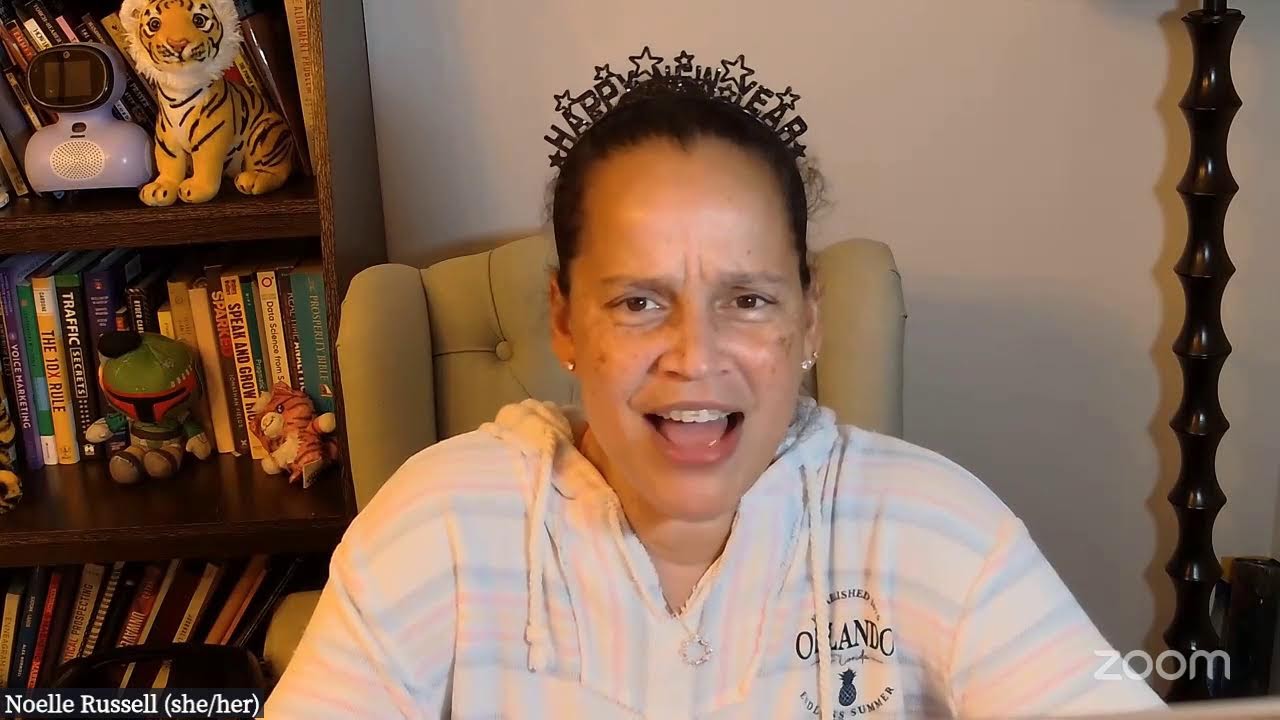
In this 2025 AI Leadership community call, Noelle Russell welcomes participants, outlines her annual planning framework, and introduces several upcoming initiatives. She explains how she uses Amazon’s "Working Backwards" method—creating a press‑release‑style PR FAQ—to set a bold year‑end vision and then reverse‑engineer quarterly, monthly, weekly, and daily actions. Noelle shares her habit‑tracking system, the "Rule of 300" (100 minutes creating content, 100 minutes commenting on others, 100 minutes outreach) and how it fuels rapid audience growth. She announces new workshops: an on‑demand Bot Builder certification, an AI Agent Engineering certification, a digital‑twin building session, and the February I Love AI Week with multiple speakers. Throughout she emphasizes consistency, leveraging generative AI for content ideation and distribution (e.g., using ChatGPT to generate audience‑specific tables, then bulk‑creating graphics in Canva), and the shift from isolated bots to agentic AI systems. The call ends with a brief Q&A, a discussion of AI‑driven marketing, and a reminder of upcoming community events and her forthcoming book, Scaling Responsible AI: From Enthusiasm to Execution.
Chapters
Hello everyone, welcome. I got the link right. Happy New Year! How's it going? It's amazing. Good to see you all. We are here. Oh, no audio. Oh, I hope you can hear me. I have to throw something in the chat so I know you can hear me. Okay, good. All right, 2025, you can only wear them so many times. I mean, fashion goes quick. Thank you, Mackie, I appreciate you, appreciate you. Good to see you, Sandrine and Joe. Oh good, everyone got the link. Welcome! Happy 2025! It is here, ready or not, here we come. It is happening. Yes, let's go! I wanted to do this for our earlier call, but our like link situation took me out of my zone. Um, hey Joe, what's up? Welcome to the future! I'm sure there's some old sci-fi movie somewhere that said 2025 was going to be the year we did something. Welcome to the AI Leadership Call for the I Love AI community. Back to the Future, was it 2025 in that movie? I can't remember. I remember it definitely. I love that movie actually. Yeah, there's only so many years where you can see through the little circles. It's actually getting a little hard with the 2. I'm like, can hardly see. But soon, if this is a 1, it's not going to work. If it was, if it's a 3, it probably hard, but We got 5 more years where these cool glasses work out. Welcome everyone. Good to see you all in the chat. Hello. Awesome. Skye's here. Hello, Sherilyn. Awesome. Kirk, what's up? Good to see you, my friend. Welcome to the future. 2025 is here. So I will, I'll start the call. I have a couple of things I want to share with you all today, and then we'll definitely open up to Q&A and chat. Um, but one of the things, uh, really is about the new year. Uh, and I have a huge practice that I do. I plan out my entire year, um, usually before the, before the 1st of January, which this year I did. I have a gigantic calendar over there. Um, it's huge, like it's called a big calendar. Um, some of you have seen it and it has all my events that I'm planning on going to.. But I do always start the year with a plan, and I figure out how can I create, right, this really cool experience this new year. I do want to make sure— I don't know exactly how this is working right now. Oh, I think I'm good. I think I'm good. Oh yeah, okay. I was just checking to make sure all of our streams were working and people could find us if they wanted to. But welcome in. 45 times— wait, oh, what? Oh, I see what you did there. That's cool. Is that like a thing, that number? 45 days? Am I missing a reference? I don't know. Um, oh, I gotta know. I gotta know. Um, yes, yes, yes. What? Oh no, Maggie, what? Um, wow, that's crazy. I did not know that about the future that we are in right now. That means we got to make it a good one. Um, so that is amazing. I of course have a litter of humans who will be able to carry on the legacy. So that'll be awesome. But welcome. A couple things, as I mentioned, I wanted to share with you. I do start my year planning, and so I want to share my planning mojo with you all. I ask myself 3 very specific questions, but I also model something that I learned at Amazon. And it's the, the leadership principle. Well, there's a bunch of leadership principles involved, everything from bias to action to invent and simplify to being frugal, which was a leadership principle when I was there, but I think it got morphed into something else now. But all of these things have come together to teach me how to plan a year and actually get not just what I plan for, but actually exceed my own expectations. So we're going to be doing a process I learned at Microsoft called Working Backwards, and oftentimes it's done to help create and ideate around a new product idea. But every single year I use this process to ideate my future. And so I'm going to help you do the same. Just to give you a little sneak peek of the fun, it is on the calendar, so you can mark your calendars. It is 12 to 1:30 PM Eastern Standard Time. It will be recorded for those of you who can't make it. And it will be a chance for us to get together. It's about an hour and a half, but really it's like an hour of me showing you what I do and half an hour for you to start doing it and also ask any questions about the process. But working backwards at Amazon is something that I use all the time now, and it starts kind of, I don't know, it's not humble at all, but it starts really fun. It's a process known as building a PR FAQ document, and the PR FAQ stands for press release and frequently asked questions. Now, what that means is that you're going to think, and I mentioned this to our earlier members on the AI Leadership Institute call earlier, that you— the biggest question you wanna answer for yourself is, at the end of 2025, when you get to the end, you're about to ring in a new year, what do you want to have said to yourself? Like, man, that was a good year. Like, what do you want to have happened? What do you want to have done? What's the one thing that if you do it in 2025, you're gonna be like, this was the best year ever? Whatever it is, we wanna write that down. And what we're gonna do in our workshop on Monday is we are going to build a press release about that moment, right? What if you are going to do this thing that's gonna make your year? We're gonna write a press release that would go out, right, to the world to say, I did this thing. And we, you can go in over the weekend, Google some press releases so you know what I'm talking about. But it's basically like an announcement. Oftentimes it's, you know, an announcement about your success. It's announcement of the achievements that you've made. It's also maybe got a quote from some celebrity or someone on your Dream 100 list, right? Right? All of these types of things are included, and that press release serves as a motivational piece. I still have mine hung up right there that shows me, here's the press release that will go live and launch the day that you, you know, the, the last day of the year. And so that becomes our kind of shining, you know, evidence of the future that we're going after. Now the press release is the first part, and it takes a little bit of time 'cause you're crafting your future. Like, what do you want to say to the world that you have done, accomplished, achieved in 2025? You're gonna decide that right now. And then we're going to work backwards from that, and we're going to create a plan just like I have done for hundreds of projects at Amazon. You work backwards from that vision and you think to yourself, What are the most common questions people are gonna be asking about that achievement? Like, how will I get there? What will it be? Uh, how does it work? Who's involved? Who are my partners? You don't even need to know these yet, but these become your FAQs, right? So the document's called a PR FAQ cuz it starts with a press release as realistic as you can make it, and then it continues into frequently asked questions about how you achieved those goals. And all those questions, when written the year before you do it, become very formulative in building a plan for your success. And so what we do from there is we take that goal, right? Whatever we're saying we're gonna achieve in 2025, and we break it down. We break it down by first quarters, then months, then weeks, then days. And every single day you do something that moves you in the direction of that PR FAQ. Every day you look at that PR FAQ and you're like, that's happening, and here's what I'm gonna do today to make it happen. It's super fun. Oh, awesome, Sherilyn. Thank you for that. So the link is in the chat. And if you want to join us, that is the link. It's free to join. It's my, my gift to you all for the new year. Anything you can PR, anything you can dream to write a press release about, you can achieve absolutely anything. It just becomes a function of effort. How hard do you want to work to get it? And consistency, how consistent you are in the daily activities that will get you there. I have proven it to myself over and over again. I have exceeded every expectation I have set for myself, but only because I was willing to be consistent every single day. So we'll be doing that together. I gave you kind of the, the, uh, Cliff Notes version just now, but we'll be doing it together. So very exciting for Monday. Um, we'll be doing that. Another fun and exciting workshop that we'll be delivering is our on-demand Bot Builder certification. So if you've never done that, in the second week of January, you will start to see the ability to just go in and take an on-demand version, which means we recorded it in studio in November. Thanks to everyone who attended that one. And we've bottled it up so that you don't have to actually sit with me, though it's pretty fun. You don't have to sit with me to actually go through the process and get your certification at the end. And for those of you who've gone through Bot Builder and have not gotten certified, the only thing you have to do, and it's, I say it only, but it, it is kind of hard. The thing you have to do in order to get certified is that you have to take what you learned in the class, the 5 Ps of prompt engineering, the AI safety system that we build in that class, and you have to record a 3 to 5 minute video, and most importantly, you have to send it to me. So it is a chance for you to get into the habit of not only learning, which you are all doing. You're here. You're all learning artificial intelligence. You're all applying these skills. But it's also about how do you get the information you are learning out into the world. And that is a huge skill you're gonna need to master, master in 2025. And I'm here to help you, you do all of that. So we will be hosting, or, or we won't. It'll be available inside the AI Leadership Institute for people to play on demand. But you can also purchase that, the online course. You can purchase it with a one-time fee if you don't want to actually get in the community and be part of our community there. Choice is yours, but it's a critical skill. That being said, we also are releasing our second level of that certification, which is the AI Agent Engineering certification. And this is where we shift from just building a single bot to building an agent, building a system that actually can communicate to other bots in order to get its work done. So we'll be doing that live. And as a matter of fact, we'll be launching that in February. So I want you to mark your calendars. February 9th through 15th is I Love AI Week. And during that week, we are gonna be doing some amazing things, but it is a very important week for us cuz number one, it's Valentine's Day week. It is the time where we are seeing hearts everywhere. And it is also the one, the only time where you can get an I Heart AI black t-shirt, coveted elite edition t-shirt for joining us in that challenge. We had over 21,000 people join us last year. I'm hoping to double that number, 10x that number this year. We'll see what happens. I'm starting to market it right now. So I think it'll be fun. We'll have 5 different speakers, one different speaker every day to teach you things. Obviously I love you know, helping you and teaching you, but we learn through diversity, through a symphony of talent. And so we'll have a bunch of different people coming and sharing their expertise with you during that week. So that'll be fun. So mark your calendars, make sure you are here. It's way better live, but of course they will also be recorded. All right, so 2025 is underway. I've given you my amazing, cool glass— glasses wearing update. I don't know how long I can keep my teeny tiny hat on. I think they're meant for cats. I don't know. I'm wearing it with pride, wearing it with pride. The other workshop we will be doing in the AI Leadership Institute this month is we will be teaching you how to build your very own digital twin. And what that is is not the digital twin in the typical sense that you might be maybe remembering, or familiar with, where you build a digital twin of a system or an ecosystem or a manufacturing floor. Instead, this is a digital twin of yourself. Things that you say, you believe, your OKRs, your PRFAQ. Like, it's a digital replication replica of the things that you will, of course, train the system to answer. The nice thing about that is it can be integrated directly into LinkedIn and set as your away message, which means every time someone hits you up in LinkedIn, your digital twin can answer and say, I'm actually Noelle's digital twin, nearly Noelle, and I'm here to answer any questions you might have. So whether you actually plan on using one or not, that's not really the point. The point is we're gonna put our fingers on a keyboard and we're gonna build something that represents how we might be able to expand who we are in the world. And I think that'll be Oh, cool. Oh, awesome. Thanks, Matt. Yes, I mean, I might have seen the earlier one, but I'm glad to see it. We definitely see you now. Yes, thank you for reposting that because everyone deserves to see it. Awesome. Welcome, welcome. So those are just some of the things you have to look forward to. Always keep an eye on the calendar. What you'll notice right now is we have just kicked off a couple of other habits. I will share with you some of the fun things I got for Christmas, one, some of which are my new— let me see if my camera will follow me. Oh, it won't. I will just bring one over. My new Eilik robots. They're so cute. Did I show you these? I think I showed you them last week, but they're very, very cute and they dance and sing and cheers and you can pet them and give them emotional support. So it's my emotional support robot. Except I'm giving it emotional support anyway. But I love them. Very, very cute. I also got a Remarkable Pro. I think it's called a Remarkable Pro. Anyway, the new one that's got backlit lighting and oh, it's so amazing. But the reason I like it is because it allows me to do something that I truly believe in that I do all year long. But it's a great reminder to kickstart January Um, is— I'm just gonna get into it really quick. Oh, I don't even have it open. Um, I did on the last call, but I had a meeting since then, so I'm in my meeting notes. But I'm going to open it up. Hopefully it'll take me, uh, directly to it. We'll see what happens here. Uh, let's see, uh, maybe we'll see. Anyway, my daily habits are in here somewhere. Um, To do, to do. If I can find them, I will show them to you. Otherwise, no bueno. Okay, so I'm gonna go to June. Oh yeah, that's right. I did this on purpose. I organized it by months. So inside of this month, I have here, right here we go. I think I found it. They all have different icons. This is my tracker, so it tracks different habits. Now, it's not really about the habits you choose to track. I'm giving you a little bit of a life hack here in the way that I get things done. So right now I have a few different habits I wanna share with you that I kickstart every year with. Um, and for the most part, my job is just to stay committed to those habits. It's not that I will be perfect. It's not that I will do everything every day perfectly. It's, they're habits that I want to, um, do. Number one, they're, they're things that I want to make as a practice that I do every day. That maybe I'm not doing already. And these are all relatively new practices. Um, but I track them on a monthly basis, meaning I track how many times I do it in a month. And then I also track them on a daily basis, shooting for a 7-day streak. Y'all know streaks, right? From Duolingo or whatever. Um, so a 7-day streak. And the benefit of this is that what I have found, what I've uncovered, is that it's a tiny little actually secretly very big impact to your confidence when you make a promise to yourself and then you keep it. And it's very subtle, right? Like you, I say that and it hardly even sounds too important, but when you actually do it, when you say, I promise that I'm gonna spend, in this case, I have a new workout, a, a quick workout regimen. I work a lot, so I don't have a lot of time to like get on a, you know, a treadmill or workout for hours a day, but I still wanna stay fit. So I've adopted this thing called the Daily 50. I won't let you read it, but it's basically 50 push-ups, 50 squats, 50 lunges, 50-second wall sit, and a 50-second plank every single day. Now, the nice thing about this is that it has compounding interest, compounding benefits, right? But the benefit, the reason I do it is because I am training in February, big month February. After our I Love AI week, I will be heading to Disney to run the Disney Princess Half Marathon for the 11th time. I don't know, somewhere in there, 10th or 11th time. Um, and I missed COVID, and that's— so I'm all messed up as far as how many years I've done it. But I did it from the beginning, and then COVID happened. Um, and so I, I have to train. I've tried it not training, but I want to train this time. Um, thank you. I know, right? I don't think it's 10 because I feel like 10 would have been like COVID timeframe or whatever. Anyway, I think I did it virtually. It was very lackluster, I'll tell you that. Um, but either way, I have— I'm now tracking, right, my Daily 50. So I've done it 3 days in a row today, yesterday, and the day before since the new year started. The other thing I'm doing though is I'm also running. So I'm taking— I'm going through my, you know, prep to run a half marathon by the end of February. So I have a routine that I'm running. I have long runs, short runs, et cetera. So I'm running every day minus my recovery days. Tomorrow's a recovery day. Yes. Um, so, but I was so proud of myself. Like I literally, I gained so much confidence knowing even just today, my third day, I was like, you got this, right? It was super exciting. So I encourage you to find things that you can just track about yourself, whether it's drinking more water, meditating more often. Writing down your goals every day, tracking your weekly, you know, your hours every day, like whatever task. And then reward yourself when you've done it for 7 days and give yourself a big reward when you do it for 30 days. 30 days is when new habits are made. Many of you know this. There's a rule of 21. But yeah. Oh my gosh, the Nike Run App. I used the Nike Run App way back in the day. I don't know when it was like Nike Plus. Do you remember that? Anyway, I don't know if it's called Nike Plus anymore, but it was way back in the day and I can't remember what I had. Was it a Fitbit? Anyway, the good old days, Sky. But yeah, so those are two fitness routines. I also have a set of supplements that I take every day and so I'm tracking that as well. And then the other thing I have, what's called the Rule of 300, and now this is it for all of you. Um, but I think it might help some of you as you learn to not just learn artificial intelligence, but apply it and then extend it. Like get the information you are learning outside of yourself and helping other people. Ideally, you'll monetize that. And my 300, my rule of 300 actually helps me to do that, but I'm gonna share with you, and every day I do the rule of 300, I check a little box. Um, there's lots of benefits to it, but I'll share it with you in a nutshell, and then I'll open it up for some Q&A. Uh, but my rule of 300 is that I spend 100 minutes in the morning crafting a piece of content that is like— either I have to go research it. It's why it takes 100 minutes. Like, it's one piece of content I'm gonna build, and I spend almost 2 hours doing it. And the— what it allows me to do is I figure out a topic, and then I go after it, right? Like, I go and like, I might have to learn it. I might have to watch a YouTube video. I might have to go into Azure, you know, the Azure portal and set up some services. Whatever it is, I will pick a topic and I will learn it enough to build a piece of content and teach it. I think one of the, uh, little thing, one of the things I've discovered is that when I create content and I've got, I did a bunch of content over the holidays. Some of you were very nice. And, and fans of it, but my engagement rose 16,000% over the holidays, which is normally not when people get more engaged with content. It's normally when people pull back. But I had a 16,000% increase. Now it doesn't mean I wasn't flatlined before, so it wasn't like, you know, a huge hockey stick, but it was a dramatic increase. And that engagement came from me applying this rule where I'd write one piece of good researched, you know, passionate content, pillar content, and I'd publish it. I don't know if you all noticed, but last, uh, right towards the end of last year when I started doing this, my posts went from getting like 50, 100, 200 likes and, and, and, you know, uh, 1,500 to 2,000 impressions. They skyrocketed to hundreds of likes and tens of thousands of impressions. And the only thing that I changed was the way I built the content. And it was spending 100 minutes building something that I actually thought would have helped me a year ago, 2 years ago, 5 years ago, telling my story of growth. And so as I shared that, people resonated with it and I ended up gaining, I don't know, 5,000 followers on YouTube. I got— I think I passed 30— I'm almost at 37,000 on LinkedIn, like not huge numbers, right? I'm not like YouTube famous or anything, but I have people that are looking for me to help them and that is awesome. And so I use this moment, right? I use this, uh, 100 minutes to create content and then I post it. This is key for people like Padmini who will watch the replay if she's not here right now. Um, this is key. Like you have to write the content, build the content, and then publish it same day. And you'll know why, because at the end you'll do it You'll, you'll understand why you need to do that. So I start my day by writing a piece of content, creating a video, writing a blog, whatever it is. For me, it's video almost always. You saw a video of me today. So if you are, if you are watching me and, and you have your notifications turned on, on the socials, um, so I publish a piece of content. Then the next 100 minutes is 100 comments. This is a very cool thing that I have uncovered. I've gotten connections with people that I never thought would respond to me. I became, I, I like commented directly on a post from Arvind, the CEO of IBM, and he ended up friending me, friending me on LinkedIn. I was like, I'll be your friend. Anyway, so comments are like a superstar rockstar, rockstar skill. I would do it, but you go and you 100 comments, you take a little piece of paper, tick, tick, tick, 100. And you're not just going and be like, hey, good post, awesome, nice emoji. No, you're going and you're reading the post and actually saying something meaningful about it. Like, oh my gosh, same thing happened to me once. Or I don't know, I don't like to say that cuz I don't wanna one-up somebody like, oh my gosh, you think that's bad? Like, don't do that. But like, let them know you read the post, you understand it, and even provide value to their audience. And this is what I try to do. So 100 of these a day, more if you can. I got 100 in me. So 100 of these comments where I look at the person's profile, I look at what they wrote, and I'm thoughtful and I'm like, oh yeah, I see what you're doing. That, that's so cool. So proud of you. How exciting, right? Those types of things. The next, the last part of the rule of 300, and Sandrine, I'll get to your question right after. So the last part of the Rule of 300, right? So the first one is write a piece of content and publish it. The second one— and spend 100 minutes doing that. The second 100 is to put 100 comments, not on the same post, like find 100 different people to just bless with your commentary. And I don't mean like, be cool, be good, be nice, be inspiring, be motivational, be encouraging. And then the last 100 is to look at your content, anything that you've published, and the more you do, the better. Anyone who has liked, commented, friended you, send them a DM and invite them to do whatever, like download your free blah blah blah, or in my case, join our free community. I use the last 100 minutes to reach out to people who already reached out to me to say, so glad you reached out to me. Here's what you can do with me next. Now, if you haven't figured out what you want people to do with you next, for example, maybe you want people to just follow you, you know, become friends with you on LinkedIn. Maybe you want people to, um, share their email address so you can put 'em on an email list and send them a Christmas card. Like, doesn't really matter what it is, but you should have a plan because social media is not just social. It's actually to create relationships with humans and ultimately for you to share the value that you are learning as an AI leader with those people. It's pretty amazing time to be in this space. Oh, that's okay, Sandrine. But I would've let you. So like every time I talk about a different section, I will just peel off one layer of my— actually the rubber band, man. Yeah, I do think that this was intended for a A cat or something. Anyway. Um, but yes, so what do you think? What do you think about the, the rule of 300? Like, it's, it's interesting. I would challenge you just like I did with the habit tracker. Do it for 7 days, 5 days, like just do it for a business week, Monday to Friday, and see what happens. Number 1, your followers will grow. If you're interested in that vanity metric. It's not really that important how many people follow you. It matters how many people connect with you. I get followers now, like, I, a dozen a day, right? But I'm more interested in, do we have something in common? That's why as soon as someone follows me, I DM them and say, how can we do more together? That's my goal. And AI, of course, helps me do this. So one of the things, um, yes, yes. Right. Oh, it's up to you. It depends on what your goals are, but I believe in human connection and I do think that this creates an opportunity for you to, and like I said, I am just so, so kind of sad and tired of watching people who have great ideas, great skill sets. Great, you know, opportunity, great value they can bring to an organization. And because they are unknown, they're unseen. And this is a great mechanism to become seen. And, and again, you don't have to be seen. I'm just giving you one potential vehicle that you can use, something that I do anyway. Yeah, it takes about 3 hours of my time every day. Yeah. Yeah, yeah, exactly. That's a great, great idea, Maggie. You could start in the community and just comment on stuff. But I mean, most of us— and again, this might not be true for this audience, maybe— but from what I see, most people are on social media anyway. Like, they're already scrolling through content. So now what I'm gonna ask you to do is be a little bit more intentional and comment on— and again, this is if you want to grow something. If— and, and I truly firmly believe if you're not growing, you're dying, right? Like, there is no stagnation. Anything that's flatlined is either about to take off or about to go down. It doesn't stay flat forever, like the Earth. Do you guys remember that? Oh, Flat Earthers, gotta love them. Um, let's see. I know, sorry Joe, am I reading your mail? I know it happens sometimes. Yes. Um, that's funny. But yeah, I, I do think also the other thing you get, I mean, these are just numbers. Could you make it the rule of 10? Sure. Do something. But at the end of the day, I think what I hope that you'll gain from that habit that I've created and started doing is that it is a little bit about content and a lot about connection. Like two-thirds of the practice is connecting with other people. Um, two-thirds of it, right? Of all of it. I mean, I'm spending 100 minutes like building my craft, perfecting what I do, but the other time is connecting with people. And that is the game. We are in the people business. Like, no matter what business you're in, you're in the people business. And I always tell people who have an opposition to becoming a seller, I'm not in sales, I don't wanna market. That's fine. Then just be in the people business. Just go and talk to people and find out what they need. And if you have the skills to help them, offer to help them. That's it. That's as easy as it is. There is no selling in that. It's just you being good, being confident enough in your abilities to tell someone else that you know what you're doing. So that's something that, um, I really am interested in helping you all with. Uh, we are launching our AI incubator later this month, which will give hands-on support to some of the companies that have applied. In allowing them to actually build a business that generates annual recurring revenue. And that's different, right? One-time revenue, not that it's easy, but it's definitely easier than recurring revenue. And valuations, when you see a company like NVIDIA get evaluated at a trillion dollars, it's based on recurring revenue. It's based on habitual purchases from frequent clients. And that is the kind of business that you can rely on. That, that's the kind of business that either you want to be working in that business or you want to own that business. I prefer to be an investor in that business so I don't have to work in it or on it. I could just give you money and you do it. But either one, right? This is how familiar— are you guys familiar with them? Are you all familiar with the Rich Dad Poor Dad series back in the day, right? Robert Kiyosaki created this whole Rich Dad Poor Dad series, and one of it is a quadrant that he created. Um, I can't remember what it was called. It was something quadrant, like the finance quadrant, or anyway, but it had 4 different categories: being an employee, being self-employed, being a business owner, and being an investor. And that your goal was to kind of traverse through that. Um, Rich Dad was the author. Oh, that's funny. Not exactly, but that's funny. Uh, yeah, I know a lot. I mean, I personally made quite a bit of money from that book. Um, but yes, it's, it's all about mindset, right? Like, whatever it takes for you to, uh, to shift your mindset into a space where you're willing to— remember how we started? Like, the whole goal of 2025, like, what do you want to achieve? What do you want to achieve? If you could name it and it would happen, what would it be? And then working backwards to get that. Well, The work is part of it, but it's also about your mindset. Do you even believe that you can have that? So I was, I think I mentioned this in the last call. I always get these calls confused as I get going, but, but I have a framework that I use called Have, Do, and Be. And I write a list. I've done this with my husband. We do it several times a year. We're gonna, we haven't done it for January yet, but we will. Um, but we ha, we just did it in October, so it feels still pretty fresh. Um, but we write a list and we write a list of all the things we wanna have. All the things we wanna do and all the things we wanna be. But the interesting thing about it is that when you write all the things you wanna have, there is a certain type of person that has those things, whatever it is, nice car, bigger house, like whatever financial things. But it might also be, I wanna have a $10 million business. Well, what does a person who owns a $10 million business, how do they spend their time? How do they spend their money? Like how do they invest in people? How do they train? You know, their teams. What you wanna do when you figure out what you wanna have in life, you then need to kind of reverse engineer and think about, well, who does— who do I need to be to have that? And then be that right now, right? So maybe a person who has a $10 million company, they have a team of 100 people and they've trained those people. Working backwards, am I ready to hire people? Am I ready to train those people? I need to build those skills or acquire those skills or partner with people with those skills. Right? Like, success leaves clues. And so I think it's really, really great opportunity for us to network not only with each other but with the world. And that's what my Rule of 300 does is it gives me an opportunity to, to network together. OK, really quick, one of the things that has come up over the last— I don't know if you all saw, but Thinkers360 created a new category, which I'm always happy about. They always surprise me because I never know. I have a bunch of badges from them, but they basically track all the things that you publish on the the internet, and then they give you awards for things that you're already doing, which I'm a huge fan of. And I don't mean to belittle it because I do, do a lot. Um, but they create leaderboards of people who have done the most work in certain areas— speaking, influencing, thought leadership— and they created a new category called, uh, agentic AI. And they listed out the first top 25 global leaders in agentic AI. And because of all the press and content we did on AI Bot Builder and on our, uh, agent workshop that we did at the end of December. Uh, we had a lot of, you know, uh, press. ABC News picked it up, right? It became syndicated story, like really cool stuff. Um, and so as a result of that, obviously they must have picked up on all of those things because I got listed in, in the top 25. And I was like, well, awesome. But what it led me to realize, and I always like finding signals across the industry, is that a lot of organizations are shifting. Just like I have a book coming out, right? My book, uh, is called Scaling Responsible AI: From Enthusiasm to Execution. And the book releases March 11th, and it's perfect timing because the world is moving from, hey, how do I build a little bot? To how do I build an AI system that's safe, responsible, and drives business value? And that's exactly why I wrote the book. And so what I think about as we move into, you know, 2025 is the importance of us shifting away from building little, little tiny things, building individualized models or GPT or asking one question to one model to solve a single problem is that we actually take a step back and look at it from a systems approach. And I know some of you are systems thinkers, so I just share this with you that the world is going to embrace that. Because agentic AI is a systems approach to artificial intelligence. It's not just how do you build a bot to answer travel questions, it's what kind of bot would support travel questions and packing, what to pack for a trip and where to eat for a trip. Those aren't all the same bot, right? Or maybe, uh, safety, maybe TSA information, right? Like I'm gonna have little agents that do all of these purpose-built things. And now I wanna create a system that connects them all together. And that connective tissue is things like Joe is building. Joe Blayley is on here. I think I saw you. Yes, exactly. Exactly. So Joe just wrote the same thing. But yeah, like building and aligning to this idea that it's more than just bots. Like, bots is a— it's 101 of AI. You have to know how to build a bot in order to grow into agent knowledge. But it's really important to immediately start thinking bigger. What happens when this single little bot becomes one of 100? And how are you going to orchestrate that? How are you going to manage it? How are you going to assess risk, security? I mean, there's just so much benefit. And one of the principles of agentic AI— ooh, I should write a book. One of the principles of agentic AI is to ensure that you— some of you who are software engineers, you are going to appreciate this cuz it's where I learned this lesson, but you only build as much complexity that it as is absolutely necessary. You don't just build a bot to build a bot. You think, can the bot I'm using, can its system prompt, can its current architecture do what we need to have done? And if it can, it should, cuz that's the simplest, lowest latency way to achieve that, to, to achieve that goal. If it can't, or if it impacts latency because of how much time it takes to do that request, then okay, now I'm gonna delegate, but I'm not gonna delegate everything. I'm just gonna delegate that one thing that I'm asking it to do to a new bot that does that thing. And now I'm going to assess, because the more distribution you have, right? Many of us know this. As you add complexity, you increase like the consequences of that complexity, which means latency, performance, security, attack surfaces, like everything grows, including your ability to do more. So yay, we can do more, but then you get that at the cost or expense. So I mentioned this to you because we're gonna have a very deep focus on agentic AI over the next 6 months or so. My book is focused on it. My, you know, like, and I wrote that book a year ago. I've been editing it for 6 months, but we started that in March of 2023. 2023, and, and it was based on a keynote I delivered in 2022. So it's really interesting how it works out, right? Sometimes where you like, you start something and all of a sudden the world catches up to your vision, and now they want to hear what I have to say, even though it's actually what I was saying 3 years ago. I just think it's so cool. Um, so this year, I, I truly believe there's a lot of opportunity, and in that opportunity is your ability to do something like Joe is doing and build build a niche product for a, a very specific market that answers a very specific problem that can sit inside of an agentic system that's built. And when you start to speak like that, like, hey, when you invest in my product, I work well with others. I am a cog in a machine. I work as, you know, you can build agents that people would buy and implement into their own agentic systems, or you can build the orchestration engine. One of the— I won't get into that, but yeah, or you could build the orchestration engine. There's so much value. Let's see here. Goodness. Oh, great. Thank you. Thank you, Matt. OK, so now is our time for some Q&A and questions. I don't see any in the chat, but if you've got a question, I'm gonna keep my headband on. I think it's not terrible, but I might take off these these terribly itchy lays. All right, any questions, comments? What do you think? Are you ready for 2025? Sandrine, it's not an accident this time, I don't think. Come on up. Okay, thank you. Good afternoon, everyone. Yeah, Noelle, I have a question. I think you mentioned earlier that you post like you have one post every day, like from Monday to Friday, right? So how did you choose your content? Is something like, um, you just decide the same day or maybe you take a time, maybe at the end of each week to create the, the, the, to create the content for all week long. So how do you process it? Yeah, this is a great question. So in the olden days before generative AI, I would come up with these ideas on my own and I would just post. I would try to post an idea every day.. But I have lots of ideas, so that's not hard. I had a— I have a whole book, a little notebook. Where did I— oh, over here. So I have like a book like this, and I just carry it around, and I would write down ideas. These are all like, you know, part 1, part 3. I came up with my masterclass apparently in this one. So each one of these, like, every time I get an idea, I would write it down, and then I would post about it. However, that was years ago when I did that. 2 years ago maybe, with the, the, the difficulty with doing that is that my ideas are specifically from my frame of reference, and I've already been indoctrinated into the world of AI. So when I posted things, I was already on the other side of the epiphany of the like, oh my gosh, this works. You know, like, I was already past where most of my audience was. My audience wasn't there yet. And so what I leverage generative AI to do is to take my ideas and help me understand my audience, where they are right now. So I have a prompt. I wonder if I can find it in my notes. I'll see if I can find it. But I have a system prompt that I use, or not a system prompt, a prompt that I use to have it create for me a table. And it includes for my demographic. So I describe in detail my demographic. And now ChatGPT, if you're a pro or a what are they called, Plus user, you can actually integrate this directly with Canva. So it's pretty magical. But you could just ask it like, for my audience, my, you know, companies between 1 million and or 100 million and 500 million a year in revenue that have a CIO but no CISO that are struggling with cybersecurity that wanna move into the world of AI to help them solve those problems for that audience. Build me a table that addresses, that identifies all of their biggest fears, all their biggest, you know, concerns, their dreams, their desired outcomes, right? And build a table with this information. Now, this is part of my chain of thought prompting. So you could probably write a prompt that does all this simultaneously. But this is the first prompt to get the model thinking in the direction of my audience and their needs, right? So I'm asking it, what are their needs? Then I say, for that table, create another column in that table. So I'm just adding a column to it. And I want you to detail out the top 20 strategic or tactical, like, strategies or tools that would help this person achieve that goal. And so it would then write out all— and I would even— you could even say, write me an Instagram post or LinkedIn post for each one of those. So it crafts these ideas for you, and now all you have to— now it's pre-done. So I do now spend a lot of time— so for example, I did this with my— I have 100 Days of Leadership, AI Leadership Institute lessons. So today's day 3, you'll see it later today. I've been posting them on LinkedIn, but I'll also put them in the community. So when I do, like, to come up with those 100, like, I came up with a bunch, but then I went to ChatGPT and was like, all right, here's what I have so far. I want to round this out and I want to make sure it focuses on this area. I want to make sure it, it is answering the question that's in the mind of my customer. Again, all this because I drive, like, the relationships I drive with social media are business relationships. I'm not looking to, like, you know, have people do yoga with me. Though you're welcome to. But they're very, it's very business focused. So I want to, always, always deliver value. And sometimes I'm not even sure what that value needs to look like, but a generative model or Claude is definitely good at brainstorming ideas on what that value is. So that's what I do. And then on Sundays typically is I plan it all out. I have a content calendar, um, that allows me to schedule out posts. I mean, as far as I want, but usually I can do it a week in advance. Okay, great. Thank you, Noelle. Yeah, you're welcome. Oh yeah, it was ChatGPT. And then when you go into— I'm going to see if I have it open right now— into ExploreGPTs. Now when you're in ExploreGPTs, see, you could just do a search for Canva and it's in the list. And there's a function inside of Canva called Bulk Create. So it'll take that table you created. You can take the outcome of that table. And we should do— we should do a little fun workshop on this, I think. But you take the table and I mean, even if you never use the content we generate, it would be fun. I don't know. Let me know in the chat if you think it would be fun to go through this step by step. If you all want to, we could go through it step by step and then we— yeah, either way. I mean, you pay for Canva separately and— oh no, I don't think so. I don't think they're overkill. I think they're complementary. I pay for both also. Yeah, it would be fun, right? Let's do it. All right, so we're gonna do a— we'll do a just a working session. Maybe we'll, we'll either do it— we won't do it on a Friday. That's all I'm gonna tell you. My Fridays are full. But maybe we'll do it like on a Wednesday or something. I'll throw out some ideas. I think it'll be fun just so you can walk through the process of building content leveraging AI. It's AI for marketing, if you will. And actually I had a gentleman send me a message and he is like, you know what, he's very specifically joined the I Love AI community because he wanted to learn about AI and marketing. All of you when you joined, well, I shouldn't say that. The last 400 people when they joined said what, why they were coming to the community. And everyone has a different reason. It's almost impossible for me to serve all of them, but I'm trying my hardest. But some people came for marketing very specifically. How do I grow my marketing presence with AI? Some people were like, I wanna build a business. Some people were like, I wanna get a job. Either way, this is one that is very specifically answering at least, at least 100 of the people that are in our community. We did pass 1,200 members, so Javier, I would love to understand more about that though. That's interesting. If you do something similar for SEO. Oh, I see. Like you ask it a similar question and then get it to give you SEO guidance. Well done. I'm going to start unmuting you. If I accidentally allow you, if I accidentally ask you to unmute, it's just an accident. I'm not asking anyone to unmute. I'm just giving you the chance to unmute if you choose to do that. Javier, you're unmuted if you want to share. Don't feel obligated. I'm just giving you the option. Oh, thank you. So yeah, actually, I started— I got certified in SEO at the beginning of last year to help some— basically some friends with improving their Google results. And I started leveraging ChatGPT. So similar to what you were doing, to what you have done about getting information from ChatGPT into Canvas. I did the same thing for presenting only 2 or 3 solutions for the people I know that need it the most and put that information into Canva basically for the specific SEO projects. That's how I leverage AI for those. And it was pretty helpful at least to get started. That helped me get a few more clients throughout the year that continue, that continue to be clients at this point. Initially they were friends, and then basically now they're my clients too. Awesome. Those are the hardest ones to convert, so good for you. Congratulations. But yeah, I love it. I mean, that's why I say, like, whatever we could do to decrease the friction that it typically takes us to acquire a client, I feel like this type of integration is certainly part of that. And it's very agentic, right, where ChatGPT is the main agent, but now it's gonna be facilitating communication to Canva for us to mass produce content, to create— I mean, you name it. Like, I was just talking to— oh yeah, and I wrote, of course, I'm gonna show you all what I did. It's very AI-friendly. If you have a question— oh, there's a question in the Q&A. Let me answer that first. What companies that already have a strategy in agentic AI? Oh, oh, that's you, Javier. So I mean, Anthropic is probably my favorite. They're the most responsible model according to the Stanford Model Evaluation Tool, Helm. So I'm a big fan of Anthropic's models in general, but they also have a really solid approach to agentic AI. They've also been very open about disclosing their approach. So they wrote an article, I don't know, maybe less than a month ago, like in December, that details exactly like what agents are to them, how to use them, how to integrate them. It's really great. I'll post it in the chat or I'll post it in the community in case, unless anyone has it handy. So Anthropic is probably one of my favorites, but at the same time, the company that has monetized agents to the highest degree, anyone care to guess? Guess who that is? They called it, uh, Copilot. So they started talking about Copilots as agents as early as 2022, right? They were already like GitHub Copilot. I was on the beta test, uh, of the GitHub Copilot model during COVID So they were already really far ahead of thinking this isn't gonna just be a single model people use. It's gonna be a collection of models and it's gonna need an orchestration engine. Yes, exactly. Yeah, exactly. Yes, exactly. Oh my gosh. And, you know, I always look at from a— so Joe was saying Microsoft in 2025 is gonna be the year of Copilot agents. And we just did a workshop. So we are now offering in the AI Leadership Institute corporate workshops. We, we've been offering them for 10 years. But We added to it the workshop we just did together in our live learning lab in the AI Leadership Institute, which was all around creating an agent inside of Copilot Studio. But they're— here's some— a fun fact I will share with you. Microsoft has been trying to democratize AI for a long time, like years before ChatGPT. I mean, a decade before. I got involved when they started to productize AI in the form of cognitive services, which today are some of the largest models in the world serving not just generative models, but more traditional AI like computer vision and decisioning and knowledge bases and things like that. So that being said, they were, they're trying to get people, meaning non-data scientists to leverage AI in their systems, engineers for the most part, right? They have, something like 23,000, 23 million engineers, developers know .NET, C#, like they've got a whole little part of the world that understands their way of coding and their philosophy. And they're like, what if we could get all those engineers to start using AI models? So they started productizing these models by creating APIs for all of these, you know, computer vision models, chat models, language services, you name it. I mean, there were 17 at least that I worked on. I think there were probably 30+ total. And what I, you know, a little inside baseball is when we were building those models and making them available, it was very hard to get people to use them. I don't, I don't completely understand why. I feel like engineers were like, yeah, we're good. Like, we could just do it manually, I have a decision tree for that. The amount of times people told me, oh, I, we have business logic that handles that as opposed to leveraging an AI system that handles it. So this was a bit of a gift that the OpenAI ChatGPT evolution provided to companies like Microsoft because it allowed them to do this. But now in the world of co— so what they did back then though is they standardized components, AI machine learning model components. One of the most popular non-gen AI use cases is a recommendations engine. I hope some of you know what that means, but all right, like a Netflix engine, right? That says, oh, you watch these kind of movies, so therefore I can predictively recommend this kind of a movie except for anyone. So you could go download the code for free. Well, if you're on Microsoft, download the code for the amount of services you're gonna consume on Microsoft. You get access to this for free. And it gave you a recommendation engine you could implement in your company. And there was an AI gallery full of these buckets of code that would do this work. It still exists today, but it was very hard. They needed to do a lot of work to get a company to be like, I'll use this. In, as opposed to today, like it's much easier to sell today, but back then it was hard. So it's really cool. So now we imagine again, 5 years ago they had the AI gallery full of little GitHub repositories that are complete AI models. Oh, that's me. That are complete AI models. And now they have— fast forward to the world of Copilot. They're now creating mini Copilots, which are exactly the same thing. They're compartmentalized, modularized pieces of code agents that do a specific function— customer service, IT, Help Desk, like a bunch of different things. And so it's not like this is their first rodeo of trying to productize these things. I'm going to try and zoom back in. We'll see if I can do it. I just got this thing, so I don't entirely understand it. It has to turn green anyway. Don't laugh at me, everybody. Oh well. All right. I'm going to try it again in a second. It's telling me I might have done something funny with my hands that triggered some kind of setting because it's using computer vision, which I actually think is really fun. Maybe, maybe that— oh, it's— oh, there we go. Oh no. Okay, hold on. If anyone's watching me on a livestream, they're gonna think I'm a goof. I love this. Keep going. So fun. Yeah, go ahead. Oh, I thought somebody was commenting. That was me, Andrea. I said I love this, keep doing it. I know, like, just— yeah, like, keeping it real over here. Um, anyway, uh, yeah, so I would say if you're gonna follow a company, Microsoft is a great company to follow because they are not new to this game of productizing compartmentalized AI systems. They're just naming it something different and hoping this name will stick. I will tell you though that back then we were pretty confident that the name we picked back then would stick, bots. Do you remember chatbots? Like, it was pretty popular for a minute, and we're literally in that same minute right now with agents, and it could just as easily not stick, just like Google Lens, just like any really cool tech that never hit adoption strength. Um, but that's why I built this community. It's why I do what I do, is like, the more people we can get using it and adopting it, it'll make good technology accessible to more people, and everyone wins in that scenario. If good technology dies because people wouldn't use it, it's just, it's unfortunate. I, I, I get very, very sad about that because it means good tech will sit on a shelf and people like my son who has Down syndrome who could benefit from a large language model helping him orchestrate his day, he'll never get to do that if we don't as a society embrace the technology. And so that's why a lot of people don't value evangelists or dev advocates or people that like, like, you know, go out there and say good things. Oh, almost got it. Oh, I did it. Oh my gosh, sorry, having a good time over here, everyone. Yeah, so I've got to be careful playing with, like, talking with my hands. But yeah, hopefully that little side quest was useful and helpful to you all. Oh my gosh, Atlassian. Yes, agreed, Javier. That, that's a whole mess, that whole Atlassian Bitbucket Ah, but they have Trello and I love Trello. So now I'm all— anyway, yeah, it's just too, too bad. But there is, yeah, so this is why I think any one of us, especially because you're in a community like this, it be— it now becomes possible for you to go after a role you never probably thought of before. Developer advocacy means that you're going to go and help developers learn new tricks. And it is one of the most fun roles I've ever had. I don't know that I was ever called a developer advocate 'cause that role didn't exist in its form back then, but it was a solution architect. It was someone who could see the vision of what technology would do and then convince people to come along and say yes and adopt new habits. I'm very much a coach, very much, you know, a, a thought leader, like all the things. It was a combination of all my favorite things. It was, you know, evangelizing, talking, bringing the great news of what great technology could do, combined with coaching and supporting and servicing people, helping them along, combined with being a thought leader and getting to say things that I think and sometimes get fired for it. Totally fine. Okay, maybe not the last part. Um, but I do think it's, it's a really interesting opportunity moving forward is that people are going to need humans that can help other humans adopt to the new technology. It's gonna be a lot about, a little bit about tech, but it'll be much more about adoption. And that's why we're starting to see this kind of shift from what we call the hype cycle. We are already in like that trough of disillusionment, but as we come out, we're gonna be looking for like stability in usage. And as we come out of the trough of disillusionment, which ChatGPT has actually kind of skipped a couple rungs in that, Um, I think it's really important that we start looking at how does this stabilize? So going from playground to production, going from enthusiasm to execution, right? Like, how do we go from the hype to operationalizing this and seeing true business value? And that's a magic spot. Not a lot of people like being there because it requires you to understand the tech and be willing to talk about it to people that don't understand it. And I love it, but not everybody does. Awesome. Any other questions? I answered this live comment. You're welcome to throw in the chat or in the Q&A. Otherwise, oh my gosh, I guess we're done with time. I will share with you, so keep an eye on the calendar. I will also be emailing you every 3 days. I send you an email, give or take, except during the holidays. I tried to really not engage with my work as much as I typically do. Um, and I did good job. We are hosting in my house currently a Marvel movie marathon where we started at the very beginning and are going in sequential order, not movie release order but sequential story order. Um, and anyway, my favorite movie is Doctor Strange, and we are at that moment now where Doctor Strange enters the picture. Um, so I'm very excited. Uh, my kids decided they could have watched it because they're off today. They could have watched it while I was working all day, and they waited for me. So we'll be watching it later today. Um, awesome. Thank you. Yeah, hopefully you liked it. Thanks, Sybil, for coming. Uh, next week, hopefully you'll join us. We'll have lots more. We're still in that early, you know, we're at the last kind of holiday week here. So, um, we'll see if I have a new camera by next week too. I don't know. I think it's kind of fun. But yeah, have an amazing, amazing weekend. Go out there, change the world. That's what we're here for. Most importantly, connect with other humans like we're doing right now. And I'll see you next week. Thanks for being here. Talk to you later. Bye, everybody.
More from Noelle

Take the Unlocking AI Challenge and Get the Keys to Unlocking Time and Revenue for Your Business



Don't Get Left Behind: The AI Executive Challenge #ai #business #fearofmissingout





