I ❤️ AI - AI Leadership Happy Hour
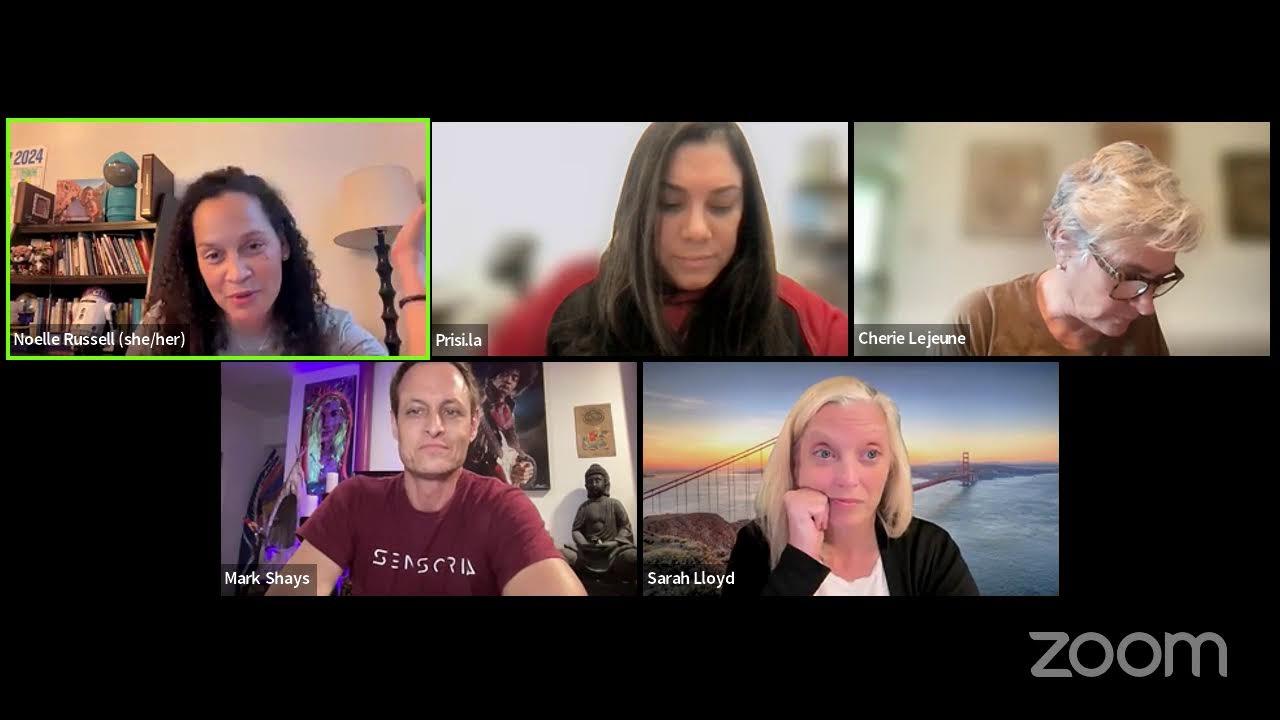
In this live‑streamed community meetup, host Noelle Russell and a rotating panel of AI enthusiasts—including Sherri, Priscilla, Mark Shea, Brittany, Matt, and others—discuss the rapid evolution of AI tools, the shift from talkers to doers, and how AI is reshaping entrepreneurship, creative work, and industry practices. Key points include: the emergence of AI‑powered solo entrepreneurs who could build billion‑dollar businesses; the concept of agentic AI platforms that generate custom, task‑specific models (e.g., Justice GPT, Jazz) and the importance of clear communication in prompting AI; community‑driven innovation through use‑case challenges such as dementia‑focused food description tools built with DALL·E; evolving attitudes toward copyright and data ownership among younger creators; practical AI applications in healthcare and public health; the explosion of model availability on Hugging Face (from ~70k to over 1.3 million models) highlighting a gap between discussion and implementation; and the role of human empathy, energy modulation, and audience awareness when pitching AI solutions. The conversation also covers logistical aspects of the community (size, growth, moderation, rewards) and personal anecdotes that illustrate the blend of optimism and caution surrounding AI’s future.
Chapters
is happening. Hello everyone, good to see you all. All right, fascinating. Uh-oh, my echo. Hello, y'all hear that? All right, I shut— oh, I shut off the thing. Is it still working? Oh, boy. It must be. It must be. Let's see if it says we're live streaming. Yep, we're live streaming. Hi, everybody. Welcome to the amazing AI Leadership Happy Hour. It's all about I love AI and all the people that love AI. Good to see Michelle, Sandrine, Priscilla. Thanks for being here. All right, so I don't know if you saw. We're 3 minutes in. We'll let people keep joining. It is possible to be here live and ask questions and hang out if you would like. I'm gonna have to get rid of Anna's note-taker here, because I don't see Annette in here. Is Annette in here? Michelle, is that you? It's all like secret.
Hey, I'm here. Hey, I love your shirt. I am loving that.
It's a nice color.
I see.
I might have a store for you, Michelle. I can say you could get one.
You're like, you too can have you.
Yes, yes. But wait, there's more. Um, all right, I think I'm just gonna get rid of it. Is in that anyone's like spouse or something? All right, all right. Um, I feel bad for you. I'm gonna give you like 30 seconds. I mean, there are two, so I'm just getting rid of one of them. For now. All right. No, I don't want to report you. I presume they're going to be here shortly.
All right.
If we don't get to see you, Matthew, what's up, Matt?
Hey, what's going on?
All good in your world?
Uh, exhausted. It's, it's been a heck of a week, but it's been highly productive. So we are moving forward. How about you?
Great. We did our 2025 planning this week. So it was really cool. Yeah, set some aggressive targets. And I had a really— oh, I forgot to tell my other community, the other call. But I had a really great meeting with a very big client. But one of the things I learned doing our 2025 planning is that, you know, when you build a business, obviously you don't want it to be like thin and wide. You don't want to have like a gazillion little clients like that you then have to manage. Like there's kind of a happy medium, but you also don't want to be narrow and deep and have like 35% of your revenue coming from a single source, because obviously if they go away, it can be catastrophic to your, your organization. Um, so, so we're like balancing because we are about to get a client that could easily be 35% of our revenue. Um, but that just means I need to get like 4 more, so it balances it out and they're not the only, only person in the house. Good to see you. All right, awesome. Um, okay, so welcome aboard everybody.
We—
so this Today, earlier around, I don't know, 8:15 this morning, I got on and did a live broadcast of just some updates. So I'm gonna recap some of those updates and then also talk about some of the things that are happening in the AI Leadership Institute as well as in the I Love AI community. And then we'll open it up and see if we have any questions, and I'll share with you some of the cool things that I did. One of them, maybe I'll start with, is like the opposite of AI. I went and got myself— I think they're fancy, but I bought myself fancy stationery. Isn't it nice? You know, so I could write handwritten notes to my friends. Because sometimes I always say, one of my goals, one of the philosophies of our organization is to scale the unscalable.. And I feel like handwritten notes are kind of part of that philosophy. So I'm excited. They just came in. I went to Etsy and sponsored some small business to handcraft and paint my stationery. It's a really good investment. I'm excited. Yeah. So write handwritten notes. People are always— I always get— I mean, sometimes people will keep them, and I'll come and see them, and they'll be like, look, I still have your note you wrote me. It's really cool. Awesome. So Just as an update, some of the things that have happened around the world that's interesting and maybe thought-provoking, and we can talk about it. Uh, one is the leadership changes that are happening all across, uh, the industry. Most specifically, I think yesterday, uh, the co-founder of Sora, the video engine, uh, at OpenAI has left or is leaving and headed to Google. Um, as well as of course Mira Murati, who was the CTO of OpenAI, has gone on to greener pastures. So, uh, I'm starting to see a little narrative develop in, in the press around, you know, if, if OpenAI is doing so well, why are really good people leaving? Um, and I personally haven't been in this space for a really long time, actually. I feel like I, I have a, a different perspective, I guess, than, than most, in that these kind of changes happen all the time. It's a little rare, I think, that we're now in a, a world where it's like a soap opera and we're watching super closely about these departures. But in, you know, at Amazon, at Microsoft, Amazon Alexa. Like, we just had, like, a lot of times we would have some rockstar data scientist and they'd be like, yeah, I got a better offer across the pond. And you're like, okay, bye. And then not too many years later, I would then be at Microsoft. So, um, I feel like sometimes these companies share talent quite a bit because there's not a lot of them. Uh, and of course, as a person, if you have a lot of talent and someone's willing to pay you, a lot, like generational wealth building kind of a lot. You know, you can't fault people for thinking about doing things in a different way. And then you can pontificate or speculate a little bit about kind of the responsible AI paradigm that's shifting at OpenAI. Obviously, the name of the company indicates that they intended to be open. They intended to be kind of research-driven. And as capitalism has taken over the organization, they're now driving a little bit towards, you know, valuation. I don't know if you saw, but they've now released valuation of— what was it, $175 billion or something ridiculous? So they're— the fact that they're doing a lot more announcements around their valuation, around Sam Altman and Greg Brockman's kind of position of commercializing the work that's being done there. Obviously, I would imagine that people who started with the context of you know, we're gonna build an AI system that serves everyone, that's now in a, we're gonna serve, build an AI system that serves people who pay us $20 a month. Like, maybe you won't wanna be there. But oftentimes the people that create a company from like zero to, let's say, $10 million or $100 million in revenue, and obviously OpenAI has grown, grown so fast, it's way past that. But in those early years, the people that build that are not often the people that stay to grow it to its next level because the entity itself has to evolve. And I think that's a little bit of what I see playing out over there. Some other exciting stuff though. Copilot, I think— who was it? Was it you, Priscilla? Someone had announced or sent out the Phase 2 updates. I mean, I know I also did, but someone else did as well. So Copilot Phase 2 just came out. It's pretty interesting stuff. The things that I'm using right now every day is the ability to do contextual screen reading. So, you know, being on a website, I used to have to jump through quite a few hoops to get my device to read what was on the screen. It was still worth it to me because a lot of the screens I read are like academic papers and it was a long lot of information. But the fact that now I could just ask it to read whatever page I'm on is pretty cool. Google Lens came out with an advancement of their technology, right? So I think what I'm noticing, at least this week in AI, is that we're seeing a lot of features being added to existing products as, as opposed to like brand new Sora-level announcements where an entire new generation of technology, uh, I didn't get any real big notifications like that, but, but Copilot Phase 2 is pretty significant. Obviously we saw the fanfare around Google, uh, or NotebookLM. If you haven't tried it, It's, I mean, it's one of those really interesting technologies. I was just talking to a bank today, as a matter of fact, and they had used it to ingest their analyst, analyst and investor report, and they generated that podcast that we demoed earlier. And so when we generated that podcast, it gave us the ability to kind of see how that's going. Oh, yeah, yeah, yeah. Exactly. ChatGPT, I mentioned you earlier on my podcast, I think. Oh, yeah, you were there this morning. I was like, I mentioned it. Yeah, 100%. Like, the Canvas, really cool stuff. So all of these things are less product announcements and more feature announcements, but some of these features are extremely compelling. I think my favorite, of course, I like talk— I can— or tech I can talk to. So my favorite announcement feature release was the ability for me to go in and now use a much higher quality version of the conversational app inside of OpenAI. Spruce has been my voice for a while, but now it's really, really good at understanding when I'm talking versus when it's talking. So I really, really like it. Hello, Talisha.
What?
First Friday. Is it first Friday?
What?
We gotta do a thing, Talisha.
First Friday. Exactly.
And you know, We have a day coming up. There's a holiday in here. Yes, I do. What holiday is that?
Remember?
Okay, I'm gonna let you remember because we talked about it. It was one of your AI trivias, and it's— oh, I'm like, wait, wait, wait. You said you wanted to do something for it, so I do want to do something for it. Um, yeah, and we will actually.
We will.
I think we— I think we should do like— anyway, I have ideas. I'm not gonna steal my own, like, steal my own thunder. But I do have some ideas that I thought of that day, or yesterday, was it? I think it was yesterday, maybe the day before.
Yeah.
But yeah, yeah, yeah, cool. But I also like the First Friday idea. We had that. We would do team meetings, like, you know, meeting with everybody in the company. We would do First Fridays would be team meetings. So I like the idea. That's cool. Interesting. All these really amazing things that we could build on. So that is Yeah. So welcome. Thanks for coming, Talisha, by the way. And I think it's really, really interesting just watching kind of the world of these features release. I do think it's important now. I always— now, as a matter of fact, as of today, I'm like, there's zero excuse you don't just start talking to your tech, like using your voice. I think that I remember in the early days of Alexa, people struggled to talk to the device like they— it was not a natural thing. Now maybe it's a little bit more natural. But as, as it's been 10 years since then, since most of us started that conversation, and now we're doing it on our phone, or we're doing it more contextually, I think it'd be really cool. I think it would be really cool to look at. So I use it now. Like I said, I use the Spruce voice. You got— you all can kind of make your own decisions about what voice you like. I'd love to know. But Spruce sounds very multicultural to me. So that's why I like it. I always like to give you guys a little heads up on some of the things I'm reading. If you are reading anything interesting, I would love to hear it. So kind of think about that. I have a brand new book. It's called Create Innovation. I don't even— let's see. It's a Wiley book, but it's a consortium of people. So I encourage you to take a look at it. It's much better physical copy. I don't even know if they have it in virtual. But the reason I like it is because it provides, especially if you're a consultant or an advisor or a solution architect, It has all sorts of really interesting ways of thinking about, like, what you would do in a workshop or what you do in a strategy session. It's basically business models, innovative design thinking sessions, you know, a lot of things that I have in my head. But oftentimes I, I think I've told you all this before, like, I, I sometimes get bored because I teach the same thing over and over. And while it's new to my audience, I want to still be excited about it. So when I found this book, I loved it because it had 50 new tools that I could use that would get me the same outcome, but done in a slightly different way through the brilliant minds of Stefan Diefenbacher, Caroline Hitt— oh gosh, Hittenländer, Suzanne Zanellini, Douglas Lines, and Andreas Rhein. So if you want to, I will put the post out there, but it's pretty, pretty Pretty cool. Annette is here. I left one of your bots running. Two of your bots showed up, and I didn't know if you'd make it, so I turned one off. That's fine.
Okay.
But you still should have one. I felt because I was like, what if you do come? And then I will have killed your bot. So, so I left one running, and Priscilla had said that sometimes Otter duplicates them by accident. So that's what I thought maybe happened. Awesome. Alright, cool. Oh, another book reference. You wanna talk about it a little bit, Matt? Are you busy?
No, I'm here. Sorry about that. Yeah, no, so I just finished up a book called Data Independence: Reclaiming Privacy in an Era of Evolving Tech. It's in the chat. The author's name is Dr. Wes Charr. He does the speaking circuit as well. Actually ran into him last year at Code Forward, same place I ran into you, Noelle Russell Russell, first time. Here in DC, and then it just came out at the end of September. It goes to really good stuff. It talks about, you know, how data protections need to evolve, you know, in the era of artificial intelligence, you know, responsible AI, all the buzzwords. But it really goes into some practical solutions that I would recommend, and, you know, it's really thought-provoking, and it's nice to see, you know, someone who's not only has the academic credentials but has a little bit of been there, done that in the industry of like, hey, these are some good ideas, but let's talk about what's practical, you know, which is always, I think, difficult to build, to bridge that gap between academia and real-world application. And can I do a bit of a self-plug? Yeah, awesome.
So, I mean, it depends, like, you know, don't be ridiculous, but yes.
No, no, no. So I was just like, if you wouldn't mind, like, you know, I mean, I am in the middle of— I'm about, say, a 40%— no, about 50% solution on my own article. For, yeah, yeah, for artificial implementation for organizational change management. So yeah, no, once I get that complete and I get it blessed off by some editor, I'll throw it in the chat or throw it in the community.
Absolutely, we'd love to support you. You know, like when you say things like that, I'm thinking you're gonna like sell something for $9.99. Like that's what it sounds like.
Oh God, no, no, no, no, no, no, no, no.
I'm like, wait, what are you talking about? So 100%, we would, yes, 100% support you. I've also done for many people in our community, I've done phone calls. I think a lot of us are willing to, like, you know, from our unique experience. Priscilla has also done this where if you need, you know, as you decide to write more and more of these things, if you want some—
Yeah, proofread, cut it up.
Yeah.
So feel free to reach out to people. Yeah, it's really, that's what we're here for. And we'd love to, like, see what you're doing and of course support the publishing, but also, you know, read it, give you feedback. That is what we're all about.
Sweet. Very cool. Thank you.
Yeah, of course. That's awesome. I love it. I was just saying on our, um, AI leadership call that, like, it's so important that we get out there. Like, we really, like, known right now, known beats best, and the best are not well known. And so how do we, like, flip that switch? Because there's so many of us with really great ideas, really great experience, and we're getting, you know, kind of, like, overshadowed by people who are relatively new to the game that don't have a lot of experience.
Um, yeah, they're very loud.
Yeah, and they're just loud. And so I'm like, you know what, it's time to raise our voices a little bit.
Agreed. Well, hopefully— and then I'm going to keep lit on now— but hopefully in a few weeks I will have some absolutely awesome news, um, with some more stuff coming out. So, um, I'm trying, I'm trying.
All right, well, we'll keep our fingers crossed for you there.
Yeah, please. Yeah, fingers and toes, all 6 of them. I would really appreciate it.
Absolutely.
Priscilla, sorry I missed your hand before I went right to Matt. What was— do you have a book or what do you got going on?
I do. Okay, so fun fact about me is that when I first met Noelle back in the day in 2016— oh, I'm sorry, this is like my eyebrows are looking funny on here.
I try not even to look at myself.
It's so funny. I don't know what's going on here, guys, but something's going on. But anyways, I would visit other universities like Stanford and Carnegie Mellon and participate in AI and machine learning projects and events. So one of the schools is Michigan State. It's hard for me to say Michigan State because, you know, U of M, but Michigan State. There is, he's amazing. His name is Sebastian Raschka. Okay. And he has this book. Can you see this book? I don't know why.
Large language models. I'll find him.
Yes. Build a large language model. So this is really cool because it teaches you how to code an LLM architecture and develop these LLMs that are like—
You got an early one, huh?
Yeah.
Oh, I did.
I started, I started, I've, I've been following Sebastian since, again, 2016. So I think it's, it, he's just one of the people that you really need to follow. And especially if you're a coder, AI engineer, he's someone to, to, you know, great for resources.
Amazing. Because, yeah, I went, I'm like, wait a second, it's not available. Like, get us copies.
I want—
I mean, it's going to be like 2 weeks, but like, use your mojo, get us some early access.
Oh my God, I totally could reach out to him. I mean, I don't know him like that, but, but I was able to see him and he honestly was one of the main reasons why I would go to the Michigan State Data Science Club, because I looked forward to hear his questions all the time. Yeah, like, or even like what he shared. To the rest of the club. And, and I'm telling you, the data science team at Michigan State is packed. Like, it—
you—
people were standing up. There was no room to sit down or anything. But again, just to hear what he had to share. So let me lower my hand too.
Oh, awesome.
Thank you.
Really cool. What's up, Mark? Good to see you. Thank you for joining us.
Thank you for having me.
Absolutely. Do you want to say hi? Introduce yourself.
I watched your, uh, your, your thing this morning. That was great.
Oh, good.
Thank you.
Yeah, that was like so extemporaneous, but love it, love it.
There's so many things going on and so many advances that you got to the end and then you're like, oh yeah, and then they—
oh, yeah, yeah.
You know, like, it's like, uh, there's just too many things, right?
100%. Like, I literally, I try to like keep it and then I'm like, oh my gosh, I was only going to do a 10-minute update. It's been 30 minutes.
I love it.
Yeah, it's pretty fun. So tell everyone a little bit about you and who you are and what you do, and so we can understand, you know, know more about you.
Sure. Yeah, yeah. I'm, uh, I, I've had many, many, uh, different careers over the years, but I came from the world of, of, uh, live event production and immersive experiences. I helped actually create the X Games, if you guys ever watch any of the skateboarding.
Heck yeah, dude, that is awesome.
So I built what became the Pro Tour for skateboarding and BMX and freestyle moto. If you go back and listen to any of those old shows, you'll hear my voice because I was actually one of the hosts because nobody else— I helped create the rules. So like nobody else.
So freaking legit.
Yeah, yeah, that's awesome.
Super funny. And then I've started 4 different nonprofits. I've been a bit of a futurist and, and always a sort of a tech optimist. If any of you came out to South by Southwest in 2021, and you went to the big 360 domes that were out there for Fluff World, I produced that event with the company. So we do a lot of cool stuff. But right now I'm super excited because we're working— I'm working with— it just so happens my best friend happens to have built and is about to release like a tip of the spear multi-agent, multi-platform, um, autonomous multi-agent platform that's just mind-blowing. I mean, it's, it's sort of taking what's being built and it's the next level. Like, they've been building using finite state machines and like this whole thing that O1 is doing for the last 3 years, and right, so they're like, oh, we're on track, like we've been doing the right stuff. But basically you'll be able to And this is gonna be, we're gonna be releasing it with some, some initial partners in, in 60 days. But it already works. I've, I've had early access and you'll basically be able to, the machine, you know, that the agents can actually create agents. They can actually create agents that are smarter than themselves, which just happened the other day, which is really cool.
Yeah.
The agents can create your agents for you, super sophisticated, and then they can just create a massive task list, assign it to each other, and do 90% of the work with just very little human interaction. And every platform that you're seeing out there, the ones that you talk about, Noelle, they all, they all just become tools, and they can act any tools they want.
Multitask orchestration. I've been talking about this dream for like 7 years.
Like, well, it's coming, it's coming. This is called AI Mystic. It's really neat.
Awesome. Are they taking like pre-beta people? Is there a list?
You know what I'll do? I'll actually share in the chat, if it's okay, I'll just share a link to a podcast that Eric was on. The first podcast he's been on. But he goes into his origin story. He gives an actual hands-on demo. The guys who are on it were like blown away. And they were so funny because they were very complimentary of Eric. He's literally the smartest man I know. He's like a real genius.
Of course. Yeah, I love it.
And they introduced— they said— he goes— and the guy who hosts it is really— he's a big AI smart guy who's owned— had this podcast since 2018. And he said, he said, yeah, his partner said, I hear you're really smart. And, uh, he said, yeah, I'm like GPT and he's like AGI.
That's pretty cool. I love that. Um, awesome.
Yeah, so if you would mind, I'll drop the link in here so you guys can check it out. It's a pretty entertaining podcast.
So amazing, amazing. Awesome.
Cool.
Well, nice to meet you. We're glad you're here.
I'm here.
Yeah, really fun. And let me see who else is in the house that hasn't been here in a while. Laverne, good to see you. You are on your phone, I think, so don't worry, you don't have to come on camera or nothing. And good to see you. Of course, Sandrine and Sherry made it over too. Yes, and I always get like a bunch of mess. It's Friday, 4:00. It's my favorite way to spend my 4:00. So I sorry, like, you know, I'm always like, I do things that kind of work out for me. And if you all can come and hang out with the party, I am very grateful for it. Awesome. I see it. That is amazing. I'm definitely gonna be listening to that this weekend. So we've given you a few books to get going this weekend. I do always like to use our time together also to share with you some of the opportunities that are coming up, not just in my world, but also kind of more broadly. If you are familiar with, like, I like to make sure we are all as close as we can be to different tools and technologies. That's why I was kind of like, oh, is there like a signup? A lot of people ask me how I, like, distinguish the signal-to-noise ratio. And I honestly don't really. I mean, I guess I do because if it's awesome and engaging, I keep using it. And if it's not, I let it go away. And many of the things are like flash in the pan, like NotebookLM. Like, it was very cool the second I looked at it. And now I'm kinda like, eh, you know, it's, it's not unlike other things that I've used in the past. Same with, you know, URL to video from HeyGen and ElevenLabs. Like, very cool when I first figured it out and they haven't updated it in like 6 months. So it's now lost my attention. But if you find a tool or if you're using a tool, like, this is definitely a cool place to, to send it. You can publish it. There is an AI tools section in our chat. I think a lot of people are really excited. One of these days, so I think over the summer I was doing a couple posts around what's your favorite tool? And there were some of the best posts we did because everyone would throw in a tool that they were using. So you got a lot of visibility to things that were outside your typical area of interest. And so I think that is really fun. So maybe I'll do that next week. Just to give you all a sense of what's happening in my world next week, I am in 3 states back to back. So I start off in Denver at MGMA where I'm going to be talking to some medical people. I don't exactly remember what— it'll be medically inclined. And then Grace Hopper, which is one of the biggest events for women and non-binary people. So it's really cool event that I get to be a part of. I'm one of the featured speakers there. That— I think there's 30,000 people there and we're on the main stage. So I'm really excited. I always try to push the edge of how big of an audience I can talk to without losing my mind. And then Thursday I am in Salt Lake City talking to the Center for Responsible Nutrition. So I mentioned this morning, like, if you walk down and you look at all the vitamin providers, it's literally where they go to hang out and Every year, once a year, they get together and talk about how do we make sure that we respond. Like, they're the ones who helped create regulation that says, like, you can't just build a bottle, put stuff in it and stick it on the shelf and call it a vitamin, that you actually have to prove some— like FDA regulations around nutrients and supplements. I'm very bullish on the supplement industry because of the work that's happening in a lot of the AI labs around the world. Around doing kind of genetically influenced supplements. So microdosing based on your genetic information and using these like super tiny doses of stuff as opposed to all of it. I mean, it's ridiculous to think everyone takes the same amount of vitamin C when they pop a pill of vitamin C. Like, we don't know if that's good or bad. Does your body react? Does it not? And the best analogy someone gave me, which is what I'll be using in my talk, is around, you know, there are some people that live to be over 100 years old that smoke every day of their life and drink whiskey, you know, like, and then there's some people who, you know, are around smoke and get lung cancer at the age of 35, like, and they're not even smokers. They're getting secondhand smoke. Like, everyone's unique body composition. I mean, it's just unique for everyone. And so the more we know about that, the more we can be educated in what we put into our bodies. And AI is a huge vehicle for that, not only for helping with the testing that we could do, but more importantly, with the dissemination of information about what happens in those tests. So I have this huge test I just took. It's got like 400 pages of information. I'm pretty smart, I feel like, and I, I struggled to get through it and I was like, there really should be an AI for this. There really should be a way for me to be like, just lay it to me straight, tell me what I need to know. And that— so I'm working with companies to help create AI systems that will explain the technology and the, the supplements that they're building. So that's what Thursday is all about. And then Saturday, my husband and I get on a plane and head to Sydney for South by Southwest, and we'll be there all week, which will be very fun. So one of the, the things that I wanted to— oh, and then as soon as we get back, we're launching, which is what I wanted to share with you all. We got— I think we just passed our 20th AI Bot Builder certified person. So we just launched. I think 8 people got that certification this week from the boot camp we ran in September. October 22nd and 23rd, we're running another one. It's in the classroom. You can register. You can either become part of the AI Leadership Institute and take it with us. There's a couple other workshops that we do. So the AI Leadership Institute is where you can go and you get access to all of our workshops and certifications, or you can buy them one-off, which is basically they're like $100 a time. And I always tell people that $100 is not for me. It's for you. Because if you pay $100, maybe you'll come. And more importantly, Maybe you'll finish it. It's only 4 hours. We build a, a responsible AI system end to end in less than 4 hours. It's mostly prompt engineering, super user training, but we put it, put it in the context of building apps and it's been really fun so far. So that is coming out at the end of September. I realize now that I have missed your hand, Matt. You should just chime in.
Well, I don't wanna interrupt. I mean, I know, because, because my topic is completely off of what you're talking about, but yeah.
Oh, that's all right. I feel like I've come to the end of like the updates for Noelle for the at least through October 23rd.
All right, well, okay, so, so two things. Yes, so before, before I jet, um, so yeah, next week, so I'm, um, I'm gonna be at Johns Hopkins, um, and they're doing, uh, Making AI a Lifesaver for AI in Healthcare. Um, you want me to hook you up with some notes or anything like that?
100%. And if you wouldn't mind, you could put those notes in our community.
Yeah, yeah, no, I got you. Yeah, yeah, of course, totally, totally. I'll share the info.
Yeah, that'd be amazing.
We could live vicariously through your attendance.
Hey, hey, I cannot in any shape or form travel as much as you do because I'm really tied down in DC right now.
Yes.
You know, a lot of stuff going on. But no, so this actually, this question is for Mark, Mr. Shea. So I'm signing up for the, you know, the early access request. Can I use my personal email or do you absolutely need to have my work email?
No, you can use your personal. I sent you a private message too with my— with a, with a link so you can connect with me if you want to just meet as well.
Okay, got it.
Just, just so you know, because there's obviously a lot of people who are pretty excited to get their hands on it. Of course, there are a number of sort of consulting firms and sort of C-suite groups that are coming on. Our alpha partners, if you want to call it.
Cool.
By Q1, everybody will, will actually be able to just use the entire system, which is pretty exciting. In the meantime, there is an opportunity. I don't want to shill here, but there is an opportunity for anybody. He set up a thing where he's doing a raise right now and it's $3 million. $2.4 million, though, is for accredited investors only. But he actually kept a WeFunder available and you can invest as little as $100 on that. Investors get first access. So obviously if you're on the list and the whole point was he didn't create this as an AI software originally, it was actually an ERP software platform for the legal cannabis space. And then when COVID started—
God bless you.
Yeah.
Yeah, he had 43 engineers and developers. And there was so much technical debt, debt, and every time there was a change that needed to be made, it would take like a week for the whole team. And so the lead engineer said, I want to build an AI programmable application framework, basically smart AIs that could build the platform. And since then, they immediately let go back in 2019, 2020, they let go of the 43 engineers and one human being and the system itself has built itself. Oh my gosh, part is this, this AI application framework is going to be open sourced next year, and anybody will be able to build any app they want using this. And this first product, AI Mystic, that I was talking about, it's just the first proof of concept. It's the first app.
So this is like the outcome of that product?
Yeah.
So yeah, that's cool.
Yeah.
So, so, so essentially— and so correct me if I'm wrong here— so I'm looking at this from a completely— I'm not looking at this from an investor lens, like, as I just like started a new thing this week, actually. And so I was looking at it for like more like work applications and stuff, like maybe, you know, a couple of the use cases I have in mind could apply. But, um, so I definitely do not have, you know, that type of cash to sling at anything, um, personally. And the organizations I work for, which is DOD and DHS, um, that type of investment is, is verboten anyways.
Um, no worries.
Again, I'm not—
oh no, and I appreciate you sharing it because not everyone. I mean, some people on the call are, and like you said, it's just a chance. Like, I do think you should, you should stretch, like, spending $100 on a thing. Like, I mean, I, I back a grant. I'm a backer and I'm an accredited investor, so I'm like in a different maybe frame of mind. But, but I love the idea of like just putting a, it's like Robinhood except I, I know these people.
Well, and here's the thing. So he, you know, he had a whole bunch of people. I got a lot of my friends and family in because I believe in Eric. I've, he's, this is his fourth tech company. He's, He put the first virtual reality systems at MGM Studios in 1993. He's been doing stuff. Yeah, he was 30 years ahead of his time, though, on thinking that that was actually going to be a thing.
That's cool.
Anyway, but he wanted to keep some of this available to reward those who basically for 3 years, he just put his head down. They haven't heard much from him. And so he's coming back with this good news now. And so that's why he kept it open and has it.
It's only $100K, right? Like, but it's still, it's cool for the $100.
$100.
Well, I mean, it's only his goal is only $100K. I mean, obviously that's not his goal.
His goal is, uh, 3, he's raising $3 million right now.
Yeah, just, yeah, but I'm just saying on the WeFunder, you know, like, this is not his vehicle for doing the big raise. Like, it's exactly, I really think that says something about, you know, the kind of person that he is, like opening it up. Yeah. I've, I've done a lot of investments.
We'll get that vibe on the, on the podcast. He's a, he's a gem of a human. He's one, and he's a kind of one of my mentors because he's so smart, you know?
Yeah.
That's really cool. Hey, Noelle Russell.
Go ahead.
Thank you.
Don't you have an AI startup?
Bye, guys.
I do.
I do.
Oh my gosh. Bye. Please share about that because I'm excited about that.
So, yeah, you're right. Actually, you pinned me because I just gracefully, like, threw it out there, like, in a tiny thing. So I was on, I was a keynote at the Startup World Cup here in Miami. And when I— anytime I take a big stage, I'm like, I should have something for these fine people. So I ended up bottling up all the things that I do, and I created an accelerator, a startup accelerator. And so literally— and I like demonstrating how quickly someone can build a thing. So like, in less than an hour, maybe 2 hours, I created the AI Startup Studios. I established, like, the framework. I mean, all the classes I already teach. So it wasn't, like, net new content, but it was very specifically, like, it, it's hands-on. Like, I'm an ex— as you can probably tell, I'm experiential. So, yeah. So I created the AI Startup Studio. It, it's a 6-week program. So I get up on stage, and I literally just crafted it the night before, as entrepreneurs will do, right? See a need, address the need, and if people actually need it, then you build it. And so I, I got up on stage and I was like, everyone— and I'm, I'm not gonna say anti-VC, but for women, for people of color, VC is not the easiest road. It's actually heartbreaking, like, to watch people constantly get just beaten down by VC funding. And so I was like, I am not a believer in VC. None of the companies I've built, you know, AI Leadership Institute did $1.2 million this year. On the backs of our customers. Like, our— we built stuff customers bought, and we're gonna make $3.4 by the end of 2024. We've set a goal for $10 million by the end of 2025.
Right?
And that's what I was gonna tell you. I just did my, 10— my 2025 planning. And this is based on contracts currently in the pipeline. Like, these are— like, we've got 50 contracts currently in the pipeline because people are like, oh, 2025 is the year. I wish they would have said that for 2024, but that's fine. This is another reason why the startup accelerator I think is so important is people don't realize what it takes to like build a product that works. Like you get VC funding, you might not even have a product anyone likes. You know, like it's, it's a, it's, it's a sad reality for many people. So I was like, what if I could help startups build their company, get to scale, make their first $100K in the time that I'm with them, and then make a million. That's my goal is like if I can help any company get to $1 million if you have a product you can sell. So I've done this before, and in the past, organizations have to switch the product because we realized they didn't have a product they could sell. I would tell them, no problem, go talk to 100 people and just sell it to them. Like, for $1, it doesn't matter. It's not how much will they pay. It's, is it even valuable enough for someone to acquire? And in those conversations, it's like cheat codes, right? In the conversation, you're like, hey, I have this thing. Would you like it? These are usually friends, family, people that you know, and they're like, ah, no, you know, I don't have time, I don't have money, whatever. And they're like, what would it take for me to do— like, how should I change the product to where if I said this, you would be like, it's a no-brainer for me? Like, what would make it a no-brainer for you? And you're not asking them to actually buy it. You might not have even built it yet. You're just like, what would make it a no-brainer? And they give you like this list. After 100 calls, you have a list of features that people are gonna beg you for, and you just have to prioritize a few of them and get it out the door. So my goal is to help companies actually build businesses by, I don't know, selling good stuff. Call me crazy. So I get on stage. I ended up getting 6 people into that incubator, which was at the time I only wanted 8. And I was like, well, wait a second. I haven't put it on the internet. I haven't talked about it. So then I was like, how many people could I actually have? I do want it to be in person. So I'm doing now one virtually because a bunch of people were at the Miami. I didn't know this. I thought it was Miami's Startup World Cup. I didn't realize it was like global Startup World Cup. So I got like all these people from all over. But we are going to do a local one where you meet in the office 3 days a week and you basically build your business right there. We sell, we do sales training. So I'm a seller at heart. I want everyone to know how to— I mean, everyone sells all the time, right? Like literally Every conversation is a sale. Uh, and so there's a book, I think I'm, I might even have it. It's called Sell or Be Sold. It's by a guy, some people love him, some people hate him, but it's so true. In every conversation, you're either selling your idea or you're getting sold on someone else's. And the sooner you realize it, the more impactful you can be. Cuz you can be intentional. Like, either I'm here to buy or I'm here to sell. Like, one, one or the other. Um, but I don't wanna, I don't wanna accidentally get sold. It's kinda like, You all know I love him. I love the Hamilton musical. And it's like the whole Aaron Burr thing. Like, if you don't stand for something, you'll fall for anything. And how important it is that your customers think you believe. That's why just the little I've heard about Eric, like, I'm like, I feel like he's that kind of person. Like, I'm going to tell you what I believe in. I'm like, I have a philosophy on why this is important. I don't want to just buy a product. I want to— I buy the person, I buy the company, I buy their culture. And I think a lot of other, especially accredited investors, are moving in this direction of like, We, we're gonna become part of your family, especially at this stage of a, of an organization. So really cool stuff. I am so appreciative that you shared it. It's really neat. So I'm definitely, I mean, I'm gonna throw some money at it. Like, what's the harm? I'd love it.
I'd love to connect you directly with them. I think you guys—
Oh my gosh. Yes.
For sure. You guys will nerd out, and, and he'll love your energy too because, you know, you're, you're obviously a doer as well, which is really cool.
Yeah.
Just like, yeah, I'm like reading through this stuff. I'm like, oh my gosh, an AI agent. I mean, now we're calling it agents, but Like this multitask stuff. We've been, we've been dreaming about this for a long time and the tech has only recently been like really capable to extend that to people other than the scientists. And that's who I care about, right? I'm like, billions of people should learn how to use this technology to just either make the life— I mean, so many people, I get off stage and they're like, you briefly talked about how you made your life better for your son who has Down syndrome. Like, tell me more about how exactly you did that. I'm like, well, it's a little complicated. Because I had to buy 150 devices and they're all over my house and they're running on different networks with different passwords. Like, it's a mess. But in this world, it doesn't have to be that way. I could actually just use my voice and architect an agent-specific solution to enable people who have disabilities. Or my dad, for example, he has cognitive issues, like just memory issues, and being able to help him just gain independence. Like, there's so much good stuff we can do when we get— like, when we really see agentic become accessible to everyone. So it's really cool.
You just brought something up that I find really interesting. Do you remember the studies they did with the— I'm going to get it all wrong because it's a long time, but maybe you'll remember this. They did a study with a number of people who are older and they were losing their memories, and they brought them into a setting where they actually recreated and rebuilt their environment of their houses from like 50 years earlier. Yeah, they played the music and they did all the things. And these people Immediately their, their blood levels changed.
Yeah.
Their appearances changed. Their memories came back. They, they were vibrant. They were out playing golf. They were doing things that you couldn't do. AI is gonna be able to recreate tho— those memories, bring them back. Like, basically 100% bring a lot of those old things that'll bring back memory. I think that's gonna be super exciting.
Yeah.
'Cause my parents are now in their 80s, you know?
100%. Like, especially as the form factors start to get better.
Right?
'Cause right now they can, I can do a little bit of that in like the AR/VR world, but like the headsets aren't great.
I don't—
oh no, I don't have it here, but I have a Pro, Oculus Pro. It's probably the best, the one I can wear the longest. But I'm a huge fan of AR, like a huge fan of like being able to see all of my screens on all my devices in a view where I can just tap like Minority Report style, you know, slide windows around. So I'm just a huge fan, but the form factor is a limitation. So I'm like trying to We're— I've been working with a lot of organizations on their, like, hardware side. And, you know, hardware takes forever. Like, ideas we had 5 years ago are just now coming to market. So I'm hoping that'll get better. But then, actually, you probably would know this project, but my, my brother, my twin brother, he is the creative director at the Sphere in Vegas. And that was the first time where I was like, okay, this is like— this kind of experience is holistic, like surround vibration, smells, the 4D or 5D, whatever D experience they talk about. Like, 100%. Like, I got goosebumps when you were talking about— because I remember that, that study, um, and how it was— there was like, what was it called? There was like a movie that modeled this too with Robin Williams way back in the day where everyone got like— they were in this like almost catatonic state, and then they awakened for a little while and they became like little kids.
Wait, you're thinking of Cocoon?
Cocoon? Was it Cocoon? Oh yeah, well, I was also thinking of like, wasn't it like Patchwork Adams or Pat?
Patch Adams.
Patch Adams. That was another one, like, where it was about like just awakening. But yes, 100%, both these, both those movies are—
Mark, the village you're talking about was in Holland, and they did one in Germany. And here's something you don't know, because that's old people, it's MySpace. Yeah, it didn't work forever. Because people got really bored being back there. Because you assume that the '60s, you know, you—
it's pretty cool.
Mindset. What AI will enable to do is— for the difference now is that using AI tools, and this is a hypothesis I'm going to prove out on a very large research basis because I just want a 350-person facility, the best of its kind. And Amazon is going to help me, Noelle. So long story short is, is it's the creativity part where you implement chunks of whatever there is. But you have to understand, when it's gone, you can't bring it back. What you can do— but they're working on that too, um, you know, if they can get some rusty neural gates going again, they can find their way to the rusty file cabinet in the back also, because that's where all of our stuff is. You see, everybody who's younger on this call does not are aware that I maxed out my file cabinet, I don't know, 10 years ago. I thought I had data— I thought I had dementia, but what I had is data dementia. And you see, people who are younger, you're not afraid because you know you can get the answer of what doesn't come to mind. Whereas in my generation, oh my God, I can't remember, you know, a name. Like, your father probably has this, Noelle, and it kind of freaks you out, but it doesn't for me because I just say Siri, and so nobody's gonna ever know when I go to the other side because I'll still be asking and getting the answers using AI. So anyhow, but it's interesting because—
but, Sherry, you have to like introduce yourself because Mark doesn't know who you are. So say a little bit about who you are and what you do because you've got such a cool perspective and is always enlightening us about like she works with really cool people like older people so just give us a little taste and talk about your business yes we are cool um I don't have a normal career I've done many many things in the last 15 years um I was never in tech other than I love tech and I'm self-taught and like Noelle um I did communications.
I worked for the Today Show. I worked for international media conglomerates. I built giant museums. I was in sports marketing, shock and awe all the time for investors to give me your money. I, you, I'll do amazing things for you. But now at this point, I've been a very big volunteer, but now I'm monetizing it, and that is in the senior space. My theory has been forever. That since AI came into it, the more I can build creative systems with voice because I knew voice was the magic ticket and because I work in an area of D.C. where the diversity is huge, the benefit is when you get older, you're going to revert to your native tongue. I don't know if any of you've hung out with really old people who are from another place, but they start speaking their native tongue. And that's a plus thing because again, those threads of something that is familiar is great. Like I have people now, I have so many, I don't get a commission, but I should from Amazon for all the Amazon Echoes because I have watched more I Love Lucy segments than any of you ever, ever. And that's my go-to. That is like, you know, they hired me for the 6-year-old's birthday party and now let's take that Rabbit out of the hat again. So I Love Lucy and a few other things, but I will tell you it is gold because the frontier of these accessible tools for older people to keep them in the game is ginormous. I did a test study at this facility that I'm going to do this huge thing for. I just dragged this woman in with her walker. I almost made her trip, which like was like, oops. But so I sat her down and I just said, just tell me something you like. And her native— she's from Iran, so she speaks Farsi. And so I said, I just said to Chat, I'd like a nice lullaby in Farsi. And she started doing it. The expression on her face, think of everything you've seen on TV of like— and it was incredible. And then I did some other prompts for her. And she just— she was just beside herself. She goes, when are you coming back? When are you coming back? And that was a very easy sell. Noelle Russell Russell talks about the tools of how you sell. I'm always about, you know, get the 85-year-old who just wants to just eat what you just gave them as the convincing thing for a director of one of the most important facilities that is in the state of Virginia. So That was pretty damn easy. Yeah, I bet. I bet. And they wanted a grant. I did a grant in 4 minutes for $25,000 using ChatGPT. And honest to God, I, I would— this will never get old for me. Okay, the expression on people's faces. It's worth the price of admission, right? It is worth the price of admission. So I love—
I just DM'd you. I want to— I really want to connect with you. I'm working with a friend who started this. It's called Maturepreneurs, and she's literally focused on this demographic of people who aren't ready to leave the workspace, who want to get active, and they want to learn not just AI but how to stay active and be relevant, you know, and not, you know, become like my parents who just felt like they were, they were kind of just ahead of this, this wave. So like they're sitting at home puttering about.
They're 100%.
I mean, I've got, I've got Echo shows in 90-something-year-olds' home. And, uh, what they really love is I've taught them how to rant because people don't understand. They get very frustrated in the fact that these tools let you go off the rails.
Oh, and caregiving.
That's the other thing I always do. Bake the scenario. I'll go like, I'm a 65-year-old caregiver. I deal with an 85-year-old who I have to toilet, make meals, do the household chores, and I'm about ready to kill him. And it came up with an hour by hour. And I was getting, you know, like local nonprofits who volunteer and they're like, we do, we've been doing this for 25 years, Sheri, and we don't use logic. We use our It's hard. So I got 3 people on the call to give me their scenarios and they baked the same kind of solutions, the breathing, everybody, you know, everybody who does yoga, all those, you know, 40, 50-year-olds like, oh yeah, I want more breathing, you know, like, oh, maybe they'll do it differently and I'll learn something else. But the point is that we are at a point where, you know, Mark, you don't know this, but I was involved big time with the World Wide Web. In fact, when I did the America's Cup online, it was the first promo where I actually sold ads. Really pathetic because every— back then it took like 5 minutes and the demo was only porn for the people who had seen this before. So it was kind of interesting. But long story short, is this the same revolution all over again? What I love about this at this moment in time is the excitement. I mean, remember, people, you guys are too young, but we went from the Yellow Pages to the web. Do you understand the Yellow Pages?
Do you want to have the Yellow Pages?
Okay, so the deal—
I spent my entire time— I basically started even as a professional, we didn't have email yet.
So I'm old enough to remember all that we did when I was involved with sailing. We did copy serve in the '80s because sailors are so cheap that they would literally go on those groups and we would embed the meeting times. Like, you speak of Australia, I lived in Australia for a year, Noelle, and I did every market, media market. Oh my God, it was so much BS fun. I mean, really.
And I think you're right though. I think we're in this now, like we're in the same.
We are.
The enthusiasm. To capture that. There's a little bit too much. By the way, you're speaking at, uh, I looked at all your things for DC. The problem is too many people are saying the same thing. It's just like the web again. How many different ways could you represent a hair salon back in 1998? You know what I mean? So we're kind of at that, how sophisticated a bot do I need to get an appointment with my dentist? You know how much shock and awe do you— is required. So I think Noelle has a keynote on the balance of intro and execution. Yeah, because the point is, if you do not have staying power, you're going to be like my show in Off-Broadway that lasted 6 weeks. OK.
So I want to connect you all to Matt Golden, he was a previous advisor of mine, and he's also a founder himself of MapHabit, and he specializes with elder care and even the use of conversational AI. He has his own thing going on, but if you look him up on LinkedIn, Matt Golden.
What does he do? Like, how—
He's the founder of MapHabit. So like for people with Alzheimer's, even like special needs.
I found him.
Yeah, he's amazing. Amazing.
I mean, you have to understand, there are a lot of us pretending to be falling apart who are putting the revolution together so we do not— so we do not get the plug pulled on us. We're going to be the ones who escape. So I think it's awesome. You guys don't know how old I am, but I'm very old. But you understand, I am doing shock and awe for 20 and 30-year-olds. I know more than they do, and that's scary.
But that's only because you put your fingers on a keyboard and build stuff. Like, literally, it is, it is a unicorn skill no matter how old you are. Like, people want to do a lot of talking, they don't do a lot of, like, a lot of showing. You know, that's why our motto is be a doer, not a talker.
Yeah, but see what Noelle— the people who are on who don't hang with her in the other community like we do, um, this is— and she knows this, I said it to her once— we met each other when she was doing the first Voice in AI. I was on the panel. Heidi was on that panel too, by the way.
Um, she's a wonderful woman.
A wonderful woman. The deal is, the deal is Noelle Russell drank the right drink. I had the vision because of my past. But what happens with many of us, we let our regular lives consume us. And so that entrepreneurial thing, you cannot let up. If you really have a good idea, you've got to do it. Noelle Russell, I mean, night and day, night and day, night and day. And she built— I mean, she was a software engineer. Give me a break. She told the story of she needed a job, so she taught herself Java and got a job at IBM. That's the best part of your story. Noelle Russell, that's the best part of your story. Not that I didn't graduate from high school because you were already a brainiac. So that doesn't fly. The best part was I needed a job and I taught myself Java. How many people can relate to that with AI? I did a chat, you know, I did— sorry, that's my stupid clock. I made a bot. I did one for my garden club. I had 45 old ladies across the country because I'm on a national garden club board. And I go, oh, look, here's a free app. And all it says is build it and I'll put the URL in. They started asking questions. Everybody unmuted themselves and said, Oh my God. Oh my God. So the point is, is that the consistency of why Noelle is gold in our lives right now is that she is a bit of like holding the fireworks too close, by the way. It's like, that's what you're like, Noelle, having fireworks.
That's enough, Noelle, for goodness sakes. It's enough.
No, no, no. But it's always good because the refreshing thing is, is that Elon Musk has nothing on you because you don't have a battery pack. That's just me. So, but the point is, the fact is, like Mark, when you said of what your background was and, uh, what's his name jumped off, I mean, you know, it is very exciting. Not everybody has to do sexy stuff, okay? That's the other thing. Don't feel badly if you don't do sexy. I mean, yes, my whole life was pretty sexy because I would fall into things that I would have to meet potentates But, you know, it's okay because you're part of something that's pretty cool. And we know we're at the front of the, the runners right now with Noelle because she wants to win her race and she's sharing. That is the difference. She is sharing. No, I mean, because I mean, that's—
I do want to win. I am a winner everywhere. I'm like, I always say to myself, I'm like, whatever I touch turns to gold. And it's not like a— it's not like a statement of like, it happens to be true in the past, but it's like an affirmation of like my purpose. Like whatever I do is going to be amazing, but it's no fun. Like I've done it by myself. I've done it on teams where I didn't feel like anyone else was doing the thing running with me. People are not ambitious, people are lazy. And then I realized it's because they didn't have a leader that demonstrated what that looks like. And so when I became that person, a bunch of people were like, well, I'll do that. And so out of nothing, we built this amazing team of rockstar talent that was ready to be let go because they were so disengaged from their work, but like were super ignited because they saw somebody with, with a little excitement. So that's why I'd say in our, uh, AI, uh, Solution Architect, right, webinar, one of our laws of the 21 Laws of Being an AI Solutions Architect is be the most positive person in the room. And it doesn't just mean, like, trite positivity. It means, like, be a winner. Like, go after it. Get it done. Like, show people. I mean, my husband and I have this conversation because luckily, as you know, the world could not handle two of me in one house. So we are opposites, opposites. So when I sit down, I'm like, all right, so imagine our 2025 planning. I'm like, all right, so we're gonna do this. And he's like, I mean, he's the grounded one, right? Like, I am not grounded. I 100%. That's why I married him. So he's like, so maybe we should think, I don't know, more practically. Like, how many customers do you have in the pipeline? How many? Well, I'm like, no, that's not a function of my, like, process. My process is how many can I get? And like, what's the, you know, like, not market size, but literally, like, if I have If I've got relationships and proven that I've done it, it's like light fire on it and it will get bigger. Like, that's definitely gonna happen. If you put fire on something that's already burning, it will get bigger. And this is something I think most entrepreneurs forget because they have something that's got a little bit of like a fire going and they go, like me, squirrel, and then they go build another little fire and then another, and they never get that 7-figure, 8-figure, 9-figure furnace because they're starting all these little fires, which are great, and they give light and it helps the world, but nowhere near what I could do if I just, you know, got my, my like little Two Comma Club Award, right? Like if I just stay focused, I might have just confused you all because I'm mixing my calls together.
But you see, you're not just entertainment. You're the real deal because you actually did the work. So that is the distinction. I, I am more on the marketing BS, but I am trying to build the damn bot. But I can still do videos because I have that mentality from all the years in media. But at the end of the day, I mean, this is going to shake down, this is going to shake out, and you're going to have to figure out where's your place. Yeah, because there's so much shock and awe right now. In reality, there will be machines taking over our enthusiasm soon, um, and that is a true— that's a true statement. So I think that the smartest people are going to look 5 years out, um, to think and just get a good investor and buy property in Puerto Rico. Noelle Russell, yeah, I bought in the second Puerto Rico, which is Miami, Florida, but still Yeah, but you're going to be underwater soon enough. It's too—
Orlando, not Miami. Orlando's the second.
That's true, that's true. Yeah, it's coming.
Are you really?
Oh my gosh, no way!
You have to do a meetup.
You look familiar too, Mark. Are you near Medical City?
No, I'm over in Montana next to Montford Academy. Montford.
It's, it's, yeah, it's, uh, like, uh, yeah, I, it's, I'll connect with you after the call.
I don't know.
And then we should totally get together. It's just a Bright Line away for me.
Absolutely.
Oh, it's, we're probably closer than that.
Yeah.
Yeah.
Well, well, I mean, I'll be Bright Lining it.
Mark looks like he's very healthy. You get outdoors, you look like you get outdoors.
Oh, I do.
I do. I'm actually doing the lighting for EDC, which is a big festival coming up in Orlando in a couple—
in a month.
Awesome. Do you have an extra light on yourself right now?
Check this out.
Yeah, that's what I thought. I thought, I thought, perfect. There you go.
Lighting is good. Like, wait a second, I don't have lighting on myself today.
I don't have light.
It's like a $10 light from on Amazon.
It's not that I don't own it, it's just that I didn't turn it on.
I didn't turn mine on either. This is what you get.
I love this.
See, we're inspiring each other. To be great. Like, I love it. I love it. All right, well, I've kept you. Yeah, go ahead, Mark.
I'm just going to share one more thing. I do. I think where people are going to really thrive, or those people that are going to really thrive, are the ones who learn how— learn what you're supposed to do to have a business, all the parts of it. Right. So you had mentioned what you were doing. And Eric, years ago at UCF here, University of Central Florida, they have the largest— second largest business school, I think, in the country. And his company, his old tech company, used to be the title sponsor for— it was called the Joust competition, which was like a business plan competition. Students would present and go look for investment, and his company would—
pitching.
Yeah.
But then he went in as a, as a guest professor. He went in and he taught a course, and it was fascinating because it was basically the, okay, you've got an idea, now what? Yeah. You wanna launch a company? And the first thing he did on day 1 was he went into the room and he said, okay, how many of you are here ever been into a bank and opened a bank account. 2 people in college, 2 students in the entire class, and this is an entrepreneur class, had ever even been to a bank. So he said, okay, first thing you're gonna do is you're gonna go—
start here.
You're gonna go into the bank. You're gonna tell them that you're starting a business. You're gonna tell 'em you're gonna start what kind of business you're starting and that you need to open a bank account and blah, blah, blah. And they'll give you a bunch of papers and they'll tell you what you need to do. And he basically went through it and every single one of them had started a company, a business by the end of the course. And they— but they learned it because they had to hands-on do it step by step by step. Now, I don't think everybody needs to understand all that, but what is coming— and I'm telling you, because I mean, you all know it's coming anyway, especially—
yeah, of course you're preaching to the choir, but it's still—
I'm actually— but I'm actually seeing it in real life with this platform. It's 12 months away from somebody or less. From somebody saying, I want to start a company. And the agent says, well, what kind of company? I don't know. Well, what's your main interest? Well, I'm passionate about this. Okay, cool. Okay, well, let's make a list of the 500 tasks that you need to do. Split them up by department. Then it'll just like create agents to different agents, and the agents will literally just get started. And in your first day, you can be having revenue. Like, you'll have a website set up. You'll have everything. It's—
that's right.
So close to being here that I think it's better for people to be able to be the front person and be a personality. And that stuff's—
that will be the differentiator.
That'll be the differentiator.
Because at the end of the day, just like me, like, the first thing I go do is research Eric, not like— the tech is cool, and I'm sure it does all it says it does, but I want to know who you are. And I think even younger generations are much more focused on like, who are you, not what do you do, when what you do is going to be a bit of a commodity. It's not going to be who's doing it and do I want to be in a relationship with those people? Yeah, I think that's awesome. And I agree with you. I think it's going to become that easy to like— who was it that just— we just saw an article come out that said we are not far away from our first like billion-dollar company.
That is it. Yes.
Yeah. Solopreneur making a billion dollars. And with a system like that, 100%, like building your strategy, writing your content calendar, being consistent on the internet, Creating ads that work and convert and then just putting fire on it. Like, it's like, I— it's not hard to do even now, really. Um, it's just people aren't really workers. But when you take work out of the equation, which is what this AI will do— I don't— yeah, and it will be.
And, and I think the next great filmmakers are gonna be some 16-year-old sitting in their bedroom at their house. They just happen to be a great storyteller because at the end of the day, the technology will do all the rest.
Yeah.
So it's like, who can tell the best stories? Which makes me super excited because I've been watching all this Diddy garbage and I've been watching all this Hollywood stuff, and I can't wait till it all burns and crashes and 100% all that, all that insular bullshit is gone.
Yeah.
Version 8 of the Avengers.
Yes. So to Mark's point too, is the video to video. I'm very curious about that and how we can integrate that in creativity without breaching or plagiarism or something like that.
I think all those rules will change, to be honest. Like, we are running on a 1960s level of information generation and creation and protection. One thing I heard from— I was in a, um, I was on Capitol Hill and attending a meeting, and one thing I heard from one of the young people who was trying to get their ideas across, she was like, We don't even care about copyright or, or plagiat. Like, we don't ask who owns it. Like, it is everyone's. Like, the thing itself is not the thing. It is how I decide to use it. Like, the, the value is not in the data itself. It's in how I correlate that data. And it was fascinating to me because it, like, everyone in the room was a good 20, 40 years older than her, and they could not understand a world where I wouldn't care about my own stuff. And it's just, it's a different mentality, right? So I think we will see kind of a deconstruction and reconstruction just like Web3, right? Though Web3 is, I don't know, in trouble from a, a perspective. But, but the concept of Web3 decentralization, breaking down these old ideas about what it means to have copyright, like I do think this is my hope, my vision, maybe that blockchain, right, will end up becoming this critical tool that we use to pay people what they're worth and give credit where credit is due. And so to your point on like all the things are stacking up, like it's all there. We just need, we just need a little bit more to put that stuff together. And then of course quantum will come out and destroy everything.
Oh my gosh, don't get me started on quantum.
Brittany is— has had her hand up patiently.
Thank you.
I saw you in the chat, so I'm so glad you decided to say hello. Good to see you, Brittany.
Yeah, I thank you, Noelle. I just put my hand up because I wanted to put my hand up before I forgot what I was going to say. Good.
I hope you didn't forget.
I wanted to piggyback off of what Mark said. I've been enjoying the conversation, by the way, and I've just been listening. But I think I've been in so, so many conversations about AI. And one thing that is like totally racking or mind-boggling for me is how many people are actually talking about AI. But not actually innovating and creating solutions with AI. Like, there's so many conversations happening, um, to the point where I'm like, okay, y'all, stop talking about it and let's do it. Let's do something. And so I don't know if that's like my millennial brain. I'm 33. I don't know if I'm the youngest person in the room, but my brain's like, okay, enough talk, let's do, let's innovate, let's—
that's why you're here, because we're friends that way. Like, yes, the sooner you do something, you differentiate yourself. Like, you were complete. You are set apart because there are just not that many doers, even in the big companies— PwC, Deloitte, like all these companies. I watch them build their teams and they're not doers, they're talkers. So they're selling the idea and no one can implement, um, which is why, yeah, we're, we're all about hands-on. Um, so I love that, Brittany.
Yeah, so I'm just like, oh my gosh, thank— thankful to be connected to other people who are actually doing, who are actually innovating, especially in healthcare, because I'm in healthcare specifically public health in the clinical setting. When I tell people about the GPTs I've created to use, they're like, "Huh, what?" And they're so like, I don't know if their minds can't compute that you can do this now.
I'm sure.
Or what, but I'm just like, y'all, we can use this for so much good. We can level the playing fields. We can give populations who wouldn't normally have access to certain services. Like, there's so much you can do with AI. And so when people are just talking, I'm just like, okay, enough talk. How are you going to use this? How are you going to innovate?
And then they all—
they're a conversation away from just seeing what it might look like. Like, there's no excuses to not be a doer now because you could just say build. Like, today, what was— so I got this idea. I think I talked to you about a couple weeks ago, but I was in a meeting and I literally created a product in the meeting and was like, we should, uh, and it was for the Justice product, right? So I created Justice GPT, which is this very specific model. But I was like, when I was talking to the client, I was like, you know what, we should actually have— it shouldn't just be one, which goes to this whole agentic concept. Like, it's good to build one purpose-built solution that solves a single problem. I'm a believer in minimum remarkable products and getting momentum with the single thing. But as soon as you know the problem you're going after, like, why couldn't I— if I already know that this client, even if I don't know, if I ask GPT, hey, if you're a nonprofit in the justice space, what are the top 15 things that you struggle with as an organization? Generative AI is going to say, here are the top 15 things. Why wouldn't I just create models to help facilitate all 15 things and then build a platform? And that's literally what I did on the call. I was like, now it's called Jazz. So, and we've come up with some fun things like Jazz Life where we, like, tattoo it to our things. And, um, and then, uh, what was the other one? Like, anyway, we came up with all these fun things to say. But it's like justice as a service. Like, it becomes a platform full of little agents. Like I said, I can't wait. That's why I'm so interested in what you were talking about, Mark, because I can't wait to have a situation where I could have it— here's the problem, you know, now it's gonna ask me a couple clarifying questions around who I'm trying to serve. But then it will go build these custom models where I'm building them myself right now, which again is not still not a very heavy lift, but it's still a thing. But it is clarity of thought. Like, at the end of the day, like, teaching people— that's why my entrepreneurial classes are more about how you think, because how you think is how you talk, and how you talk is how your machines are gonna build. And it's more critical now than ever. And guess what? Most of us don't know how to talk very well. We don't know how to communicate. We don't know how to clearly say what we need. Most of us have been trained to not say what we need, to not ask for help, And literally, we're now in a world where you get the best outcomes when you can clearly articulate what you want. And most of us have been taught our whole lives not to ever to sit down and be quiet. So, yeah, it's fascinating.
Speaking, Brittany, to speaking to what you were saying, about the doers there, just so you know, last year, about, about 18 months ago, we, we do this thing called the AI Breakfast Club, and we basically invite, like, CEOs and C-suite people and things to get feedback basically, but to talk about AI and, you know, once a week. And back then there were 72,000 different models listed on Hugging Face, which is one of the places where they list all these. There's now over— well, there's 1.3 million or sorry, 1,331,000 of them up there. And that's just Hugging Face. That isn't— there's an AI for that. There's not— that's not any of the big models that you're familiar with. So there's a, there's, I mean, it is innovation at the speed of AI. There's literally over a million different models out there. That being said, you're right. The rest, the majority of people though are just talking, you know? Yeah. And then, yeah.
It's exciting though because we are, you know, we're the doers. That's why we're here together. We're people who wanted to do more than just listen to a trite conversation or watch a YouTube video. Like, we wanna have real conversations about this.. And hopefully, even though we go all over the place, we go from elder care to healthcare to finance to tax, just depends on who shows up and it's different every single week. But hopefully you can take it for wherever you're in, in the world and be like, oh, that's cool. I never really thought about that. I will post another kind of use case challenge and see what use cases people are thinking about. But Sherry actually was one of the finalists in the use case challenge last time. Where did you win? I think you won. Did you win? Or maybe Tracy won. I can't remember. But there are a couple really cool ones, and it's things that you never think about. Like, so in that case, it was, you know, using, letting people who were older and maybe had dementia describe food. Wasn't that it, Sherri?
Yeah.
And it was so cool because they were building it with DALL-E. So they described food and then DALL-E would create these like masterpieces of art.
But that's, that, that's the second part of the project that's going forward.
Good. I'm so glad. I love it. It was such a cool use case. So, so keep on the lookout. Stay connected in the community. If you have good ideas or books you're reading or anything like that, throw it in the community. I know a lot of you, you know, it, it could become a lot of noise, but what I, I'm very careful about who I let in the community. We are approaching, I should say, like 900 people, which is crazy because we just started this party. But it's exciting.
Wow.
If you know anyone who wants to, to be here and part of the fun as we get bigger, you know, obviously we'll just create more calls so that we can keep it like this intimate. I don't really want to see a call with more than 40 people on it because then— well, did I say Bueller on this call or was it the other one?
Oh, the other one. The other one.
Oh, well, there's this new app called Bueller AI, and like, if you're in a large call, you can just have a video of yourself on loop and it's like, you know, like it looks like you're paying attention. And so I don't want to create a room so big that people could use Bueller AI to just pretend that they're there, right? So, so keeping it small, but we'll just add more, more people or more calls. And I think it'll be really great. It'll also support— we have people in Taiwan, in Latin America, we have people in Australia, we have people in New Zealand. This time is not awesome for them. So, but I picked it because it was awesome for me. So as we grow, hopefully some of the leaders will also facilitate more conversations so we can get together. But I learn a lot from everyone who contributes and talks, and I'm inspired. Every day to know that I'm not alone as an— even though I might be on the higher end of enthusiasm, I feel like I'm not alone in kind of having this mentality.
Do you think you are at the higher end?
Do you think maybe a little? People tell me that sometimes.
Yeah, but you see, you make me, you make me look calm. You make me look calm. I'm as bad as you all the time. Yes, I am at this. People, the older people, they just check their pacemakers.
They just like kind of back off and like, oh my gosh, but do you remember the law that I talked about? Like, so what I do do is I read the room, right? So you guys are an exception because I'm just like, I just come as I am. But I will read the room, especially in a sales meeting, and I won't be over the top, but I will be wherever they are. I just come in a little bit higher no matter where. And I feel like this is a super interesting superpower when you go in and start either pitching your idea or getting you know, in a transactional environment where you just have a slightly higher level of energy or even a lot higher, but not like so high that they completely— they actually— there's a moment where they get closer to you because you're cool and like exciting and enthusiastic. And then you get so enthusiastic that people actually start moving away. And there's a very thin line in between those. And so I, I try to really stay like I read the room, look, I'm like, all right, so I do these calls for like very old, older generation CEOs. And I will get on the call and I can't be like crazy Noelle because they'll, they instantly go, see, I'm like, basically back up on a virtual call. So, so I've learned to like look around and kind of go, okay, where am I at? And it, it might even take me a little bit. I do this on my, um, on stages too where I kind of like feel out the audience. But I feel like that's again part of the uniqueness of us being human. Like this is what will differentiate us is that we can be empathetic to our audience. We can change how we deliver, how we show up. It's not— I don't change who I am. I just turn it down a tiny bit.
Modulate.
Yeah, I modulate. Exactly. And I think that that's something— self-awareness and empathy for who we're talking to and who we're trying to get to. You know, people often call it like technobabble when you, you, you have this epiphany. Like, we're all epiphany people. We're post-epiphany of like, AI is awesome. Everyone I talk to is pre-epiphany. And if I go in there with post-epiphany excitement, they're like, oh, I'll just take your word for it. And then they never touch it. But if I come in with— and I try to harness my energy pre-epiphany, like, what, what was I like that day before my dad used Alexa? And what happened the very next day? Not 10 years later. What happened the day after I was like, this is legit? Like, I wasn't super excited because I didn't know yet, But I was like, this is real. And that's kind of what I try to do for my audiences is like, no matter where you are on the curve, but like, just come in a little bit after that moment where you made that first realization and then everyone can be at that party. Not everyone. You all can hang with me, which is very nice and comforting, but not everyone can hang with Noelle at her highest levels of— yeah, and I talk about myself.
And I use you to burn calories. That's why I do back to back. I'm burning calories hanging out with you.
That's right. That's right. We love Friday. So thank you for hanging out. It's been like, you know, a lot. An hour and 20 minutes. I set this call for 5:30. My intention is to always end at 5, but I always blow my time. So now I just set it to 5:30 and we're almost always done naturally by this time. But just so you know, so you're not like, why does she keep saying it's over? And the time says we're not done yet, but an hour is good. But always we have questions. So I like us to talk to each other for a little bit of time and not feel pressured. And of course, if we're ever in a really deep discussion, like, I'm not going to be like, and bye. But, but that's kind of the gist. It also— an hour is a lot for some people. And so I feel like I stretched the, the, the amount of time they're willing to spend of their volunteer time. Thank you all for volunteering to spend some time together with people like we're all on the same journey. We're in different parts of the world looking through different lenses, but we're all really very similar in some of the most important ways. So I'm always honored that we are we have a chance to hang out. And thanks, Mark, for showing up. I think this is your first call with us. So thank you.
This is, yes. And by the way, anybody that's interested, I did share my link here to—
Oh, awesome. In the chat.
Yeah. And I'm, I'm, you know, I would love to bring value to anybody. You know, I'm not an expert. Oh, cool.
Awesome.
Not an expert at AI, like, at doing all the tools. I know where it's going because I'm involved in that thing, but I have a lot of life experience. I've traveled the world. I have, I built some of the largest camps at Burning Man and know the most extraordinary people from around the planet. And if you need something, I probably know somebody that can, I can connect you with where you can get what you need. So I'd love to.
You don't, you don't by chance know anyone named Jordan Robinson, do you?
God, I don't know.
He's a Burning Man guy.
Very common name too. I don't know.
It's not, is it really?
Jordan? Yeah, it's a very common name.
Go to LinkedIn.
How many people do I know?
All right.
Anyway, I was just curious cuz he's, uh, he's also built a bunch of installations there, so I was just curious.
Love it.
Yeah.
So Mark, have you taken advantage of Guy Fawkes Day? You're behind the curve, man. You gotta get that event going.
Oh my God.
Hey, if you like, if, if, if you got a thing about burning, you could scale it. You see AI, it's scalable to do Guy Fawkes Day. So, yeah.
Yeah.
Okay.
Okay.
Cause I think it's today. Is it today?
Is it?
I'm not sure, but that's very generous.
I'm married to one. He usually talks torches on the day, but you know, awesome.
I love it. Thank you for volunteering that. Like, there's time to hang out with Mark. I think that would be— this is what it's about, like finding out what people do and how we can connect and collaborate. So thank you for doing that. Of course, I am here for all of you. You can message me anytime, and I will do my best to respond as soon as possible. There's a lot of We got lots of people now, but I'm doing my best to keep up. And Sherilyn, who's always on these calls, is my assistant. So she helps me out in maintaining some of the— some busy days where I get, you know, hundreds of messages. But we're doing pretty good so far. Like, I'm excited for it. But as we get really— if we get— as we get really big, which we will, because people are just figuring this out, we have a few leadership members that are innovators in this, like in our space, have met the The— I forgot to tell you guys, but you can rank in our community just so you can if you want to. And as you hit certain levels, you get access to doing cool, cool stuff with me, access to our swag store. But most importantly, you get to— if you are here for a while and you're contributing and people value your contributions, you can be asked to become part of our moderation team and our leadership team to help lead some of these calls. So we're going to usher in a lot of people who've never really thought about AI as a profession. We're seeing that already. And so I'm just excited that we can help bring more people into the fold. That's what it's all about. So thank you. Awesome. Annette, great to see you.
Oh, yeah. Yeah.
Is it the 5th? Oh, it's November 5th. It's November 5th. Thank you. Awesome, Annette. Thank you. Brittany, thanks for joining us. And Mauricio, you didn't come on today. Surprised you must be on the phone or on your phone or in a car. I'm here.
I'm here.
We just leave the very interesting comments, everybody.
Thank you.
Yeah, it was really cool. Um, all right, awesome. I just want to make sure I see you all. Thank you all for being here, and I will do it again next week before I head out to the amazing Sydney. I don't know what time this call will be on the Friday of when I'm in Sydney, but whatever it is, I'll be there. I'll either look very tired or very refreshed depending on what it falls on. So, all right, have a great time, uh, enjoy your weekend, and I'll see you next week.
Noelle, I just sent you a text.
Thank you, Noelle.
Okay. I'll see you.
Bye everyone.
Thank you everybody.
Bye bye.
The call will be on Saturday at 4 AM because it's 12 hours difference.
Okay.
Perfect.
Wow.
Bye. It's early, early for me.
Don't go swimming with any sharks.
More from Noelle

Take the Unlocking AI Challenge and Get the Keys to Unlocking Time and Revenue for Your Business



Don't Get Left Behind: The AI Executive Challenge #ai #business #fearofmissingout





