[Live Broadcast] Voice for Equality - Sponsored by Amazon
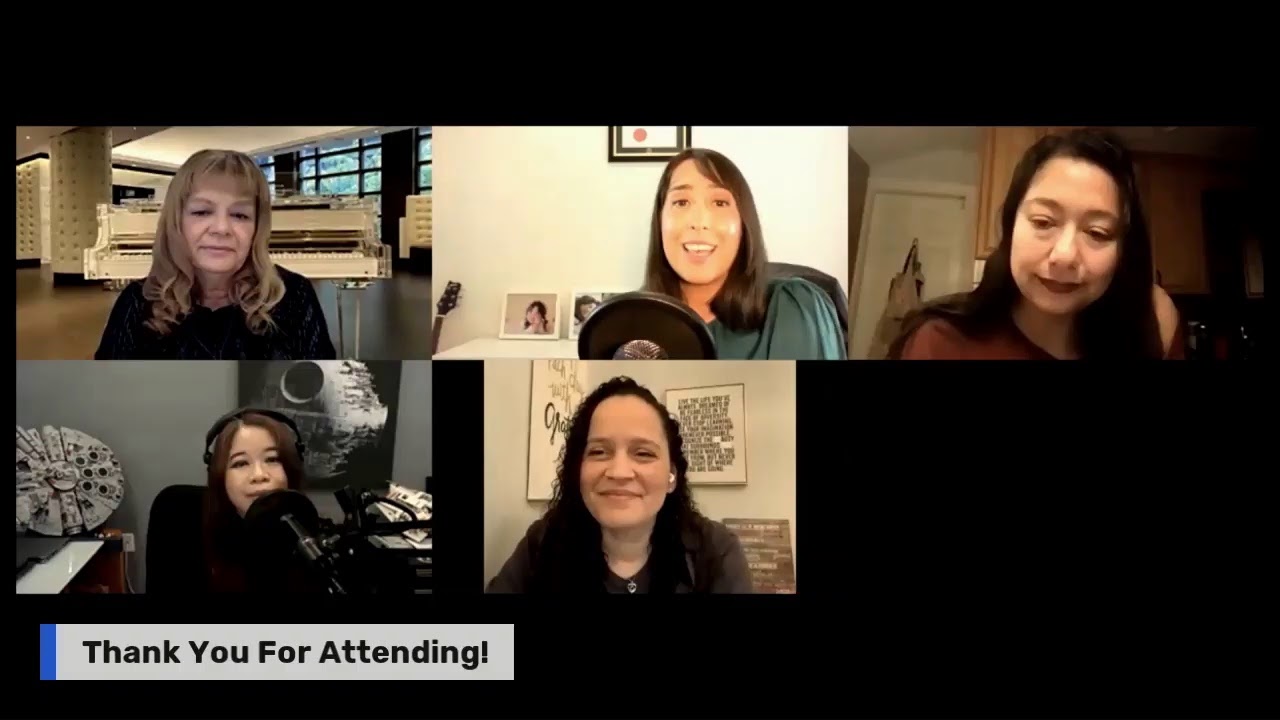
Bianca Rose Phillips hosted Noelle Russell, Theo Lau, Audrey Albini, and Lisa Fogel to discuss how voice and AI can advance equality. They covered homogeneous teams' hidden costs on products, the digital divide, and concrete steps like diverse hiring, inclusive testing, and teaching design with equity in mind.
Chapters
Hello everyone, and thank you for joining us today. My name is Bianca Rose Phillips. I'm a lawyer and global innovation theorist from Melbourne, Australia. I run a digital health think tank, and I'm excited to to host and present Voice for Equality alongside event sponsor Amazon. This is a defining time in history. Let's explore ways that we can achieve healthier and more abundant futures through a recognition that despite differences among us, we are all human. I don't know about you, however, most people I know long for the same thing, which is a safe, happy, and healthy life, and the opportunity to achieve their potential and not be unfairly held back. Technology is leading the way forward. This event is focused on how tech can help advance equality. And today we'll open up the discussion on how such endeavors can benefit customers and communities. So we hope that our audience will use this live chat as a source of collaboration and connection with the tech community. And let's introduce our panel for today. Noelle Russell, thank you so much for joining me here today, for joining all of us. Noelle is Head of Instruction— hi! Noelle Russell is Head of Instruction, Data Science and Analytics at HackU. She's an ambassador for responsible and ethical use of AI and is passionate about mindful leadership. Noelle delivers keynote sessions, hackathons worldwide. She has spent decades as a trainer, architect and evangelist for IBM Amazon, and Microsoft. Noelle was named Microsoft Community Champion 2018-2019, and she's also a Microsoft MVP. Noelle was also recently named as one of the top 17 voice AI influencers in the voice category.
Yay! Thank you, and thanks for having me.
Thank you. Uh, Theo Lau is founder of Unconventional Ventures and she is One Vision podcast host. She is an advisor, a public speaker, and, and a writer for industry publications including Nikkei Asia Review and Harvard Business Review. She has a new book coming up called Beyond Good, which showcases how fintech is changing business models and what every industry can learn from it to make broader inclusion a reality. Thank you so much for joining me here. Audrey Albini. Audrey is an Emmy Award-winning, globally recognized sonic branding expert with over 25 years experience and has developed audio DNA and sonic identities for many of the world's most iconic and prestigious brands, from Xbox 360 to sound and voice branding for the most prolific iconic products products of recent years. Her prints are heard hundreds of millions of times a day throughout the world. Audrey is an advocate of equality through many of her projects and philanthropic endeavors. She is in voice and design and product category as top 17 voicebot AI leaders. Thank you, Audrey.
Thank you.
And Lisa Fogel. Lisa is a senior VUI designer at Amazon. For Alexa Communications. She is editor and author of Ubiquitous Voice: Essays from the Field, available on Amazon and Kindle. Lisa is an experienced designer of speech-enabled multimodal applications on various platforms. She has worked on voice techies for many of the world's leading companies, and she was recently named as one of the top 17 Voicebot AI Leaders in Voice in the design and product category. Ladies, it is lovely to have you here. Thank you for joining.
What a crew!
Thank you for joining all of us.
Yes, what a crew! We're back.
We're back.
So I'm going to start with our questions for today. Noelle Russell Russell, I'll start with you. How does a lack of diversity and inclusivity in a workplace impacts on how the end product serves customers and communities?
Yes, this one is near to my heart because I've been involved in so many products, and I think it's interesting because while I was doing that work, I never actually thought anything was wrong because in an environment where everyone is the same, it's very hard to detect that anything is wrong because everyone's agreeing with each other, all like the energy is good, like there's no dissension. And what I realized though is that the cost of that homogeneity is that at the end of that process, when you launch your product into the world, the world is not homogeneous. And the product intended with all the goodness in our hearts to serve everyone actually served very few in the way that they deserved to be served and the way that we actually intended as the engineers. So I think one of the, heartfelt ideas around diversity that is often missed is that those that desire it often can't even see that they're not in a diverse environment. And that's why it's really important that if we do see something, we say something, because I often would look around and be like, that's weird that I'm the only female Latina. That's weird that there's no one here that represents, you know, physically disabled community, but I wouldn't say anything. Like, I wouldn't feel even empowered to say anything. If there was anything good that came out of 2020, I do feel like being empowered to say something when you see it. I feel like more of us feel that power. I also think that as a generation of leaders, we're getting more diversity in leadership. They can show teams it's okay to be like, Shouldn't we have a perspective at the table? We're hiring in more diversity, we're elevating more. We need, we need to do a lot more than that. But I do think that at the heart of it, it's really creating awareness because most product developers, creators, creatives, we want to build for everyone. And oftentimes if you're put in an environment that is all similar, it's hard to see outside of that. So finding people that can be that voice for diversity within your organization, finding people— and not even finding them, just empowering them to say something with psychological safety, that it's OK— I think is a huge step organizations can take, leaders can take in empowering their people.
That's wonderful. Thank you so much for that, Noelle. And as a follow-on question, what is one practical step that any tech company can take to ensure that their products serve as many customers and communities as possible.
Yes, I, I started thinking about a while, 2 years ago, as I was working very closely with about 17 products at the same time, and I realized they all shared a very similar problem, which was they started off as research projects, research projects that were at the heart passion projects for a very specific individual. And then now we were thinking about how are we going to productize millions and or billions for that matter. And one of the challenges in that is that we took a very specific perspective in building that technology, which was of course the triple PhD that decided to start the project and get funding for it. So one thing I encourage is as organizations start to productize AI and voice technology, that they look at the problem they're trying to solve and grab, get, attract the domain expert into that problem as soon as possible. And because I see a lot of people, I myself, I'm like, "I have a cool technology to solve my son or my dad's problems with communication, but I'm not a communications expert." And how much better my solution would be if I roped in a speech pathologist, if I roped in someone who understood cognitive delay or TBIs, traumatic brain injuries. And I feel like that's a bit of a, a miss sometimes with companies is that they don't realize how valuable that and really critical that domain expertise is. So that's, I mean, there's so much, and I'm glad there's so many, there's more of us here to talk. There's so many things that organizations can do, but that is one critical piece that I feel like if you include that domain expertise, they also tend to be empathetic to the audience you ultimately want to serve. I feel like that, that could be one thing you could do that could really change the outcome of your AI project or your voice project.
I agree with it.
It's also important to make sure that when you're testing your product, you bring in those people. And that's one thing that I think we've improved in overall in tech in the last many years that I've seen, which is I see folks, you know, blind folks on the testing team. I see people with various different disabilities and, you know, range of age and so on. And I think that if you, if you make sure that your testers are representative of a larger population, you're also going to bring in that perspective. So having the experts, as Noelle said, pulling them in, but also make sure the people test it, you know, are not just a homogeneous group but a widely diverse group.
Yeah, that's why we do a lot too. I remember there were days that we would spend looking at how do you design for a range of people, right? If you design for the edges, right, the younger kids and then the older adults, chances are you can serve a wider demographics of people than all those who look exactly like us, like what you two said. I remember reading somewhere in Georgia, in the state of Georgia, there's a center that is catered for people with disabilities. And the tech companies and clothing companies are actually using the residents from that community to help them test out products, right? Like ones that have speech impediments. So, we've seen tech companies that are using them and helping them figure out how do you create a more inclusive voice solution. With people that have speech impairments or people with disability. How do you create more adaptive clothing? Zippers that are easier to use, magnetic buttons, things that we don't typically think about, right? When we get our kids dressed in the morning, we're like, oh my God, you know, just put this on. But there are all kinds of different needs that I think our wider society needs. And like you, Lisa, I'm encouraged by more awareness that's going on, and we just need to keep it up.
And I'll just add to that because I totally agree. There have been things that have gone on in the past year that I found to be super interesting, past year or two, in airports, special rooms for like a quiet space, and I do sound., and we all do, but, but a quiet space for people with PTSD or autism, because too much noise and too much gets them upset, especially when they travel in those spaces like that. Or Sneakers being designed because somebody can't really tie a sneaker and they have a a special sneaker made for somebody who has, you know, a disability, and it's on the market now. It's like a commercial product. So I think we've come a really long way. I think that we're really addressing, starting to address, and just having this conversation right now, I can't even imagine would have happened 5 years ago.
Definitely, we are coming a long way, and just having this group is, is really fantastic. So Theo, I'm going to ask you a question now. Many of our listeners today will relate to experiences of inequality in their lives. Perhaps these experiences were at a time growing up without the internet or without social media. Our children will only know a world with considerable amount of technology like the internet, and they will constantly be connected. In your opinion, what are the opportunities that we should explore in terms of how this connectivity could enhance equality, diversity, and inclusion?
It's an interesting question. Like you said, a lot of us have experienced different situations, and I would say if we look back at the last 9 months, our lives, it's a little bit different. You know, we are all here, we're not meeting face to face. Noelle, you live across the river, I had not seen you for 9 months. But there is something else that we don't remember or we tend to forget. As connected as we are, there are still a lot of people that are not connected, right? So for example, you think about the United States, 30% of children from K-12 public schools, children that live in households with internet connection, or they live in households without a device that allows them to do distance learning, which a lot of our kids have done. I've realized that a lot of us, what we have experienced is a privilege. It wasn't a right in the US, right? I have my kids, they are actually in school right now, in, you know, virtual school, they would like to call, but there are 60 million children outside. In the United States that do not have ability to do that. So I think for one, we need to recognize that privilege is okay. It's not a dirty word, but also understanding that there's a whole lot more work that we need to do. We need to focus more on how do we close that digital divide because it's not a nice to have anymore. It's not just about, oh, being able to watch a Disney+ show. It's not about being able to, you know, play on some gaming online game. It's about being able to survive. It's about being able to thrive. It's about being able to actually get access to information. And a lot of this impacts people that are in Black communities, Hispanic, those who live in rural areas, and those that are urban poor, right? And those are normally what we call the forgotten demographics that we don't typically think about when we design things. When we roll things out, oh, you know, we'll just do this digitally or in a smartphone. But not everyone has access to it. As we think about recovery, as we think about how do we build back better, we need to think about those people. How do we bring them to where we are? How do we bring them to a connected ecosystem and help them rebuild? I think that's important. And to that, what I've been, I guess, happy in some way, if that's even the right word to use, is that I'm seeing more people moving back to their cities, to their local communities, right? You know, we see people from New York City or from San Francisco, they're moving back to where their parents are and help build the local communities. And that, I think it's amazing because that allows exchange of ideas, right? It goes back to what we were seeing originally is instead of a homogeneous community, you bring all these knowledge back, the skills, and you can hopefully help stimulate economic development outside of the coastal areas that we're used to.
Can I ask you a follow-on question, Theo? Uh, bias is often cited as explanation for why some people behave and make decisions in the way that they do. Based on your own research, what appears to be the technical definition of bias, and in your opinion, "to what extent can we control our own bias and those of others?" I think first of all, we are humans, which is a great thing, but that means that with humans, it comes, it's a normal thing.
What we need to be aware of, I think, I don't think anyone is born to discriminate. If you think about children, right, and I learn a lot from the kids and learning how they interact with other kids and learning how they perceive things, right? They are actually my best friends, if I have to say it. And we are all impacted or influenced by our own value system, how we're brought up, the environment we're in, the people we're exposed to. And I'll share a personal story. After New York, I actually spent a year living in Wisconsin. That was my first job. I had never been in the great state of Wisconsin. It was beautiful when I visited in the summer. I was like, oh, this is lovely. And then it got cold. And then I spent 8 months in the cold, most of it in the snow and the ice. I'm like, okay, this is different. But what was really interesting was the people that I worked with in an environment, the office, we had about 300 plus people in a particular division. None of them had visited Asia. And so when they saw me, I was the first Asian female engineer in that location. And they're like, wow. And I felt like I was in a zoo. It's not because they were being mean about it. It's just, they're not used to it, right? The environment that they grew up in, people they interact with. They didn't have anyone that looked like me. They looked very much homogeneous and they were not like me. And they would ask me things like, oh, you know, did you grow up in a fishing village?
What do you eat?
Like, okay, I eat normal food. And my favorite was, where did you learn your English? They would speak so slow. And so if you just look at it from the surface, you will think, Wow, this is bad. This is not good. And all kinds of words from bias and discrimination and all kinds of negative emotion would come up. But if you stop and think, well, they are not trying to be mean about it, they're actually trying to learn more about you. It's the reaction of interacting with people that they don't know, right? And so if you bring that and you project that out to things that we have seen in this, right? We need to, I think, in a way, be more empathetic, be more understanding of how people react and why they are how they are, and learn from the kids. I learned a lot from my kids the other day because we have multiple devices at home. Last week, my daughter, she's 8, She's like, well, you know, mommy, I'm going to disconnect all the devices. I'm like, whoa, why? Because we have so much fun, like asking questions. And she said, no, because I don't want it to listen to me. It creeps me out. It just responds and it talks and chimes in our conversation without us asking. And it's really interesting if you think about it and you think about how we normalize a lot of these, how tech behave and how humans behave. I think if there's a takeaway from what we've learned and how we can move forward with a new year is reach out more to people who are not like us. Learn from kids, read more, understanding what we're seeing. A lot of it's bias, it's normal. It doesn't make it right or wrong, it's normal, but we need to make it better because having different opinions, having different viewpoints, having different people that don't look at us is beautiful. Diversity is beautiful.
Lisa, thank you. When you reflect on when you started in tech compared to practices today, where have we made some good progress on equality, diversity, and inclusion? And what are the barriers towards greater change?
All right, so I'm going to date myself by saying I started in tech in the '90s. Came out of school and I also was in hardware to begin with, which is kind of hard, hard to believe now, but because I've been in speech recognition for so long, my first job I was working on memory for large servers, actual memory chips. And a lot has changed, honestly, and I hear even more so to leaders who started their careers in the '80s. But just from my own personal experience, I think one thing is just awareness. I was prepping for this and I was thinking about all the ways that we currently, you know, my current job at Amazon, I'm a manager now, so I was recruiting, and even just in the writing of job descriptions, we think about diversity. So I'm not sure if you guys know some of the studies about how certain words appeal to one gender versus another or offend some gender. So things like ninja or rock star tend to dissuade women from applying to certain jobs. And so there's actually, you know, I have a guideline and a list of things to look out for and to think of, you know, words not to use, words to replace them with. And I think just that awareness that we are going into our recruiting process, you know, just sourcing these people, thinking ahead of time that we want a diverse group of folks. The other thing I would say is within the companies, there's way more support for minority groups. And I noticed, you know, this specifically, I'd say in the last like 5 or 10 years, there are tons of groups about, you know, women leaders, I get asked by management for feedback. Do you feel that you have enough female leaders? You know, how do you feel about diversity in the workplace? Like, we have these open discussions, and that was just nowhere. To be honest, it was just a complete and total lack of awareness. It was like the majority of people were men, you know, in engineering. And no one really addressed the issue that, that we would actually even try to like reverse that, um, uh, that trend. And, um, so I'm really, you know, I'm impressed. In fact, voice is one of the fields, um, and I love this about the industry, it's one of the fields that is very, um, gender— well, gender balanced. And I'm not sure 100% why that is. I know it's partly because it's an interdisciplinary, um, field in tech and there's a ton of um, uh, interest in linguistics from women. But, you know, it, it doesn't even break down like that because when I think of like the top, um, 3 men, uh, designers that I know in voice, they're all linguists. And then my— I myself am an engineer woman. So it's, it's really just this cross, um, group of really diverse gender-wise. Where I think we need to work, um, honestly, is, um, minorities. Is in recruiting minorities. And that's something that I'm very passionate about and working with some of our design leaders on is how can we have more of a presence at conferences or events or universities with a more diverse population? Because that really is, I think, not well represented. And as Noelle Russell Russell said, the product is better for it. The product, if it is designed by people who are too homogeneous, it's not going to serve the needs of the, the complete population. And so what we need to do is try and have designers from different backgrounds contributing to these products.
Absolutely, I agree with that. And that's just so important that we have that diversity and that representation within organizations. As a follow-on question, and this actually relates to what you were just talking about, Can voice tech help to advance equality, diversity, and inclusion in society?
Well, I think we are a little bit in that we're setting kind of a good example for— I mean, honestly, I think it's partly setting a good example, right? If we pull in diverse perspectives, if we make the top voice products, the voice assistants, if we show gender balance as— now we have male voices as well as female. If we show that, for example, there were some studies, and they're fairly dated, announced. I'm not sure what the stats are now, but there are studies that show that, you know, even the speech recognition worked better for men than women in standard English and worse for certain minorities. If we can turn our products into something that is more inclusive, I think we'll be setting a good example. And, you know, the quality— to take it back to the quality of the product too, I mean, there's all kinds of stats that show that companies that have women on their boards are more successful.
Right?
Or diverse populations are more successful. I think that's what we really need to keep driving and focusing on is that it's not just about doing the right thing. And of course we all wanted to do the right thing to be inclusive in our products. It's actually about being more successful. It's about being more successful as a company. It's about being more successful as a product. It's being more successful across the board. So it's kind of like a win-win. There's no reason you wouldn't do it. And I think, yeah, there are a lot of things that, you know, obviously these voice products are designed by some of the top companies in the world. And I think if they show, you know, give a good example in terms of the methodology that they use, the diversity that they drive with their design, you know, development, product population, that's gonna set a good example for the rest of tech.
Most definitely. Thank you so much for that, Lisa. Audrey, my question to you is as follows. Music is a universal language. It unites people from anywhere in the world. How can tech companies use music, voice, and sound with their technologies to unite their teams, customers, and communities around equality?
I think that music and sound— music is a universal language, and I think that we have people that don't understand different languages. So we can, in our products, we could put so many languages, but we certainly can't put them all. I've been compiling a list of, I'll call them universal gestures, a laugh, different things that no matter where you are in the world, instruments that mean the same thing throughout the world so that you can communicate universally because most of the people will be able to understand those things. The other thing too is to have a diverse team so that you have people within your team that can tell you that this is not unifying. And I, I was doing a podcast, and I being older than most of you or all of you, I used a term that it never occurred to me because it was the name of, of a place that I worked. It was literally the name of the place I worked. When I was in school. My young teen told me, "You can't say that. That's so offensive." And it, to me, I never even like knew that it had become offensive over the years. So I think that keeping things really open and listening to what people have to say I think that we could learn a lot from them. I think that different cultures, different expressions mean different things. And I think that as long as we're aware and we're listening and involving other people, I think that we can bring a lot of unity to it. Secondly, let's find those commonalities that are universal across the world. That everybody will understand, build them into our products. And the other thing that I think that's extremely important is to localize the voices because I've been doing this for a very long time, 20, over 25 years, and it would be, well, we want a voice that sounds We wanna, you know, we wanna cast it this way. And now we don't get that anymore, that voice. So there is no, you know, putting someone in place that shouldn't be in place. That's really including and being authentic. To the different cultures, to the different— it's really taking it to a different level. That's what I think. And I also think that when you have that, not only does it serve the greater good, it provides more opportunity for different people. And I think that it really brings an authenticity., and that's what we, we, we need to do in, in what we do. And that authenticity may eventually wind up being, you know, like an AI, but it'll be as authentic as we can get it. So I found in the past year or two getting calls to replace out voices and replacing them with authentic voices. So those are the things to me. Find the universal instruments, find the universal nuances and voice, and also do things like skeuomorphism, which is like if, if you, if you're building in a sound, building in, in, because I do sound, not just voice, like I do all sonic branding, um, build into that sound what the sound what it would actually sound like if you were listening. So that the person has a real understanding of what, you know, you try to lead them along to what you're trying to communicate.
That's fantastic. This is why we need multidisciplinary teams, right? As a follow-on question, Audrey, if you want to change the world, you need to be a champion of the art of communication, advocacy and leadership. What advice do you have for changemakers in terms of how they communicate their message of equality? And can you refer to some specific communication approaches that have worked for you as a professional communicator?
Sure. My goal is to change the world, to change the world of sonic branding, because I hear so many things that are so I am out of context or not connected or not appropriate. And then I hear things that are fantastic and all. And I really do try to change the world. I really do. It's music and sound and voice and vibration. They're all really physically, mentally, emotionally my passion. And what I would say is I, I do a couple different things. Is one is that we do a lot of pro bono work, and that if somebody really could use Sonic Branding and is a nonprofit or has a need Like we did, I mentioned on the last podcast what we did with Project Osmosis, which is an inner city design program in Chicago. But we also did with Cycle for Survival, because they, you know, there are a lot of cancers, they call them orphan cancers or rare cancers, and they don't get the funding because there's not enough people that are gonna— that have that illness, say like a breast cancer or lung cancer, so they don't get the kind of funding that other illnesses get. And we did an entire sonic branding initiative for them. We, we try, and I also, on the other side of it, I take my team with me. Because I feel in a sense in my industry, they're composers, mostly producers. They're pretty young for the most part, and it's a little bit— it's hard work, but it's, it's a little bit privileged, you know, to get to work in the art. Very hard to get a job in that, and I take them with me And I have them work on these projects.
Thank you for that, Audrey. And what I'm hearing—
Did that answer your question?
Absolutely. You know, it's about leading by example and each one of you, that's exactly what you do. And I'm so excited to have you here with me and our audience to chat about this topic, because hearing what you have to say, at this event and at our previous event in July, it makes me very optimistic about what we can achieve together. Any further thoughts on communication strategies?
I have one more.
Okay, go for it.
I think, I think I know some of you do this, maybe all of you do this. Teach. I teach at 3 universities, uh, sonic branding, but the last one that I did was, uh, a program this summer, this fall at FIT was called Design for Social Impact. And my portion of it was to design for inclusion, and it was really fantastic. I never in my life thought that I wanted to teach. I never saw myself as that. When I was first asked to do it at Pratt was probably in 9 years ago, 10 years ago, And I was like, I don't really— I don't have the time, I can't. And it's like, but there's no other course like this in the world that we know of, and these are visual design students and they need to open their world. And so I said, okay, I'll do it. And I learn more from them— I learn as much from them as you do from me. And we are all seasoned professionals, I'd like to say. And I think we have a lot to give. And I think we have a lot to communicate. And this last course that I just finished, student, like they applauded at the end and they've all reached out to me. And it was amazing because they really got it and they really want to change things. And I just was just, it was one of the best experiences I've had.
I would love to just really quickly, because I think there's lots of different ways to do exactly what you said, Audrey, in sharing your message and teaching what you know. And sometimes it's not in this classical form of like a classroom and even an online class, right? Where it's, it can be intimidating. Me, I've been building an online class for ever. And now, as far as I'm concerned, it's like my book. It will never get done because there's always another thing I want to add.
But when I—
you and me both.
But what I can do is I can actually share my stories every single day through the beautiful wonderfulness of social media, through different platforms. I mean, even getting on— one of the things I do think we touched on a little bit is just a lot of the issues we have are systemic. They are deep ingrained challenges to the way people think. And just implement, like me just saying, hey, you know, make sure you're closer to the domain or get better testers or increase the diversity of your teams. Like none of that's really going to matter until people actually change their mindset. And one way I've seen that be really, um, One way I've seen it happen is through just empathy, being able to see people in the job struggling and overcoming. And through that they're like, oh my gosh, A, I have that same experience. I didn't know we were the same. Or B, I don't have that experience and that's crazy that you have to do— go through that. And so the more little teachings that we can do through TikToks and, you know, Instagram Live.
Everything.
All these, yep. Every, all these different isms. I think it's really important that we get into the habit of documenting our experiences, the real experiences, right? Not the Instagrammed, rosy-glassed version of our experience, but really like, this is hard for me. And being, I always call it like the messy middle, being willing to like expose the messy middle part of your experiences. Because we always like, we always tell this beginning because we think it's going to be awesome and then it's a mess. And then we maybe tell the end, maybe if it's good. So I encourage more people because it will help them hold that thought. Diversity and inclusion, equity all stems from this. What you had mentioned, and actually all of us, I think, mentioned it, but this true authenticity of self. Like that each of our voices is important and we need to, A, stand up for each other. But one of the best ways we can do is just like you said, Lisa, be a good example. You know, just be willing to tell your story and that alone will teach people. You don't have to set it up. You don't have to build a class. You don't have to build a checklist. You don't have to build a blueprint. Just tell your story. And I think we are all doing that now. And I'm so grateful for Bianca for bringing us together It is an incredible opportunity, but we need so many more of these lists. We are all on this amazing, great list, but there's not enough of us. There's not enough people of color. There's not enough diversity.
And all—
there's room for so many more people to join us on this stage. And some people actually will say, oh no, I can't tell my story. Oh, I can't do that. So I think the more that we do it, empowered, we can help people feel.
Absolutely.
I always saw this a million times, Noelle Russell, on social. I was like, oh my God, I love this. And I think our stories are important. Each voice is important. But what I would always also encourage all of us to do, since we all have a platform, is use our platform to advocate. There was a recent story that came out with an award. We're not going to name names, but an award where 3 authors will be nominated. They are all the same gender and the same race. And so what they did was they went back and said, "Look, thank you for the nomination, but there are all of the people out there that also deserve the recognition. So we hereby say thank you, but no thank you. We don't want to be nominated. We need more voices." voices in the platform. And I think it doesn't matter if you're on a panel, because we see a lot of homogeneity on panels. If you are on any of these lists that we are all on, anything, bring more voices and advocates. Someone told me last year, and I think it really resonated, he said, "It's not enough just to bring people. We need to give them the mic." Let them speak, let them talk, let their voice heard. And I think we can all do that.
And also, I find myself, and I don't know where this came from, but I find myself having, the older I get, having so much empathy when I interview people for jobs you know, to hire them. And if I see somebody that may seem nervous or shy or, you know, like, I have— I feel so drawn to them that I want to nurture them because I— and I had one just recently in that class I had in the fall. She couldn't afford to go to college. This was the only class she was taking. And I find trying to really, really do reach out to those people and acknowledging them. And she couldn't make a class, and I had really no obligation to spend 4 hours on a Saturday to replace that class for her, but I did. I totally agree with you. And I think empathy going.
It really does. Empathy, education, these events are important. Being a mentor to others. I have a podcast where I'm inviting people on who, you know, they may not have a big social media presence and they may not be well known. Or known by many at all. You know, we need to bring as many voices into these discussions as possible. And I want to thank you all again so much for joining me here today. I have— thank you, thank you so much. I have some final thoughts to share before we conclude our event today. These thoughts are addressed to leaders of organizations, educators, policy teams, lawyers, social justice advocates, first responders, and governments, and all those that support those functions. You may have a considerable influence on policy and lawmaking, and there's no doubt that a predominant issue surrounds the cause and effects of embedded societal inequities. I like to study historical schools of thought because schools of thought give me insight into how a previous generation thinking and the foundational principles of the education system in which they studied at the time. One school of thought that I've been studying for the last few years is called the legal process school. It's well known in America, not so much in Australia, but it was taught in American law schools for 3 decades. 5 justices of the USA Supreme Court, many lawmakers, as well as 3 generations technically of lawyers, studied this school of thought at law school. Like many schools of thought, it offered suggestions for rethinking legal processes and society, which is really important. And for all of its strengths, and despite the fact that the authors of this school, the leaders of the school, were civil rights activists, the written works that they put together did not address civil rights. Which has been a major point of critique ever since. From this, well, as you proceed with your projects, in writing your articles, in putting together your policies, hiring staff, creating events, writing laws, designing university programs, which is something I do, consider your role in addressing equality. As a law lecturer, I'd also like to address to law professors and deans who might be listening, We need to teach law students and new lawyers about equality and principles like therapeutic justice, legal psychology, and behavioral science to best prepare them to make important decisions. I personally see an equality advocate as someone who commits to the recognition that all people are equal, and the successful advocate truly understands how to connect to people through sound communication, empathy, and great wisdom. Thank you everyone for joining us today. Please join our Voice for Equality page on LinkedIn to stay connected to this community. I want to thank our panel again. A big thank you to our event sponsor Amazon. Your support of this event has been considerable and it made the event possible. And to our audience, thank you for joining us and your continued support. Wishing you all great success, health, and happiness in 2021. Here is the event anthem of equality produced by multi-Emmy Award-winning music producers Audibrain.
Thank you.
More from Noelle

Take the Unlocking AI Challenge and Get the Keys to Unlocking Time and Revenue for Your Business



Don't Get Left Behind: The AI Executive Challenge #ai #business #fearofmissingout





