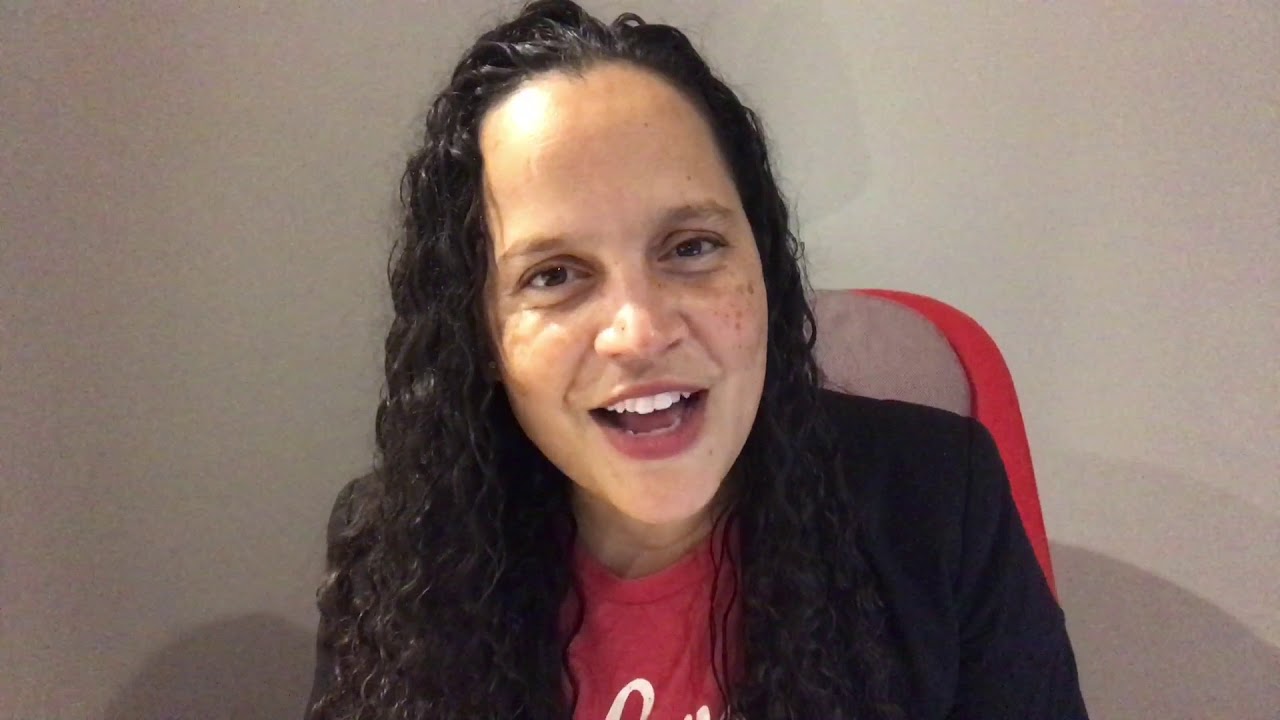
In this video, Noelle Russell discusses the virtue of "calmness over conflict" as essential for high‑performance, innovative teams. She explains how stress and fear can lead to poor decision‑making and interpersonal conflict, using a reference to a cartoon song that illustrates that point. To counteract this, she recommends learning and applying non‑violent communication (NVC) techniques, emphasizing careful word choice to avoid triggering defensive reactions. She shares a personal anecdote about choosing an in‑person conversation rather than an email when resigning from a role, arguing that face‑to‑face dialogue preserves dignity and authenticity. Noelle also introduces the concept of "congruent communication," urging leaders to align tone and behavior across all channels—email, video, meetings—so that others can trust the consistency of the message. The talk ends with a brief preview of upcoming videos in the Mindful Leadership series and a homework suggestion to study NVC.
Chapters
So this virtue is called calmness over conflict, and it sounds pretty intuitive, right? Of course you want calm over yelling, but in the moment, and especially in very highly innovative, high-performance teams, it can become very easy to As a matter of fact, there's a movie, a cartoon. I have 4 children, so there's a movie Frozen, and there's these little trolls, and they sing this song which I absolutely love. I won't sing it for you, but it has a section where it says that people make bad choices when they're mad or scared or stressed. Stressed. And unfortunately, in these high-velocity environments where things are moving super fast and the customers are very anxious to get what they need and what they want, that stress can become a motivator in how we do things and how fast we do things. And when that happens, here's the unfortunate part, is that people make bad choices. They don't treat people the way maybe they would if they weren't stressed. They don't handle their deliverables the way they would if they weren't stressed, right? So choosing calmness over conflict recognizes the idea that when things, you know, when we're mad or scared or stressed at work, there are things we can do to kind of calm that sense and create additional opportunities for increasing our effectiveness and our excellence in the performance of our team. So the first thing I would encourage you to do is learn about the art of nonviolent communication. Mahatma Gandhi was a very strong proponent of this. There's several books written about nonviolent communication and how really to carefully choose your words. So, you know, I often say when I hear people say something, I'm like, "Ooh, those are fighting words," and they're not even directed towards me, but I could just tell, like, those words are phrased in a certain way that kind of gets you going, "Oh, don't, you shouldn't have said it that way. That guy's totally gonna lose it." And I smile, but it's really heartbreaking when I'm in these meetings. So really taking a moment to learn how to communicate better. Memorize these sentence structures that are in nonviolent communication so that you can say things without triggering anything in that person. Now, sometimes it's gonna be impossible because that person's just on the edge and just easily triggered. But if you can take a moment to learn how to better message your intentions, to better message your desires and your requests, I think you'll find that that person will be less likely to get defensive, right? And less likely to, um, to get upset, uh, or to feel like they're having to defend something or combat something. So certainly hugely beneficial. So do some, do some research for homework tonight. Do some research, go out and learn more about nonviolent communication. We'll also have a separate class in our mindfulness series, our Mindful Leadership series, on mindful leadership. May not be out yet when you're looking for it, but we're definitely working on that, so stay tuned for more of that. When in doubt, here's another principle, another very effective technique. When in doubt, do it in person. I'll tell you that I was looking for a new opportunity in my work. I was working with a team and it kind of took a new direction and I wasn't super comfortable with it. It didn't— it was just not my thing anymore, right? The direction of the company or of this specific org had shifted and I knew that I wanted to find another opportunity. So I had a choice. I could either send my manager an email and be like, "I'm out," right? Like, "Not interested in this, not doing what I want." And that would have been the easy thing to do, and I could have instantly, as soon as I sent that email, I could have started applying for other roles. But instead, what I decided to do was have a one-on-one discussion with them. Was that harder on me? Absolutely. Would it have been easier to like sit blindly behind an email and be like, It's not working out, sorry, right? It's like breaking up with someone via text. Not cool. Don't do that. Um, but, uh, so when in doubt, like, do it in person. If there's anything in you that's like, oh, I probably shouldn't send this email, don't send it. For goodness sakes, don't send it, right? Go over to that person's desk, get on Chime or Skype or whatever your corporate, um, you know, messaging is, messaging platform is, Look in their— look at their face. Let them see your face. Let them know that you're not being snarky, that you're not being rude, that you're genuine and authentic. And doing it in person helps you cultivate that. Also, along those lines, is that you want to develop what we call congruent communication. Congruent communication means you are what you say, you do what you say, you walk your talk, right? That your emails, the tone of your emails match the tone of who you are when you are spoken to or in a meeting matches who you are when you write a document or a paper matches who you are in a video, right? You want there to be congruence so people can trust who will show up, right? That if you're showing up in the form of an email, it's Noelle, the same as the Noelle that shows up on a video or in a class. So I think it's super important to remember and to develop a sense of awareness on how you're coming across in these different communication channels and be sure that it's congruent. So that's enough for this video. Let's take a break here, and in the next video we will continue our calmness over conflict discussion and get into a couple more topics before we move on to the next virtue. Thanks for watching, and I'll see you in the next video.