Noelle Silver: How to leverage the power and capability of Applied AI
Noelle Silver walks through 20 years building AI at IBM, AWS, Microsoft, and others. She breaks down three pillars for responsible AI: diverse teams, ethics embedded in models, and democratized cloud APIs. She demos Microsoft's speech services and Form Recognizer, then calls engineers to document their AI work and advocate for accessibility.
Chapters
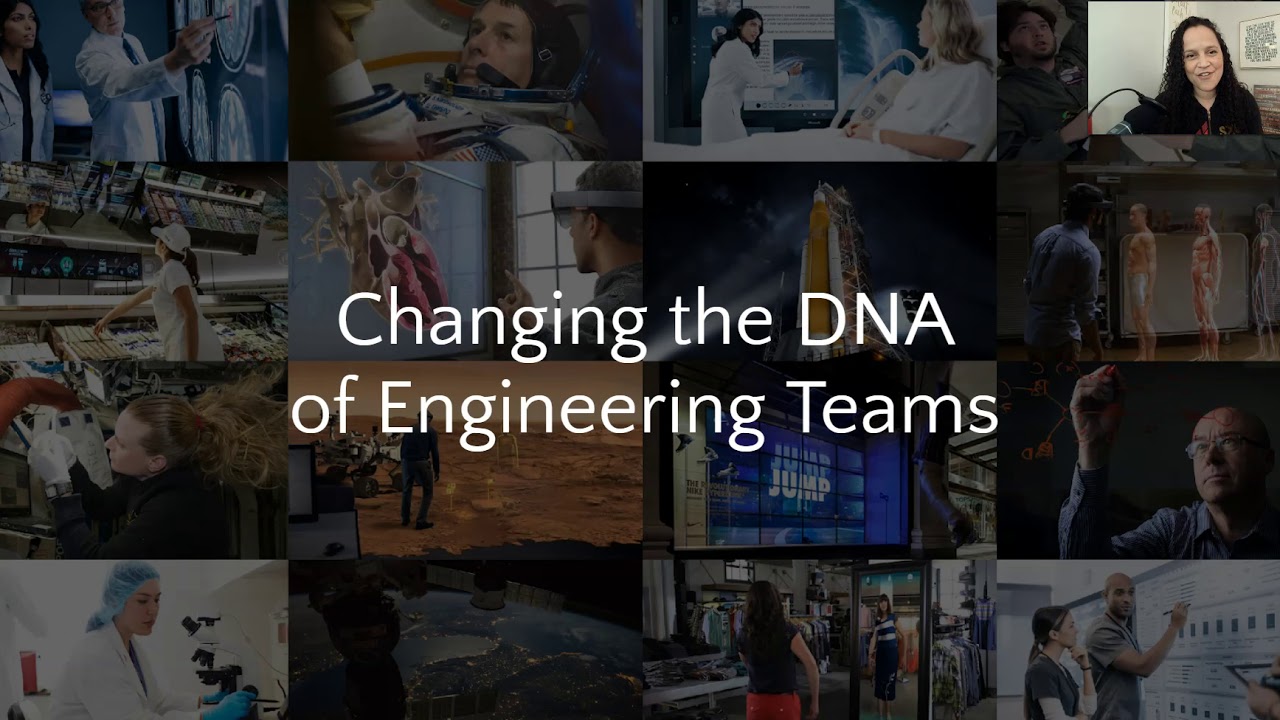
Hi there, my name is Noelle Russell Russell, and I am so grateful that you decided to spend a few minutes with me while I share something that I think is pretty special. I'm going to focus today on talking to you about the value of applied AI and the ability to create a multimodal experience. Voice is a huge part of that, but it's also how do we augment all of the user experiences that we're building to create a an experience that's truly available and accessible to everyone. But before I dive into the details of that, if you don't know who I am, um, you can find out a little bit more about me by heading on over to Mindful Leadership, um, is the name I have on LinkedIn. And you could just go to linkedin.com/in/mindfulleadership, and there I will be, and we can get to know each other and connect there. Um, but to give you a quick rundown of my career, I I started my career actually at IBM. I've been in the world of, let's call it digital transformation for the last 20+ years. I went from IBM to Red Hat, Red Hat to VMware, VMware to Pivotal Cloud Foundry. I then had the most amazing opportunity to go to Amazon and work on AWS and create a team of trainers who to this day are the best in the world. And then get an opportunity to go work at Alexa. And I was an early member of the Alexa team, and I was able to do all sorts of things. I built over 100 skills for the Alexa platform. Some of them to this day are still performing extremely well, surprisingly. And I also, as an independent developer, right? I'm not— I don't have a company that builds skills. It was just me learning to code, taking the skills that I knew and applying them. And then from that, I really got excited not only about Alexa and what it meant, but also about other AI models, right? Is what else is accessible in that way? So I went to Microsoft and joined the Cognitive Services organization where I got a chance to play around with dozens of models that are accessible in the same way that Alexa is to us through APIs. And I couldn't believe it. And so I want to share with you some of the functionality and features. I'm going to focus on the speech services, but there are so many other models you should be aware of. And this is my chance to share that with you. I also, of course, have— I'm the founder of a couple companies, AI Leadership Institute. We're a consultancy for companies who need help with AI, as well as Lovefluencers. And I'm really now passionate about helping people figure out a way to share their message and their voice with the world, like building websites and podcasts, all the things that I do every day to share what I'm passionate about. I want to help other people do the same. But it is my pleasure to be here with you. I'm so grateful that you're here. Let's go ahead and, and dive in. I want to share with you a couple, I don't know, I guess it's like good news, things that have happened to me in my career that helped me, really kind of created the foundation for some of the things I'm going to talk to you about. Let me start with, last year, over the last couple years, I've been kind of showered with accolades that my entire career has prepared me for, I suppose. My favorite, right, the Ninja Cat, 3D printed, was given to me by a team at Microsoft for Creating Clarity. But I was also recognized by the early Alexa Conference Now Project Voice as one of the first Alexa Executives of the Year. And then Transform, I got an award for being an AI mentor. But all this to say, like, I, I am just so passionate about sharing what I know at the moment that I learn it and getting as many people, you know, who are a couple steps behind me to catch up with me and, and really educating the world. And so that's what I'm trying to do in session, and I hope you will join me on the journey. I also just recently— this is like hot off the presses. I am so proud and excited to be able to share this with you. I was just nominated as an MVP for Microsoft AI. What? Amazing. If you don't know what that program is, please look it up. There is a community of people who have dedicated like their spare time or their businesses' time to really understanding technology and advocating for technology. And in my case, I advocate for the responsible and ethical use of technology, the accessibility of technology. And Microsoft has awarded me or rewarded me for the work I've done in this space. So it's really exciting. And I'm just so happy and honored to have gotten this. But I wanted to share with you because if you know about it, great. But if you don't, it's a great program and it's full of a community of leaders that can give you some incredible resources to help you speed up your learning journey as you move into this different, this new space or this space of new technology that's available to us. And one thing I always like to do is I start with a quote. For those of you who've seen me speak before, I always start with the same one, but it is so good. So read it along with me. I think you might find it resonates in some way with you too. So what is success? To laugh often and much. To win the respect of intelligent people and the affection of children. To earn the appreciation of honest critics and endure the betrayal of false friends. To appreciate the beauty, to find the best in others. To leave the world a bit better, whether by a healthy child or a garden patch or a redeemed social condition. To know even one life has breathed easier because you have lived This is to have succeeded. And this was originally written by— it was actually made popular by a metaphysician known as Ralph Waldo Emerson. Some of you might know him, but it was actually written originally by a woman, Bessie Anderson Stanley, who often doesn't get mentioned. So I always like to give her play, you know, a little bit of advertisement. But really what it demonstrates to me, and it's true in all of the AI work that I do, that on the surface, what you see on the surface is often not the truth. It is a shadow of the truth, maybe, and sometimes it's not the truth at all. And so when I used to quote this and I say Emerson said this, and someone said, do a little research, find out more about that. And I, as opposed to getting defensive, which sometimes we do, I was like, sure, okay, I'll go look that up. And I was like, oh, a woman wrote that? And granted, a woman wrote it and Emerson made it popular, But they together brought this very important quote in my mind, right? A quote about how we can sometimes dive into the minutia of our work and the delivery of a product. And the reality is, when we— at the end of our lives, we're going to look back and we're going to value success maybe differently than we did at 20 or 30 or 40. And so I love this quote for that very reason. But now that I've realized the story behind it, it means even more to me. So I hope you can appreciate state why I might want to share it with you. Now, we have more power than ever, ever, than we've ever had at our fingertips with technology in general. We have more computing power than we've ever had. We have more, um, software, more companies, right? The FAANG. We have these huge companies with billions and billions of dollars that they are spending in research, building technology on behalf of the world. So we've never had more power, more capability. However, I will remind you, uh, you know, with great power comes— you might know this one, right? My favorite, Uncle Ben from Spider-Man. With great power comes great responsibility. And I believe this wholeheartedly. I believe that, yeah, we could do things we could have never done even 5 years ago, 10 years ago. But we have a responsibility now that we understand and know how to use this. It's why I'm really excited about projects that are launching now, projects like Mira at the university or in Seattle, or projects like the Open Voice Network, which is collaborating and consulting with people to find out what are the guidelines for doing this well, for doing this right. And so we have more power than ever, but we do need to realize that that power comes with responsibility. And now, by the end end of this talk, that responsibility is yours. So I hope you will take on the mantle and really start asking different questions as you begin to build teams that leverage the technology you're learning about in this conference. Leverage that technology in a way that will change the world, right? That will create a better socioeconomic condition for someone, that will change one life for the better. So I believe that AI will change the world, that it can change everything about the world we see, and that today technology is not the reason that we don't see the innovation in areas we want it. The burden really falls on the developer, the engineer, the people that create, right, the product. Like, can I use the technology that is at my fingertips to solve a world problem, to solve a business problem? There is often a gap between the person who knows how to write the code and the problem that needs to be solved. And so I'm a big believer in bringing those two things together as closely as possible. The first thing I think that is needed in order for us to truly capitalize on artificial intelligence and on the possibility of technology is we have to change the DNA of our engineering teams. Many of you know that if you look around engineering teams globally, they're heterogeneous or they're homogeneous in nature, right? They look the same. You look around and everyone at the table kind of looks the same and acts the same. There's very— if you look at the demographics, there was a recent study released by the Bill and Melinda Gates Foundation, right? Reboot Representation. Check it out. It's a great report, but it talks about the numbers of diversity, of ethnicity and gender within our teams, and it easily makes it easy to see that we have a homogeneous engineering world. And what I value and what I have seen and what I have done is in the teams that I have created and in the companies that I've worked for, I have heavily focused on generating a team of people that are diverse. And I don't just mean diversity in ethnicity and diversity in gender, though that is important. I also mean diversity of thought. I want introverts and extroverts. I will tell you right now, I am so disappointed that in the engineering teams that I've been on, I have never worked with someone who was hard of hearing. I've never worked with someone, and I've been in this industry 20 years, I've never worked with someone who had a physical disability, who had cerebral palsy, who had, you know, any, any number of conditions that wouldn't keep them from being a good software engineer, right? But why Why aren't they in our teams? So when I say change the DNA of engineering teams, I truly mean where is everybody represented? Where are there no barriers to entry to become educated in a technology and then contribute to the development of it? We have to change it. We have to look around and we can't look around and be like, "Wow, everyone looks the same," and think that that's okay. Right? So now I'm a big believer of saying, "If you see something, say something." If you don't see a diverse perspective, Find it, get it, invite it in, and better yet, hire for it. If you are in a position where you are hiring, hire for it. Save room for that diversity to show up because your product at the end of the day will be better, exponentially better for it. Now, in addition to this, so this is all about like, how do we leverage the power of AI? One is we have to create a diverse team that can see the value from all sorts of angles. Angles, right? The next thing we have to do is really think about what we're doing and why we're doing it. I am a big advocate for ethics in AI and having a new conversation. So many of us, because AI is new-ish and we are starting to see it productized in new ways, are we asking the right questions when we go into these conversations, when we build a new product, when we go into design thinking exercises? Are we asking questions like, when I build this AI model or when I use this voice application framework, can I explain every decision it makes? Can I explain and understand and interpret everything that that thing is doing? I don't need to know. I mean, I want to know how it's doing. I don't need to like, right? I don't want to. Do the work myself. I don't want to do the math for a calculator, but I do want to understand the proofs that made those laws that the calculator runs by. How do I know that that's the truth? We call it the ground truth. So as a data scientist, as maybe a data or an AI ethicist, I gravitate towards the questions we need to answer at the beginning, middle, and end of any development effort that make sure that we are creating explainability in the work that we're doing, that there are no black boxes. Even if we're selling a black box, like a software as a service, we are transparent in how we do it. And in our documentation, there are ways to achieve this level of transparency. And it's literally how we avoid getting caught up in a machine learning model and being like, whoa, whoa, whoa, I don't know how that happened. Let me give you an example, right? An example would be What happened with facial recognition, right? We have had major companies, quote unquote, pull out of the, of the recognition space, pull out of the industry of facial recognition because those models were trained on bad data. Here's the fun part about that problem is it's actually not a finite problem. You can solve this. Any model that is trained on bad data, guess what you can do? You can either start over or you can start training it on new data and giving it the diverse data it needs to make better decisions. And so I want us all to become part of a mindset that won't give up on a problem that is presented, but instead will find ways to solve it, especially when that solving comes through the lens of diversity. Why wouldn't we do that? Why wouldn't we increase the diversity of data collected, increase the diversity of perspectives on our engineering teams, This is why and how we will build AI products and services that will change the world because we take the world into account when we build it. Now, another thing I am, of course, passionate about is the technical side of the world. So I spend a lot of my time talking to executives in boardrooms as well as in workshops about, here's what you need to do to set your company up for successful AI, right? We talk about what it's like to be a data-driven company and how to collect data and the the beauty of data wrangling and how important that is for a company. I then also, though, talk to those same CEOs about AI manifestos and identifying what do you want to say is your responsibility as a company when it comes to building artificial intelligence or even using artificial intelligence within your organization. But then, you know, once I have my fun in the boardrooms of the world, I like to actually build things and I like to see the tech in action. I like to see it used. Today, I am always disappointed when I happen upon a website and they have nothing on that site that allows me, if I have difficulty seeing, to adjust what I'm seeing. Or if I have difficulty seeing, I can't press a button and listen to the words on the screen. Or if I have difficulty reading text, I don't have like an immersive reader that allows me to easily change that text into an environment that's easier to read. These models are available. Accessible. Everyone can use them, but not enough developers know that they exist. So this last section I will focus on is called Applied AI, and it's all about the tech side of this world. You do have to have an executive leadership that supports the use of AI and supports the responsible and ethical conversations that need to come with that, that supports the hiring practices for building diverse and inclusive teams. But at the end of the day, we need engineers, and those engineers, us, we need to build technology quickly, efficiently. We need to build on the shoulders of giants, right? Take advantage of all these companies that are spending billions of dollars training models and see what we can do to accelerate the ingenuity of humankind by taking advantage of the technology that's out there and then building on top of it. So I want to share with you a couple of things because this is voice, and I wanted to just talk to you a little bit about what it is and how it works. I'm going to focus— I'm going to actually escape out of my presentation for a moment and talk to you. Oh, I guess maybe I could probably go back in and talk to you about some of the models that are available. So these are all of the different models available. These are available across vendors, not just at Microsoft, but at Google Cloud, at Amazon, Web Services, in IBM Watson. So these are not unique. I'm gonna focus, of course, with my new MVP award, I'm gonna focus on Microsoft, but you should look across these vendors and test them all out. It's an incredible time. Democratized AI has never been more accessible. Some of the things you can look at are ways for you to leverage a model that already understands human faces. That already— right, facial recognition, we talked about that— already understands images, understands when you present an image with a box, a table, a chair, a person, it already knows how to detect it. So now your work is simply to go in and add your own custom data, teach it, teach that model through new data, diverse data, inclusive data, how to make the decisions you need for your business. OCR. How to— oh, there's a new service called Form Recognizer allowing you— let's say you're in the dentist office, right? And I use this example because I have to do it again. Um, we have a new dentist. I have 4 children, 4 children. Um, and with those 4 children, when I go and start a new service— I just started a new job a few months ago, so I have new healthcare— I have to go into a new dentist, and in that transaction, they're like, fill out these 4 stacks of forms. And I'm like, is there any way I could just fill that out maybe once and you could use some fancy AI and spread it around to all the other forms? And of course they laugh at me and pat me on the head and be like, just go fill out all the forms. And I do. But now there is actually a technology to help these types of scenarios, right? That Forms Recognizer will allow me to take in a form and actually translate, translate that into a business application, translate that into text, into fields that I can then parse into my application and use. Wow, that'd be amazing, right? Imagine how much less work we have to do in transcribing things, or how much less human error we might have if we're not the one looking at a word and typing it in and looking at a word. Instead, we're the one reviewing, evaluating, talking to the customer, and making sure that that information was received and is frictionless experience as possible. So really cool stuff. Emotion detection, sentiment analysis, text analysis, knowledge, right? Being able to build a Q&A, a question and answer chatbot, the ability to create, translate 60 languages on your website. I always say we want, right, one of the things we can do as engineers creating an experience for a user is operate in the most frictionless way we can for that user. So imagine this, right? If I am a Spanish, you know, native Spanish speaker, but I come to your site and I'm forced to speak English, I'm instantly now having to translate everything. And sometimes, right, there's a phrase for this, things get lost in translation. What happens if you, as the provider of that service, could say, I care enough about you to know your language and even translate and communicate in your language. And so we have services now, APIs that allow us to do this like we've never done before. You'll see it in just a moment. I'll test it out live. But you can see here there's just so many, so many different things that are available today, different models available across cloud vendors that you should take a look at to increase the modalities that you can express yourself in and increase the inclusiveness of functionality for more and more people regardless of their ability, regardless of their accessibility to those services. All right, so now I'm going to escape and go on over to Cognitive Services just so I could demonstrate some of these things for you. Here's what I love about this website. It looks like a sales website. There's even a little chat with sales bot at the bottom, but it's not. It is a browser-based way to test out models and get real data in real time. It's pretty awesome. Okay, so I'm going to just keep scrolling down, but this is a nice I say you should spend some time here. You'll notice there's all these different models. I'm going to focus on speech because we are talking about voice, but computer vision has some phenomenal in-browser testing tools that you can use as well. You'll notice here we have speech-to-text, text-to-speech, real-time speech translation, and speaker recognition. All things sounds familiar, right? For those of us in the Alexa world, these are things that Alexa does. However, what happens if I don't have a device, right, like Alexa, and I'm maybe a car manufacturer and I want to embed these things in a car, or maybe I am building a robot or a toy and I want these things inside of a toy so that a child could interact with it. I know that there's a great toy out there that is empathy-driven and it creates this interaction where it detects what I say, turns it into speech text, and creates a empathy-driven interaction to teach kids how to have more empathy. Amazing. But I couldn't do that. You know, I don't want to put an Alexa device in there. Right. And Alexa Voice Service is for some types of devices. But here, all of these are all different ways of accommodating the same thing, which ultimately is a democratic, right, an open-to-everyone way of accessing an API to increase the value of whatever you're building. And in this case, we're looking at speech. I really think translation is amazing. We've seen some incredible, like, forward motion in the industry when it comes to machine translation against human translation. We are at par, which is amazing. So I will share with you just a little bit about how this works. You can go in and do this test yourself. You can see here it actually has text here. You can pass in your own text file and see how it would translate. You'll notice here it automatically selects Finnish. I'm going to actually start with English just so you can kind of see it working. And you, you say, I'm going to click on speak and it's going to dynamically in real time start to translate what I'm saying. Here we go. Right. I'm going to start talking and it's going to start translating. And there's not much else I have to say about that. Right. Isn't that amazing? Okay. So I'm going to stop it. You can even see on the screen, right? You can see, right? It knew the inflection of my voice and knew that was a question. Isn't that amazing? Question. Do some of us remember the old dictation tools that we used to use? And even today, if I wanted to dictate something like on Siri, I would have to use my voice and I'd have to say comma, blah, blah, blah, blah, blah, period, exclamation point, right? I have to like enunciate the punctuation in order for it to be present. And that's no longer, right, the case with this type of a service. Pretty cool. All right, let's just do it in another language. I'll pick French, for example, just so you can see. I don't speak French, so one of you will have to look at this and be like, whoa, it's wrong or off, or maybe you'll be like, that's amazing. Let's just check it out. Hi, I am so excited to talk to you today. Let's just see how this works. Isn't this amazing? I'm so excited. I'll talk to you later. Goodbye. So I stop it. I mean, I at least know au revoir, that means bye. Je suis, that means I am. Ooh, yeah, je suis si excited. Anyway, I won't do that to y'all. But how cool is that? And this is an API call. So you add that microphone button to your website. You allow a user to now speak in their native language, Spanish, and you can translate it to the language your code needs to understand in order to do the thing that they want to do. And you have full authentic understanding of what your users need. And this is just one of them. But the fact that this exists, I just think it's so important that in the combination of all the things I've talked about, in order to fully leverage the power of the technology industry that we are in right now, the digital transformation, the cloud adoption, and the AI world that we are in, we have to do all three things, right? We have to have executive-level conversations about how do we create companies that care about data, care about ethics, and care about inclusion and diversity in our engineering teams. How do we make sure that our hiring managers know that it's important if they're building an AI product or any product really in tech, that that diversity of thought within that team is critical to the long-term success of that software or product or service. And then finally, let's equip our engineers with all the tools they need so that they're not doing things from scratch or doing something in a, in a friction, in a way that provides friction to the process. Right? Many times, a lot of these APIs that I can use that are these AI APIs, A lot of times they're doing something that I long gave up on wishing I could do for a customer. Translation? Pshh, that used to take like 6 weeks and more money and more time, and I just couldn't afford it. And now it's an API call away. It's accessible to me now. So I encourage you as you take a look at the rest of the sessions over the course of this program, take a look at at all of these offerings through the lens of how can we make our products and services more accessible? How can we make sure that those building these technologies represent those we're building for? And most importantly, how do I keep tabs on the industry? And you can connect with MVPs like me, um, but how do you keep tabs on the industry as it evolves and as the tools and technologies become more available. So this is one way, uh, to do that, and I'm just so excited to share it with you. The last thing I want to talk to you about is advocacy, and this is something that I think everybody needs to do, which is no matter where you are in your journey, especially in voice, start documenting it, start talking about it, start showing people your evolution of thought as you're learning. I started my journey and I was very— I documented it 7 years ago with Alexa. And I've watched, I can go back and I can kind of see all of the new ideas and innovations that I'm trying and failing and trying and working. And it's an amazing opportunity, but not just for me, for my kids. And not just for my kids, for that 25-year-old who's like, gosh, what am I going to do, right, in a pandemic? What world do I want to be in? They might see your work, your story, and be like, I want to do that. That sounds amazing. So if you don't know what to do or how to do it, I can help you. I do have a website, Lovefluencers.com. You're welcome to join it. It's all free training. It's just an opportunity to learn to use your voice, your life experience to help not only yourself, not only your family, but anyone who might come behind you looking for help. And I can give you the tools to get your message out. To the world. It has been my sincere pleasure to share with you my vision of the world when it comes to AI ethics, inclusive engineering, and practical applied AI within our organizations. I hope you've enjoyed what I've shared with you. I hope you'll connect with me. So find me right down there or over there. There is Mindful Leadership, like I said, on LinkedIn. So linkedin.com/in/mindfulleadership. /mindfulleadership. That's me. I'm also @noellesilver_ on Twitter, and I'm also Noelle Silver on TikTok. So feel free to join me on any of my platforms. I am so grateful you took the time to listen to this. I hope you found some of it helpful. Have a great rest of the event, and I look forward to seeing you in some of the chat areas. Bye, everyone.
More from Noelle

Take the Unlocking AI Challenge and Get the Keys to Unlocking Time and Revenue for Your Business



Don't Get Left Behind: The AI Executive Challenge #ai #business #fearofmissingout





