This Week in Applied AI [Ep 6]: It's Travel Time
Noelle Russell discusses Microsoft's AI for Earth initiative and how companies use computer vision to monitor fruit ripeness, predict packaging failures, and track soil conditions. Electrify.ai's hybrid approach combines pre-trained models with custom data to solve real environmental and agricultural problems.
Chapters
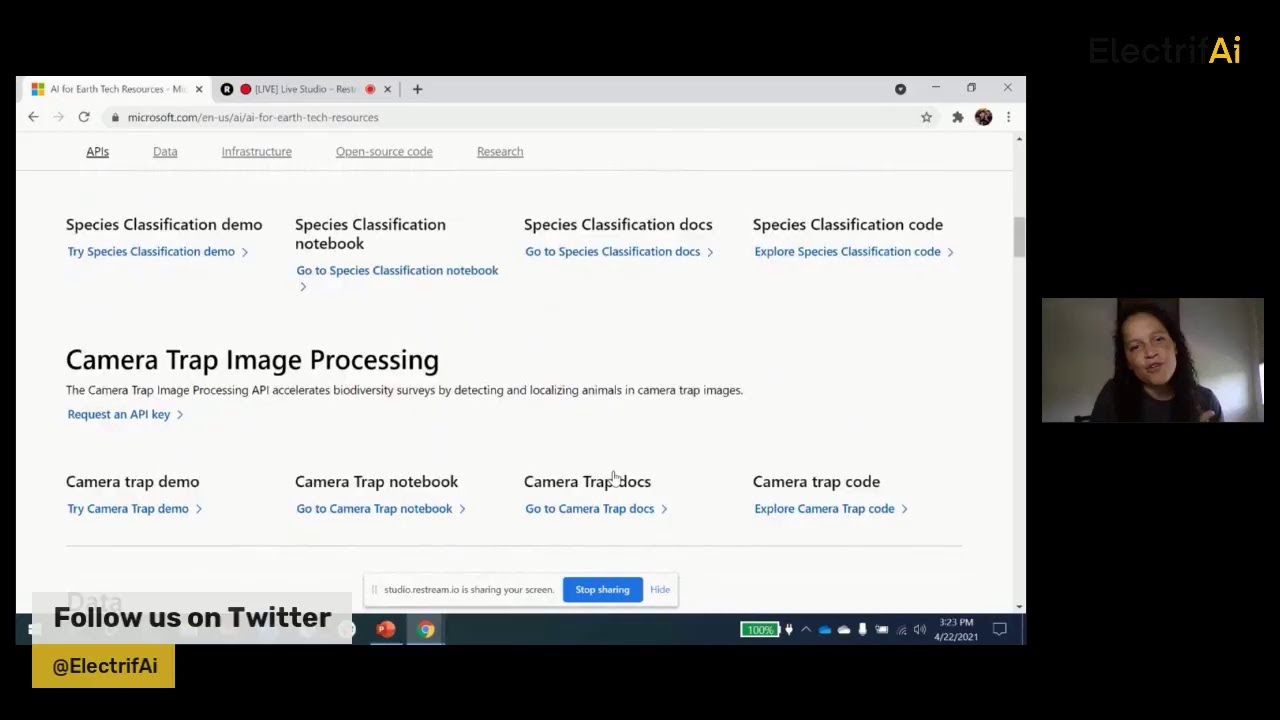
Hello and welcome. I realized I don't think I updated the title, so it may not be right, but we'll get right on the post-production, as they say. We'll get it in post. Great to see you all. Nice to— of course we're here. It's Thursday again. Another week has gone by. What have you done that you're proud of? And it's Earth Day. So in honor of Earth Day, I wanted to say hello and also talk to you about some pretty incredible work across the globe that is happening with regard to artificial intelligence and give you a little bit of insight into the world of applied AI. So I am your host. This is Noelle Russell. I'm the host of This Week in Applied AI. On behalf of Electrify, thank you so much for taking a few minutes to spend some time with me. We— like I said, it's Earth Day. Happy Earth Day. I'm so excited for you, for us to be talking, and really today I'm just gonna talk about Earth Day, 'cause it's cool and it's fun. If you're here and you are live with me, please go ahead and say hello in the chat. I can see most of you as you're chatting with me. If you have any questions about what I'm saying, also do that, send me a chat, and then if you would like, actually, whether you like it or not, I'm gonna provide some resources in the form of links as we talk that we can kind of take a look at. So what are we doing today? Today with AI for Earth, what this is, is it's actually a kind of global effort for those of us interested and passionate about the area of climate change, about agriculture, about really anything related to kind of how we operate in the Earth, you know, on the Earth. What can we do to improve the world? And what we found, or what I found, as I was doing a lot of research in this area and working on projects, was that a lot of farmers, a lot of growers, producers of food, they don't have a whole lot of technology. We're seeing it get better, but it's not the first place people go, right, for the technical, you know, the bleeding edge of technology. So today I wanted to share with you a few use cases based on the conversations that I have seen. Hey, Don, nice to see you. Thank you so much. If you have any comments or ideas, please let me know. I'd be happy to share it with the rest of our listeners. Just so you all know, we are live streaming not only on LinkedIn, but also on YouTube, as well as on Twitter. So just join and connect with us and ask as many questions as you like. This is your chance to just have a conversation about it. So today I'm going to focus a little bit on the producer, grower, or agricultural side of artificial intelligence. But there's also, I mean, the beauty of AI and specifically machine learning, which is an aspect of AI, is that it's fueled by data. And one thing we have a lot of data on is our planet. So there's lots of government organizations worldwide collecting information about our planet. And now with the advent of and with the advent of some of the AI models I'll talk about, you can actually harness that data and turn it into information we can use to make better decisions. And many of these decisions are already in progress. We are working together with governments to actually make legislation all based on data-driven objectives. And I think that that's a critical part of a solution. So one of the use cases I wanna talk to you about today is all about the agricultural side of the AI for Earth initiative. So think about it, if you are a grower, there's lots of different things that you can do. Many of it though tends to be in the area of computer vision. So I had the honor of speaking with one of the largest growers in the world, and they had a, their very first words to me were, Okay, we could talk, but don't touch my production line. Right? Like they've got a machine operating and they don't want AI or machine learning coming in and messing around with stuff that's working already. And I think the beauty of artificial intelligence, specifically of machine learning, is that we don't have to. Right? We can actually take past performance to help future decisions. We can take past data that's been collected about the way things have worked and use that to change how we do things in the future, to change the predictive maintenance on our lines. So let me give you a very specific example. If you're a grower, and let's say you're a grower in Latin America and you're growing some sort of fruit, right? There is a condition that that fruit will need to be in in order for it to make it successfully from the time it was put on a truck or plane in its specific geography and shipped to wherever it's going to be sold. Like there is a timeline there. And there's also a visual representation in the fruit itself of what that fruit looks like as it goes through its process of maturing, right? So what better way for us to leverage something like computer vision in order to document that journey and now start to understand the full lifecycle of that fruit so that as early as possible we can detect Will that fruit make it? Or do we need to maybe ship this batch of fruit to a distance that's not as long? Right? We can now start to make huge efficiency choices in who gets what fruit based— and that way we also reduce waste of fruit, right? We can say, "Oh, it won't last 3 weeks, but it will last a week." And therefore a new, you know, area or demographic in the world gets access to this fruit. Local only, you know, you get what I'm saying. But computer vision can be used to create insight where that was extremely difficult to look at before. As a matter of fact, many growers look with their eyes and go, "Good, not good, good, not good," right? Handpick, throw out of the line. And we're just saying, we're increasing the ingenuity of those individuals running those organizations to say, not only can you, of course, identify bad fruit, which any human probably could do by looking at it, But now, what if we could give you some insight into how long that fruit will last and make better decisions about where we send it? And that alone can increase the actual consumption of what we're doing, increase the efficiency of how it's done, and ultimately give more fruit to people like me who like it, and of course create more supply for those who need it. So, so one, one, one example. Another example is something I learned during my time at Microsoft. I was at an executive briefing at Microsoft and was able to participate in a project related to— I don't know if you've seen these apple sauces today, right? It's not like in the olden days. Okay, maybe my olden days when you got a cup and you peeled off this like foil thing and got a spoon and ate it right now. They're in these like pouches.. And those pouches preserve, right, have to preserve the integrity of what's inside them. And so there is a huge amount of efficiency that needs to go into, right, the creation of the pouch, the sealing of the pouch, the addition of this little helicopter-looking top thing, right? I think, uh, so there's companies that specialize in this, but how do we make them better at it? How do we make sure that we can detect failure before it even happens? I, I've mentioned this before on previous episodes, But intelligent failure discovery, that's the thing. If we could figure out before something bad happens and all, you know, it's kind of like if you're on a, if you're, you know, forgive the analogy, like a railroad, you know, if you're a train, right? If we know we need to change direction, if we could just switch the tracks before we get there, like no one even needs to know that that would have happened, right? We get to actually avoid, you know, it's kind of choose your own adventure. And we get to avoid some of the pitfalls that we know are coming based on the patterns that our own data is telling us. So in the spirit of AI for Earth, I also wanted to talk about different projects. There's lots of organizations that have AI for good initiatives. I am one of those people that consistently Google or Bing, get on my favorite search engine of choice, and I search for things like AI for good datasets or open source datasets. And the nice thing that what this does for me is it does give me insight into the types of data that's now available for someone like me, an independent developer. What kind of problems could I solve? I'm actually starting a hackathon today in a similar fashion where it's in my spare time. I know what some of you are thinking, but in my spare time, tonight after the kids go to bed, I'm going to hack together a solution with an open dataset and my knowledge of machine learning, and specifically my knowledge of applied AI. Now, couple things I want to mention to you. If you have an idea related to whether it's AI for Earth or something else, if you have an idea, there are open datasets that could help fuel your idea to become a project. And then once you've got the right data, there's actually a set of technologies that you can use to build it. So one of those technologies is called— we have Cognitive Services at Microsoft. I'm a Disclaimer, I'm an MVP awarded in the area of artificial intelligence at Microsoft, so I know these models. But we have Custom Vision, which gives you the ability to go in and build on top of an existing model, an existing computer vision model that already knows what a truck looks like and a conveyor belt looks like and a machine looks like. But now you get to custom train it on whatever you want. You get to upload up to or as little as 21 images of anything and custom train that model to see what you want it to see. It's often when I, I use this slide deck when I do presentations and keynotes and it says, you know, use AI to change the world you see. And literally it's the combination of a model that already works combined with data specific to solve a business problem. And though you can do that in a web browser and kind of see a little bit about how it works, through using a cognitive service. When you get to actually doing something in production, solving a problem no one solved before or is very hard to solve, you need a bit more customization. You might even need the help of a set of data scientists. And that's really what Electrify does, right? Is it— I always paint this picture of like an umbrella. We have this umbrella of artificial intelligence. On one side, it's build your own, write your own model, build it from scratch, right? Do all those things. Then on the other side is black box AI, right? Those models that you just go to a website, upload an image, and it gives you feedback. And both of those are good for very specific use cases. But you know, when you are on one side where you have someone else's model and someone else's data to solve your problem, it's only gonna solve it so much, right? 'Cause it doesn't know anything about you specifically. On the other side, you could create your own model and your own data But it's gonna take you forever. So what if you could take a model that someone already built and tuned and customize it with your own data? It's that meet-in-the-middle magic that is known as applied AI or machine learning as a service. And that's what we do here at Electrify. So thinking about, as I mentioned to you before, you know, we've talked a little bit about, you know, some produce use cases and grower use cases, but you can even think about soil. And the success or failure of things grown in soil and how important the chemistry of that soil is. Today I was talking with an organization that specializes in building sensors. And I was just, I love the world of IoT. And really IoT plays a huge, and for those of you who are not familiar with that term, that's Internet of Things. It plays a huge part in the AI for Earth story. Because we need more sensors to understand the Earth so that we can then make better decisions about what we put in the earth, how long we keep it there, how often we water it, how we check the alkalinity, whatever that word is, right? We have so many ways that we can take the data that's coming from the planet and use that data to make better choices. Not just as an individual. I know I personally, you know, I think I was on Snapchat maybe today, and they had a bunch of things, you know, filters that said, I won't waste water while brushing my teeth and I won't, you know, I'll go plant a tree today or I won't, you know, have my sprinklers on at 3 in the afternoon when it's the hottest and the water evaporates before it can be absorbed, you know, things like that. So there are lots of things that we as individuals can do, but the power of climate change of AI for Earth is really behind what can organizations do to not only create more efficiencies, but to drive insights out of the information and data that they're gathering through the sensors that they're implementing. Another example, and I'll maybe close out with this one, another example is around like hydroponics. That is a cool space. And I like, my job is so fun because I get to dance around all of these different use cases. But hydroponics is the opposite of soil, right? It's like, let's not use soil, let's just use water. But still the use of data to understand like what that growth structure is, the quality of the water, the quality of the light, which becomes critical in that space, right? How do we make sure that we're leveraging what we know about that environment, whether it's a hydroponic environment, whether it's a more traditional soil-based environment? How do we use data about that? First thing we have to do, and I found a new friend who said this beautifully, and I wanna kind of mimic or copy or, You know, I think Picasso said great artists steal. I don't think I'm stealing, but I'm going to mimic something that he said, which is the first thing we have to do is gather signals. We have to gather the data. And that data is likely going to come from sensors, or maybe it's going to come from web traffic, or there's got to be some way to grab the information about what's happening. And we've— for those of you who've been around tech a while like myself, we've been gathering data for a long time. Decades, right? So we've got lots of data to work with. The next thing we have to do is create a way to provide some predictive analytics based on that data. Why did we save all that stuff? Why did I save server logs in a financial institution for 15 years? It is for this moment when some magical thing can happen where I can find out that server code, and I'm talking to my, you know, production leaders out there, but that's that code, right? That error code you get, I should be able to know, oh, I've gotten that error code 4 times before and here was the root cause of those scenarios. Check that first. That should happen. It does not happen today, right? Because those pieces aren't being put together. But we are now in a time like never before where we can put the data that we are harnessing and gathering from the environments in which we are working, combine them with the algorithms that are proven to work to solve those problems, and get them to talk to each other. Electrify.ai has uncovered that not many organizations have the capability internally to do this, so why not leverage it as a service? Really exciting stuff. I don't know if I, I told you at the beginning, I probably didn't, but I usually try to just talk to you for about 20 minutes. We're already coming to the end, um, of our special AI for Earth section. Um, but I mentioned gathering signals as the first step, right? Get the data. The second step, creating, right, these predictions from that data. And the third step is actually really important. It's acting intelligently. And it's not just our software needs to act intelligently. Actually, I think it's more important that we as the humans in the loop, we as the discerning humans that are using AI as an, as an input to our decision-making, we need to make better decisions. We need to make more intelligent decisions. We need to make more inclusive, holistic decisions. Many of you know I'm a fan of mindful leadership, and really that's what it means is that we don't just blindly take data, you know, at surface value. We look at it holistically. We ask hard questions. We ask about the explainability, you know, how did that model do what it did? How did it come up with that solution? And then we can confidently, right, use that piece of information to help us make a better choice. Whether it's to change what we're using to fertilize, whether it's to increase our water, whether it's to increase, you know, the type of light that we're using. We can change, we can actually improve the world around us by learning about our past. And now we've got technology that helps us build a better future. Like, okay, let's do this. So I just love it. It was just to recap, right? It was gather signals, build predictions, right? And then actually act intelligently. And that's not just about the software. It's about us as humans participating in the engineering process. So it's been my pleasure to chat with you today. Happy Earth Day. I want to just quickly share my screen and share a couple resources with you for those of you who are interested. I will do that now. There is a great website where you can see different data sources that are available. But AI for Earth, if you are not familiar with it, it is a really cool philanthropic effort that's done at Microsoft. You can go and take a look at it. I, of course, tend to gravitate towards the technical resources, but there are grants. So if you happen to be working on a project or working on innovation in this area, there are grants available from Microsoft. I don't know anything about that program. I don't I mean, other than what I'm showing you now. But if you're interested, definitely go take a look. Who knows, what you're working on could actually be funded. But I wanted to take you through some of these more technical resources because they're cool. Remember I said, we've got companies that have built valuable data about the Earth. And so this just gives you a nice listing of some of those. You can dive in, see if there's things that you can use. Here's some datasets that are available, right? All around, How the Earth Works. This is not an exhaustive list, of course, but if you haven't or don't know that this is available and don't know that this is something you can dive into, now you do. So this has been another incredible week in applied AI. Happy Earth Day! Go plant a tree or use less water brushing your teeth. It is, it is always my sincere pleasure, and I'm humbly grateful for every minute you spend with me and listening to this session. So thanks so much. We'll see you next week, and I'm actually going to be talking to you about contracts, um, and procurement, uh, something that every company spends money. Can we help companies save some? So we're going to do a demo on that. It's going to be fun. Uh, hopefully you'll have a chance to join me. It's been, again, really, uh, my pleasure to be here. Hope to see you next time. Thanks so much. Bye!
More from Noelle

Take the Unlocking AI Challenge and Get the Keys to Unlocking Time and Revenue for Your Business



Don't Get Left Behind: The AI Executive Challenge #ai #business #fearofmissingout





