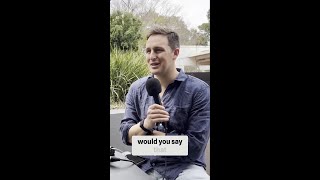
GRDC in Conversation: David Tropiano

David Tropiano farms near Geraldton in Western Australia, where his grandfather immigrated from Italy and his father started share-farming in 1993. He relies on 10 to 15-year leases to scale his operation and has adopted precision agriculture over two decades, though wet seasons like 2024 have made fieldwork difficult.
Chapters
This series is a GRDC investment that takes you behind the scenes as we sit down with some of the people shaping our grain industry, uncovering their journeys, learning more about their passions and the projects that are part of their everyday. We are over in Western Australia. This is now the third part of what has been the GRDC in Conversation podcast. We've covered Southern Australia, we've covered the north, across New South Wales and Queensland, and now we've headed west to meet with all sorts of growers, advisors, researchers and people involved in the Aussie grains industry. Welcome to the next series.
My name's David Tropiano.
Righto. And where are we, David?
We are located in a little town called Mullawal about 20km south.
Where's Mullawal located? In the scheme of WA.
Yeah. So Mullawal is approximately 100km east of Geraldton and from Perth, we probably 500k's north east.
Yep. We'll just roll straight into it, David. I guess, yeah, for people I've been lucky to actually see a little bit more of Western Australia and a bit more of the country and what is a cracking year. But for people who aren't familiar with Western Australia, can you describe types of soils and what farming's like in this part of the world?
Yep. So I'll describe where we are. We farm 20k south and on that southern property we have mainly granite and granite loam sort of soil types into wadj gravels. And then we've also got property to the north of Muller, which is about 5k north, and that's predominantly yellow sand plain into red loams with a bit of red clay in it.
How competitive is the land market over here, like for you guys? If as you're looking to expand, whether that's leasing or buying, how. How tight is it?
It's reasonably tight. Yeah. Yeah, definitely tight. Probably in schemes to the eastern seaboard where you guys are probably not as tight or as hard to get into, but yeah, definitely tightly held and with some big players around, it is hard to get. Get a bit of a look in with some properties, but you can find, you know, little gems here and there.
Yeah. Size of operations. What does it look like and what's the township like?
Town's quite small, so we probably. You test me population wise, but yeah, we'll say a couple hundred people there. I reckon the average scale around the area, we probably ran that 6 to 7,000 hectares cropped, I reckon in this region. And then there's a couple or there's a handful of bigger Players which would be somewhere between 15 and 30,000amongst us. Yep.
And so your family, how long have you guys been farming here for?
We started farming in Muller in the early 90s so about 93 year old man farming grandfather? No my dad came here. So yeah if we took a step back my grandfather come out from Italy in 1935 and started farming in Morawal down there. So yeah started that and then yeah expanded through that area there and probably expanded the wrong time during those high interest rates and actually probably went backwards and they sold up during that period of time. So then yeah dad was off working other jobs manually Transfield and Morrow Ag school actually. And then yeah this property where we are today come up as a share farm. So yeah he started shear farming here in 93.
What was he doing work wise before that did you say?
Working for transport so putting up power poles and transmission lines. Yeah keep himself busy like that. Yeah I always wanted to go back farming and yeah this opportunity come up.
I guess as I've looked at your story and what you guys do a bit of a different way of I guess approaching the family farming. But can you talk to me? So this came up as a, as a share farm. So how did your old man get his foot in the door here?
This property was purchased by investors in Perth. Of that one of the investors were of relation so they knew that my dad was farming background. They looked at someone to manage it. So yeah they approached him and said would you like to come and take this on? So he took this on and yeah share farmed it for about five or six years and then they didn't have an appetite for ag anymore so they said would you like to just lease it off us and leased it and then eventually purchased off them.
Has he ever talked about what it was like to come back into agriculture after I presume growing up with that dream, being in and around it thinking that maybe one day you're able to pursue it to then have it taken away for quite some time.
Yeah it was pretty tough for him. It would have been very tough. Yeah starting because he didn't have a lot of gear or the main thing capital behind you. Yeah, it was very, very tough and very hard but I think he enjoyed it. It was better than the alternative. He'd seen what the 9 to 5 job looked like and didn't like that. So he thought he always wanted to go back to ag and give these kids an opportunity to go into it.
And so for you was your pretty. Well your whole childhood spent on the farm and around this area.
Yeah, it was. I was about nine when we shifted here, so I did have a little bit of time living in the moral town site and then also my infant years on the morrow for farming Morawal. But majority of my memories are on this farm here. Yep.
And so you guys, yourself and your dad, you went to school down in Perth and then an ag course. So agriculture and farming was the way you wanted to go?
Not always, actually, no, I'd wanted to do anything but farming, to be honest with you. Yeah, I wanted to be a physio for a while. I remember doing work experience that and realized, ah, this isn't for me, this is Jack, I don't want anything to do with this and then, then come out. I wanted to probably do a trade and just through lack of direction I thought I'll just do a go to Muresk and study ag for something to do really. And during that period of time, because I didn't do my te, I had to do a bridging course to get into there. So during that period I did a year on the farm and that's sort of where I really enjoyed the farm go. Wow, this is pretty good. I think this is sort of where I wanted to go. Yeah.
And so that was not long after high school. You did the year on, on the farm working for your old man or were you working for someone else?
No, I was working for dad. Yep.
And then you thought, oh, it's not as bad as what people make it out to be or.
Yeah, pretty much. I just, yeah, I just really enjoyed it and I thought, yeah, there's capacity for me to grow here and yeah. Enjoyed the experience.
And going through Muresk and out the other side, was there, Was it coming home? Was that the main option for you?
Wasn't initially the main option. I was sort of going to look for a career elsewhere in the industry. But yeah, I just kept being drawn back to the farm and enjoyed what I was doing here. So ideally I wanted to go off and experience something else, get some experiences elsewhere. But yeah, just enjoyed it. Dad sort of need a hand on the farm and I thought, well, we'll give it a go and come back.
So when you came back 2006 or 7 06?
Yep.
What did it look like?
A disaster. Yep. 06 was probably the worst year in my memory bank. It was, I think we had about 60mil of rain for the growing season and as we had a heap of summer rain, but it was just Armageddon and I was going, my God, what have I done? What am I doing here? It was just bear paddocks everywhere and still heavily in livestock at that point in time. And there was sheep dying and, you know, putting sheep down and yeah, hand feeding every day. It was just I was going really scratching my head thinking, what the hell have I done? Yeah.
And the farming wise, were you guys using GPS and that here?
Not at that stage, no. It was still very much old school, still round and round sort of stuff. And yeah, the technology hadn't grown. We haven't caught up with technology at that point in time. Yeah.
It's amazing how quickly it's changed, don't you reckon? If you think that's only well, 20 odd years ago. Not even.
Absolutely. And it's been a quick uptake from that point onwards. Yeah. So once you've always went to that, then you just progress very quickly from, you know, your auto steer to auto see boundaries to tram lining and then variable rates and yeah, there's very quick adoption from that point onwards.
And for you, like talk to me about your old man's maybe style of working and how you came in off the back of being at university into what was a really challenging year. How'd you approach it?
Well, it's very much just learn, just. Yeah, very new to it. So you just sort of shut up and pay attention and just do as you're told, really. Because, you know, I didn't know any better in all honesty, had no idea. So yeah, paid attention and try to learn from there.
Did you find it easy coming forward with ideas of how you guys could grow and do things differently over time?
I did, yes. Yeah. Earlier on, not because again, you're just coming from a point of no real experience, you know, whereas he's lived it all and he's done it. So you take that on board and go, yep, no worries. You see things that you think you could do to help improve it. But yeah, at that point in time, no, over time you do and you speak up more and dad's been very open with that, like, yeah, taking things on board and yeah, going with it.
For you guys, your approach to farming, obviously owning smaller portions of land, is that right? Or can you. Can you explain the business today a little bit?
I share farm with dad, so Sri and I are a separate business to my dad, but we work together as one unit and together we probably own 40% of the land holdings and 60% we lease.
Have you guys found that? Has it been. Is that or I'll say like a good number and I'M asking this from people we chat to. Obviously there's that view of, okay, getting in as a first generation today is really difficult. So being able to, yeah. Leverage yourself in different ways. How do you guys make that model work for yourself?
Through necessity. Because when we started Lock dad, so he owned nothing. So he, you know, bought little bits and pieces and then when Sri and I come in, we own nothing. So you've got to make that lease model work and to make it work you need scale and a bit of it. So sort of went down that line to get the scale with it. And if you ask me what's the idea, I'd ideally love to have 60% owned and 40% lease. That's the, that's the goal is where I like to get to where I'd sit a bit more comfortable because it does give you that leverage to grow your business a lot more. Because the hurdle you find with agriculture is capital. And if you don't have a land holding that's generational or passed down the line, which is accumulated wealth, it's very hard to go to Mr. Bank Manager and say, please, can I have some money to buy the farm next door?
And so for you guys, how do you structure those leases and those kinds of arrangements?
Very much so in a long term frame. I generally don't look at leases as short term because I feel that there's only one outcome with that. If you only get a three year term, you're stuck with your rotations, you're stuck with improving the farm. And I think it's a lose lose situation for one, for me and for also the owner because I'm only going to do one thing when I go on the I'm just going to wall to wall wheat and then get out of there because you don't know your neighbors might come and undercut you the next lease and you lose it. So we've been lucky enough to deal with good people and build up good relationships where we've got good long 10 years of lease. So until, you know, 10, 15 years sort of leases in place.
Yeah. Wow, that's a long time.
Yeah, it's a very long time. But at the end of the day we treat it like it's our own. They get a very well maintained farm and then we get the autonomy to do what we need to do to grow that farm to our benefit as well.
And so when you look at, I'm just picking your brain flat out here because I find it fascinating when you guys look at like geographically, have you Tried to set up, say your home blockers, the central hub and then the spokes of the other farms out. How do you guys manage that?
Not by good management, but by chance we've ended up with two satellite blocks, one here and one to the north. And that's just through finding a lease that was suitable for us up the north. And then bits and pieces around it have come up which we've taken on next to it. So we've got nice big hub there and a reasonable hub here and the same sort of thing here, Same thing. We just picked up little bits and pieces around. But yeah, not scared to go look outside that area. But ideally, I have to say, within a decent travel distance, you know, 30, 40K. Any more than that, I think it just logistically becomes a bit of a pain in the backside and too much downtime. So ideally I'd love to keep it just the north and the south and just branch off from there.
When you look at those areas, does rainfall and soil type and all that vary significantly across it?
Yeah, very much so, yeah. Soil type definitely to the north, as I was saying earlier, if it's more of a sand plain, red, loamy sort of soil type, and down where we are here is more of a gravelly granite loam. And then rainfall, it's only 30k, but it's hard to believe the north gets more summer rain and then less winter rain. And then where we are sitting today, which is the south, we'll get more winter rain but less summer rain. And then on a day like Today where it's 28 degrees, 20 degrees will be here and if I travel up there, It'll be probably 29 or 30 and it's. You scratch your head sometimes you go, how's that possible? But when you think about it on the map geographically. Yeah. Well, if you'll win another 30k north of that, you know it's going to be another kilometer, another degree warmer again. So there is subtle differences. Yeah.
For you at home here across those 20 years, how have you seen close enough to 20? I'm aging you here. No, those, those 20 odd years that you've been here, how are the seasons changing? Like are you noticing changes and off the back of that, how your practices adapting to it?
Yeah, 06 and 07, which is my first year back, was definitely a wake up call for the whole district. I think everyone was coming off the 90s, which I'm told was a phenomenal period in agriculture where everything worked and went really well. And the early 2000s a bit dry. Then 0607 was like the real smack in the face go, look, things are changing and we're looking back now, I say it was a disastrous year, but it wasn't that bad a year. You look at the rainfall because last year, 2023 we had a far worse rainfall year but we produced three times the amount of grain on that same rainfall or if less rainfall. So we look back, we're very biased with our memories going 0607 with disasters but looking back, we just weren't farming them well. So today's practices that everyone's doing, we are far better placed than what we ever have been with, you know, conserving moisture without summer weeds, seeding early big thing nutrition got our nutrition packages better and now we control far better.
When I was chatting to John woods, chair of GRDC or ex chair of GRDC when this is released, he was saying what he sees is like the ability of where the grain industry is now compared to even when he stepped into that role in say 2012, 2013, I think it was maybe 2014. Now what would have otherwise been a failure of a year, you're actually still getting grain off the paddocks because practices and management is so much better than what it has been historically.
Yeah, no, I'd agree with that. Yeah, absolutely. Yep. And you like to think in 10 years time we're going to be that much better again at what we're doing. But yeah, we're worlds away from where we were in 06 and 07 for.
You guys and back to the family side. So you've got a brother who is now back in. So was that always the long term plan for you guys? How far into the future are you planning the business for? Things like that?
Yeah. So first party question probably 18 months ago, Matt sort of broached the idea. It was sort of always floated a little bit but probably 18 months 2 years ago he said look, I'm a bit sick of what I'm doing here of you know, getting a bit bored with it. How's coming back to the farm look and sort of flow the idea with us. And yeah, we sat down and spoke about it for a bit and we thought well yeah, it's actually probably could work out quite well with my dad getting towards retirement age and definitely slowing down on the property and I'm going to need help on here. So sort of felt there could be a direct transition with dad stepping out and Matt stepping in to the business and planning. To answer your question with planning wise, yes, we are looking a fair way forward. Yep, we try to looking. Planning is very loose because you have a direction where you want to go. But as you know, the roadmap changes as you go along with it because life throws curveballs at you. But basically our goal was to have common direction in mind between all three parties. That being my dad, Matt and Elise and Sri and I. And just having that common goal at the end of the day. And the direction will be worked out as we go along.
There's kind of three parts to the business, if that's right. There's like the part that you farm with your father or your dad, and then there's obviously you and Cherie have your own holdings as well. And so how do you make all of that work and prioritise?
The way we do it is it's always one. So we treat it as need be. So, for example, if it rained on dad's farm, that's where we start seeding regardless. Doesn't matter where it is, whose it is, and all the operations are done by what's needed, what's best practice for that crop at the time. And the same with harvest. Doesn't matter where we start. It's all as one. And we've got little pockets all through where, you know, we'll be harvesting a bit of my farm and then it's the other half's dad's farm, so rolls into his. So it doesn't, you know, it all works out in the wash. And one year you lose out because yours wasn't see the first, but the next year you gain. So it's swings and roundabouts and we very much treat it like that. It's not nitpicky dollars and cents down the end. Otherwise it just wouldn't work. Every year there's a winner and loser with who got slightly better yields and who didn't. But in the scheme of things, it's all a common direction. So it doesn't matter.
As we were talking kind of before we started recording, really interesting for you guys and quite challenging. So can you share a little bit more about how the 2024 season has shaped up so far?
2024 is, to be honest, is probably the hardest year I've had in farming. Just with all the rain we had, which is what we dream of as a lot of rainfall farmer, we thought, jesus, give me all that rain. Yeah, we'll grow some thumping crops. But it doesn't work like that, as I've learned. So we had a very dry seeding, got to the end of May, had 100% of the program in start of June rained and just did not stop raining. So we could not get on a lot of paddocks. So for example all our southern farm was roughly about four and a half thousand hectares worth of crop. We sprayed and spread with a plane because we could not put a machine on the paddock at all. And you're looking at weeds choking the crop out and you just can't get on there to do it. It's very, very frustrating. Led to a few sleepless nights. But yeah, at the end of the day I'm sure there's more positive negative out of it. There definitely is more positive negative but it's definitely a different year. Yeah.
What would you say would be your top couple of learnings from from the year you've had that you'll take forward into next season and the ones after?
I don't know. I don't know we're ever going to see another year like this. I suppose we may do another 20 years time. I don't know. I don't know. That's an interesting question. What I've learned from one probably to not, I wouldn't say not sweat about the fat getting, getting on the pace but maybe just relax a bit more about it. I spoke to a few mates down south who encountered this wet weather all the time. He said what are you worried about? Just it'll be fine. It will dry out eventually. Don't worry about it. You know, you got water and he's right, he's 100. Right. But it was just frustrating at the time. You could see what needed to be done but you just physically could not do it. So it's yeah a bit of a challenging period that July period for us. Yep.
And then for me who doesn't someone who doesn't know a lot but so it being this wet still where you were bogged today? Yeah, yeah, we'll let everyone know that one now for yeah, getting bogged today. Does that mean that next year come sowing time, your profile is going to be fantastic or is it still up to the weather gods over summer?
Oh, I think we're definitely going to have more moisture in the bank than what we would be going into the next season? Yeah, I'd like to think so. And again it's a situation I've never been in before but yeah, you'd have to say there's going to be some moisture left over there so it's going to be a positive thing in the.
Longer term I guess a couple other questions to finish up, but what are the goals for the next few years for you personally?
For SRI and I personally, it's just to consolidate more in ag, where we are, expand a bit more and yeah, have a good lifestyle somewhere in between all that.
And for you, what is it about the grains industry that keeps you involved and so passionate about what you're doing?
I like the challenges of the day to day of farming and trying to solve those issues. That's pretty much what keeps me going with it now.
David, thank you so much for having a chat. Was there anything else that you wanted to talk about?
No, that's all good.
More than happy there. No mate, thank you so much for having a chat and I think it's been a really interesting little tour so far of the wheat belt and yeah, look forward to seeing how the harvest goes for you.
No worries. Enjoy your time in the West. Ollie, thank you.
Thanks for joining us for the GRDC In Conversation podcast. This series is a GRDC investment that's sharing the stories of the people who are living and breathing the Aussie grains industry. Make sure you check out some of our other conversations and hit follow on your favourite podcast app to never miss an episode.
More from Gerri







GRDC National Variety Trials (NVT) Case Study: Helping Oat growers make informed variety decisions


Managing rhizoctonia in wheat and barley: Impact in low and medium rainfall zones 🌾🌾