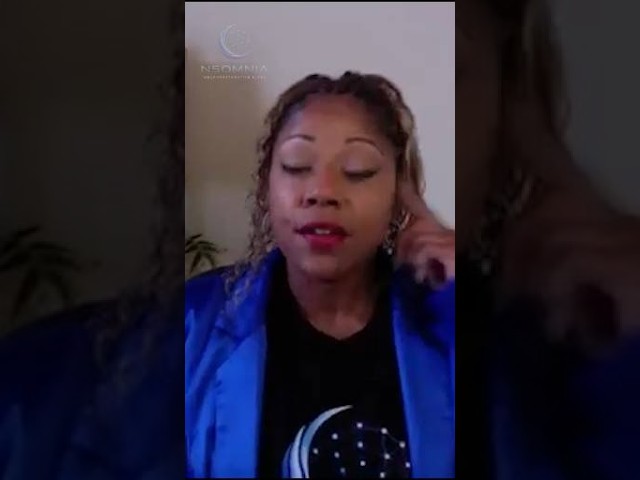
Dr. Nyree Penn presents the Sleep Independence Blueprint, an 8-week program to help people transition from sleep medication to natural, physician-guided neurorestorative sleep. She explains how common drugs like blood pressure and diabetes medications affect sleep pathways, and describes practical ways to assess whether your brain is actually restoring: memory, mood, focus, and physical recovery.
Chapters
So we have the Sleep Blueprint, like I said. Um, if you're on sleep medication and you want to get natural restorative sleep in a physician-guided manner, the Sleep Independence Blueprint is what we've offered virtually. You don't have to come to the clinic. This is an 8-week program we can absolutely help you with over the course of 8 weeks. What we'll do is we'll help you identify your sleep patterns, your symptoms, if you're on any type of sleep medication, any other sleep medication that you may be on. That's another thing, side note, there are so many other types of medication that affect restorative sleep. A lot of the blood pressure medicine tends to influence or affect restorative sleep. Some diabetic medication, some hormones, any type of hormone addition therapy. There's so many amazing benefits, especially when it comes to hormones. Hormone replacement therapy is a big one. A lot of people feel like, oh, I can't sleep, it must be my hormones. It may be. I don't— you know, that's, that's a factor, especially for men and women both. You may notice that you sleep better if you do get the hormone replacement because testosterone specifically actually does facilitate, again, your sleep pathways. Estrogen absolutely affects the sleep pathways, as women see with hot flashes. That's due to a low estrogen, the hot flashes, but that affects your sleep due to the fact that it wakes you up at night. Not the estrogen. It's the waking up at night and having the fragmented sleep. That's how hot flashes and menopause affects sleep. Even though hormones can become a little bit of an issue, not to the capacity of disrupting your sleep. It's important to clarify that misinformation as well. But again, this is what we do at Insomnia Sleep. Here, we're just here to educate people. guide you, by all means, we're here to help people. But most importantly, we're really, really here to help people understand neurorestorative sleep, identify if their brains are restoring, and identify what steps should be taken in the event you may be experiencing some neurological sleep deprivation. So some healthy takeaways we can address. Like I said, you are your own best advocate. For determining if you're getting neurorestorative sleep. There's some ways to identify biochemically if your brain has restored, like I was speaking about the adenosine before, the adenosine sleep pressure. There's really not a way as of yet to identify if your brain is restoring and releasing adenosine. But hopefully sometime in the future, as the awareness of neurorestorative sleep becomes more aware, maybe we can start developing or moving in the direction of creating some sort of biophysical assay or test, almost like a blood sugar test, where we can see if our brains are restoring. So that is definitely one of the missions we're also looking at is how How do we move the industry of neurorestorative sleep forward, right? So we're always looking for ways to partner with people, do more clinical studies, especially in the area of Alzheimer's disease. We do believe that with our neurorestorative sleep sessions, we are activating the glymphatic system. But again, these are all things that we're putting in process steps and building blocks that have to be taken. But initially, we have to educate and inform people that neurorestorative sleep is real and it's needed. So let's, over the next couple of weeks, you know, like I said, you notice, pay attention. How's your memory? That's another big thing. If you feel like your memory is going, how's your sleep? How's your restorative sleep? Your brain fog, mental acuity, are you still sharp? That's something else that falls early. Your ability to recall and act quickly is very much affected by restorative sleep. Your mood— how moody are you? Are you pleasant to be around when you haven't had sleep or not? Um, can you focus? And, um, for our athletes, what's your physical recovery like? And you're not— your body is not restoring and rebuilding All those gains mean nothing if your brain is not restoring. So again, we definitely focus on neurorestorative sleep. Uh, if you're having problems or challenges, by all means, give us a call. We take, um, we also measure your neurotransmitters. We do neurotransmitters analysis because there's 10 neurotransmitters that affect your sleep. Where are those on the chart? One is now you hear words like serotonin and dopamine and and acetylcholine and cortisol and all these you know scientific neurotransmitters. But again, how do they affect your sleep? Over the course of this series, we'll definitely dive into neurotransmitters, how they affect your sleep, in what capacity they affect your sleep. On our channel, I I have a podcast as well. On Sleep Reimagine, I do speak about the neurotransmitters. Take a look at those. We have so many episodes in addition to the information that we're sharing here. But, uh, you know, let's continue this conversation in our next segment. Every conversation is going to be about neurorestorative sleep and how it has the power to change your life. We invite you to comment about how your sleep is. How your neurorestorative sleep is. Anything that I mentioned in this episode, any sleep medications, we do have a sleep medication guide where I identify the side effects of the sleep medications from a neurological perspective. And then also, are your sleep medications still as effective as they were? Invite your physicians to have a call with us. I'll be more than happy to speak with them because a lot of people in the medical field, a lot of my colleagues and physicians and friends, we're not taught about sleep at the neurological perspective. Maybe they're just not as aware. They're just doing what they were trained to do. So it is— there's all space for all of us to learn and grow about neurorestorative sleep. Any questions you have, please put them in the comments. How is your sleep? Measure your sleep. Look at your wearable device. Do you feel restored? Sleep is not simply rest, all right? Sleep is not sedation. It's restoration, and it's one of the most profound, remarkable biological systems we have. Sleep is absolutely medicine. So again, my name is Dr. Nyree Penn. Thank you for joining me on our conversation with a neurorestorative sleep scientist. Please subscribe, share this episode if you know anyone who may be suffering from neurorestorative sleep deprivation. By all means, please share this with them. Join the conversation with me again as we explore many more new and interesting topics about neurorestorative sleep. Thank you. We educate and inform about the misinformation about non-restorative sleep. Again, dreamers, sleep is not sedation, it's restoration. Stay rested, my friends.