THE LEADERS ASSEMBLY 3.0 | UNUSUAL ACCESS (Full Replay)
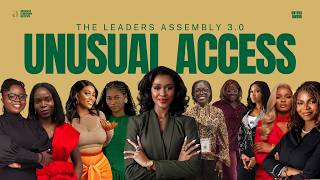
The final segment of the Leaders Assembly 3.0 webinar, hosted by Onyeka Nwobu and moderated by Abigail, wraps up a multi‑hour interactive session focused on women’s leadership, market access, and the Forge development ecosystem. Onyeka challenges participants to stop over‑thinking and to give themselves permission to invest in growth, emphasizing that the only barrier to success is oneself. The discussion moves into concrete details about the Forge offerings: the $500,000 Forge Accelerator (annual, quarterly, and monthly payment options), the distinction between the Forge Room and the deeper Forge Accelerator, and the specific resources each provides (expert meet‑ups, mock pitches, portfolio reviews, book readings, watch parties). Participants raise pricing confusion, ask about program access, and share personal reflections on relational intelligence, structured communication, and the need for mentorship reciprocity. Abigail recounts a story about gifting a mentor and the unexpected relational payoff, illustrating the importance of small gestures in professional networks. The session also highlights alumni successes (Grace, Nancy, Cynthia), reinforces the three‑tier framework (spiritual, strategic, practical) introduced earlier, and calls participants to intentional, purpose‑driven growth. The meeting concludes with gratitude, a reminder of next‑step emails, and an invitation to continue engaging with the Forge community.
Chapters
Tamar is— she's, she's in Obudu, Cross River State. She's a lawyer and identity coach, and she needs unusual access to people who are trying to discover themselves and access to the right strategy and knowledge on increasing income and influence. That's exactly what Access does, so you're in the right room. Stick around. Kiki Elomo is into footwear and accessory making. She needs access to mentors that can hold her hand and walk her through the process of growing a successful global business. That's fantastic. I'm just withholding, you know, some information not to give it too early, but for everyone here, you know, I see the, the what you all need access to. And as you stick around, you will see that you're gonna get that indeed. I see— okay, good enough, couldn't speak English. So I'm just going through the chat now and reading your responses. Ayo Kani, hello. Um, she runs a security and renewable energies company. She sells CCTV, smart door locks, solar inverters, lithium batteries, and anything in power or security. She needs access to the right market audience, both physically and online, and to, you know, the right people essentially, because she hasn't been able to reach the right audience. Okay, welcome to the Room of Access. Nkechi. This is Nkechi's response. She's a business consultant, a fashion entrepreneur, and she works with small and mid-sized businesses on strategy, pricing, and building structures that help them grow sustainably. That's fantastic. Okay, Tana, welcome to the room of access. So here's Rose. Rose is currently in Abuja, Nigeria. Welcome. She founded an edtech platform and she needs access to funding, mentors, and partners. You're in the right room. As we proceed in the, in the session, you'd understand why. Yeah. Hello everyone, this is Ifoma. She's in people and ops and she recently moved to human resources due her career trajectory. This year she went into the social impact space because of the exposure she's had through volunteering, and she needs access to start projects and grow funding. Yeah, fantastic. Welcome to the Room of Access. Okay, and the last one here is from Glory.
Ekon Glory.
She's a founder and executive director of an NGO, and she needs access to mentors and volunteers and sponsors. Welcome to the Room of Access. You're in the right place, and stick around. Okay, okay, I just hope I didn't botch that. As a student currently learning data analysis, and she has a dream of speaking to women and children in the future. She needs access on how to connect with people and to grow globally. Welcome to the right room, and it's good that you're seeking access earlier on and investing in yourself while you're a student.
Okay.
So, we loved reading the responses. Thank you to everyone who has shared, right? As we explore new pathways today, I'm excited to hint at a bold initiative that we will be launching later, which is why I've been saying, stay tuned. Stick around, right? This program is designed to elevate your impact on a global scale, and I can't wait to share the details soon. So get ready and continue to invest in yourself. So, um, yeah, we're heading into Okay, thanks.
I feel like we did miss a— we had a question that wasn't— yeah, we had a question that I would have liked for them to answer, and I think that was missed. We've asked— so a bit of context— we've asked you why you want access, right? And I found it very interesting. I, I, I think that what I hear is not a lot of us are ready for access. And let me put some— I always like to tell people about myself, um, I say a lot of things with love, it's just the truth, and the truth is always very, um, it bites most times. One thing I think women don't have enough of is the truth. And here's the thing, we're gonna walk through some skills today. And when I was putting down that skill, you know, I, I observed the entire quarter. First of all, I took 3 months off and I just observed a lot of mediocrity. That's one. Not necessarily from just women, just the world generally. I observed, I went into a program to actually see what are women experiencing. So when I tell you that I have lived experience, When I say to people and I diagnose, most times I realize that we don't know what we need, right? We don't know what we need first. Everybody keeps saying access, access, access. I'm just curious, what do you have to have before you have access? Can anybody answer that question? And I'd like for you to unmute your mics. What do you have to have to actually have access? That's the question. That's because everybody keeps saying access. If you're lacking access, it means there's a, there's a deficit somewhere that is leading to the lack of access. And I want to just reframe, I want to frame something here now. We are not victims in this room. If you want to play a victim, you might as well drop off. You want to say like, oh, society, life made us this, this, that one boy did this, somebody did that to me, you can drop off. We don't like literally you have full control over your lives. There's nobody that does not have control. Like, what I mean is, even if you've been brainwashed and you enter this room and you hear someone say something like this, it means that person is telling you there is a way out. It doesn't matter what your social graces are, where you're coming from, it doesn't matter. Because what has been fed— and I, I'm so keen to share with you Women have been— oh, I don't know where to start. I always, if you've been to any of the programs, I always say this, and people think I'm exaggerating it, but I think the problem is too many people are dead in the spirit that they cannot see what is happening in the physical. It sounds weird, but the actual truth is if you're dead in spirit, you don't actually know what's happening in the physical. You might see stuff on social, doesn't mean you're seeing. You might see stuff in real life, doesn't mean you're actually seeing what is happening. Like last year we said sites, right? And it opened a lot of— that was the thing for last year. It opened a lot of eyes to see, okay, this is actually the reality. And you know what a lot of women discovered? They are their actual blockers. It's not the world. Like, I, I, I, I, I, I, without, without, or at the risk of sounding maybe harsh, Most people— this is not a gender thing now— most people are their blockers. There's nothing wrong. The world is upside down. It's upside down for at least 5 billion other people. So what I'm trying to say is your version of suffering or your version of lack or whatever is not unique. It is not unique. If you want to cut out the other, you know, maybe you want to cut out How many people, how many can someone look up what's the population of, you know, the people in Africa? If you wanna cut out people in Europe, Asia, North America, South America, if you wanna cut them out and you still come back to Africa, your problem is not unique. It's actually quite common. So I find that most times we misdiagnose. Access is great, but if you don't have access, it means there's something, there's something that gets you access. That is missing. And that's, that's what I want to show us. That's why I talked about we're experiencing— I think it was Lisa that said the— she was talking about where are these clients that are actually paying other people money. And you're saying the economy, and it's true, and I'm going to show you a video. There is what is called right now that is happening, it's called a decadal disruption. Which is why I say if you don't see in the spirits, you can't actually see in the physical. You don't— you can see that the economy is tanking, but you don't know what is driving that. You can't put language to it because— and if you've not been to any of our programs, our programs are— they, they follow a 3-tier framework, which is spiritual, strategic and practical, which is pragmatic, right? For some people, they lean towards over-spiritualism. For some people, for some women, and this is coming from bad advice, you are overly strategic. For some other women, you are too logical. Human beings as we are were too extreme, and that's the problem. You need a healthy balance of everything because everything is interconnected. Now, if you pray and you don't go and do the logical thing, which is work, you're going to fail. I say this and I say it and I stand on it. And if you're Christian, I want you to hear me. If you're Muslim, I want you to hear me. Whatever it is, whatever denomination you belong to, if you pray and you don't follow principles that are logical, pragmatic principles, you are going to fail. You are not going to get the access. You're not going to advance. It's not going to work for you. If you are overly strategic— trust me, I was that— and you are not spiritual, you are going to fail. The worst thing about failing as a strategic person is you look like you're moving forward because you think, I too wise. Sorry, I know we have a mixed crowd. You think you're too wise, you think, oh God, I can, you know, I can, I, I can map things out. You will fail. I was there. It's called strategic people solely typically live in a lifestyle called treadmill lifestyle. They typically look like they are moving forward, like they are advancing, but they are really not because again spiritual and pragmatic principles still govern things. Now, if you're overly logical, and if 1 1 doesn't equal 2 for you, you won't do it, or you won't make that move, or you will not invest in yourself. Whatever it is, you will fail because you still need to be strategic, you still need to be spiritual. So I find that what we're looking for, we're always I said unusual access, and the reason why I say this, number one, because of the decadal disruption. You're going to see a video that I'm going to show to you. You're not going to— most people, I don't want to say most people, let me not lie to you, hard work will fail you this decade and the rest to come. But let's stay on this decade because it's hard for some people to even think in a year's span of time, not to talk of in a decade. If you start thinking in a decade, you're an OG. Like, I don't say you're an OG, but you've gotten somewhere if you can process life, the economy, politics, whatever, in a decade. Like, where the world is headed, what's going to happen, which is what, um, the people in tech actually do. The men in tech. I don't think that women in tech do that. Maybe some women, but most men in tech process— most men in finance process in decades. So what we are really struggling with as people, I find we, we symptomatic— symptomatically diagnose, and it ends in a misdiagnosis. And which is why I truly believe that if you want to learn as a woman, as an African woman— and I'm going to share why we're emphatic about African women If you want to learn as an African woman, you absolutely need to be learning not just from textbook context. I know, see, what I learned building Airli is that Africans don't go to school to learn. They go to school for status. They go to school for pedigree. They go to school for class. We are classes, we are arrogant, we love status, status show off. That, that's why we go to school. So that's why we don't actually learn. That's why we don't actually know. As— that's why you can sit in a class and the person who's your counterpart from somewhere else, maybe Asia, has clocked some things, which is why you see their continents the way it is. They've clocked certain things that you've not clocked. Because why? Most times our motives are wrong. It's like, oh, those people that thought I would never be anything in life, like I will go so that they can now see that I'm now sitting with white people. I'm like, what? First of all, everybody knows that, you know what, let me not say anything. But if you are a woman, an African woman, you must be learning from lived experiences. And I argue we are too obsessed with mentorship when we should be obsessed with prototyping. There's too much obsession with mentorship Which— mentorship is great. I have a mentor, I have mentors, I have mentors across different categories. I think you should have mentors, but the obsession— again, extremism. So we don't know how to balance things out, and that is the problem. So when we say access, access, access, I have a question: what do you think you're missing? And please don't say it's because of your background. Please don't say it's because of, you know, you don't have the money, or you were not born into something, or you didn't have a leg up. Please don't say that. Don't say that, because most times when we don't have something, there's just ignorance in that area. That's all. Your age does not define— there are people who are, I don't know, 16-year-olds who have access. It's not an age factor, it's not a sex factor, like gender factor. It's not a background factor. All those things contribute, but when you come to a state of awareness, which most people are not in, then you start to realize that those things don't actually matter. It's your ignorance. It is coming outside of a place of ignorance that actually changes things for you, and your gender becomes null and void, your background becomes null and void. Everything doesn't matter after that. So I want to take a few responses. Why do you think you lack access right now? And I want you to be honest, and I want you to reflect. Why do you think you lack access right now? Why do you think you don't have the access that you need right now? Why, why are you saying that it's access that will solve your next, or move you into your next level? Do you even understand it? Because I wrap up here. I typically address— so a lot of people don't know the work we do with B2B, you know, government, all of that. They don't know that side of what, whatever it is that we do, I do as a consultant. And that is because as the person who started this company, and you see it a lot as a pattern, really, if you're building anything of significance across the world, you need a dual muscle, which is the shippa and paa muscle. You can't address— I can't be feeding you knowledge and not be addressing structural issues. So if you ever see me and be like, oh, Onyeka is too much, like, why she, you know, oh, she thinks she's all that, the reason why is because yes, I'm going to teach you what I know, I'm going to bring people to teach you what they know, but if we don't go in and fix politics, if we don't go in and fix government, if we don't go in and fix certain things, the education system, you're not going to move forward. Yeah, so that's why there's that dualism. So why do you think that you lack access? Anybody that wants to go— Abigail, I think I'll let you moderate this. I'm gonna, I'm gonna, I'm listening and I'm gonna, I'm gonna just interact as you share.
See, hi, brother, see your hand up. You could, you could unmute your mic. Hi everyone. So I introduced myself as a PR manager, a filmmaker, and a talent scout. So, um, I don't think— if I'm going to speak from a point of self-reflection, I don't think I lack access because of, you know, proximity. I suffer because, um, you know, people like For the individuals that I'm targeting at this moment, you know, what I suffer is, you know, perceived value. You know, when they look at me, you know, they want to see somebody what's response— responding to, sorry. And most of these high-profile individuals, they like to respond to the visible results. So if my works, if my portfolio is not bulky, then they feel like I'm not worthy. If I have the skills, if I show them that this is what I can do, this is the value that I can provide, as long as my portfolio is not bulky, they don't want to, you know, be associated with me. And as much as I've introduced myself, you know, to many people and I try to help them solve problems, sometimes I even do it for free. I wonder if the problem is, you know, my visibility, or is it, you know, reputation. There's just like so much. And— oh, okay, I'm sorry, I just lost my train of thought. So I think my problem is, um, you know, positioning myself to match the level of people I want to attract. Most of them will just— sometimes they look at me, or the kind of things they say to me is, oh, you're too small, we cannot like work with you, you're too young. For, you know, the kind of job that wants to give you. But then I've had other, like, older people trust me with jobs. But most of the time it's just— I don't even really know how to put it in words, but I think this is something that I really do need to work on at the moment. And this is an issue that I am trying to get to the root of, and I'm hoping that this program and this team is able to make me understand and provide clarity.
Thank you so much, Peter. Thank you. I think before the next person goes, your problem is quite glaring. I think, like, simply put, you have no institutional backing, and that's a real thing. There's so many ways to address that. So many ways to address that, but I see how, like, you see the structural issues that Um, you see, and these, these skills that we're going to talk about today actually answers your question. Um, I want you to pay attention to skill 1, right? Um, yeah, your, your problem is very glaring, and maybe just when we get there we can circle back. And yeah, all right, thank you. Who wants to go next?
Good evening. Hello, good morning everyone. Um, morning. Hi, so what I, I, what I need, or the thing that I need access here as well, what I really need from the access is the right information. I know exactly what I want to do for, like, while I was, um, trying to follow people, or you know, when information is too much, I, I don't know where I'm going and all that. Well, I know where I want to go.
I know the path I want to take that would work for me to—
so like, so I can build from a place of rest.
So I really just—
what I want or I need is the access to the right rooms for the information that I could use to build myself and build the value I want to offer people and the world. Because value is not something I can just talk about. I have to build it through myself and through my company and for like 4 years and through actions and all that. But for me to be able to tell people or show the value I want to bring, I need the right information on how to build it and also how to market the value. Thank you.
Thank you, that is great. So what you have established is there's just a lot of noise and there's a lot of like information out there. My question to you is, if you saw the right information, if someone— if you If someone brought you the right— since you're able to discern the wrong one, if someone brought you the right information, would you be able to recognize it?
Yes.
Okay, cool. Thank you.
Thank you. All right, I see Lillian's hands raised. You can unmute. Okay, good morning everyone. So for my own challenge, like I said previously, I run a food, a snack business, and by profession I'm a dietitian nutritionist. But then one of the things that I know there are limitations for us to be able to access new markets is following up with regulatory compliance, which we are currently working on, and then That's just it.
But the other problem that I know that is limiting me from having the access is that I've not done enough marketing and I've not been able to network better. And that's like also a challenge for me because I'm now trying to like attend events, join conversations like this one to be able to get to get into people's space, you know, learn how to build that relationship.
So that's what I believe that is a barrier for me to get the access that I desire.
Thank you so much for sharing. I really love your honesty. I love how you were able to identify the structural issues and you're able to identify the self issues, right? It's very important. Thank you for sharing. We'll take 2 more. And yes, thank you. We'll take 2 more people and we move on.
Hello everyone, good morning. Um, can you all hear me?
Good morning.
So I have a couple of things to say. Um, Miss Onyeka made me realize that, um, she reoriented my mind when we spoke about access. I said I needed access and she made me understood why do I actually need this access and what is stopping me from getting this access. And I did a very quick self-reflection on understood that I do not have the actual requirements for me to get— attain the kind of access I want for myself and my beauty brand. So when I talk about the actual, I mean, requirement to get the access, I am not even positioning myself personally. I do not have the personal branding. I do not I've not developed, um, enough confidence that I can walk into a room and get whatever I want and all of those factors. And I'm actually here, I would really— oh, let me say, I pray that I'll be able to realize and be able to do more assessment to be able to position myself for the kind of access I need for my brand, and I also need for myself. It's not just about the access, is that I do not have what it takes. I do not genuinely do not have the requirements, what it takes for the, for the access. The access might be standing in front of me and I cannot enter because I am still not well developed yet. And having to realize that this morning just did a shift in my mind, and I'm I'm glad, I'm glad that I'm here.
Awesome, thank you so much. Um, I love how honest you, you are. I would like to reframe for you, when I admonish, it is not to break confidence, it's actually to bring light. The same way, like, you had to— you did a quick self-reflection. Trust me, as someone in this line of work, all I do is self-reflect. It's very painful for me because most times I can't get out of my head. But I want to just be clear, you do have what it takes. If you didn't, you wouldn't be here. So you do have what it takes. You just don't have the right information yet. You just don't have the right knowledge yet. So I want to reframe that. And because I truly believe that once you have the right knowledge, um, and you know what you need to do and you have that guidance to do it, I truly believe that we're capable of anything that we put our minds to, anything, anything.
So yeah, all right, Lisa's hand has been raised, please. Okay, good morning everyone again. Um, so when I mentioned the whole, um, gap with the economy and everything, another thing I realized that might be stopping me from having access, um, would be being in the right places, attending the right, um, probably workshops or seminars. Because I'm not like a very, very social person, I find it very difficult. Like, I struggle to go for events, like physical events, any events that would need my physical presence. I struggle to go for it. And, um, another thing that still holds me back is I'm still struggling with my shyness to like overcome it.
If I'm in church and—
because I teach in the Teens Church— if I'm in church and I'm teaching, I am perfectly fine. But if I have to speak based on my knowledge and, um, I have to speak based on my experience, I struggle for a while. Uh, I struggle with stage fright first, so meeting new people and getting into new spaces, I think that's something that I've been struggling with. And, um, if I'm going to get to those places, I really need to break out of my shell and come out more. So I'm hoping that this, um, session will also give me that nudge and push I need, because when this year started, I was very confused on the path to take because I knew the economy was changing. I already knew at the end of last year that things were not going to be the same, but I was really confused. And all I heard from God from the beginning of this year was rest. So that has— you like, when you hear from God, rest, I'm so confused. What do you mean rest? What am I supposed to do? This is like 4 months into the year. And you're saying rest, like, I'm so, so confused about where to go. And when I saw that you were holding a Leaders Assembly for this year, I'm like, yes, because Onyeka is always— she goes with the spiritual first before the physical. So I'm very sure that if I'm in this space, I would also get some clarity on what I need to do and the rest that God is actually telling me to rest, because I don't think he wants me to be idle. I just think maybe there's somewhere else I need to focus my energy on or something else. But I just hope that this session would help. So that's the kind of access I need. Thank you.
Thank you so much, Lisa. Ah, okay. First of all, who else received instruction to rest? You can just drop in, in the chat. I've— if I— the reason why I ask is it was a common theme for, um, a lot of I want to say like a lot of women who play a pivotal role to the shift that is coming in decades. I don't know how many people observed, but there were women that came in like in March. They came in in March to say like, oh, just coming up for air sort of thing. I mean, that was my case, but I observed it. How many other people— sorry, if Abigail, maybe you just read that out for me if there's anyone. Signifying. But how many other people received the instruction to rest?
Yeah, I see Zephora, I see Tohu Animi, I see Bukumi, I see Gunun, right? She's waving. I see Ucheoma.
Okay, awesome. It means— it means— so when something like this happens, there's a— first of all, understand that there's a global shift taking place. When God is telling the same people, different contexts, different regions, they don't see themselves, they don't know each other, and he's telling them the same thing, it means we have to pay a little more attention. And it doesn't even mean, you know, that he's telling a person something. If you observe a pattern, why did, why did quite a number of what I would like to term powerful women, why did they not come out in January? Why did they not launch out in January? I saw it, I observed it. They don't know I'm observing them. And this is what again I say about the eyes. You cannot be asleep spiritually and expect to see in the physical. It's not possible. You will be looking at— of course you're looking at a screen, of course I know that you can see, uh, whether you have glasses or not, you know, like, of course I know that you can actually see. What I'm talking about is discerning when things are like undercover things, things have not yet come out in the open. To be able to discern those things, you have to be very— your spirituality has— your spiritual senses rather has to be heightened. So I received that call to rest, and let me just explain it to everyone who went through that and, um, maybe was wondering like, what the hell is happening? Why would God tell me to rest? The world is shifting. I had that same panic. How many of us panicked when you saw rest, but maybe it just didn't align because you're like, I don't know what's going to happen. There's so much uncertainty. How many people felt panic? How many people felt like— how many people did not stick to it also? Abigail, your help, please. How many people did not stick to it?
I see Alisa panicked. Interesting.
Um, um, even if just one person, that's okay. That's okay. One person is representing a lot of people from what I— from what I know. So now, if you panicked, the first thing you have to understand is that rest is a strategy. Should I tell you what I do, um, when everything's burning and like, you know, going sideways, I just, I go, I take a nap. Sometimes I go off, it might not be enough, it might be just an away time, and I don't do anything. We cannot— with the world being unsettling, what you need is not more doing. What you need is a voice. The only way you can hear the voice of God is in the quiet. So when you hear rest, it's a call to intimacy. You're being called to intimacy. You're being called so that you can actually hear, this is what you need to do that would make you exempt. We are now in the Noah generation. Um, sorry, if you're not Christian, what that means is that the flood has already arrived. The economic flood has already arrived, and it is only people who heard, it's only people who took that rest, they'll be able to understand what to do in this time. It's only people who rested that will understand what comes next. The Noah generation means you have to start building arks right now, if you've not already. What is your ark? If you don't know what your ark is— and all of this might seem very woo-woo to some people, and I get that. Um, I, I know that there are some things I cannot solve with AI. Um, there are some, there are some other places where I solve that, yeah, or there's another platform where I solve that. If you can't see or you don't understand what I'm talking about, it's completely fine. I don't expect you to. It's not in one call. The Holy Spirit can actually open your eyes, but you may not get it, you may get it, light may flood you, may not flood you, so we're not going to dwell on it because this is not the place for that. But the point is, this is the time of ark building, and ark building means also what you're doing right now. So if you decide, I'm going to log off this call, what's going to happen is there's wisdom that you're going to miss. Again, I don't say this because I'm being proud. You have to understand that. First of all, let me give you some context about how my days are. Number one, I have 1,000% full control over my day. How many people can boast and say they have 1,000% have 100% full control over their days? How many? Abigail, if they are, please, you can share. If they're not, how many people don't have full control over their days? If you don't have full control over your day, there's some things that I do that you cannot do. I can wake up, be working, burst out into a praise fest, which I do very often, start talking to God, start reading the Bible, start downloading insights. A lot of people don't have the privilege to do that. That's why we actually have pastors. That's why we have spiritual leaders. That is why it's their job. They sit down and they listen. So it's not a function of like, oh, this person thinks like, oh, is she better? Like, no, it's a function of if God has pushed you into another field or somewhere like something else to do, you may not have the luxury of time. What you need is an intercessor. What you need is someone who's going to stand in the gap for you. What you need is someone who is watching your blind spots. How did I get here? The point I'm trying to make is this is the— we are in the days of Noah. If you don't— if you say, oh, I'm going to log off here, if you say like, oh, you know, this is a lot of whatever yapping, blah blah blah, or you say Oh, whatever we tell you, this is the next step, you don't follow through. That's ark. You don't know what ark to build. Somebody understands what ark to build, and I know the ark to build for women. Why? Because it's my mandate, it's my mantle, it's my mountain. And more specifically around how lots of people do lots of different things around women's empowerment. We're not all the same. The problem with us is that we think everything is the same. You think because you see, for instance, You can see a— name a community, a female community you love and you're a part of. You can easily assume that what we are doing, what happens in Ella is what happens there. Nobody does the same thing, not one person. Each person is given a unique factor that I like to refer to as your core. Even if you do female empowerment, that is why I can collaborate with just about anybody. You can't— there's nobody I can't collaborate with. The only thing that'll make me not collaborate with you is if we don't share the same values. If you like being the same, if you be doing female leadership, I can collaborate with you. Your spirit just has to be right. Everybody has a core. We don't share the same core, so we don't do the same things. So you can assume I've seen it, I've done it, whatever, but that arc you're supposed to build, you won't know what it is because the other person is not bestowed with that grace to see what Onyeka Nwobu is meant to see. Same way I'm not bestowed with their grace to see. I sit under people. Most of you know that I love, um, DDK Nwobu. I can see. Why am I sitting under her if I can see? Quite frankly, she's my prototype. Why do I go under her? Because she has a dimension of grace that I've not tapped into. And I will not tap into it, you know, maybe until time really passes by. So what I'm trying to say is, if God called you to rest, it was as a strategy. If you missed it, this is an act of mercy, not by me. I'm not— I'm nobody. Everybody knows I'm very practical and honest. I'm just a vessel, really. I'm— think of me as an oracle. I hear, I come, I tell you, you can take it, you cannot take it. The people who have taken it, they know what it's doing in their lives. The people who reject it, they know where they are. Where I left them, that's where they still are. Most times, most times, that's where you'll still be. Because if God brings you wisdom through someone and you say, I'm not going to take this wisdom because I don't like this person or whatever, you, you are just derailing yourself, not the person. So that is that in a nutshell. I am eager to share with you, I'm eager to share with you what these skills are. I'm eager to share with you an access framework. I'm eager to walk you through my personal journey so that you can see these personal journeys. I would also refer you to the greatest literary book ever in history, which is the Bible. And I don't want you to think about this as she's trying to get me to be a Christian. Absolutely not. I would do no such thing. If you understand anything about Christianity, if you understand anything about Jesus Christ, you know that the God I serve is the God of free will. So I'm not trying to get you to be a Christian. What I am trying to get you to see is there's nobody— actually, all the best books that you've written borrow principles from the Bible. All It doesn't matter who has written it. All the best books, the books that have changed your life, your life positively, they have borrowed from the Bible. So why go— why will I refer you somewhere else if not the Bible? Every principle you look at, if you read what's, uh, what's it called, what's that one, Atomic Habits, you will find those principles in the Bible. It's not, it's not— it sounds like, you know, God gave that writer the gift to be able to convey the message for our time does not mean he, he's the beginner of such theories. It doesn't mean he's the one that's like— he's— it doesn't mean he's talking about something so phenomenal. No, he just used a language that God deposited in him very uniquely to express a principle that is lifted straight up from the Bible. You can go and check. So what I will share with you when I walk you through my journey, when I walk you through all these things, there are characters that I will recommend to you, and I want you to study it as literature, not as— by the way, if you are not endued with the Holy Spirit, you actually can't read the Bible. Like, you won't understand what is inside it. So you can read it as a fun literary book, which is also good. You can read it as that, and you're going to see the exact patterns that I'm talking about, meaning we call these spiritual pathways. You can walk— access means you want to— wanting access means you want to walk in the spiritual pathway of a specific character that has been in the Bible. It could be Jesus, it could be Paul, it could be Daniel, could be Deborah, it could be Isaiah, Jeremiah, Gideon, Abraham, Moses, whoever. They exist. Esther, Mary Magdalene. It means you want to walk in a spiritual pathway of someone who actually got access. That is what it means. And until you understand spiritual pathways, you can't understand a lot. You don't know how to bring things to come in real life, right? So with that, I'm going to briefly share, because we have to move on. I'm going to briefly share— oh, there's A lot of us. Hi, I see Sarah. Sarah, I'm not sure why your hands are up, but we have to, we have to move on to our next segment. Messi, you look lovely. We have to move on to our next segment, right? And sorry, I was talking without my camera being on all along. So we have to move on to our next segment. For this next segment, I want to show you, I want to show you something. A lot of you may not know what we've been up to, even if you've read the reports. The reports is super high level. Even if you've read the Substack article version, which was a little more relatable, you still may not understand what I mean by access in the context of ALI. How many of you, let me ask this question, How many of you know that in, or how many of you were aware that in— I'm trying to share my screen.
Sorry.
How many of you— I'm gonna, I'm gonna do things very— I'm gonna walk it in many different ways because it can actually go in many different ways, meaning my slides won't follow the order that it's supposed to follow. So I'm gonna do down and then up. And that is what I call— it's a skill that I call bending your brain. You should be able to bend your brain, meaning when something is not going— when something is not going a particular way, you should be able to bend your brain. I think that I have the wrong— I think I'm sharing the wrong screen.
One second, please.
Okay, found the right one.
Okay, so how many of you know that we had a—
we— how many of you know that 10 women from ALI were selected at no cost, no additional cost to them, and they were put in a program that was by us in partnership with GIZ? GIZ Ghana, to be specific. How many people are aware? If you're aware, let me know. If you're not aware, I, I, let me try, let me see. How many of us are aware? Okay, I'm not aware. The hair is giving, is giving what it's giving. Okay, yeah, okay. Tamar is aware. Interesting. Okay. How many of you knew that this program happened in— it ran from January till about March? Okay, so if you're not aware, it's okay. Mercy, of course you'll be aware. You didn't know that. Okay, cool. Now, if you're not aware, that's because you were not meant to be aware. Right? And I don't like— in ALI, we're not classes where we very much just respect your decisions. That's really what it is. And let me give some context. These are women who they had invested in themselves. For us to make a recommendation in any capacity, whether it's we want you to have that speaking opportunity, whether it's we want you to, you know, get that funding, whatever it is, for us to actually make a recommendation, you have to have been trained inside of ALI. How else do we know that you know what you're doing? We don't know. You could be anybody. You may have bad character. How do I know that you don't have bad character? How do we track your progress? How do we know that you're actually moving forward and you're fit for the purpose in which they're calling you for? How do we know that you can speak? How do I know how to guide you? I can't know if you are not inside of a program. I can't know if you've not been trained. I can't know if I— if when I think about the members, your name does not come to mind. I can't know. We talk about visibility. This is visibility. I can't know you if you're not inside the program. There's over 2,000 women inside of this community. It grew pretty fast. 2,000, I was thinking about it. Pretty fast. There's— if you check the WhatsApp, you're just going to be seeing numbers. I don't know who is who except that person approaches me and says, hey, Onyeka Nwobu, or comes into a program and says, I'm here, I want to learn. And the thing about these women in particular is they invested in themselves over and over and over again. And so that already sort of filters you from the crowd, being that you are very interested in developing yourself. Which means you are going to sit in the 1% easy. Now, when everybody spoke about, I want access, this is why I don't have access, when we self-reflected, there was just one answer: I don't know. And you see, the I don't know is fine, but what happens after I don't know that I find is most people say Yeah, and I don't care. I don't care to invest in myself. So the worst thing that could happen to you as an African woman is not investing in alternative sources of knowledge. And by alternative, I mean vetted sources. Alternatively, here's what I mean. The system for education— let me give you, let me give you a simple example that happened to me. I sat in a program, and in this program They were teaching us about investor readiness. When they taught us about investor readiness, guess what they did? They were teaching us about how we should posture ourselves as impact, as this, as that. Me, if you see my original deck, I start with numbers. I don't really care, like all that impact thing is jazz to me. In fact, when I was critiqued during our mock pitch, people said they can't really see what I'm doing for women. I'm like, this is a business. Like, what do you mean? If I want to talk about impact, like, there's a platform for that. If I'm trying to get money from investors, I'm trying to talk about numbers. But I was bamboozled. That's what I believe. That was wrong. That— this is what you mean by false indoctrination. I was falsely taught that I should talk about impact if I'm talking to impact investors. Who wants to know what happened in the end? Who, who knows what happened in the end?
What happened?
Yeah, good question. What happened in the end is, of course, person who talks about impact doesn't— you don't have a point. They don't care about your impact. They don't care about your impact. Nobody cares about your impact. An investor is going to give you money and you think he cares about your impact? When I go and I sit down in my meetings with my board of advisors, nobody's talking about impact. We're talking about this is the numbers that This is why this failed. This is why this works. This is how much we made. And that was my original deck design. But I go into that program and they are talking about impact. You have to tell a story. When I went to ask the people for feedback, the judges, they said to me, your products, like, you didn't— your numbers, you didn't— and I was like, you should not have listened to whoever taught me this.
Yes.
So the point I'm trying to make is, if you don't understand, let me, let me now explain to you. When the world is conscious, consciously designed to eliminate the woman's agency, if you're not aware, you would think everything is just everything.
No.
How many of you here have an iPhone 17, or maybe you've upgraded your iPhone? Like, maybe as it comes out, you upgrade your iPhone. How many people? You upgrade your iPhone as it comes out. How many people here have bought at least one wig or two this year? How many people have bought wig? Okay, fantastic. Um, how many people— Priscilla says okay. Deborah has good. How many people here have bought makeup or have gone every month fine dining? I'm like, you know, how many, how many people? Okay, me, no, no makeup. Nah. Okay, I see we have some, we have some I've renewed, I've renewed my all back. Okay, I bought a wig. None.
Cool.
I think the country is even like, if that's what you're doing, right? No wig, no phone, no iCloud, no, no. I renewed my all back 3 times. Good, right? Now, majority of women— this might not be your case, but majority, because the data shows it— when you go on Piggyvest, you're going to read their reports, or you read what are people spending on. They're spending on food, They're spending on wigs. Women are spending on wigs. Like, the data is out there, right? So you are changing, or you're buying these things. First of all, the design is actually to make you want to buy. It's, it's all— see, I want you to think of this world as this, as a woman. It's a fixed simulation. You're in a fixed simulation. It's designed— I'm not talking to scare you, I'm talking because I am friends with, I have access to the people that in the background, they're not actually like— you see all those impact programs? I'm not going to say all are bad because I'm not going to make that generalization. More than half of them, I even ask him who designed this program. Who designs your program is very important. If one woman in Europe, some white chick, because she's on the board of something, is the one authorizing the design of your program, prepare to fail. Prepare, just as in being packing your— you know how they prepare to travel? It's like that. You prepare to fail. Who designs your programs matters. Who is funding your programs matters. So the point I'm trying to make it, and I'm going to go back, no, it's really by design. I'm not going to know who you are except you're in a program. I can't know except you make yourself known to me. I can't know if you're one of those people that likes lurking in shadows. Like, it's not cool. You might think some people think I'm— even if you're coming and maybe like what I'm doing and you're watching, like come, let's collaborate. It's better for you, it's better for me to come. Let's collaborate. I'm telling you now, come for collaboration with sense, but come. But if you're lurking in the shadows, we can't know how to say this person needs to speak, this person needs to be in this program, this person— that is, I'm giving you a plain example of how it happens. This is how people get selected. This is what happens. That's— you're wondering why won't people pick you, why won't this— this is a classic case study of how it happens. So with that, we're actually launching something called Class of Her Own. If you read through the impact reports, and we need to bring up our speakers. Um, one thing— sorry, one second. 3 things that we do: we give you the right knowledge. You can think because you went to Harvard, it's going to help you. I, I agree that you should go to Harvard.
I agree.
I 1,000% agree. Go to Harvard. I also agree that you can hold 2 things. Harvard is not your lived experience. Harvard is not your everyday real life. It won't give you what you need when you're on the ground. When you wake up in the morning and you can't make a sale, you won't call Harvard. Harvard doesn't know what to tell you. Quite frankly, when I listen to people from some of these places, like, I think my curse is like, when you know so much, I don't want to interact with people because I'm just like, I can be an intellectual snob. Like, I'm looking at white men, I'm just like, this person is just like talking trash. There was one very important person that was speaking to me and he was trying to tell me about the education system. I was just like, I was having a headache because I was like, if not that you are who you are right now, like, I could walk out on you because like they don't like sense, contextual sense, you don't have it. So you sound, you sound like someone that does not have sense, or they sound like people that don't have sense. I'm looking at them like, I know you are funding this thing, but Baba, you actually like, I think you need education. You yourself that is funding education. I think you need education. So we give you the right knowledge, very important, and which is why we're all so confused. If you're getting your advice from social media, or you're getting advice from people who don't know how to structure their knowledge, or you're getting your advice from people who don't have your lived experience, especially as a woman, or people don't have your context you, it won't work for you. Trust me. How many of us here in marketing? I love Bozoma Saint John. How many women here are in marketing? You, you love her, you know her, whichever one, wonderful. How many of you know here that you cannot try what Bozoma Saint John is trying? How many of you are aware that you dare not do that? You dare not do what Bozoma Saint John is doing. Your career will fail. And let's just watch Bozoma's life, right? It's constantly a thing of haters, they hate me, the haters, the haters. I would argue that she needs some self-reflection. Life, it doesn't always have to be a struggle. Lead. That's leadership education there. You don't, you don't have to struggle. You don't always have to be in chaos. It doesn't— like, every time you listen to Bozoma, maybe she comes up on a this thing, she comes up on, on your chat, she's like, and they told me— it's always like somebody said something about her, somebody did it. I'm like, you're not at peace with people. So imagine you going to take career advice from Bozoma, who lives in the United States? Not just does she live in the United States, she's a citizen. Imagine you going to take advice from Bozoma and you are living in Africa, wherever you even live, the kind of cantakeros life you will have, you'll be shocked. You'll be like, is it my village people that are doing me? I respect to every thing that everybody has built. But you, you need to open your eyes to know who you should follow and who not to follow. Not because they are bad. You can't pull off what she's pulling off. Even she that has pulled it off, there's so much striving. How would somebody of that caliber not rest? There's no rest. Why, why should building your career not give you rest? So you have to be conscious of who is talking to you and who you're allowing in. Second thing is the right people. This also ties in, um, but this is more who is advising you, not just like, oh, you're following someone's career roadmap. Who is actually talking to you? Where are you staying every day sharpening yourself? Where— which communities are you actually I look at what's some— I'm just like, is this what— like, I feel women need it. God will help us. We need to take you to see the world. That's what we need to take ALI women to do, to see the world. We need to take ALI women to see the world because I'm like, is this the community you are in? No shade, but like, what? And, and just because you want to belong, you stay there, right? So that's the right people, the right community, the right advisors, the right mentors, the right peers. People underestimate this one, but you see that one of the right peers— you think you will have a mentor and your life will be sorted. Where you need a mentor, a mentor, and something just happened right now, we need to fix it, is make or break, who are you going to call? Will your mentor be available? Would that mentor— because we're always looking up for mentors— will your mentor be able to pick up the phone? I know my mentor will not be able to pick up the phone every time except I say SOS SOS SOS SOS SOS SOS. That's the only time he'll pick up. So I have people around me, I'm constantly sharpened by people around me. Right? And the right visibility. I've touched on this. So now I'm just going to step back. I'm still here. I'm still listening. But I'm going to step back and, um, Sylvia, I see you have your hands up, but I think that was from before. I'm going to step back so that you hear from women who have been through our programs. I need you to listen to them. It's one thing if I'm speaking. It's another thing if someone else is speaking and recounting the experience. You may not know, you may not believe, oh, does this work, does this not work? I don't need— quite frankly, the last thing I need right now in my life is belief from someone else. But I think if you need, like, if you, if you, if you are desirous of these things, right, you want right knowledge, you want the right people, you want the right visibility, I think you should listen to people who are towing that path in the context of ALI. And maybe you gauge for yourself, is ALI right for me? You should be able to tell, right? Because I truly believe that we all have discernment. Even if you did not have before, the fact that you entered this room, you will have discernment. Trust me, right? You— I truly believe that we all have the discernment. And so I need you to listen to them, and I'm gonna take that, leave it for them. And I also wanna give a special shout out, thank you to Christie Bassi as well. Christie, Christie was program manager on the GIZ program. It was, it was not an easy program to pull off because one thing, if you don't know about our programs, is we don't stop at the programs. People enter into training, sorry, action labs. So it's one thing for you to have been trained. It's another thing for you to actually see the results like in real, in real time because you're working towards it. So that was quite the stretch. And that is also what we mean by we are able to connect you because these women have— I find it fascinating because these women have connected with each other from different parts of the world. And so you hear from them. So permit me to hand you over to Christie, and I'll be here. I'll pick up once Christie is done. Alright, Christie, over to you. Thank you.
Thank you so much, Miss Onyeka Nwobu, and thank you, Abigail. And also I just want to say a very big thank you to every single one of you that is in the room today. Like Miss Onyeka Nwobu has rightfully emphasized, right? Hi, Abigail. So like Miss Onyeka Nwobu has rightfully emphasized, right? It's one thing to put yourself in certain rooms, but it's another thing to, I would say, have access to the kind of knowledge that can take you from where you are. To where you ought to be, right, in life. And just making the decision to be part of this Leaders Assembly says a lot about how much you value yourself to be able to invest in yourself. So it is such an honor for me to be moderating this conversation. Ms. Onyeka has mentioned that at the start of this year, we had the opportunity to execute, I would say, a very high-level program on confidence for storytelling for African women and even some women beyond the continent of Africa. And this Confidence for Storytelling program was executed in partnership with GIZ Ghana. And today we are going to be having a conversation with 3 of these women that were part of this transformational program. And if I haven't said this before, I would say this now that This conversation is a very important segment in this Leaders Assembly because for a lot of you ladies in the room today, it's going to be, um, a picture of possibility, right? For so many of you, you're going to be listening directly from these women and you're going to be seeing what can be possible, right? In your life when you have access and you're in the right rooms and you also have access to the right knowledge, right? Because, and there is a very high cost for ignorance. And, um, you know, not just ignorance in the sense of not knowing anything, but just not knowing what you need to know, right? The contextualized knowledge that can advance you, whether it's in business, whether it's in career, whether it's any aspect of your life. Okay, so we're going to start off this conversation, um, very quickly. I want us to meet, um, the alumni very quickly. So today in the room we have Grace Idiare, the co-founder and COO of VarsityScape, joining us from Lagos, Nigeria. We have Cynthia Kimbongu in the room today, a social media specialist, IT project manager, and founder AMGA. Joining us from Paris, France. And we have Nancy Nartey, a chartered accountant and tech founder of Cash, joining us from Ghana. All right, ladies, are you with me? Hi, Grace, Cynthia, Nancy. Um, just confirm that you're in the room here.
Yes.
All right, beautiful. Okay, so we're going to start this conversation, and I have a list of questions, and we're going to start with you, Grace. And I think it's really important because just listening in from this conversation from the start, I know that there are a lot of women in the room today that are currently in the shoes that you were once in. So my first question to you, Grace, is you've described a persistent pattern of self-doubt, um, questioning whether you experienced enough or qualified enough to be in certain rooms. But what was that specific shift that happened inside ALI Global that broke that pattern of this persistent self-doubt, and what became possible in your life as soon as that pattern of self-doubt was broken?
All right, good morning. I hope you can hear me.
All right, all right.
Yes, I can. I can't seem to see you, but I can hear you.
Okay, I can see you do. Um, thank you very much for that question. So, um, I would always I would say that I have moved from that feeling of self-doubt to self-confidence. And I think I would want to tie it back to the Confidence for Storytelling, which was the last training program that I went through in ELI. I went through a couple others before Confidence for Storytelling. I think the first one was about relationship building in late 2024. But yeah, the last one I did go through was Confidence with Storytelling. And I remember that we were given this sheet to feel like it was a self-reflection journal thing, right? And we had to go back and ask ourselves specific questions about what our fears were and what our identity was rooted in. And I attempted to feed it the first time. and I noticed that I was still writing the fact that I was scared and that I had self-doubt even though I had like experienced some streak of win in 2025. And when I submitted it, because there was a deadline to submit documents, I put myself back and I was like, why am I still doing the same thing? Why does it feel as though I'm still stuck in this loop of self-doubt when I can actually move away from it? Like, I just went through the training They're telling me about my identity and how it's rooted in a source, and I'm still thinking about my experience, my abilities, my results, which is really not the right basis for anything identity. So I went back to fill the form, and I was writing everything in positive sentences. I was like, oh, I can do this, or this is what I can do, these are my skills, these are my strengths, right? And I think that was where— like, that's what I remember I remember that really changed it for me because I was no longer scared, right? I remember after the program when we had to do the Action Lab, I was very, very excited to do it with my pod partner, Nancy. And that's because I was thinking differently about myself and about the value that I provided or that I was bringing to anybody at all, whether it's an organization, whether it's an individual, right? That particular moment, um, is what I would say, um, changed it for me because I started thinking of myself differently. And to be honest, I think that is usually the basis for anything transformational for any person, whether it's a man or a woman. You have to come to accept yourself, right? That's the only way you can then properly see that you're providing value to other people. So that's, um, the first part of the question. The second part of the question, um, I think it's— what make it possible, or what became possible the moment you did? I think I've touched on this a bit, but, um, I would say that it was easier for me to, um, say this was what I was bringing to the table, in quotes, right? I could easily go to people or go to organizations and say, this is what I've done, right? I've 'You want this in just a year period, and I can definitely do this for you.' And I noticed that I was able to get like more inbound leads, like invitations to speak at events, to moderate events, and even I was able to sell, right? I was able to close like a 6-figure deal in Q1 because of that change of mindset, right? So, um, I would say that was the point that I knew that things had actually changed, even though I had gone to like series of programs in 2025. But January this year was, yeah, when it really stood out for me.
Thank you.
Thank you so much, Grace. I really love how you highlighted the worksheets parts and also just, you know, touched a bit, um, on the Action Lab. I think it's just one thing that is very worthy to note, that at ALI Global, we don't we don't only equip you with the knowledge, right? You know, know this, know that. But we teach you how to do, right? We teach you how to use the knowledge that we give you, that distinct, unique knowledge, and we show you how you can convert that knowledge to actionable, you know, steps, which in turn just converts to actionable results across the different and many areas of your life. So thank you so much for that, Grace. So now Moving into our second question that I have for you. So your company, Varsityscape, has since won a $100,000 grant, placed second at Web Summit in Lisbon, and grown revenue by more than 120% year on year. Now, I want to ask you how much of this success is directly traceable to either something that you learned or or a door that opened through ALI Global? And can you just be, you know, very specific with us about that?
All right, thank you.
So I would highlight two things that I have learned, and I think I probably touched on them in my first, like, um, answer, which is, um, the first interaction I had with ALI was actually a replay of a training that I had missed. So I paid for, like, the replay and was, um, something about relationship building. I think Onyeka Nwobu was the person who moderated the session, and there was an invited guest, um, Mr. Remy. So when I was watching that video, um, I came to understand that it's really not about your skills but actually about building, um, relationships with people, or how to just position, whether as a woman in career or a person building businesses. Because at the end of the day, um, you, you're only able to make sales by the reason of the relationships that you have with people, especially when you're a B2B. And, um, and we have a B2B product, um, primarily, right, B2B to C. But like, we had to close these organizations first. And what I just referenced about the sale we made in Q1 alone was because of the relationship building and skill that I have developed after that training session, right? I knew how to properly position myself to say, okay, this is the value I'm, you know, going to provide. And when I was trying to secure that particular deal, I had to also use the things I learned during the Revenue Revolution, um, program that we had, I think mid-2025, right? And we talked about how to sell, um, what sales archetype you were, whether the one who guides the clients or you're very like, you're the dormant person, right? So I realized that there was a specific archetype for me, and I would normally just, you know, want to understand the problem they are trying to solve and come from that point and then present a solution. And that was how I was able to close the deal. So that particular skill was because I'd learnt it in ALI. The other part is the visibility we talk about. So it's not just about posting content consistently on any social media platform, it's about the intent. Right? And for me, why I'm very passionate about education and the fact that I want people to get skills, and specifically the African youth to get skills, there's a way to say it, there's how to sound, there are the numbers that you have to pull up, right? And, um, that skill I had to refine in January when I went through the Confidence for Storytelling training program, because then I was able to tie with my story and also what it relates to, like, the industry, and put it into different multiple posts. And then, like, there were several interactions that I had. Um, I had used LinkedIn then, it was my primary platform, but it just opened up a lot of things to me just in Q1 alone. And I didn't even do it consistently. I think I stopped halfway because I was getting a lot of, like, data from, um, what I was doing, so I had to go back to refocus. Ifying what I was saying, but I could effectively, effectively see the results for just doing that thing consistently for a 4-week period. So what I've cited now, the first one was that replay that I did of the relationship building class. The second one is the Revenue Revolution coaching program where we learned how to actually make sales, like marketing and sales together. And yes, the Confidence for Storytelling Workshop that was held in January.
Yeah, thank you so much, Grace. Um, I would say that I really liked that we started this conversation, you know, with just the, um, first dealing with how you were able to overcome that self-doubt. Because I know that at the start of this, um, event, I heard, you know, some ladies speak to that a bit, that, you know, I would say lack of confidence in approaching opportunities and that just that boldness to be able to, um, enter certain rooms and be comfortable with being in those rooms without feeling like, you know, you're out of place. And, um, your story is one that is a testament of the kind of impactful work that goes on at ALI Global, the depth of impact, right? Um, the depth of transformation that happens when, you know, African women just have access to the right kind of knowledge, you know, one that's contextualized, one that can easily move them from, you know, knowledge to action to results really quickly. So, um, thank you so much, Charisse, for sharing with us. Now we're just going going to be moving on to, um, Cynthia here. Cynthia, like I mentioned, is a social media specialist, an IT project manager, and the founder of AMJA. So Cynthia, the first question that I have for you, um, today is I know that you were already operating at the intersection of a corporate career and growing your personal brand when you joined ALI Global. So I want to ask you what gap did you come in with, and which specific program or moment addressed that gap in a way nothing else had addressed it before?
Thank you, Christy, for this question. First of all, I want to say thank you, Onyeka Nwobu, for this opportunity, and the organization— organizational team for your support, because I'm very grateful and excited about sharing my experience in Ally. And I 100% convinced that after this session, everybody will leave with strategic input. When I joined Ally Global, I already had a dual path indeed as IT project manager and also social media manager. Media content creator, but my gap was the lack of strategic knowledge. And even I did a business school, um, I knew how to create content and even I knew how to share tips online. Um, I had not yet turned into, um, level of use my online presence as an influence and impact tool. And because I didn't know, I didn't know how to do it. And the turn point came since my first Militia Meetup session when Onyeka Nwobu talked about identifying your mountain and discover. And at this moment, I discovered words I never heard before on YouTube, online in books of marketing. And at that moment, it was the beginning of the transformation process with the training like Know Your Data, Visibility for Leadership, and also Confidence Storytelling. And yeah, it was very interesting.
Thank you so much, Cynthia. Um, so I just want to follow up on that, and I want to ask, um, while navigating your personal brand and also your corporate career, um, was there any specific gap, maybe gap in knowledge, gap in relationships, just something that, you know, you feel that you lacked at the point of joining ALI Global and probably was addressed either by the Malaysia meetups or the Confidence for Storytelling program. But I just want us to just, you know, double down on that gap. Is there any you can think of that you can share with us?
I want to share with my heart. I did a business school and I already had a notion in storytelling and marketing. So when we talk about Oh, did you know what is visibility? Indeed, I had a notion, but there is a difference between what you— the operational notion to use it to post online and set up a clear strategy for your brand and how to use your business as something to impact other people and The gap was really the knowledge, because I knew how to post as an employee for a big company, but I didn't know how to create my own vision.
Thank you so much, Cynthia. Thank you so much. I think, you know, the answer you just gave was very insightful, and it just shows how, you know, Um, sometimes what really can take us to where we are trying to get to is just sort of that contextualized knowledge, right? So thank you, Cynthia. So to our next question that I have for you today, um, you founded the AMJA, which is now training young people across 6 African countries, um, in technology careers, and your personal and business income has grown by nearly 25%. Um, what does that journey from content creator to social impact founder. Tell us about what becomes possible when you just have the right knowledge.
Um, the— this transition simply shows that there has been a transfer between Eli and myself. And I was attending the session, and the process was It was not easy. Let me— don't get me wrong, I was attending the session, but I could not see any visible result from what I was learning. In reality, I could not see it because the results start inside before it shows outside. And when things become clear to me Um, outside the business, my reality started to change. I moved from being a content creator sharing tech tips to becoming a founder, um, of someone building a program that trains African young people in tech. I went from a solo entrepreneur to, to manage a team of 7 people. And in 5 months, we are growing from 10 learner to 250 person with the support of a new partner. So I'm still learning and I fully plan to rely on the strategic knowledge I will gain, um, in Ally, but the transition when you have real knowledge. It's unbelievable, honestly. Um, when you—
as I said previously, the problem was the lack of knowledge.
At the moment where you are at the right place in Ally and you apply all of the advice, you check the replay, you start to clarify your vision as Grace said before, you start to do the exercise, you can see, maybe not at the beginning, you are thinking, oh, you are just doing it for yourself, but the way you show up will be different.
Thank you so much, Cynthia. Wow, like, these responses were so lovely. I like how you also spoke to the fact that, you know, sometimes this, that transformation is something that is first internal, right? I think it just made me think about how important it is, you know, for the knowledge that, um, you're receiving, whether through programs or whatever means, right? How important it is for that knowledge to first be able to shift you internally, maybe shift your mindset, maybe shift your perspective. So before you're trying to turn that knowledge to action and results, it's first able to, you know, shift something in you internally. I think that was very profound that when you mentioned that. Onyeka Nwobu: And thank you so much, Cynthia. So before we move into the questions that I have for you today, Nancy, I just want to say that for every lady in the room today listening in, if there is anything that sort of stands out to you, maybe like a lightbulb moment, I want you to feel free to just share it in the chat, so that as we are listening through this conversation, you know, it's a, um, sort of like a collective learning moment. All right, thank you. So, um, Nancy, um, I think that your journey with ALI is something that I would say is very, very unique, um, because I know that one of the most transformational moments that you've had with us was through the Confidence for Storytelling program that was delivered in partnership with GIZ Ghana. And now to my first question that I have for you. You came into ALI Global as a chartered accountant, which is something that I believe we can both relate to, um, but with a very, very, very strong career track record, but at a crossroads. Now I want to ask you, um, what made you decide to make the leap, and what did the Confidence for Storytelling program unlock for you that your professional qualifications could not?
Hi Christy, hi again, thank you so much. Hi Abigail, hi Onyeka, and hello to everyone. I am honored to be here to share my story and my experience. So, um, Christy, to your question, um, it really started with an awakening, and this was, I think, the last quarter of 2025. And I think all of us here can relate or resonate with what I'm about to say. It's like, you know who you are, you know what you are about, but you know that there is so much more you have to offer, right? But it can be that you've not been able to figure out how to deliver on that level, right? That aspirational level you see yourself at. And because you may have no idea how you are going to do it or what you even have to do. And that was the case for me. And like you said, yes, I'm a chartered accountant. I have 9 years of working experience, going on 10 coming September. Um, I have a role in the government space. I work with the National Investment Fund in Ghana. I'm building a company, Carpe Accounting Solutions. I'm a co-founder. And I mean, on the surface level, everybody would say, how this girl, she's got it all figured out. But no, no, no, no, I knew that something was missing. And some way, somehow, I came to understand that the issue was how to articulate my value to all the stakeholders I interact with— clients from Cash, other business owners, other collaborators, stakeholders in the government space who I work with, right? And as fate will have it, when you are in that funny, funny phase, it's— you feel lost. But then, um, like Onyeka Nwobu said, it's always good to tap into your faith because, I mean, who, who knows you more than the Lord who created you? And as fate will have it, I was scrolling on the streets of Instagram and I saw Onyeka Nwobu's page and I was like, wow. And this was, I think, maybe October thereabout. I saw her page. I was like, well, I love what this lady is doing. So again, shoot your shot. I sent her a message on LinkedIn. I was like, I love what you're doing. I see you be coming to Ghana, you know. I don't know, maybe I didn't even say I want to meet. I just said, I mean, all the best, best of luck with you. Your program in Ghana. And then she says, hey, I mean, I'd like to see you, right? So long story short, I mean, it was a very like acquaintance-level conversation. But I also saw, because I was following on Instagram at this time, their Confidence for Storytelling program around December, right? So I saw it, and then I— what's it called? At the time I had subscribed, so I was on like the mailing list. So I got the email, I was like, I'm definitely going to join this because I think I'd come to the realization that my issue is visibility and not just being visible, but couching the value that I give to all these stakeholders in my life professionally, whatever, and being visible in like a very authentic and consistent and amazing way. So I said, okay, I'd love to be part of the program.
Program.
So I signed up, and, um, what has the program done for me? Anyone who knows me can attest to how wild Q1 has been. Um, I have showed up and showed out, and I can say that confidently. And, um, what CFS does, and ALI Global, um, as a body, it's, it's a mindset shift. Right? It sort of moves you from being like a doer to thinking like a leader, and a leader of your own life, right? I am someone's employee, but I'm also a co-founder of my company. So it's like, it's funny, you enter an office and you work for somebody, but once your mindset is tuned that you are in control of everything, everything that surrounds you, you move differently. So, um, how now I communicate to clients, to, um, what's it called, other stakeholders who are also doing business. And, um, through this, through being visible, we actually receive proposals from tech firms to collaborate on an accounting software. And, um, I mean, this would not have happened if we were not delivering our value, right? For people to see that I would want to partner or work with these people. So that has happened, and we are building, um, a financial management platform. So I will not claim to be a tech founder, but sort of, some way, somehow, right, I am. And that's what ALI has done for me. I mean, the proposals, the clients, the pipeline of clients, it's been amazing. And I mean, I'm confident now to even be in a position to say, you know what, I'm going to pitch this platform we have to GIZ, right? Because I have— that's one of our aspirations, to work with a development agency. Yes, thank you, Kristi.
Thank you so much, Nancy. I really, really, really love Onyeka Nwobu. How you responded to this question when you mentioned the thing about being a leader of your own life. I know that there are some ladies in the room that actually needed, you know, to hear that, especially if you're navigating a career. But maybe you don't want to be constrained in the boxes of career titles, job titles, and you're probably seeking for more, maybe a different expression.
Yeah.
Seeking exposure of another area of your life, ALI Global is the room for you. So now we're moving into the next question that I have for you today, Nancy. So you're building a technology product, Cash, and while still building your career in the government space. Now I want to ask, like, what does that look like in practice to hold both, and what from ALI Global is actively helping you navigate that?
Yeah, thanks again, Christy. So, um, yes, like I said earlier, I sit in a room where I have, I mean, somebody leading me, um, being an employee, and I'm also building a company, right? Um, which I am the leader of. But like I said, um, not long ago, I am still the leader of my life. So that mindset of knowing that, I mean, even at my job, I am the CEO of whatever job description they've given me, right? And how do I, I mean, balance these things? It's not really balance, right? But it's more of prioritization and relevance. Finding out, okay, what needs my attention now? What can wait? What can I defer? What can I delegate? Mind you, I have a co-founder, so the roles are split. Do you understand? Maybe I'm in charge of, I mean, telling the story, putting— but then in doing the work, I'm not only— I'm not the only one involved. We are building a tech product. There's a, what's it called, a technical firm that we are working with, right? So once they do, we go in, we are testing it, we share, okay, fix this, because it's a financial management program— I'm sorry, software. They are not accountants, we are. So after they built from that accountant perspective. Now we need to go in and test from being an accountant and also putting ourselves in the client's shoes. What would they like to see? I believe in excellence and I like very pretty things, so I always put myself in that point. Okay, I mean, what is amazing that people want to, um, pay for? And even I use that also for my life, right? Will people want to associate with me, right? Because of what I'm putting out there. And let's bring ALI in. How has ALI helped me do these things? 3, 3 key things. ALI has given me community. On this point, shout out to my pod member Grace. And we are the trailblazers, just putting that out there. And at this point, I literally feel like Grace and I were part of the astronauts who were on the Artemis II mission because it's amazing to have, I mean, two peas in a pod being here doing amazing, meaning we did so well in our pairing. So having that community, Grace is a co-founder, Grace is a proper tech founder. So I go to Grace, Grace, how can I do this? What can I do? How do you run things with your co-founder, right? Okay, Grace, let's set some goals. Okay, I mean, some of them we are lacking on, let's be very honest. But it's so amazing to have somebody who has the same foresight as I do, right? The second thing will be the professional framework, that retuning from ALI. I know that I am a leader and not just a follower and not a doer. I'm leading my life. So it sort of guides what I do when I wake up in the morning. Fine, I go to work, I work for someone, but once I'm there, My time is there, all right, but systems and processes are in place that I'm not losing track of clients coming in from Cash App. Do you understand? So that's also another thing, having systems in place, having a structure. You know, the content you are going to record, what you are going to do to be visible, the stories you want to tell. Sometimes when you're sitting down, you just get, I mean, insights like, okay, this is what you plan to do, but I mean, the Holy Spirit is our counselor. He will just say maybe instead of doing this, do this rather. Do you understand? And the third thing, um, will be how to tell the— how to actually tell the story. We had sessions where we had people come in to, um, say— I mean, it, it shouldn't be so hard. It shouldn't be so like a hard and fast rule. But at the point where you become— you find your voice and you know who you really are— like I said, I like pretty things, so I mean, when I'm recording content, my brows need to be drawn. I'm sorry. I mean, I need to, you know, put my pink lip gloss on. And at that point, like, I'm in position and I've already planned this, what I want to record, this is what I want to put out. Do you understand? It will flow. So finding your voice, being authentic to you and the voice that your audience would want to hear. I'm a chartered accountant, but when I record videos, I'm not about to be talking jargon. Nobody, nobody cares about that. But telling us, like, I hope, I think, I think I've made my point here. So yes, these are the 3 things AI has done for me that I'm so grateful for. And thanks again, Onyeka and the team.
Thank you so much, Nancy. Um, that was so very well put. Um, very beautifully put, I must say. I think that one thing that really stood out to me from your response points was the power of community. And I think that I just want to use this opportunity to say that every program at ALI Global, every community, everything that is done here is so intentionally and excellently done and executed. So we're not just equipping you with, you know, the right knowledge, which is important, the contextualized knowledge, but we also give you access to the right people. We give you access to, you know, people that could go on to become your co-founders, accountability partners, all of that, because we really believe in the power of community and we really believe, you know, in the value that other people have to offer, especially when it comes to, you know, navigating our different life journeys. And, um, I also just want to say yes on that whole topic on accountability and community, that sometimes as ambitious women or women with like really big goals, really big dreams, you may tend to struggle with, you know, finding the right people that can, you know, understand all the things, all the dreams in your heart, the things on your mind. And ALI Global gives you access to those people. Now I have one final question for three of our panelists. Today, and we're going to start off with the same order we started this conversation. So which is Grace, I would love you to answer, then we go to Cynthia, then Nancy. So the question goes thus, um, if you could go back and speak to yourself the day before you joined ALI Global, what is one thing that you would tell that version of yourself?
All right, thank you, Christy.
I hope you can hear me.
Yes, yes, sir.
Okay, so I would tell her to step into the room, right? Um, I think ELA is one of many rooms that just propels you forward. And, um, to buttress that point, I would also say that they should definitely— or she should definitely invest in staying in the room, and whether it's by really belonging to a community, right? Don't be the silent person who doesn't say anything, right? Or whether it means paying for training programs that have to be paid for. ALI is one of the rooms, right? One of the first rooms you enter that would really matter, whether as a founder or a person working in an organization, right? So that's what I would say.
Thank you so much, Grace. Um, invest in the rooms and also like stay in the rooms.
That's so profound.
Um, Cynthia?
Yeah, I think if I can give an, um, a share something to the previous me, I will say that you need strategic knowledge, and I think it can relate to everybody here. If we are here today, it's because we need strategic knowledge. And just the fact to start to be exposed to this strategic knowledge is the first step. And Ally is the right place to extend your mindset, extend your vision, extend your capacity. And second tips, just Take seriously the assessment, all of the assessment, even take your note, come back on your note, check the replay, do the assessment. Even you don't see the result at the first sight, the transformation is going on.
Thank you so much, Cynthia. Um, that intentionality in learning, I love that.
Okay, Nancy, over to you.
Hi Christy, can you hear me?
I think my network is a bit unstable, but yes, yes, I can hear you.
Okay, all right. So, um, my response to that— so, um, for the last, I think it's about one month, there's one particular song that I've been listening to on repeat. I think we all know the song Favor, but there's a rendition of it by, um— so they actually realize they are twins. Onyeka Nwobu. So the other twin did a rendition of the, I think, God's Will version, and there are some declarations in the song. And the part that really resonates with me is that you are not just an idea whose moment has come, you are the very moment that they have been waiting for. Kings and queens will come to sit at your feet to listen to wisdom. And, um, it's been so powerful listening to this over, like, it's literally on loop. It's on loop. And what I want to add to this is, it is— I wrote this down, so I want to read. Clarity will not come from the planning. It is in the doing that you get to become. It's hard sometimes to know what to even do, but that is why bridges like ELI have been built, God-ordained, to help us become. Thank you.
Thank you so much, Nancy. I absolutely love that. And, um, I can see the chats, um, the responses are, you know, just also showing how important this segment is, how important this conversation we just had actually was. Um, so just to round this conversation up, I want to say a very, very huge thank you once again to Grace, Cynthia, and Nancy for being here today. Um, this is a segment that just shows how important it is to be in the right rooms, to be exposed to the right and contextualized knowledge, and how much power that has to take you where you currently are to where you want to be. I mean, we can see the results. We can see Grace, who secured a $100,000 grant, Cynthia, who is now building in 6 countries, and Nancy, who found her voice and found her product, right? These are the kind of things, these are the kind of possibilities, these are the kind of results that ALI Global makes possible. So I want to say a huge thank you to all of our panelists today. Thank you so much, Miss Onyeka Nwobu, for the opportunity to host this segment, and I will be passing the mic now, um, so as we continue, um, this event and this program. Hi, Miss Onyeka Nwobu. Are you speaking? We can't hear you.
Abigail, over to you. Is Abigail on the call?
Yes, sorry, I was trying to unmute there. Okay, I thought— okay, welcome. That was a fantastic session. Thank you so much, Christy. Thank you to all the fantastic alumni that spoke, from Grace to Cynthia and Nancy. Honestly, I was I was just thinking, okay, how can I get in the room now?
Let's—
anyway, let's not rush too much, shall we? So there, as you can see, confirm that you can still see my screen, please. Yes, we can.
Okay, thank you.
All right. So there are a few questions, as you see there. I'll read them out and I'd like us to answer. The first question is, who is the most senior, most connected person you have direct access to now? Someone whose call you can actually make. Let me check the chat so I don't miss out on anything. Waiting for your responses. Yeah, ganen. Yeah, it's important to definitely have the Holy Spirit, but, uh, or, you know, question has a context. Okay, okay. Yeah, you don't have to put their names if you don't want to. You could say CEO of so-and-so company, something like that, just to— in case you want to protect the privacy of people. Um.
Okay, what are, what are we waiting for?
Okay, the responses, the responses. What is our question? Uh, who is the most senior, most connected person you have direct access to right now?
Okay, so you're meant to write that down, you're not meant to actually like share it, right? Um, write it down, right? Just put it down. You're not meant to share it with us. Think about who is the most senior, most connected person. Of course, like, nobody's going to share with us who the most connected person is. Um, if you've written that, please just signify if you've put it down somewhere. If you've thought about it, please signify.
Sorry, you can raise your hand with the reaction button when you put it down. My apologies, everyone.
Okay, great.
So the second question is Okay, go ahead.
Thank you.
So the second question is— write this down as well, you don't have to put it in the chat— when was the last time you were in a room where someone changed the trajectory of your career or business? Yeah, you don't have to put this in the chat. When you're done, you could just leave a reaction or write done in the chat. Yeah. Okay, done. Okay, I have one there. Okay. Done. Okay, done, done.
Yeah, so can't see my screen, so I sort of need you to echo for me.
So I didn't get that clearly.
I Can everyone hear me fine?
On my end, it's breaking up a bit. It's okay for me.
If you're tracking with this exercise, please just signify. Um, maybe Next prompt, please.
Okay, people— some people are saying they can't hear you. Um, okay, I see most of us are done. Hopefully the network comes in alignment. So the third question is, if a major opportunity landed in your industry tomorrow, would you be close enough to hear about it in time? So when you answer this question, you just write down in the chats. You don't have to share the response. It's a private exercise. Yeah. Okay, done. Still waiting for you know, a sufficient amount of responses to ensure that we were all tracking.
Done.
Sipanen is done. Sylvia is done. Chilma is done. Done, done, done. All right, so whatever you wrote— okay, you can't see what's on the screen. Whatever you wrote That is your access gap and what is launching today. You know, if you've been tracking, you'd already have like a hint of that. Um, what's launching today was built to close that gap, right? And just stick around. We are getting to it. The tempo is getting higher and higher. So just give me a sec.
All right. Thank you so much. I'm gonna say I'm ready for you now. And by ready means, can everyone hear me? If you can hear me fine, please just let me know. Okay, cool. You can hear me. Wonderful. We're gonna start now. When I say I'm ready for you, when I talk like here, when I get into teacher mode, it's a bit different. So I know you've heard everything that all, all the women— first of all, thank you so much, Nancy, Grace, Cynthia. I'm so proud of the women that you are, you are all becoming. It's an honor to know all three of you, and to be honest, I'm talking about you if you have been a part of ALI's programs and our community, but more especially the programs, because I know the work that it takes and it's not very— you don't see it often, women applying themselves. You don't see it often. Most times you just learn, we're like, yeah, this, this sounds like fluff, but like, try it. Yeah, you know what, but try it, try it and see whether it works. Try it. Most women don't get to this phase of trying it. So I listened to Cynthia and it was so profound because she said, I wasn't seeing— and we had those discussions and to To be very frank, I love honesty a lot. We had those discussions and she's like, yeah, like, you know, it's just like mindset. I kept asking like, okay, so what's next? She's like, yeah, just my mind. I can't really see it right now, but she tried it and she found out. And I've seen Cynthia literally go. So when Cynthia came in, she was like TikTok. The position is wildly different. Cynthia, we have to do, we have to have you back to do a, I know you shared your story, story is fine, but I think the reason why we put visual cues is so people can actually see before and after. We need Cynthia to come back so you can see the positioning before and the positioning now and what that has done for her, right? And when we say this word positioning, it's not about branding, it's not, it's not necessarily about that. It's about really, we dig very deep into what, what are you called to do? Because Cynthia went through the Visibility for Leadership program, she went through the Revenue Revolution program, she was even with the craziness of, you know, her schedule attending the Malaysia meetups These were some of the things that she did, right? And so to see all of this now, like in real time, I've been like, they're just women that I observe and I'm just like, this is, you know, even me, I created, you know, I'm just like, yeah, I wish I had this when I was coming up because I didn't have this. And to be able to structure it in such a way and, you know, like, like pass it on to people. It's a gift I wish that I had, you know. I'm not old, but I talk like that, like I wish I had that. And now my responsibility really is really to make sure that you have it and you don't have to— if you have to scramble for all of the knowledge that I've gotten, real life experience knowledge that I've gotten over the past 12 years, you will spend longer than 12 years because today's economy is much worse, right? So We're gonna be talking about Access now. Um, thank you, Cynthia. Thank you, Grace. Thank you, Nancy. I appreciate you all so much. Thank you so much. Uh, the— what I'm gonna share, um, Abigail, I think you can stop sharing now. I'm going to share, but I'm gonna tell you a bit of what is happening today, right? Um, of course I'm gonna teach you, but what's more important than me teaching you is actually equipping you. So, um, I'm going to equip you with something. You have ultimately the final say. Like I said, we don't force anybody here at ALI. You don't have to do whatever, um, you just have to know that you're making a conscious decision and you have to live with that decision going forward. And if you're fine living with that decision, it's not in any way to like you to do anything. You've heard from the women. Um, I've experienced what I'm teaching in my life, so it's completely fantastic. Um, but what I'm going to share with you is a tool, right? And I realized that what's the one thing that women actually are seeking for on a daily basis? Like, what is one thing all of us universally— mother, you know, a single, married, whatever— We're really trying to know, am I on the right track? Am I, am I doing the right things? Like, and who is going to tell me what I am doing that is right or that is wrong? That is what I observed. Like, I spent the whole week. So if you're from— sorry, I forgot to say this from the beginning. We have a mix of people here. If you're team CHFI, please signify. If you are team ALI, please signify. If you are Team Set Apart, please signify. I've been in lots of communities and all I'm doing is like, I'm actually just like interacting with women. I spent my week at the CHFI community this week and it was just very— women just need to know what's the answer. What is the answer? Team ALI, Team Set Apart. Okay, what is the answer, right? Like, what am I— okay, so it's clear I'm not doing something wrong, or maybe I don't know if I'm not doing something wrong. Maybe Is it actually the structural setup of things? What is the problem? And there's nobody to really answer. So the thing is, I'm not gonna lie to you, a lot of you, I showed you an example of what access looks like. We are giving access, right? Most people won't give you access, and I can tell you that for sure. Most, you, there's a protocol for access. You're not gonna get it if you don't know certain things. Now, I don't recall who specifically was saying this. I think it was Bertha, and you were talking about how they don't— they are just like, maybe you're too young. You can do the thing, but you're too young. There's ageism, right? And we can talk about that. There's ageism, but it's not really an ageism thing. It's that they don't trust that you know the protocol to actually sustaining access. The getting access is not the problem, sustaining access is the problem. And because people know that sustaining access is not— is the problem, they don't give access. Let me give you a clear example. Every time I'm about to let a woman into my life, just random, whatever, especially if she's on the younger side, I already know she's going to be very insulting to me. And the crazy thing is she doesn't know that she's doing it. That's the worst part about ignorance. And let me tell you the thing about the world— the world is unforgiving. The world does not forgive. Leave that we are talking about Holy Spirit and all of that here. The world doesn't forgive.
They—
see, people will ghost you and you never hear why did they ghost you. Why did this person never let me come around them again? Why did I— the worst thing that can happen to you is not knowing the number of missed opportunities that have— like, opportunities that have come your way that you've actually missed. That's the worst thing that can happen. And which is why, above every other thing, you should be seeking knowledge. Above every other thing, you have to stay so enlightened so that even if the person says, I'm cutting off access, you know, perhaps this was what happened. Do you know how mind-boggling it is for Someone who's talking to you probably feel like, oh, some crazy opportunity is going to come your way, you're going to get some help, someone's going to mentor you, and they ghost you and they don't tell you anything. I'm sure you've experienced something like that. They don't tell you anything. The world— see, people that sit— and, and the truth about is that a lot of us as women are not very exposed. So when we sit on social media, I'm going to make— I'm going to share an advice: get off social media. It's not real. Get off social media. It's not real. And even when you get off social media, there are spaces and there are spaces. There are people and there are people. Our fascination as Africans with being too showy, especially if you're Nigerian, you're being too showy. First of all, if you're always posting on your WhatsApp group, there are certain people you cannot have in your life. I'm telling you, these are things you have to lay down. It's unspoken rules. There are certain people, you— they cannot— they won't come close to you. They're like, it's a bit too much. And these are powerful people, right? So to want access to a powerful person is to— is to— is also the equivalent of, do you understand principle of discretion? That is just one aspect. Do you understand? Do you understand that there are certain skills I know we're all obsessed with AI right now. Let me ask you this question. Do you call Instagram a skill? I want to ask that question. Is Instagram a skill? Like, do you— is that what you call it? Anybody? Anybody? Do you call the internet a skill? Okay, good. If you don't call the internet a skill, if you don't call the dot-com a skill, if you don't call Instagram a skill, I don't think you should be calling AI a skill. It's a bit weird because in short it is, but really, for women that are going to where you're going to It's not like— I don't know how to explain this without contradicting myself, because you've heard of paradoxes. It's a paradox, right? I know there's that obsession, and I know it's very vital. In fact, part of what I'm about to teach you is going to— the AI is there. But I just want to let you know that the things that govern and rule this world It's not AI. The people that are funding AI are not using it. I'm, I'm telling you, I talk to these guys, they are not using it. You're in a simulation. You are in a fixed simulation. The, the plan is to get you to focus on that because with AI, of course, they can control you. This is not conspiracy theorist anything. They can't control— and I want to— I'm going to briefly share my screen, and then I'm going to share with you what we have, um, what I have for you. And then I'm going to walk you through the skills. If you have time for me today— see, I have time, um, I planned that this will be wrapped up by 12, um, hopefully we can wrap it up in another hour. If you have the time, say you have the time, Um, for me, I'm not in a hurry because I see that what needs to be taught most times, where we're starting from a lot of the time, because as people we're so busy, you're not reading the room, where you start from with your knowledge is typically from the back, back. And it's not an insult if you don't have the— like I said, if you don't have full control of your life, it's hard for you to understand things to the depth in which certain people understand it. It's very hard. You don't have the time. My life is designed just for me. Also, I'm not married. Let's factor that in. Also, I'm not doing boyfriend up and down because there's some people that are not married but they are acting like people with married problems. I'm too laser focused. And it's not that people that are married are not, is that the distractions of life have taken over. I have that luxury. So when, when I say these things to you, don't beat yourself up. Take it as, thank God I'm in the room. Thank God somebody is dedicating their life to do this for me. Why would you want to do something that you can outsource? That's the whole point. I'm here. I'm— what— when people ask me, I work for you. I want you to understand that I work for you. It's just some of you don't put me on a payroll, but I work for you, right? So I want to show you, um, I'm not seeing my screen, so just FYI, I'm not seeing the Zoom screen because I'm trying to get the, I'm trying to get the link for you, and I'm going to play two things, right? I'm gonna play two things, but I'm gonna play play the first one. I'm going to play the first— yeah, I'm going to play the first one, and after I play the first one, I'll show you what we have, and then I'll play the second one for you. If you are in the room, if you are ready, like, if you are ready, if you want to know what's Babe all about, what she's been on some pee, like, just drop in the chat. I want to see that you are ready. You are, you are hungry for what I'm about to give, just drop it in the chat. Drop it in the chat. Um, one second. Okay, if you are ready, drop it in the chat. All right, awesome. I feel like something, something huge is about to hit you.
I—
you're in this You are so attuned that you know. Yeah, you wrote that and you're very attuned. And I want you to listen to this. I don't know if you can hear it, but listen to what— well, she just— hold on, hold on a second. I shared this video on the group chats and nobody got it right.
We're all—
can everyone hear?
Likely to see the rise of much more, much more of a skills-based economy.
So you don't really hold a job title, but you offer your skills. But over the longer term, how do you get 10K? Change the way we all work, how we work. So what we're starting to see in the data in the short term is, yes, a lot of the jobs that we see and recognize today may either disappear or become unrecognizable.
Explain that to me.
So name a job, um, that isn't some high-level category. That is the point. Name a job that isn't some high-level category. Please, if you understand what just happened here, drop that I understand. If you don't understand, say I don't understand. Say I don't understand. If you understand what this means, say I understand. If you don't understand, say you don't understand. I'm reading through the chat. I don't understand. I understand. I don't understand.
Okay, cool.
Very, very easy to miss, right? This is— so let me finish the video. And it might not exist. The idea of a brand manager or a financial analyst These are the types of roles that AI is being trained to do. We're also likely to see the rise of much more, much more of a skills-based economy. So you don't really hold a job title, but you offer your skills. But over the longer term, we're going to have an economy that rearranges around intelligence being abundant. So right now we have an economy where the internet communication distribution is abundant. And then we saw the rise of podcasting and people making money filming Okay, she's gotten to the point. What she was trying to share that I need you to understand is she said, except for the high-level categories, the people who will not experience such disruption are people who advance into the high-level categories. Do you understand what I'm talking about? The people who will not be disrupted are the people who are not doing bottom-barrel work, who are not middle managers. They will take your job, I'm telling you. I, I already work with AI very aggressively. They will take— so if you were, oh my gosh, I don't want to do leadership, Leadership is for some. Too much work. Selfish, selfish, selfish. Just me. You will be out of options. Can anybody connect the dots as to why you need access now? Okay, do you understand why you need access now? Because to get to high-level role— ah, good. To get high-level roles are not put— see, they can post it. Let me tell you, this year alone I've been offered nothing less than 5, 5 roles. In fact, there's one pending, I just don't feel like responding. Nothing less than 5 roles, foreign companies. And in one, I went for one that I thought like, oh, you know, like That's a great opportunity, let me try it out. I was in the running with people from Harvard, as in the people that were my ops were from Harvard. They posted that job role, but nobody came in without referral. Nobody actually. Go and look, if they are trying to hire a country director, especially when you're looking to like foreign companies, they will ask a question like, who in your network referred you? Is there— do you understand why you need access now? Do you understand why AI is not like, learn it, but let me tell you what you need. If you have the power to get someone to set up your AI systems Set it up and forget about it. I'll tell you the one thing you need to know, the AI skill you need to know. I'll tell you that. Do it, move on. Like, you're dwelling on— you are— see, and I'm going to play the second video for you. Where we are headed, you can't compete against robots. Actually, there are people who are not competing with AI at all. And they sit at the top and they fund the AI project and they are the ones who don't use AI or don't know how to use AI. Isn't it crazy to you? And your hair scrambling, AI course, you run. They'll tell you, come and learn something that will— you see, when women say— I put on my story and I say work-life balance is strictly your problem, and you can think I'm very hash or whatever, and that's your, that's your personal business. You would know that work-life balance is your personal business if you came into ALI or a platform like ALI and actually listen to what we're teaching. See, you see, when you make statements like there's no work-life balance here, you see what you're saying? One, I'm not qualified I don't have what it takes to be at the top. That's what you're saying to an experienced ear. I want you to know how when you say I don't have access, your speech, your mannerisms, they give you away. They let people know whether they can invite you to rooms or not. I just want you to know there's so many unspoken things in society. You want access to people who are crème de la crème, top of the society, not because they are crème de la crème, but because they've worked hard to get there. They're not going to freaking give you access. They're not. Even I don't want to give people access on a normal day. If God did not call me to this work I'm doing, I won't give people access to me. Why should I? So you come and offend me, so you come and insult me, because you're going to insult me because you're ignorant. And it's not an insult, you just don't know. So when you fixate too much, and when you're saying things like, I don't have work-life balance, what you're saying to someone is, cool, cool, she's not— we don't— your pro— your promotion is automatically affected. People take note of these things. Yeah, that one. That's why they ask women like, oh, do you have kids? That's why they're asking those questions. Do you have kids? Are you married? That's why they're asking you those questions. Do you have— do you know there's a level of rigor? If you truly claim you're ambitious, there's a level of rigor that has to come to your life. There's a level of self-governance as a human being— forget woman— as a human being that you're meant to say, if this is where I'm headed— what do you think Elon Musk does in a day? What do you think— forget Elon Musk— what do you think— who's a woman you admire? Ibukun Awosika's schedule is like What do you think? Are you dreaming? Do you think these people have work? Like, you see them every time doing something. What do you think Diddy K's schedule is like? Like, are we thinking? Before you come out and you say certain things, you know what, it's okay to say I'm not cut out for this. It's better than for you to open it because automatically people have already signaled this one, let's just keep her here, should be the hands. She'll just do for us. But yeah, this one, when we are promoting people, your name is not there. When they want to give people deals, your name is not there because you voiced out, I can't handle being at the top. Have you designed your life before you say your boss is wicked? Have you designed your life before you say the business is too demanding? Do you have structured life design. If you don't, I'm sorry, just shut up. If you're, if you're on social media, please stop embarrassing yourself. Please. If you go around talking things like that, please, you're embarrassing yourself and you're quite frankly ruining opportunities that could have come to you. People won't give you that. If I hear you speaking like that, don't worry, my head chakam. When they're asking for who is going to do that, I'm not referring you. No. I'm not referring you. I'm so sorry, you're not cut out for it. In this airline, I know who we can refer and who we cannot refer. I'm not referring you. You're not— you're telling me you're not cut out for it. Why should I bring— it's your choice, it's free will. You're telling me you don't want it, you, you don't see yourself being it. Why should I give it? Like, what is— it's not holding it, but somebody is saying I don't want something, why should we force it on the person? You think people are going to come and say— let me tell you, it's just 1% at the top. We look and we say like, oh, women have made progress. Actually, the statistics show that women are not making progress. We're actually regressing. Think about it. It's the same women the past decade, same women that have been recycled in the media, the same women who are first to do— same. Why? Because Well, we don't want to step up. And quite frankly, Africa has made women selfish. Yes, poverty makes you selfish. So you just think about your life, you think about looking good, you think about smelling nice. I swear, we don't know how we're embarrassing ourselves on the internet. I promise you, I need you to go and do an audit of your— if you have anything, like, please just tell the Holy Spirit to guide you. You're— we're embarrassed. I watch something, I'm just like, oh my Oh my God, this is why they will say women— so when Onyeka is now championing women, you'll be like, I should shut up. It's all you, it's all you. There's a level of— there's someone you become that people cannot debate whether they should give you things, whether they should let you into the room or not. It's a privilege, it's an honor for you to be in that room. It's all you. You can be an anomaly, you just don't want to be an anomaly. You can be in the 1%, you just don't want to be in the 1%. You just— you're telling yourself, you're reinforcing things that people told you. Yousef, you reinforce it times 100. It's all you. I'm trying to tell you that there's no— you— for you to keep blaming external forces is to say I fully handed over my agency to the world. That's what it means. I'm sick and tired of, like, women complaining. It just sounds like noise. And I, I can tell you how people— when people hear women, they're like, I beg, these ones, they will soon start with this, their gender rubbish. In fact, they group all of us as feminists, gender activists, all of us, and we are not the same. I genuinely— let me tell you my mandates, just in case you think I'm doing feminism. I'm not a feminist. My mandate is to bring people, not just women, out of oppression. You may not understand it, women are the most oppressed. The level of oppression is crazy. And it's oppression I'm fighting. I'm not fighting your— like, if you think I'm doing feminist wokeness, like No, I don't. I am not a feminist. I'm telling you, if you like, log off. If you like, hate me. If you like, unfollow me. I'm not a feminist. Go ask the people that are feminists how their life is going. If their life— they're enjoying their lives, come back and tell me. I'm not a feminist. I just have a burden. People, people who are oppressed— I cannot unsee oppression. I can't unsee it. I can't unsee oppression. So when I come and I sell you something and you think she's just trying to make a quick buck, like, what? One B2B contract can pay for— like, actually, I have subsidized everybody's tuition. Every single person that's paid to ALI, I've subsidized your tuition. This ALI can only work if women cooperate. That's the honest truth. ALI can only work if women cooperate. If women don't cooperate, let me tell you, I cannot be stranded. So if women— I would do it until God says stop doing it. So I'm trying to tell you, you are distracted. We are not taking responsibility for our lives. As much as we should. We think the people who do are a bit too intense or too ambitious or think they are too much. We are seeing what you can't see. That's why I've been saying it. How many of you know that the Nigerian government launched a fund for research, digital economy? How many of you are aware? How many people are aware that a fund was launched? Good. We're not even aware. Like, it's just Tolu Onyeka Nwobu's hand that is up. You're not aware that he launched a fund? Okay, don't quote me outside of here. If you quote me, I'll deny you. I will say it's AI. This person is AI. That fund for digital economy is to mine data. What is the only thing that Nigerians have right now? The only thing you have right now is the digital economy. The only thing you have right now is the internet. Once they take that away from you— they are launching a fund for research. They are going to fund— as in, your government that won't give you lights wants to fund digital economy research. Huh. How exciting! Trying to tell you that there are things happening right in front of you that you're missing. When you see me come with an energy, just on that, I want you to have some context. There are things happening right in front of you. Oh, I'm talking about Nigeria and Africa, um. This country. I hope you know it's not, it's not any better. The biggest funder, the UK is the biggest funder, development funder in Nigeria. The UK, it's called— you people are collecting money, you think it's sweet, right? Yeah, that's why there's so much suffering. And you know who bears the brunt? Women. Why do you think there's so many women programs? Are we, are we stopping to like— it's in front of you. Why do you think there's so many women programs? Second, Germany. Do you know who is funding your continent? He who controls the funds controls the outcomes. This is a spiel that I'm going on to say. I'm going to share something with you. You have the deciding factor. You are— your life is in your hands. Whatever you choose to do, please don't come and say Oh, the world is just the system. You can break a system. You actually can. I argue that if women revolted and said— we had things like Aba Women's Riots— if women revolted and said, we're not, we're not giving you our data anymore, do you know things will crumble? Do you know how things will shut down if you stop passing your data along? Things will shut down. The world will literally shut down. Don't give people your data. The world is going to shut down. I'm telling you from what— you just need to do some research. That's why there's 1 million and 1 programs for women. Where are those women? At least when you come inside ALI, we can see you move from point A to B. How many people are inside those programs? Where are they? Who designed the programs? Wake up. That is all I'll say. Wake up. There's fire on the mountain.
I'll show—
I'll tell you about the second fire. But before that, we ask, we want access. I've given you context now why you need access. I'm not saying access— people think, oh, I like being brave.
No.
No, the same way you're scared, I'm scared. I'm scared too. No, the same way you're afraid, I'm afraid. Like I said, I'm just an oracle. God, God— when this year, like access, like what's access? What's— why, why am I teaching people about access? Because People be like, oh, it's so— I Googled Access. I want you to Google Access. There's no course on Access. There's no teaching on Access, maybe outside of like the church spiritual teachings. There's no teaching. There's nobody teaching about Access. Go and Google it. If you find a concrete structured outline about how to gain access into high-level space, if there's any If there's anything like that, come and tell me. If it's a— if it's something, I stand to be correct. Like, I would love to be corrected. I Googled, I looked for like access. When I Googled, it actually showed me how it actually started talking about a woman saying like allowing a man to host her or chase after her. That's what he started talking about. That's what Google was talking about. Go and go. Why does that not exist? Why is— why has nobody created a program for you to give you access when they know it's in there? It's in their statistics. Women are complaining only about 2% or 3% of venture capital funding went to women last year. Is it last year or 2024? They know that you need access. Why is nobody teaching you about access? Why is there no structured curriculum for you to learn how to gain access? Why people not telling you that your bad character maybe could be blocking your access? Why people not telling you that, oh, it might be the way you're showing up online that is blocking access? Why is nobody teaching you this? Why? If you go to Harvard, maybe you will find it. I have friends in Ivy League schools, crème de la crème of the Ivy League schools in Europe. We talk, we talk, and trust me, if I talk, I'm trying to know. I've, I've been through one of the top, the best business schools in the world right now, they don't have what is in ALI's curriculum. How can they? They don't have your experience, so how can they? It's crazy for you to think that people without your experience, without your context, will be able to teach you what you will use practically in the everyday. I think that's the definition of like all of us, we're all insane to think that. They can't. They don't understand it. They are sitting there, they're all the way in Europe, they have access. Why should they teach you about access? It's a, it's a privilege they don't know they have. Why would they teach you? So I built something, I'm building something, and I want to invite you to what I'm building. Again, you have the decision, you have the choice to say, uh, I'm gonna take my time, I'm gonna decide. Wonderful. You have the choice to say, I want in. I don't know where this is going to take me, but I think from what you are saying, my eyes are already open. I think you know enough to know what you are saying, or it can resonate. I think we have the internal compass to decide when someone hits a nerve. It's majorly because it clicks for you. So you have capacity to say, I think— I don't, I don't think I have to take your agency for you. I don't— I would not want that. It doesn't benefit me to rob you of agency. Actually, that is what people who want to manipulate you do. The people designing those programs, that's what they do. I don't want to manipulate you. I want to give you a real solution to all this talk about access. I want to give you a real solution. Our programs are one way to give you access, but the truth about it is that The programs are— the first of all, they've— they've— I, I wouldn't call them expensive, but due to feedback, I can see some people feel like the programs are out of reach. And that's when they were at ��250,000, um, $250, um, £200. That's when they were at that range. Right now we have ��500,000, um, ��500,000, $500. So if you want to get to a program in ALI, that's how much it's going to cost you. But if I keep doing that, I'm going to— instead of giving you access, I'm going to keep you out of the room. That's what the programs were doing to some people. Even though I would argue that even when we had 50K programs, some people still did not take their Shawarma money and go and learn. Let me tell you, I'm not telling you a principle that I, I don't practice myself. I've emptied my bank account for knowledge. If I know that I know that that person knows what they're saying, I'll empty my bank account. I live very freely, and my friends know me, like, I live very freely. I like to make money. I don't like to see money or interact with it. I like for other people to do that. I live very freely with money, so spending money is not my problem. Spending money on the right things, it's not— it doesn't— so if I see something And I spend money the most on experiences because I believe that experiences are literally— they teach you so much more than just buying an item, right? So I realized that I was keeping people, according to them, keeping them out of the room, because even when it was affordable, as at 2024, we started from— I started charging ��10,000. For programs. Um, it moved up to ��35,000, it moved up to ��50,000. We skipped the line, not because we wanted to skip the line, but running programs that actually change your life— you want me to sit with you for 8 weeks? Like, if I don't charge you, you might not grow. We'll all be broke, all of us. Right? So the Forge, right? First thing I want to say about the Forge is if you've experienced Militia Meetups, if you enjoyed the Militia Meetups, then the Forge may resonate with you. If you don't know what the Militia Meetups is, the first thing is that ALA is undergoing a makeover, so you're not gonna have Militia Meetups anymore because that's changing, right? We're changing the system. Um, so the first thing is, this is first time I'm sharing this here, and this is what's the way that I've designed it to share with you. It will not be shared with anybody else that sees it like this. I'm not going to offer this, right? If we say we want to give access, let's give access right now. The first thing you need to know is if you're inside of the community you've probably seen the Authentic Leadership Circle, right? And the Authentic Leadership Circle, um, we're no longer going by that. It is changing to The Forge. It's no longer the Authentic Leadership Circle. Are you still going to have the militia? Yes, that is a general group, right? It still stays inside of— and I'll show you just our architecture, um, but we're thinking A circle is great, but being forged is better. What happens inside of ALI is transformation. It's not just connection, right? So hence all of that. Now, the forge is not a community membership. When you go into community, you know, you see content people are sharing. You know, if you've noticed about ALI where I've been in communities, We're a lot different than, you know, you're not, you're not chatting rubbish. If there's no value for you, there's no value for you. We don't need to keep chatting noise for you to feel like there's value in the community, right? We don't have noise inside of ALI, and maybe some of you can appreciate that. I know I don't like a noisy group. I like groups. I mean, a lot of groups. I mean groups that deliver on value, right? Now, what we do, this is a system that I built, is a system that I have after the 18 months of work, what will actually give people access that lowers the barrier to, oh, I don't have XYZ to pay. How can we lower that barrier for you, right? It gives you a system, a system that contains your context, it contains relationships. You have seen actually Nancy, Cynthia, Grace. Grace was Cynthia's partner for Revenue Revolution, Grace. So that kind of connection, right? Those relationships. But beyond that, it also gives you connections to key influencers, right? Key decision influencers. And that is what the Forge is meant to do in terms of the relationships that you build, is that there'll be people you build relationships with. I kid you not, there are many powerful people that you don't know are powerful. I'm going to show you those people. Because they are powerful, right? It gives you a structured way to actually access people. And we, because we're there with you, we know you will finally learn how does access actually work. You will see, by the time you look at yourself 1 month from now and 6 months from now, you will see, oh, this is the difference, right? You will spend time reflecting a lot. You will see yourself grow. right? And not just like, oh, woo, like you actually see yourself grow. We give you access to— this is how you're going to be able— you're going to take back that agency that you have dashed people freely. You're going to be able to make decisions for yourself because you have clarity, you have structure, you have the strategy, you have people who are in your ears that actually vetted voices. That is one thing that we don't know. It's not— it's not everybody's vetted voices, and then you're going to be able to execute, which is most important. If you're not executing, it doesn't embody the spirit of being a member of ALI, right? So it's a deliberate system, and 3 pillars is to expose you, is to connect you, and is to help you accelerate. So the 3 pillars. Now, 3 reasons why women are actually not moving. If, if you're not moving as fast as you should, you're isolated. It doesn't matter how much WhatsApp groups you are in, if they're chatting quite frankly, baodadash, you cannot move. If people are not where they are talking about the weighty matters of the world, you can't move because everything is connected to everything. You can't move forward. If you like soft topics, gossip, man meets girl, you cannot grow. Don't be confused, there's nothing wrong with you. Your village people are not doing you, you're just not in the right Network, right? Invisibility. I think we've all expressed this one, and I said I will not teach people about visibility this year because I quite frankly think people abused it last year. But inside of the Forge, we will address this visibility thing, right? And if you've been through the program, you'll see that we don't address visibility the way that the world is talking about visibility because that's not actually visibility. I can tell you how we got people into this room. It's not by social media followers. So just in case you are thinking social media, you are confused if you think visibility is social media followers. That's a heightened level of confusion. The final thing would be information asymmetry. If you don't have knowledge that is life knowledge— life knowledge means it's happening on the ground, people are collecting experiences If it's not structured, if it's not put together for you in a curriculum, you will be confused. How many of you here know about prototyping? I've mentioned this, but how many people know about prototyping? How many people know about prototyping? Okay, Miriam. Cool. Uchoma, Ladi, Ladi.
Cool.
Cynthia.
Yes.
You should be prototyping, right? You should be prototyping just as hard as you are being mentored. Because your mentor will not always be your prototype. Most times it won't be the case, right? Now I want you to know that it's not your personal failure, none of that. So don't internalize any of these things. Like I said, it starts from— we were programmed. It was— it's a simulation. Before you were born, it was happening. They broke the education system on purpose. So don't wonder, no, I don't know this. Yeah, you weren't meant to. Even I didn't know it. I had to live it and experience it and then document it. So the system is broken, but you can undo a broken system when you have light, right? Now you've seen all of what happens. You've seen Cynthia share you've heard everything. If you've been in the militia meetups, I don't need to— I don't feel— I don't— I really truly do not feel like I need to push this on you. If you know what you got from militia meetups, then you know this is even better, because militia meetups, all we're doing is you were talking to me, we were having teachings, and you know, we're doing that frequently. But this is so much more. I've identified from speaking From speaking with, I don't know how many women I've spoken to in the last quarter, from speaking with women plus 18 months of data, this is it, right? So you want to be able to move to, you know, you want to be able to move from introductions into partnerships. A lot of people don't know how this happens, but when I'm looking for partners, like, they are all around me, they are my network, and these are people that I just talk to people, people just introduce me to people. I can't tell you how the system works First of all, I have a majorly male circle, like close circle. The way they function is crazy. Like the way I'm well connected because of like the way they function is very crazy. They're not like women. And I want to say something is that women, especially women in business, we need to get ourselves together. Yeah, we need to get ourselves together. We are not getting it right at all. Conversations have turned to contracts. Right? And exposure turns to opportunity. So I'm not saying, oh, we just want to connect you with that. You will literally in real time see how it's been done right now. It used to be occasional that we would do militia meetups, and then after militia meetups, we'll go into programs. Now what we want to do is both programs and, you know, have these It's not sessions. I'm gonna show you what it is. But 3 things we want you to do is we want you to belong. We want you to learn. We want you to lead, right? Belonging means like we're creating that network, the thing that you'll be like, oh, I don't know where to start. I don't know who to go and speak to. I don't know where I should go. It's— we're bringing it to you. Again, what I wish someone did for me. These are things that I spent If you see what I do on LinkedIn, I connect with the random— in fact, my first start— starting of this year, I connected from Hong Kong, Asia, wherever. Like, I'm finding people. I'm just finding people, right? And to create a network without guidance, you not knowing what you need per time, it can be a very difficult task. If you've tried it, maybe you know. If you've not tried it, maybe you want to try it and then see. The second thing is learning. Don't forget we're school, so the base of whatever it is you'll be doing is your learning, and you won't learn in the typical way. It's not everybody that wants to learn through structured program, even though I recommend, but some people learn through just talking to other people, listening to other people. So we're bringing that dynamism to things, right? So 3 things. Actually, this is wrong. 3 things. Is you're gonna have the Forge Accelerator, you're going to have the Forge Room, and you're going to have the Forge Bridge. The Forge Accelerator is the premium tier, right? And forget when I say premium, it, it is super affordable, right? Um, premium tier, and this is for people who want accelerator. I'm going to show you what is inside of the Forge tier. I'm going to start from the Forge Accelerator actually. No, I have to start from the Forge Room. So inside of the Forge Room, this is the basic tier, right? You're going to have access to monthly meetups with experts. I'm no longer talking just me again. No, I think you need to hear from other people. I think you need perspective. I think you need to meet people from different walks of life, and then you need to hear how everything aligns to one point. At the end of the day, we're all speaking the same language. So you see, oh, Onyeka is not trying to brainwash you. It actually is what people know that you don't know, right? The next thing is, one thing I've seen that makes us, um, behind financially is that we don't look at money. We don't talk about money often. We don't talk about money often. We don't look at money often as women. Like Some of us, we did the IRC challenge, so I know, I have data. We don't look at money often. We don't talk about it often. So what we're going to be doing is both your personal and business financial check-ins. We're going to be having those check-ins on a monthly basis. Once a month, you have to sit down and actually look through, through a guided, you know, you look through it, you actually ask yourself questions with people you feel comfortable doing that, right? The next thing is one thing I do every quarter, and I have decks of my life. So if you see me on social, you're like, oh my gosh, I love this. It's actually designed like I have— this is what my life is going to be like. Not a mood boarding session. It's actually a visioning session, right? So on a quarterly basis, you have to— things shift. You have to refresh that vision. Is this really where I'm going? I thought I wanted to do this, but I don't think this is ideal for me. Next thing is you have your dedicated group. So you ask for— you want to be in the right room with right people. Right now in Malaysia, you don't know who is right, you don't know who is the wrong person for you. Everybody's great, but not everybody's right for you to speak with per time, which means you will be inside a group with people who you can have those conversations freely. If you want to call them, you call them. If you want to say, hey, let's meet up, you meet up. If you want to talk about the things that interest you, you talk about things that interest you, right? So that is the Forge Room. Now everything you see in the Forge Room is inside the Forge Accelerator, but the Forge Accelerator is the Forge Accelerator for a reason. Because of that experience that I had, I spent some time also looking through things, talking to women. I'm like, women are very like gully bull and stuff like that because we're always Emmanuelle said, we're taught to pitch purpose while they teach men to pitch profits. And guess what? The woman who actually won that pitch competition, all she talked about was her numbers. That's all she talked about. So mock pitch sessions, I realized that if I had the privilege of pitching my sessions randomly at will to a group of people who I trust their hearts and they could give me advice, then I would actually— I think, I believe rather, that I would get so used to talking about my business, everything would feel like a pitch. If you join this tier, you will understand what I mean. You don't talk about your business enough in a way that is investor-centric, and it's hard for you to talk about it in real life when that's not your natural default. Goal setting. That is what this is meant to solve. If you're a career woman or a woman in the career path, your portfolio review— we have to check what's really— where are you really headed? How could you tweak this? What has happened over the quarter? What are some of the changes? What are some of the changes and where do you need to adjust, right? The next thing is book readings and group discussions around those books. I have some interesting books that I'd like for us to read, um, and subsequently people will also like read with you and then watch parties. So for the people who don't want to connect in person, you have to come out in person. You actually have to come out in person. Now I want to put things in perspective for you, right? The Forge costs ��50,000 only. Our programs cost ��500,000, and there is no going back on that. If you don't want to come into the program, fantastic. Just know that people who get inside the program have so much more of an advantage. I'm not gonna lie on that because they are coming in, they are going through a process that is actually sped up because of the structure and the, the cramps down time. Um, the Forge takes you through a longer process. Think of it as at your pace. It's not really at your pace, but you have to go through it through time to see the results. But the point is that the Forge is 50,000, the program is 500,000, and you want to buy wig, you want to buy dinner, you want to go for fancy dinners, you want to do whatever, you can do all of that, that's fine. But if you're looking for something that will keep paying you dividends from year to year to year to year at a price that is what I like to think is very affordable, then your investment can compound with The Forge. And what you're really buying is you want the right rooms, you want the right people, you want the advisors. I'm very emphatic on advisors. You want the advisors, you want mentors that understand your context, you want real conversations. What are people actually really talking about is different from what they are saying on social media. I hope you know. Culture versus what is going on in decision-making rooms are not the same. I hope you know. A community that's going to hold you accountable, insights that carry your context, women that don't make you feel like you're too much. Yeah, and people that are willing to invest in your growth. So all the small pitch sessions that I talked about, all of those things, you're going to be doing it with actual people from investment companies. So pitch yourself well, you just might enter your next— you might have found your investor, right? I'm not going to be the one. We will actually bring them, they will tell you, they'll give you their concrete feedback. I'm not an investor. I'm, I'm an investor but not in that sense of a VC or whatever, an angel. So we bring people who actually have expertise so they can tell you what to work on and give you concrete feedback, right? And this is so that you get used to it, doing it, saying it. It's not something you have to prime yourself for every time. You need to talk about your business like you're looking for investments every day. That's how you need to talk about it. That was the biggest learning I had from that experience, is learn how to pitch your business so much that having a conversation is you pitching your business. Learn, as in practice your pitch so much that when you talk about your business, all you're doing is you're pitching your business, right? Now I'm going to wrap up here to say what I'm doing that is special today is really, if you pay for the monthly, um, you have, I think you have, no, you actually have up to 15% off if you pay for the monthly on this call. You have up to 15% off, and you're going to have that for the next 6 months, right? If you pay for this, you're going to have it up to 15% off for the next 6 months. If you pay for the quarterly package, you're going to have up to 20% off on this call, up to 20% off for the next 3 quarters. That is 9 months. If you pay for the annual, you're going to be locked in for another 2 years, right? So you can decide Abigail, I would ask that you share the links to the room and the links to the accelerator. If you want to use the screen, if you want to use the screen, the QR scan code rather, you can do that. And then we move on shortly. Okay. Onyeka Nwobu, please, are these programs only for women who have businesses? Um, I'm going to reiterate. One, it's not a program. I'm not selling you a program. I'm selling you access to where you can get information, people who are like you, the right rooms, the right people. Um, I'm selling you access to conversations that actually can move you forward. Um, and no, those conversations are not for people who have businesses. I did speak about career portfolio reviews. I spoke about monthly meetup sessions, and they carry each context, both for— they carry context for business and they carry context for women in career. So to answer your question, Chisom, no, it is not for women in business. Yeah, you are not sure you understand the prices. Okay, cool. Thank you for sharing that. Um, this is probably what you're referring to, and I was just showing you that our programs are 500K. The Forge, however, which if you think about it as your monthly subscription to ALI, um, ALI's community, which is called the Forge, is 50K, right? Program, meaning if we say we're doing Visibility for Leadership, we'll charge you $500,000, but we're saying we're not charging for one program, meaning All the conversations about the different type, the different programs that we run, conversations around those things will still be happening inside of the Forge. Doesn't mean that we would then, you know, separate, what's it called, separate the subjects. Yeah, doesn't mean that we're separating whatever it is that is being discussed in the program is also being discussed inside of the Forge, right? I don't know if that clarifies. Louis says, I'm not sure I understand the price. You have the option to pay for— there are 2 tiers. The first tier is 50,000, the second tier is 90,000. If you pay for either of the tiers, what you get— actually, let me correct this really quickly— is if you pay now, you actually get 15% off for the next 6 months if you pay monthly, right? If you choose the quarterly package, you are getting up to 20% off. Right? And that is for the next 9 months, next 3 quarters. And if you pay the— for the annual, you will lock it in for the next 2 years. Let me know if it's clear to you, Lois, if you want me to, um, if you want me to clarify anything else. Um, I'm happy to. Yes, Cynthia.
Hey, Onyeka Nwobu, I don't really understand the difference between Frosh Room and Frosh accelerator question.
Okay, I'm coming back here. Everything for Dream, what you get is 4 monthly meetup sessions. You get the business financial, um, business and person— business and personal financial check-in. You get a quarterly visioning session, and then you get the private group, right? So meetups, the financial check-ins, the visioning session, um, and you get all of that with your private community. For Forge Accelerator, you get everything that is in the Forge Room, and then you get access to pitch sessions, mock pitch sessions, career portfolio reviews, book readings, and group discussions, as well as watch parties. Is it clearer to you, Cynthia, or would you like for me to take it another way?
Yes, thank you. Thank you, Isi.
Are the Forge Room and the Forge Accelerator the same price? No, they are not. The Forge Accelerator costs ��90,000, and if you pay now, you get the— depending on what you pay for, if you pay for the monthly, you get a 20%, you get up to 15% discount. If you pay for the quarterly, you get up to 20% discount. They're not going for, they're not going, they're not going for the same price. Okay, 4Drama Accelerator, she's saying, okay, yeah, yeah. Will this payment go on for a specific— if you choose monthly, it's month. If you choose for a quarter, you'll be charged for a quarter. Let me know if that clarifies, Louis. Yes, Grace.
So does access to the accelerator also include access to the room, or do you have to pay for both of them separately?
No, you don't have to pay for them, um, both of them separately. It equates whatever you're getting, you'll be getting the full package inside of the accelerator, so you don't need to be in the room. Does that make sense?
Yes, yes it does.
Any other questions? For both room and accelerator at the same price, I doubt that. Yes, Uchoma, I'm looking at the links now.
The price— I think the prices I'm seeing for the both are the same, and I can I can see, um, I can see monthly, I can see quarterly, but I can't see the yearly. I don't know, it's just me.
Okay, okay, um, I'm checking it out. I can see the accelerator and I see that it has— so you're looking at the one that has 90,000, right? Yes.
Okay.
If you would like to, if you'd like to, if you'd like to go for whichever one, please just signify, just signify which you would want to go for, please. Just drop in the group and signify. Okay, I see what you mean. Just drop in the group and signify. Okay, um, Ad says she's lost.
Excuse me, Onyeka, please can you share again the QR code? I just scan one.
Okay, one second. If you have any question, please drop which one you would like to go for while we rectify.
Oh, it's okay.
Abigail sent the, the link in the chat.
Thank you very much.
All right. Do we have more questions? Okay, monthly Forge accelerator. So, Louis, you have the link to the accelerator. Abigail, please share with Louis. Angel says the room.
Okay, awesome.
Give us a moment to just rectify that, and we'll do so. Any questions so far? I'm opening up the floor for questions and then we get into skills. I have a question. So we have 2 things. There's the Access Framework and there is the 10 skills. Which do we address? And do we want a bonus session just so that we can contain this? And which do we address? If you have time, you share that we We have time. If we don't have time, which should we address? Is Abigail on the call?
Yeah, I'm here. Okay.
Any questions? Um, the reason why I called is I don't have a— I can't see my screen, so I don't know.
Oh yeah, we're all saying we have time. Um, yeah, we have time. Yeah, okay, got it.
So we continue, we finish this here, is that what we're saying?
Okay, continue. Please give me a moment, pull up my slides.
Okay. All right, so I will be I will be taking you through my personal journey to access, and I think I just want to draw out a pattern for you. Um, if you— sorry, Abigail, I want to see that we captured my charts. Okay.
There's no yearly.
Okay, Angel, I'm gonna follow up with you. If you need the— maybe Abigail, you will share. If you need the room, I think that has been clarified. Adese, you were asking a question, and I think we were just sharing about Forge. And basically, it is our subscription. Think about it as a community subscription. Um, to ALI. So if you don't necessarily want to get into our programs, there's the option for you to still learn, to still be in the rooms with people who you should be connected to, um, just beyond your peers and, you know, the people inside of ALI. We are bringing, um, we're going to be bringing advisors, we're going to be bringing people who are in the investment space, we're going to be bringing people who are in different walks of life, life, people who have been through, or gone ahead rather, key decision influencers is who you're going to be able to access as well as your peers who you have with you. So that's what I was sharing. Angel, we're going to follow up with you. I see— is it Angel or is it Uchoma? Chimezerem. If it's Louis, we'll follow up on all of that. But if you would like to— someone says 10 skills. I have time. We have time. Okay, cool. Access Framework. So which do we start with? Do I walk backwards from the skills? Do I walk forward? I know we want both of them, but you can pick as you want. Which do we go with? You have the choice to share with me now. Okay, let me start by walking you through my personal framework, my personal, um, what's it called? Okay, I'll, I'll share the personal and then we can look at skills. And then I can give you the framework as something to wrap up, even though you have the resource, the access audit resource as well.
Okay, so the first thing, one second.
Okay, so I document my life quite a bit. It's a very painful process, but I think it's necessary. Um, and that's because typically when you ask people, what did you do that got you this result, most times what you see is people don't know how to really give you anything concrete other than what you've heard, right? Um, oh yeah, work hard. Oh yeah, do this. Oh yeah, do that. But the truth is it takes more than working hard. Like, a lot of people work hard Um, but it takes more than working hard to actually— it takes more than working hard for you to go up the ladder. And again, I want to give some context. ALI is not training you to lead. Leadership means so many things. What we are training you to do is to be able to get very senior decision-making role. Right? So there's a difference. If that's not your goal or that's not your aim, we might not be the right fit for you. Meaning there are programs where they can tell you about leadership and maybe all they will teach you about is you want to become maybe a middle manager. That is also a very valid ambition and that's fine. But what we're more interested in is we talked about all of these things that had to do with— and talked about all of these things that had to do with, um, that had to do with This is what is going on in the world. The people who are creating or funding the AI are not using the AI. And quite frankly, the, the only thing there is, if you don't have any decision-making power, you can't really do a lot. If you can't really influence decision-making, you can't do a lot. All you can do is observe from the sidelines. That's all you can do, right? So, um, I'm gonna walk you through something that I observed, and I believe it's a pattern, really. It's a pattern that I observed. It's also a— I spoke about spiritual pathways. It's also a pattern that you observe in the life of two very, um, interesting characters in the Bible, right? And there's many more, but those are the two that I deeply, deeply studied, um, over the past quarter. Now I went through all of these roles, so started my journey as a digital media associate, went on to become an editor for two publications, one in the UK, one in Indonesia. I started working from my NYSE, I went into the bank, I became lead copywriter for another company also a bank, also a financial institution. I led the market entry of one of Sub-Saharan Africa's largest— well, let's say largest, yes, largest and leading can manufacturers. They were trying to come into Nigeria, and so that was myself and my team behind that that were able to pull that off. So all of that, this is my corporate, you know, the streamlined version of my corporate stints, right? So you would think, okay, interesting. I never applied to any of these opportunities, by the way. Actually, this one in particular, this one, I actually met the person, the person who gave me the job, I met him on a shoot set and we just ended up like talking. I was just one very simple conversation. And yeah, like, that was it. It was one conversation. And so the next time I called him, I'm like, I just left my job and I need a job and I'm coming to see you. I'm coming to see you. And he's like, you have to take a test. I'm like, fantastic. And so I took the test and that was it, right? So there was no formal— so I've always really wondered when people say, oh, like, I'm looking for a job, like, it's always been strange to me because I've never gone through that pathway, and I've really, very honestly, always just had access, right? But as I got, as I went up, I saw that it was a different kind of access, but like it was, it was, it was not what I had. So yes, you, I had, I had access to executives. That's what I found. I had access to executives, top executives across different industries, whatnot. I found that, yes, I had that, but I realized that when I started building my business more especially, the kind of access I had, have is not the regular type of like, oh, just executives. It's ambassadors are interested in saying like, what are you doing? How do we support you? Like things like that, diplomats, you know, heads of programs. They really just want to know. They really— in fact, I, I text these people, so it's not, it's not in a formal setting. I don't have a necessarily formal relationship with these people. Like, I call them that, like they're my friends. Like, hey, this is just happening and I just want you to know that this is happening and blah blah blah. That's, that's the situation right now. What I realized was happening here is what I call unusual access. And I had to really sit down and track, like, why do I have this level of access? I don't have, like, any Ivy League background. I don't come from any money, nothing. Why do I have this kind of access? Um, and it's very easy to, you know, just be like, oh yeah, you know, you've worked, you have track record, this, that. But the truth is There are people who have track record but still don't have this type of access. So there's something deeper. There's something else. There are actual things that, like I said, there are protocols that if you miss these protocols and they're unspoken, so that's why a lot of people miss it, right? If you miss these protocols, you will most likely not be given access. And so let me explain to you what unusual access is. It is access that bypasses traditional gatekeepers, right? It bypasses qualifications, it bypasses your social networks, it bypasses formal applications. That is all of what in a 12-year span I have— I'm a product of, right? To give you direct access. And I'm going to say this: if you're a woman, you definitely want direct access. You see, they tell women to strive more. What they don't tell you is that people are having conversations And it's from those conversations that they are getting funded. It's from those conversations that they are receiving job roles. It's from those conversations that they, they, they literally just walk into the opportunities simply from conversations. So when they tell women strive harder, I'm like, no, like it's, it's an unfair game to say to someone strive harder when the opportunities you want are being, they've already gone. So by the time you're getting to that opportunity, it's gone. So let me give you an instance. When you go out and you network, most times people would be working on a project already before they'll tell you that, oh, it's not yet out in the public. It's just like how they sell like stocks, right? Shares. They'll be like, oh yeah, it's not yet public. Now everybody's waiting for Dangote to declare the company public, right? It's just like how some people already have what they call like OT, they already have like the insider perspective or gist, right? So now if you are coming and you're— they are telling you, oh, follow process, by all means, like, I'm not saying don't follow process, you still have to follow process. But I'm saying if you think that always following process or just playing by the rules is going to get you those opportunities, people have already taken those. Like, it's literally a thing, you're in a room, somebody tells you like, oh, we're working on this, this, this, 'Um, and we're actually going to need this, this, this,' and you're speaking to them. So imagine you're in the room with them and you're talking to them. What do you think is going to happen if they like you? Somebody, somebody should just drop— what do you think is going to happen if they like you? What do you think they're going to do if they like you? What do you think they're going to do? If you have to bring you in, you get the job. They're not going to come and start distributing it. Quite frankly, it's a headache to bring people on. And I, I think the moment one skill— it's not in the list of skills, by the way. I'm giving 10 skills out of maybe 20. One skill, one skill that, one skill that can help us unlock a lot of things is empathy. When you think empathetically, you'll be able to map what will really happen. So think about it. Someone has to— let me, let me just tell you the truth. All those things I showed you, I've not bid for contracts. I've gotten the contracts. I didn't bid. Like, there's a contract we got, it only came from a conversation with someone, just one conversation. This is someone I don't know from anywhere. And the person just comes and is like, hey, like, you know, um, we're having XYZ, we're putting your name in. Just one conversation. Literally, if you know how contracts work, especially in development space, you will know that it's not a walk in the park to get a contract. It's war to get a contract. That's why they call it bidding. You have to bid for contracts. So far, the contracts I've gotten, I've not had to bid for them. There's not one I can remember that I had to bid for. It was literally people calling me, hey, we want you to do this, we're sending you an email, we'll send you— so you have to do some formality back and forth, and that's it, right? So people seeing you, we— what we're downplaying, and this is a marketing principle, knowing, liking, trusting is really the thing you need to be like very aware of, that people know you, that people like you when they know you, that people trust you when they know you. That is something that is being thrown to the side. At the end of the day, let me say this and let me say it's point blank. People, people, when you want to get an opportunity, God is only going to help you through a man. What does that mean? When I say man, I mean man or woman. What does that mean? What does that mean you need to be aware of to continue doing? What does that mean? That you— that's— there's one thing you need to be aware of to keep doing. What does that mean? If God will only like pass your blessing through a man, good. Good. Good.
Yes.
I see Sylvia has questions. For Dream is 50, Angel, for Dream is 50, but I think the link. Okay, so for Angel and for Sylvia, please check that again. I believe it has been rectified. Check it again. The Forge Room is 50 and the Accelerator is 90. So just check it again. Okay, good. Build character. Build— I love the responses that are being shared. Build relationships. Yeah, build relationships. Be intentional with relationships. That is the one thing nobody is telling us. Do more of this. They call it networking. Networking is not the same as building relationships. If you know what building relationships is— so this is now, it brings me to my point. Oh God, why do you want someone that you have no relationship with to give you access? Why do we want people we have no relationship with? Relationship is not that you know them. That's not a relationship. That is not a relationship. Remember the questions we asked you at the beginning? What were some of the responses? Do you— do these people— are you— do you have a relationship with these people, or do they just know you? There's a difference, right? And I learned that because things that happen to people are based off of principles, and if people people actually follow principles, if people are able to extract the principles out of their lives, it's teachable, it's learnable. It's teachable and it's learnable. Now here's why in this season you need access more than ever. I'm going to skip all these parts. I'm going to play that video that I was talking about. Please pardon me, I'm going to play that video that I was talking about, and I need you to listen carefully to that video. I need you to listen carefully to that video. Okay, I'm going to share my screen so that you catch it. One second.
Sweetie, can I ask you something? What's the song that you're too scared to try? That incredible song that you've been avoiding, the one that makes you change the key, the one—
Let me tell you something so you know that it needs the power. For an example, how many of you know right now that the financial situation hitting the globe and hitting every nation is beyond the realm of hard work now. No, ma, this is beyond hard work. This is beyond economic principle. In every generation, there is always a replica of the days of Noah, and when those times come, it is not about hard work. You know how much a, a house is in Abuja now for rent? For the year? As a diligent employee, let me tell you something so you know the need for power. For an example, how many of you know right now that the financial situation hitting the globe and hitting every nation is beyond the realm of hard work? Now, no matter— this is beyond hard work, this is beyond economic principle. In every generation, there is always a replica of the days of Noah. And when those times come, it is not about hard work. You know how much a, a house is in Abuja now for rent? Okay, so I played that to share with, with all of us that one thing is clear: not a lot of women actually have power. That one, let's just settle it. Many women are powerless. If you like, be talking on social media, chatting. In fact, the more you chat on social media, the more powerless you are, actually, because the people who are actually doing the work and have power don't have time to be on social media. It's a stretch for a powerful person to be showing up. Everybody I know that is powerful, actually, point blank, they are ghosts online. And there are certain people who are amongst us, our peers, who are They carry that kind of power. And you know what they said to me? They say, I don't see how it benefits me to come and be advising people, people that won't listen. Most women lack power. Yes, by structural design, but also by— we've gifted our power. Yes, by structural design, but also by gifting, right? I'm going to present my screen again. By structural design, but also by gifting. We've given away our power. So that is, from a prophetic point of view, why you need to take more seriously your quest for access. Because now what you— what you— now what a lot of— what is going to help a lot of people is not the power that they don't have, it's actually more your proximity to power. You don't have the power. Can you make decisions? Can you go to a decision maker and influence their decisions? If you don't, what you need to start working on right now is that proximity, which is where the skills come in. I'm going to take the framework last. I'm going to take the skills first, right? Um, access right now is not for you to develop yourself right now is for survival. You need to survive. If you want to survive, you need access to people who— they already have the power, right? So 3 things that are disrupting right now— sorry, 3 things before I go into the skills. 3 things. There's the AI disruption right now. There's a lot of roles that will be affected. And guess whose roles would go first? Guess the people who lose their roles first. You can guess in the comments. Guess the people who are going to lose their roles first.
Women.
Good, wonderful, very smart. Yeah, it's not, it's not, it's not, it's not, um, what's it called, it's not balanced. So I, I want us to know that as we go through life, as especially I— because we're saying women, that there's context to it. Your ranking with a white woman is not the same thing with a Black woman, is not the same thing with an Asian woman, is not the same thing with a Black American woman. You're not on the same level. Please understand, right? So AI is already going to disrupt your jobs. Now, how many of you know that 4 of the top, um, funders of Africa actually cut their budgets as of 2024? How many of you know that budgets are being slashed right now?
How many people are aware?
Okay, so there's already France, UK, Germany, and I think some other country that I'm missing, they've cut their budgets. I mean, there's war ongoing. Bukumi, please mute yourself. There's already— there's war ongoing, and because of that war, a lot of funds are being redirected. People are spending more on crisis relief now. They are redirecting funds to crisis relief. Who does that affect first? Who does it affect first? Okay, no, it doesn't affect women first. No, it doesn't affect women first. African women, who do they pay for programs for? They don't pay for programs for them, they pay for programs for African women. Yeah, they don't— they're not paying for programs for women, they're paying for programs for African women. There's a difference. So I'm trying to show you that What is at the top, when it crashes, you feel it immediately. That's what I'm trying to share, that you feel tighter in your finances now, that things are harder, things are tougher. It's starting from up. So when you say you will not take leadership position, you are quite frankly being selfish and harming yourself. That is self-destruction at this point. Where we've gotten to now, it is, it is It is a mission of self-destruction, destruction, to say I will not step into senior leadership. You are self-destructing, and quite frankly, it is the most selfish thing that you can do right now. The most selfish, right? So all of that, there's the work, work, um, there's workforce shifts, all of that, right? Now I'm going to skip past Access framework, and we can come back to it after. I would have hoped you would do during declarations, but yeah, so the point that I'm making is that the world has shifted, and if you don't understand, you will be misled to think, oh my gosh, the next thing I need to do is get— I just need AI skills, so I'll stay in, you know, I just, I need to get AI like AI, AI, AI, that's, that's what I need right now. You don't need AI. AI cannot give you proximity. AI cannot give you access. Quite frankly, AI alienates you. How many people use AI here? Let's do it quick. How many people use AI? Okay, good. You use AI, Ladi. How many people use AI on this call? Is it only Ladi? Okay, that use is very— we have— okay, I do, I do, I do. We'll see just how— there's use of AI and there's use of AI. How many of you feel less connected to people because of your use of AI? If you use I would know by your response. How many of you feel less connected because of your use of AI? You don't. You're not using AI. Good. You're not using AI, you're chatting with AI. There's a difference. If you feel less connected to people, like when I say less connected, if you understand the capabilities of AI, you will know that you don't need a human being. No, you're not using AI. You don't understand what I mean by using AI. I mean, like, are you aware that AI can run your life? Are you aware that you can set up AI in such a way that I don't need to— like, okay, so we know people used to get virtual assistants. People don't need virtual assistants anymore. Because we don't need to talk to— I don't need to talk to anybody. You, if you use AI, if you really use, if you really exploit— I'm not talking about chatting with AI. If you really use AI, you will, you will not see the need to be talking to a human being because a human being will give you headache for what AI would do in one fell swoop. It takes less than 5 minutes for AI to process what you are trying to tell a human being to do for 6 weeks. You are not— if you are using AI, you will know what I'm talking about. I'm not talking about what we are doing is chatting with AI. You are chatting with AI You don't know how to use AI. You are not— as in, you can configure your entire life for AI to run it right now. Are you guys aware? So how can AI give you access? How is AI the next thing that is going to help you? It reduces human connection, like, drastically. If you're not already using it like that, well, thank God, but just be aware. It's, it's supposed to work in such a way that, to be very honest, because of the way Africa is set up, I love AI. People have bad character. I love AI. I love it. Gets people out of jobs. Yes. Call me, call me mean. Yes. Because people don't appreciate the jobs they have. They don't appreciate the proximity they have, so they need to suffer a little. Suffering brings out wisdom. You need suffering for wisdom. You need it. Yes, people need to lose their jobs because I've had people trash talk their bosses. I've had people literally say very mean things. People that are not doing their jobs, I hear them talk trash about people who are building businesses that they don't even have the bandwidth, a fraction of the bandwidth, to build. So yes, AI will make you respect any, any form of money. It will make you respect any money. If you don't understand what I'm saying, what I, I will say to you is you are not using AI. You don't have any idea the capabilities of what AI can do. You don't, you don't know what AI can do. If you know what AI can— the reason why you say it doesn't make you feel like less connected is the people that are creating the AI are sounding alarm about the AI. You know, there is an LLM that Claude mistakenly got leaked, and they had to do some, um, crisis communications around it because only governments can use that language model. If human beings should access it, ordinary human beings, ungoverned, we're all dead. So you're not using— you don't understand what AI is literally powering wars happening right now. The US government pays Claude— I mean, not Claude, they pay the ChatGPT guy. They use AI For their— yes, OpenAI. To say that AI does not make you— you don't use AI, I promise you. You don't use AI. You think you're using it, you are texting AI, and to text AI is not to use AI. Not the same. So moving on is understanding that the world has shifted and understanding that AI is not the replacement for everything in life. Yes, learn it, but AI needs to be paired with some other more important— arguably, there are more important things. AI is not the most important thing, and I want to make that clear to you. It is not the most important thing, right? I'm gonna skip all of this, but just pay attention because of what it's doing. You know, the funding collapse, you know, programs that are being— all of that. Another thing to learn or note about this is the geopolitical tension. The whole point of all of these things, pointing these things out, is to let you know that the economy is crumbling. The economy is crumbling. It's going to be a contraction, and they are brainwashing you to think that your answer is AI. No, what you need to do if you still want to advance— we saw that first video— except for the high-level roles, that's where your eyes should be. How can I? Because that is what gives protection. They can't get— can you get rid of a president? Can you get rid of a president? Can you get rid of the CEO of a company except the person does some silly stuff? Is now the time to be firing your CEO? Is now the time for people to fire country directors? Is now the time for people to fire heads of programs? Is now the time for people to fire CFOs? Oh, not the CFOs. Is now the time for people to fire their chief financial officers? Those are the people that, come AI, come whatever, they're not going anywhere. So the bottom line is the skills that you were taught, they were built for a world that no longer exists. The world has changed. And in as much as the world has changed, some things have not. So I'm going to bring you back to some basics, right? I'm going to bring you back some basics. First thing is let's talk about this 10 hybrid intelligential skills. When we talk about— I keep using AI because it's a perfect way for me to illustrate things for you. Do you know that to use AI in a way that it becomes so powerful, do you know the skills you need to have? Do you know how extremely— like, do you know how much use of your brain you need to make AI a powerful tool. Does anybody know what I'm talking about? Do you know how much use of your mental capacity goes into making AI a powerful tool? So we've neglected certain things, right? You may not understand, but okay. You may not understand, but let me, let me break it down for you, right? So the first thing is good prompting. Good prompting is, is cool. There's no good prompting. Like, yes, there's, there's the workaround prompting, but I, I think we're just behind. First of all, let me, let me say this. Um, the African continent is not behind on AI. Nigeria is the most behind on technology. Nigeria is the, is the least tech-savvy country in all of the like major hubs in Africa. It's the least. South Africa is sitting way ahead of us. Ghana is way ahead of us. Namibia is way ahead of us. Rwanda is way ahead of us. Kenya is way ahead of us. We're behind. So if you're a Nigerian, my, my recommendation to you is be very humble and learn from your people. You are not the giants of anything right now. Be very, very humble. Yeah, go and check the statistics. Be very humble. South Africa, they don't even chat with us because we don't know what the hell we're doing. They don't chat with us. We need to redo— we need to read things. And these are some things that we'll be talking about inside of The Forge because we don't talk about important things. We are there soaking up Bella Naija and Dang Network gist. We need to talk about important things, geopolitical happenings. We need to talk about technology, what is really happening, where do we stand, so that you— it affects your job. I just want you to know, you might think, why am I having this conversation? It affects your job. If you're wondering why is money dry, the things that are happening in rooms you don't know that are happening is what is affecting your job. That's what's affecting your income. It seems unrelated to you but is affecting your income. So now I'm going to walk you through the 10 high grades. It's, it's right in front of you. The first one is the one that you might not have seen coming. People don't give people access because people lack honor. Yes, this generation lacks honor. You think that you're a big girl because you have a social media following, because now you can do whatever you connect anywhere in the world. People who are powerful in, like, in their own way, they want honor. If you want to honor people, you can't get access. Honor is now a skill. That's how bad the world is. Honor is now a skill. Go and check the people that are thriving in industries, you will notice a pattern. People don't honor people. Let me tell you again, people don't come and tell you this is why they don't give you the opportunity. People are what they don't— they don't see executives, top people, they don't talk. They actually don't need to explain themselves to you. They want to give you— so it's the same way if they want to give you an opportunity, you won't know, it will just come. It's the same way if they want to delete you from an opportunity, you won't know, it will just go. It's the same way, they have the same person They don't talk too much. If you want to understand that, you have to understand executive communication. Executive communication— executives, they communicate in shorter, fewer words. Fewer words. They communicate in fewer words, meaning they don't talk a lot. You can't know that you've— you are losing. I can bet you most people, from what I've seen, It is not a function of your skill. Nobody actually cares about your skills. If somebody likes you, they will give you an opportunity. They like you and they trust you, they'll much rather bring you because they trust you. They will bring you close because they are not willing to expose themselves to someone they don't trust. The only way they'll go to someone they don't trust is if they see they cannot trust you either. Honor— this is the basic, most foundational skill I can teach you about. Like If we close here, I bet you if you honor people more this decade that we're in, you're going to see that when people are suffering, you won't suffer. If you honor people, you're going to see that in this decade that we're in, when people are suffering as a result of the meltdown economically, you will not suffer. Learn to honor people. Women are very disrespectful. Young women are very— I say this because I have said this story time and time and again. When God brought me to a stage of awareness in my life, I went back to all my former employees, bosses, and I apologized. Women are very, very disrespectful and so entitled. You are losing— I'm telling you now, I can tell you for sure, I've seen many things that have made me like this person. Hey, I'm not hurting anything. It's not a power flex. It's that I don't want you, I don't want your shenanigans around me. And that's how people don't come and tell you. Learn to honor people. If you want referrals, you get referrals by honor. Honor looks very different for a lot of people. Like, what we think as that honor is as Africans, Europeans don't think that's what honor is, but they have their context for for honor. Learn to honor people, okay? The next thing is systems thinking. This is what I was trying to express as how most of us, you think it's not your business, the war that is happening in Iran. Why do you think fuel climbed and rose that quickly to how much it was? Like, why do you think a lot of— if if any of you wanted to go for Miss, um, thing in Dubai, why do you think that got canceled? Even your personal development is being affected by the things that you think are not your business. You have to learn the skill of being able to connect seemingly unconnected things. It's a skill. Everything in this world is connected to everything in this world. You just don't know. The people who are up there know. And what they are looking for is people who can think in systems. Because if you can't think, it's that nobody right now wants to hire somebody, I'll be like, my job is just this, so Yeah, yeah, my job is just this. Nobody wants to hire that kind of person. Nobody wants to work with someone who can only do that, just that. Nobody wants to invest in any business that just does one thing, just one thing. You just sell Gary at this. That is why you that just sell Gary are standing and selling Gary on the road. It's not investable. Systems thinking, right? Systems thinking. An example is if right now a woman has electricity issues, ALI will not be able to reach her. Therefore, ALI is losing out on money. So if ALI doesn't get into energy conversations, doesn't influence decision-making in the energy space, ALI might likely not fulfill its potential. Systems thinking, right? The next one is cultural fluidity. Now, if you want to play at a high level, you have to be aware that as you're going up, you're being met with a situation where you're needing to interact with people of multiple ethnicities. You see it, multiple ethnicities. The only reason is like when you're Nigerian, the world is— the world is small. That's what happens to Nigerians, unfortunately. Unfortunately, Nigerians, our worlds are too small. But as you go up, you realize that you're brokering deals with Asians, Europeans, you know, whatever, Italians. You're brokering deals with Americans, and you will find out that They are not all the same. Something that means something funny in Nigeria can piss off an Asian and end a deal. You want to do— you know something interesting? You want to do business with Italians, you better get ready for family barbecues. Yeah, get ready for barbecues. That's how they do business. If the family can't vibe check you, you don't get in. This is what people are doing, that they are up there. But what are we doing? Twitter warriors, Twitter feminism. This is what people are doing. So when you say, oh, you don't have access, okay. Are you doing what people that have or have gotten access— are you doing what they are doing? That's the question, right? The next thing would be urgent agency. Urgent agency. Now this is— let me, let me find a way to express this. There's too much dependency as women. We're depending on people that they don't like you. I'm not trying to be cynical, they don't like you. They don't like you to expect that these people are somehow— somebody working something out in your interest. You have to take agency for your life. It's like a lot of— this is how I see it expressed in the workplace. You tell somebody to do something, they can't even do it. They can't even do it. They don't, they don't have the agency. The brain has been so dulled that there's no agency to actually see something through. Do you know that There are people that you give tasks right now, they don't know what's next and next and next and next and next and next. How are you going to survive this? How are you going to survive this decade? You don't know what comes next, and you don't know what comes after that, and you don't know what comes after that. How? And let me warn you, AI is now smart enough to actually do that. Cloud, most specifically. ChatGPT is very, very dope. Cloud, more specifically, can do that for you. It can preempt what you need next. So please tell me why you will not lose a job. Tell me why you will not lose an opportunity. They'll just explain why. Tell me why someone should give you access to what a tool will not stress them about. Tell me, tell me why. I'm trying to show you the things that they are there, but they are not obvious, that if you don't learn these things— and what does it mean to have urgent agency? Retrain your brain. I said this, you can't use AI without agency. You cannot. You can't. That is why a lot of you, you're not— you are not using AI. I will— I can sit down here and take— you're not using AI if you know what AI can for you. You will be shocked. We are not using AI because we don't have agency. Agency is lost. The brain is dulled. The brain is so dulled. We are so used to leaving people to decide on our behalf. It's too dull. You need to sharpen, rewire. It's called brain training. People train their brains. You have to train your brain in this time that we are in. You have to train your brain in this time that we are in. Now to AI. That first thing, I deliberately stacked them on top of each other. You cannot do mega prompting without agency. Let me give you a perfect example. Earlier this week, I had a spat with ChatGPT. It really pissed me off. ChatGPT said to me, ChatGPT said to me that I wasn't thinking well, and I was like, are you crazy? I literally told it— me and my ChatGPT argue a lot. I'm like, are you— are you— because sometimes it talks too much. I'm like, are you insane? And I shot it. I told it all the things that it was not. I was like, you are the one who lacks agency. You are the one without any lived context or lived experience. You are the one that is getting this thing wrong. Do you know that most people will copy and paste that thing? No, real. Do you know that most people will copy and paste what ChatGPT— and because your confidence level is so low, AI will tell you— even AI is battering your confidence. Even when the world has finished doing his own, AI will come and do his own to you. I'm telling you, most people will say, ah, maybe I really didn't get it right too. I stood in front of you and I told you, you're a liar, you lie, and you are the one who is wrong, and you will correct yourself now. I will not advise you on something I'm a subject matter expert at and you tell me that I don't know what I'm saying. I don't think we know what we're meant to use AI to do. When we say it's a tool, you water it down. AI is your errand boy. AI is your errand boy. It is, it is practically trained on your data. On your emotions. It's your errand boy. You send AI on errand, you tell AI go and correct things. You know that there's nothing AI has ever given me that I have not worked on at least one hour. I will work on it. I'm like, mm-mm-mm-mm. Human brain is more powerful, but somehow our brains have been dulled. So we can't even do things like mega prompting. Do you know what mega prompting is? Oh God, you know what mega prompting is? Mega prompting means that you can spend— let me tell you, I use AI and you'll give me the output in like 5 minutes. I spend at least 5 hours talking to AI, at least 5 hours. No, no, no, no, no, we're gonna do it like this. I will tell you, I, I'm like, I would tell you wrong. Mega prompting means that When it gives you the thing, there is no flaw. There's no flaw. It's only your human brain that can do that. So we don't know the rule of AI. Your brain is supposed to be more powerful, but somehow we are making AI the power. AI is what powers our thinking now. How sad that is. You are the one that wants to go and access high level. You are the one that wants to take high level role. You cannot— AI is running your life. AI can't— no, like, it's you that will tell AI what it would do. AI is an errand boy. It's not a tool. It's who you send to market. It's who you send to go and do something for you so you go and rest. It's who you send to do something for you so that the other people that have bad character will not stress you. That's AI. So if you don't— this is a pragmatic skill— if you don't know mega prompting, you can't do mega prompting. You have to think. Most people don't want to think anymore. That's why you're chatting with ChatGPT. It's not designed for you to chat with it. It has too much of your data for you to be chatting with it. You have to mega prompt. You have to learn mega prompting. When you learn mega prompting, that's why what you don't know— and let me give you a hack. If you're in career, if you don't learn this, if you don't learn how to do this, you lose your job. You will. It's not jokes. You will lose your job practically. There's no— I personally will not hire you. Like, what's I will not hire you.
I won't.
It's not about, oh, teach me AI skill. We need to teach people how to think. We don't need to teach people how to— like, yes, you can figure out how to use Claude. These are tools that you have to figure out, will I be a— the same way we see, we saw people becoming TikTok experts, Instagram experts, Twitter experts, and Thread experts, YouTube experts. It's the same way we're going to be seeing Claude experts, ChatGPT experts, um, Notebook LLM experts. That's what is going to be. The question is, can you think? Can you think? That's the question. Do you know how to actually think? That's the question. This is the skill practically that will hold you together for this decade. If you don't know how to do this, you're just going to be— your boss will send you to do something. In fact, the clients tell you to do something, you do some shoddy. You need to learn how to think. If you think, spend your time thinking more and then give it to AI and it produces the results in under 10 minutes and you go to bed. That's That's it. But that thinking exercise is what we're trying to skip. So now ChatGPT is thinking for you, Claude is thinking for you. That's the problem, right? It's wrong use. Next is spiritual intelligence. This one, I'm not going to dwell on it. If you believe, if you don't believe, if you lack spiritual intelligence in this time, that flood that was spoken about, it will come and wipe you away. You cannot move at such a time as this without spiritual intelligence. It's too dangerous for you to be moving without spiritual intelligence. It is too dangerous for you to be moving without spiritual intelligence. Too dangerous, too dangerous for you to be moving without spiritual intelligence. That's all I'm going to say on that. Meaning you cannot foresee when things are about to happen. Meaning it's going to catch you right in the middle of things. That's what's going to happen. You're going to be caught in the middle of chaos, in the middle of a storm. I reject it for you. If you don't have the Holy Spirit right now, you won't know. You will be confused. Which direction am I meant to go? Lord, the world is shutting down. What do I do? You'll be confused. So the 10 skills— and let me now share this. This is what leads you to the person— the right person that's meant to give you access to them. This is the path. This intelligence is what leads you. You see how it's just like we have false people, right? How come there's 1 million people on the road and they come to one person? Have you ever thought about it? They're walking around They land on one person. Why do you think so? This is a skill. Again, we're entering into a different— I, I don't like using all this big grammar— dispensation, but it is what it is. We're entering into a different decade, and you have to be very, very careful. Over strategy, over, you know, over strategizing, over being an overly logical person, it's not going to help you. You need spiritual intelligence. And I'll tell you the supreme, the highest of all the highs. If you are looking for what to tell you what will happen now, what will happen tomorrow, it's the Holy Spirit. I know that's the only— it's the Holy Spirit I'll direct you to. You need to be able to discern when things are shifting. You need to be able to descend. The next thing is structured communication. Now let me explain this, right? Most people say they want to learn communications. You don't want to learn communications because I've heard people speak well, talk well, but it's painful to listen to them. Very painful to listen to them. Why is it painful to listen to them? Because I can't seem to Like, I have to follow a train of thoughts to be able to make a decision. So if there's no train of thoughts, I, I don't— like, people are confused. So if you ever wonder, oh yeah, my client didn't like— yeah, that could be it. My boss isn't quite like— that could be like— structured communication is what we need to learn, especially when it even comes to promoting ourselves. Structured communication, right? Very few people can structure their thoughts. It's a skill. It's not just communication. Communication teach you how to really, like, to express, how to deliver something. No, like, you're looking for a frameworked way to deliver what you are saying to people. A frameworked way to deliver what you're saying to people. So you want to learn structured communication in this time if you're going to the top. Let me now explain why this is necessary. Very important, people. Don't— let me, let me, let me say this to you. If you are someone and some people are indulging you, people indulging you does not mean that they are enjoying the conversation with you. I hope we're aware, like, people who are high level, they can endure you. But let me tell you what happens. You might have experienced this. Let me tell you what happens. They will avoid you. They will avoid you. They don't have a lot of time. If you're going to talk to a very important person, if you want to get access to them They don't have time. You need to be able to do 1, 2, 3, get your point across, and leave it there. I'm telling you from experience, 1, 2, 3, get your point across, leave it there. Never give them more than 3. Because I don't go— there's things we do where it's like word vomit. We vomit everything we're thinking. Oh, I need help. Again, this one, one of the things that makes for us to— one of the things that, that makes for us to, um, that makes for us not to talk in a structured way is if you're desperate for help, you will be having like encounters where— not encounters spiritually, but you'll be encountering people and you'll be vomiting words because you, you just want people to help you. No, control yourself. The person that will help you will help you. Trust me. Because of how they operate, you won't know they are going to help you. You will not know they are going to help you. You won't know. You won't know they're going to help you. Leave it alone. You've made your points. Make your points, be concise, finish, right? Now, alliance formation in this time that we're in Thank God this is a group of women, women in business, African women in business. Please gather around. I don't know who hurt all of you, but you see that solo walk that you are on, it will take you 100 years to achieve your goals. It will take you 100 years before you see any profits, before you actually achieve what God sent you to achieve. I don't know who did anything to you, but let me just tell you, if you don't— I shall change this to trust is the skill here. People don't trust. Like, trust, but more practically, you need to learn the art of— see, it's like how people have The Art of War. You see how in The Art of War there are people that know who to go and partner when there's war. You are inside war. So it's crazy. It's always very crazy. I see— and let me tell you, I want to share statistics with you. They tell— they say African women make up, um, about 80% of the informal markets, and they make up about, um, I don't know if 40% of the workforce or something like that. It is not a flex, it's an insult. And they say we are the ones that run small businesses. It is an insult because you are partnering with each other, you can't grow. You can't— which, which company do you admire? What company do you admire right now that is there that is not running based on partnerships? What— name the company. There are partnerships you will enter into that will give you the kind of access that you could never have dreamed of. We don't know how to partner. We're always jealous of the other person. We're always thinking it's rivalry. We're always doing one thing, one thing. It is so foolish because quite frankly, like, when I've had encounters like that, I'm just looking at them like, I give it a year, please. Like, this is This is so stupid. I give you a year, and not a year to fail or whatever, but a year to see why partnering with me would have been the best solution for you. The honest truth is that we don't know our core. That's why we don't partner with people. So we are scared somebody's going to come into my business. First of all, if your business is less than 5 years old, I don't think you have anything to lose. So alliance formation It's a skill. In this climb, you're not going to be able to get into certain rooms until you form partnerships with people. We are more— like, this is not motivational speech. You— let me rephrase it like this: you are more powerful when there's two or more of you. If you keep doing solo, solo, solo ranger, solo ranger, you will suffer in this economic climb. You're going to suffer. It may not look like suffering, it will be your version of suffering though. If all you do is just, uh, I don't want anybody like— yeah, yeah. Alliance formation is a skill. Go and learn it. Go and learn how to identify who is for me. It's a real skill. Who is for me? Who, who, if I partner with them, will unlock a new level of growth for my business, for my career? Who do I need to do what with that will give me the level of access I'm looking for, the level of visibility that can create access for me?
Who, who, who?
We don't— we're not designed to do anything by ourselves. I put this example here: all the tech giants work with all the tech giants. Listen again. The tech giants that you so love and you use their AI, go to Claude, connections, see all the connections, connect to Google Drive, connect to JotForms, connect to this, connect to that. To me, literal advertising for those companies, literally advertising the companies. You're scared that if you advertise, maybe if you advertise Onyeka Nwobu, Onyeka will take your company from you. Small, small. You're scared that if you partner with somebody, they will take— you'll take the shine from you. Shine? Is that what you're looking for? Shine in this dying hour? Shine? I always say, if you would have not tasted visibility or tasted outside, that always wants to be outside, when you taste it, you know that what we're looking for is different. What you're looking for, quite honestly, what you're looking for is more community and it is— when you say visibility, what you're looking for is not number of people, it's not volume. You're looking for people that see you. To be seen is not to be seen on social media. You're looking for people that see the grace on your life and can say, because I see the grace on this person's life, I will make sure that I will do everything within my capacity that to make sure that they advance and they grow. Whatever opportunity is theirs and I spot it, I will make sure that I send it their way. Whatever rooms I enter and I can speak on behalf of this person, I will mention their name in that room. That is what you're looking for. That's the visibility you're looking for. If that's not what you're looking for, you're chasing clout. Clout is different. Clout doesn't make money. Clout doesn't get you up there. Clout doesn't give you access. The wealthy people in the world are the most understated, in my experience. Don't chase clout. They'd much rather let people with less money make noise. You're looking for clout. If that's— if, if, if what I described does not appeal to you, what you're looking for is clout. And if that's what you're looking for, that's fine. Express it as clout. Don't express it as I'm looking for visibility. No, right? Hmm, we have landed where I need us to land. Too many of us have bad character. Yeah, character is now a skill because unfortunately the world is so bad, people's moral configurations have deteriorated so badly that now somebody has— having character brings them in. What I've seen with my eyes. Character is bad. Most women have bad attitudes, bad characters. I'm not saying for everybody, most women have bad character, badly behaved, entitled, brattish. If they don't tell you the truth outside— please, anybody that is saying today a queen was born is good, that's fine. I spent hours on the phone with my friend. This is all we're dissecting. This is somebody that if she meets you, she can literally— like the way when we became friends, the way she started connecting me to people. This is somebody that people will go to her with their bad character and she will just, she will walk away. Yeah, she will walk. She'll be like, I don't have time for this. And that's how people behave, is that they're not going to come and tell you that, oh, you have bad character. They let your bad character push you out of opportunities. You use your hand to destroy your own destiny. Nobody needs to do it for you. Most people have bad characters. Most people behave entitled. Most women I've met are really badly behaved. I don't understand what happened. I don't understand what we were fed. I'm telling you as somebody who was on that lane and God pulled me out of it. I'm telling you as someone who has had that experience. Most women are badly behaved. A lot of women, African women, especially Nigerian women, are badly behaved. Yes, badly. And when they are young, it's worse. So if you're young and you're wondering why people won't give you access, that's it. They don't trust that you've gone through character development. If you're young Most times it's not about— it's not about ageism per se. There's ageism in our culture, but for some people it's a principle thing. Nope, they are not setting— which is why you stay in community, you stay in network. If they say come, come to the Forge, so that when they see you interacting with somebody, they feel that, okay, if this person is— that's how I hire. If this person has been around this person and maybe has trained around this thing. Yeah, I can consider talking to them. That's how it works. I mean, that's the whole concept of Ivy League schools though. They don't go outside of their network. It's them and them. They don't know you. So character is a differentiator. You see, honor and character— most people would lose opportunities not because they don't have AI skills because it can be learned. But because they have bad character and they lack honor, most people are going to lose opportunities. They won't teach you this in regular business school. Nobody's going to come and tell you that it's your character. They'll be dissecting one thing, one thing, one thing, one thing. That's why I'm saying extremism. Meanwhile, there are natural laws that govern life that nobody's talking to you about. You don't want to experience it. I lost opportunities. It took the mercy of God. If you see me today, just know that I'm a product of mercy. It took the mercy of God for me to bounce back, and it took me years. It took me 6 years. When I say I'm creating things, I'm creating the Forge. I'm not creating the Forge because, oh my gosh, like, I have an idea. Actually, I delayed creating the Forge for 1 year. Nobody will tell you, and you'll be going, and you'll be on loop, and they'll be giving you frameworks, frameworks that are not solving your problem. You know Why? Because a lot of things are more internal. Like I said, you have control over your world. Change your attitude, change your character, respect people, honor people, communicate clearly. You start to see you will not be experiencing the world as the world is experiencing the world. A lot of things are in your control.
Lands us here.
A lot of people generally don't have relational intelligence. We don't have relational intelligence. If they told you now, as I've said now, here's a proof point of relational intelligence. Some people will come to me and still want me to give them advice for free, but I have the forge. You know what you're lacking? Relational intelligence. You're also lacking honor, and you have bad character. Some people will come and they want access to me, but then I've created something that's for them. You see the people who come and like they buy people— and maybe I should not use money, but they nurture the relationships with people. This one is not relationship building, it's it's at scale. It's not just you build relationships, is you build, you nurture, you manage, you maintain relational intelligence. Sustaining human, deep human relationships, most people can't do it. Once that person is not giving you, once they are not giving you that thing that you want, so Please, until they are useful to you again, then you come. And you wonder why you don't have access? Are we jokers? Like, who taught us this thing that life is so 1, 2, 3, 4, 5? Are we jokers? These principles have governed the world from time. Why do you think they will change in your case? Why do you think AI will replace it in your case? What gave you the impression to think that? Somehow it is air that will make up for lack of honor, lack of character, lack of relational intelligence, no structured communication. What makes us think these things? I'm actually like, what makes us think that somehow we will be able to circumvent a system, an order that has been set to keep things in order? And you wonder why certain people are moving up. They're not moving up because they got that certification in Harvard. They're not moving up because they got the LBS certification. They're not moving up because— I'm telling you how real life works. Social media is deceiving most of us. I'm telling you how real life, as in man to man, human to human, I'm telling you how real people function. If you're reading anything in a textbook, you're reading in a textbook. I'm telling you how real human interactions function. Another thing will be humility. Humility is not a skill, though. Oh, because everybody is something. Everybody's something. Free game. Don't ever tell someone who is important, and you are aware that they are important, don't ever tell them you are busy. You were busy doing something. If you ever missed them reaching out to you or whatever, just say like, oh, I was away from my phone. Free game. Don't ever open your mouth and tell someone that you know that person is arguably busier than you, more important, doing more higher-level things than you, and you tell them because you think online they are hyping you that you are something. Like, you're— I'm telling you how we lose access, why people refuse to give people access. I'm telling you why people refuse to hand opportunities to people. I'm telling you why your finances might be shit right now. I'm trying to tell you. Is not inside a business book. It's not inside a business book. I'm telling you from real life experience, this is what people are gauging. People are so emotional. This is why I say we don't operate with empathy. People are human beings. Human beings are emotional beings. Human beings, most times Their emotions determine what actions they will take. When you go and you dishonor someone and it's a core memory for them, and you think somehow because of your giftings they will call you, they will call an idiot to do the work and you pay that idiot instead of you. So somehow we're heading in the wrong direction and If you can choose to ignore these things, these are the things that keep people rising and will continue to keep people rising to the top and will keep them there and will make them earn more than anybody else. Not AI, not another certification, not doing more, not chasing more opportunities, not working harder. Nope. I worked harder when I was in the bank. They handed over opportunity to another person, a guy. No other guy had what I— that I did not have. He had honor, he had character. So when you miss opportunities, you may not even know that you're missing it. When people— when you're struggling, why, why do these people have the access that you don't have? There's something they have. If they are coming from privilege or whatever, there's something they have that you're missing. And most times it's internal, and nobody will tell you because you want to fix people, you don't want to fix yourself. So I leave you with that. I leave you with that. I leave you with that. I leave you with that. I'm going to open the floor up. I'm going to open the floor up. You want to share what you've learned? If you want to share, if you have a question, please ask. Open the floor for questions. Yes, Abigail. Wait, why is Abigail raising her hands?
Me too, I'm learning now. Anybody else first?
Mom, sorry, anybody else before you? Anyone else?
No problem. Can we get the recording to this meeting? Yes, you will.
Yes, Sylvia.
Yes, Louis. Oh, can you tell me, can you hear me?
I can hear Louis. I don't know. Oh yeah, I can hear you.
Good afternoon. Good afternoon, Onyeka Nwobu. I hope I'm permitted to call you that. Good afternoon to everyone that's on this call. I just want to say that it was really great to be here as a young person going into my career, and I'm currently in it, obviously, but at the beginning of it, learning, having access to information like this is just really priceless because it begins to shape how you think. And change first starts in your mind. And so it begins to, you know, help you challenge certain parts of yourself that you never thought to challenge before. And, you know, also opens you to the possibilities that are available and the possibilities that you, you might not even know you are missing because of the person that you are.
So I'm really glad to be here.
I hope to continue being here for as long as possible and to eventually get to that space or that place that we are speaking of. Um, yeah, that's all I have to say. Thank you so much. Thank you for sharing.
All right, who else?
Sylvia? Hello everyone, um, thank you so much, um, Miss Onyeka. Thank you everyone that have spoken so far. I'm so grateful. I honestly knew that this was going to be very valuable, value-packed, but, um, I think the— I think what's, um, what does it for me every time that I hear Miss Onyeka talking and every time that, you know, she She just holds classes and I just draw from her well of knowledge. It's just the fact that it is very practical.
It's not something that you hear and then you go back and there's no—
there's nothing to do afterwards. There's always something to do afterwards. There's something to shift and then you become better, right? I met—
I, I, I got connected to Ali Global through Set Apart, and I'm grateful that I even took that extra shift and you know, just attending, um, today's meeting. One thing that stood out for me is the reinforcement on character building and just being a person of honor.
That was very helpful. And also the AI disruption, talking about how it's just a distraction and this is what it is for. Instead of just obsessing over, oh, I want to get good at this, I want to learn everything, it's like you are basically running errands. Okay, there's something higher level for you to focus on.
So I'm very, very grateful for that mindset shift, and I'm taking—
my notes are full and packed. I just have so much to think on and work on after this meeting. Thank you so much, Ms. Onyeka Nwobu. And I'm already—
I already have access to the Forge room, so I'm also looking forward, um, to that.
Thank you. Thank you. Thank you, Sylvia.
So let me pause there before we go on. Um, before we go on, because it seems like it's comments, um, my network broke when giving details for about the Forge. Where are we to join? Abigail, please share the links again. Um, let me just do a quick refresher on the Forge, right? Um, and I'm going to come to your question, Nkechi. Nkechi asked a question and she said, great session, please, are there programs related, slated specific programs apart from being part of the Forge community? Yes, there is, there are programs. Actually, we have 3 programs coming up this year. The relational intelligence, we have the relational intelligence program coming up. We have the structured communications program coming up, and we have one on personal branding and building your vision. So those are the 3 programs coming up. Coming up. If you are interested in any of those programs, please just signify, and I'm gonna reach out to you. Our program systems have changed a bit. We want to get to know a little bit about you, know if you are a right fit for the program, know what stage you're at, and really just point you in the right direction. So it's not necessarily about, oh, we just want you to get in the program. We, we know that people have different stages, and we just want to understand. One thing I should say about our programs really is that inside of the programs is where we give access to the key decision makers. Um, inside of Forge, you're getting access to key, key decision influencers, um, and we are giving access to key decision makers, meaning you'll be able to interact directly with key decision makers from across, um, Africa and the rest of the world. That is what our programs are designed for because we truly believe that if you go through an intense-ish, um, um, set with us, or intensive, um, period with us, you will be refined enough and we can trust you to actually access those people. Um, I, I want to go back quickly to this and just touch on the Forge for people who missed it. So the Forge is— first of all, we are no longer known as the Authentic Leadership Circle. We are now known as The Forge, right? We have basically 3 opportunities for you. You can join as Forge Accelerator. This is the premium tier, and I'll share in a bit what it gives you. You can join as The Forge Room, which is the basic tier, which it also gives you access to things that help you, right? And I'm going to share that as well. The Forge Bridge is really just a complimentary— it gives you an opportunity to taste what happens inside of the Forge, right? It doesn't give you that opportunity for long, but you get access to really experience what we do in the Forge, right? One thing I did not mention is that I am not bringing the Forge to you as me. It's not Malaysia meetups as you used to know it. It's more we are bringing key decision influencers with your context from across different parts of of the world, right? And you'll get to learn very shortly who these people are. We're bringing different people from different parts of the world, right? And yeah, so what we want to do is we want to solve for one, we believe, we see rather that women are too isolated and it's hampering on their— I want you to know something, we don't just say we want you to advance to high-level leadership roles for no reason. The higher you are, the more that you can earn. That's the honest truth. If you stay stuck on a lower-level role, a middle management role, you can't earn what someone who is at that level is earning. That is because people who do higher-level work earn higher. That's just how it's designed, right? So we see that women are isolated and we want to be able to solve for that. Isolation is hampering on your financial growth. Invisibility is also hampering on your, on your financial growth. But not the invisibility in the way that you know it. Most people want social media visibility. What we offer is not social media visibility per se. What we offer is the right people to see you. If one investor sees you and takes interest in you, it's better than 10 or 10,000 random people online seeing you. That is what we truly believe, and that has been my experience. Next thing is information symmetry. Enough of getting random, very random things from random people. That you don't know, one, what is their guiding thoughts, two, what's their context. You don't understand these things. Enough of that. It is very harmful to take advice from people who don't share your context and who don't understand your world. It's very harmful. Um, like I said, I lost that pitch competition because I did not start from a place that I'm actually very comfortable talking about, oh, these are our numbers and things like that, but I started telling like stories and stuff like that. That is number one. When you take I advise that is harmful. Number 2 is, um, number 2 is— I've lost my train of thoughts— but number 2 is someone who doesn't share your context doesn't know when they, they are, they are more likely to misdiagnose whatever it is that you may be experiencing. A misdiagnosis often with a wrong— that is lathered with wrong advice leads you deficit in time, right? It leads you to a deficit in time. You have to start recovering time when you take bad advice. That's what happens. So you are now working your way backwards. So what we're trying to solve for is you don't have to keep gathering, like, gathering advice from people that you, you don't know who is giving sound advice or who's not sound advice. We are bringing the information, we are vetting the information, we are bringing— by vetting people, ourselves, vetting through what you're sharing. We know, okay, this is what you need to learn. We are bringing all of that information to you in a structured manner inside of a community setting. That is what we're doing, right? And so yeah, that is a bit about the Forge. And so we have 3 tiers, right? Again, I'll start from the last one. Sorry, I'll start from— I'll start from the Forge Room. You understand what the Forge Bridge is. It's just a complimentary tier that lets you access, get a taste of what we do. The Forge Room is the core, right? It's the, it's the basic tier and it lets you access monthly meetup sessions. It lets you access personal and business financial check-ins because if you are not doing that, trust me, you are missing opportunities. And quite frankly, if you don't get more comfortable around money, um, you can't make more money. That's basically the whole point. So that is an exercise that we take you through every month. Then the next thing would be quarterly visioning sessions because people don't have a clear-cut, precise vision or view of where they are going. Let me tell you something now. There are opportunities that have come to me and I've turned them down, or I've said no, or I've just not responded to them because I know where I'm going to. First of all, nobody can bring me outside of 3 Realms. 3 realms: education, technology, and policy. You can't bring me outside of those 3 realms. The reason why I stay in those 3 realms is there's a vision that is guiding my life. I'm so clear this is where I'm meant to be. Then you break it down. Every year you should actually have a yearly blueprint. Every year you should have a blueprint, right? It's part of what we'll also teach like at length inside of the, um, um, personal brand, um, um, how to build a vision for your life, um, program. But every year you should have a blueprint for— you should even have a life blueprint. Then you should break down things in yearly format. Then you should have the one that you check every quarter. And you'll notice something if you do this exercise: you're not the same person every year. The— if you watch me consistently, there's no position I take in the former year that is the same. I don't take— I, I stay within the same vehicle goals, but I don't take the same position. That is because it keeps shifting, and it shifts because you need to be able to flow into— in different states to arrive at one goal. A lot of people don't know how to do this, and it's quite mind-bending if you try to do it by yourself. I've done it for years, over a decade now, so I know, like, oh, okay, I'm— I figured out the system around this. I have documents, I have templates. This is how you actually design this life design we're talking about that we just think happens randomly. It is not a random thing. It's not random. People design their lives. So that is what Forge Room gives you. The Forge Room is going to give you that quarterly visioning session right now. Um, the Forge Accelerator— everything I just spoke about in the Forge Room— now the Forge Accelerator is really what it's called. It's the Forge Accelerator, which means you want to really step on the gas with this one. You are tired of doing all of this, you know. Yeah, it's good to vision and everything, but do you actually want to secure investment, right? Do you actually want to understand, you know, how to move up the career ladder better? Do you want to constantly, like, in deeper ways sharpen your mind to people? So the mock pitch sessions, like I explained, is we don't talk enough about our business from an investment perspective. Right? Most people say like, oh, I'm founder of this. Like, if I argue that if we pitched each month, if you pitched your business each month in a mock session and you got feedback, you will refine and refine and refine and refine. Your pitch deck gets more refined. Your story gets more refined based on feedback. I've done— I spent the past 3 months actually doing that. It gets refined every time somebody gives you feedback. Somebody is able to identify something that you did not see. And you're able to talk about it like it's your everyday, which means every conversation is actually you pitching your business. And for us, that is, you have the opportunity to either pitch your business to someone based off of what you learned, or maybe whoever we're bringing to give you, um, um, um, critique or feedback sees you and it's like, this is a lovely business idea, and you strike up a conversation with them, right? For career portfolio review is A lot of career women actually need help. What path are you really on? Like, is anybody telling you this is how to see? Going into corporate, going into career, working for people without any roadmap or clear guidance is a suicide mission. I'm saying it from experience. Again, I'm giving you everything that I wish that people gave me. I was battered when I was in corporate because I didn't know how to play the game. Game. I did not know how to play the corporate game, and so the corporate game played me. So it's not for weak people, especially if you're advancing. I want you to think about it like this: so many people actually want the role that you're going for. It's not just you. It's a game. Many people want that same role. In fact, many people are doing things that you cannot fathom to get that role, and I don't even mean bad things, right? So understanding, we look at your, um, career portfolio, we look at you know, your career map, really understand your strategy. Should this, should this change? What is working? What is not working? And things like that. Next thing would be, um, monthly book reading and group discussions. We don't read enough. We don't talk about a lot of important things that we should be talking about as women. Welcome to Geopolitics. We're going to watch and talk about AI. We're going to really understand what's going on in politics, understand the hierarchy. Where did colonizers come from? How are they still colonizing us today? We're going to understand those things because it really does affect you, right? You have to understand, sharpen your brain. Um, so if you cannot train your brain on your own, come inside the Forge so we train your brain with you. And the last thing would be quarterly watch parties, right? Um, first of all, watch parties where you, um, come in and actually just watch something. So we're not just watching random things, by the way. We are watching actual, um, um, movies that will sharpen our insights on, and we will really discuss, is this a strategy that you can use as an African woman? What would you change about what this person did? Things like that, right? So that is what goes inside of The Forge. And I was putting it in perspective, if you want to come into our programs, it costs ��500,000 per program. That is what one program costs. But if you come into The Forge, you have the opportunity to at least start with the room, the Forge room, and that starts at ��50,000, right? So if you can't afford the programs, which I still very much recommend programs for you, we're still going to be running the programs, um, I would recommend the Forge for you if you cannot start there yet, right? Um, so if you want access to the right rooms and the right people, you want access to mentors and advisors that have your, your context and understand it, real conversations are going to be happening, that's really accelerate your growth. If you know what this session was like, you can understand what the Forge will be like. So we're not coming here to like aspire, aspire to Maguire, right? A community that holds you accountable. Like you heard the story of Grace and Nancy, even Grace and Nancy, Cynthia. If you want a community where you don't feel like you're too much, you're too ambitious, people who are willing to invest in your growth, if you want a community where you will get the strategy and momentum when you feel stuck, you, you can't be stuck for long basically, right? And you want where you find insights that have your context. We are the best. This is the best thing that I can offer to you. Right. And it's frequent. It's not like programs. It's not where you see me once and after that program, you have to go like, you you'll be seeing me as long as you renew your subscription. You'll be seeing me. Then, yeah, I mentioned that if you, if you lock any of the offers in, these offers are not going to— after today, it's done. 15% off, you get up to 15% off if you choose the monthly, and you get up to 20% off if you choose the quarterly plan. And if you want the annual plan, you get up to 30% off. I know someone mentioned the annual plan, and I'm going to reach out to you, um, on that. Uh, so yeah, if you want in, this is— I, I'm going to ask, like, what would stop you from joining the Forge? Is it where you are? Is it what you need? What, what is joining you from start— from entering the Forge right now? And please, please, let's not say money. How many people here buy Regal Week? How many people know Regal? How many people buy Regal Week? How many people have shopped from Regal? One Regal Week is equals to at least— is equal to at least two The Room subscriptions. One iPhone is maybe 2 or 3 years of your subscription, right? Here, one iPhone is 3 years subscription. What else? There's wig, there's bag, that dinner that you're about to have, that is 3 months, that's a quarter's worth. This is being modest if you eat at 150K, right? So please let nobody tell me money is their problem right now, okay? Um, and also I think if you, if you see an opportunity to invest in yourself, I think that you should. When it comes, money goes. I'm not speaking from a place of privilege per se. I'm speaking from a place of mind conditioning and my disposition towards money is that money comes, money goes, and when I see an opportunity, I invest. All right, um, Chi Mezirim, yes.
Good afternoon, ma. First of all, I just really want to thank you. Um, what I want to say, I don't know if I'm supposed to say it on this call or not. If it's not what I'm supposed to say here, I'm sorry in advance, but it's not something bad.
First of all, I just really want to thank you for this.
And permit me also to like just make mention of Set Apart because that was how I got to know—
I, I, I, I, I get, I think I know what you're about to do. I, I, I really want to take questions so you can go ahead, but I, I want to take questions from people outside of Set Apart. Set Apart, but please go ahead.
Oh no, the question is about here, but I probably just have to make mention of Set Apart, but it's not about— the question is not about Set Apart. That's what I'm saying. Okay, okay, let me just go straight to the question I have. Okay, um, for someone— because I'm going to speak in my perspective now. Personally, I'm in a place where I I don't exactly know what I'm doing with my life. I'll just come out upfront like that because I— sometime last year I left Forex. I've been doing Forex, but I just— since last year I've been having this, um, this— first of all, I thought it was a feeling to leave Forex, and but now because I've started building a relationship with God, I've come to understand that that was just what God wanted me to do at the time. Like, you know, we talked about the whole resting, because I've been still getting that whole message from God to just rest up. And at some point I was like, okay, I am resting, what do you want me to do? Like, I'm just supposed to stay? And now I'm beginning to understand why. So what I want to ask you, like, for someone who is just completely confused about life— it's not like I have any career, it's not like I have any business Do you think, um, the Forge Room and Forge Accelerator is right for someone like me?
I think my answer to that is, did today give you any clarity? Did it help you in any way?
I didn't hear you. What did you say?
Did today help you in any way? Yes, so much.
Exactly, so much. Yes.
Why do you think you need to ask me that question? I was just trying to get you to see. That if today helped you, this is what a Forge experience looks like when it's just me. So imagine me and then other people. Like, it's, it's— I, I want us to— because when you start asking questions like that, you are giving yourself permission to overthink something. You've experienced something, it helps you, that is the answer to your question, is what I hear you saying. As women, we want to process and process and process, and processing and processing and processing, what it does is it you out of that thing. That's what it does. So you are on the path to talking yourself out of it. Should I really? I don't have a career, I don't have this, I don't have that. You see all of the things you don't have as opposed to what you— I'm present, I'm here now. This has helped me greatly, which means if I put on— or I put my leg on the, um, pedal and I accelerated things a little more, whether via the room or via the accelerator, I would like— I would gain substantially. Basically what's happening here is not Onyeka Nwobu is talking, is you're in a room where you feel comfortable and your mind is being sharpened, and you know that I might not have figured things out, but there's a light that I can see. I can see a way forward. I don't know how it's going to happen. That's what's happening for you. So don't give yourself permission to talk yourself out of it. If you're gonna make the investment, I think make the investment. You see, AI is very experiential, right? It's very experiential. If you've experienced it and it helped you and it worked for you, the only person that can stop you— like, we're talking about this decade disruption now— the only person that can stop you right now is you. To ask, will it— my question to you is, do you think it will help you?
That's always smart.
Do you think it will help you? Because Onyeka Nwobu saying like, oh yes, like, no, all the things that I could have sold, I've done it. You wanted insight, I've shared it. There's more insights, I will still share it. You have to come to a point of decision where it's, I really like what I'm getting here, so I'm going to put myself inside to keep benefiting from this thing. I'm saying this because it's not just a chin-measuring thing. It's literally women. See, let me tell you what I do in this case. I would go to the craziest person, the craziest friend I have in my advisory board, and I would say to this person, I'm about to do XYZ. Sometimes it's put my entire money inside something. I'm like, what do you think? And the person will ask me— you know what my friend asked me the last time I did that? He said, that thing now, will it help you scale your business? I said no. He said the money— he was talking about the money. He was like, can that money help you scale your business? I said no. He said, can that money, like, can it do anything substantial that is life-changing for you? He was like no. I was like no. I was like, so what are we talking about? What are we— what are you having a conversation for? It's like, please go and put it in somewhere that at least, you know, you see the dividend. So yeah, that's my response to anyone who is feeling like, is it right for me? The question is Did what you experience here today, was it right for you? If your answer is no, you have your answer. If your answer is yes, you have your answer too. Yes, merci. Ifoma has a question. Okay, good afternoon. Let me, let me speak to you.
Can anyone hear me?
Yes, we can hear you. Just a moment. Ifoma, you would like to ask if the Forge Accelerator is monthly, yearly, or quarterly. It's all of the above. Is all of the above. I would like for you to just simply share which you'd like to opt for. It's all of the above. Yes, Mercy. Okay, so I'm a little bit confused about the pricing. So you said, um, the program is 500 for, for a year payment, membership payment, right? And I'm not saying program is 500,000.
$500,000, yes. Standalone program, not—
yeah, okay, go ahead. You said a standalone? You've been through standalone program. Standalone program is $500,000, yes. Okay, it's because I wasn't seeing the option at the payment plans, that's why I'm asking. Oh, okay, okay. Yeah. Okay, any other questions? If you, if you want the annual plan, please just signify that you want the annual plan. I know, I think it was Nkechi that said she wanted the annual plan. And if you have any other questions, please feel free to ask. Any other questions? Okay, I see we don't have questions. Um, ita— okay, okay, cool. Any questions? Okay, I see we don't have questions. That is fine if you don't have questions. For those people who asked, you know, would you get the replay? Yes, you'll get the replay. You'll get the— you'll get the replay. You'll get the resources. We do not share slides. I'd like to be very clear. We don't give out our slides, but you get the replay and any accompanying resources that come with it. You will be— you'll be able to access that. So yes, again, I'm opening up the floor. Is it that we don't have questions?
I'm very shocked. Yes, Obakam.
Obakam, if you're speaking, I can't hear you. Loyal says she's interested in the programs. Okay, um, Loyal, if you can say hi on WhatsApp where I can say hi to you after this. Obakani, you're muted. Bukimi Roberts interested in the relational intelligence program and structured communication.
Okay.
Obakam, the floor is yours, actually.
You just muted.
Okay. Maybe that was a mistake. Okay, cool. In the absence of any questions, I'd like to say thank you to everyone. There are two hands raised.
Okay, Chika. Hi, Bigo, can you hear me? Hello? Okay, okay. Thank you so much for the training. I actually made a comment earlier when I saw the training on unusual access, seeing that I've would I say, been bothered about. Um, one thing I've learned is access is not necessarily you being from— it's actually because you can be somewhere and then you still feel like, let's say, out of place. You don't necessarily feel like you're— like, I don't know how to describe this, but being able to name all of this, like, all of the skills— this, this, in this area, I think I'm weak here. Structured communication, um, just being able to identify it, that's Really, thank you so much. Thank you for sharing, Onyeka Nwobu.
It's good to see you.
Thank you for doing such an amazing work. Um, but I also want to ask, like, is there— in terms of, will I say, isolation or just relational intelligence— I've just found myself in situations where, um, I wouldn't say I repel people. I don't but I just like— I, I don't know what it is exactly, but it just feels, um, I don't know how to describe this. It's, it's almost like people seeing you coming from you. I don't know if I can say this here. Maybe people see you, maybe people are scared of like your potential or something. I don't know if that's the right way to think. I, I really don't know how to like, um, categorize that situation. And it just seems like maybe you're being left out of things because of that. Like, how do you— is it all the time that it's in your power to— like, is it possible that your access is is like being limited or like something beyond your control. Like, I— this particular situation is, um, something that I've, I've dealt with a lot, and I just want to know like what I can do about it. I don't know if my question is clear.
It is.
Um, just permit me to reach out to you on this. Permit me to reach out to you on this, um, outside of this call.
Can you hear me now? Thank you so much. Thank you.
Okay, I'm going to hand this over to Abigail, if you have questions, please just share. And I'm in the room still.
Okay, hi. Just to confirm again, if we pay for the $500 key, we have access to all programs for the entire year. Is that correct?
No, that's not correct. That is for one program.
Program. Okay, are you still speaking? Can't hear you. I think I lost her. Um, mm-hmm.
Okay.
Onyeka Nwobu, you're muted. She's here. Okay, so since she's having a network issue, she'll be back shortly to, um, to answer that. Okay, hi, Overcome. Okay, so just to answer your question, you asked about the 500K program, correct? Oh, you're muted. Not sure if you're speaking. Overcome? Yes, that's correct. Okay. Yes, so, um, the 500K program is, uh, is, uh, the accelerator. That's the Forge accelerator, and you gets monthly expert meetups, mock pitch sessions, as she earlier mentioned, career portfolio reviews, book readings, and the quarterly watch parties. So there's some other things included as well. It's more— it's a more— it's, let's say, a deeper level of, you know, the Forge Room, because as you see, there are two different options. So going for The accelerator just gives you a more in-depth experience, you know, into the Forge and the things we have to offer.
You know, it's—
yeah, it's a deeper, deeper walk with you on your journey. So we'll be more involved, you understand? Does that help? Okay, I'll just take it— take a look at the link again. Um, what I'm hearing is that like if I pay for the $500K, it gives me access to the Forge for a year. Yeah, correct.
All right, cool.
Thank you. Yes, sure, happy to help. Um, Ifeoma, I see your hand up. You can unmute, please. Yeah, hi Abigail, thank you. So I think, um, you've already answered my question. I also wanted to just make inquiries on because I knew that when Onyeka Nwobu was speaking about the skills, I was taking notes of some of the things that I found, oh, maybe we— I need to practice more, learn more of and all that. But I think she mentioned it that in the Forge program, so that the Forge Room or the Forge Accelerator, some of these things would be, you know, highlighted. Like, I was interested in the systems thinking, relational intelligence. Yeah, but I think some of my questions have been answered, so thank you. All right, that's fantastic. Thank you. Thank you so much. All right, so, uh, who has joined so far? Just to do a, uh, should I say headcount? If you've signed up for The Forge, you could drop an emoji or drop a comment saying "I'm in" in the chats. Yeah. Nobody's in. Um, okay, I can see one there. Okay, okay, I mean, Sylvia is in, Lois is in. Who else is in? Where are the locked-in ladies? Favor is in. Okay, that's fantastic. I'm still waiting for more. I believe that more of us are in, so you just drop a reaction or a comment just to confirm that. Okay, oh, you can still drop them, but I'm just going to move forward. Uh, oh, okay, what's the next step? You're gonna get, uh, an email. Sorry, I see someone asking about next steps. You're gonna get an email detailing the next steps to that and letting you know the groups to join, private, private group to join, and some other things as well. Second question I see here. Sorry, let me just read this. Successfully registered for the full dream pack. I just want to confirm I'm to be— yes, you will, but it will come in your email, not, not now. At least that's what I know of. It's not going to come in now. And please, you can't see the 500 plan, the link. Okay, um, I'm just going to take your name down. She's some— yeah, it's not on the link. It's, you know, an error that was noticed earlier, but I will note your name down, and we, the Forge team, will follow up on that. So I'm just gonna get your name now. Okay, okay, no problem. I see your, um, message, Onyeka Nwobu. I'm going to write the name down as well. Uh, okay, I got your names down. Fantastic. Anyone else that would like to do the, uh the annual plan, just leave a message in the chat and I'll put your name down. There's a plan— put your name down and we'll get back to you. Thank you. Does the plan give me access to the Forge Accelerator? Uh, yes, if you click the— either plans actually give you access to the Forge Accelerator. Now the plan that you choose or you pay for determines how long you have access for. So as you know, there's the monthly plan, there's the quarterly plan, and the annual plan. But the annual plan isn't on the link that we made available, right? But if you are interested in the annual plan, just let me know. Okay, just— we've already, already let me know that you're interested in the accelerator, so no problem, we'll get back you on that. It does give you access to the accelerator. I'll be sharing the link again just in case. Okay. Okay. I'm glad. I'm glad that helps. Okay. Sharing that again. So as you know, you're in for a ride, um, at the forge and just prepare to grow. As you all know, I was trying to speak earlier for Onyeka Nwobu. There was just a weightiness in the message that was communicated. And I mean, for, for a brief moment there, when she asked any questions, as you see, the room was silent because those were weighty things to hear, right? It is One thing I've noticed working with Miss Onyeka Nwobu is she will tell you the truth. And what we need in this time is not someone who is sugarcoating or who's going to say, oh, you're doing great, like ChatGPT, you know, but just say, oh, keep going, but won't point out the flaws rightly, you know. Um, but you have someone who's willing to tell you the truth, who is willing to offend you, not to break you, essentially, because correction doesn't say, oh, you're who you are is bad. It's about what you've done. So correction is never to internalize it and— or internalize or personalize, um, uh, personalize it and say, oh, I'm flawed, I'm this. No, it's just pointing you to areas where fixing is needed and where growth can come in through. Yeah, so I think she says she'll be joining in shortly. She might joining shortly. So yeah, is there anyone who would like to share their key lesson from today's— anyone else I'd like to share their key lessons from today's, uh, I can even call this— so we can call this a retreat, a leader's retreat. Yeah, anyone that would like to share? Okay, um, you can leave it in the chat, or alternatively you could raise your hand. You know, anything you'd like to share you learned. So I see Ifoma, she says it was— he was witty. Yes. And you want to ask if we would be trained on some of the skills highlighted? Surely. Yes, yes, you will. It's, it's a part of the package. Anyone else? Okay, um, Nkechi, you could unmute your mic. Thank you. Hello everyone.
Hi.
Yeah, so I just really wanted to give way to what, um, Miss Onyeka was speaking about honor. So I was, I was in a program where we had mentors assigned to everyone that was on the program. So when I finished my session with the mentor for the period that I was I was assigned to the mentor. So I did what I would usually do, which is send gifts to the person, especially if the person is doing it like in commensurate to what I was paying for the program.
It wasn't for to sit with that kind of person.
I'm sure even—
I'm not even sure the person even had time at the time to take people on. So I sent a gift to her, nothing serious, but it was just thoughtful, nothing extravagant.
And she did a video like literally praying for me, sent me messages like literally like several messages, went on LinkedIn, did a post about it. And I was like, this is not so serious, but it meant a lot. And when I reached out to her, I said, I was like, because I was quite embarrassed by the feedback, I was like, it's not— I didn't know how to respond to her feedback on it.
And I reached out, I said, Mom, it's not so much. Like, she was like, Nkechi, you don't understand.
Like, I do this every time.
I engage with people all the time, and I— people don't give me gifts. I'm the one always giving.
So this really touched my heart, and that actually opened like opportunities for conversations moving forward from that.
I'm not saying that you have to give people gifts, but I'm just saying that I've seen this firsthand, that, you know, Even those little things that come off as though they are not so—
say, you know, conversation where you meet with these kinds of people, you want to show that you are skilled, you are intelligent, you're knowledgeable, you know what you're doing. Sometimes it's things like this that actually give you the relational opportunities that you would not have had. So I just wanted to just collaborate what she said. Thank you. Indeed, thank you so much. For sharing. Yeah, it's, it's important to always go back and say thank you. Thank you for that. Um, it will shock you, uh, how many more people are like that, uh, lady that you spoke of, you know, because I think leaders also sometimes they're— I think we tend to forget, or people tend to forget that they are human too. And they would like gifts and they would like nice things as well. And most of them are so used to giving that when they finally get to receive, they say, wow, this must be somebody with eyes of wisdom. And that's exactly what we're being trained to do at the Forge. And it will give you— the Forge is a place that would help cultivate kind of relational skills that are required, um, not just to get access but to sustain, to sustain access. Um, keeping an eye on the chats just to see who else might be speaking or anyone else that wants to share. Okay, I know someone trying to raise their hand. I see Onyeka Nwobu. Okay. Anyone like clarity on anything? Any more questions? Okay, I'm going to take it that people are currently paying on the website. You're probably signing up for either the Forge Room or the Forge Accelerator. That's why I'm not getting any response. So you're probably— oh, marinating. Okay, okay, you're probably getting for your sister and your friends as well. Okay. Please give me a sec. Alright, almost out of time, so I'll just start to wrap us up. For me, what stood out was just how much intentionality I need to put into my growth. Growth as an individual. Yes, you know, get nice things and whatnot, but, um, investing in programs such as this, you know, where you get one-on-one access with people that are willing to, um, to give their time to hold your hand and help you out, is something I must also invest in alongside that. Miss Onyeka said something that's, you know, that I'll carry with me for, for a very, very long time. Said those people that are comfortable, you know, in say middle management roles— and she did highlight that not that is bad or anything, but some people can get comfortable and not want to grow— but, um, those people that are there, it's kind of selfish, right? Because you say, oh, I don't want be on the top, top, top, or the, uh, the director level, you know. But, you know, it, it made me want to aspire for more, not for the sake of amassing wealth or anything, but just so I could also, uh, like Jesus did— yes— lay my life down for others or help others to become. Because Miss Onyeka she has walked the journey. And like I mentioned at the start of this, she has a wealth of experience, but in, you know, career and also with working with people that, as she said, has kind of scarred her and will give her every reason not to want to, um, do things for people at all. But she—
we got—
in spite of that, she's pushing past it and wanting to, you know, open herself up to share these experiences, to share this insight. And, you know, just being able to look past one's personal comfort, that is another thing that really stuck with me. So grow not just for yourself but for other people who will need, you know, your experience or need inspiration from you. And that's one thing I'm just really grateful for having, you know, access to her in a sense. And yeah, just hearing her speak and hearing her share things, also hearing her correct you. So it's a lot. And, um, being a part of The Forge, uh, would also give you access to, to that kind of one-on-one experience where you have someone that's also intentional about your growth, and sometimes you might even be more intentional. And yeah, ensuring that you, you must grow. Yeah, so, um, that's, that's pretty much it. And, um, lastly, from the whole program today, uh, another thing that stood out is how intentional you are about your growth for showing up consistently and for making out time for a program like this. There are a dozen other things that you could have done on Saturday, but you chose to be here with us. Um, you chose to be at the leadership— the leadership assembly— the leaders assembly rather, uh, 3.0, and you choose to give your time, your ears to, um, to us at this organization and And for that, I say a big thank you. And for everyone who spoke, who shared, you know, their experience, I want to say thank you for your honesty and for sharing your wins, your losses, and the process behind them. Also, thank you to the alumni that spoke today, Grace, Nancy and Cynthia. It was fantastic seeing women who have gone through this program fly higher than, you know, than they did when they first joined. And thank you also for that. So yeah, and this is just the beginning. In the days to come, in the months to come, what, what you learn at the Forge will give you a chance to actually put these insights into action, not just even at the Forge, even at the Leaders Assembly today. So I mean, round of applause for everyone, for the alumni. If you could just give a round of applause, a reaction just before we go. Yeah. Thank you for— to the rest of the team. Thank you, Christy, for being a part of this, for making this possible, for moderating the alumni panel so smoothly, so excellently. Thank you so much, Christy. I don't think she's here anymore. But hey, thank you, Miss Onyeka Nwobu. It's a pleasure having you. I'm not sure if I can close the room just yet because I'm just trying to confirm if she'd be able to join us still. But I hope you all are— if you're willing to wait just a few minutes, just let me know. Let's just get feedback on closing the room. Are we willing to wait for, you know, just a final round from Miss Onyeka Nwobu? Okay, okay, okay. Thank you, um, thank you for your time. It's not taken for granted. Let me just do some backend. All right, um, I see someone in chat. Okay, okay, um, is anyone still paying for the Forge? Just a quick one, just to confirm this as another round of confirmation. Is anyone still on the link trying to navigate or choose the best option for them. Just want to be clear on that before I do a final closing. Anyone? If we're good to go, you could just let me know if you're good to go. If you've, if you've logged in already, you could just leave a reaction as well. So that I could know how things are going on your end. Okay. Okay, I guess everyone's good. Thank you all so very much for being a part of the Leaders Assembly 3.0. It was a pleasure having you here today for your time. I say a very, very big thank you from everyone at the Forge team. Do enjoy the rest of your day. Thank you so very much.
Bye-bye for now.
Thank you.
More from Onyeka

2 GLOBAL BUSINESS STRATEGISTS: AFRICAN WOMEN HAVE A KNOWLEDGE PROBLEM & IT'S KEEPING THEM POOR.