25K in EIGHT WEEKS?! Making MILLIONS from FORECLOSURES
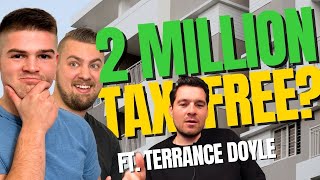
Terrence Doyle flipped his first foreclosure in 2008 for $25,000 in eight weeks, then did 600 more. He built a portfolio of 500 rental units by 2019 without outside money, then moved into syndication and raised $300 million for acquisitions across two funds.
Chapters
And so my mind was blown. This kid growing up in South America, and I'm like, man, we just made $25,000 in 8 weeks. That's big money.
Hello YouTube, I'm Christian, this is Cody, and we are joined this month by the one and only Terrence Doyle. Terrence, welcome to the channel.
What's up, boys? How are you?
Oh, it's— we're doing well, keeping busy. Trying to keep up with you. Ever since we met, you've been taking off.
You know, it's an amazing mousetrap that you get paid to do a podcast and then you take that podcast and use it to do the best deals you've ever done. So I feel very fortunate. Obviously, BiggerPockets is a great platform. I've had the opportunity to meet a lot of amazing people and operators like yourselves. And I was telling you guys this offline, and I've been telling everybody that asks me how we're doing it, you know, the podcast that we recorded back in October I think was a massive game-changing interview and light bulb moment for me personally in our company, just to see how you guys are doing deals, how you guys are structuring it, how you guys look at the world of creative finance. And it set us on this, me on this amazing journey of understanding new ways to do deals in this challenging landscape. So, I'm eternally grateful for that interview and the relationship we've built. And even I think after the interview, I was texting you guys questions like, hey, how do you guys look at this? How do you do this? How do you calculate this? And, you know, I think you guys were really onto something. You guys were really early with creative financing. And when interest rates started to balloon and get out of control, I think everybody was like hit full stop. Like, okay, how do I actually do a deal? And you guys, because of what you guys have been doing, were already like onto how to do 'em. And I just really serendipitous that we met when we did and we interviewed when we did, 'cause yeah, we've been able to close on 2 seller finance deals. We have 2 more we're closing on next week. And a fifth that we'll close on in, you know, early to mid-April. And in my estimation, you know, these are some of the best deals I've ever done. You're talking to a deal junkie, right? I've, you know, bought and sold 1,000 homes, bought and sold several thousand apartments, and I'm telling you, these last 4 or 5 deals seller financed on a pound-for-pound basis, you know, some of the best deals risk-adjusted that I think we've ever done. So, you know, super thankful for you guys, and I, you know, I want to be able to let I'd like to share that story and really help other people get that same light bulb moment that I think will dramatically change the way they underwrite deals and their ability to do deals in this challenging environment because doing deals with banks right now is a non-starter for me really.
Well, let's talk about that because we are equally grateful that you're hopping on to co-host for this month, but who is Terrence Doyle? Because those who don't know, You now know that I hate syndication and I was very direct with you over dinner about that.
Some may say too direct.
Always say too direct. However, out of all the people that syndicate, I appreciate the way you do business the most. So can you give a little intro of who you are? You just threw out some big numbers. I mean, we're, we're talking a lot of deals that you've done, but who is Terrence Doyle? What have you done and what are you about to do?
Yeah, Cody, you're one of the most impressive people I've met. So that was— that dinner we had was maybe my favorite dinner of 2022. But I think that, you know, I come from two immigrant parents. You know, my mom is from South America, a third world country. My dad's from Canada, who— which is on the path to be a third world country. And with the way they're headed. But so, you know, I grew up in Des Moines, Iowa. And, you know, I was homeschooled in a very Judeo-Christian household, right? So faith and biblical principles was kind of how I viewed the world. And, you know, I spent half the year every school year from like 2nd grade all the way to 8th grade going to school in Bogotá, Colombia. And so what you learn when you grow up in a third world country is that, you know, you come back to the United States with this like amazing amount of national pride, right? I remember just from a young age, just like feeling like, man, we live in the best country in the world. You know, in Bogotá, you know, it's like there's not a lot of traffic etiquette, people just driving everywhere and a ton of poverty, a lot of corruption. And, you know, doing anything that we take for granted here, just like renting a car, starting a business, buying real estate, um, building wealth is insanely difficult. It's only for like the elite, the top 1% of 1% get the opportunity to do those things that we get to do in our country, uh, you know, routinely. And so that was really my worldview growing up, was that of like immense pride for our country and gratitude and just this idea that anything I wanted to do was possible. I think that was kind of my, you know, early stage upbringing and I was also very competitive. I loved basketball. So even though all of my cousins and friends in Columbia were playing soccer, I had this whatever affinity towards basketball. I had an opportunity to play in college. I was on a scholarship. And then in college, my buddies and I put together our first company, right? You're talking about my mom didn't speak fluent English. My dad never went to college, didn't graduate. And so education wasn't like a really big thing for my family, like I had to go to this big school and have this degree. It was really just I wanted to play college basketball. So while in college, we were working on a business. The business took off, we franchised it, we made a couple bucks. And by 2008, right, the rest of the economy is crashing and we were making some money and kind of had found a little niche to make a couple bucks. And my college teammate comes to me and says, hey, we're going to start buying foreclosures. At the public trustee sale, do you want to invest? And that was really kind of another one of the first light bulb moments for me was, what's a foreclosure? What's an auction? And how, you know, what does this mean? Right? And so I was his first investor. And we bought a house for $56,000, call it March of 2008, in Denver, Colorado. And we sold that house for 8 weeks later for like $96,000. We put $3,000 into carpet and paint. And so, my mind was blown, right? This kid coming from, you know, growing up in South America, you know, middle of the country, Des Moines, Iowa, and I'm like, man, we just made $25,000.
Like, that's big money.
That's big money. You know, I was 22 years old. I was like, my mind was blown. So, we went on to do that same transaction roughly 600 times from 2008 to '13, right? And we doubled down on that strategy as hard as you possibly can. We ended up backing some other operators similar to us around the country. And that was really my first— that was my first real estate transaction. I didn't understand real estate. It was more of a trade. So it was just like a stock trader. I was buying low, selling high. Didn't understand cash flow. Didn't understand depreciation. Didn't understand how to build wealth. I just knew that we could take a dollar and turn it into $2 pretty quickly. And didn't understand the tax ramifications, all those things. So in 2013, I was dating my now wife and I was like, okay, how do I build something sustainable that if I work really hard will pay me longer than just making $25,000 or $30,000 but then having to get back on the hamster wheel, right? And paying a lot of taxes, right? What I learned in 2013 was once you pay taxes, and you have partnership splits 4 ways, you're not really left with that much money even though on paper we had, you know, done a ton of work and moved a lot of money. We were just basically moving money around. So that's when I started to buy duplexes, 4-plexes, and 8-unit properties. And I did that with one of my best friends from college who was, you know, kind of the Gary Vee thing is like, find out what you're good at, double down on it, and surround yourself with people that are good at what you're not. So I knew I wasn't very detailed. I wasn't really good with accounting, bookkeeping, legal, admin. Found someone that was much better that I trusted. He kind of ran that side of the business and I was focused on sourcing deals, construction, and property management. And so from 2013 to '19, and this is, you know, Cody and Christian, a page from your book, like we didn't raise any outside capital LPs. So it was no syndication, it was just Direct ownership. Sometimes we would take a loan from friends and family for like 8 to 10%, rehab the property, refinance it, pay them off, and we would own, you know, the entire property. So from 2013 to '19, we did that play probably 100 times on buildings that were 10 to 30 units. Wow. And then we would roll that money into a 50 or 100-unit building in Des Moines, Iowa. So if you rewind to 2015, we were buying properties in Des Moines for $10,000 to $20,000 a door and the rents were $500. So we were buying things that were 12 to 15 caps on the market that just people didn't want to buy, right? Just because Des Moines wasn't sexy, multifamily wasn't as sexy as today. And there wasn't this like flight to cash flow like there grew to be in 2019, '20, and '21. So, that was an epic run. You know, we put together, at the end of the day in 2019, we owned a portfolio of like 500 units between my brother and my best friend and I, and no real, no LPs, zero LPs, just us. And that was life-changing. You know, that was really life-changing for me to see cash flow, to see properties that we had stabilized were paying us $25,000, $30,000 a month. And, you know, that was really life-changing for me and my family. And then in 2020, Cody's most hated word, I started to raise outside capital in a form of an entity called syndication.
No.
So I did my first syndication in 2020 and I raised maybe like $400,000 or $500,000. And that was my first syndication. I went on to do 5 more of those in 2020 and we had some good success. And then I raised a fund. My first fund, and we raised roughly $29 million in our first fund, Value-Add Fund 1. And so, fast forward to today, this is March 7th, 2023. We've raised roughly $70 million of equity. We own maybe $300 million in real estate, like acquisition, not current valuation. And yeah, we're on our second fund, and I consider myself super thankful. I think, What we have learned the hard way is property management, construction management, and how to acquire deals below the market in this mom-and-pop kind of middle market space. So we don't buy big institutional deals where people are bidding and prices get crazy. We're still buying off market, most of the time direct to seller, maybe a broker in the middle, fragmented, broken, middle market mom-and-pop deals in Denver and Des Moines. The platform's called Varico Value-Add Real Estate, and that's really my thesis in life is how do I add disproportionate value to my employees, to my partners, to the audience on podcast? How do I give away, tell the story to inspire, motivate, and help people see that they can do the same thing, right? Because I think going back to the way I grew up, I think we live in the best country. I think we have so much opportunity, and just like you guys, I want to inspire other people to take advantage of that same opportunity and take control of their future, right? You know, the one thing is depending on other people for your future, I think is a broken path to reaching your potential. And so I wanna inspire and motivate and educate other people that anything is possible and real estate's a great way to build wealth. And wealth is freedom, right? Freedom to do what you're passionate about and what you believe. So that's the story. That's who I am. And how we got here.
And I love that you mentioned that I do not like syndication. We had that on your podcast, Syndication Sucks. However, what I do appreciate is that you're not a hammer, meaning that everything is not a nail. You are amongst a select few syndicators who have flexibility, which is something that I can appreciate because most people, when they play that game, they leverage all the way up to here to get their deal done. And they do it the conventional way and then they get boxed into a corner. You didn't do that. Now, for perspective of how you built your business, because I want to give people the biggest takeaway, how long have you been playing this? You started in 2008, right? So it's 15 years. At what point did you finally feel financially free?
You know, financial freedom is kind of a subjective term. I think The big, you know, the big year for me was probably '17 and '18. You know, we bought our first 100-unit deal in Des Moines for $29,000 a door. So we bought it for $3.9 million roughly. And the rents going in were $535 and the rents today are $775. And the really cool thing about that property is we put $600,000 down. We put another $700,000 into construction. So call it we're into it for $1.3, $1.4. And in 2018, early 2019, we refinanced. The property was worth $7.5, $8 million, and we pulled out— we put a new loan on that property for $5.5 million that I still have today and pulled out like $2.5 million tax-free. So, at that point, that was probably my life-changing moment where $2.5 million hits your account, you don't have to pay taxes, you don't have to really split it with a bunch of people. And, you know, at that point you have unlimited optionality with the way I live my life. Like, you know, I don't wear fancy watches, I don't drive a fancy car. So I would say that was probably when I felt really financially free. I went from like having a bunch of money on paper to actually having a lot of money and not having to pay a lot of taxes and still having cash flow. So I think that's the trifecta, right? If you can make a lot of money, not pay taxes, and still have cash flow, that's why, you know, multifamily real estate is, you know, value-add multifamily real estate is one of the most beautiful opportunities in the world is because you can do those things. You can make a lot of money tax-free and still have cash flow. And so that was probably— to answer your question, is 2018-19 was probably when I really felt, I'd say, you know, financially free and, you know, like I had unlimited optionality to buy the deals I wanted, to live the, you know, to do the things that I really cared about.
I really appreciate that because everybody online says that you can go super quick and get rich quick. It took you 10 years without a preexisting knowledge base. I'm sure knowing what you know now, you could go faster, but that shows anybody online that within a decade you can change your life quite dramatically. $2.5 million liquid is actually a lot of money.
Yeah, it's a lot of different— like, people see the whole number thing, they're like, oh yeah, you have all this, you make all this money, landlords are toxic. It's like, yeah, we're at that stage where we have paper wealth. Like, there's equity in the assets, how you actually get the cash flow consistently, you get through the projects, you keep things rolling. There's a lot of stops and starts and stops and starts. I'm sure you had in your first 10 years where you're like, wow, I'm rich and I have no money. And you have multiple cycles of that. You don't feel free for a bit. And there's times where we get influx of cash.
I'm like, we did it. Based on your journey, I think we're in like 2016, 2017 Terrence Doyle's life.
I think so too.
Right now. I think we're just, we're a couple years prior to that feeling.
You mentioned, you know, I can't tell you how many times my wife would be like, man, you know, you keep saying that you're, you know, where you're doing well and we're making, but it's like, how come you don't feel or don't act like, you know, you have it, you know, you're doing as well as, you know, it looks like you're doing. And that's a hard thing. That's the thing about any business or real estate, like you're moving dirt every day. But until you're like removed from it, you don't actually see how much dirt you've moved, right? And how much progress you've made until you kind of take a step back and have perspective. And I just think, you know, you listen to Alex Hormozi, Gary Vee, you know, any of these big-time guys that have really, really made it at a high level and have like perspective and wisdom looking back 10, 15, 20 years, it's hard. I mean, owning a business, any business, being in real estate, um, you know, it takes a lot of time, a lot of patience. Malcolm Gladwell, the book Outliers, he talks about 10,000 hours to become an expert and master something. Maybe it's more like 20,000 in real estate. Honestly, like 10 years at 60, 70, 80 hours a week, that's a lot of hours. But that's really what it takes in my opinion, and you have to have that level of endurance and perseverance to get there. There were so many times, so many times, right, where you're getting, like even look at now, The thing you just said, you have issues, there's a flood, there's a fire, people aren't paying rent, you have issues with the city, rental inspections, issues with the loan, a bank, the number of things that can go wrong is limitless, right? And so, the perseverance and focus and determination to go through those tough times is really what determines where you end up, right? And how much freedom you experience, right? Because there's different levels to freedom. And I think that it's equally, it's directly correlated The amount of freedom you want is directly correlated to how much pain and suffering you're willing to go through. And that term is delayed gratification, and it's something that very few people want to apply in our generation, right? Everyone wants something now. Microwave society, right? Even when you're waiting for food or coffee, it's like, "Hey, where is it? I want it now." And so people apply that same thing to real estate and business or anything that they're doing. And building wealth and financial freedom is actually the opposite. It's how long can I push out that gratification and how long am I willing to wait and how much pain am I willing to endure to get that. And that's not a popular thing, right? That's why most people don't ever really hit certain levels of that. But I think that that's true and I'm living proof of it, right? I'm not this, if you look at my test scores, I couldn't do math anywhere close to the way Cody can do it, right? Math wasn't my thing. I wasn't the, I didn't go to a big school, don't have a big pedigree, I didn't have a big network, I didn't come from money. It was really just perseverance over an extended period of time that separates me from anyone else out there that has way more God-given talent but didn't have that level of perseverance and delayed gratification. I think that's really, in my opinion, what it takes more than anything.
Well, first of all, that is awesome. If there's anything that anyone gets out of this video, that is the thing I want people to hear. It doesn't really matter where you start. It doesn't matter who you are. It doesn't matter what you're given.
Gifting is.
If you are dedicated to a goal and you set that goal and go towards it, as long as you put the people around you that you need to get there, you're gonna hit it. And Terrence is living proof of that. That's fantastic. I have one more question for you in this segment. We talked about the tools that you take to get there, and I love that you started with— you did flipping, and then you got into some buy and hold, you've done partnerships. We like to knock syndication, we like to knock a lot of strategies that pigeonhole doing one thing. We make fun of the BRRRR strategy too. It's a strategy that we use occasionally, but people get stuck on that too. Syndication, I love the way you use it. When did you start using syndication as a tool and why did you turn to syndication? That's not something we ever share on this channel. I'd love your take on why that was the right tool for Terrence and when you started doing that.
Yeah, so I think the difference, and I think this is where Cody and I probably agree, is that, you know, I didn't start by like doing syndication so I could get an acquisition fee. Right? I think most people, not all, but most people are like, I want to make a couple hundred grand. Let me go put a deal together with my friends and family so I get an acquisition fee, even though I really don't understand how to operate, right? Or I don't understand how to actually de-risk my investors. If you think about, you know, my story, I started out with my own capital at risk with my best friends and my brother. And we built that strategy and learned the hard way property management, construction, acquisitions, all the, you know, we had gotten punched in the face and, you know, had a lot of bumps and bruises for 6 or 7 years before we took a dollar from anyone as an LP, as an LP, right? And so, to me, syndication was a way to accelerate the growth, to take advantage of what I saw as a lot of opportunity. So, if you rewind to 2019 and '20, right, debt's coming down, inflation's going up, rents are going up, And I was like, okay, with my own capital, I can do a couple deals. If I add the leverage of other people's capital, I can do a lot of deals to take advantage of this finite opportunity, right? 'Cause there was only so many months we were gonna have those market conditions. And so that was the reason why I did that. And the same reason why I'm raising a fund right now is I think there's certain market conditions right now that I can take advantage of to still de-risk my investors, but to get them a great return disproportionate from the risk we're going to take because of how soft the market is. And so, if I didn't see opportunity and a window to really crush it right now, I wouldn't be raising a fund, right? I would just continue to operate the portfolio we have. And so, in 2020, that's what I saw and I wanted to supercharge our platform, my experience, my relationships, my network in real estate. To take advantage of that opportunity. And so that's why I used syndication. And that's, you know, thankfully, I think that bet has proven true and has worked out.
I'm going to say that that was the right call for your portfolio. That I look back at the deals that I could have, should have, would have bought in 2019, 2020, 2021. Wish I could have bought more, but I didn't know what I didn't know.
That's right.
That's awesome. Yeah. Any parting words for segment number 1, Terrence?
No, I think this is great. I love what you guys are doing, and hopefully this is valuable for the audience. And, you know, hopefully this turns the light bulb on for a lot of people out there that are maybe sitting on the sideline to go take some action.
All right, everyone, well, tune in next Monday for episode 2. We're gonna be talking about creative finance, how Terrence is becoming the newest master in the space. We'll talk a few of his deals, and we're excited to have him back on. So, Terrence, thank you for joining us. And like, subscribe, and we'll see you guys next week.
More from Christian



Speak with authority to turn broker rejections into deals - boost your confidence #RealEstate

Turn Broker Objections into Closed Deals - CRE Negotiation Tactics #RealEstate #Negotiation

How to Get Multifamily Deals Under Contract Without Having All the Cash | Objection Series Ep. 1

How I Scaled 500 Apartments in One Texas Market in 12 Months #RealEstate #Multifamily


Turning a $12.2M, 200-unit mess into profit - live multifamily turnaround update #Investing

Day 10 Update: Turning a $12.2M, 200-Unit Apartment Complex Around in 80 Days #RealEstate

Day 10: Before Time Runs Out | Saving a Failing 200 Unit Apartment in 90 Days (Ep. 3)

How 2 Direct Deposits Generate $70K/Month from 224 Section 8 Units @ 99.4% Occupancy#RealEstate