Are Landlords Really EVIL?! with Josh Roosen
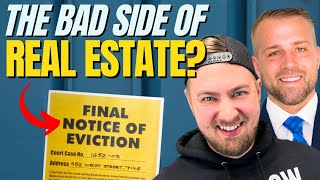
Josh Roosen manages 299 units across 10 joint-venture deals and argues landlords aren't evil, just misunderstood. He ditched med school after talking to an orthopedic surgeon, built a real-estate education company, and now focuses on community-bank relationships and low-leverage deals. His superpower is sales, and he'd rather have a family-focused life than chase pure wealth.
Chapters
If we still owe a mortgage but they don't pay rent, I'm just a little confused how that makes sense.
But aren't all landlords rich and got money from their parents?
If only that was the case, right?
Hello and welcome to another episode of Multifamily Strategy. I'm Christian Osgood, your host today, joined by an awesome guest. We've been hanging out for like 15 minutes before this call and I already love this guy. So this is going to be a fantastic episode. Buckle in. Josh Ruzin, welcome to the call.
Thank you, Christian. Excited to be here.
So this guy has worked with everyone. He's met all the online gurus, whether they be legitimate, fake. He's got some advice from some of them that has been life-changing, especially on how he structures his real estate and where he focused. I'm excited to hear about your conversation you had with old Uncle G, Grant Cardone. But this guy is super interesting. I think you're super smart. I'm excited for what you have to share with us today.
Thank you, Christian. Let's kick it off.
Yeah. Oh yeah. I always want to start with your origin story, but we've never talked about this on the podcast. You've worked with a whole bunch of people who sell courses and you've mentioned some people to me who are super legit. How does one spot a good mentor versus a fake online guru? Like, are there signs that you can see immediately?
Ooh, that's so, first off, that's a really good question. And the industry is riddled with people making claims, right? So what I would first do is, A, does that person have the results that you want, right? So can you verify that they're actually doing deals? Then I would B, look at have they been able to replicate those results with other people, right? Because there's people that are really good at doing but not so good at teaching, you know, like some of the best players in sports sometimes don't make the best coaches, if you can understand that analogy. And then the last one is I would really trust your gut instinct, right? So if I was in it and what I'd really look to do, and I'm before spending usually 5 figures on a mentor, right, I would ask for referrals. Of students and I would get at least 3 or 4 and I would interview them. Have a list of questions. How long have you been in it? You know, not only the good stuff because only they're gonna refer you to students that have created success, right? They're not gonna say, hey, go talk to Joe who didn't do a deal. So ask them what's the downside, you know, what kind of students have you seen succeed, would you do it all over again? Ask the hard questions up front and I think from there you'll be able to spot some cracks. And again, trust your gut instinct on these.
The biggest thing for me, and I may be wrong about this, but it's the mentors who lead with the marketing of if you want to own this yacht, this car, all the stuff that would traditionally be a write-off against active income, not passive income. In real estate, you have your own write-offs. But if you're looking for a mentor, I want to see someone who does the thing in the field. They have to be able to do and teach. I don't want someone who's like, "I studied this and I read all these books." That's not worth anything to me. Um, if they're flashing the car, I don't care if they're flashing like, here's a whole bunch of cool deals I did and here's how you could structure it. Or they have some relatable point. Like my old universe is like, hey, I just wanted to retire my wife and I did it. If you wanna do that, that's attainable. Look for those people. I think that's fantastic advice though. They need to be able to do, they need to be able to teach and they need to be able to prove it.
Yeah. It's a good point you make though, right? You want actual operators, not marketers.
And dude, there are some freaking fantastic marketers out there who provide exactly zero value, but boy, do they have an awesome cult-like following of people who love them. So I think you can only really weed that out with gut instinct, cuz you can generate 100 testimonials if you're a fantastic marketer and people love you, but you provide no value, but get people really excited. You can create these weird cult followings with these online people where it's like, yeah, if it feels wrong, And or it's not the person who's done exactly what you want to do, steer clear. Fun piece of advice. I just, I was curious about that, uh, as you are actually an expert in this field. However, it's not where you started. What is the origin story of Josh before the businesses, before the experience, before the real estate? What was the starting point for you? What was ground zero for Josh Reason, bro?
Let's take it back to 8th grade. I had an aunt who's in real estate, did well. She gave me the book Rich Dad Poor Dad. So at that age, I read it, it planted a seed. I really wasn't old enough to to take advantage of it. So go to high school, I wanna be a doctor, take that into college, and actually I'm working for an orthopedic surgeon, getting ready to take the MCAT, and actually I just invested like $1,200, which was a ton of money back then, on a Kaplan study course for the MCAT, and he comes home, and he's an orthopedic surgeon, he's like, don't do it, I wouldn't let my kids do it, you're crazy, and I'm like, what? 'Cause I'm at this point, you know, one year before graduating, I invested my life's work into this field of becoming this, And I'm like, what are you talking about? And he starts talking about how in the '90s he used to make 7 figures a year and now he's lucky to make half that. Well, growing up my parents didn't make 6 figures. So I'm like, dude, you're complaining about making a half million dollars a year. Like, good problem to have, bucko. And he's like, no, you don't get it. By the time you graduate, I think physicians will make between $100,000 and $200,000 a year. And he's like, I think also that you'll have $300,000, $400,000 in debt from medical school. He's like, yo, you're gonna have to live in a one-bedroom apartment for a decade just to get out from under that debt. And that picture really hit me of like being 40 and just starting life. And I was like, okay, well, I have a biology degree, like what do I do then? And so he says, go into business. I make more money in business than I do being a doctor. So at that point, I started my search for different careers in business. And my first venture, I started a home healthcare company. Now I made exactly $0 with this home healthcare company, but it was a learning lesson. I learned the difference between activity and accomplishment, and I actually learned a lot in there, and that, uh, gave me a push.
So, wow. So you went from, I have a plan to get a high-paying job, the mindset from Rich Dad Poor Dad, and some advice from professionals in the field combined to, you're like, maybe there's another way to do this. You started a business, it made no money, which is a majority of us. I've had failed ventures before I figured out what worked for me. We had multiple things that just didn't work out. Another thing you said, which is a common theme on this podcast, you did not come from a family that just had a ton of money to get you started. You weren't just railing money. You didn't start out rich. You started trying to make it on your own, more or less. That's incredible. I got a message here. I had this video where I talked about having to get rid of a squatter who was actually breaking into a hotel. That I own, converting to multifamily. And I'll just read it here. I want your reaction to this. "Landlords are evil and rich. If they have a unit that's been vacant, why are people defending them? They have a place. This person needs a roof. I think squatting's 100% moral." Being someone who has built a portfolio, and maybe you didn't start from, "Hey, I'm ludicrously rich." What's your immediate reaction to that message?
Yeah, so let's look at it from a logical approach, not emotional. That squatter's not paying rent. Our mortgage is still due. In general, that squatter's not taking care of your unit. I can promise you that. So if we still owe a mortgage but they don't pay rent, I'm just a little confused how that makes sense.
But aren't all landlords rich and got money from their parents?
If only that was the case, right?
I think we've had— it's been about 50% of the people on this podcast, their origin story was actually, I immigrated from another country without speaking English. There's been a ton of people on this pod. Most people who make it in real estate— this has been my experience— start somewhere near ground zero. Maybe they got a college degree, maybe they started with $50,000, but people who are like multi-millionaires in real estate or bought a lot of properties it usually doesn't go generation to generation. I buy a lot of deals from people who are like, yeah, um, thought my parents or my kids were going to inherit it. None of them want to run it. They see how hard this business was to run. A lot of the seller finance notes, they're like, I'm just trying to give my kids an income stream because they're not going to inherit this. Real estate, more often than not, starts and ends in a generation. You build the empire, you make it to a certain point, It goes on to the next person. Something we see all the time.
It's a good point that I sucked, right? Because if you look at it, a lot of times you look at an Oprah or a Tony Robbins, terrible, very, you know, very impoverished backgrounds. And that creates a drive and a desire, right? And for me, it was almost like a Rich Dad, Poor Dad story where, you know, my parents, I grew up, they taught me one way. And then the orthopedic surgeon I worked for was, ended up being very close with him. I saw another way, right? And it was just a difference in results, a difference in mindset. And then when I realized he's human like me, and if he can do it, I can do it. Uh, that planted that seed into me that I, I want to do, be and do better.
What does your business look like today? We got the origin story. I think it's important for people, for the few who don't know who Josh Reason is, first of all, get a phone. Yeah. Uh, you, you, you're, you're a good marketer. You're all over the place. People should know who you are. But if you don't know, we know your starting point. Where, where is business at today?
Yeah, so I currently have equity in 10 assets that we own as joint ventures, me and a couple partners. It's total 299 units, so that's a good amount of cash flow. Uh, our model is sort of the refi and roll. We like buying smaller deals, mom-and-pop, buying with their own money, starting with community bank, forcing appreciation, refinancing out to agency debt. Now, earlier this year, we did start a real estate education company. And why we did that, one, is to force accountability for our growth. 2, uh, be able to source deals and partner with students. And then 3, as we continue to grow, would love to venture into more syndications to take down larger deals we couldn't afford with our own money. And that'll give us a marketing arm to be able to raise capital from as well.
Now, syndication is something that I talk about. I love that I don't do syndication. Uh, a couple hundred unit portfolio, very similar to you. I own some myself. I own a lot in JVs. I love the JV structure because I typically get much higher equity pieces and I can get really creative with Syndications, you can still get creative, but a lot of the market issues we're seeing right now is we had a ton of inexperienced investors come in and they were sold the dream of you can buy a 100-unit apartment building with no money and no experience. And those people are getting destroyed right now. So we talk a lot about not loving syndications here, but I know some fantastic operators. So I'm going to put this question to you. What When is it a good time to get into syndication, and what experience level is appropriate before you start using that? Because I am strongly of the belief that syndication is not a starter method. That is something that someone with a great amount of experience should look into.
Yeah, so let's back this up, right? Because what I can really reflect on is my experience. So the first deal we closed on was a 132-unit deal that we bought in Louisville, Kentucky for $5.9 million. $1 million. Now, I didn't have the capital for this deal, and so we syndicated it. I partnered with a more experienced mentor, and I, for finding the deal and raising some capital, got a portion of the GP, and then I invested some money as an LP. Now, why that was something that worked well for me at that point, I had very limited capital, so obviously couldn't have taken that deal down. That allowed me to get money with asset management, acquisition fee, and then largely on the back end on equity when We bought it for $5.9 million, sold for $10 million 3 years later. And so, I do think though there is a risk, right? Because it's one thing to lose my own money. On that deal, I had my parents' money and family and friends. And if I would have lost my dad's retirement money, he's in his 60s, he would have been the Walmart greeter straight up. And he was taking a chance on me. And so, I believe getting in syndication, you should have experience or more experienced partners and operators that you can lean on that have that, right? And what does that mean and how do you vet that? So, I believe in vetting the sponsor first, then the deal. Have they gone full cycle? Have they gone through market cycles? Understanding what kind of debt they're putting on it, right? I don't like floating rate debt. I don't like bridge debt, anything short-term. What are their projections, right? Are they telling you rent growth is going to be 12%, which is super unrealistic? I don't care what market you're in. Really diving into that. So, I do think it does have that experience. And then truly educating people what they're getting into, right? My theory is under-promise and over-deliver.
Now, when you're doing a syndication for that, you're, you're starting out. You said one of the most important things, you had an experienced investor on it with you. Do you mind sharing what percentage of the GP that you had as your first deal? How much of that 130-some units do you own on a first deal?
Yeah, so super small percent, right? So about 16%. Um, and where that came from we allocated 20% for finding the deal. So a partner and I found it and then allocated some for raising capital as well. So that's how I was able to get it. However, that 16% ended up doing really well, and it truthfully, it was proof of concept, right? And that gave me more excitement and steam in my sales and then capital as well to continue building this business.
Now, in joint ventures, are you seeing that you get a significantly higher equity stake in a joint venture as as opposed to a syndication.
Oh, absolutely. And cash flow, right? Because on that deal we did an 8% preferred return, so the majority of the cash flows went to our limited partners, right? And sure, I had money in as an LP, but I think that's one myth that people see is they're going to go syndicate a deal and get rich off the cash flow. The cash flow will pay your bills, but the equity will truly make your wealth, in my opinion.
Exactly. And I think a lot of people fall for the marketing of buy bigger deals because you can buy bigger deals, and they, they think they're going to be a better manager than the last person. How much experience did that first mentor have when you went into this deal? If you're like, hey, I'm coming on this deal and we put this together, what was the experience of the experienced individual that made this a good idea that you were able to pull this off?
Yeah, so 5 and a half years of being an operator. They were vertically integrated, had their own management company. And at that point, they had owned, I don't know, 600, 700 units between them, him, and two other partners.
Okay, so you first deal syndicated, got a little piece of it, got in the door, structured it correctly in a way where you did a great deal with an experienced operator, had the pieces, you hit the experience, you get the money. That makes sense. You switch to JV and you're seeing, wait, I get a larger equity stake, there's more cash flow here. That's how I built my entire business. I have a lot of JVs. Lot of JVs. Now you're going back into syndication. What is the reasoning behind reopening the syndication as opposed to just doing more JVs with larger partners?
Yeah, so the answer is we're going to still continue to do both, and I agree with you that I like the joint venture model better. However, I don't have unlimited my own capital, right? And not every seller is open to a creative offer. And actually, the reason I really love JVs is once I refi again, it's tax-free and I still own that asset. Where when I sell, for example, we went full cycle on a 143-unit earlier this year. We bought for $9.75, sold for $14, held for 4 years. That created a large capital gains event and it creates a lot of pressure for me to buy something to offset those gains. Now, my worst-case scenario is I write a big check to the government, but no one wants to do that. No. Appreciation offsetting that. So, all right, back to your original question, why are we syndicating? It's not an or for us, it's an and, right? And we believe that if I can bring my friends and family along and be conservative, right, on our deals, truly conservative— again, every operator can tell you they're conservative— that'll allow me to get into larger deals, it'll allow me to help create more wealth for my friends and family, and create true win-wins.
What size deals are you looking to do now that you would syndicate for as opposed to JV? I'm just curious, what's the goal here for the next couple years?
Yeah, okay, so super great question, right? Our growth strategy here is to continue to buy in Northeast Florida and East Tennessee and buy small deals with our own money initially. Now, as for the syndications in larger deals, first we're gonna raise for partners of ours and get some of the GP for that, right? So I have partners that are much more experienced than myself and kind of use that to foray into raising for our own deals eventually. And right now, currently, for the joint ventures, we're looking probably our sweet spot's 5 to 50 units. We can go up to 80. Northeast Florida, '70s or newer. You know, we don't like the Stablocks, Zinsco, FedPac. We try to avoid flood zones. You know, we want the census tract median income north of $40K. You know, rents 20% or more below market. And we have a really good community bank here that will get really aggressive with us. So that's how we outcompete some of the bigger operators.
Community banks, I love them. I don't think enough people talk about this. Why community banks over a large national bank or any other debt product? What do community banks allow you to do and why focus so hard on that relationship?
Yeah, so first off, they're extremely relationship-based, and a lot of times they can get very bullish on the area when, when compared to agency debt Right. They're going to want 90% occupancy over the last 90 days. Usually they come with some sort of prepayment penalty, so it makes it cost ineffective to do the refinance. However, right, they have a 10-year term. They usually have a lower interest rate. So there is some— and they're lower leverage, right? They're going to want a DSCR usually at least a 1.25. Now, community banks, what I can do is I can get loan to cost. They'll let me bump my construction costs up, but they cover 100% of it. They'll also lend on hairier deals. And actually, once you get a really good relationship with them and you have a significant amount of deposits, they'll get really aggressive on these deals. So, no prepay penalty, interest only to reduce my carry cost for the first 18 months, you know, 12 to 24 depending on the deal story. And then 5-year term, which gives me enough runway, and I use it as my bridge. Because I think a 2-year term with bridge debt is a little too risky in my opinion. There's too much uncertainty in the economy. We're heading into an election year. We're fighting a ton of proxy wars. Like, the world's in a crazy spot, so I don't want to plop my pants down if we're, you know, being honest.
So 2-year debt is definitely crazy, especially in the next 2 years. Here's what I— here's what I'm foreseeing. I'm curious if you agree with this. One, we did have a lot of inexperienced syndicators who were doing deals on short balloons with variable rate debt. Some of them have been able to extend and work with their bank. We're going to see a bunch more of the syndicators who should not be in business. I think we're gonna see a lot more of them collapse here. And the timeline is 2024, beginning of 2025. Usually when multifamily starts defaulting on loans, the banks tighten up, which means lending is going to get tighter. Loan-to-values are going to be lower. Interest rates, we're not really seeing a whole lot of movement on there. Those aren't coming back down. Anytime immediately. They might drift down a little bit through the year, but I mean, we're pretty much— I think we're pretty stable where we're at right now. I'm looking at the economy. I do not want 2-year debt. I don't think we're going to be in a good spot in 2 years. In 5 years, I think we're gonna be in a phenomenal place. All these expenses— insurance is going up nationally, interest rates skyrocketed. All these expenses, it takes time to absorb, but incomes are going to go up on properties. And it will eventually get absorbed. And if and when the economy stabilizes, it always goes in cycles, properties will be making more money and away we go. We get the next boom. 2-year debt, that is a scary, scary product for me right now.
Yeah. All right. So I agree with that and I'll add to it right, right now because how cheap interest rates were during COVID we have a record number of units being delivered. If you study the supply supply of new units coming online, that falls off a cliff next year. And so I'm underwriting flat rent growth through the end of '25, and then starting '26, I think we'll have a pretty good runway there. I think eventually the Feds are going to cut the fund rate, and that's going to allow cheaper money on the sideline to bid up the price of these assets. However, you're right that the opportunity is a lot of inexperienced people, uh, we're playing a game of musical chairs, and when things stop going up like it did people got caught without a chair to sit on. And so that's the opportunity. But again, you know, it's like when Warren Buffett says, you know, when the tide goes out, you see who's swimming naked. And this is when I think it's a generational wealth opportunity, if I'm being honest.
Yeah, we're seeing, to your analogy, we're seeing a lot of nudity now as the tide is coming out. We're seeing some things we didn't want to see. I love these cycles in the market. I love them for two reasons. One, this cleans up all of the garbage. We've had one of the best real estate runs this country has ever seen for the last decade. People made money who had no right making money. It is fun and feels good to see the operators who deserve to be in business continuing to thrive and to see some of the garbage just get taken out with the tide. In addition, this causes a lot of opportunity for those of us who are buying with a fixed rate debt over longer terms. We're buying deals that cash flow today, and you can do that in any market. If you long-term fixed rate debt, you buy cash flow today, you'll have cash flow throughout the life of your deal. Put a long runway on those, love it. So you put these together in a way where it's like there are going to be some people who have to fire sell their properties. If you know how to move money, you have cash, you're a good capital raiser— could be syndications, could be JVs if you have the ability to move money in times like this, this is where the institutions slow down their lending. We come in, we pick up a huge portion of the field, and when the tide comes back in, I think this is the best time in real estate these next few years. It's one of the best times to actually go in and make money if you're agile enough to play with or without the banks, man.
I agree absolutely. If you look here in Jacksonville Well, first off, there's so many— there's like 8,200 units getting delivered this year. It's causing occupancy to drop. Rent is not even stalled, it's declining in price per square foot. And cap rates have increased over 100 basis points. And so, this is a real— you're back to 2018 pricing, some of these assets. So, it is a good opportunity, but it does take a skilled operator. Like you said, it's not without its challenges. And there are a lot of people that got overzealous. And things just going up, up and up. And now that the game's not going up, up and up, they're getting hurt, right?
Yep. You had a meeting with— because you've worked with a lot of big people in the industry, which is phenomenal. I'm really having fun picking your brain. You had one thing that really set you up, and you mentioned you met with Grant Cardone. Is he the best real estate person of all time? I don't know. Is he one of the best marketers of our age? I think so. He's incredible. And I think he's really smart about money. I love his— I may not agree with everything he says, but oh my gosh, I love every book that guy puts out. He puts out some great stuff. You had a chance to meet with him and he said something to you that tweaked your trajectory. What was the advice that he gave you and how did you apply it?
So this is great. And it was back in 2017 to give a context. And at that time, Grant was known for his sales training, right? Seller Be Sold. He was not known for Cardone Capital in real estate. And so a business partner and I met with him, and our intent was to form a sales training company. We were selling real estate education, and we were good at what we did, but we had sort of reached an upper limit of, you know, upper management was already set, and so we were looking for what's next. Well, when we met with him, he said, "Hey, son, if I was your age and I could do it all over again, I would have skipped sales training and went straight to apartment investing." If I would have done that, I'd be a billionaire instead of a millionaire. The only question is how many times over? And like you said, Grant's a bold dude. Obviously that fits his personality. At that point, we weren't even millionaires, right? That was the goal. And billionaire wasn't even on the radar. So, you know, that advice planted a seed and ultimately ended us where we're at here today. And then we were very fortunate to meet with Dan Merrill, the owner of Fortune Builders, who we worked with. Dan, rock star, played in the NFL, you know, went to Yale. So he's got quite the pedigree, and he gave us very similar advice independently. So, we had two guys we knew were worth nine figures saying this is the route to go. And then that was 2017. So, fast forward a few years and here we are now.
What's the end goal for you? The original goal is to be a millionaire. Obviously, you've had some context changes to that. Where are you headed now?
Dude, great question. So, I think as you realize that money is just a tool, That's not the endgame. It's a vehicle. The end goal is to be the kindergarten room dad, coach Little League with my family, and travel the world with them. Now, I don't have the wife. I don't have kids yet. Obviously, it's a very important— some would argue the most important decision you can make in your life. But that's the goal, right? Build a business, not a job. Obviously, I'm still going to work, right? This isn't passive income. You know, nothing about it really is passive. However, to have the ability to travel if I want and have to not make decisions based on, you know, the price tag.
What does that actually cost? I think this is so important— goal setting. A lot of people have— and people communicate this to me all the time. I, I have my own mentorship group, Multifamily Strategy, and something that we talk about all the time. I have found the people who take the course, join the mentorship, and never buy anything— because there are people who won't do the thing— they're the people who never get to the point where they can clearly communicate This is what I want life to look like, and this is what it costs on a monthly basis. When you define that, your goals all of a sudden start getting hit. I'm curious for what you want to do, and it's a little harder cuz you don't already have the wife and the kids, but have you gone through and actually went like, you know, for the life I wanna live, where I wanna live, where I wanna travel, how I want to travel, what does it actually cost?
Yeah. So that's a great question. Uh, definitely done some projecting, right? And I think goal setting is very important. Important. And as you grow and scale, like, if you would ask me 5 years ago what I want, or 10, it would have been where I'm at today, right? And then as you create more, you realize you can accomplish more, and your goals grow. So your goals grow. So the question then becomes, when is enough enough, right? How much do you need? Um, and I, I think when you're at 6 figures a month in passive income— that's a— well, not passive, right? Cash flow, we'll call it. I think that's a pretty stable point, right? And I think at that point, that creates less concern of what's going to happen in this world. You know, can I afford private school for the kids or lessons? And it really creates a true lifestyle by design.
I had a question that I've never asked on the pod, but I asked in the last couple episodes. I get completely different answers. I think it's in line with this. You started with Rob Kiyosaki. The first finance book that was given to me, uh, when— funny enough, in 9th grade. So around the time that you were reading Rich Dad Poor Dad, I was given Dave Ramsey's book, and I was told this is, this is the key. This is the path to, to victory here. In your opinion, to save your way to wealth, to all, all your goals— travel, family, comfort— to save your way there, how much would someone need to earn in a 9-to-5 salary to follow the Dave Ramsey's method and achieve your goals?
Oh man, I would say a half million a year, right? I watched my parents do that, live a very middle-class lifestyle and step over dollars to pick up pennies to try to save their way to wealth. And I don't need to run that game. I saw how it ends. And so, you know, again, not dissing them, they did the best with what they could. And then I saw different people who had their money work hard for them, right? They deployed it rather than saved it, invested it. And obviously their money came back with a whole lot more friends, and it really was a great leverage opportunity. So getting to see those play out, I think you need about $500,000 in today's world to have safe cushion. And you have to really budget at that point too, right? You can't get that lifestyle creep where all of a sudden you got 3 cars and the big house. You got to be able to be conscious about saving it, right?
So, a highly disciplined $500,000 a year, and you could theoretically Dave Ramsey your way to where you're buying assets, you're putting stuff aside, you're building income streams, and you can actually get wealthy. That's been— of the last 3, that was the first answer that we got. My friend, uh, John Wanot, he's like half a million dollars. If you're making $400,000 or less, I don't think you can— I don't think you could possibly Dave Ramsey your way through this. You need to lever up. What is your— what is your thought on paying off debt though? That's one thing that I'm actually implementing in my strategy. Buy, stabilize, optimize, and then you pay off all the debt. I've seen a bunch of larger owners, and we're not talking like titans who own everything. I'm talking like people who cash flow $100,000 a month, own several hundred units, and then pay them off. That seems to be the most invincible way to play the game. You just own your stuff. There's no debt, there's no partners. To me, you've won capitalism. What is your thought on debt, maintaining debt, and do you eventually scale to a point where it's like, I don't need more, let's pay this off?
So leverage is obviously risk. It can allow you to go further faster, and that's an accelerator with real estate. And so like you're saying, you can reduce risk by having a, you know, lower loan-to-value across your portfolio. Now I will say this, I have one of the deals I own, it's a 50-unit. We bought it at a killer price with community bank debt, refi to a Fannie Mae loan, and it's full-term IO, so 10-year term interest only. So we're paying zero equity on that thing. Now, however, the cash flow is incredible. Because of that. And in fact, because we bought the deal at such a great basis point, I mean, for every dollar we put in that, we refi'd out 3. That was actually probably the best deal I've ever done. But I'm a big fan of debt right now as I'm still in growth mode. Now, with that being said, as I'm buying deals in today's market, I am buying at a lower leverage rate, right? So I'm not trying to get this 80% loan-to-cost loan and just be levered to the gills. I'm looking to come in at a point where it still makes sense. I am risk-averse, but you can't eat equity, and I'd rather take my dollar and have it go work for me where I'm at in today's world. Now, at the same time, I'm in a spot, I don't have a wife, I don't have kids, I live a nice life, but I'm not balling out by any means. So my risk, if I do skid out, is somewhat there, but it's not as much.
And I appreciate that. On a tax basis, paying off your debt, you get no benefits from it. You pay that stuff down and that is just, that is just money out the door. I think it goes back, and this is, this is my thought, it goes back to the question, when's enough enough? If you've hit all your goals, then surpassed, surpassed them, then surpassed them again, I find there's a lot of people who go, you know what, the best risk is basically no risk. Like, as long as I pay my taxes, I've won. I think there's a point where you take your chips and cash out, and that's when you pay off your debt. I try to wind everything down where I buy it if I'm gonna burr it. Sometimes I do that on commercial things, you know, get the value up, big value-add play. Uh, we'll refinance once, get everyone's money back out of the deal. I try not to re-lever them again. It could appreciate $5 million. I'm gonna keep my same amount of debt. We hit a balloon, I'm gonna refinance for the same amount I have. I'll let them pay themselves off over time. Strategy that I'm going for, because at some point, what's it all for? You it is not that hard when you get the swing of it. It's not that hard to buy real estate. It's hard to get into, tons of effort, but once you build the muscle— real estate is not easy, but it's simple, and you can repeat it again and again. Scaling's easy. We can always re-lever. Paying off debt to me is really cool. So something that I— strategy that I'm implementing. It's always good to know what people, what people think, and I agree with you. When you are in the build phase, You're gonna lever to get there, period. Only way to play the game if you earn less than half a million dollars a year, you're going to have to utilize leverage to get to where you want to go.
Christian, I'll present a pretty contrarian point here. Debt for me at one point was an asset, meaning this deal we just sold, the $143 million, went full cycle on it, had a— with a 3 in front of it, right? It was a Freddie Mac loan, um, and basically the, the interest rate where it was compared to market interest rates we were able to get a higher price for that deal because our debt was so cheap, right? And so if I would own that deal cash, obviously I wouldn't have gotten the same price because then they would have to get market rate debt. And so although, right, that was market timing and there's other factors that were involved in that, that debt made me money.
Oh yeah, and that is that accelerator that you were talking about. You can leverage, you especially when debt's cheap, uh, you can get crazy leverage points and it makes a lot of sense, especially when rates were, you know, 3% appreciate— or, uh, well, inflation was like— they were advertising it as like 10%, but it was really like 17.5%. It's like, yeah, you're making a huge spread on borrowing money and just betting against the government. Uh, so yeah, there's an argument for both. At some point, it's a decision everyone's gonna have to make for you. Uh, how much debt do I pay it off? There's multiple ways to play the game. And I love it. I don't think there's a correct one between the Dave Ramsey's and the Kiyosaki. People are like, well, how do you reconcile the two? I'm like, it's always somewhere in the middle. It's the right amount of debt for you and it's the right amount of risk for you. One is risk-free and stay poor for life. And one of them is high risk and get ludicrously rich. Find the medium and build a path to what it is that you wanna build. So no, I love that. You've done a lot. In a relatively short period of time too, I might add. With your experience, what have you found that you are the best in the world at? How has that helped you build the business you have today?
Oh man, so I got very fortunate having good sales skill set, and I think that allowed me to, one, create a high income for myself to put money into real estate fast and have that money work for me. But two, it's allowed me to be able to, you know, everything's a sale in life, right? From if you're talking about like having your kids go to sleep or your wife or selling your friends on where you're going to eat. So I think when you realize that and don't have an aversion to sales, I think you can use your ability to influence in a positive way. And I think that even now having a team, right, to be able to create the vision that we can accomplish their goals working together and paint those pictures, I think sales has been my superpower that's helped me go further faster.
But part of sales is your greatest strength. I've met people, one of my business partners is the best opener I've ever met. He meets everyone fantastic. I do not have the social battery for that as a salesperson. I am a closer. I, I negotiations and close, love opening. That's something that I like to partner for. Where is your strongest point between your three main pieces? Uh, opening, negotiations, and close. Do you have one that you just absolutely shine at?
Yeah. So I would say opening, right? And if you look at it, the easiest way to like, let's say sell cheeseburgers is to make everybody hungry, right? So if I can create that picture and paint it very vivid and very clearly, um, that's what— that's how you're able to get people to step in that direction, right? It's got to be a picture they want as well, and then a vehicle for them to get to that picture.
And I, I would make the argument that the most valuable skill that you can have in today's market, especially with social media and all the different ways to get out in front of people, if you're a strong opener, you're probably going to outsell the best closer in the I, I do think the way that we are set up right now and the way that you can market the ability to open is probably the best natural born talent you can have as a sales rep coming from someone who is a negotiator and a closer. I'll come in and make sure that we get what we need on the deal. And I am a brutal negotiator. It is the one thing that I know I can do, but, uh, man, You have to have a certain mindset for it. You have to be naturally gifted and you have to, in my opinion, you have to have some sort of social battery. I, I love connecting with a few people individually. You do the broad scale stuff. I'm like, find anyone else to do that. So we appreciate guys like you, Josh. Biggest mistake you've made, highest stupid tax. We call it the stupid tax because when you start at anything, You're dumb. You don't know what you don't know. Uh, for me, I, I've had, you know, I purchased a $4.5 million hotel that I probably shouldn't have bought cuz I knew nothing about hospitality. Don't make $4.5 million mistakes. I've structured deals, multi-hundred thousands of dollars. We still made $1 million on the deal, but we could have made another $300,000 had I just put one clause in a contract that would, uh, raised money like an idiot. Basically gave an over 100% return in 11 months because I was dumb. When you're playing this game, what things can we learn from you? Highest stupid tax that others can avoid in business or real estate?
Yeah, great question. So mine was stepping over dollars to pick up pennies, right? I had a middle-class mindset that was very hard to undo. Now you're saying, hey, what does this look like? So little things when I was first getting going in this business and not realizing the opportunity of leverage, right? So if I had, let's say I have a cleaning person, I pay them $30 an hour, but I make $100 an hour in my business, I could spend 1 hour in my business and pay for 3 hours of the cleaning person. Now I'm net positive 2 hours. So in business, as I've, and then even more so, right, when you do a business and you realize, hey, that leverage with employees, that's a form of leverage, and realizing that although you may be the best at someone, or or something, if you can get someone to 90%, that's how you truly grow and scale. And so for me, it was just letting go of doing everything in my life and then realizing that my time is more valuable than my money, right? You can always get more money in this world. There's infinite of there, but time, I'm sorry, we were all born with a clock. It's ticking. You cannot get any more of that.
You know, I, I, I think you said a version of one of my favorite episodes. It's not even out yet, but it's theoretically will be out by the time that I release this one, so everyone can go back to it. Edwin Carrion was on the podcast, and I was asking him, I'm stuck at making a few million dollars a year. How does someone make the jump from 7 figures to 8 figures? Because I've noticed each step is different. Going from, you know, $50,000 to $500,000 is one set of skills, and $500,000 to $5 million is one set of skills. How do you make the next jump? And what he said is you have to let go of your ego. And I think that's basically what you're saying here. The things that you're like, I have to do this cuz I'm the best at, you have to let go of that. And what I'm starting to find is I let go of some of the things that I thought I was the best at, and the person who stepped into that role ended up being astronomically better than me at the thing that I thought I was the best at. You have to let in other people if you want to expand past a certain point. That's interesting. What did that, what did that look like for you as far as like, in your opinion, opportunity cost that was lost learning that?
Oh gosh, that when you phrase it that way, it's a very painful question, right? Because it's growth and momentum that I could have had. And especially looking back, right, buying deals and in the business we had in, you know, 2018 and on, it was just such a great time in the market cycle. And in the markets we were in where if I would have bought another 2, 3, 4 deals or scaled the education by a couple more million dollars, who knows where I'd be. But it's very painful to play those two out with thoughts. But I am grateful that I've learned the lessons and I am grateful I am where I'm at today. Right.
I think the sooner that you can learn that— here's my thought. Let me know if you think different. I think that he's absolutely right. Edwin was right. The jump from millions to tens of millions is a loss of ego. I think when you are making less than $100,000, focus on self and the skills. You need to be really with your time as selfish as possible. You need to build the skills and you need to earn your way into the hundreds. And I think you start to offload the things that you identify I'm not the best at to get from hundreds of thousands to millions. I've, I've been thinking about this throughout this week. Your selfishness decreases as you go up, but it doesn't mean that there's not a focus on self early on. Were there times when you were building where you— were there moments of like the highest self-development that you ran into? You're like, wow, had I not done this job or done this thing, there's no possible way I'd be where I am today.
Yeah. And actually a good example of this is I had a John Maxwell leadership coach, shout out to Chris Robinson, and we developed this system for delegating. It was called the 10-80-10 rule, right? So the 10% upfront is giving them the task and expectations of what good looks like, right? Timeline, what the project's gonna look like. The 80% is them doing it, and then 10% on the backend kind of assuming how that went, right? Follow-up and things like reading the John Maxwell book, A Leader's Greatest Return, right? When you can create other leaders within your company as well, it's how you truly grow and scale. Like you said, it's checking the ego at the door, realizing that they're not competition. They're not going to crowd you out and replace you, but they're going to scale with you. And if you can help them accomplish their goals through your business, you can both win together.
I love that. And some of these things, you can hear this on this podcast, you can hear it a million times. It's different when you see it in practice. It could be a job where you have your first management position. It could be just being around a business leader and seeing it in practice. But there is a point where you actually do need to get out and experience these things and learn. Most of us don't start at the $10 to $100 million thing. There is a progression. Build the skills. If you want to timeline this and just collapse time, accelerate really quickly, get around the people who've done all the things you want to do and learn from them. Someone who built a— you want to get to 500 units, find someone who built 500 units over a 50-year career. And if you can follow their steps in the course of 5 years, you get to take all of their knowledge and collapse time. And it's easier to do than ever because we have podcasts, YouTube University, but none of that can be replaced by just getting around the darn people.
Great.
What relationship— this is my last question for you. I'm really curious on this. What relationship have you found that has been the most influential for you? Is there one mentor, one individual who's really put something in front of you where you're like, wow, this thing changed my life?
Yeah, absolutely. So I've been very fortunate to have a string of mentors. However, if you were to say the, the biggest one that probably influenced me, uh, would definitely be the physician I worked for in college, right? I was very lucky our paths crossed, and I think that without that seed he planted and showing me the lifestyle and truthfully believing in me, uh, this whole journey never would have taken place, right? And although that put me on the path to business, there were some of the lessons that I had to learn the hard way. It really was what started things off, and it created— at first it was initially seeing the lifestyle he had, and when you're young, you're attracted to those more material things. And then again, you realize it's the freedom. But that's what put me on the path of like, wow, I can do this. So I think that impetus right there and that seed he planted was really, really valuable.
Takeaway from this: Be aware of the people around you. It could be someone in college, it could be an employer, it could be, you know, it could be a mentor who you paid to be with. It really could be anyone. Take the time to have those takeaways. Reflect on the conversations you have. That conversation is something that absolutely changed your life, and I think a lot of people could have gone into that conversation, completely blown it off, and not gone down the path that you did. Take the time to reflect on these. Build meaningful relationships and just pay attention, be alert. I love this. Josh, you are fantastic. I know you coach. I know you're doing a lot of things. You raise capital. There's, there's a lot of things that you do where people would love to connect with you. What is the easiest way to connect with Josh Rosen online?
Yeah, let's connect on Instagram at the Josh Rosen. Feel free to send me a DM, reach out. I'd love to connect, dude.
Fantastic having you. If you are listening to this anywhere, because we broadcast everywhere that can be broadcasted, give us a like, follow, subscribe, whatever prompt you have on your screen, and we will see you all on the next episode.
More from Christian



Speak with authority to turn broker rejections into deals - boost your confidence #RealEstate

Turn Broker Objections into Closed Deals - CRE Negotiation Tactics #RealEstate #Negotiation

How to Get Multifamily Deals Under Contract Without Having All the Cash | Objection Series Ep. 1

How I Scaled 500 Apartments in One Texas Market in 12 Months #RealEstate #Multifamily


Turning a $12.2M, 200-unit mess into profit - live multifamily turnaround update #Investing

Day 10 Update: Turning a $12.2M, 200-Unit Apartment Complex Around in 80 Days #RealEstate

Day 10: Before Time Runs Out | Saving a Failing 200 Unit Apartment in 90 Days (Ep. 3)

How 2 Direct Deposits Generate $70K/Month from 224 Section 8 Units @ 99.4% Occupancy#RealEstate