Building a Tenant-Centric Property Platform: The Rent Ready Story
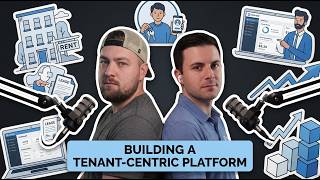
Ryan Barone built RentReady, a property-management platform for DIY landlords, after struggling to rent an apartment in New York City. He bootstrapped it solo, handled every customer call, and grew through word-of-mouth and landlord investors. The platform automates rent collection, screening, maintenance, and accounting, with features voted on by users who are themselves landlords or tenants.
Chapters
Welcome back to The Owner Meeting Podcast hosted by Multifamily Strategy. I'm Christian, your channel host. Today we have Ryan Barone with RentReady. This is a company I am very familiar with and it's talking about my favorite topic of all time. This is about optimizing your rental. This is an all-in-one platform. Ryan's story is absolutely awesome. So super excited to have him. Ryan, welcome to the pod.
Thanks for having me, Christian. I'm excited to be here.
I'm super excited to have you. When I saw your name come up and I saw RentReady, I'm like, yes. Yes. This is a solid business that I am, I'm really excited because I actually going into this, I know a little bit from research, but I actually don't know a lot of the backstory. So I will be learning right along with the audience for so much of this. And I am really excited for that. Absolutely. So Ryan, really quick, for those unfamiliar with Rent Ready, give us the 30,000-foot view. What is Rent Ready? Who are you? What do you do? And then I want to get right into your backstory. Yeah, yeah, yeah.
Happy to. So RentReady is essentially an all-in-one platform that allows anybody to manage their rentals more simple, affordable, and more successfully than they would otherwise be able to do. And largely we've designed it in a way where you can start with as little as one single-family home and scale to hundreds, and you're not like ripping up systems and trying to figure out a new way while you're trying to scale. Instead, for really day one through scaling all of that. You can handle rent collection and finding tenants, screening them, handling your accounting and communicating with them, maintenance, and basically everything that you would actually need to do to run your rental successfully once you own that thing and you have that moment of, okay, now what do I do? That's where we come in in terms of giving you the tools to basically let you do that yourself as well.
That's a huge problem that I just— right there, that's a massive problem for landlords of there is software that is designed for Hey, I have some single-family rentals or a really small portfolio. You get into other software that's like, hey, you have to have 50+ units to get here and it's really, really expensive. Having a scenario from A to way past Z, from A to as large as you want to get, that's actually not very common. What does, what help define successful rental as a landlord? Like what the core problem that you are solving with RentReady, what does that look like? Success for a landlord?
Yeah, for a lot of people, you know, they've invested their life savings into buying these rental properties. And it differs for different people on the platform, but a lot of it is either spending more time with their kids or being able to build equity in those rentals so that they can retire early someday or build cash flow so they can go on some extra vacations. And ultimately, we're helping ensure that they get their rent on time more often. They minimize their vacancy periods, they have less evictions, they ultimately have fewer maintenance headaches. They're getting less calls in the middle of the night. They're, I know we're doing this close to April time. They're not scrambling at tax season going, oh no, where are all my receipts and how do I categorize this for my Schedule E? That's just handled for them. Exactly, exactly. So, you know, it's letting them instead come into a platform that has something like P&L by property out of the box in real time when they've done no work to figure any of that out. And their rent collection's being done on autopilot, their maintenance is handled by themself or a teammate or just outsourced through the platform. And ultimately they get to rest a little easier at night knowing their rentals are being run well. They have all the oversight, they have all the control, but they have a system to automate all the manual tasks that they would've otherwise done on spreadsheets.
Oh, that is perfect. And there is right now in the marketplace, there is a ton of software that does this. I think a lot of people are hearing this if you're brand new to the show. Okay, so it's, So it's property management software. It does, it does go beyond that. What makes you different than the, you know, the 50 other solutions out there for automating property, right? What, what, what is, what makes RentReady unique?
Yeah, there, there's a lot of them. I, I do think one of, you know, a few of them are, I actually started trying to solve this problem for myself as a tenant first. I think that's one of the biggest mistakes that software in our industry misses is that traditional property management software. And part of the reason I don't even like the term of it is it was intended for property managers. And that's really not what RentReady is built for. It's built for the DIY landlords, the individuals that own and operate their own properties and say, you know, I want the better return of managing it myself, but I don't want the headache of managing it myself. And so when I started building RentReady, I was trying to solve my own problem as a tenant who couldn't get an apartment in New York City here. Because I didn't have all my documents together. And I initially built an app for myself and friends to apply to apartments more easily. Yeah. And it wasn't until I started bringing it to those individual landlords that said, hey, our side's way worse. Basically, we have to be, you know, 50 units plus to use the traditional property management softwares out there. And largely they're not really designed in a way that fits for us. I'm taxed for my growth. So it basically eats into my margins as I grow. And one of the things that I still keep coming back to this day about, which was a bit by chance, was because I was building it for myself as a tenant, like I wanted a great experience in a unit where I was happy to live there. I was happy to renew. I didn't want to live anywhere else. That it's been really interesting to see where when you have 1, 2, 5, 10, even 25 units, an individual tenant telling you, hey, I love this platform, it helps me build my credit, it's easy to pay rent, I set up my autopay, I know when my roommates have paid and when I haven't, so you're not chasing me. Like, it just runs super smooth. It's better for you. And vice versa, if your tenant's like, I hate using this and I just want to use some other method, a lot of the time you'll have to switch, um, when you're at that scale. And so it's been a huge advantage for us growing as a platform. We're over $35 billion in assets. Landlords actively managing in all 50 states across the country from not just like New York City where I started, but like rural areas, small towns like I grew up in originally. And it's been really exciting to see. And I think a big part of that is that to me, it's a two-sided marketplace where you have, when you have really happy tenants, you have less headache as a landlord and you get to ultimately be a little happier about running your rentals and enjoy the fruits of your investment and everything you poured into it.
Well, it's so interesting too, because what you're, what you're solving, I would say 99.9% of any other software designed for landlords only addresses the landlord-specific issue. So at least in its original design. So it's designed for, yeah, let's go rent collection first. Let's go user interface. Let's go accounting. And it's all stuff that your software does, but starting from the perspective of it's a very simple business, multifamily housing. It, we're providing housing for humans. Like that's your supply and demand curve. Like how, how many houses, how many humans need the housing? That it's a very basic business. Half of that equation is the tenant. Like that is your client, that is your end user. So it, it's really cool designing this from the bottom up instead of the top down. I, yeah, that's where all the revenue is. So building a platform where they're like, yeah, I think, hey, this is, tenants wants to use this, that automatically gets you a, I mean, I'd have to imagine that, that gains you a lot of market share. Like, hey, tenants are familiar with this platform. It's designed for the tenants. If my clients like using that software, they're going to like renting from me. That starts a whole cascading events of like good stuff in property management. So I love that. That's cool that you are a, you started it as a, basically as an end user of the product as opposed to as the landlord. I think that's a really unique take on this.
Yeah. And really every iteration along the way, I think one of the big differences as well in terms of how we built the platform, the first 3 years of the business, I personally did every single chat and my co-founder, like 2 of us answered every single chat message, every single phone call, every single demo. I wrote all of our original software personally myself for the first 3 years of the business. So it wasn't coming from a place of saying, you know, I want to manage only my rentals this way and everybody has to conform to my way of managing rentals, but instead saying, I have no opinion. I want to solve the pain for other people. And so you tell me, what are the problems you have and why do you have them? And why do these other solutions that have been around for a long time not work because you're not using them. Largely when I talk to people, you know, 80, 90% of them are on pen and paper and spreadsheets. And so there was a reason that they were not adopting these platforms. And largely, you know, there was that tenant aspect of it. But there was also like, there were a lot of people that said like, I wish I could build it for myself. And this isn't just on the small end. I remember going to some of the major property managers even in New York City and trying to ask them like, what are you using? Why are you using it? And I remember meeting with one of them in New York City that said, hey, It's a great idea. We just invested $5 million to build our own platform to manage our rentals. And I'm sitting there going, okay, the average landlord can't invest $5 million to build their own platform. But this is telling that even at like their scale, they're seeing a gap in the marketplace for needing to do it themselves. And so largely everything on the platform, any feature that exists on the platform today was not because we went like top down, like you said, it's like it started bottom up in terms of talking to individual people, landlords and tenants both. And saying, what's the individual problem you have? Why do you need that solved? And then we'll implement something that solves that. And so it goes as minute as something like blocking tenant payments where a landlord called me up, a real landlord called me in Texas at one point and said on a Friday night, said, I'm going through an eviction. If they pay me even a dollar on rent, it resets my eviction clock. And I need to be able to block partial payments on a tenant-by-tenant basis or outright. And like overnight we had this built in the platform, released this landlord, they're all set on their eviction. But it, it's those individual stories that I think you just can't recreate when you start top down and say, like, how do I build like a, a feature set page or a pricing page for a property management software versus when you say, I'm not trying to build property management software, I'm trying to solve problems for landlords and tenants that are self-managing their units. You tell me what your problems are, you tell me how you want them solved, and I'll make it, make it flexible enough that whether you are in Charlotte, North Carolina or Texas or California or North Pole, Alaska, which I found out from a real landlord on our platform is a real place that they're managing properties, that you can do it. It's flexible enough to, to manage it your way. But managing your way doesn't mean you actually have to like handle everything in spreadsheets and text everybody to remind it and set all these reminders and calendars and get all these calls in the middle of the night for yourself.
I think that just goes back to the core of entrepreneurship like that, that at the end of the day, that's what it is. Like, right. We're identifying the problems and we're solving the problems. And I've seen this in a lot of the, one, they're my favorite people to interview, so this is, I'm already excited. But when you, when you actually build a business really from the ground up where you're like, hey, I, yeah, as the owner of the company, I started as I was the customer service department, like me and a business partner.
Yeah.
Those are, and then as, as your company gets bigger and bigger, like those are the days that you look back on, like it was really hard. And, but you look back on those things and you're just like, man, I remember how fun and exciting and difficult that season was. It, it, as an entrepreneur, you can't replace that part of the business where you're like, hey, I was in every single role. I, I think every CEO of a company and every owner of a company should have to, I mean, it minimum 90 days, but like you should have a season where you work the customer service part of your business. If you don't understand it, that is where a lot of businesses miss the mark. They haven't awesome product that doesn't quite solve the problem because they weren't working on the core problem. They were working on a problem. So super, yeah, I love hearing you argue it doesn't go away.
Like still to this day, like a couple weekends ago, we were like short on, on, on a, a call-in. I was like, you know what, I've got a few hours. I'm gonna hop in on chat, like answer some chats. And literally like, I didn't tell anybody who I was. I just answered some chats and handled them. I still call landlords to this day. I have to convince them that I'm not AI at this point now, but I call people on our platform, whether they range from brand new or they've been with us for 5 years. Was just doing one podcast recently where the actual host had been on the platform for 3 years. He grew from 5 units to 50 units on the platform. Oh, that's awesome. I think that learning experience doesn't end. I feel like you said, you'll get to a point where you can't do it 100% of the time anymore. It might be like, you know, once in a week or once in a month or something like that. But being able to stay close enough to say, I just want to hear some of the direct feedback of, in any business it is, just be able to hear that direct feedback of how people are thinking about problems, even when they don't necessarily think they're like giving you feedback, they're just asking questions. And like every question someone asks, you can come away from it going, okay, I could answer that for that one person, but also how do I, How do I change the way I'm approaching my business so that no one ever has to ask that question again? And so the next person that comes in is like, oh, that's so intuitive. And it's like, well, it wasn't intuitive. Christian just asked the question before you were here, and then we changed it to make it intuitive for him. And that's intuitive for, you know, the next person that came in the door.
Yeah. Well, I'm curious about that. Even, even before I want to go back like one step farther, you mentioned that you're originally from a smaller town, right?
Yeah.
Okay. I'm curious about this. My, all of my posts recently, so my home state was Washington State and they just passed this 10% millionaire's tax. So basically it's a, it's basically just a tax on like if you own a business and it happens to be successful, we want 10% of everything that you make over. I think it makes the effective tax rate for a lot of millionaires like 51% or greater now. It's like really controversial. So a lot of my channel has been people being upset at me for creating a successful business. A lot of us do start from small towns, or in your case, you started as a tenant. I want to hear the actual starting point because when I hear these success stories in businesses, this inspires me. Like as someone who spent most of their life without any money, it's really, this is the type of stuff where I'd listen to this and I'm like, oh, It is possible. I would love to do that. Solve a problem and solve it well enough that you actually have monetary benefit. That's amazing. Where, where was your actual starting point? What did the very beginning look like for Ryan?
Yeah, so I, I grew up in a small town outside of Albany, Latham, New York. I came to New York City really for college initially. I majored in economics and math and minored in computer science.
There you go.
And I'd gotten my first internship at Goldman Sachs, which I didn't even know what Goldman Sachs was until like 2 weeks before. It was just, they were doing a talk at one of the floors at Pace and I walked by, they had like pizza outside. So I was like, I might as well go in. I literally like sat on the floor because they were already at capacity and just like listened to them talk about this. They said you can apply. So I had a resume, like my economics professors at the time had at least said like you should have one of these ready, which, you know, I give them credit for.
And that's funny. So you were studying economics here. What's a Goldman Sachs?
I didn't know at the time. I was, I was only, I was pretty young. I was only going into, I was in sophomore year going into junior year. So I wasn't really even thinking about internships for probably like another year after that. But I thought, why not just like throw my hat in the ring and see how it goes. And I was lucky enough to get the call to, to interview there. Also, again, really not prepared to interview places. When I first got that call, I actually said, I'm sorry, I have a midterm tomorrow. I was like in the library with a group that I was studying with, and I said, oh, I can't come in for an interview. I have a midterm tomorrow. And I hang up, and my friend, who was luckily a couple years older, said, who was that? It was Goldman Sachs. They asked me if I'd come in for an interview, but I have, you know, Professor Coleman's midterm tomorrow. He said, skip his mid— call him. He will tell you to skip his midterm. You can go in for the interview. So I did reach out to him and say, can I Can I miss this midterm and like take it, you know, a couple days later or something? And he said, yeah. So I did get to go in and interview for that, but that was my chance to move out of dorms and get my first apartment. And I thought it would be super easy to just like find a place. I felt like it was pretty easy to find a place to rent, but it wasn't very easy to actually rent a place. And I feel like that was the disconnect where so much time had been spent on kind of the search side, but not the actually application and then living there and wanting to renew there. And so I initially built an app for myself and friends just to apply to apartments, not as a business, but just as, hey, this would make things easier for us. And intentionally did not change the landlord side at all, thinking that landlords were happy, everything was great for them and very easy for them. And they really didn't want their process messed with. And it wasn't until I started using that to submit to some landlords, they were saying like, why are, why did you only change your side? Our side's way worse than your side. You're just seeing the trickle-down effects of I have this as a tenant. That was really where I started to, you know, get to fall in love with building it for both sides where he said, hey, you know, application is great, but I'd really like a prequalification so I can spend my time with the best 5 tenants instead of the first 5 tenants that reach out to me. So can I prescreen these people? Or I don't care about the screening at all. I have tenants in my unit, but I don't want to get a call in the middle of the night for something that's a dripping faucet and can handle it tomorrow. So can you send me videos of maintenance issues on the platform so that I can determine if I need to get out of bed at 2:00 AM or if it can wait till the next day. Or someone else was like, I don't even care about the maintenance side. I just want to get rid of this check is in the mail excuse and know the instant somebody pays me rent and there's no question about it. And same thing for their roommates. And a lot of stories along the way that, you know, impacted different portions of the platform. But that's really where it all began.
When did it become a business? It's so hard for a lot, especially college degree, had a job. It's like, that's like the hardest place to become an entrepreneur. It's very easy to be, you know, you buy in like, I got a job, I'm working, I don't need to be an entrepreneur, right? You don't have to do it. When did this go from like, hey, this is a project I'm interested in to this is a business? Or did you start as like, I am going to start this and I'm going to solve this problem? What, which, what was your entry to I'm an entrepreneur now? How did that change happen?
Yeah, so I think there's probably maybe 3 or so phases of this. There was like the initial phase where I was just building it for myself and friends. There was a tipping point. I graduated college and then I was working on this. I was eventually working at PwC, get off work, work on this till like 3, 4 in the morning, and then do the same thing the next day, every single day. And that's where I feel like I really resonate with the landlords on our platform. Like my moonlighting was RentReady, like their moonlighting is their rentals, right? Like I really feel like it is the same thing. And I got to a point where it was actually a friend of mine that I had met in college, had gotten this internship at this venture capital firm and said, hey, we're doing a pitch competition. You wanna come pitch your idea? I was like, it doesn't even work yet. Right? Like I was still at the phase where I was, I hadn't finished the first version of the app. I was, I was still learning.
That's the best time to start selling, by the way. Entrepreneurs, take notes. The time to pitch is concept, not, yeah, not like, oh, I have a finished product. Let's see how the market thinks. Like the easiest way to pitch a product is when you already have clients.
You are so right. And so I, I went in, I pitched there and ended up getting follow-up conversations with people. Did not get investment at that point in time. There were too many holes and problems I needed to solve, but it gave me enough confidence that like there was legs to this idea. There were, there was actually this massively underserved segment of both independent DIY landlords and their tenants. And if I could create something that would actually help both sides of that, it, it, it really would help a lot of people. And I thought that was really fun to focus on that. That segment of people. And so I ended up leaving in 2016, POC, and started working on RentReady full-time. I moved to a friend's basement in Hollis, Queens, and eventually ended up moving back home for a year. And for like 2 years was building RentReady almost with like no customers. And it really took like a couple years before we started getting our first customers on the platform. But I really felt like for the first time in my life that it was, something that I could see, you know, I'm inherently like a saver at heart, I think. And so I was like, you know, I've been saving my money for something. I didn't really know what, but that was like the first time where I was like, if I spend all of my money making this work, it's worth it. And so I love that. I burned through nearly everything. Got to a point where we started gaining traction with landlords on the platform. It was really like we hit that threshold where it's really solving their pain points and they were excited to be on the platform and excited to tell other people. And in fact, So excited. They got to a point where they became our first investors on the platform, where the first money we ever raised wasn't like from a venture capital firm or anything else. It was actually from landlords that were using the platform that said to me like, hey, are you raising money? Sure, yes, that'd be great to raise money. And it let us expand more and go on later to end up raising more money and growing the team more and, you know, getting the scale we are today where, you know, hundreds of thousands of landlords and tenants are able to use the platform every day and make things easier for themselves.
That's so, that's so cool. Early back, go, going back to the early stages of marketing, this is something.
Yeah.
And by the way, if, if you happen to be a listener and you're like, hey, this is a cool episode. It is. I love this episode. But the entire podcast, this, this is all about meeting owners who've done the thing that you want to do. And so it, if you don't have time to do that owner meeting, cuz you're doing the same thing, you're starting your moonlight, you're buying your portfolio, you're building a business. I like, this is the, this is the core stuff here. I'm super curious about the marketing. When you first started marketing this, so you went from concept, you're, you're an employee, a student, where, at what point did you like start actually marketing and how did you get your brand out there? Marketing is a bear of a project to learn, especially if you started as an employee and a student. I went to college for business as well. The only class that I got a C in and barely, I barely got a C was marketing. Which is crazy because marketing's like the thing that I've been most successful at in my career and I've used nothing from school. So my experience has been marketing is ever evolving. You have to figure it out. How did you start figuring out, okay, I now have a product, I have people who are interested in the product, right? You have some clients and they're like, yeah, I'd invest in this idea. How do you get this idea to hundreds of thousands of landlords?
I think there's, there's a, in my mind, getting from like 0 to 1 and then 1 to 100, right? Yeah. So, from like 0 to 1 was kind of brute force. It was just, I mean, going to dozens and dozens of meetups, whether they were like directly in the city or out in New Jersey or Pennsylvania and talking to different landlords upstate around Albany, trying to just understand like what your problems are, how do we solve those, work with those individual people, like support them directly. For about the first 100 to 150 landlords on RentReady, myself and my co-founder were the only people they would talk, we were the only people at the company, right? They would talk to. So it was just like brute force at the beginning in terms of understanding what their problems were, talking to them. I don't view it as like even marketing to a sense. It was just like talk to people about what they needed solved and figure out, do I already have that or is there something that needs to change in that? And then changing it based on that feedback. And eventually the answer was yes, right? And so that was the approach for about 150. We got to the point where we were raising like our first venture round. And I think that was kind of the tipping point where it was like, okay, we're bringing in money.
We, you in fact have to make it work. Yeah. Now, now it's not just you right now. Now it's like, hey, I have other, I have other stakeholders. Has to happen.
Right. And so going into that round, and I give, I give 'em a lot of credit, like going to that round, right? I was just, on the engineering side, viewed as like mostly self-taught programming. Just spend all of the hours you need to, to figure it out and get it done. And so I thought I would hire the same thing.
This is the, the, the old school, we're building a platform and it is really hard.
Right, right. And so, you know, up until that point, like myself and, and my co-founders, like my father, I, I, I, when starting RentReady, he was like, hey, do you want to do this with me? And so he started doing it with me and we had kind of just figured it out ourselves up until that point. And when we raised that money, we planned to bring on some great people that really understood marketing to be able to do it at scale. And like Kelly, who's on our team, has been with us for like 7 years now and was really like the first main marketing hire that we did at the company to start promoting it out to landlords. That wasn't like word of mouth, show up an event and talk to them, but being able to talk to people online and market to them, advertise to them there. And so that was really the tipping point. It was, I think grounded in that initial foundation. I still remember when TIA Ventures, who was that, that first fund, uh, that, that led that first round, they interviewed landlords on our platform. We gave them about 20 landlords to talk to, just randomly selected, and they interviewed them and asked them questions like things like, hypothetically, if you took RentReady away, how would you feel about that? People were swearing at us like, don't take this away from me. They're like, we're not taking it away. Just like, it helps us understand hypothetically, like, Does this actually help you or not? And they were like, it's some of the best like diligence we had ever done. Like people were like swearing at us, like they love you guys. So really the question at that point in their mind was like, can you make people just as happy at 1,000 or 10,000 or 100,000 or a million landlords and tenants on the platform as you can at 100 or 150? Right now it's, they love you guys, but they're getting to talk to you. And so that was really the tipping point from a marketing standpoint where we started really doing more like outbound marketing and advertising. And I think one of the biggest challenges was just ensuring that as you scale, you keep that same quality that you had at, you know, one, I think it's like, it's just like a restaurant, you know, like if you get like great home cooking from your mom or your grandma or somebody, like nothing beats that, like grandmother home cooking where she just like made the meal for you and only you, but you get to like, you know, a restaurant level and you're like, okay, I gotta do this for like 20 or 50 people in this room. Yeah. And then you get to like the McDonald's scale. I'm doing this for like millions of people across the world. It's like, can you keep the quality, um, that you once had when you were, um, you know, that, and I think that's the, that's the big focus in my mind is like, keep that quality so, so it feels like you're just talking to one of the, the original founders of the company.
It's, it's extremely hard to do too. One of my favorite business movies of all time is Founders. It's Ray Kroc. Mm-hmm. McDonald's.
Yeah.
It's an interesting one. And like the, the big issue they had with franchising was quality control. They, they couldn't do it. It took 'em forever to figure it out.
Yeah.
Uh, extremely hard to do going from a mom and pop, which is, I mean, it's kind of where it started, right? You're like, hey, I have a, yeah, it's, I have word of mouth clients. And we're, when you expand that to, we're now a big company, but we still have that same consistent feel from where we started. It feels, it still feels like you are in customer service. With the founder of the company, which apparently occasionally that's actually still true, which is crazy every now and then.
Yeah.
Ryan is in fact not AI, is actually here. But like when you're putting that together, how, how did you solve the problem of quality control at scale? Because typically 150 clients and, you know, like 150,000 clients, usually the company looks nothing like it did at 150. How do you keep that feel at scale?
Yeah. I do think part of it starts with what you were actually referencing earlier about like, you just have to do it yourself. I think if you, if you don't do it yourself at first, there's no way you're going to be able to hire other people that are going to do it or iterate with them about improving it as you go. Like, ideally things actually get better, not just like keeping status quo on the quality, but like you actually figure out a better way to do it because you've hired really smart people and they start questioning, why are you doing things that way? And you're like, because it was just me in a basement and no one had, was around to question why I did things that way. But yeah, now that you say that, that makes sense that we should do it this way. This would be even better. And so, um, I think it starts with doing it yourself. I think the next step is when you do bring people on, bringing on people that actually care. I think there's no substitute for people that care about the problem they're solving. And I don't mean this just even hypothetically, but there are people on our team, a lot of people on our team that actually own rentals themselves, manage their own rentals on RentReady, have bought their first properties on RentReady and used our own blog to look up things like, how do I, what's my move-in checklist? Or how do I find a tenant or things like legitimately using the platform itself to make themselves successful. There are people on our platform that have had parents that like sold their portfolio to put them through college. Like all of these things that I talk about aren't just like, oh, this could be somebody theoretically, but they're actually the people within our company that are living that themselves. And I think, and tenants on the platform, there are people on our platform that have been actual tenants of Rent Ready as well. And so it's, it's cool in terms of the influence that that has when you go from saying, okay, I'm doing it myself to now I have a team, but a team that really, really cares about what they're doing here. And then they proactively ask questions about how things are being done and how those things can be better. And they're almost another layer to that, that landlord or that tenant that's saying the same thing of like, here's this problem I have, or here's this question I have and how could this be better? But they're doing it almost proactively themselves. And I think that's how you keep and actually even improve that quality at scale. 'Cause now you have more brains trying to figure out these different problems and the pros and cons of these different approaches and how you ultimately get the best result.
If this episode was a test on like how to create a business, right? You would be getting an A++. Like everything, everything is super positive, right? It's, it's like, hey, we start organically, start with the end in mind with the product. Uh, I mean, this is all the right things to do along the path of creating a large successful company. Uh, we all make mistakes. And so the question that I ask in every episode that everyone's waiting for, uh, the highest stupid tax that you paid when you start, you don't know what you don't know. What did you not know when you started that you, that you had to pay to learn?
Yeah, we, I think one of the biggest ones that stuck with me and it's, it's an important one to continue to remember because it's not, sometimes I actually forget that. I think of it as like only when I'm beginning, but I think this is true at any point in a business is you talked earlier about how you don't need like a finished product before you can start doing something.
Yes.
Even though I did that pitch competition and I had some legs, I didn't turn around and go, okay, how do I like plan and then show the concept of this? I actually spent the time building the whole thing for like 2 years and trying to perfect this thing and not really hard to do getting it in the hands of people. And so in retrospect, I would have built less and released earlier and given it to people and used that as a way to iterate faster. And that is a big way that we approach the platform even today, where if you ask for something that RentReady doesn't do today, we legitimately record. Not like how some companies are like, oh, I'll pass it on to the product team. We legitimately record every single feature request that somebody has, whether they know it or not. And we put it in our list of things and it gets voted on and it impacts what we build and why we build it and how we build it. And we actually review exactly your words of how you wanted this thing to work so that when you look at like, 100 people that ask for that thing, it, it, it changes how you approach that. And so, um, that, that basically drives how we build everything to this day.
That is such a great lesson. That was the, the only thing, and I, I, I think legitimately the only thing when I started any of the businesses that I've done, only thing that I think we did right is I, I've, from the beginning, I had no money to develop any of my products. And so we always sell multiple units in concept and I'm like, okay, I'm gonna take the money. That we just brought in for the product.
Right.
And then I'm gonna make sure that the product matches what we just sold. I've done this for like 6 or 7 things. I'm like, start with clients. It's always easier when you start with revenue. The fact that you did it for 2 years without doing that is actually incredible. I mean, it's so hard to be like, I'm gonna focus on this problem for 2 years and it's probably gonna work, but what if it doesn't? I, I think for most people, the, the what if this doesn't work and I'm spending 2 years for nothing?
I know. That's why I think the biggest lesson from this is just start. Just start, you know, like whatever it is that you're like planning this, you know, I, I'm trying to put together this perfect plan for just like, just start the thing and you'll learn so much by doing even a little bit of it and putting it out into the world than you will by like planning behind closed doors, trying to get the perfect plan for whatever you're trying to do.
And whatever you learn in that time, you'll do it faster the second time you do it.
Even if it doesn't work.
Yes. You, you already know a ton of stuff that doesn't work now. I just had, I actually just had an investor in one of my last deals. Fantastic guy. He built a medical practice over 7 years. He got it to like, he got it pretty big. It was multi-state. It was quite a few employees. I want to say it was 30, 40 employees. Sold it successfully, had a big exit. He then several years later, built the same company, but in less than half the time, uh, went to 4 states, uh, 150 people sold it for like 7 times as much. He did more than twice as much business in less than half the time because you just, you learn along the way.
Yeah.
You do it better the second time. Even when you pay the, the stupid tax for being new, you're gonna learn some more. You've now paid it. So, so you, so you, you paid the tax. So it's, it is an amazing thing. It's, I, I love that. I love that mindset too. It's, it's just get out there and do it. It, it doesn't matter if you do it right. I've always just worded this.
It doesn't.
Done is better, or yeah, done is better than perfect. Like, right. Produce something, get it out there. That's absolutely true. And you're doing the best iteration of it. You collect actively, collect and organize feedback so you can go through, uh, there's a concept in Ray Dalio's, uh, book Principles, which is one of my favorite books on business of all time. Uh, it, it, it is a long book. It's roughly the size of the Bible. If you guys are looking for a, uh, business book, it, it's a thick one. But he runs his companies as what, or his company as what's called an idea meritocracy. And it sounds very much like that of like, hey, we collect all of these ideas and everyone has a voice down to the lowest client to the highest person. And then you have a democratic way to decide and vote on what features do we work on and what do we think is the direction of the— it seems very in line with that, which, yes.
It is, it is, it is a, and the beauty of it is you end up making better decisions. You really end up making better decisions. There's a, there's a great book called The Wisdom of the Crowd and it talks all about this of how like crowds make better decisions than individuals. And it's, it's funny that like you get into business and so often like you'll have a company where it's like a property management software founded by a property manager that built it for themselves and then says that's how everybody should manage. And like there's a different approach where you could say, Instead, what if like hundreds of thousands of landlords all voted on what the right way to do it was and then built a platform around what they all say is the right way. And according to the wisdom of the crowd, you're going to get a better output, not because you were like a smarter individual, but because you put all of these brains together and said like, together, we have to be able to figure out a better way than we would ever do individually on our own. And I think it's a, It's really fun to then see that organism come to life.
Well, typically I would wrap with like, hey, where does someone find you? But I mean, RentReady, you've done a fantastic job building it. It's not that hard to find. Thank you. R-E-N-T-R-E-D-I. So it's not that hard to find. That being said, if someone was a landlord and they're looking for the solution for self-management and small, medium, large landlord, what is the best way to get connected with RentReady?
Yeah, we're a friendly bunch. We have live chat and demos and everything available on the site anytime. So like you said, Redi, we spell it wrong 'cause we're a startup, but you can—
Yeah, they're trying to be cool.
You can, yeah, exactly. You can do it yourself and not talk to us at all. And that's intentionally designed where if you're like, sometimes I'm that way where I'm like, you know what, I just wanna set this thing up and like not be bothered. That's fine. But also like, The live chat's there. It's been part of our core DNA since day one, not just for you, but for your tenants. Like they can message us too, every single tenant on the platform. And so, you know, you can reach out anytime if you have questions or just want somebody to chat to. We're always there. It's, it's always nice to talk to people and whether you realize it or not, you're influencing the future of real estate at that point.
That is absolutely amazing. Well, guys, link is also below in the show notes. You guys can always check out RentReady there. Ryan, awesome, awesome, awesome having you on. Huge privilege. Everyone, if you enjoyed this episode, we interview owners of businesses and real estate doing the thing that you want to do. So if you want to get all the takeaways of the people who have already succeeded in the projects you want to do and already failed in things that you don't need to fail at, we'll see you on the next episode.
More from Christian



Speak with authority to turn broker rejections into deals - boost your confidence #RealEstate

Turn Broker Objections into Closed Deals - CRE Negotiation Tactics #RealEstate #Negotiation

How to Get Multifamily Deals Under Contract Without Having All the Cash | Objection Series Ep. 1

How I Scaled 500 Apartments in One Texas Market in 12 Months #RealEstate #Multifamily


Turning a $12.2M, 200-unit mess into profit - live multifamily turnaround update #Investing

Day 10 Update: Turning a $12.2M, 200-Unit Apartment Complex Around in 80 Days #RealEstate

Day 10: Before Time Runs Out | Saving a Failing 200 Unit Apartment in 90 Days (Ep. 3)

How 2 Direct Deposits Generate $70K/Month from 224 Section 8 Units @ 99.4% Occupancy#RealEstate